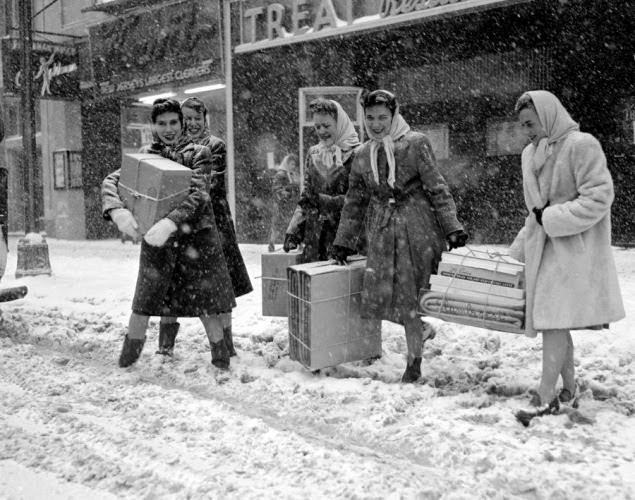
Christmas during World War II looked nothing like the holiday most people knew before the war. Families were split apart. Fathers and sons were fighting overseas or held as prisoners of war. Women served in the military or took on war work far from home. Children were evacuated to unfamiliar towns, often without gifts or even enough food. Rationing had stripped shelves of the basics, let alone luxuries. Yet across every front — from the jungles of the Pacific to the snow-covered fields of Western Europe — soldiers, sailors, and nurses found ways to mark the holiday.
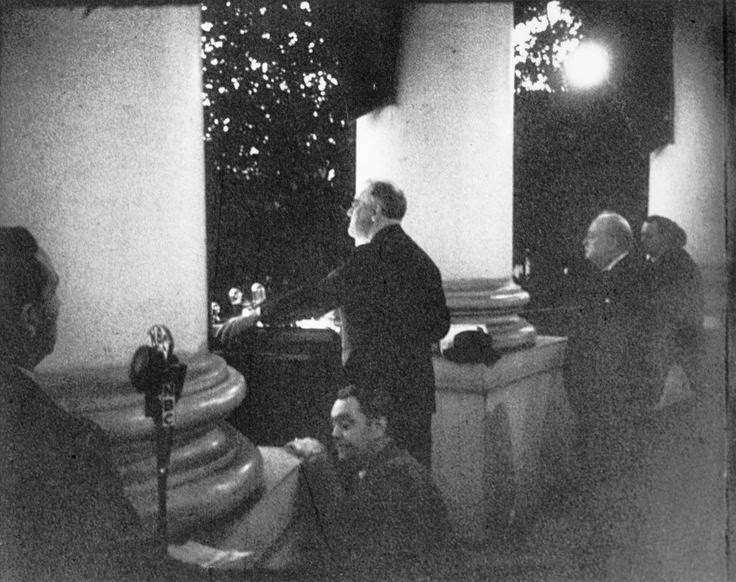
One of the more remarkable wartime Christmas moments took place in Washington, D.C., just weeks after the attack on Pearl Harbor. President Franklin D. Roosevelt and British Prime Minister Winston Churchill stood together at the White House for the annual Christmas tree lighting ceremony on December 24, 1941. The United States had formally entered the war less than three weeks earlier, and the image of the two Allied leaders side by side carried enormous symbolic weight.
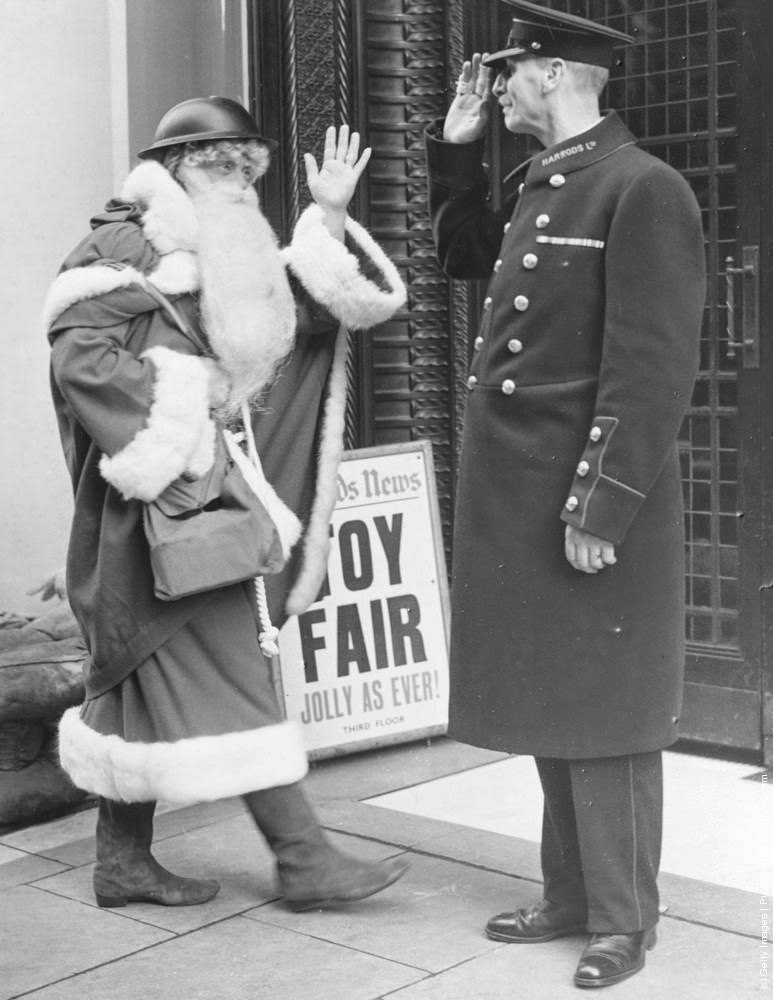
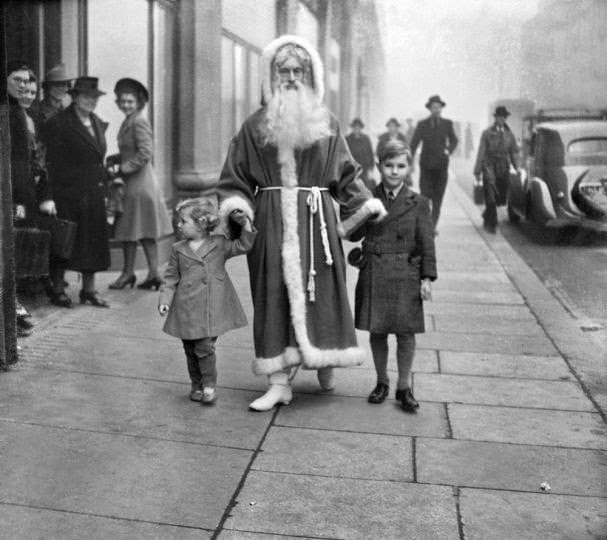
Back in Britain, life carried on defiantly. London shops refused to abandon their Christmas displays despite the ongoing Blitz. Harrods on Brompton Road even dressed up its Father Christmas figure in a tin helmet and gas mask case in November 1939, blending holiday tradition with the new reality of wartime safety precautions.
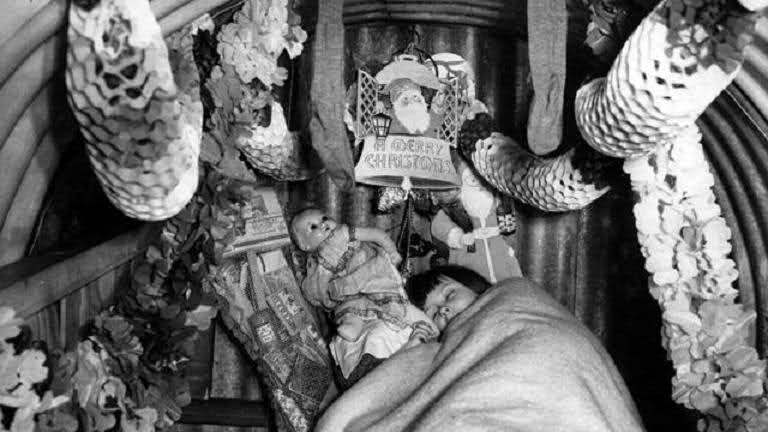
For civilians sheltering from German bombing raids, Christmas 1940 was spent underground. British bomb shelters became unlikely gathering places where families tried to maintain some sense of normalcy, huddled together in the dark while air raid sirens wailed above.
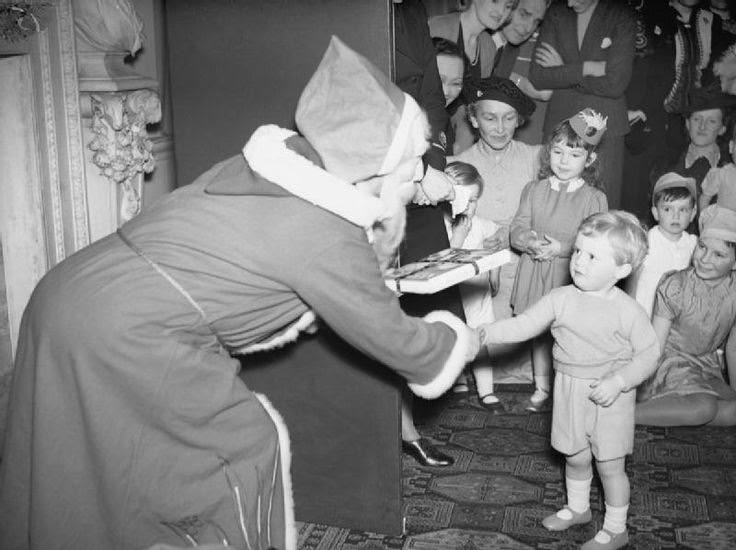
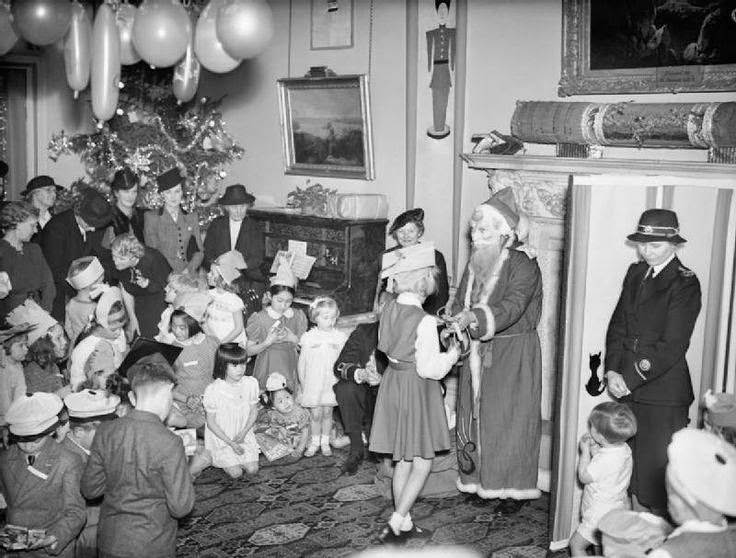
The Admiralty organized formal Christmas parties for the children of Allied naval officers. At Admiralty House in London on December 17, 1942, Father Christmas — in full costume and mask — handed out gifts to the children attending. One of those children was Winston Churchill Junior, the Prime Minister’s own grandson, who received a book of nursery rhymes.
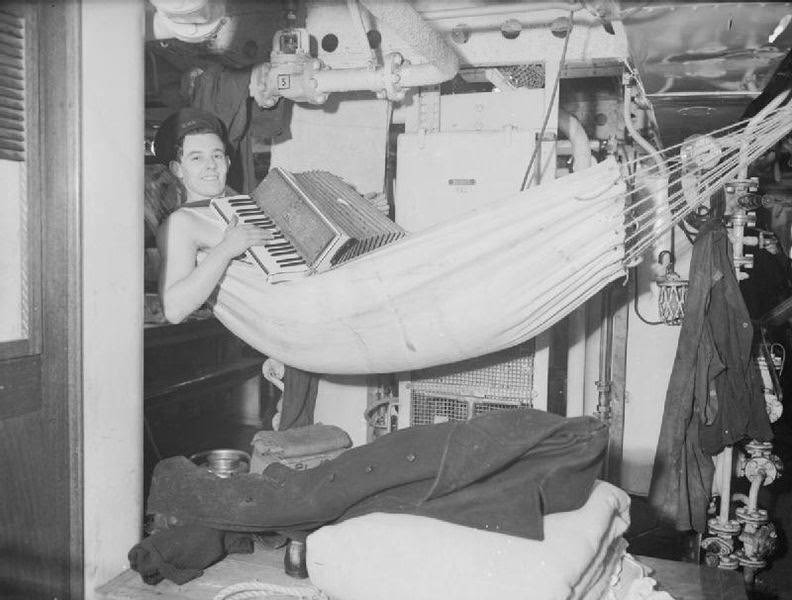
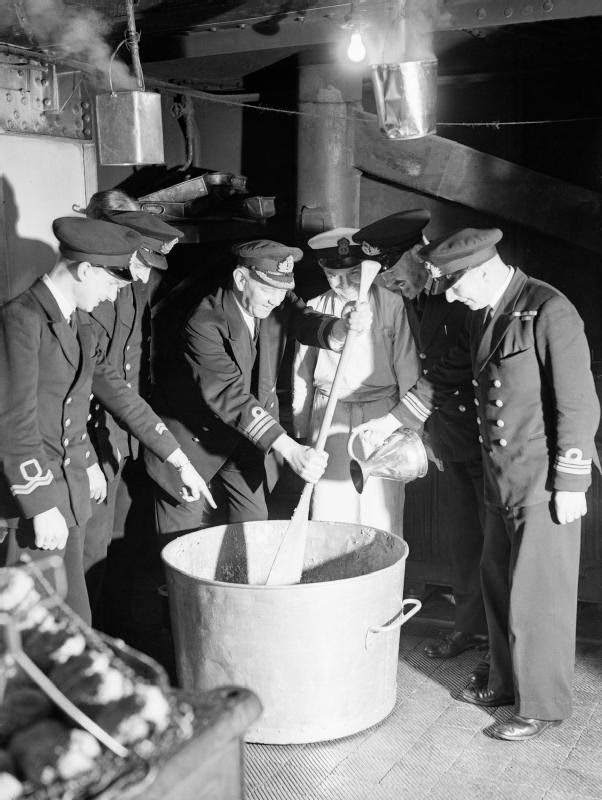
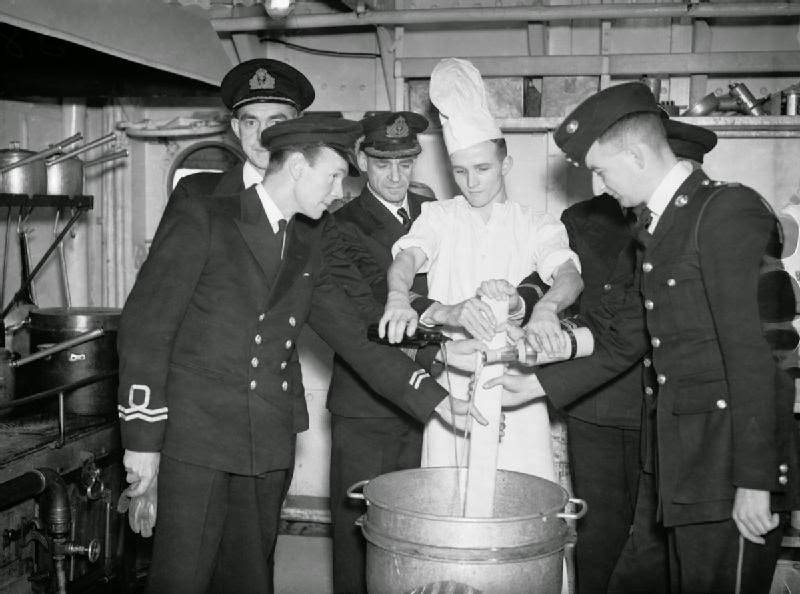
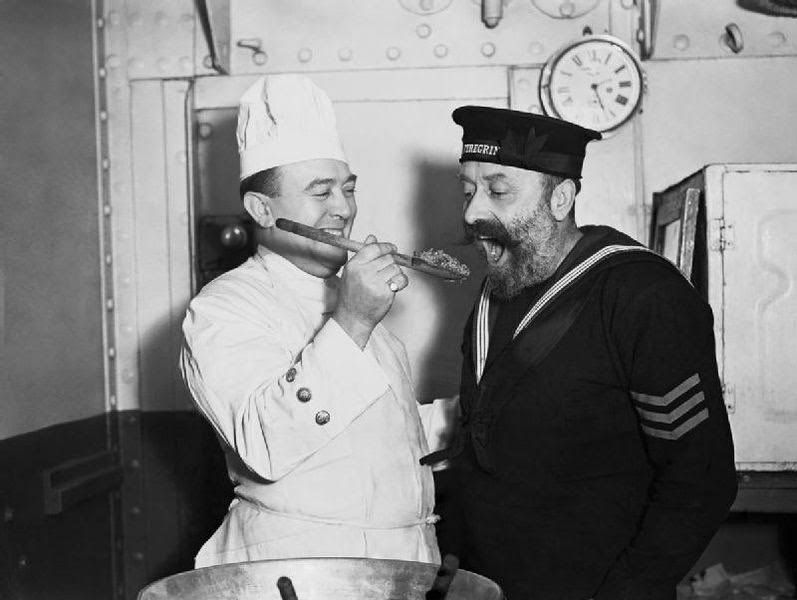
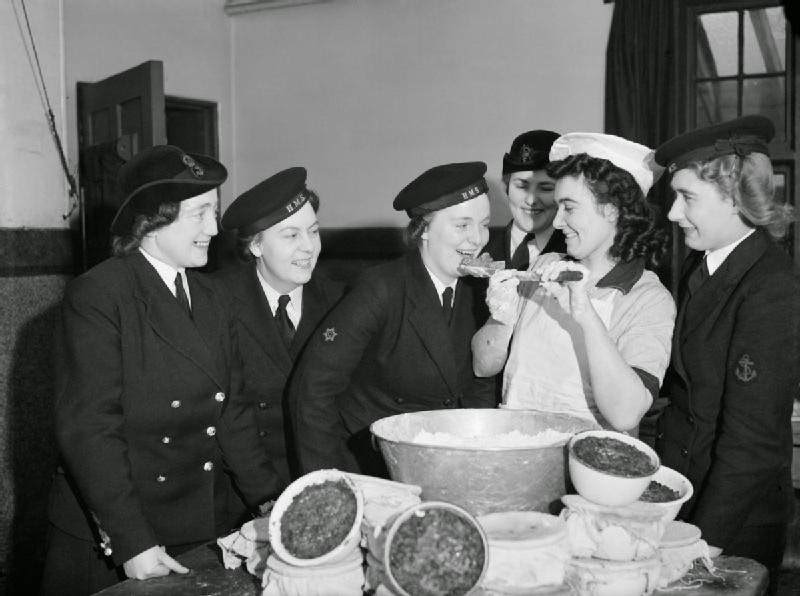
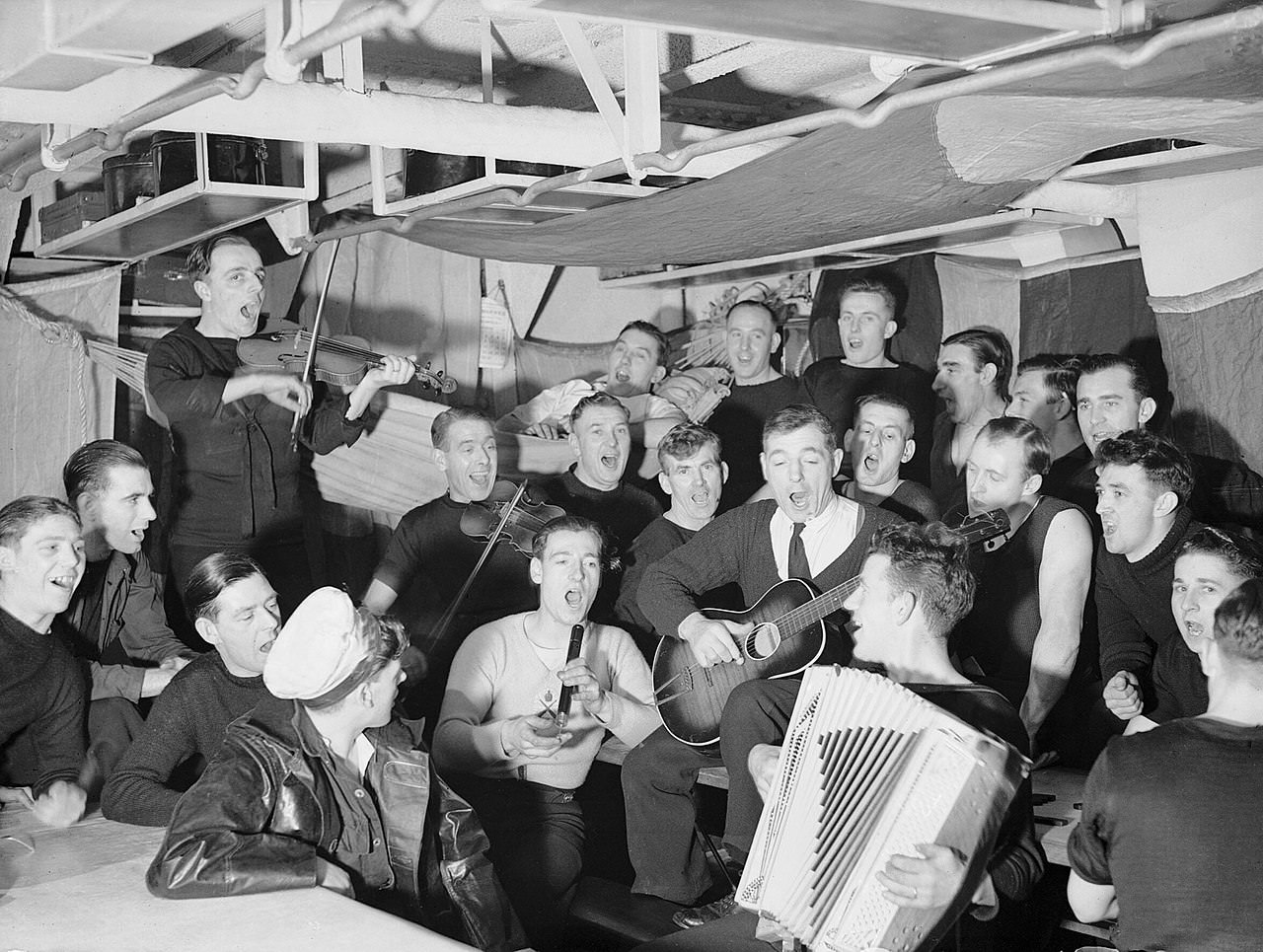
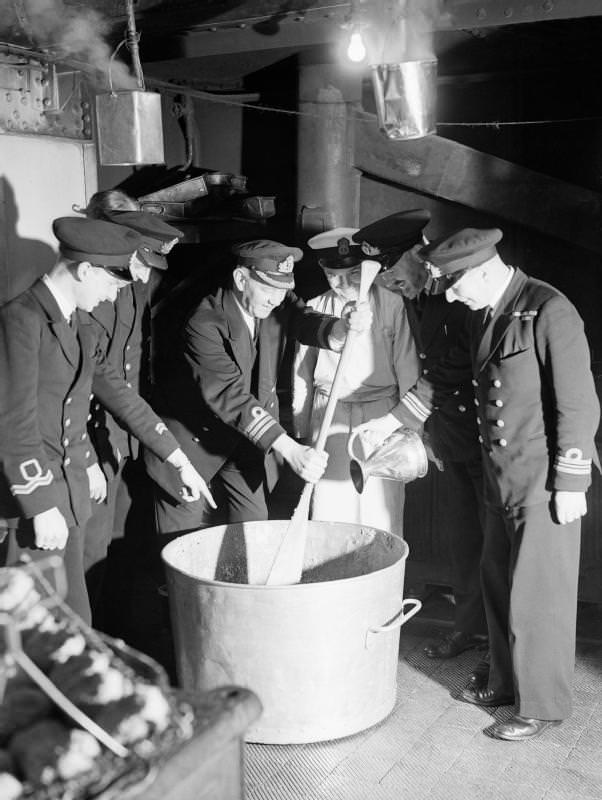
The British Royal Navy made a strong effort to observe Christmas traditions aboard ships, even at remote anchorages like Scapa Flow in Scotland. Christmas pudding was a particularly serious matter. Captains stirred the pudding themselves, first lieutenants added a tot of rum, and wardroom cooks mixed batches on multiple vessels. The ritual carried on from one ship to the next across the fleet.
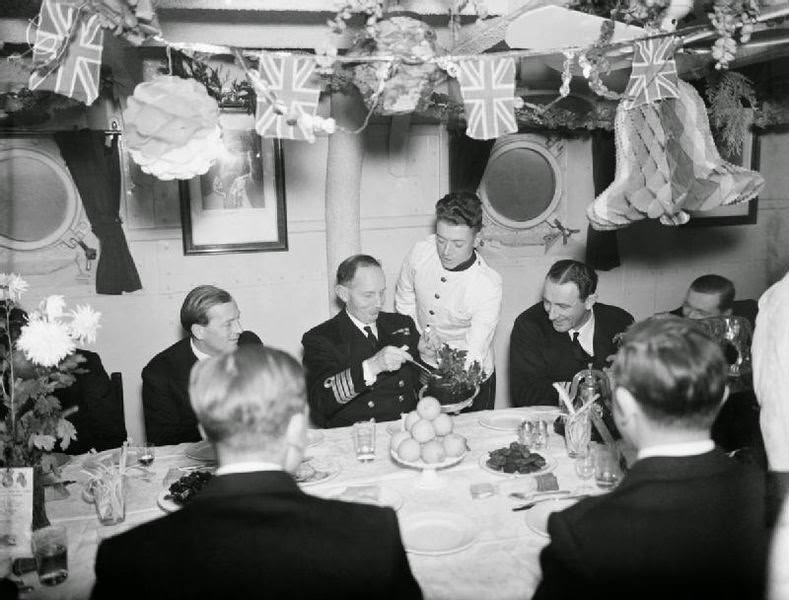
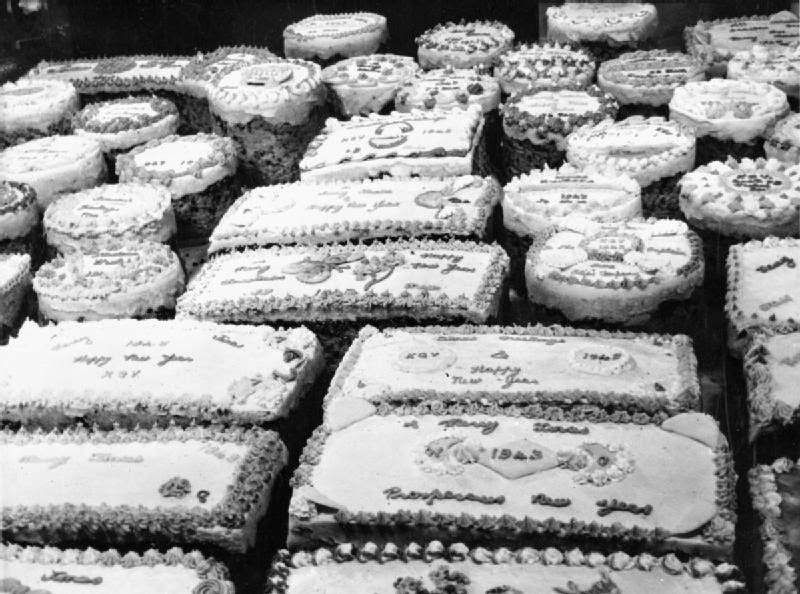
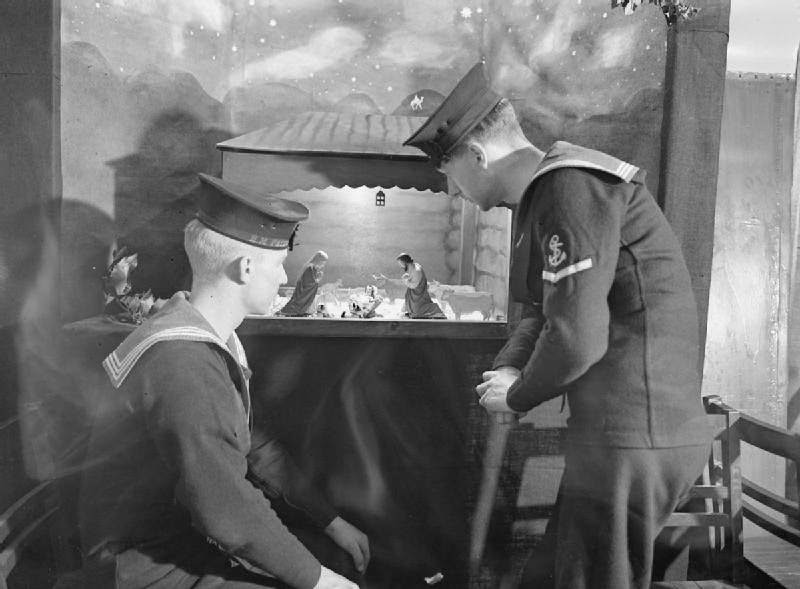
Ships’ cooks competed to produce elaborate Christmas displays. The cooks on board HMS King George V produced a spread of magnificently iced cakes. On HMS Dunluce Castle, shipwrights built a nativity model for the ship’s chapel on Christmas Eve 1942. That same ship observed another old naval tradition: a leading seaman was allowed to impersonate the captain during the Christmas Day inspection.
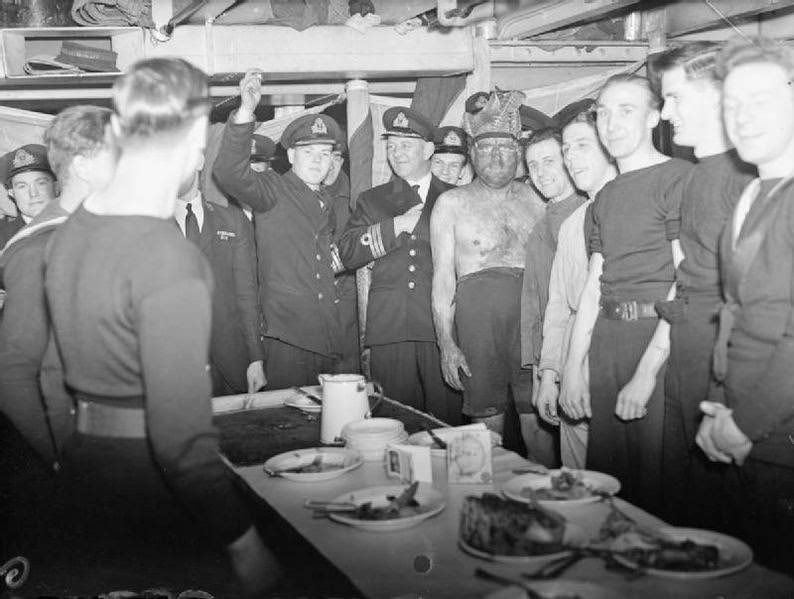
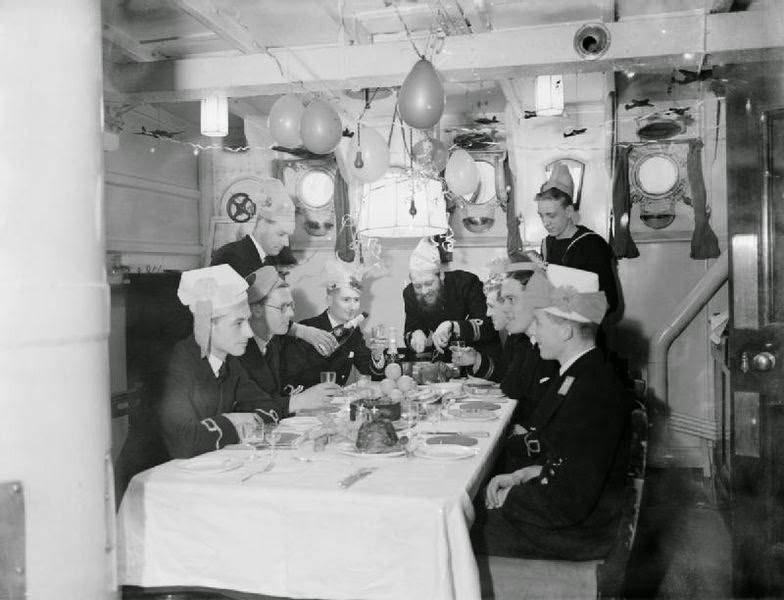
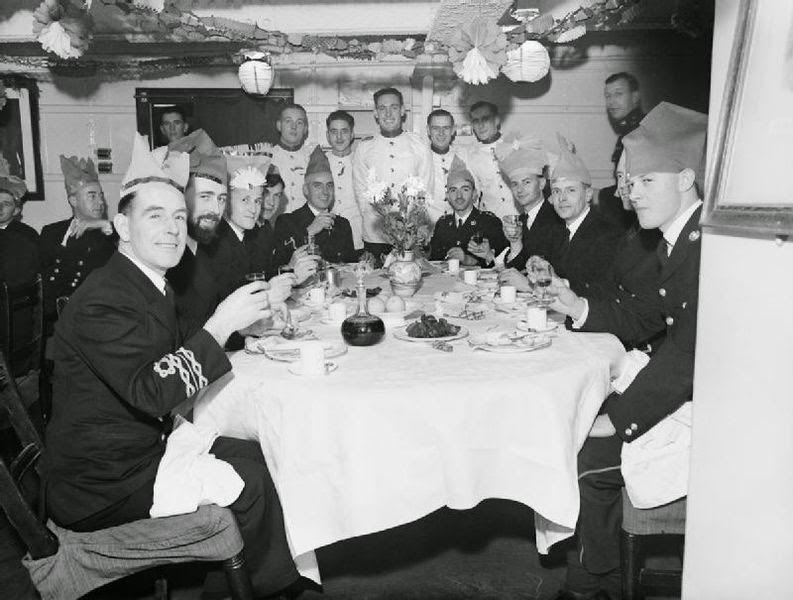
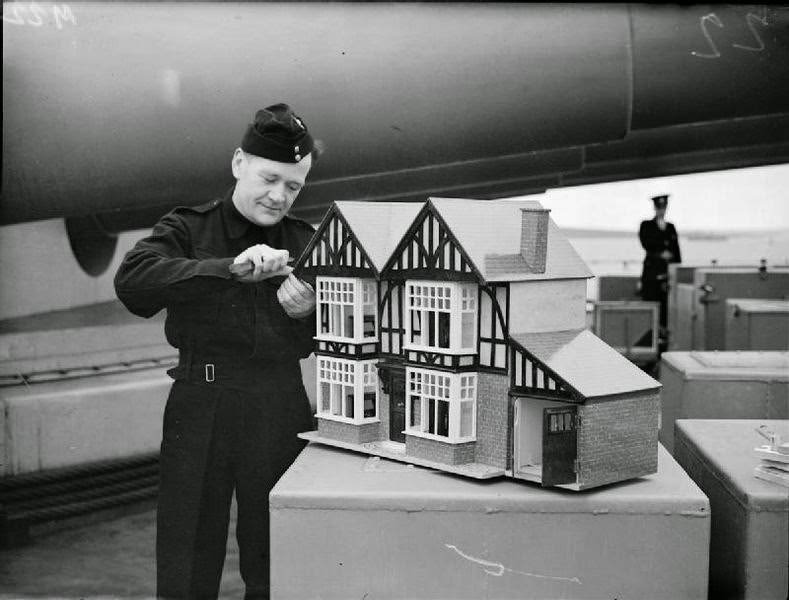
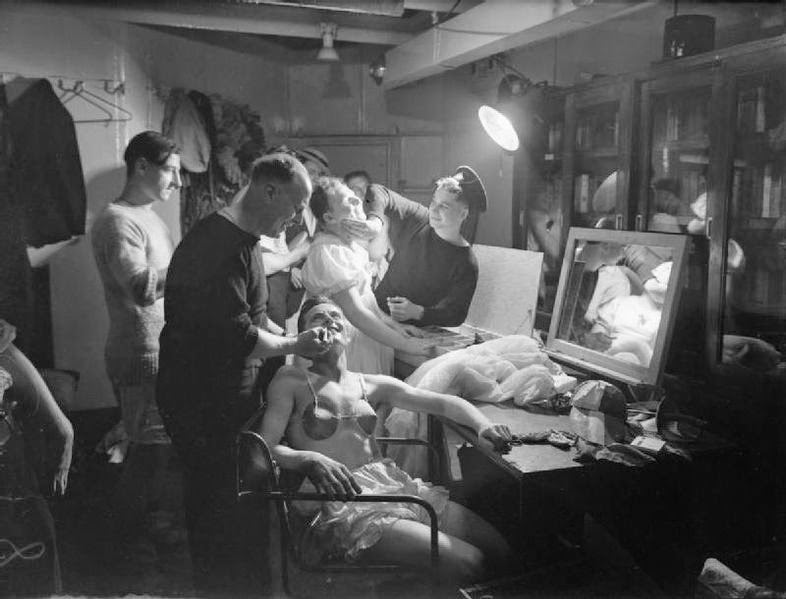
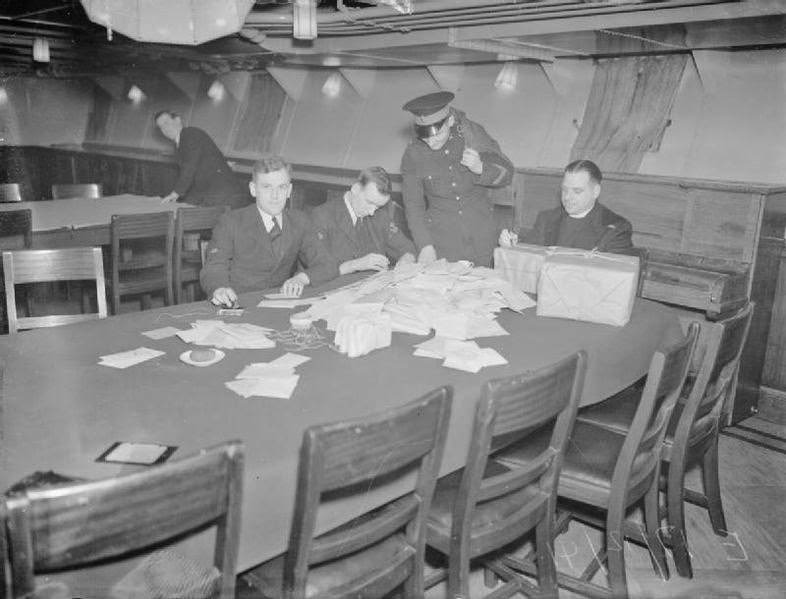
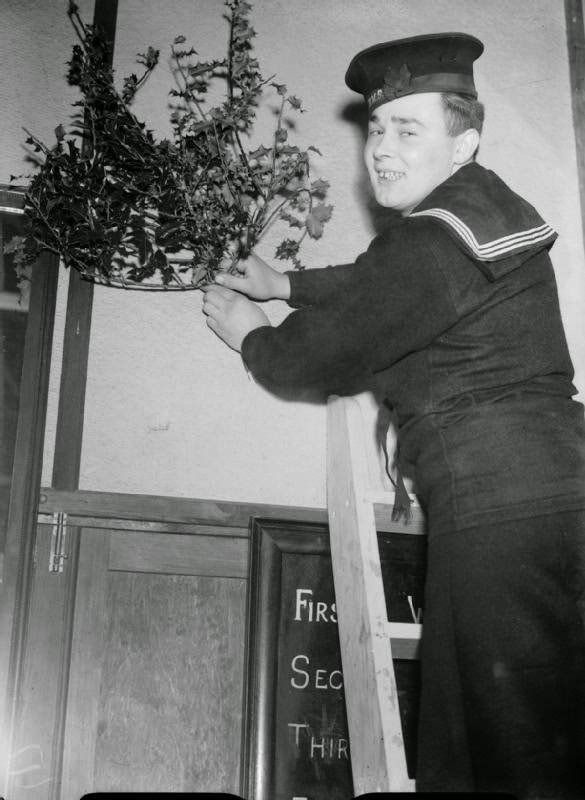
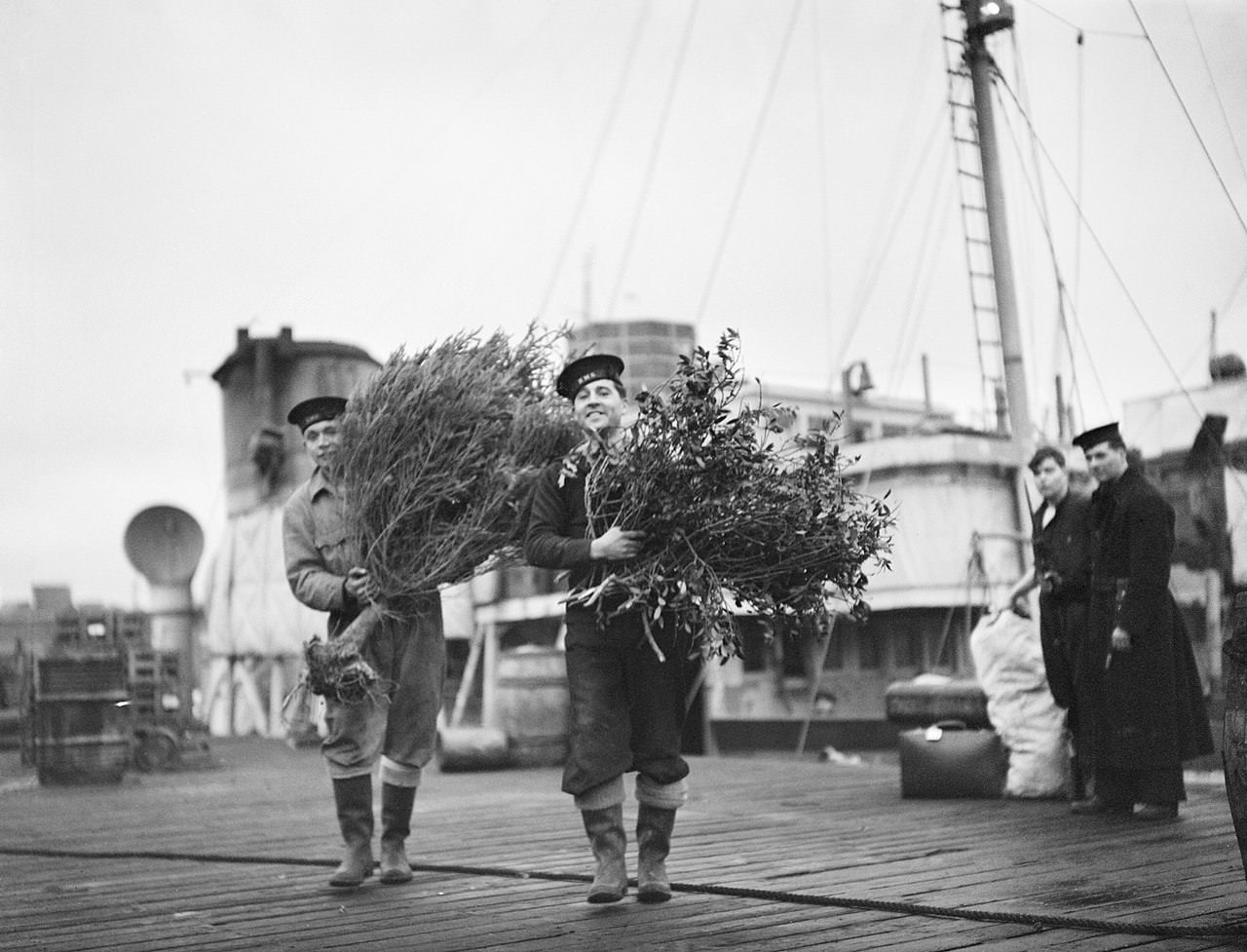
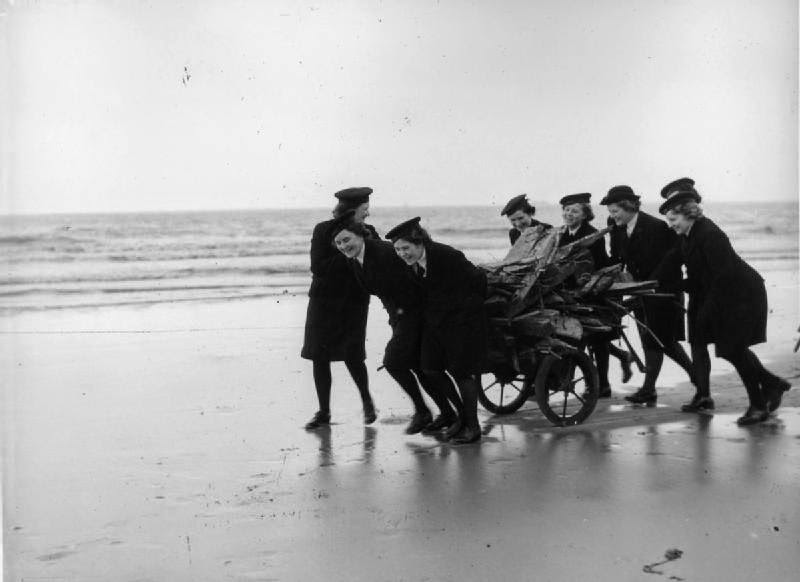
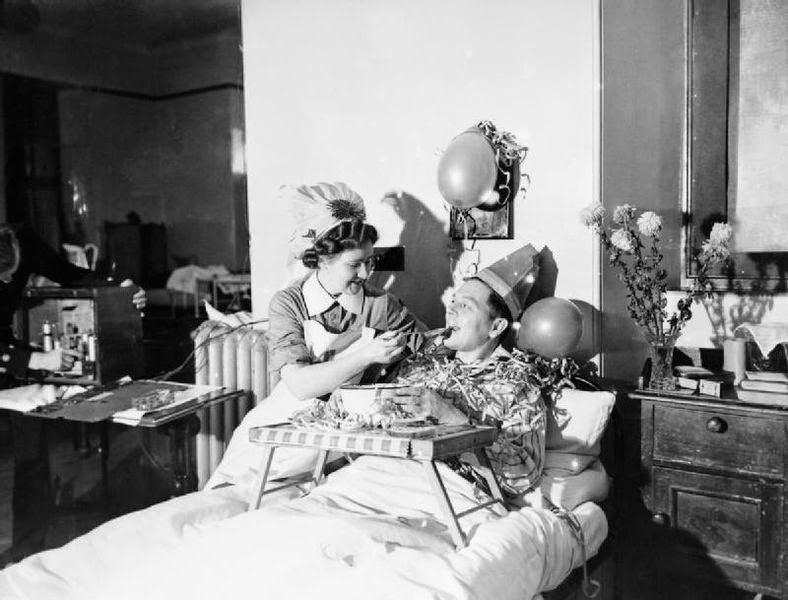
Women serving in the naval services found their own ways to celebrate. Wrens at a station near Liverpool gathered driftwood from Blundell Sands beach and hauled it back on a hand cart to fuel the fire at a children’s Christmas party they were hosting at their hotel. At a naval hospital in Kingseat, Scotland, nurses hand-fed Christmas pudding to recovering patients in December 1941.
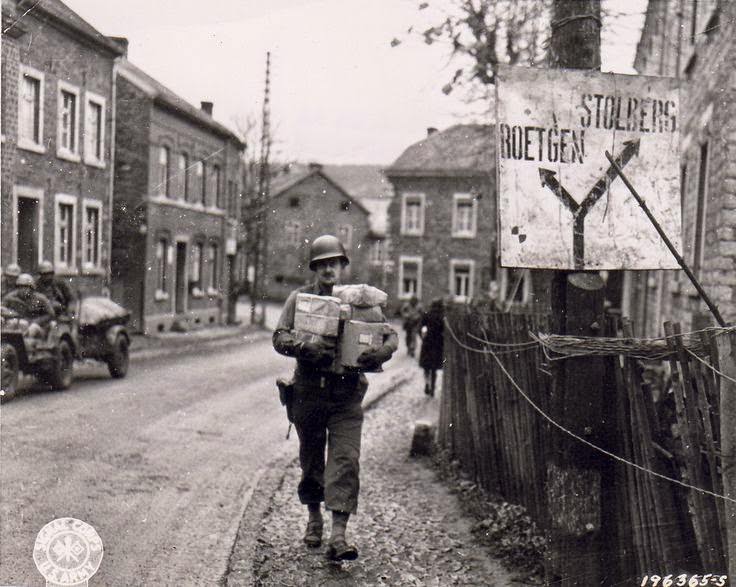
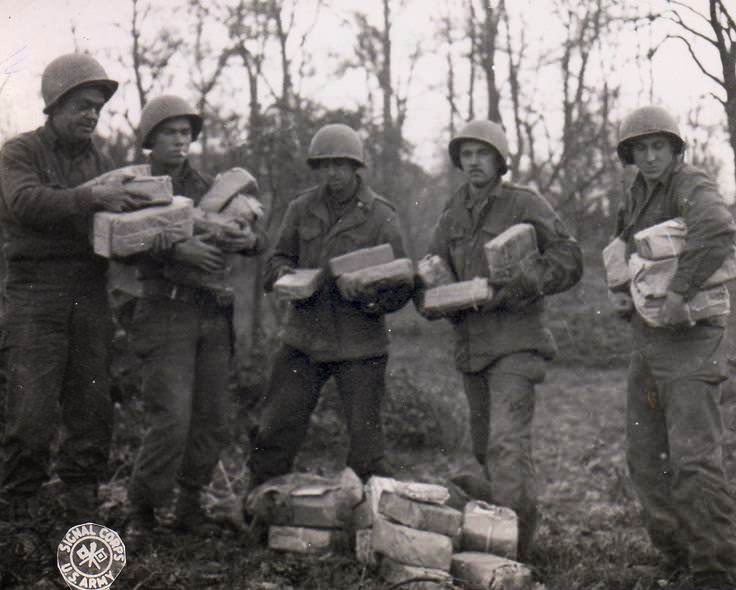
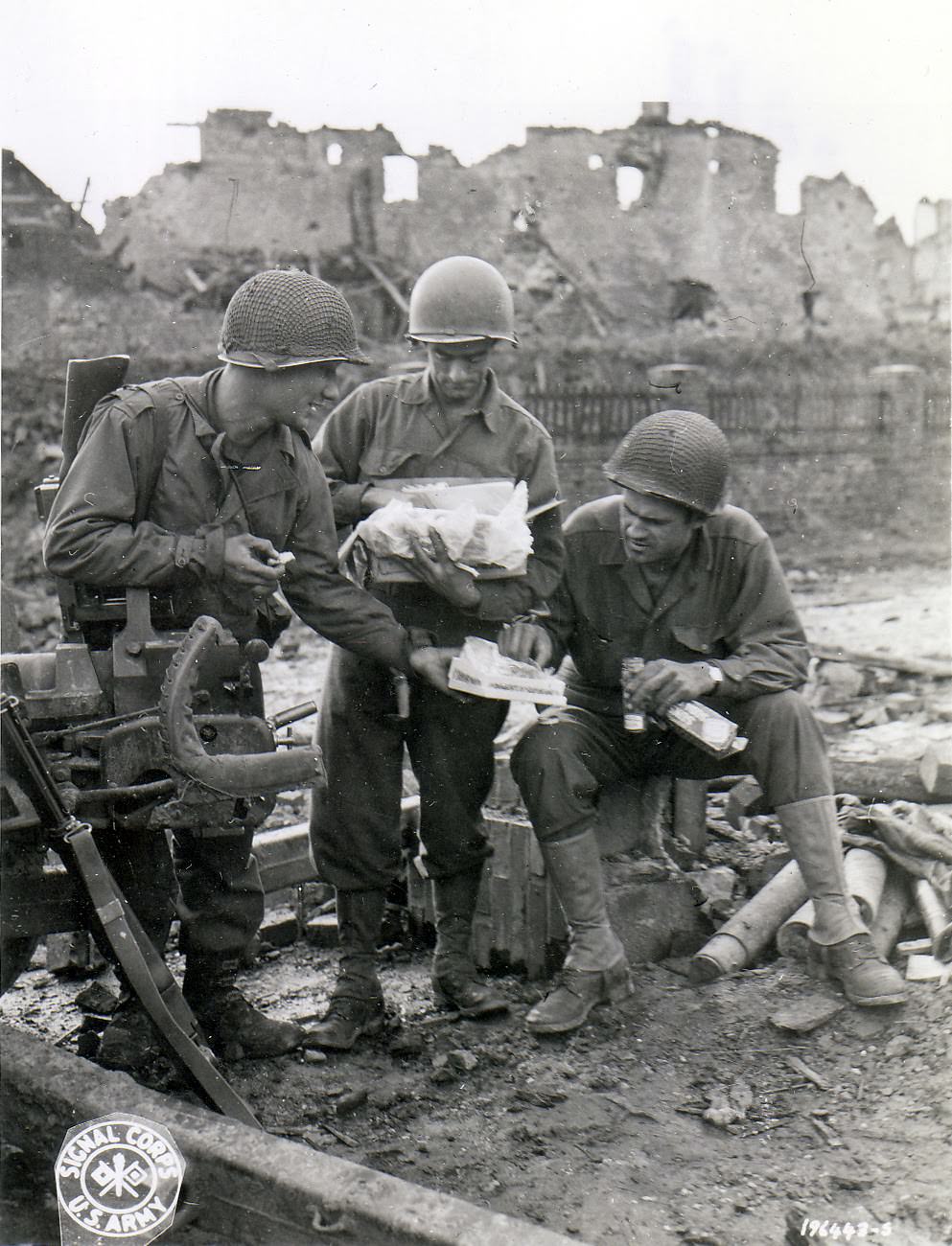
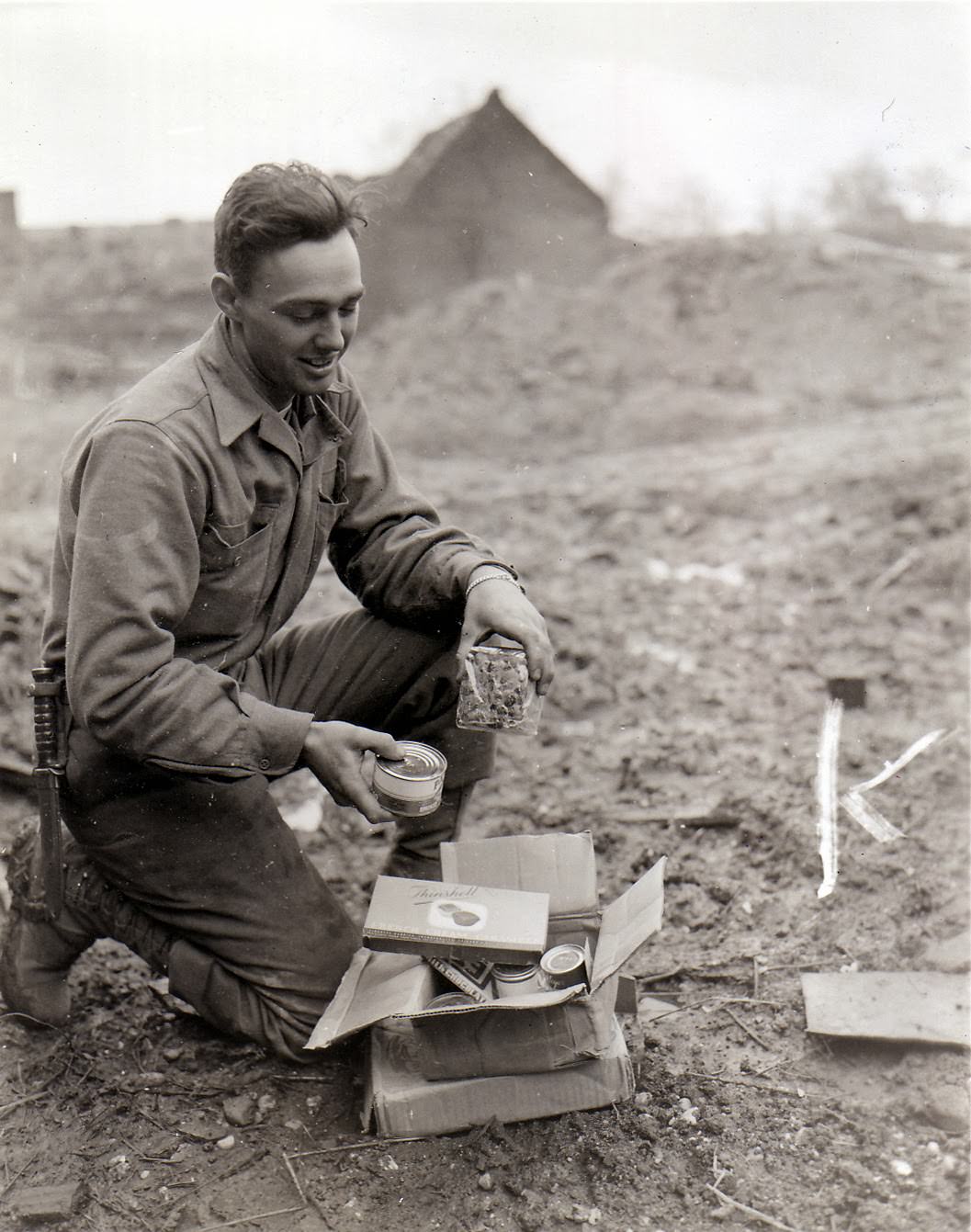
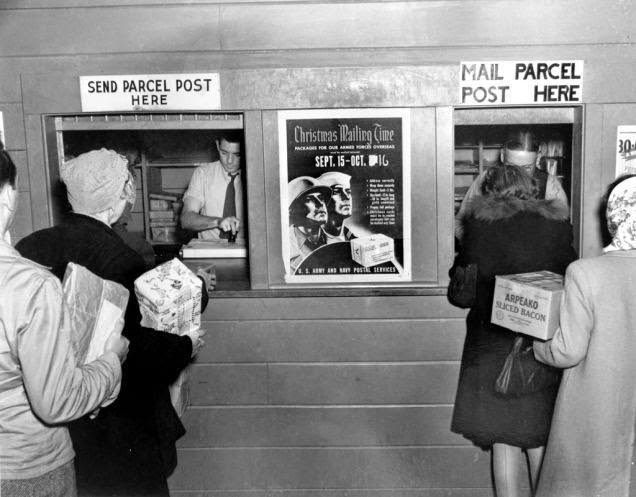
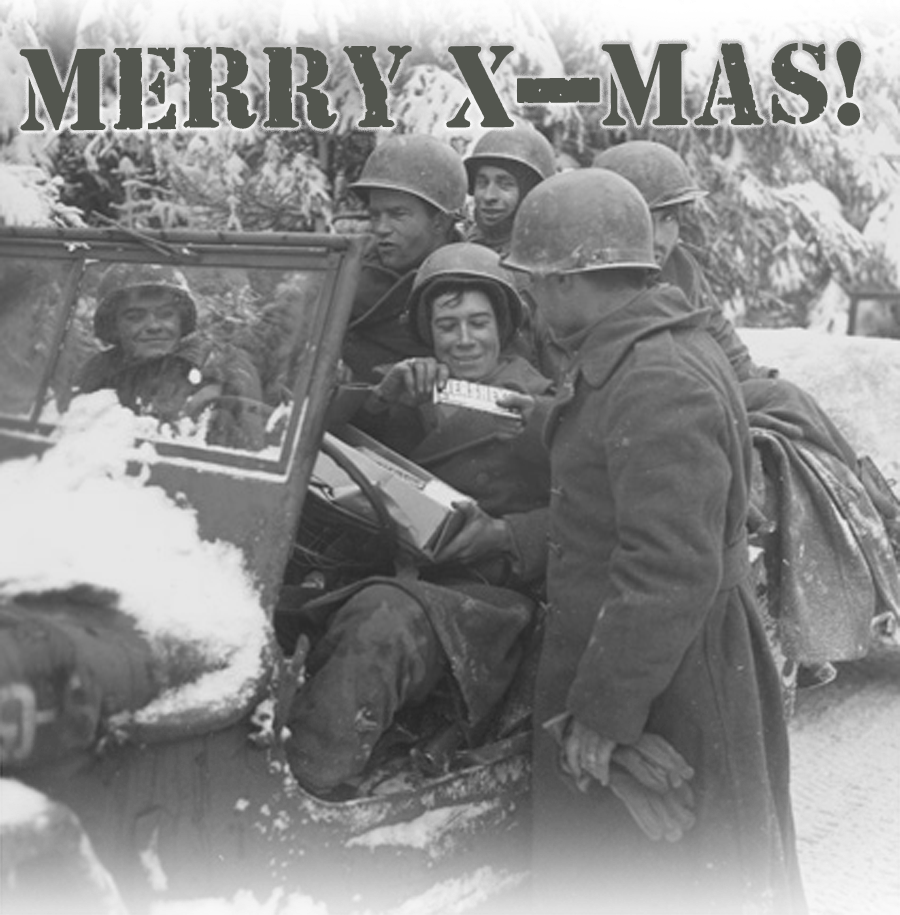
American troops in Europe spent much of their Christmas energy on packages from home. The Army and Fleet Post Offices worked hard to get mail to the front lines. Soldiers sorted and delivered parcels in Germany as early as mid-November 1944, racing to get them distributed before Christmas. Near Aachen, Sergeant Joseph H. Kadlec was photographed on November 14, 1944 delivering packages sent from home. Groups of soldiers were photographed at supply points opening boxes together and sharing the contents.
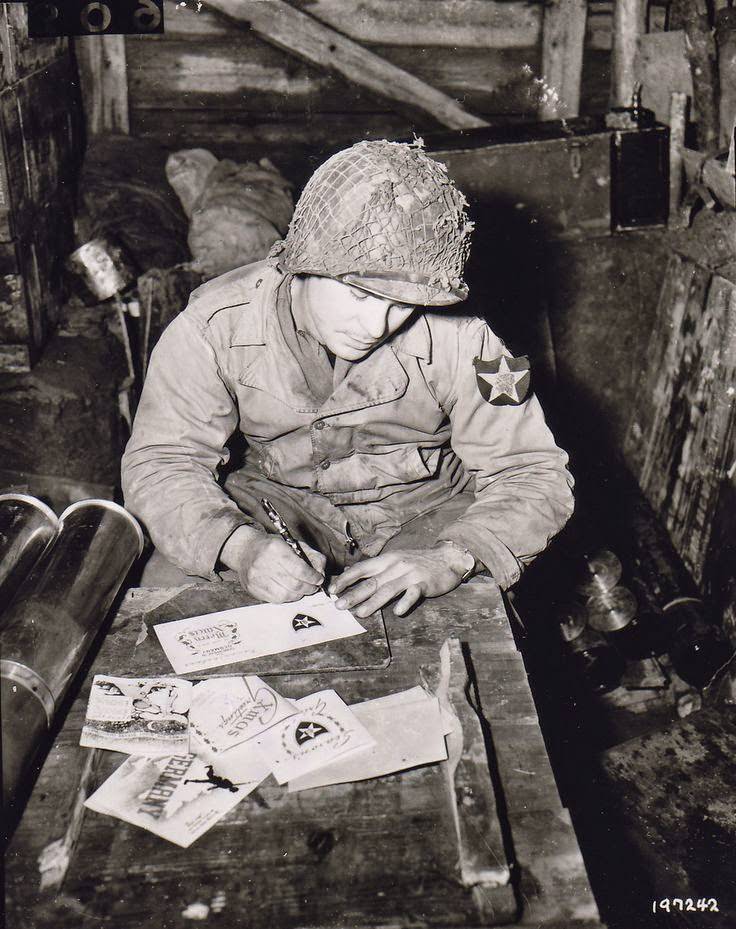
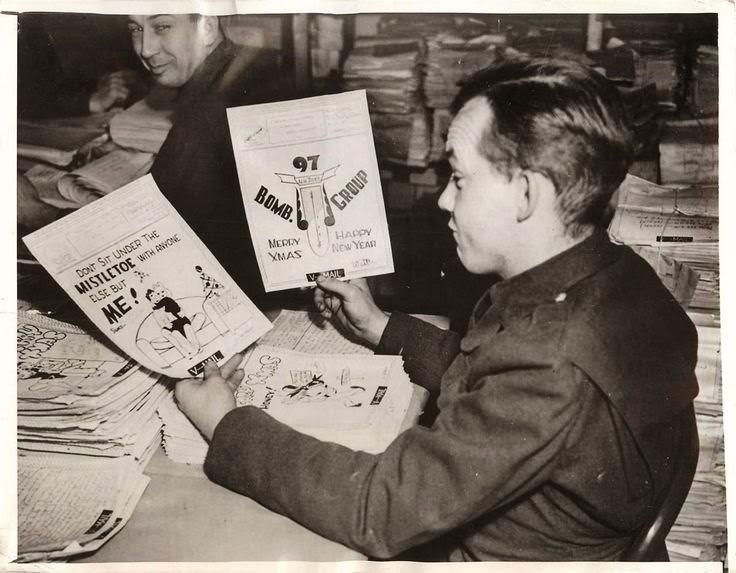
Pvt. Walter Prsybyla of the 37th Field Artillery Regiment found a quiet corner in an artillery ammunition storehouse in Heckhalenfeld, Germany, on November 30, 1944 to write Christmas cards back to friends and family. Soldiers also sent decorated V-Mail — a photographically reduced letter format used to save shipping space — from England back to the United States in 1942.
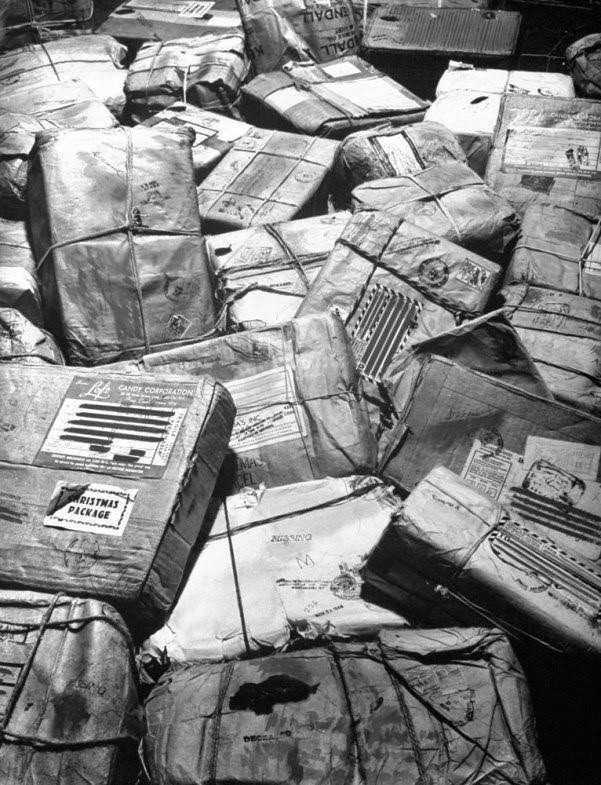
Not all packages reached their intended recipients. In New York City in 1944, piles of Christmas parcels addressed to American servicemen listed as missing or killed in action stacked up at sorting facilities, waiting to be returned to the senders. It was a stark and visible reminder of the war’s cost measured in the most ordinary of ways.
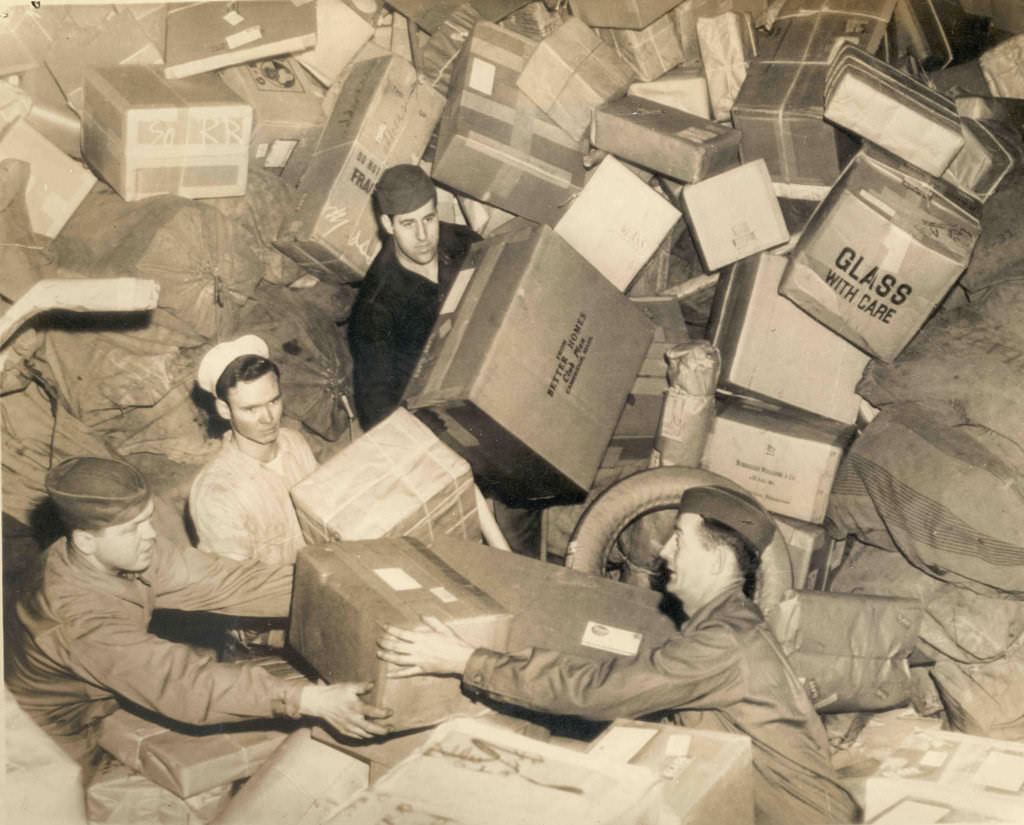
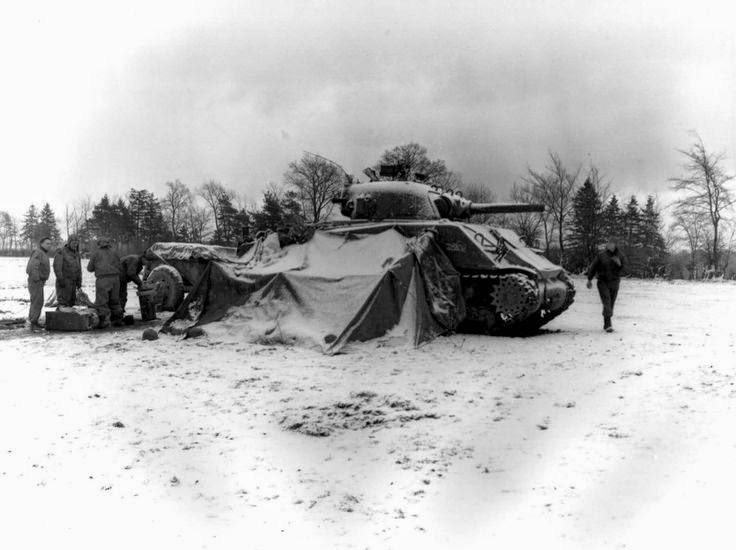
The Battle of the Bulge, which began in December 1944, disrupted Christmas for thousands of American troops fighting through Belgium and Luxembourg. One photograph captures a G.I. finally receiving his delayed Christmas package in Belgium in January 1945 — weeks after it was supposed to arrive. Meanwhile, tankers of the US 5th Armored Regiment gathered around an open fire near Eupen on December 30, 1944, opening presents next to their M4 Sherman tanks.
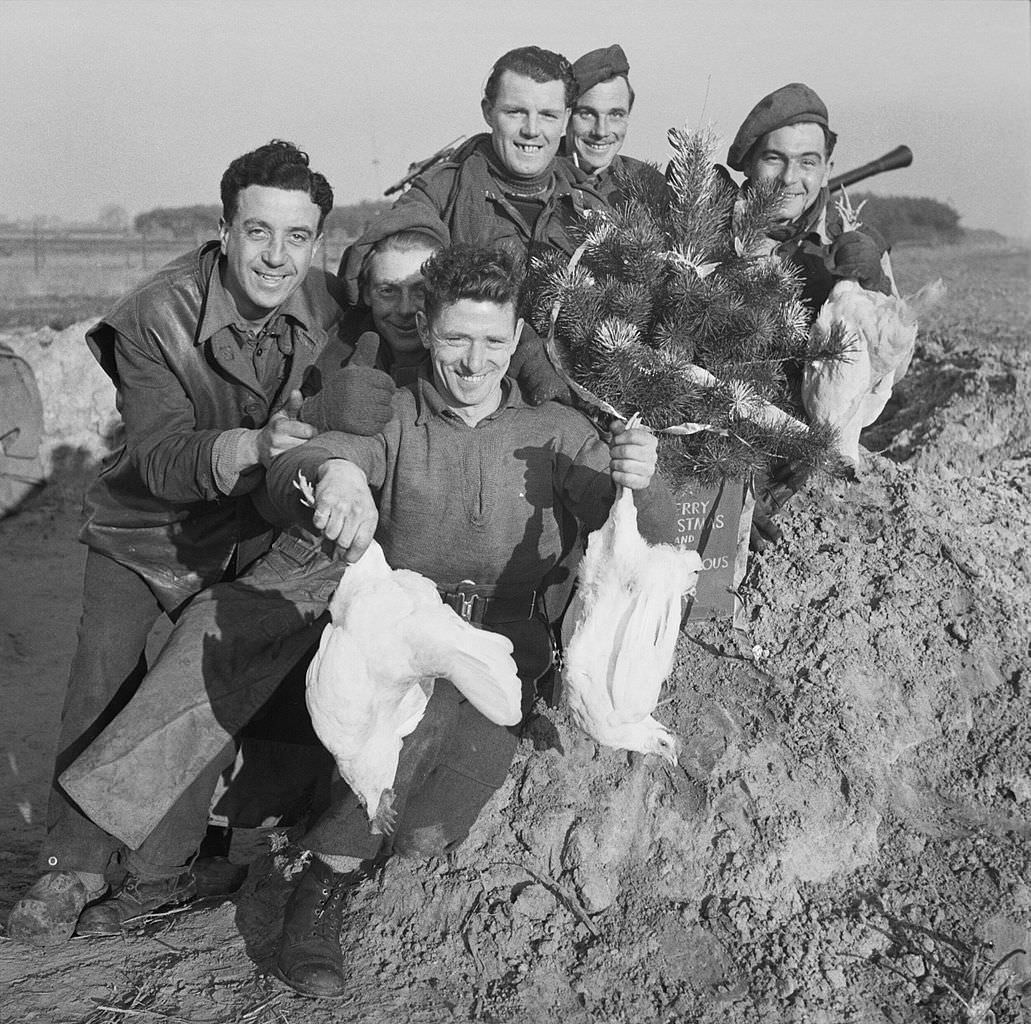
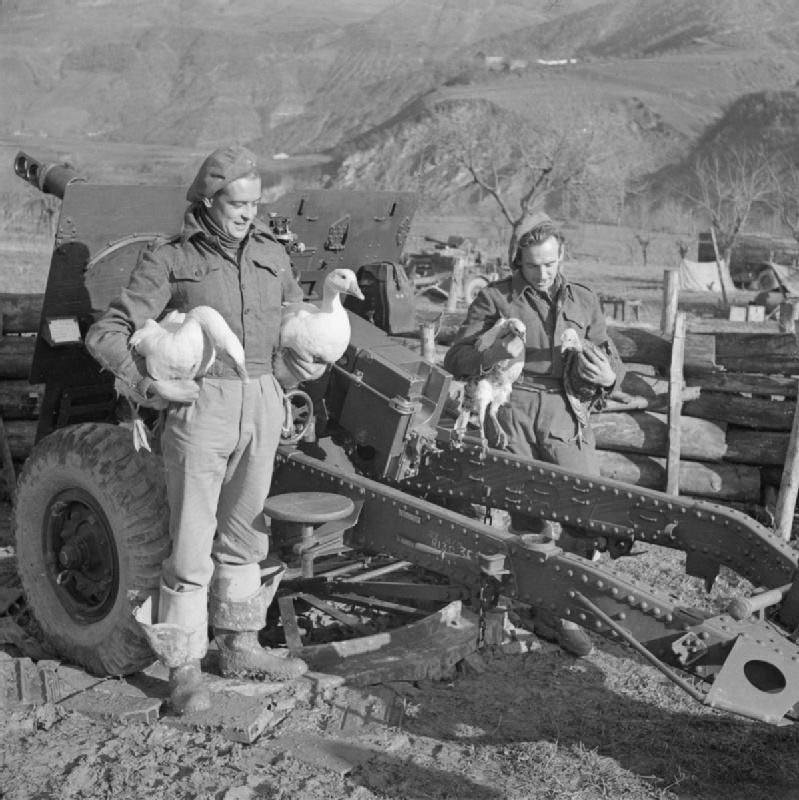
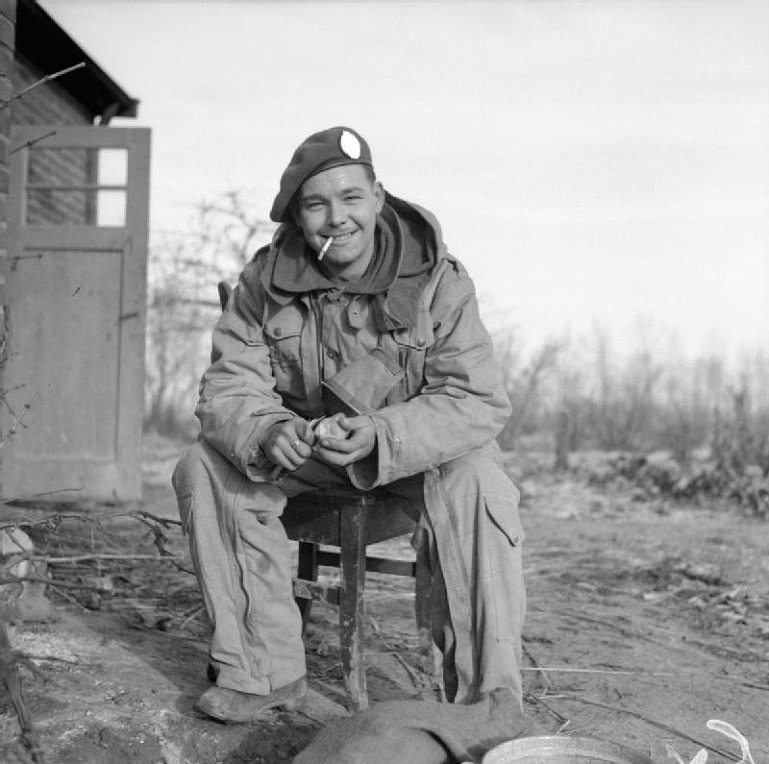
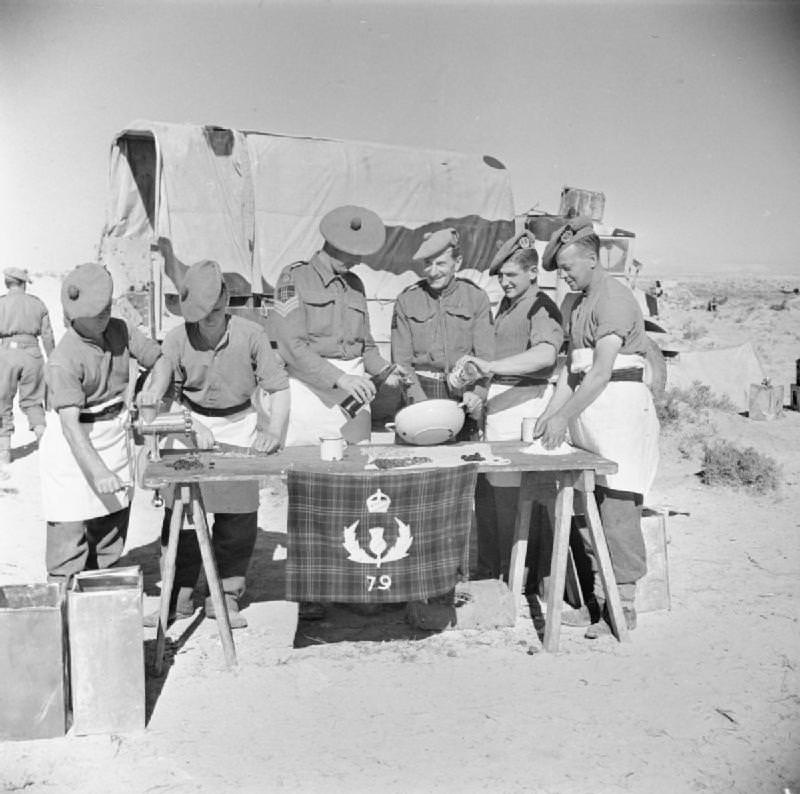
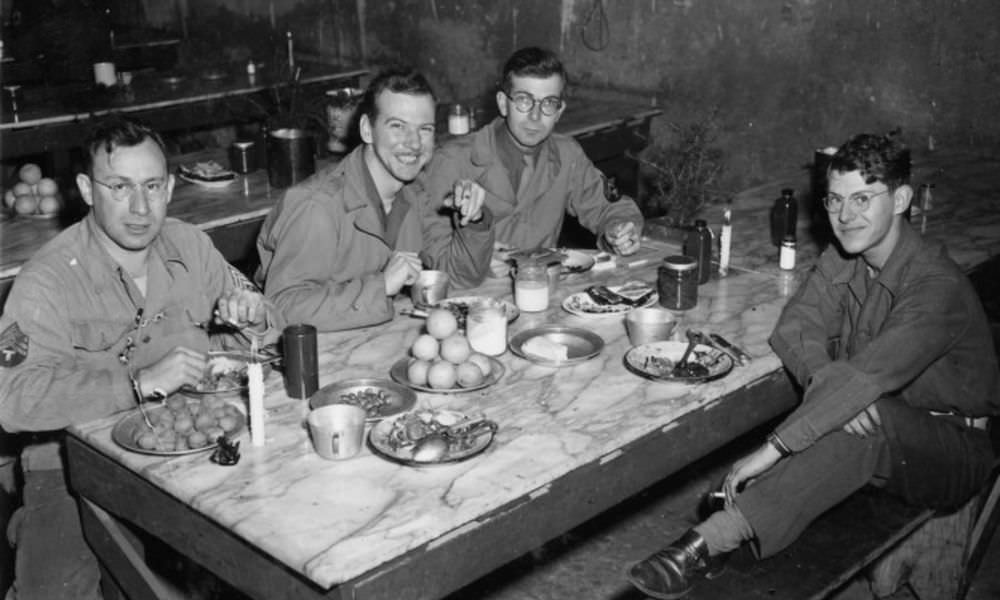
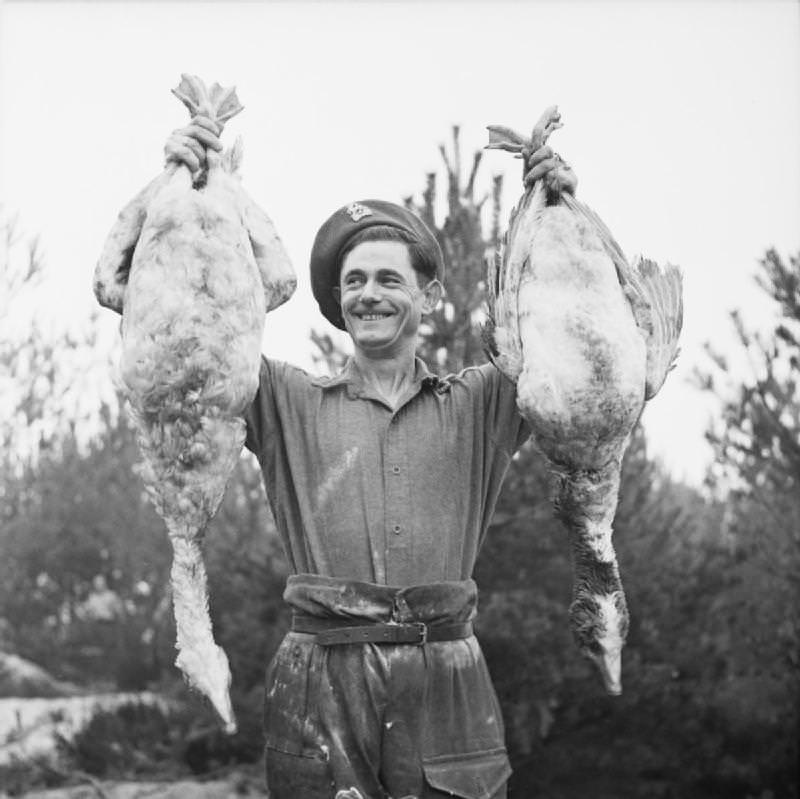
Food was a central part of Christmas wherever troops were stationed. Sourcing the main course required creativity. In Holland in 1944, soldiers tracked down live chickens. In Italy, gunners posed with geese and turkeys destined for the Christmas pot. In Germany, a photograph shows a soldier hoisting two geese overhead. A British soldier in Germany was photographed peeling a mountain of potatoes. Scots serving in the Western Sahara in 1942 prepared their Christmas pudding under desert conditions.
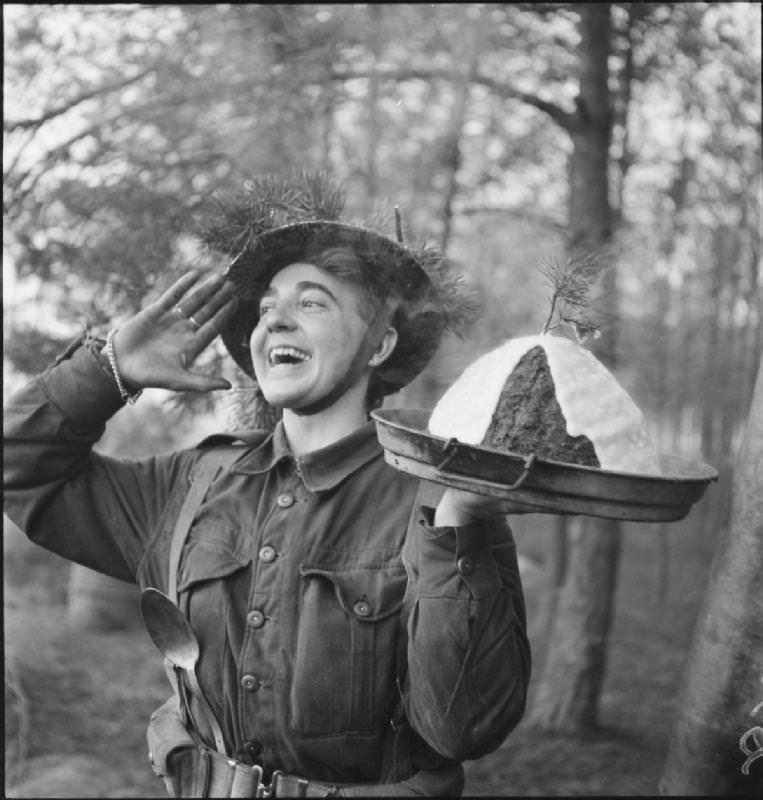
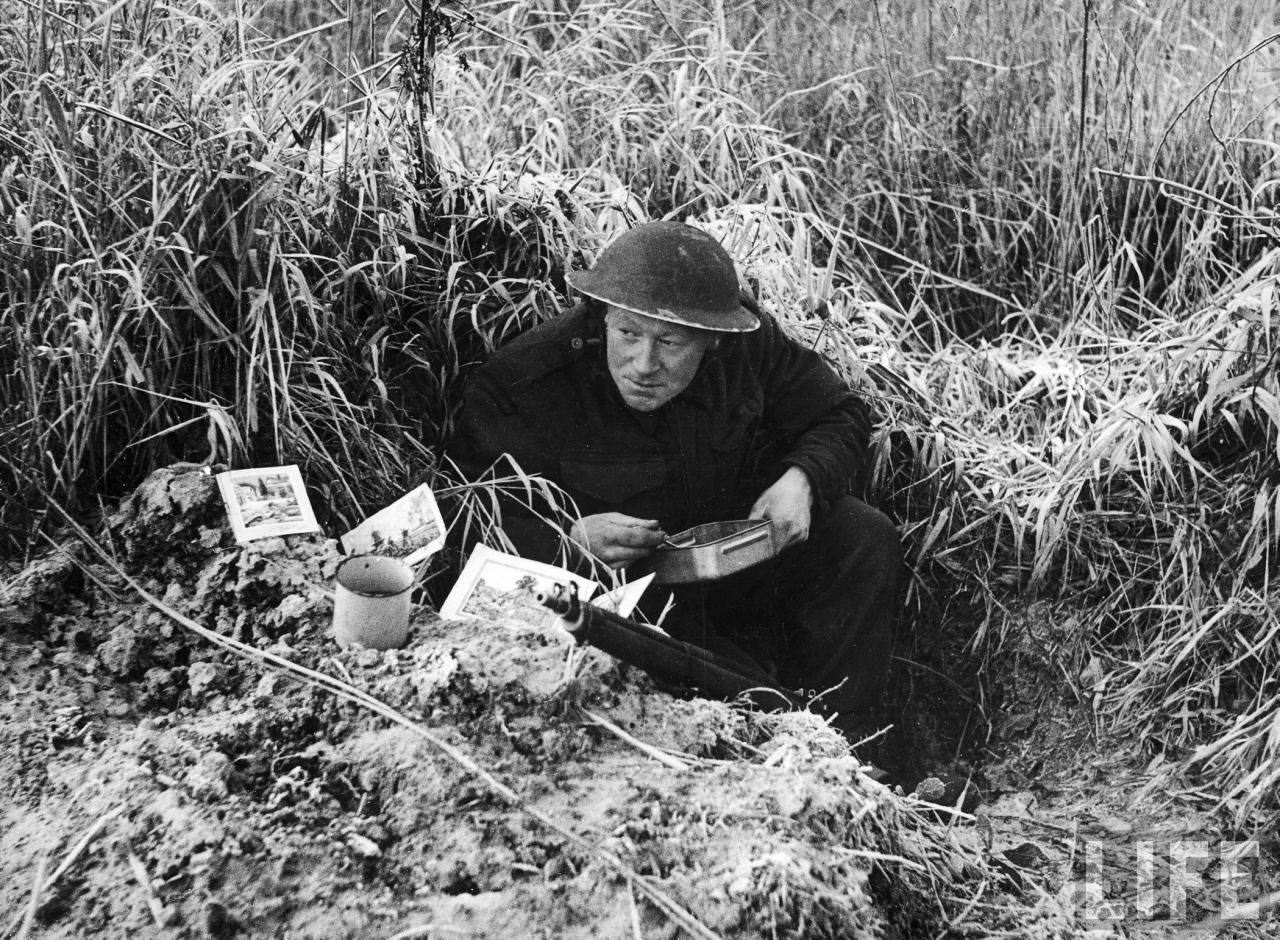
In Italy and the Netherlands, troops brought pudding, parcels, and even a little decoration to the front. British soldiers in the Netherlands in 1944 unpacked Christmas parcels from home that included pudding. One soldier ate his Christmas meal sitting in a slit trench, holiday cards from home propped up outside in the dirt. In the Netherlands, the announcement that the Christmas pudding was ready was photographed as if it were a major military briefing.
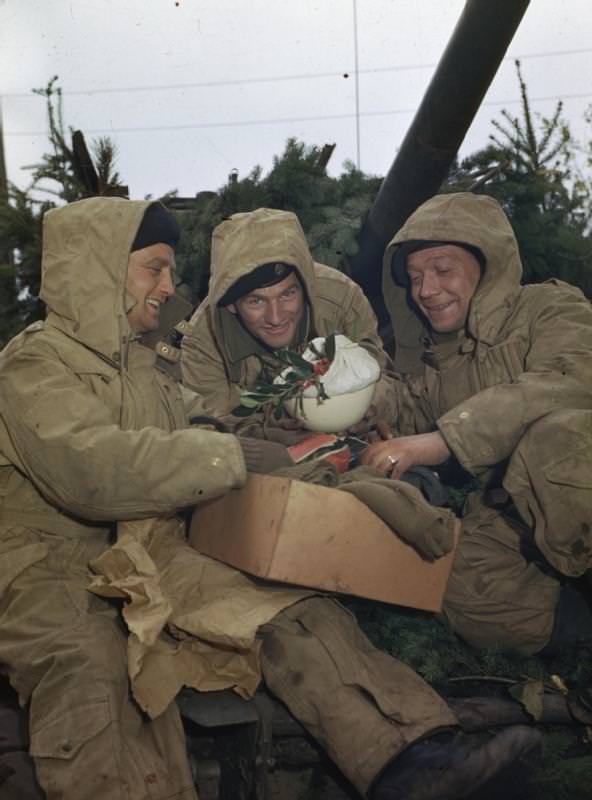
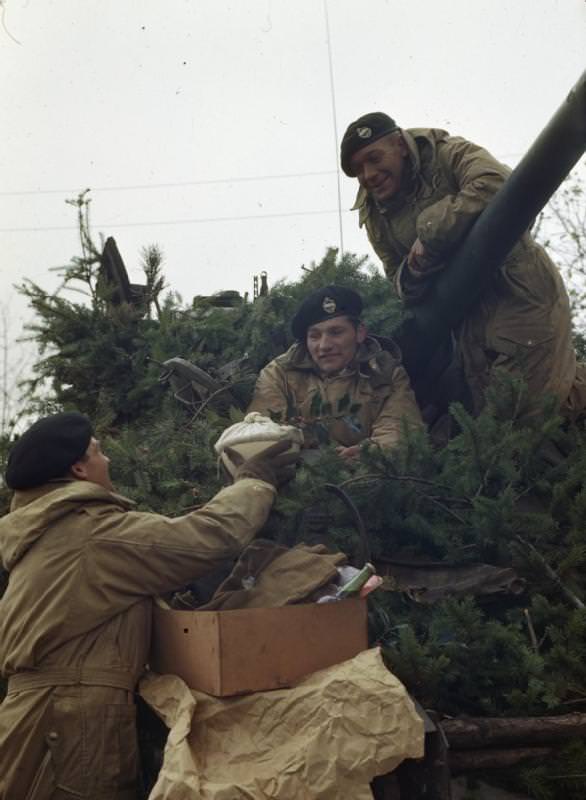
One British tank crew in Holland decorated their armored vehicle with so much greenery that it was described as a traveling Christmas tree. The crew had served together for three years, seeing action in Libya and Italy before reaching Holland. It was a small but telling act — humor and tradition held together under difficult conditions.
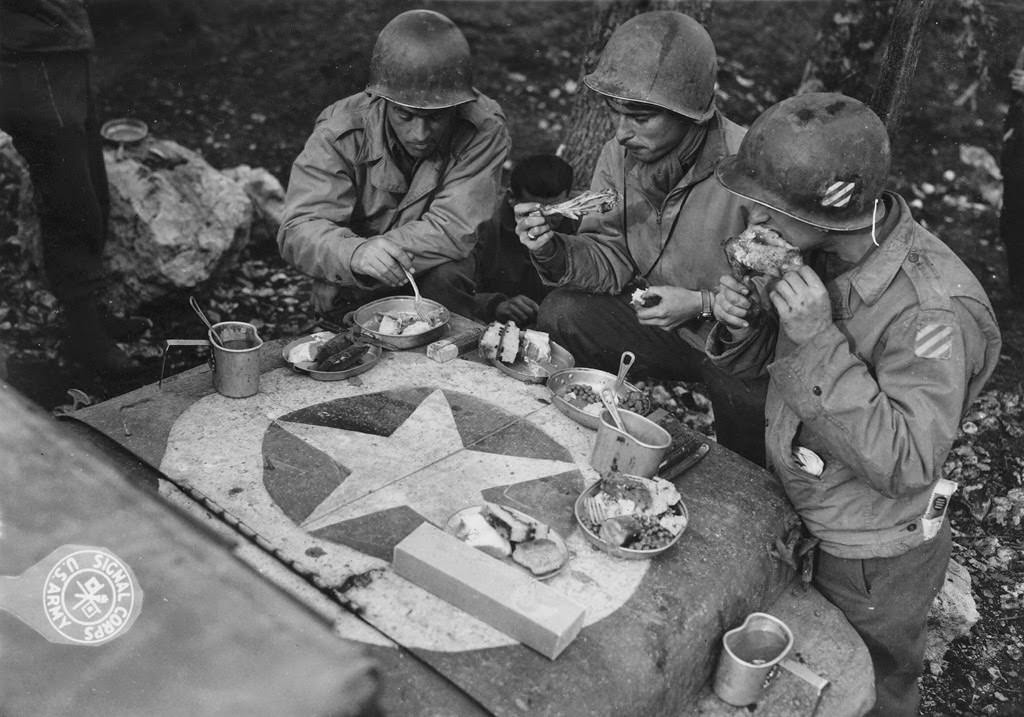
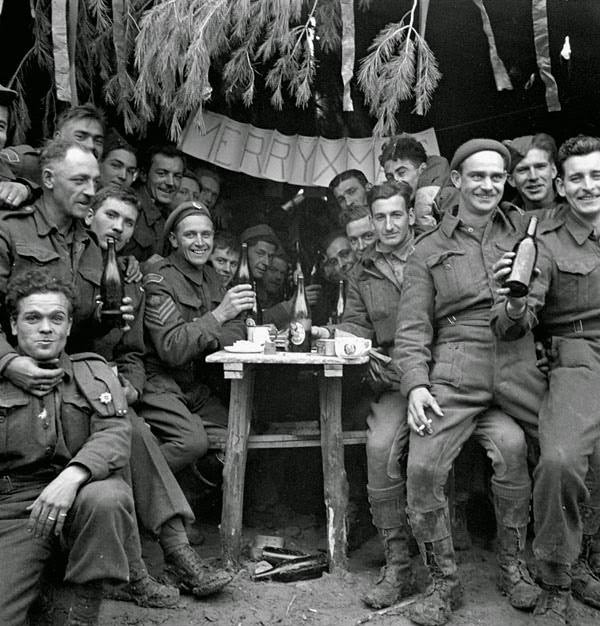
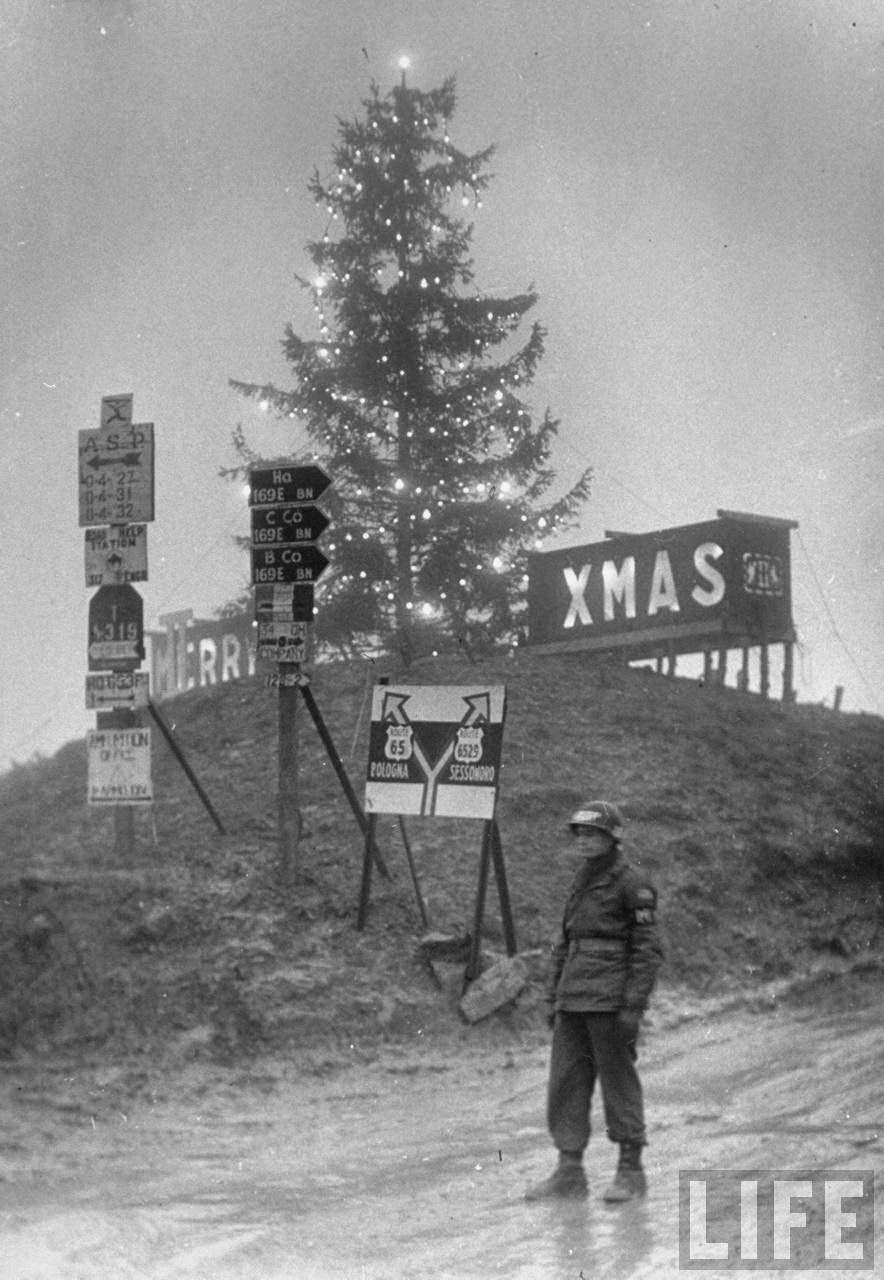
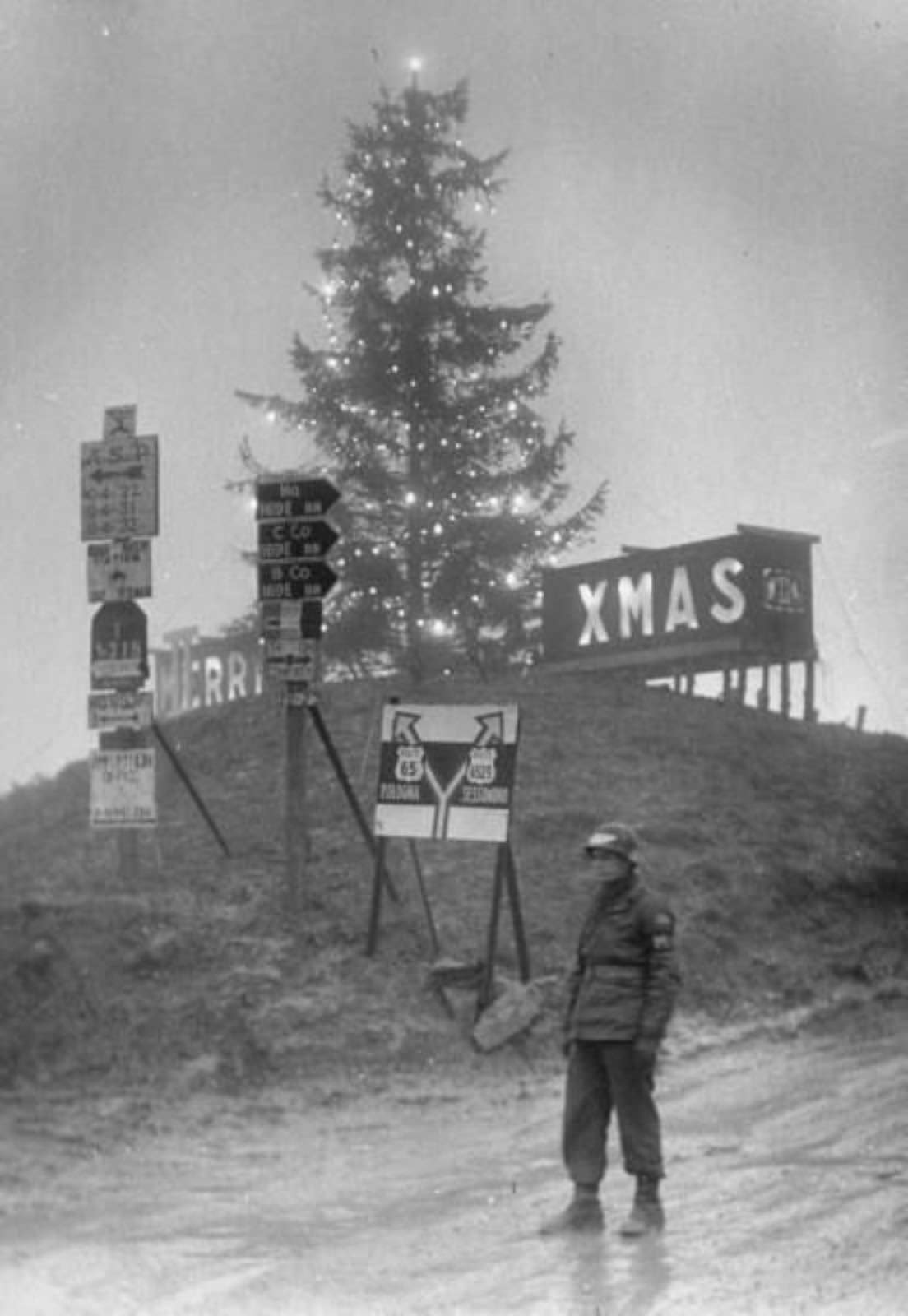
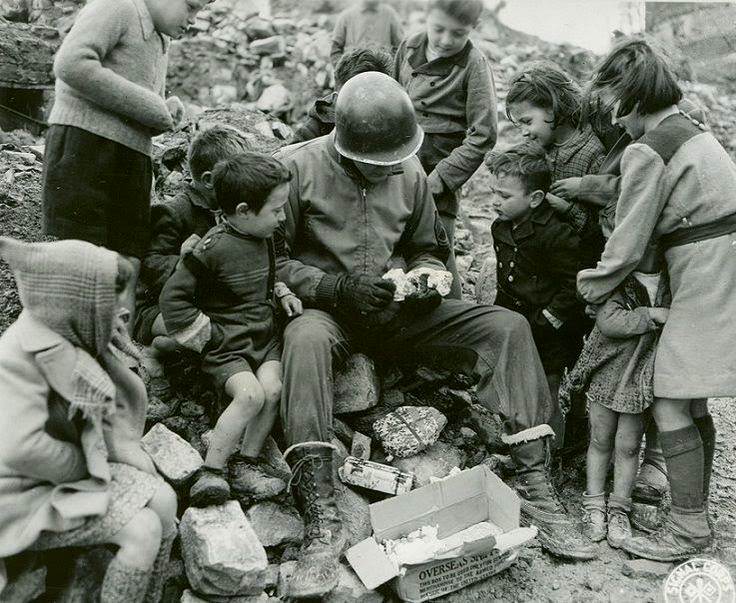
The US Fifth Army erected a 65-foot Christmas tree at the top of Radicosa Pass in Italy at 2,500 feet elevation, lit with Italian bulbs strung up by Special Services and the 53rd Signal Battalion, with a large illuminated “MERRY XMAS” sign behind it. Nearby, an American soldier shared his presents from home with local Italian children. The 3rd Infantry Division sat down to Christmas dinner in Italy in 1943.
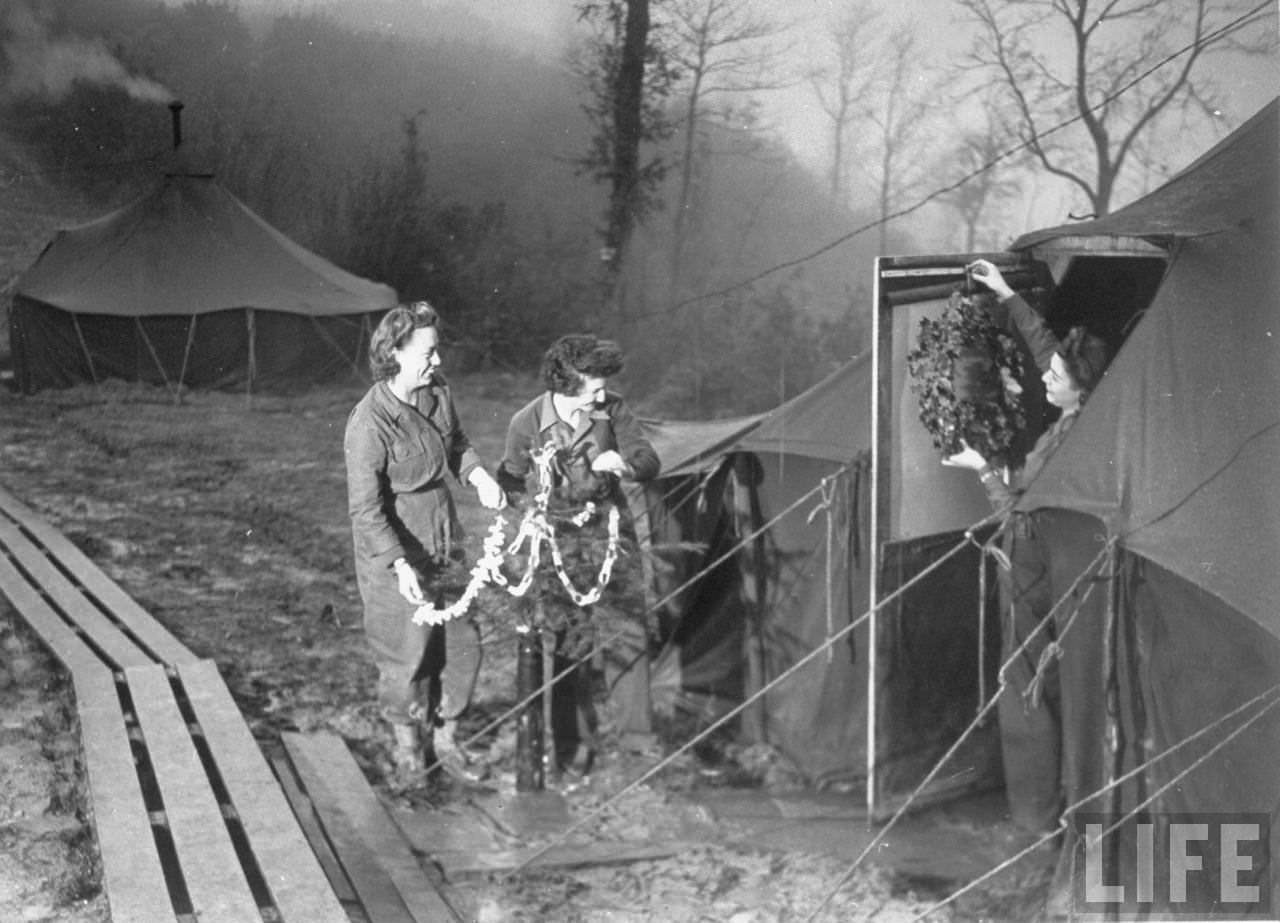
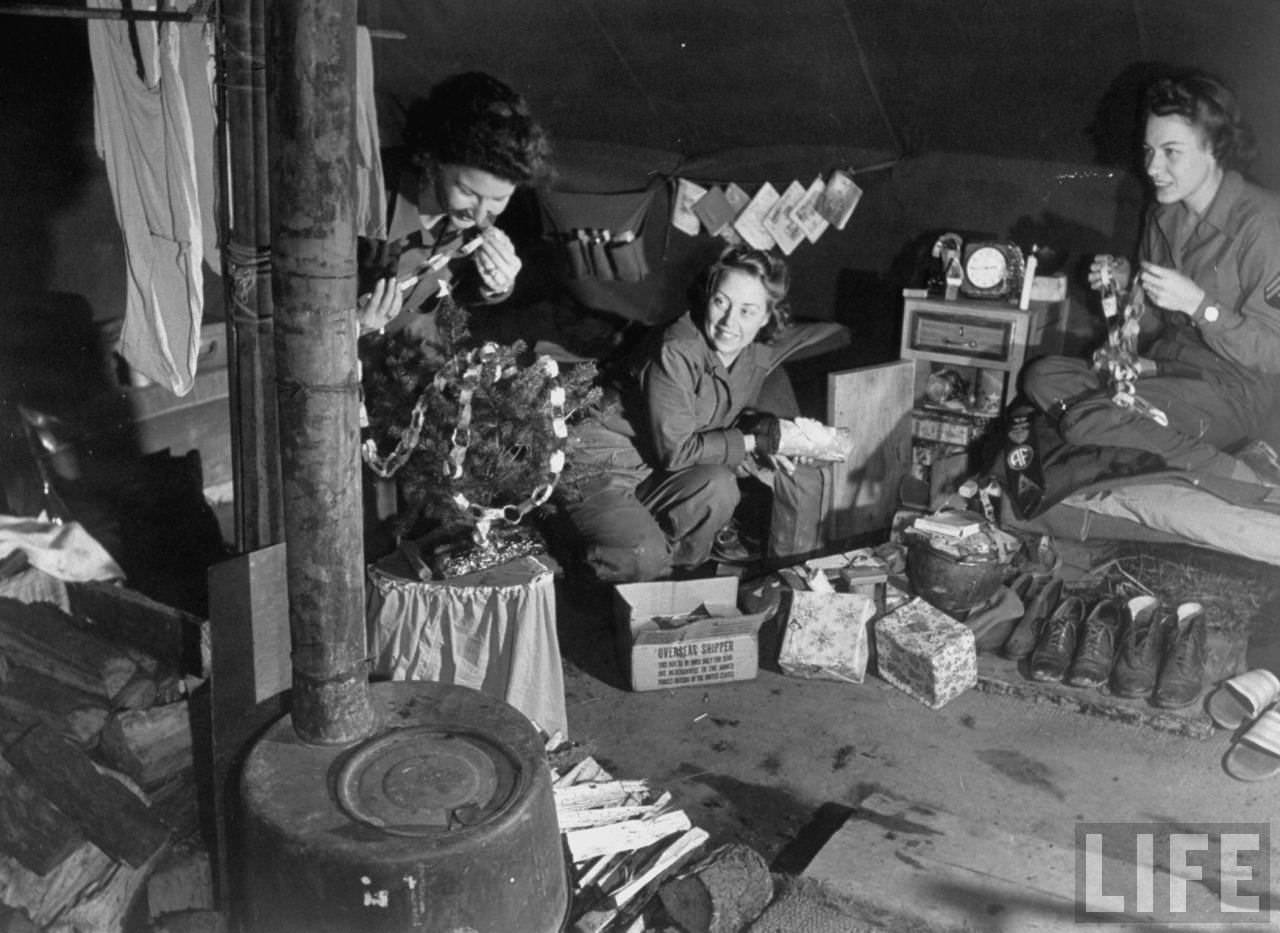
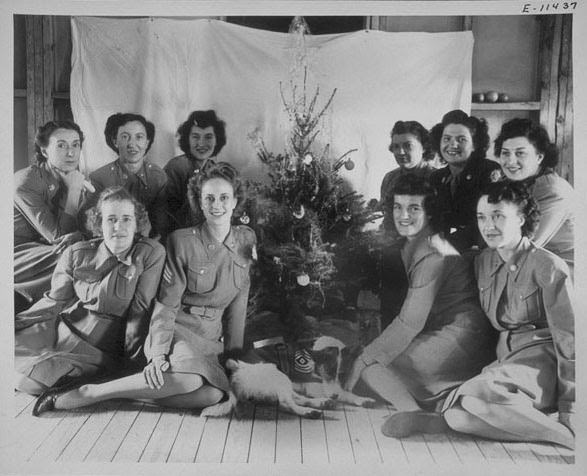
American WACs (Women’s Army Corps) stationed in Italy in 1944 made the most of minimal resources. One group decorated their tent at the front. Another unit made paper chains by hand to put on a tiny Christmas tree. These were small gestures, but they were deliberate efforts to hold on to something familiar.
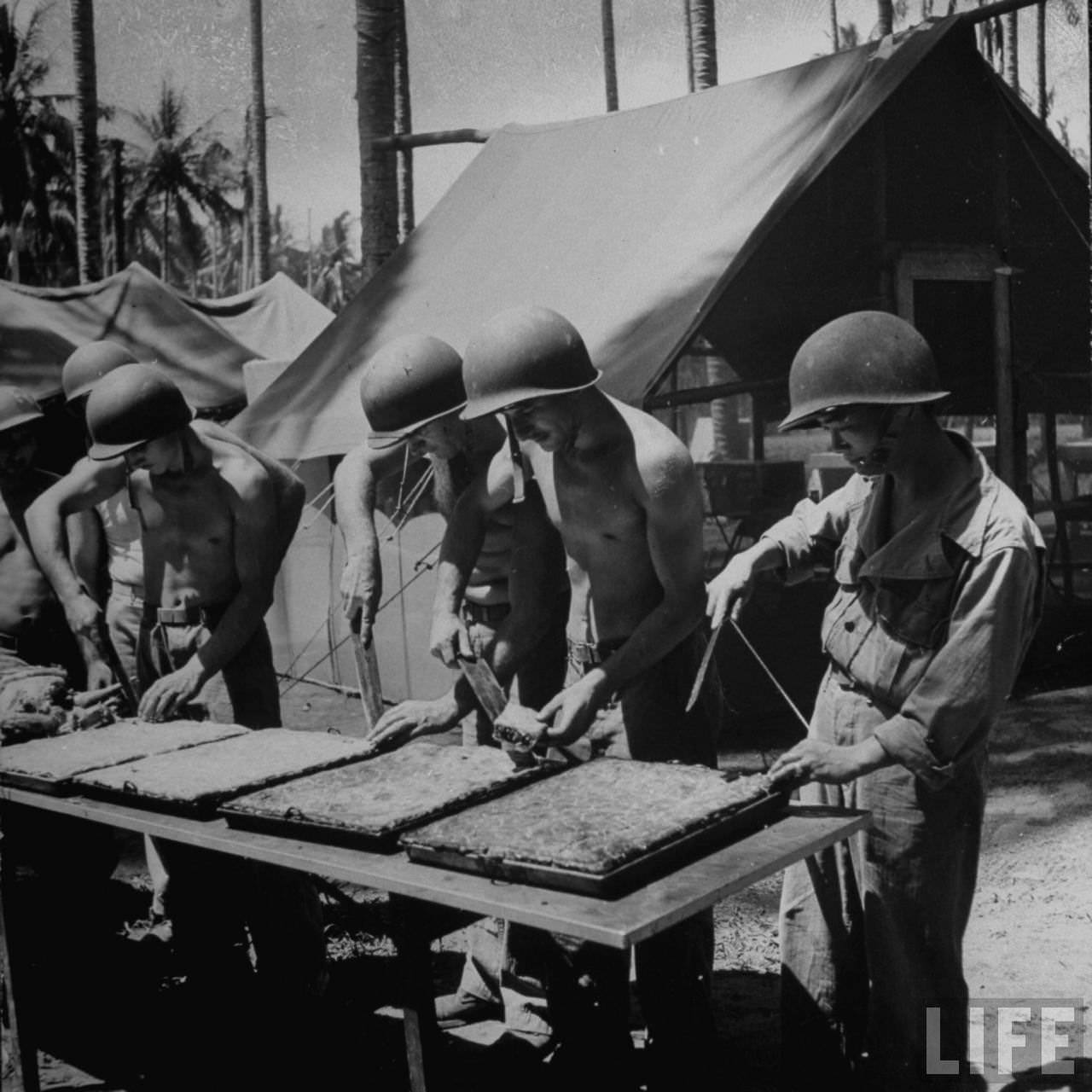
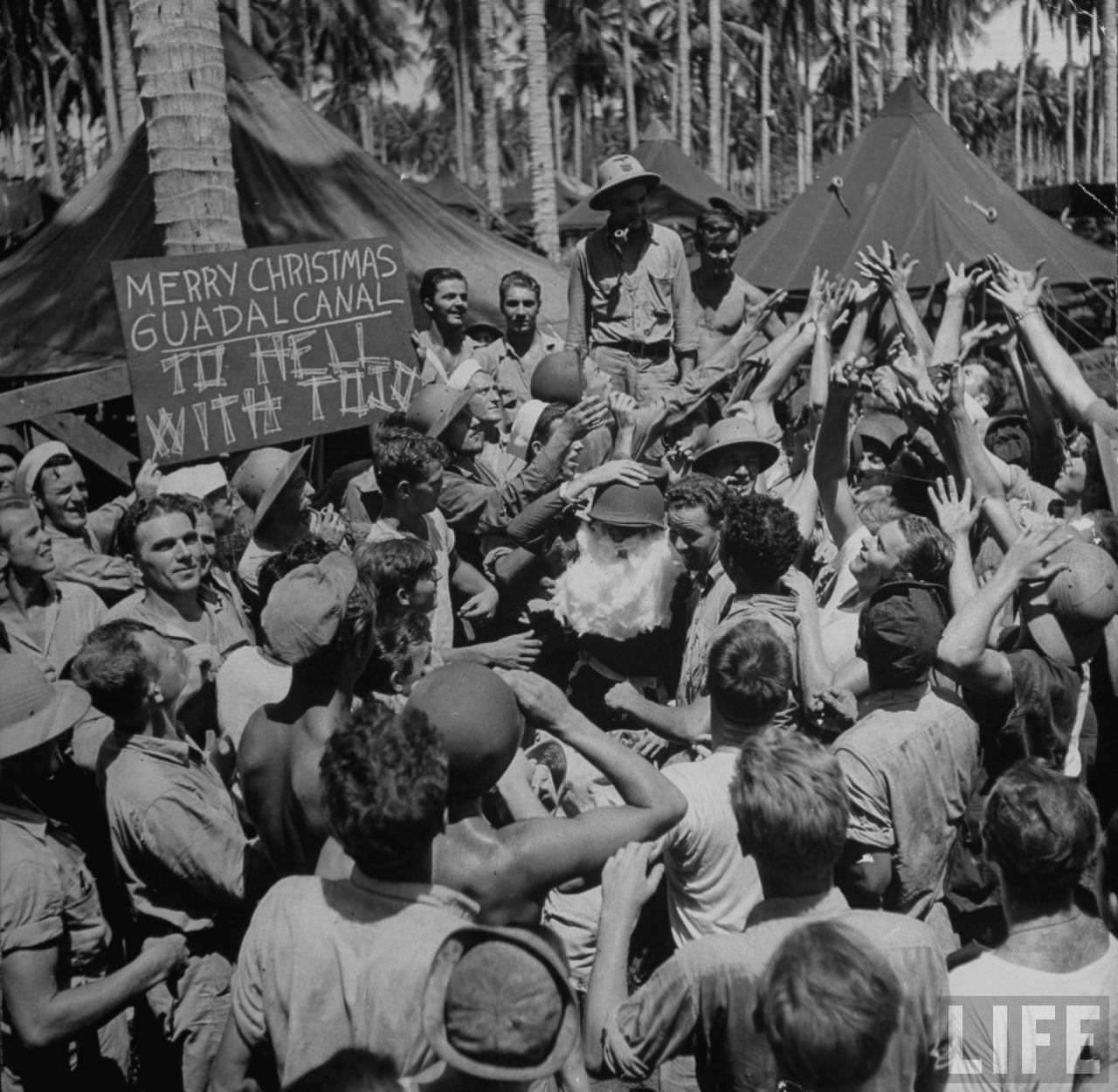
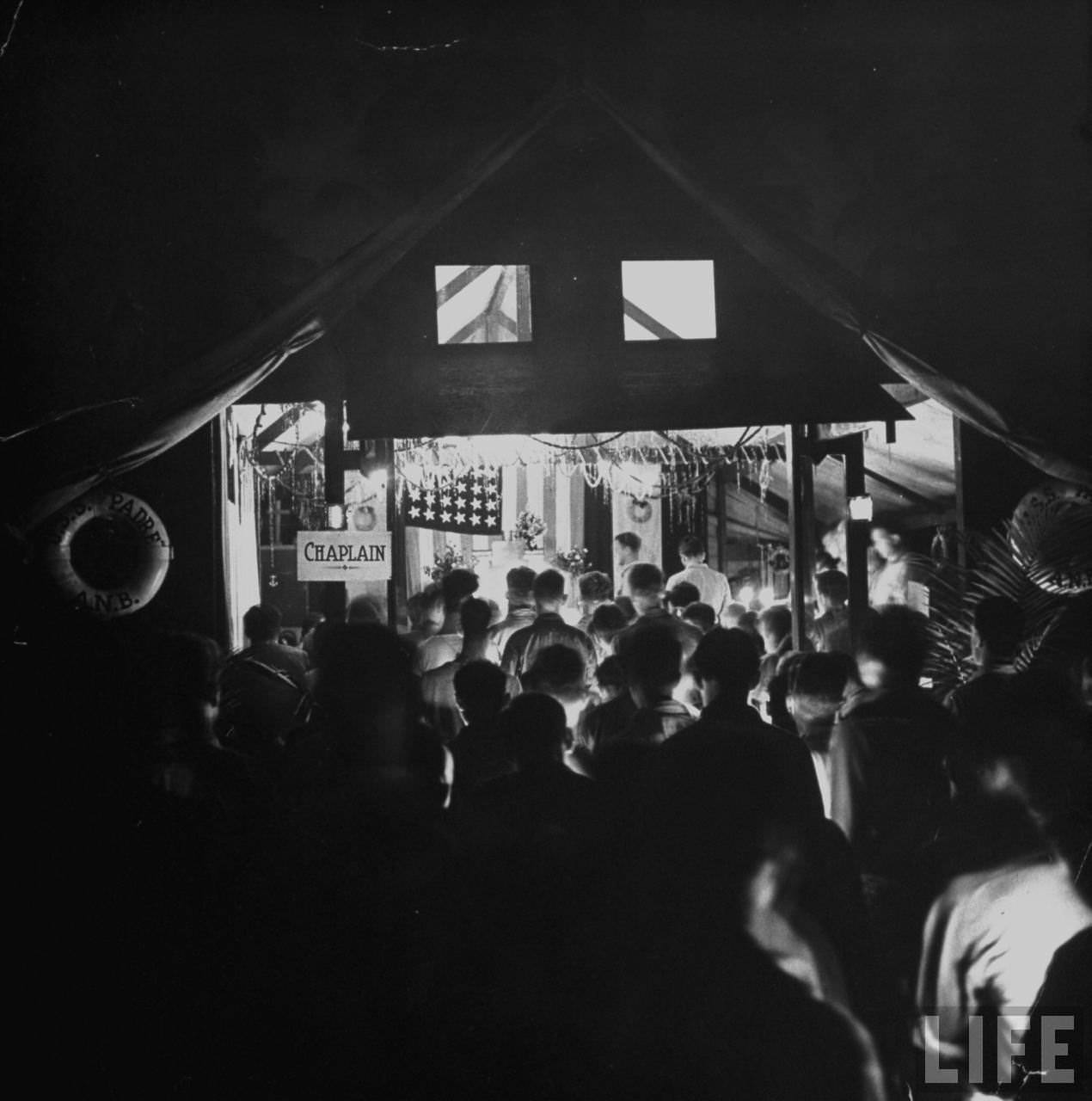
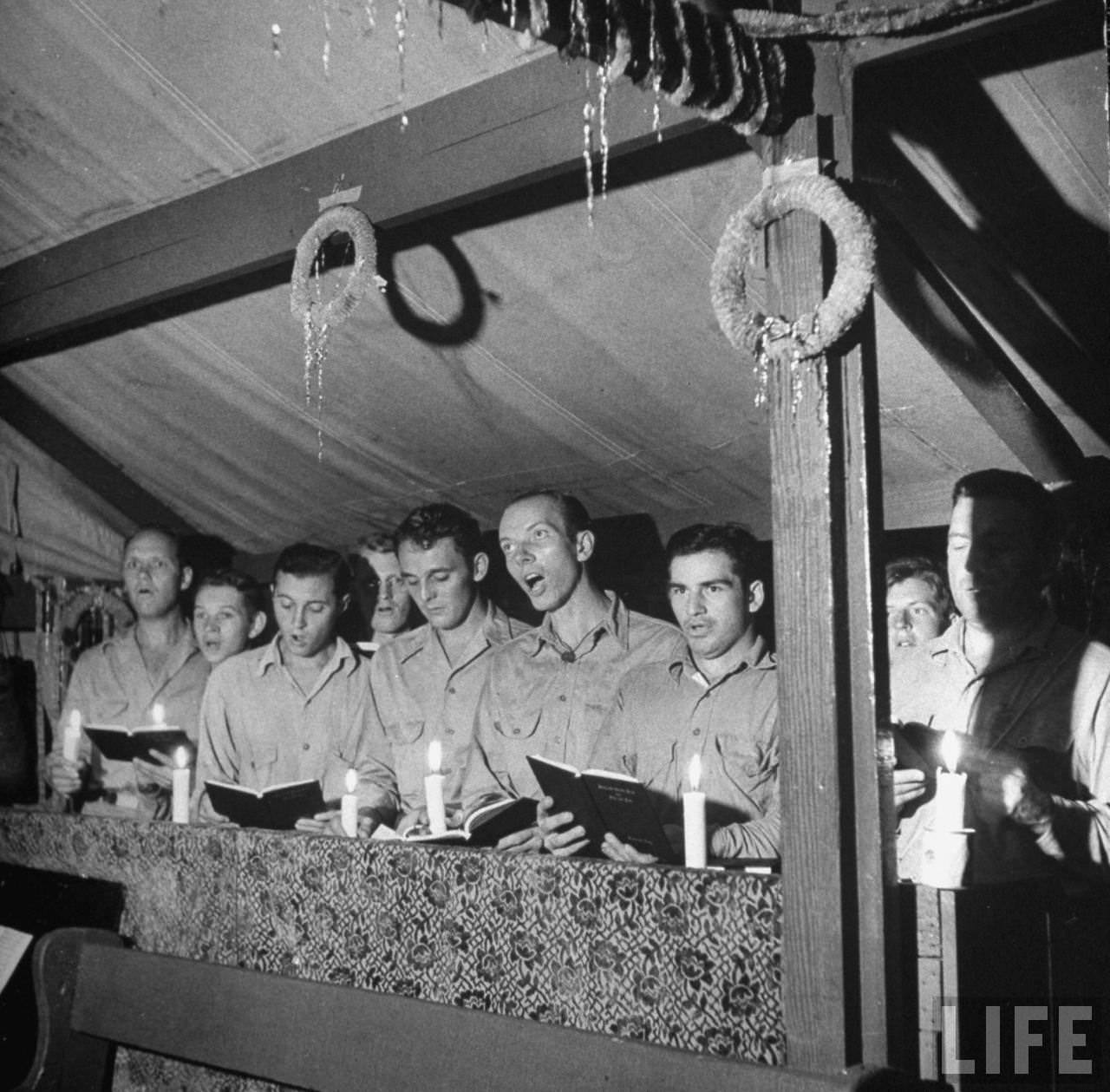
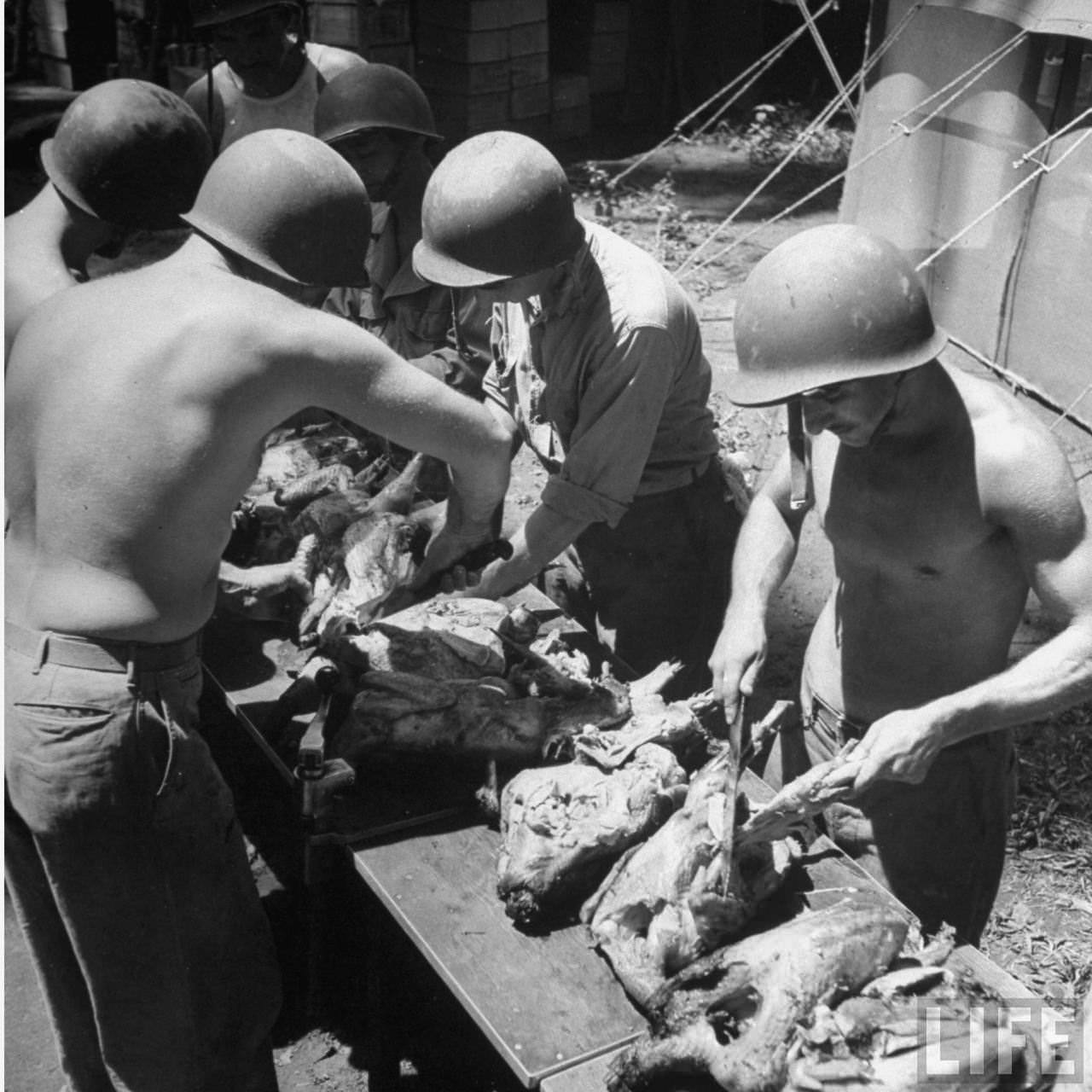
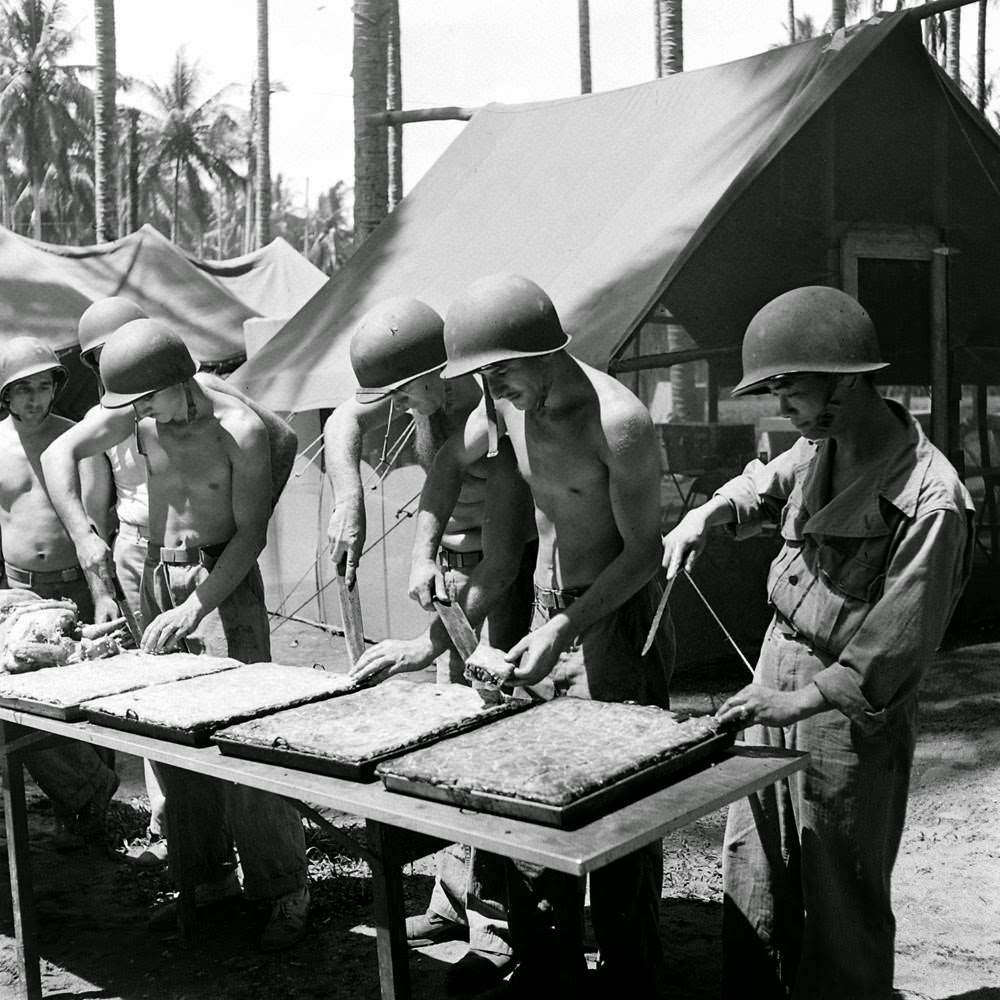
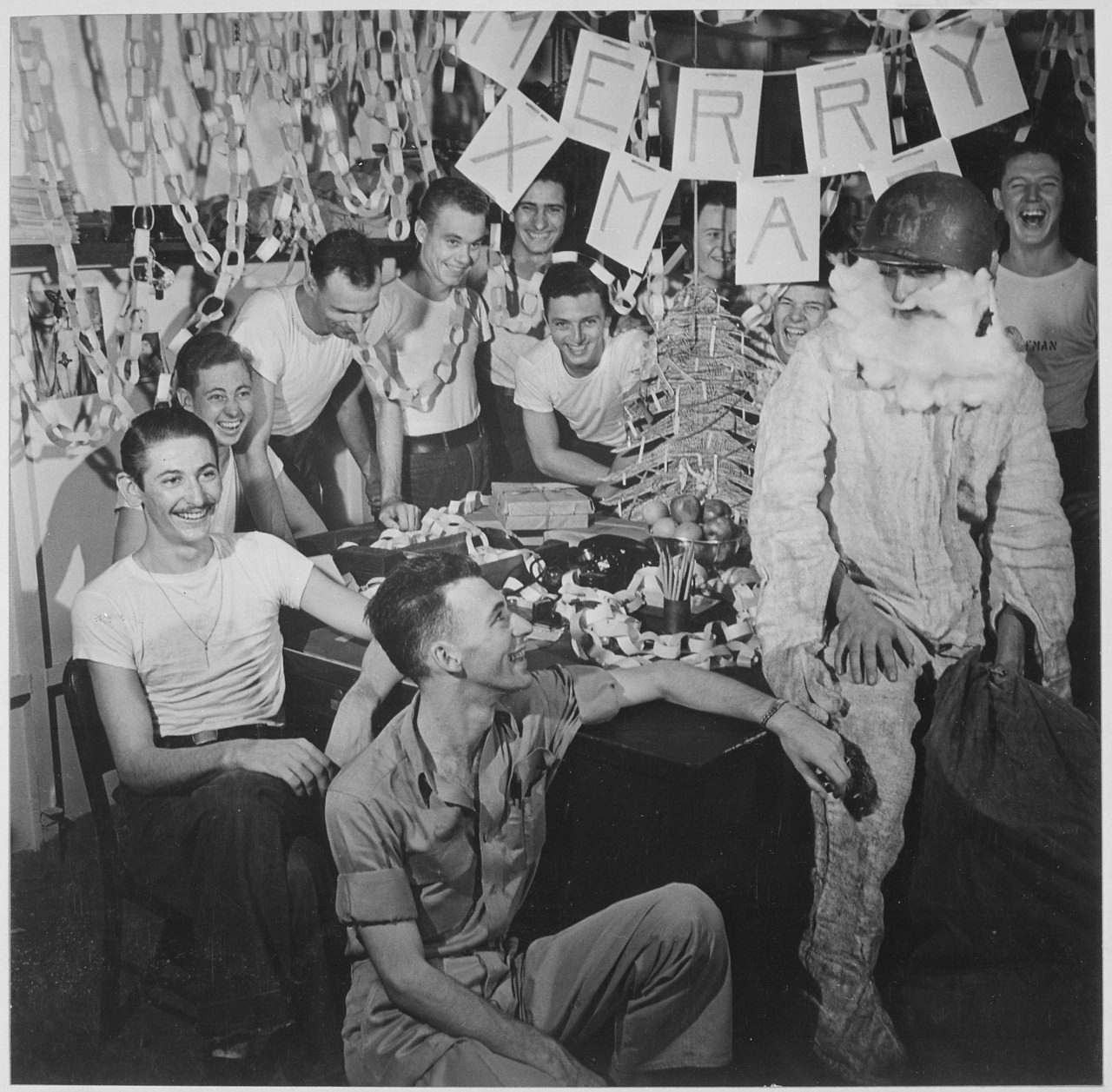
On Guadalcanal in the Solomon Islands, American servicemen celebrated Christmas 1942 in the middle of one of the Pacific War’s most grueling campaigns. Soldiers prepared Christmas dinner in the field. A midnight mass was held, with men singing and holding lit candles in the jungle. A group photograph shows servicemen posing with a soldier dressed as Santa Claus.
Elsewhere in the Pacific, Australian soldiers on New Guinea raised their glasses for Christmas. Men of the USS Lexington celebrated with a Santa Claus dressed not in red velvet but in full firefighting gear — a detail that captured the particular reality of Christmas aboard a warship in 1944.
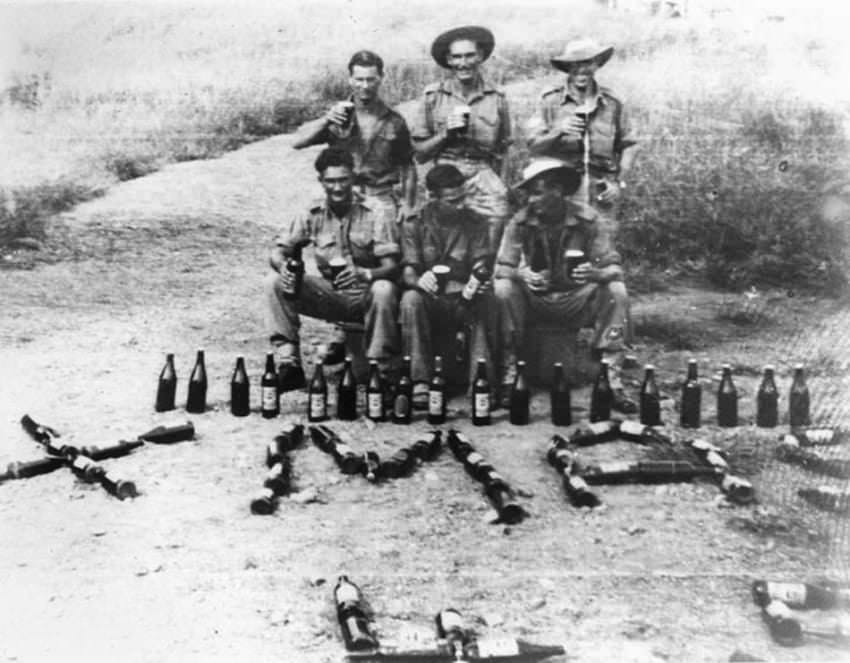
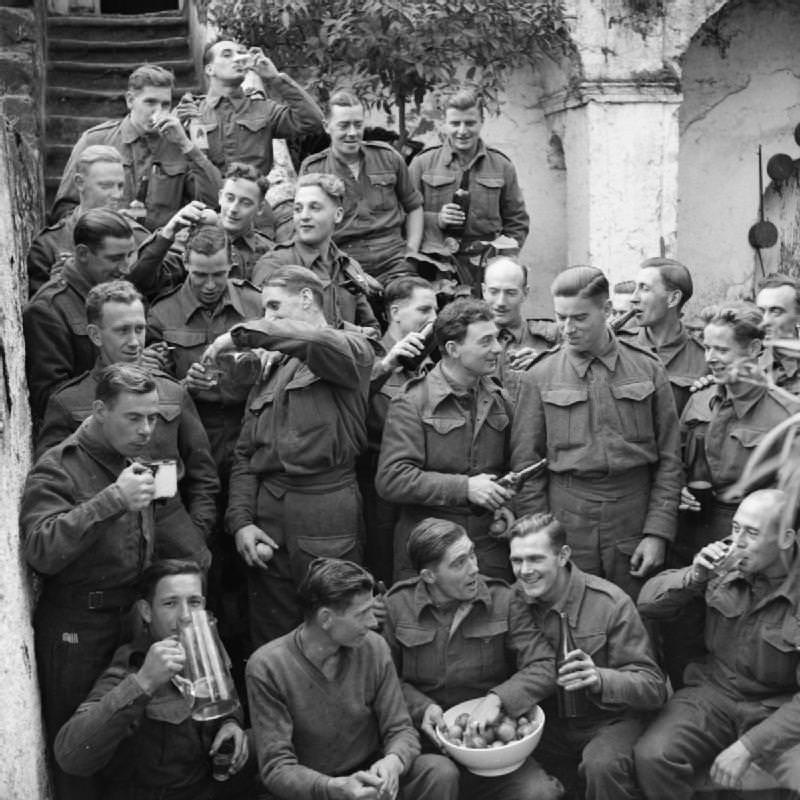
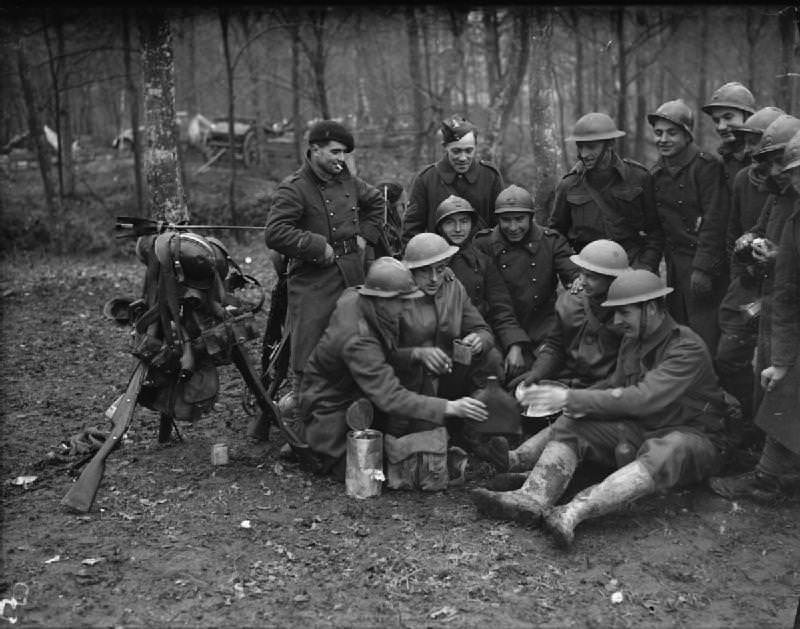
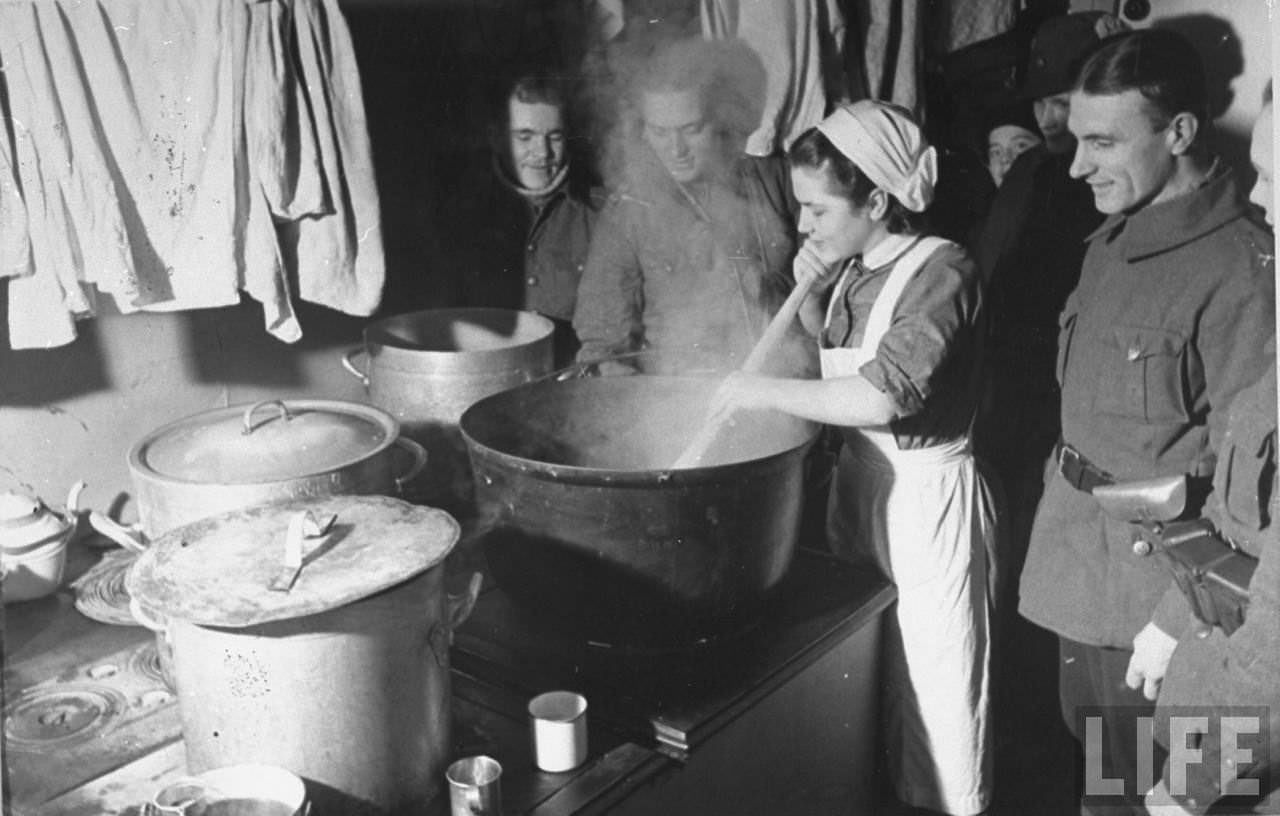
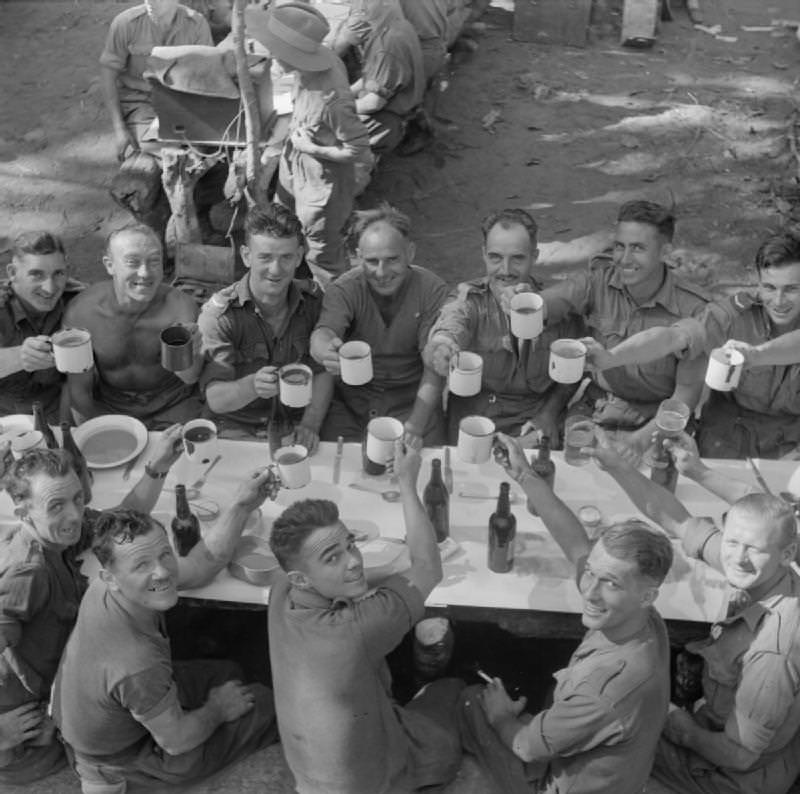
Allied troops also observed Christmas in other corners of the world. British and French soldiers shared drinks together in France in December 1939, just months after the war began. Finnish soldiers at the front in December 1939 watched a woman stir a pot of Christmas dinner. In Burma in 1944, British troops marked the holiday with drinks despite the ongoing campaign against Japanese forces.
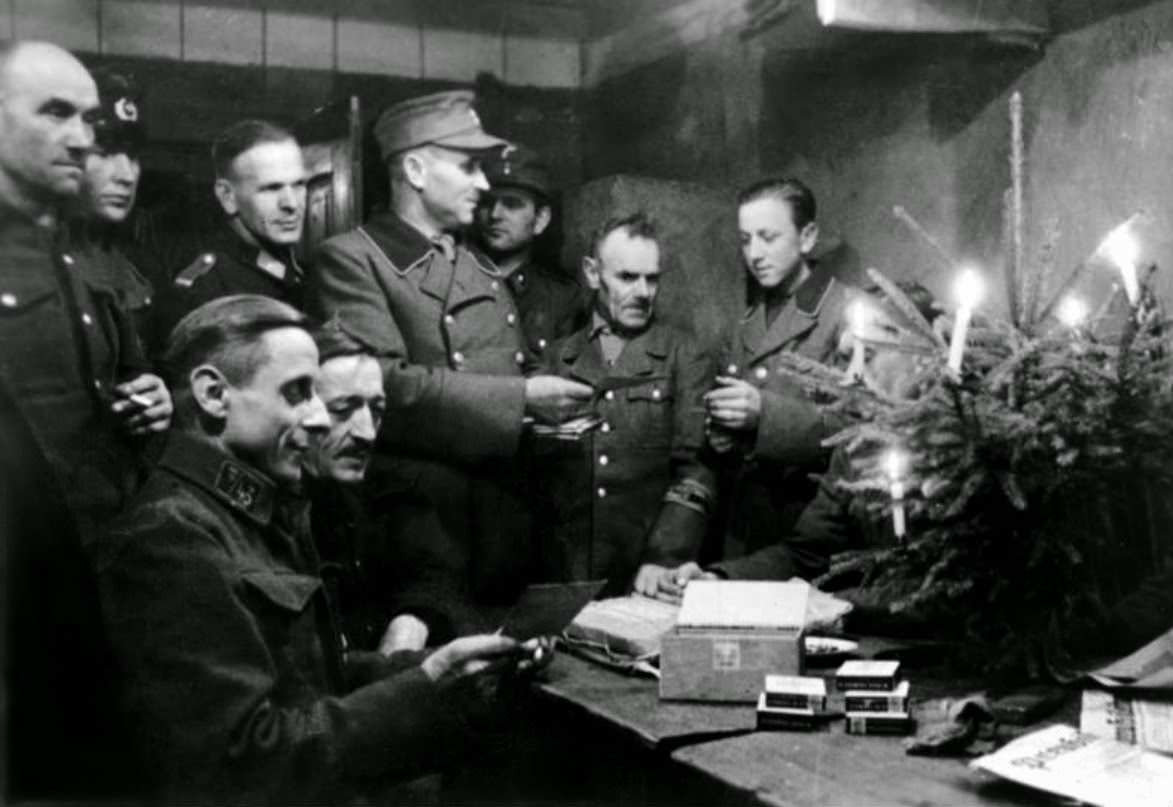
On the other side of the conflict, German Volkssturm soldiers — a late-war militia formed on October 18, 1944 — marked Christmas in a cellar, passing around cigarettes and reading holiday postcards from home. The setting was stark: a basement, a guttering candle, men drafted into service in the war’s final months.
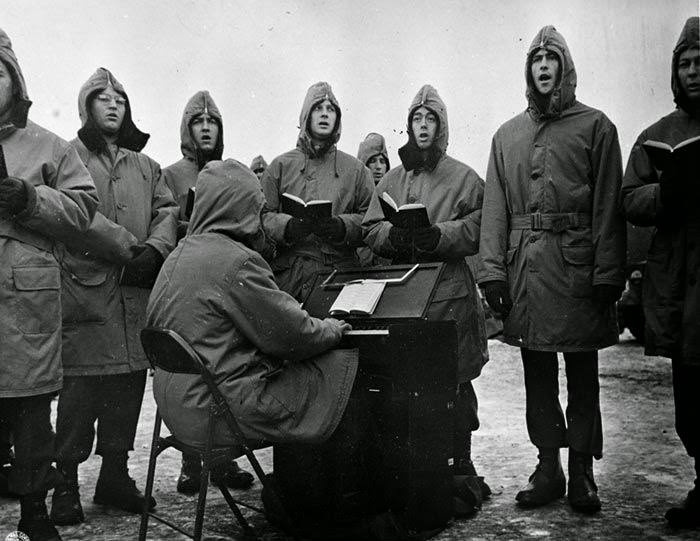
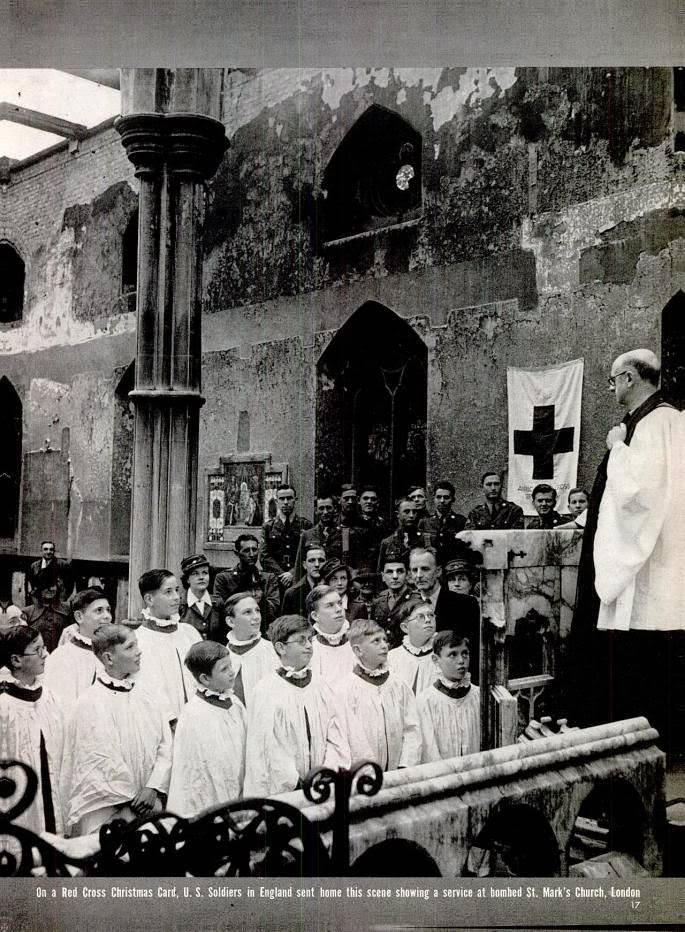
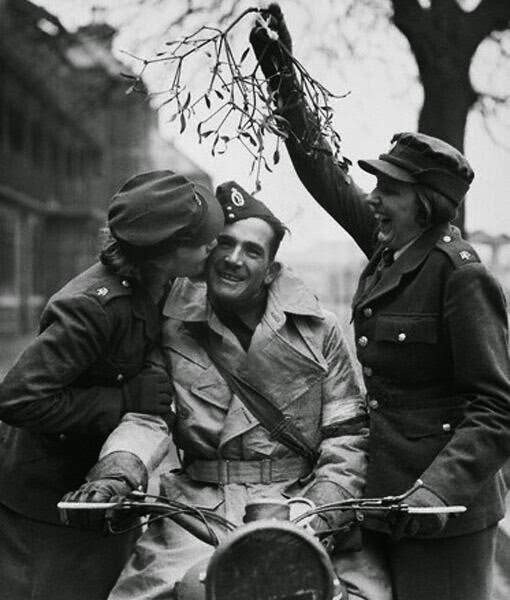
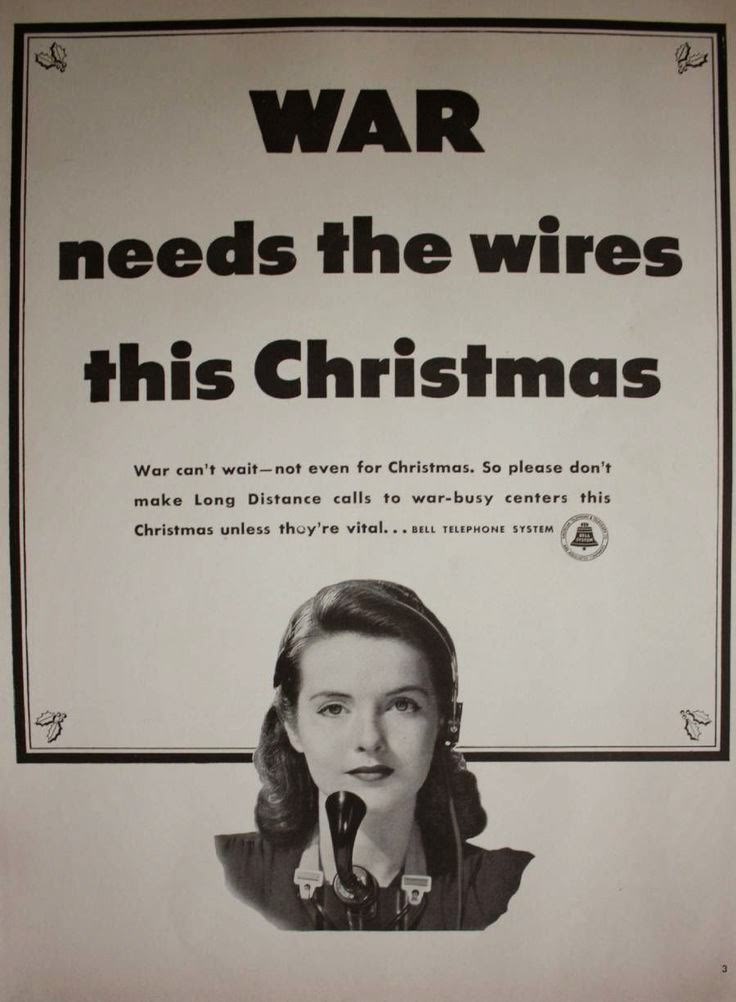
U.S. soldiers caroling together sent a Red Cross Christmas card home from England in 1942 featuring a service held at bombed St. Mark’s Church in London. An ATS girl kissed a soldier under mistletoe at her depot on December 20, 1939, while her friend held the branch overhead. A telephone operator was photographed at her switchboard during the Christmas season, one of thousands of women who kept communications running throughout the war years.
![Left to right: Cpl. Michael J. Sabagh [381st HQ] of Lawrence, Mass., Pvt. Larry H. James [2021st Fire Platoon] of Campbellsville, Ky., Cpl. Goldmer S. Elkins [2003rd Fire Platoon] of Cyclone, W.Va., and Cpl.](https://www.bygonely.com/wp-content/uploads/2019/12/Troops_celebrating_Christmas_WWII_22.jpg)
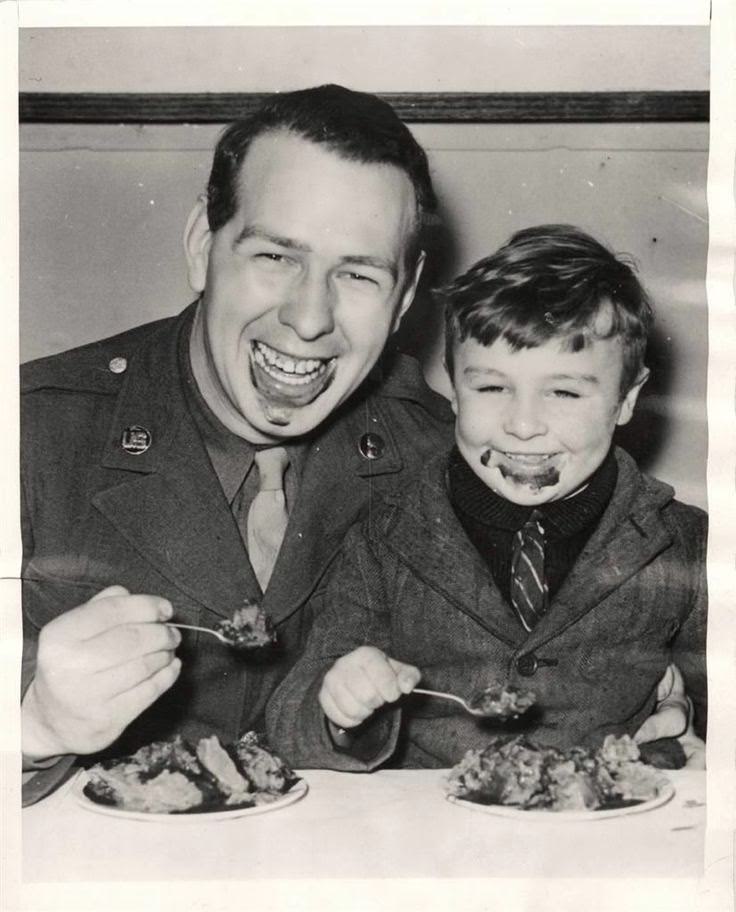
American troops also shared Christmas with local children wherever they were stationed. At a USAAF Service Command station in England in 1943, troops hosted 100 English evacuee children at a Christmas party. A U.S. soldier sat with a young British boy eating ice cream together. Another photograph shows an American soldier sharing his presents from home with children in Italy. These moments — a soldier handing over a toy, a child receiving something sweet — cut across the noise of war with unusual clarity.