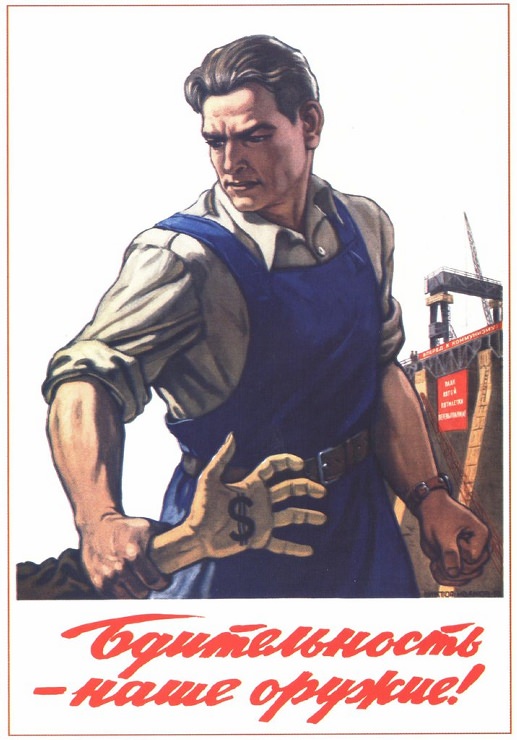
The Cold War turned everyday life in the Soviet Union into a landscape of suspicion. By the 1950s, that suspicion had a very visible face: bold, colorful posters plastered across public spaces, all carrying the same basic message — the enemy is listening, so watch what you say. While the Soviet state had targeted perceived foreign spies aggressively since the 1930s, it was the decade following World War II that saw anti-spy poster art truly hit its stride. The most recognizable examples of this genre were produced in the 1950s, and they became a routine part of the visual world Soviet citizens moved through every day.
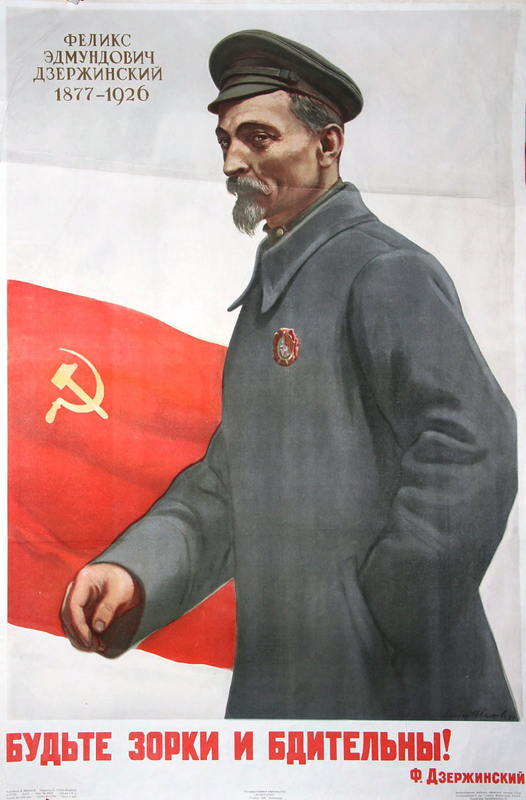
The posters were not subtle. They used sharp graphics and blunt slogans to drive home a single point: careless talk was dangerous. Citizens were treated as potential weak links in the state’s security chain, and the posters made sure they knew it. Loud conversation, casual boasting, and even ordinary gossip were all framed as gifts to the enemy.
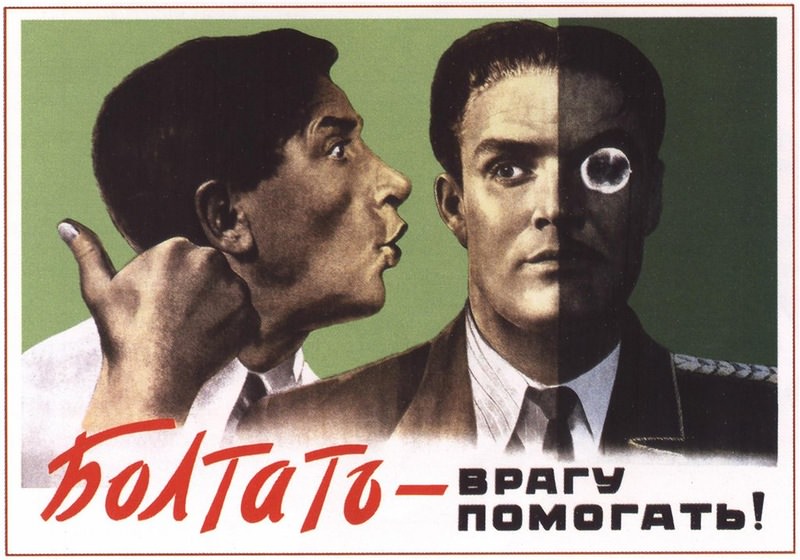
Artist V. Koretsky’s 1954 poster made this point directly, warning that shouting or openly discussing sensitive matters was effectively helping the enemy. The language was plain and the logic was simple: volume itself was a risk. That same year, K. Ivanov and V. Briskin produced a poster targeting something even more mundane — gossip.
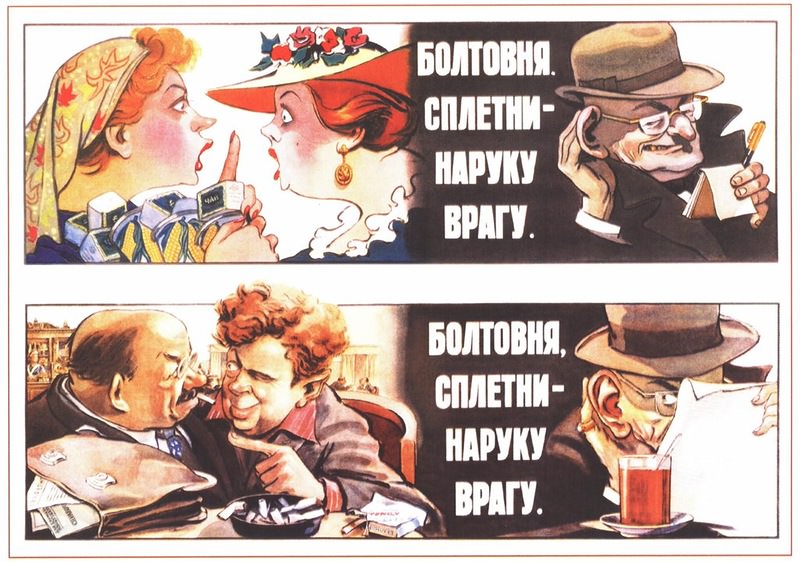
Their poster declared that gossip played directly into the hands of the enemy. No piece of chatter was considered too small to matter. The state’s position was clear: even fragments of casual conversation could be assembled by adversaries into something useful and damaging.
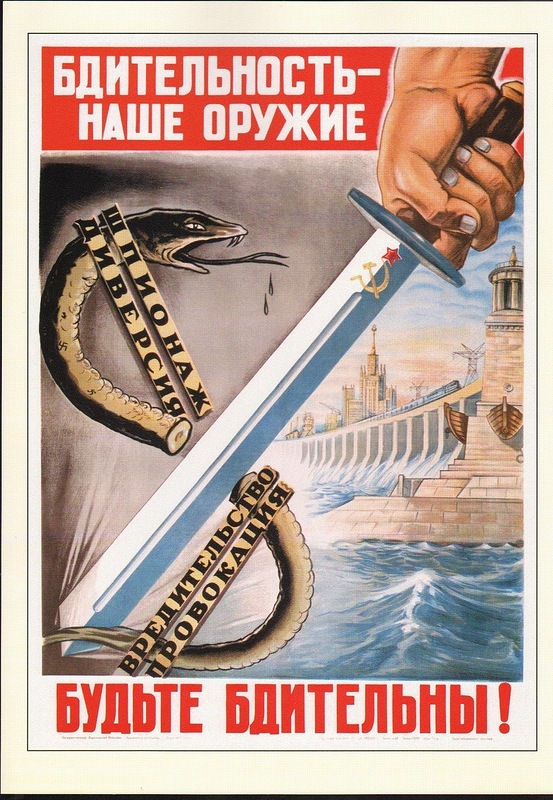
Protecting state and military secrets was presented not just as a legal obligation but as a core civic duty. Posters produced in 1952 by A. Intezarov and N. Sokolov carried the command to strictly keep military and state secrets — a message repeated across multiple campaigns throughout the decade.
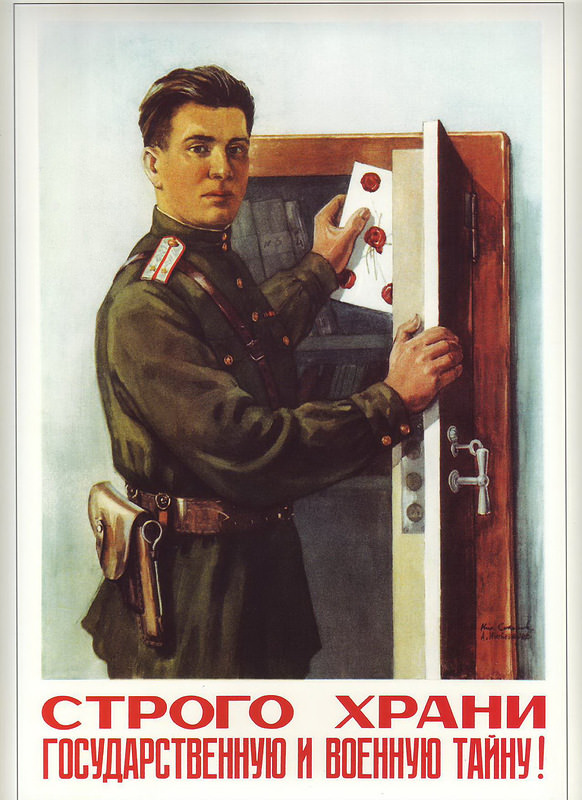
By 1958, the warnings had not softened. Artist J. Miracles produced a poster with a two-word order: “Do not talk!” The message needed no elaboration. That same year, variations of the secrecy command continued to circulate, keeping the theme relentlessly in the public eye.
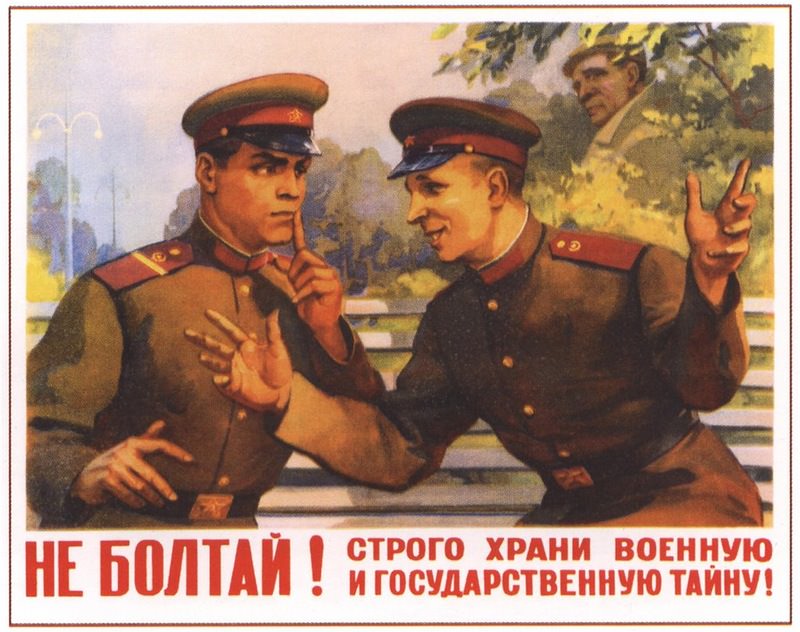
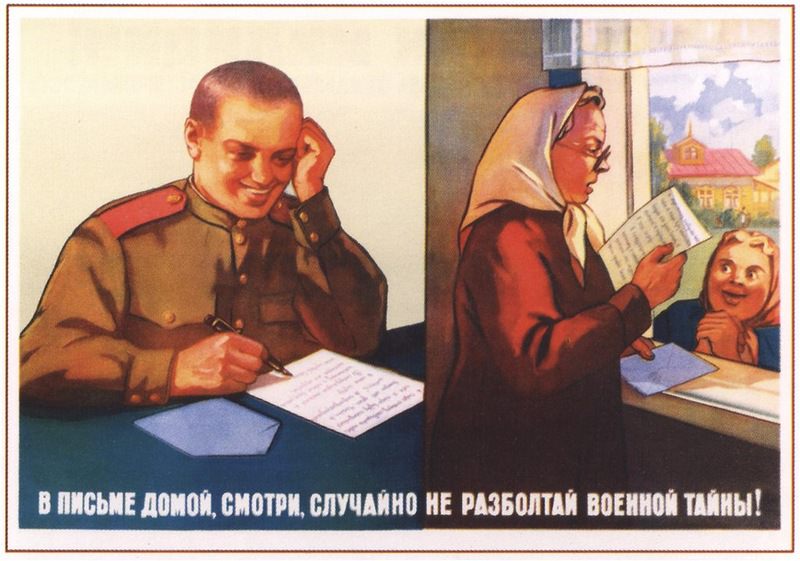
The warnings extended into private life as well. A 1954 poster by K. Ivanov targeted something as personal as writing a letter home, reminding citizens to check that they had not accidentally let slip any military secrets in their correspondence. The reach of these campaigns was total — public spaces, workplaces, and even the private act of writing to family were all brought under the umbrella of state security vigilance.