When World War Two ended in 1945, the Royal Air Force underwent a dramatic reduction. Its total strength fell to around 150,000 personnel as wartime forces were demobilized. That number would not hold for long. By 1951, a worsening international situation prompted a fresh round of expansion, and RAF strength climbed sharply, peaking at 257,000 by 1956. The Cold War was driving decisions at every level of British defense policy.
By the early 1960s, numbers had dropped back to roughly 150,000, including around 6,000 women. Most of these personnel were stationed in the United Kingdom or across Europe as part of NATO commitments. The RAF Regiment continued its core role during this period — securing airfields and providing forward air control support to the British Army and Royal Marines.
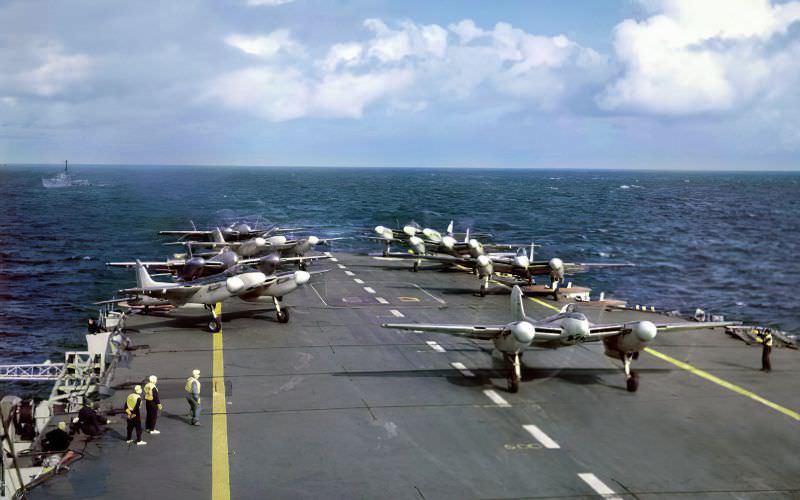
The Fleet Air Arm was also active during these years, operating from carriers in exercises and deployments around the world. In July 1950, HMS Implacable hosted a striking lineup of de Havilland Sea Hornets on her flight deck.
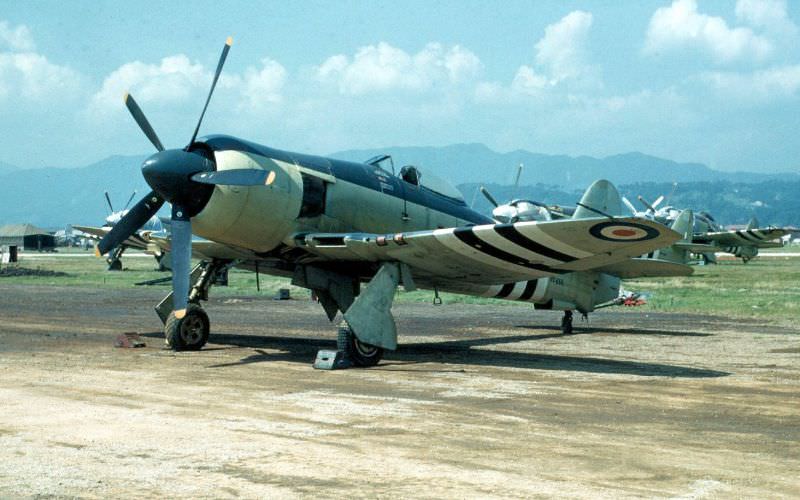
The Korean War brought British naval aviation into a combat theater. Fleet Air Arm Hawker Sea Furies flew from carriers in the region, and British personnel were stationed at bases like Iwakuni in Japan to support operations.
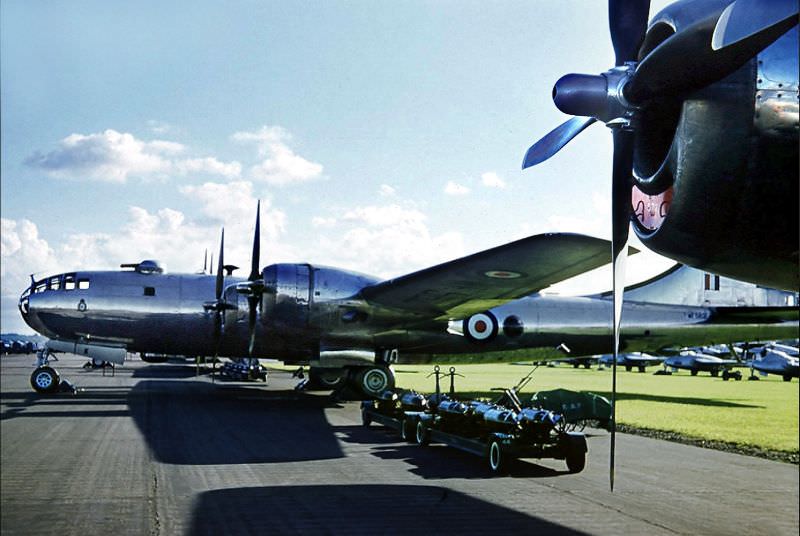
The RAF also operated American-built aircraft during the early 1950s. The Boeing B-29, known in RAF service as the Washington, gave British bomber crews access to a long-range heavy bomber while British designs were still being developed.
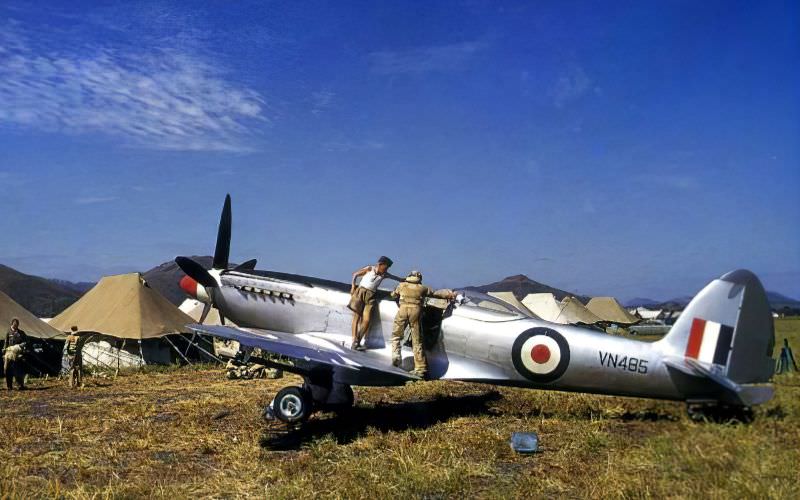
Even as jet-powered aircraft entered service, older designs were still flying operational missions. The Supermarine Spitfire Mk.24, the final variant ever built, was still serving with No. 80 Squadron in Hong Kong as late as 1953. The aircraft shown here, VN485, was built in 1947 and represents the very end of the Spitfire’s production run.
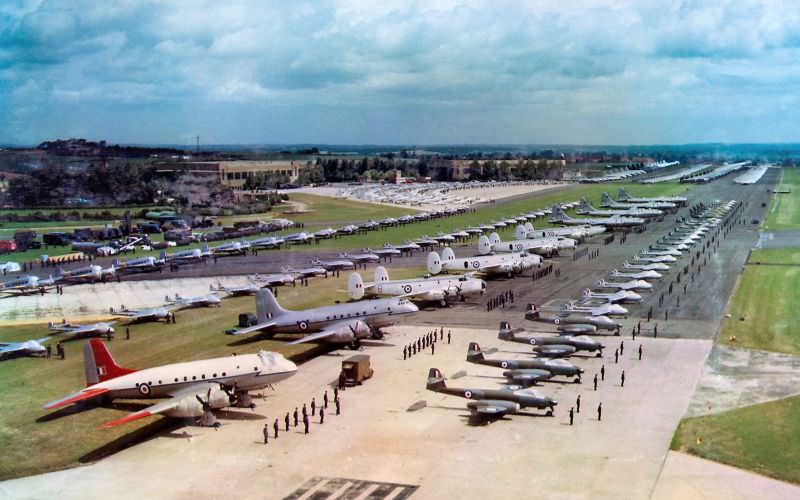
On June 2, 1953, Queen Elizabeth II was crowned at Westminster Abbey. The RAF marked the occasion with the largest military air display it had ever staged, with aircraft of all types filling the skies over Britain.
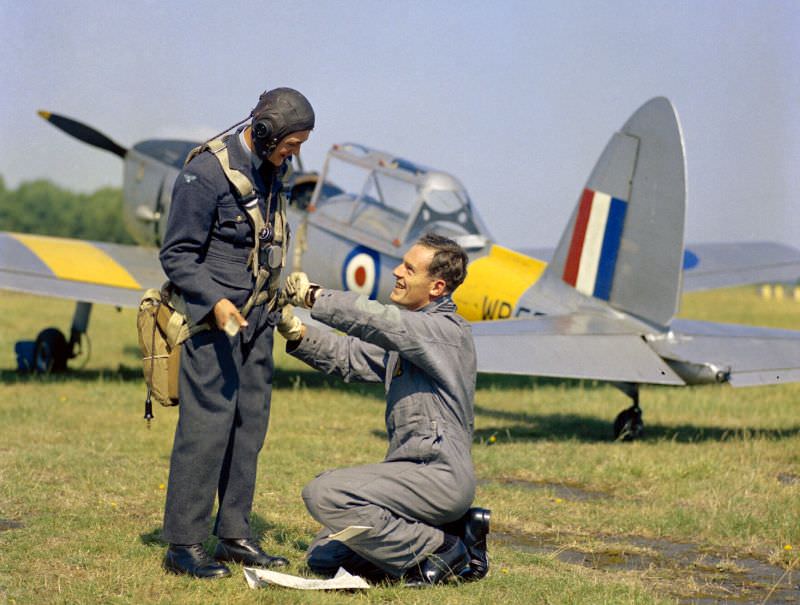
Pilot training remained a constant priority throughout the decade. The de Havilland Chipmunk served as the RAF’s primary basic trainer, introducing new pilots to the fundamentals of flight before they moved on to more powerful aircraft.
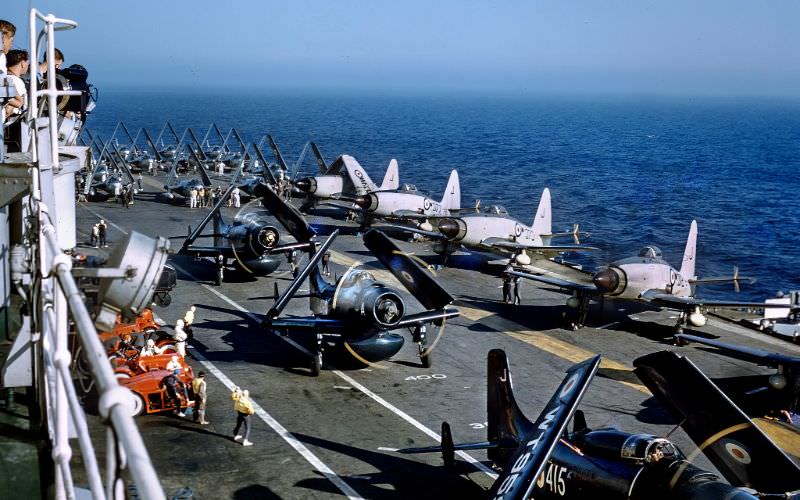
Carrier-based aviation during this period featured a mix of types operating side by side. By 1955, HMS Eagle’s deck was home to the Westland Wyvern, the Douglas Skyraider, and the Hawker Sea Hawk — three very different aircraft reflecting the fast pace of post-war aviation development.
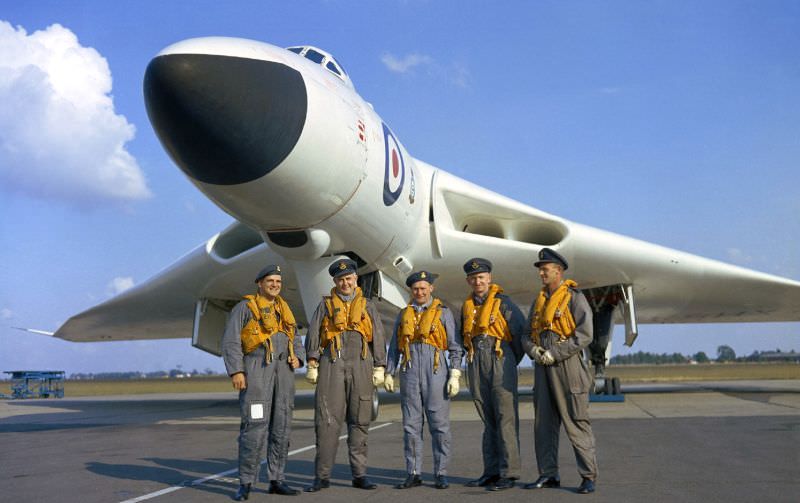
The Avro Vulcan was the most powerful aircraft the RAF had ever operated at the time of its introduction. As a V-bomber, it formed the backbone of Britain’s nuclear deterrent. By 1956, Vulcan crews were posing proudly in front of their massive delta-winged aircraft.
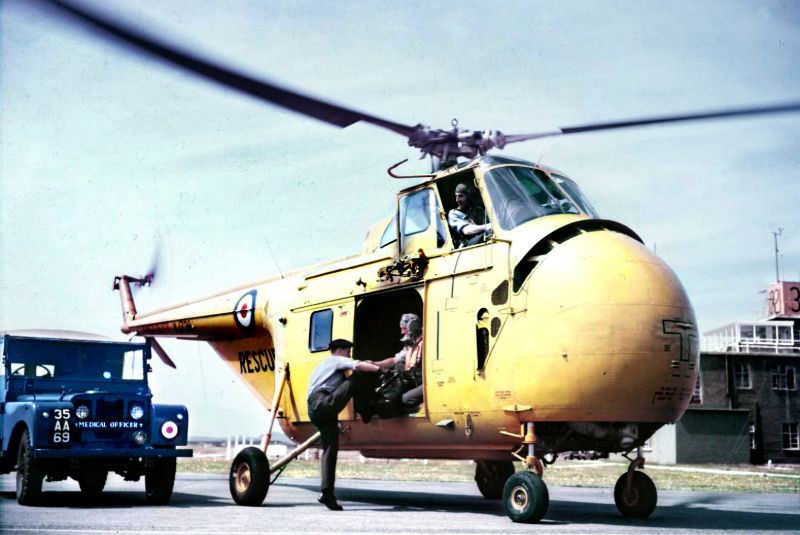
Search and rescue was another critical mission. No. 22 Squadron flew Westland Whirlwind helicopters from RAF St Mawgan in Cornwall, ready to respond to emergencies along the rugged southwest coastline.
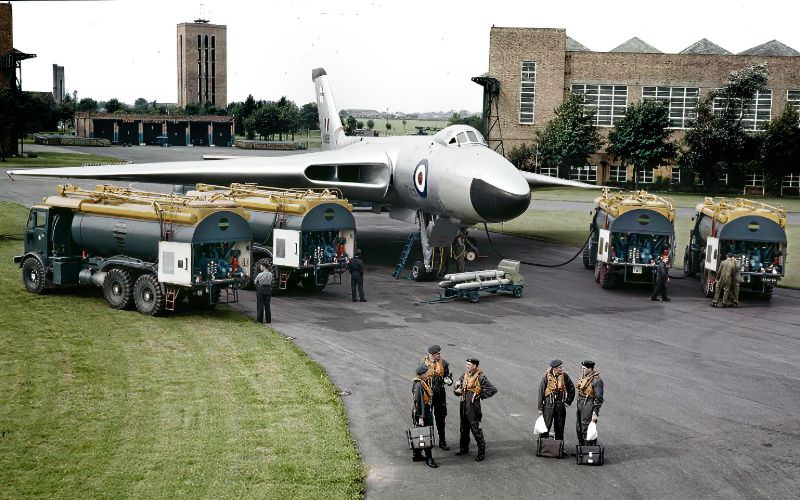
RAF Waddington in Lincolnshire became a key Vulcan base. In August 1957, XA896 was photographed there, representing the growing strength of Britain’s strategic bomber force.
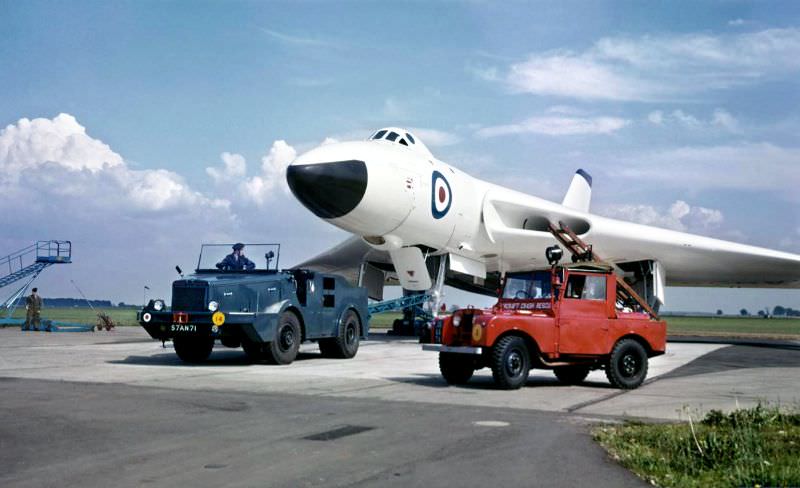
Just two months later at the same base, another Vulcan — XA906 of No. 83 Squadron — was photographed being towed by a Douglas Sentinel Tugmaster, a heavy towing unit built to handle the Vulcan’s considerable weight.
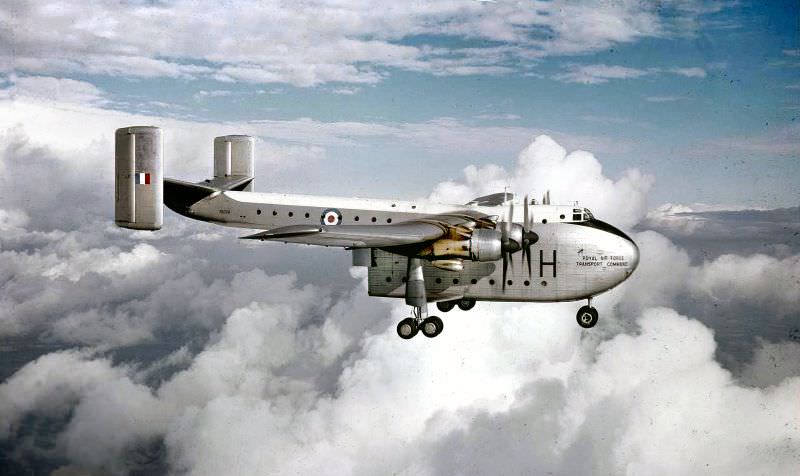
Heavy transport was essential for moving troops and supplies to Britain’s many overseas commitments. The Blackburn Beverley was one of the largest aircraft in RAF service, and No. 47 Squadron operated it from RAF Abingdon.
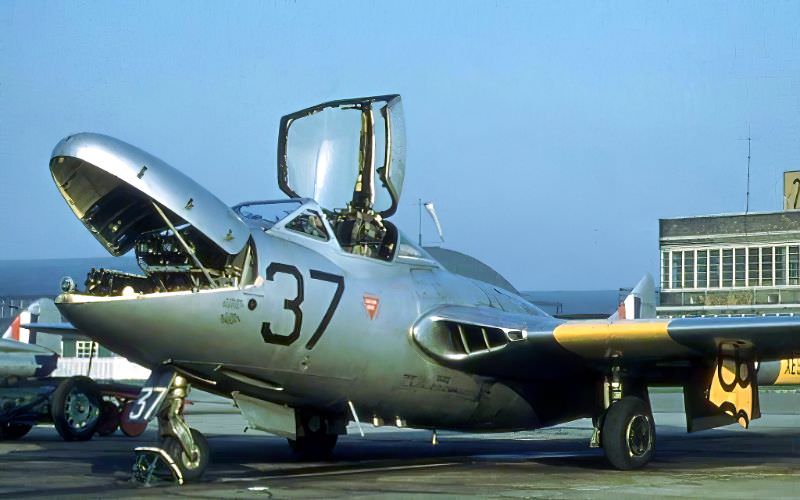
The de Havilland Vampire served the RAF in both the fighter and trainer roles. At RAF Swinderby in 1957, the twin-boom jet was a familiar sight on the flight line.
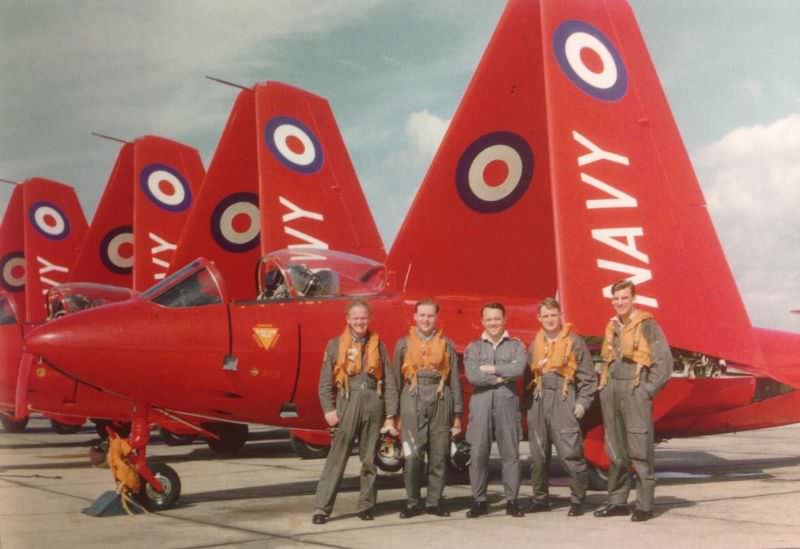
The 1957 Farnborough Air Show witnessed a significant first. Five Royal Navy Seahawk FB.3s of 783 NAS made history on September 5 as the first aerobatic team to produce smoke during a display — a technique that would soon become standard for teams around the world.
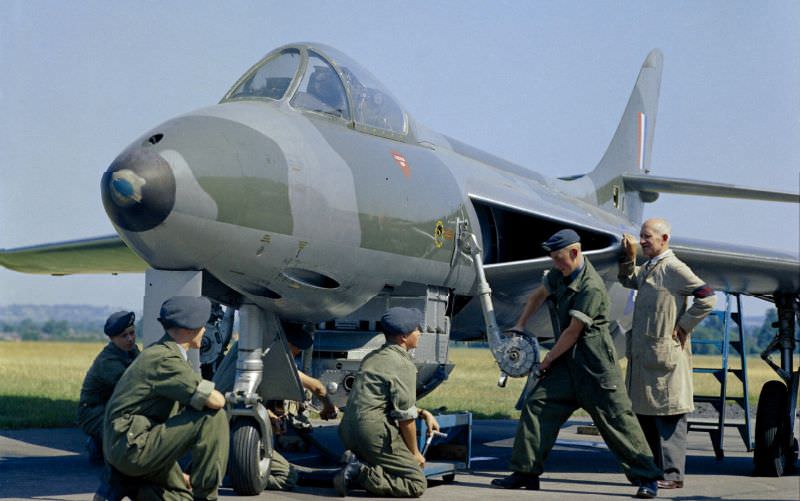
Technical training was just as important as flying. At RAF Halton, Aircraft Apprentices of No. 1 School of Technical Training learned hands-on skills, including how to load a four-cannon Aden gun pack into a Hawker Hunter instructional airframe.
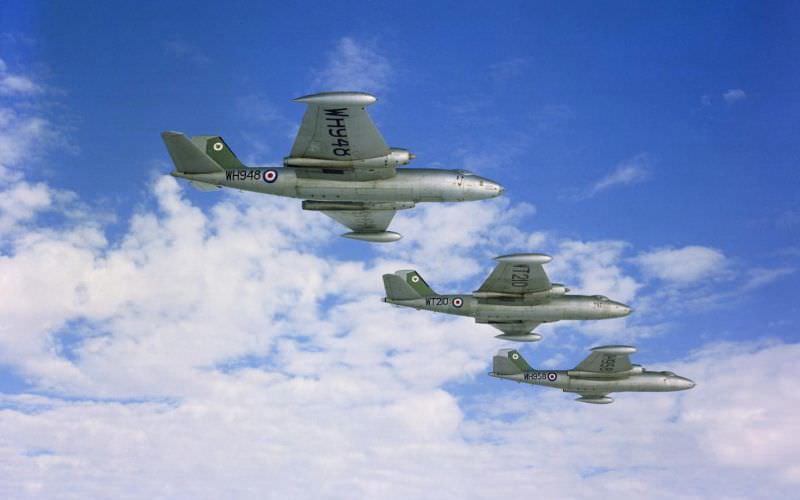
The English Electric Canberra gave the RAF a fast, versatile jet bomber capable of operating at high altitude. No. 12 Squadron flew the Canberra B.6 from RAF Binbrook in Lincolnshire, the squadron’s fox head emblem clearly visible on each tail.
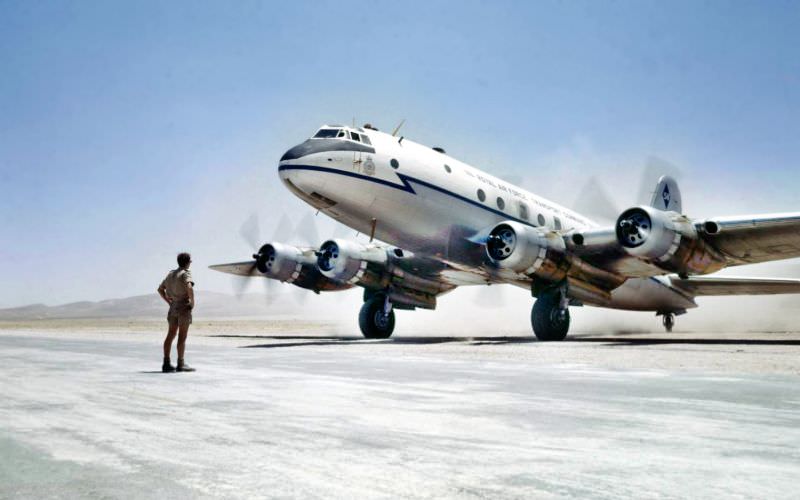
In July 1958, British forces were deployed to Jordan during a regional crisis. The Handley Page Hastings transport aircraft carried troops and supplies into the dusty airfield at Amman, with No. 511 Squadron’s TG587 among the aircraft that made the run.
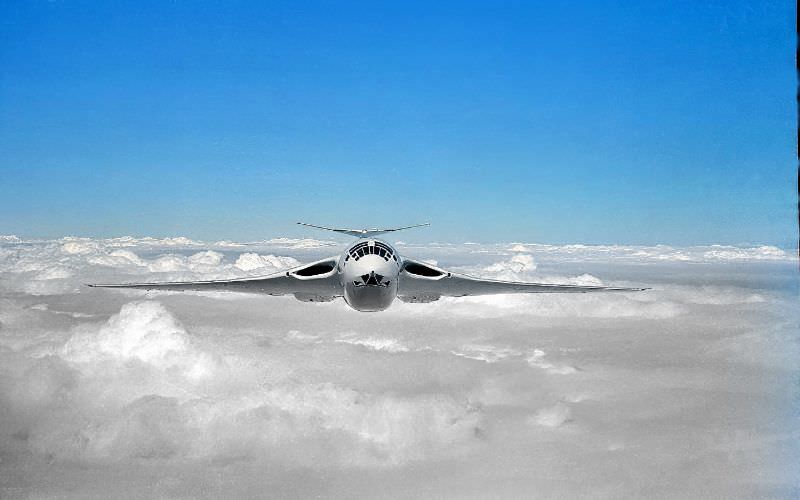
The Handley Page Victor joined the Vulcan as part of Britain’s V-bomber force. No. 10 Squadron flew the Victor B.1 from RAF Cottesmore, and XA936 was photographed in flight in September 1958, its distinctive crescent wing shape unmistakable.
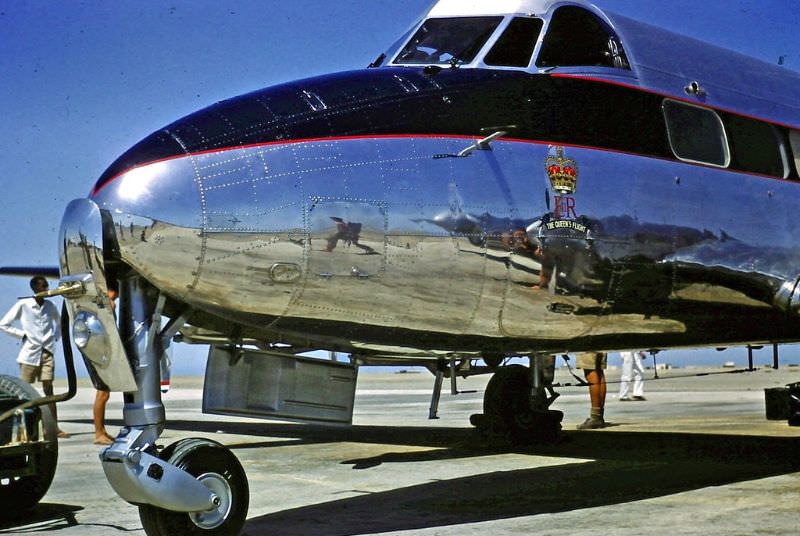
The Queen’s Flight operated a de Havilland Heron for VIP transport duties. In 1959, XM296 was photographed at RAF Masirah in Oman, demonstrating the wide geographic reach of royal and government air travel during this period.
At the RAF College Cranwell in 1959, Flight Lieutenant J. Davis put his student, Flight Cadet TC Porteous of No. 76 Entry, through his paces in a de Havilland Vampire T.11. Cranwell has trained RAF officers since 1920, and the Vampire was by then its standard jet trainer.
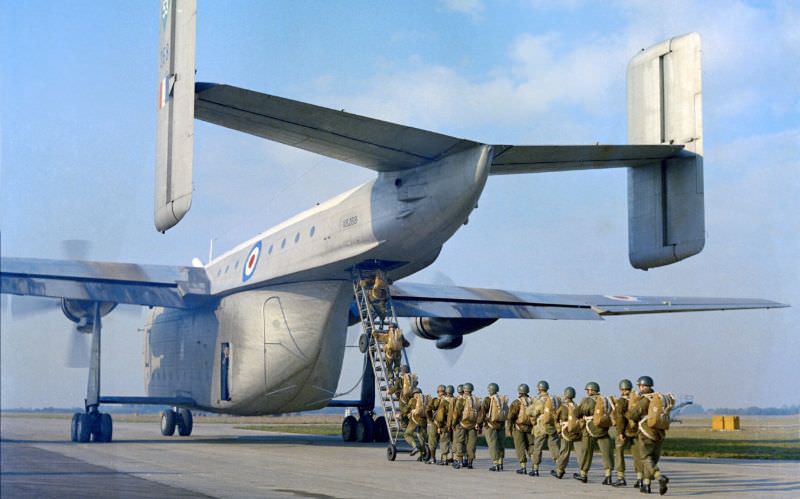
The Blackburn Beverley’s rear-loading ramp made it well-suited for airborne operations. Parachutists of the RAF Parachute Brigade were photographed boarding a Beverley — likely during Exercise Red Banner in October 1959.
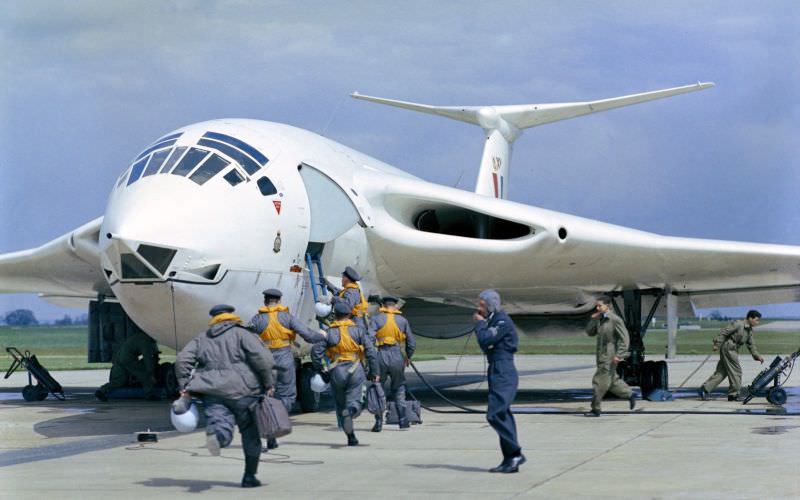
Speed was everything in nuclear deterrence. At RAF Cottesmore in June 1959, Squadron Leader Ulf Burberry’s crew sprinted toward a Handley Page Victor of No. 15 Squadron during a demonstration scramble — practicing the rapid response that the Cold War demanded.
On June 4, 1959, the RAF took delivery of its first Bristol Britannia C.1 transport. XL636, named ‘Argo’ and assigned to No. 99 Squadron at RAF Lyneham, marked the start of a new era in long-range RAF transport capability.
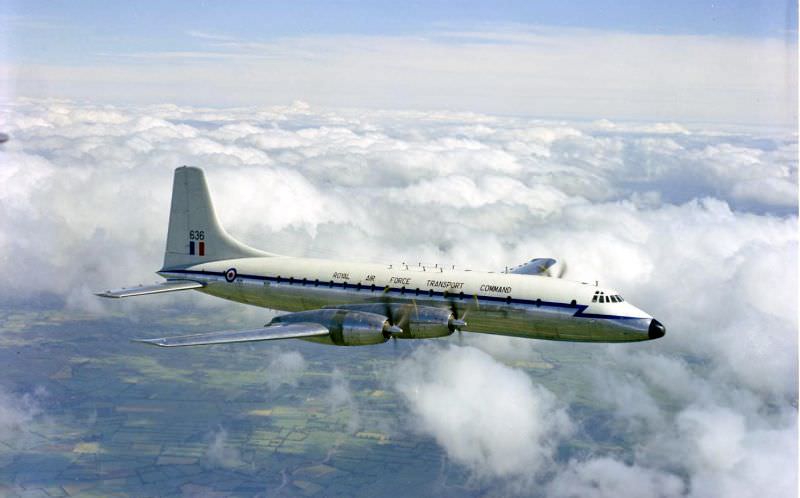
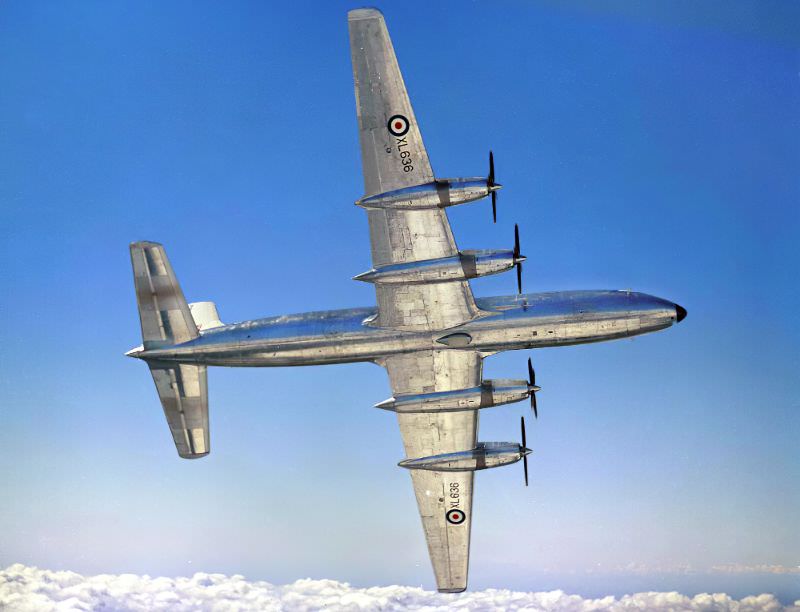
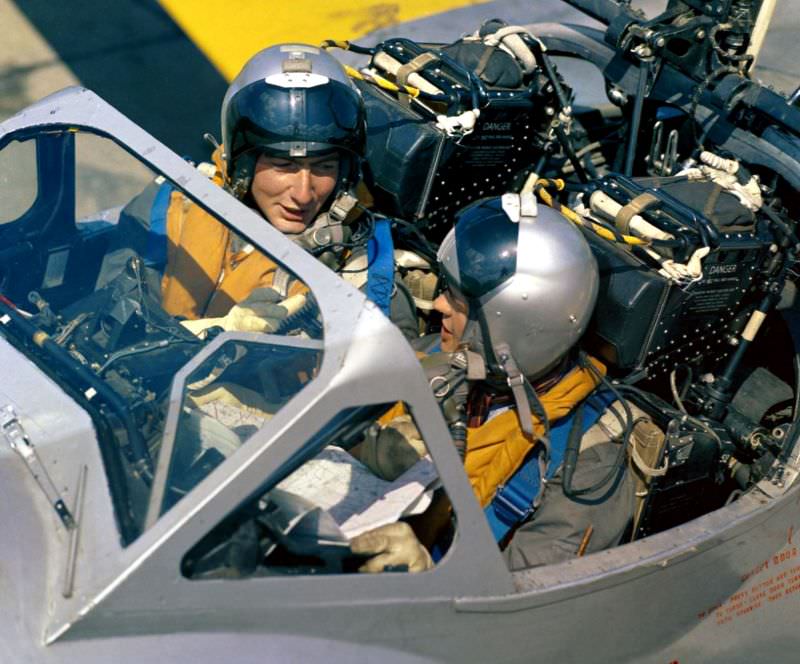
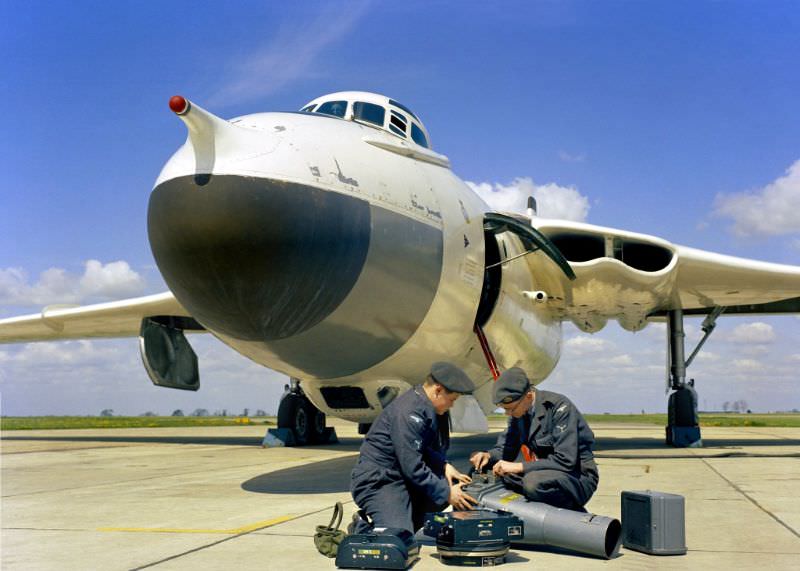
Photo reconnaissance was a vital intelligence-gathering tool throughout the Cold War. At RAF Wyton in Cambridgeshire, two senior aircraftmen carefully prepared an F.52 camera for installation in a Vickers Valiant B(PR).1 of No. 543 Photo Reconnaissance Squadron.
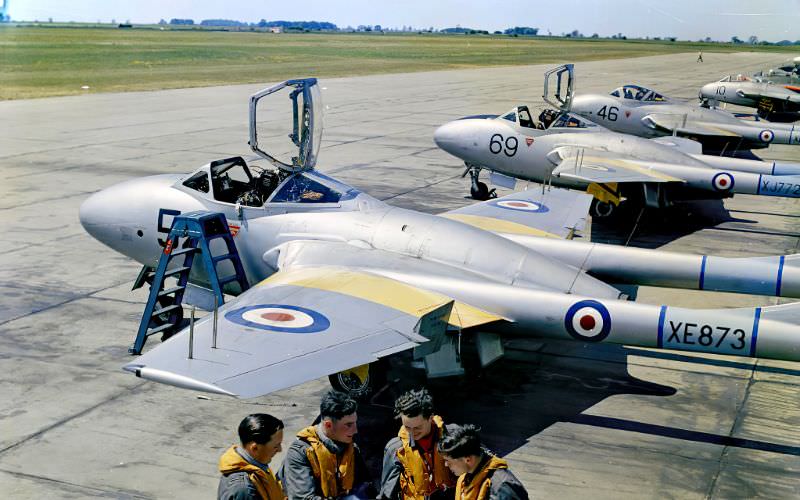
The RAF College’s Flying Wing kept the Vampire T.11 busy well into 1959. On June 23, a formation of the twin-boom trainers was photographed in flight, a routine sight at Cranwell but a striking image all the same.
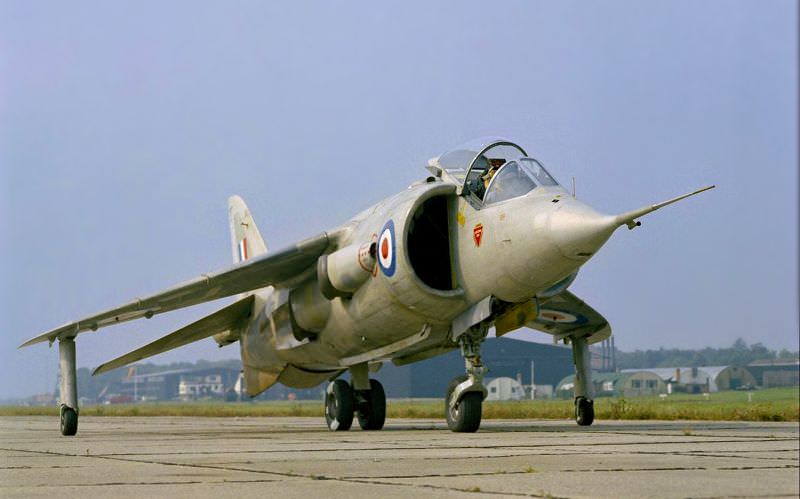
One of the most important aircraft developments of the era took place at Dunsfold in 1960. The Hawker Siddeley P.1127 Kestrel, the direct ancestor of the Harrier jump jet, successfully demonstrated vertical landing on the test pad — a technology that would change military aviation.
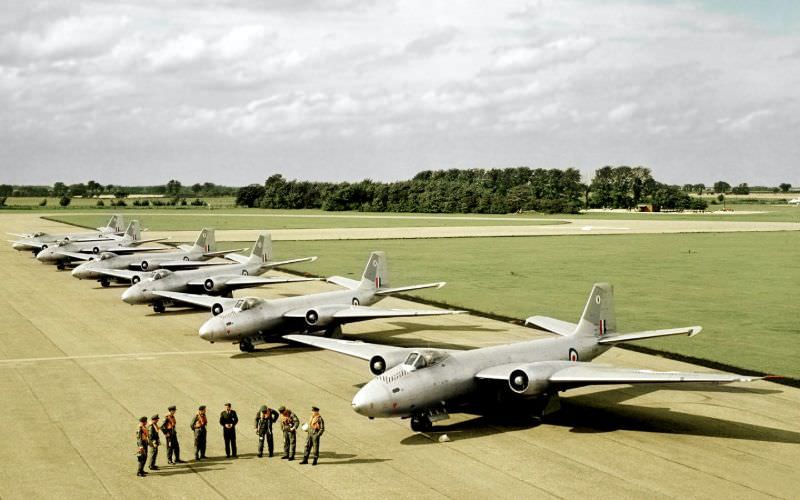
Strategic reconnaissance demanded specialized aircraft and crews. No. 58 Squadron operated the English Electric Canberra PR.9 from RAF Wyton, and in September 1960, six of these aircraft were photographed alongside their crews near St. Ives in Cambridgeshire.
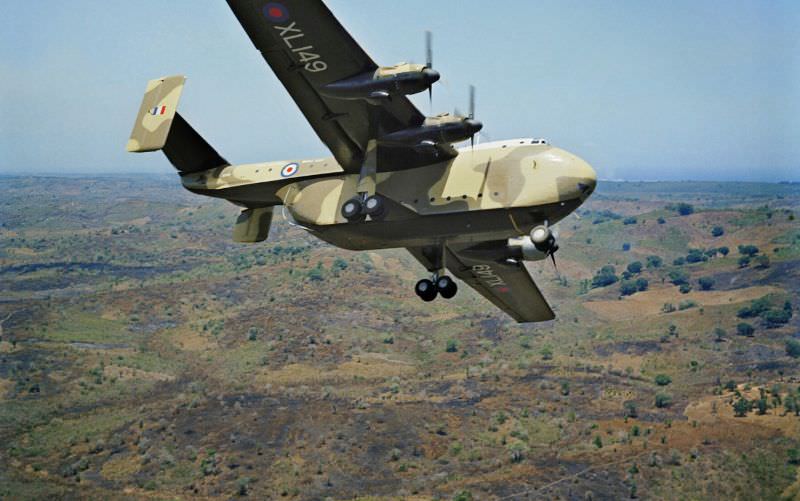
Britain maintained military commitments across Africa and the Middle East throughout the early 1960s. The Beverley’s ability to operate from rough airstrips made it indispensable. No. 30 Squadron’s XL149 was photographed in flight over the Kenyan bush in 1961.
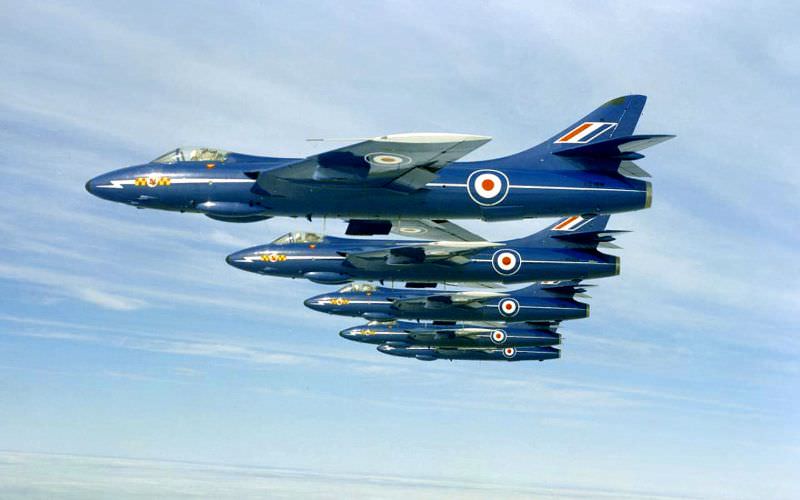
Display flying was a public showcase of RAF skill and precision. No. 92 Squadron’s aerobatic team, known as the Blue Diamonds, flew Hunter F.6s and rehearsed their tight line-abreast formations ahead of the 1961 display season.
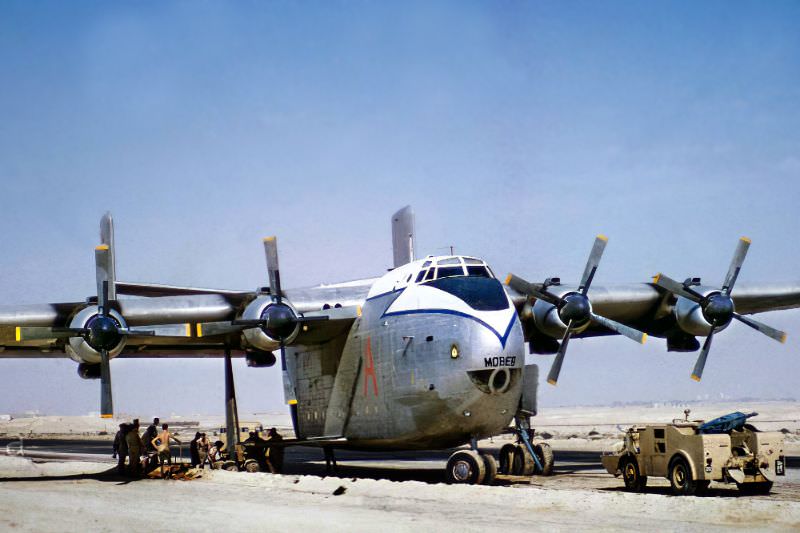
Operations in the Gulf tested both men and machines. At RAF Sharjah in what is now the UAE, a Beverley heavy transport became stuck in the sand on the airstrip in 1962 — a reminder of the harsh conditions RAF crews regularly faced.
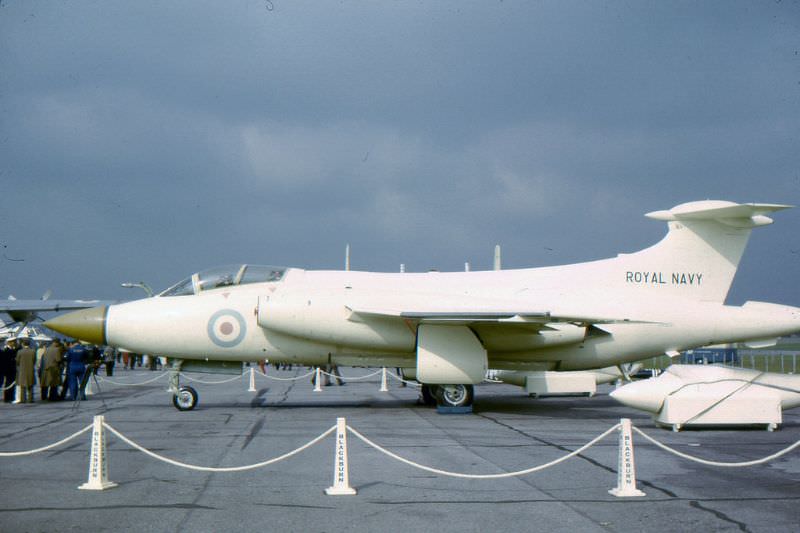
The Blackburn Buccaneer appeared at the 1962 Farnborough Airshow wearing anti-flash white, the paint scheme used on aircraft assigned to the nuclear strike role. The Buccaneer S.1 was designed to fly fast and low to evade radar — a concept ahead of its time.
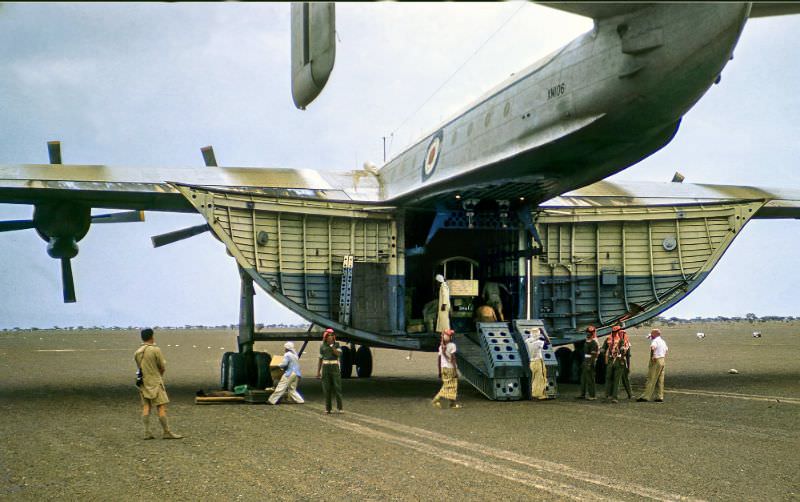
While one Beverley was stuck in the sand at Sharjah, another was already back at work. Ground crews were photographed offloading freight from a second Beverley at the same base, keeping the supply chain moving despite the difficult desert environment.
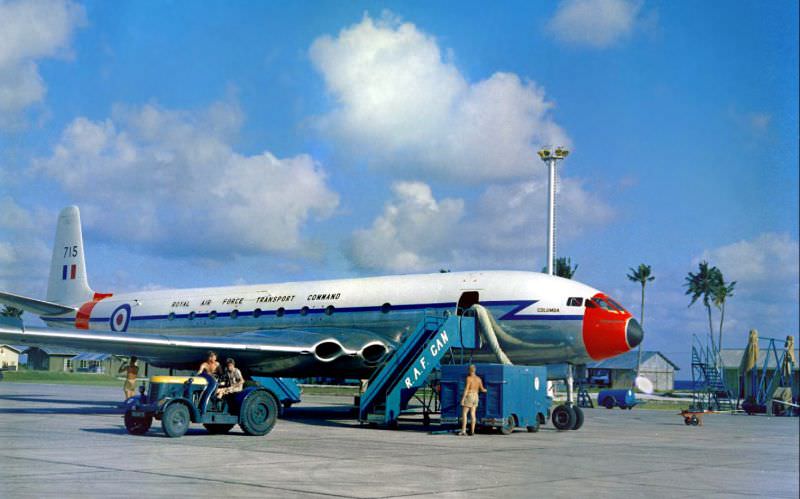
The de Havilland Comet became the world’s first commercial jet airliner, and the RAF operated a military transport version. No. 216 Squadron’s XK715 ‘Columba’ flew from RAF Lyneham and was photographed being turned around at RAF Gan in the Maldives in 1962, a key staging point on long-distance routes to the Far East.
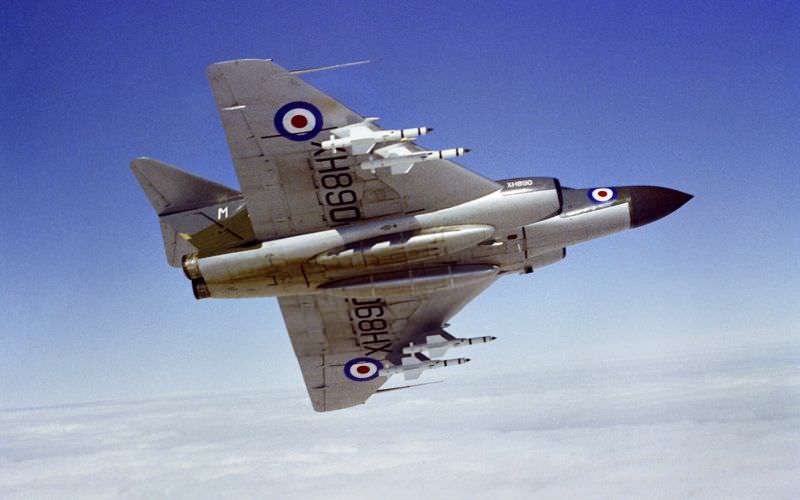
The Gloster Javelin was the RAF’s primary all-weather interceptor during the late 1950s and early 1960s. No. 23 Squadron flew the FAW.9R variant from RAF Coltishall in Norfolk, and XH890 was photographed banking sharply away in 1963.
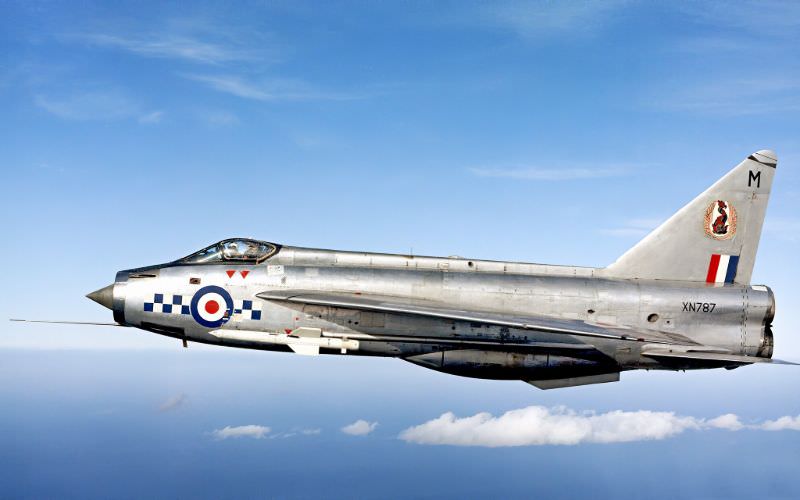
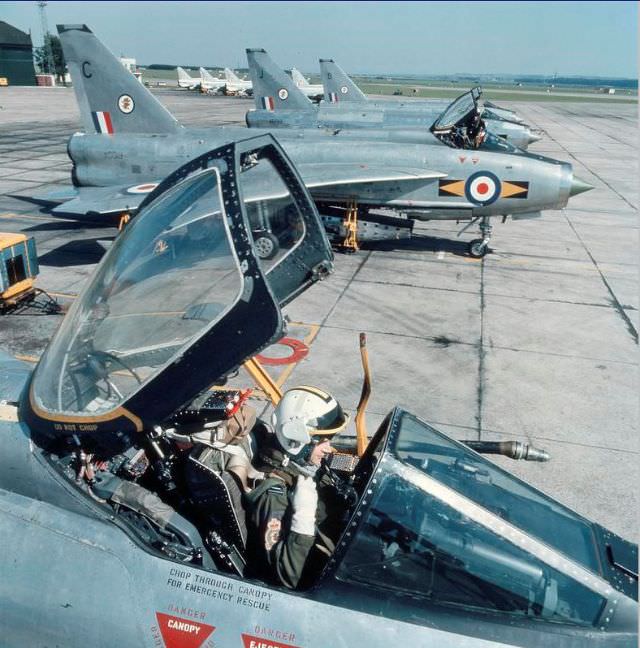
The English Electric Lightning was the RAF’s first supersonic fighter. No. 19 Squadron operated the Lightning F.2 from RAF Leconfield in South Yorkshire, and the aircraft’s clean lines and twin-engine power made it one of the most capable interceptors of its generation.
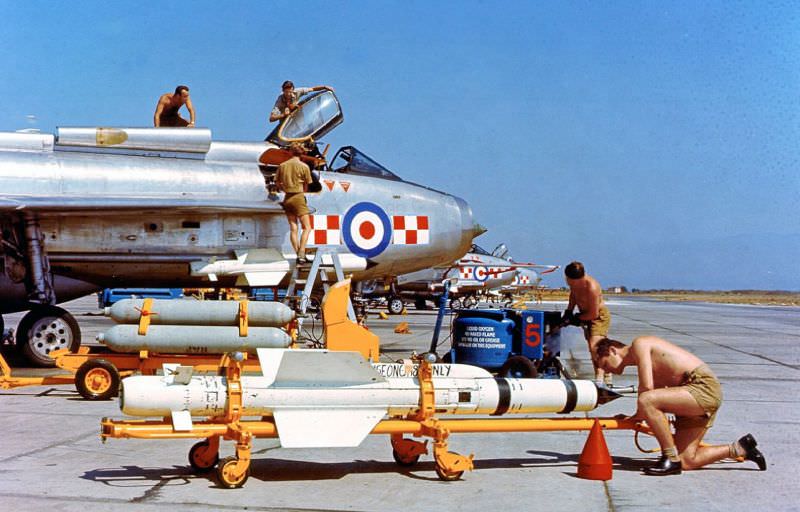
At RAF Akrotiri in Cyprus, No. 56 Squadron’s Lightning F.3s were armed with Firestreak infrared-guided missiles. Loading these weapons onto the aircraft required careful handling by ground crews.
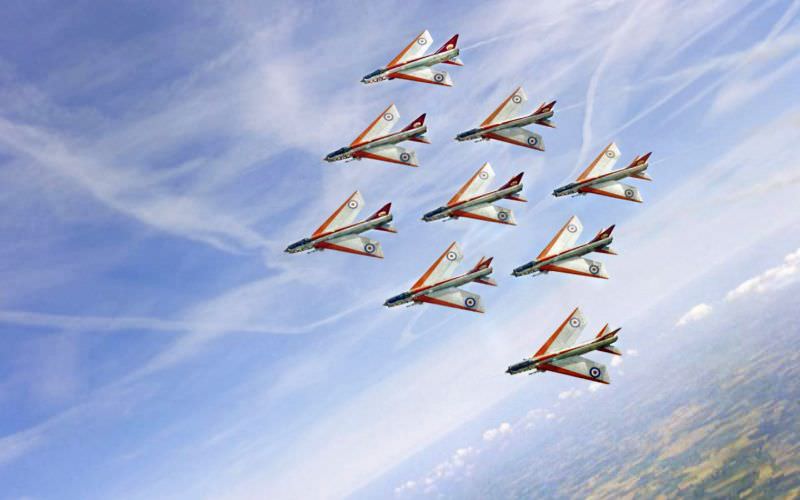
Also in 1963, No. 56 Squadron’s display team — the Firebirds — flew out of RAF Wattisham under the command of Squadron Leader Dave Seward. The team was the RAF’s only Lightning-equipped aerobatic unit, and their signature ‘Diamond Nine’ formation roll drew crowds at airshows across the country.
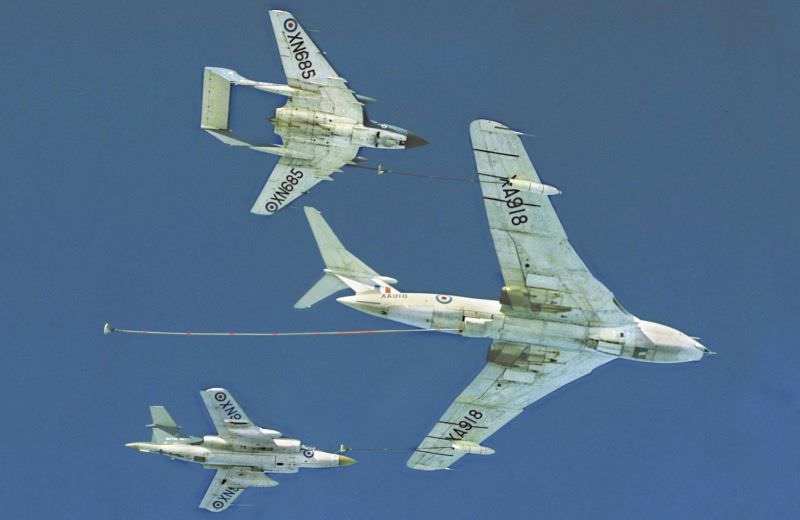
Air-to-air refueling extended the reach of RAF strike aircraft dramatically. In 1964, a Handley Page Victor K.1, converted from a bomber to a tanker, prepared to transfer fuel to two receiver aircraft flying in close formation on its wings.
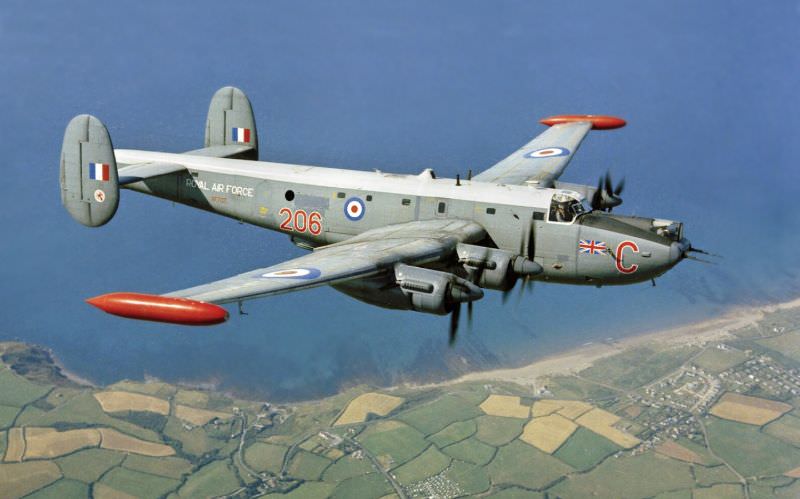
Maritime patrol was another demanding role. No. 206 Squadron flew the Avro Shackleton MR.3 from RAF St Mawgan in Cornwall, patrolling the North Atlantic for Soviet submarines. XF707 was photographed over the north Cornish coast in 1964.
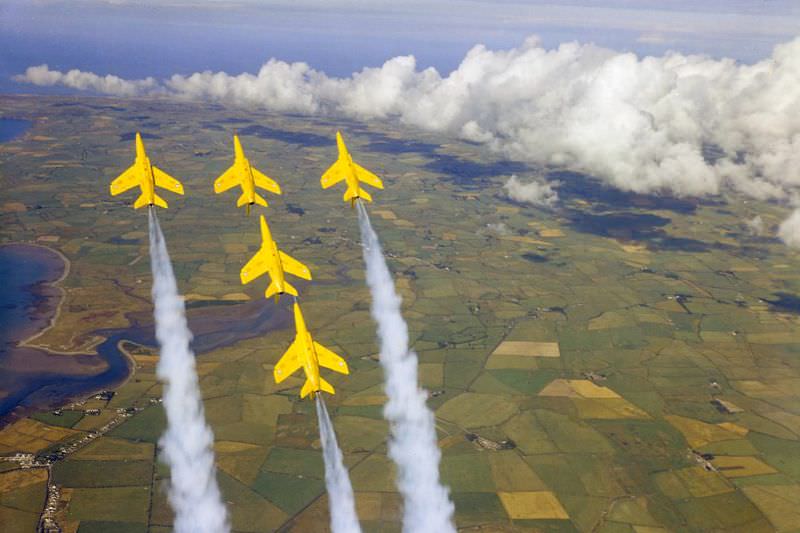
In 1964, No. 4 Flying Training School at RAF Valley fielded a new aerobatic team called the Yellowjacks. Flying Folland Gnat T.1s painted in yellow, the team flew their one and only display season that year, performing an inverted loop in ‘T’ formation over Holyhead in north Wales.
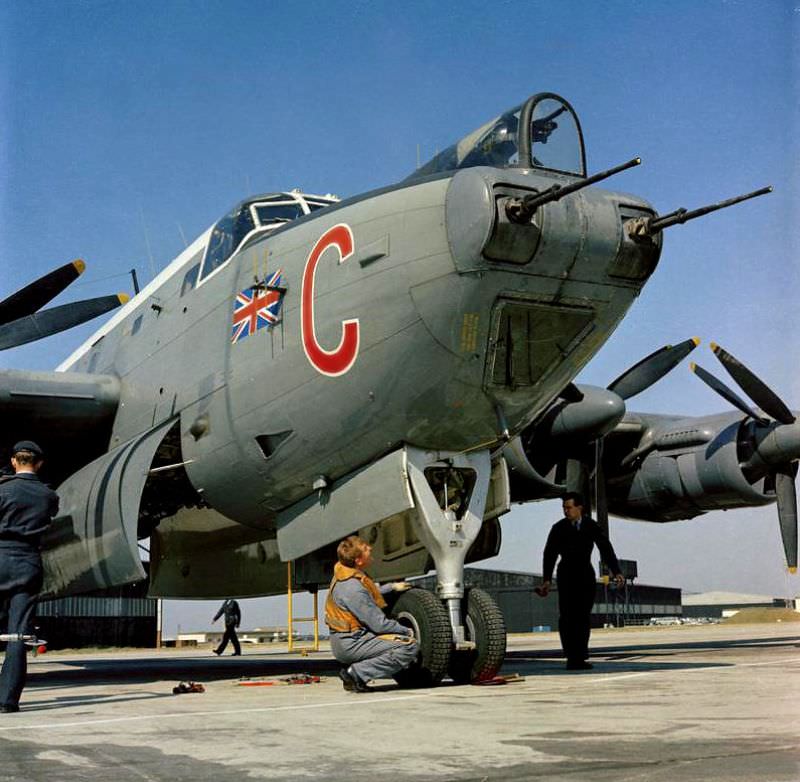
On the same Shackleton that patrolled the Cornish coast, Sergeant Michael ‘Jacko’ Jackson served as air engineer. His role kept the aircraft’s four Rolls-Royce Griffon engines running on long, often brutal over-water patrols.
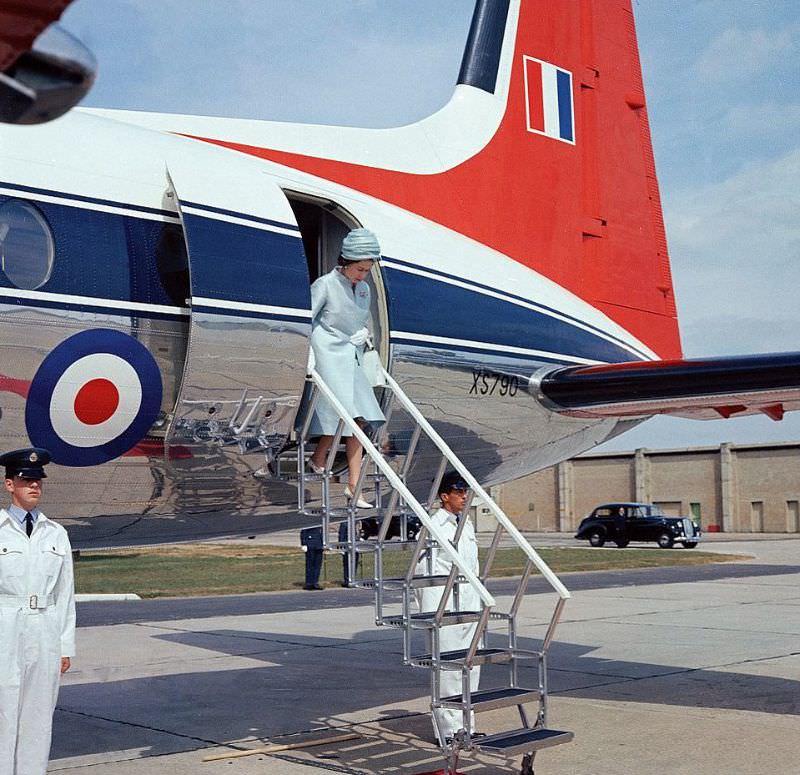
The Queen used RAF transport aircraft for official engagements throughout the 1960s. In 1964, she was photographed leaving a Hawker Siddeley Andover at RAF Thorney Island in West Sussex.
At RAF Leuchars in Fife, Scotland, No. 11 Squadron’s Lightning F.6 fighters lined up for takeoff in 1965. Leuchars was one of the RAF’s key northern air defense bases, positioned to intercept Soviet aircraft approaching British airspace from the north.
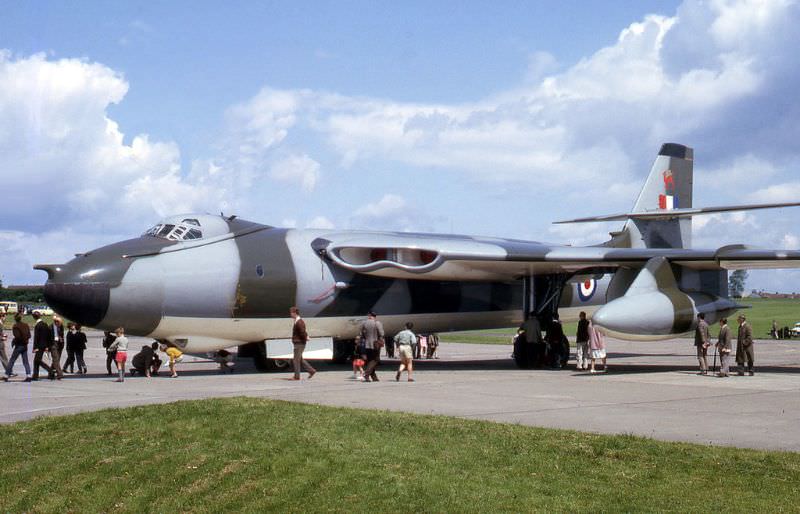
The Vickers Valiant had served as the RAF’s first V-bomber, carrying Britain’s nuclear weapons during the 1950s. By 1965 its operational days were ending, with metal fatigue forcing its early retirement from service.
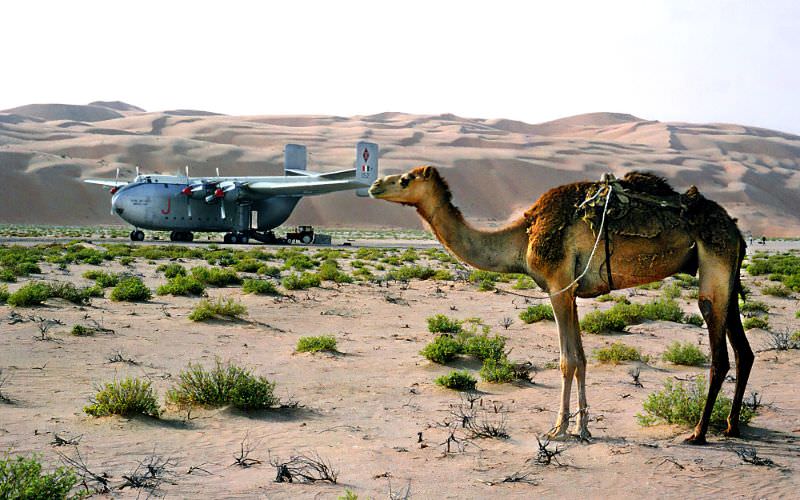
The Beverley continued to operate in some of the world’s most remote locations. In 1966, a No. 30 Squadron aircraft landed at an oasis deep in the Ar Rub al Khali — the vast Empty Quarter desert on the Arabian Peninsula.
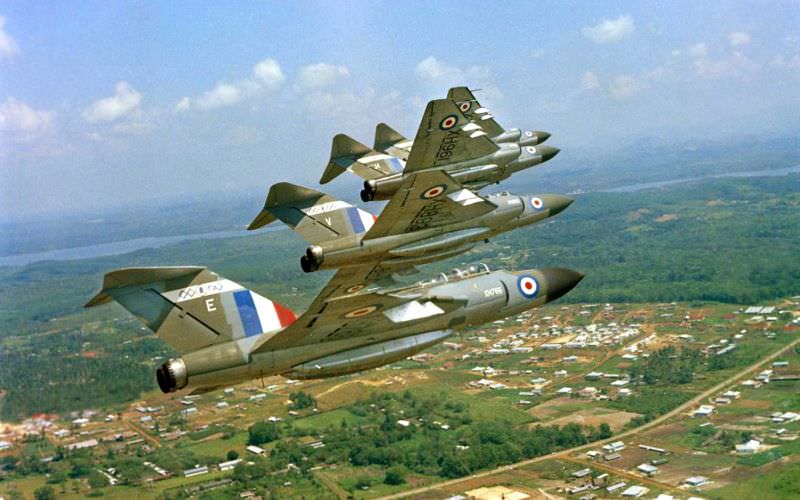
Britain maintained a military presence in Southeast Asia through the 1960s. No. 64 Squadron flew Gloster Javelin FAW.9Rs from bases in Malaysia, and in May 1967, four of the big delta-winged interceptors were photographed on an air-defense patrol over the region.
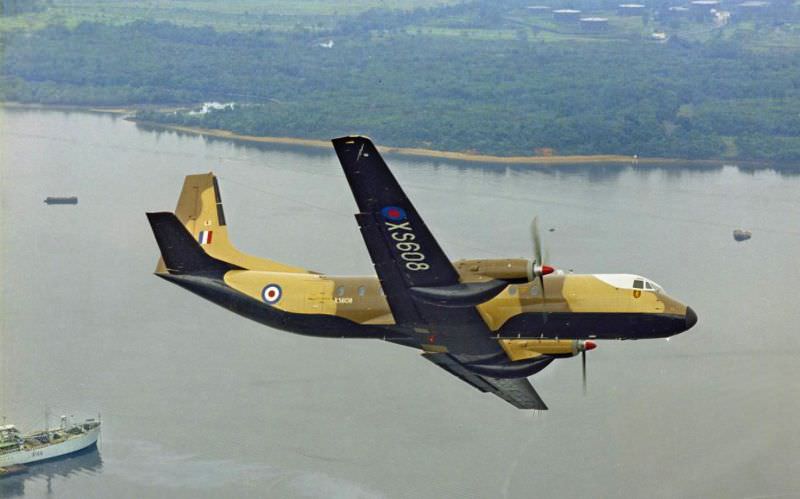
As Britain prepared to withdraw from its Far East commitments, RAF units in Singapore continued their work. No. 52 Squadron flew the Hawker Siddeley Andover C.1 from RAF Seletar, providing tactical transport support across the region.