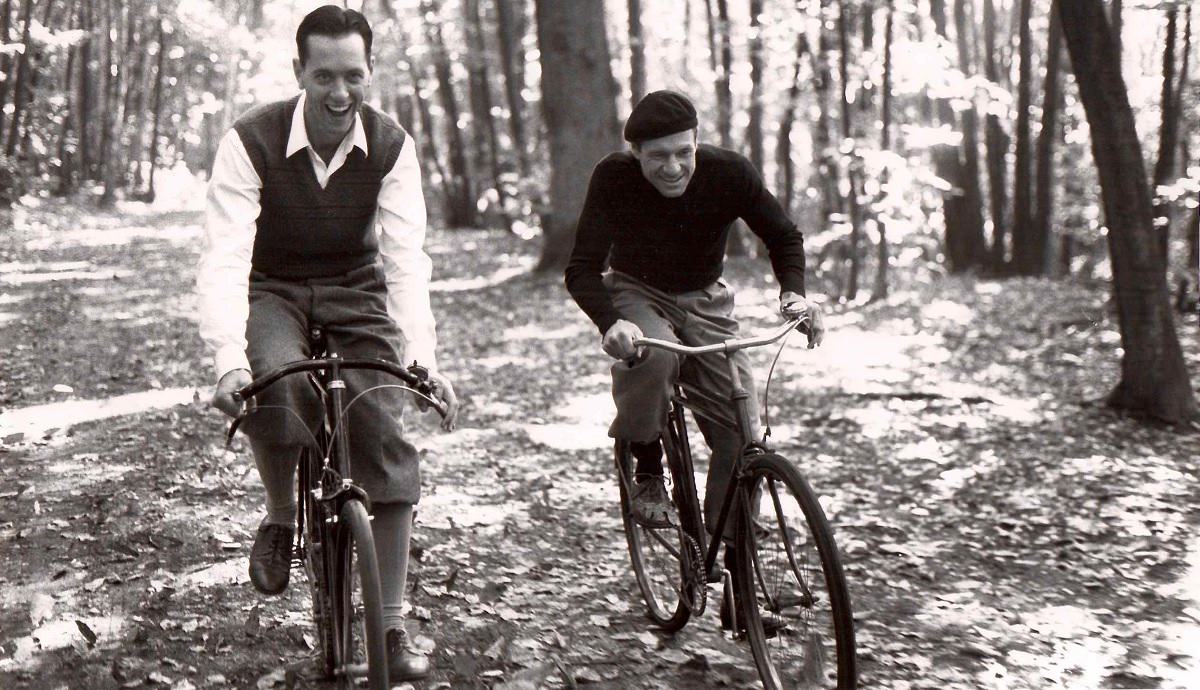
Leapfrog is one of the oldest playground games in the world. The rules are simple: one player bends over, resting their hands on their knees to “give a back,” while the next player places both hands on that person’s back and vaults over by spreading their legs wide apart. Any number of people can play, and the game has been known by this name since at least the late 1500s. What makes it remarkable is how little it has changed — and how widely it spread across every kind of setting.
The photos below were taken between the 1920s and 1950s, and they show leapfrog being played in some surprising places. Beaches and riversides were obvious spots, but the game also showed up on ocean liner decks, city streets, a pier in Wales, the roof of a London theater, and even in front of the Eiffel Tower. Bellhops, athletes, Navy sailors, fashion models, and honeymooners all took part.
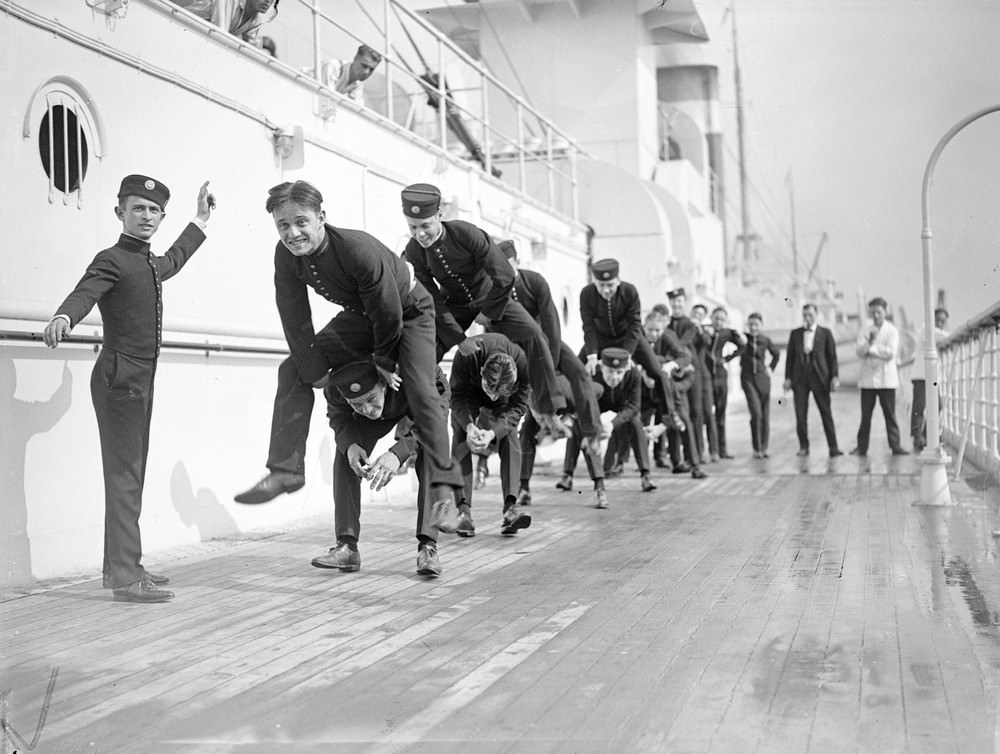
The Leviathan — originally built as the German ocean liner Vaterland — was seized by the United States during World War I. By 1923, it was one of the largest ships crossing the Atlantic. The bellhops photographed on its sun deck were among the youngest workers aboard, and their leapfrog game on the ship’s arrival at Southampton made for a lively scene on deck.
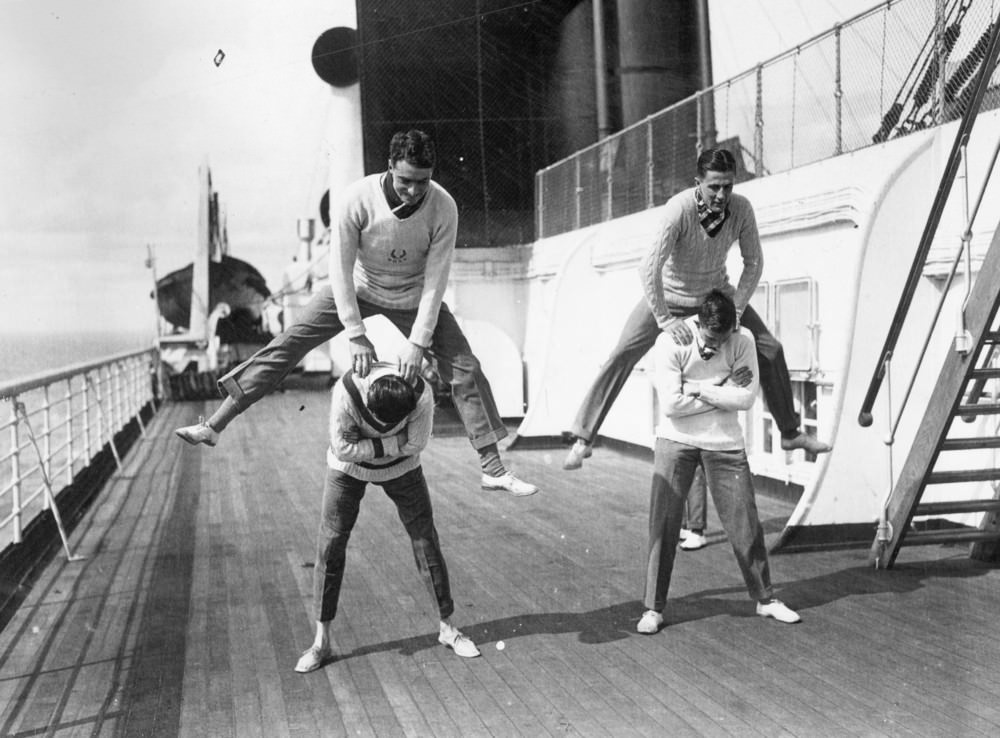
Athletes found leapfrog useful as a training exercise. The Oxford University relay team used it aboard the SS Berengaria to stay active during their transatlantic crossing in April 1923. With limited space on a ship, the game was a practical way to keep muscles warm and spirits high before competition.
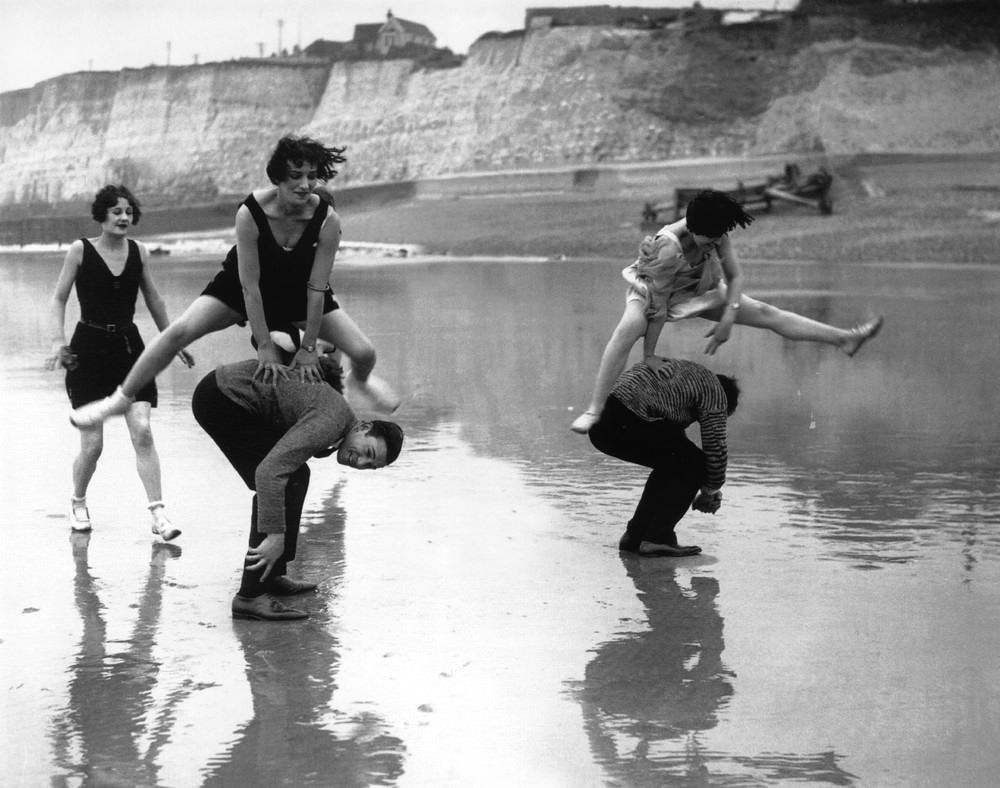
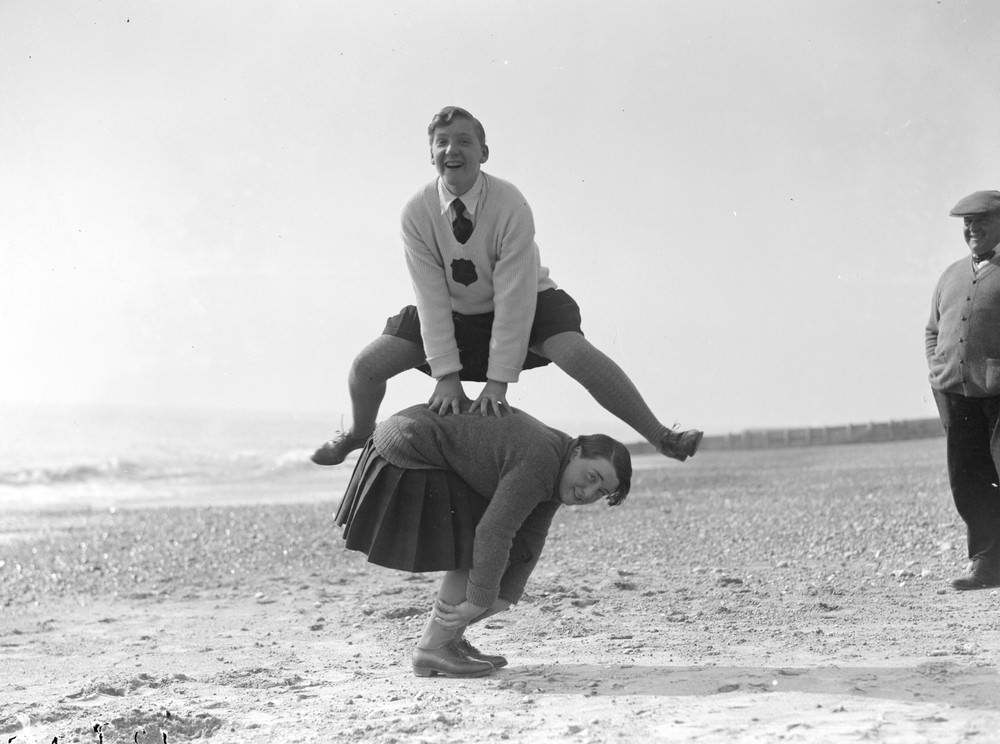
British beaches were a favourite backdrop for the game throughout the 1920s and 1930s. From Brighton to Hove to Blackpool, visitors used the open sands as their playing field. The coastal settings were relaxed and informal, which made leapfrog a natural fit for a day out.
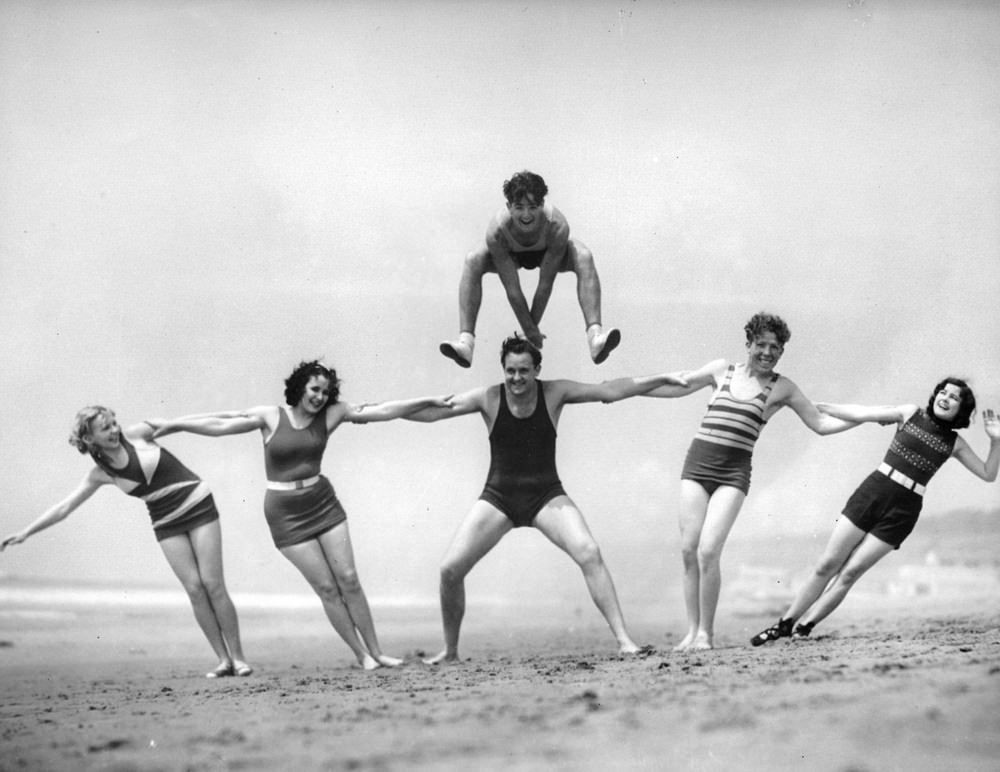
The game crossed the Atlantic easily. California beaches in 1930 provided the same kind of wide-open space that British resorts offered, and the casual, sun-soaked atmosphere made leapfrog just as popular on the West Coast of America as it was in England.
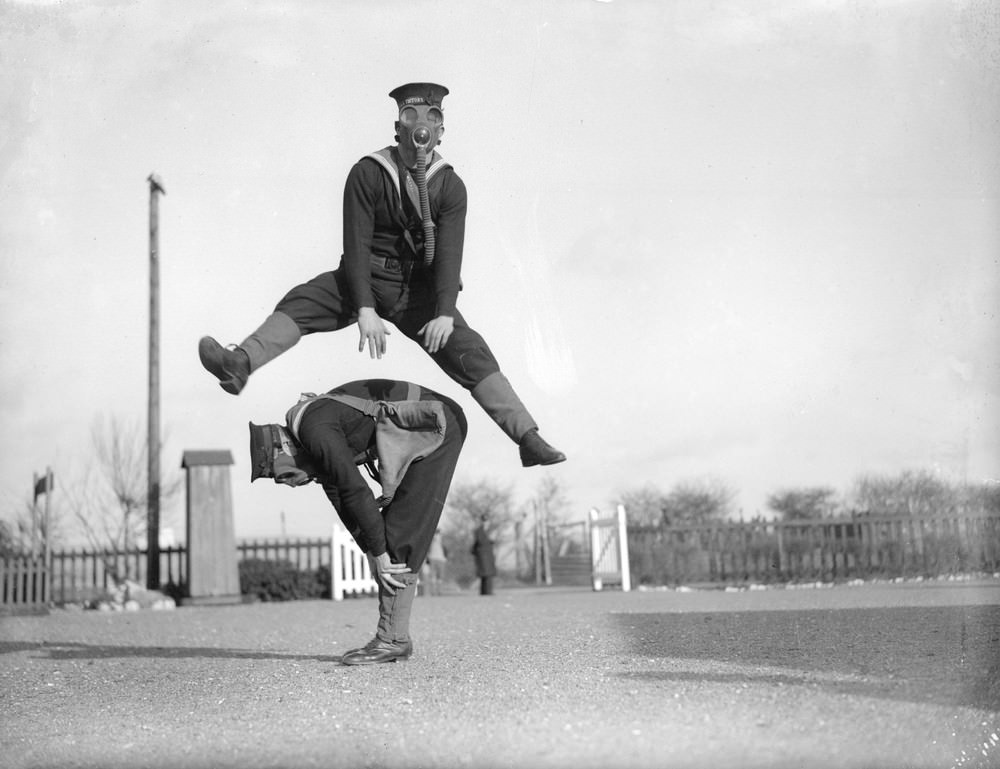
This is one of the most striking images in the collection. In January 1934, able seamen at the Royal Navy Anti-Gas School in Portsmouth played leapfrog while fully fitted with gas masks. The exercise was deliberate — the Navy used strenuous physical tasks to train sailors to function normally while wearing respirators, a serious concern in the years following World War I’s chemical weapons campaigns.
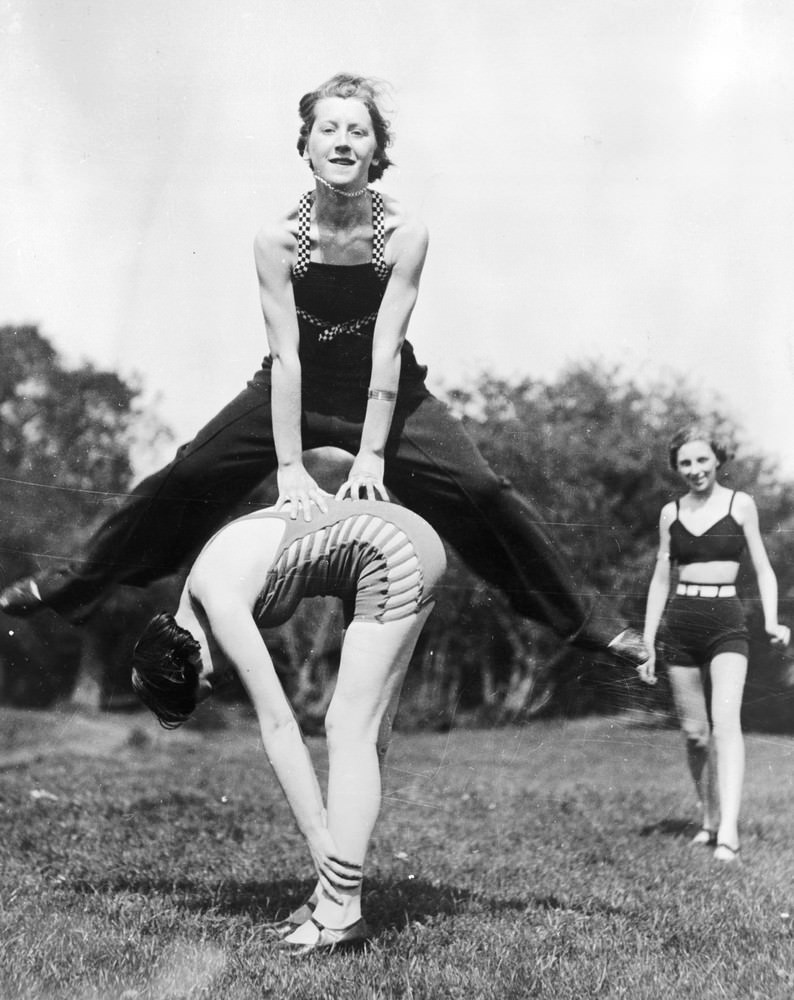
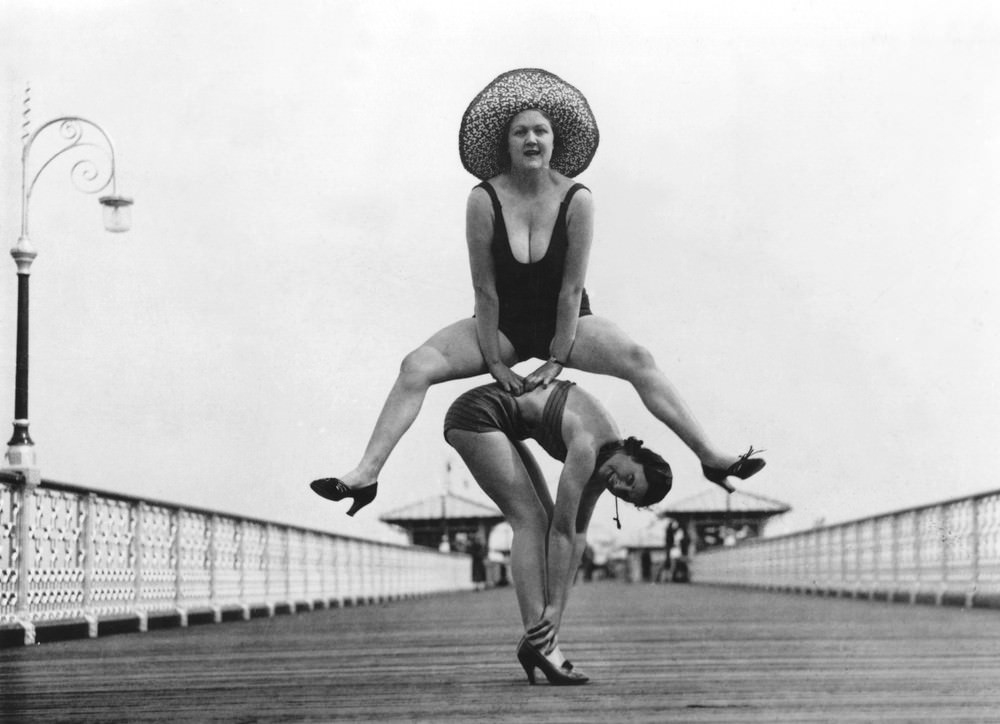
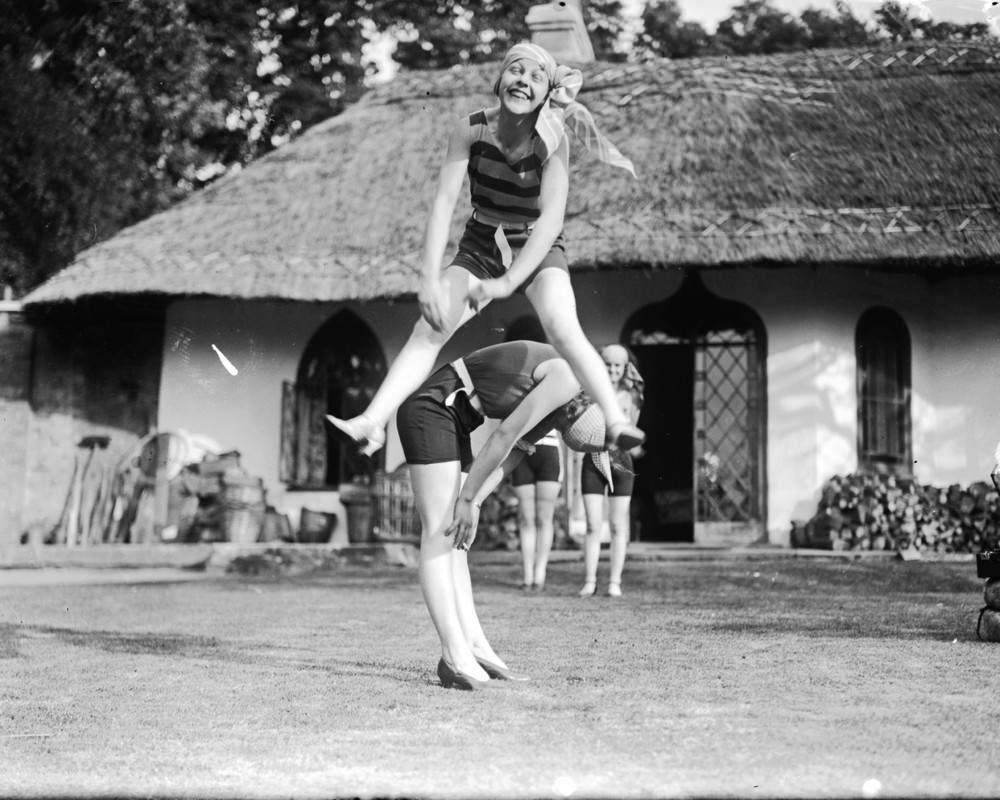
Summer holidays in 1930s Britain meant piers, river banks, and camping trips — and leapfrog fit all of them. The pier at Llandudno in North Wales stretched out over the sea and gave holidaymakers a long, flat surface to play on. A few miles away, campers along the Thames were doing the same thing in the grass.
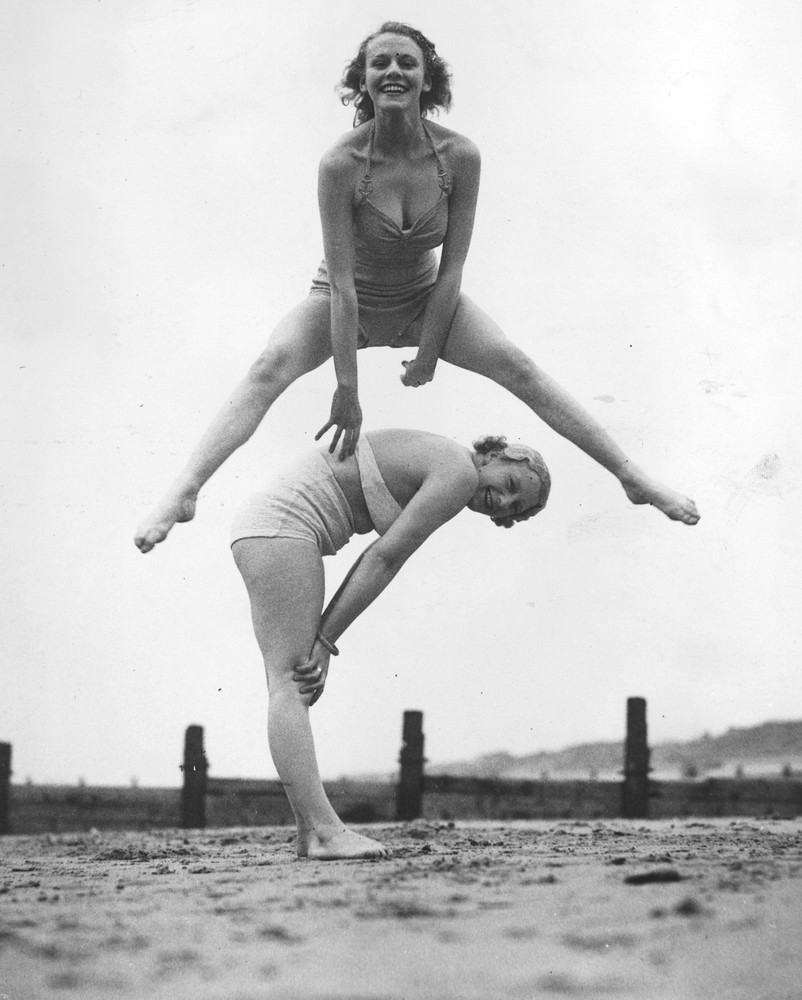
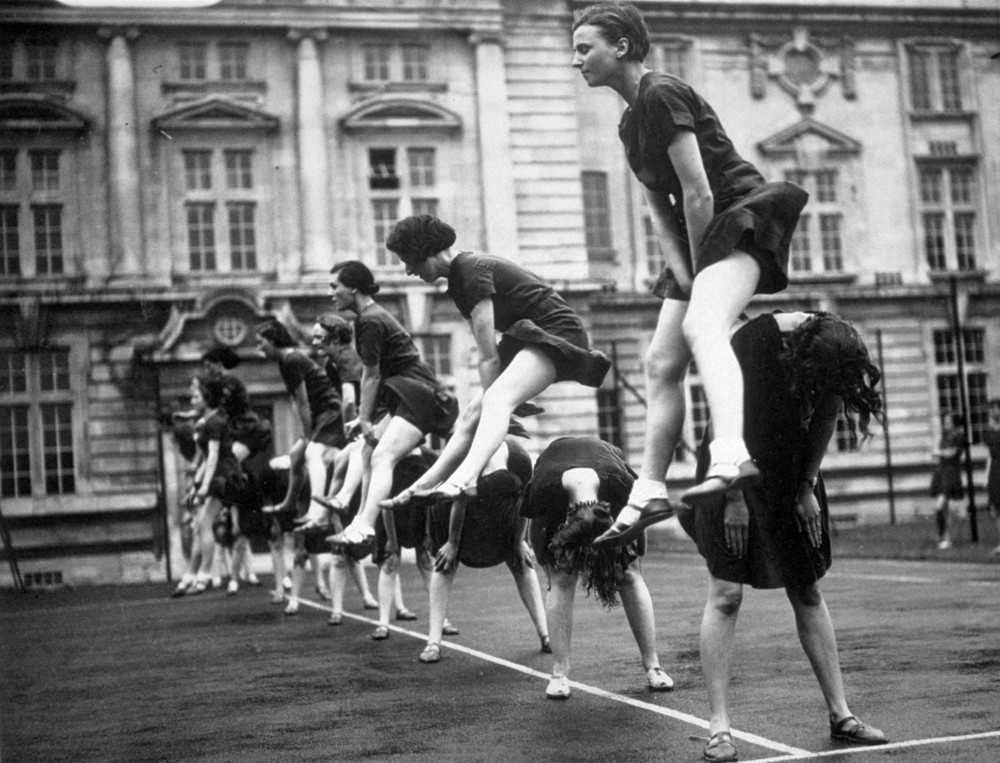
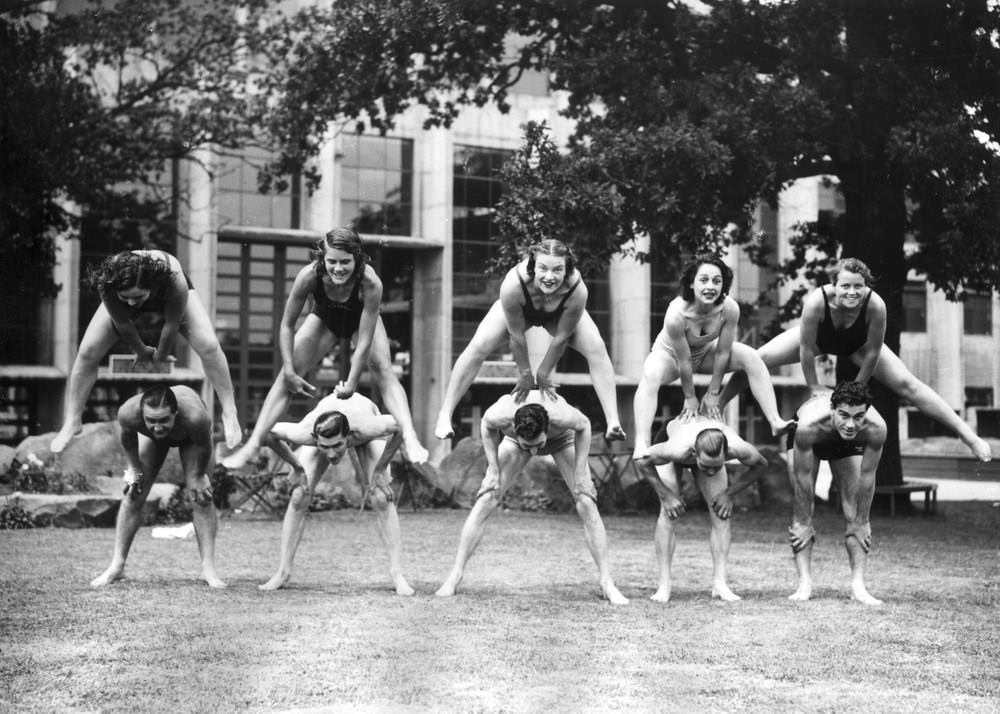
Universities also brought leapfrog into formal physical training. Students at University College Cardiff performed it as part of a public fitness display in May 1936. Around the same time, women divers preparing for the European Championships in London played leapfrog alongside speedway riders as part of their keep-fit routine.
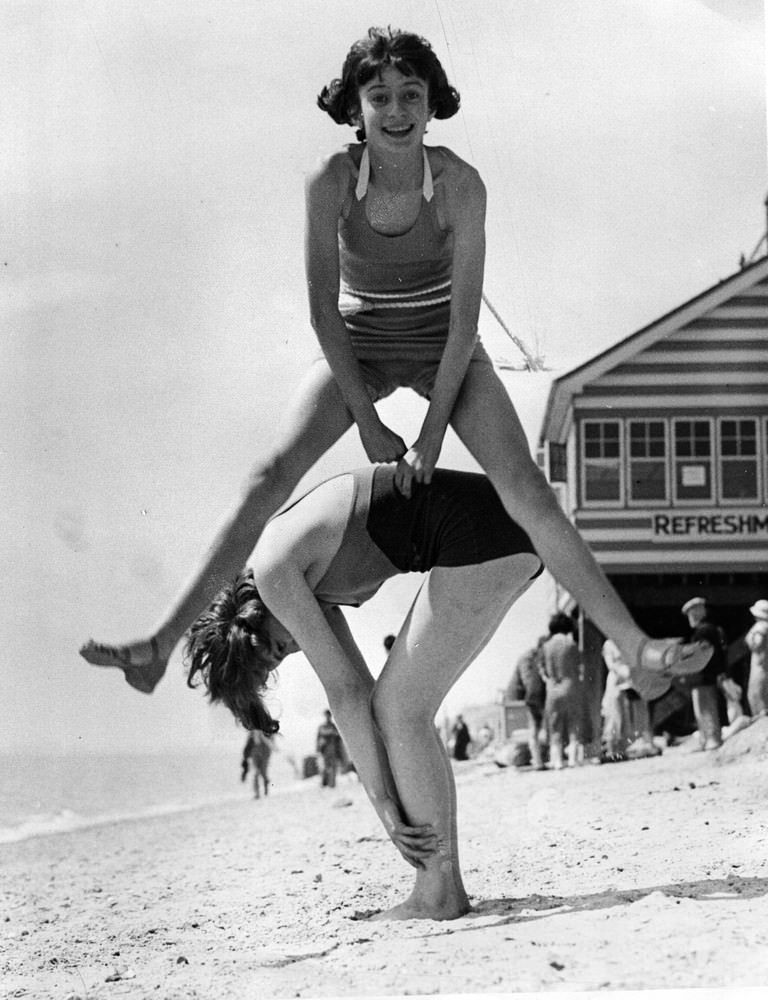
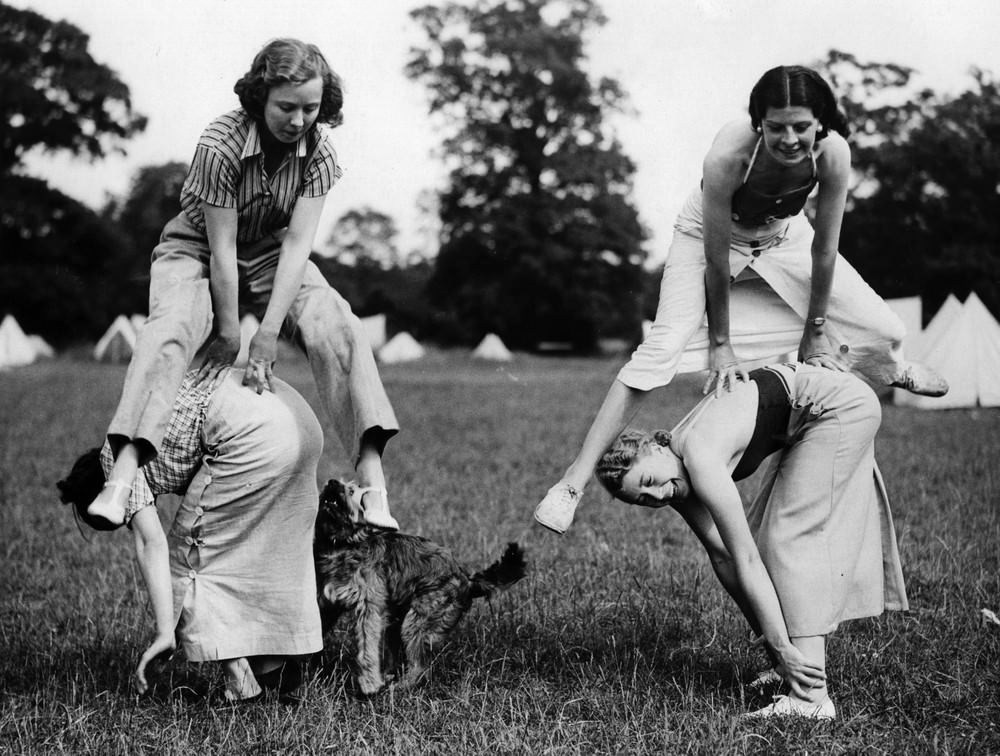
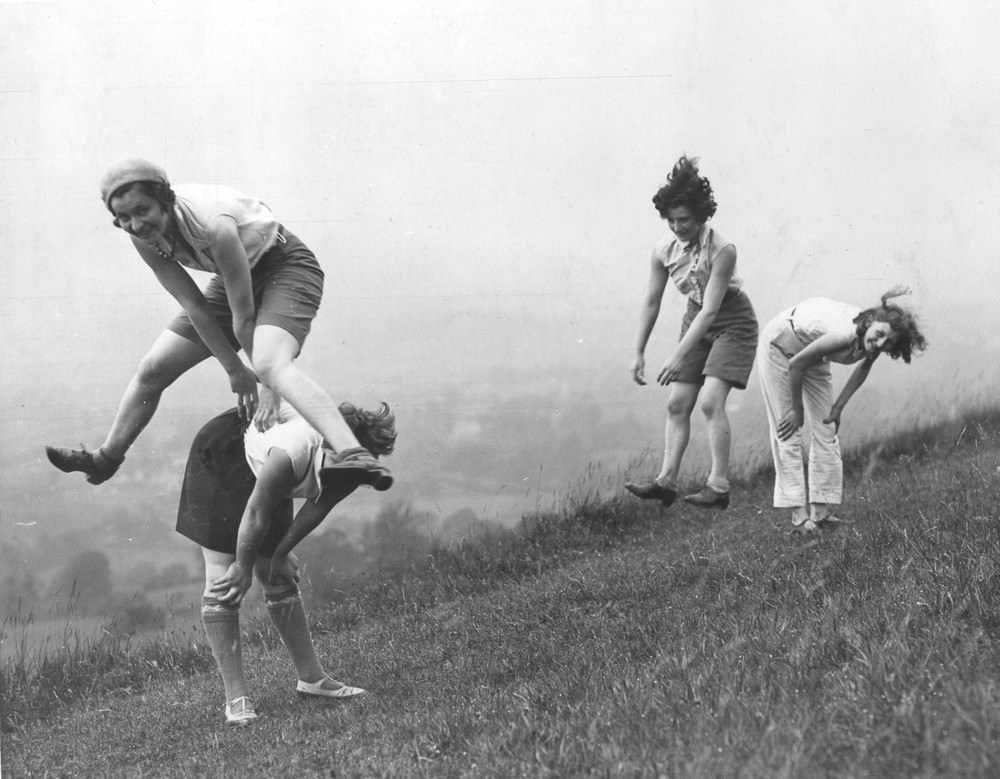
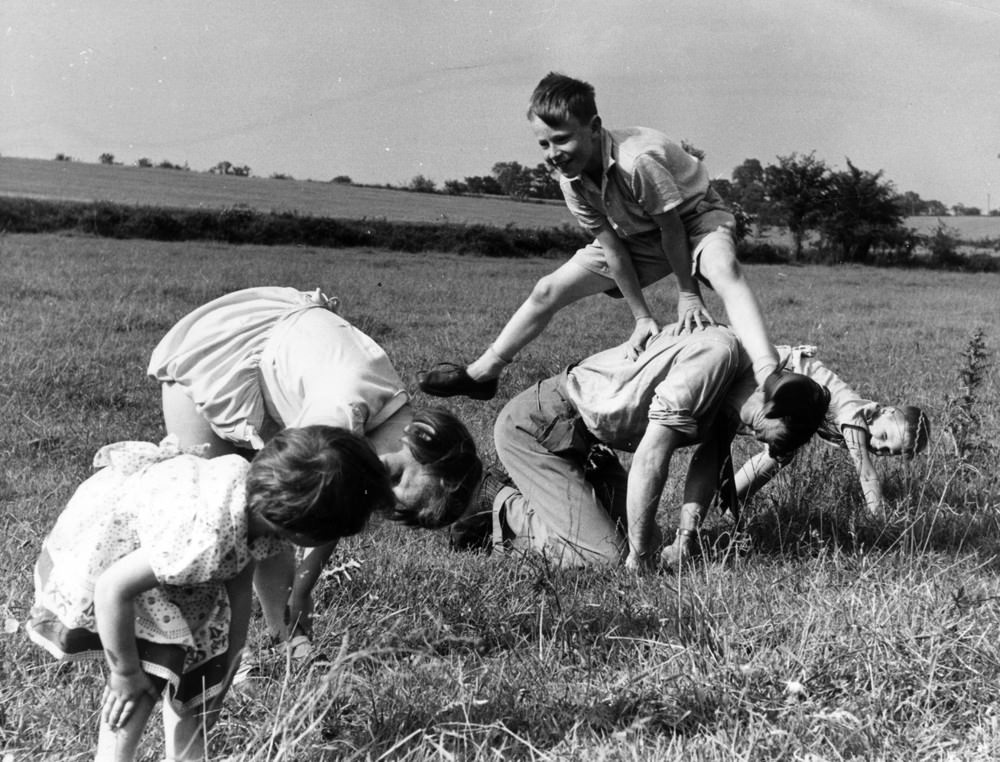
Children were, of course, the game’s most enthusiastic players. In Clacton, two girls played on the beach in June 1936. Near Epping, a dog attempted to join four girl campers mid-game. The image at Upshine captures something the other photos rarely do — the completely unplanned chaos that the game could produce.
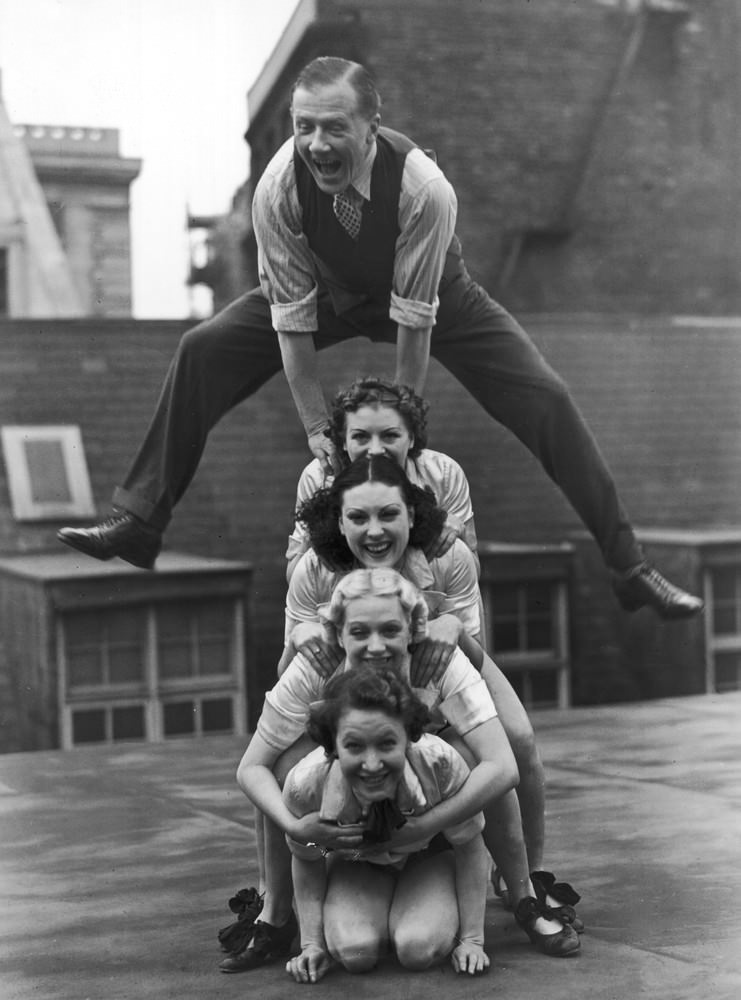
Jack Payne was a well-known British bandleader and dancer. In 1938, he was photographed rehearsing leapfrog with his troupe, the Manhattan Six, on the rooftop of the Holborn Empire theater in London. Whether this was a rehearsed stage routine or simply a break from practice, it made for an eye-catching photograph high above the city.
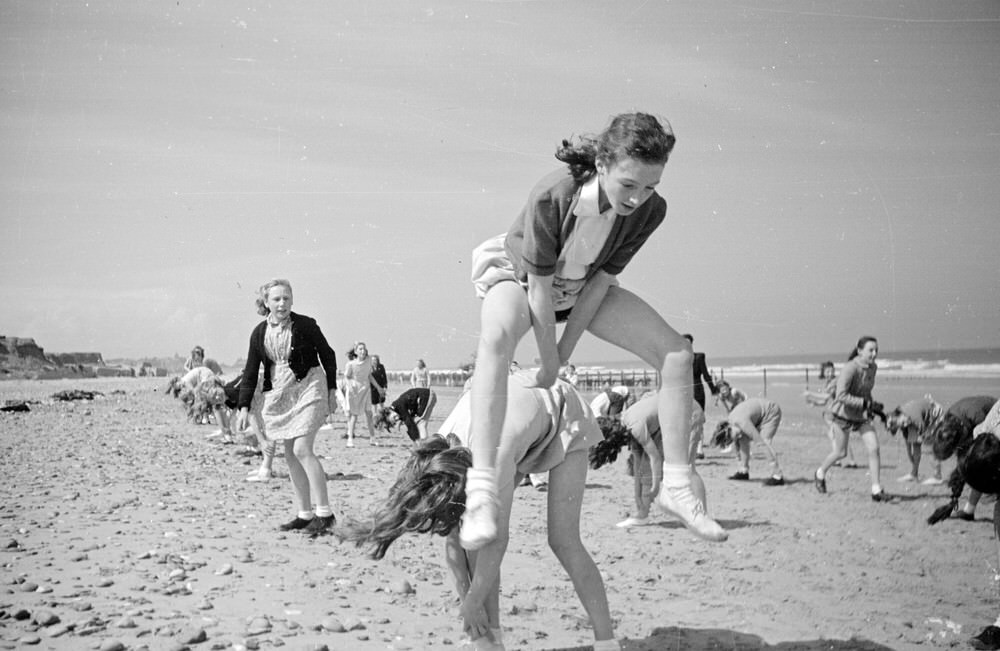
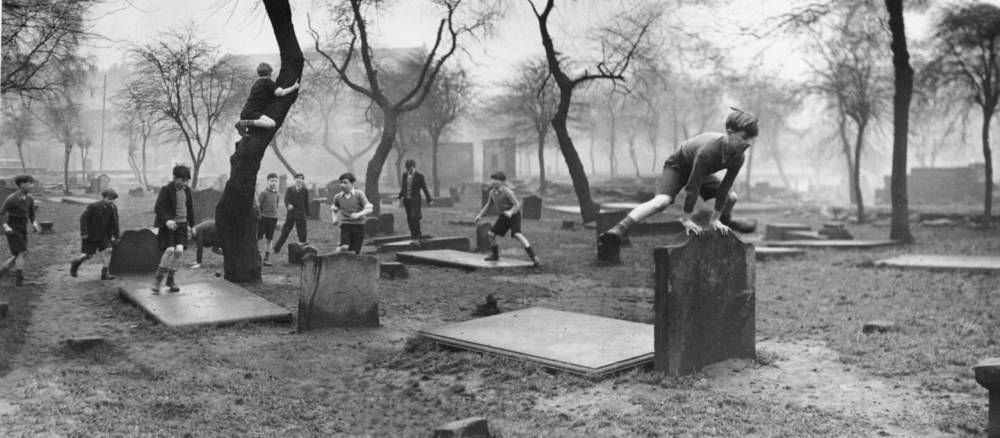
After World War II, the game continued without missing a beat. Schoolchildren from Wakefield played it on the beach at Hornsea during a seaside break in 1948. That same year, boys from the Gorbals in Glasgow — one of Britain’s most overcrowded urban districts — played leapfrog among the gravestones of a burial ground on Rutherglen Road, one of the only open green spaces available to them.
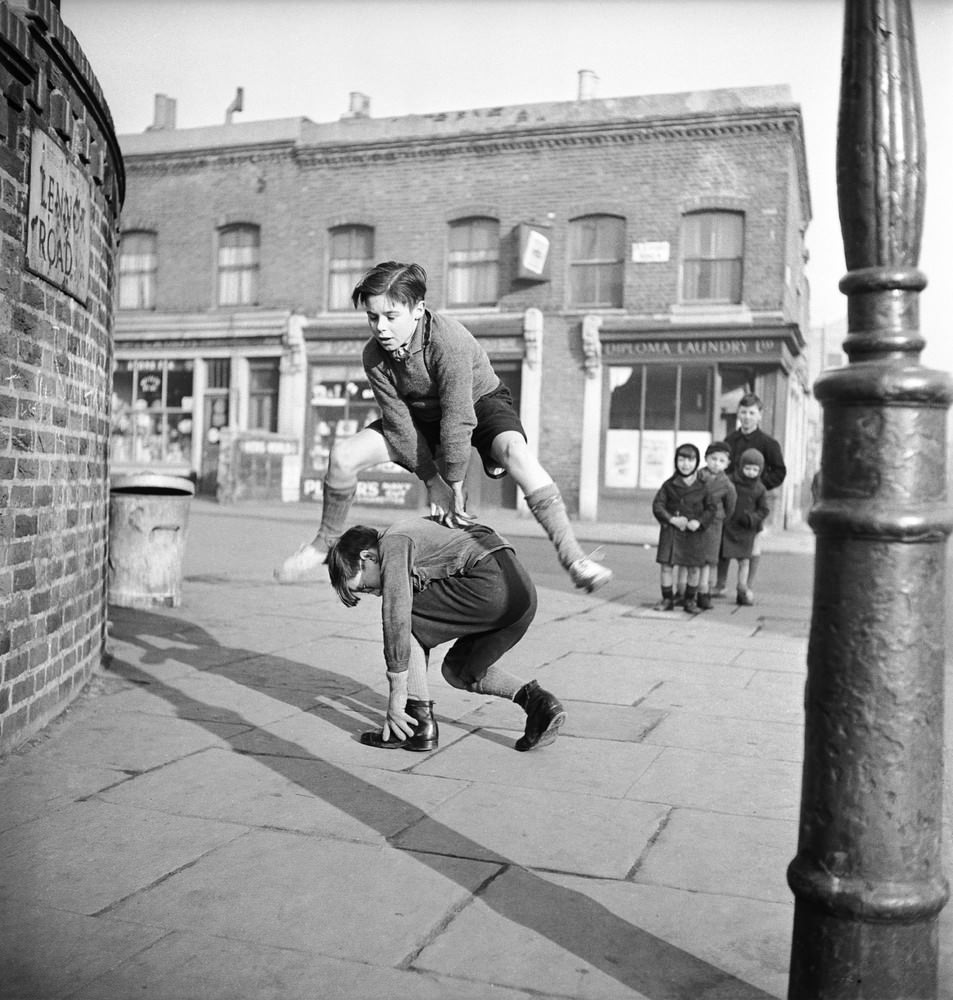
By 1950, the game was as common on city streets as it was on beaches. Children used whatever space was available — footpaths, back alleys, open lots. The street itself became the playing field when no other option existed.
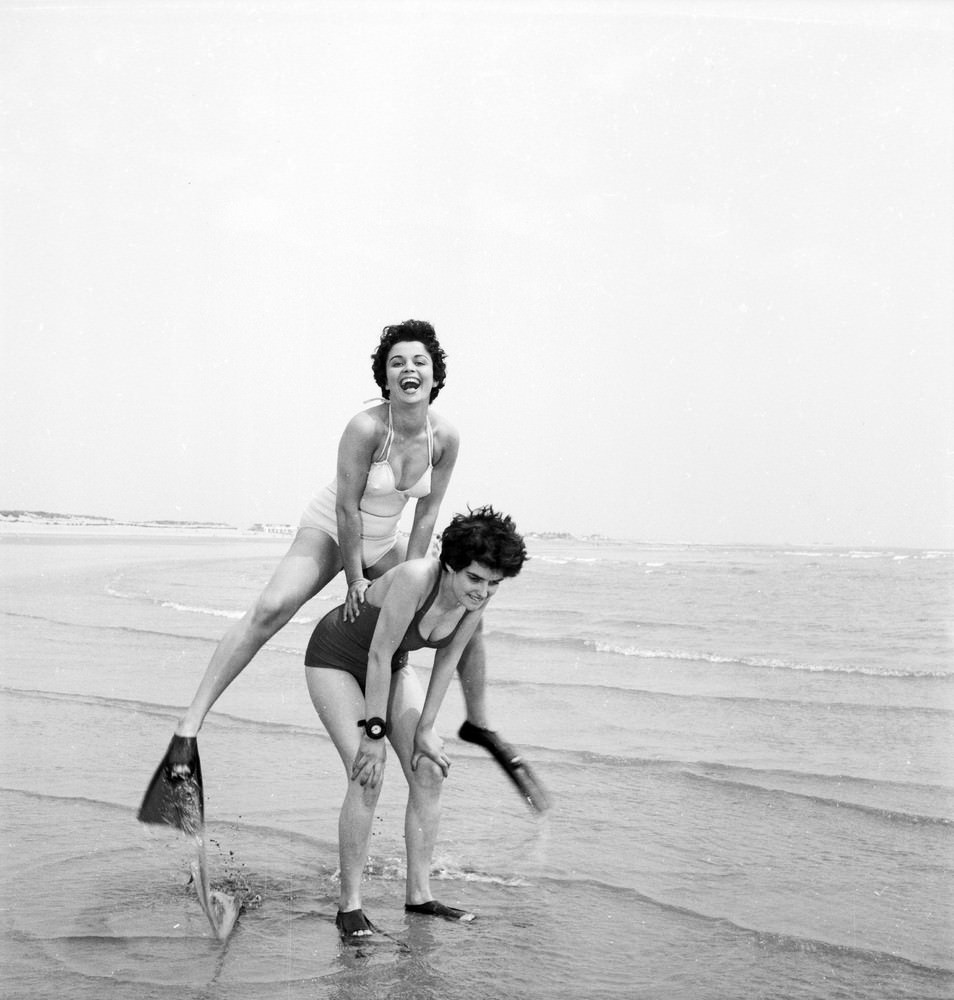
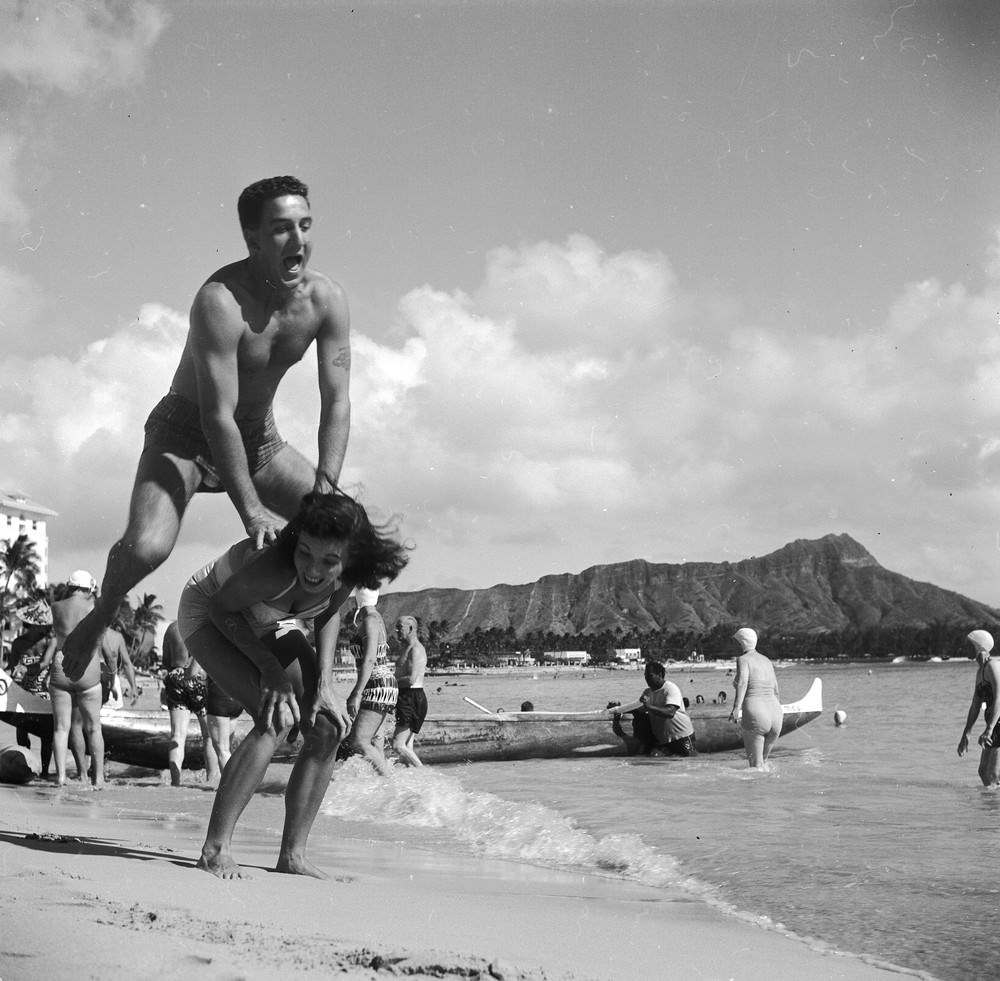
The mid-1950s brought some of the most inventive leapfrog photos. Two women played on a beach while wearing diving fins in 1955 — a physical challenge that made every vault considerably harder. That same year, newlyweds Bert and Ellie Lang played leapfrog on Waikiki Beach in Honolulu during their honeymoon, with the Diamond Head volcanic crater visible in the background.
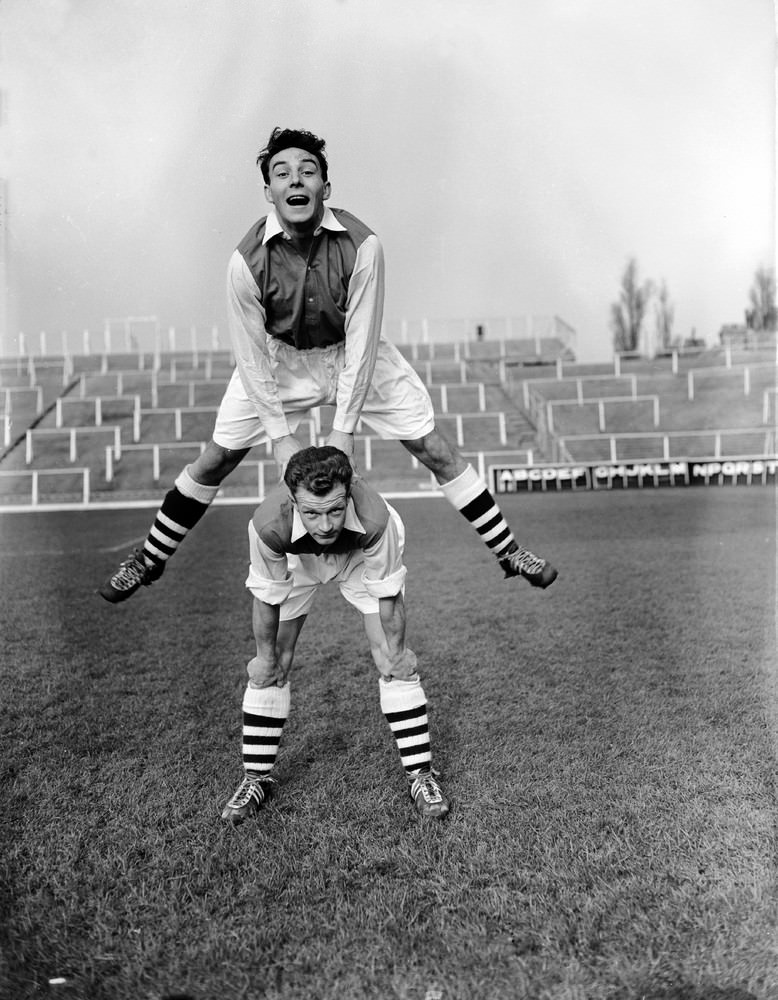
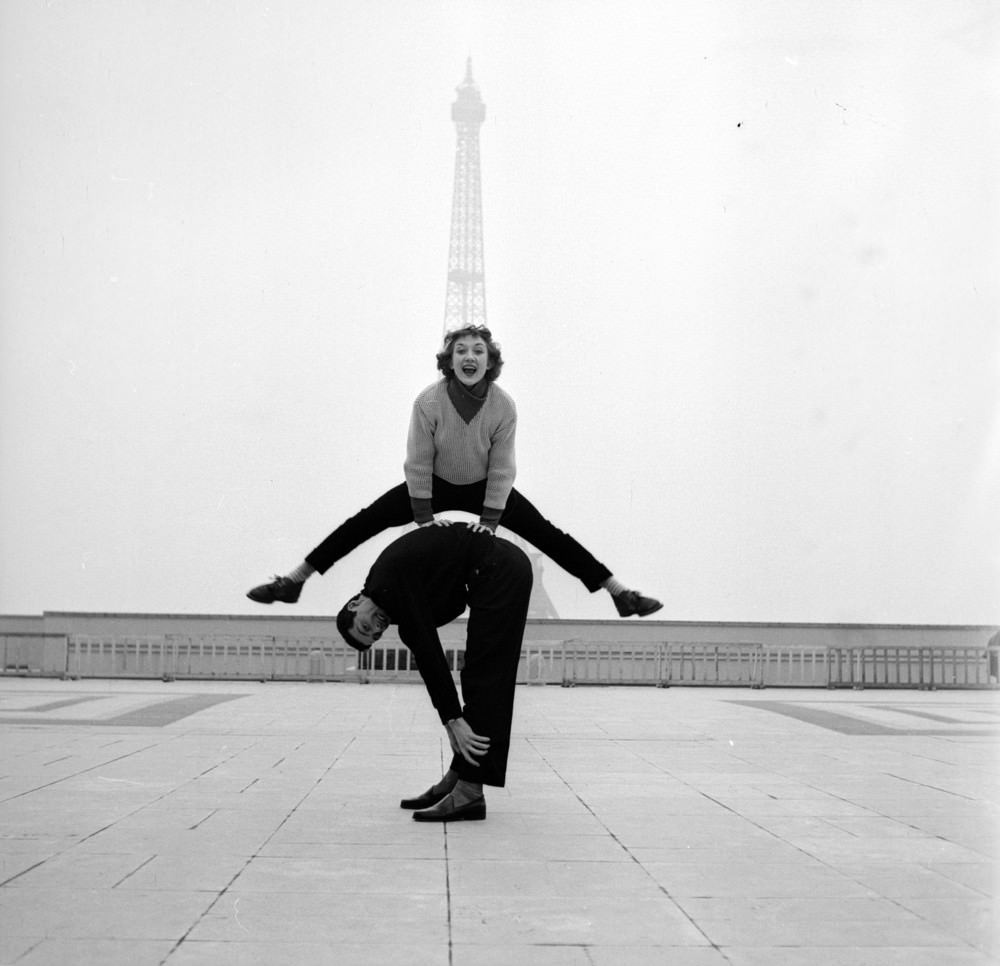
Professional footballers also turned to leapfrog when the cameras were watching. Vic Groves and Stan Charlton, both newly signed to Arsenal from Leyton Orient, were photographed playing it on their first training day at Highbury Stadium in November 1955. Street performers Jean Louis Bert and Grethe Bulow took things outdoors in a different way — playing leapfrog directly in front of the Eiffel Tower in Paris that same year.
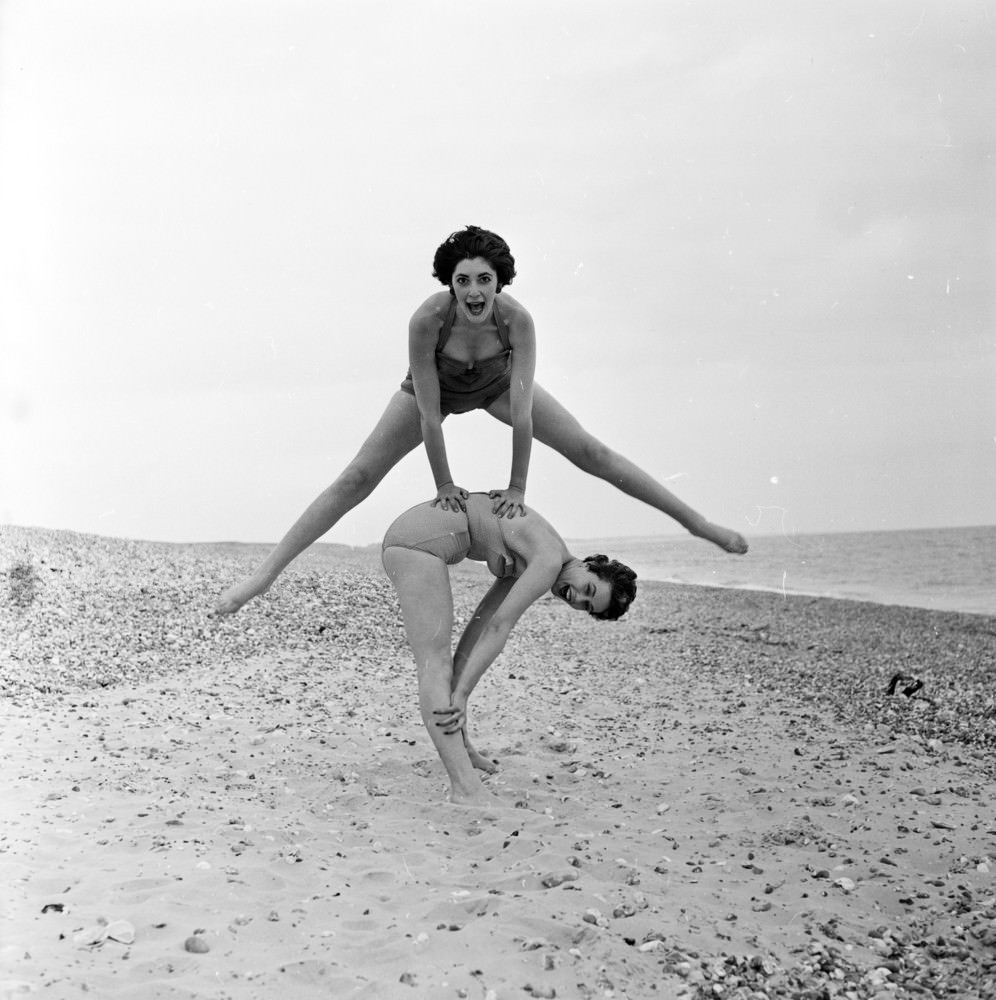
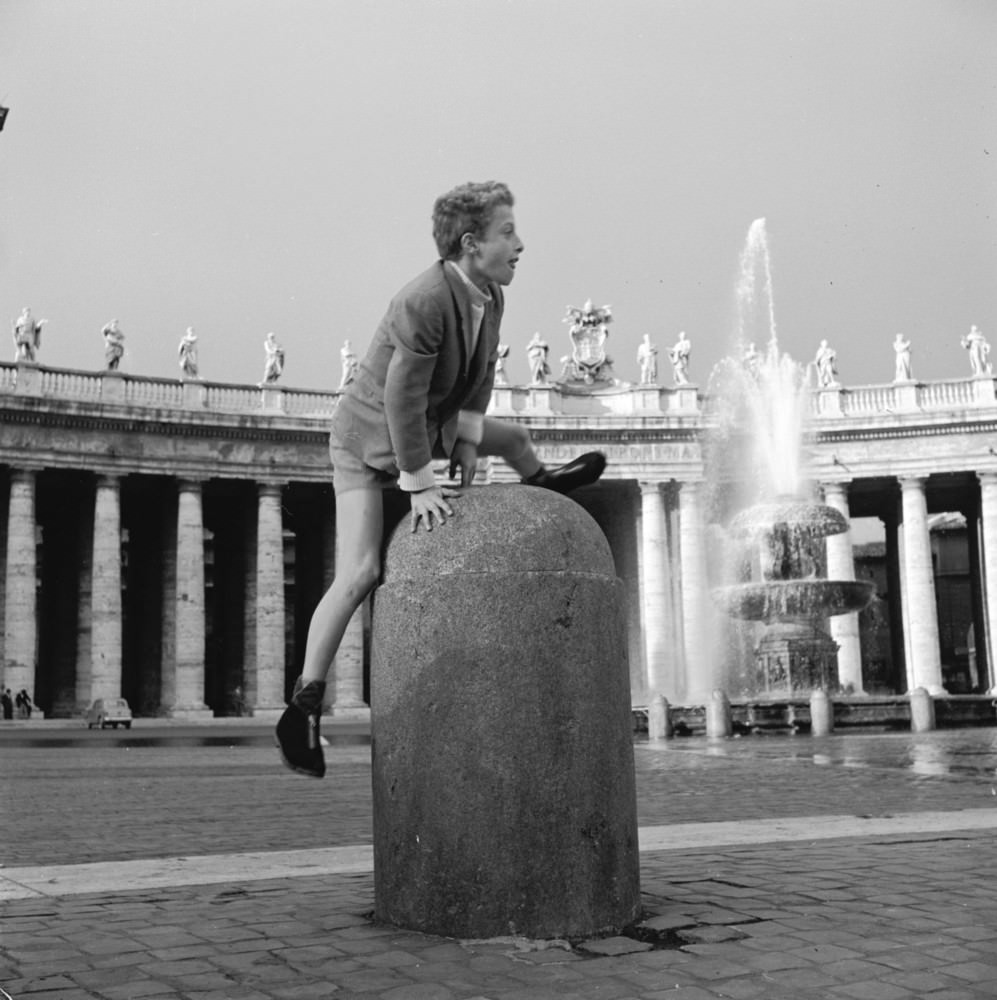
Fashion models Darien Leigh and Valerie Drew were photographed mid-vault on a beach in July 1956. The image was clearly staged for effect, but it fit perfectly into the decade’s habit of placing leapfrog in unexpected, glamorous settings. And finally, one of the most memorable single photographs in this collection was taken in Vatican City — a lone boy playing leapfrog in the vast open expanse of St. Peter’s Square.