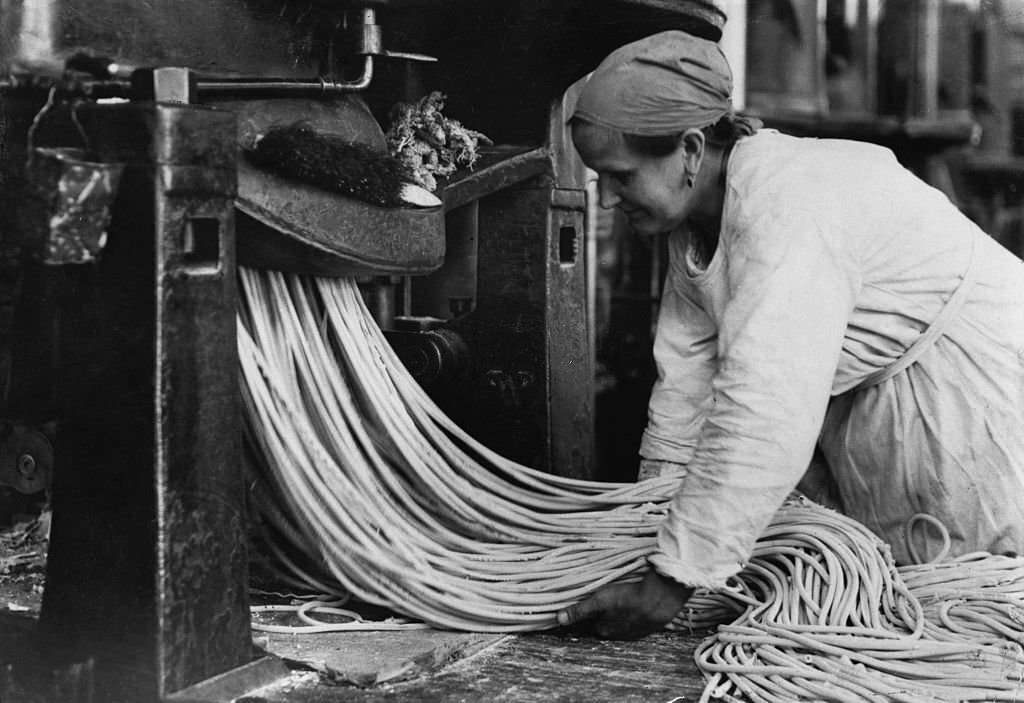
Pasta has been part of Italian life for centuries, but its origins stretch far beyond Italy. The earliest known pasta dates back to 5,000 BC in China. Arab traders introduced it to Sicily in the ninth century, and from there it spread across the Italian peninsula. Many Sicilian recipes still carry traces of those medieval Middle Eastern roots, using ingredients like raisins and cinnamon.
By the 1300s, dried pasta was already popular across Europe. Its long shelf life made it a practical food for sailors on long voyages. Spanish explorer Hernán Cortés brought tomatoes to Europe in 1519, and before long, pasta and tomato sauce became one of Italy’s most iconic food pairings. Thomas Jefferson is also credited with introducing pasta to America in 1789, after encountering it during his time abroad.
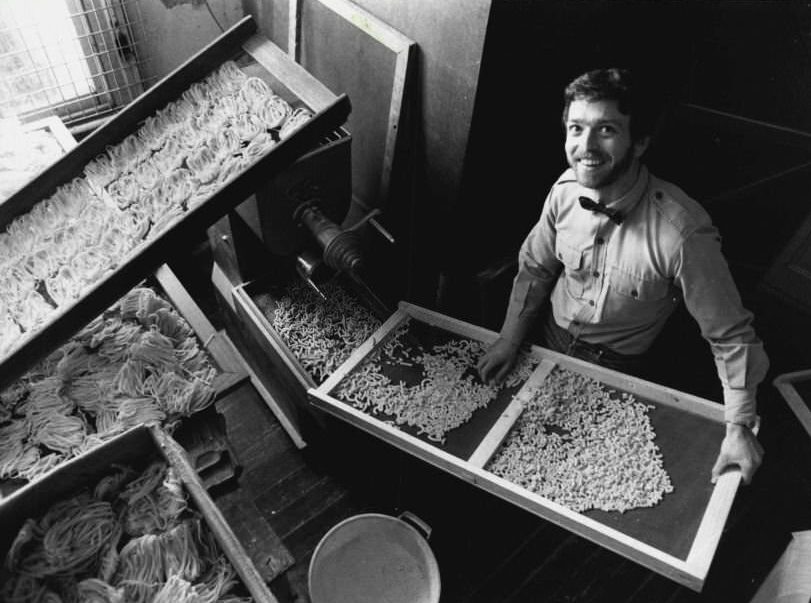
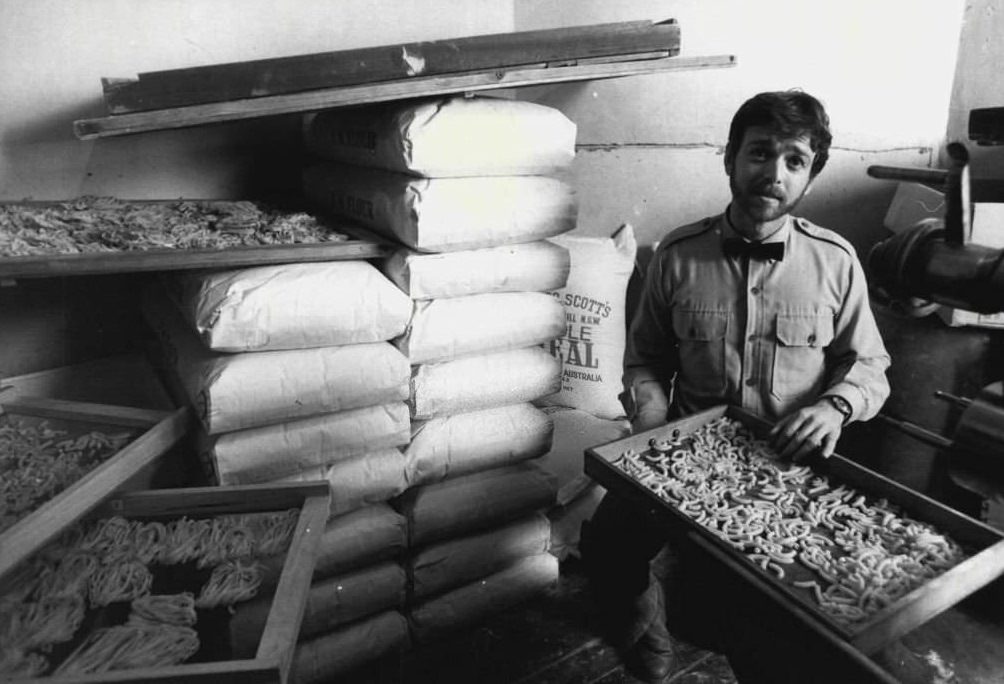
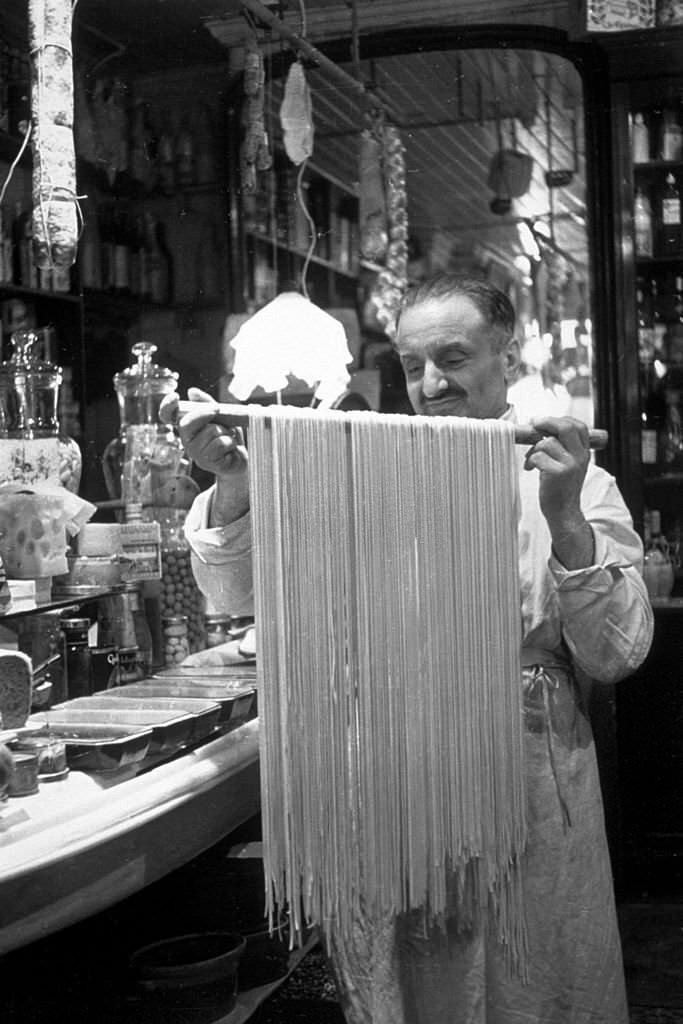
Alex Federici, making pasta in his Leichhardt shop, “Buon Appetito Products”, 1983Alex Federici, making pasta in his Leichhardt shop, “Buon Appetito Products”, 1983
The word “macaroni” comes from a Sicilian phrase meaning to knead dough vigorously. That name reflects just how labor-intensive early pasta making really was — a full day’s work. Durum wheat, which thrives in Italy’s dry climate, became the foundation of pasta production. It spread quickly from Sicily to the Italian mainland and eventually to the rest of the world wherever Italian immigrants settled.
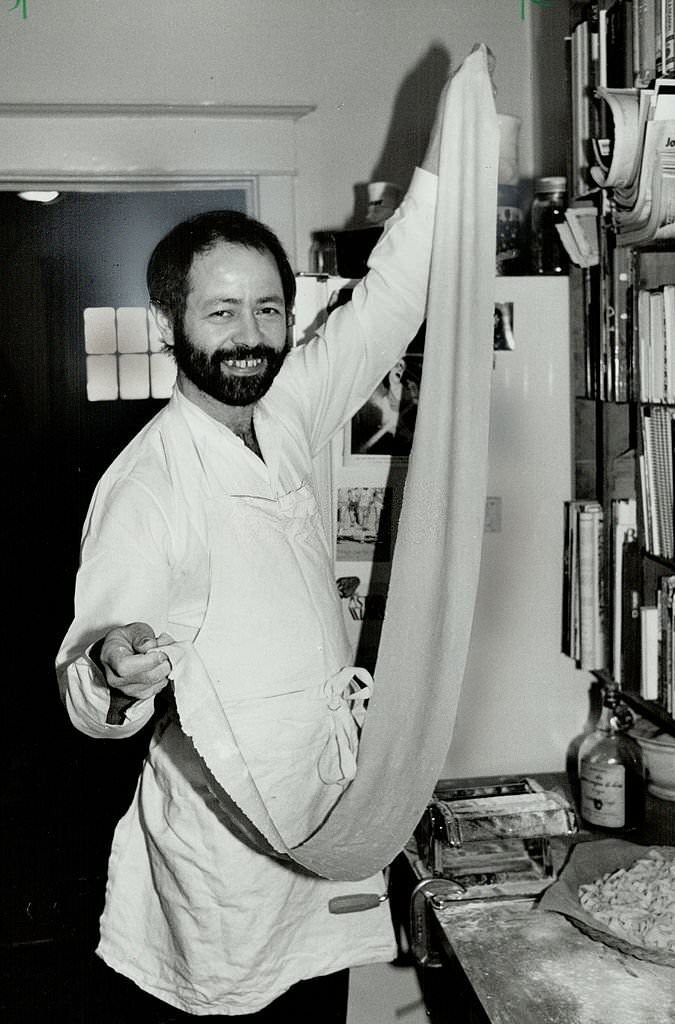
Pasta maker: Gerry Mamone demonstrates pasta-making on a pasta machine for a special Italian dinner.
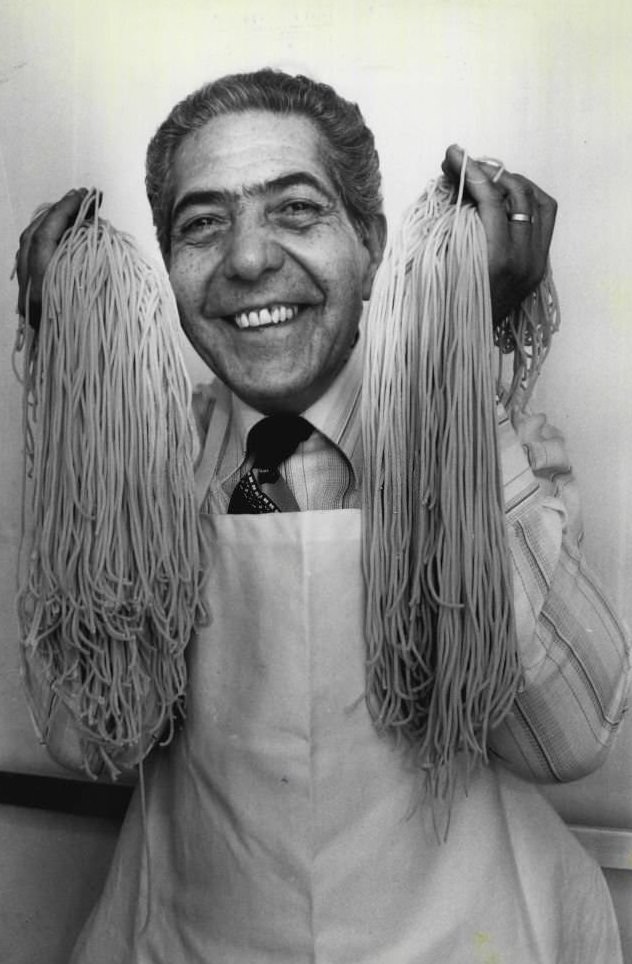
Miguel Aguas working in his Shop, Pasta House at Leichhardt where they make Pasta fresh in the shop, 1981
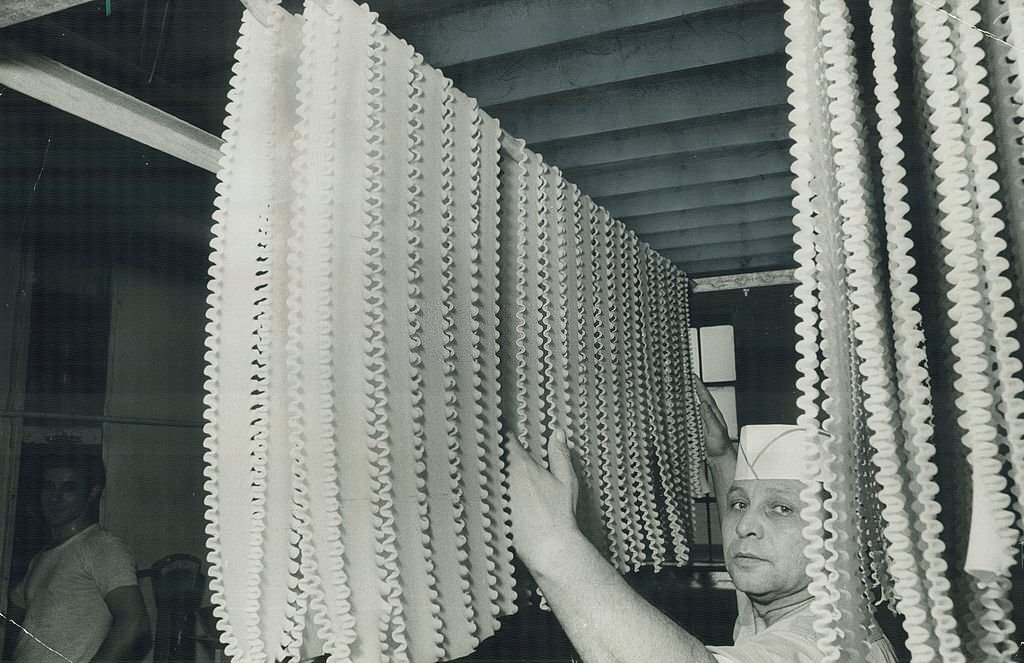
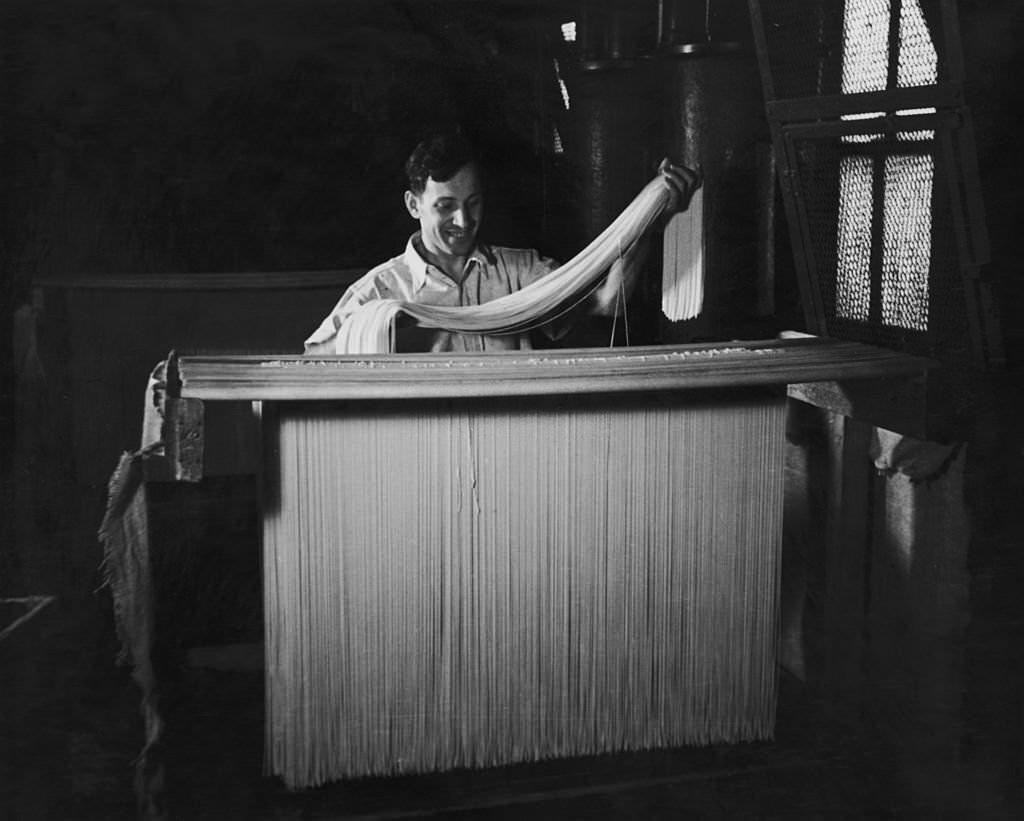
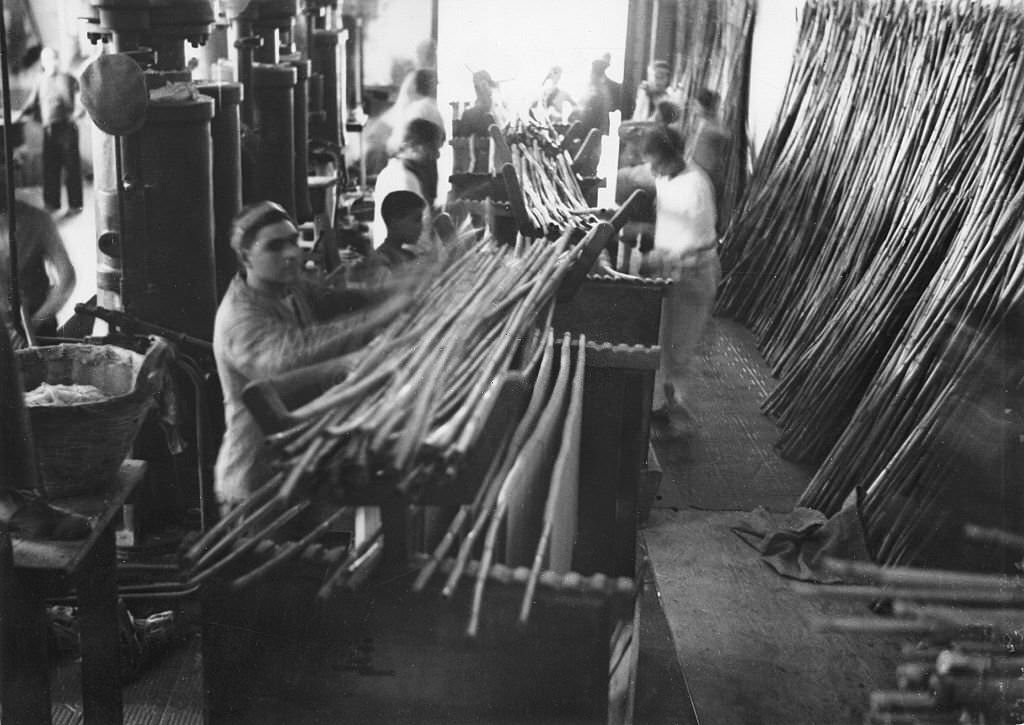
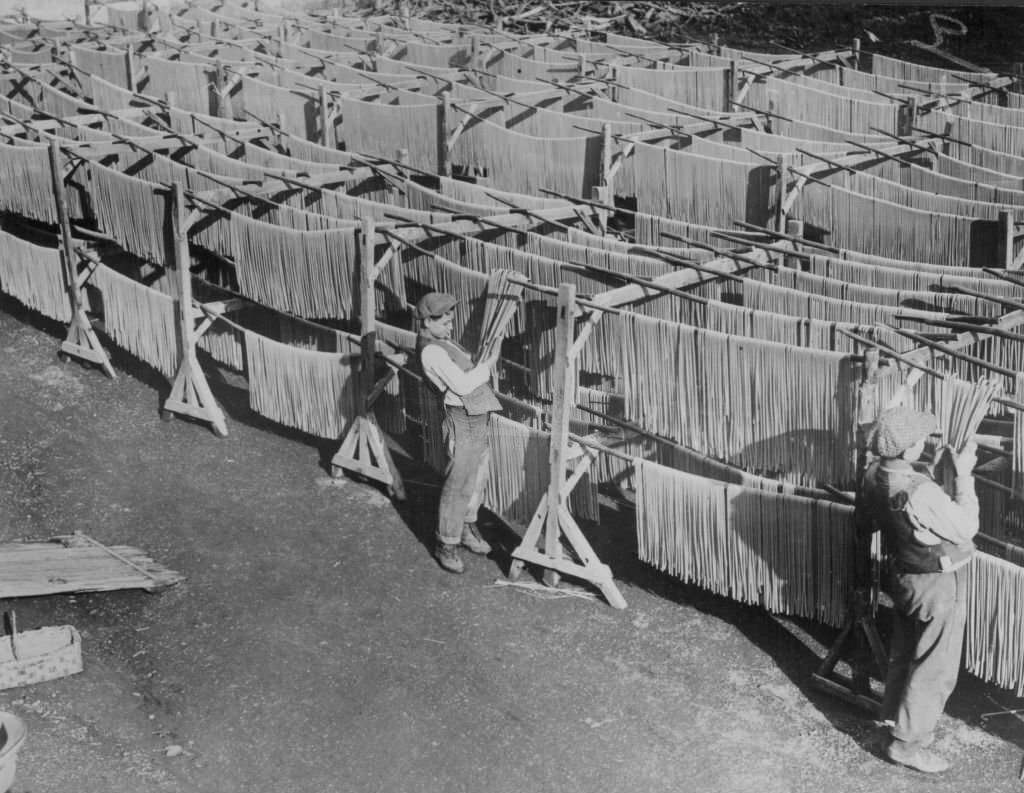
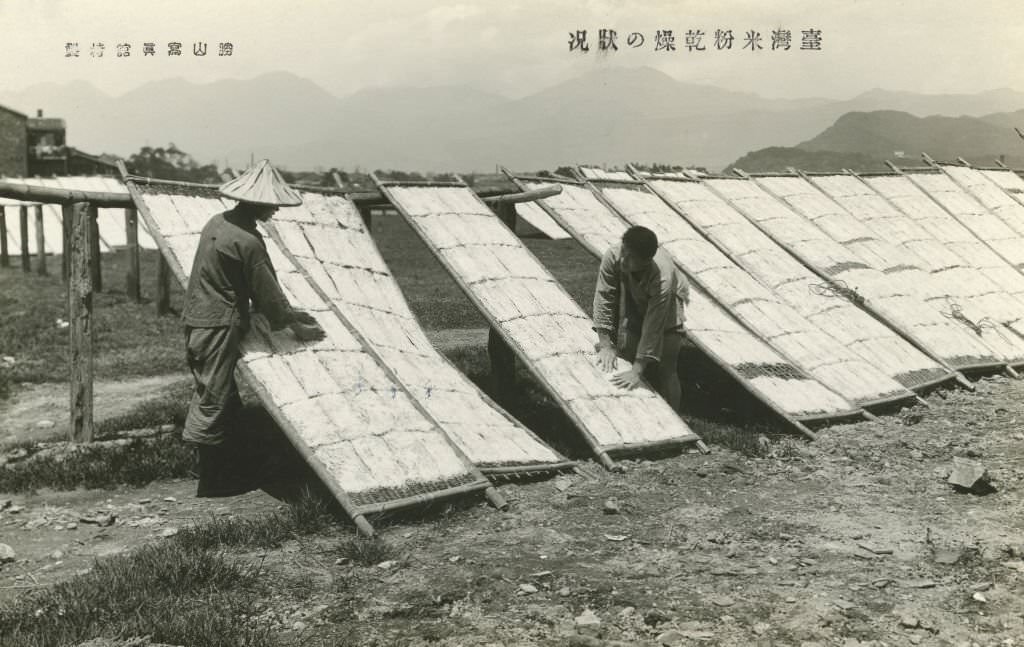
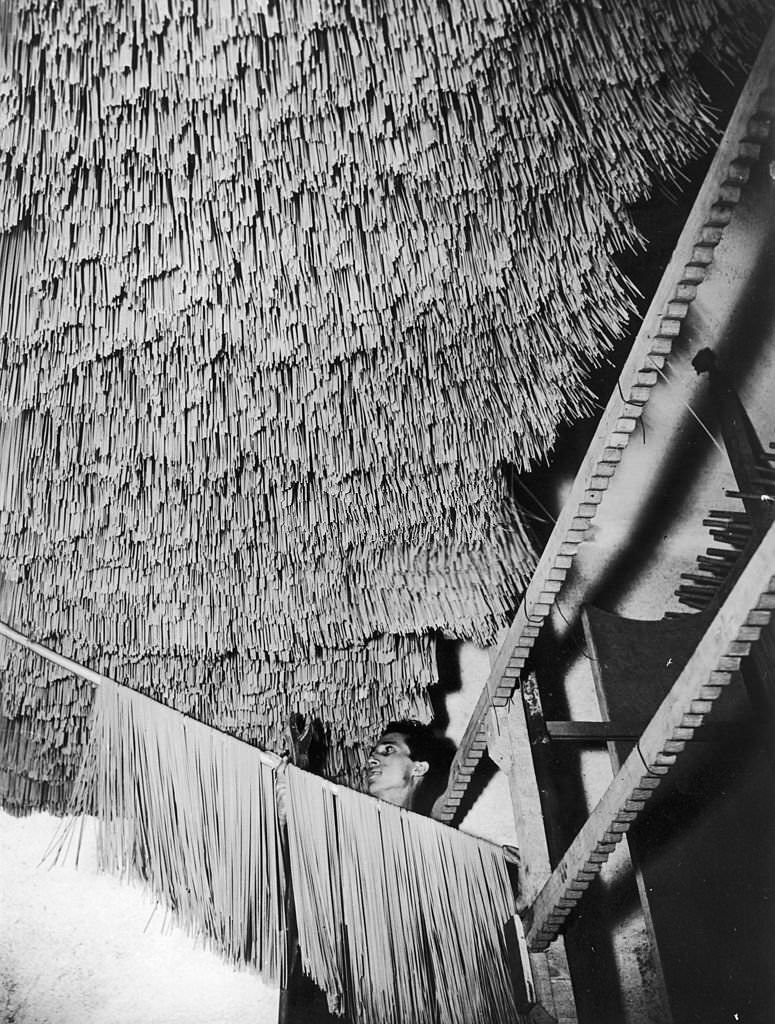
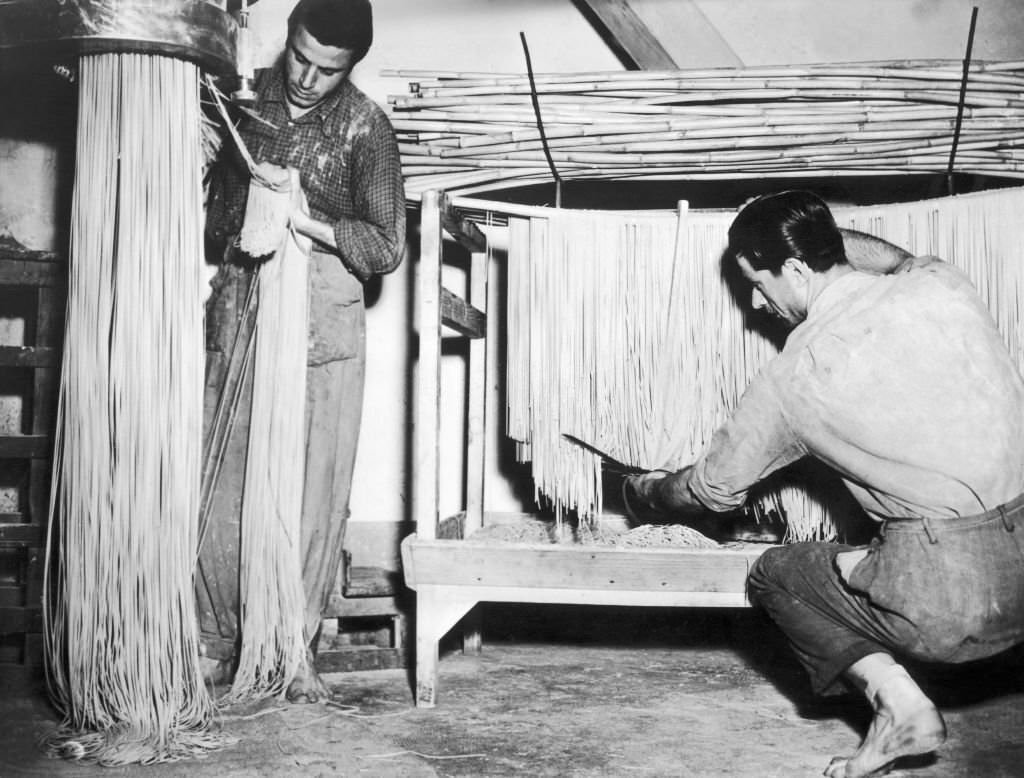
Small shops and local factories were the backbone of pasta production for much of the 20th century. Workers rolled, cut, and shaped dough by hand or with simple machines. Drying was a critical step — long strands of spaghetti and lasagna noodles were draped over racks, bamboo poles, and wooden frames, often left to air-dry outdoors in the Italian sun.
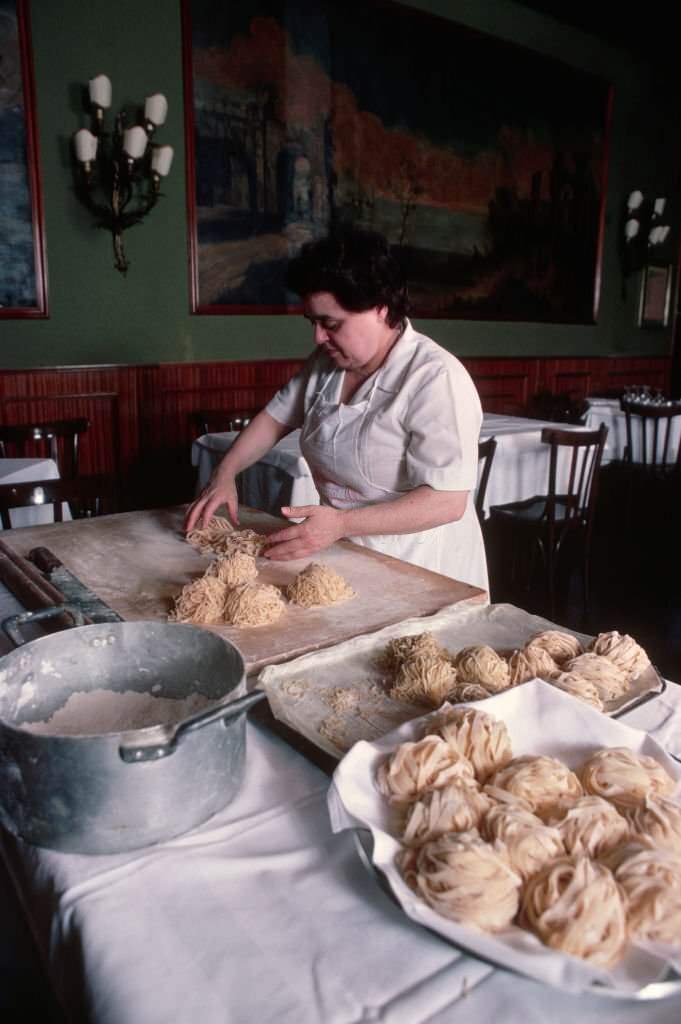
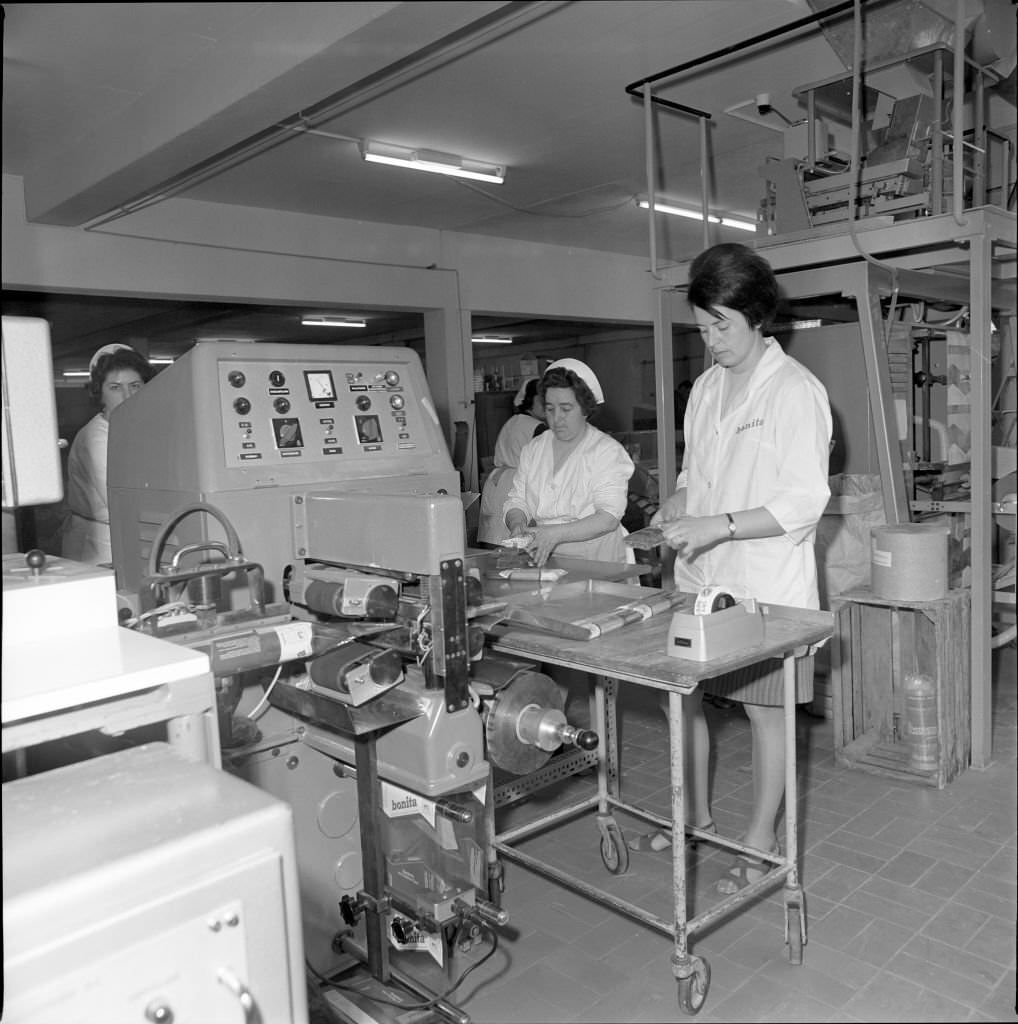
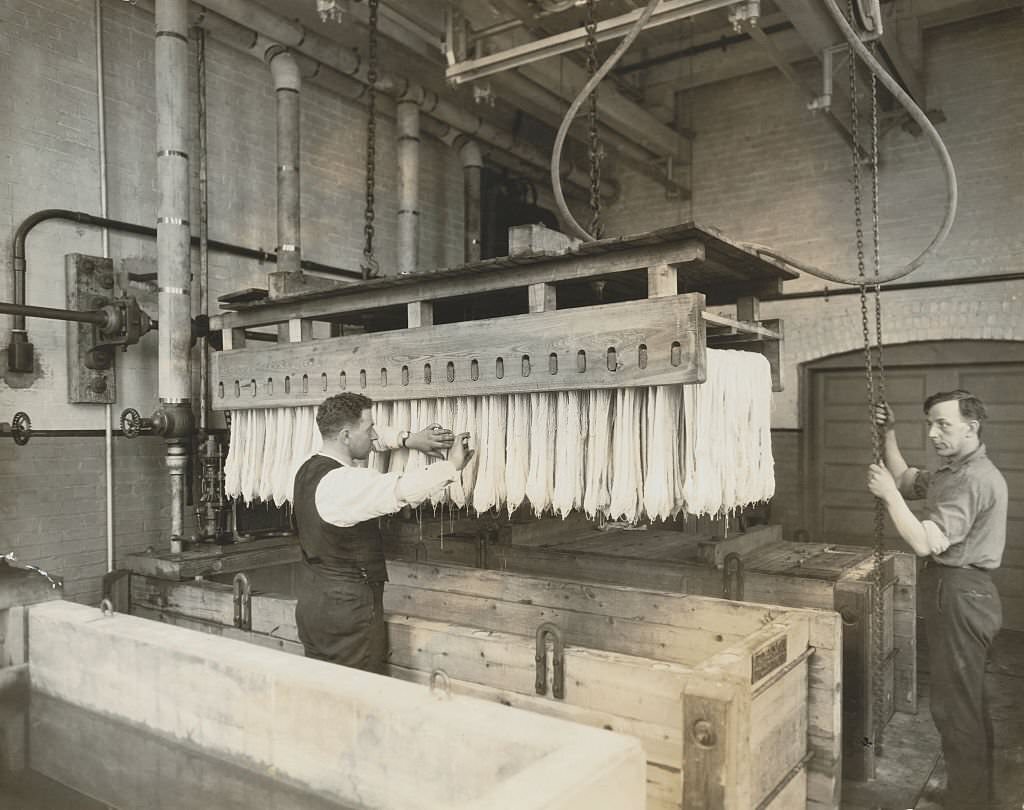
Lasagna noodles Pietro La Franco puts on a drying rack in a Toronto factory, 1970sWoman Making Pasta at Piperno Restaurant, 1980sPasta factory “Bonita”, 1969Pasta factory “Bonita”, 1969Pasta factory “Bonita”, 1969Pasta factory “Bonita”, 1969Pasta factory “Bonita”, 1969Pasta factory “Bonita”, 1969
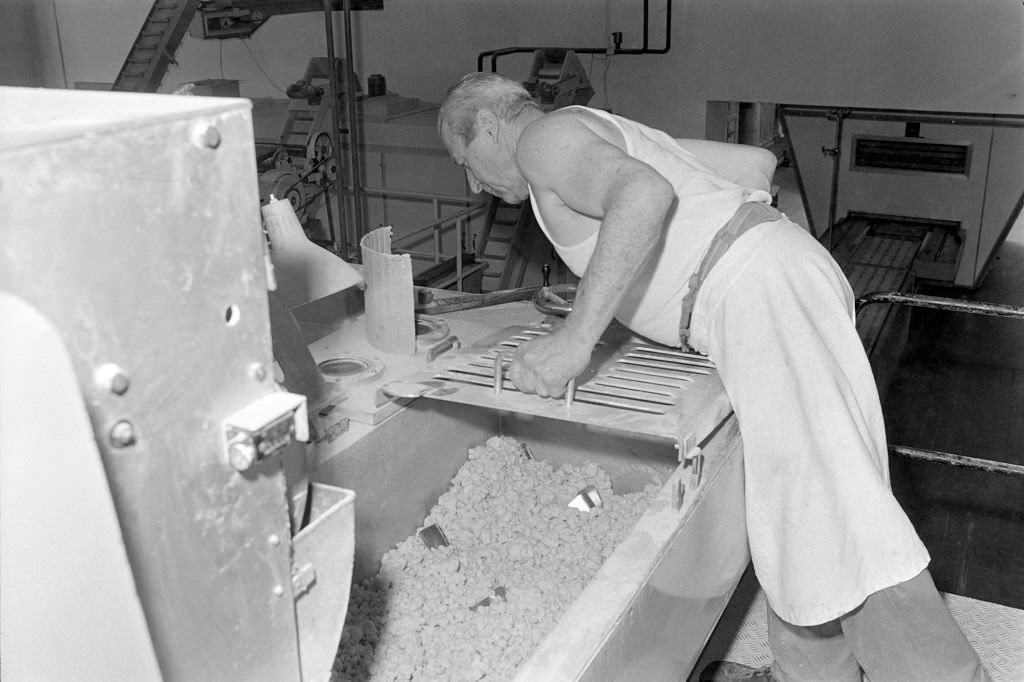
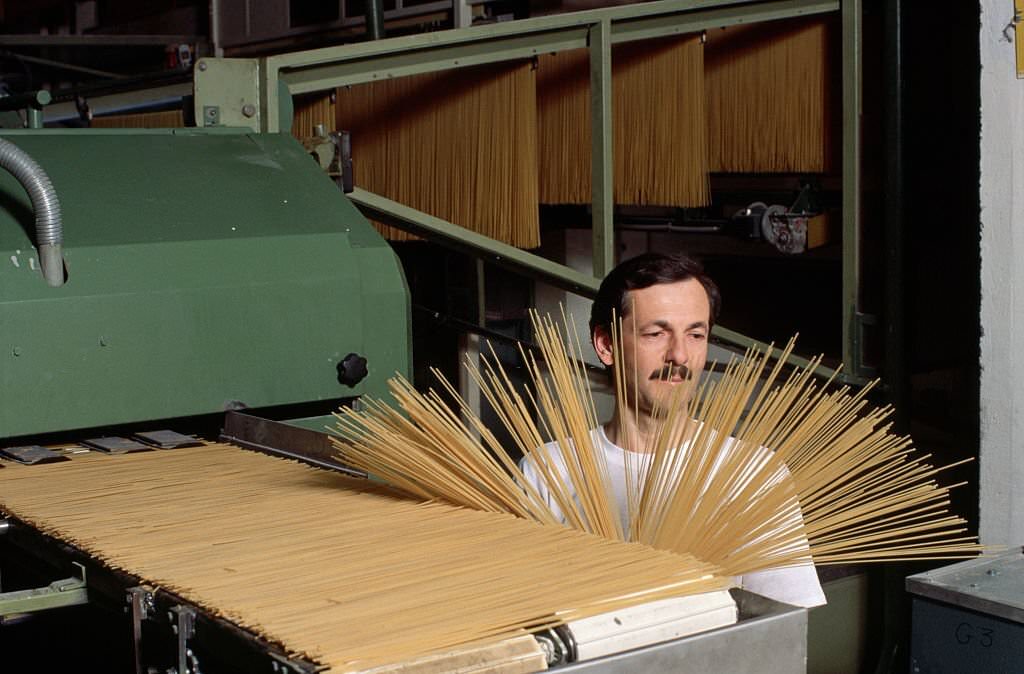
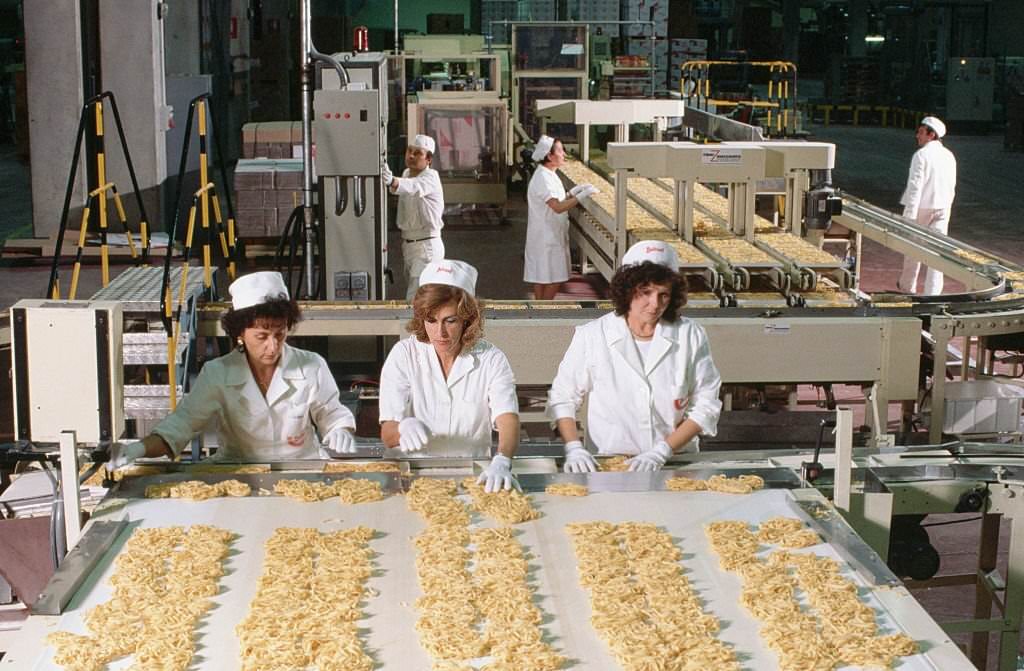
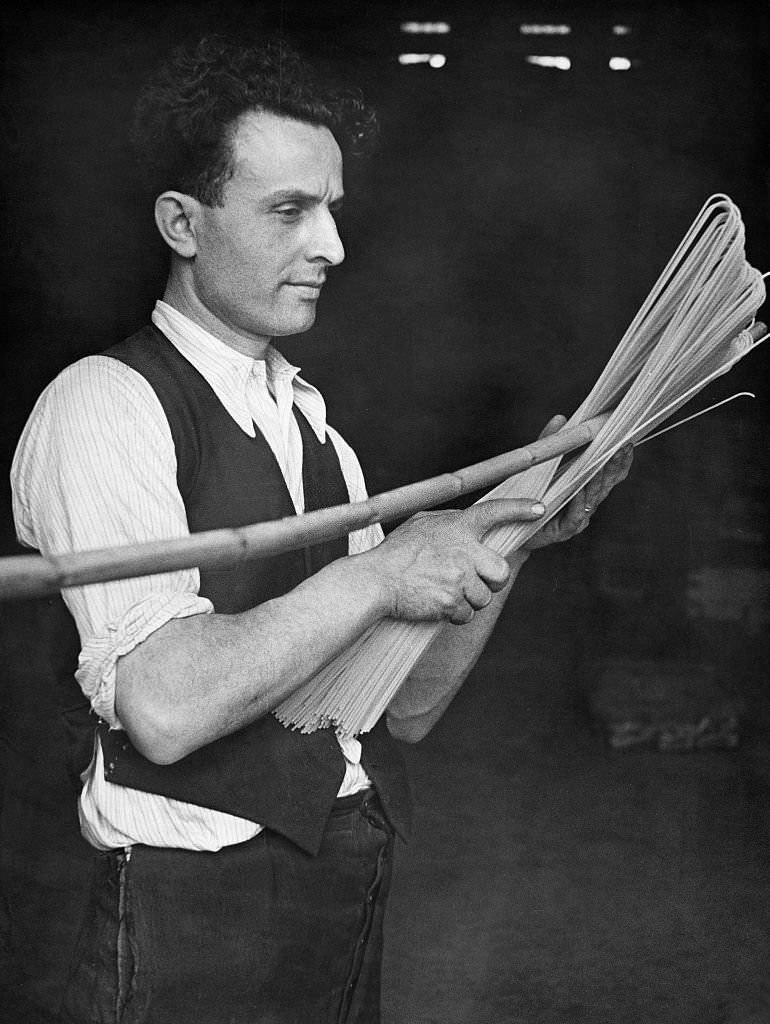
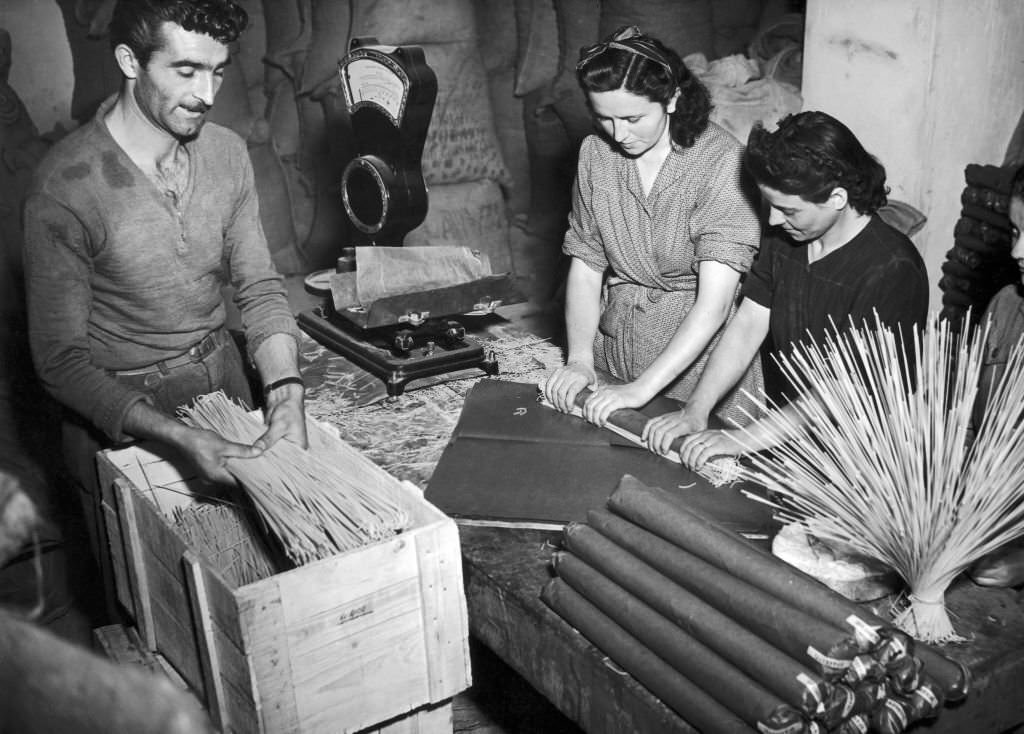
Large-scale pasta factories, like the well-known Buitoni plant in Sansepolcro, Italy, employed teams of workers to sort, inspect, and package finished pasta. Quality control was a hands-on process. Workers examined strands individually, pulling out broken or uneven pieces before the product moved on to packaging.
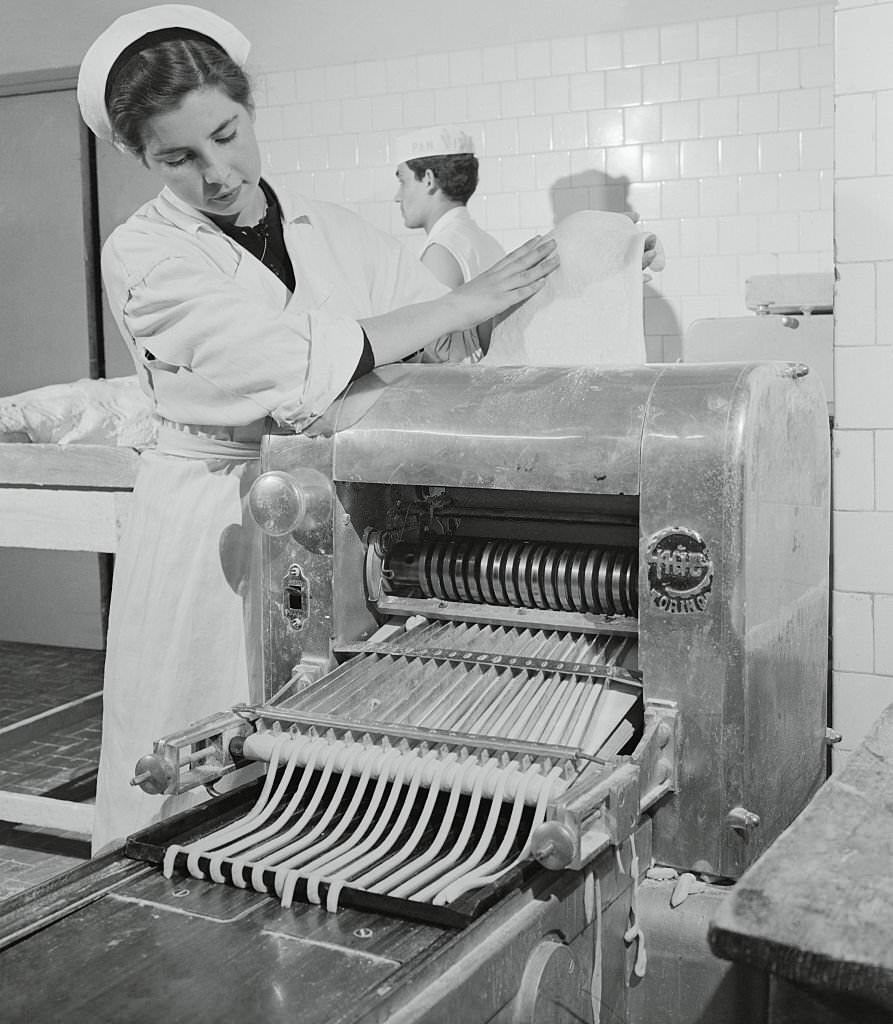
A man examines spaghetti at the Buitoni pasta factory in Sansepolchro, Italy.Women sort pasta in the Buitoni pasta factory in Sansepolchro, Italy.Miss Vivian Mercieca of Campsie after in has been through the new automatic press.
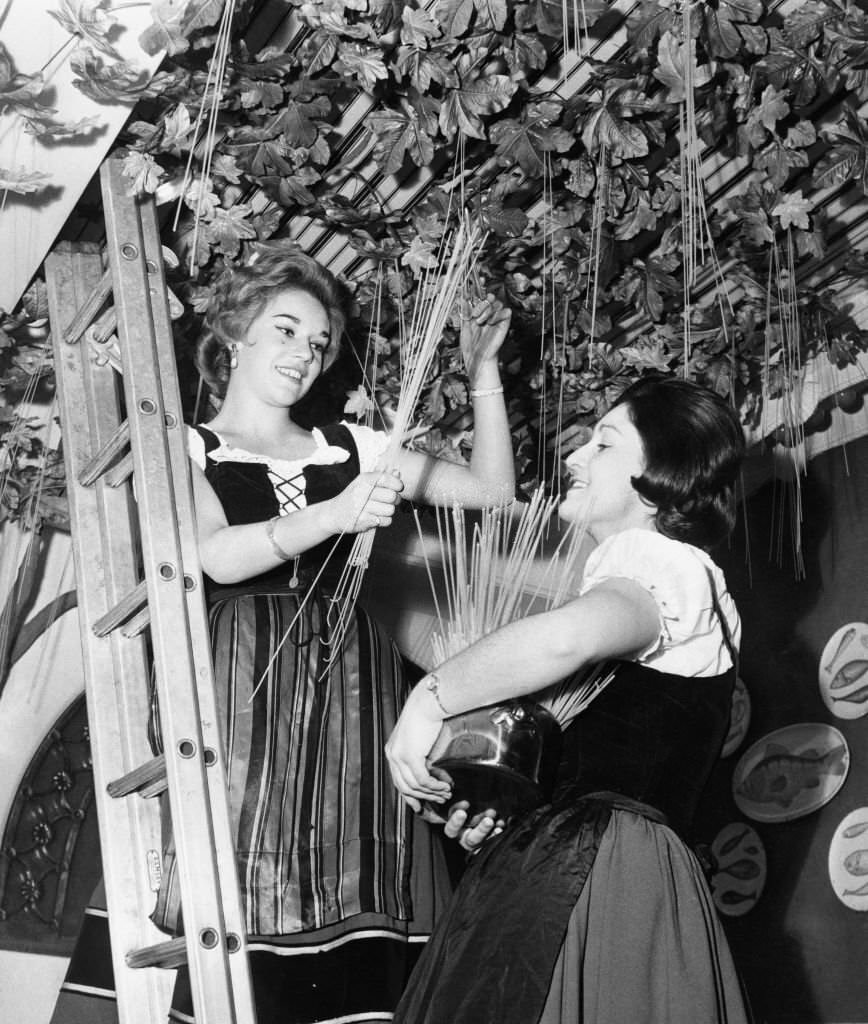
Not all pasta production was entirely serious. In September 1961, a London restaurant staged a playful stunt, photographing workers harvesting spaghetti from a mock “vine” on the ceiling — a nod to the BBC’s famous 1957 April Fools’ Day spaghetti harvest hoax.
The harvesting of spaghetti from a ‘vine’ on the ceiling of Lo Spiedo, an Italian restaurant in central London, 22nd September 1961.Woman Feeding Dough into a Machine. Passing through mechanical channels, the future bread sticks resemble thick spaghetti as they begin to take on an elongated appearance.
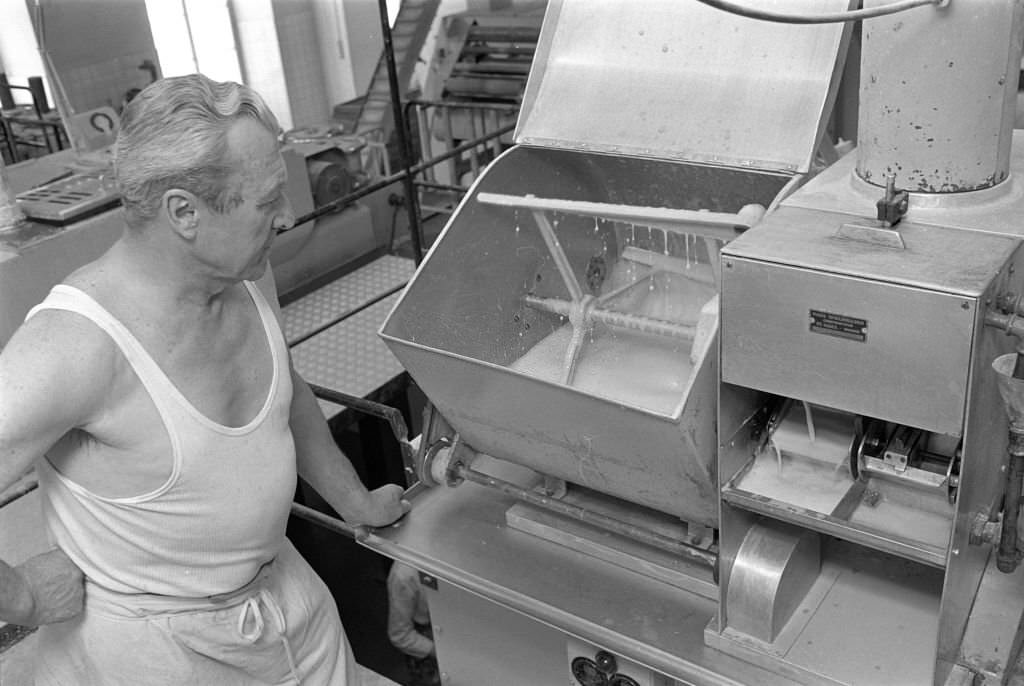
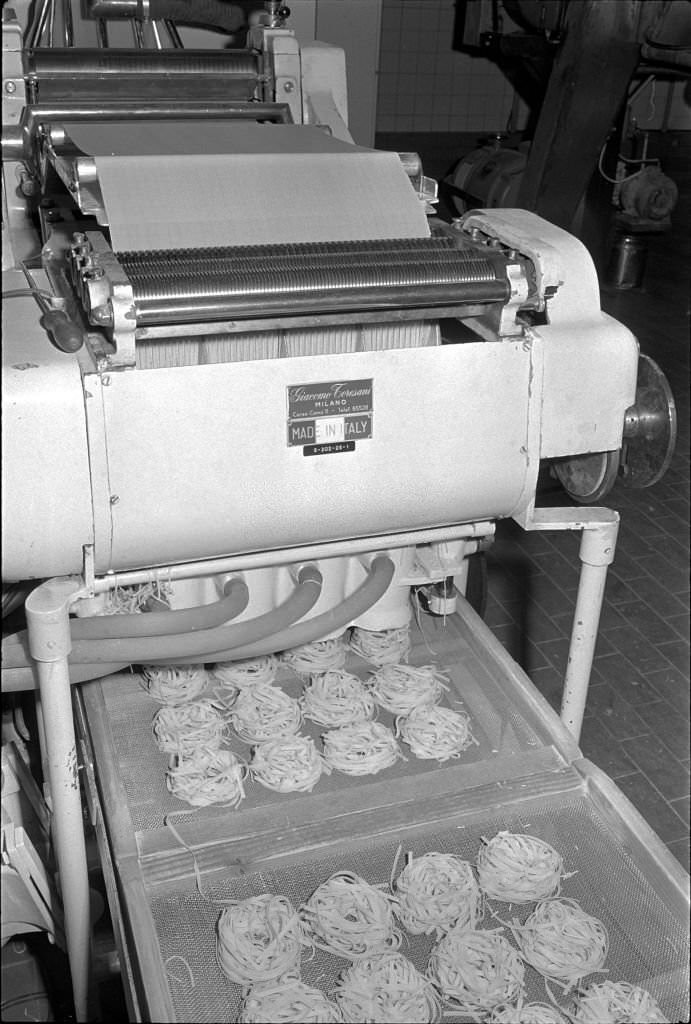
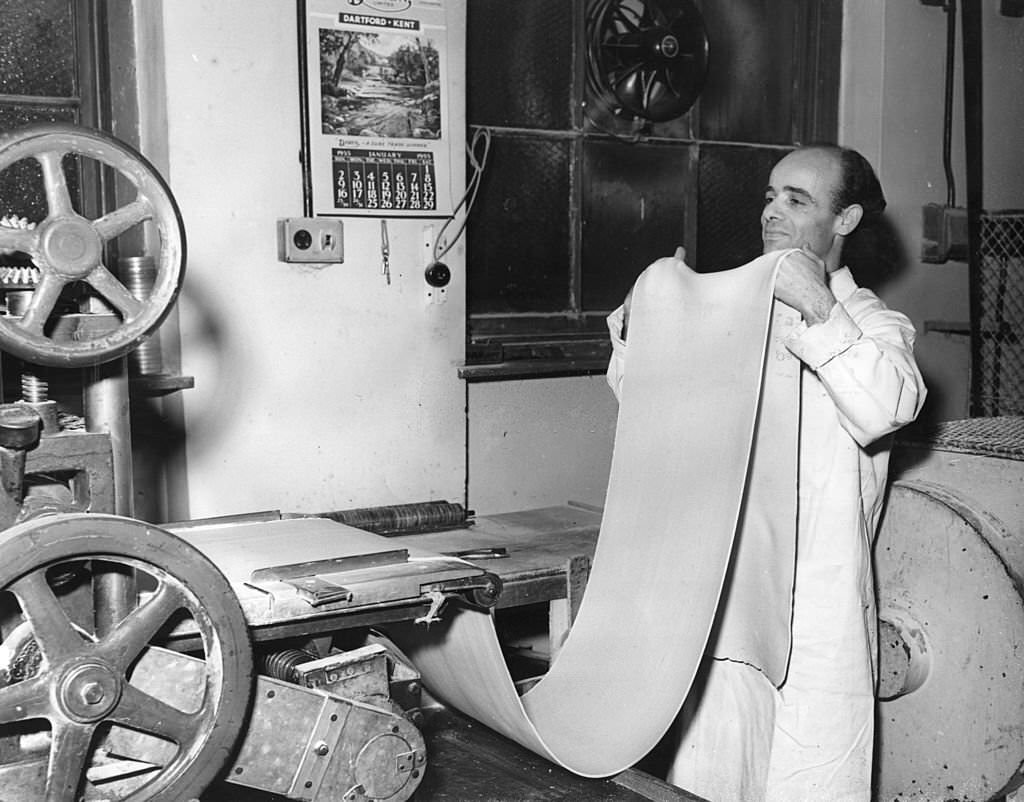
By the mid-20th century, pasta factories had spread well beyond Italy. London’s Messrs L Ugo Ltd in Holloway was producing a full range of pasta types by 1955, directly competing with imported Italian products. Workers there operated machines that extruded, cut, and shaped everything from spaghetti to ravioli.
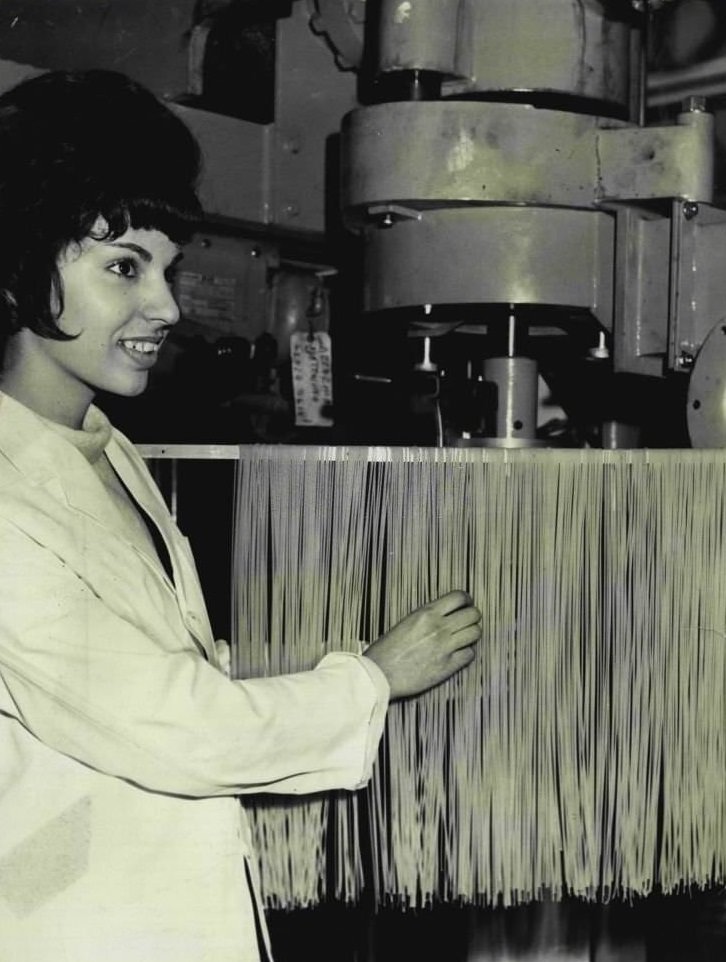
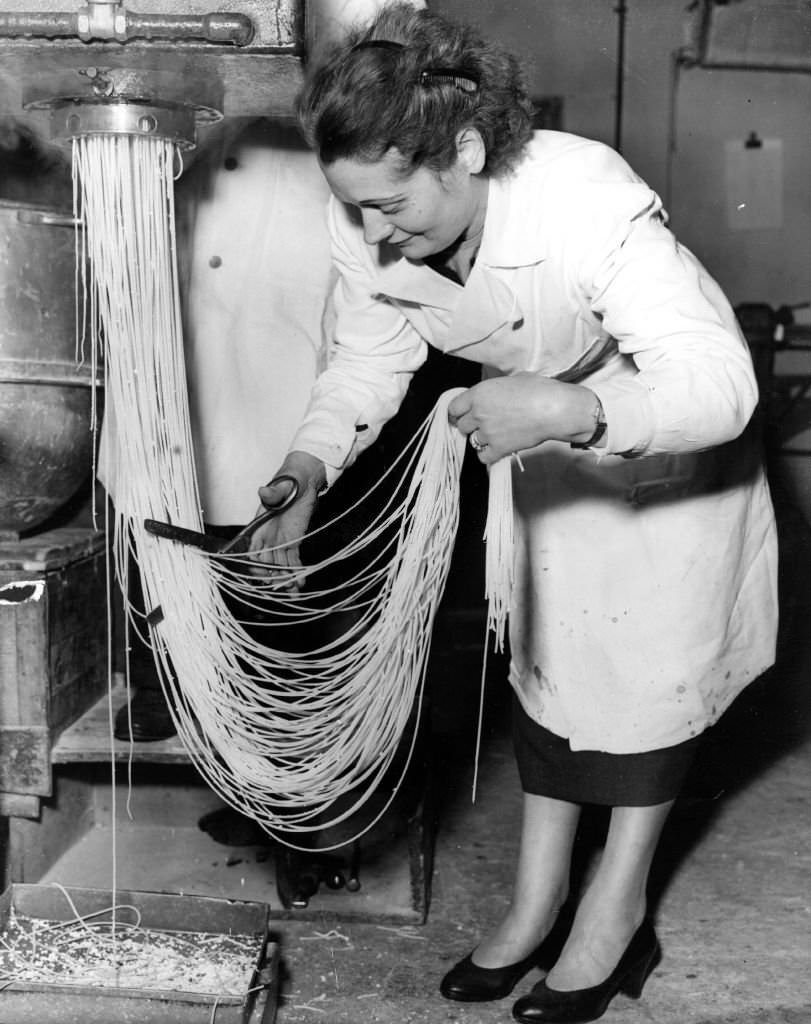
Zelda Albano cuts spaghetti into lengths as it emerges from a machine at Mess’ L Ugo Ltd, a pasta making factory in Holloway, London, 1955
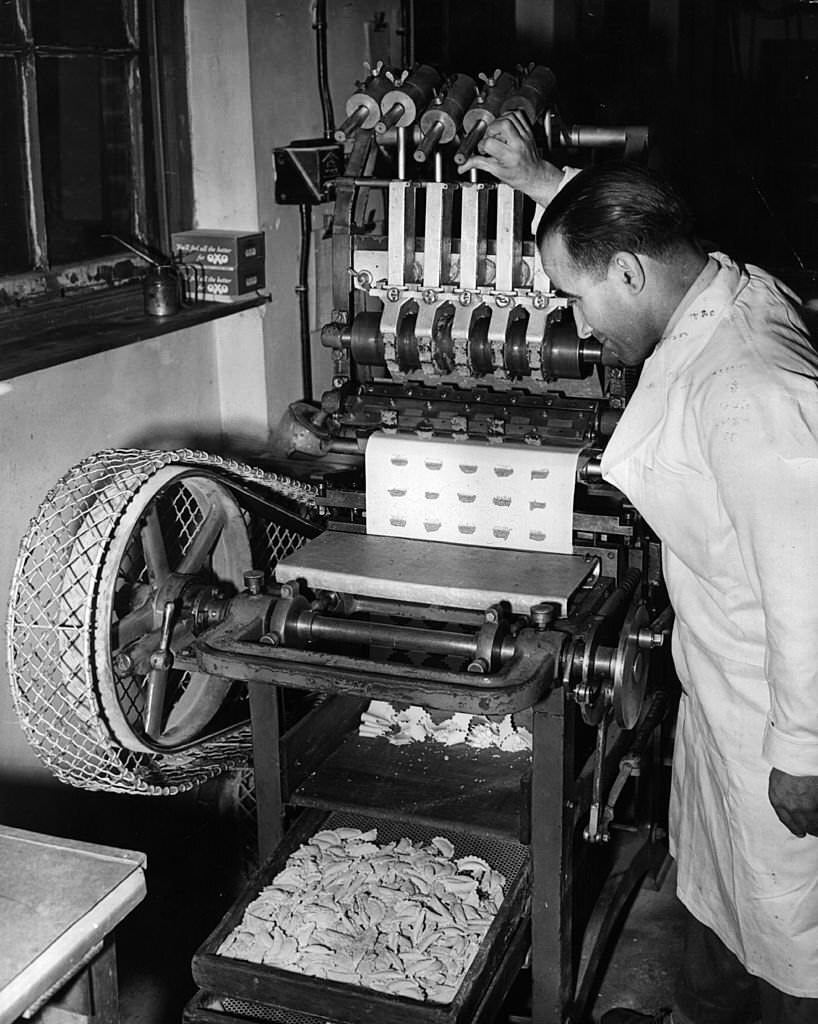
Mr Michael Pino operates a ravioli-making machine at Messrs L Ugo Ltd, London, 1955. The factory specialises in all types of pasta and rivals the imported pastas from Italy.
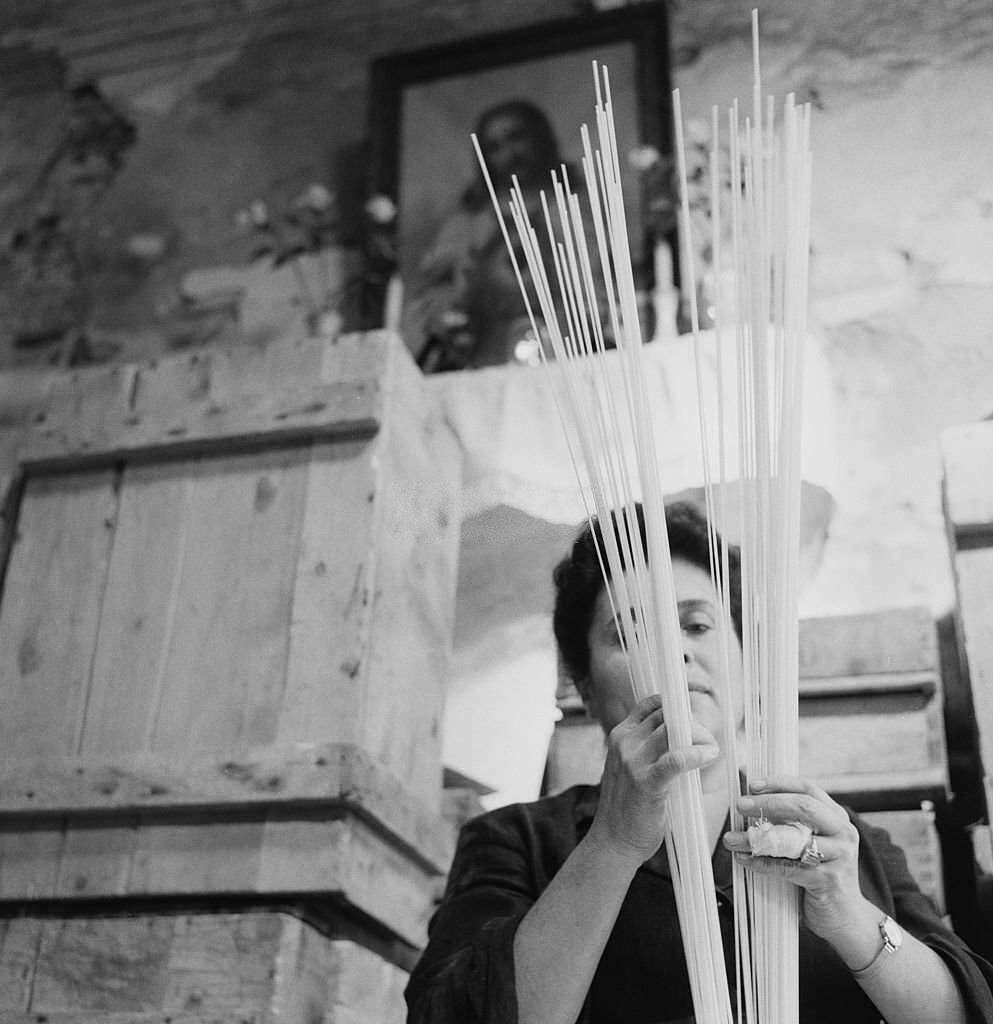
A woman holding strands of pasta, Italy, 1955.A worker placing spaghetti on a drying rack before it is transferred to a dryer, Italy, 1955Mr Martinez feeds a length of pasta into a macaroni-making machine at Messrs L Ugo Ltd, London.
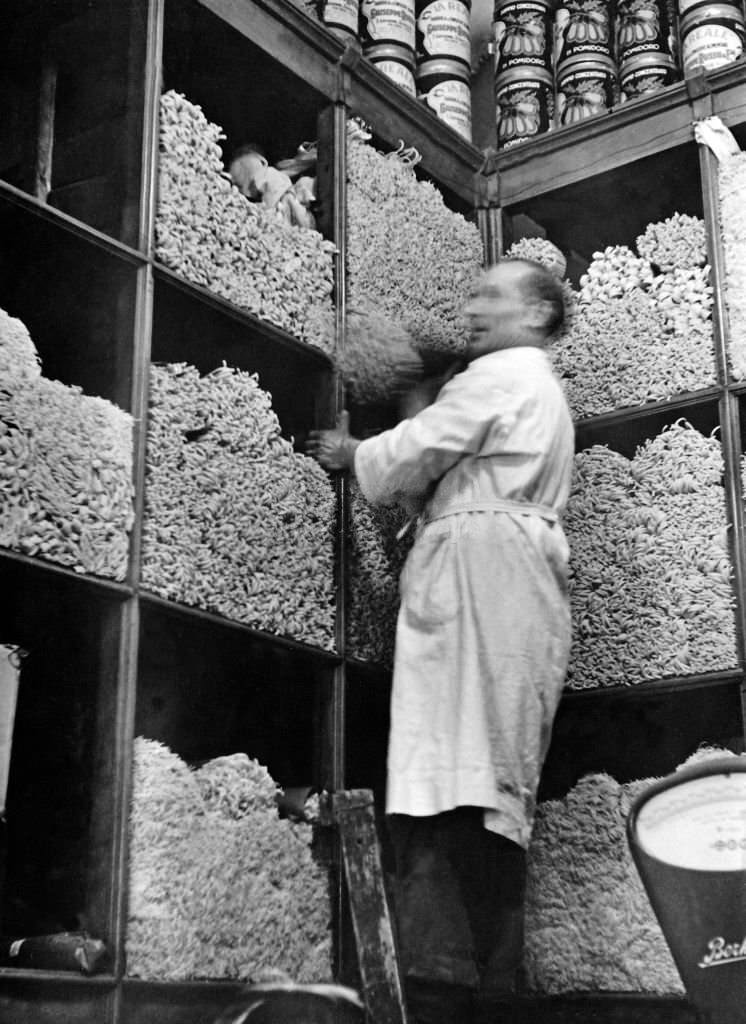
A spaghetti shop, the shelves filled with spaghetti, 1950s
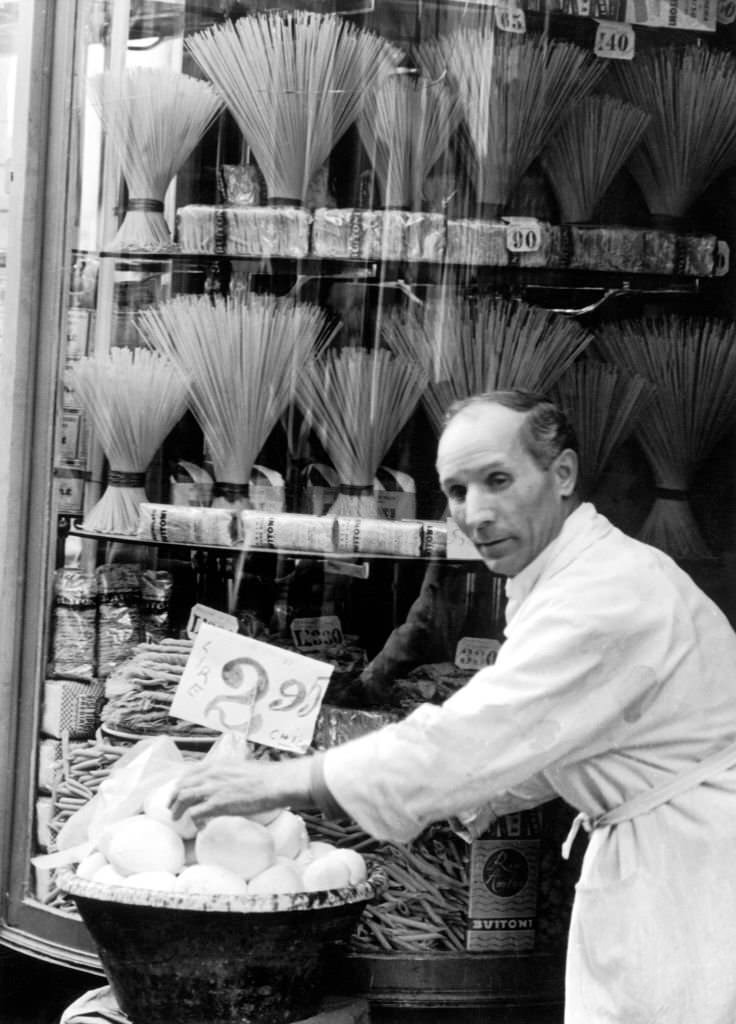
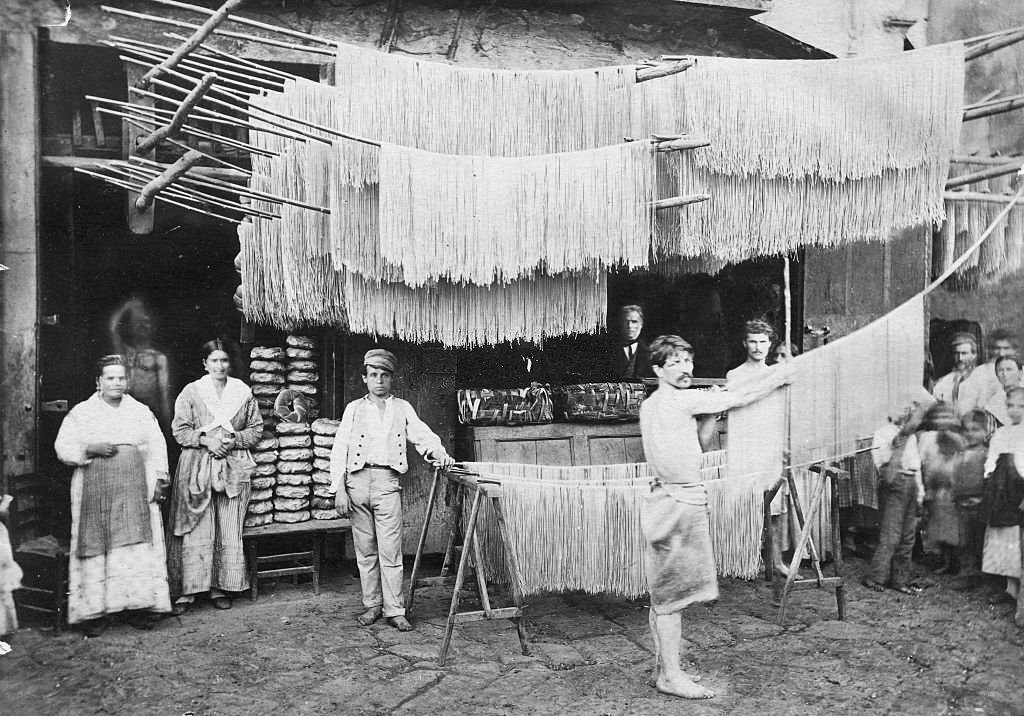
Pasta store in Naples, 1954
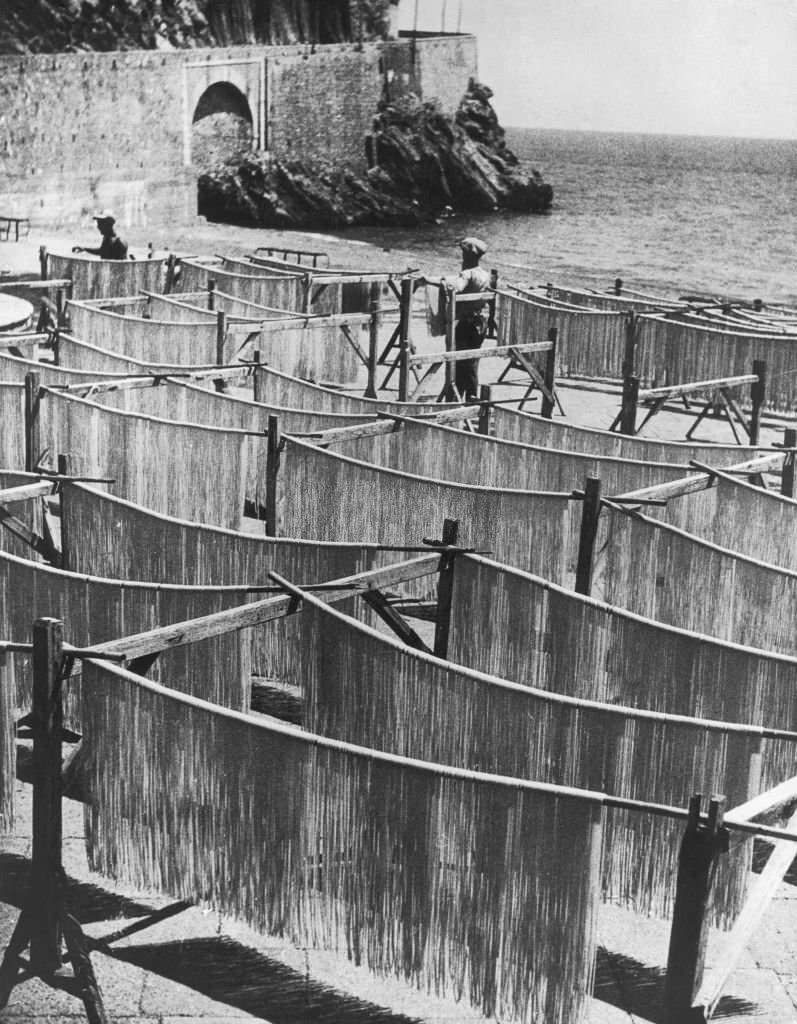
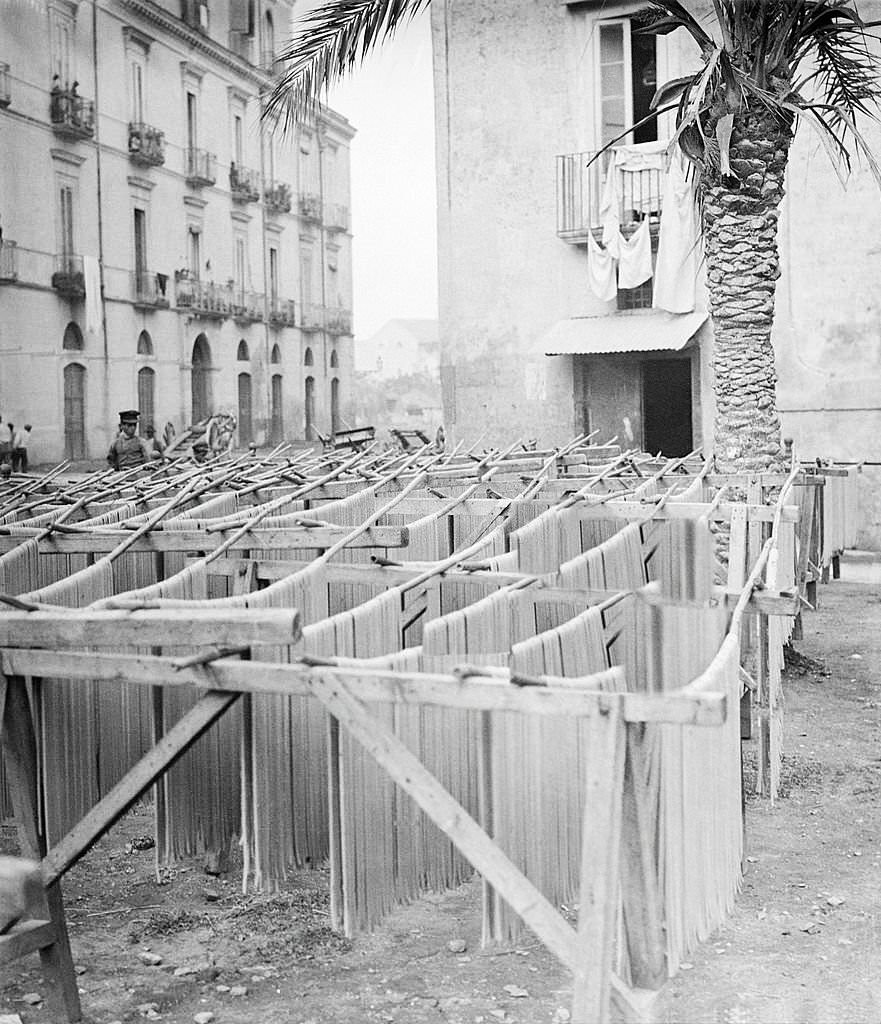
Before mechanical dryers became standard, pasta was dried outdoors in the open air. Along the Amalfi coast, wooden frames called “spaghetti horses” were set up on beaches, where strands of spaghetti were draped and left to dry in the sea breeze. It was an efficient, centuries-old method that required no equipment beyond sun and wind.
Spaghetti drying on racks, known as ‘spaghetti horses’, on a beach near Amalfi, Italy, September 1949.
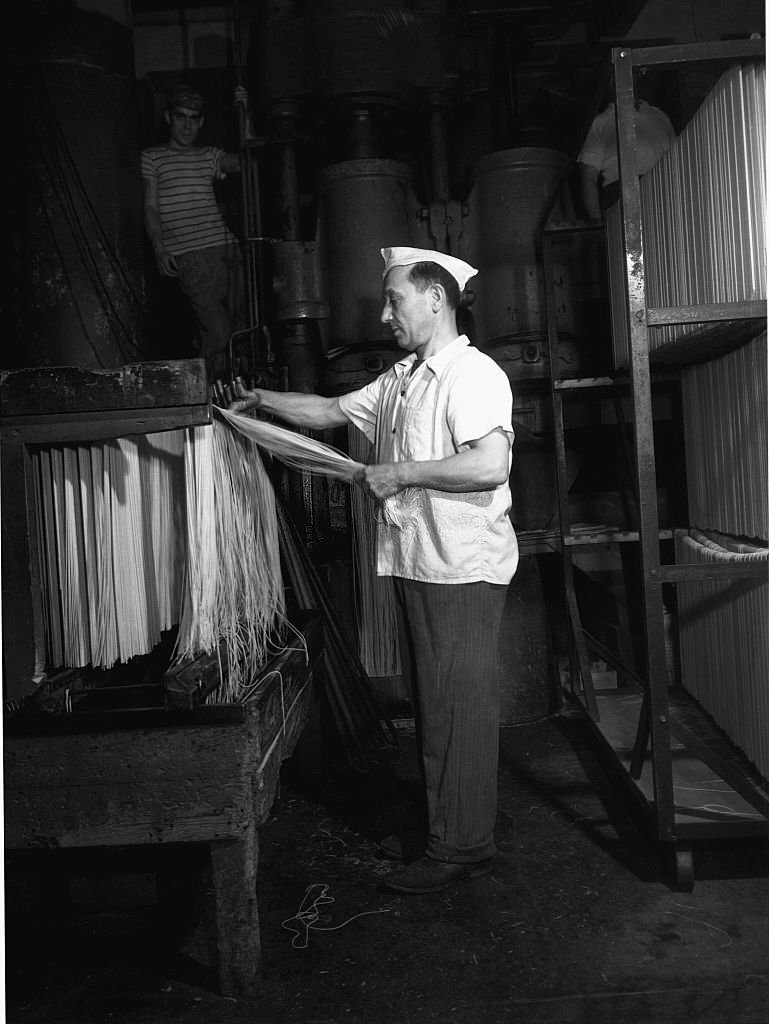
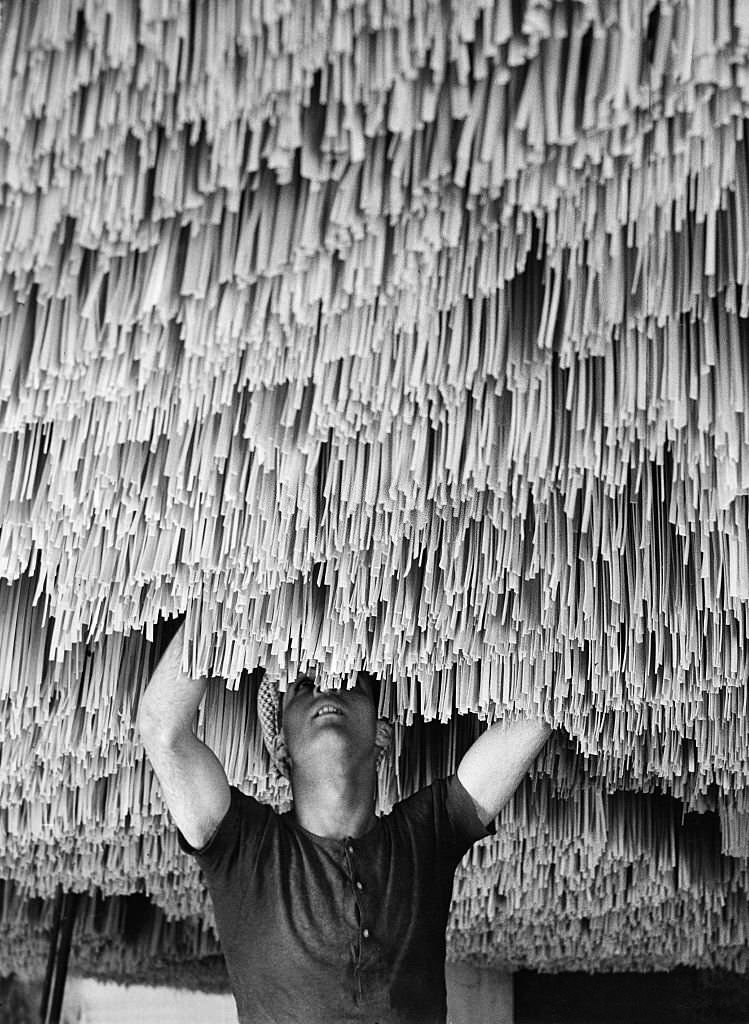
A worker for Atlantic Macaroni Company, makers of Caruso brand products, hanging spaghetti to dry, 1943
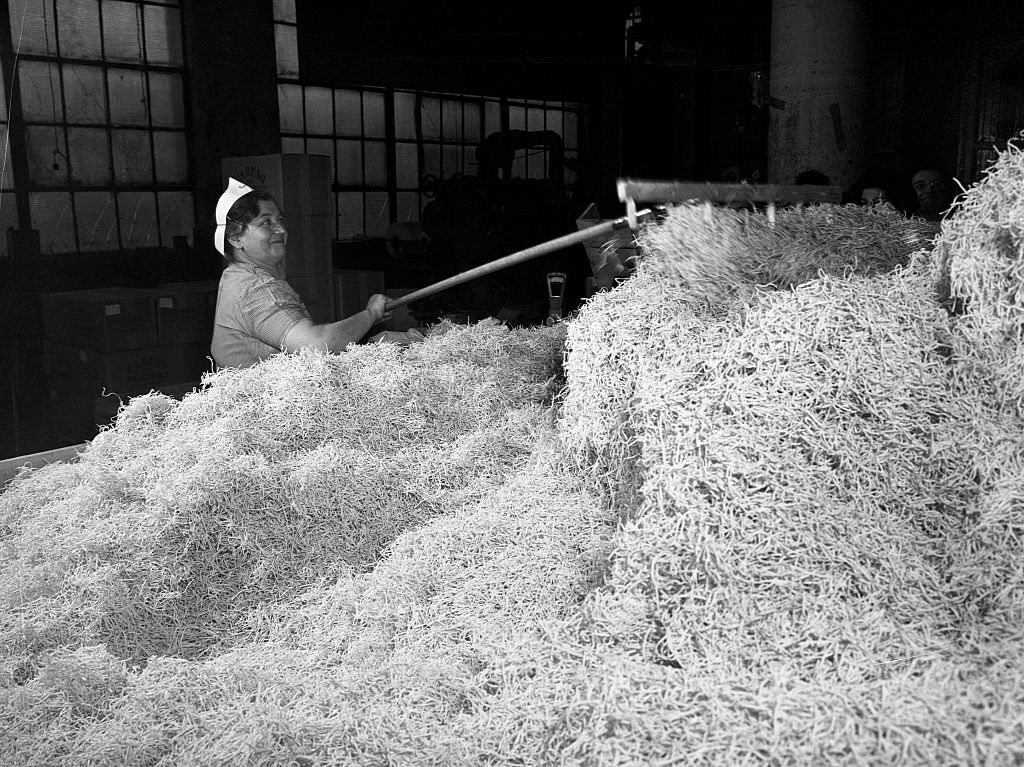
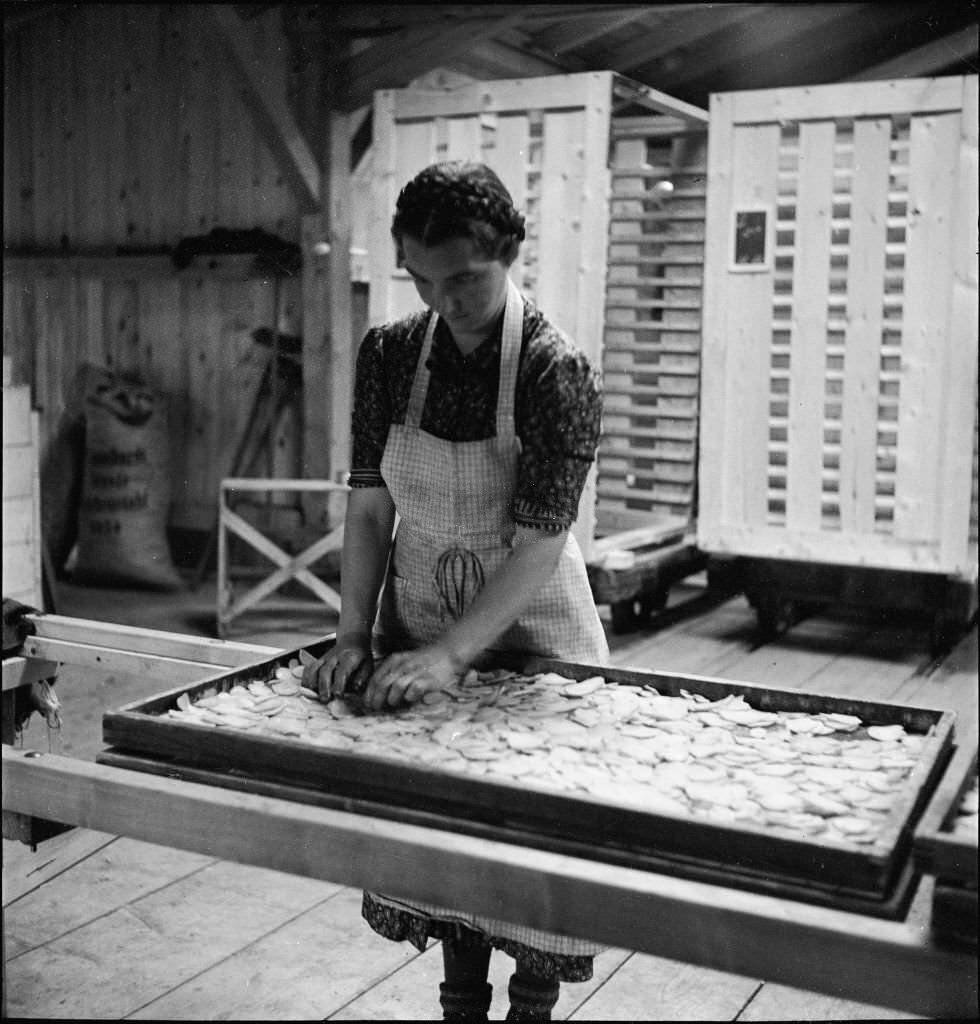
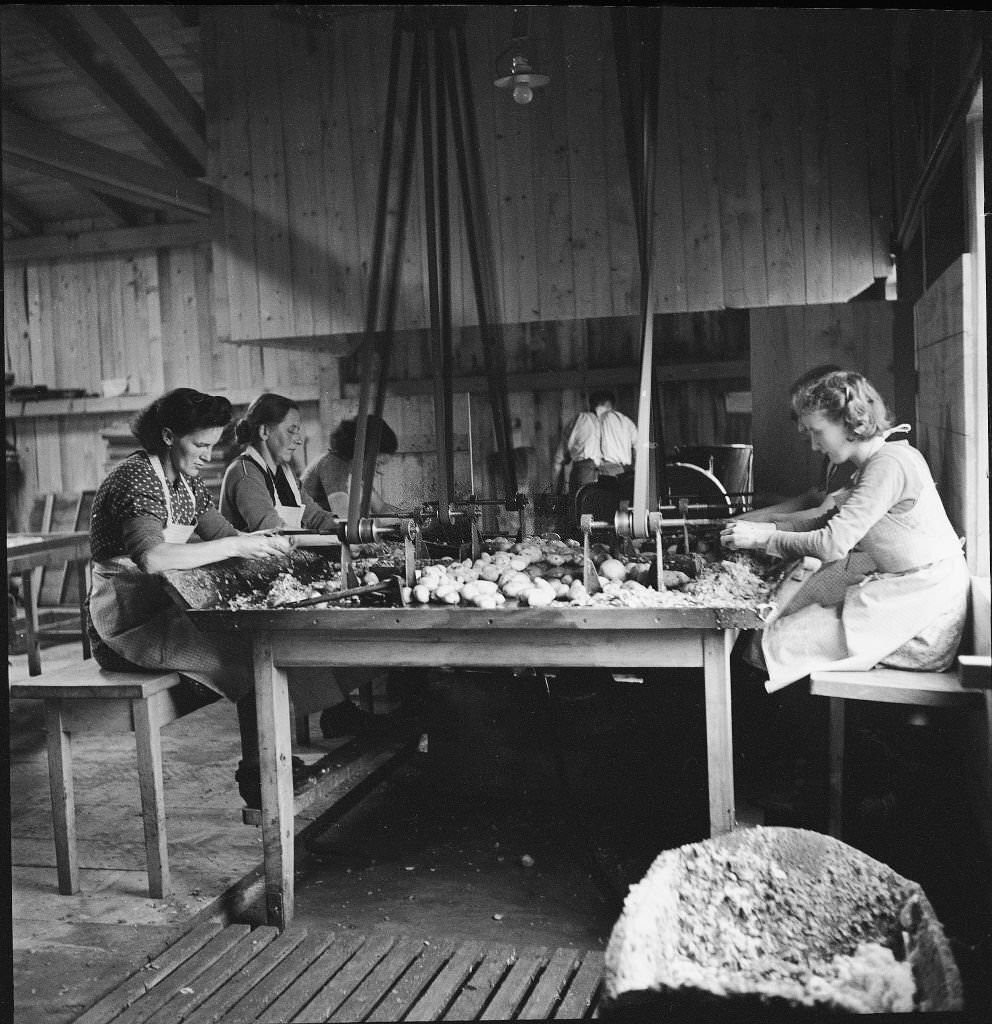
A worker at the Atlantic Macaroni Company, makers of Caruso brand products, keeping the chute clear of finished macaroni in Long Island City, New York, 1943Processing of potatoes in pasta factory, 1941Processing potatoes in a pasta factory, 1941Macaroni Factory Workers with their Product
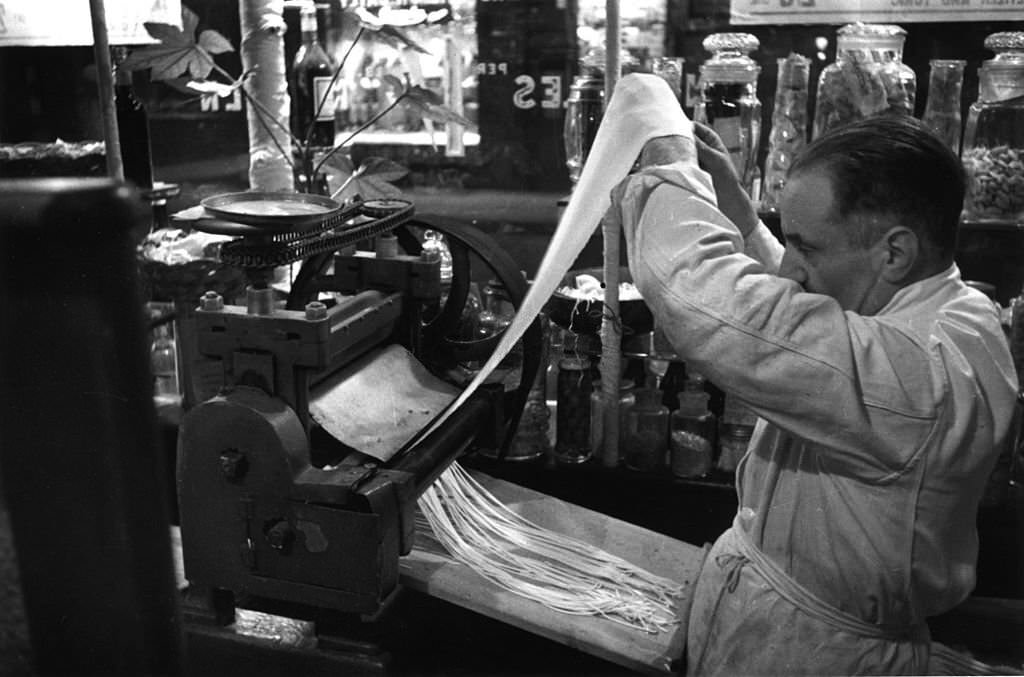
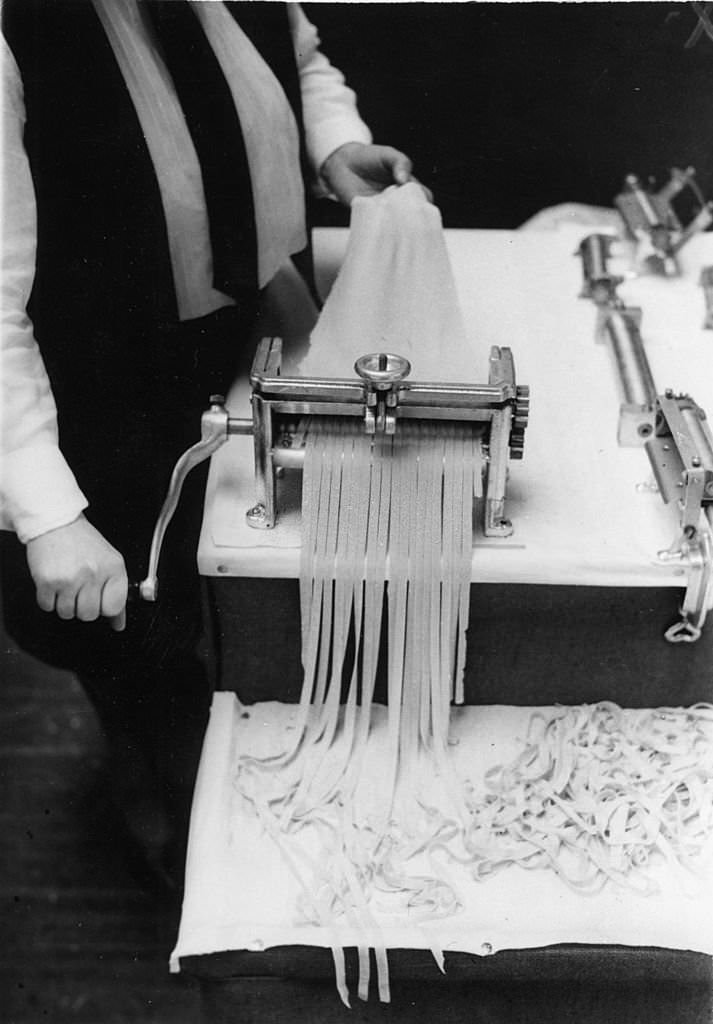
London’s Soho neighborhood was home to some of England’s most active Italian food shops in the late 1930s. At King Bomba’s, one of Soho’s largest Italian grocers, chefs hand-rolled and machine-cut fresh tagliatelle daily. Eugenio Celoria, who worked at the shop in 1939, was photographed crafting pasta strands with the same hands-on technique used in Italian kitchens for generations.
A chef making tagliatelle at King Bomba’s, one of the largest Italian shops in Soho, London, 1939
Eugenio Celoria making tagliatelli in his shop, King Bomba’s, in Soho, 1939
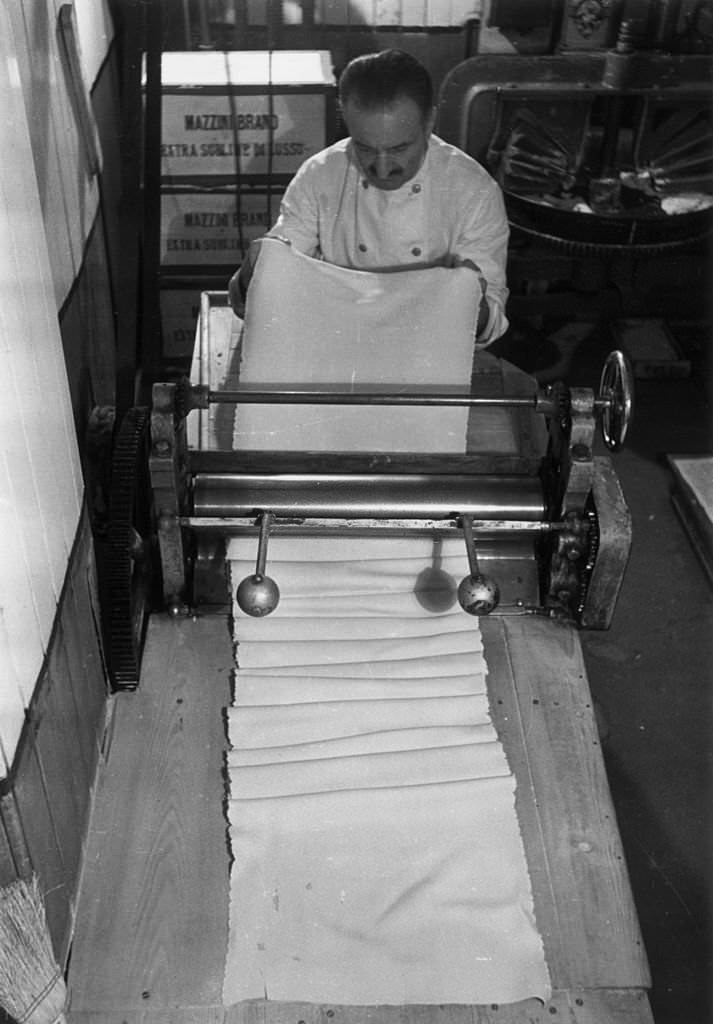
Lengths of pasta are cut into strips by machine in Recchioni’s restaurant ‘King Bomba’ in London’s Soho, 1939Pasta machine at the fair of the hotel and restaurant industry in Berlin, 1936
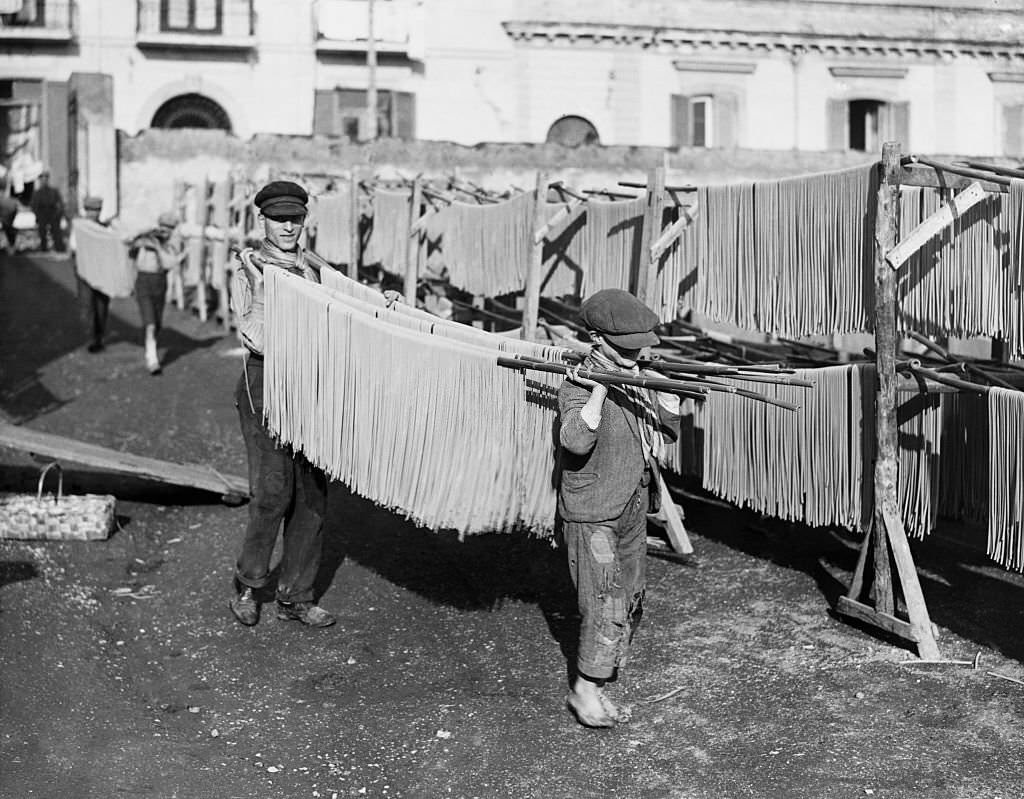
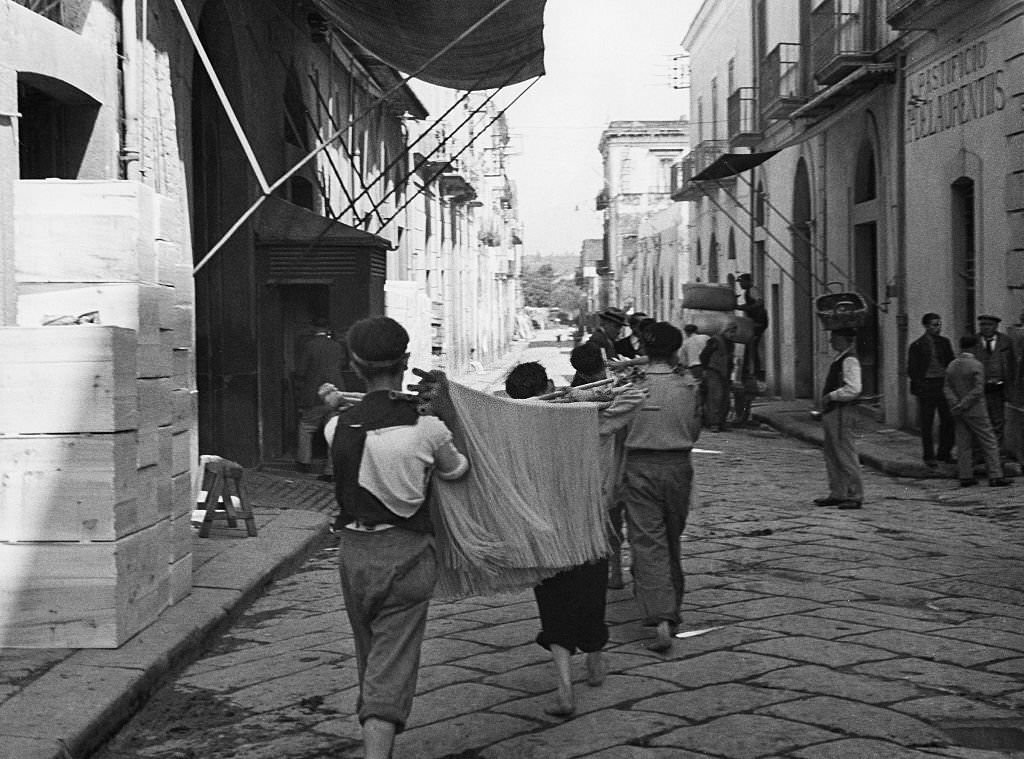
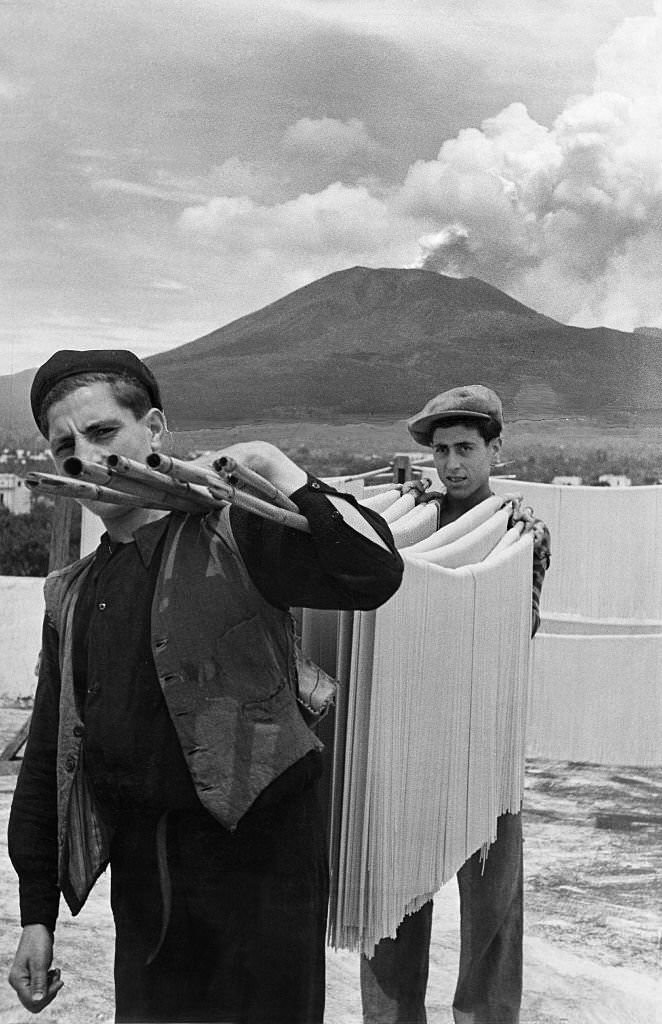
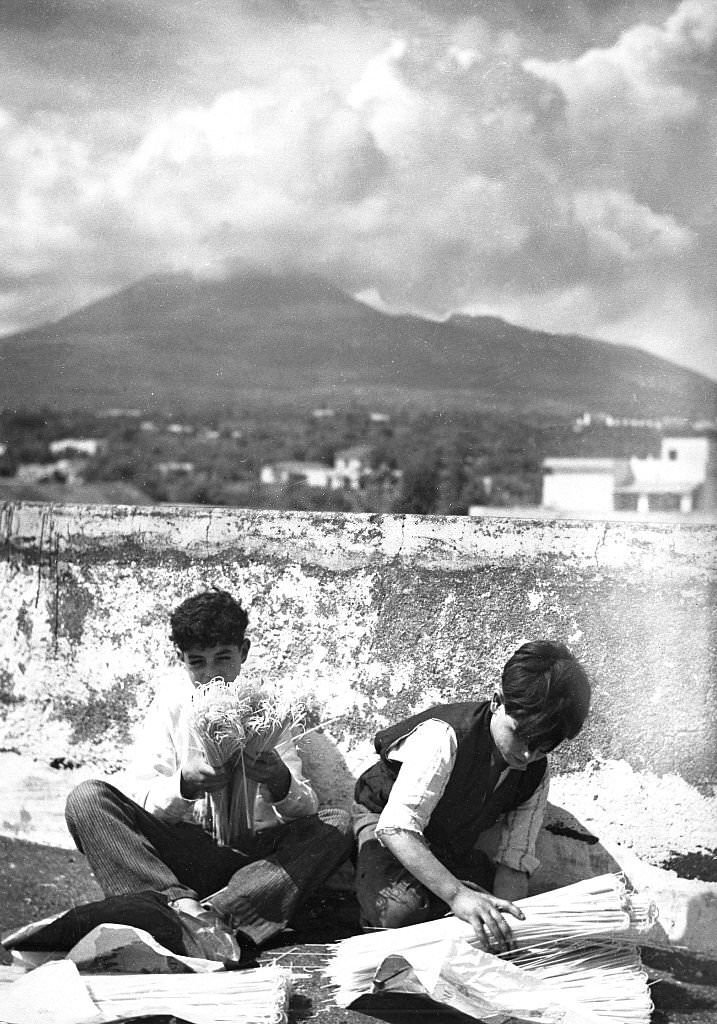
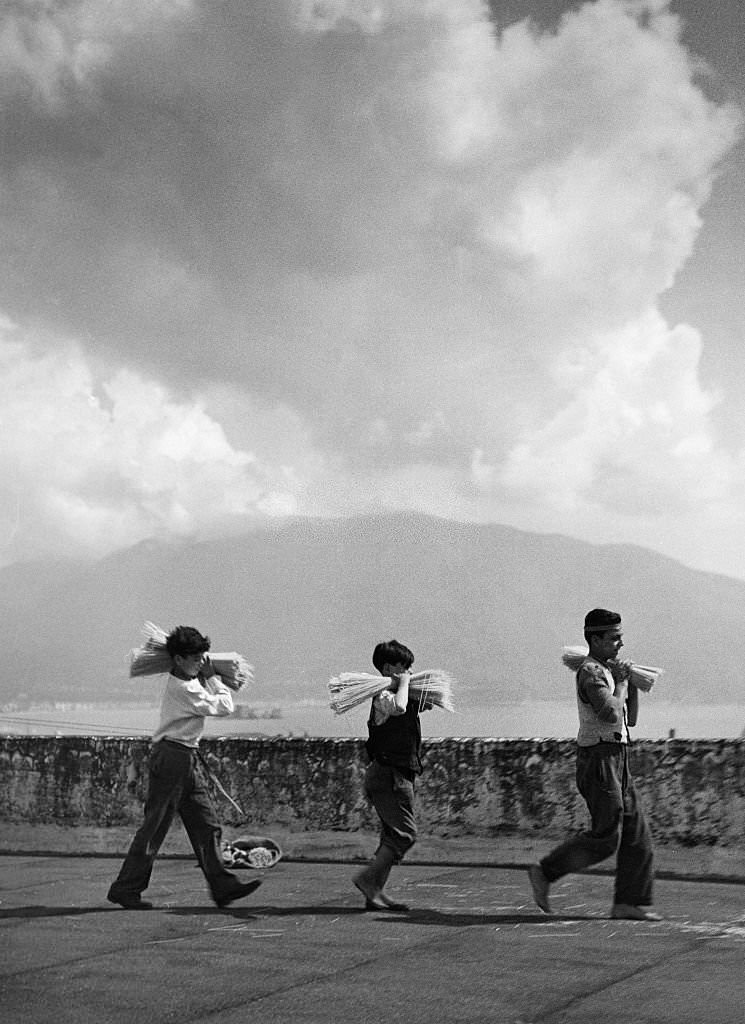
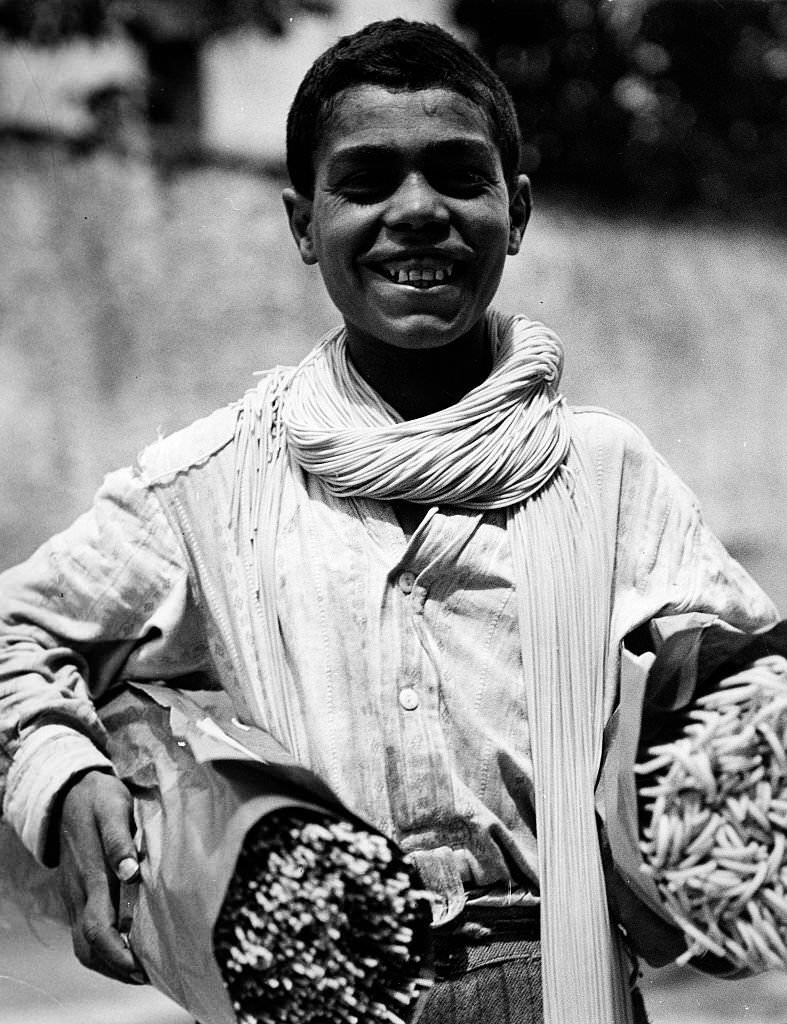
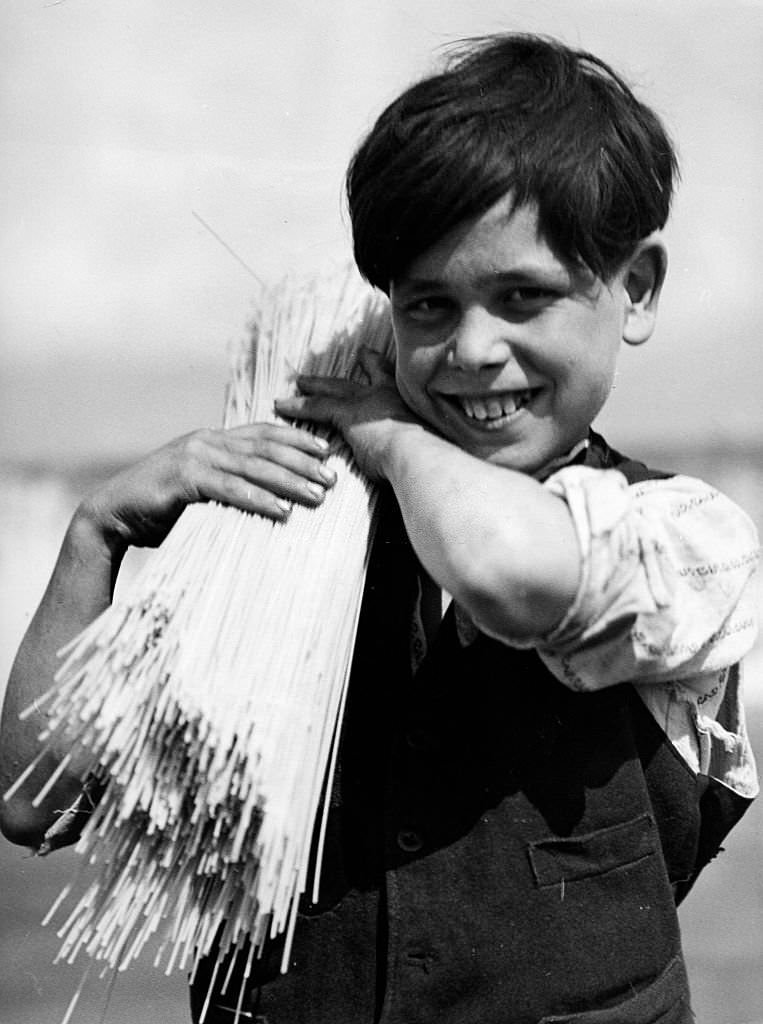
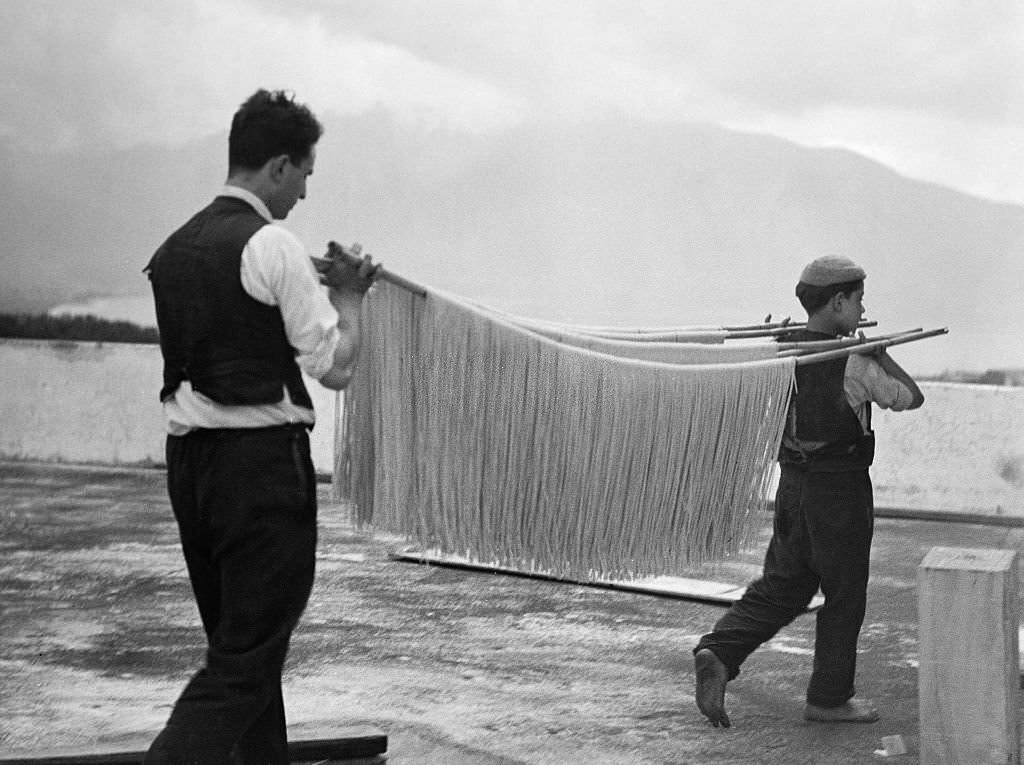
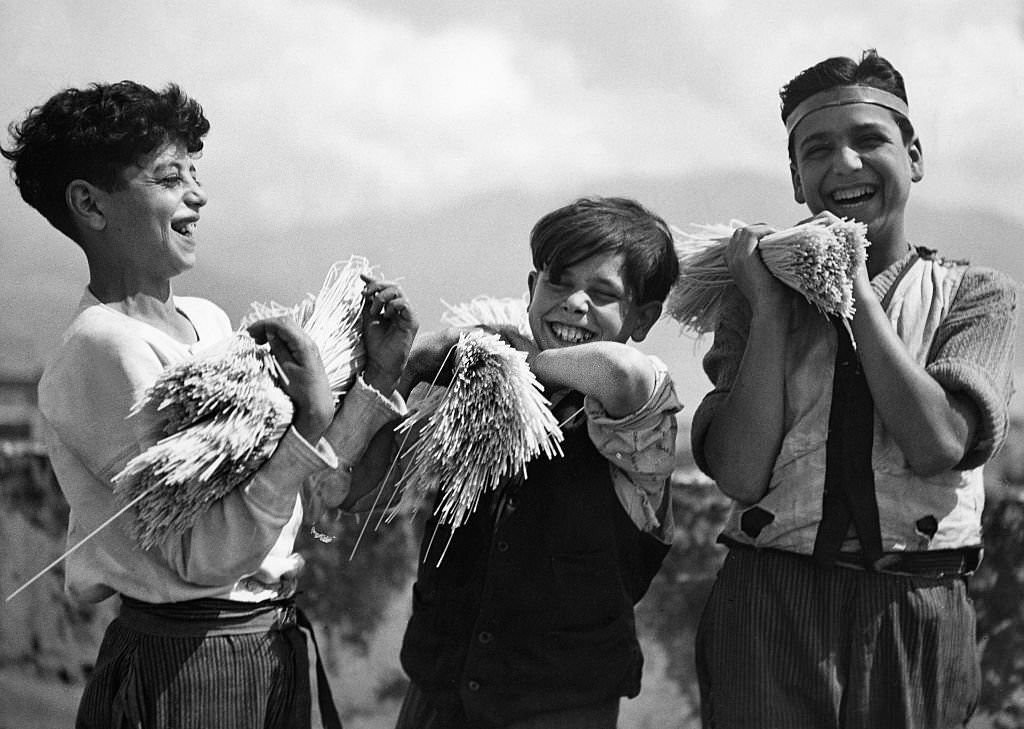
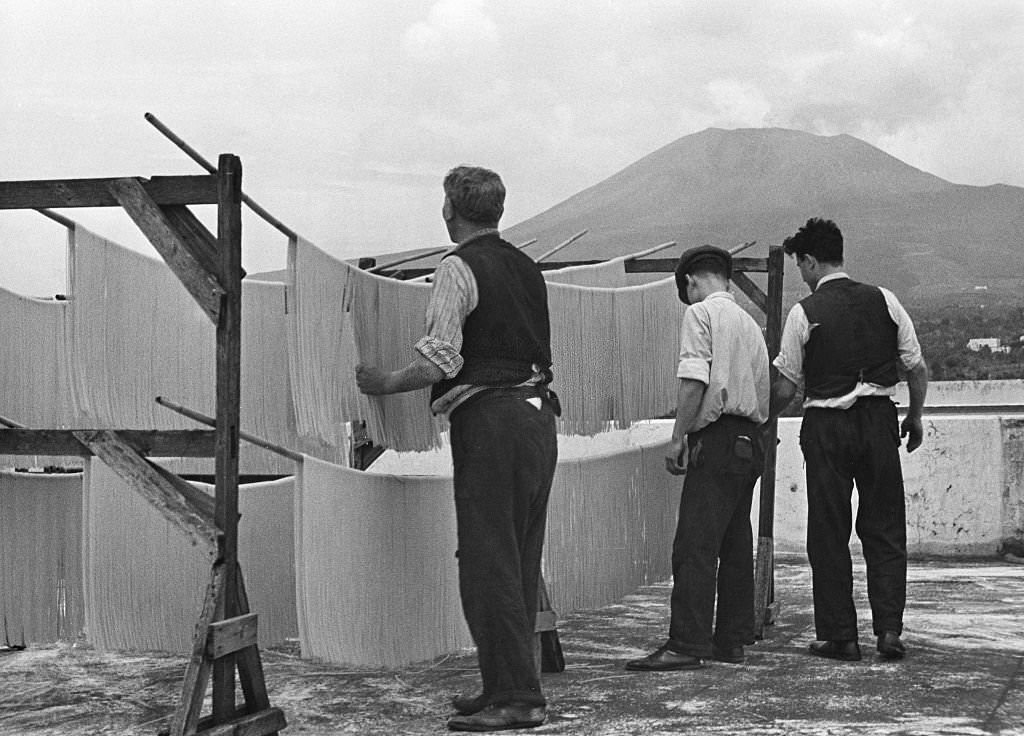
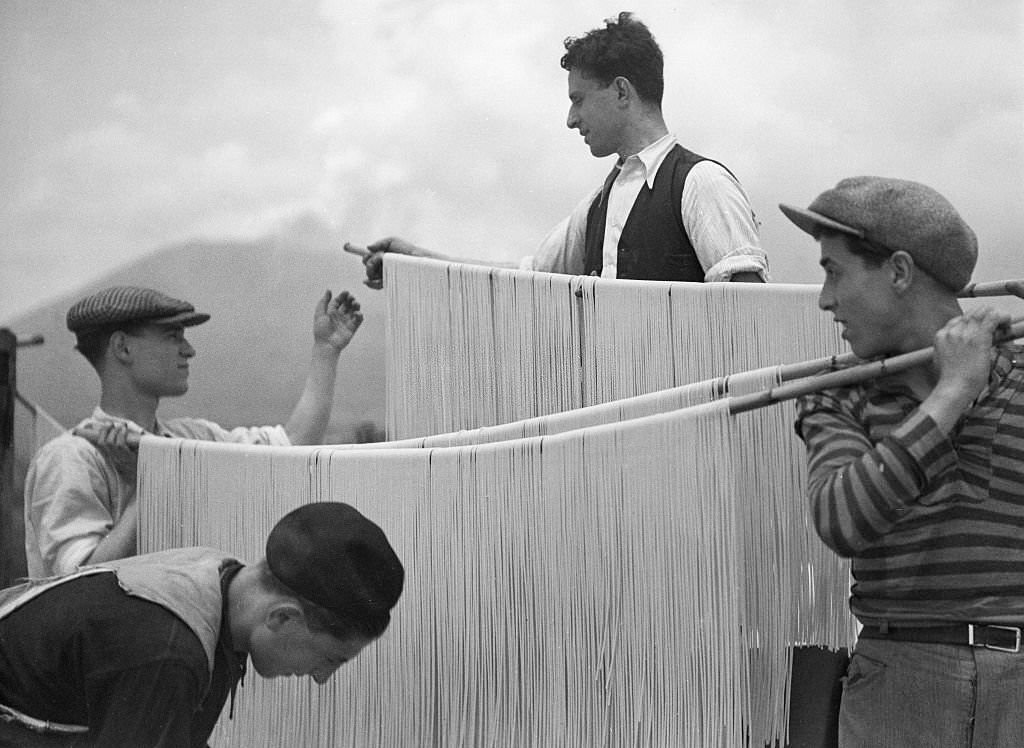
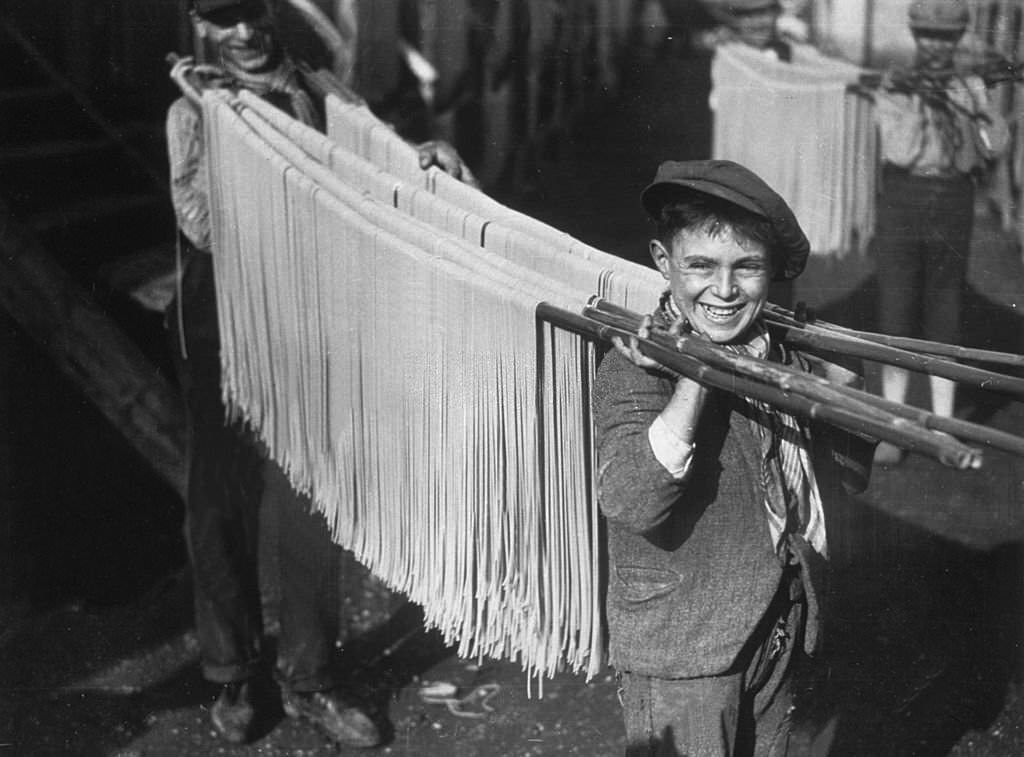
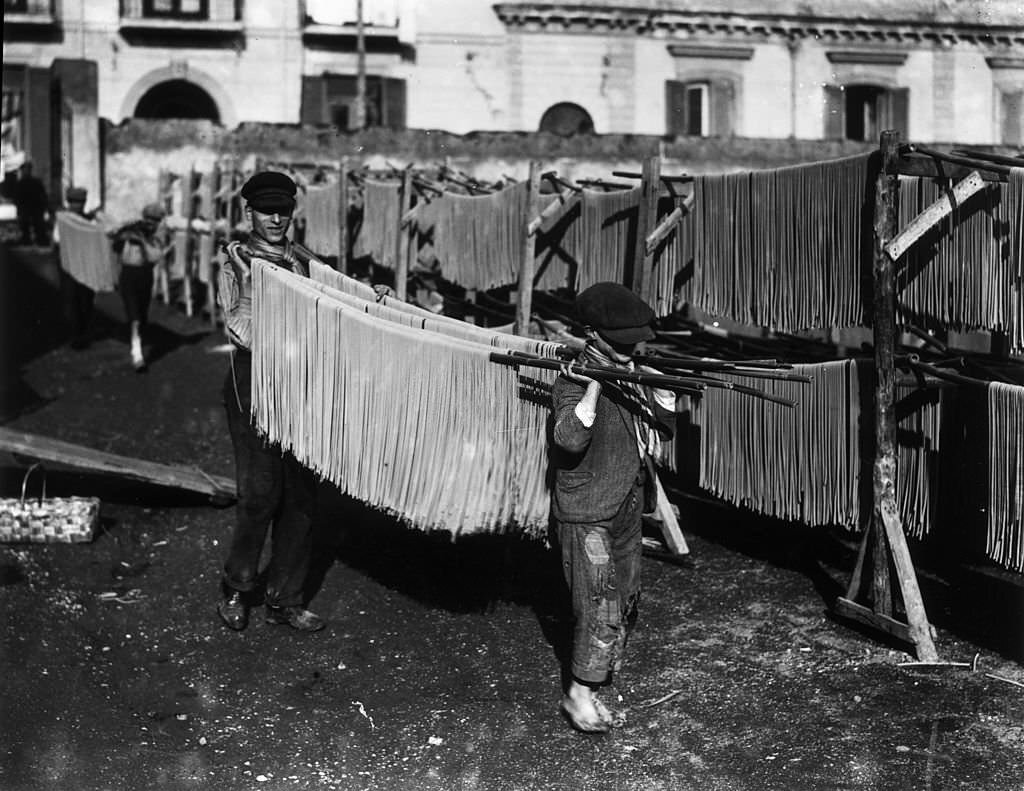
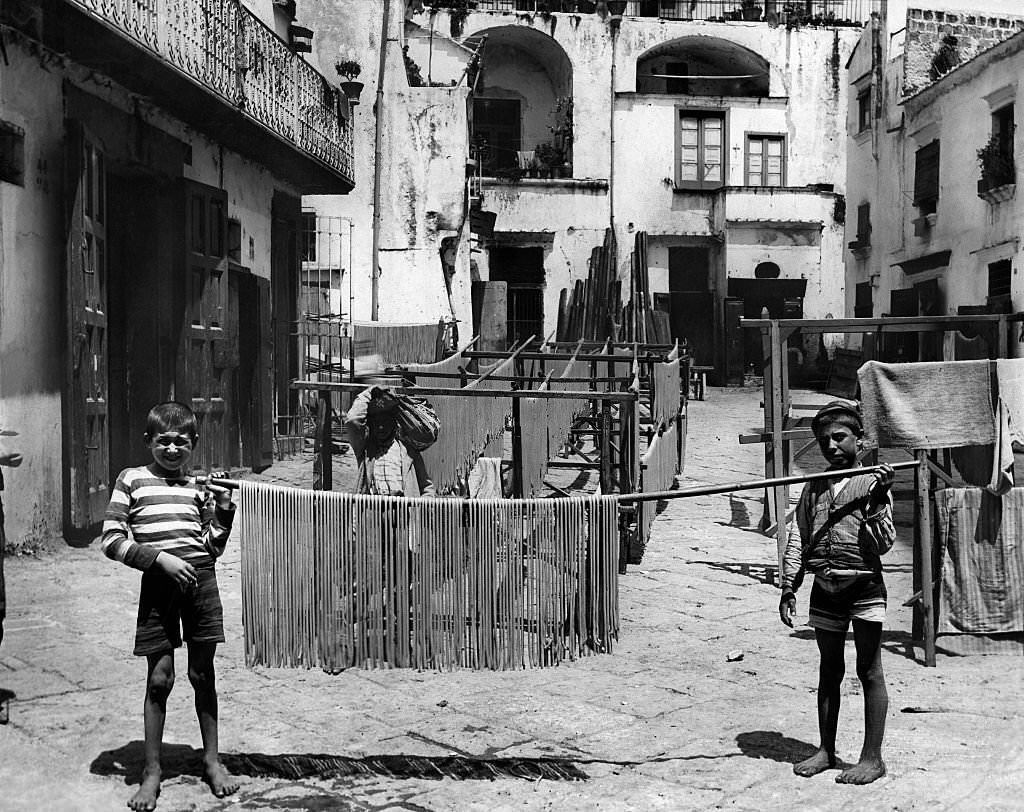
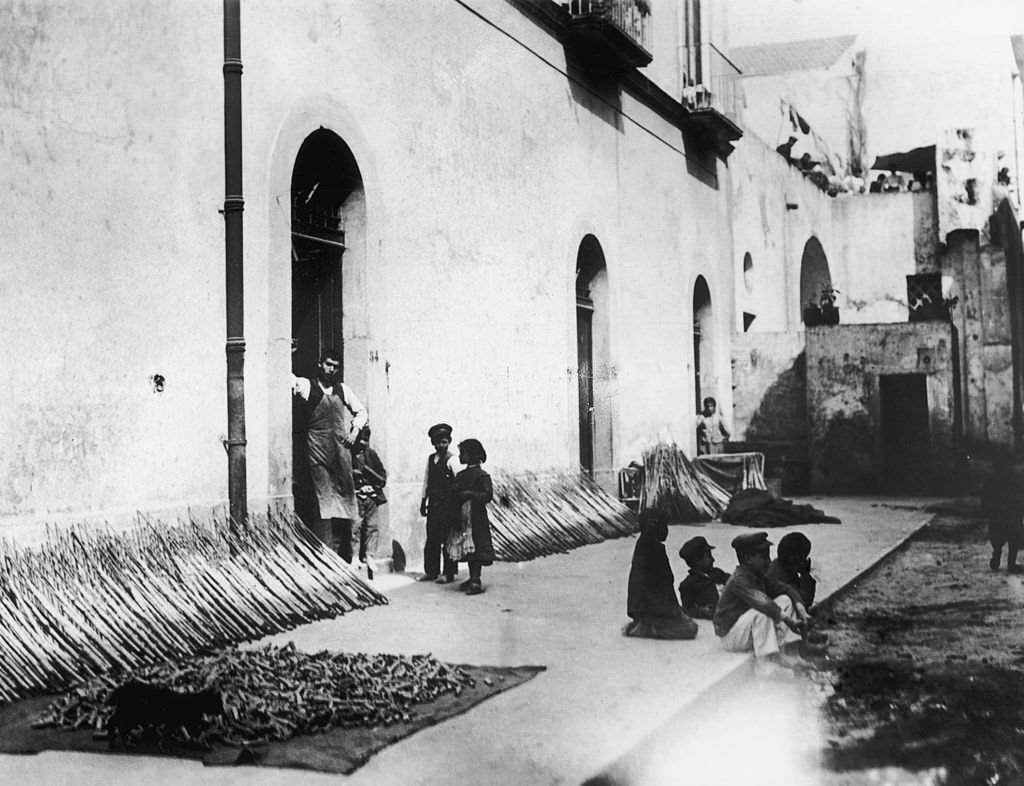
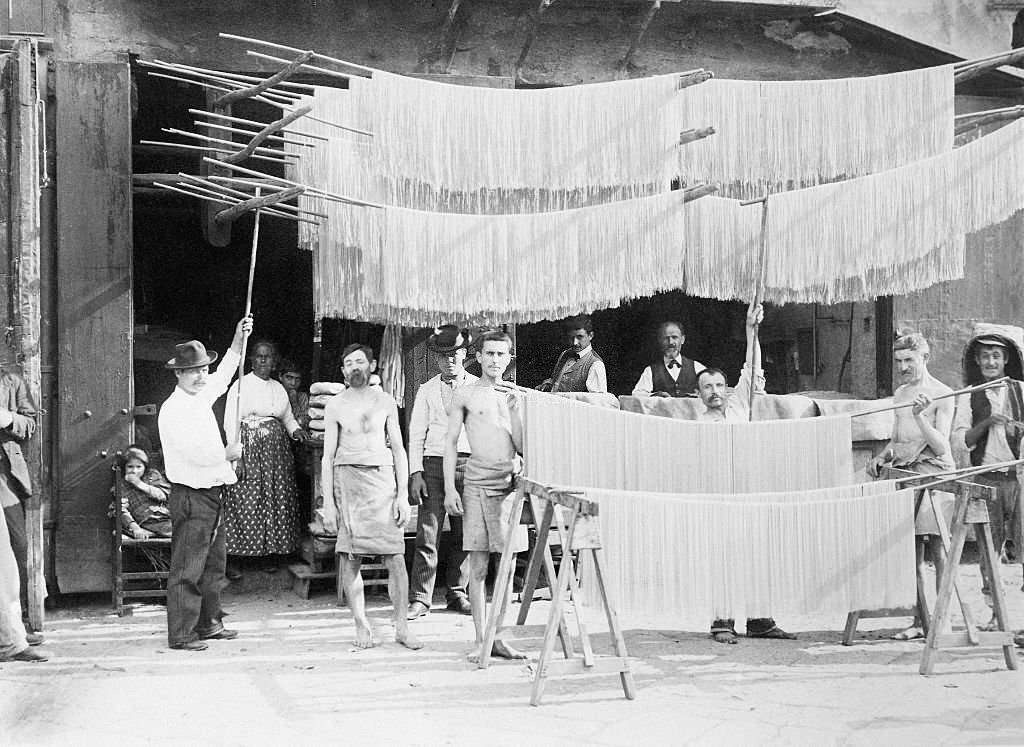
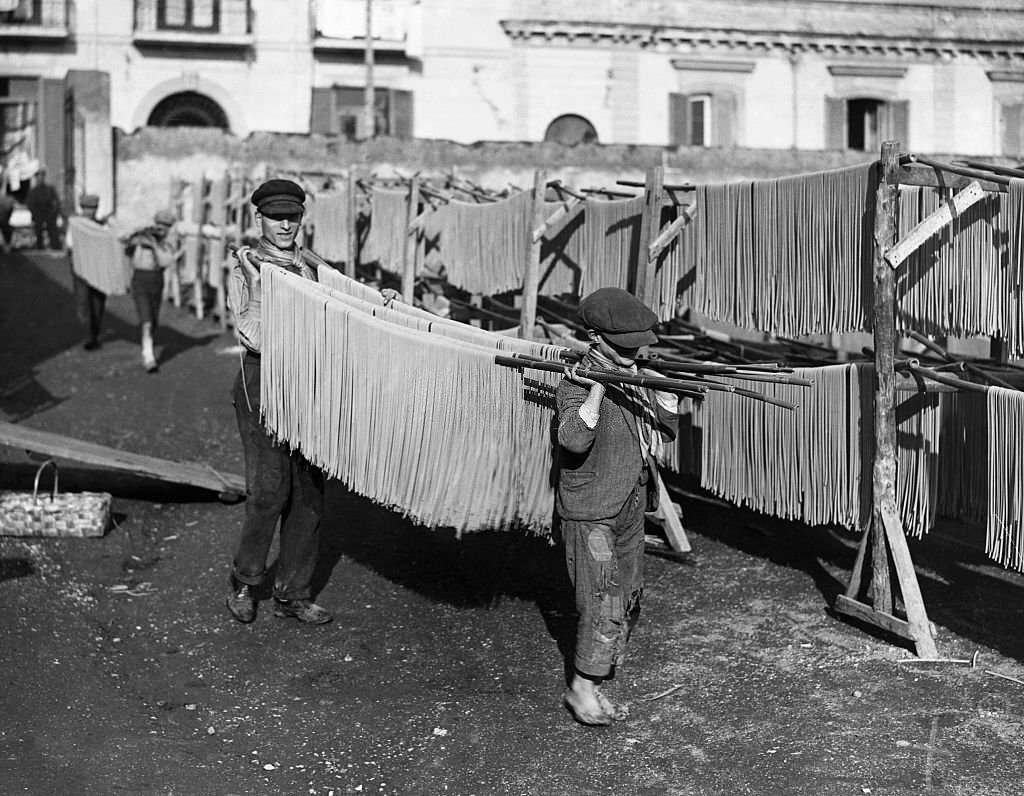
In Torre Annunziata near Naples, spaghetti production was the lifeblood of the town in the 1930s. The entire process — from extruding the dough to hanging strands over bamboo poles — happened in the open streets and courtyards. Children and adults alike carried long bundles of fresh spaghetti on their shoulders through the town, moving the pasta from one stage of production to the next.
Young Men and Boys Drying MacaroniSpaghetti production Carrying spaghetti through the small town of Torre Annunziata, the center of the local spaghetti production, 1932Neapolitan boy carrying a bundle of spaghetti on his shoulder, 1932Spaghetti production Workers hanging spaghetti over bamboo sticks to dry them, 1932Spaghetti production Two men carrying spaghetti on a bamboo stick to dry them, 1932Macaroni being hung to dry so that it may be sold in the market where the people are standing.
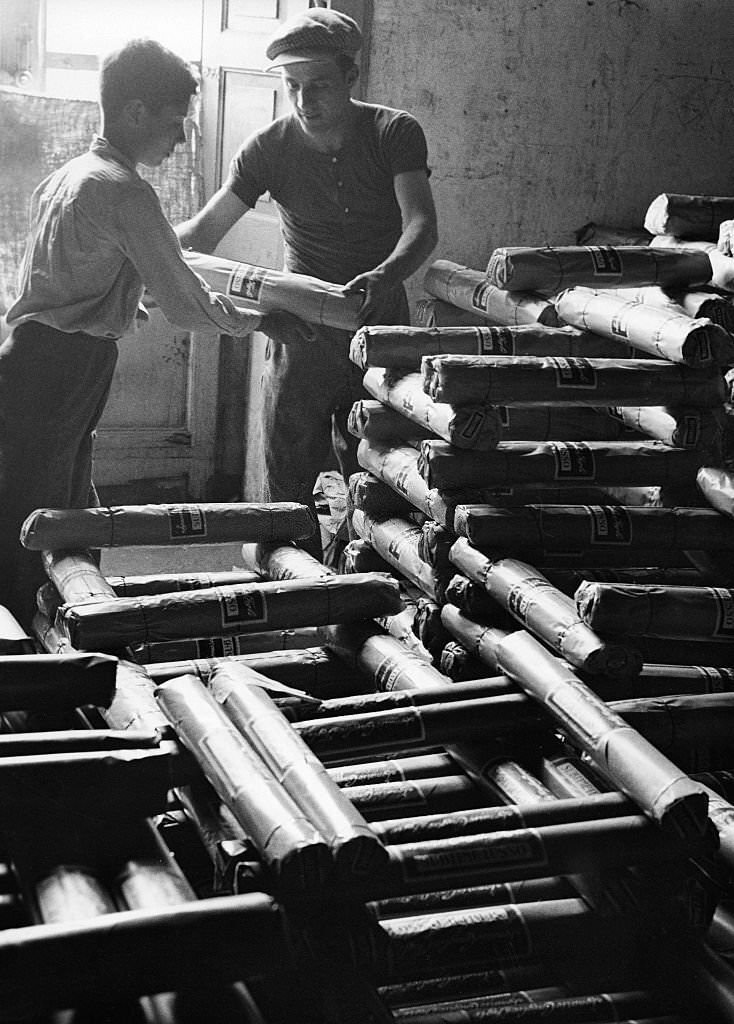
Spaghetti production Packaging spaghetti, 1932
Spaghetti production Two boys packing spaghetti; in the background Mount Vesuvius, 1932
Neapolitan boys carrying a bundle of spaghetti on their shoulders; in the background Mount Vesuvius, 1932
Neapolitan boy carrying two bundles of spaghetti in Italy, 1932
Neapolitan boy carrying a bundle of spaghetti on his shoulder, 1932Spaghetti production Carrying spaghetti on a bamboo stick to dry them, 1932Three Neapolitan boys carrying a bundle of spaghetti, 1932Spaghetti production Hanging up spaghetti to dry them; in the background Mount Vesuvius, 1932Spaghetti production Hanging up spaghetti, 1932
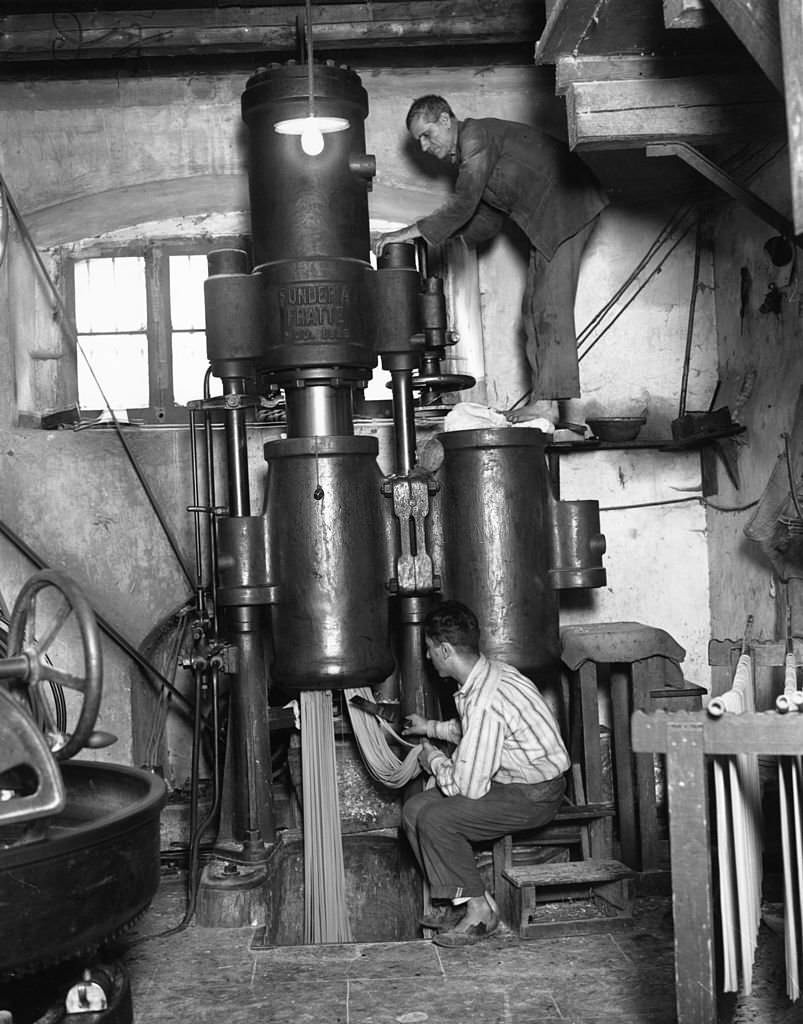
Spaghetti manufacturing machine in Italy, 1932
Spaghetti production Drying and hanging up spaghetti in Italy, 1932
Spaghetti production Worker bending (dried) spaghetti with a stick, 1932
Drying Macaroni, 1930.
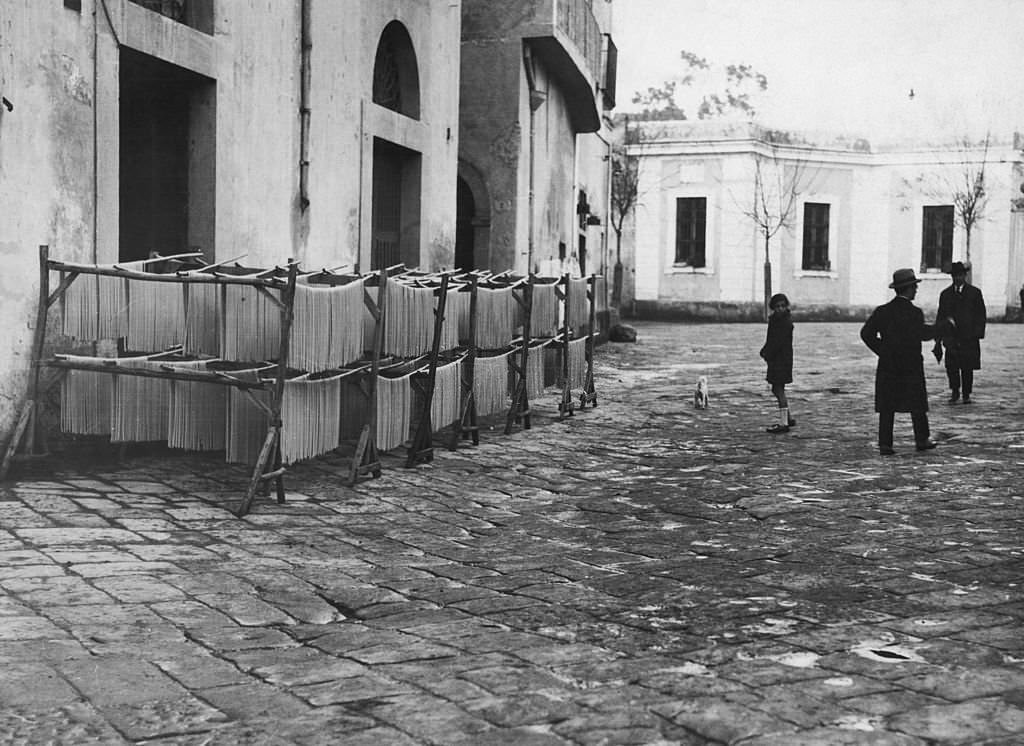
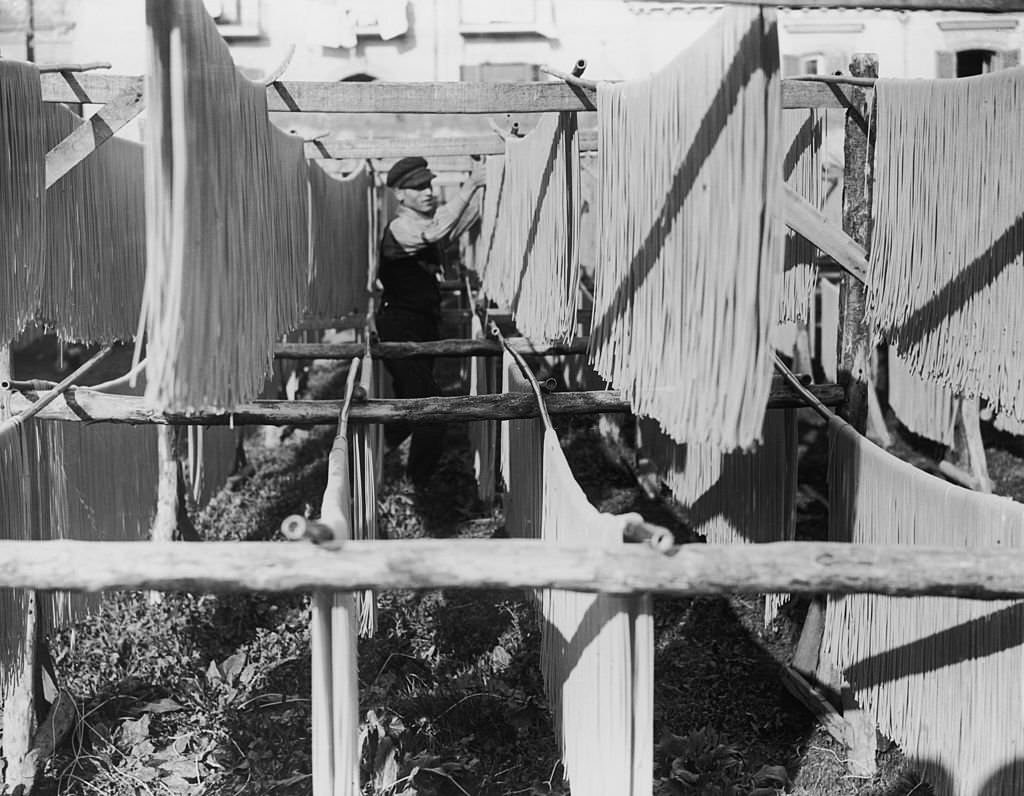
Outdoor drying was common across Italian towns well into the 1920s. Boys carried fresh pasta through the streets on long wooden poles, hanging strands high on outdoor frames to catch the air. The method was completely dependent on weather and required workers to move quickly to prevent the pasta from drying unevenly or becoming brittle in the sun.
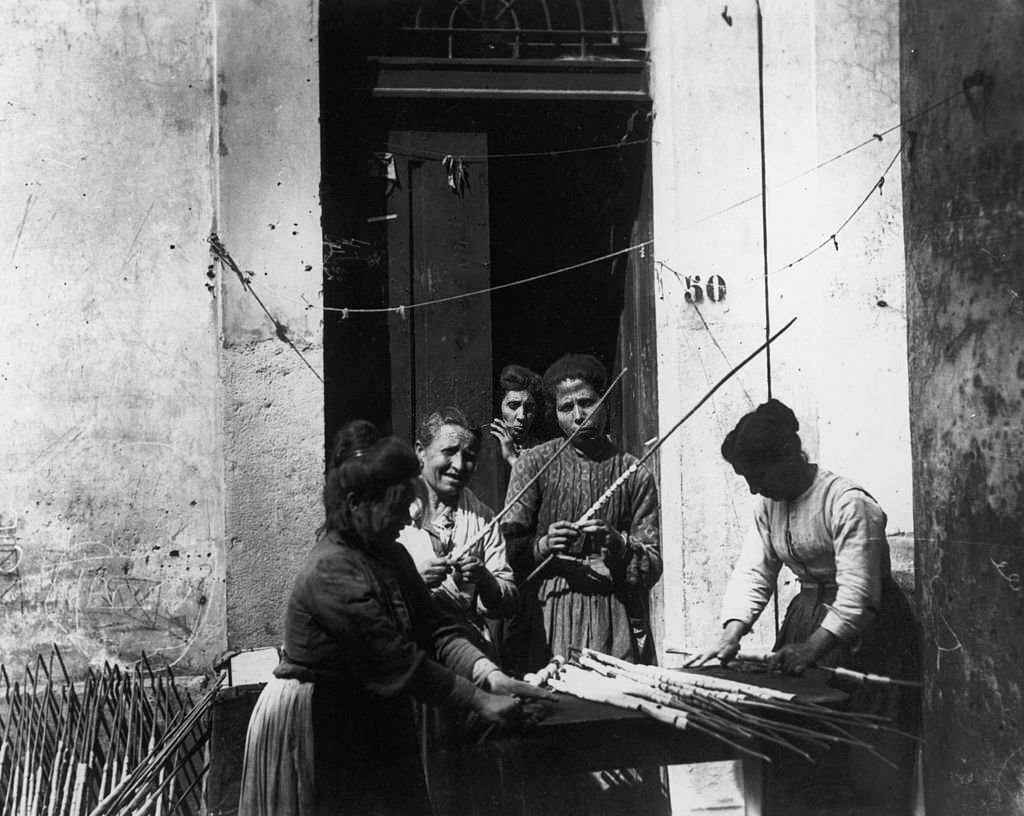
Italian boys hanging hand-made pasta in the traditional way, Italy, 1920sWorkers hanging macaroni out to dry, 1929A young boy carrying strings of pasta in a macaroni factory in Naples, Italy. 1929Boys carrying racks of spaghetti to be hung out to dryTwo men operating a pasta making machine, the man at the bottom cutting off lengths of pasta, in Naples.Drying vermicelli, 1928.Italy Campania Salerno. Food preparation of Macaroni, drying the Macaroni in the courtyard, 1928Pasta drying outside a small macaroni factory, Italy, July 1925.A group of women making macaroni by hand, Italy, 1925Strands of macaroni being hung out to dry, Italy, 1925.Strands of macaroni being hung out to dry, Naples, Italy, 1925.
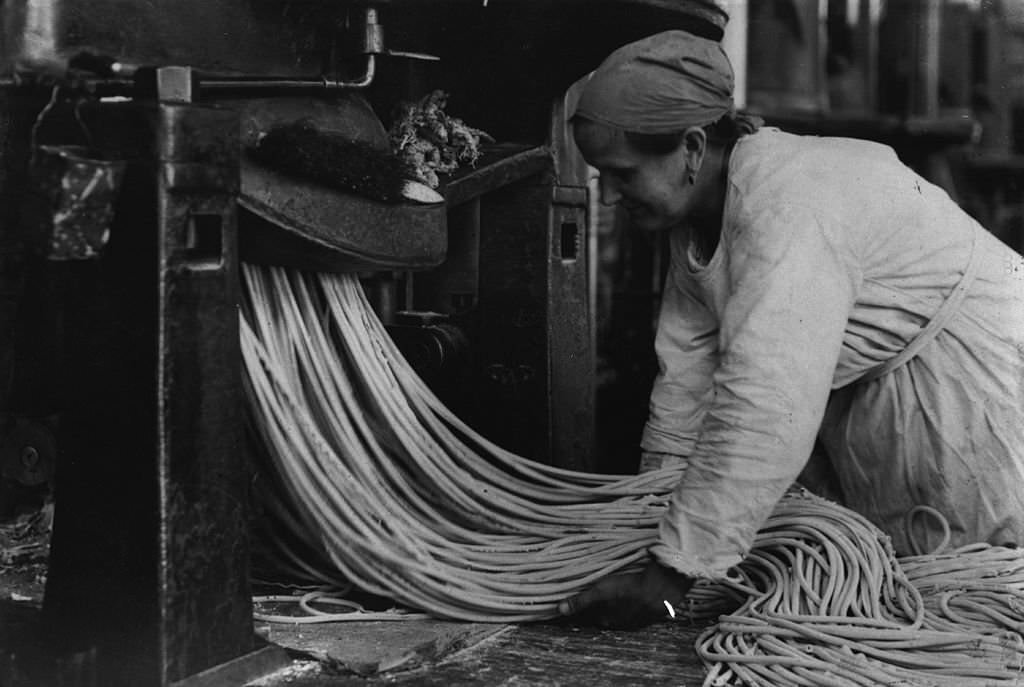
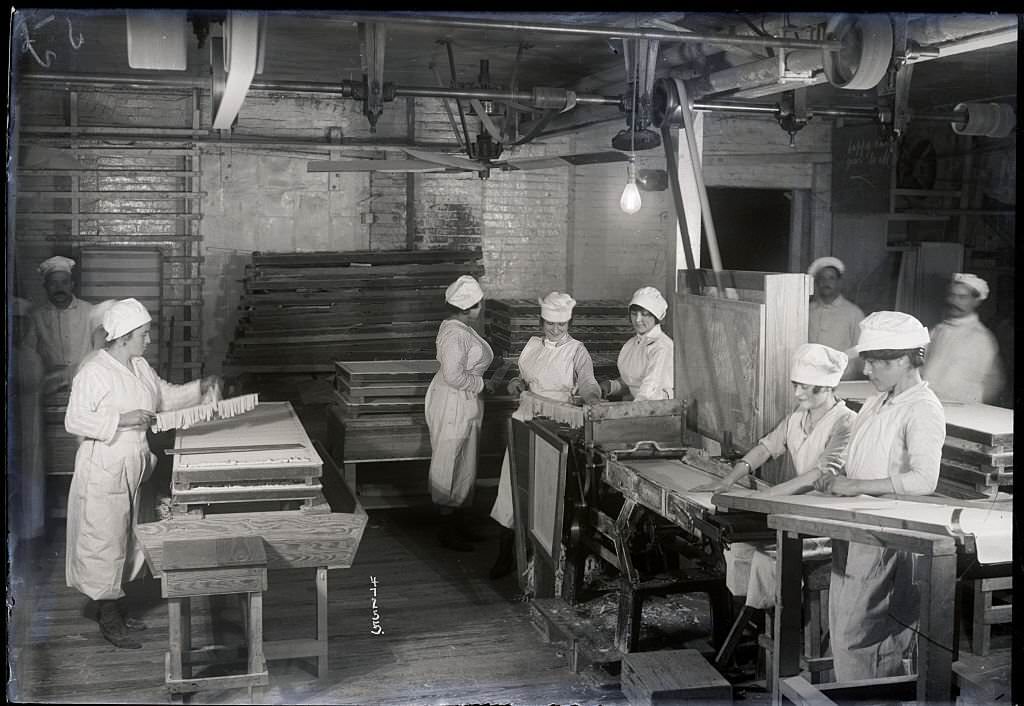
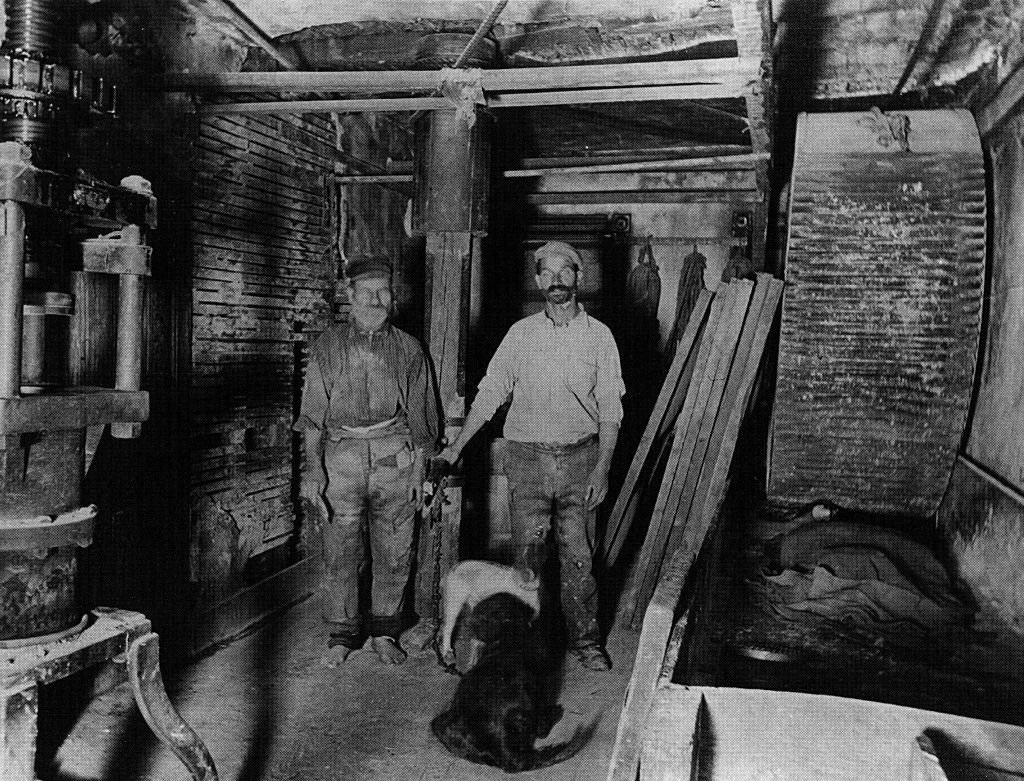
Pasta production was not limited to Italy or Italian immigrant communities. By the early 1920s, Russia had its own macaroni factories, with workers operating machines to produce pasta on an industrial scale. The global reach of pasta is also illustrated by early 20th-century New York, where Italian immigrants established factories in the city to supply the growing American demand.
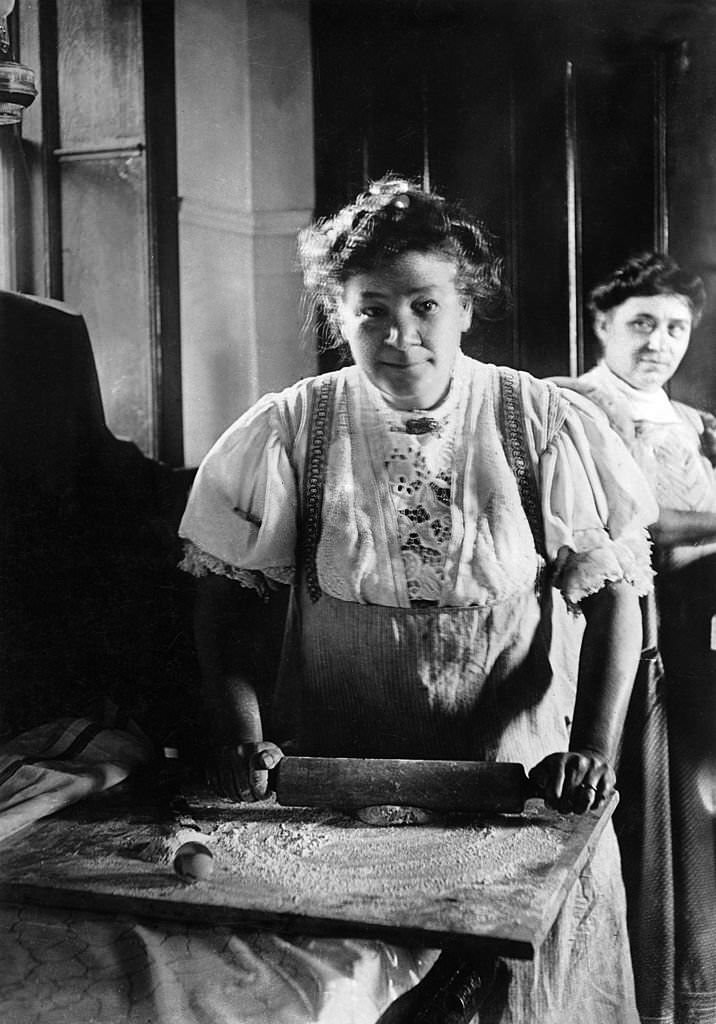
A worker making macaroni in Russia, 1923Goodman Macaroni Factory noodle cutting machine.Schumann-Heink, Ernestine, german singer, making pasta, 1900sItalian emigrants of the early twentieth century. Pasta factory in New York, 1905.
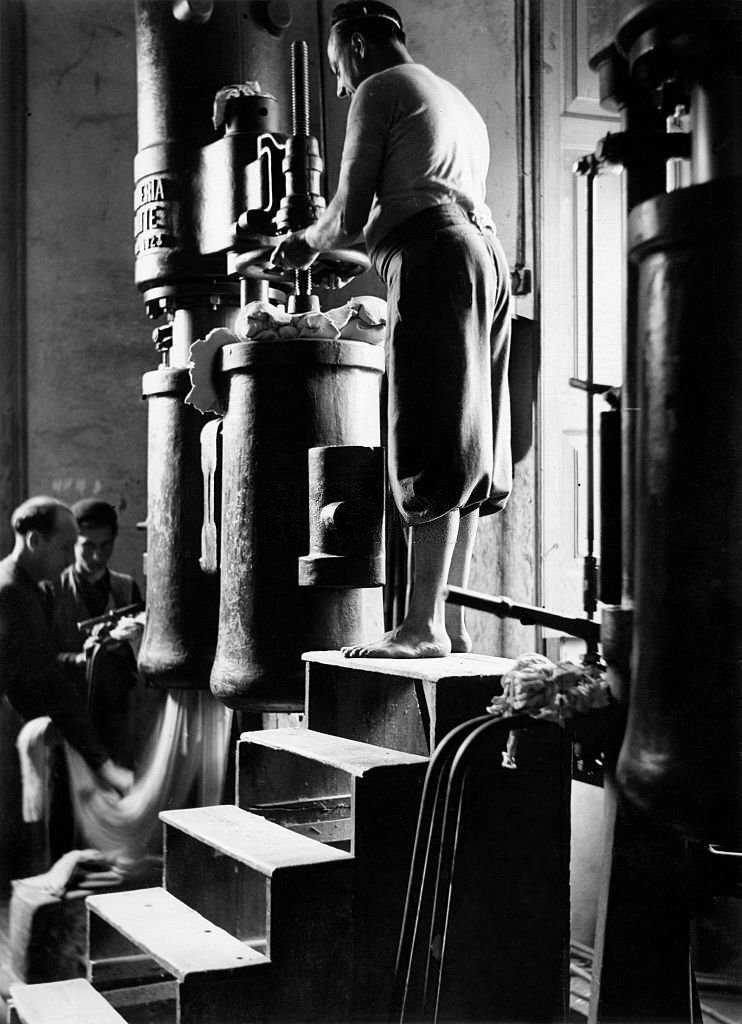
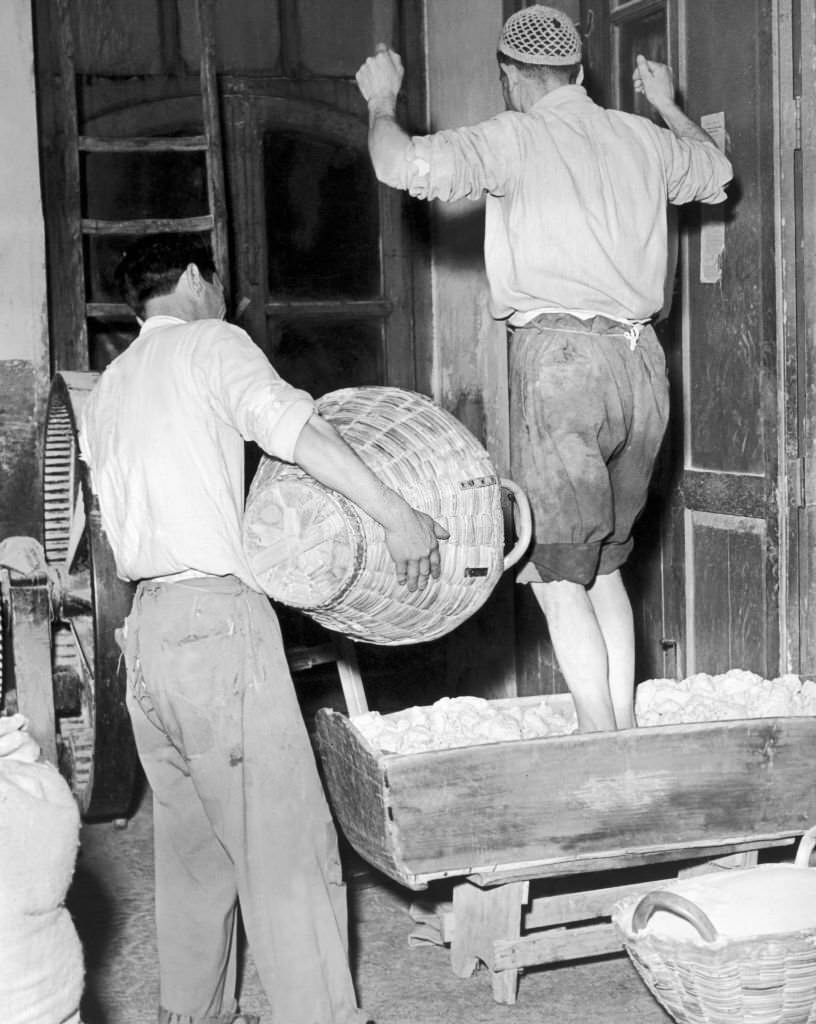
Early 20th-century Italian factories show how pasta production was already shifting from purely handmade to machine-assisted. In 1903, factories in Italy were photographed with workers operating extruding machines that pushed wet dough through molds to shape spaghetti strands. Once cut, the fresh pasta was moved outdoors immediately to begin the drying process. In some facilities, workers kneaded the dough directly with their feet before it was fed into the machines — a practice that continued in smaller operations for years.
Pasta factory in Italy, 1903Making of Spaghetti in ItalyThe wet dough, coming out of the machine, is cut and left to dry, during the manufacture of spaghetti, in Italy.Packaging at the end of spaghetti production in Italy.Kneading dough with feet when making pasta in Italy.Young boys carry poles of spaghetti into a factory yard for drying, 1920sMaking Macaroni in Russia, 1920s