Paris in the 1980s was a city in motion. François Mitterrand was elected President of France in 1981, and his time in office brought sweeping changes to the capital. Major construction and renovation projects reshaped the city’s skyline and cultural identity. The old Orsay railway station near the banks of the Seine was transformed into the Musée d’Orsay, reopening in 1986 as a world-class museum dedicated to 19th-century art and civilization. Alongside it, the Grand Louvre expansion, the Opéra Bastille, and the Grande Arche of La Défense were all completed by the end of the decade. Mitterrand also raised the minimum wage, increased family benefits, and added a fifth week of paid vacation for French workers — changes that gave everyday Parisians more time and money to enjoy their city.
Against this backdrop of political and architectural change, Swedish photographer George Kindbom took to the streets of Paris and captured what daily life actually looked like. His color photographs are vivid, warm, and deeply human. They show Parisians relaxing by the river, reading in parks, sharing kisses on street corners, and going about their routines with a casual elegance that became synonymous with the city. The images below offer a rare, ground-level view of Paris during one of its most transformative decades.
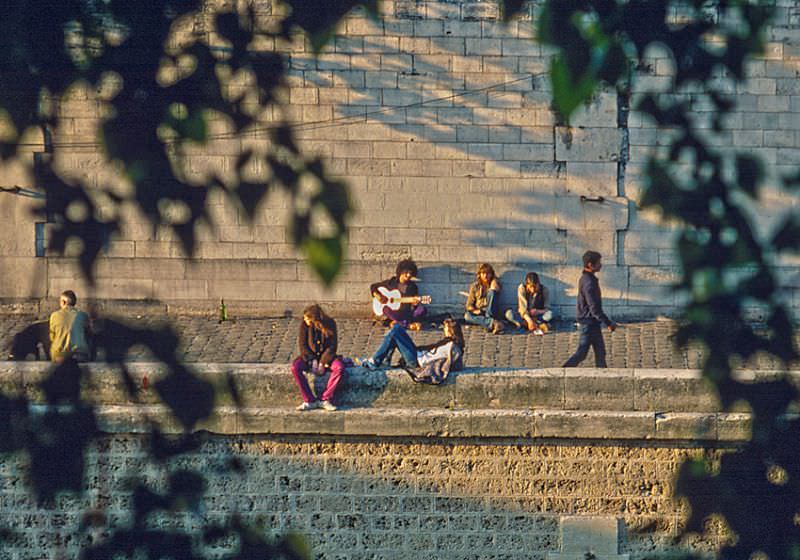
As evening fell over the city, Parisians gathered outside to soak up the last of the day’s sun before a night out.
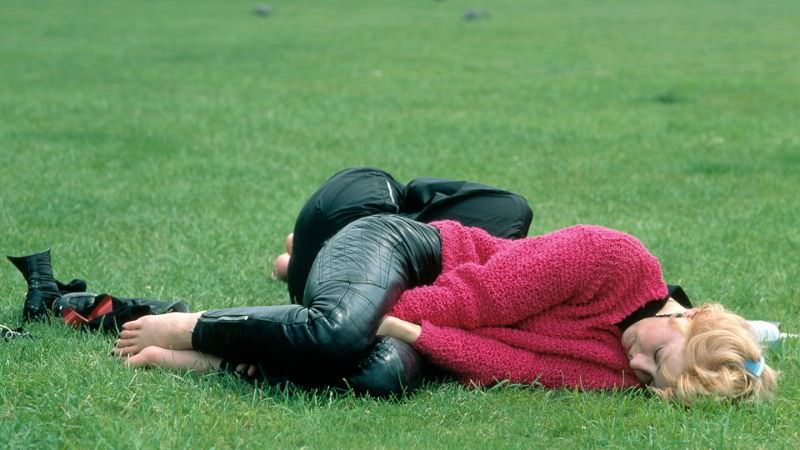
The mornings after told their own story. Streets that buzzed with energy the night before grew quiet again by sunrise.
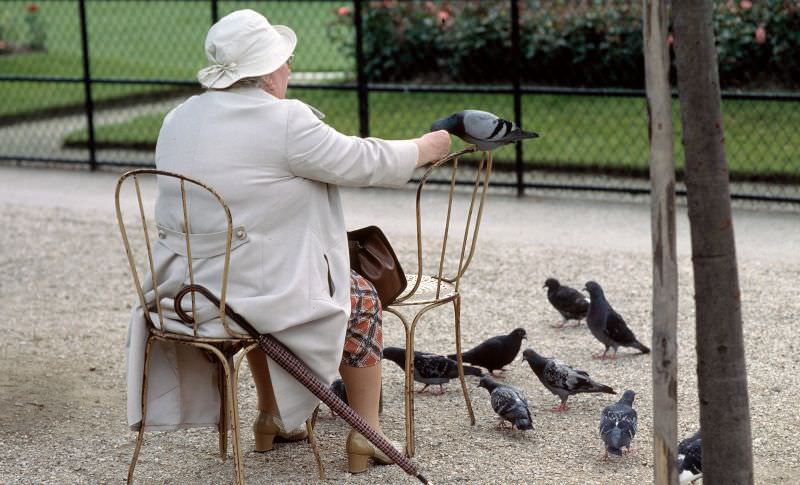
Paris has always been a city associated with romance, and Kindbom captured that quality in unexpected places — not just between people.
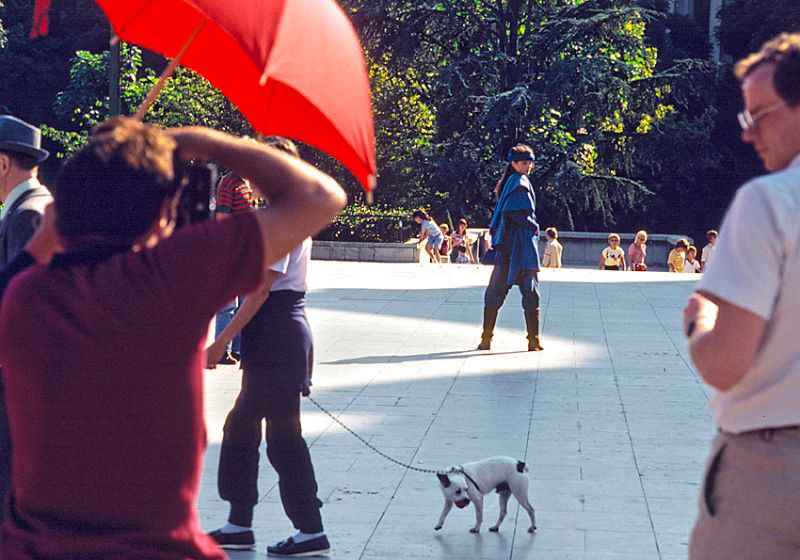
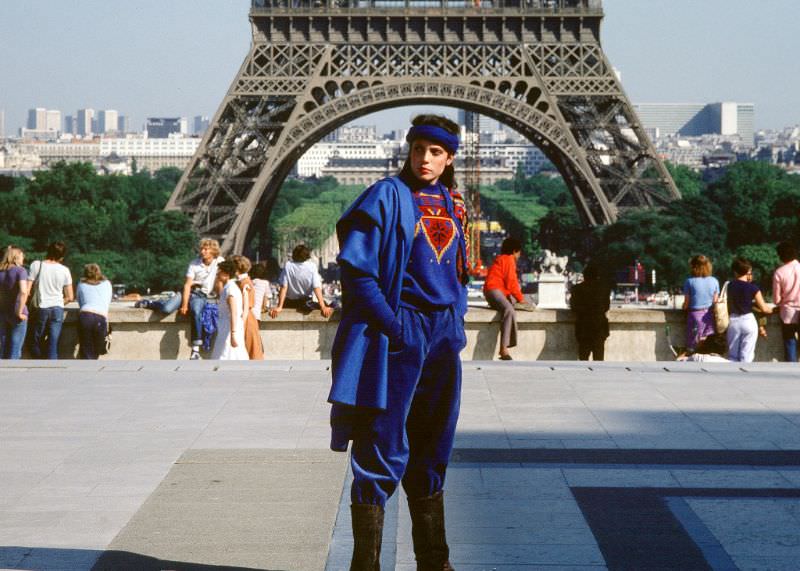
The Eiffel Tower served as more than a monument — it was a backdrop for fashion, performance, and everyday Parisian style. Kindbom photographed models there on more than one occasion, showing how the tower wove itself into the fabric of the city’s creative life.
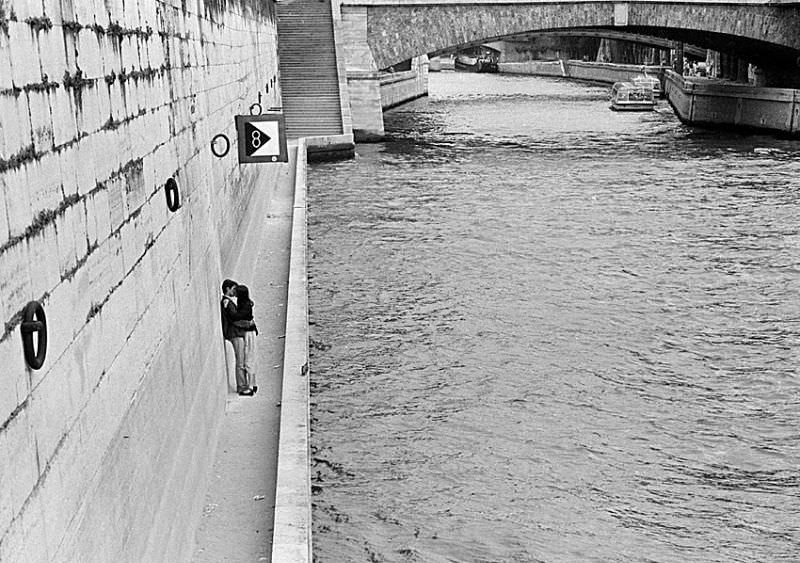
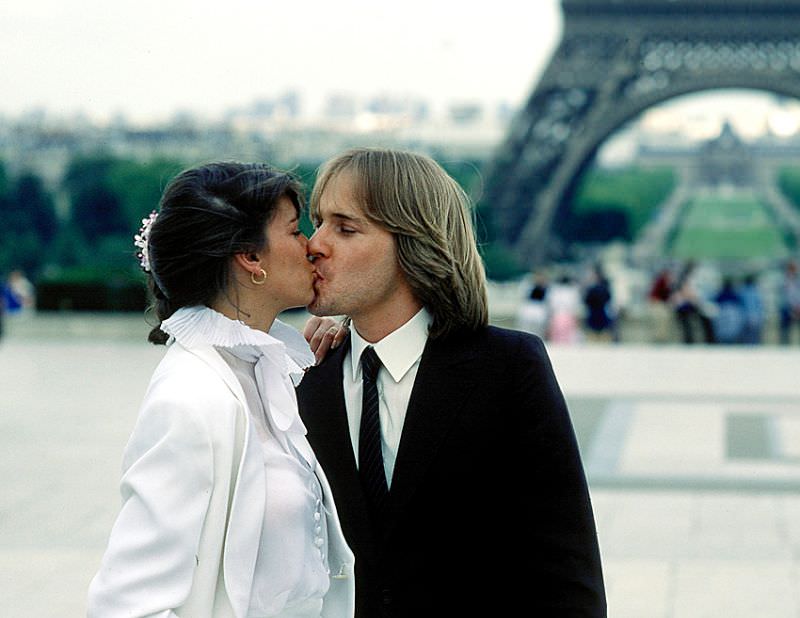
Few things defined Paris in the popular imagination more than couples along the Seine. Kindbom documented these moments with directness — no staging, no distance.
Not everything in 1980s Paris was Parisian by origin. The streets were filled with imported goods, foreign brands, and a growing mix of international culture — a Husqvarna motorcycle parked on a Parisian street made for a quietly striking contrast.
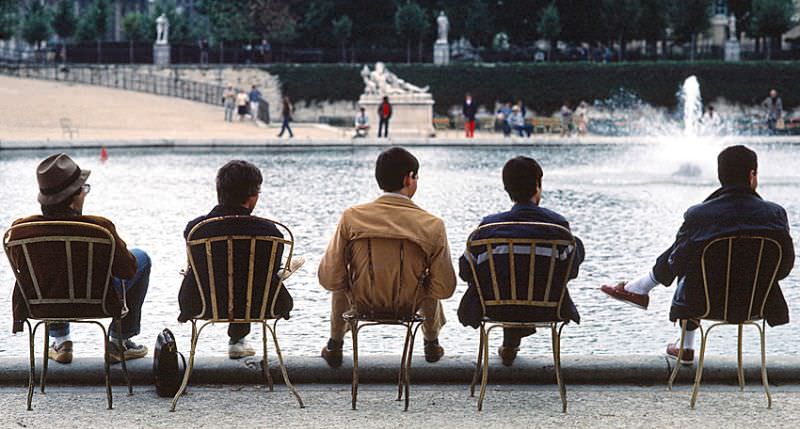
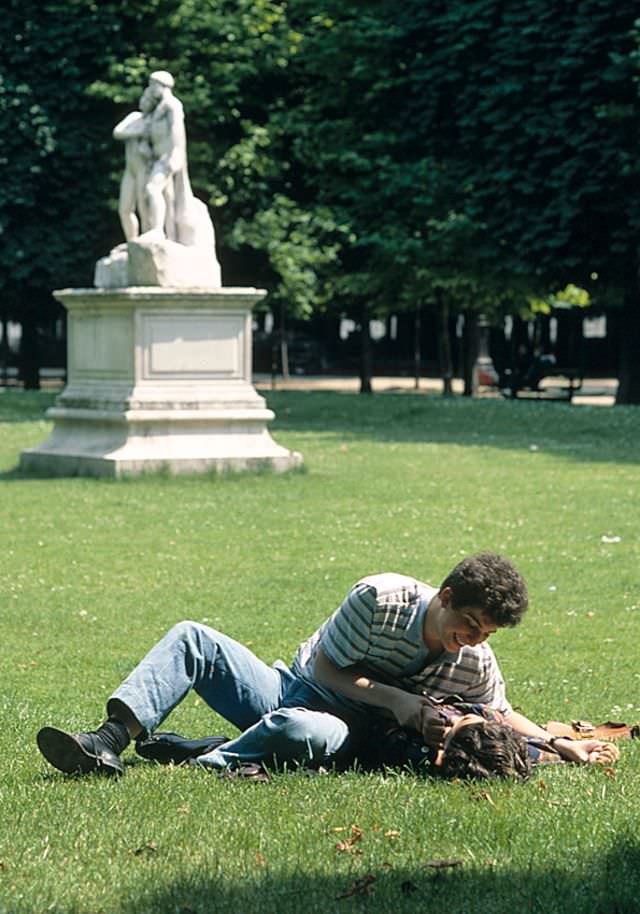
The Tuileries, the formal garden stretching between the Louvre and the Place de la Concorde, was a favorite gathering spot. Office workers ate their lunches on its benches and chairs, reading, talking, or simply watching the city go by.
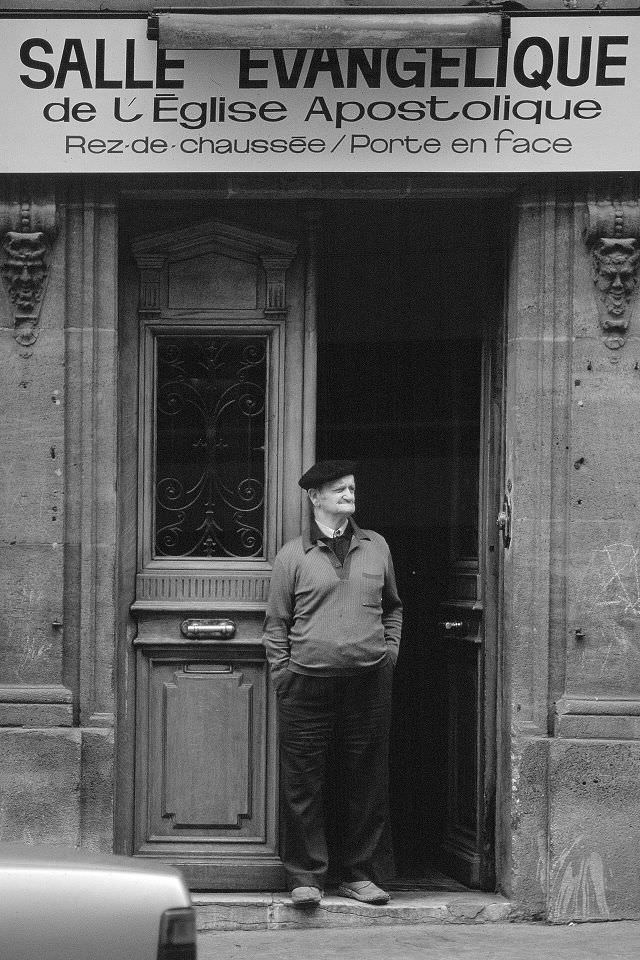
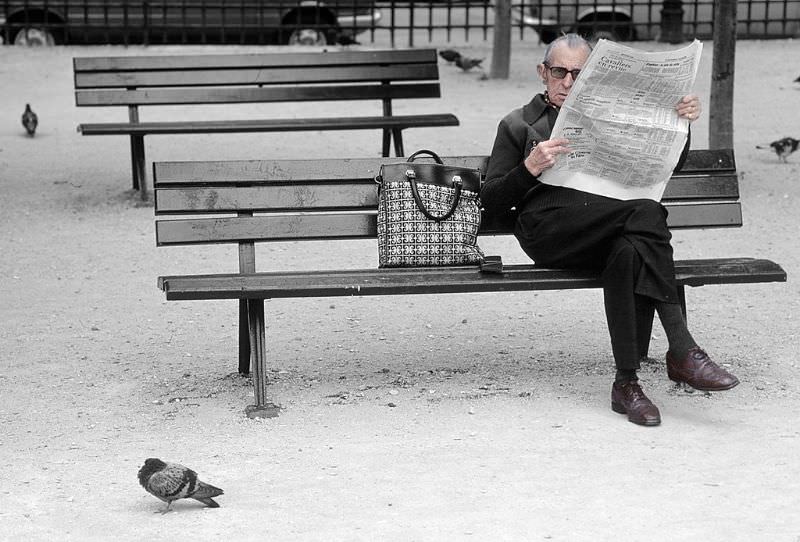
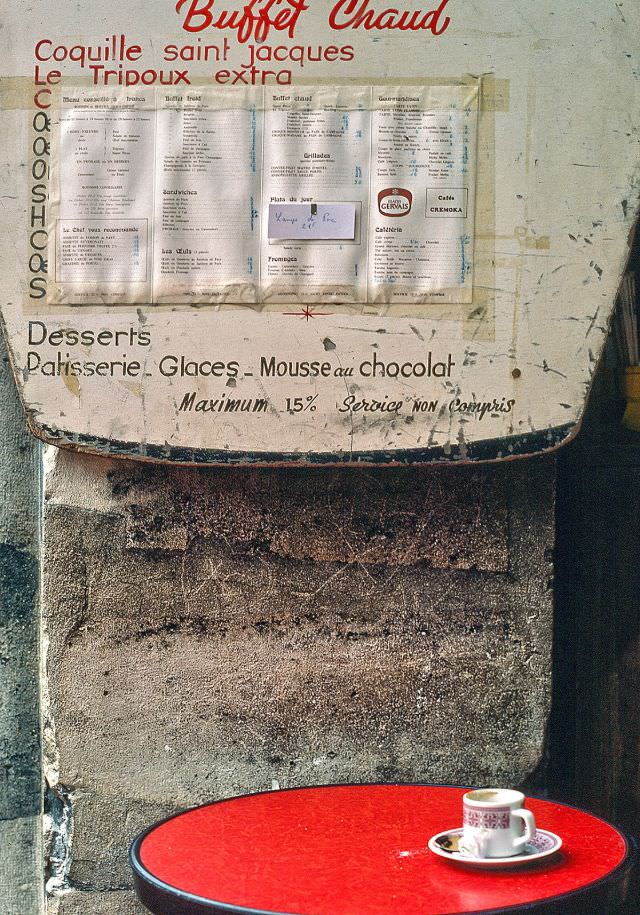
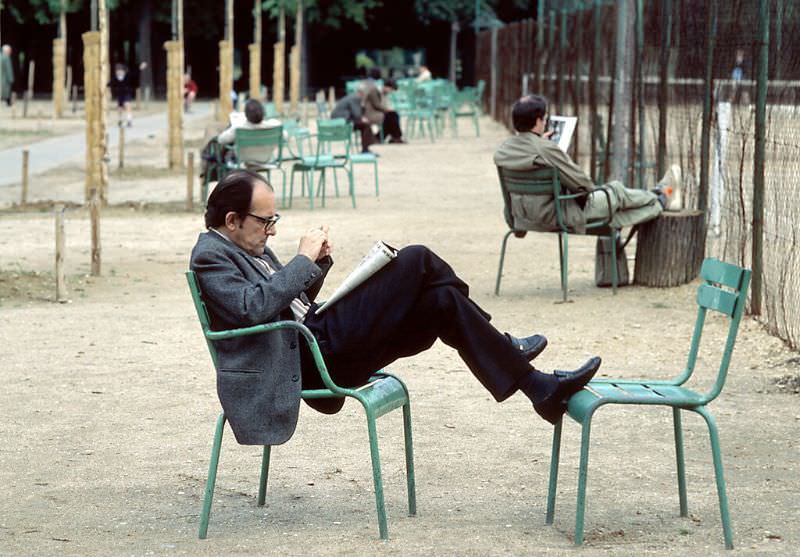
Reading was a fixture of Parisian public life. On benches, at café tables, and in parks, people paused their day with a newspaper or book in hand.
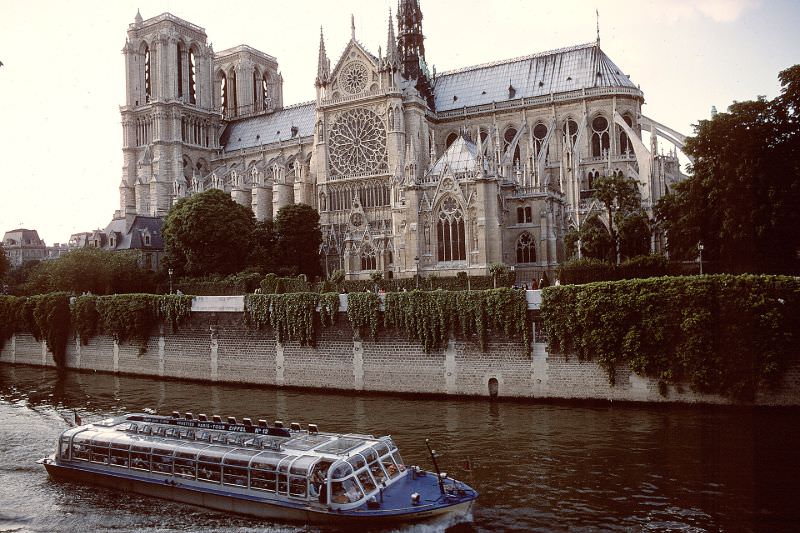
Notre-Dame Cathedral stood as the anchor of the Île de la Cité, drawing both worshippers and visitors throughout the decade. In Kindbom’s frame, it appears as it did on any ordinary day in the 1980s — solid, enduring, and deeply embedded in the life of the city.
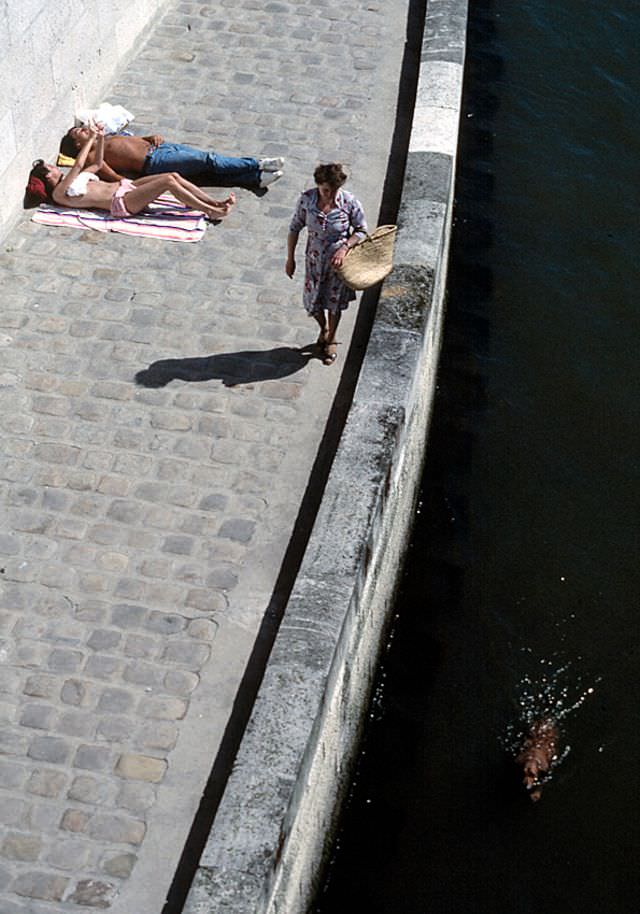
Summer in Paris brought people outside regardless of the heat. Dogs were walked, errands were run, and the city’s outdoor rhythm continued without pause.
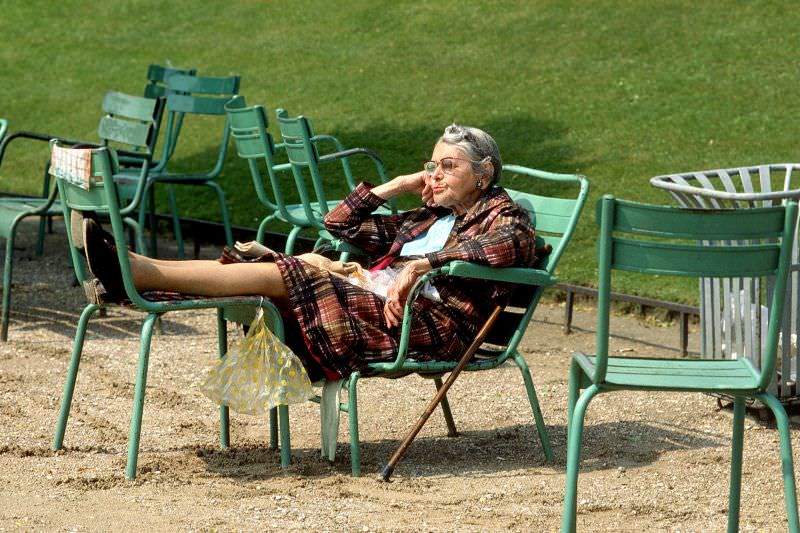
Kindbom had a strong eye for Parisian women going about their daily lives — not posed, not performing, just present in the city they called home.
Street art was carving out space on the walls of Paris well before it became a global phenomenon. Kindbom documented murals and painted surfaces across the city, capturing a visual culture that existed alongside — and sometimes in defiance of — the grand architecture around it.
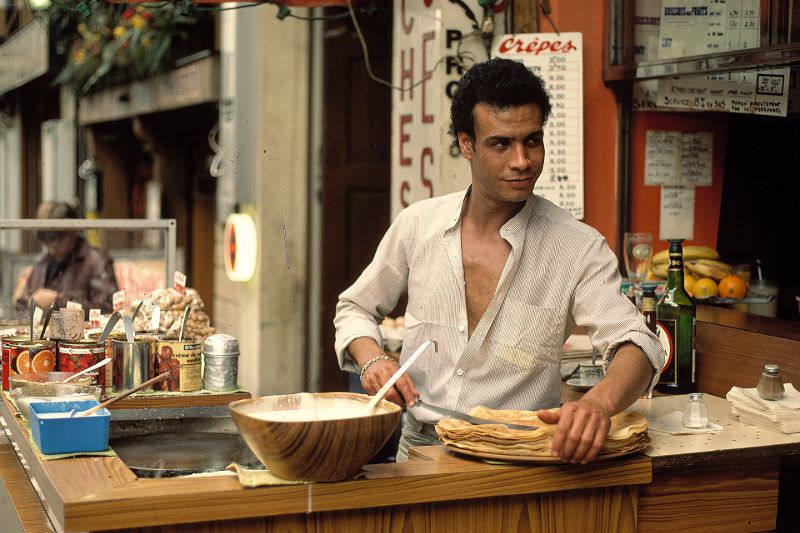
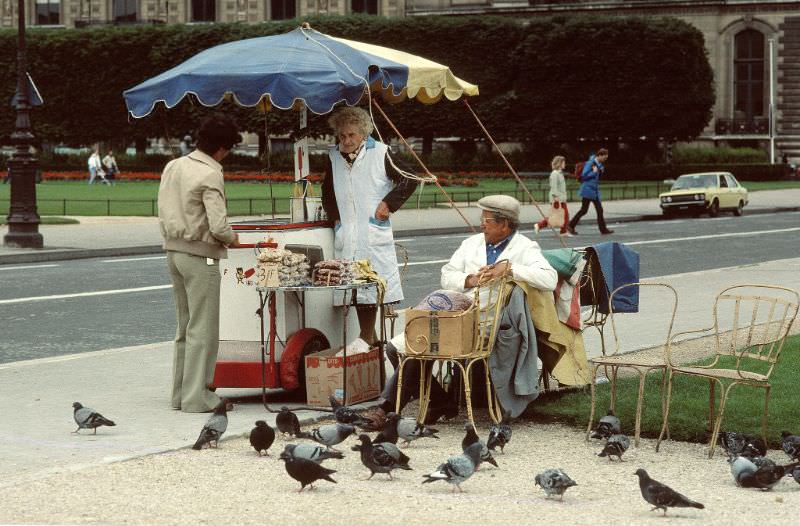
Street food vendors were a constant presence on Paris’s sidewalks. Crêpe stands, roasted chestnut sellers, and snack carts lined busy corners, feeding workers, tourists, and students alike.
Reading in public was not just a habit — it was almost a social act. Whether alone on a bench or side by side at a table, Parisians treated books and newspapers as natural companions to any pause in the day.
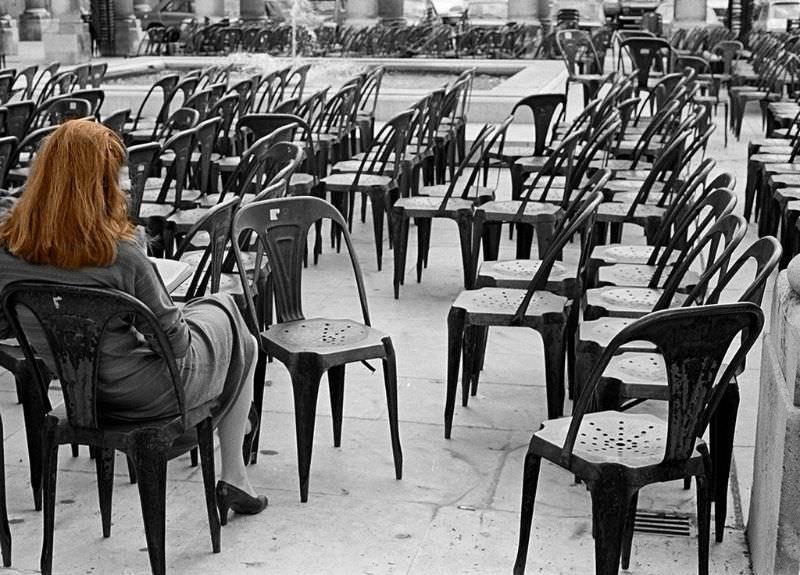
Sunday mornings at the Tuileries had a particular calm. Families strolled, children played near the fountains, and the grand space took on a slower, more personal character than it held during the working week.
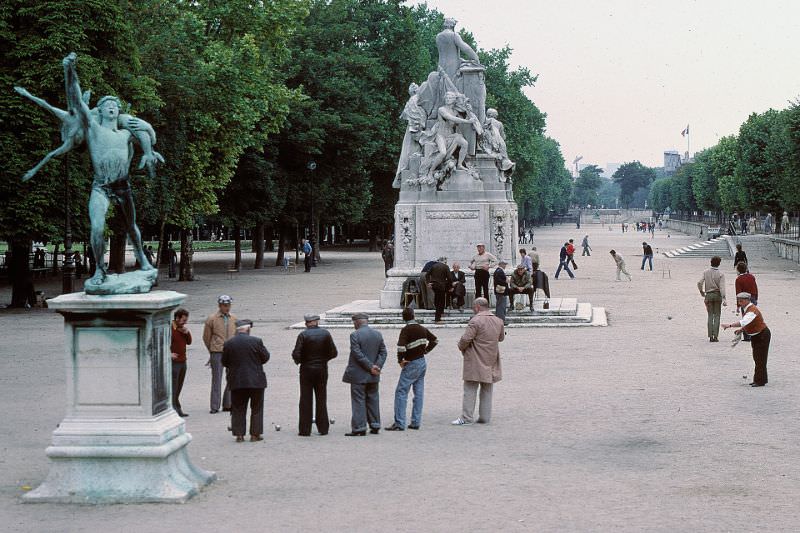
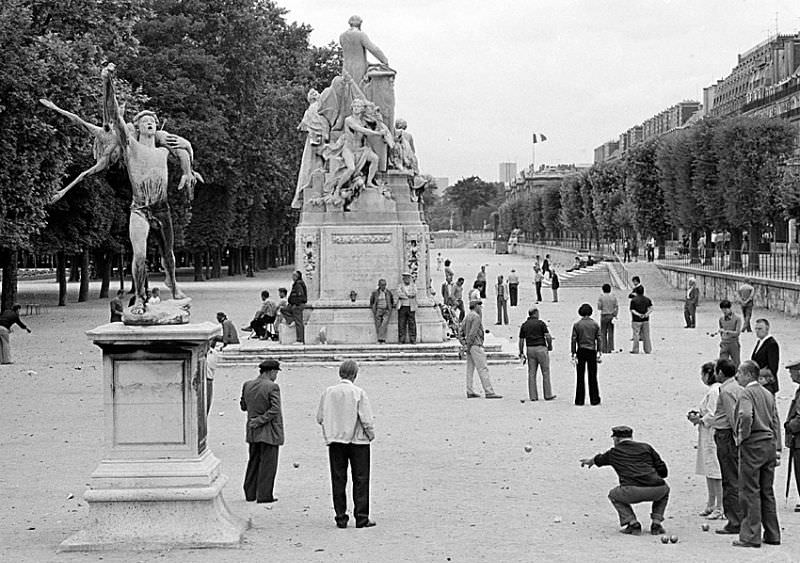
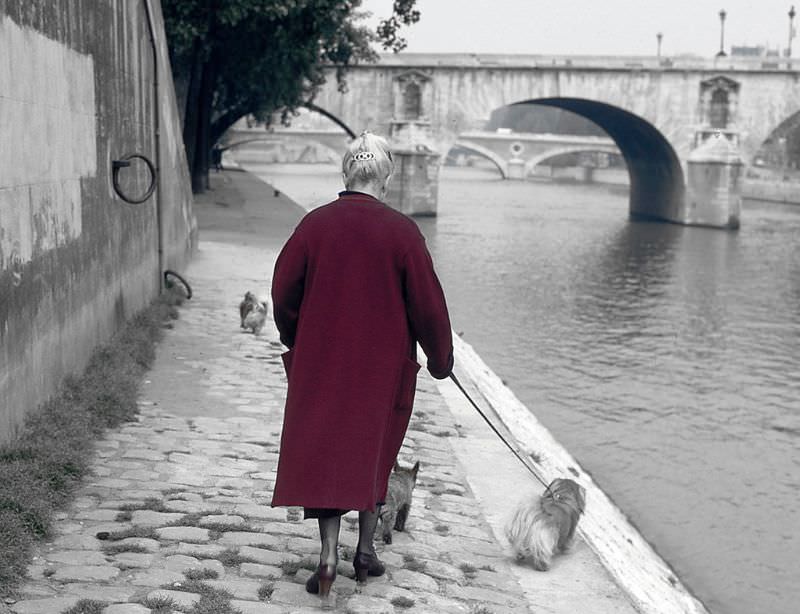
The Seine ran through every aspect of Parisian life. Its banks were places to walk, to meet, to fish, and to think. Kindbom returned to the river repeatedly throughout his time in the city.
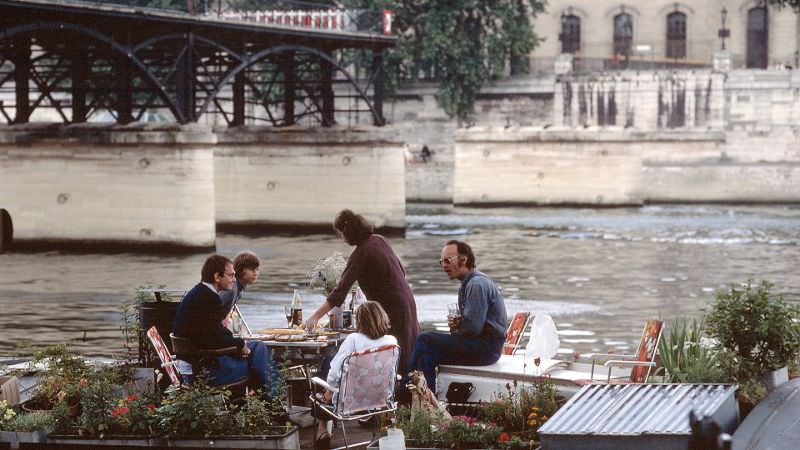
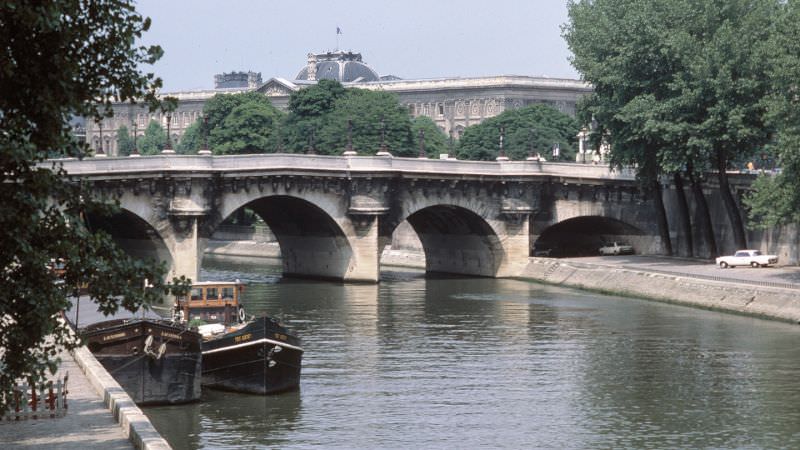
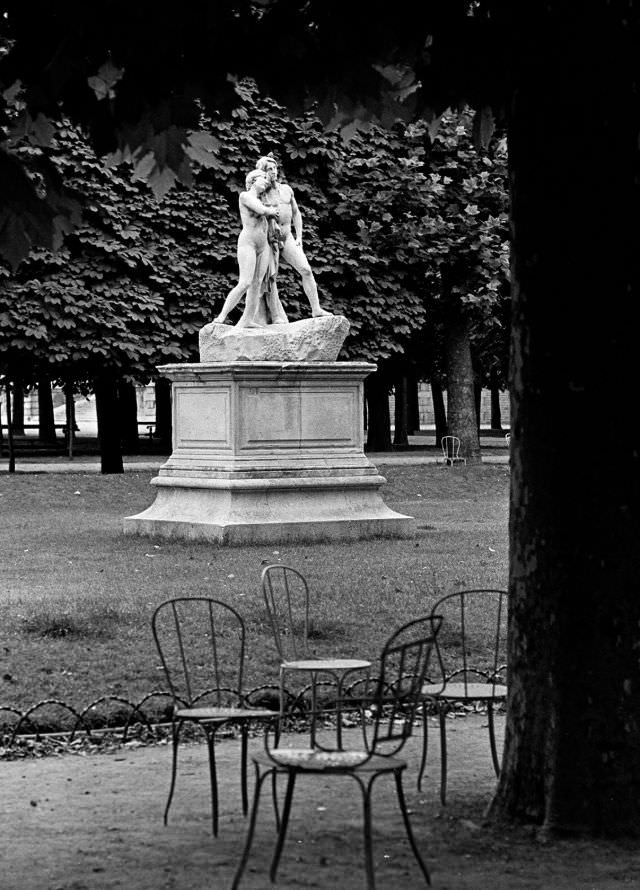
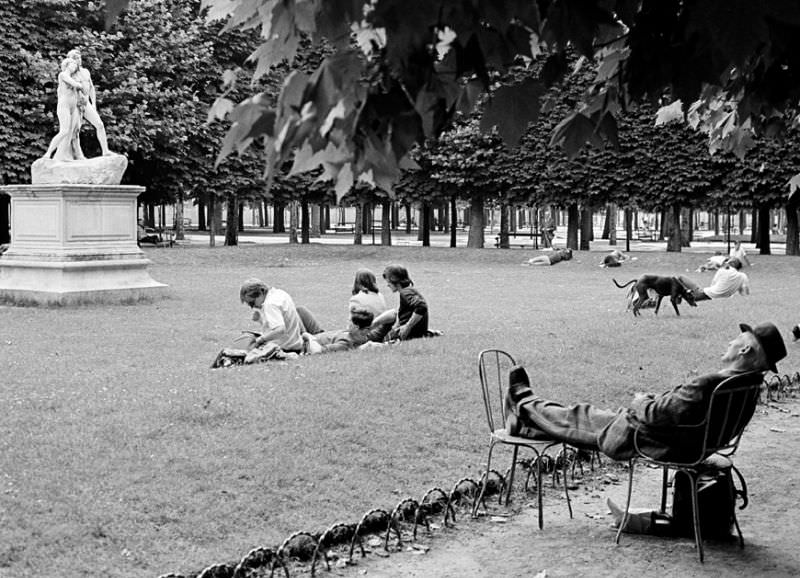
The Tuileries Garden and its surrounding palace grounds appeared in Kindbom’s work again and again — in different lights, different seasons, and with different crowds. Each image adds another layer to the same familiar space.
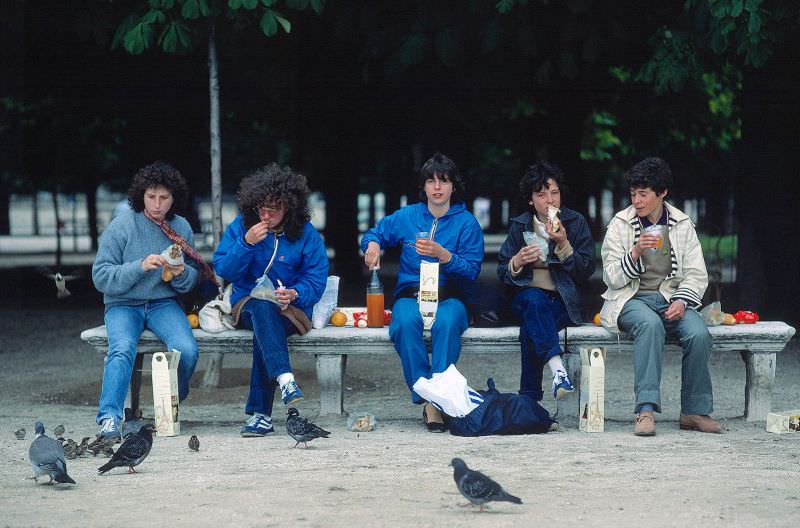
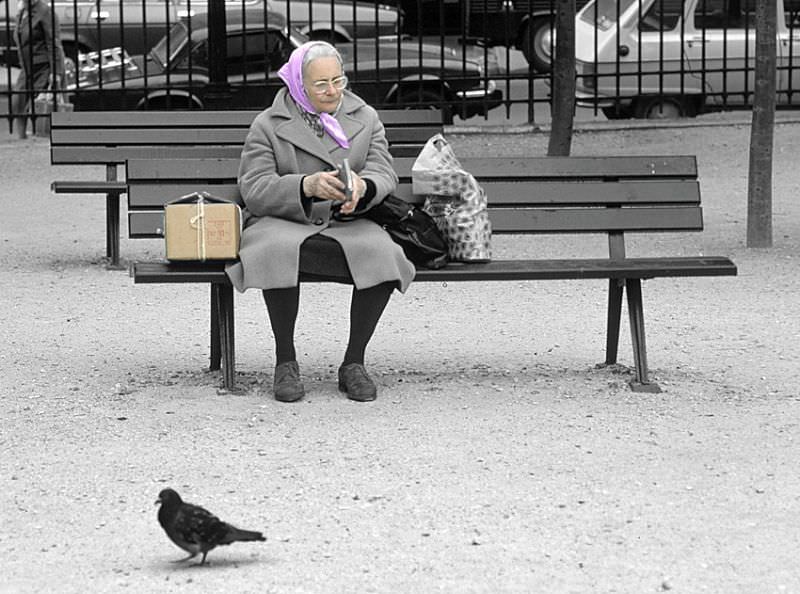
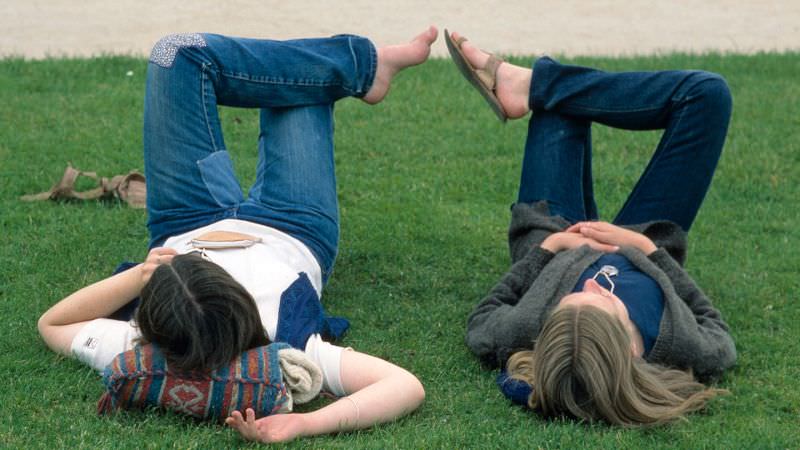
Moments of rest appeared throughout the city. Two women pausing on a bench, taking a break from wherever the day had taken them, was as Parisian a scene as any monument.
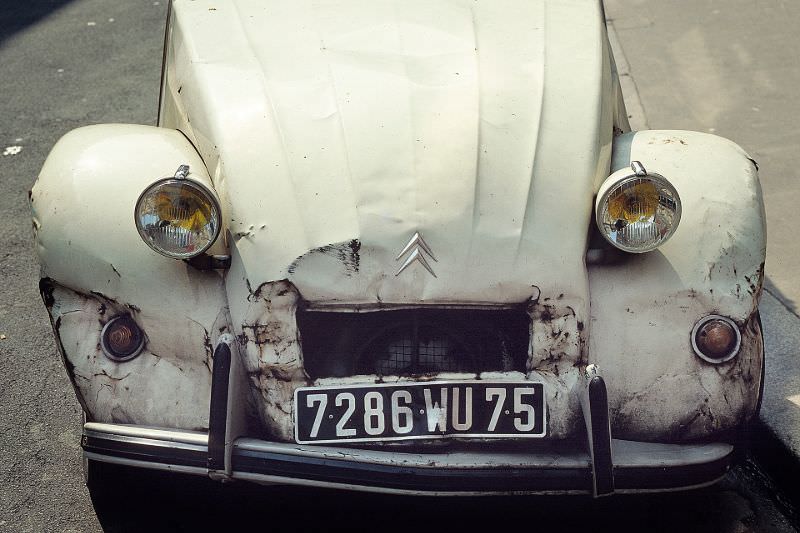
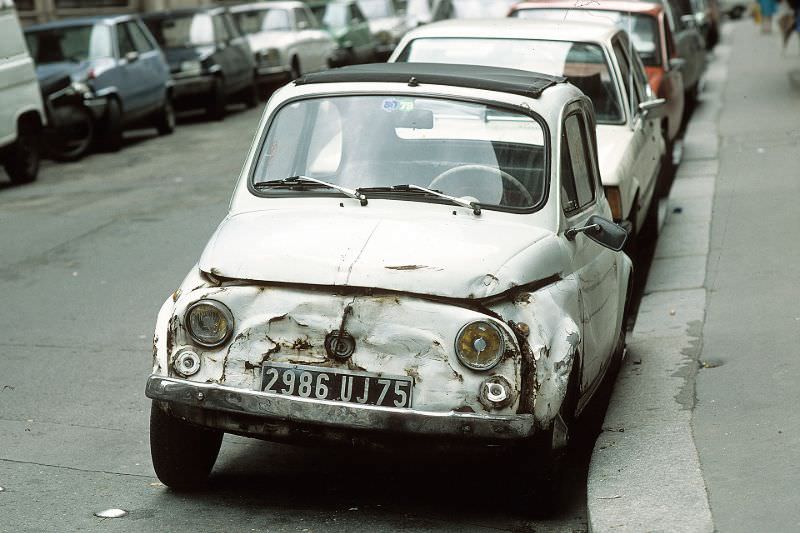
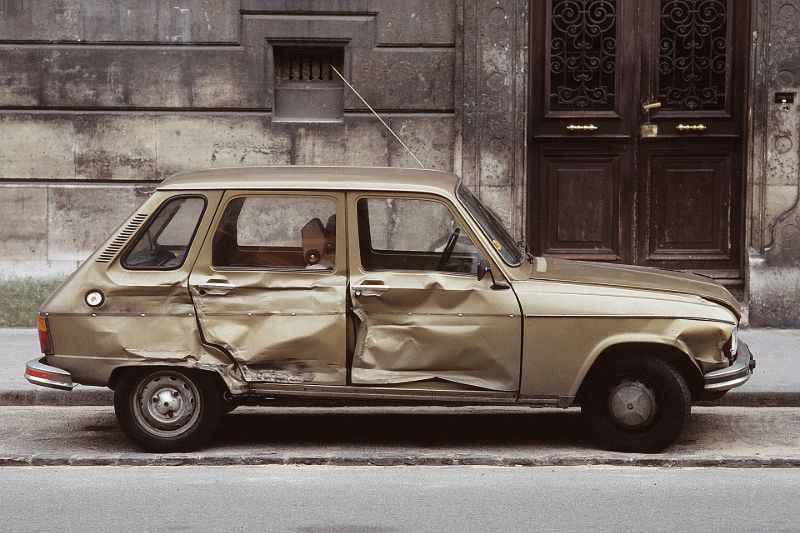
The cars parked along Paris’s streets in the 1980s tell their own story about the era. Small, boxy French models filled the curbs — Renaults, Peugeots, and Citroëns dominated the roads in a way that would not last into the following decade.
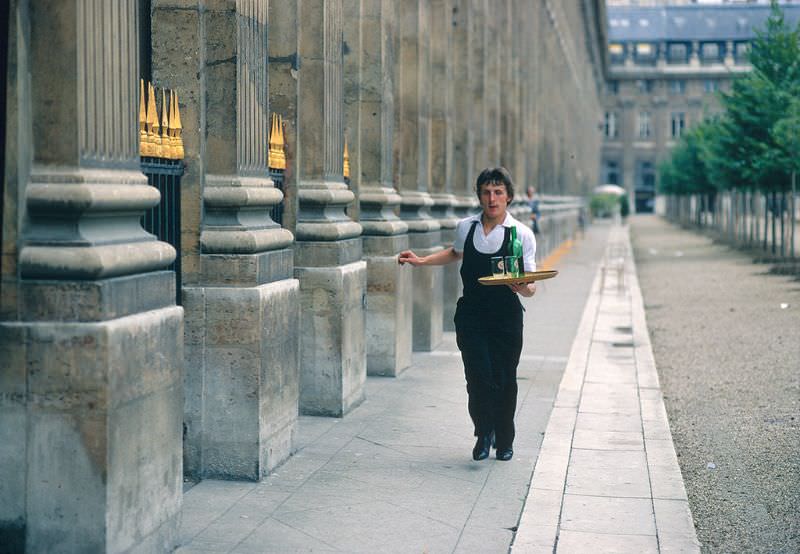
One of the more unusual traditions Kindbom captured was the waiter race on the Champs-Élysées — a relay where restaurant workers sprinted while carrying trays loaded with drinks. It was a spectacle that mixed competition, craft, and Parisian humor in equal measure.