
Manchester in the 1990s was a city in constant motion. It faced devastating violence, launched bold new infrastructure, and built a nightlife scene that drew attention from across the UK and beyond. The decade started with one crisis and ended with a rebuilt city centre. These photographs capture that turbulent, exciting, and transformative era in remarkable detail.
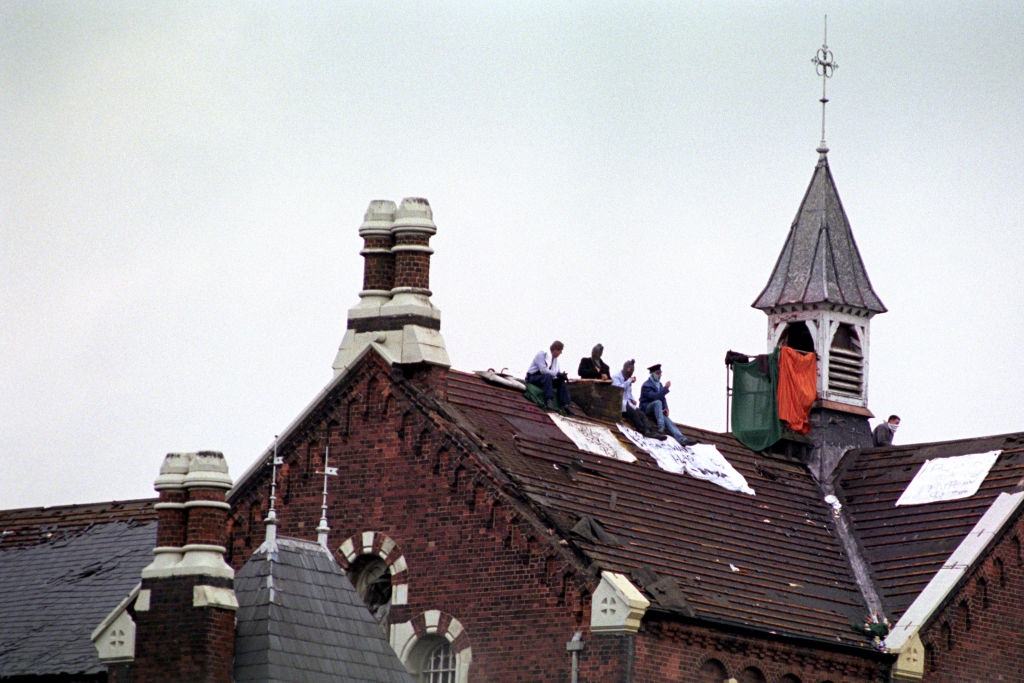
The decade opened with one of the most dramatic prison disturbances in British history. In April 1990, prisoners at Strangeways Prison took to the rooftop in a riot that lasted 25 days. It became the longest prison riot in UK history and led to significant reforms in the prison system.
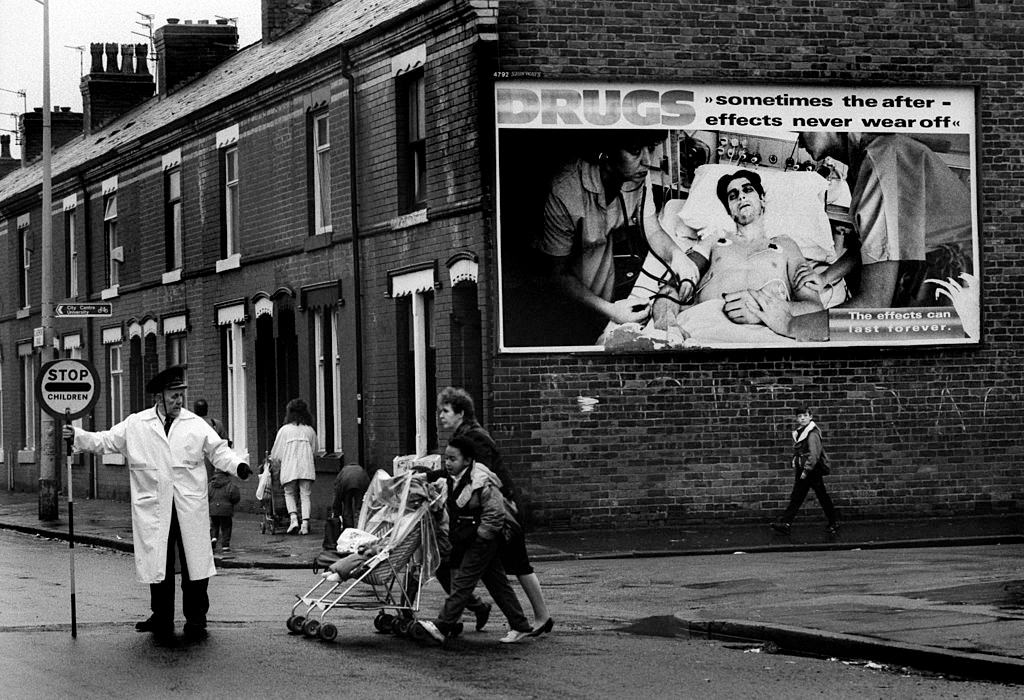
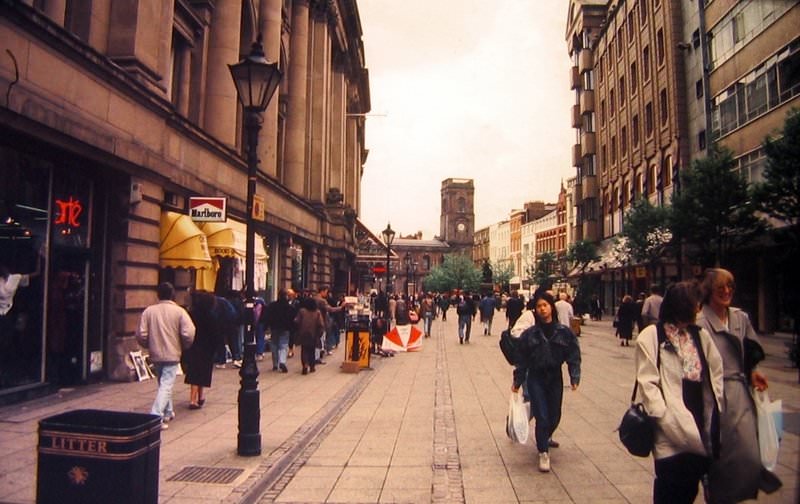
While the drama at Strangeways dominated the news, everyday Manchester life carried on. The streets, canals, and neighbourhoods of the city had their own quiet rhythms, from children crossing roads in Moss Side to shoppers filling Market Street.
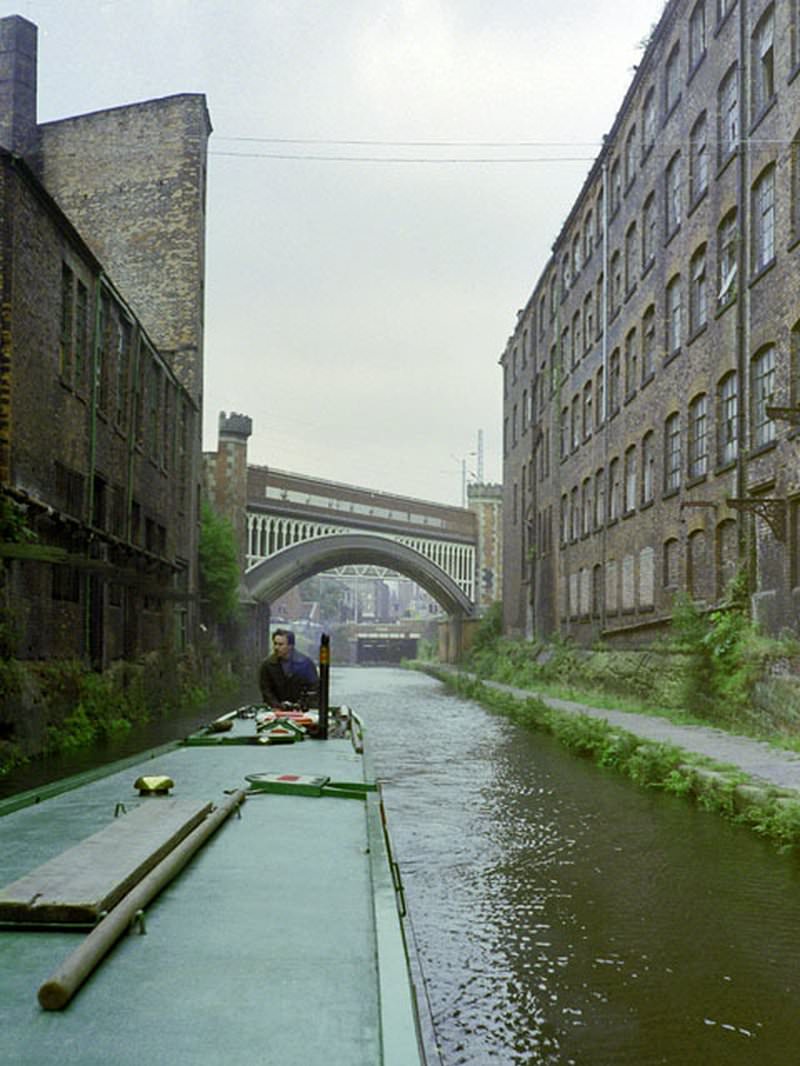
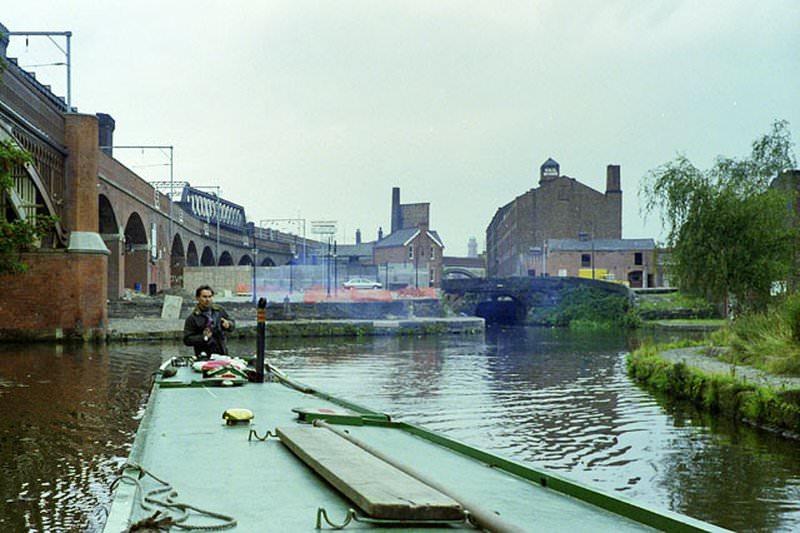
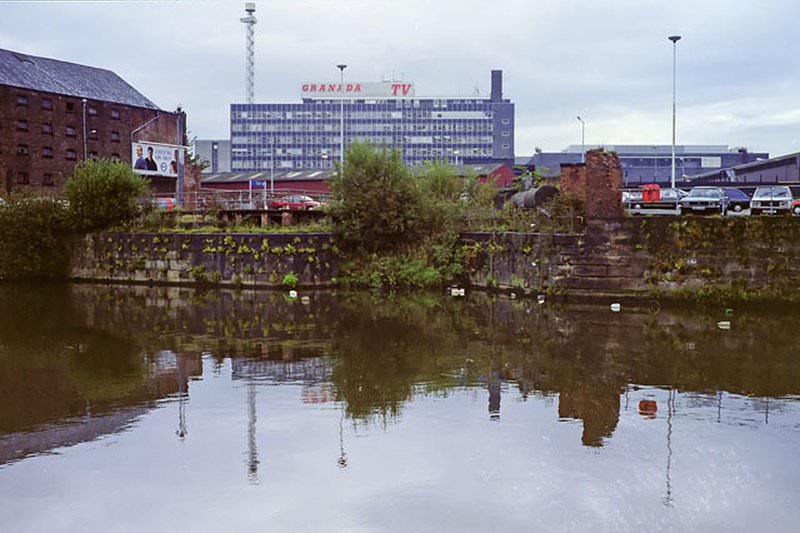
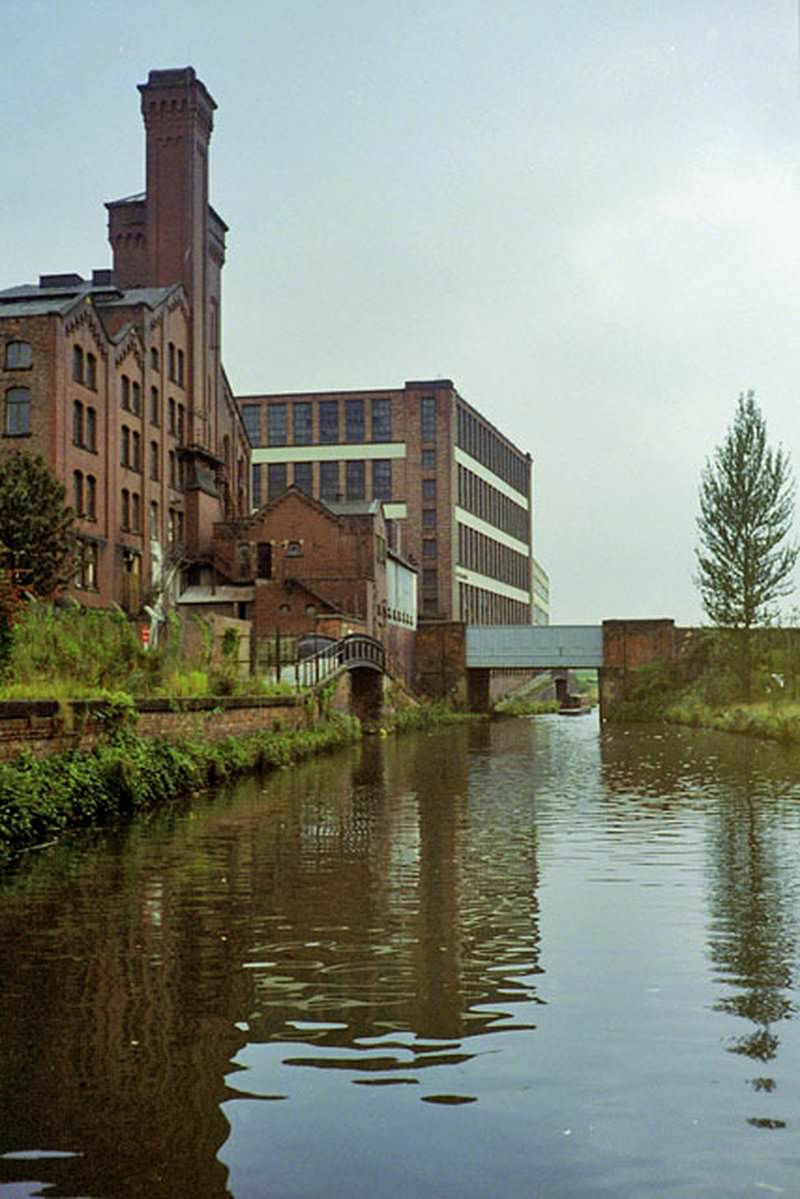
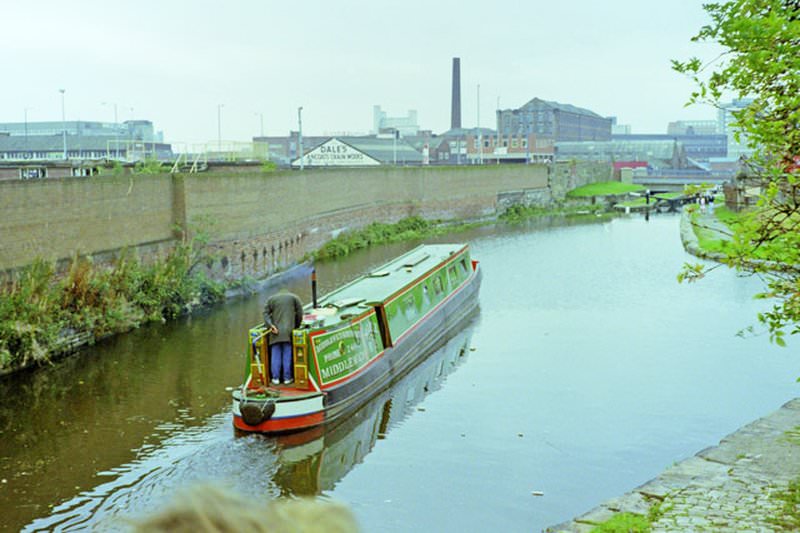
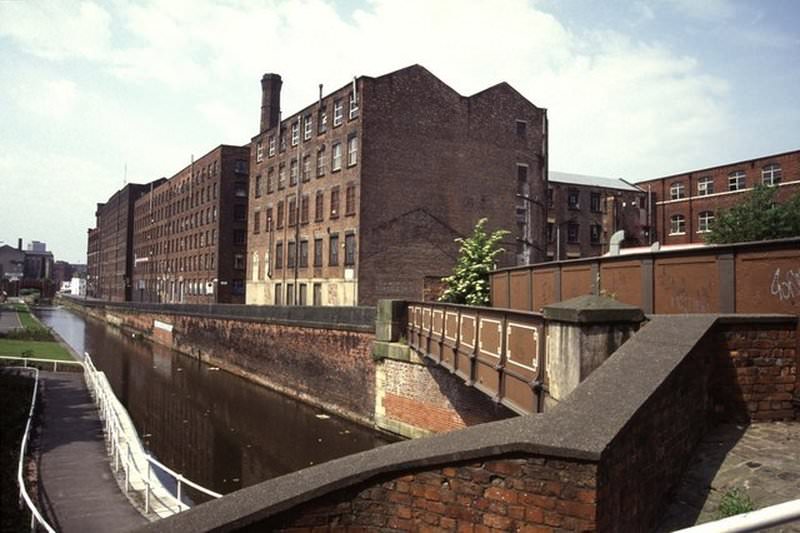
Manchester’s waterways were a prominent part of the city’s landscape at the start of the decade. The Rochdale Canal, the Ashton Canal, the Bridgewater Canal, and the Manchester and Salford Junction Canal all ran through the urban fabric. These historic routes, once vital to the city’s industrial trade, were still a distinctive feature of early 1990s Manchester.
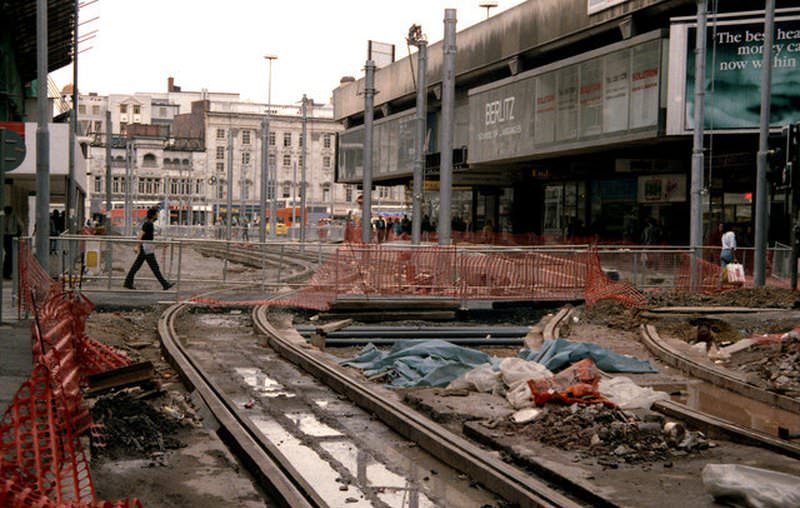
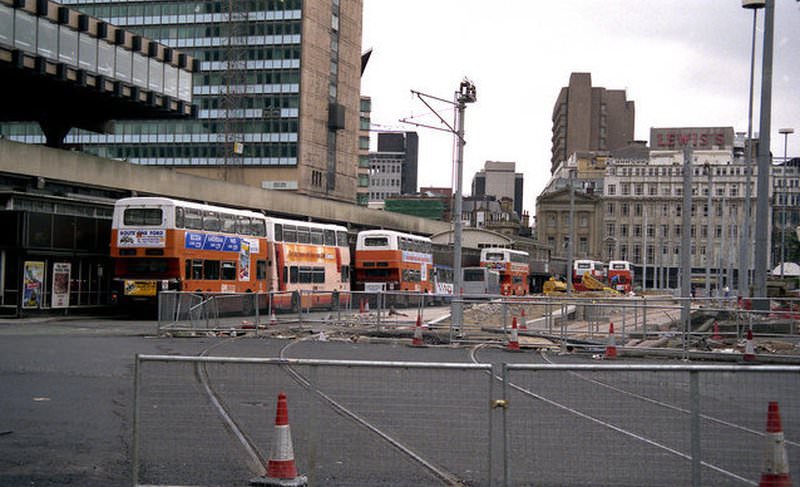
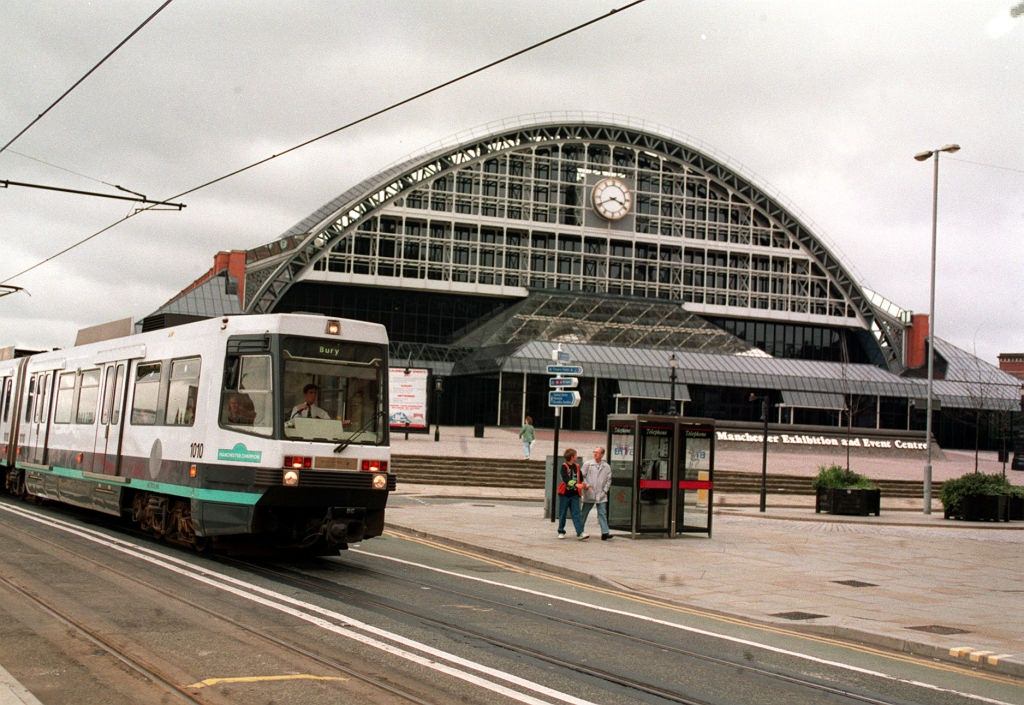
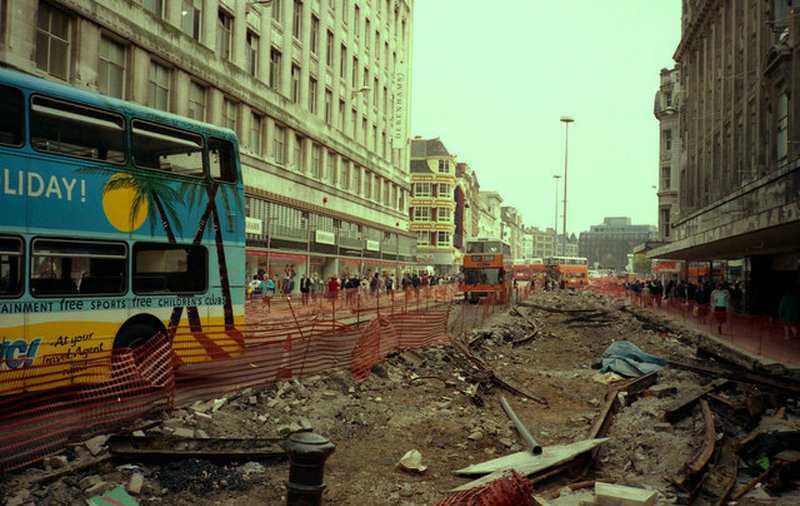
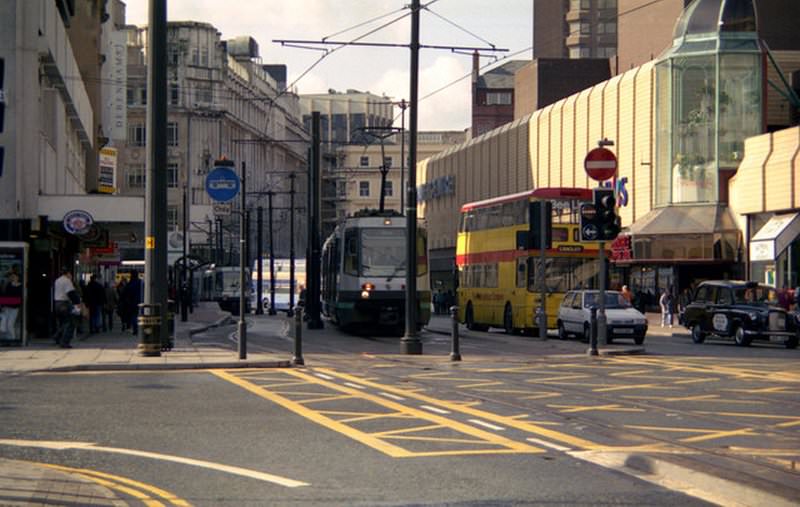
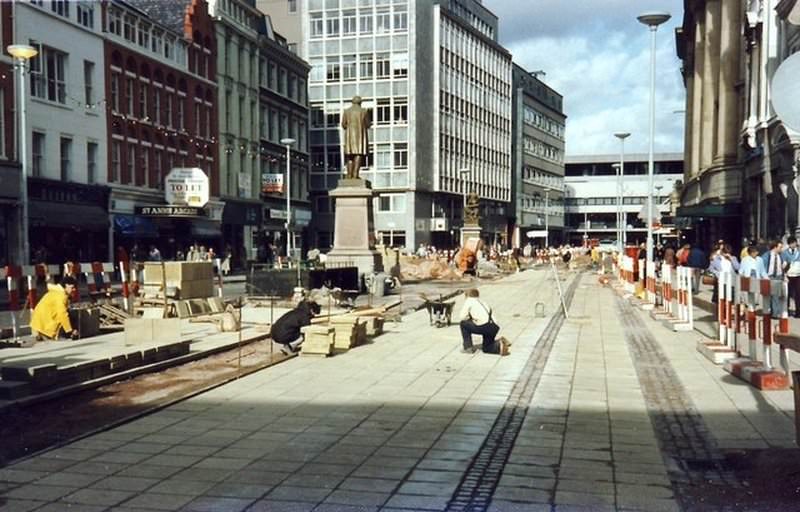
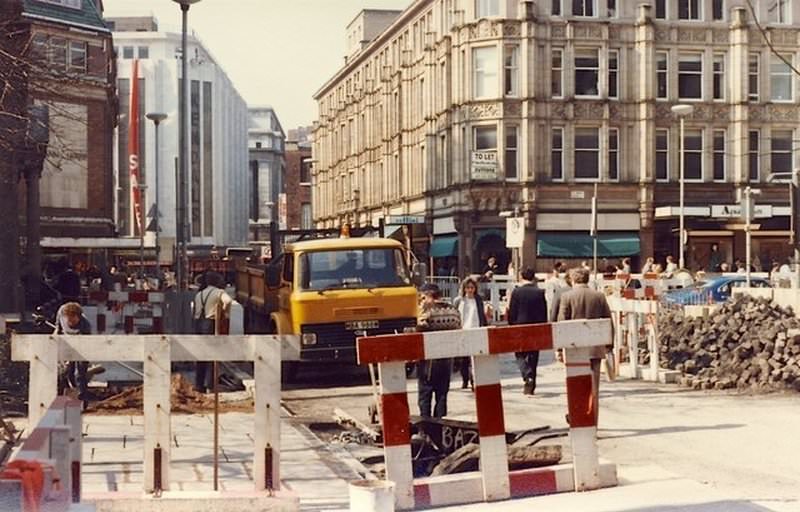
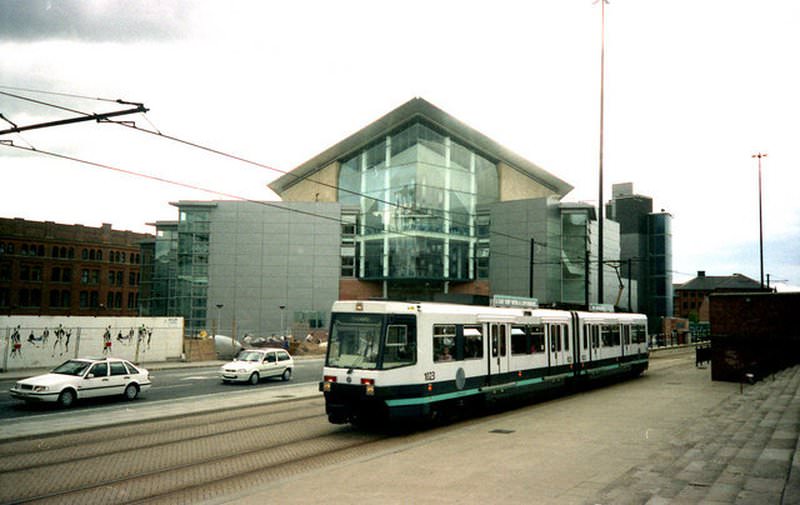
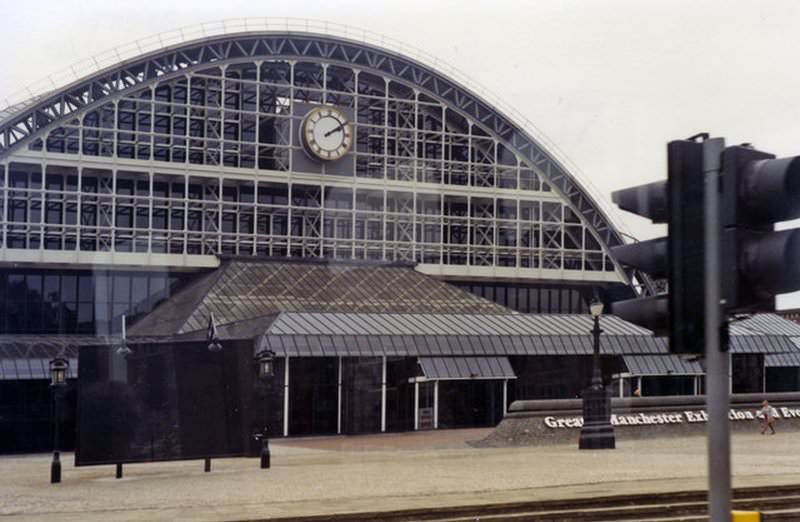
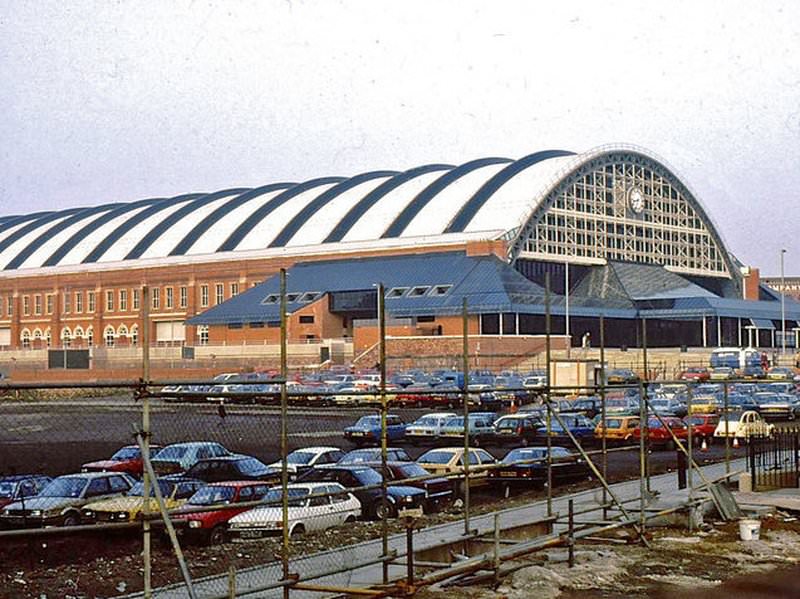
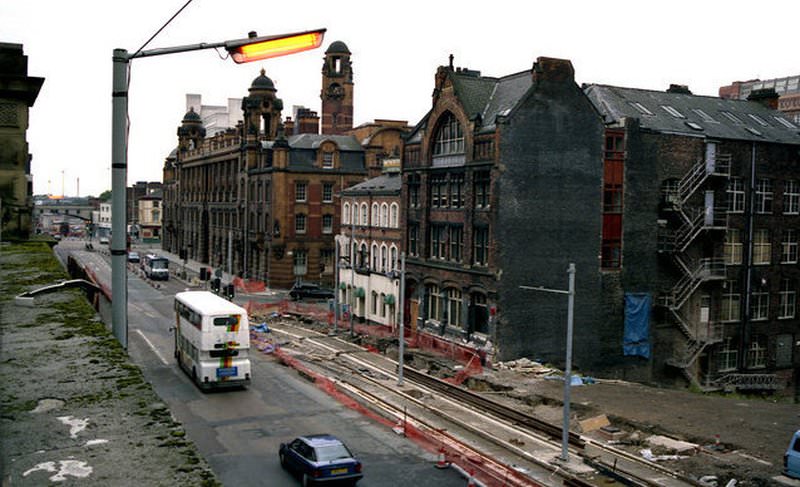
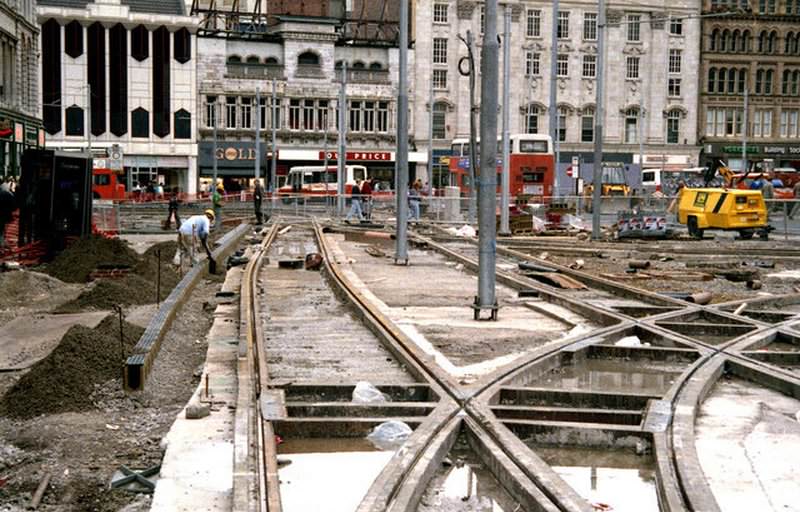
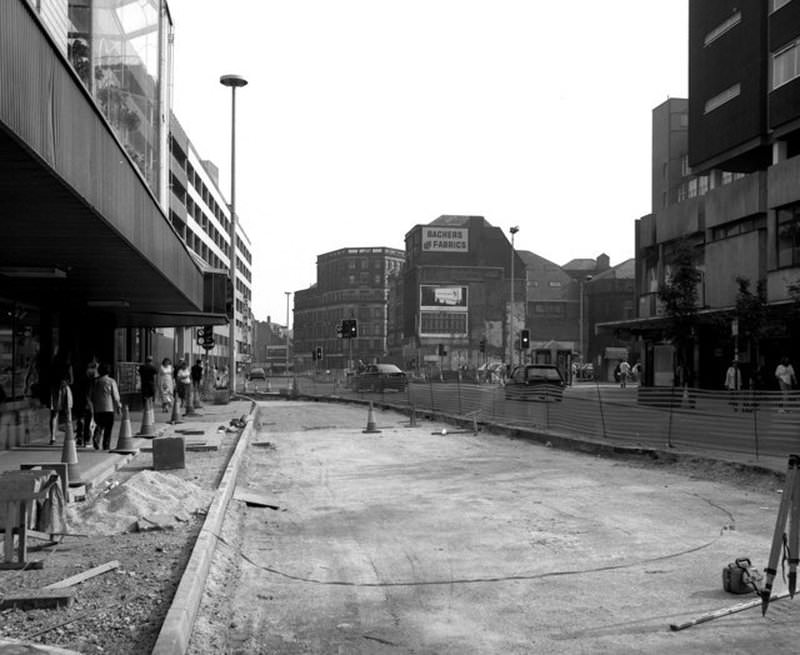
In 1992, Manchester became the first city in the UK to introduce a modern light rail tram system. The Metrolink was a major engineering achievement for the city. Construction work on Mosley Street and elsewhere transformed entire stretches of the city centre, and when it opened, trams quickly became a familiar sight running past landmarks like the G-Mex Centre.
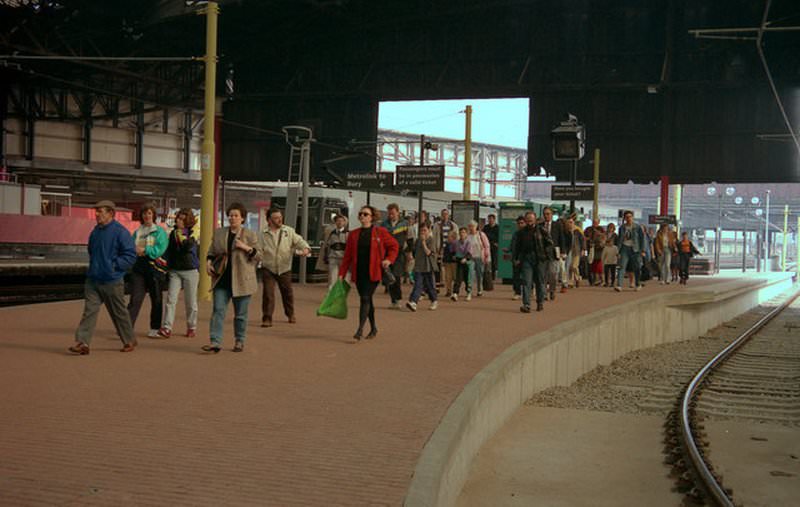
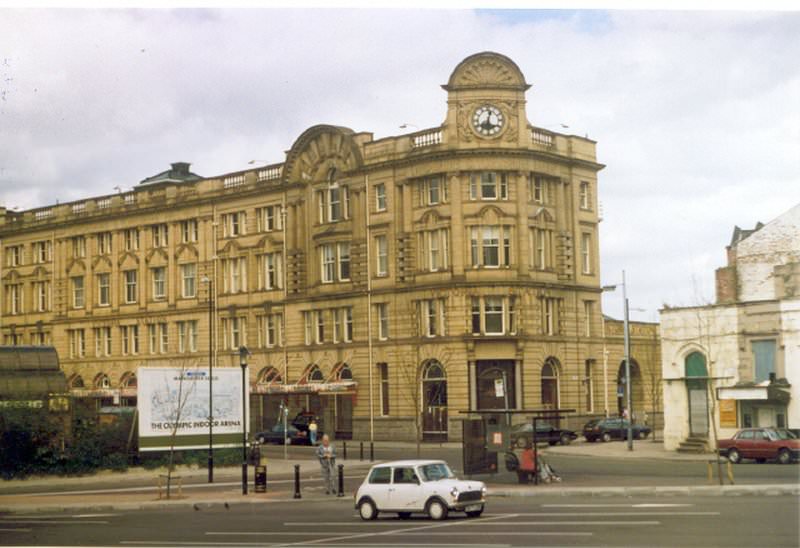
Also in 1992, the Manchester Arena opened its doors. By the end of the decade it had become the busiest indoor arena in the world. Victoria Station, which sat adjacent to the arena, remained a key transport hub throughout the decade, connecting the city to the wider region.
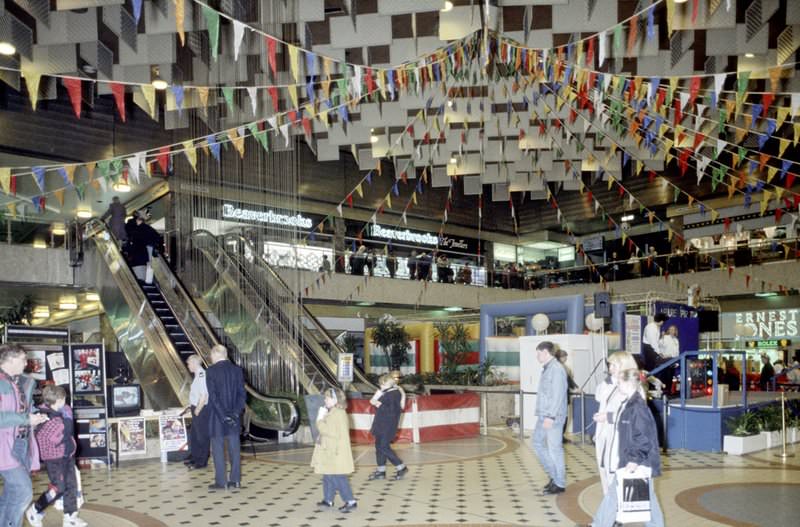
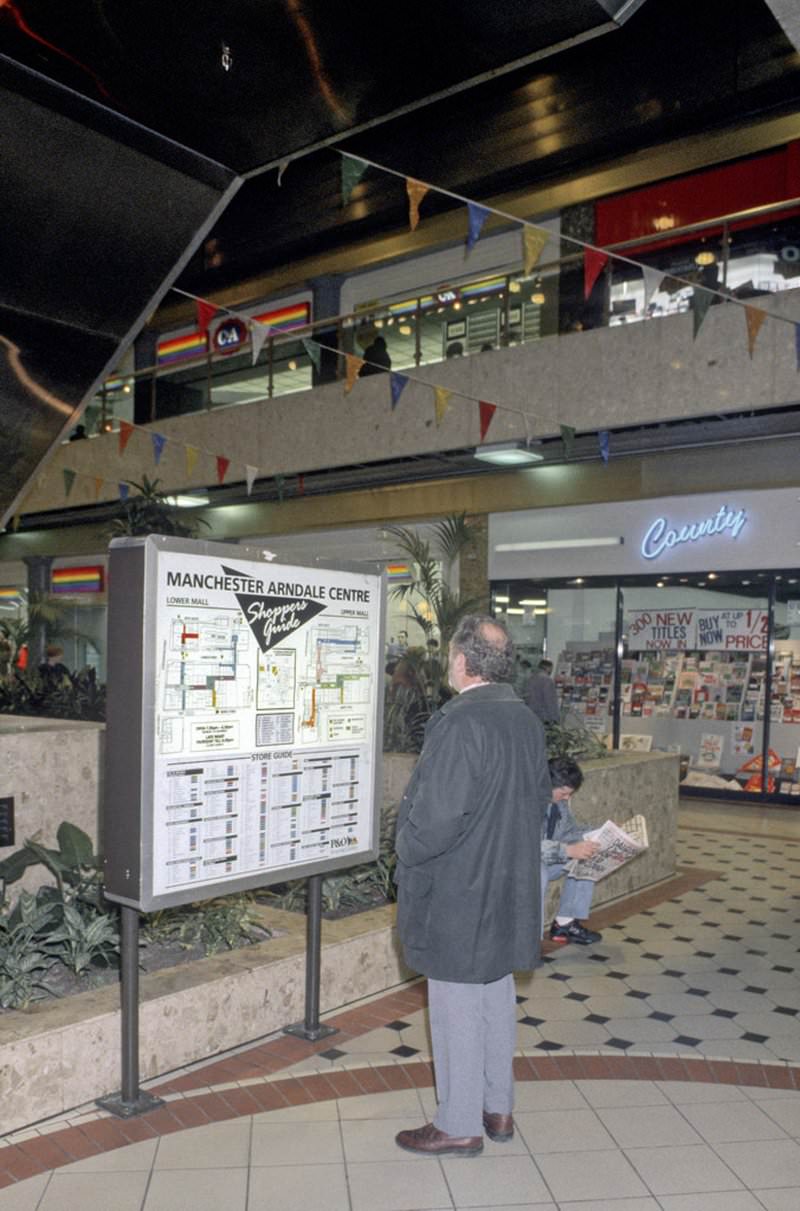
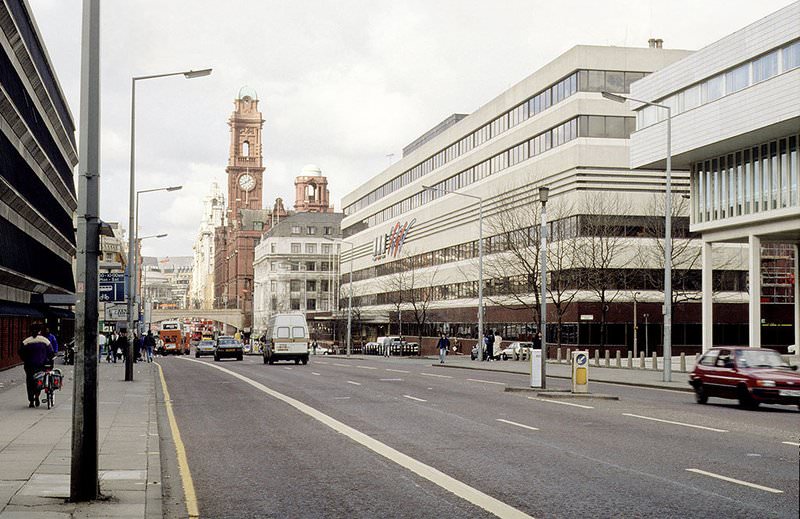
The city’s streets and squares reflected a busy urban life. Market Street, High Street, and St Ann’s Square were central gathering points. The Manchester Arndale, one of the largest city-centre shopping complexes in the UK, drew shoppers from across the region throughout the early part of the decade.
Manchester’s club scene was unlike anything else in England at the time. The Hacienda, on Whitworth Street West, had become internationally famous through the 1980s and continued to draw enormous crowds into the early 1990s. DJs like Graeme Park played to packed floors, and the club’s influence on dance music culture was immense. Club flyers from the period circulated across the city, advertising nights that defined a generation. The Hacienda finally closed its doors in 1997.
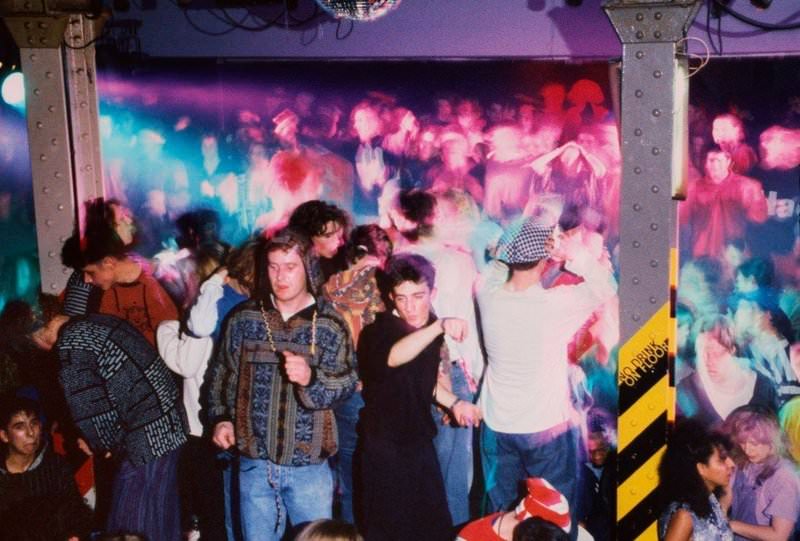
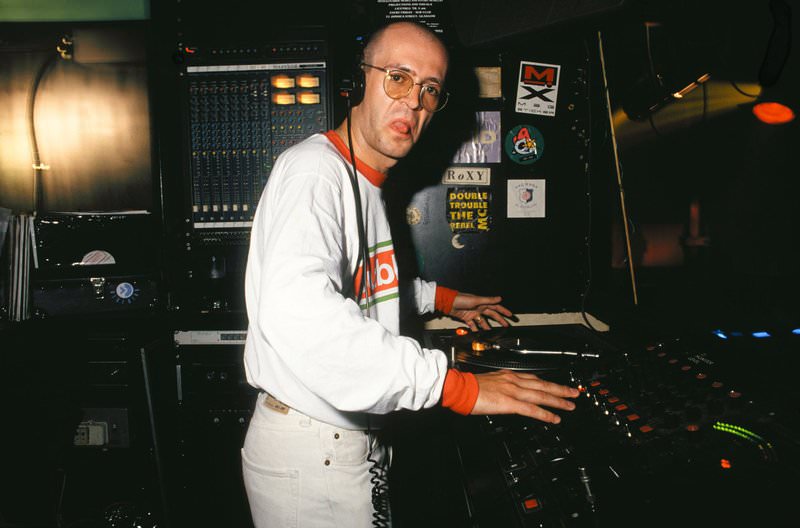
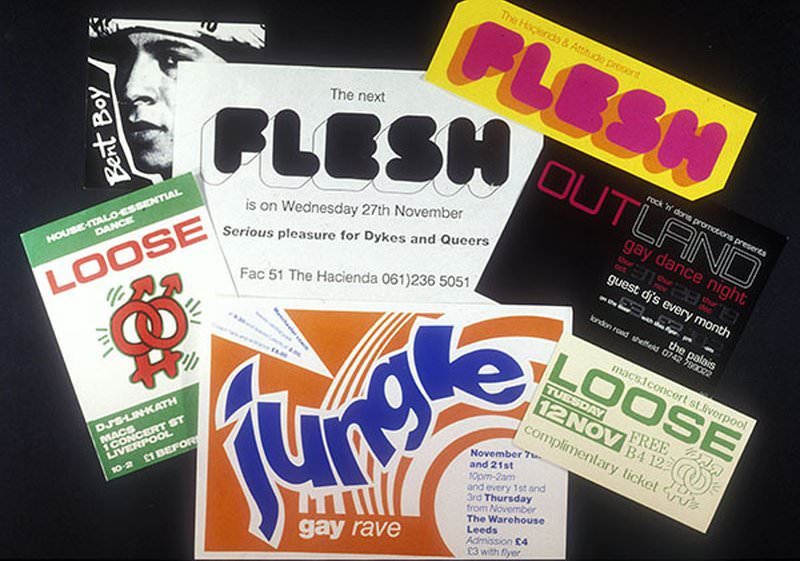
The broader nightlife economy grew substantially throughout the 1990s. Breweries invested heavily in bars, public houses, and clubs across the city, with strong backing from local authorities. By the end of the decade, Manchester’s night-time economy was valued at more than £100 million and supported 12,000 jobs. Streets like Bloom Street and areas around Whitworth Street West buzzed with activity on any given night.
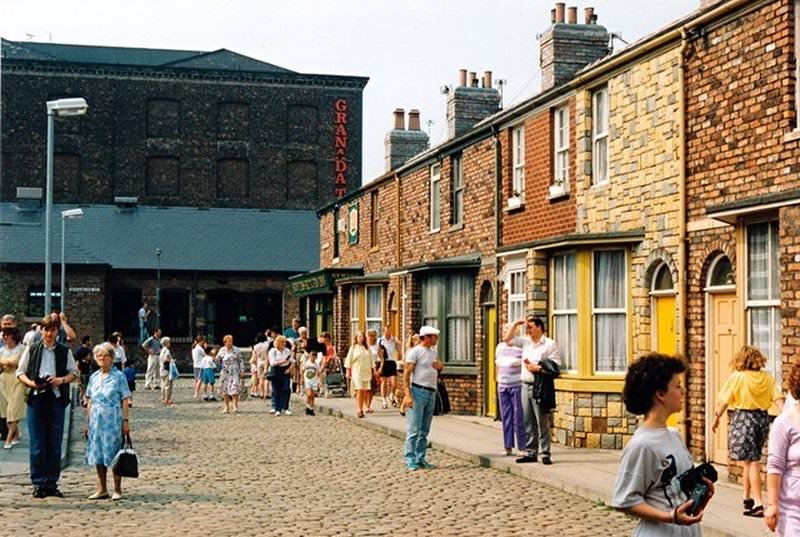
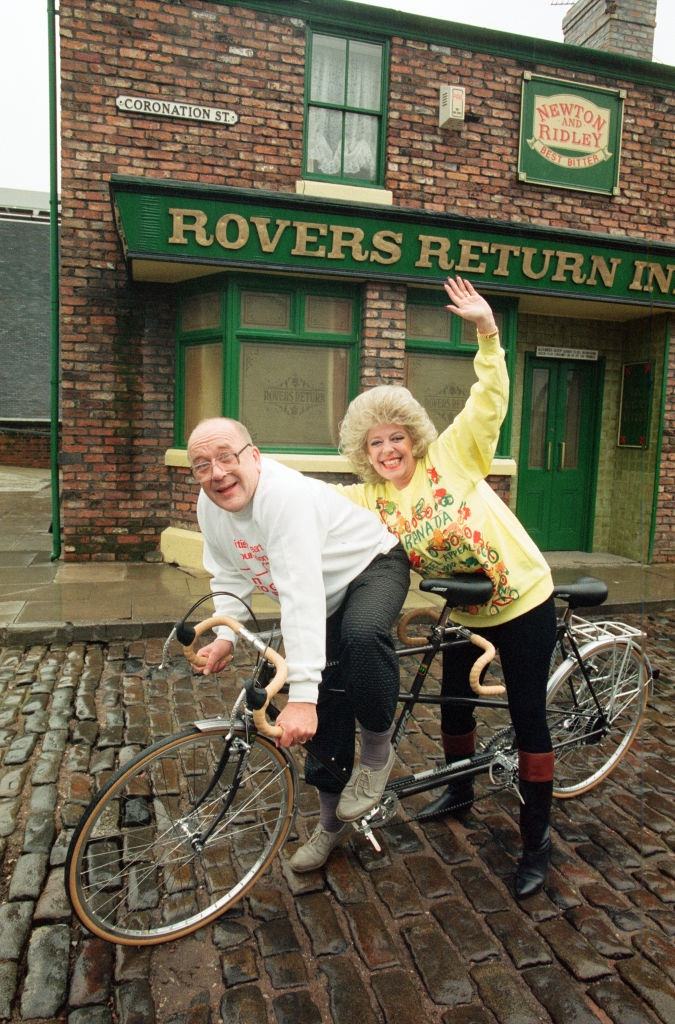
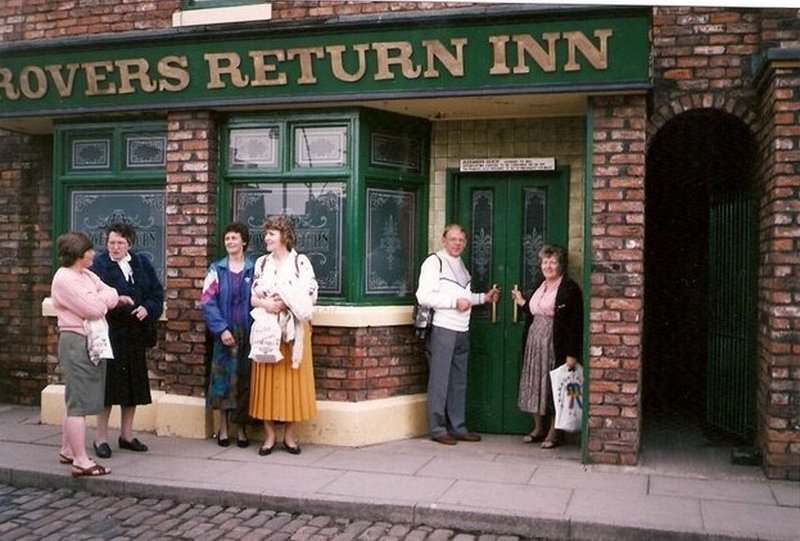
Television remained a major part of Manchester’s cultural identity throughout the decade. Granada Studios on Quay Street was the production home of Coronation Street, one of the most watched programmes on British television. Actors like Julie Goodyear and Roy Barraclough, who played Bet Lynch and Alec Gilroy respectively, were household names.
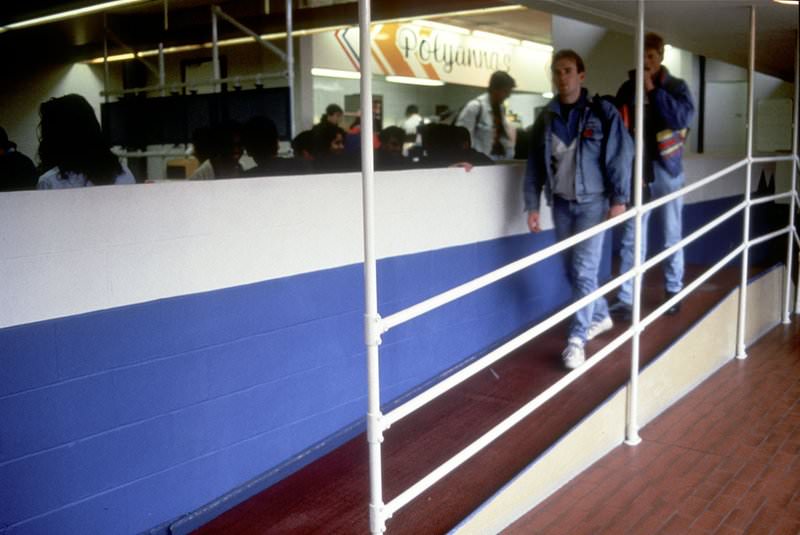
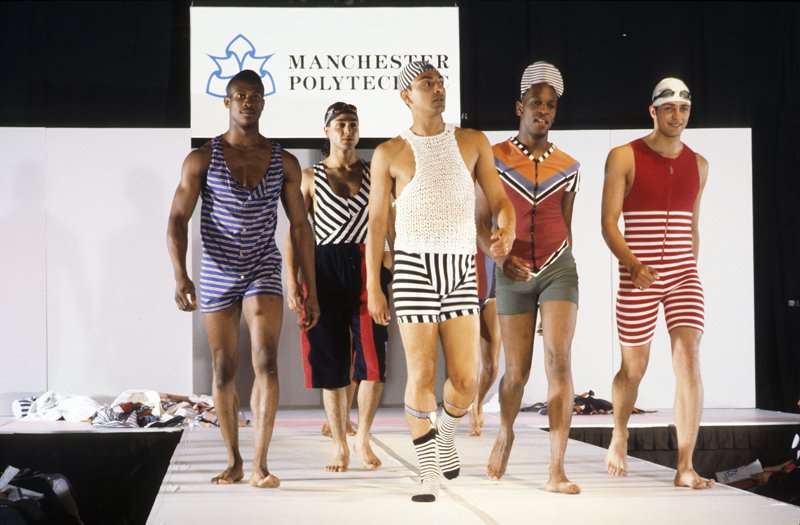
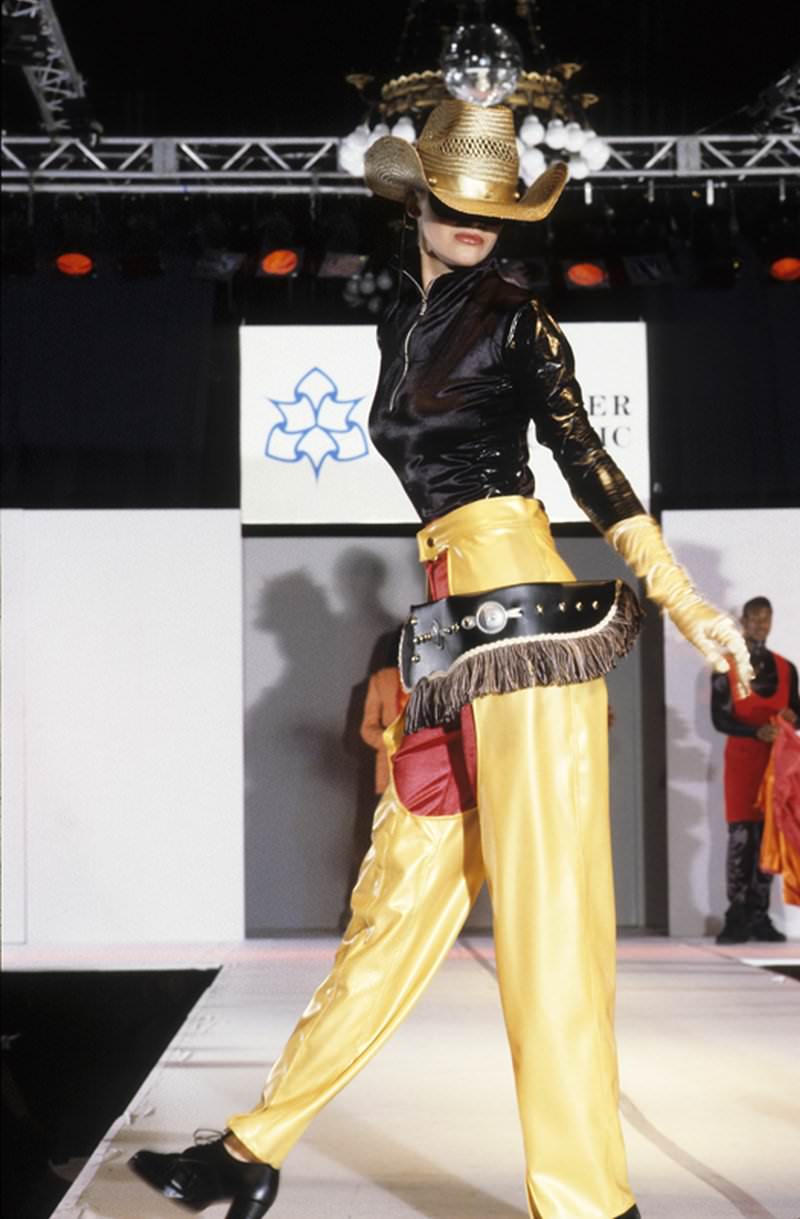
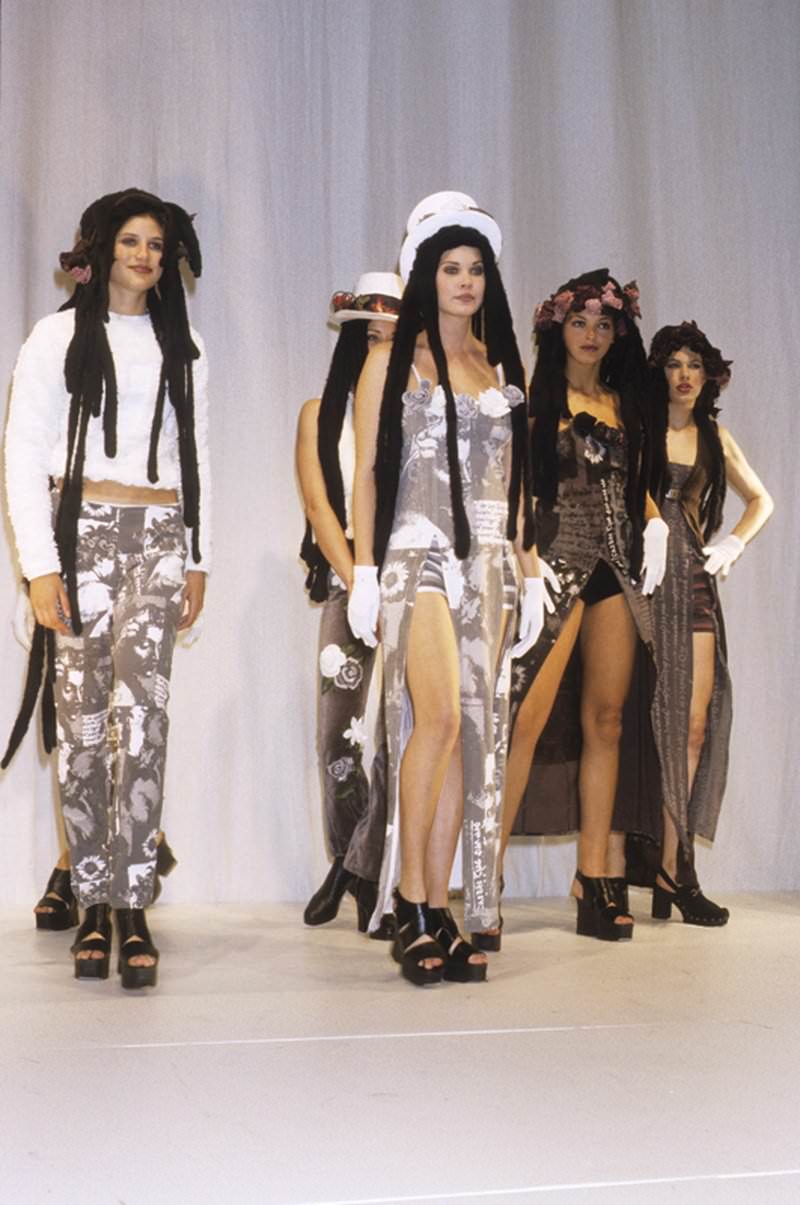
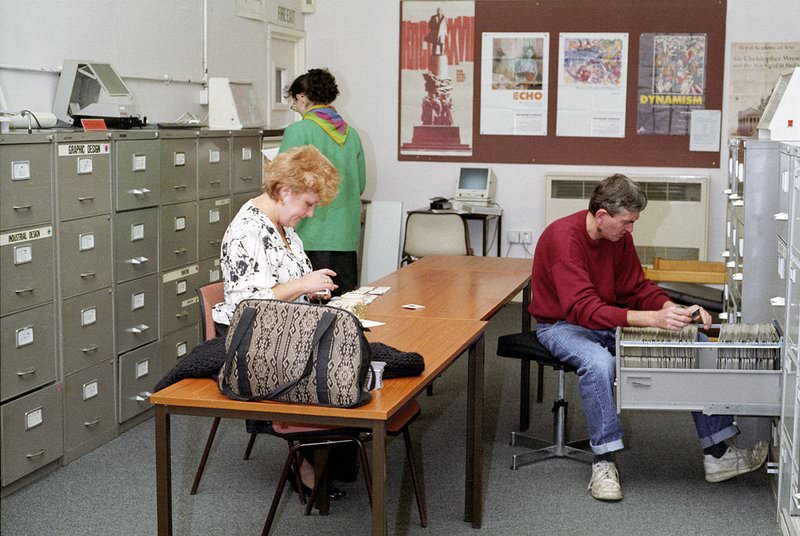
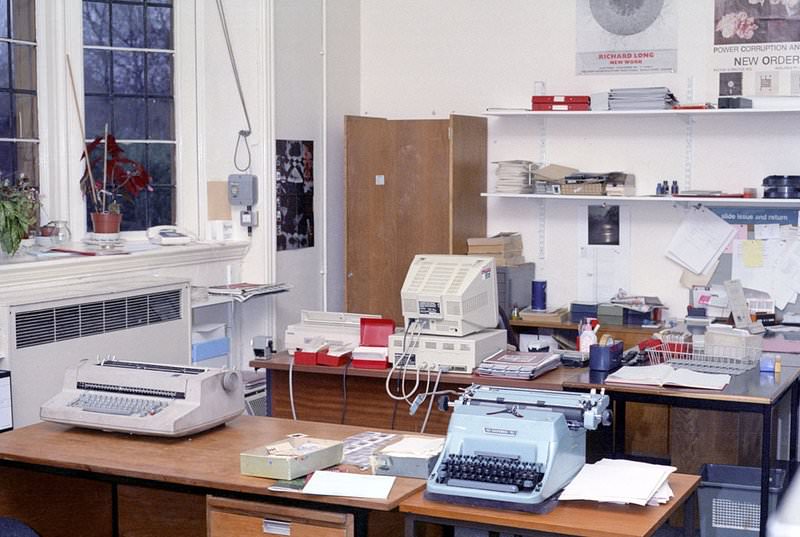
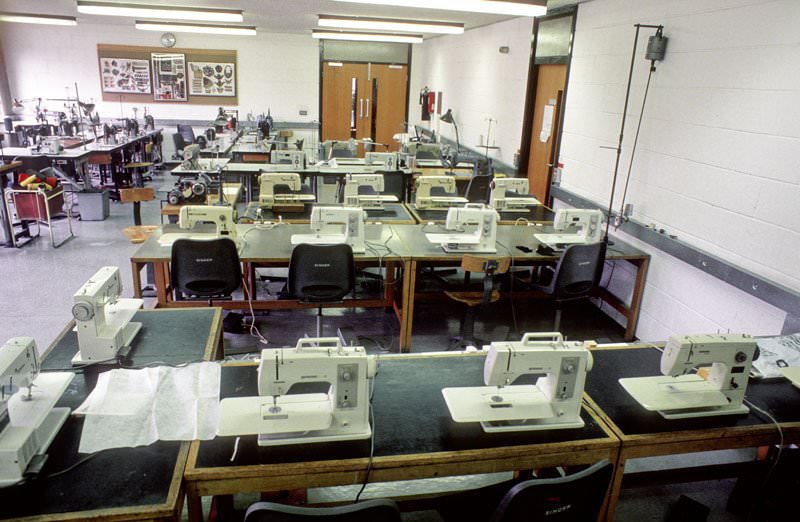
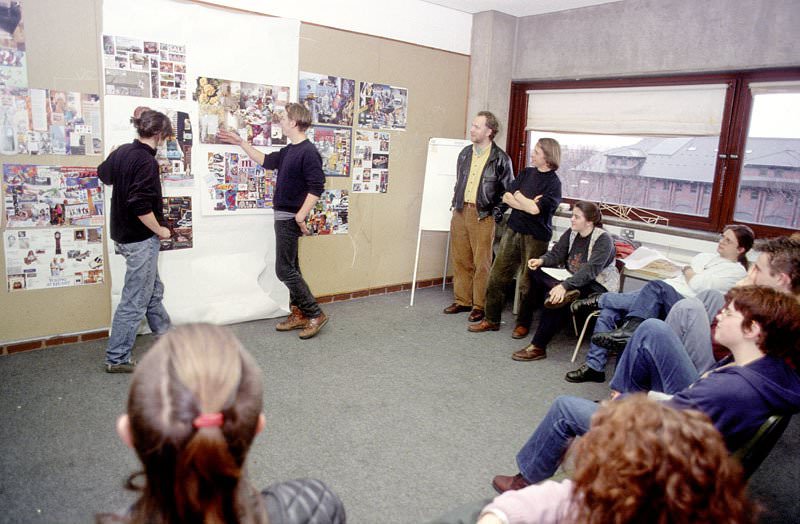
Manchester Metropolitan University was a lively presence in the city through the decade. Its fashion shows in the early 1990s showcased student talent and reflected Manchester’s growing creative scene. The university’s slide library and machine rooms document what academic life looked like before the digital age fully arrived.
On 15 June 1996, the IRA detonated a bomb in the heart of Manchester city centre. It was the largest bomb detonated on British soil since World War Two. The blast injured more than 200 people and caused an estimated £700 million worth of damage. Buildings throughout the city centre were heavily damaged, including the Manchester Arndale. Remarkably, a warning had been phoned in beforehand, allowing police to evacuate the area, which prevented fatalities.
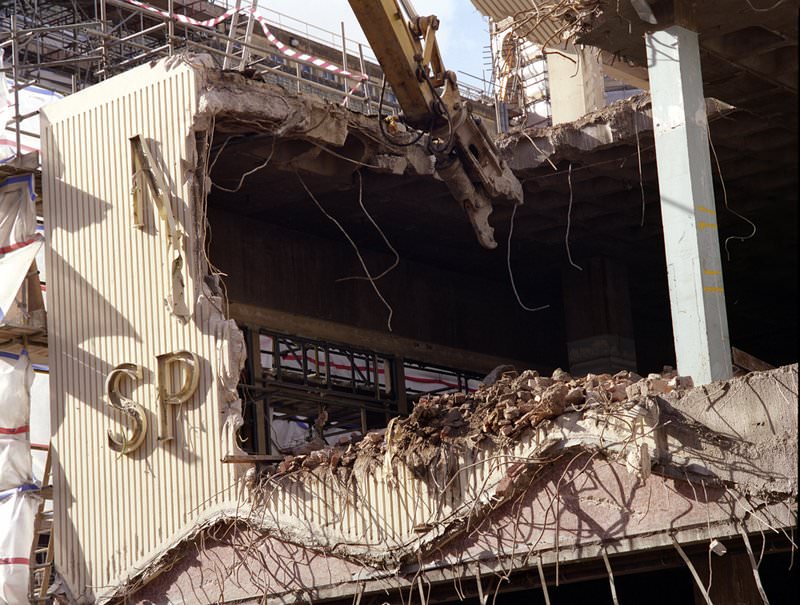
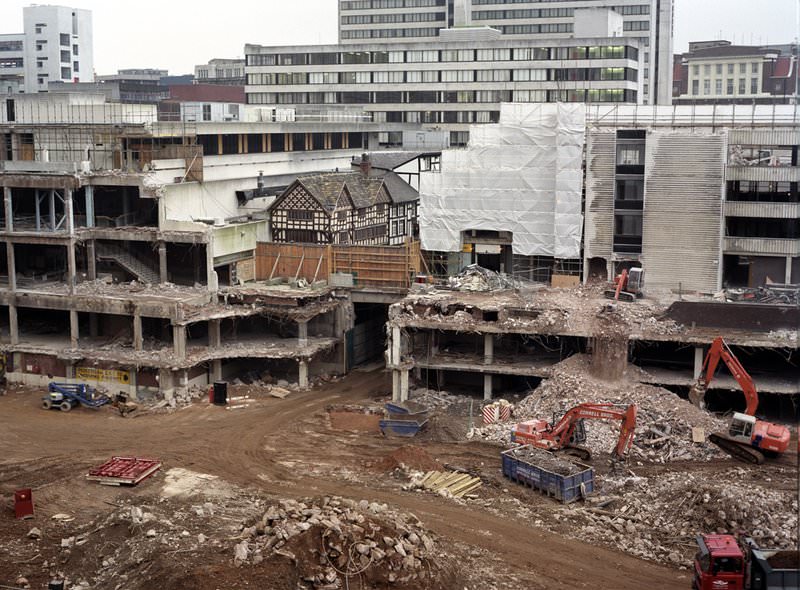
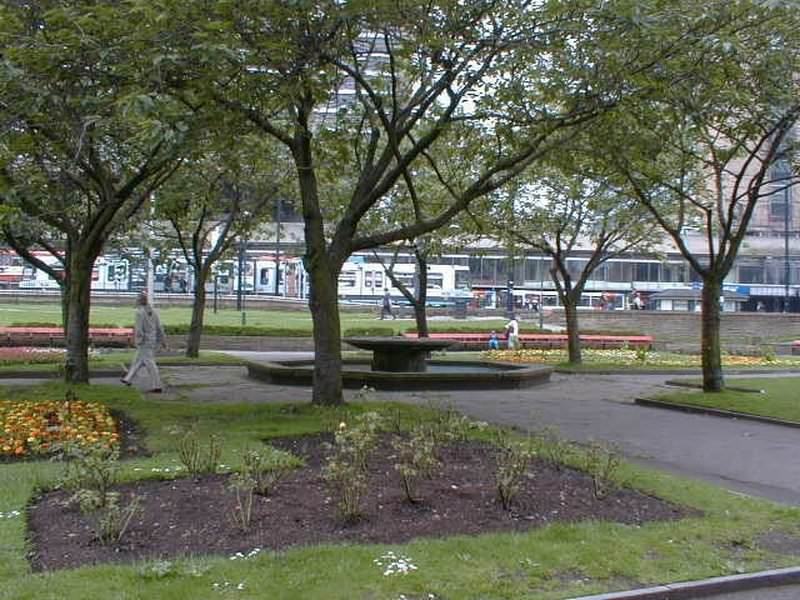
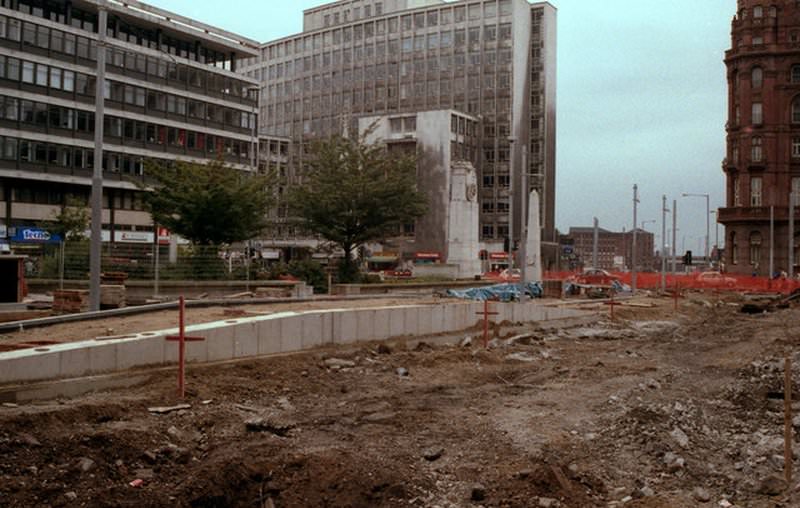
The response to the bombing was swift and determined. The city council, local businesses, and the central government worked together to fund and oversee a major reconstruction of the city centre. St Ann’s Square, Piccadilly Gardens, and the areas surrounding the Arndale were repaved and rebuilt. By the turn of the millennium, the redevelopment was largely complete and widely seen as a success.
Later in 1996, the Bridgewater Hall opened on Lower Mosley Street. For the first time in nearly 150 years, Manchester’s orchestras — most notably The Hallé — had a dedicated, world-class concert hall. The building gave the city a venue to rival the great concert halls of Europe and confirmed Manchester’s place as a serious centre of the arts.
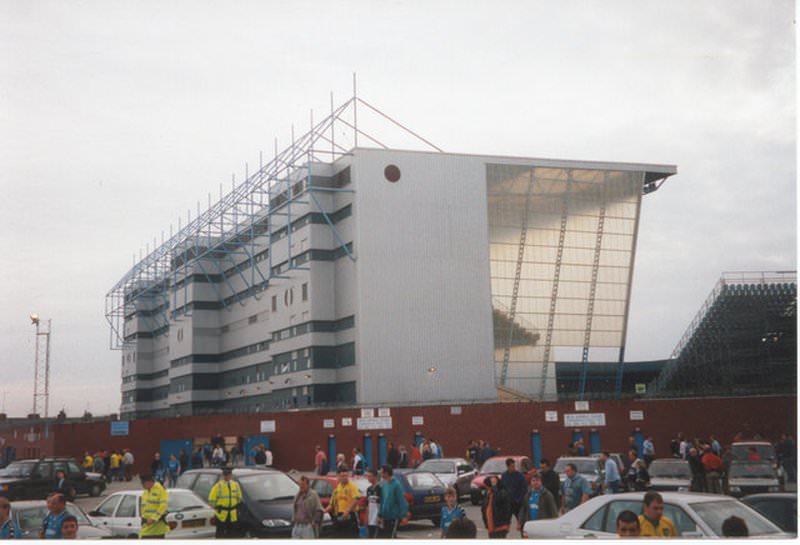
Sport was another thread running through the decade. Manchester City played their home matches at Maine Road throughout the 1990s, and greyhound racing at Belle Vue Greyhound Stadium drew regular crowds. The Manchester Velodrome also opened in 1994, providing the city with a world-class cycling facility that would later become a production line for Olympic champions.
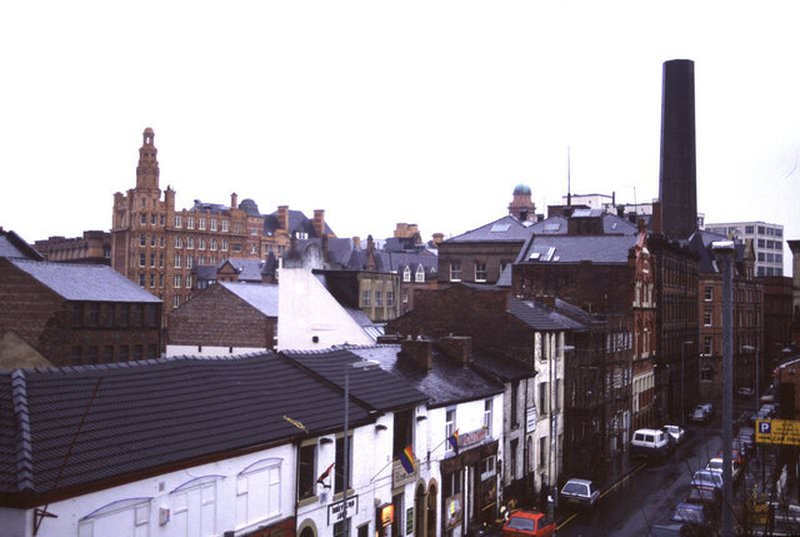
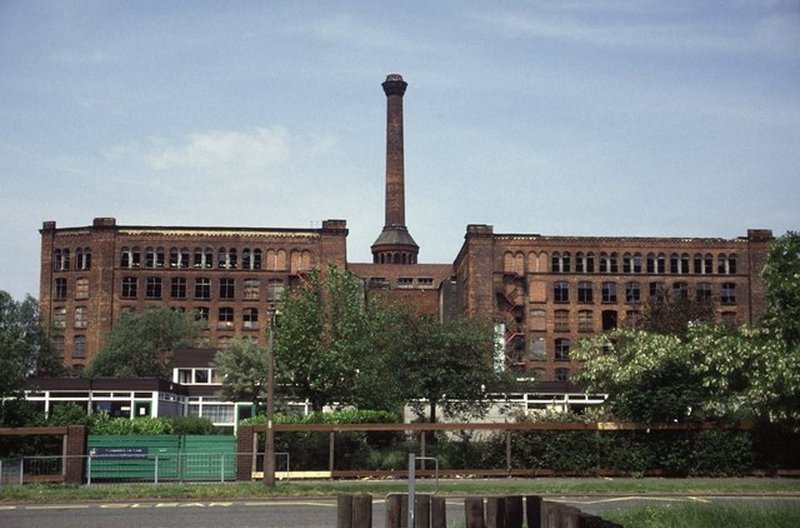
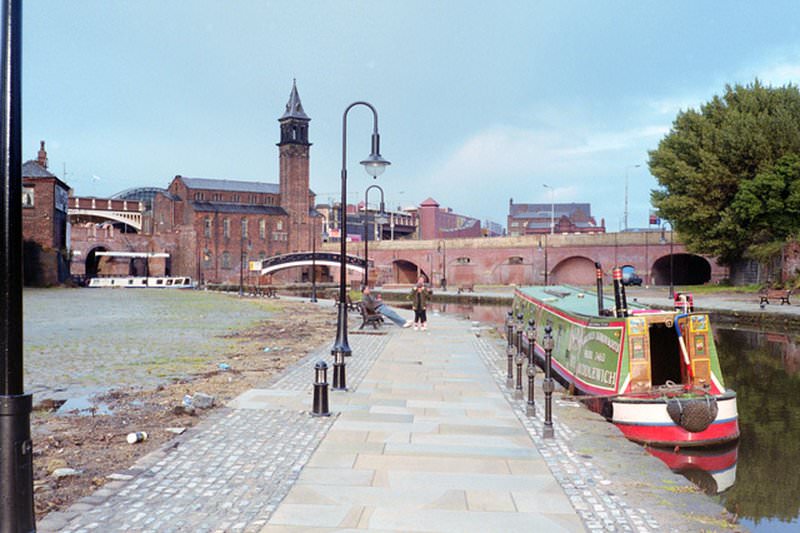
Away from the big headlines, Manchester’s industrial heritage was still visible in the early 1990s. Ancoats Mill and Victoria Mills stood as reminders of the city’s cotton-spinning past. The Castlefield basin area, with its Roman fort remains and canal-side warehouses, was beginning to transform into the heritage zone it is today. Oxford Road remained one of the busiest corridors in the city, lined with university buildings, including the John Dalton Building and the Mandela Building.
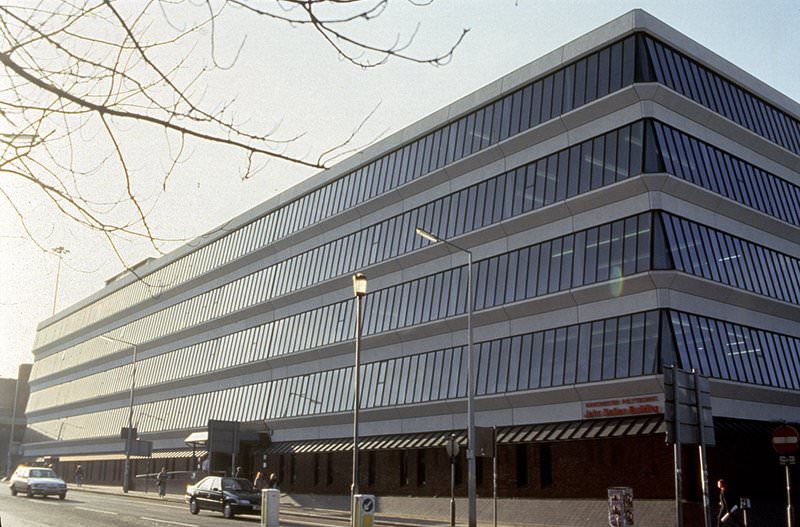
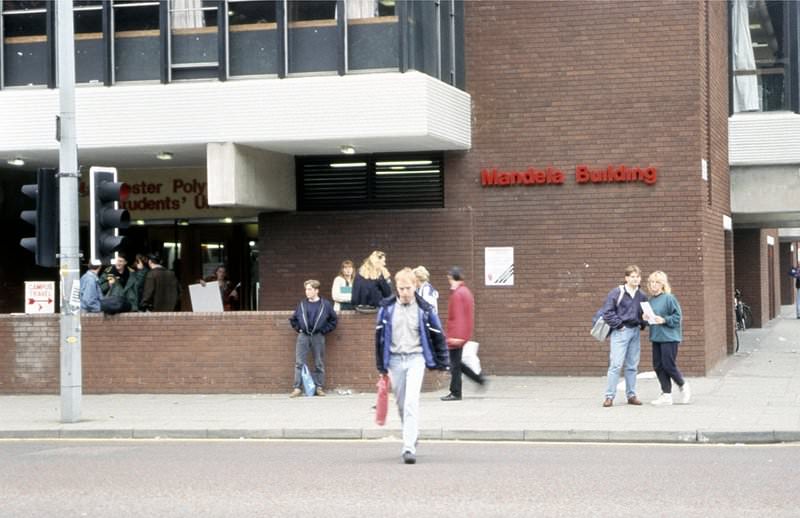
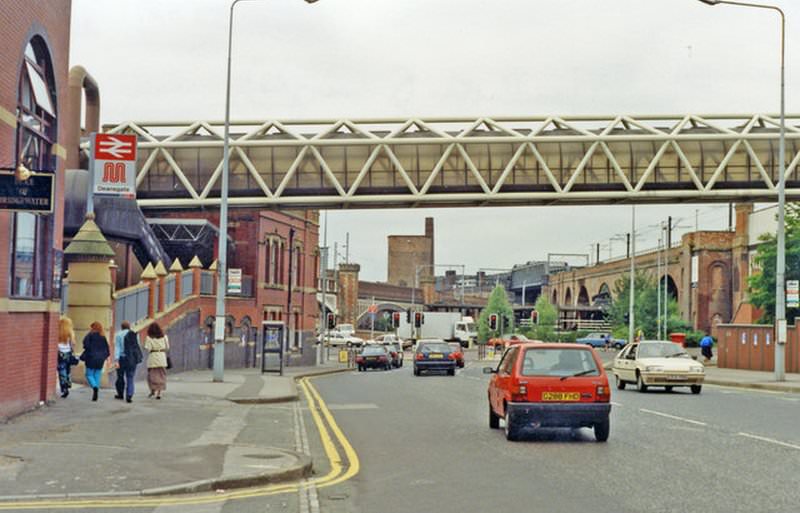
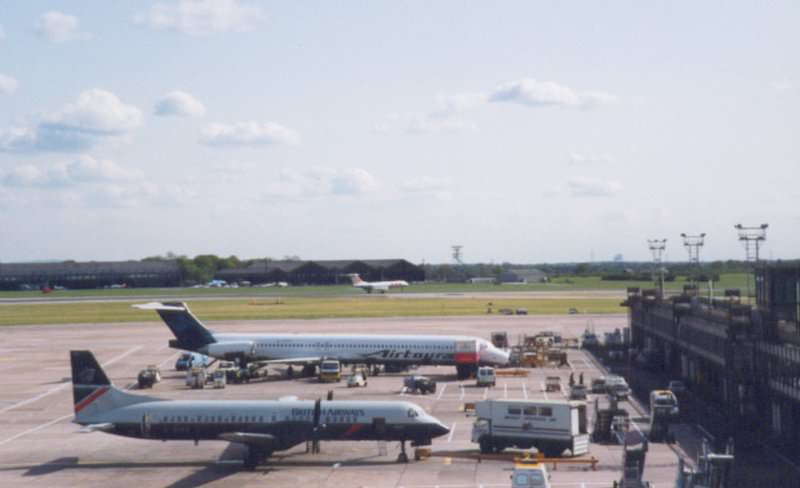
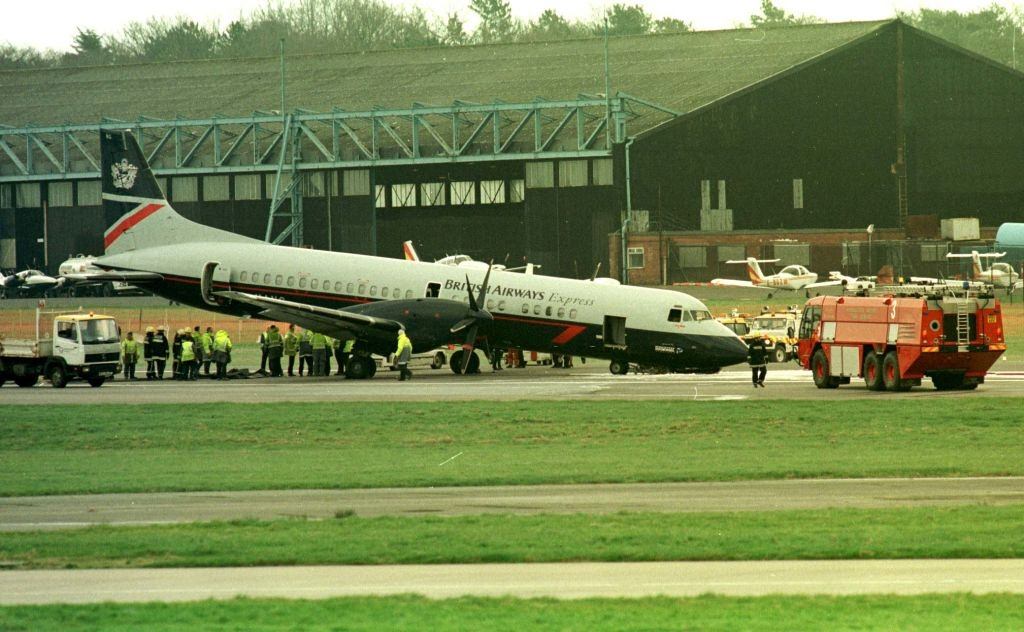
Transport infrastructure was a recurring theme throughout the decade. Oxford Road Station and Manchester Airport both served a growing number of passengers. The G-Mex Centre, converted from the old Central Station, hosted exhibitions and events. London Road, Aytoun Street, and Shudehill each told their own stories of a city constantly on the move.
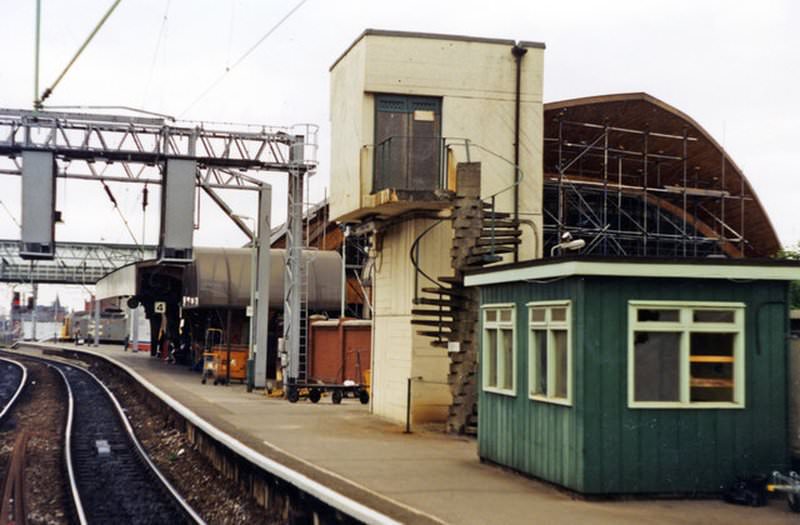
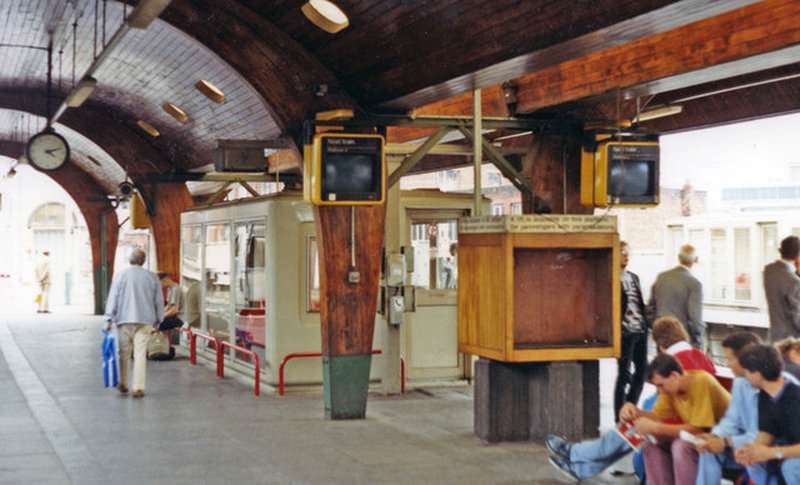
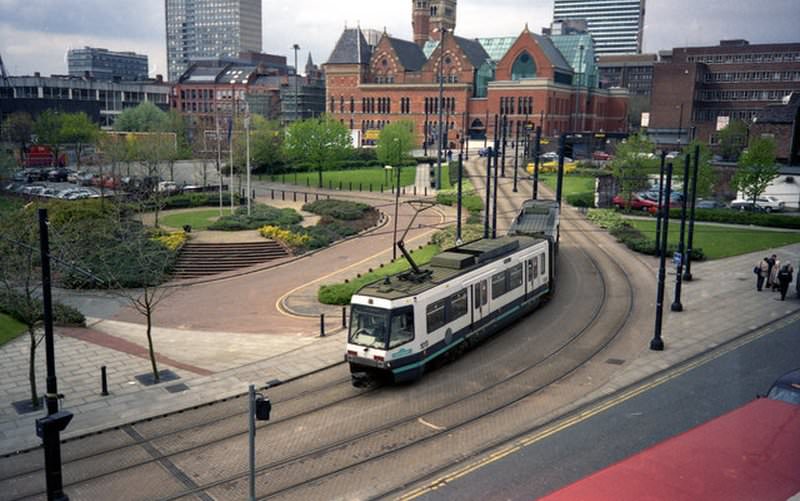
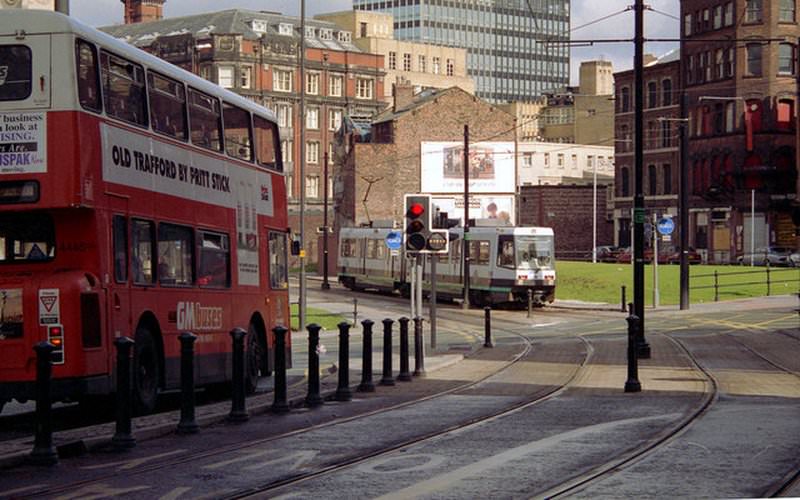
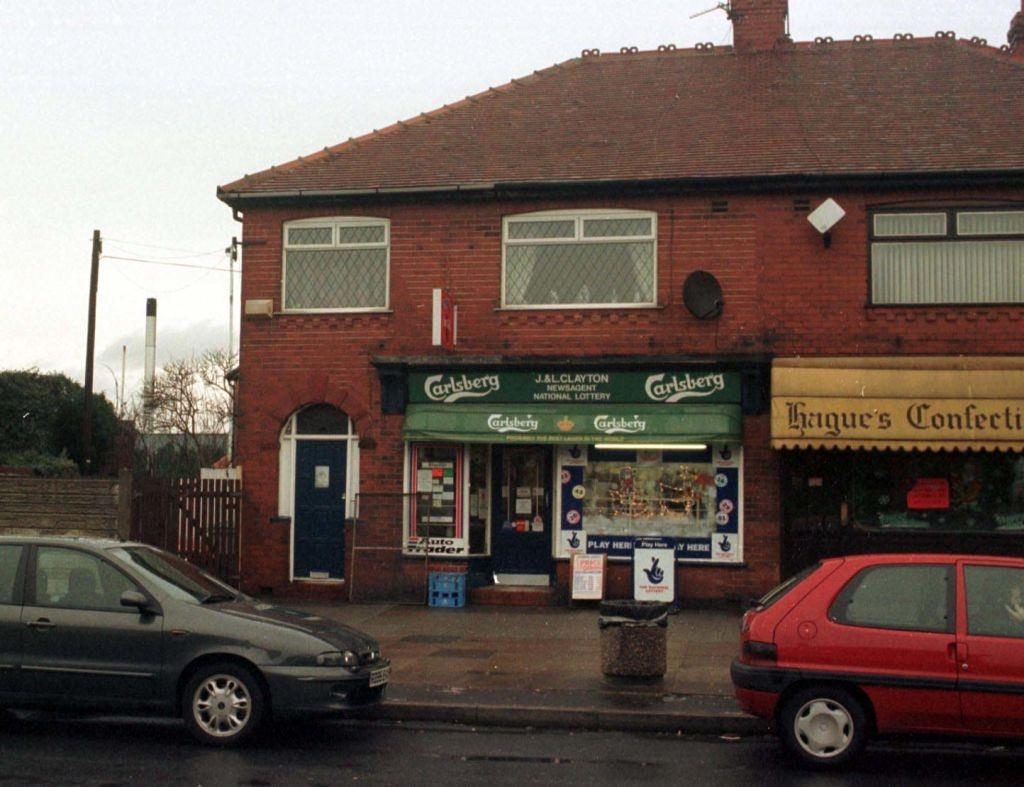
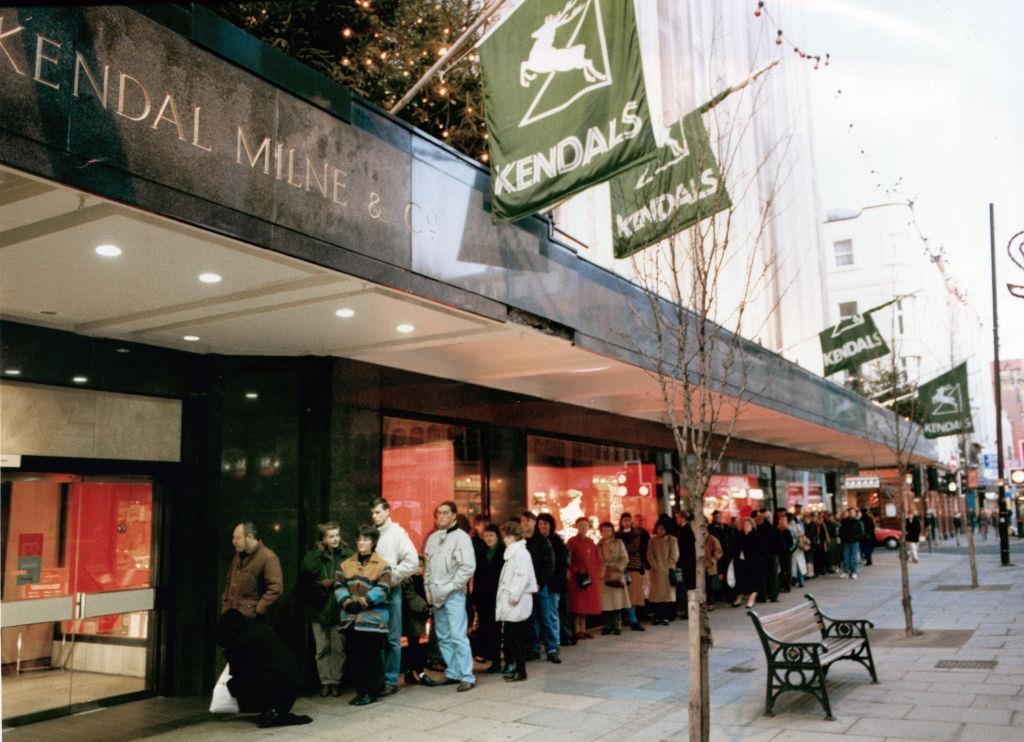
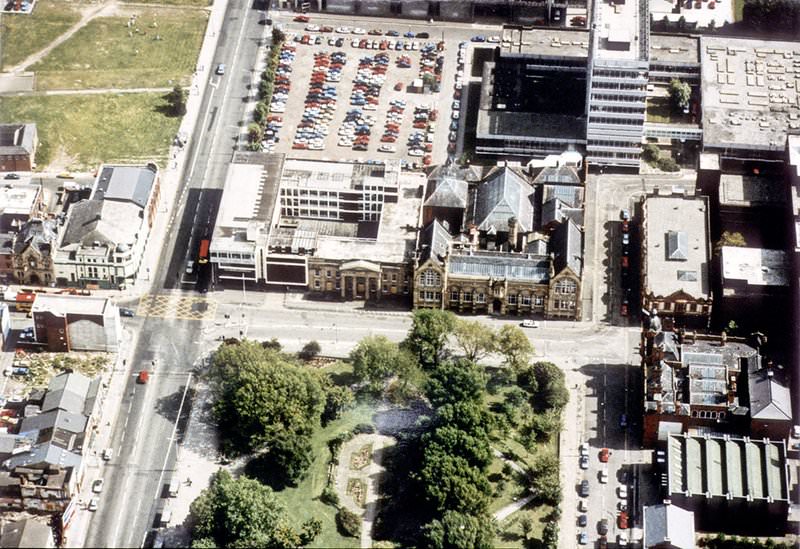
The wider city — its squares, viewpoints, department stores, and neighbourhoods — filled out the picture of 1990s Manchester. Kendals on Deansgate remained a go-to department store. The view from Piccadilly Station looked out over a city in constant flux. Piccadilly Gardens junction buzzed with buses and pedestrians. And in quieter corners like Audenshaw Road, the local newsagent remained exactly where it always was.
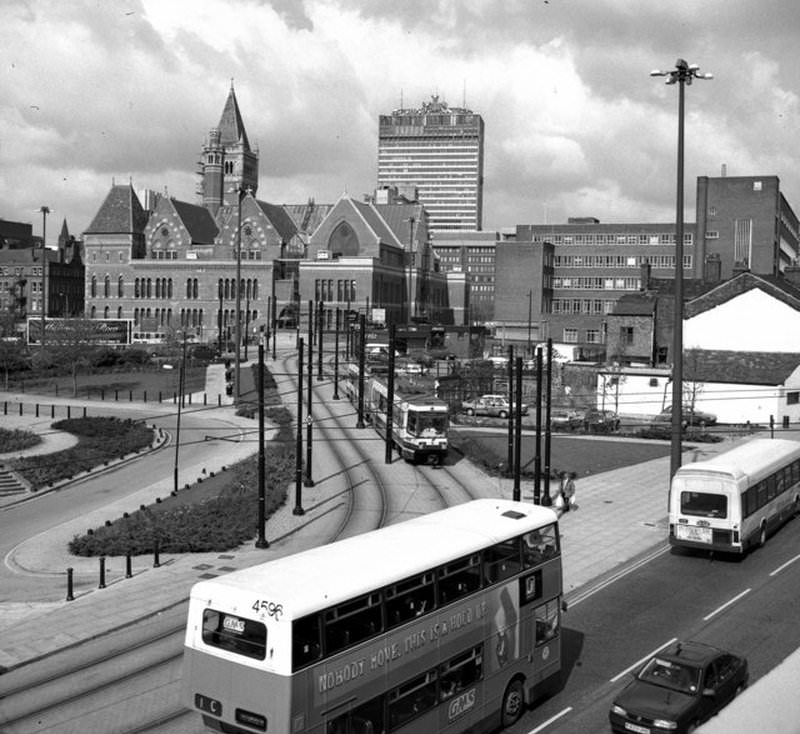





There were so many tiny green spaces, all gone under new buildings. Piccadilly Gardens is an abomination of concrete… what a shame
The oyster bar is two storeys above ground??
They moved it.
Manchester in the 90s was such a drag.
New Broadcasting House brought back memories. The making of North West Tonight reminded me of a school trip. Meeting Gordon Burns was a pleasure.
It has been 25 years since the reconstruction work in the city was completed, Enough for today.
It was never sunny in Manchester in the 90s.
The current state of the world has me feeling nostalgic, and these were hard to look at without causing me heartache and a desperate desire to be back there in the ’90s.
Great days at Horts and Henry’s bar, conservatory, and corbierres at the back.