Before jet engines and airport terminals, a different kind of aircraft dominated long-distance travel. The LZ 129 Hindenburg was the largest flying machine ever built — a hydrogen-filled giant that could carry passengers across the Atlantic in under three days. For a brief window in the 1930s, it represented the peak of what human engineering could achieve in the air. Its story is one of ambition, luxury, record-breaking travel, and sudden, catastrophic destruction.
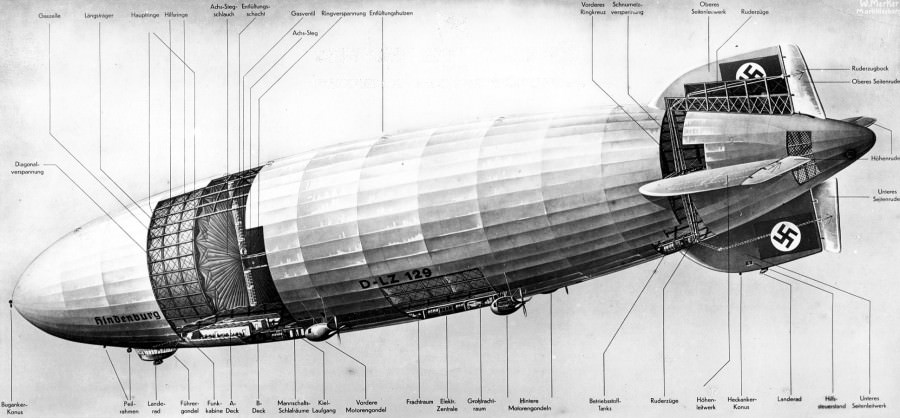
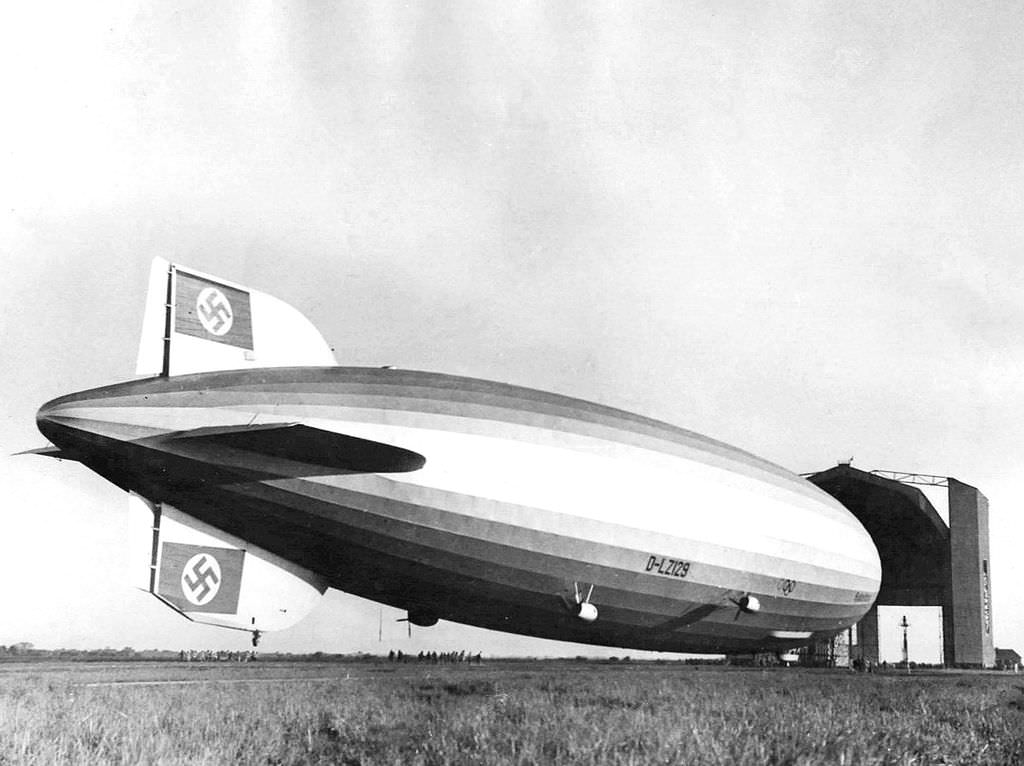
The Hindenburg was built by the Zeppelin Company in Friedrichshafen, Germany. Its frame consisted of 15 ring-shaped structural elements made from duralumin — a lightweight but strong aluminum alloy. Workers laid these rings out and connected them with longitudinal girders to form an enormous cigar-shaped skeleton. Over that frame went a fabric outer shell, coated with aluminum powder to reflect sunlight and help manage the temperature inside the hull. The finished airship stretched 245 meters (804 feet) in length, making it nearly as long as three football fields placed end to end.
Inside the hull sat 16 large gas cells filled with hydrogen. Hydrogen was chosen because it provides more lift than any other gas. The Hindenburg was originally designed to run on non-flammable helium, but the United States — the world’s only commercial supplier of helium at the time — had placed strict export restrictions on the gas. That left the Zeppelin Company with no choice but to use hydrogen, despite its well-known fire risk. Four diesel engines, each driving a large propeller, pushed the ship through the air at a cruising speed of around 125 kilometers per hour (78 mph).
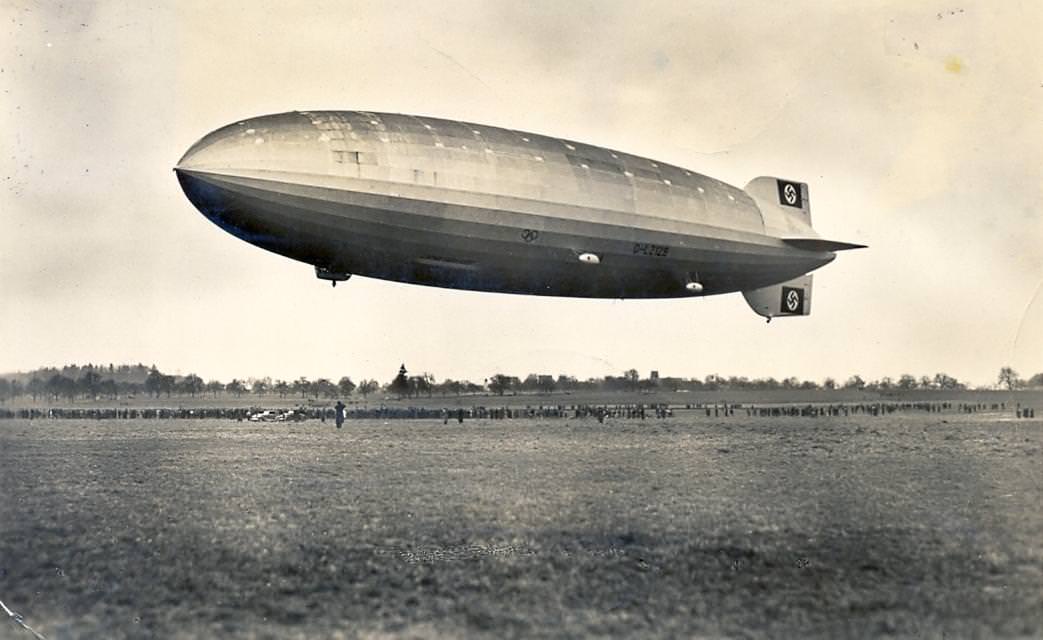
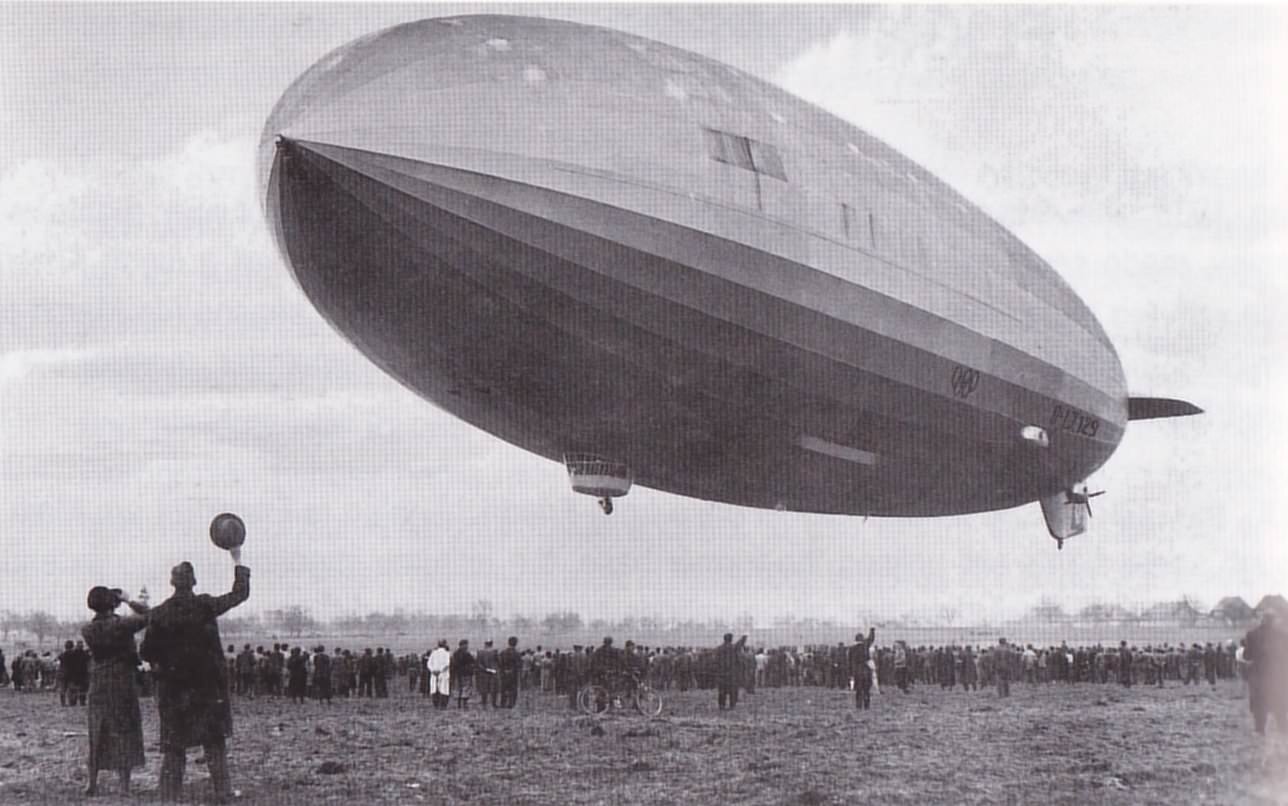
The Hindenburg made its maiden flight on March 4, 1936 — a short promotional trip from Friedrichshafen to the nearby town of Löwenthal. Less than a month later, on March 31, 1936, it departed on its first commercial passenger flight, heading from Friedrichshafen to Rio de Janeiro, Brazil. That voyage established the Hindenburg as a working passenger aircraft and marked the start of a regular transatlantic service.
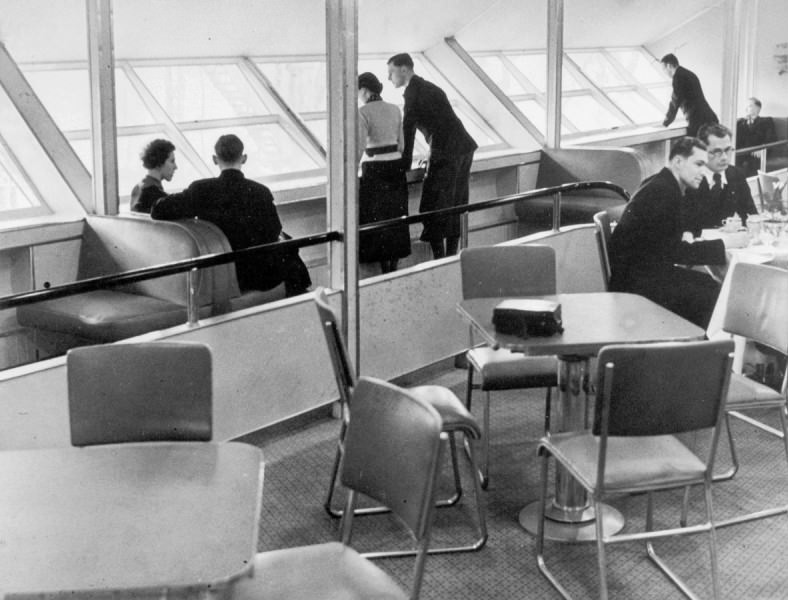
Passenger comfort aboard the Hindenburg was exceptional for the era. The airship could carry around 70 passengers, supported by a crew of more than 40. The passenger quarters were built into the lower section of the hull using the same duralumin alloy as the frame, keeping weight to a minimum. Despite that constraint, designers fitted the interior with private sleeping cabins, a full dining room, a lounge complete with a specially built lightweight aluminum grand piano, a reading and writing room, and a promenade deck with large, slanted windows. There was even a pressurized smoking room — the only place on board where passengers were permitted to smoke, fitted with a double-door airlock to prevent any hydrogen from entering.

The Hindenburg’s speed gave it a significant advantage over ocean liners. The fastest ships of the 1930s took around five days to cross the Atlantic. The Hindenburg completed the eastbound trip from Lakehurst, New Jersey, to Frankfurt am Main in roughly 50 hours. The westbound crossing from Frankfurt to Lakehurst took between 60 and 78 hours, depending on headwinds. Passengers paid premium prices for that time saving, and demand was strong enough to fill the airship regularly.
On May 9, 1936, the Hindenburg made its first landing on American soil at Naval Air Station Lakehurst in New Jersey. Ground crews used long mooring lines dropped from the nose of the ship to guide it down to the mast. The event drew large crowds and significant press coverage. It was a milestone moment — the beginning of the first scheduled transatlantic air passenger service in history.
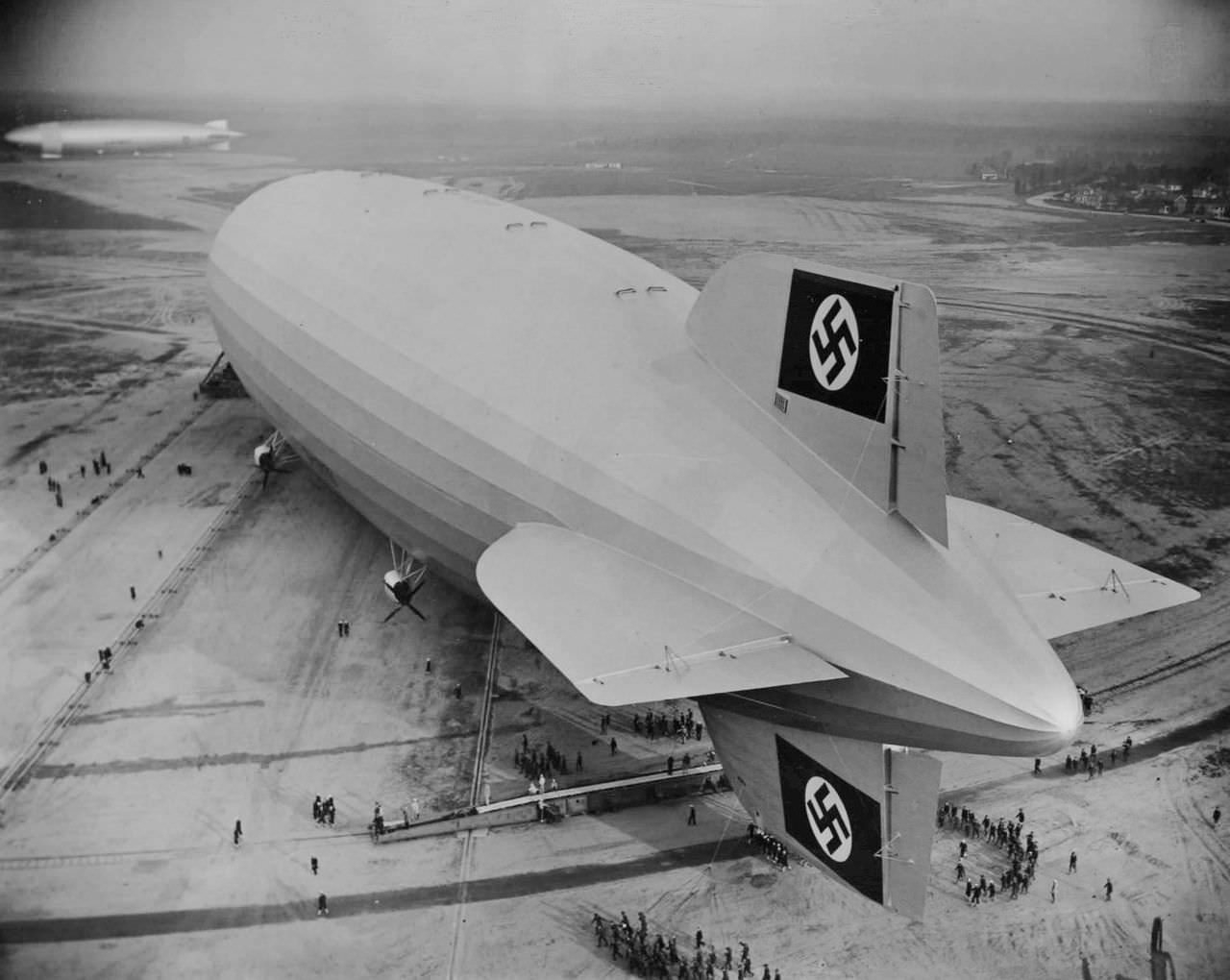
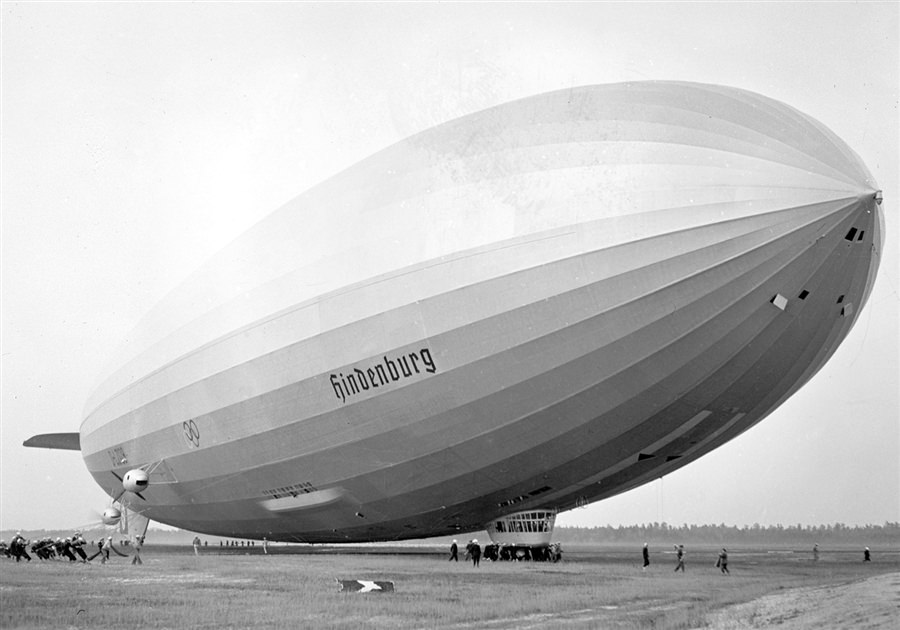
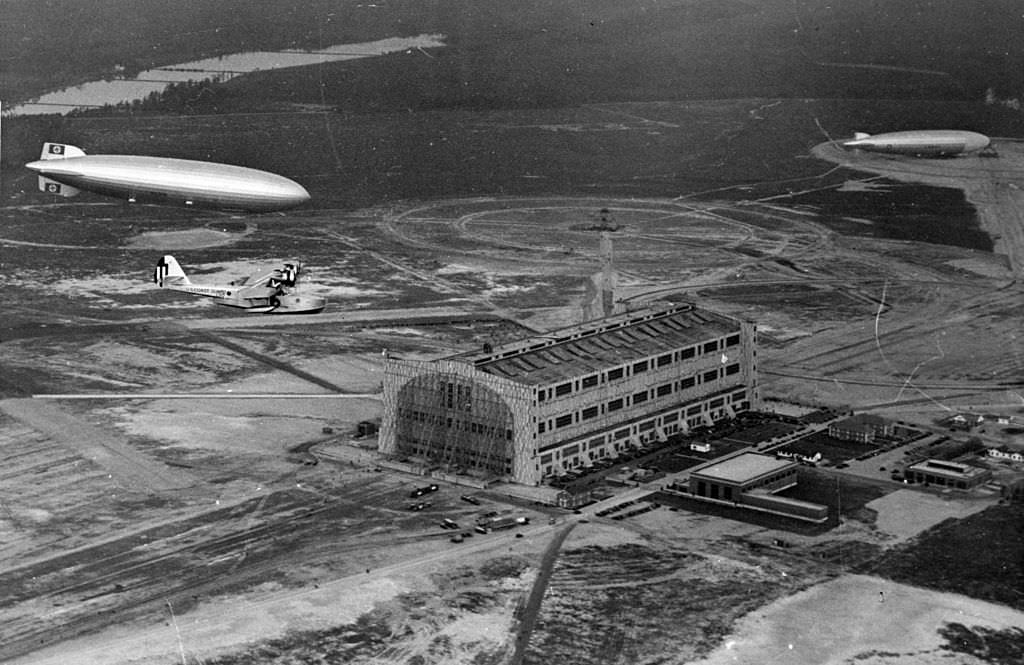
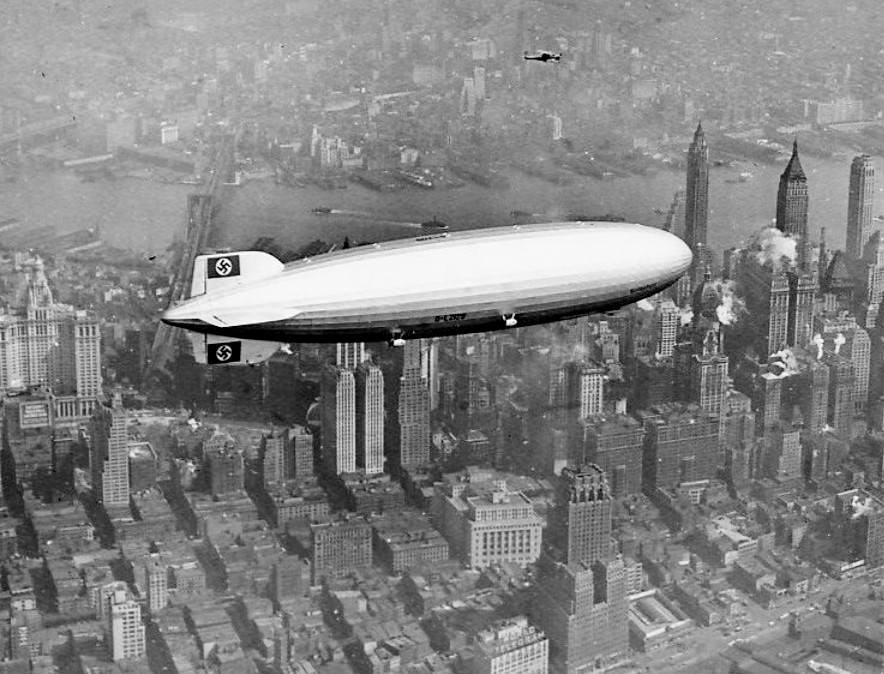
During its flights along the U.S. East Coast, the Hindenburg regularly passed over New York City. The sight of the massive airship drifting low over Manhattan became one of the defining images of 1930s America. In 1936 alone, the Hindenburg completed 17 round trips across the Atlantic — ten to the United States and seven to Brazil — covering a total distance of 308,323 kilometers (191,583 miles) and carrying 2,798 passengers.
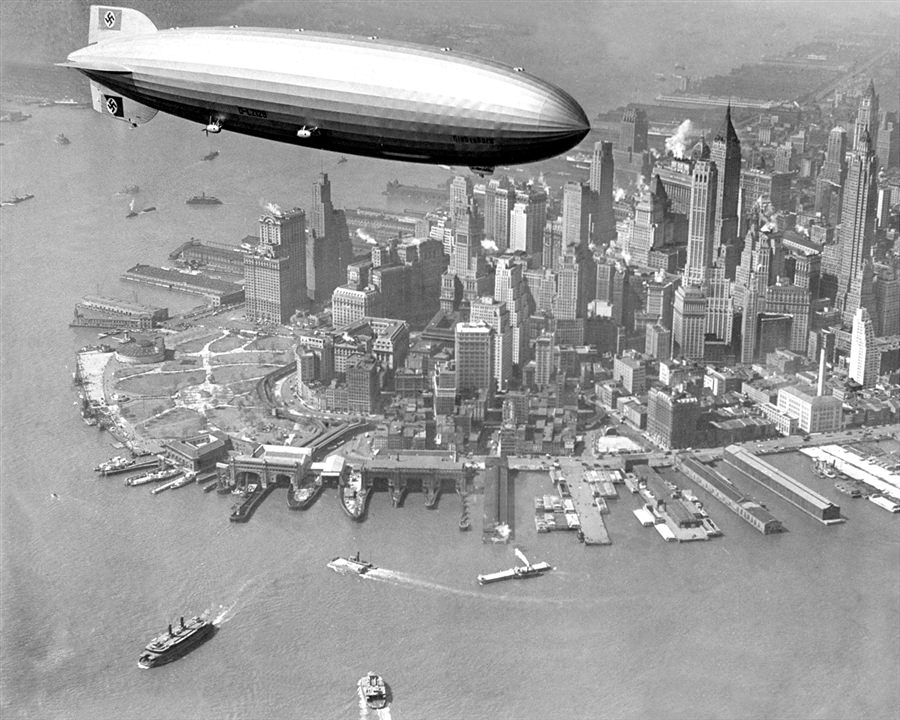

On May 6, 1937, the Hindenburg departed Frankfurt for Lakehurst on what was the first North American crossing of its second season. Earlier that day, it had passed over New York City one final time. Thunderstorms in the area caused the landing at Lakehurst to be delayed by several hours. At around 7:25 p.m., the airship began its approach to the mooring mast.
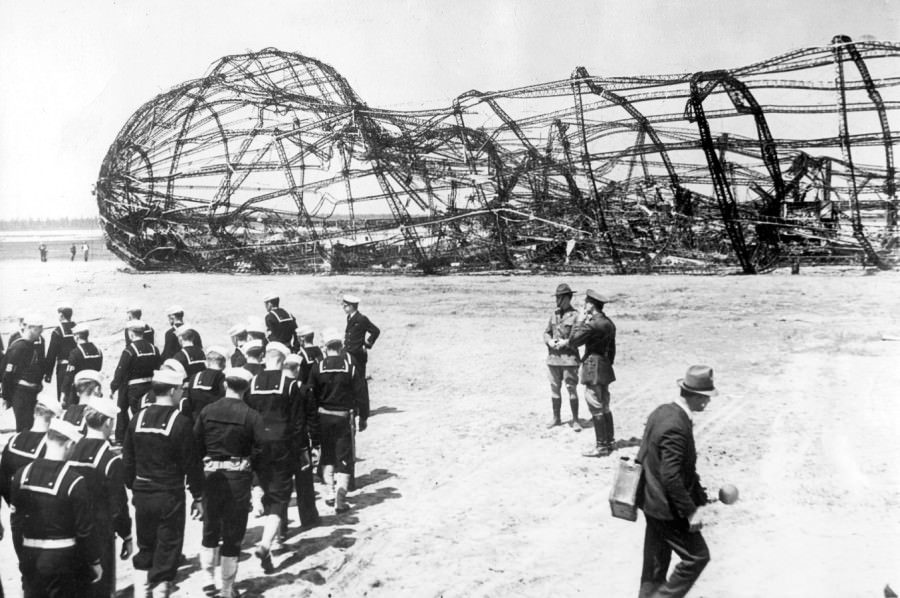
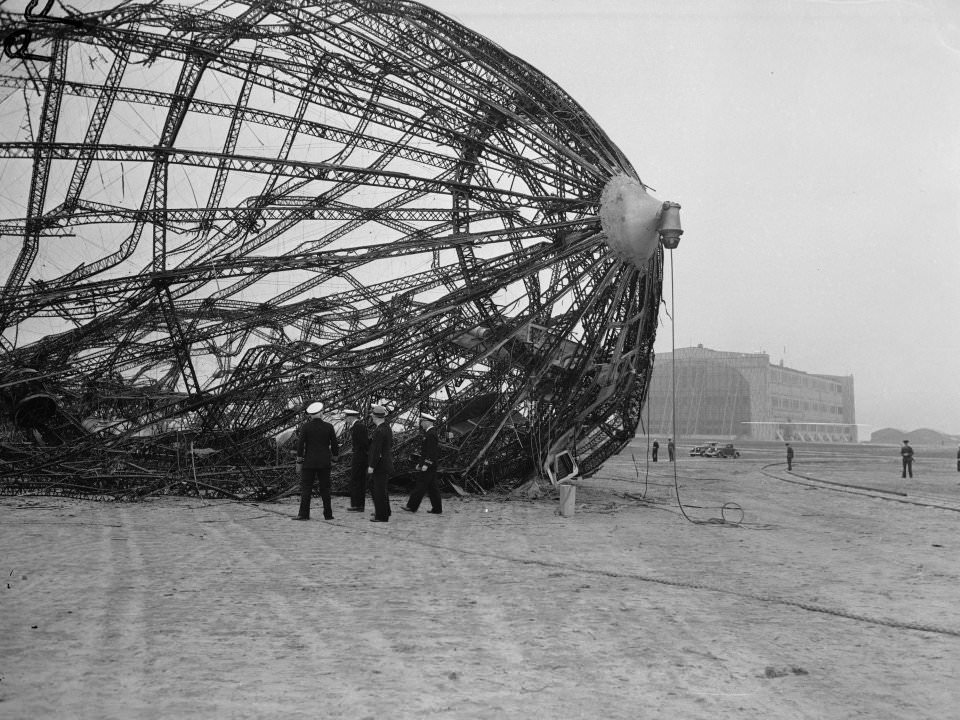
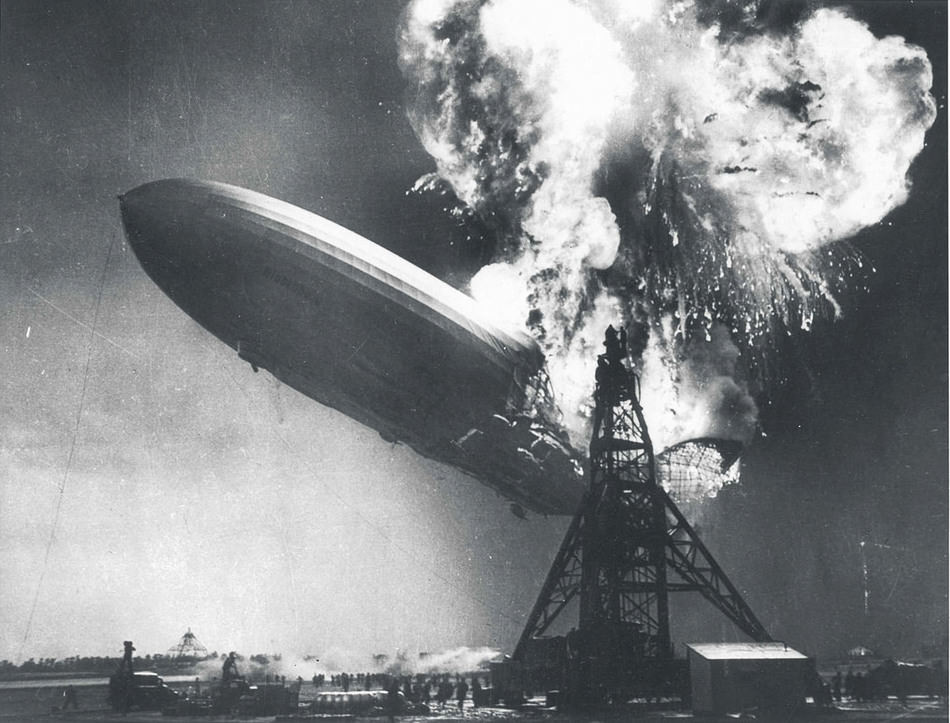
At 7:25 p.m., with the mooring lines already dropped and the ground crew holding them, fire broke out near the tail of the airship. Within seconds, the hydrogen in the rear gas cells ignited and the flames spread forward with terrifying speed. The entire airship was consumed in roughly 30 seconds. Of the 97 people on board — 36 passengers and 61 crew — 13 passengers, 22 crew members, and one member of the ground crew died, bringing the total death toll to 36. The disaster was filmed and photographed by multiple news crews who had gathered to document the landing, making it one of the most extensively recorded accidents of the 20th century.
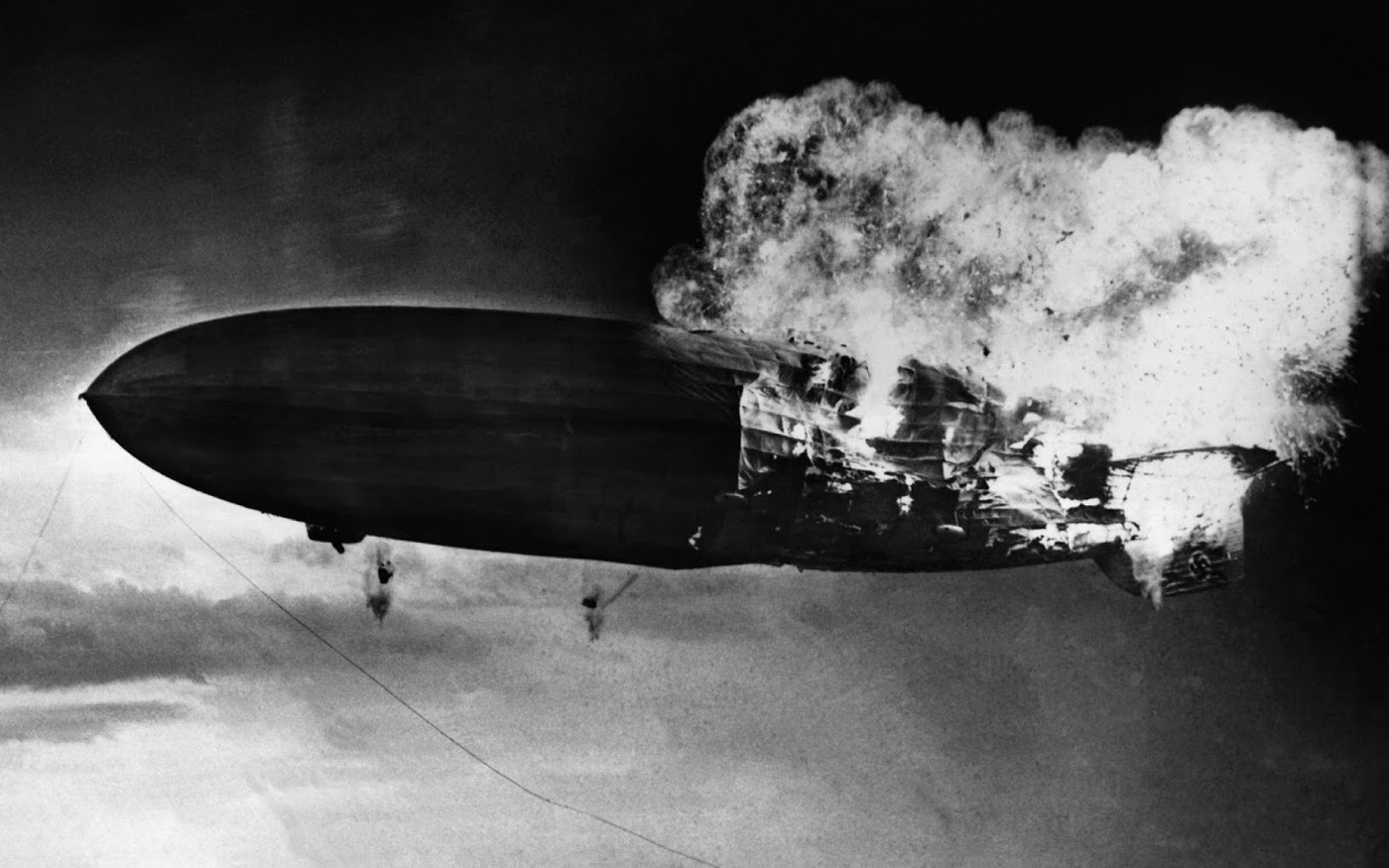
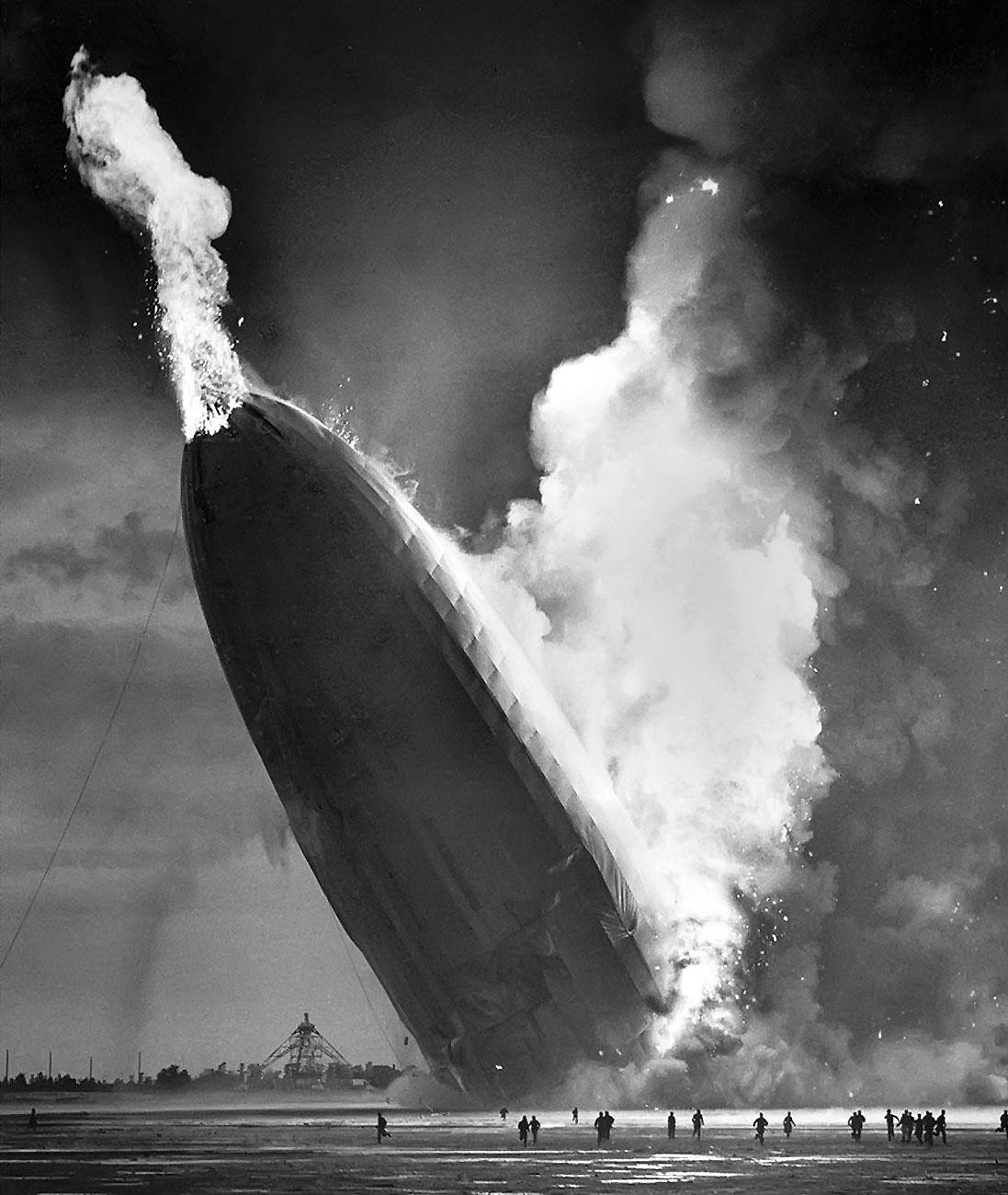
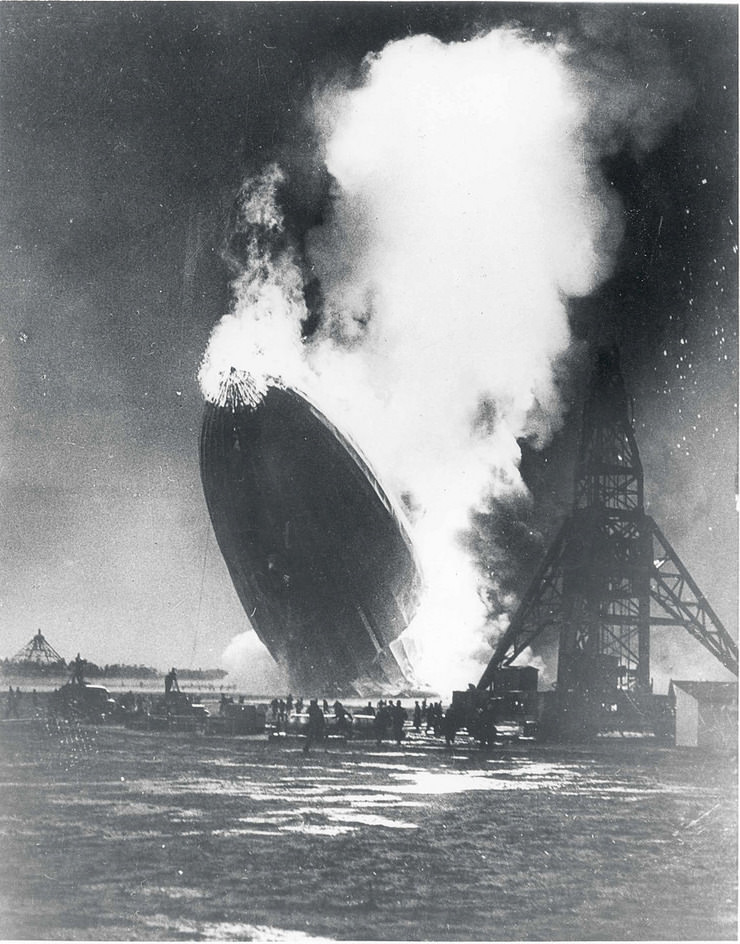

Investigators pointed to a static spark igniting leaked hydrogen gas as the most likely cause of the fire. Others have raised the possibility of sabotage, and that theory has never been fully ruled out. The exact sequence of events that triggered the ignition has been debated by engineers and historians ever since. What is not in dispute is the result: the Hindenburg hit the ground as a burning wreck, and the era of passenger airships effectively ended that evening on the airfield at Lakehurst.