
By the late 1970s, Los Angeles had firmly established itself as one of the most dynamic cities in the United States. It had overtaken New York City as the center of pop music, and its streets reflected a city bursting with energy, ambition, and style. Architecture, signage, and small businesses gave neighborhoods across L.A. a distinct visual identity that was entirely its own. Photographer John Margolies captured all of it — the motels, the diners, the gas stations, the car lots — in a remarkable series of photographs taken between 1976 and 1979.
Los Angeles had grown into an industrial powerhouse in the decades before. War production and mass migration had transformed it into a financial and manufacturing giant. By the 1970s, the city assembled more cars than any other city in the country, produced more tires than any city except Akron, Ohio, made more furniture than Grand Rapids, Michigan, and stitched more clothing than anywhere else in America. That industrial backbone gave everyday neighborhoods their character — auto shops, tire stores, and body shops lined the streets of nearly every district.
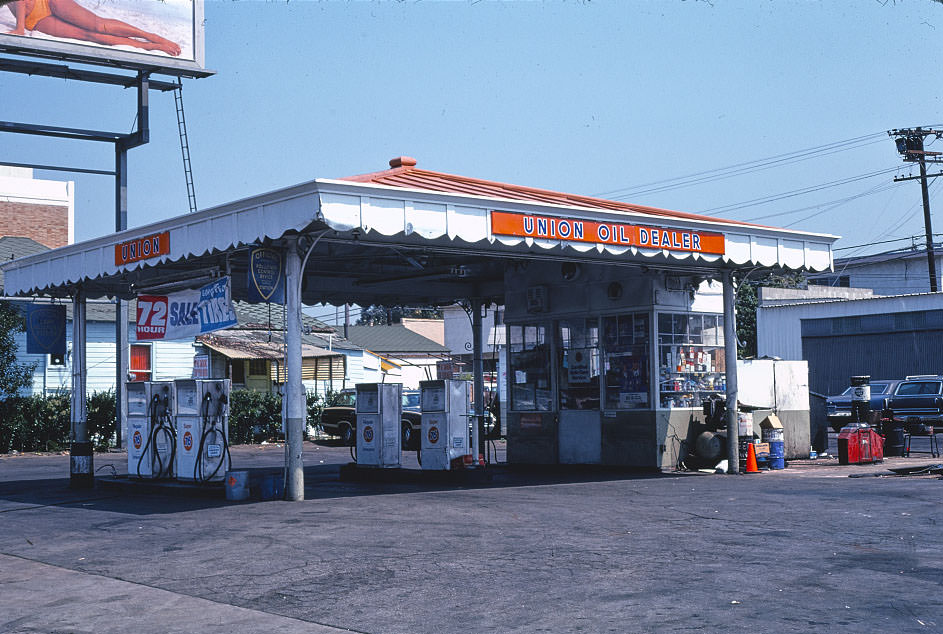
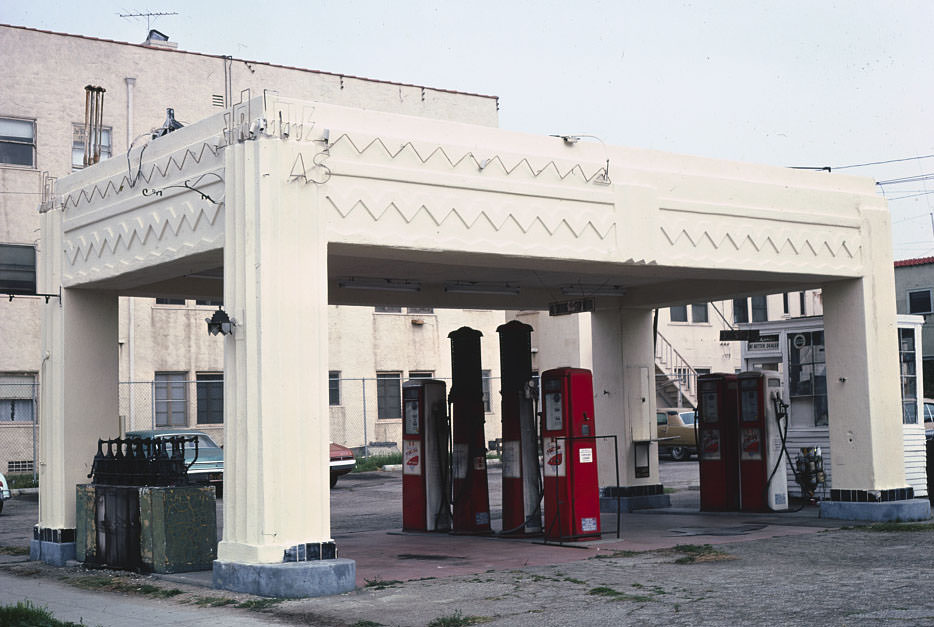
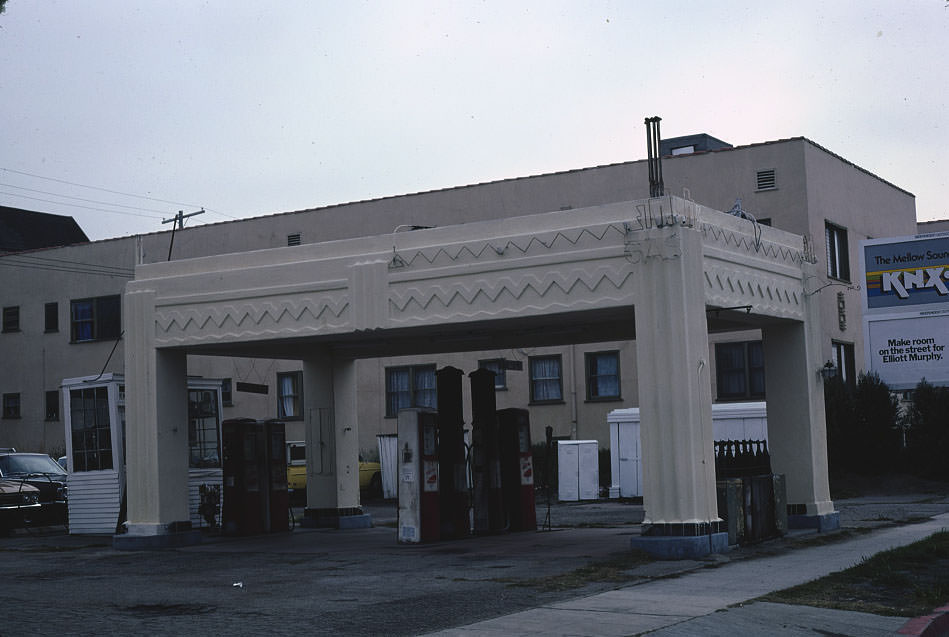
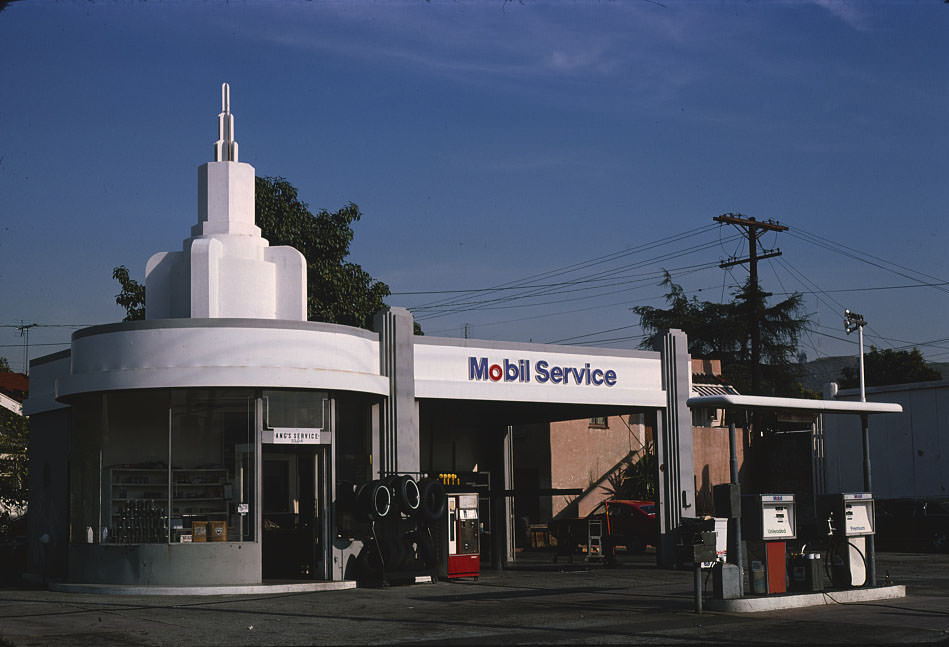
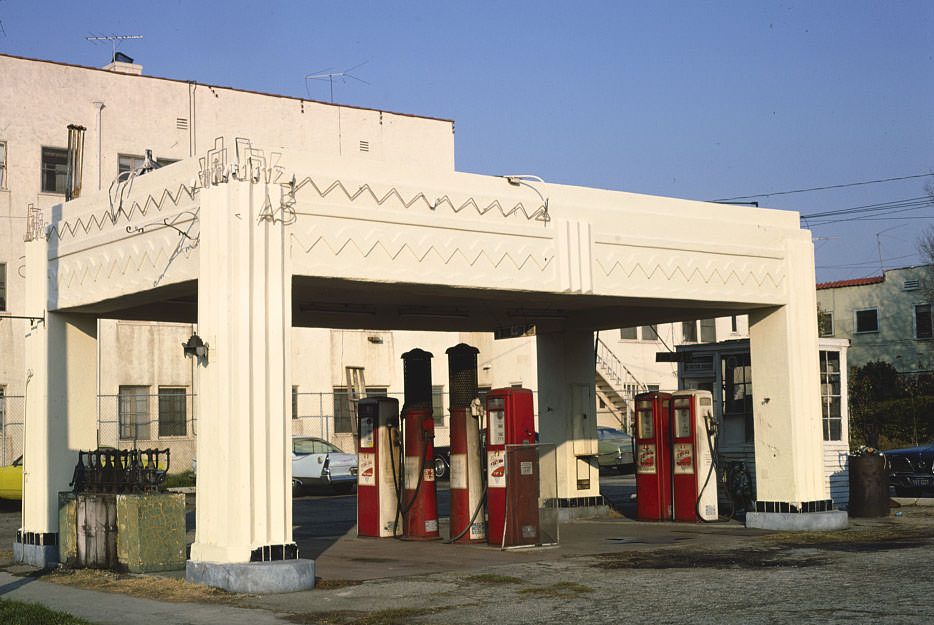
Gas stations were everywhere in late 1970s Los Angeles. The city was built around the car, and every neighborhood had its own filling stations, each with its own personality. Some, like Seaside Gas and Union Oil outposts, were simple and functional. Others doubled as local landmarks with bold signage that made them impossible to miss. The energy crisis of the decade hit hard, but gas stations stayed a central fixture of L.A. street life.
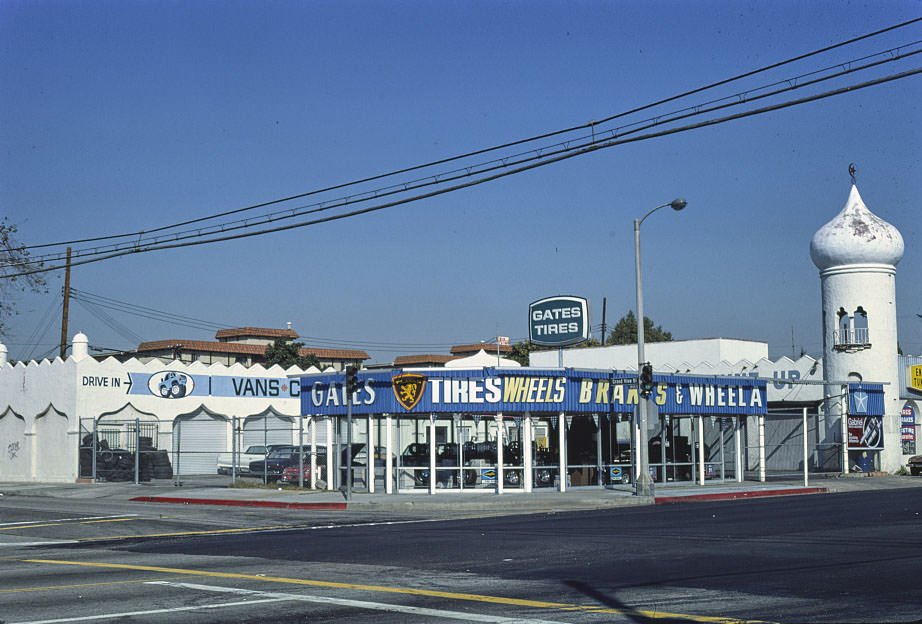
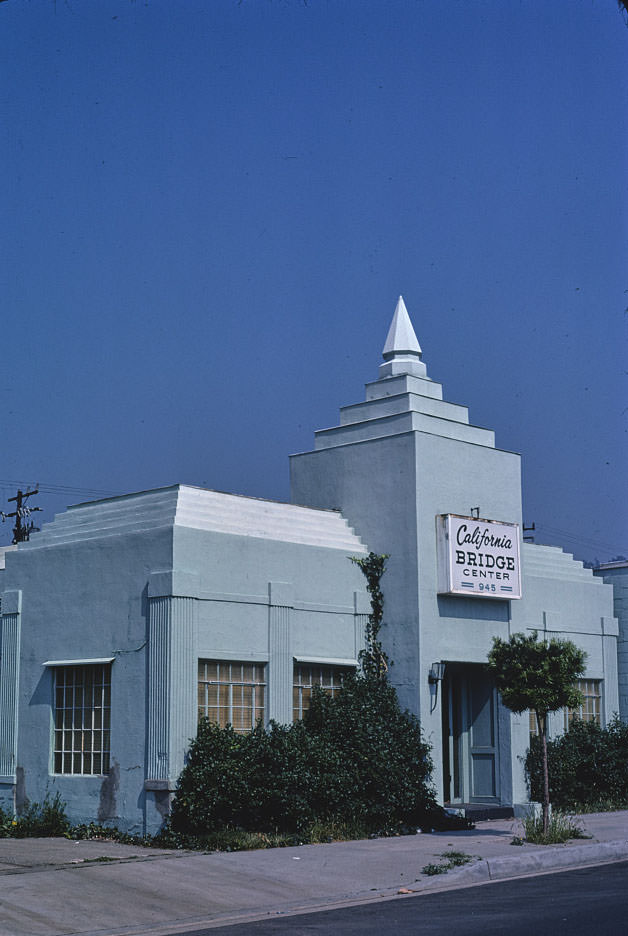
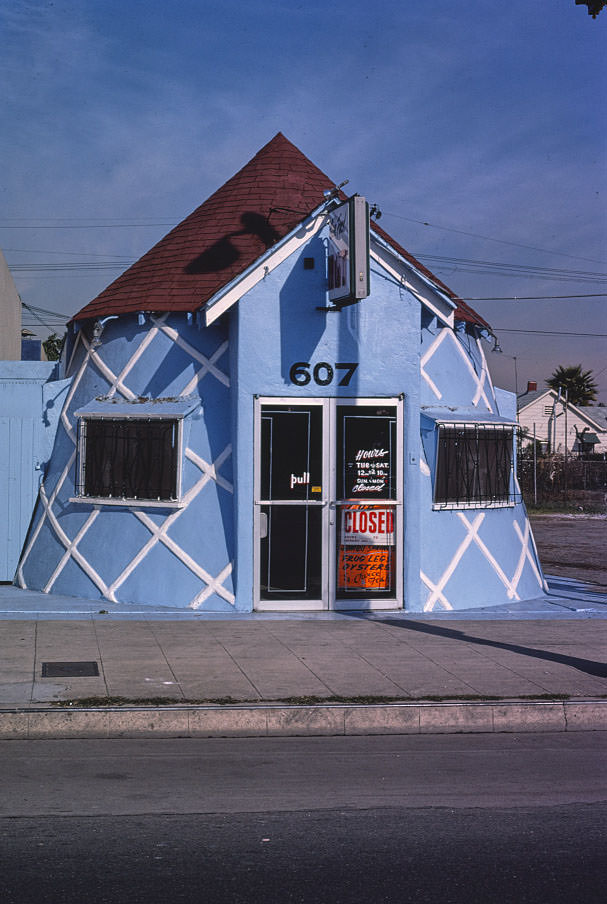
The city’s commercial strips were a mix of the practical and the playful. A bridge club sat next to a drapery shop. A seafood hut occupied a corner that might have held a gas station the decade before. Small, independently owned businesses defined the streetscape in a way that chain stores had not yet erased. Signs were hand-painted, bold, and often oversized — designed to catch the eye of drivers moving fast down wide boulevards.
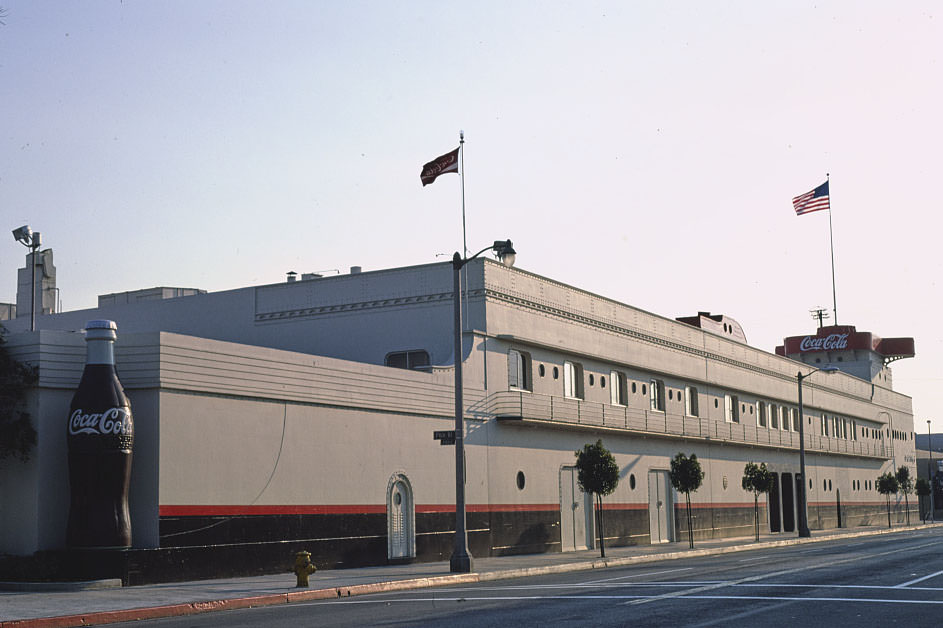
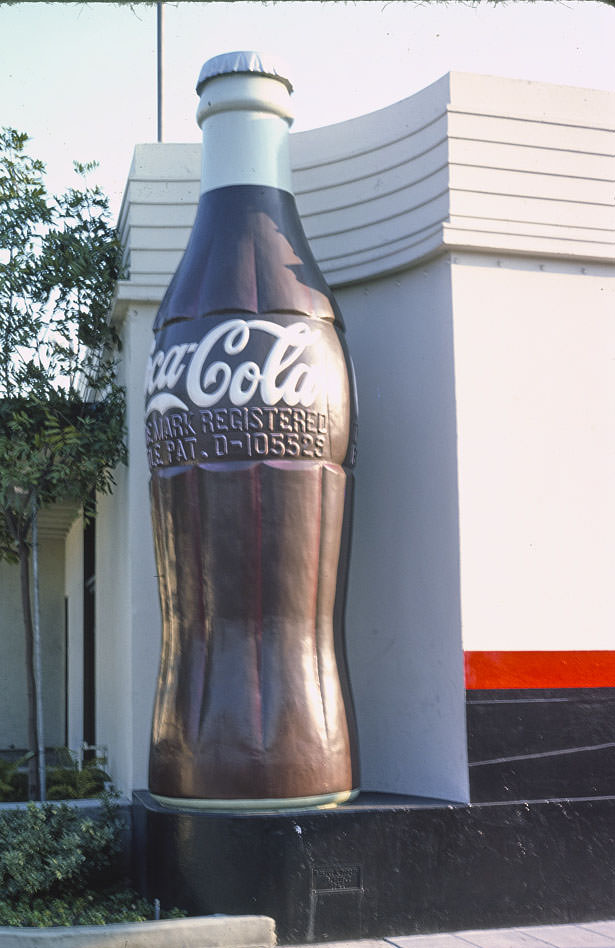
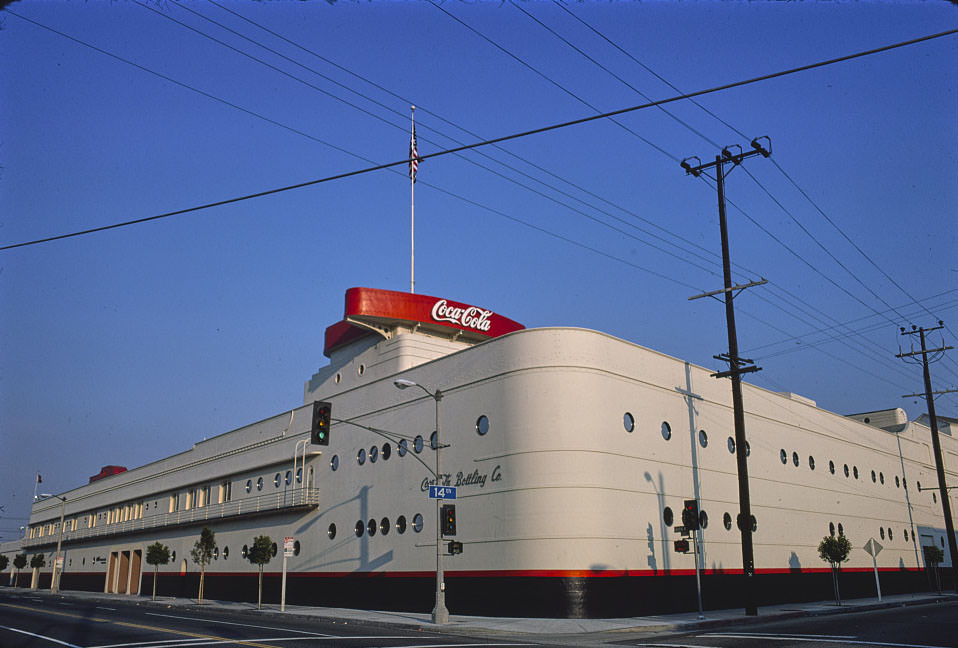
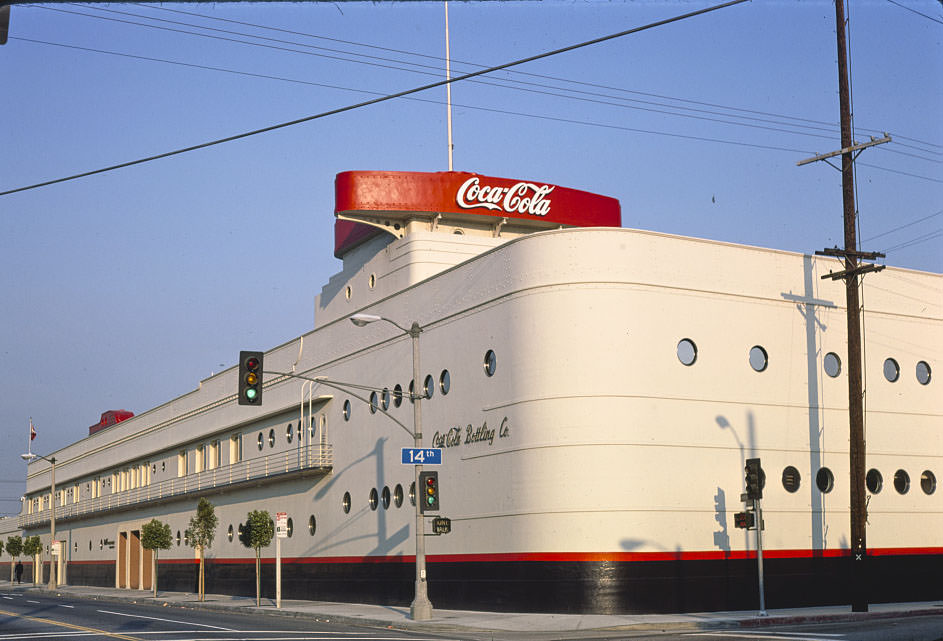
The Coca-Cola Bottling Company building at 14th and Central Avenue was one of the most visually striking structures in the city. Built in a Streamline Moderne style, it featured giant Coke bottles as architectural details on its facade. Margolies photographed it from multiple angles, drawn to the way the building used commercial branding as genuine design. It was exactly the kind of structure Los Angeles did better than anywhere else — serious architecture dressed up in the language of advertising.
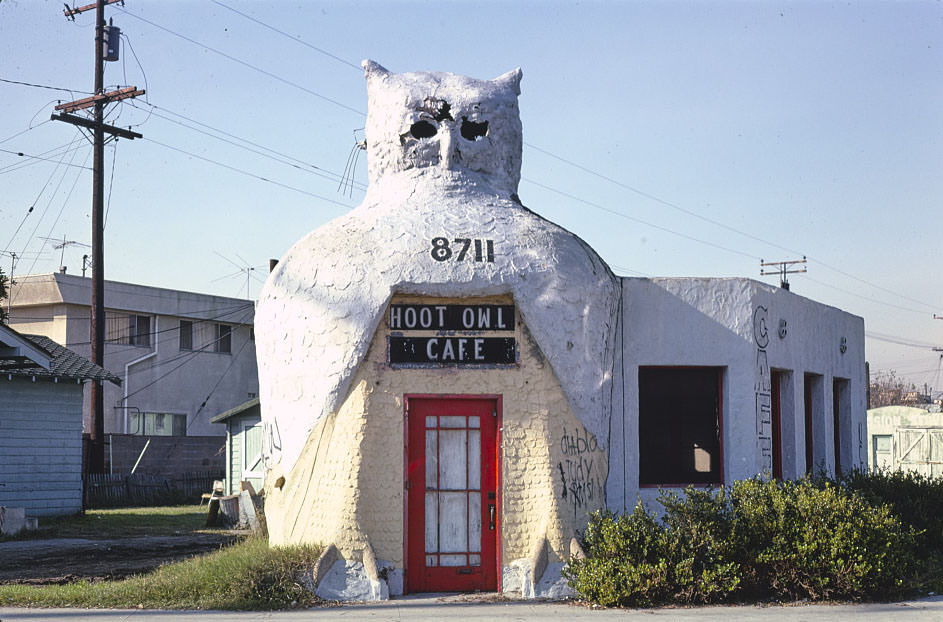
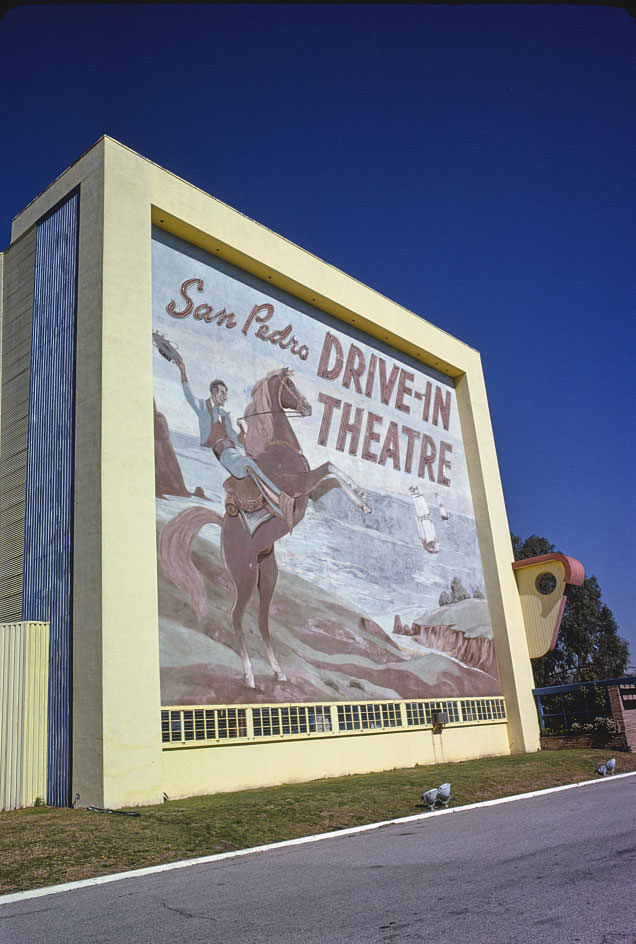
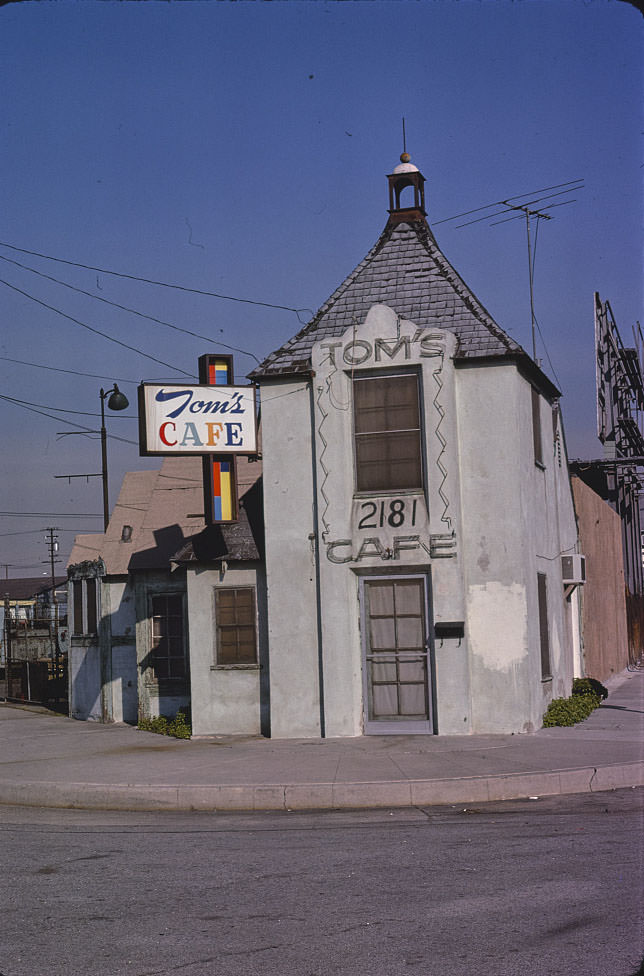
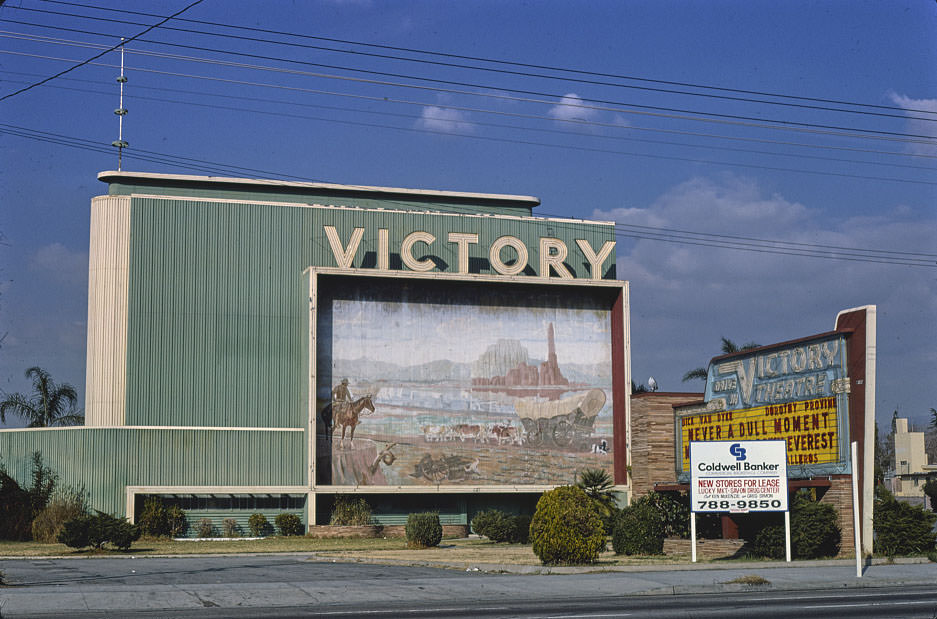
Diners and roadside cafes were woven into the social fabric of Los Angeles. Places like the Hoot Owl Cafe on Long Beach Boulevard and Tom’s Cafe on Manchester served working-class neighborhoods and kept odd hours. Drive-in theaters like the San Pedro and the Victory in Van Nuys were still operating in the late 1970s, drawing crowds to outdoor screenings under the warm California sky. These were the gathering places that glued communities together.
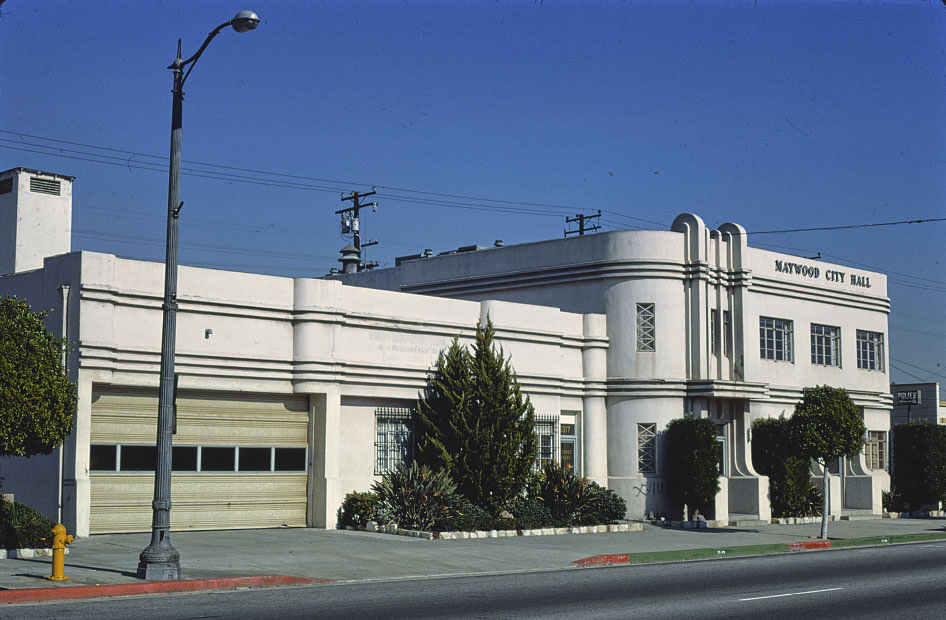
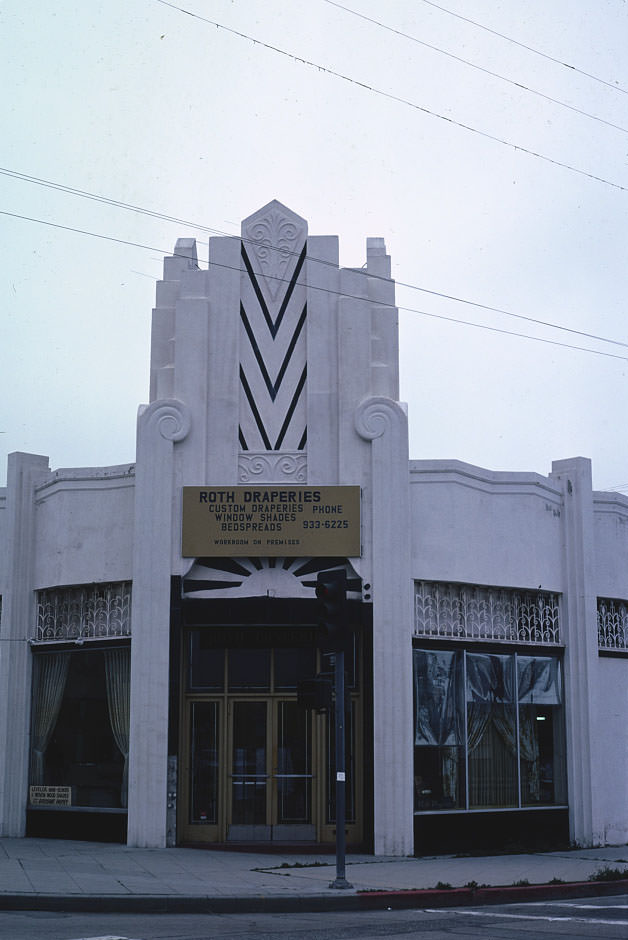
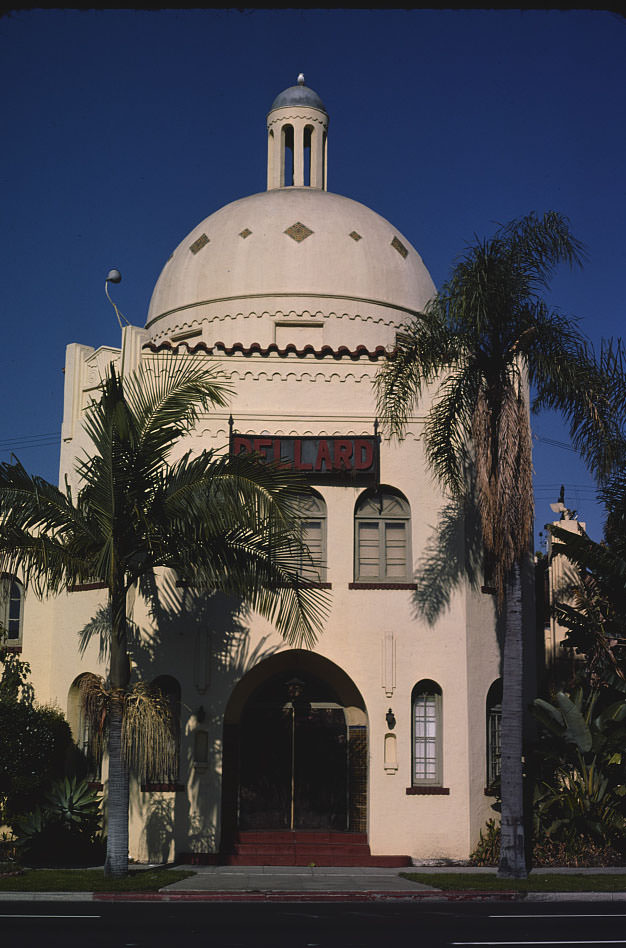
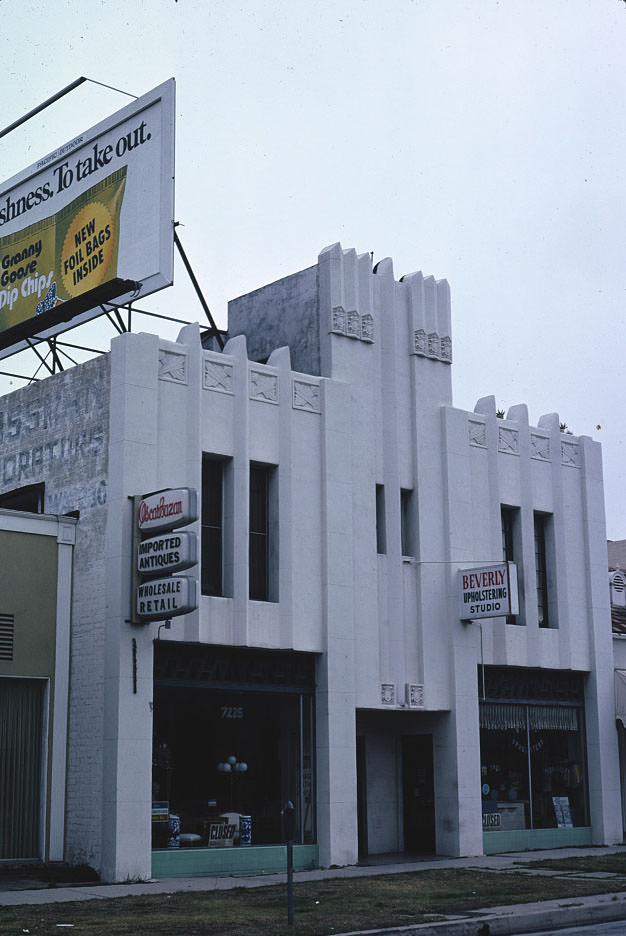
Civic buildings and local government offices anchored smaller communities within the larger county. Maywood, a dense working-class city tucked inside Los Angeles County, had its own city hall — modest but solid. Nearby, specialty retailers like Roth Draperies and Dellard Furniture Imports catered to homeowners looking to furnish and decorate. Los Angeles produced more furniture than Grand Rapids, and those goods found buyers right across the city.
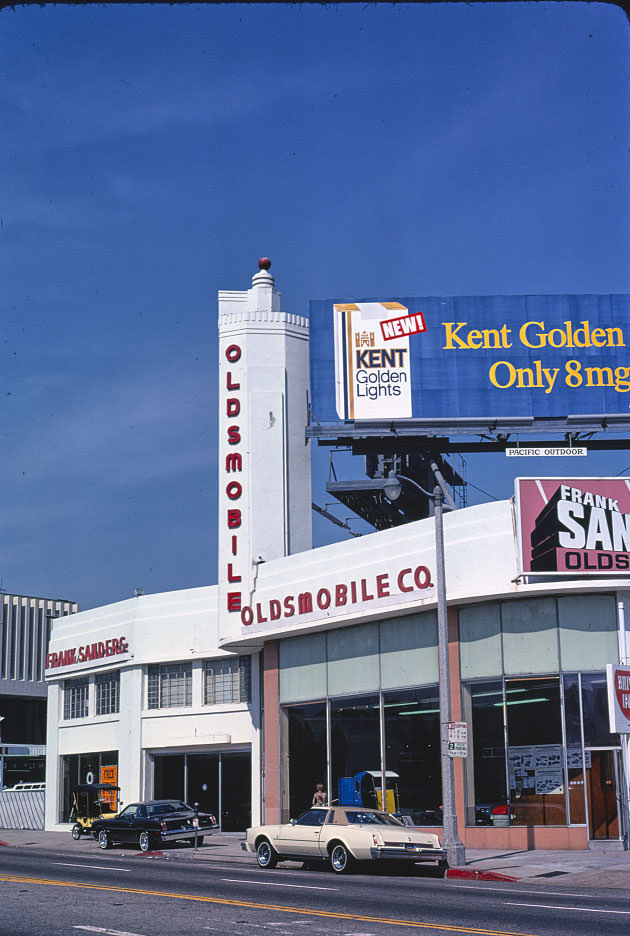
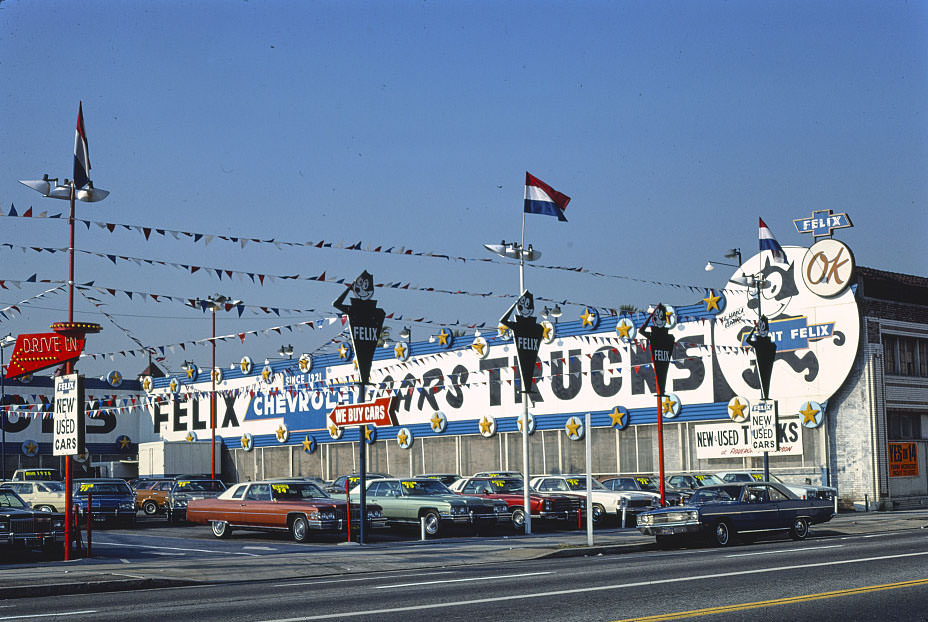
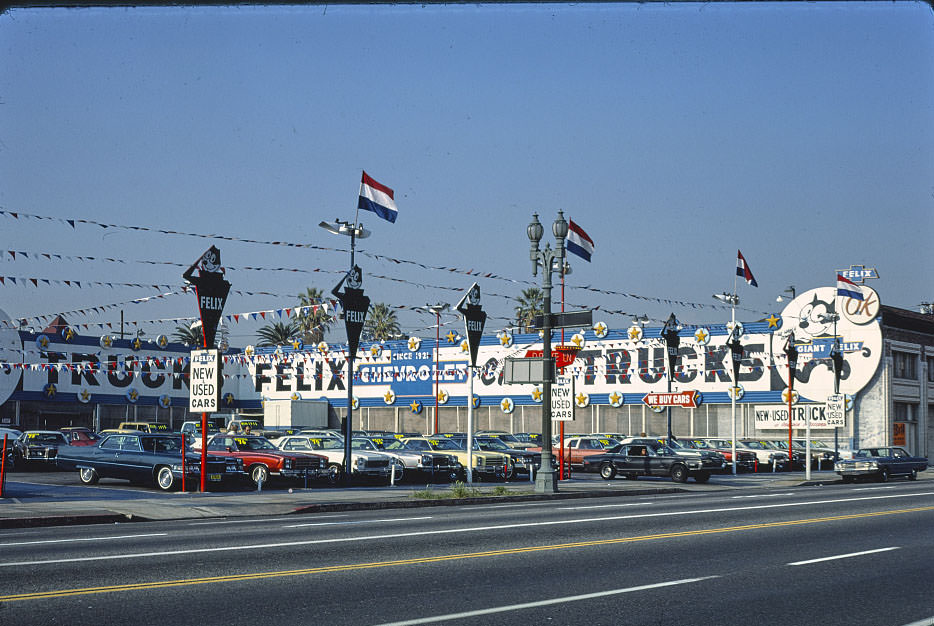
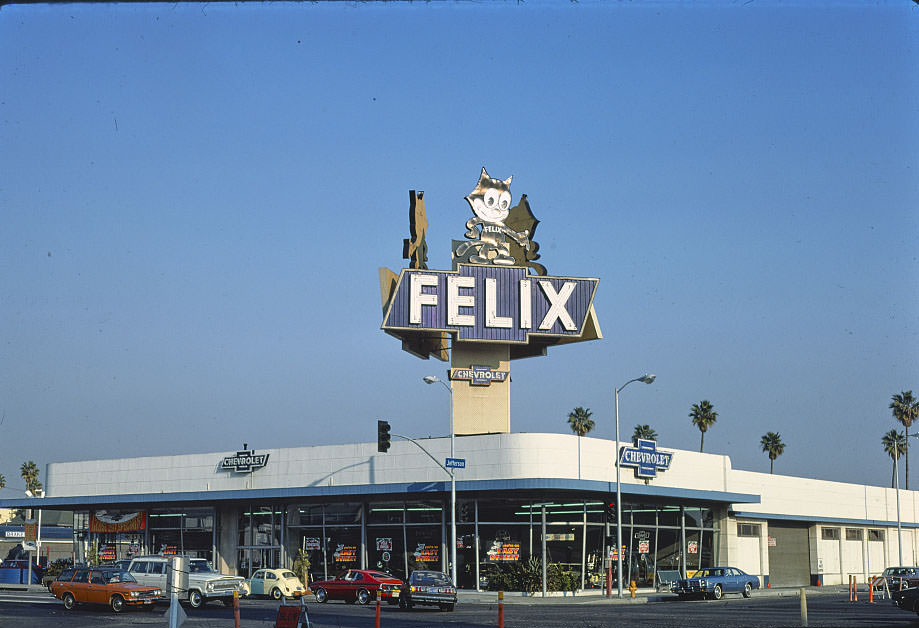
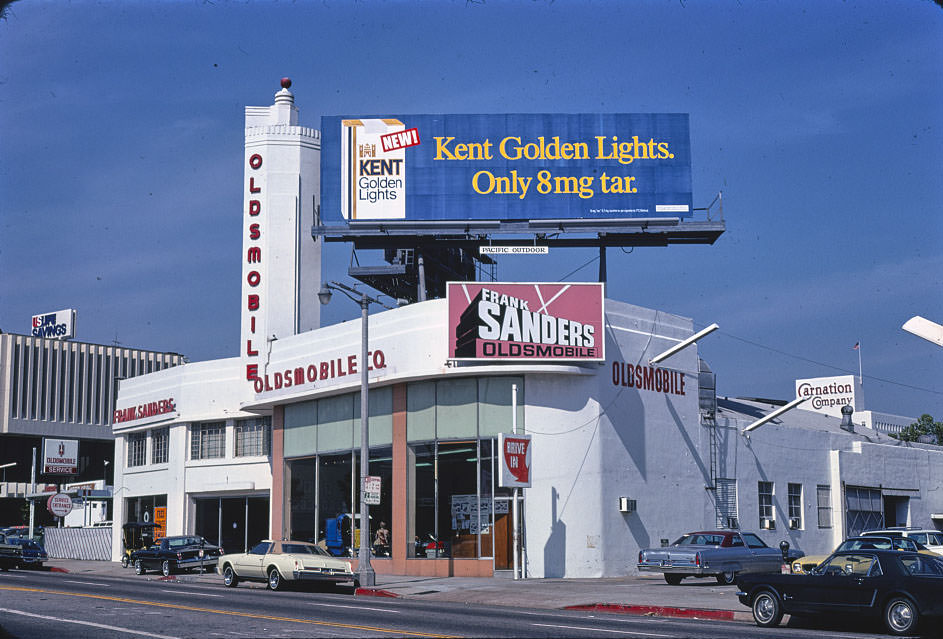
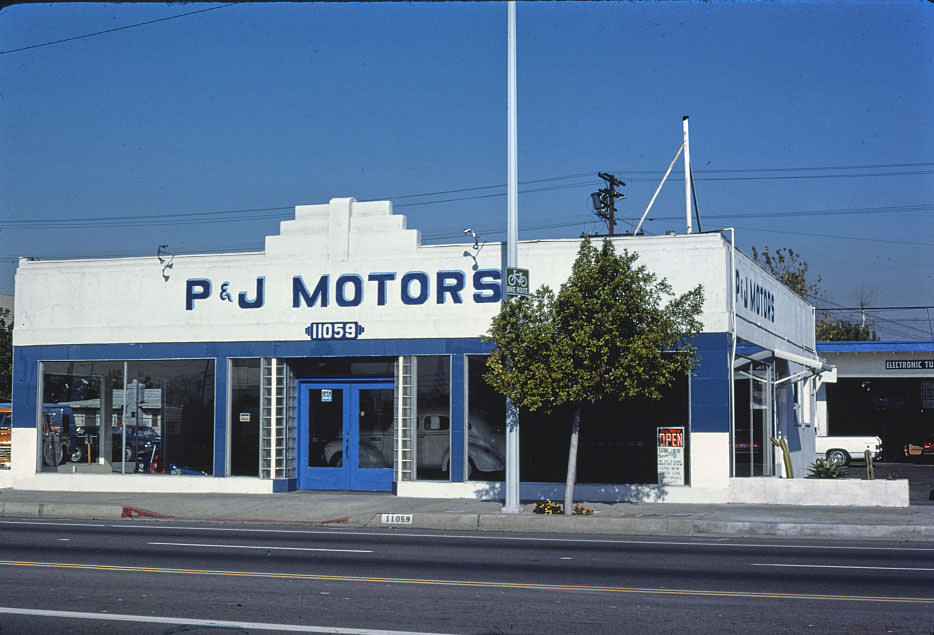
Car dealerships occupied prime real estate on major intersections across the city. Sanders Oldsmobile at La Brea and Wilshire, Martin Cadillac at Olympic and Bundy, and Felix Chevrolet were all well-known names. Felix Chevrolet, with its giant cartoon cat mascot, became one of L.A.’s most recognizable roadside landmarks. The Felix figure appeared not just at the dealership but across several related businesses — Felix Body Shop and Giant Felix Used Cars — making the cartoon cat a minor local icon.
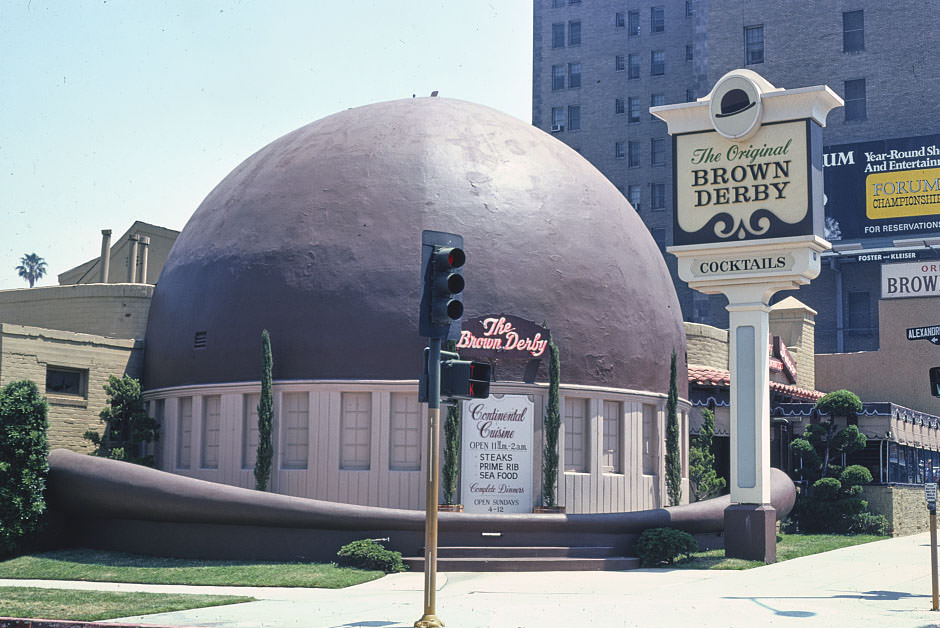
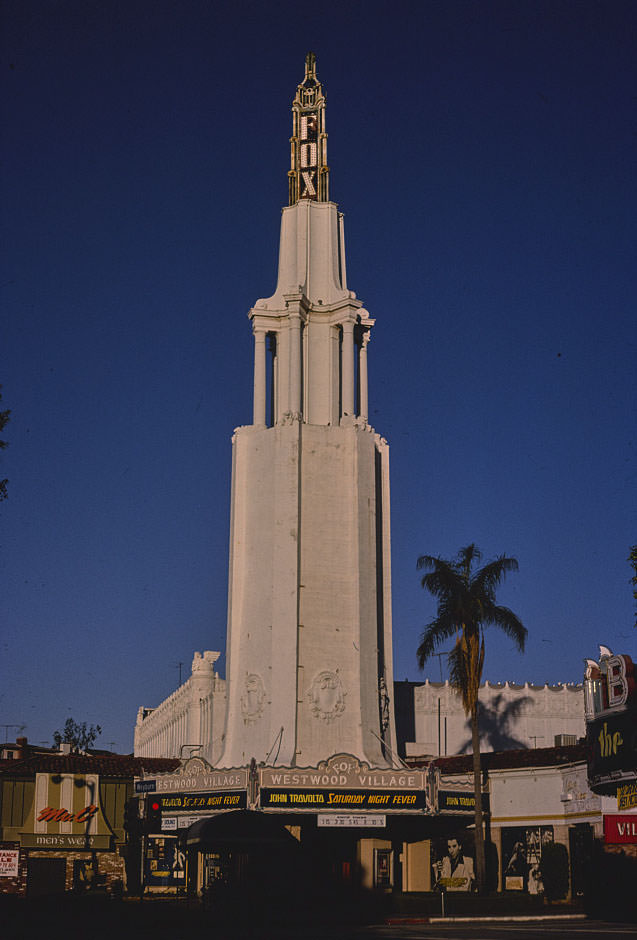
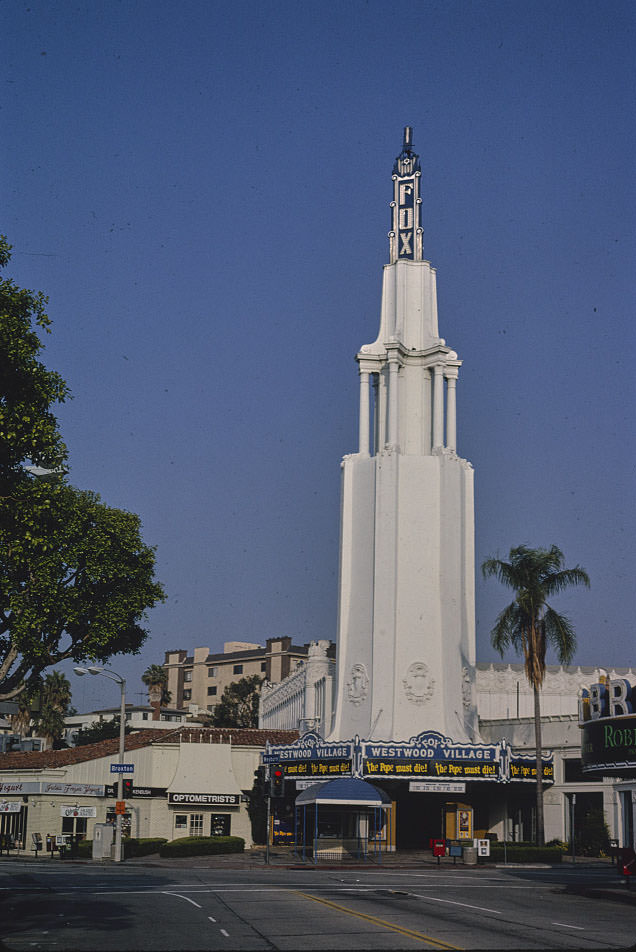
The Brown Derby Restaurant was a symbol of old Hollywood glamour that had survived into the 1970s. Its famous hat-shaped building on Wilshire Boulevard was recognized worldwide. By the late 1970s, it was already a relic of an earlier era, but it still drew visitors and locals alike. Across the city, theaters like the Fox kept their grand facades lit up, offering a touch of the theatrical to ordinary commercial strips.
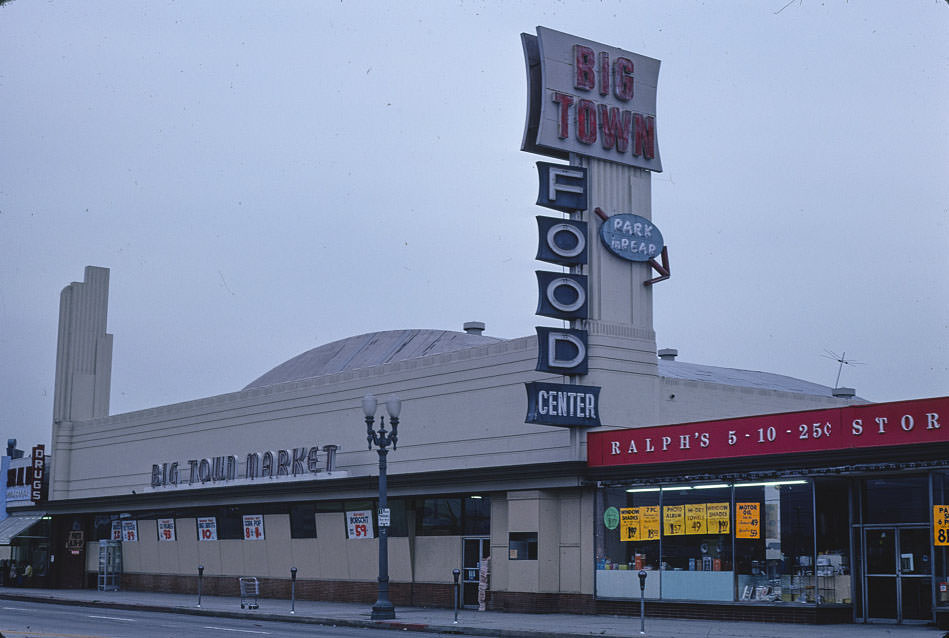
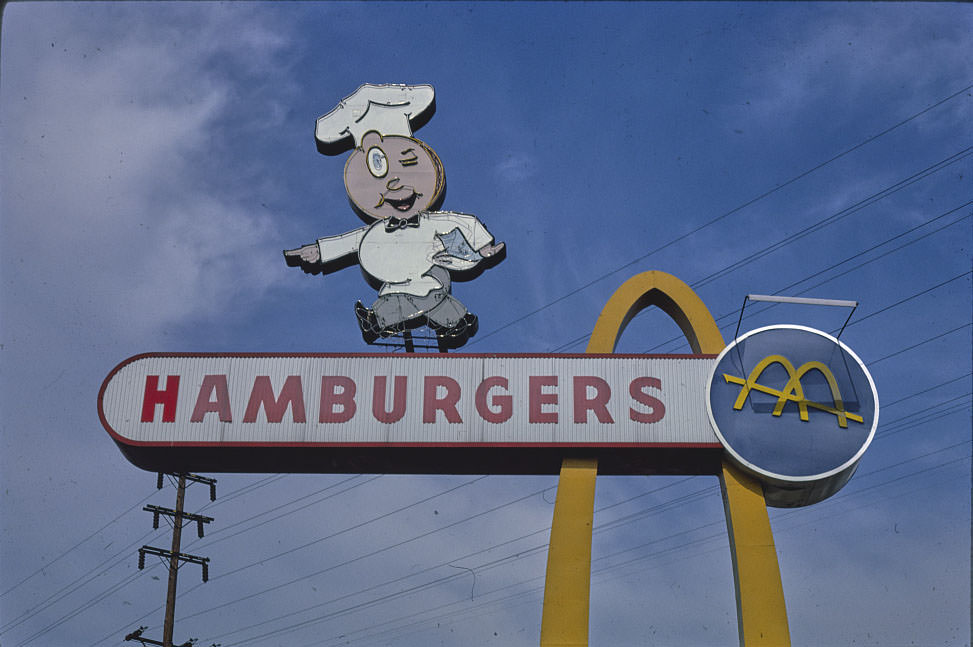
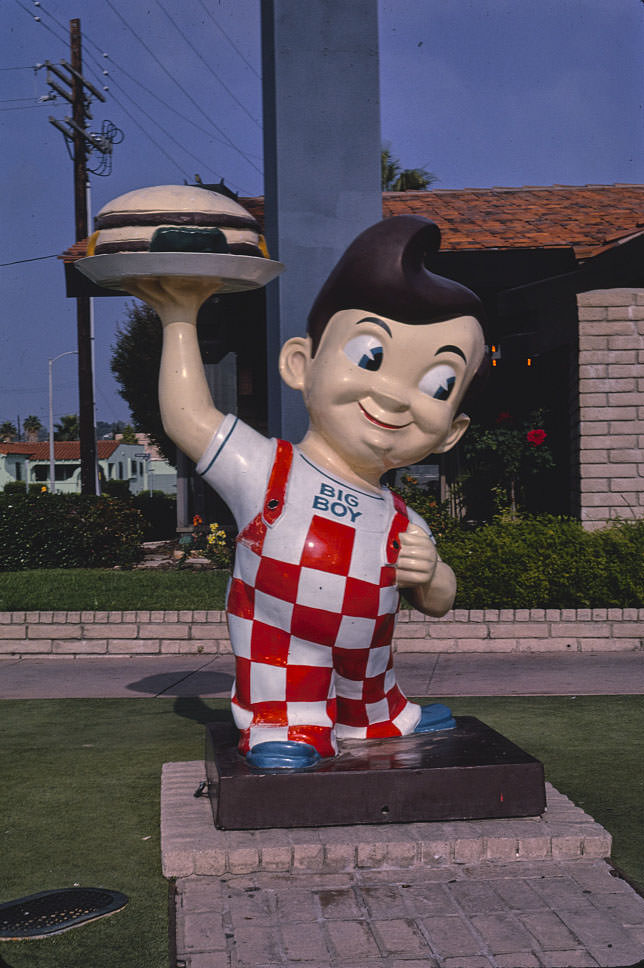
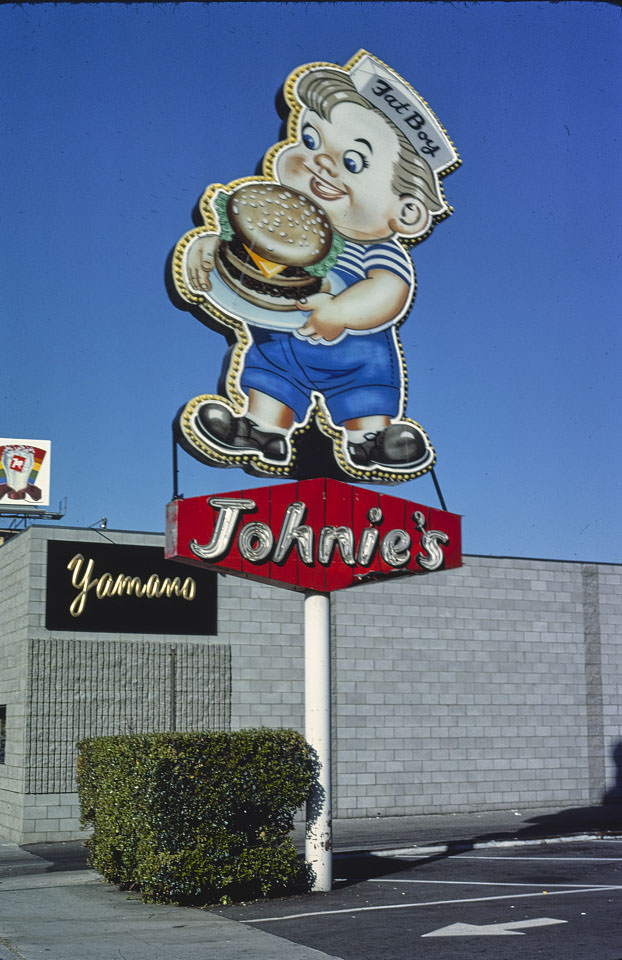
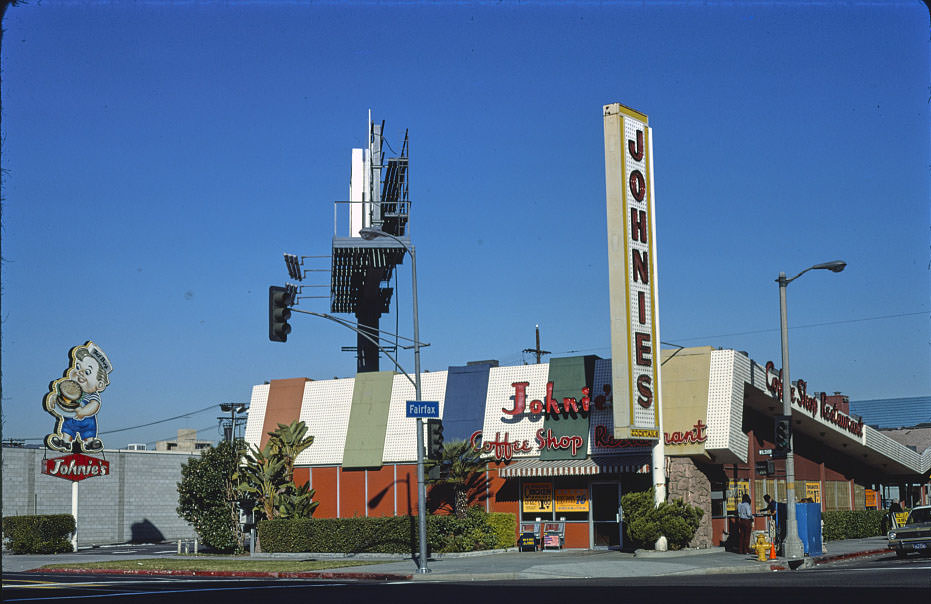
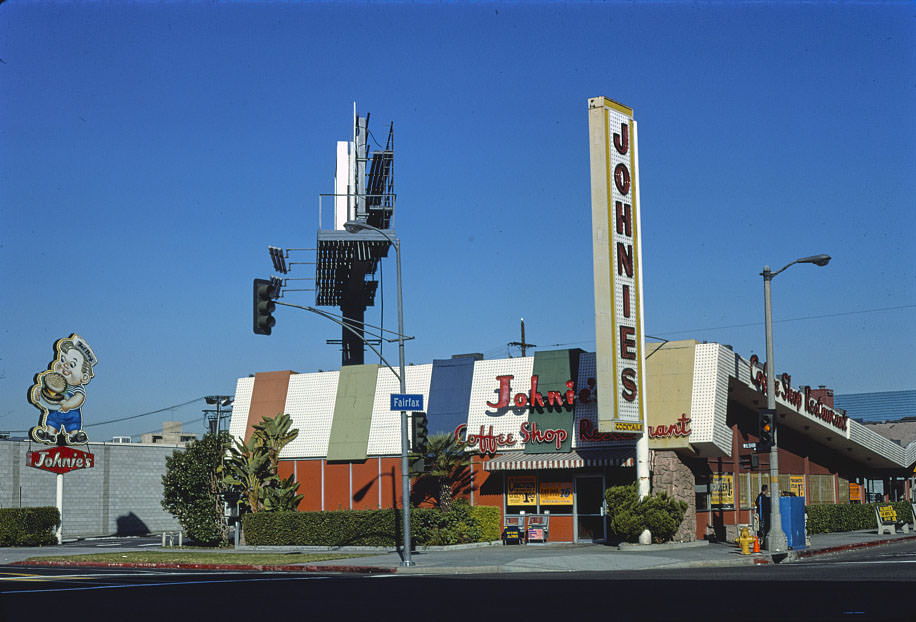
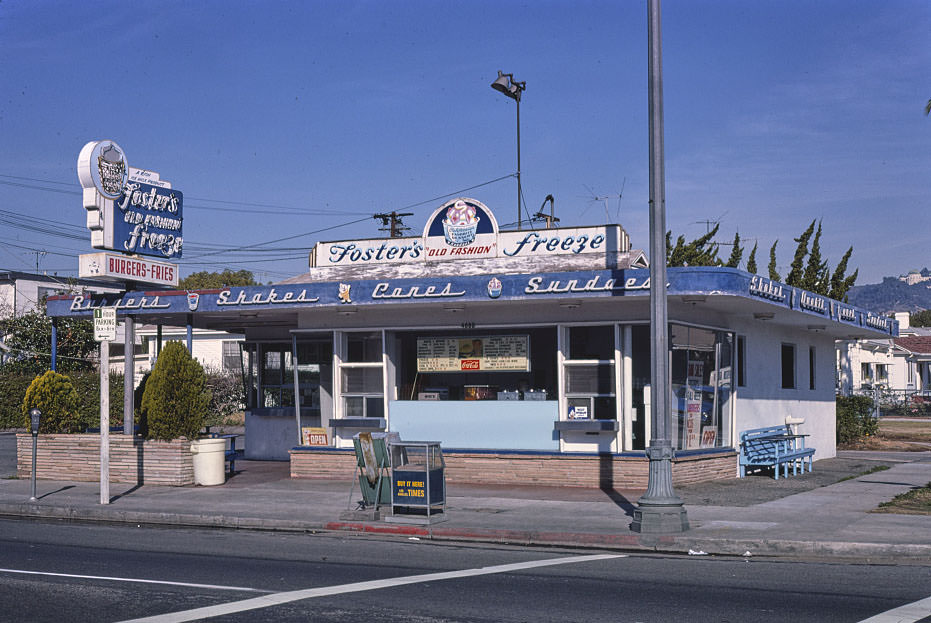
Grocery stores and food centers anchored neighborhood commercial zones. The Big Town Food Center at Pico and La Cienega was one such hub, serving the surrounding residential blocks. Fast food was spreading fast, with McDonald’s and Foster’s Freeze signs rising above rooftops across the county. Johnnie’s Fat Boy, a local burger stand, put its mascot front and center with a sign so large it competed with anything the national chains could put up.
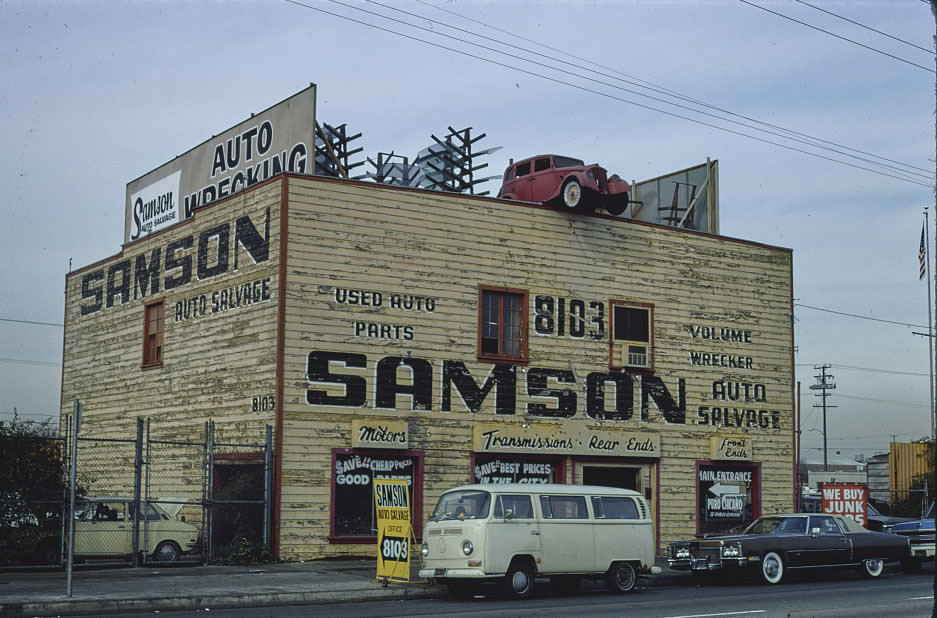
The aerospace industry had given Los Angeles renewed economic strength after the Cold War, and that prosperity trickled down into the everyday commercial life of the city. New businesses opened, strips were built out, and signage grew bolder. Even auto salvage yards like Samson Auto Salvage on South Alameda advertised with confidence, their lots full of the vehicles of a city that had always run on wheels.
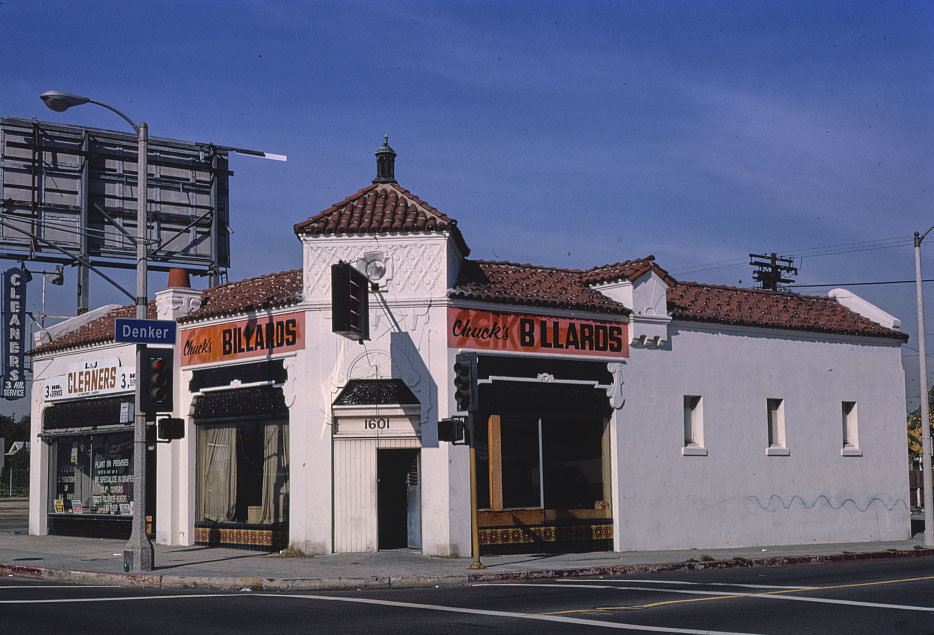
Recreation was just as much a part of the streetscape as commerce. Chuck’s Billiards on Manchester, Easton’s Gym on Beverly Boulevard, and the California Bridge Center on North Fairfax all pointed to a city where leisure had its own dedicated spaces. Gyms, in particular, were gaining new cultural weight in Los Angeles in the late 1970s, as fitness and personal development became central to the city’s identity.
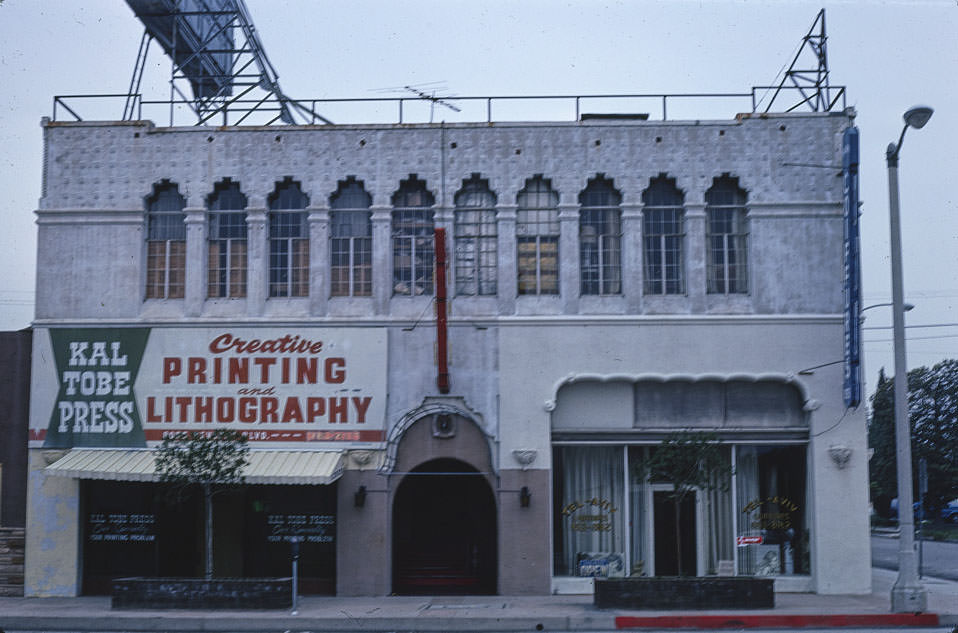
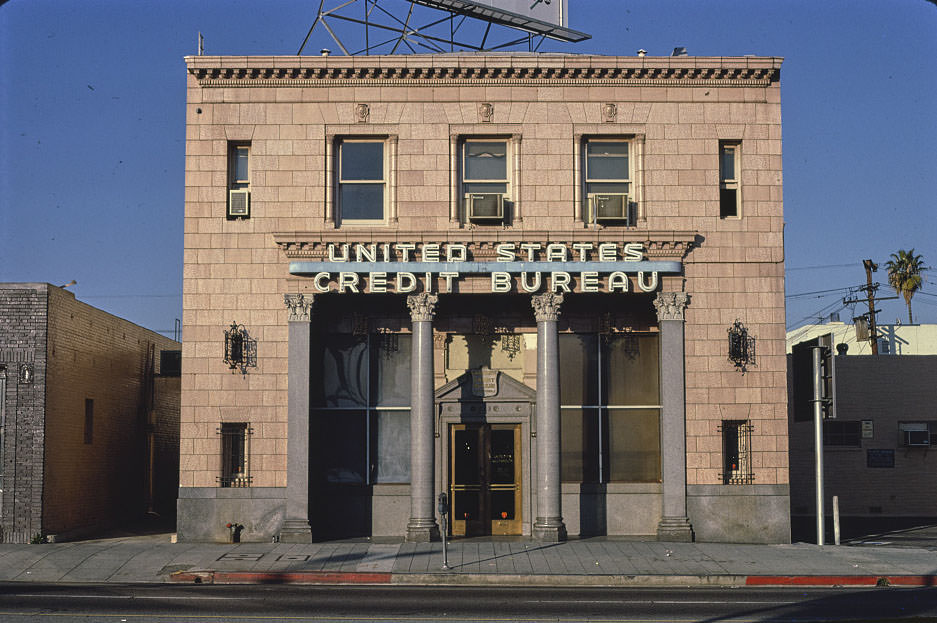
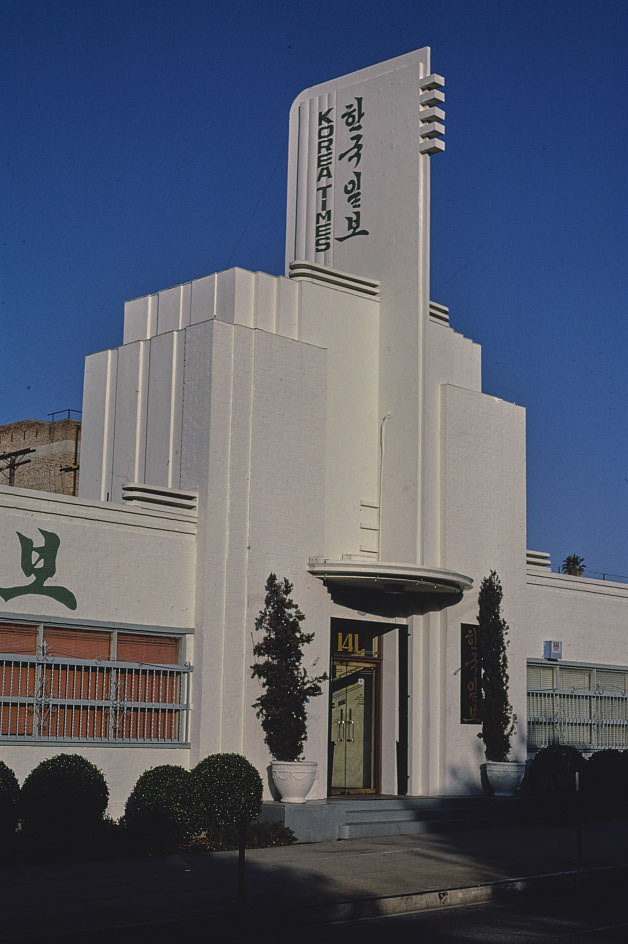
Ethnic communities were reshaping parts of the city’s geography by the late 1970s. The Korea Times Building on Vermont Avenue was a visible marker of a growing Korean American presence in the area that would come to be known as Koreatown. Vermont Avenue itself was a long corridor of change, lined with credit bureaus, restaurants, and storefronts serving a shifting population. Los Angeles was not one city — it was dozens of distinct communities sharing the same streets.
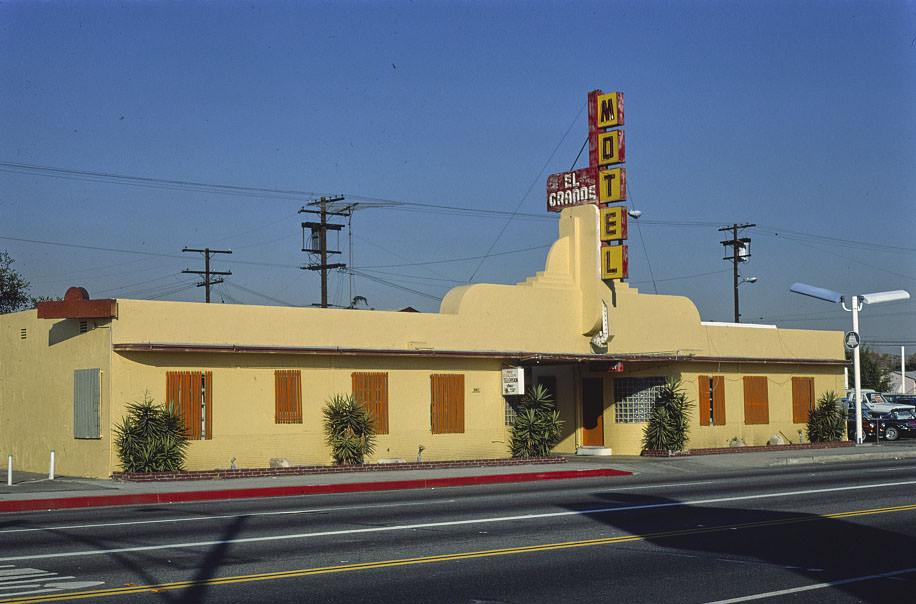
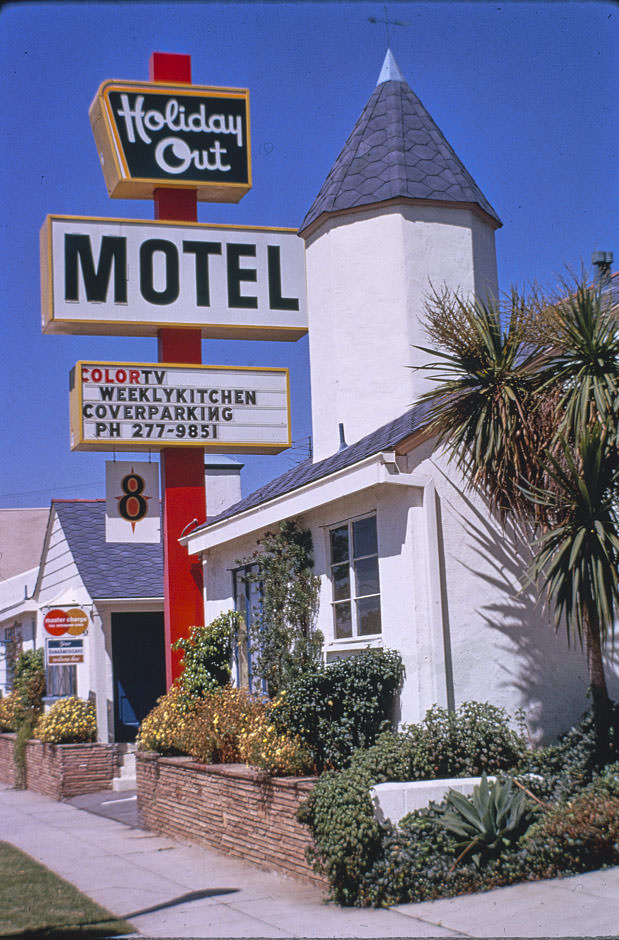
Motels dotted the roadways heading in and out of the city. The El Grande Motel and the Holiday Out Motel were the kinds of places that catered to travelers, workers, and anyone passing through on one of the city’s many arterial roads. Their signs glowed at night, competing for attention in a city where visual noise was part of the landscape. Margolies understood that these buildings — easy to overlook, even easier to demolish — were worth recording.
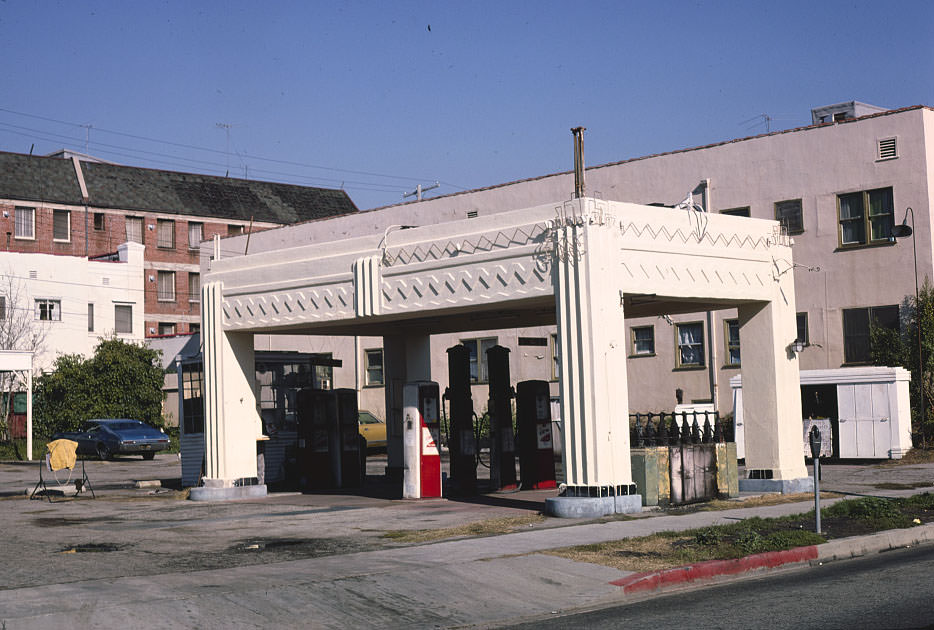
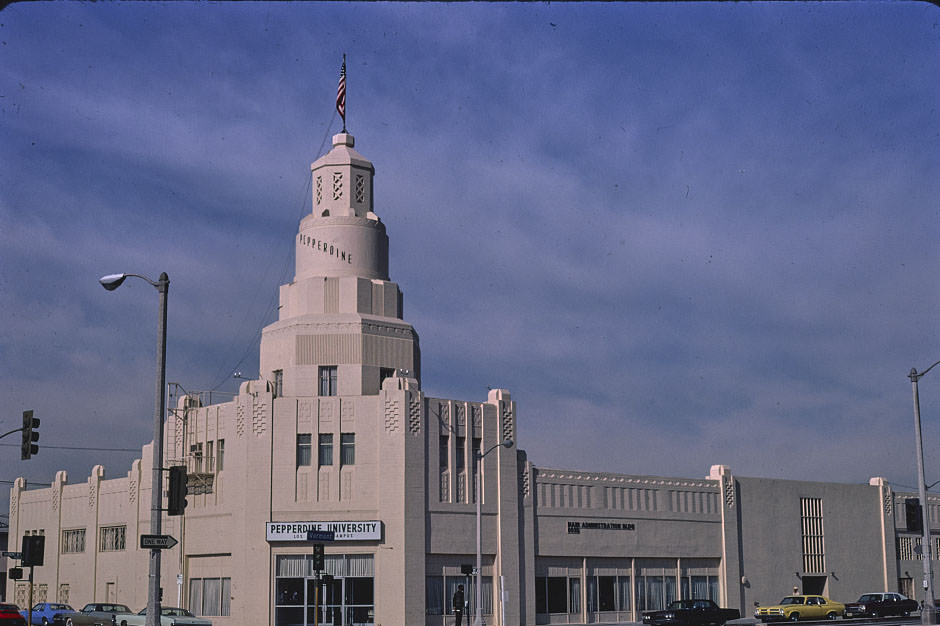
Pepperdine University still maintained its Los Angeles campus at 81st and Vermont in 1979, before the university’s full transition to its Malibu location. The campus sat in a South Los Angeles neighborhood that reflected the city’s working-class character. A few miles away, the Fox Theater stood as a reminder of when going to the movies meant entering an ornate palace built to impress.
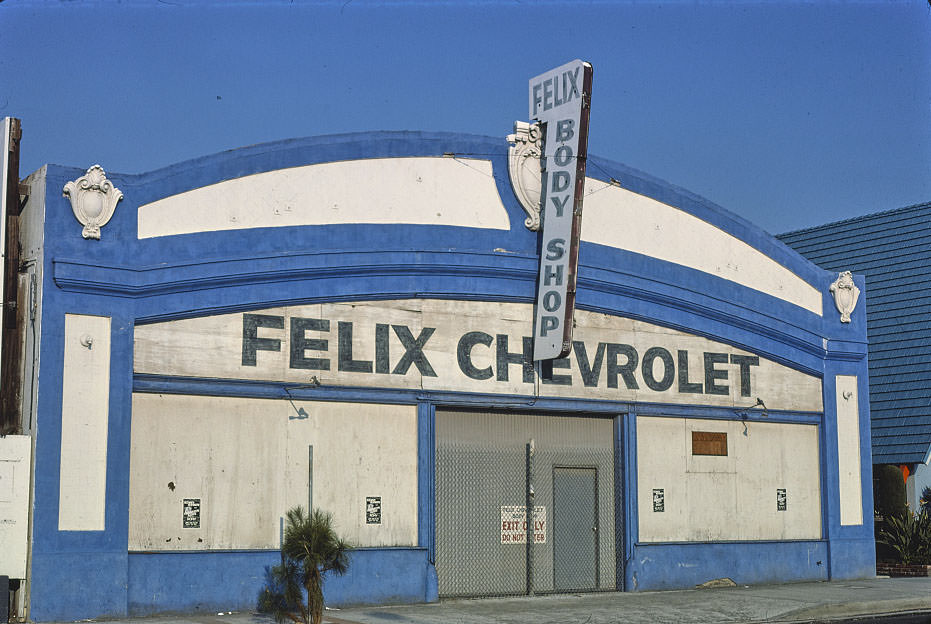
Eagle Rock, Southgate, Mar Vista, San Pedro, Maywood, Van Nuys — Margolies moved through all of them, treating each neighborhood’s commercial strip as worthy of the same attention. A tire shop in Mar Vista got the same careful framing as the Coca-Cola building downtown. That democratic approach to the city’s visual landscape is what makes this collection so valuable. These photos show Los Angeles as it actually was — not the Hollywood version, but the real one.
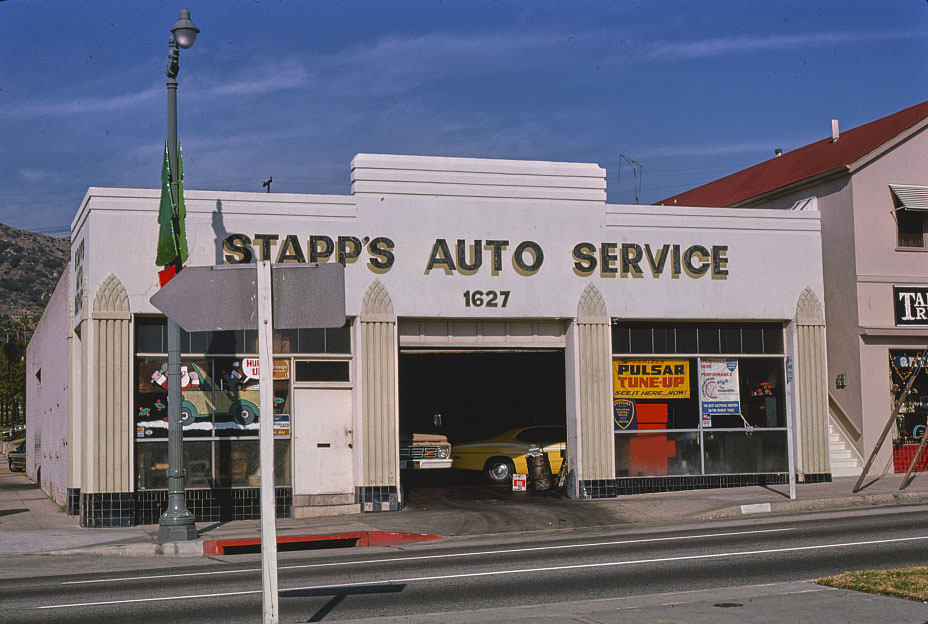
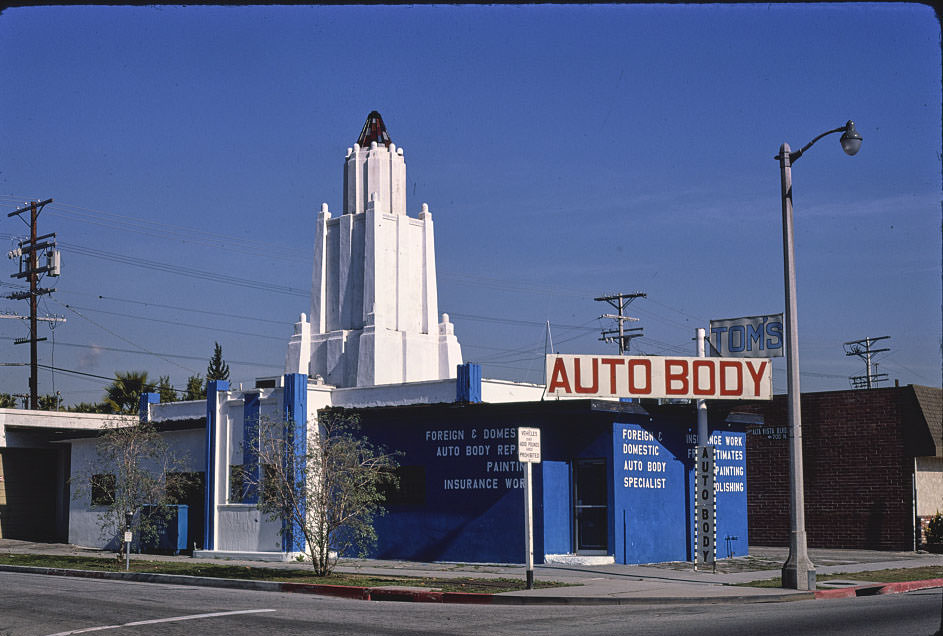
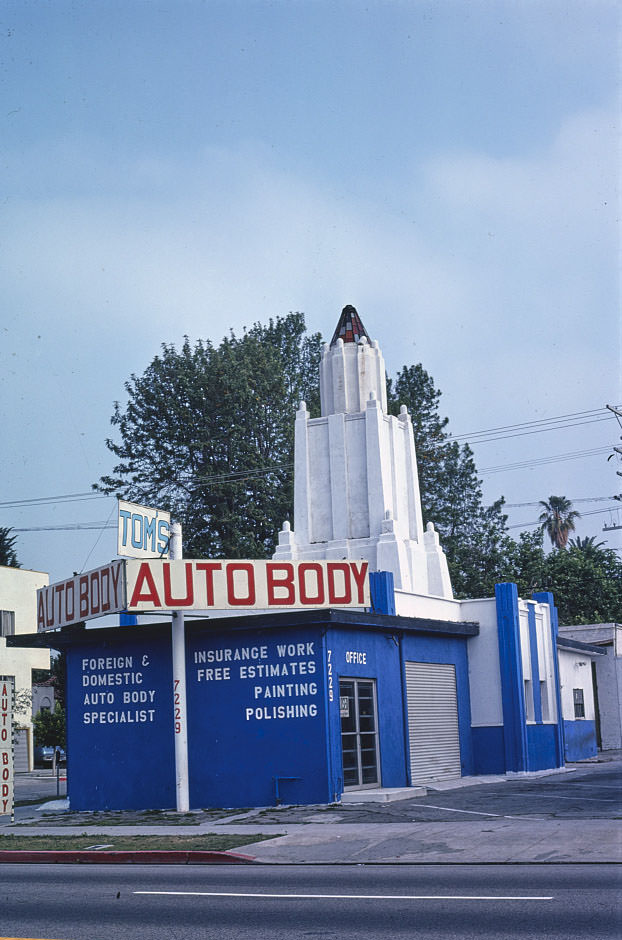
Auto service shops were as much a part of the city’s rhythm as its entertainment venues. Stapp’s Auto Service in Eagle Rock, Tom’s Auto Body on West Melrose, and Ang’s Service Mobil kept the city’s enormous car culture running. Next door to these shops, restaurants like Tom’s Cafe and King’s Fried Chicken fed the workers and residents who made the city function day to day.
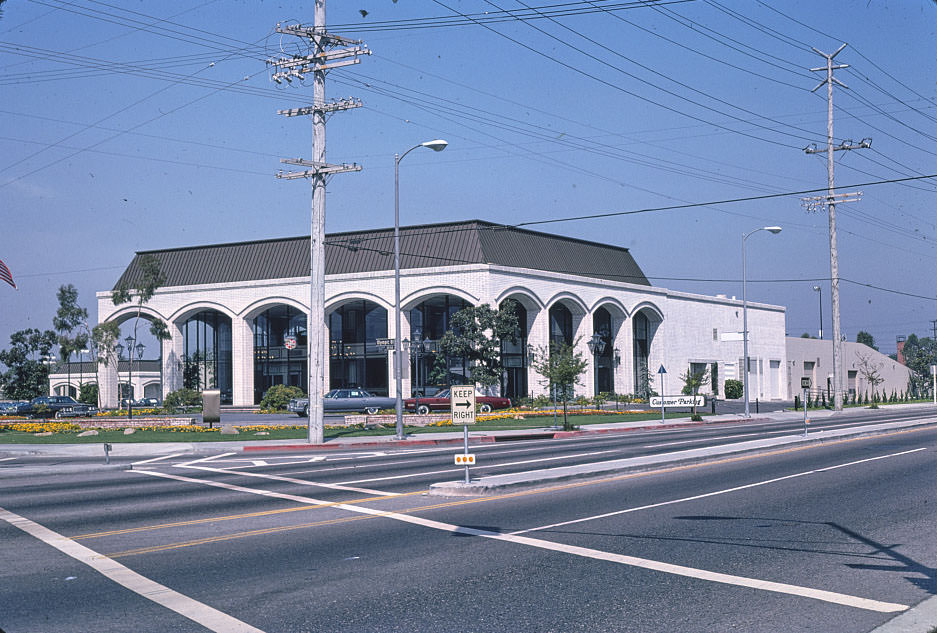
![Ruth [i.e. Roth] Draperies, Beverly Boulevard, Los Angeles, California, 1978](https://www.bygonely.com/wp-content/uploads/2022/09/Los_Angeles_late-1970s_43.jpg)





It’s true, America used to be cooler before corporate took over.
The McDonladization of society
During the 1970s, the middle class grew large enough that most Americans (including Californians) were able to afford a house and live comfortably on one income. Since then, things have gone downhill.
Hoot Owl Cafe is terrifying.
Batcafe
Good ol’ south gate for ya… I actually grew up off long beach blvd in south gate. I wonder where this was at
Needs more smog
From the 1960s to the early 1980s, my great grandpa owned a gas station somewhere off Wilshire.
What happened to it?
Great question! He sold it once he retired and moved to Palmdale. I can’t find the address of the one on Wilshire, but he shared one with a family friend off of sunset and north vista. Now it looks like a motel / parking lot. In the 1940s, my other great grandpa had an auto camp / diner in Thousand Oaks.
Good lord it looked bad