
At the turn of the 20th century, London was the beating heart of the British Empire — a vast, crowded, ever-moving city of millions. Rising above its terraced streets and smoky rooftops, the spires, towers, and domes of hundreds of churches defined the skyline. These buildings were not decorative backdrops. They were active, working centers of faith and community life, each one rooted in its own neighborhood and congregation.
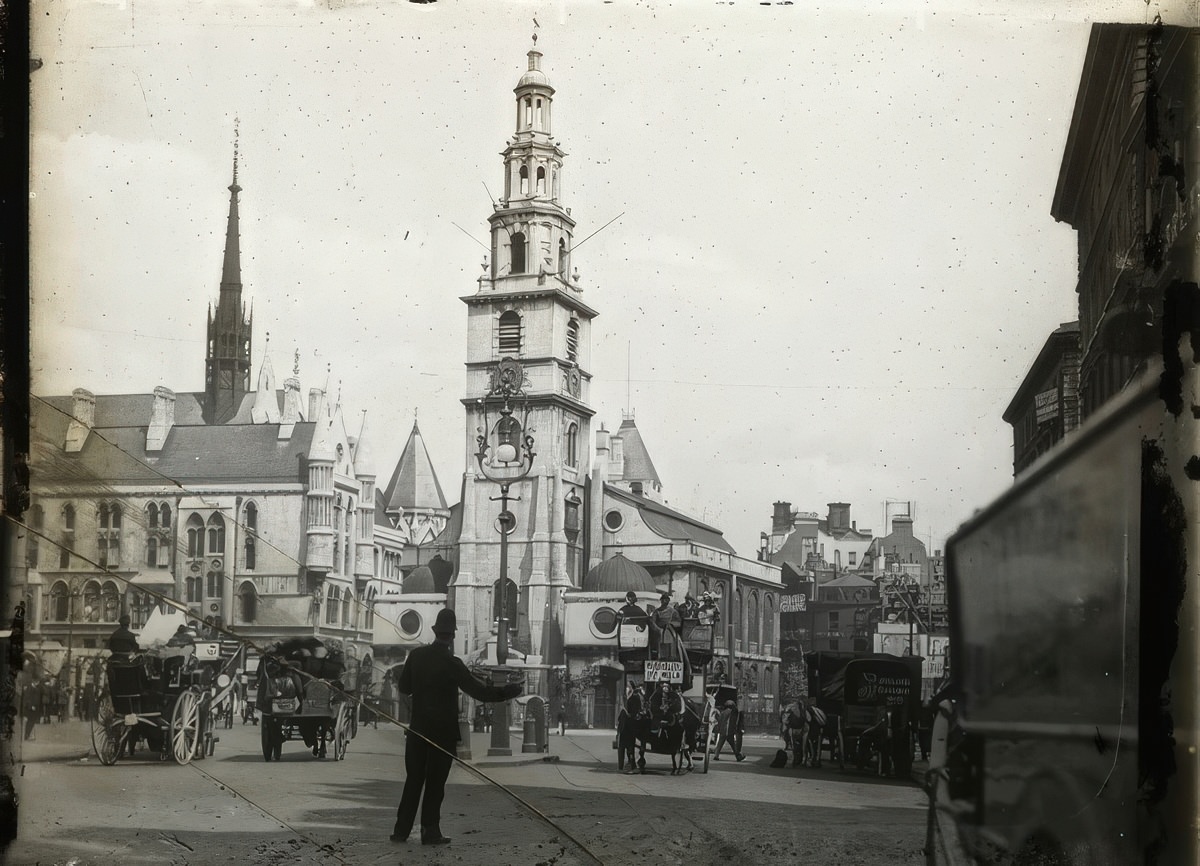
The Church of England held the largest footprint across the city, with parish churches spread through every district. But London’s religious geography was far more varied than that. Roman Catholics, Methodists, Baptists, Congregationalists, and Presbyterians all maintained their own places of worship across the capital. No single denomination owned the city’s spiritual life.
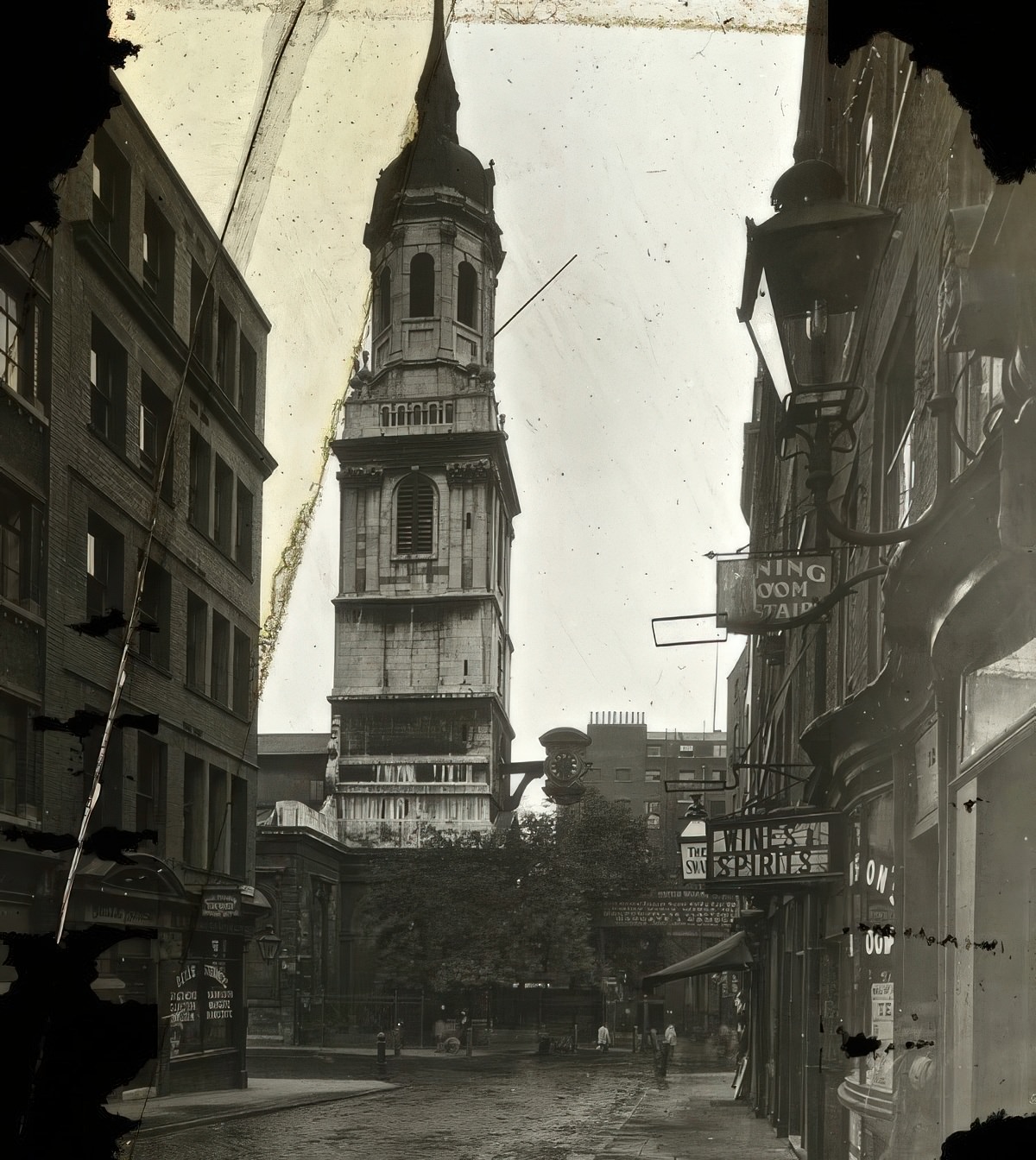
The City of London — the historic Square Mile — was especially dense with churches. Many had been built or rebuilt by Sir Christopher Wren and his contemporaries after the Great Fire of 1666 swept through and destroyed the medieval city. These Baroque buildings were recognizable by their classical columns, elegant proportions, and distinctive steeples that punctuated the roofline of the financial district.
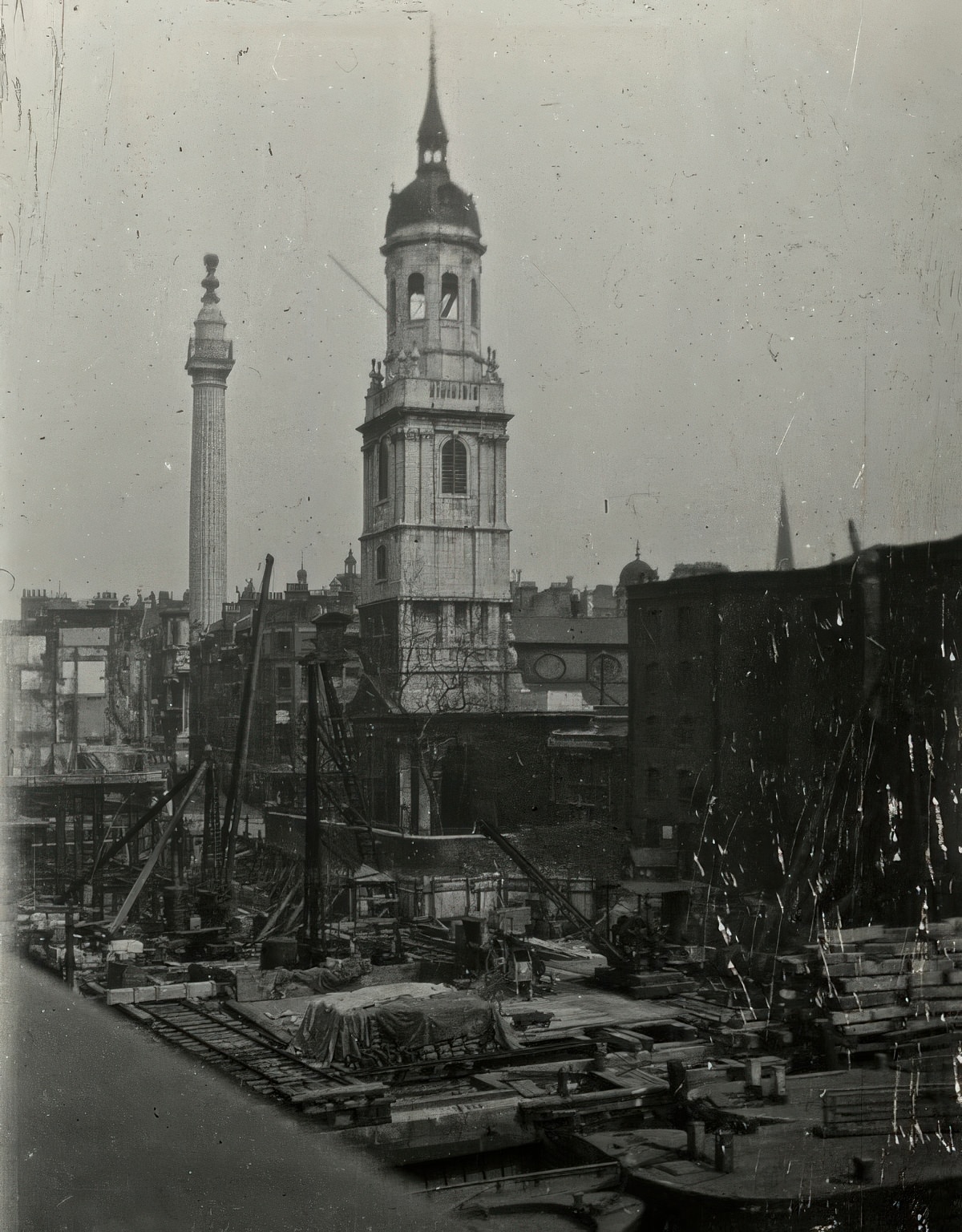
St. Magnus the Martyr, sitting close to the old London Bridge, was one such Wren church. Its tall steeple rose beside the Monument to the Great Fire — two structures built in the same era, almost neighbors, both marking the city’s recovery from that catastrophe. Churches like this one had served the same parishes for over two centuries by the time these photographs were taken.
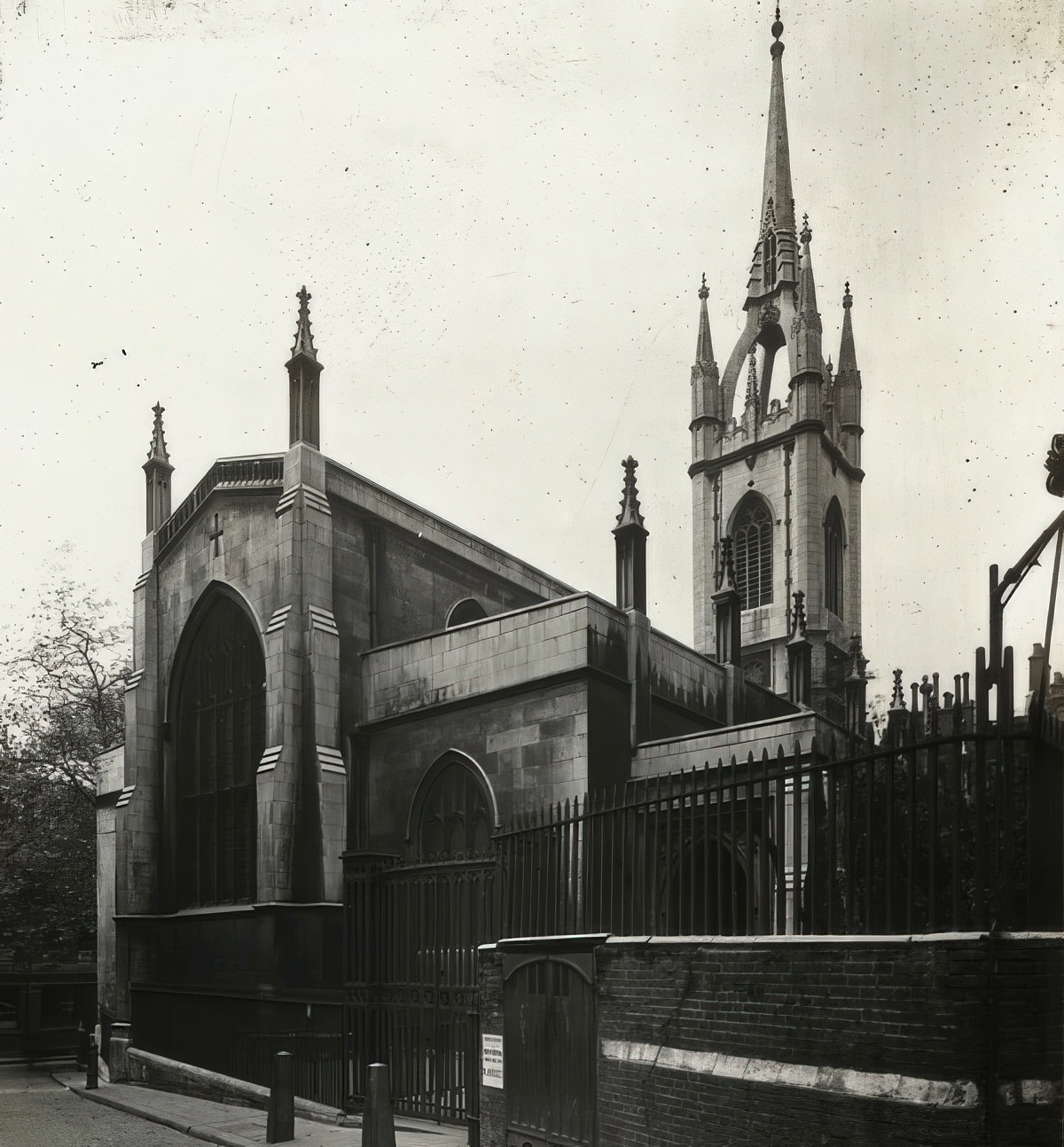
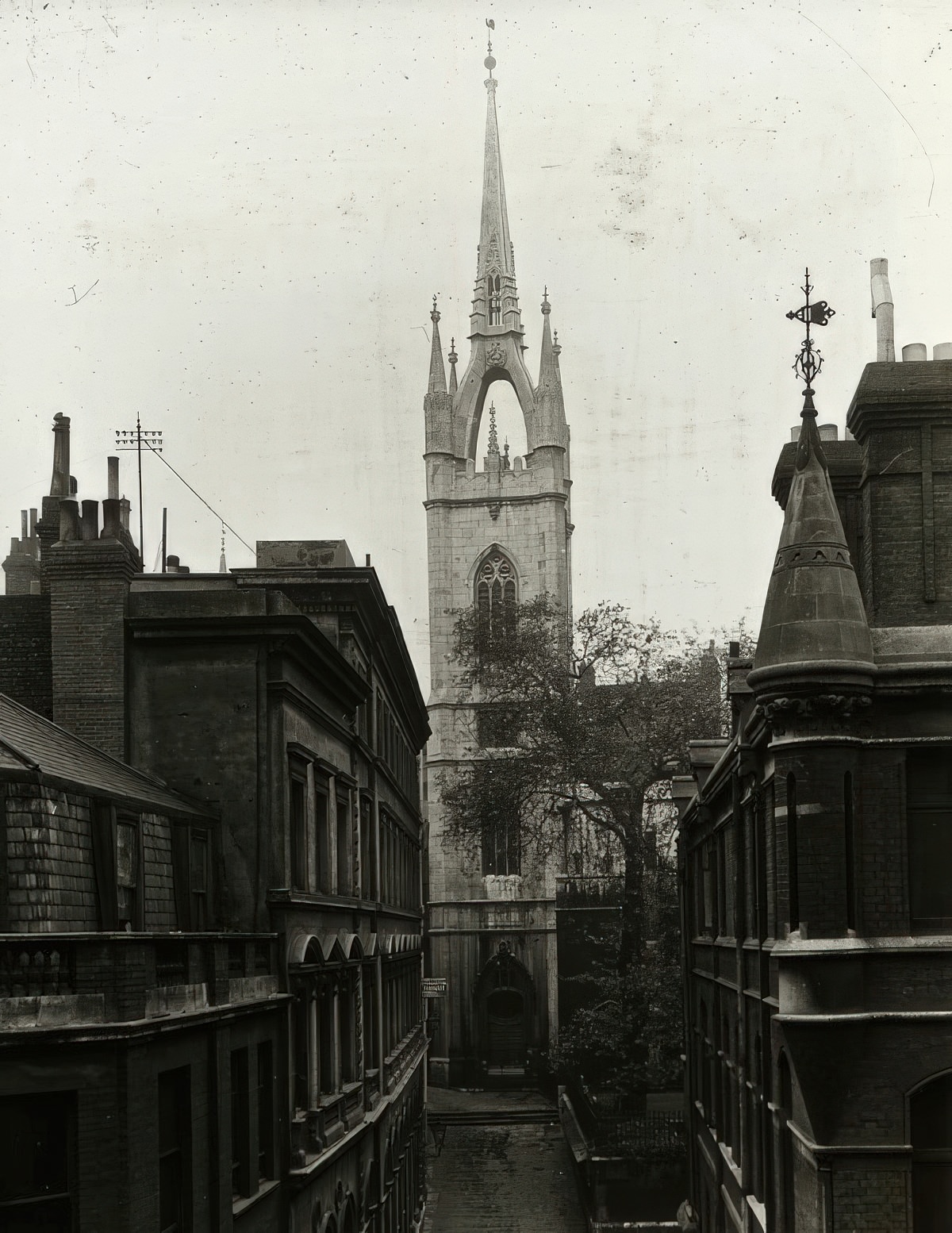
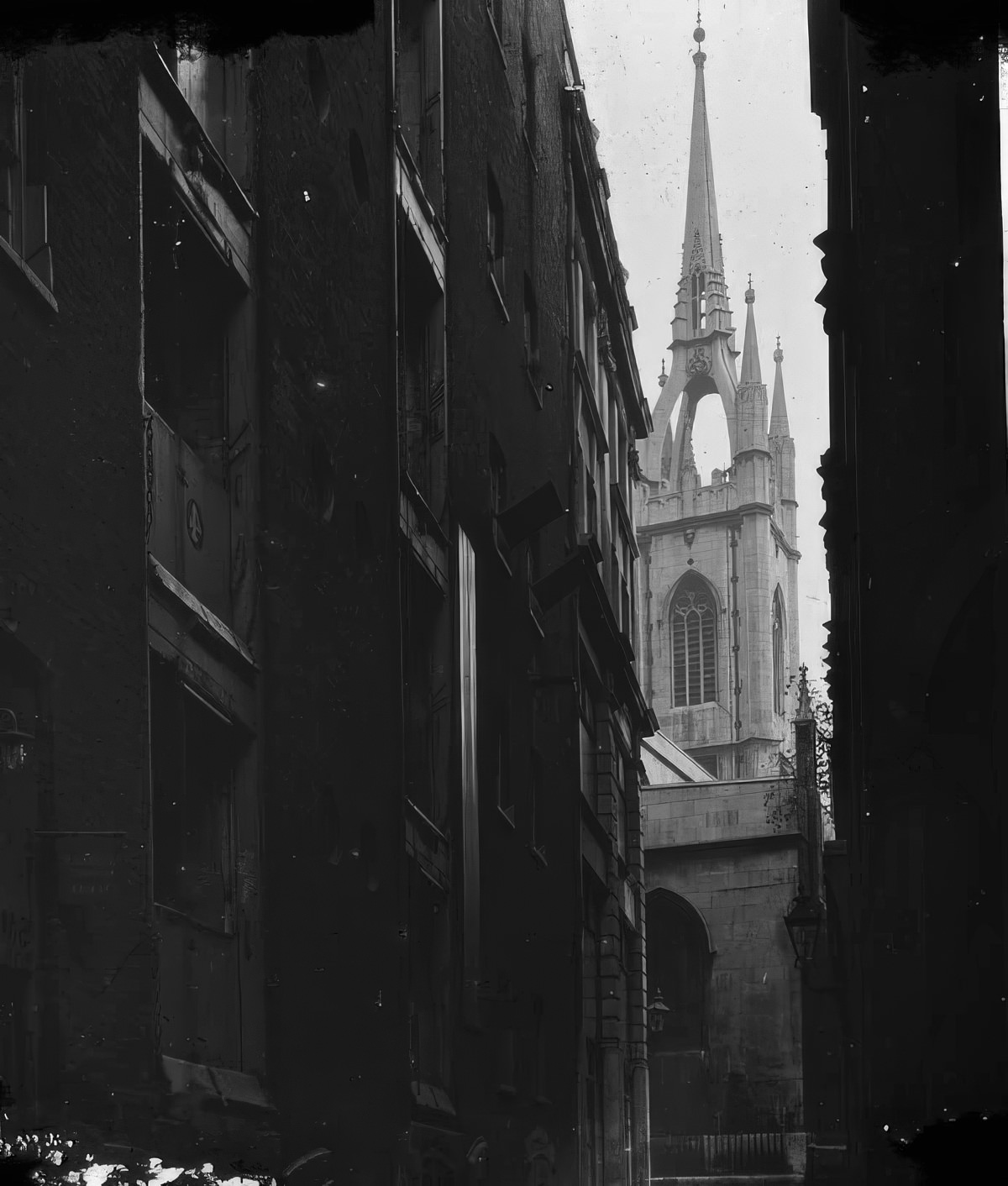
St. Dunstan in the East presented a layered history. Wren had added a Gothic-style tower and steeple to the older medieval body of the church after the Fire. The result was an unusual combination of styles that stood as a quiet curiosity among the City’s streets in the early 1900s.
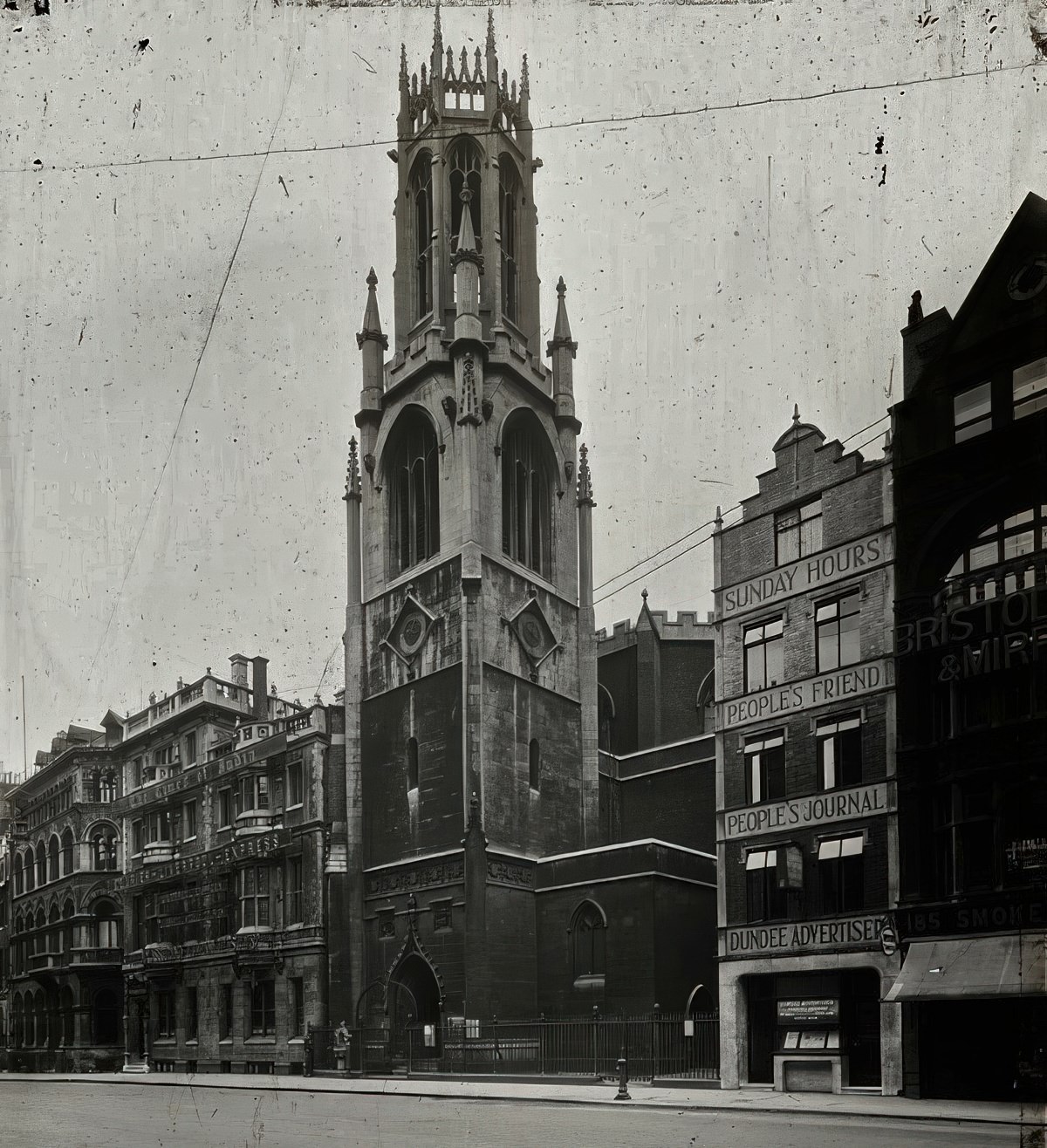
Fleet Street, one of London’s busiest and most famous thoroughfares, was home to St. Dunstan in the West — a separate church entirely from its eastern namesake. Its octagonal lantern tower was a striking and unusual sight along a street otherwise dominated by newspaper offices, law chambers, and passing traffic. Churches on busy commercial streets like Fleet Street served populations of workers as much as residents.
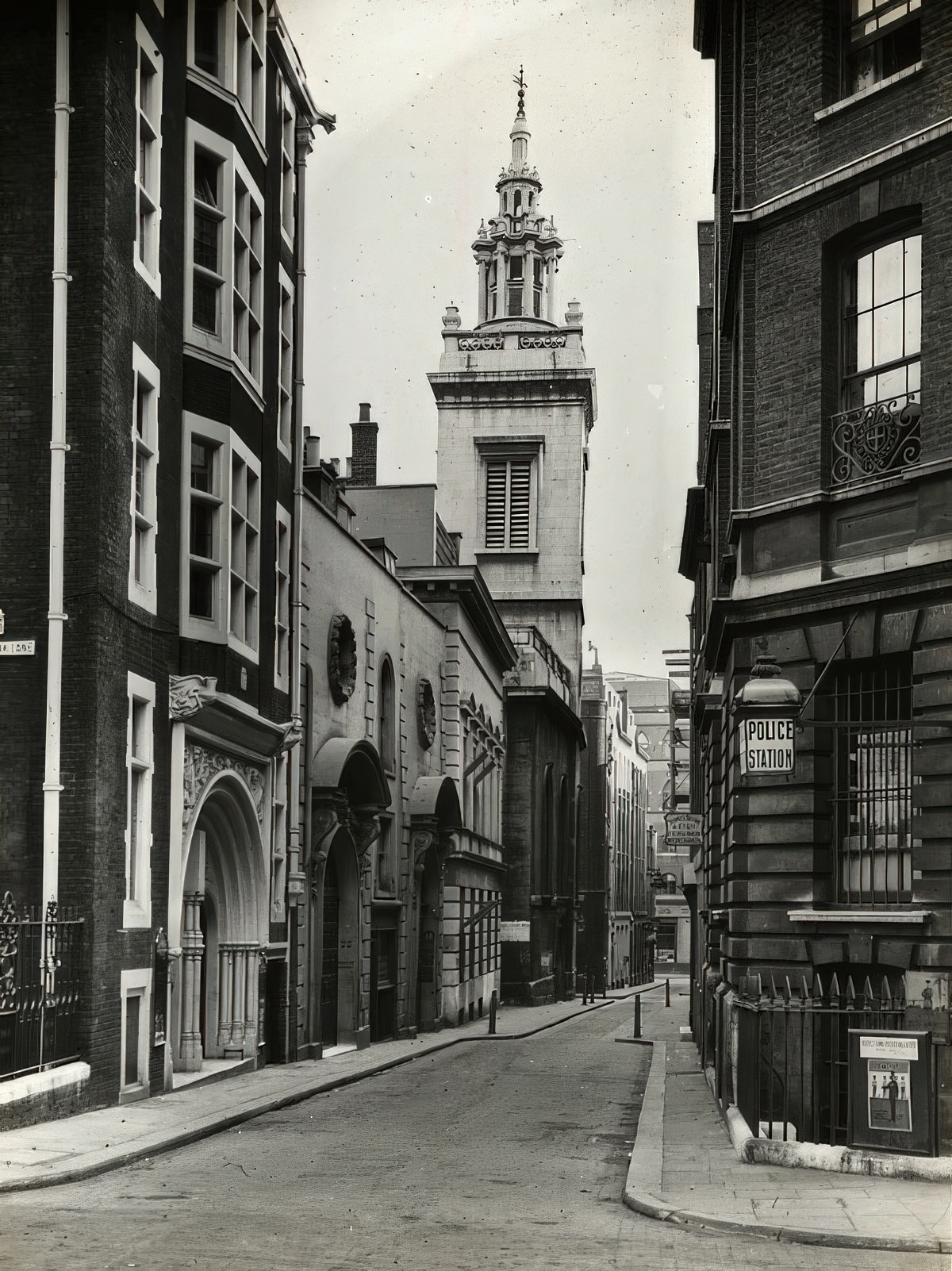
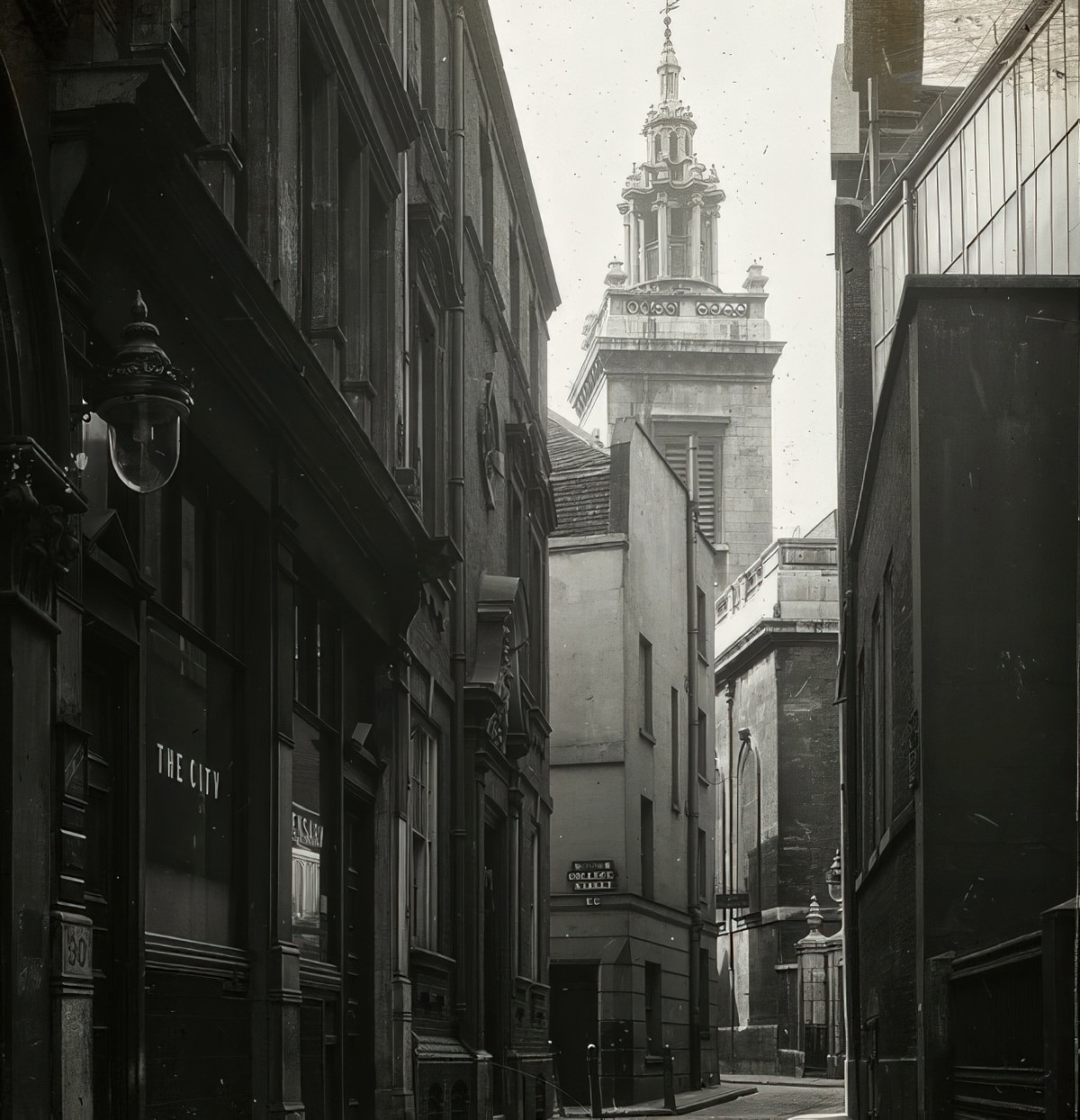
St. Michael Paternoster Royal, tucked into College Hill in the City, was another of Wren’s rebuilds. Its name carried echoes of a medieval street market — the Paternoster, where rosary beads were sold — and a corruption of ‘La Reole,’ a French wine-trading district nearby. The church was notable as the burial place of Richard Whittington, the famous medieval Lord Mayor of London.
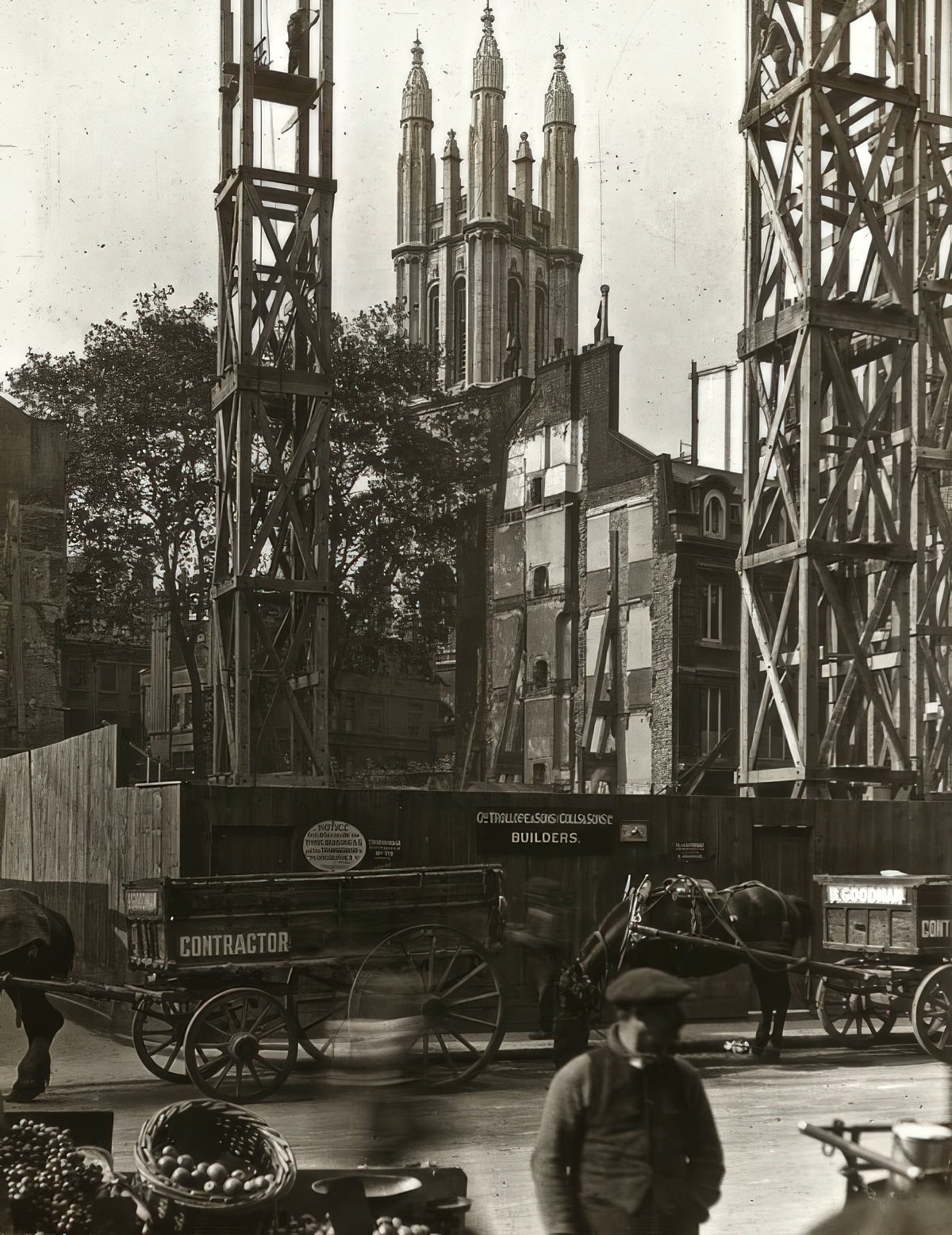
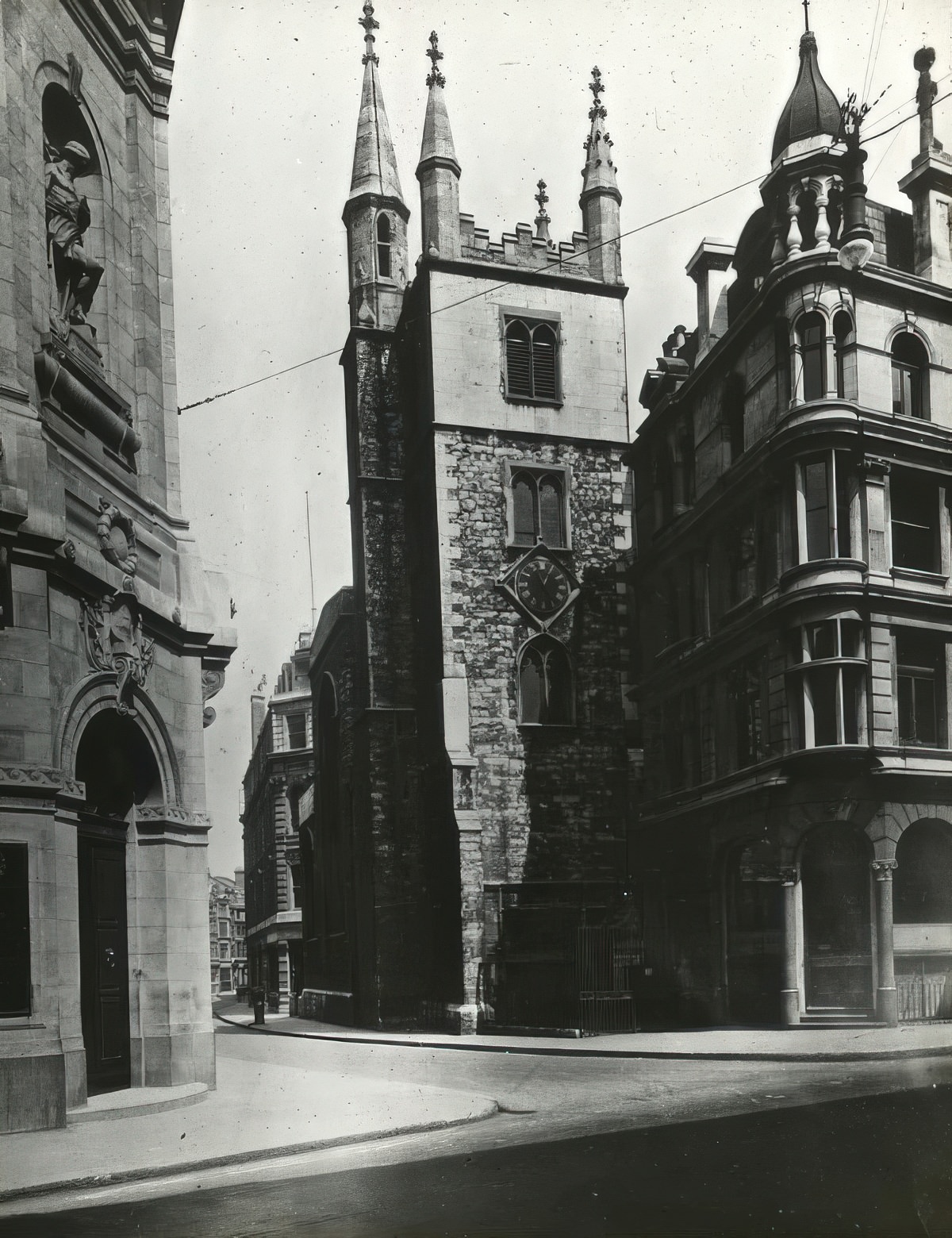
St. Michael, Cornhill stood on one of the City’s oldest sites, its origins stretching back to before the Norman Conquest. By the early 20th century, it presented a Gothic tower added in the 1700s, making it one of many City churches that carried the marks of multiple eras of building and rebuilding. The stone surfaces of these older churches often ran dark with soot — decades of coal smoke from London’s homes and industries had stained the Portland limestone that Wren favored.
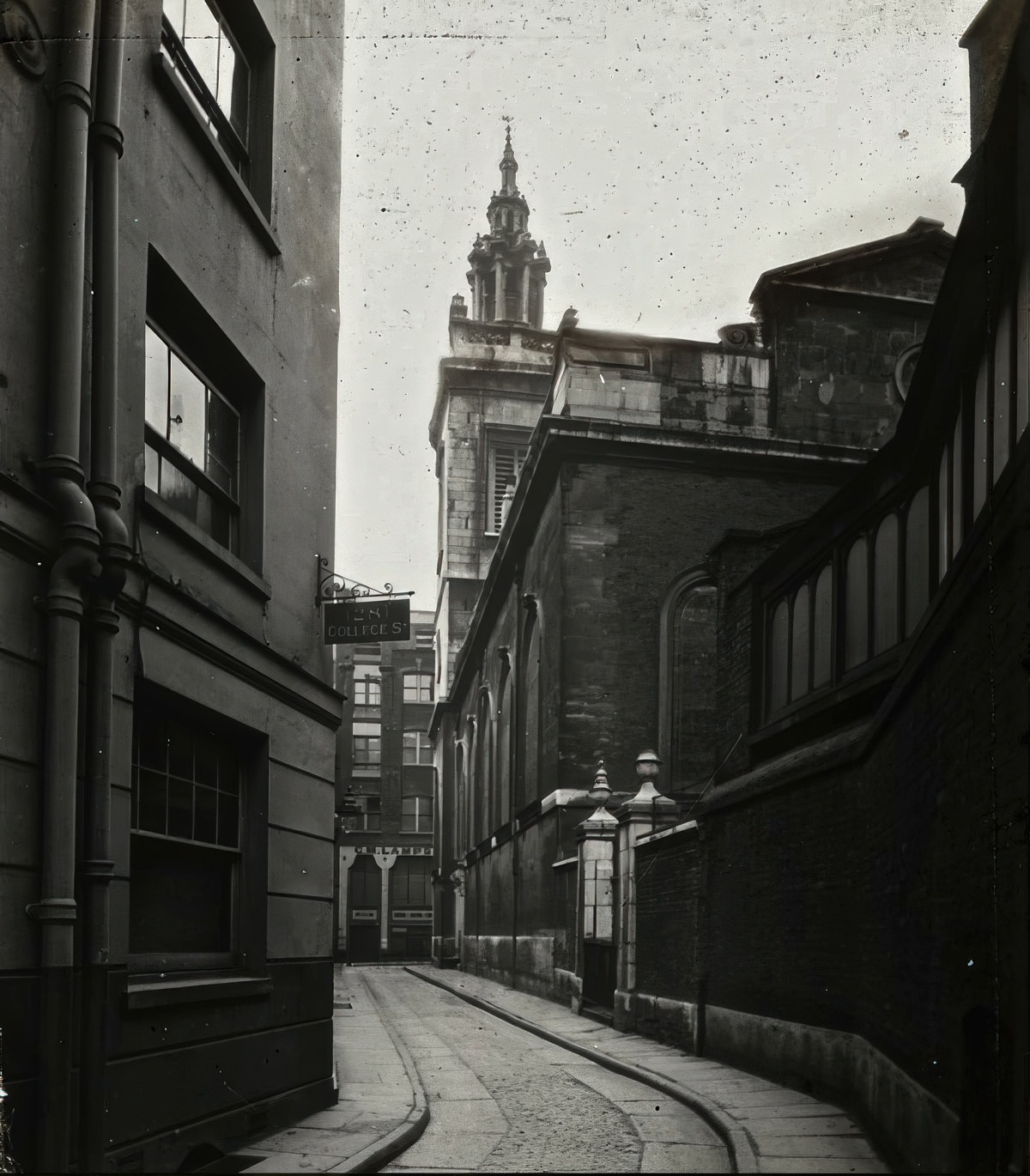
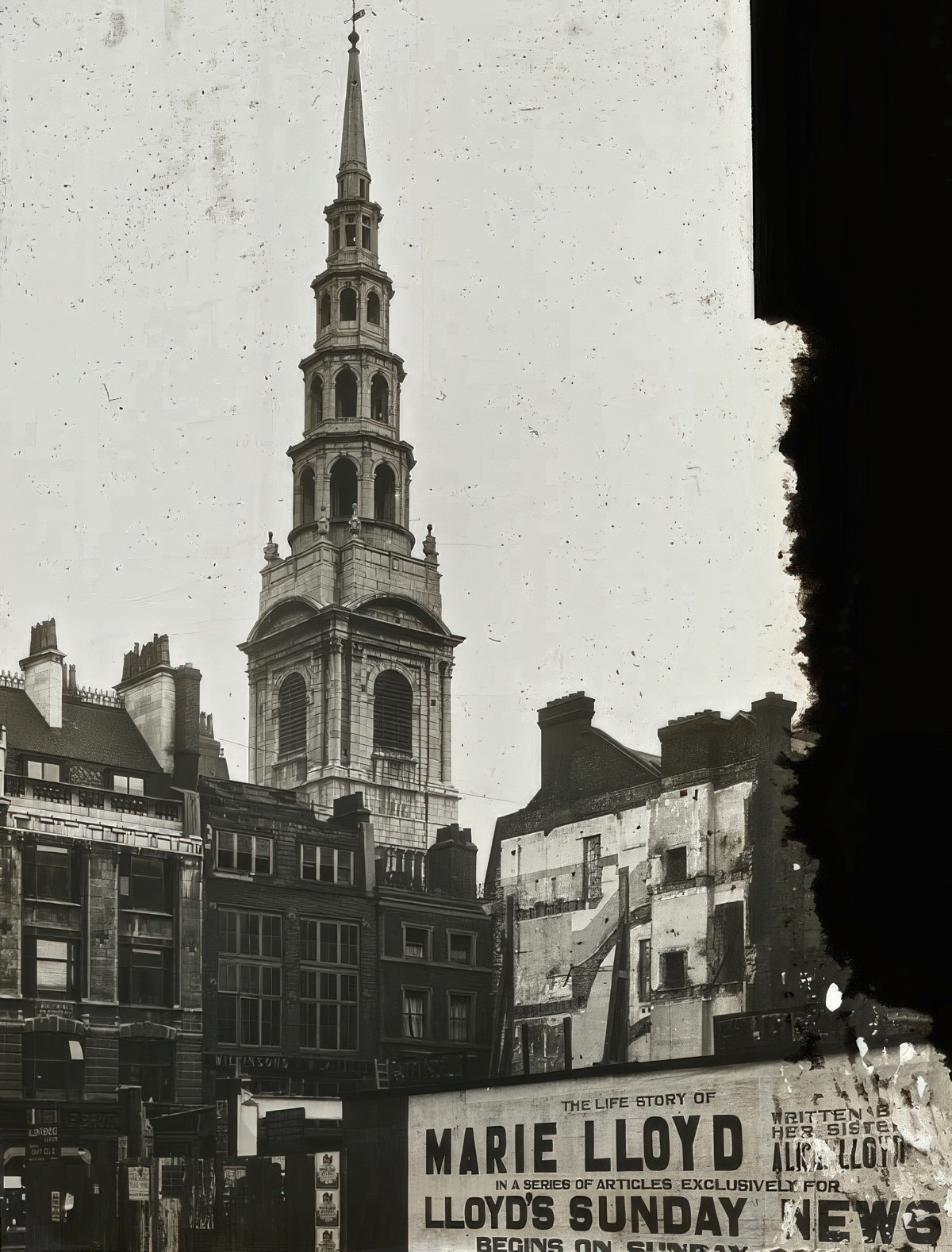
St. Bride’s on Fleet Street is often called the journalists’ church, given its location in the heart of London’s press district. Its Wren steeple — a series of diminishing octagonal tiers — was said to have inspired the tiered shape of the traditional wedding cake. By the early 1900s it sat surrounded by the clatter and ink-smell of the newspaper trade that defined the street.
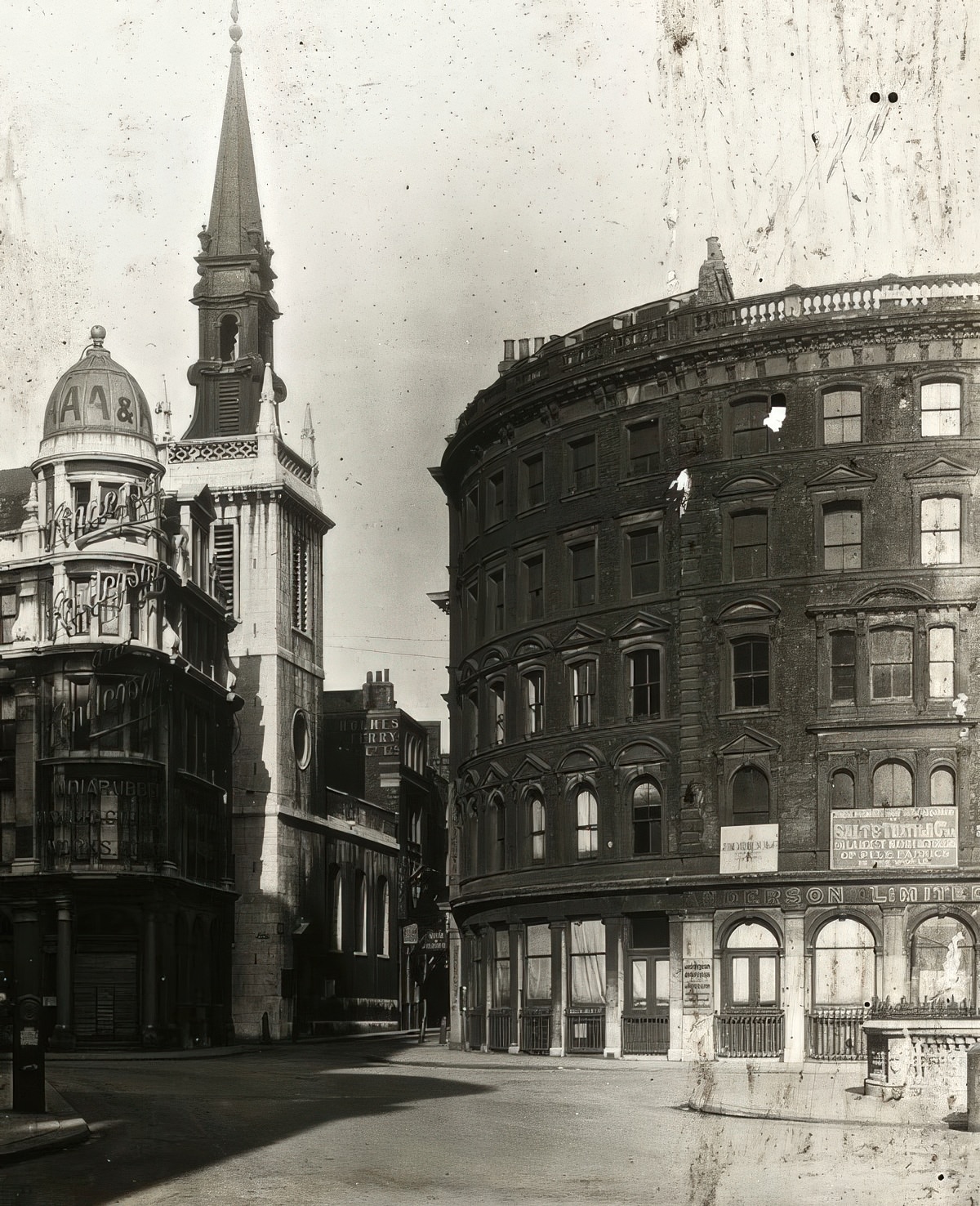
Some churches that appear in photographs from this era no longer exist in the same form. St. Augustine on Watling Street, another Wren church photographed in the early 1920s, was eventually absorbed into St. Paul’s School. The tower survives today, but the full church as it stood in these images is gone. This fate was not uncommon — the City’s declining residential population meant several Victorian and earlier churches lost their congregations over the following decades.
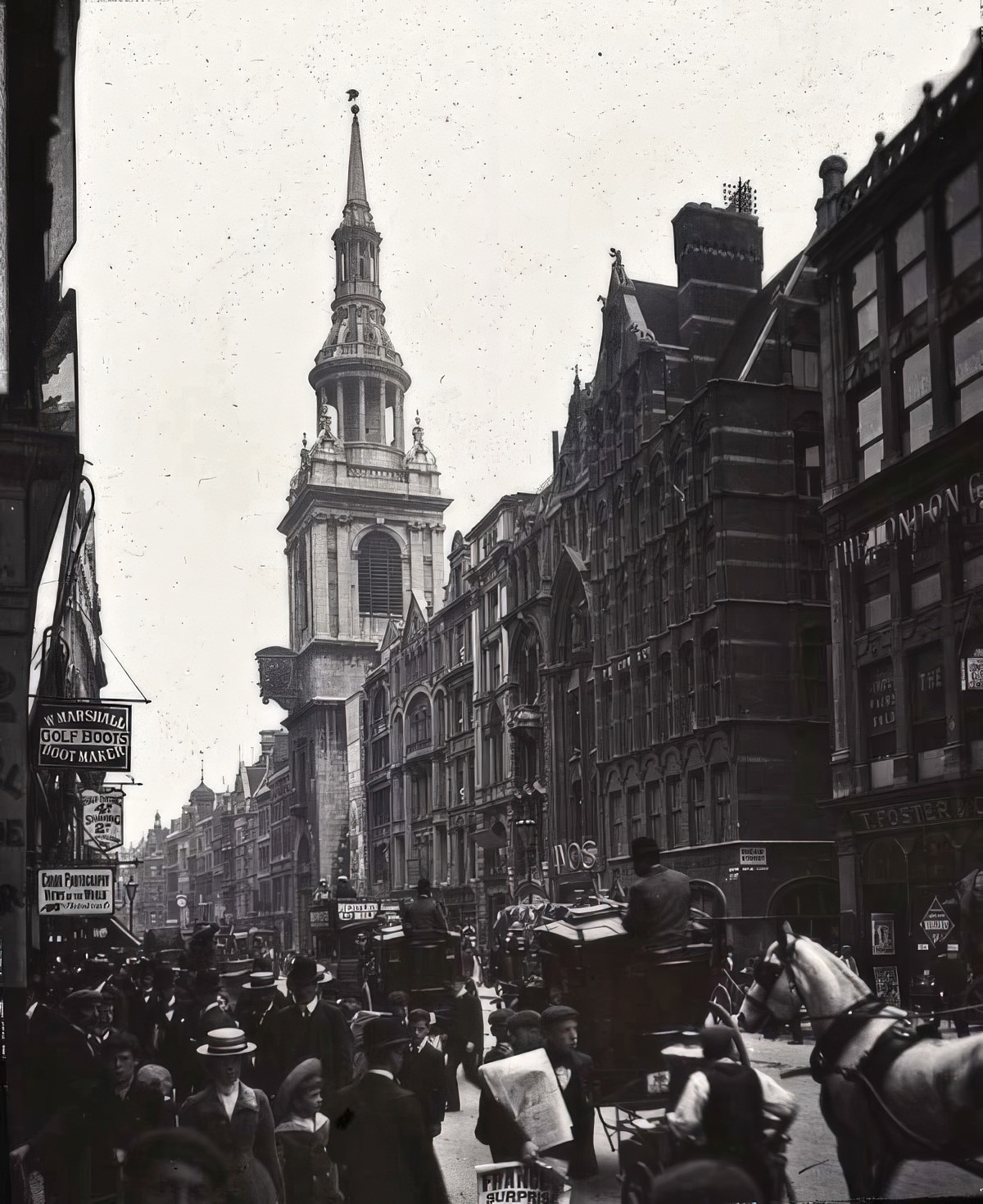
St. Mary le Bow on Cheapside was — and remains — one of London’s most famous churches. Its great bells gave rise to the tradition that a true Cockney is someone born within earshot of Bow Bells. The church’s Wren steeple was among the most admired in the city, rising in elegant stages above Cheapside’s busy market street.
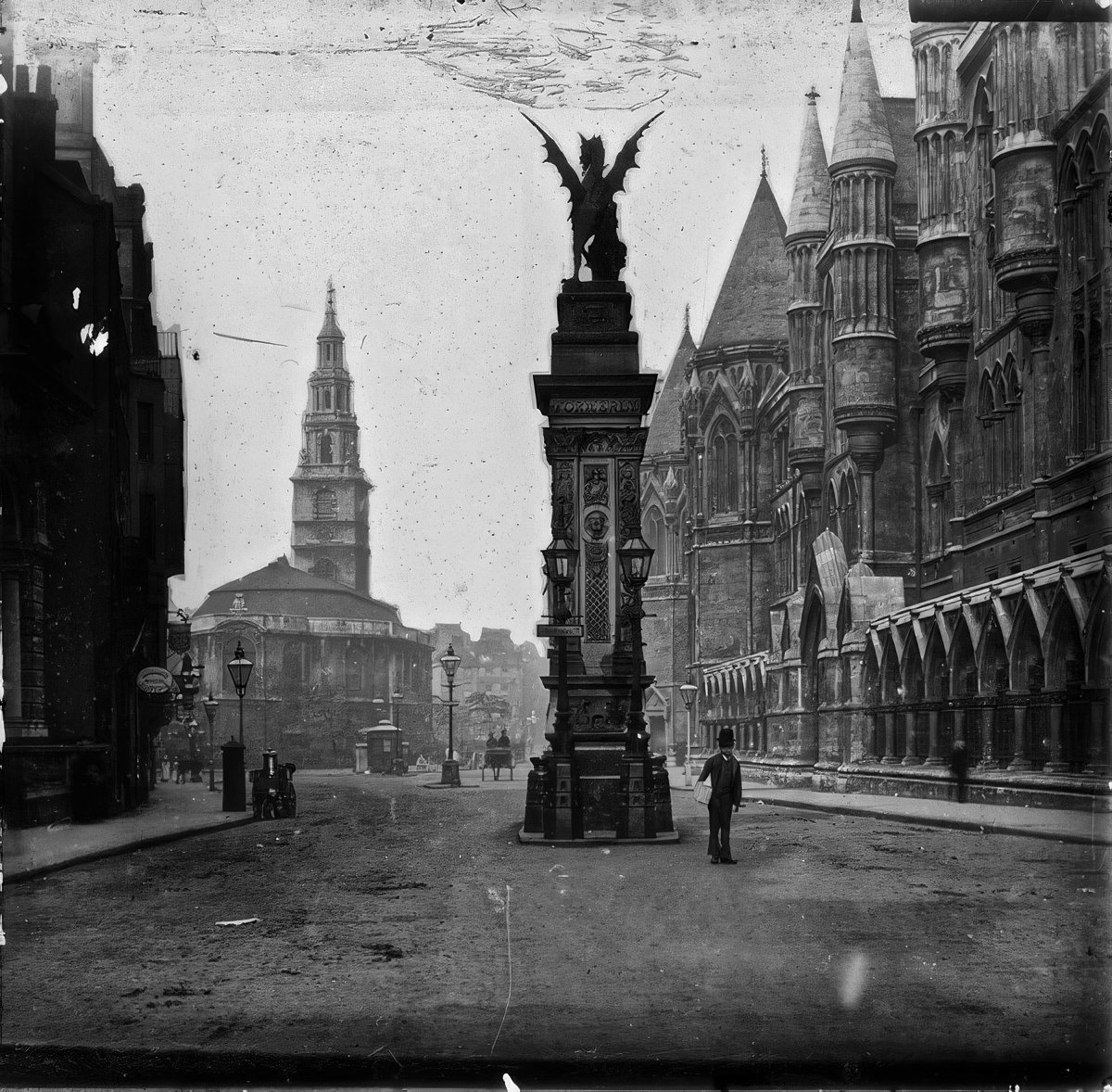
St. Clement Danes, sitting in the middle of the Strand on its own traffic island, had occupied that peculiar position for centuries. Its name is thought to refer to a community of Danes who settled in the area during the 9th century. By 1900 it was flanked by the constant movement of trams, cabs, and pedestrians, its bells famous as the church referenced in the nursery rhyme ‘Oranges and Lemons.’
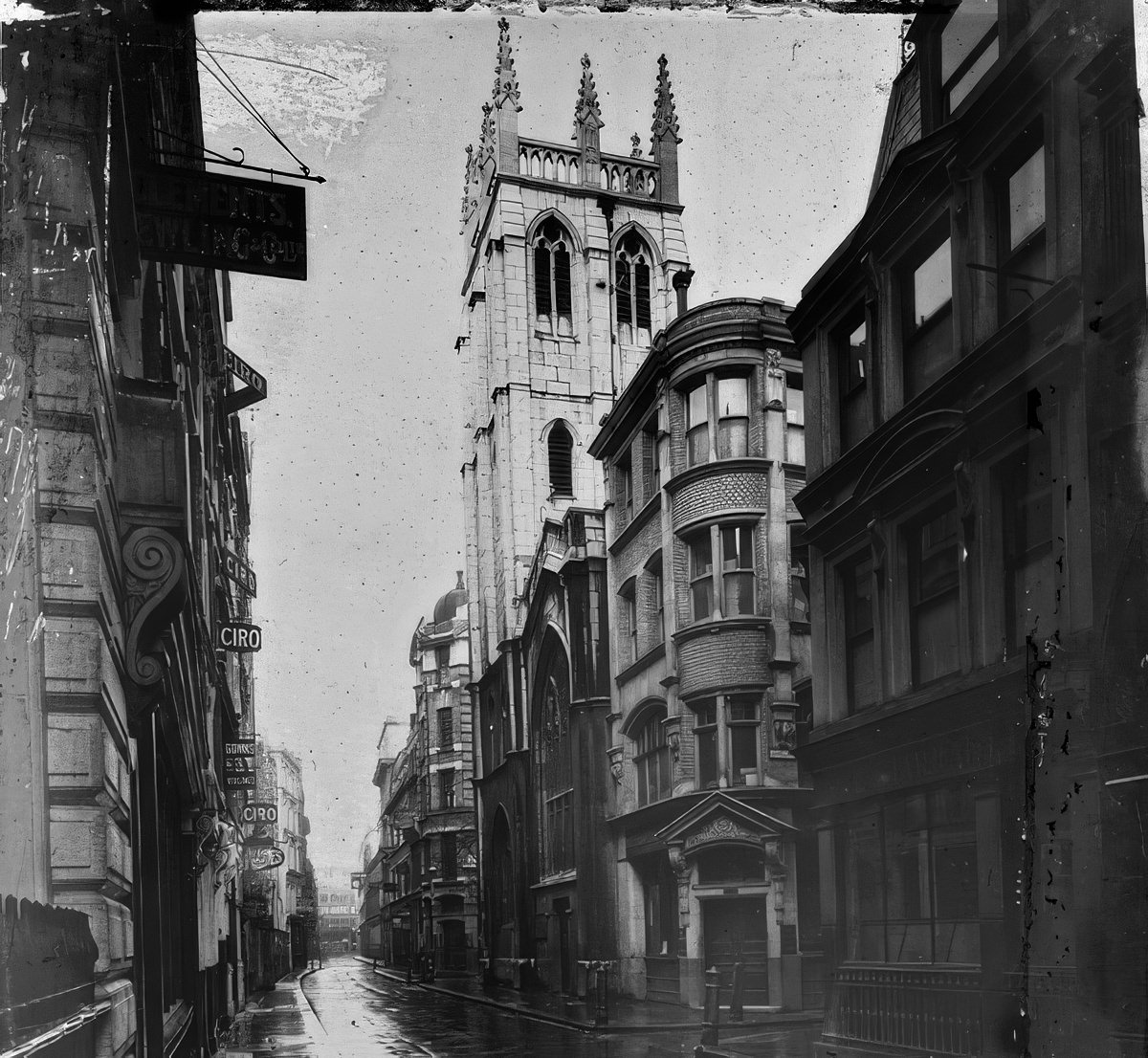
St. Alban on Wood Street was already something of an architectural curiosity even before the church itself was demolished — only its Wren tower ultimately surviving. Photographs from around 1875 show it still intact. Churches across the City faced ongoing pressure as businesses expanded and residential populations shrank, leaving some parishes too small to sustain a full congregation.
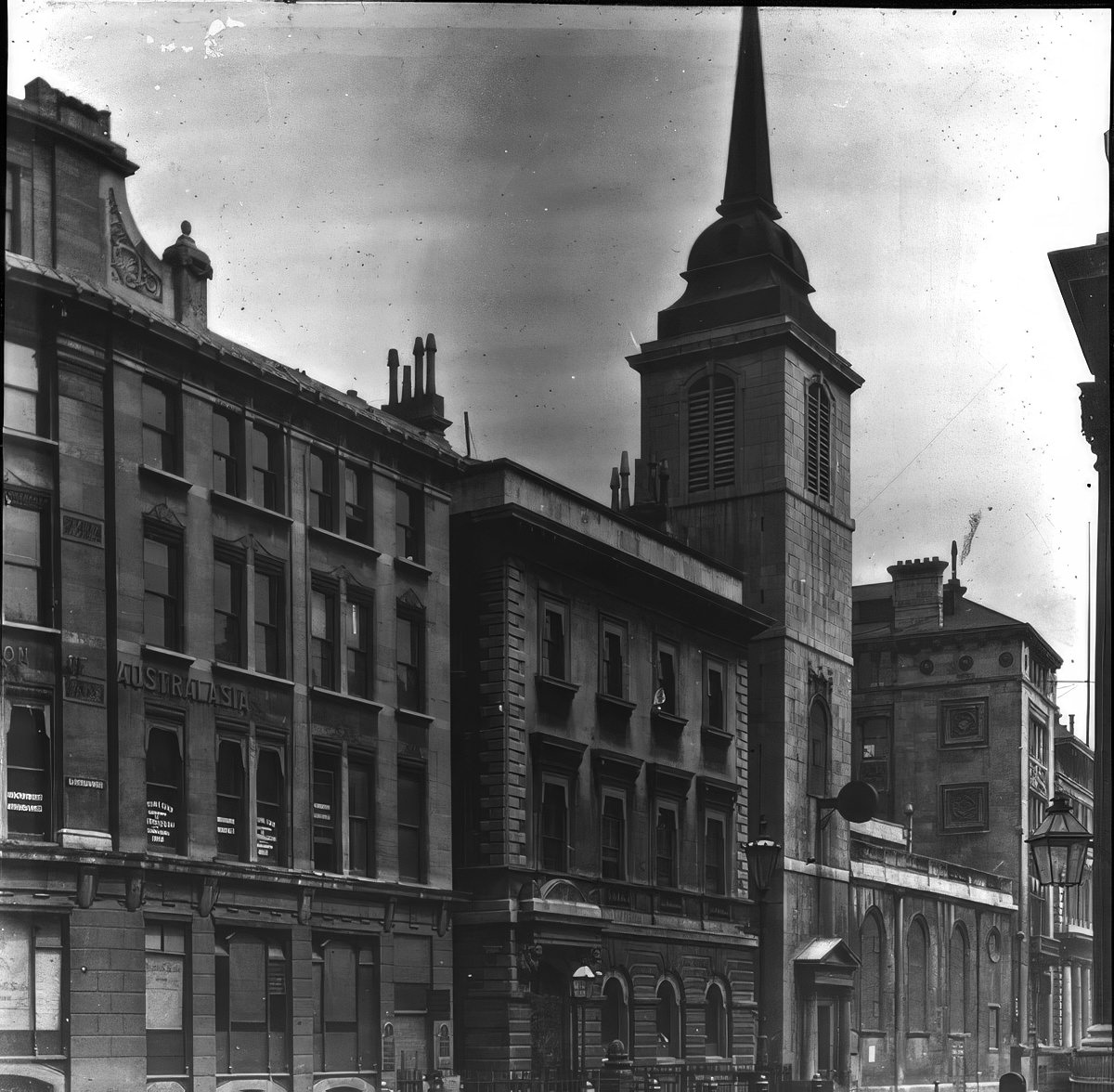
St. Margaret Lothbury sat close to the Bank of England, serving the clerks and merchants of the financial district. Its interior was known for finely carved woodwork — screens and furnishings salvaged from other Wren churches that had been demolished or consolidated over the centuries. High Church Anglican interiors like this one featured elaborate altars, polished brass, carved choir stalls, and stained glass depicting biblical scenes.
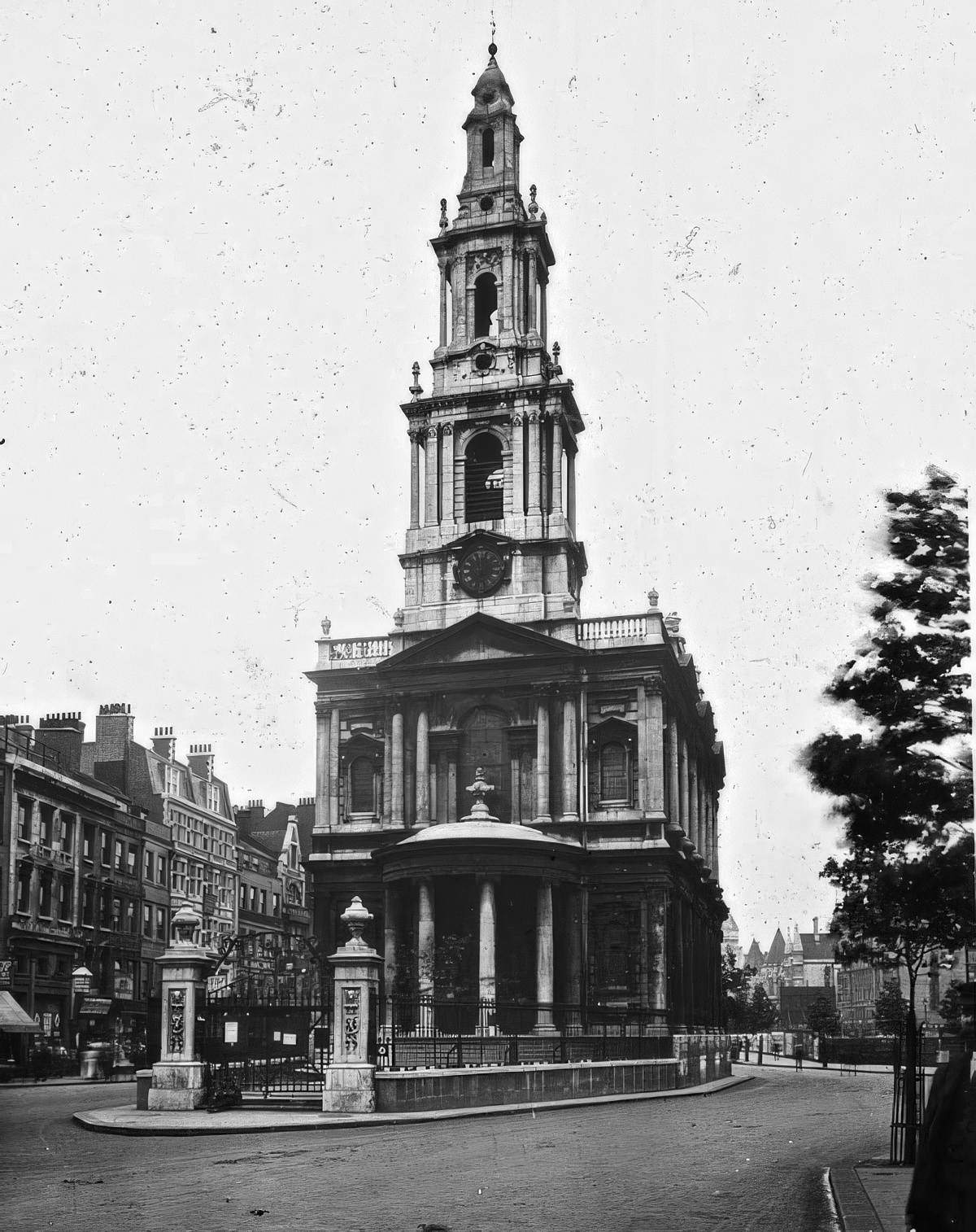
St. Mary le Strand, like St. Clement Danes nearby, stood on its own island in the middle of the Strand. Designed by James Gibbs and completed in 1724, it predated many of the Georgian and Victorian buildings around it. Its ornate Baroque exterior, with curved walls and a layered tower, made it one of the more visually distinctive churches along that busy stretch of road.
St. Andrew Undershaft in St. Mary Axe is one of the few City churches to have survived the Great Fire largely intact, which gave it a genuinely medieval interior rare among its neighbors. Its name came from the large maypole — a ‘shaft’ — that was historically erected outside, taller than the church steeple itself. The church held a monument to John Stow, the great 16th-century chronicler of London, whose effigy is still given a fresh quill pen each year in a traditional ceremony.
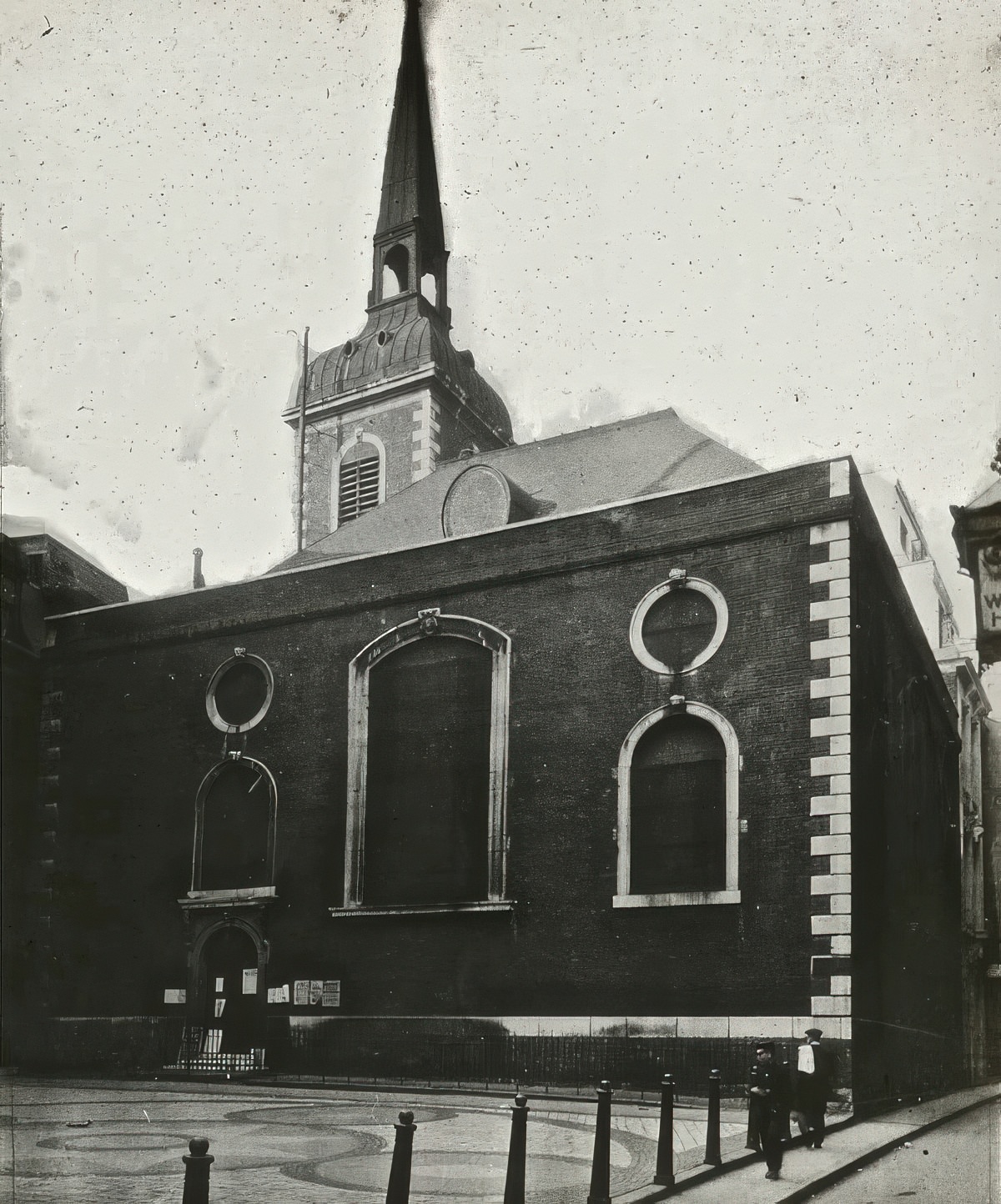
St. Mary Abchurch, tucked into a quiet courtyard off Cannon Street, was one of Wren’s smaller City rebuilds, but its interior was remarkable. The dome that covered the main space was painted by the artist William Snow in the early 18th century, and the church contained what is considered one of the finest reredos — the decorative screen behind the altar — carved by Grinling Gibbons. Stepping inside such a church was a completely different experience from the plainer interiors of Nonconformist chapels, where unadorned walls and a central pulpit reflected a theology that prioritized preaching over ceremony.
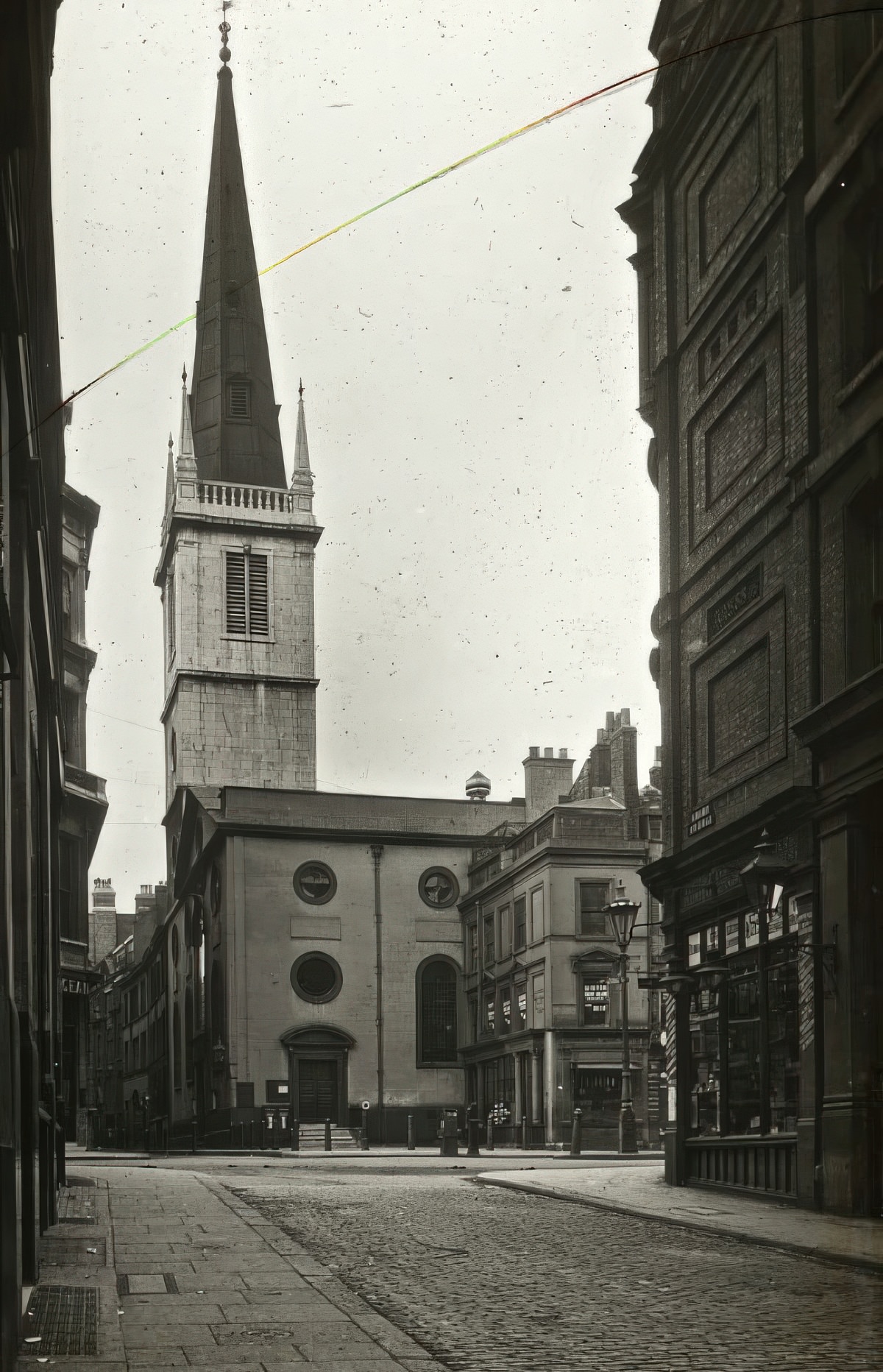
St. Margaret Pattens on Eastcheap took its unusual name from the wooden overshoes — pattens — that were historically sold nearby. Another Wren church, it was notable for having a lead-covered spire and for retaining a pair of original churchwardens’ pews with carved canopies — survivals from the 17th century still in use at the turn of the 20th.
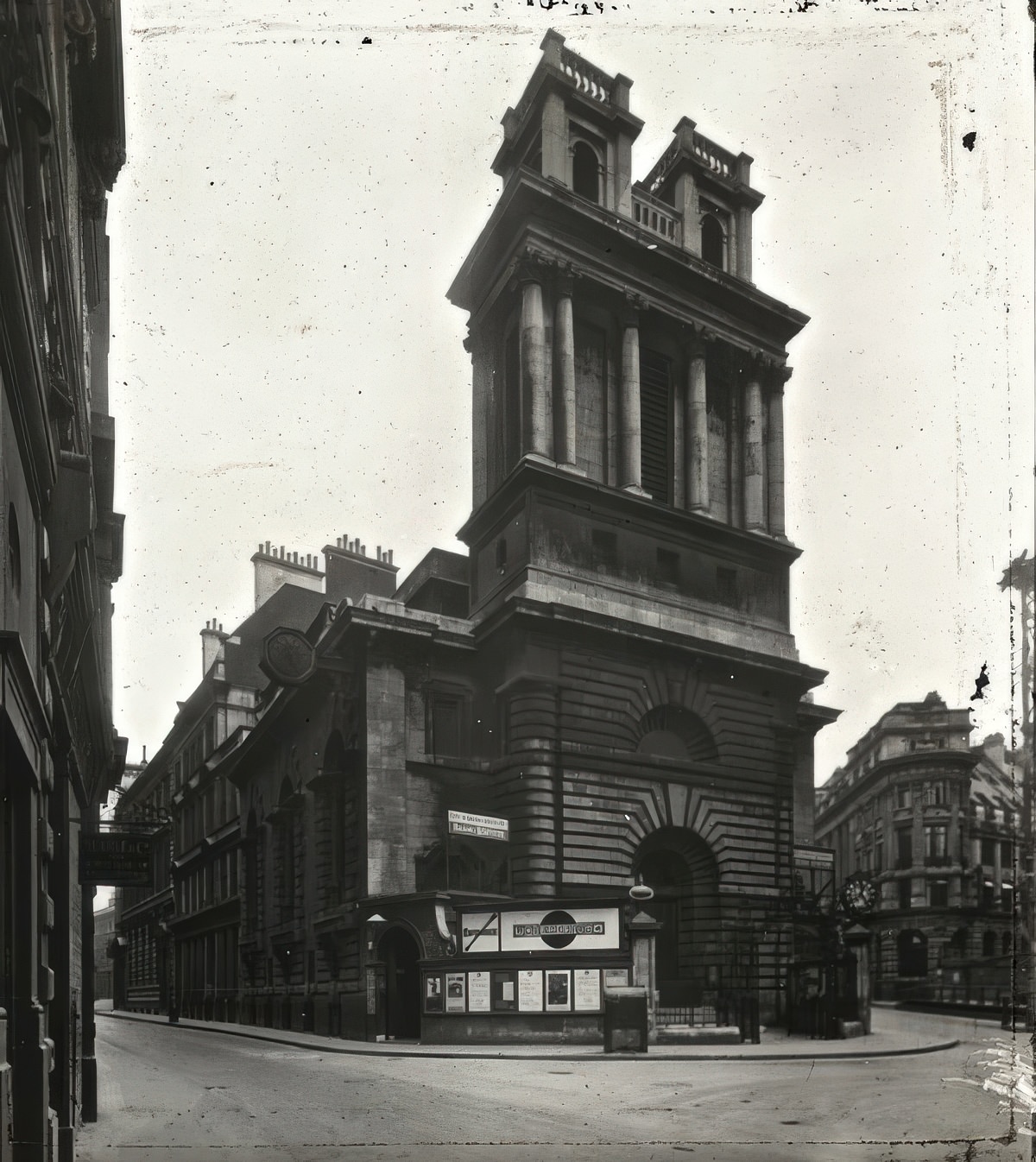
St. Mary Woolnoth at the junction of Lombard Street and King William Street was designed not by Wren but by Nicholas Hawksmoor, completed in 1727. Its heavy, fortress-like exterior was unlike anything else in the City. By the early 20th century, the Bank underground station had been built directly beneath it — the crypt of the church was actually used as a ticket office at one point, a collision of old and new that only London could produce.
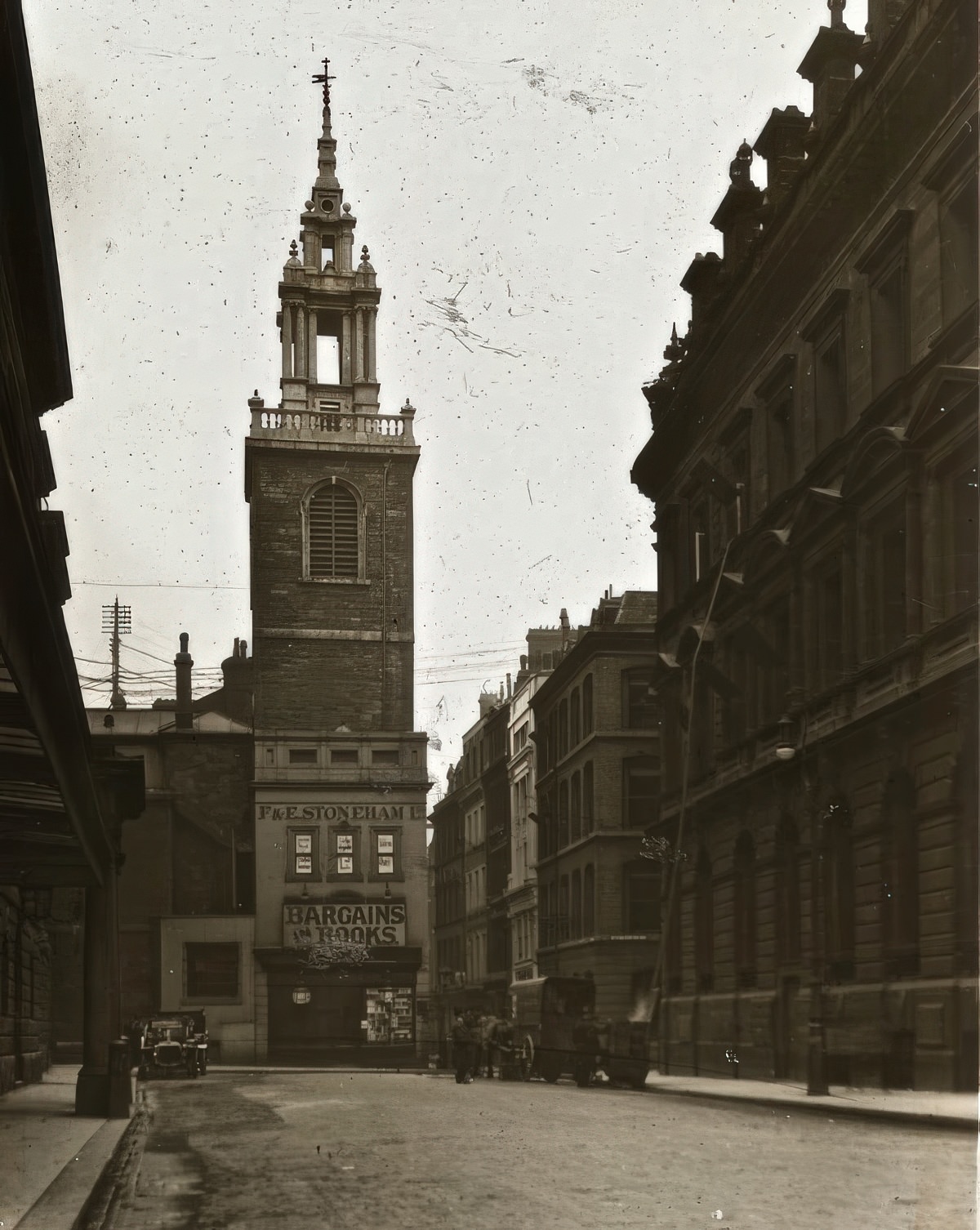
St. Stephen Walbrook, just behind the Mansion House, was widely considered Wren’s finest City church and a rehearsal in miniature for the dome of St. Paul’s Cathedral. Its interior dome, supported by sixteen columns arranged in a complex geometry, filled the relatively small building with light and a sense of grand space. Architects and visitors came specifically to study it.
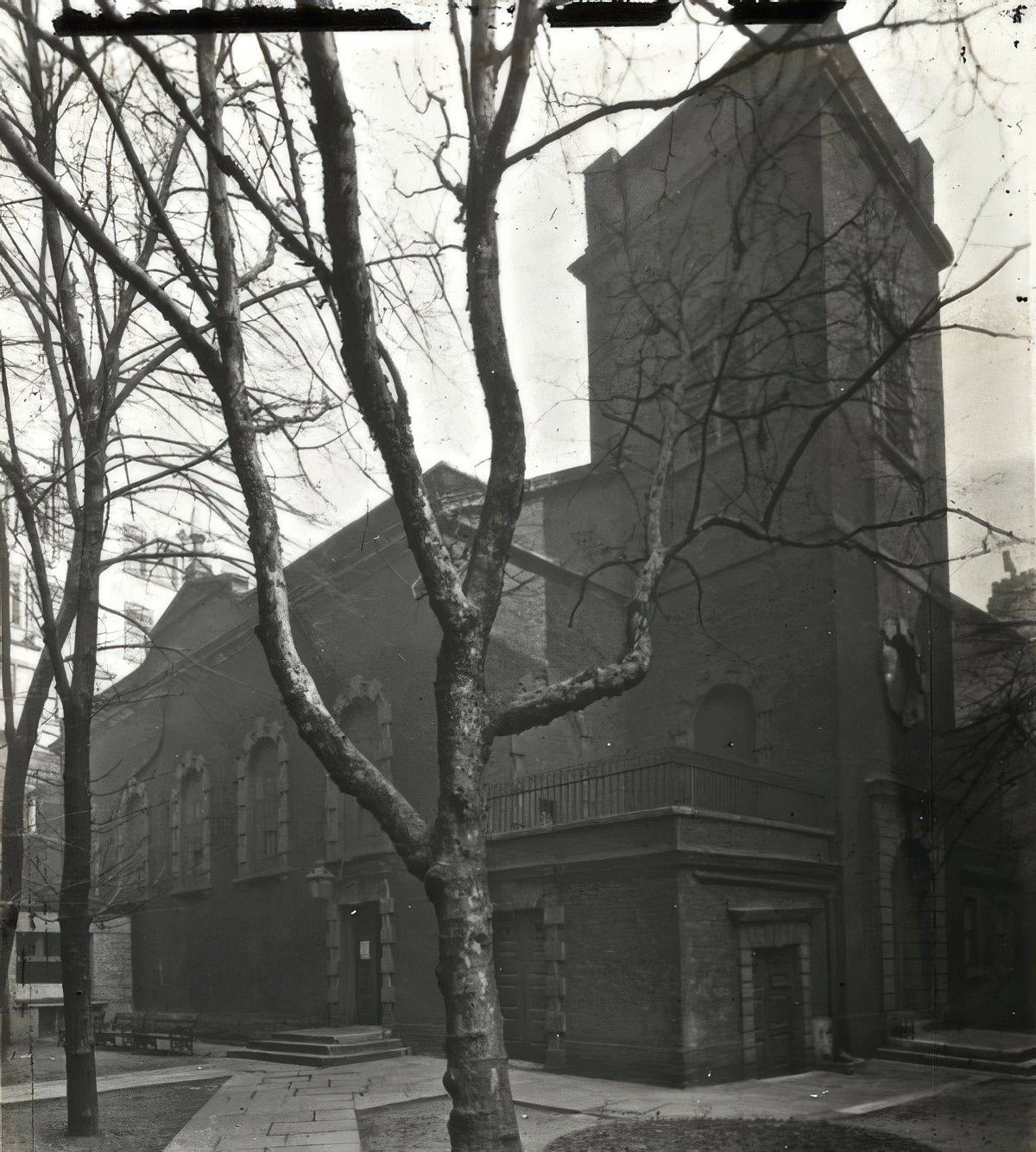
St. Katherine Coleman on Magpie Alley was still standing when this photograph was taken around 1910, but it had only sixteen years left. It was demolished in 1926 as part of the ongoing consolidation of City parishes. Its loss was one of many quiet erasures that reshaped the ecclesiastical map of London across the 20th century. Churches that appeared permanent fixtures in Edwardian street scenes quietly disappeared from later maps.
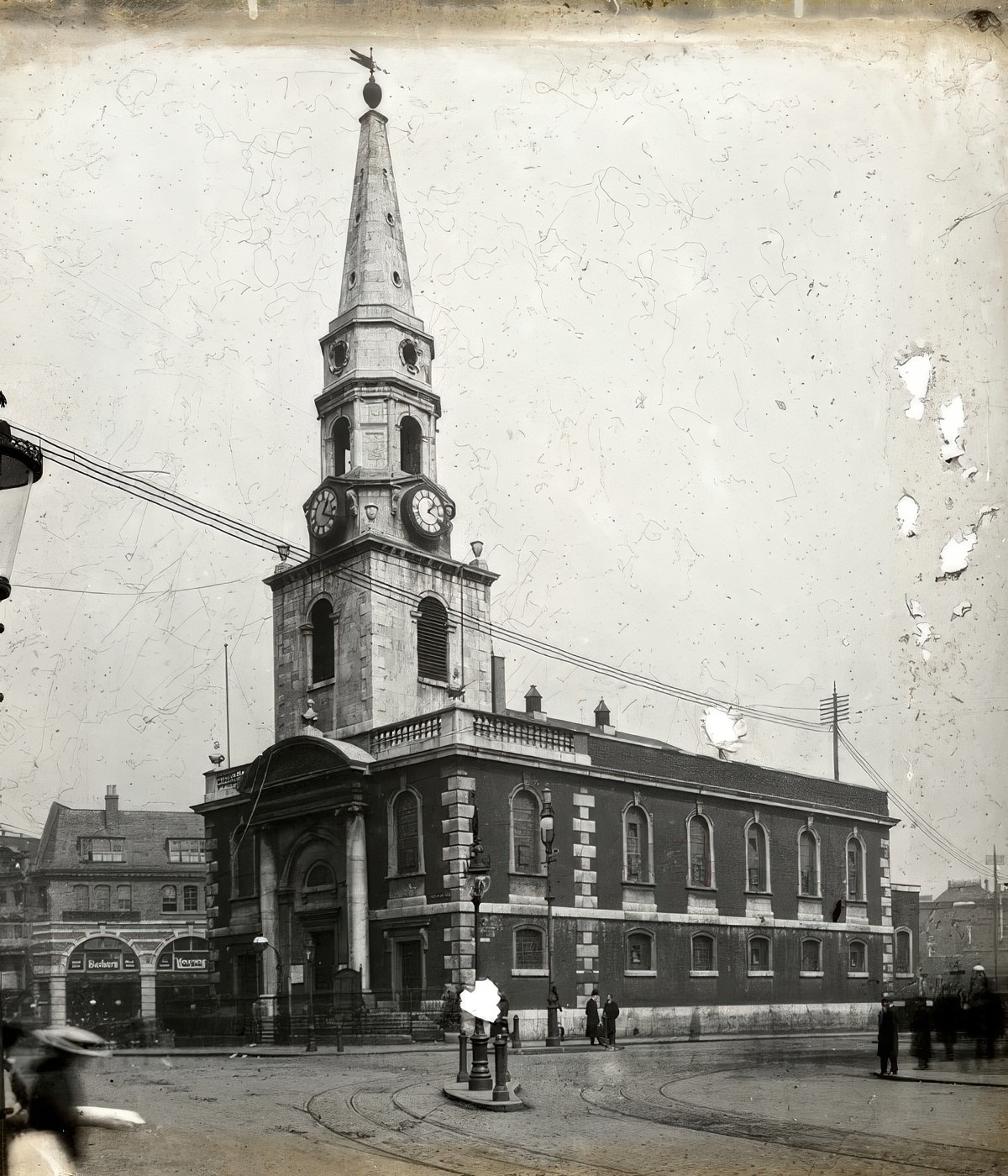
Across the river in Southwark, St. George the Martyr on Borough High Street served a very different population from the City’s financial parishes. The Borough was a dense, working-class district, and its church had long been embedded in the life of the community. Charles Dickens used the church and its surroundings in Little Dorrit, and the building’s walls carried the stone memorials and tablets typical of parish churches across London — records in stone of local families and long-forgotten congregation members. Sunday bells, christenings, weddings, and funerals gave the church calendar its rhythm, the same as it had for generations.




