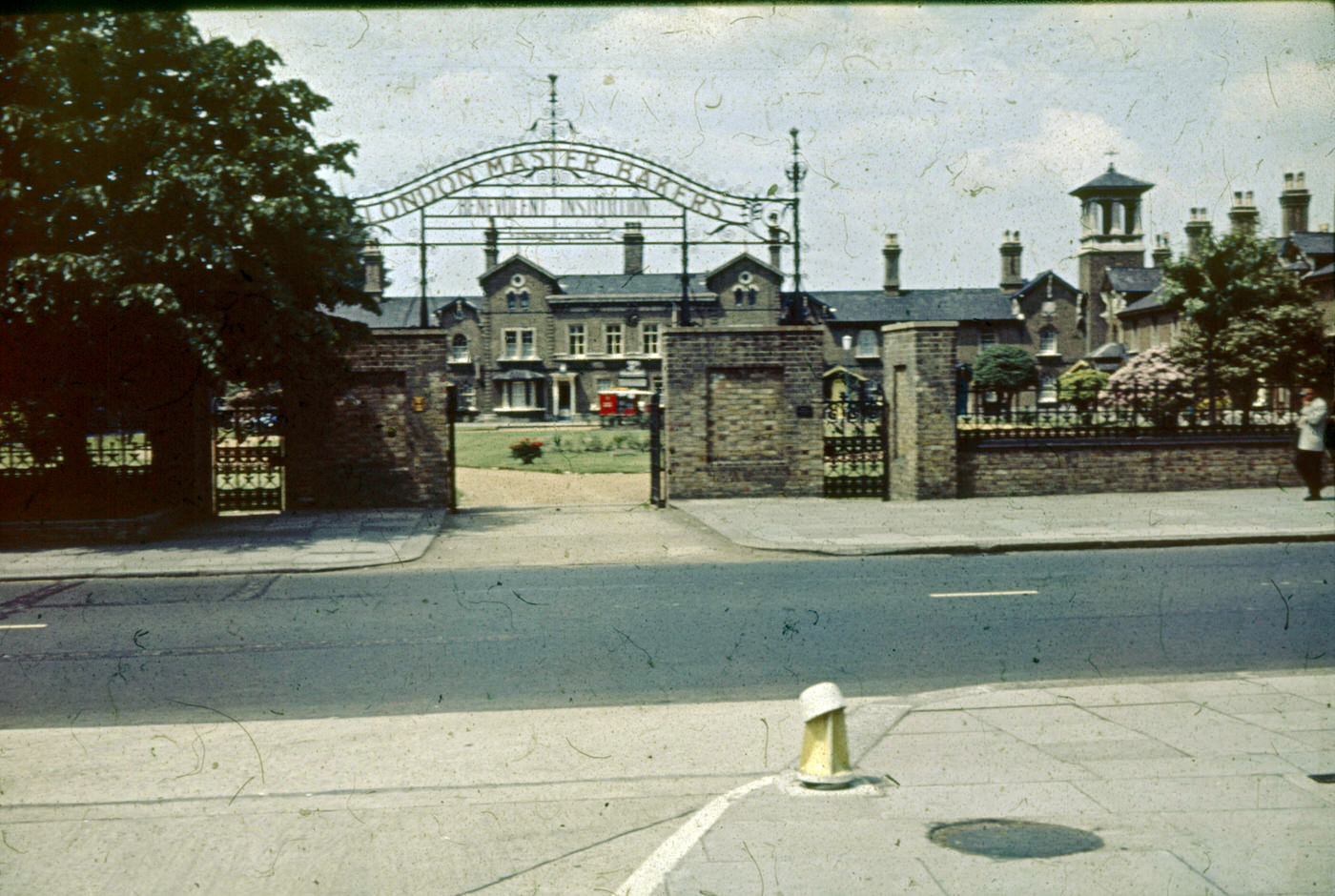
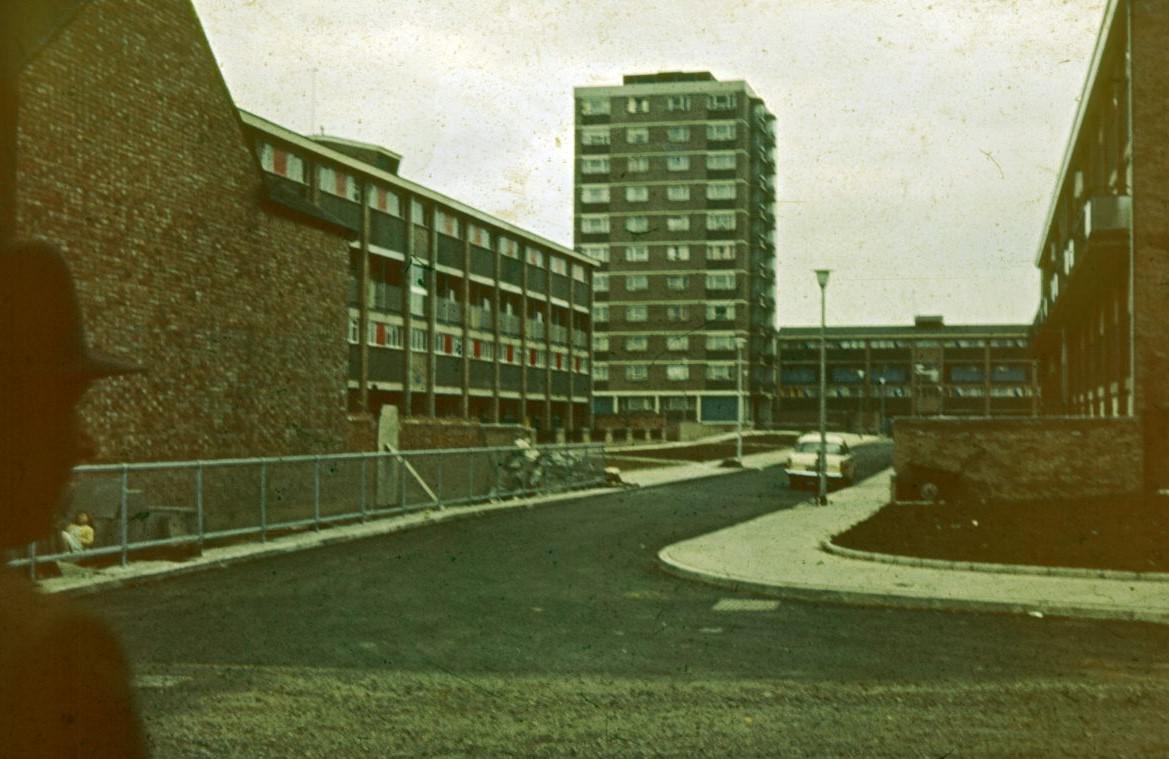
Leyton in the 1960s was a place in the middle of real change. Victorian terraced streets still dominated much of the area, but modern housing blocks were beginning to rise alongside them. New council estates replaced older housing stock, offering residents indoor bathrooms and central heating for the first time. The neighbourhood was growing upward as well as outward.
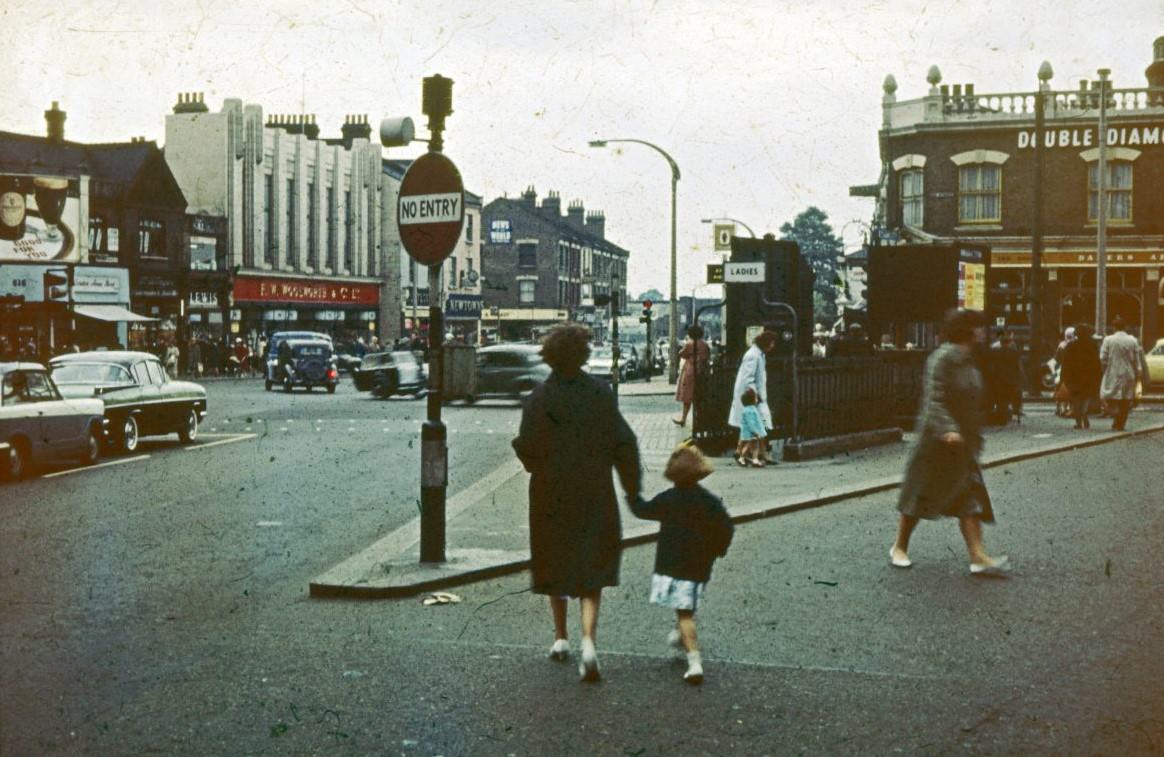
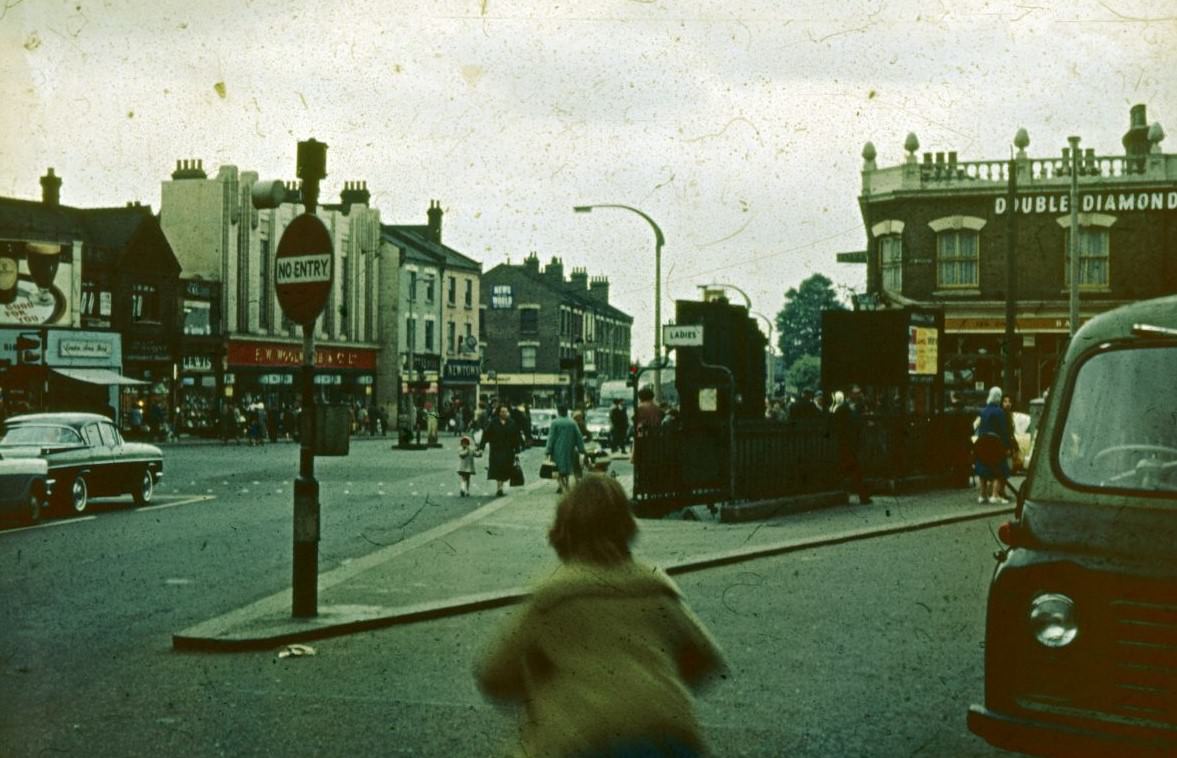
The Bakers Arms Junction sat at the heart of Leyton’s street life. Buses ran frequent routes through the crossroads, and the pavements stayed busy throughout the day. Shops lined the surrounding streets, serving a community that was becoming increasingly diverse as families from the Caribbean and South Asia settled in the area.
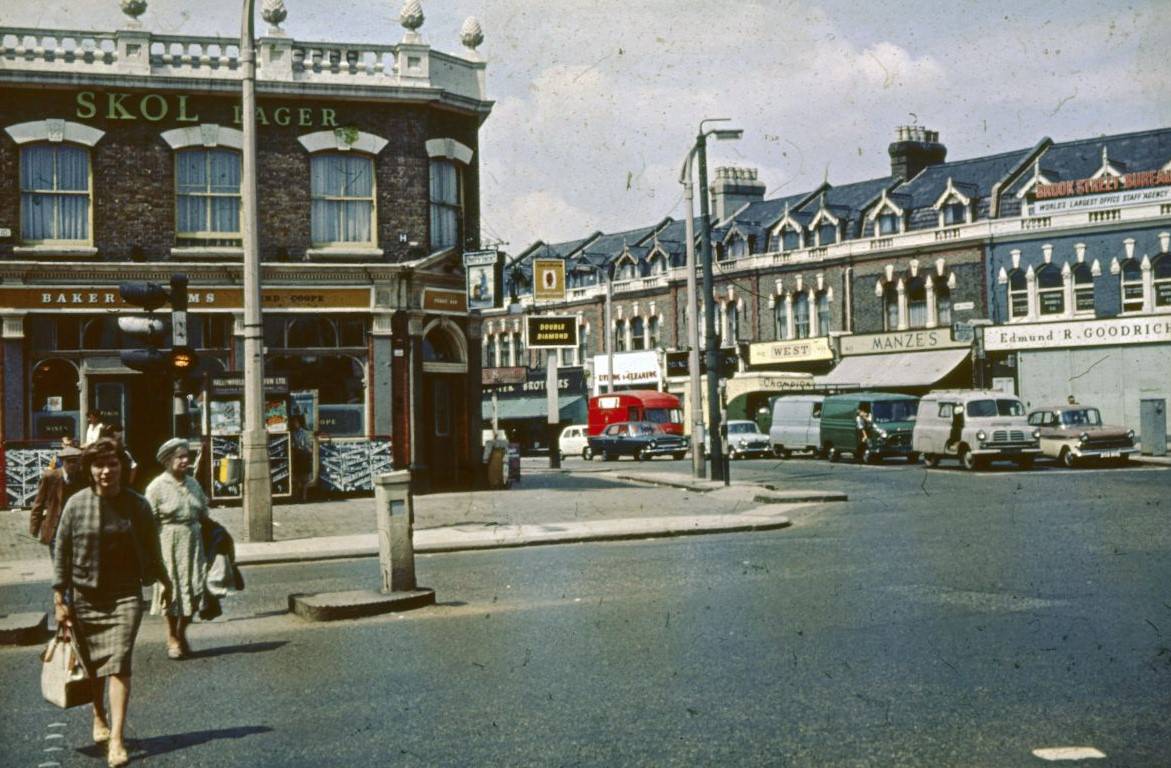
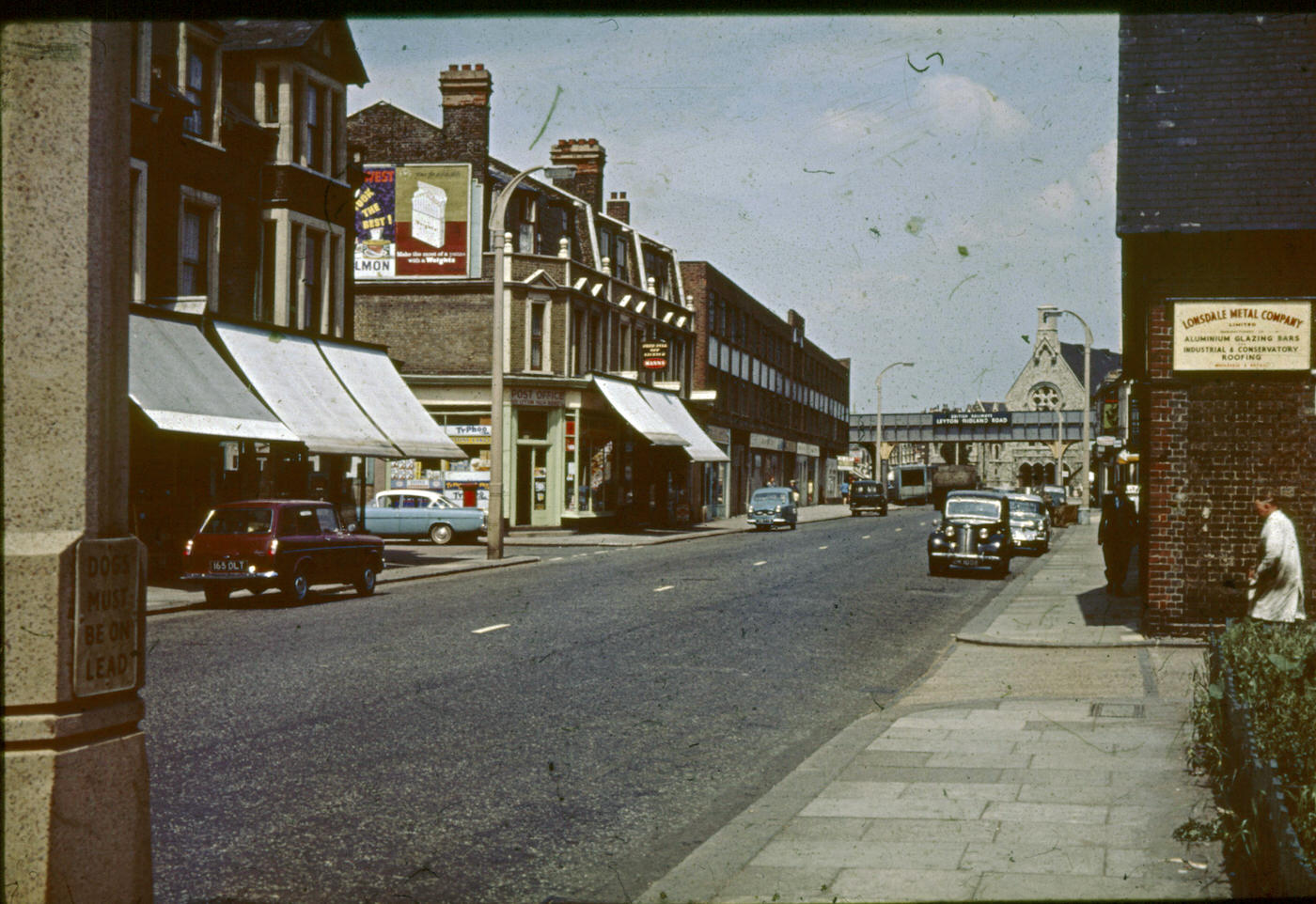
The High Road was Leyton’s main commercial spine. Butchers, bakers, and greengrocers traded alongside newer supermarkets. Car ownership was rising fast, and petrol stations began appearing where stables and blacksmiths once operated. The street sounds shifted too — less horse traffic, more engine noise.
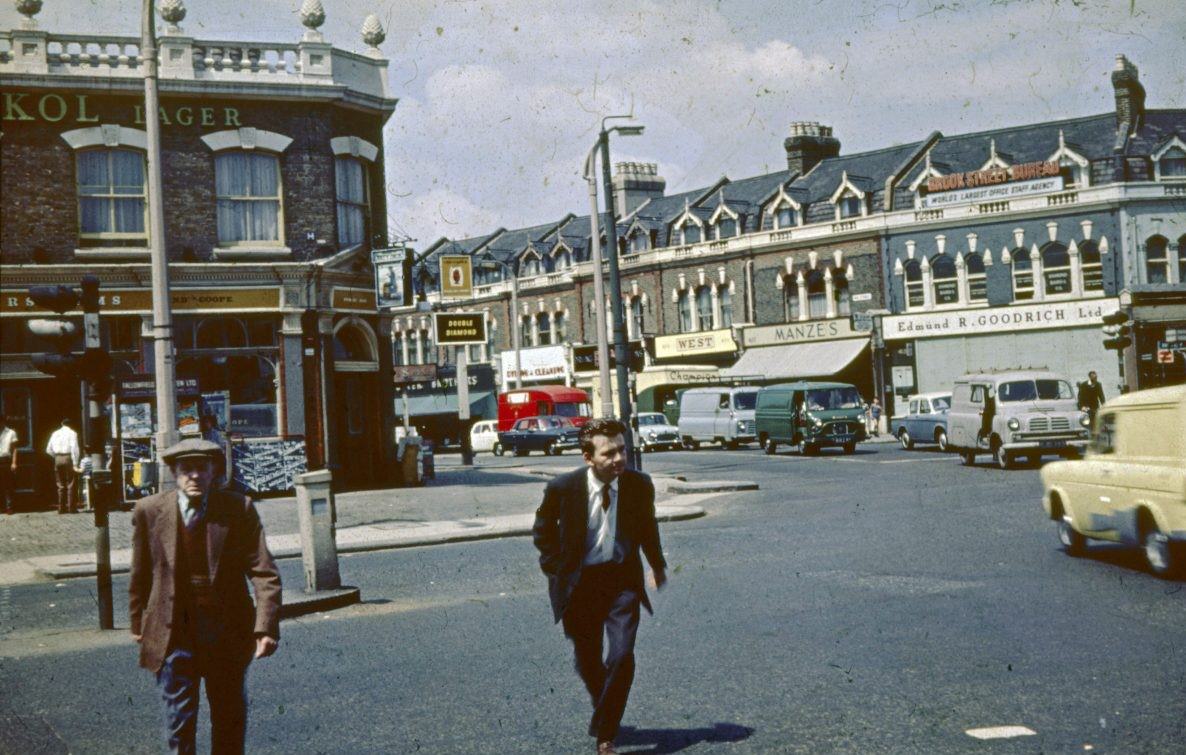
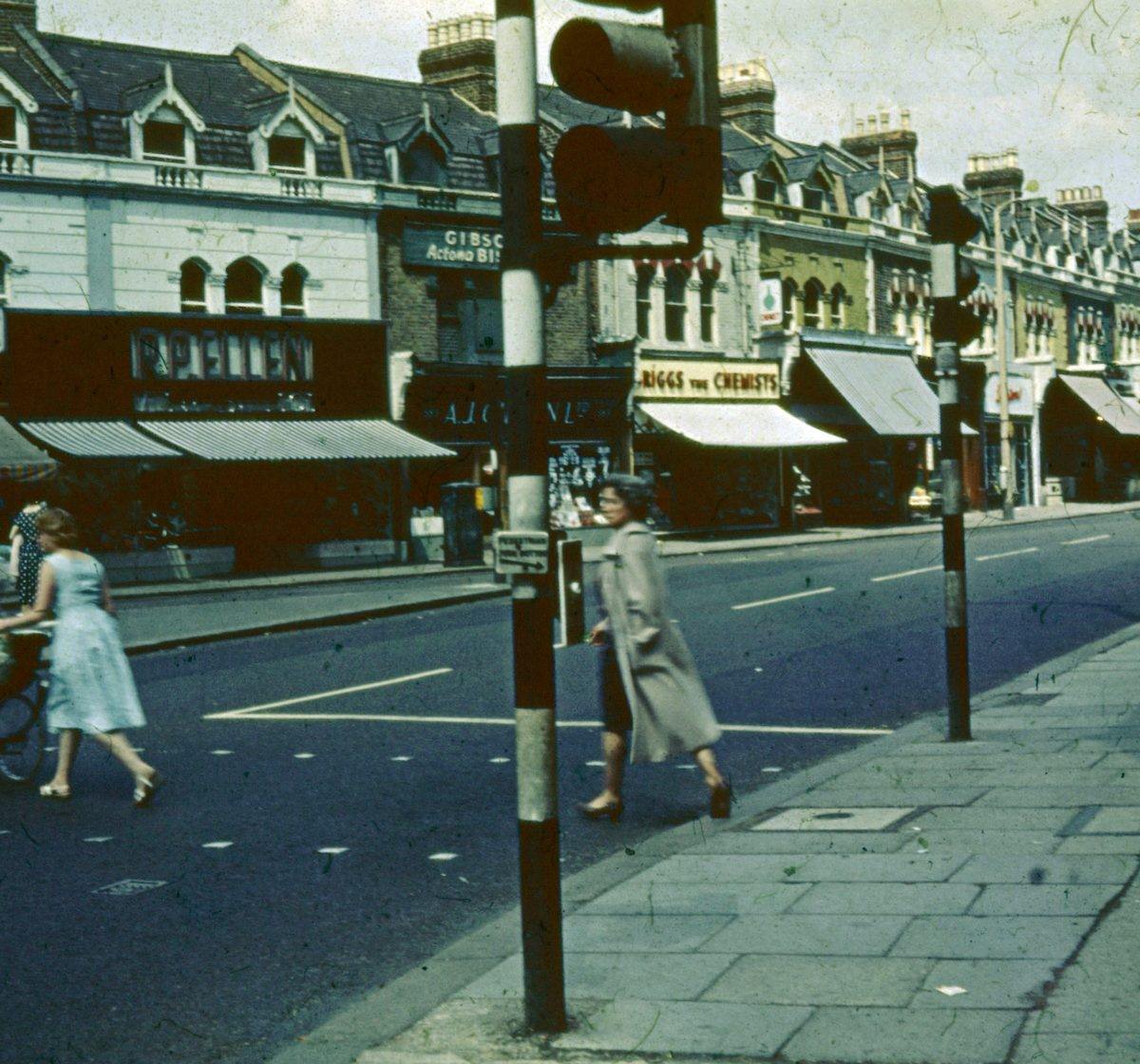
Open green spaces like The Green offered a rare pause from the urban bustle. These spots remained community anchors through the decade, used by children, dog walkers, and older residents alike.
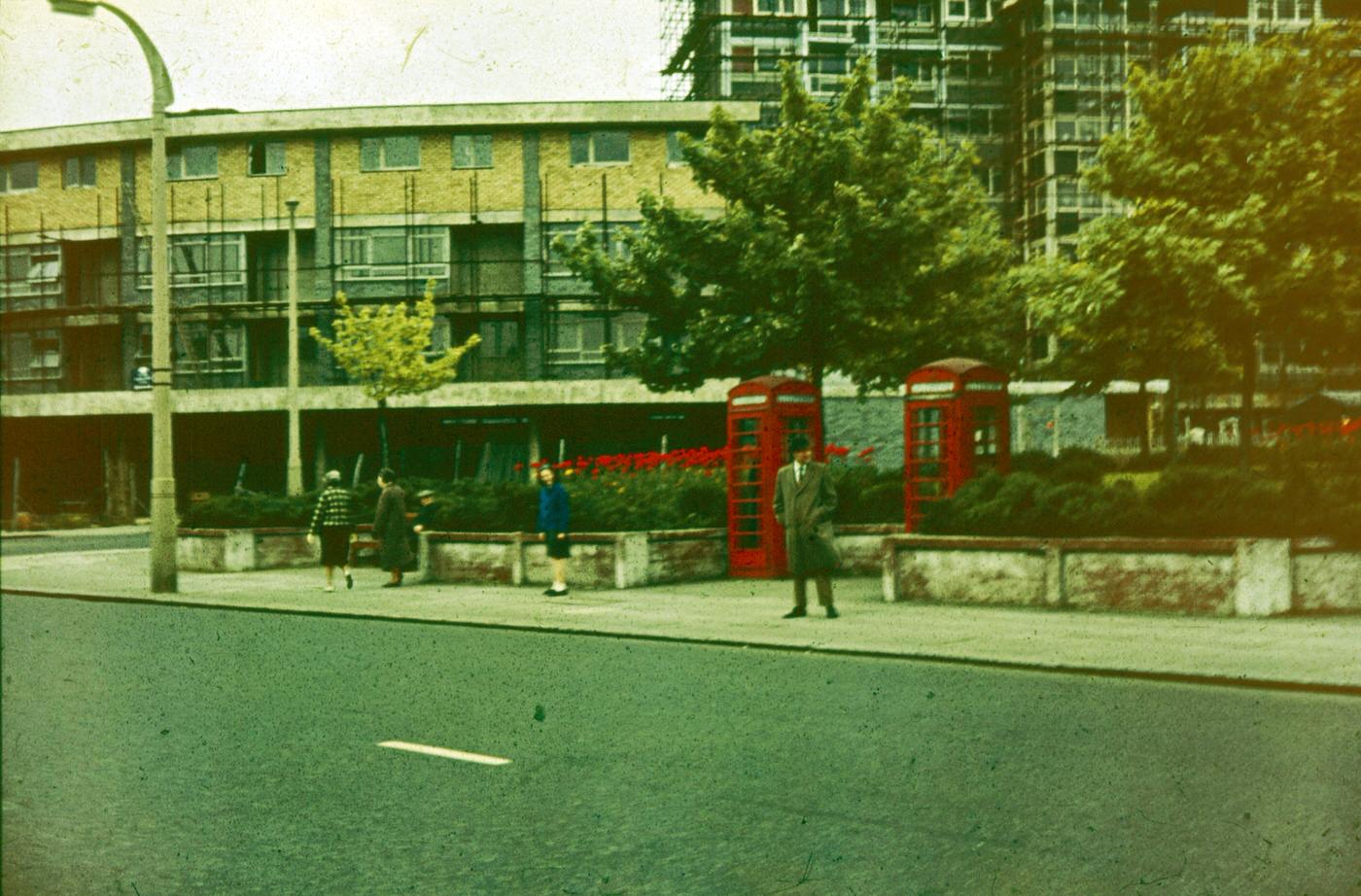
Slade Tower represented the era’s ambition to build upward. High-rise blocks like this one were seen as modern solutions to housing demand, offering flats to families on waiting lists across East London.
The junction of High Road and Canterbury Road captured the commercial energy of 1960s Leyton. Storefronts advertised everyday goods, and double-decker buses rolled steadily through the frame.
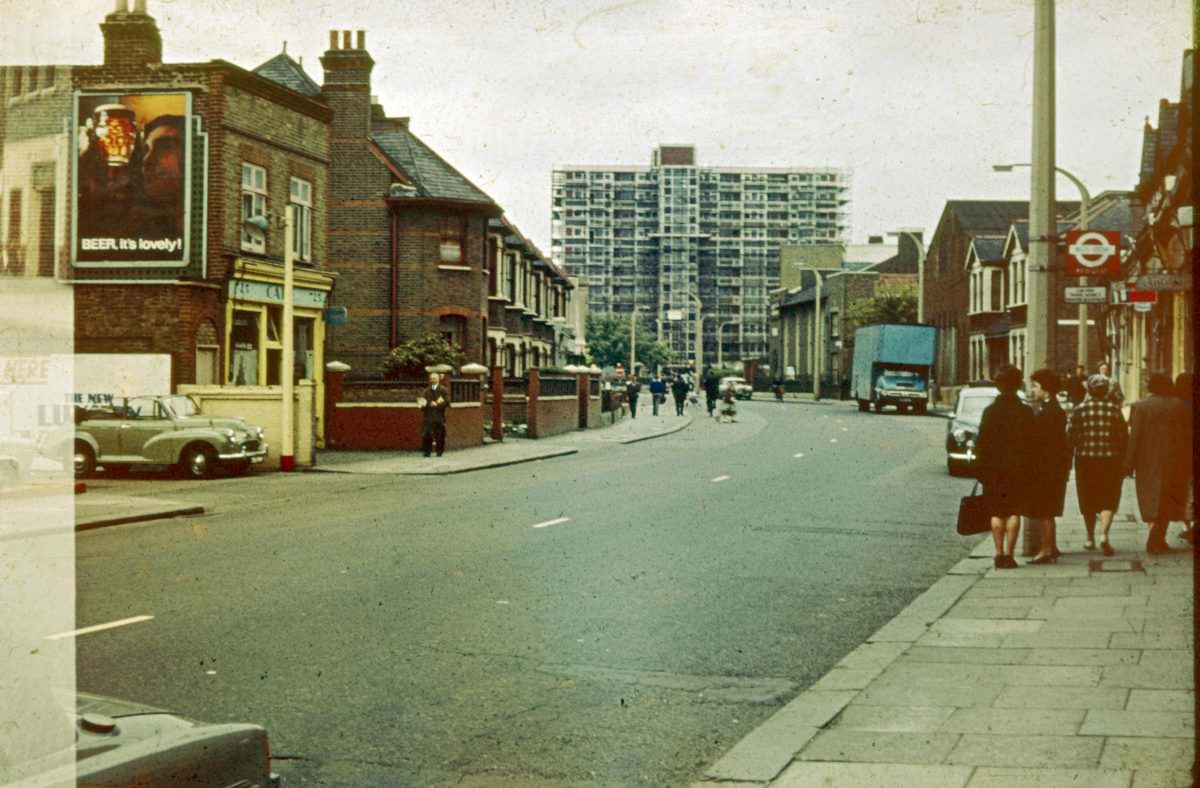
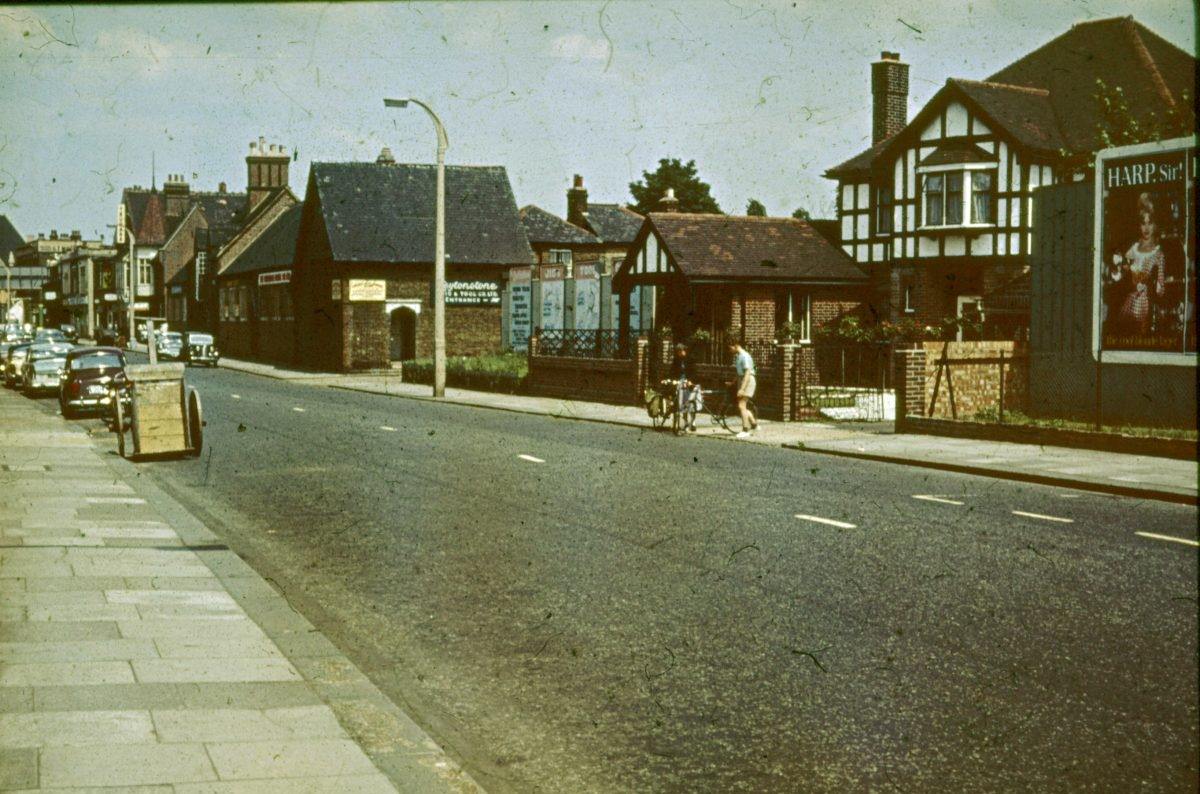
Residential streets like Farmer Road showed the quieter side of Leyton — rows of terraced houses with small front gardens, parked cars replacing the bicycles of earlier decades.
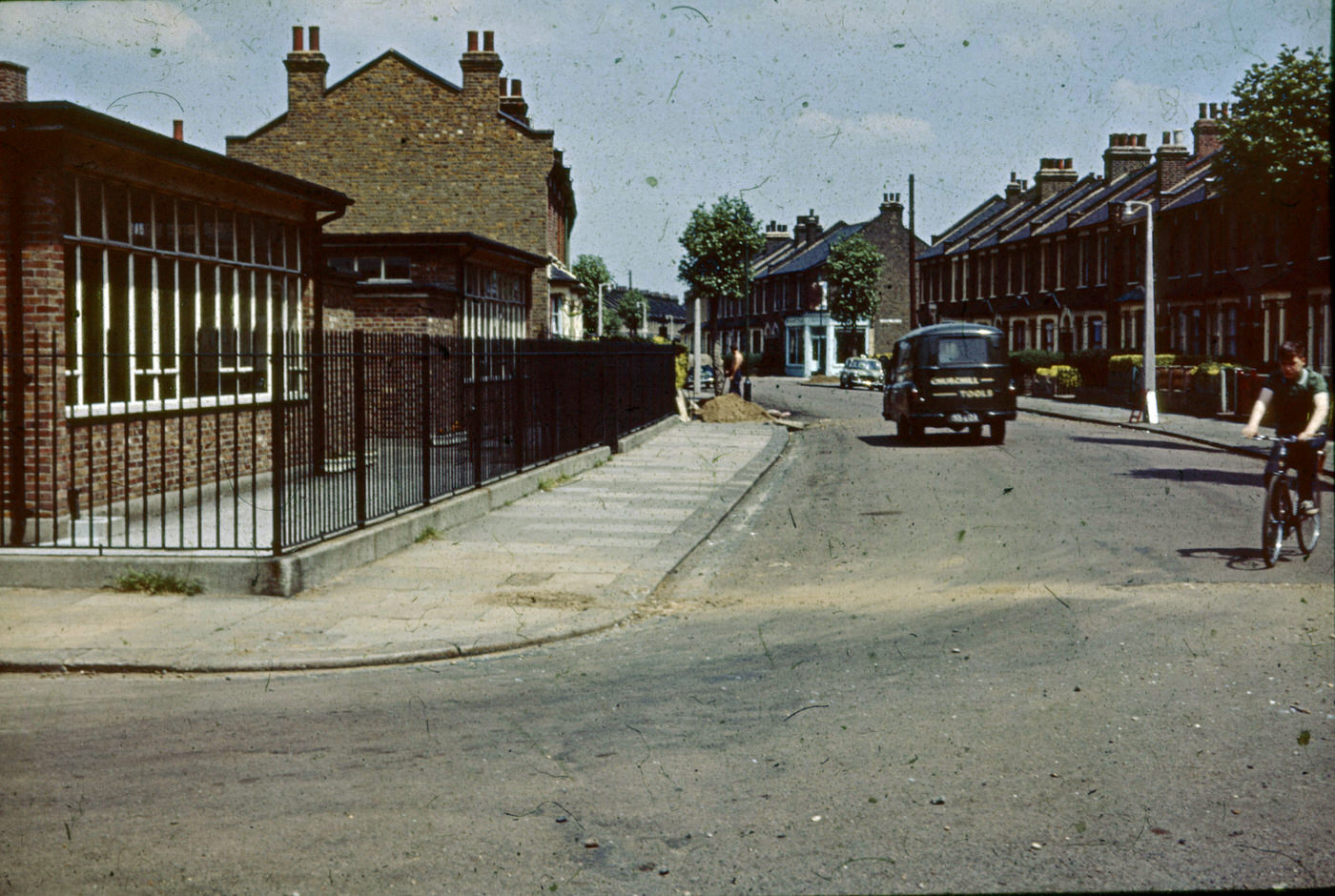
The Grange Estate reflected the scale of postwar redevelopment across East London. Entire streets were cleared and rebuilt, reshaping the physical layout of Leyton street by street.
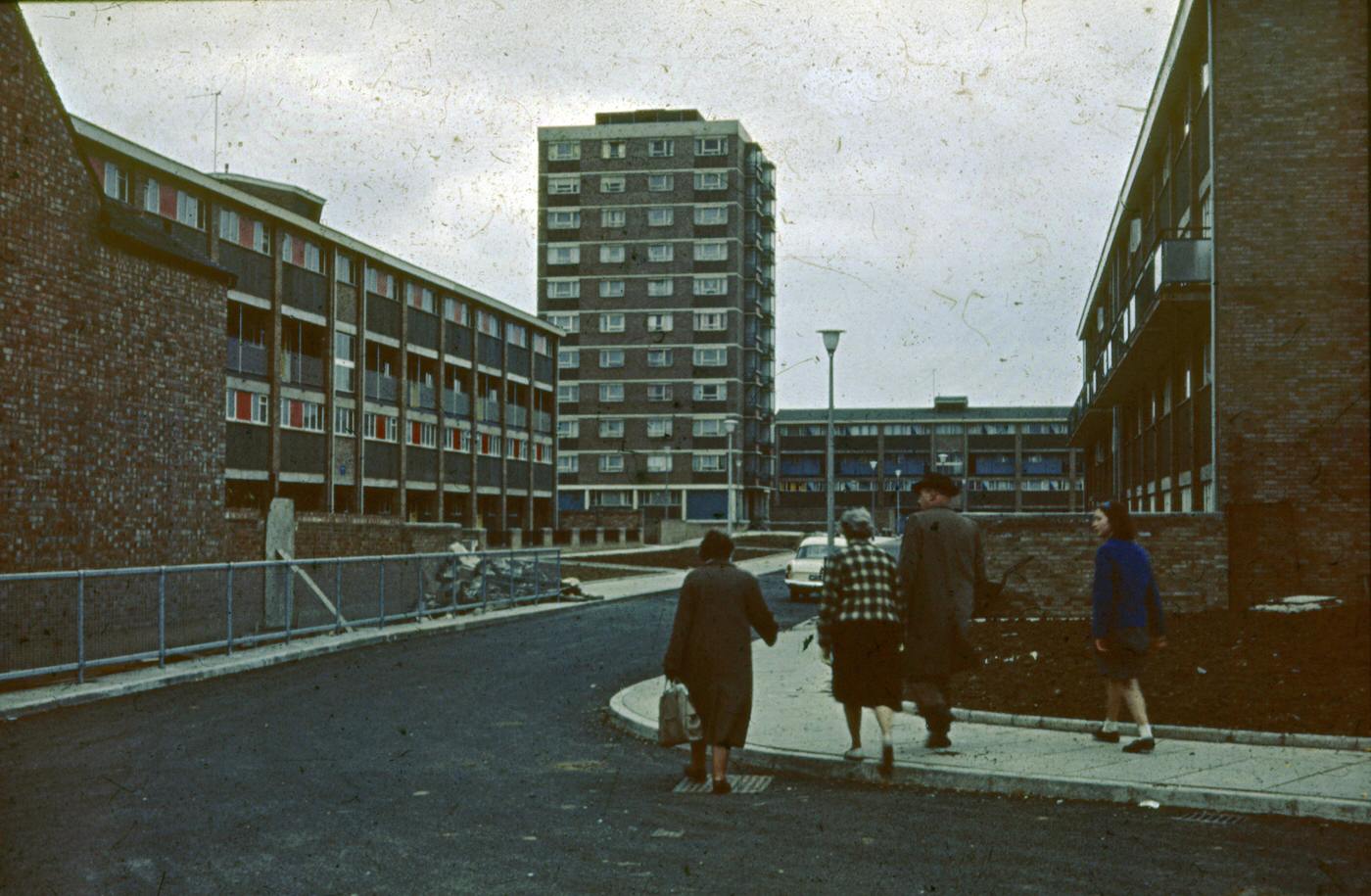
The Master Bakers Almshouses stood as one of Leyton’s older surviving landmarks. Built to house retired bakers and their families, the building was a rare piece of Victorian charity architecture still standing amid the decade’s sweeping redevelopment.