
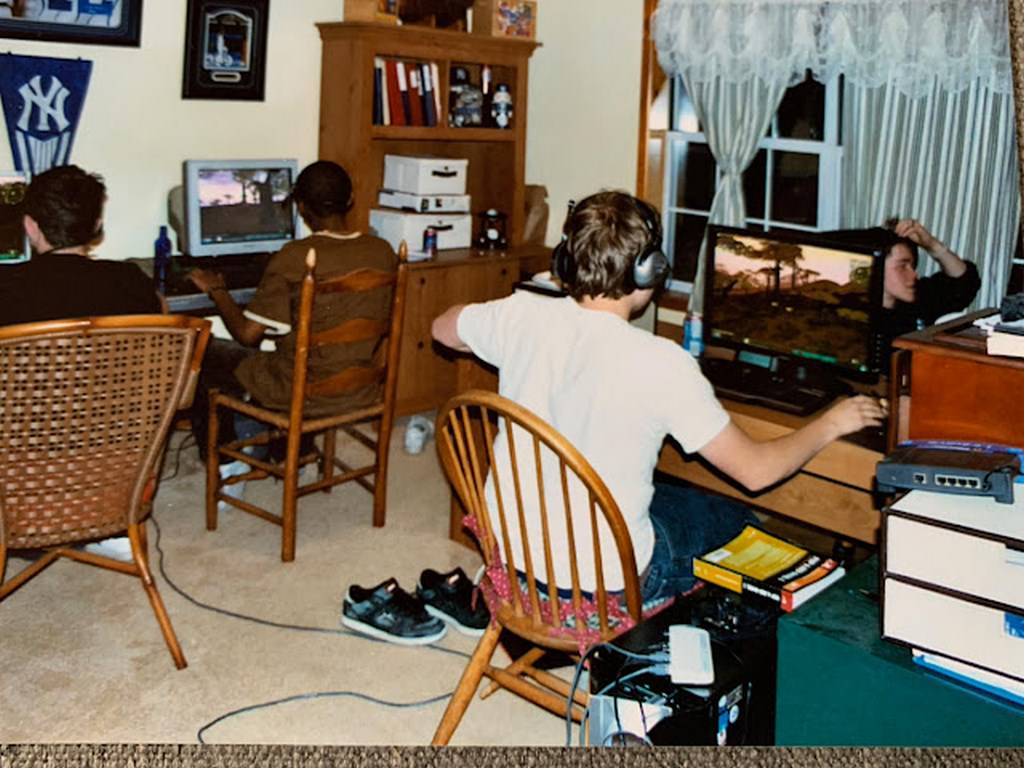
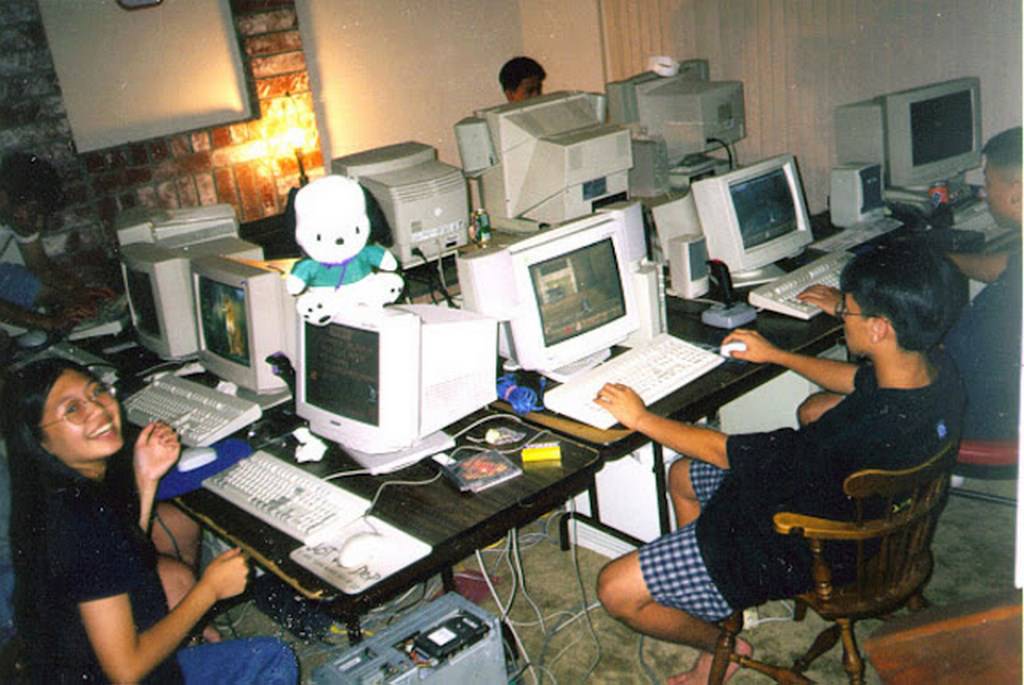
Before broadband reached most households, before Steam libraries and console online services, there was the LAN party. From the late 1990s through the early 2000s, these events defined multiplayer gaming for an entire generation. People hauled desktop towers, bulky CRT monitors, power strips, and tangled bags of Ethernet cables to garages, basements, school gyms, and community halls — all for the chance to game side by side with friends and strangers alike.
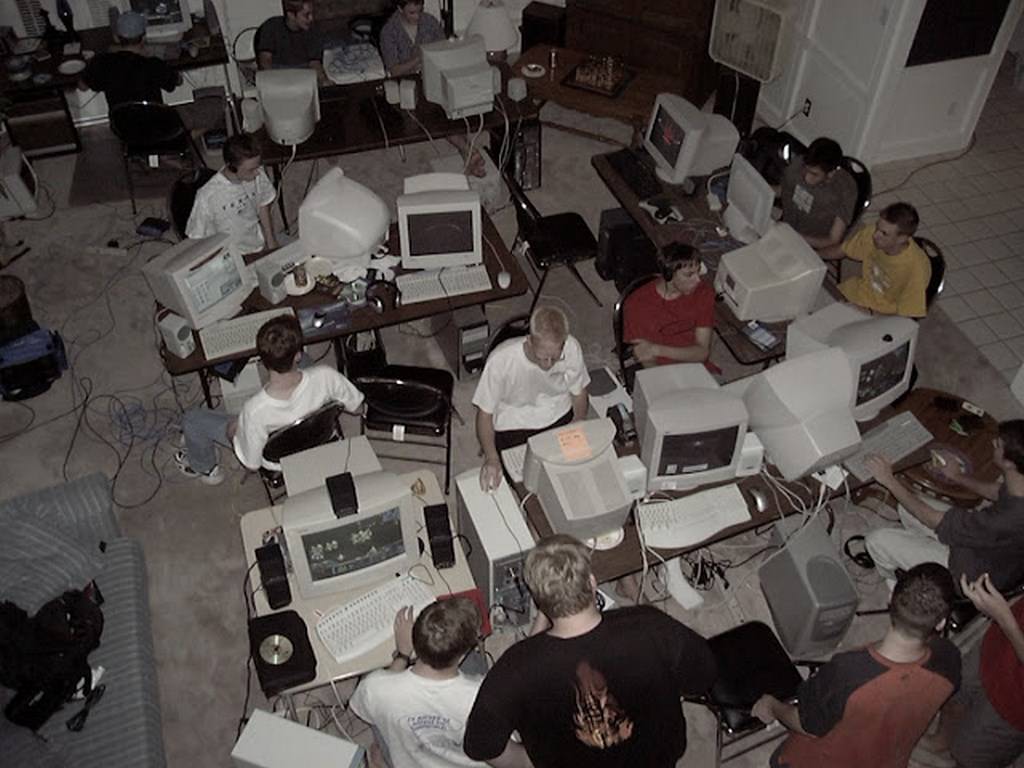
The reason LAN parties existed at all comes down to one simple problem: dial-up internet was too slow and too unreliable for multiplayer gaming. A 56K modem connection — the standard for most homes at the time — produced lag that made fast-paced shooters nearly unplayable online. A Local Area Network, however, connected computers directly through Ethernet cables and a hub or switch. Data traveled at speeds measured in megabits per second rather than kilobits. The result was smooth, responsive multiplayer gaming that online play simply couldn’t offer.
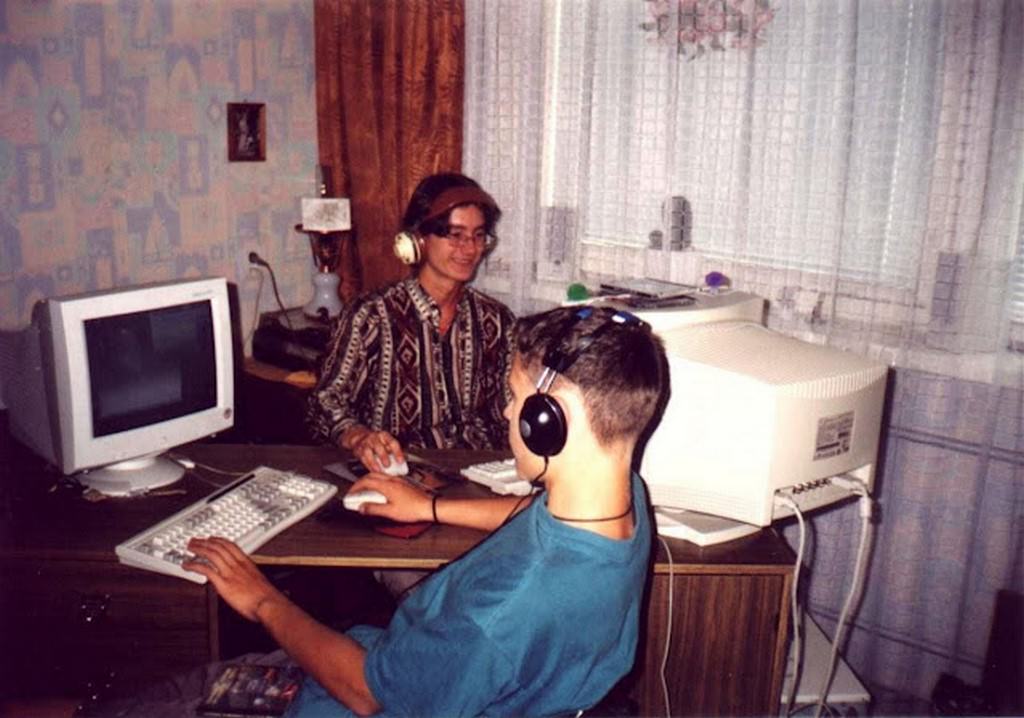
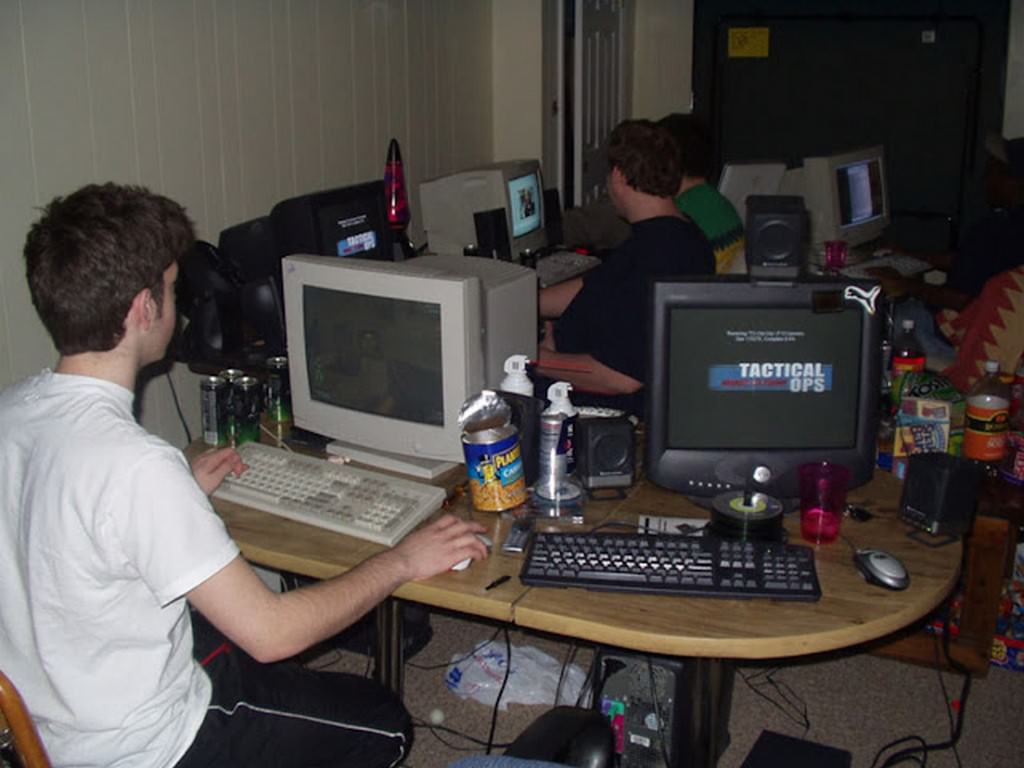
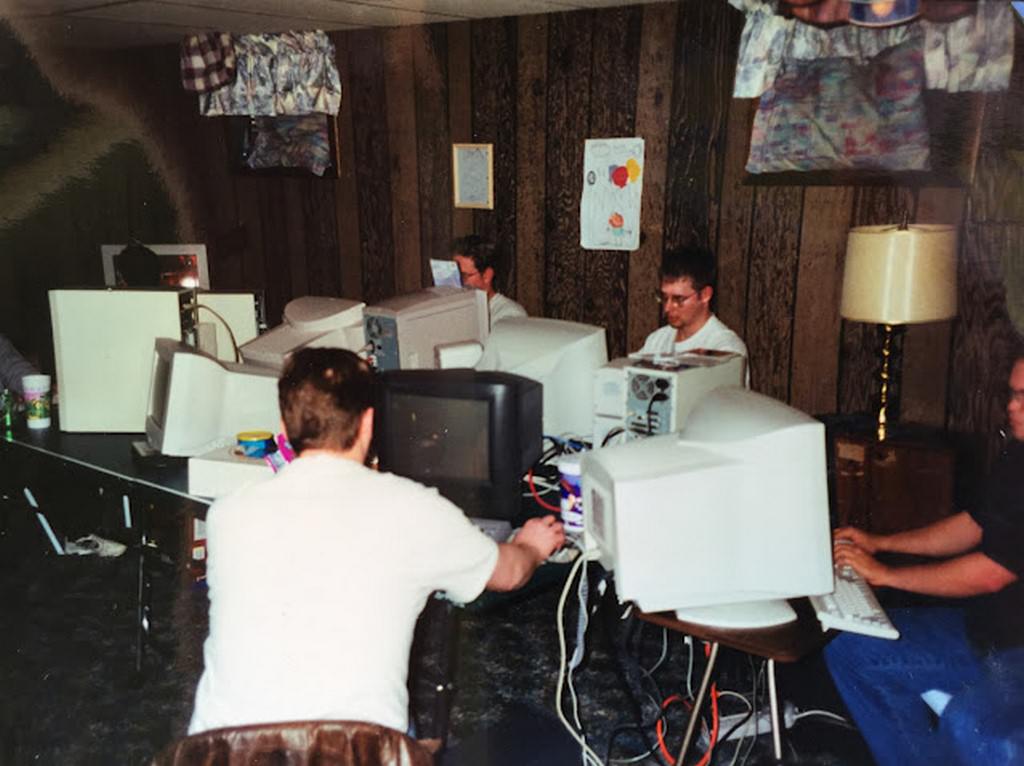
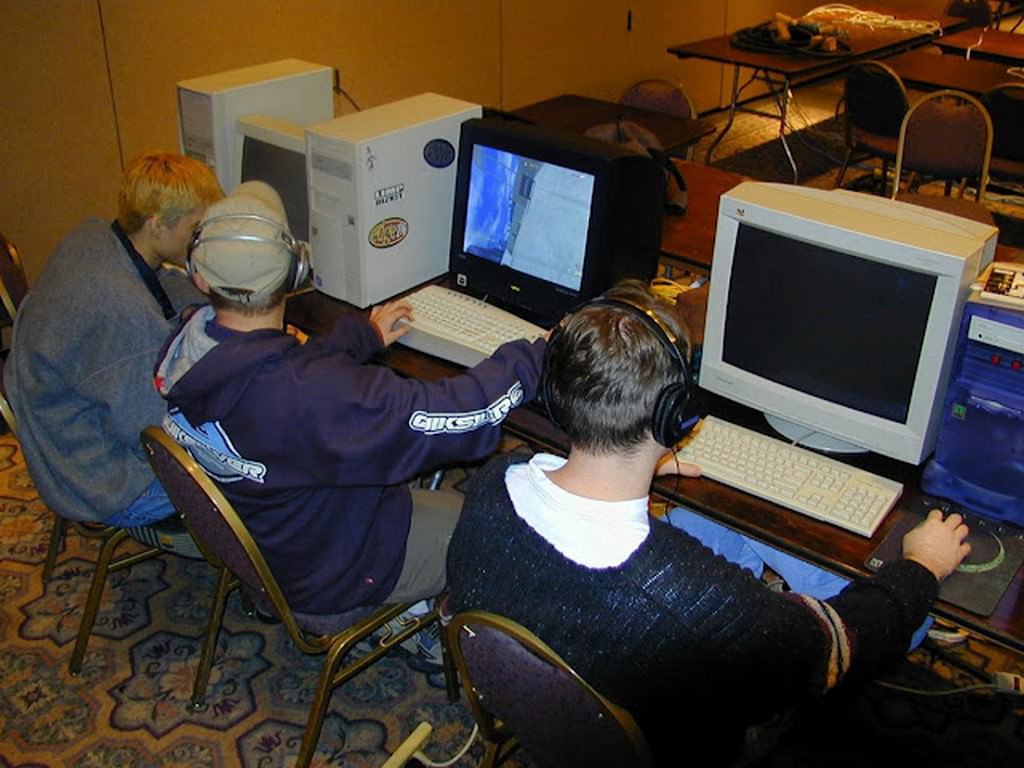
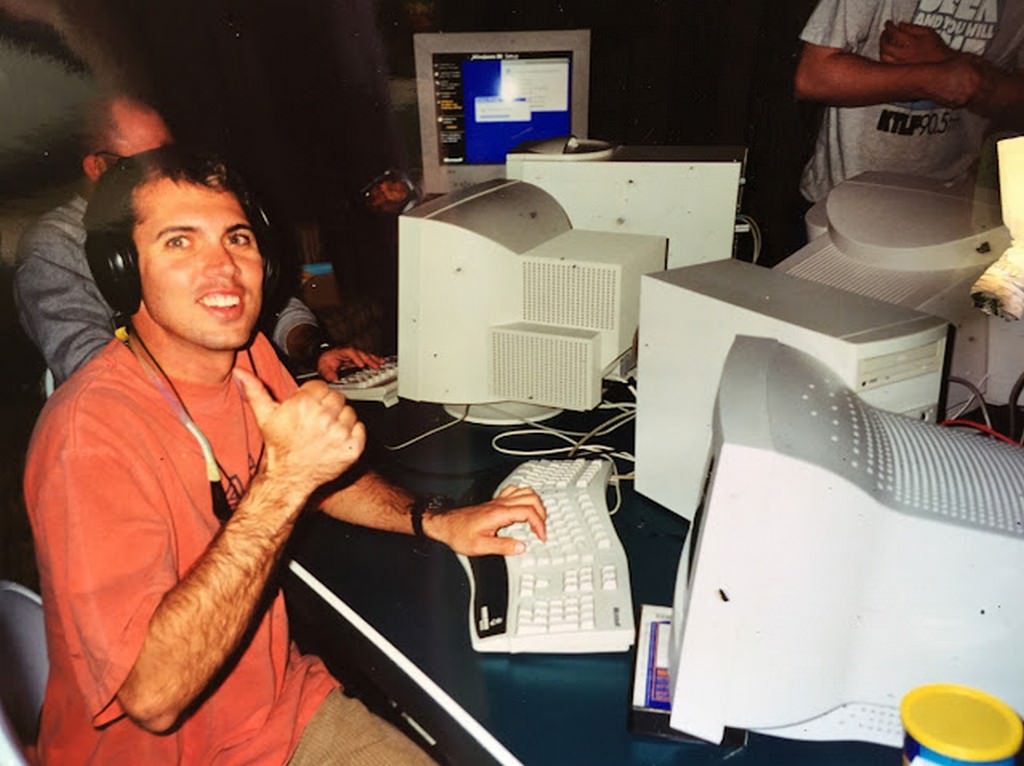
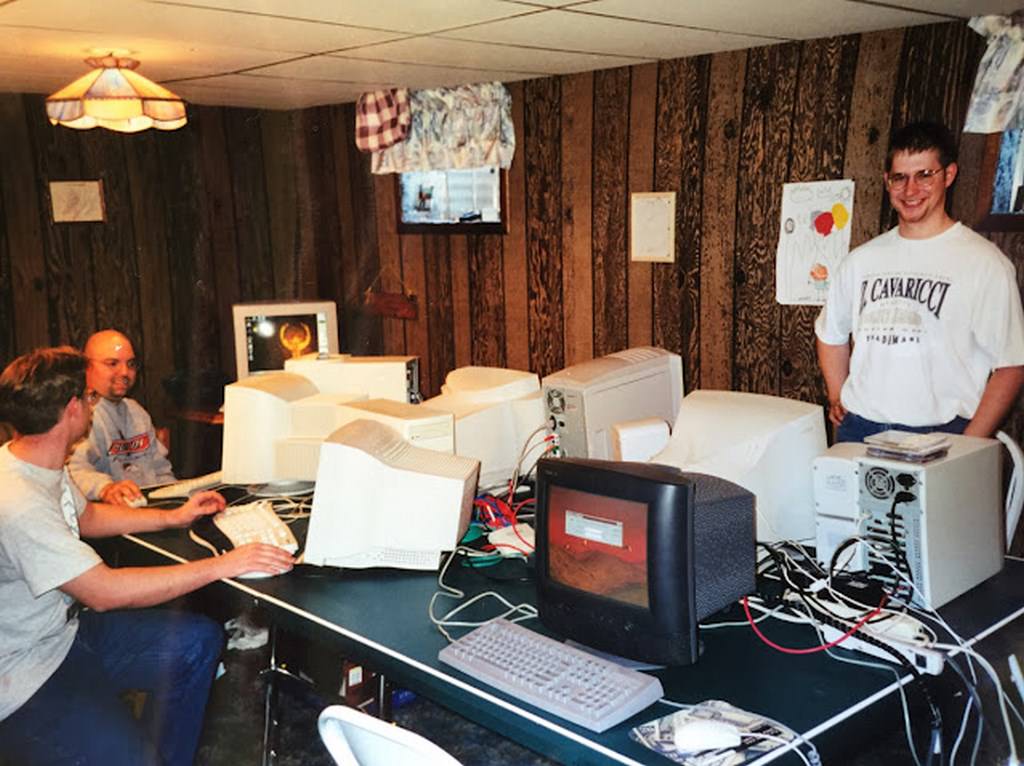
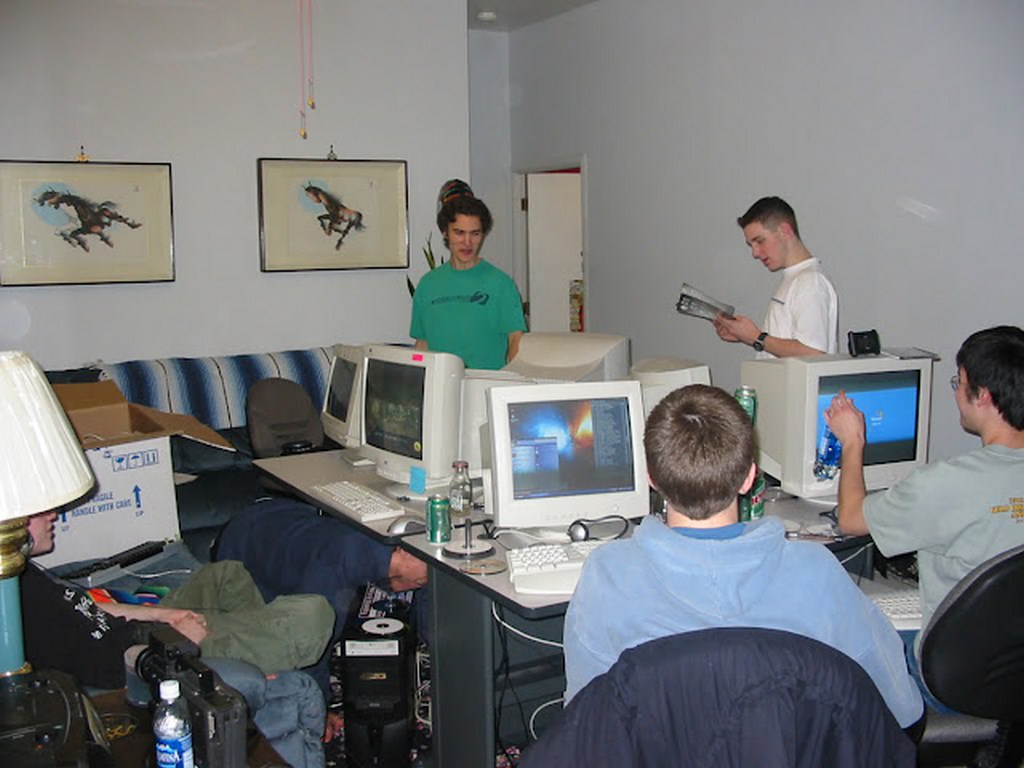
Setting up for a LAN party was a process in itself. Participants arrived with their full desktop rigs — tower, monitor, keyboard, mouse, and speakers. Tables were arranged in rows or clusters, power strips were daisy-chained across the floor, and Ethernet cables ran in every direction. Someone in the group usually took on the role of network admin, configuring IP addresses, setting up shared folders, and making sure every machine could see every other machine on the network. Getting all the computers talking to each other before the first game launched was a victory of its own.
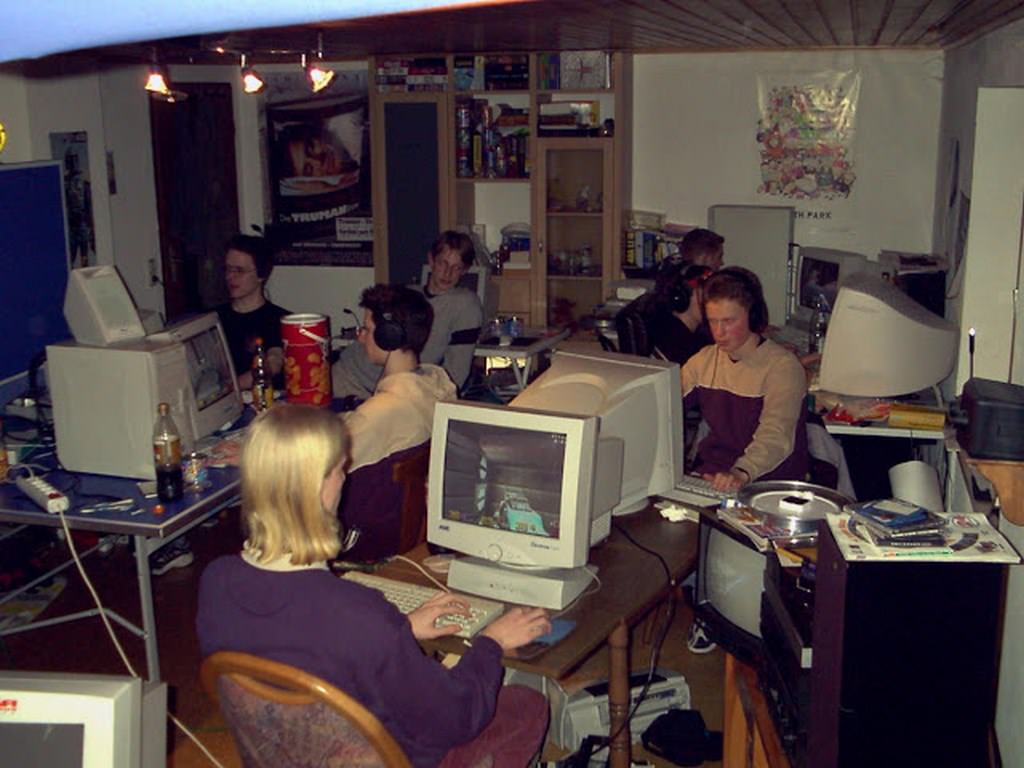
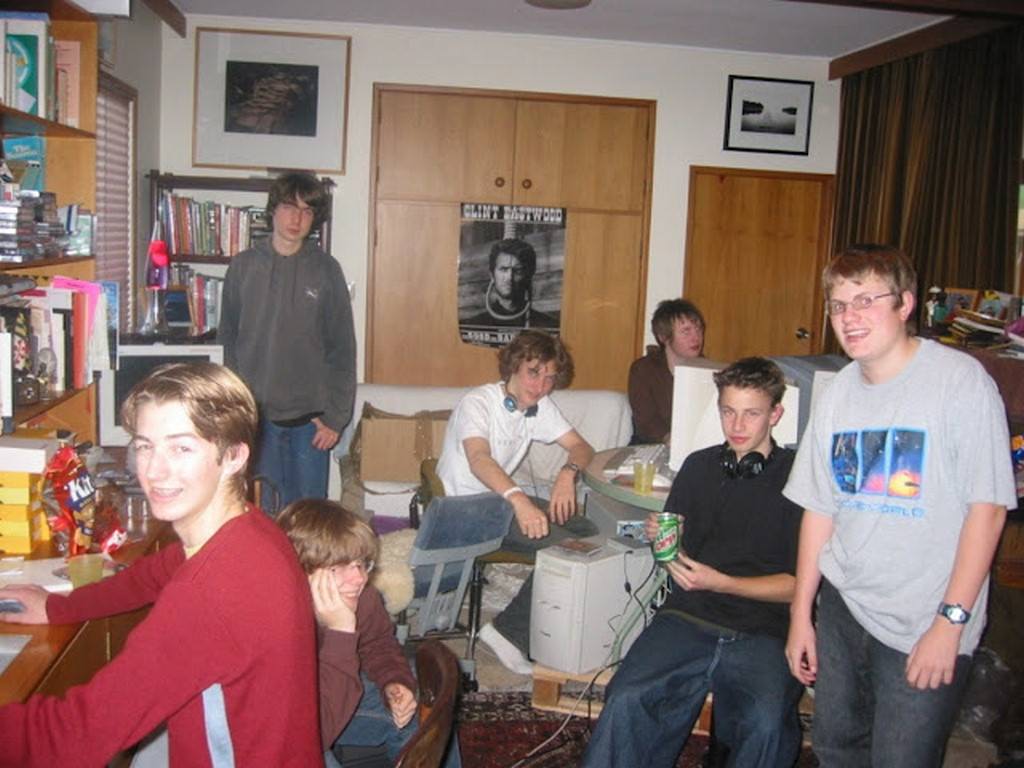
Certain games defined the LAN party era. “Doom” and “Quake” were among the earliest titles that drove people to connect their machines for deathmatch sessions. By the late 1990s and into the early 2000s, “Counter-Strike,” “StarCraft,” and “Warcraft III” had become the backbone of most events. “Counter-Strike” matches, in particular, ran for hours. Teams of five sat within shouting distance of each other, calling out enemy positions, debating strategies, and reacting in real time to what they saw on their screens. The fact that you could hear your opponents across the room added a layer to the experience that no online server could replicate.
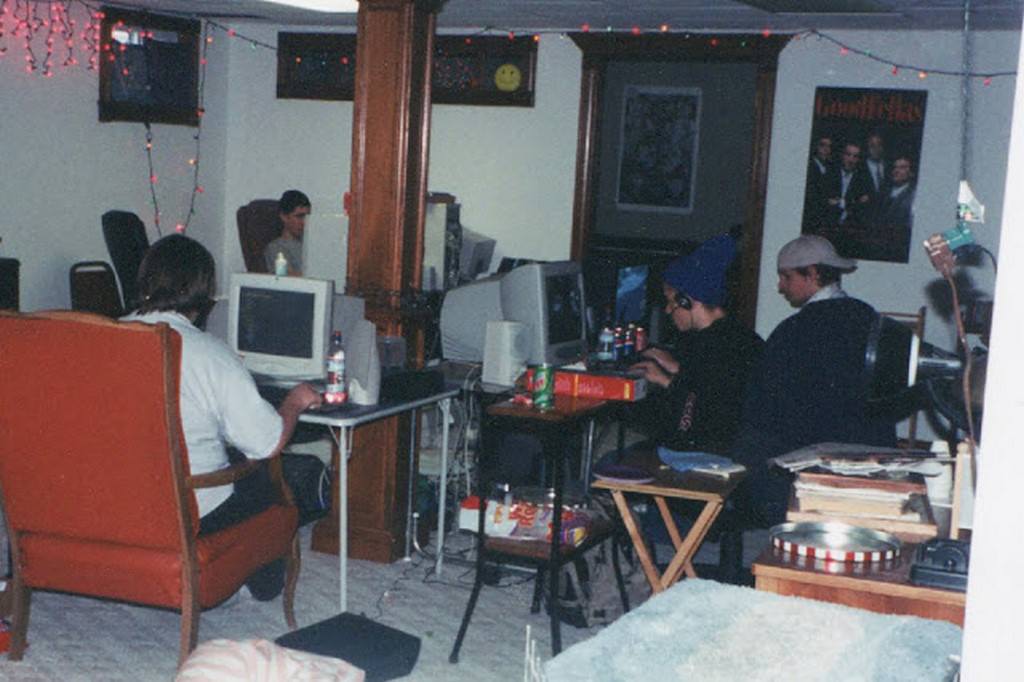
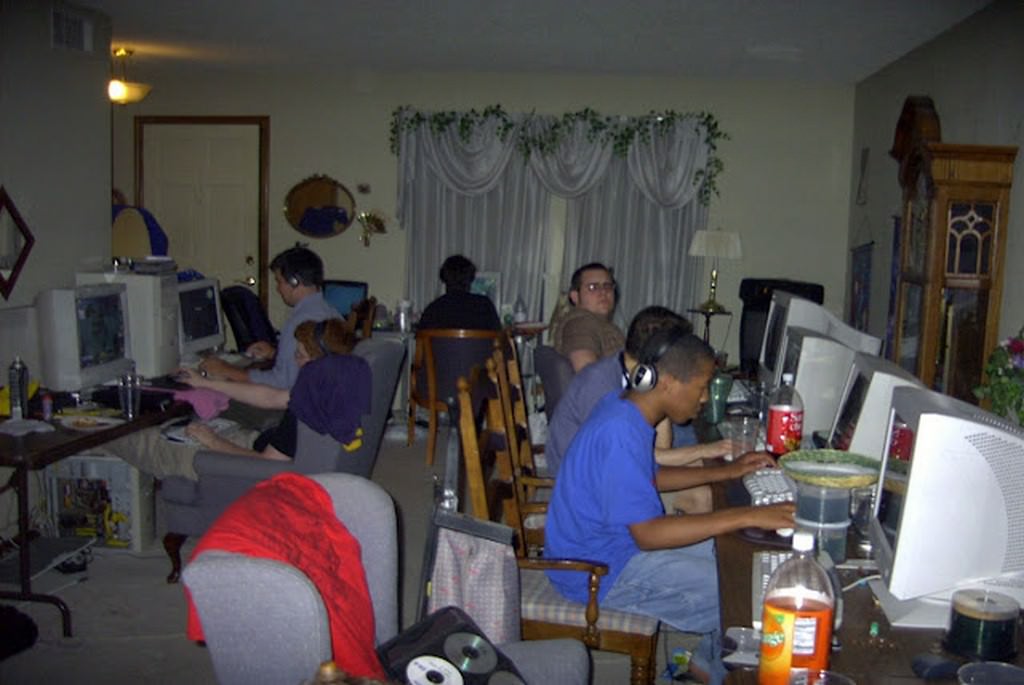
LAN parties also functioned as file-sharing hubs. In an era before cloud storage, streaming services, or fast home internet, getting large files from one computer to another was a genuine challenge. A LAN connection solved that instantly. Participants transferred entire game installations, software, music collections, and movie files directly between machines at full network speed. Arriving at a LAN party with a hard drive full of content to share was considered just as valuable as showing up with a good gaming rig.
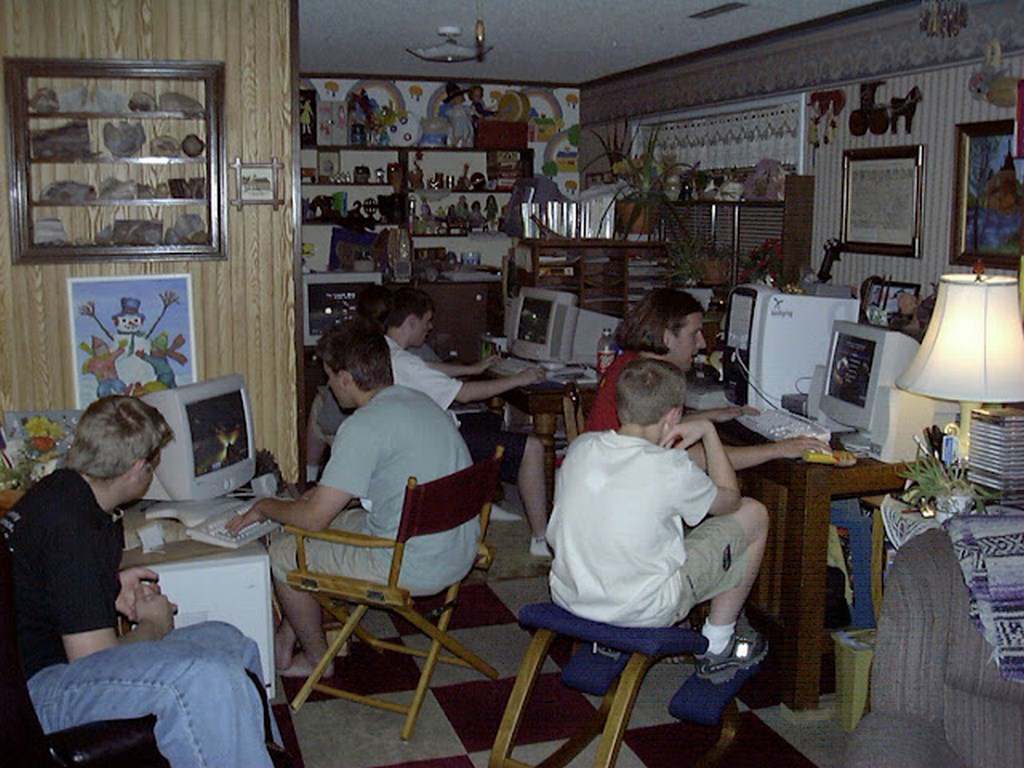
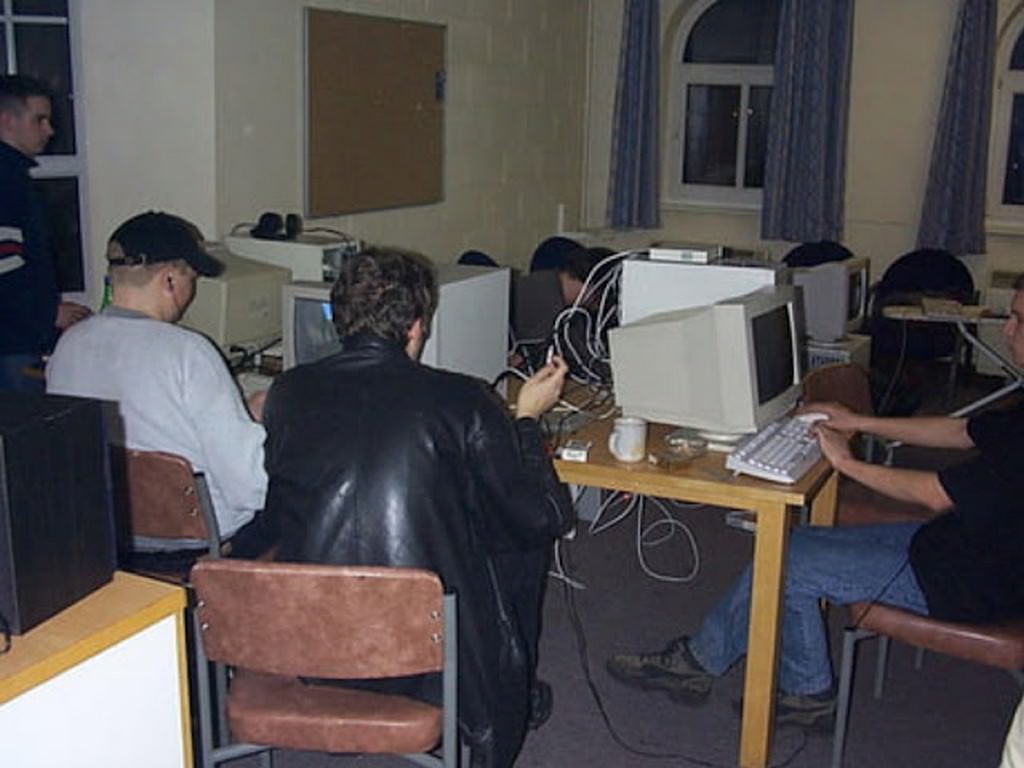
Small LAN parties — eight to twenty people crammed into someone’s basement — were the most common form. These were usually organized through word of mouth among friend groups, with everyone splitting the cost of snacks and agreeing on a game list ahead of time. The host’s parents might briefly appear to check on the noise level, then disappear again as the next round started. These smaller events had an intimacy that larger gatherings couldn’t match. Inside jokes formed. Rivalries developed. The same group of people would meet up again two weeks later and do it all over.
Larger events operated on a completely different scale. Organizers booked convention halls or fairgrounds, arranged sponsorships, and coordinated network infrastructure capable of handling hundreds of simultaneous connections. These events featured structured tournaments with prize pools, drawing competitive players from across entire regions. Power management became a serious concern — rows of high-draw desktop computers running through the night put real strain on electrical systems. Dedicated teams handled network setup, technical support, and event logistics. Attending one of these large events felt closer to a gaming convention than a friends-only hangout.
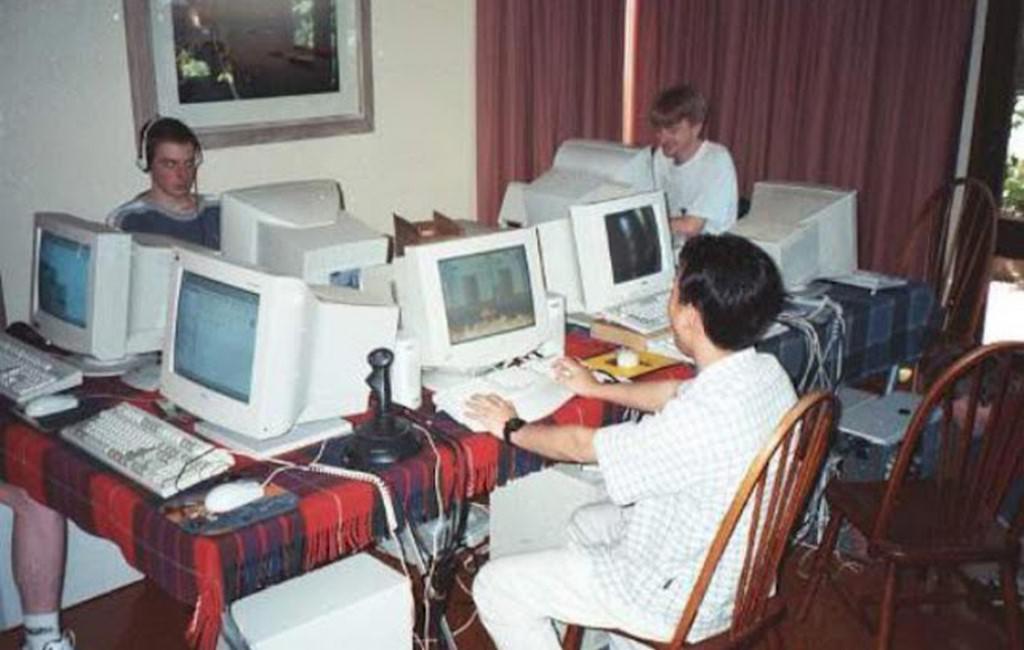
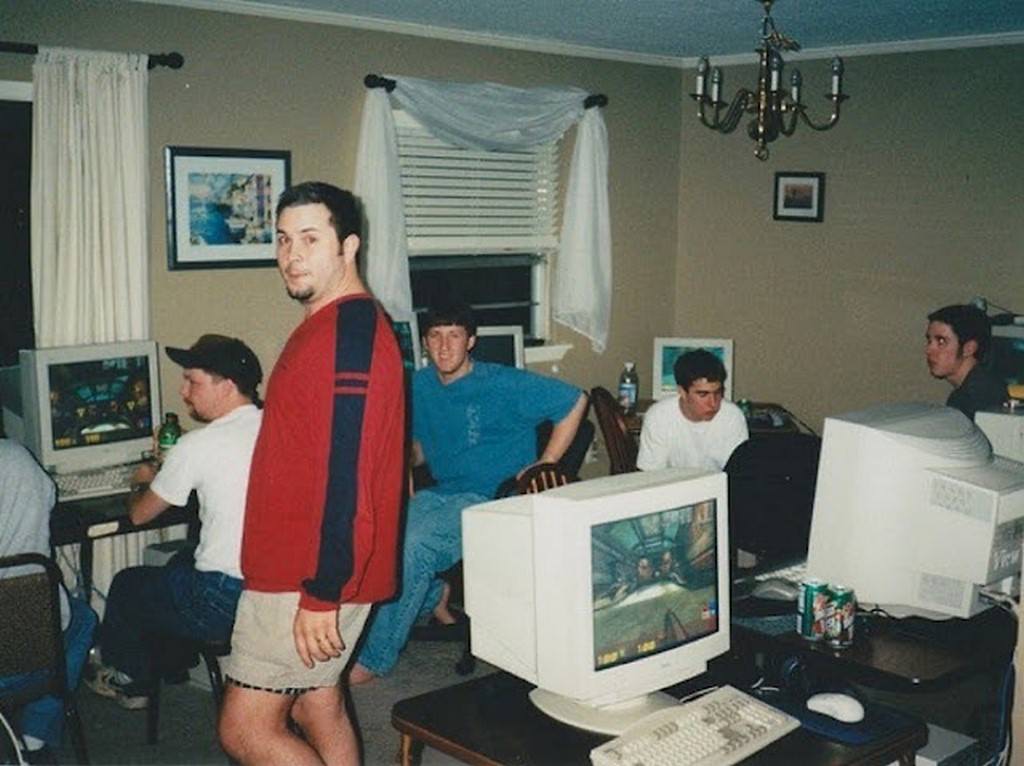
The atmosphere at a LAN party was charged in a way that’s hard to describe to someone who wasn’t there. The room was loud — fans spinning in a dozen PC towers, keyboards clattering, chairs scraping, and voices rising over it all. Someone would score a kill and shout. The person next to them who had just been eliminated would groan. A clutch round in “Counter-Strike” could bring an entire section of the room to its feet. The shared physical space amplified every moment of competition and cooperation in a way that headsets and chat programs never fully replaced.
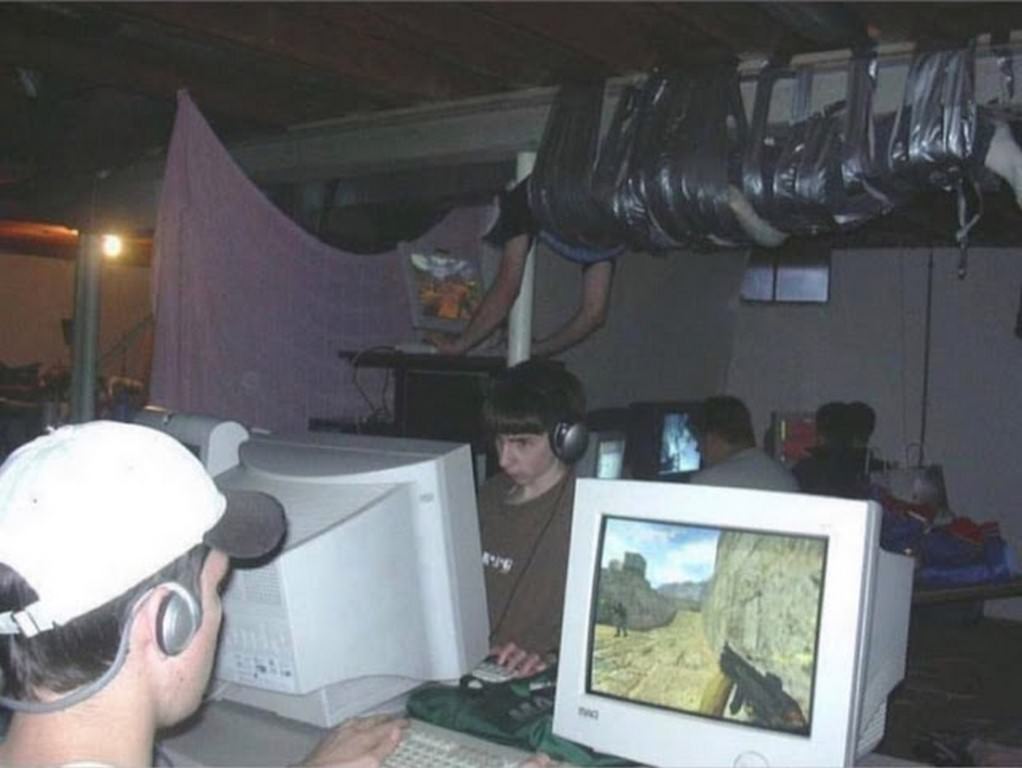
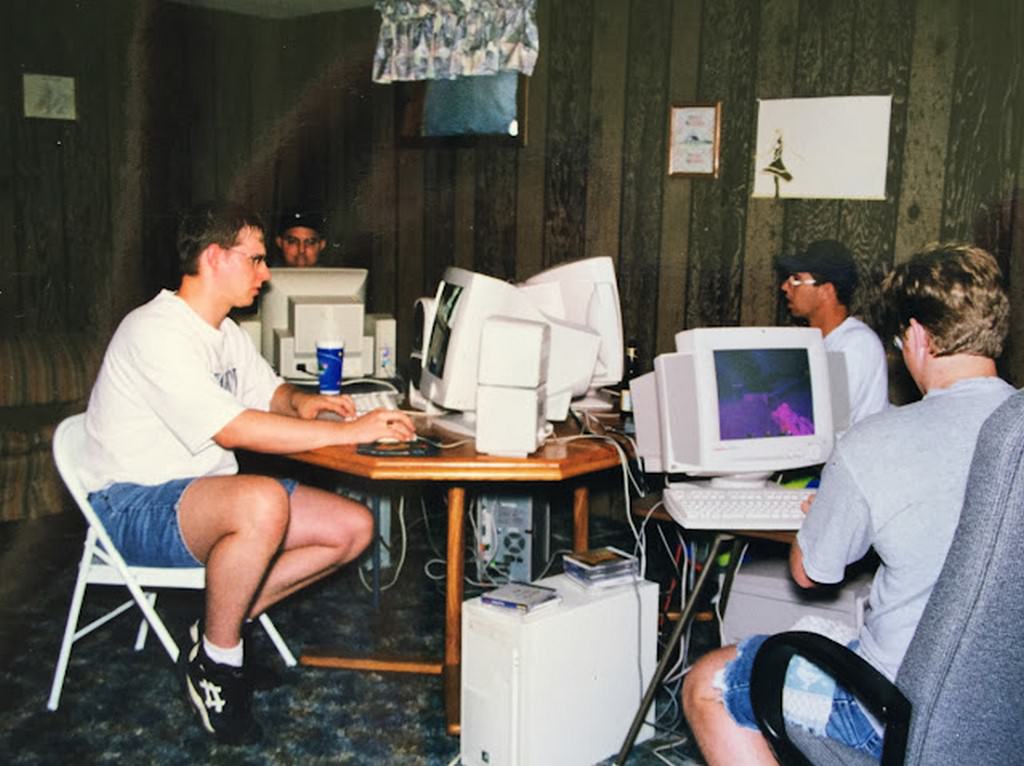
Sleep was optional. Some participants arrived Friday evening and didn’t leave until Sunday afternoon, catching short naps with their heads resting on their keyboards or on makeshift sleeping bags shoved under the tables. Energy drinks and junk food were the fuel. The dim glow of CRT monitors lighting up rows of focused faces became one of the defining visual signatures of the era.
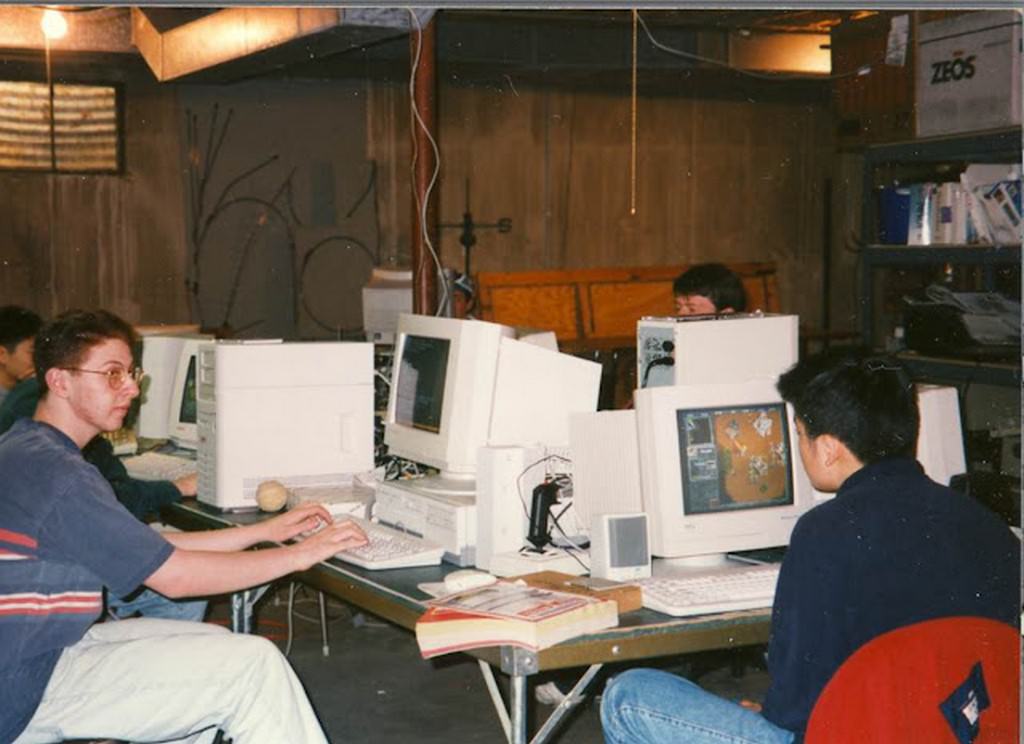
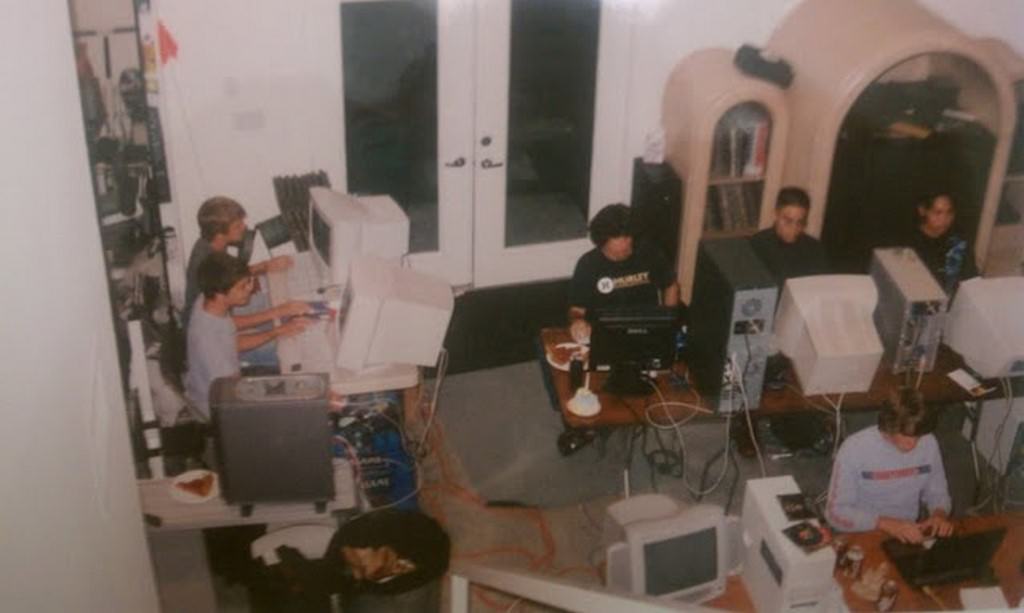
The hardware of the period tells its own story. CRT monitors were heavy — a 17-inch screen alone could weigh fifteen to twenty pounds. Carrying that, plus a full tower, up a flight of stairs was a real physical effort. Mid-range gaming PCs of the late 1990s ran processors like the Intel Pentium II or AMD K6-2, with graphics cards from early 3dfx Voodoo or NVIDIA TNT lineups. A machine that could run “Quake III Arena” at a smooth frame rate at 800×600 resolution was considered well-equipped.
As broadband internet connections became more widely available in the early-to-mid 2000s, the practical need for LAN parties declined. Cable and DSL connections gave home users the speed to host and join online game servers without the crippling lag of dial-up. Services and platforms built specifically around online multiplayer gaming made connecting with others easier than ever. The effort of transporting equipment and setting up a physical network became harder to justify when the same games could be played from home.
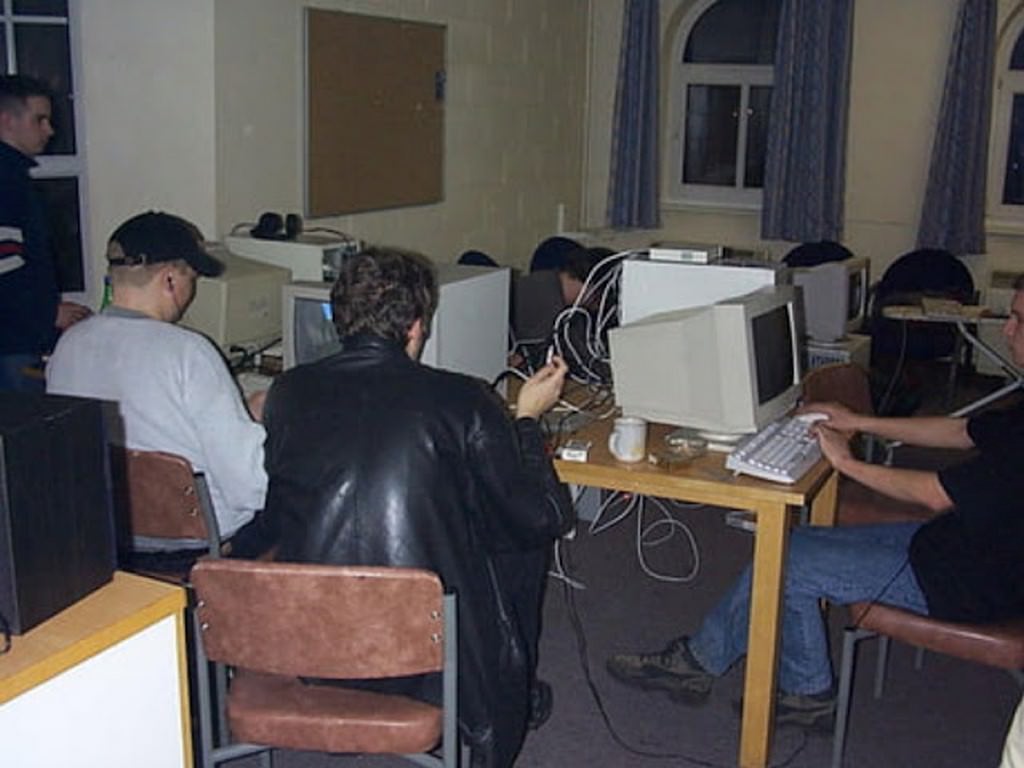
What made LAN parties matter wasn’t just the network speed or the file transfers or even the games. It was the physical togetherness. You knew the person sitting next to you. You could read their face when they made a mistake. You could hear the exact moment the team on the other side of the room realized they had lost. That kind of shared experience — rowdy, exhausting, chaotic, and deeply social — was the real product of every LAN party ever held.

Heh what memories this brings, how time passed by, unbelievable.
The smell though, I do not miss the smell.