
Knoxville, Tennessee has a long and layered history that stretches back to 1786, when James White established the first permanent settlement in the area. By the mid-1800s, the city had grown into a busy commercial hub. The railroad arrived in 1855, and within a few years, investors consolidated the city’s two major rail lines into the East Tennessee, Virginia, and Georgia Railway. That single move tied Knoxville more tightly to regional trade and set the stage for decades of rapid growth.
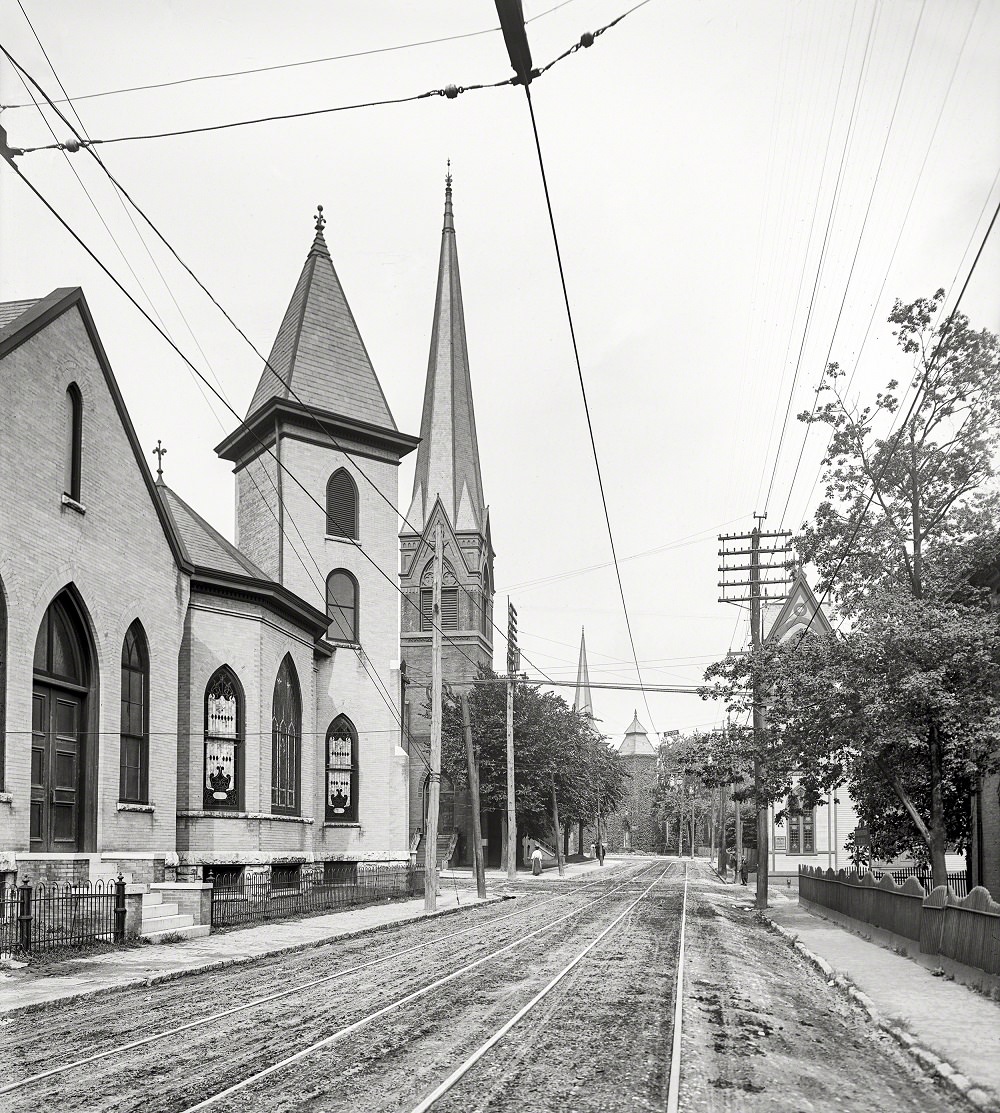
By the late 19th century, Knoxville had transformed into a city of furnaces and mills. Iron manufacturing, lumber, grain, and textiles drove the economy. Immigrants from across Europe arrived in large numbers, drawn by the promise of steady work. At the turn of the 20th century, Knoxville stood as the most populous city in Tennessee, fueled largely by a booming coal industry.
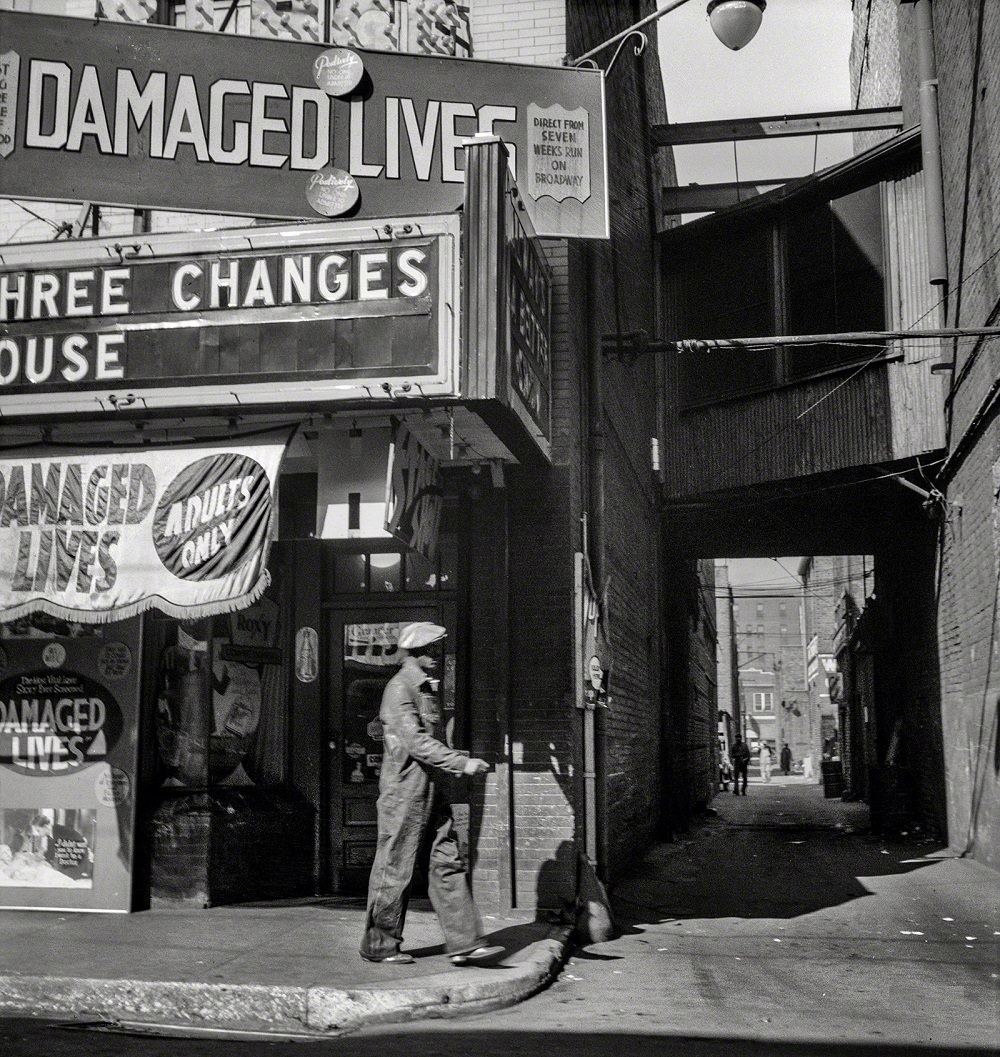

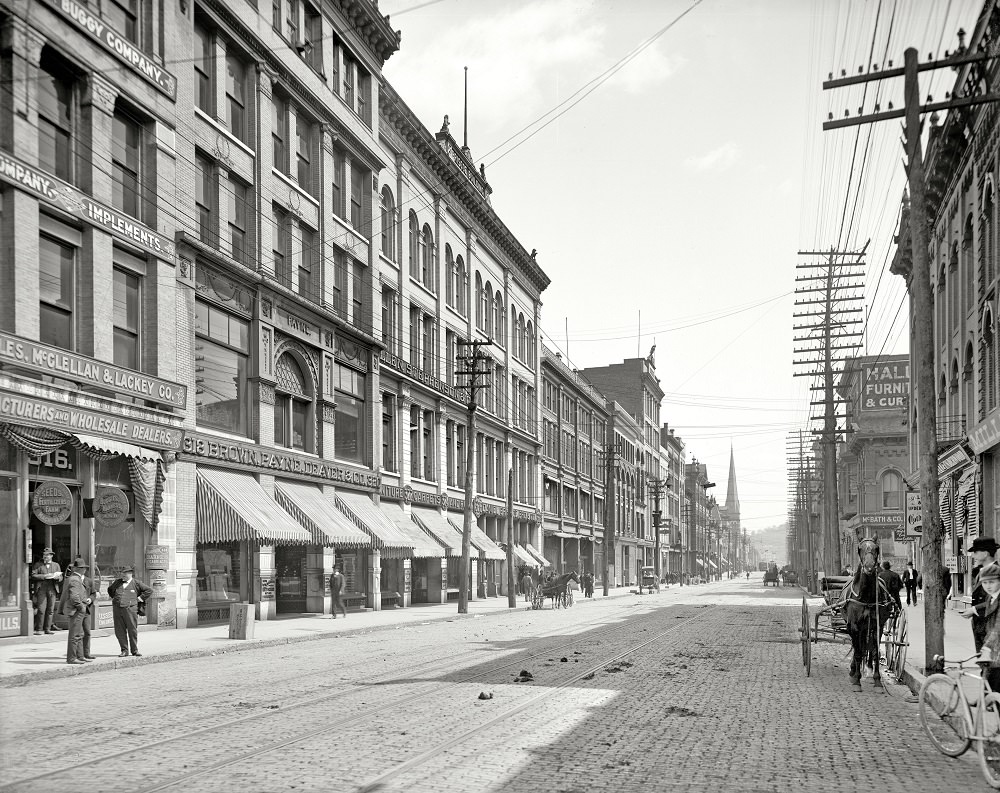
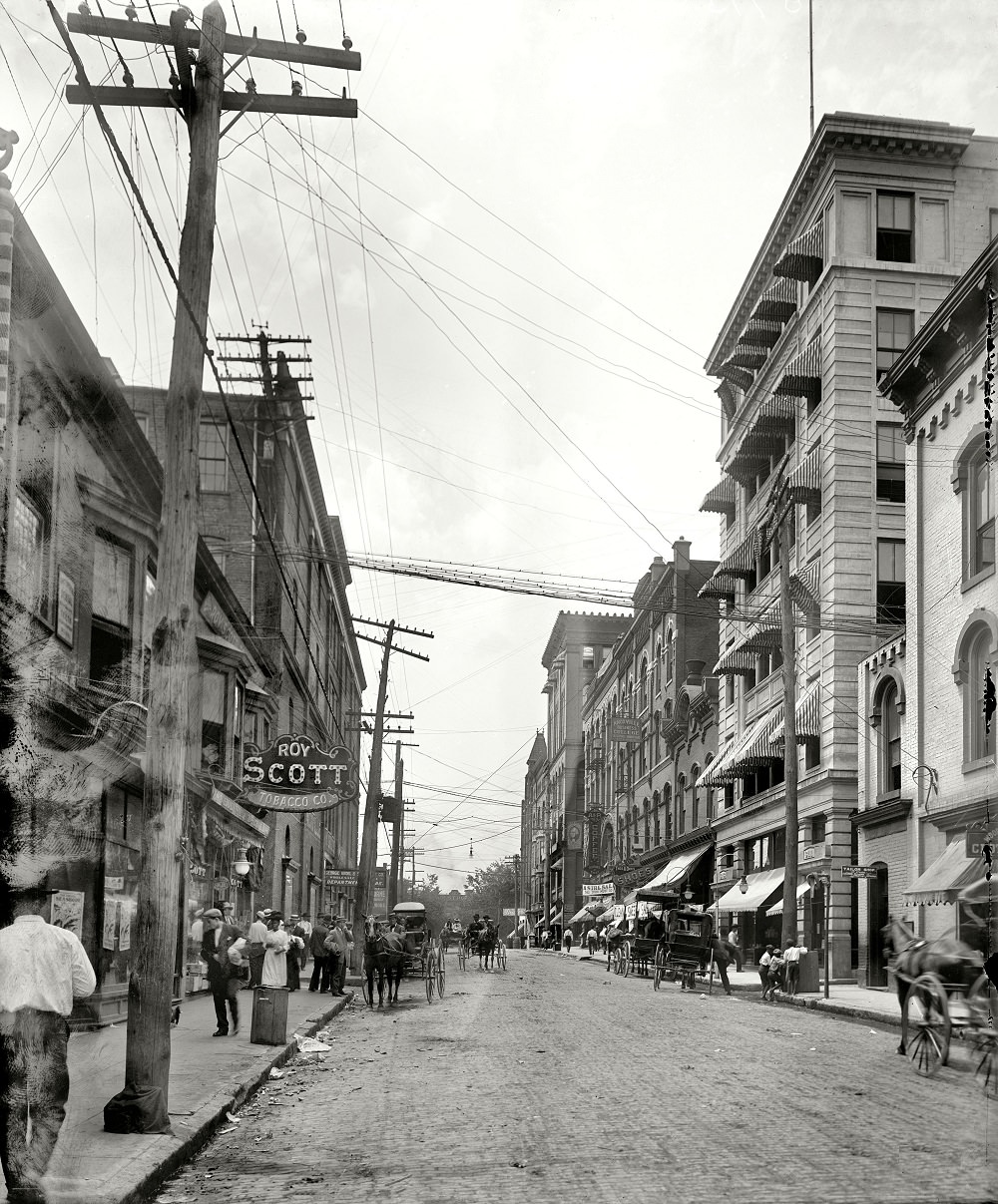
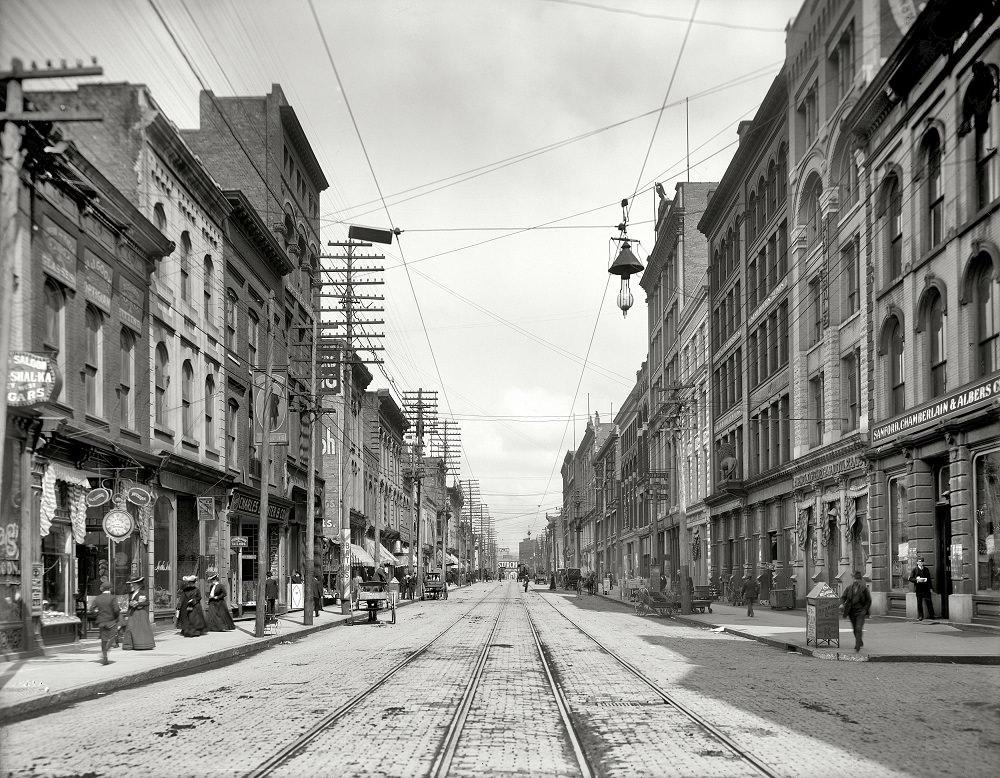
Gay Street served as the commercial backbone of downtown Knoxville during this era. Lined with storefronts, banks, and foot traffic, it was the kind of street that told you everything about how a city was doing. In the early 1900s, it was doing well. Trolley lines, horse-drawn wagons, and well-dressed pedestrians filled the frame in nearly every photograph taken there.
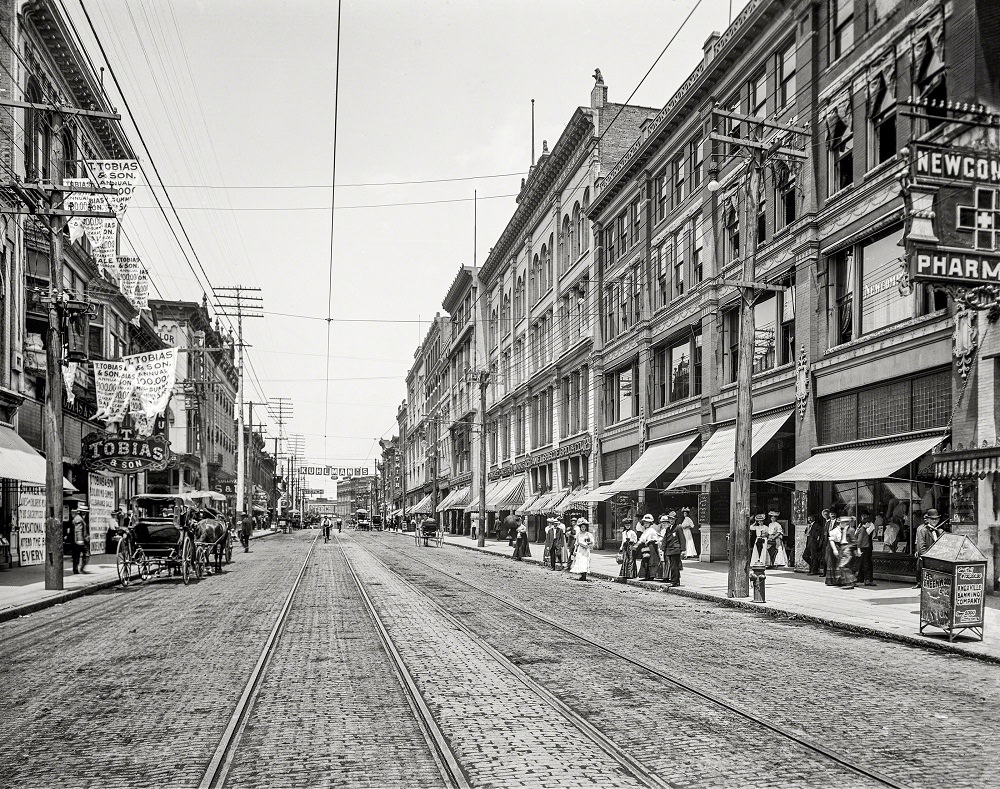
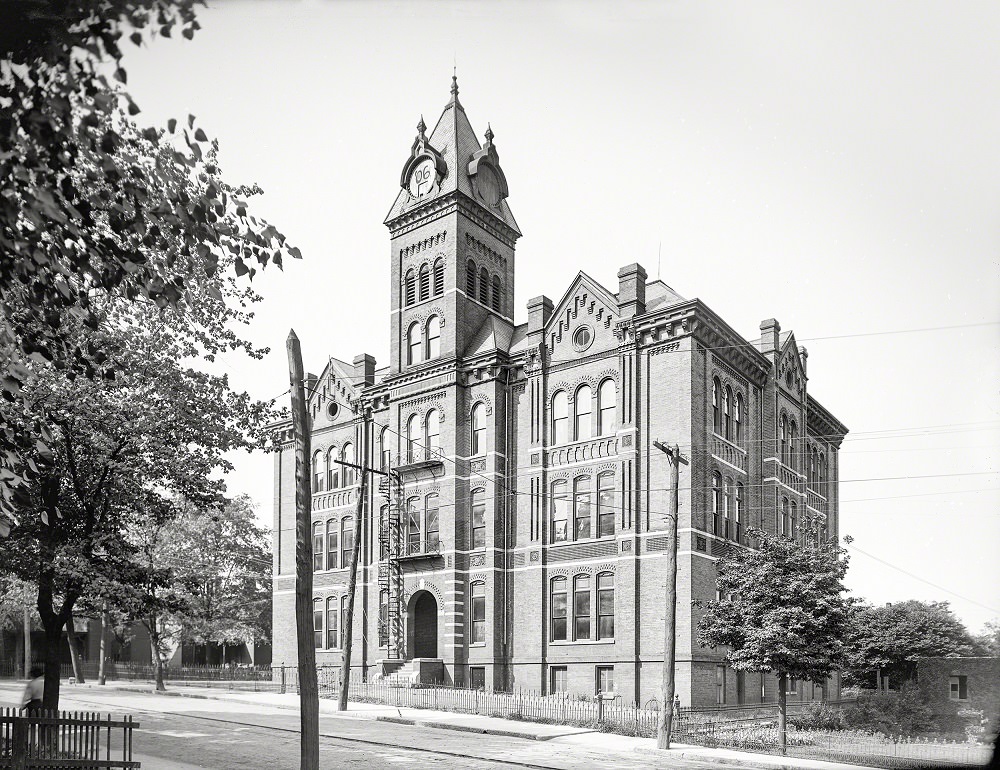
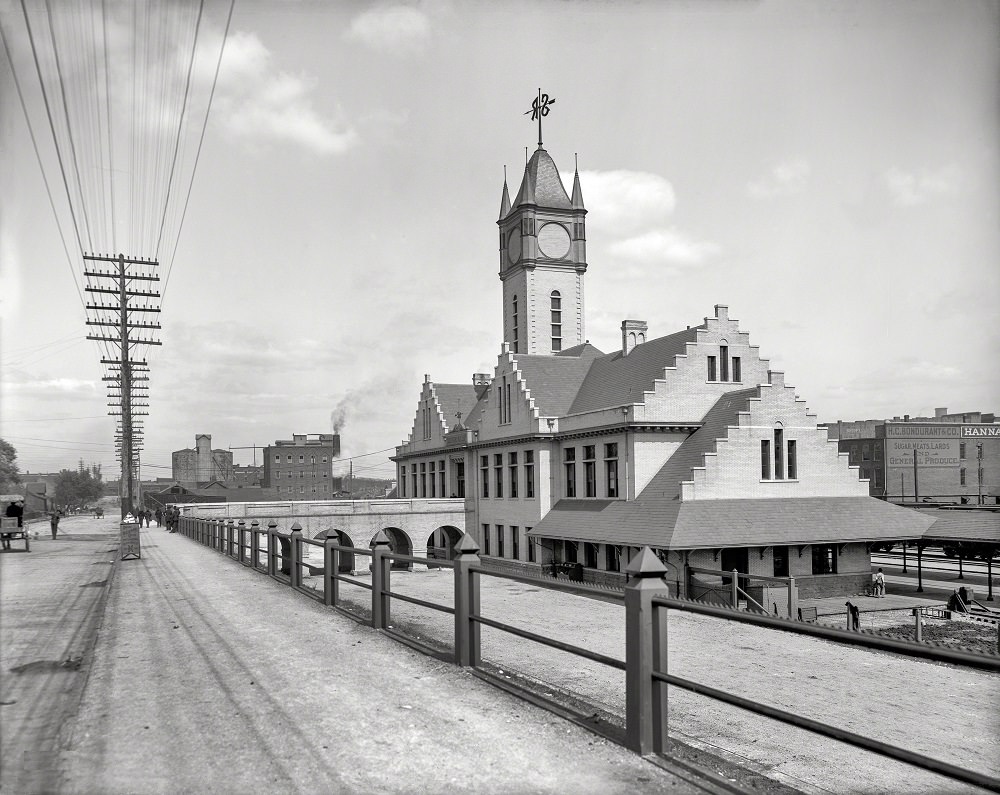
The Southern Railway station was a critical piece of Knoxville’s infrastructure in the early 20th century. Rail travel connected the city to markets, industries, and people across the South and beyond. The station itself reflected the city’s ambitions — built to impress and built to last.
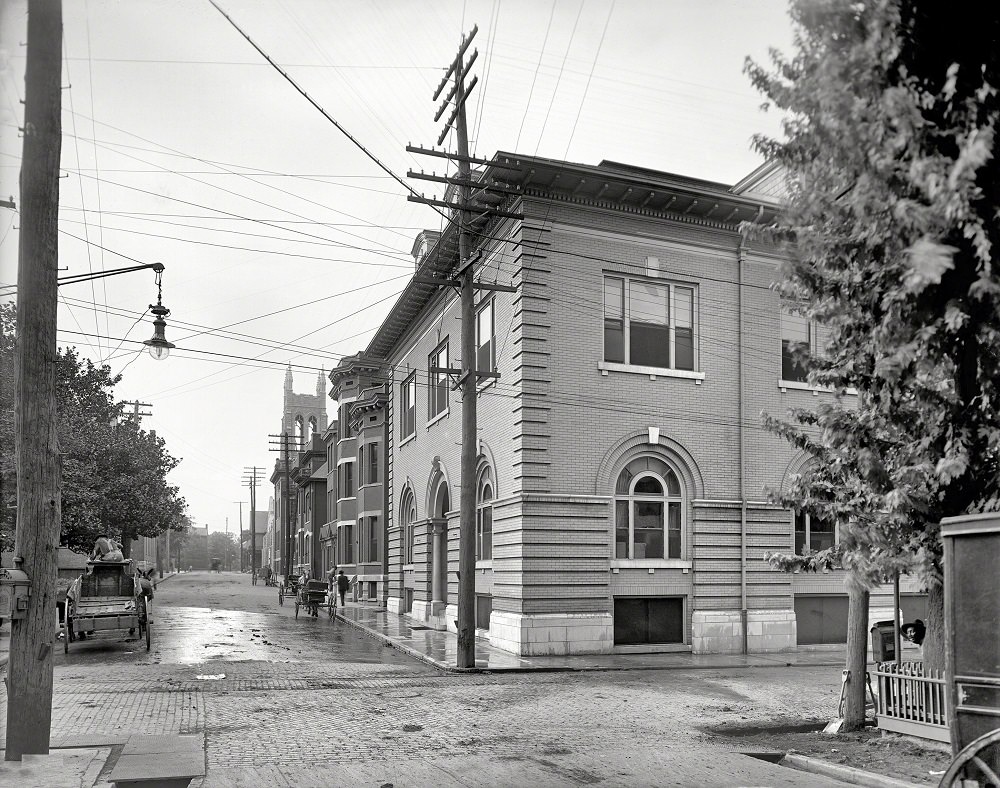
The Cumberland Club, situated near Walnut Street, represented the city’s wealthier social circles. Knoxville’s prosperity in these years was real, but it wasn’t evenly shared. Crime rates were high even at the city’s economic peak, and the gap between the city’s flourishing commercial core and its struggling neighborhoods was visible to anyone paying attention.
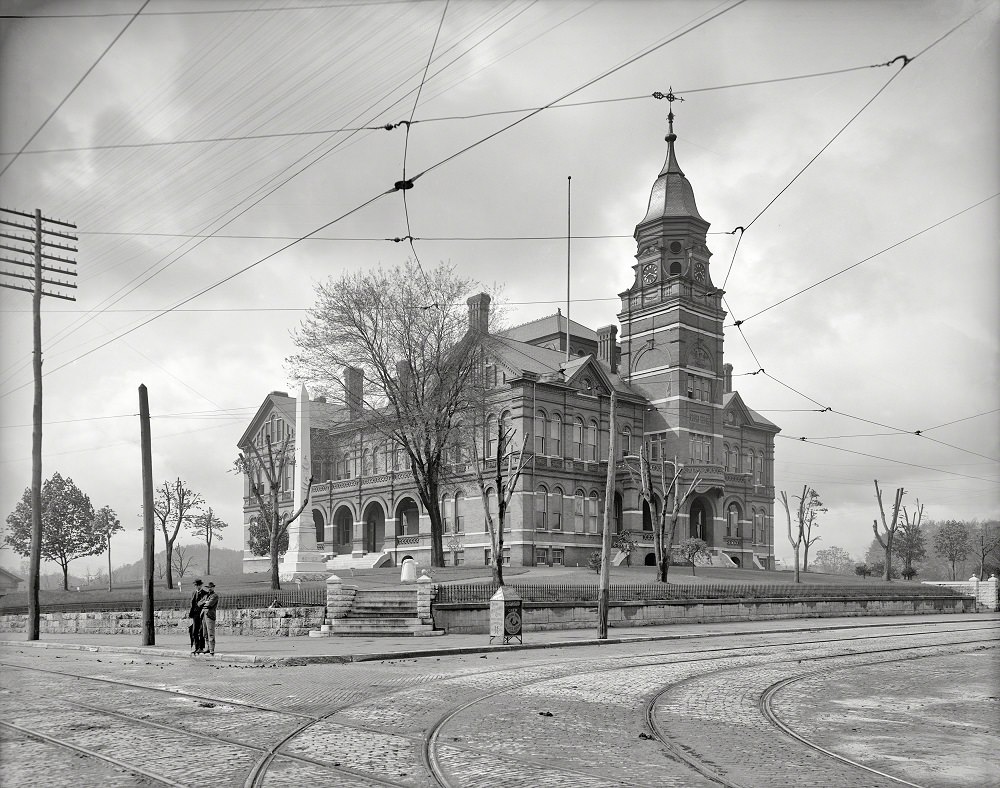
The Knox County Courthouse anchored civic life in the heart of the city. Built in a period when public buildings were meant to signal permanence and authority, it stood as one of Knoxville’s most recognizable structures in the early 1900s.
The economic boom that defined the late 1800s and early 1900s did not hold. The wholesaling sector — once the engine of Knoxville’s commercial power — collapsed. Population growth slowed. The Great Depression hit the city hard: construction fell by 70 percent, and unemployment tripled. Federal programs in the 1930s and early 1940s stepped in to stabilize the city, bringing relief work and infrastructure investment that kept Knoxville functioning through its leanest years.
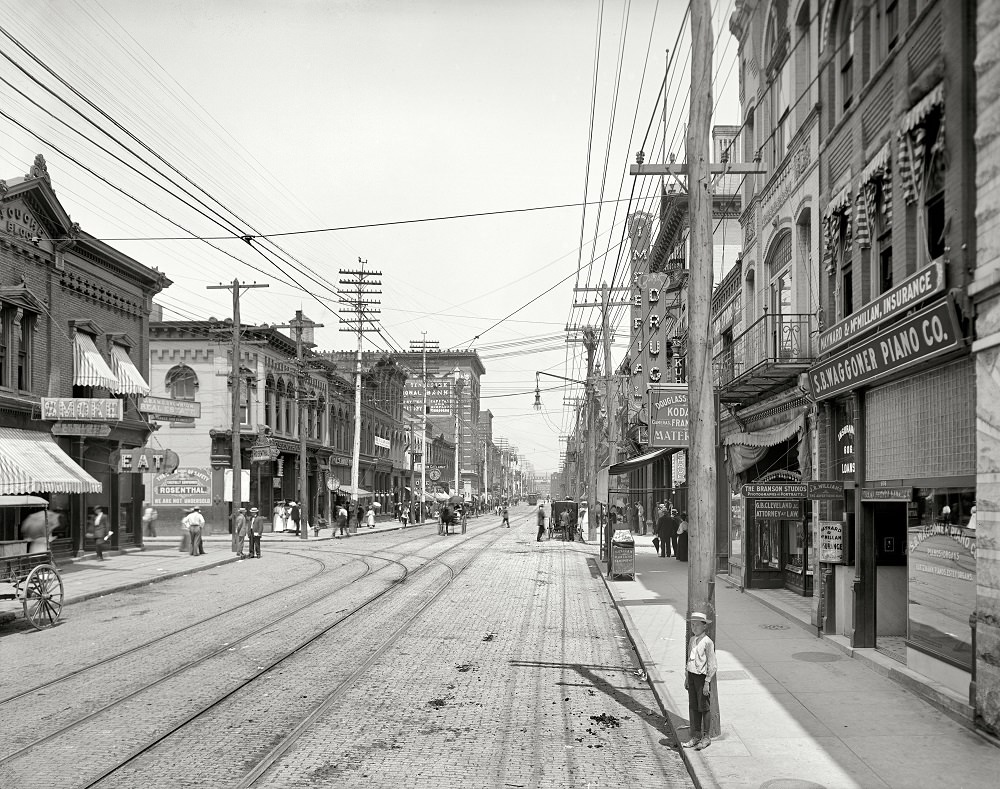
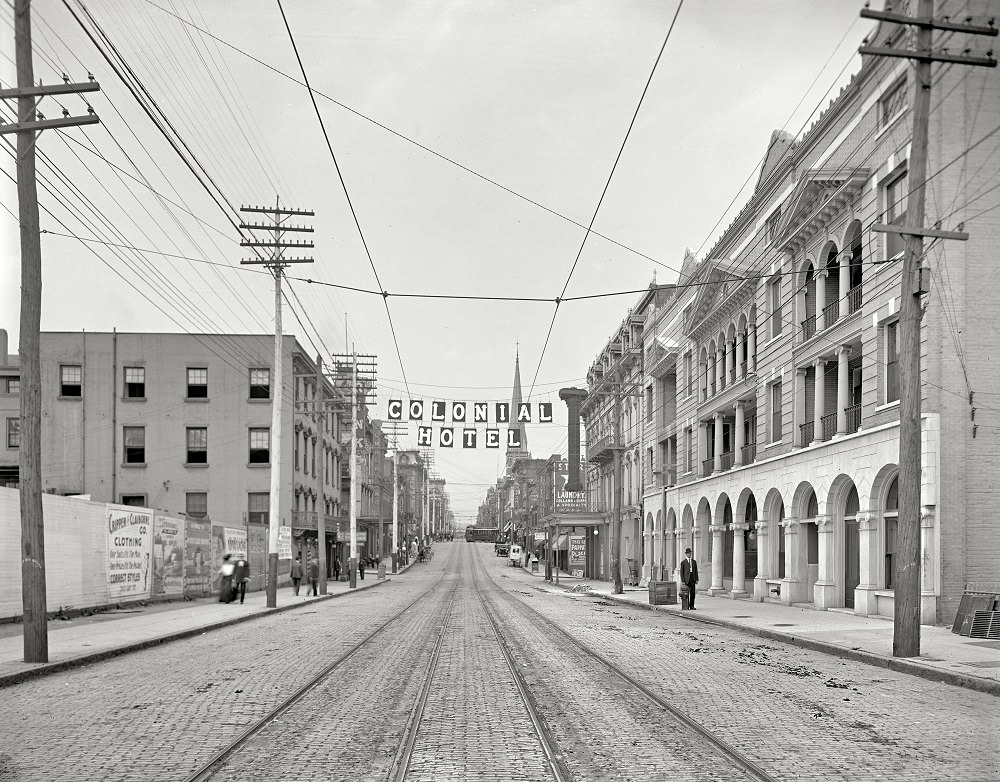
Wall Street and the blocks surrounding Gay Street captured the density of early Knoxville commerce. These weren’t wide, sprawling avenues — they were tight, active corridors where business happened shoulder to shoulder. The photographs taken along these streets in 1906 show a city fully engaged with daily trade, unaware of the economic contractions that lay ahead.
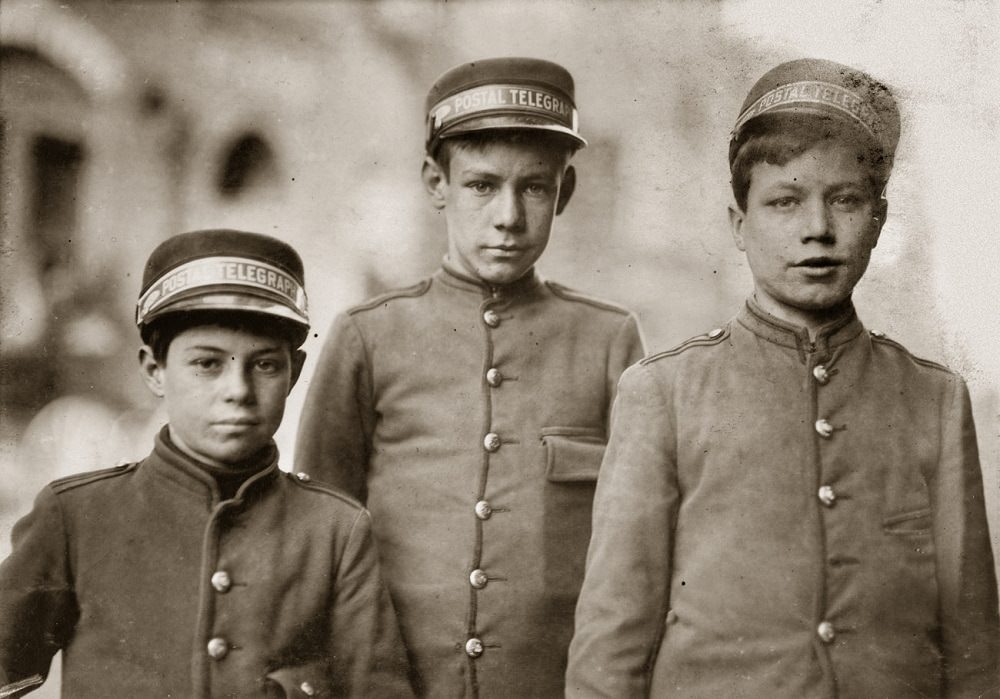
Among the many workers who moved through Knoxville’s streets in the early 1900s were the Postal Telegraph messengers — young men and boys who carried messages across the city on foot or by bicycle. In 1910, photographer Lewis Hine documented child laborers across the American South, and Knoxville was among his stops. The messengers he photographed were often as young as ten or eleven, working long hours in all conditions.





Thanks for sharing, it’s very cool!
These types of articles tend to appear periodically, and the Library of Congress serves as their source. You may have to conduct a search to find them.
It’s disheartening to see that the Southern Railway Station no longer has its stunning Victorian-era bell tower. Knoxville was once home to many remarkable Victorian and Art Deco-inspired buildings, but many of them have lost their original character or been demolished entirely. It would have been wonderful to preserve more of these architectural treasures, but unfortunately, some were destroyed in the great fire long ago.
There were numerous fires that ravaged different parts of downtown during those earlier times, and it’s regrettable that more historic buildings didn’t survive. It would have been wonderful if we could have preserved more of those early architectural treasures.
I recall reading an excellent essay by Gerald Schroedl, a retired archaeology professor from UT, discussing the subpar quality of historic preservation in Knoxville. According to Schroedl, both the city government and UT Administration exhibited a range of attitudes toward historic preservation throughout the 20th century, from indifference to outright hostility. This explains why Knoxville lacks a distinctive appearance as an American city, with only scattered remnants of preservation that fail to create a cohesive aesthetic for the city.
It’s amazing to see how much Knoxville has changed over the years, yet how many of its iconic landmarks and neighborhoods have endured.
They only tell part of the story. They depict a time when the city was growing rapidly and industrializing, but they also obscure the experiences of marginalized groups like African Americans and Native Americans.
I find it amazing how much Knoxville has changed over the years, as shown in these historical photos. It’s fascinating to see the evolution of the city’s architecture, from the grand, Victorian-era mansions to the sleek, modernist buildings of the mid-20th century.