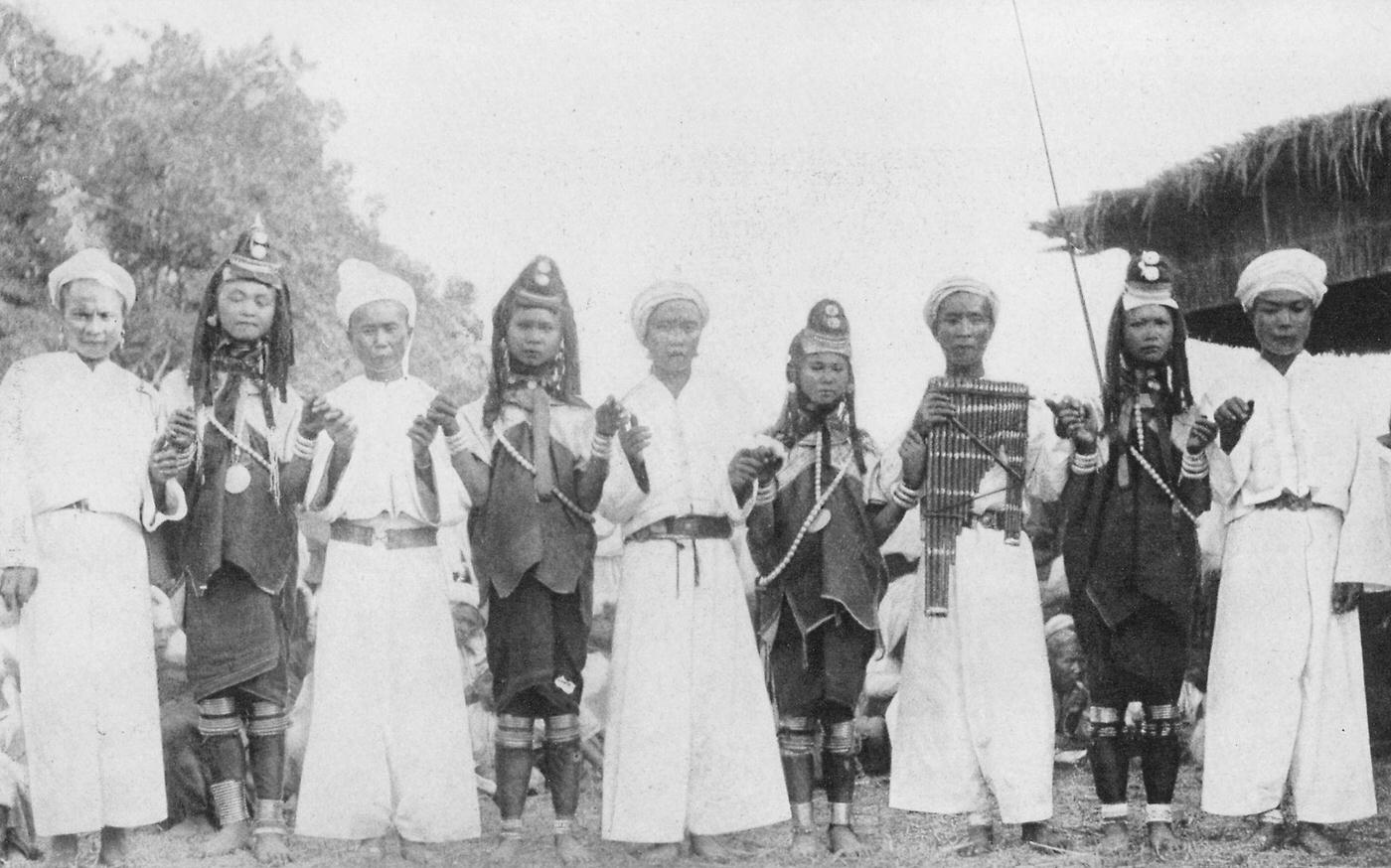
The Kayan Lahwi are an ethnic group living primarily in the Kayah State of Myanmar and in parts of northern Thailand. They belong to the broader Kayan community, which includes several subgroups such as the Kayan Ka Khaung, Kayan Lahta, and Kayan Ka Ngan. During British colonial rule, outsiders labeled them the ‘Padaung’ — a term many members of the group reject today in favor of their own name. Their villages sit among forested hills, and for generations they have farmed the surrounding land. But it is the brass neck coils worn by Kayan Lahwi women that have drawn the attention of the outside world for over a century.
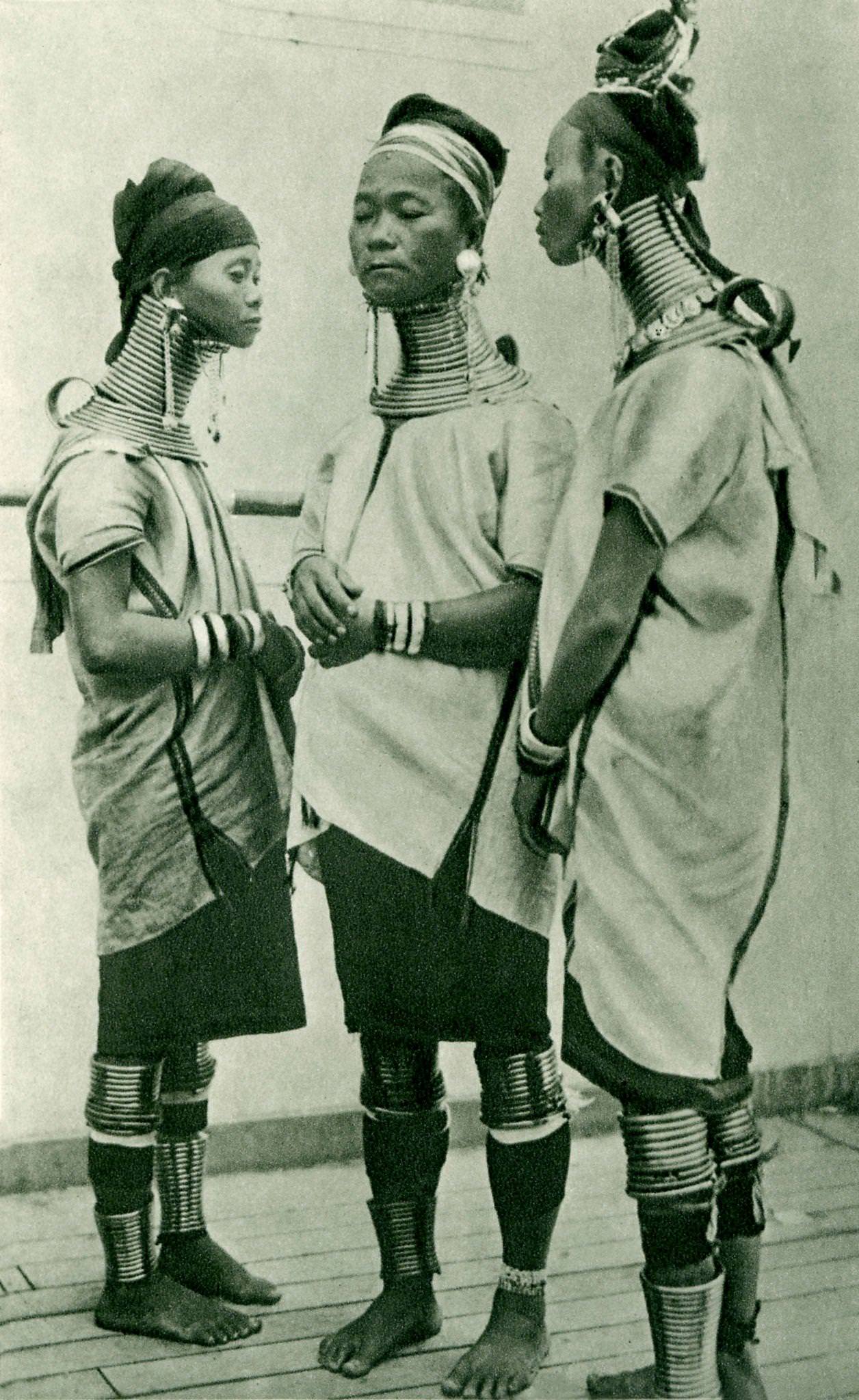
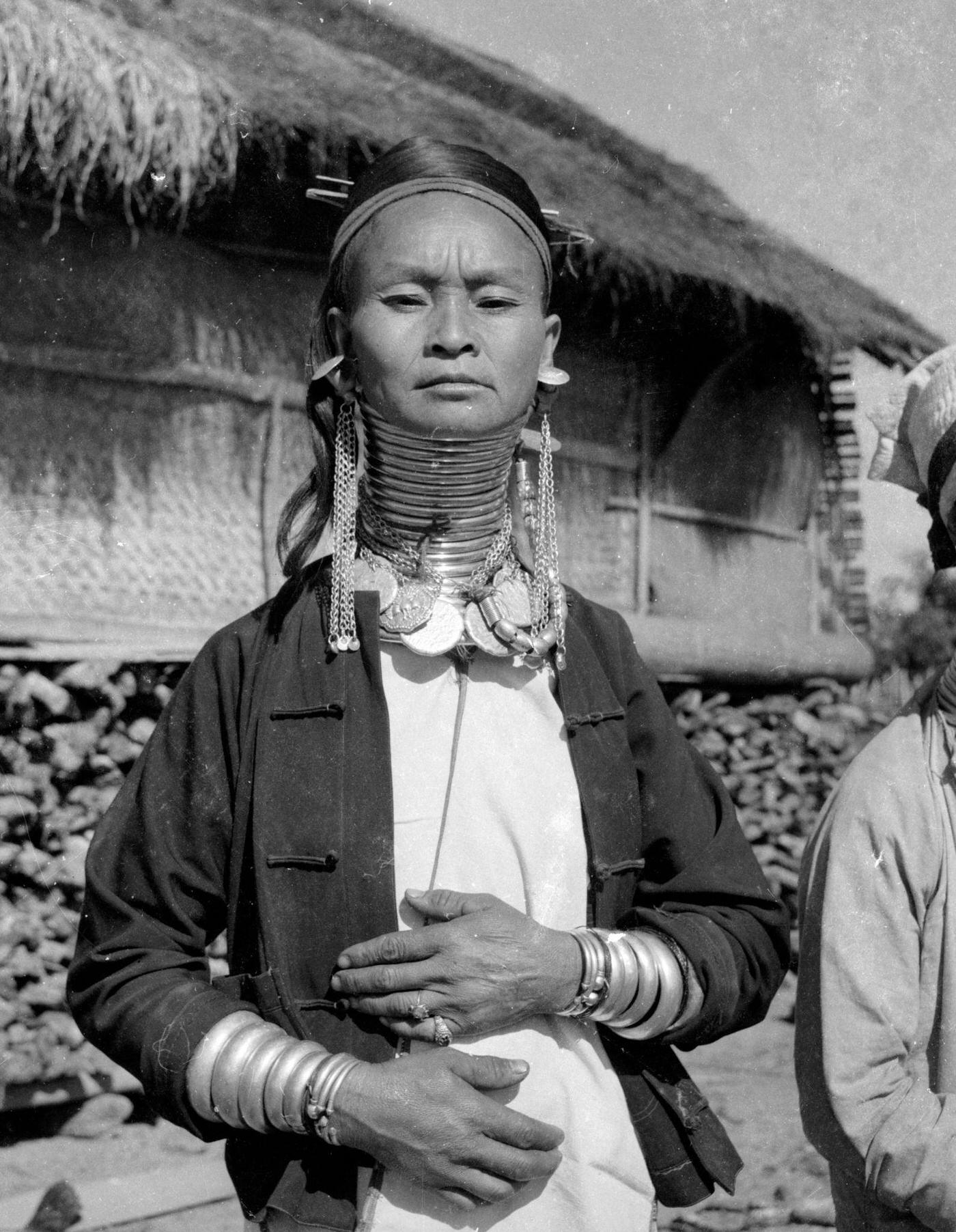
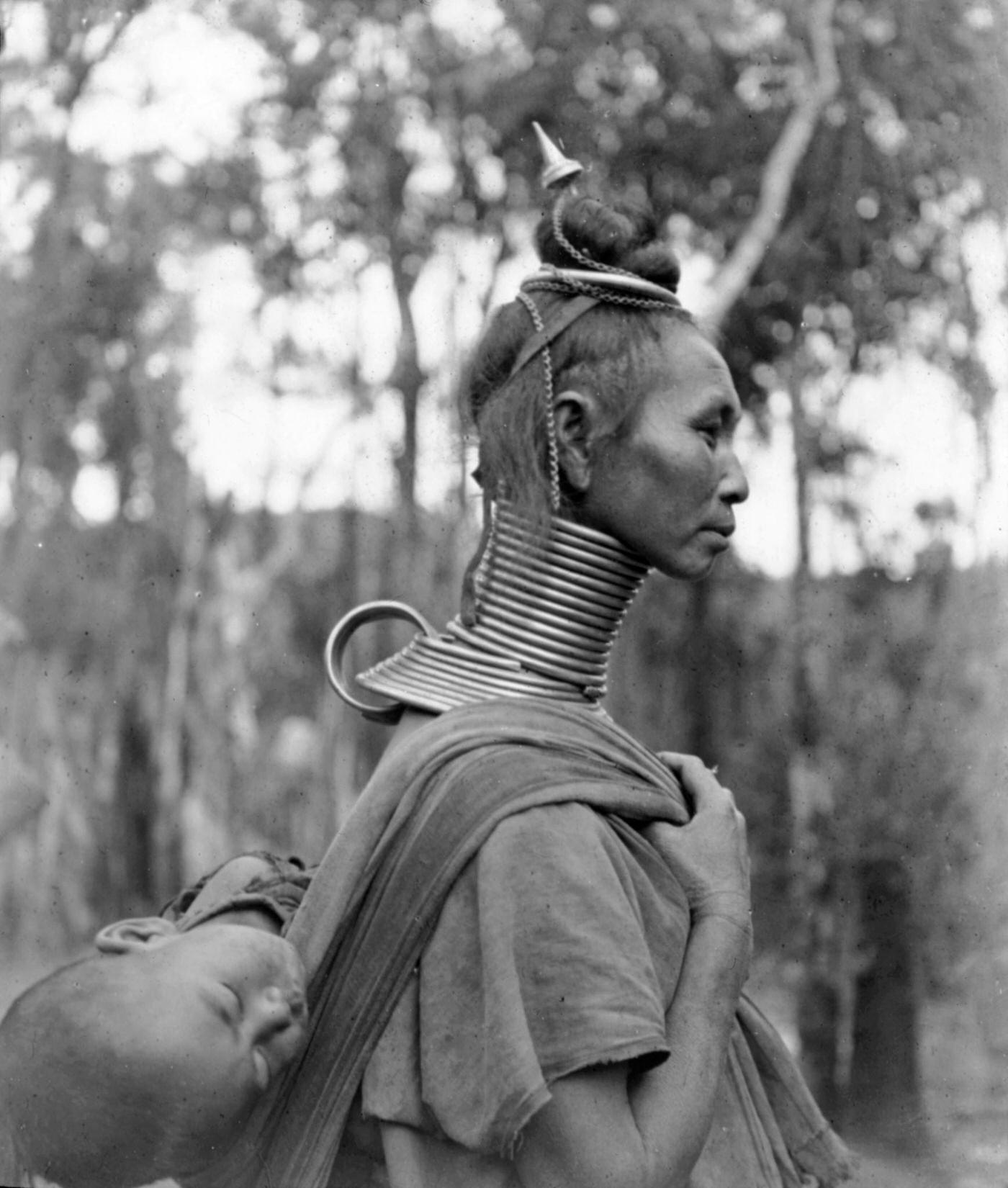
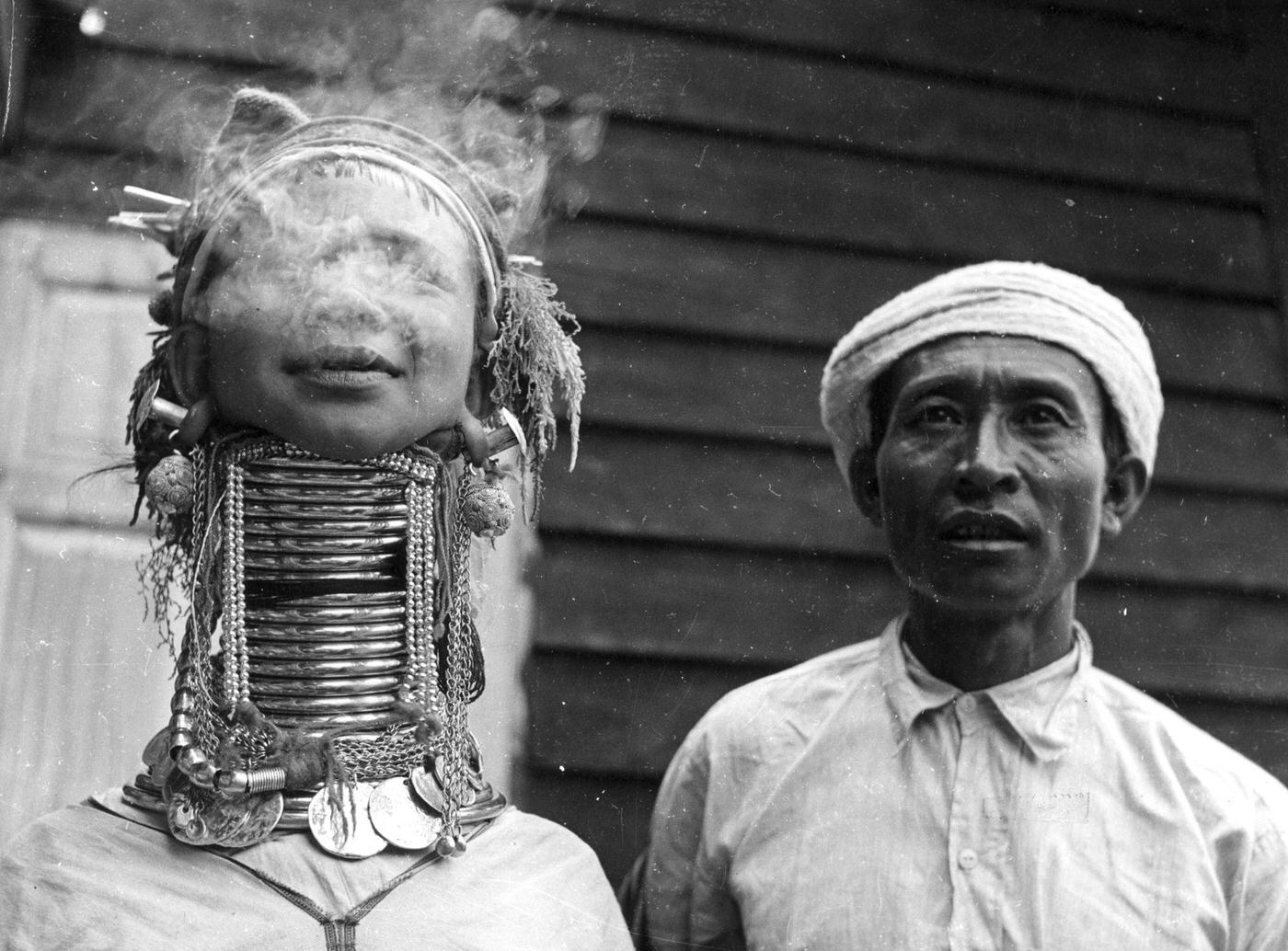
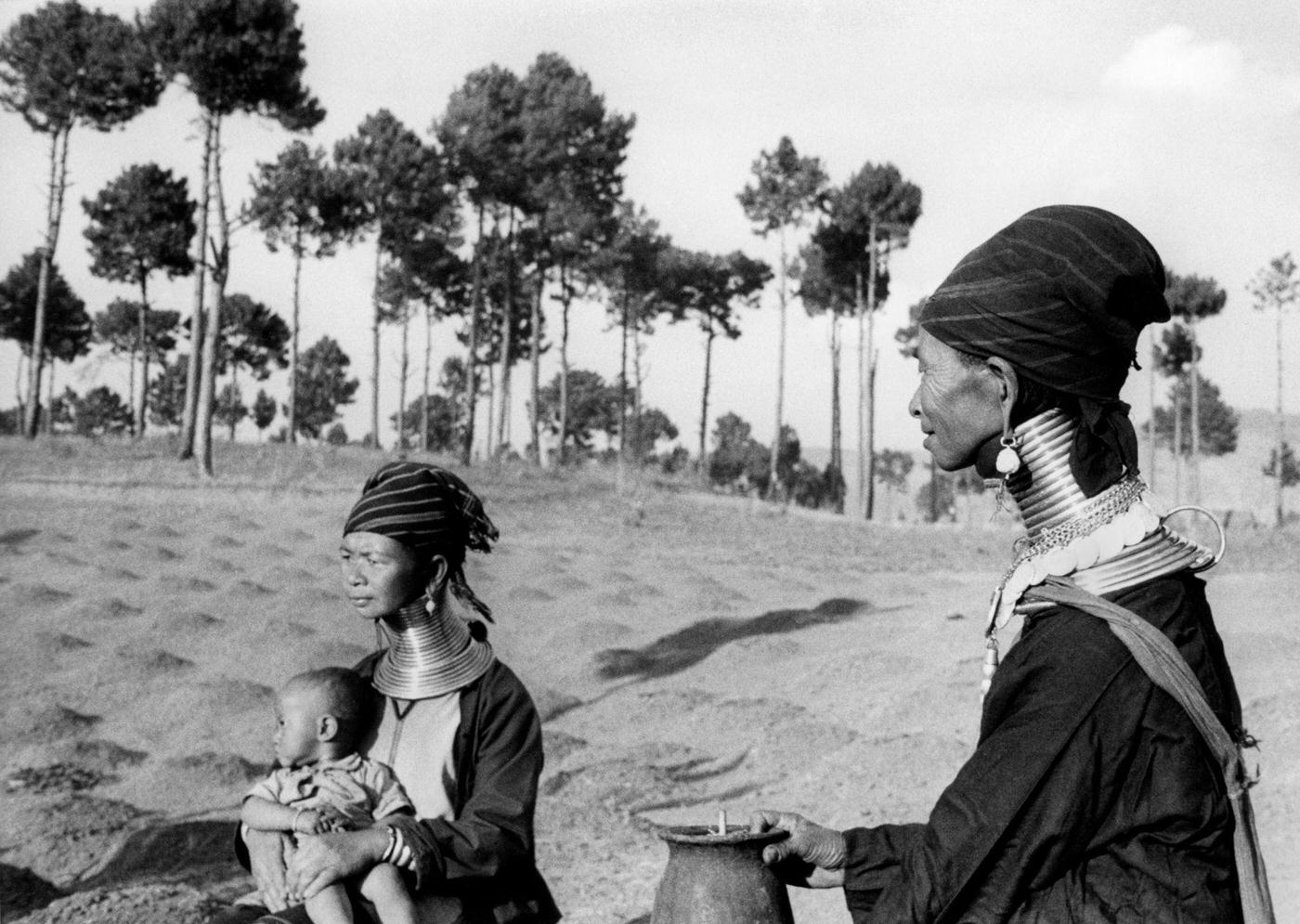
The practice begins when girls are around five years old. A small brass coil is wound around the neck, and as the girl grows, additional rings are added. Over time, the weight of the coils pushes the collarbones and upper ribs downward. This creates the appearance of a dramatically lengthened neck, though the neck itself does not actually stretch. The visual effect earned these women the nickname ‘giraffe women’ among tourists and foreign observers. The coils are not permanently fixed — women can remove them — and the body adapts to the weight over years of wear.
Within Kayan Lahwi culture, the coils are a mark of beauty, elegance, and group identity. The exact origins of the tradition are not recorded in any single historical document. Some oral accounts suggest the coils were worn to protect women from tiger attacks. Others point to theories that the practice began as a way to make women appear less desirable to slave traders from rival groups. A more widely held modern view is that the coils signal social standing and serve as a proud, visible expression of cultural belonging.
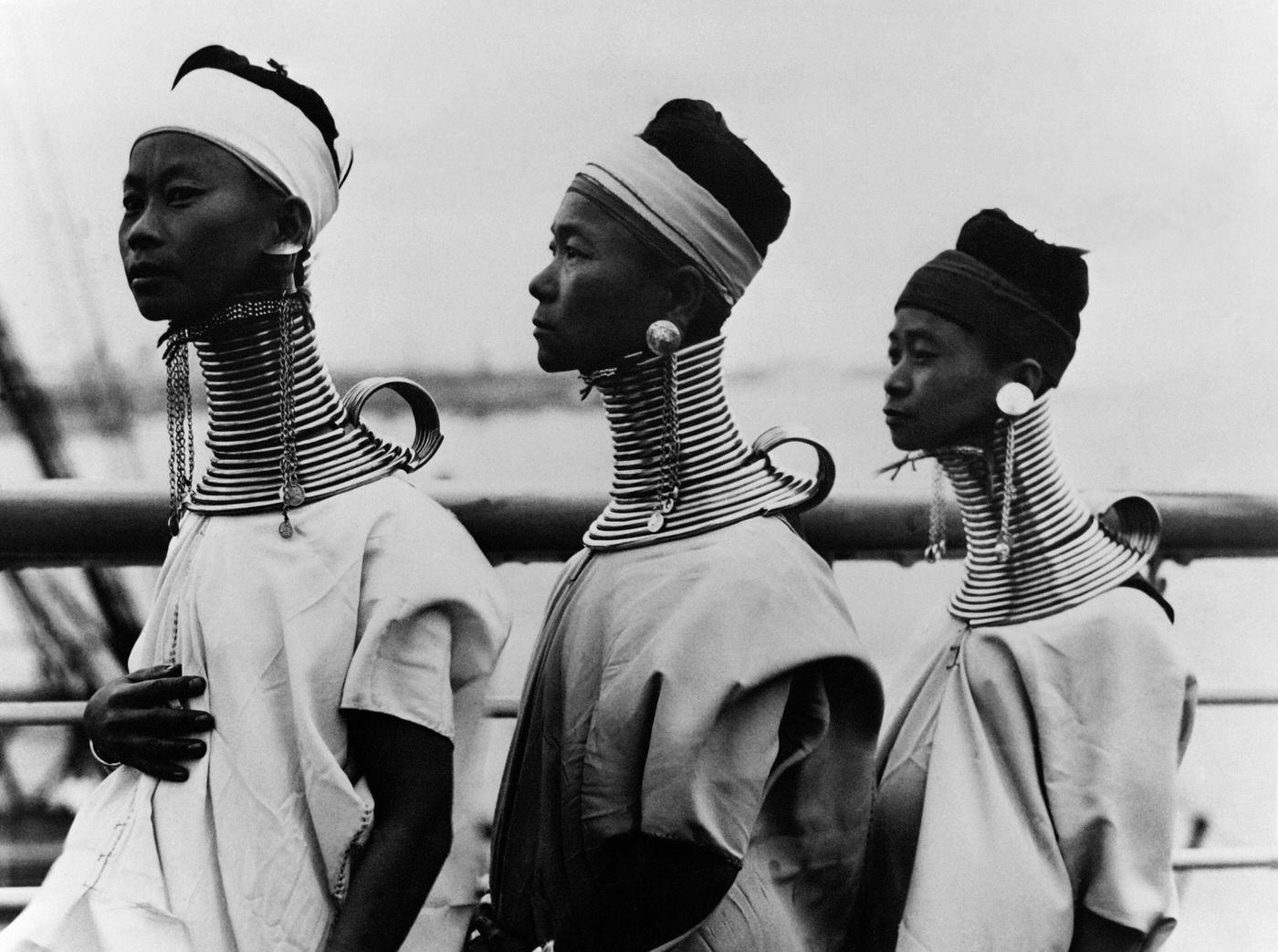
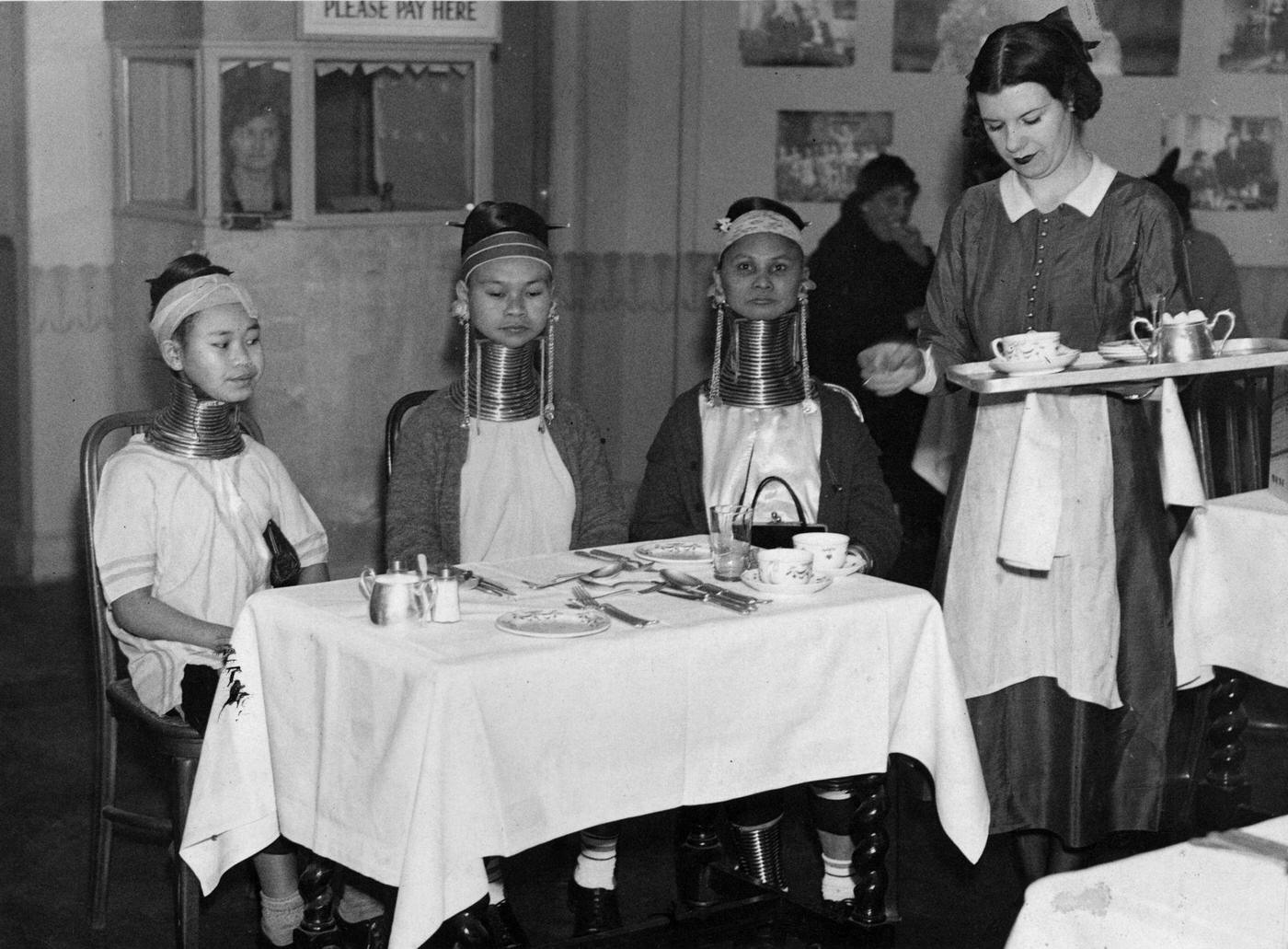
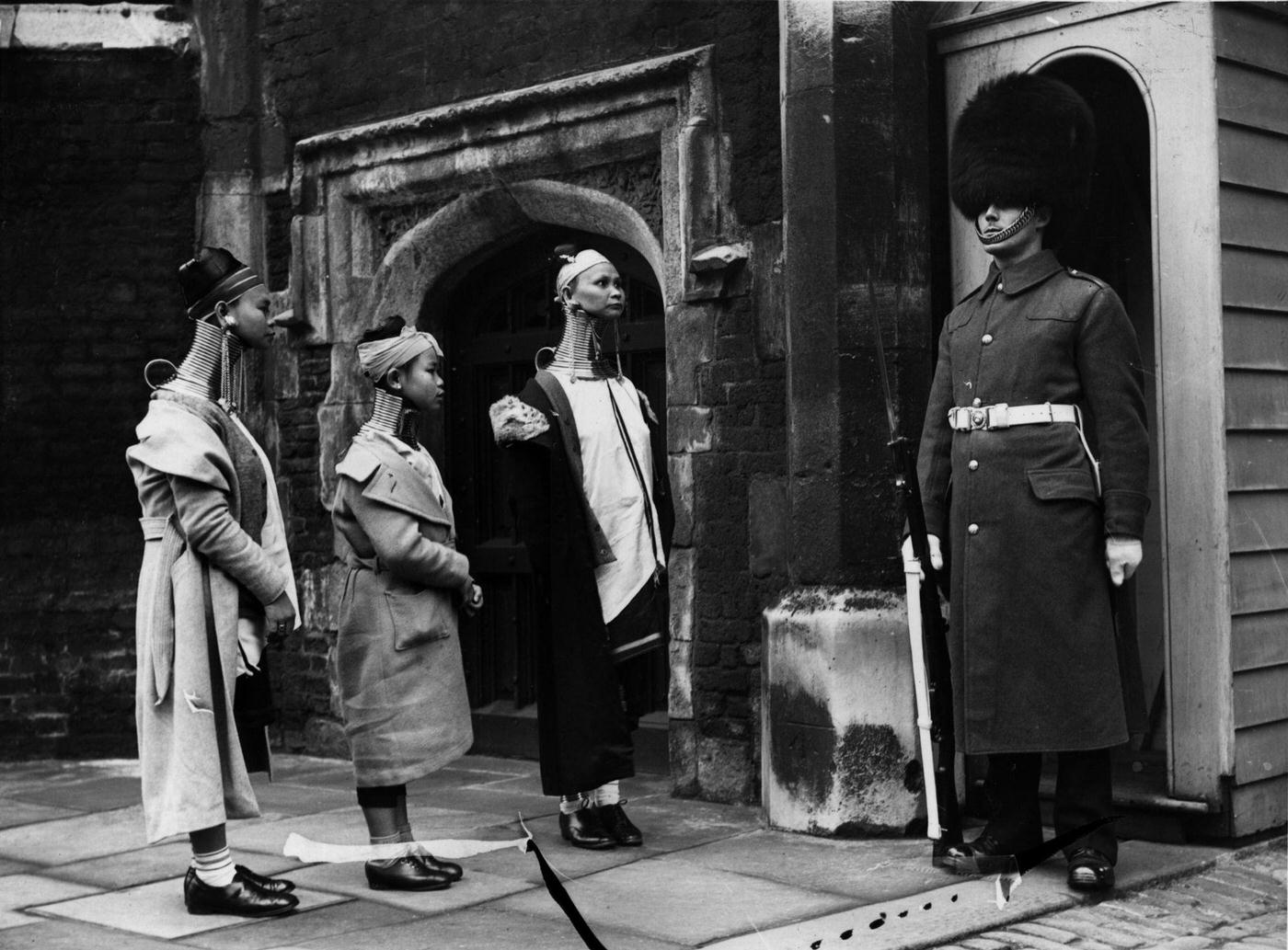
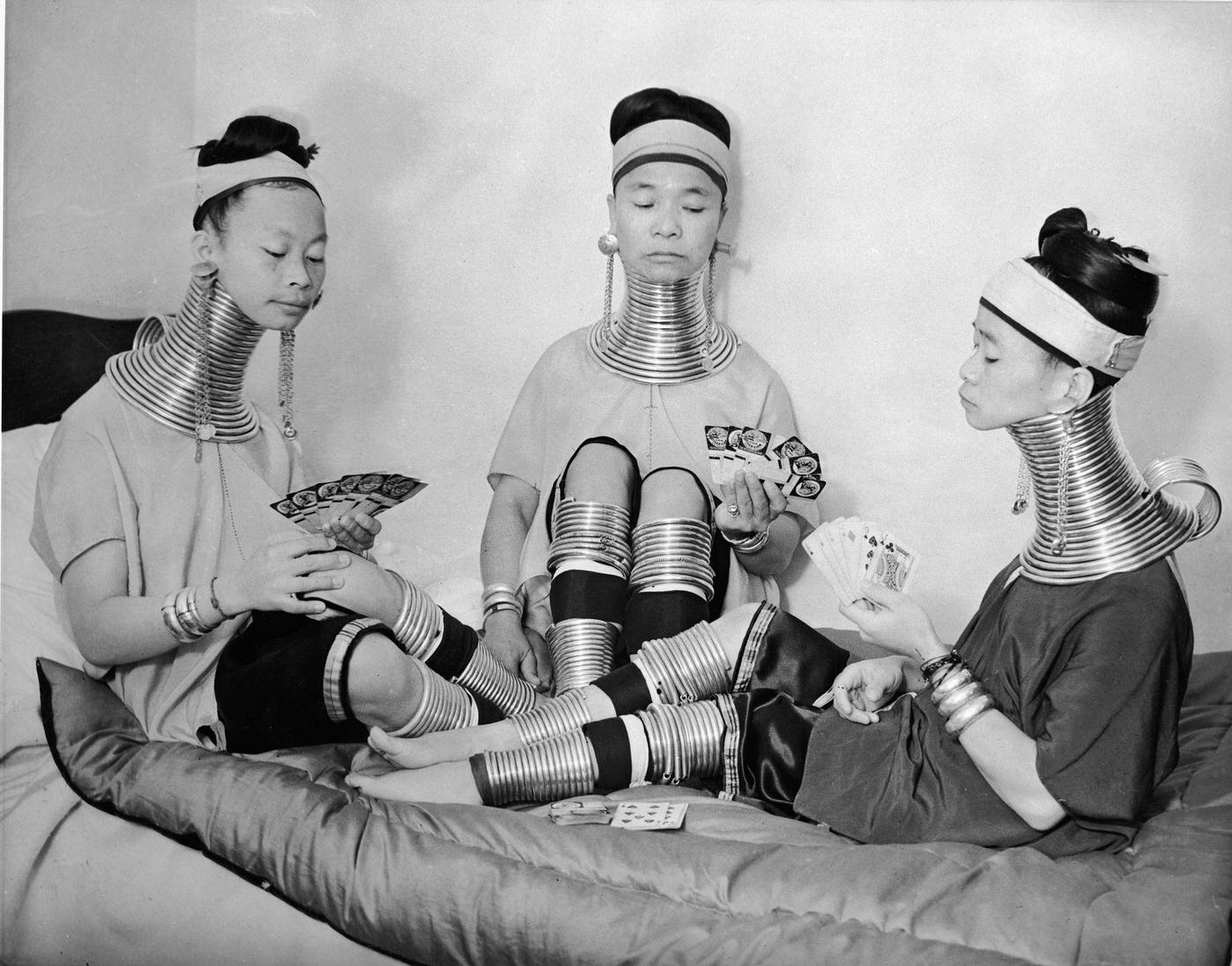
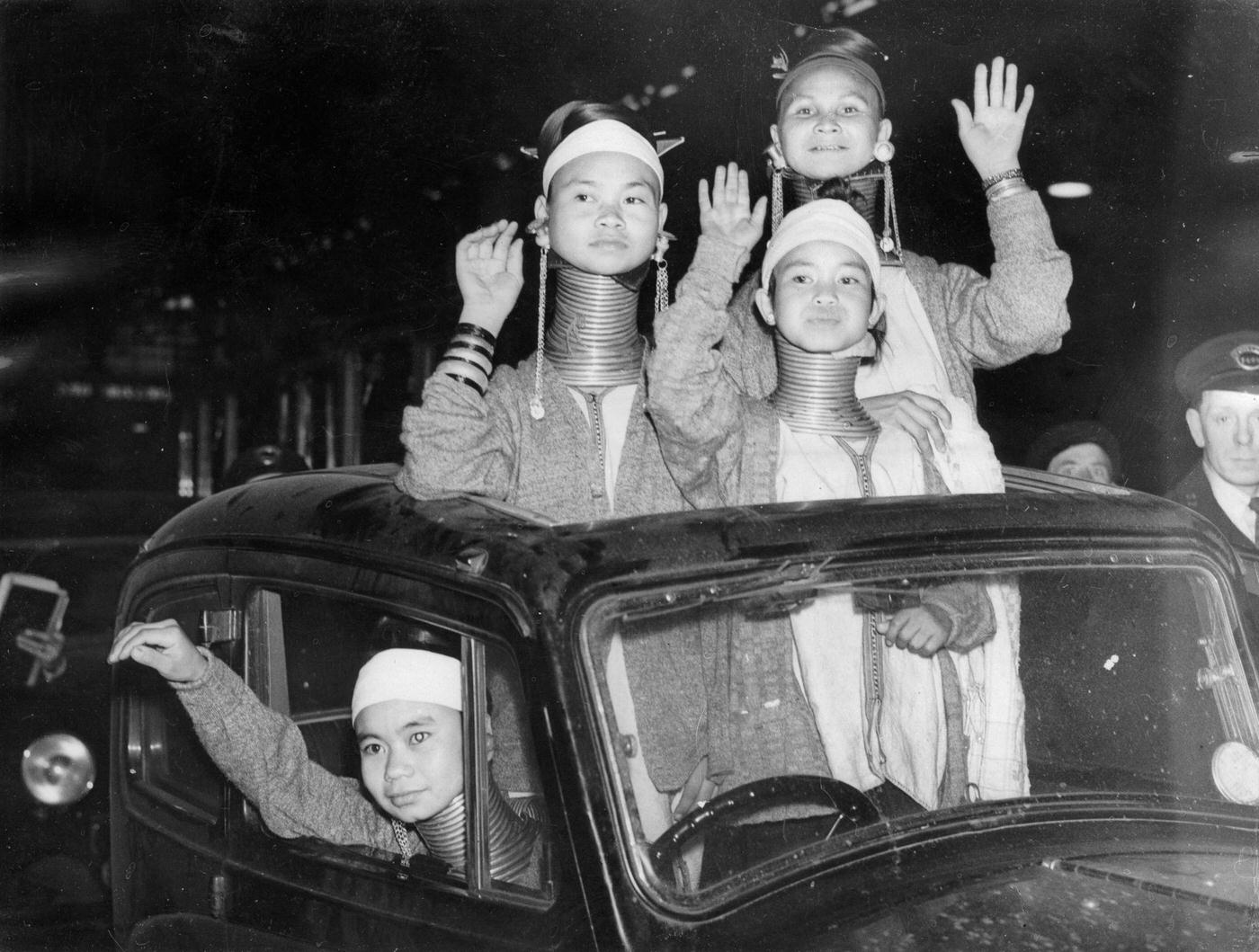
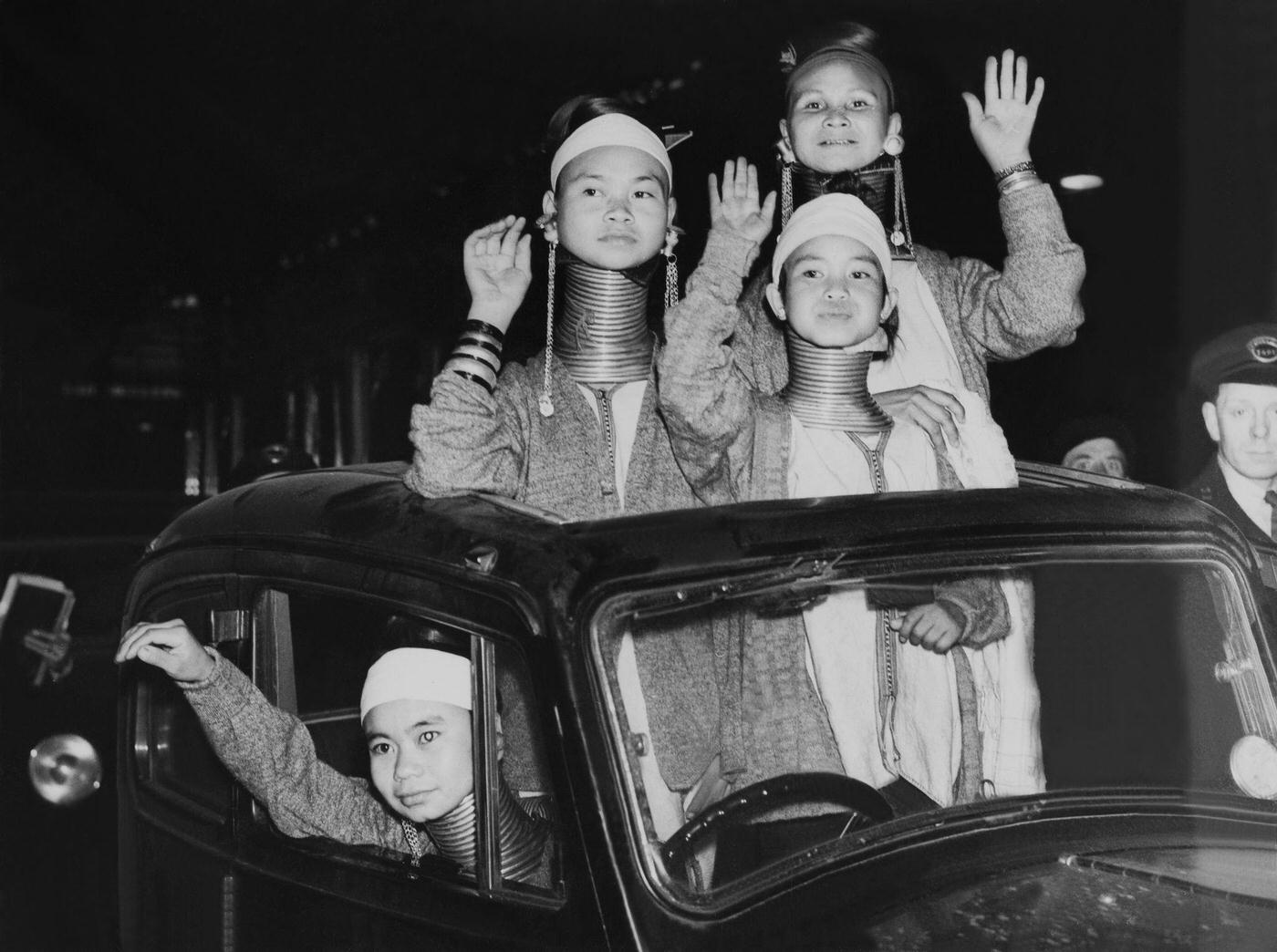
By the early 20th century, Western curiosity about the Kayan Lahwi had grown well beyond the borders of Burma. In the 1930s, a group of Kayan Lahwi women traveled to London, where they appeared as part of Bertram Mills Circus. The photographs from this period show them at Victoria Station, taking tea, watching a soldier stand guard, and playing cards backstage — ordinary moments set against the extraordinary backdrop of their brass coils catching the London light. These images offer a rare window into how the women lived and moved within a world that treated them largely as spectacles.
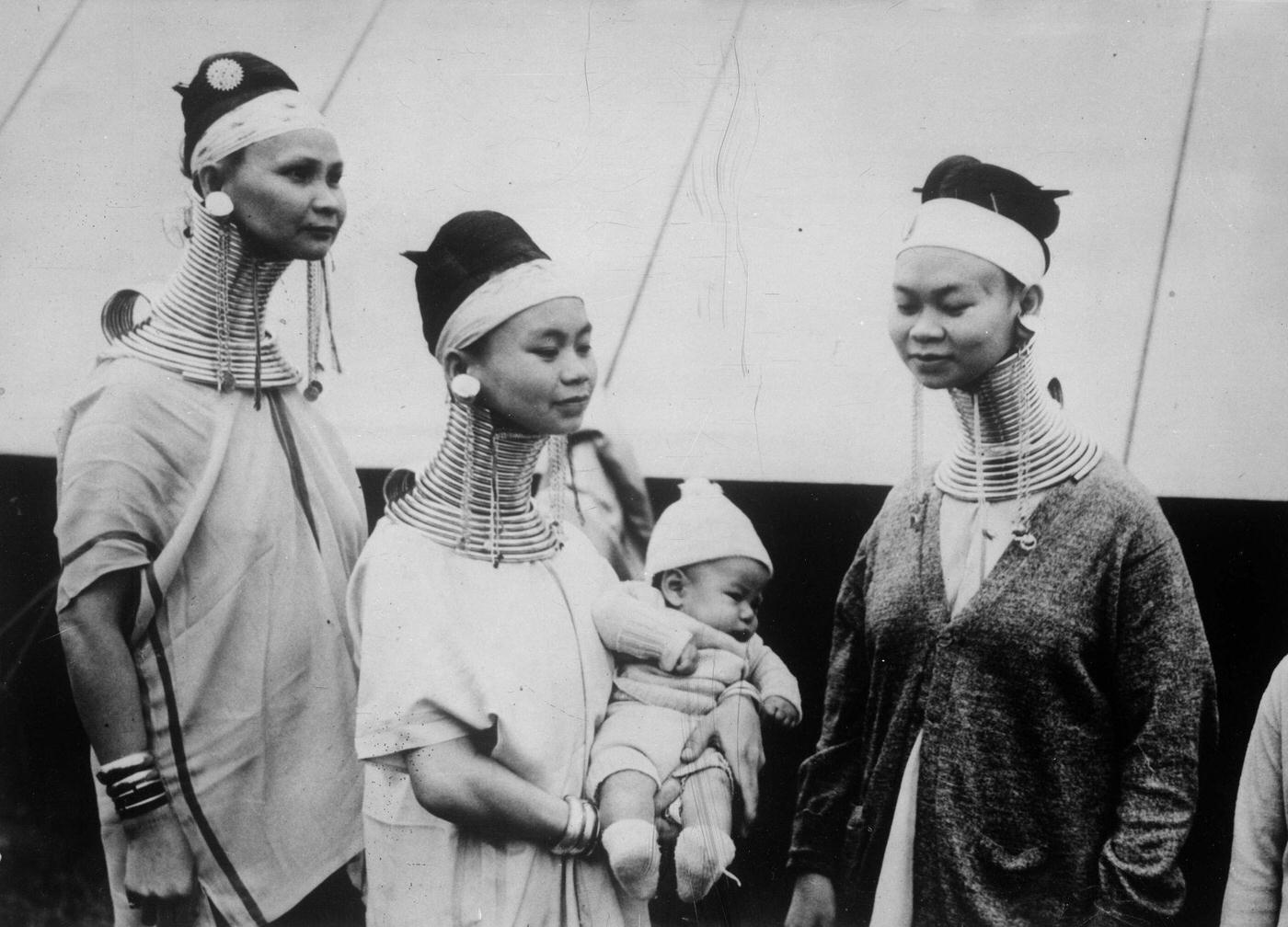
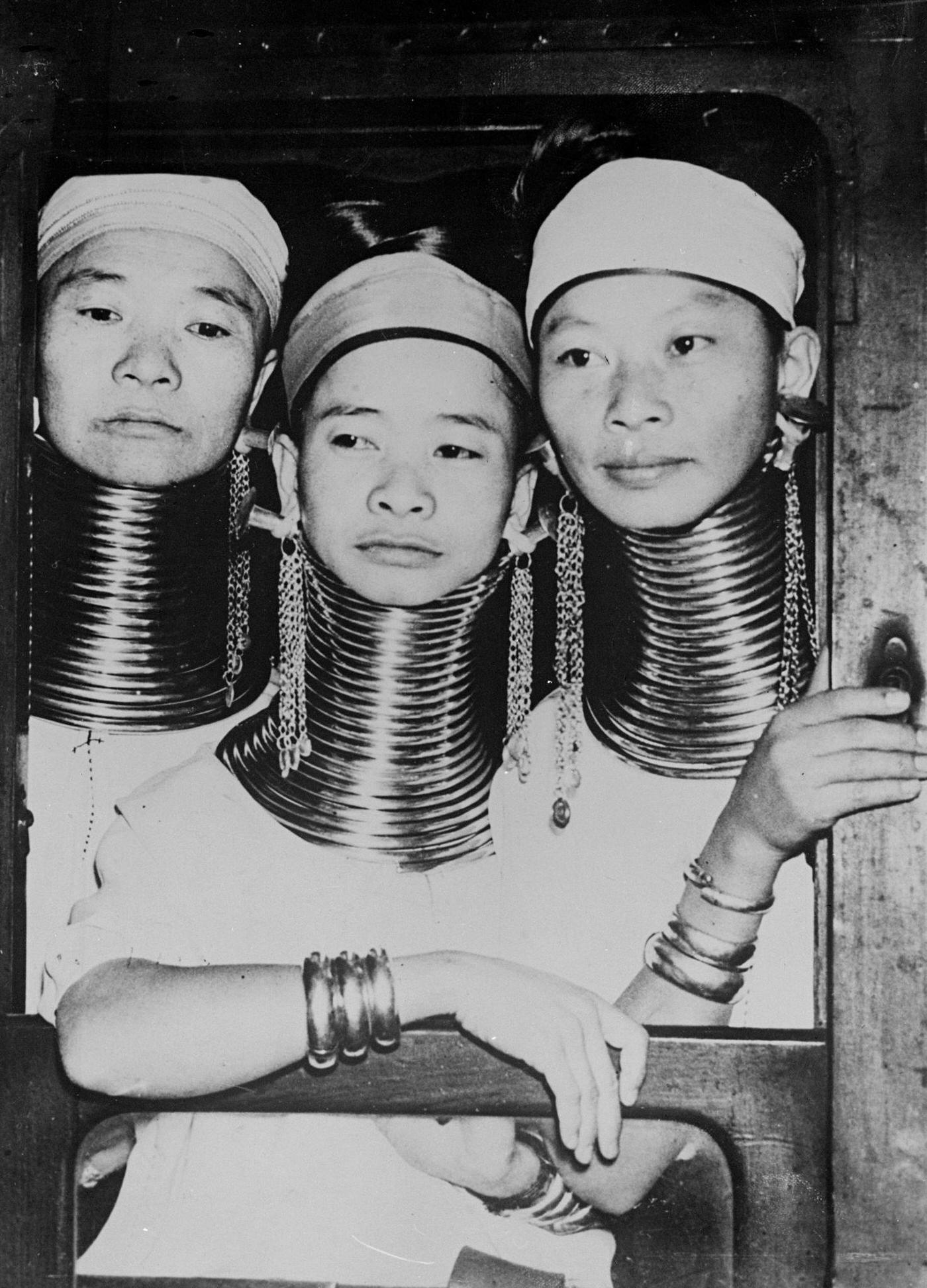
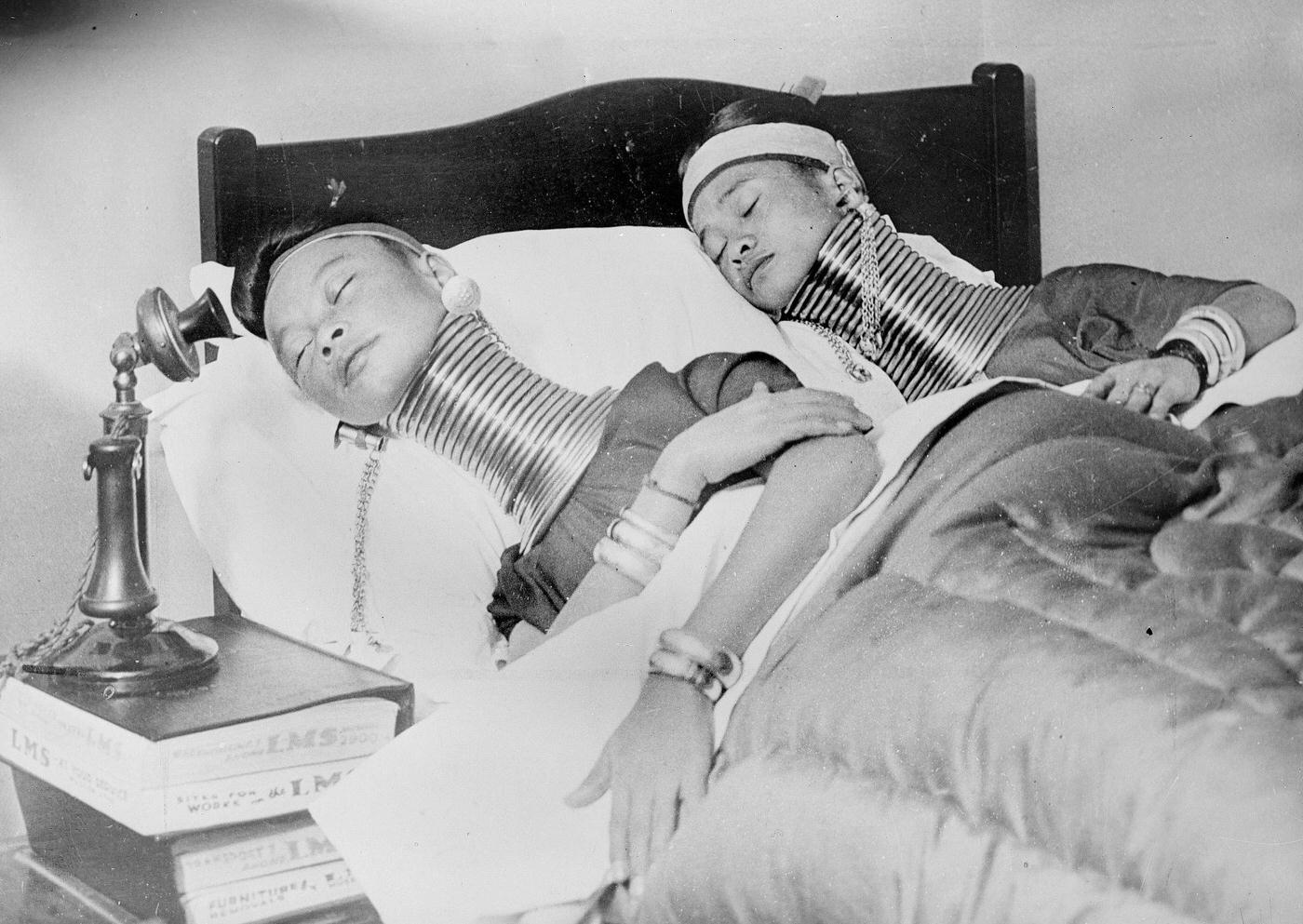
Their time in England was documented extensively. Photographers captured them going about daily routines in a city that was entirely foreign to them. The brass rings on their necks and legs remained in place throughout their stay, a constant visual reminder of where they came from. For London audiences, the circus was entertainment. For the women themselves, they were far from their hill villages, their families, and their land.
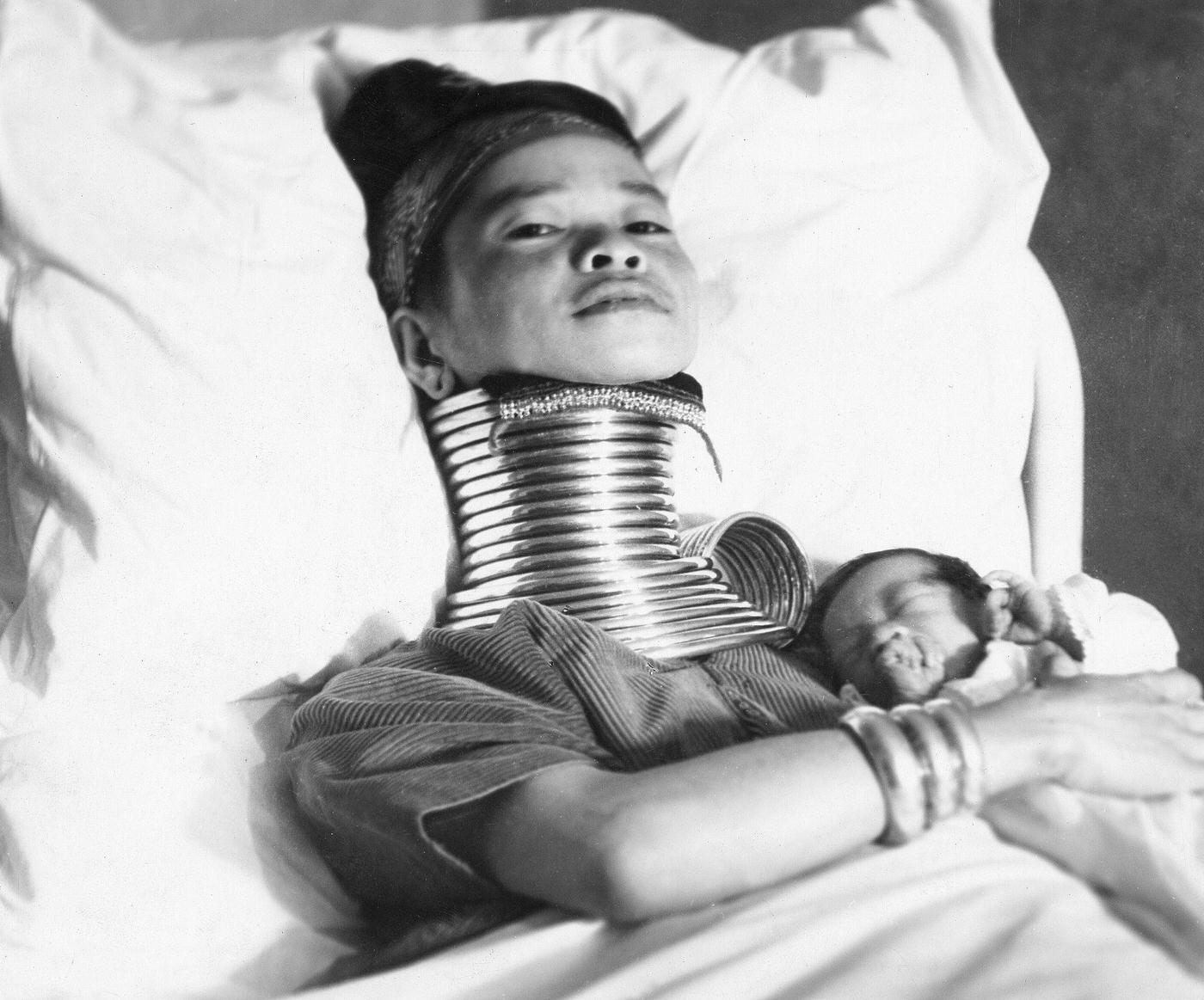
Back in Burma, life continued on its own terms. In 1939, a Kayan Lahwi woman named Mu Proa was photographed with her newborn child — a quiet, personal moment that stands apart from the circus photographs in tone and intimacy. By 1950, photographers were documenting the ring-fitting process itself, capturing the moment a new brass coil was added to a woman’s neck. These images show the practice not as performance, but as part of an ordinary life cycle, carried out in the same villages where it had been practiced for generations.
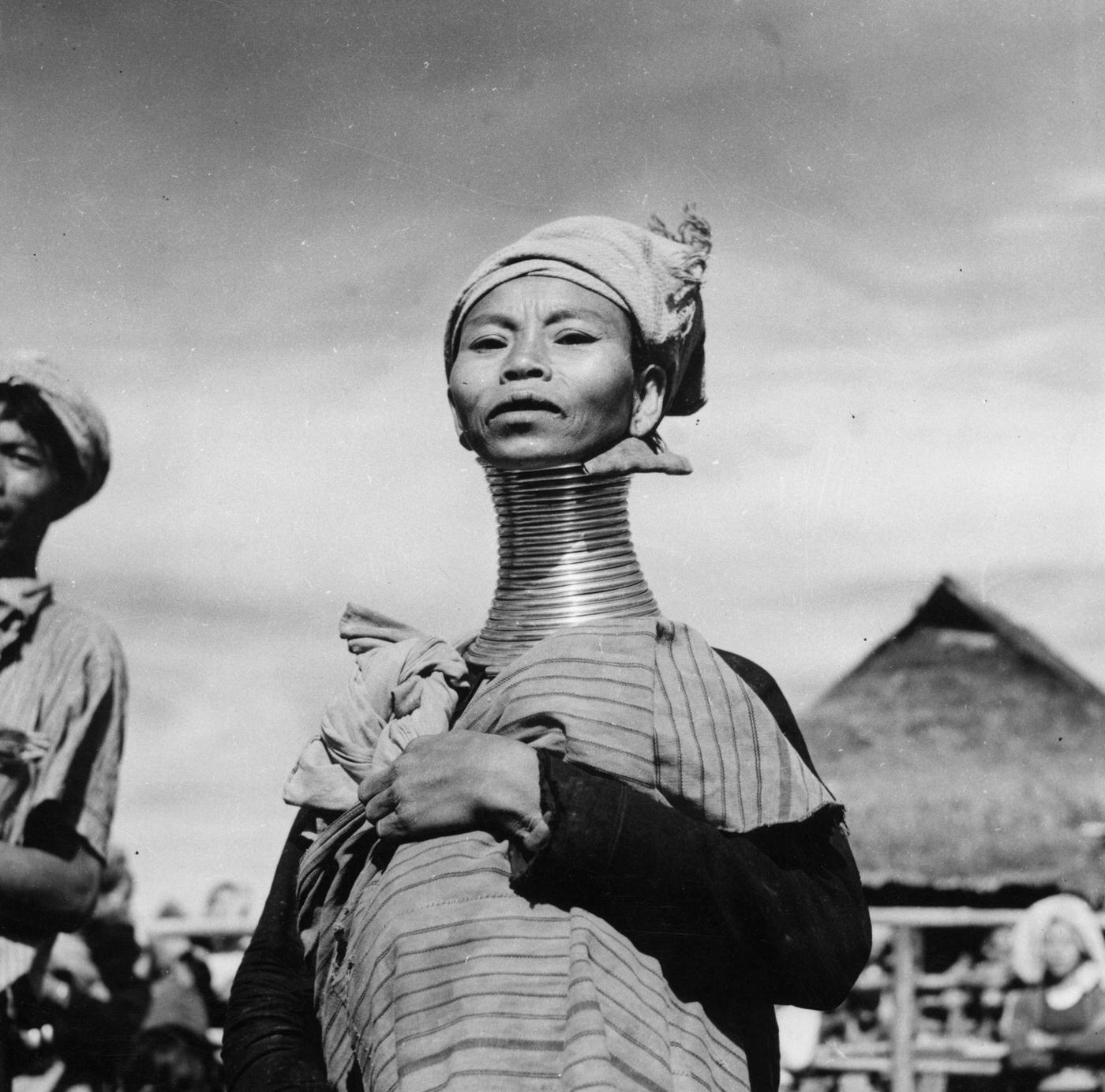
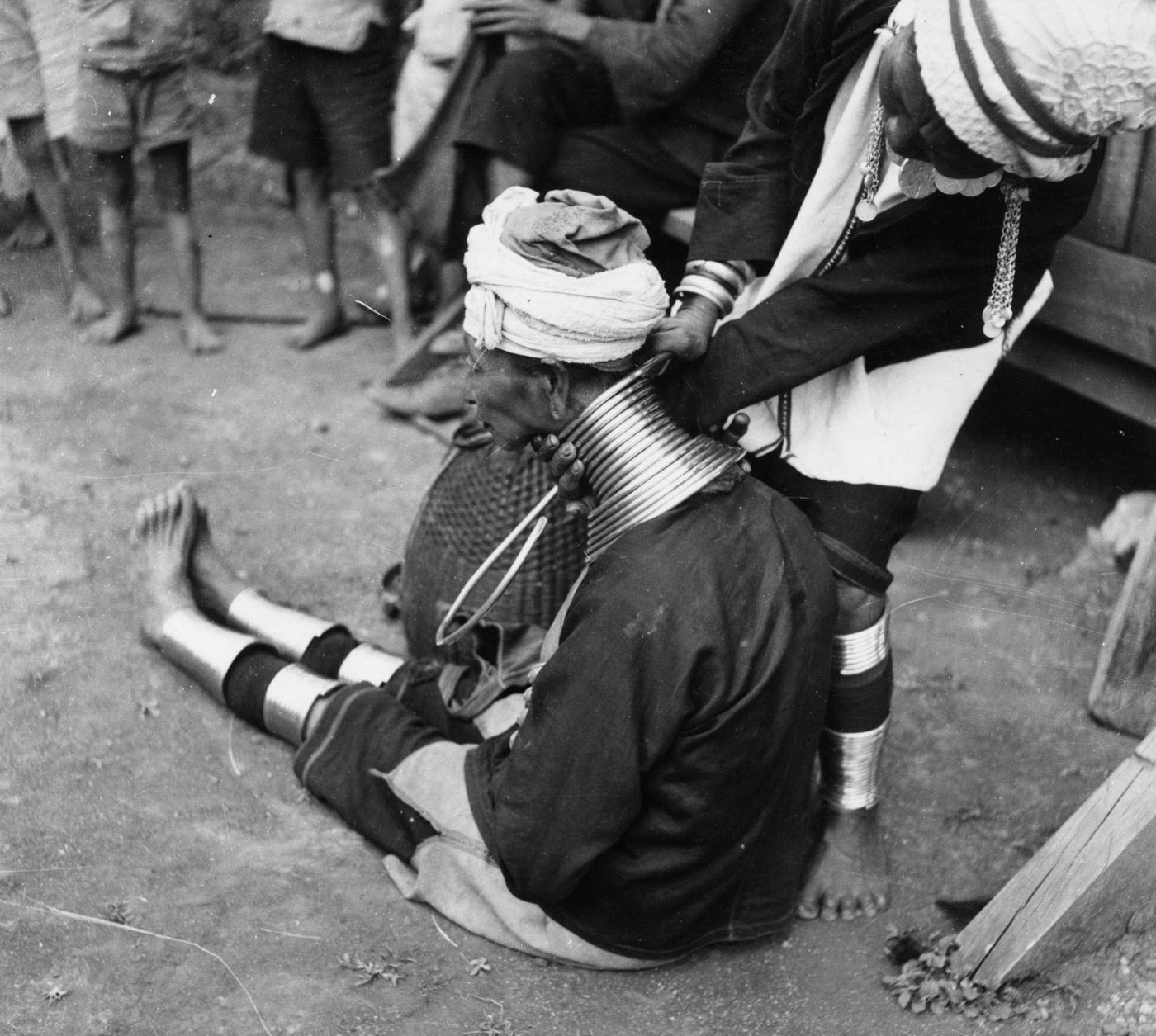
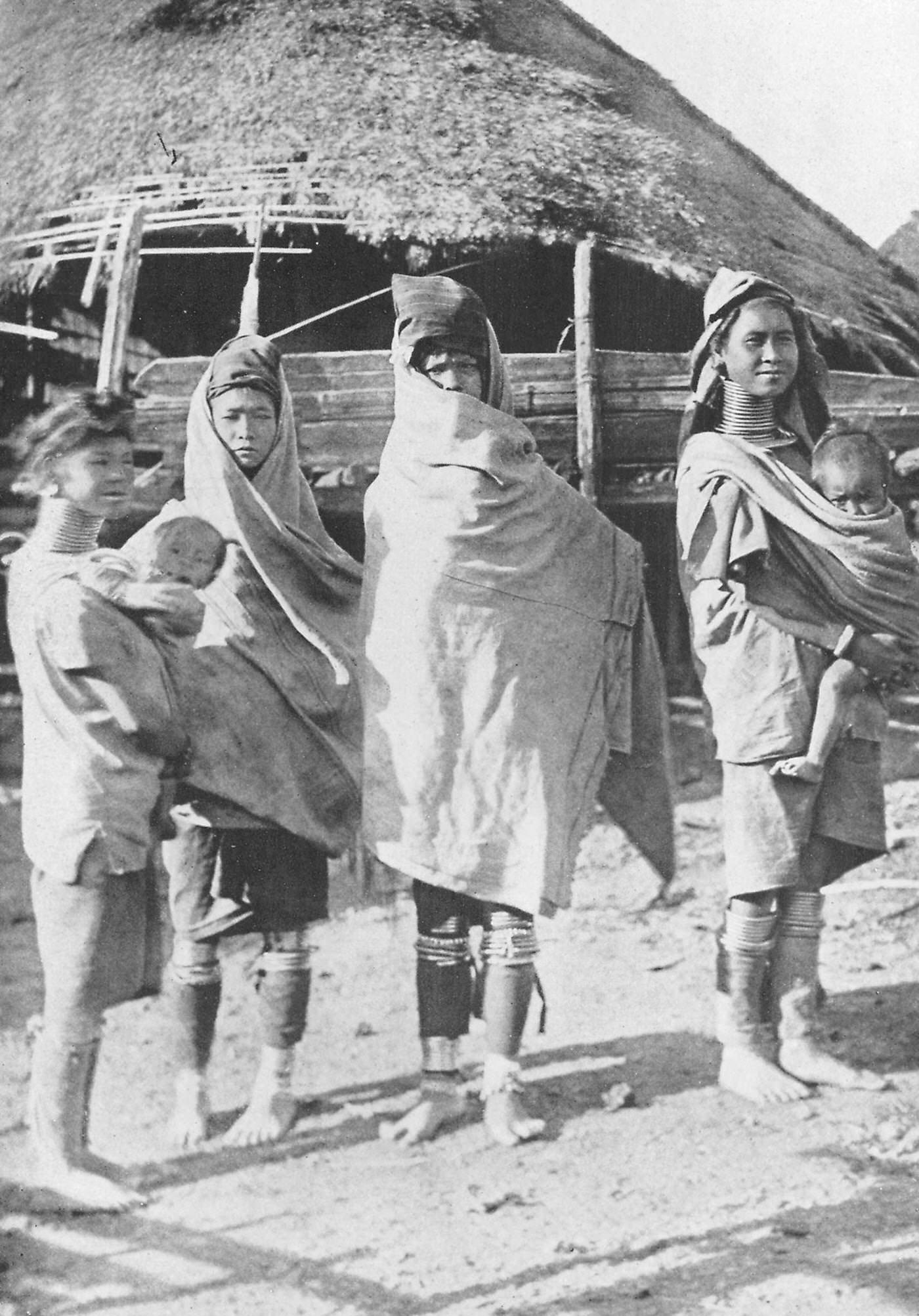
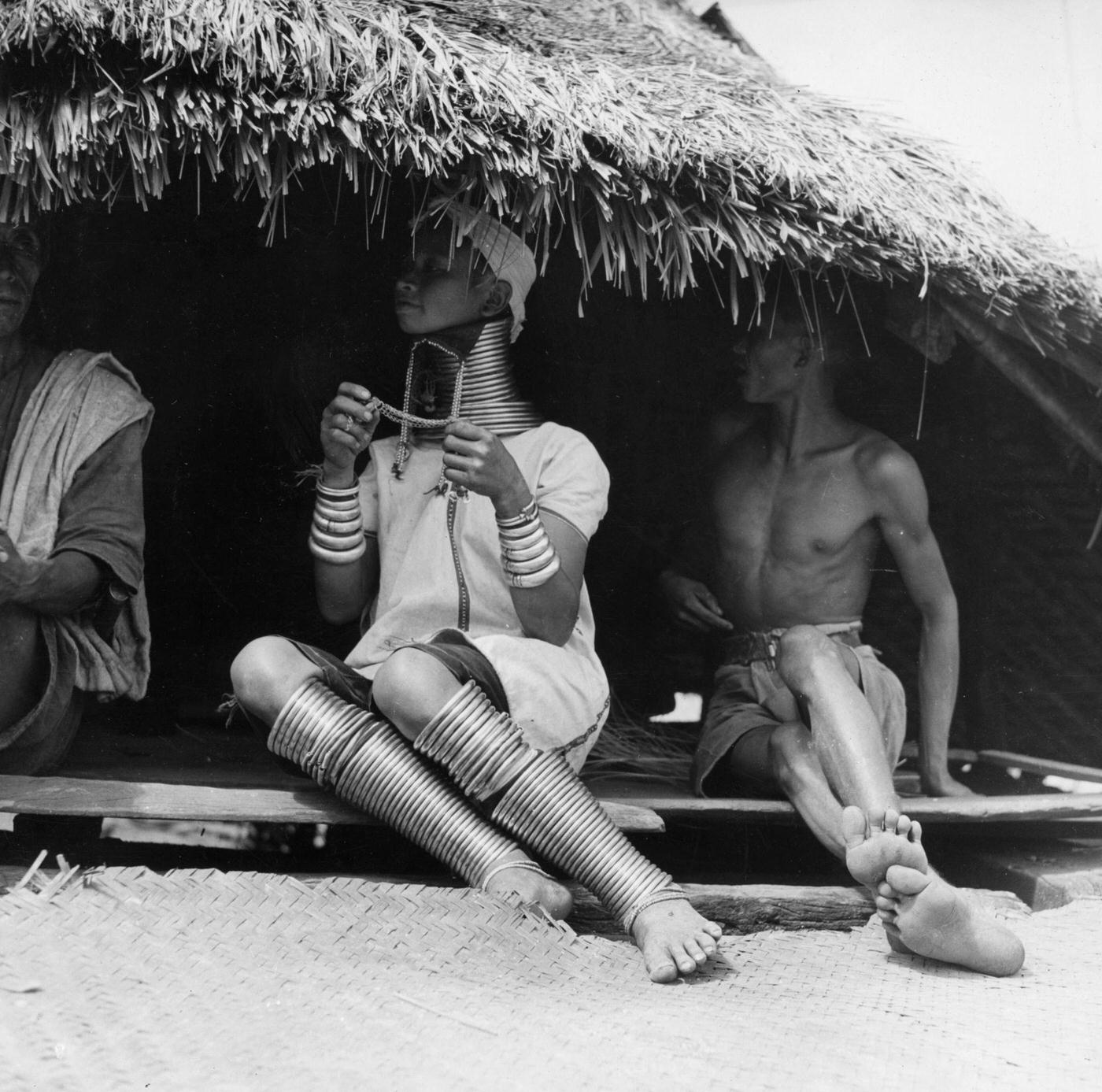
Community life among the Kayan Lahwi in the mid-20th century is also well documented. Photographs from 1950 show groups sitting together inside traditional huts, the brass rings visible on necks and limbs across multiple generations. By 1955 and into the late 1950s and 1960s, photographers continued to seek out these communities along the border mountains between Myanmar and Thailand, drawn by the same visual power that had captivated observers for decades.
The Kayan Lahwi have never been a static or isolated people. Their traditions have endured through colonial rule, displacement, and the steady pressure of global tourism. Today, many Kayan Lahwi women in Thailand live in villages that receive a heavy flow of visitors. The debate over whether that tourism respects or exploits their culture remains ongoing. Many women have spoken directly on this point, stating clearly that wearing the coils is their choice and that the tradition holds deep personal and cultural meaning for them. The brass rings are not a costume worn for outsiders — they are a permanent part of who the Kayan Lahwi are.