
Jutland is a peninsula in northern Europe that juts between the North Sea and the Baltic Sea. It forms the mainland of Denmark and extends into the northern edge of Germany. Its name comes from the Jutes, the Germanic people who once inhabited the region. Geographically, the peninsula is split in character: the west is open and flat, covered by heaths, plains, and peat bogs, while the east is greener, dotted with lakes and dense forests. It was in this landscape that one of World War I’s more unusual humanitarian arrangements quietly took shape.
Denmark was officially neutral during World War I, but that neutrality came with responsibilities. The Danish government brokered an agreement with both sides of the conflict — Germany and Austria-Hungary on one hand, and Russia on the other — to accept wounded prisoners of war on Danish soil. Under the deal, wounded Russian prisoners were sent to a camp near Horserød, north of Copenhagen. Wounded German and Austro-Hungarian prisoners were sent to a different location: a camp built near the village of Hald, close to Viborg in Central Jutland.
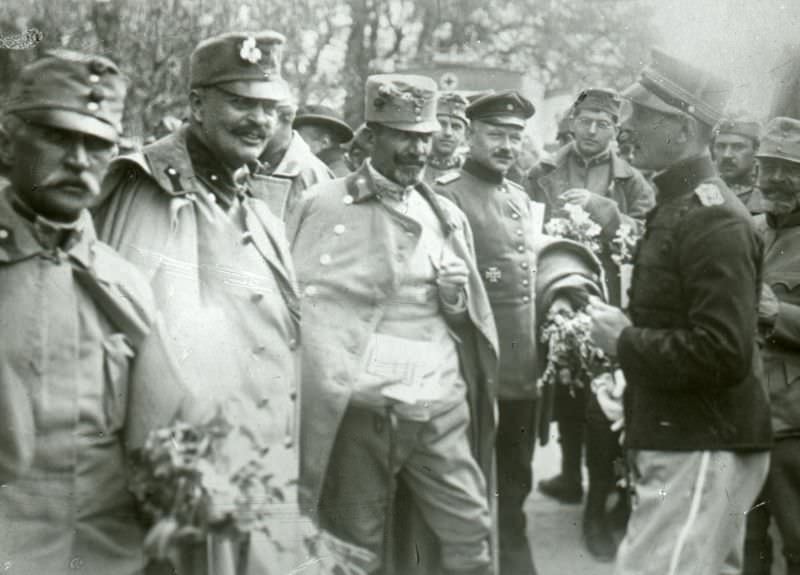
The camp at Hald Ege was constructed in 1917, funded and organized by the Red Cross. From the start, it was built to a standard well above what most prisoners of war experienced during that war. The site included separate areas for officers and enlisted men, full hospital facilities with both medical and surgical wards, a pharmacy, workshops, and communal spaces for recreation. Food supplies in Denmark were far less strained than in the war-ravaged countries the prisoners had come from, which meant the men at Hald were generally better fed than they would have been at home.
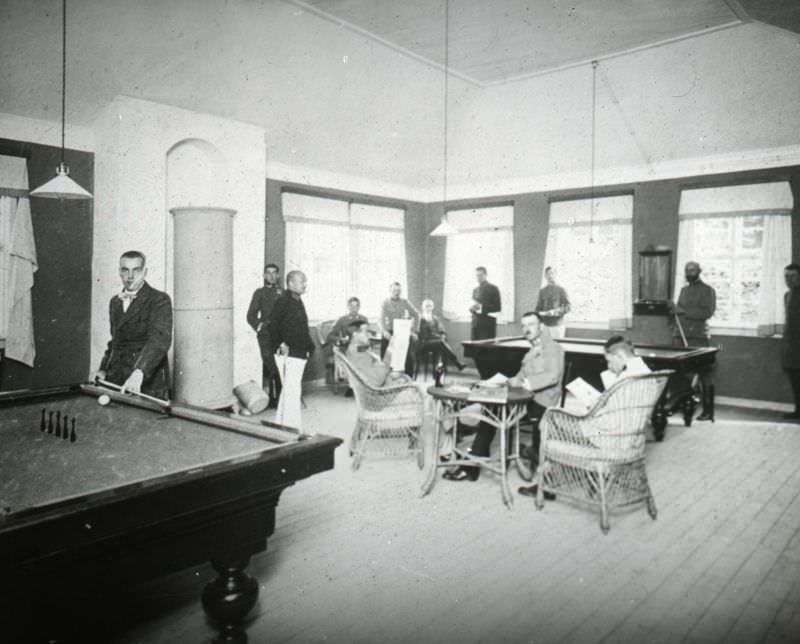
Officers and enlisted men lived separately, and that divide showed in their daily routines. Officers had access to reading rooms, music rooms, and social spaces fitted out with furniture that made the camp feel less like a detention facility and more like a modest club. The billiard room in the officers’ camp is one example — a space that, in photographs, looks strikingly ordinary for a wartime prison.
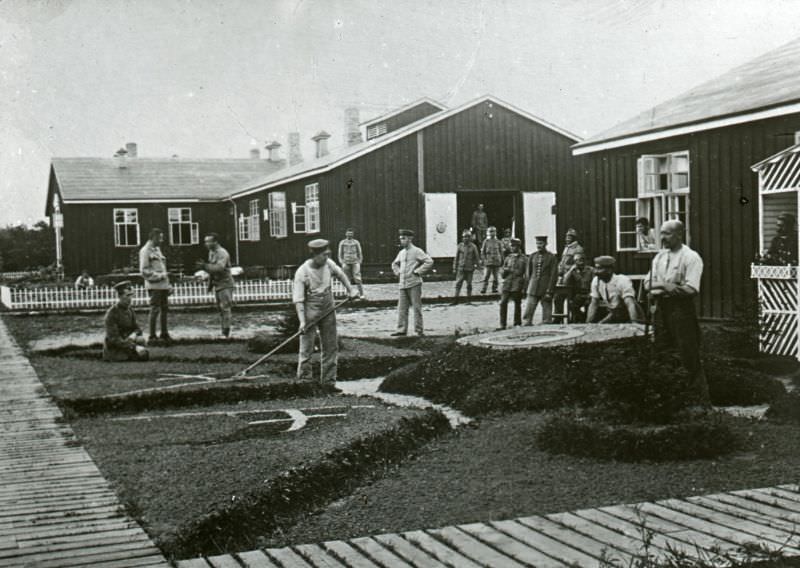
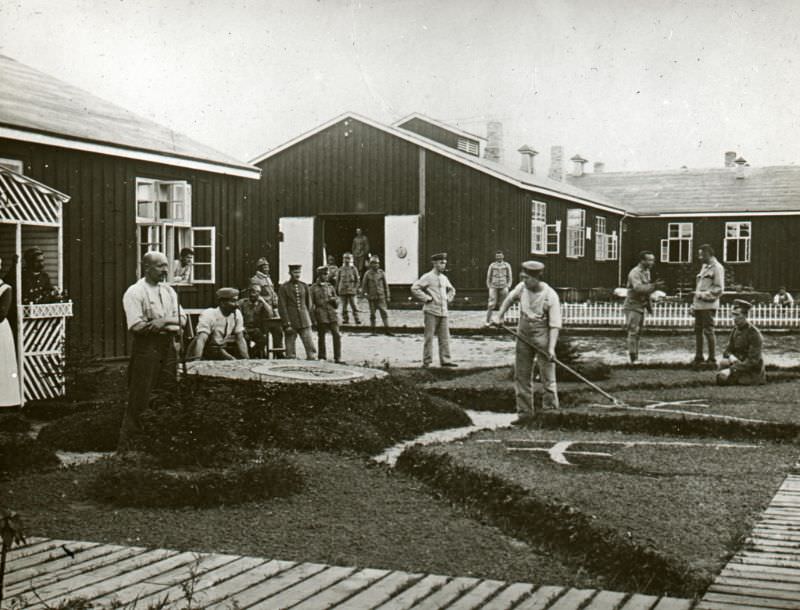
Not all time was spent indoors. German prisoners worked in the camp’s gardens, a routine that served both practical and psychological purposes. Growing food supplemented supplies and gave men something structured to do during the long stretch of internment. Physical work outdoors was a significant contrast to the hospital wards where many of the men had first arrived.
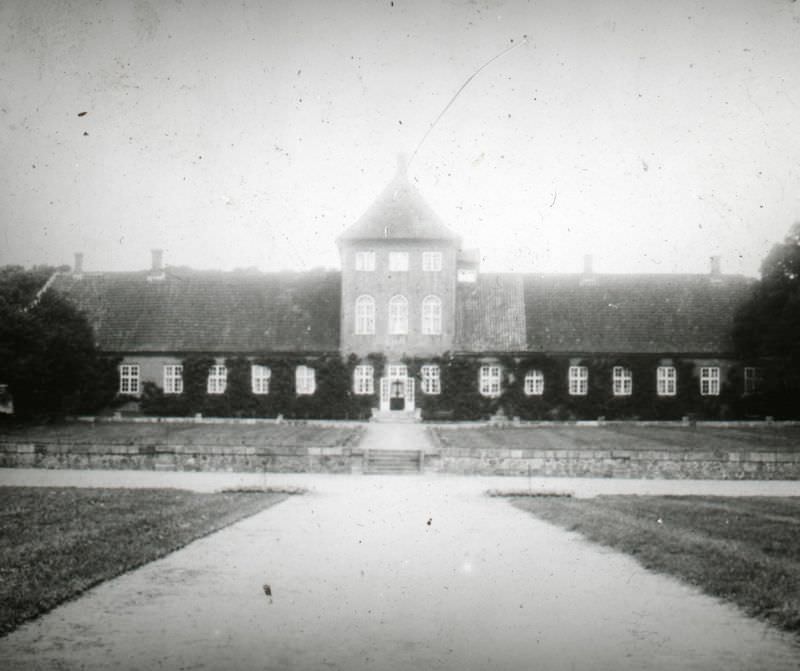
The camp was set within the wider agricultural landscape of Central Jutland. The Hald main farm sat nearby, and its surroundings gave the site a rural character unusual for a wartime internment facility. The terrain itself — the flat heathland and the quiet forests of the region — made Hald feel remote from the front lines tearing through Europe just hundreds of miles to the south.
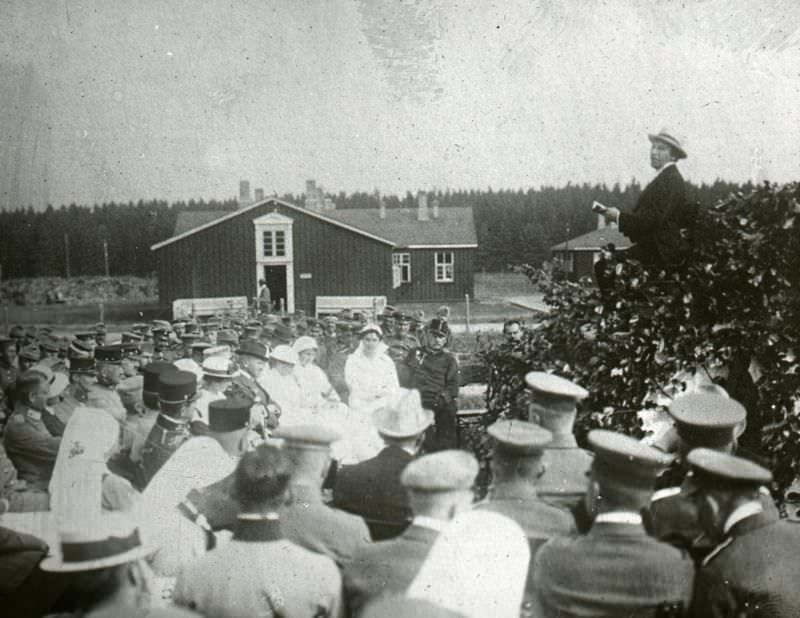
Reading was one of the more personal ways prisoners passed the time. Jacob Texièré, photographed reading the work of Danish author Hans Christian Andersen, represents the quieter side of camp life — men finding small moments of normalcy in a deeply abnormal situation. Books were made available in the reading rooms, and the presence of Danish literature suggests some cultural exchange between the prisoners and their Danish hosts.
The prisoners at Hald had arrived through a very specific process. Because Denmark’s arrangement focused on the wounded, the men sent to Hald were not typical combat prisoners. They were soldiers who had already been badly injured at the front. Many came with serious wounds that required ongoing medical treatment, which is why the hospital component of the camp was so central to its design.
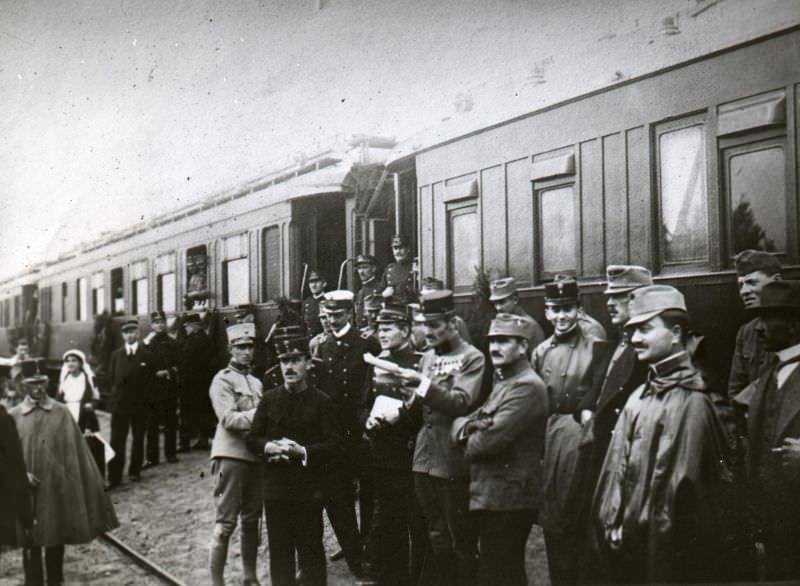
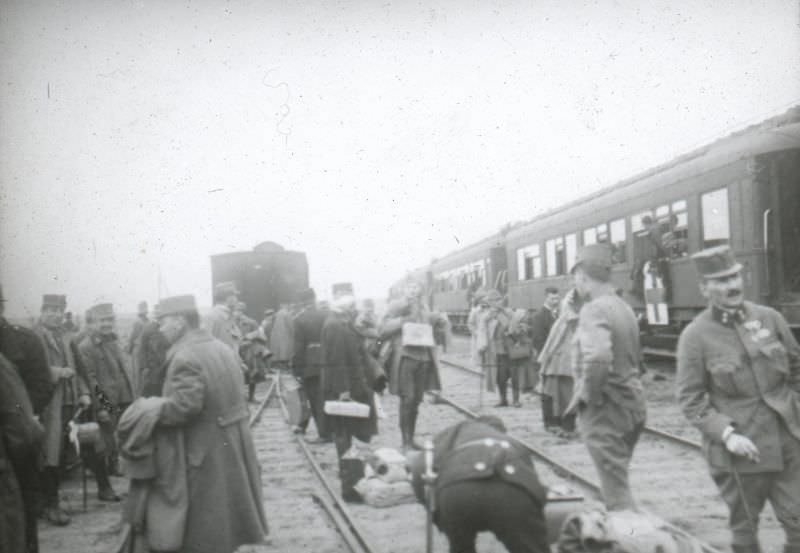
Moving prisoners to and from the hospital camp required organized transport. Photographs of those transfers show men being moved in groups, some clearly still recovering from their injuries. The logistics of managing wounded men from multiple nations, with different languages and military ranks, required careful coordination by both Danish authorities and Red Cross personnel.
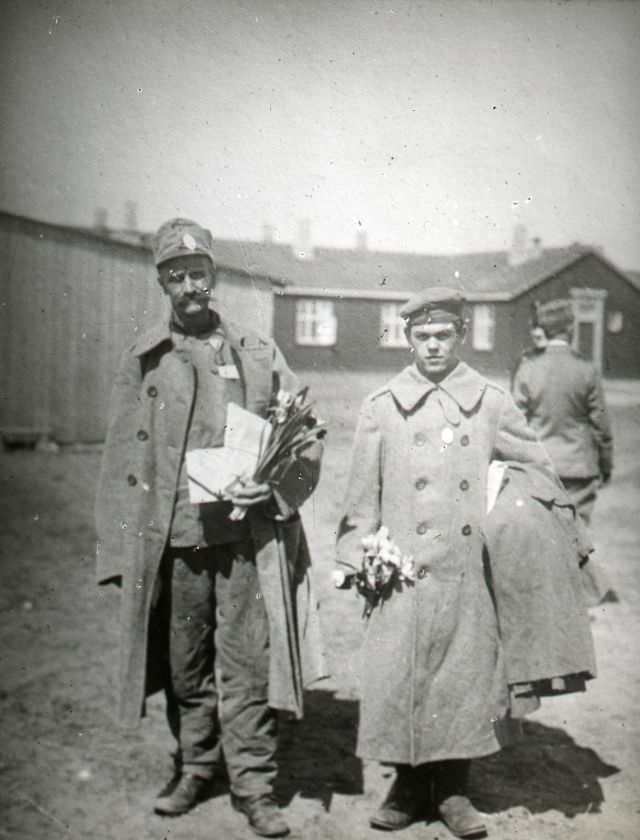
The men interned at Hald came from Germany and Austria-Hungary, meaning they represented a mix of nationalities — Germans, Austrians, Hungarians, Czechs, Slovaks, and others who served under the Austro-Hungarian Empire. They ranged in rank from private soldiers to officers, and that difference in rank dictated almost every aspect of their daily life inside the camp.
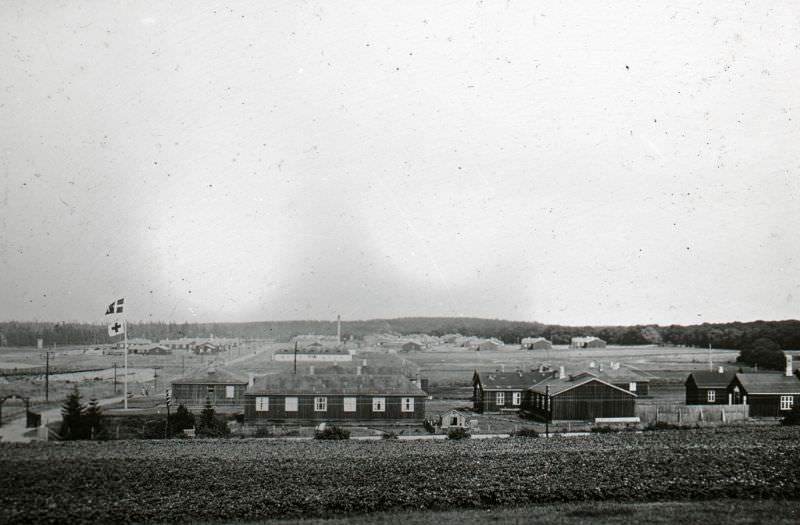
The physical layout of the camp at Hald was designed with clear zones. The hospital area, the officers’ quarters, and the enlisted men’s sections each had their own character. From a distance — particularly from the water tower — the camp spread out across the landscape in an orderly grid of wooden structures, fencing, and pathways that gave it the appearance of a small, planned settlement.
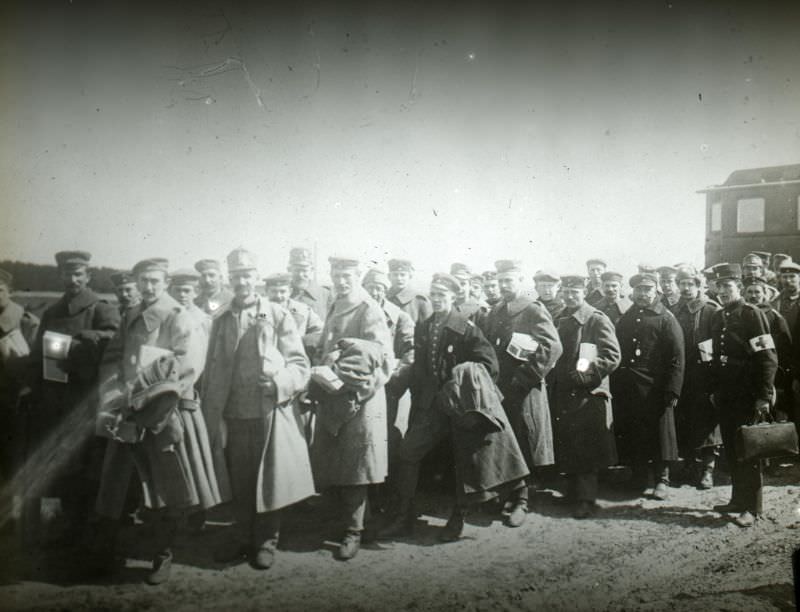
When private soldiers — enlisted men below officer rank — arrived at the camp, their reception was documented in photographs that capture the moment of entry. The arrival process was managed systematically. Men were assessed, assigned to appropriate sections of the camp, and brought into the hospital wards if their medical condition required it.
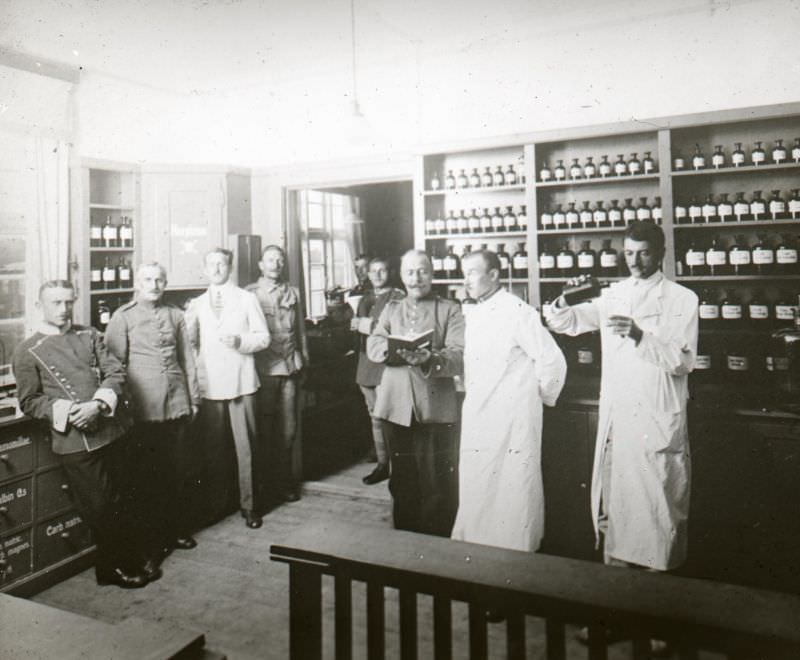
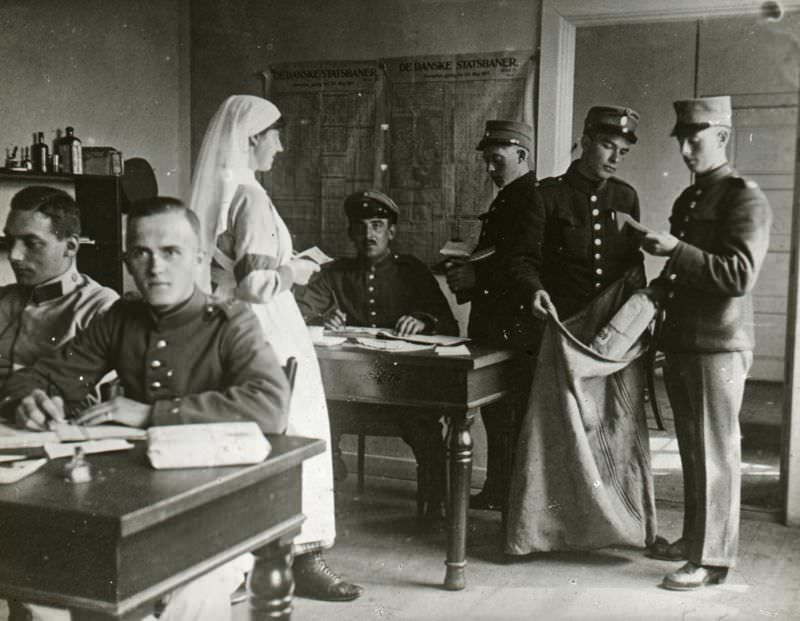
The camp’s pharmacy was a fully stocked and functioning medical facility. Its interior, photographed at the time, shows shelves of medicines and supplies organized for regular use. For men who had been wounded at the front and traveled across Europe to reach Denmark, access to consistent medical care and medication was a significant shift from field conditions.
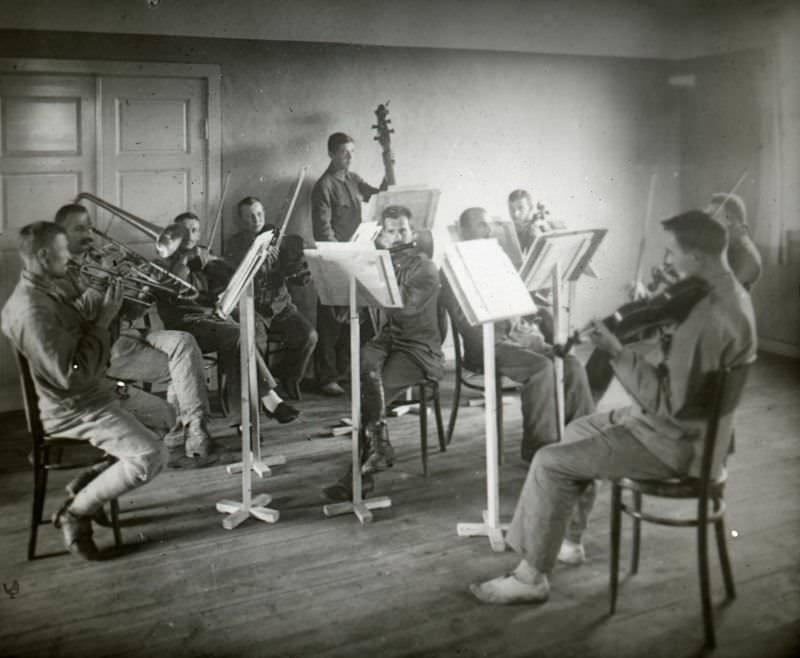
Music played a notable role in camp life, particularly for the enlisted men. Photographs show musicians rehearsing together in the crew camp — groups of soldiers who had formed informal bands or ensembles during their time at Hald. These rehearsals served as both entertainment and a way to maintain a sense of identity and routine during an open-ended internment.
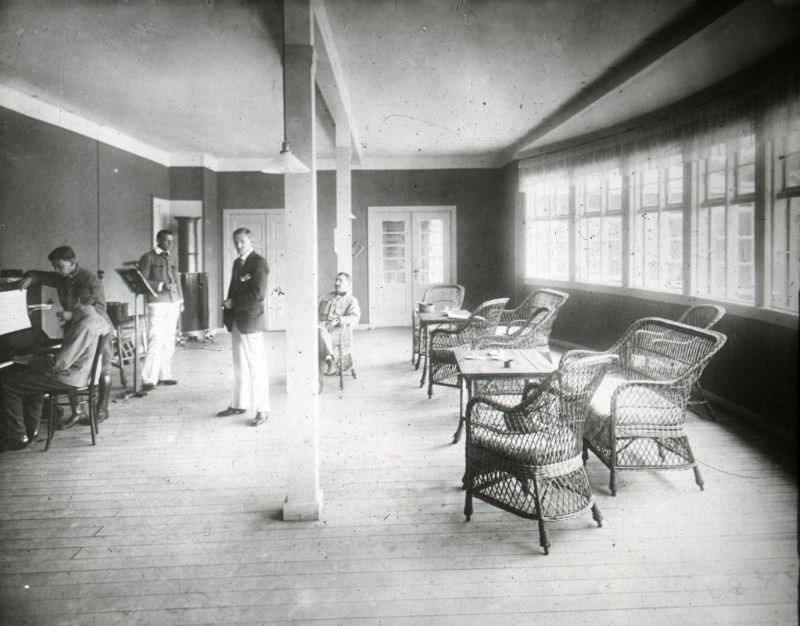
Officers had their own dedicated music room, separate from the crew camp’s arrangements. The presence of a formal music room in the officers’ section reflects the broader effort to maintain a degree of structured leisure for the higher-ranked prisoners. Officers at Hald lived under conditions that, while still those of internment, offered more space, more amenities, and more social organization than the enlisted men’s quarters.
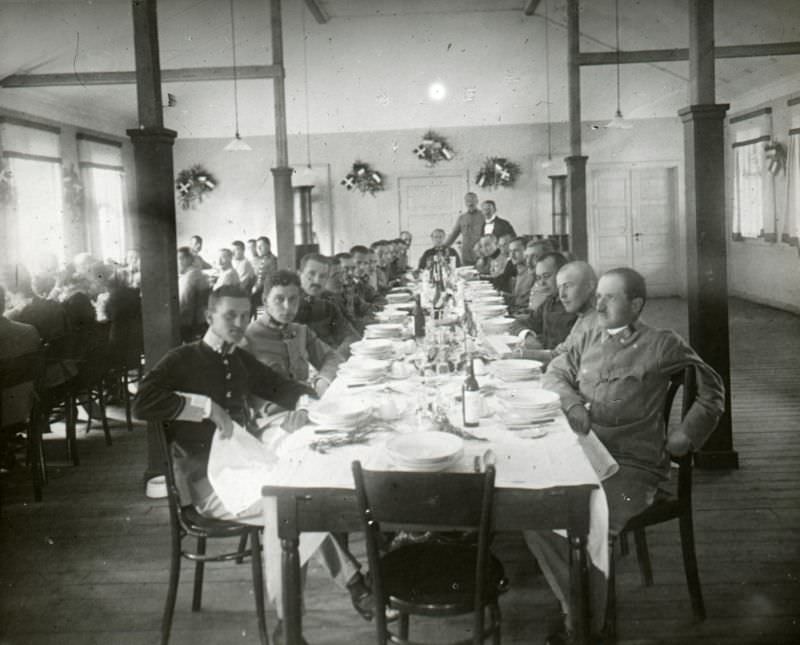
Officers at Hald organized their own social events, including gatherings that photographs label as ‘fairs.’ These events brought officers together in a more relaxed setting, distinct from the medical routines and formal hierarchies of the camp. Such organized social life among prisoners was not uncommon in larger, more established internment camps of the period.
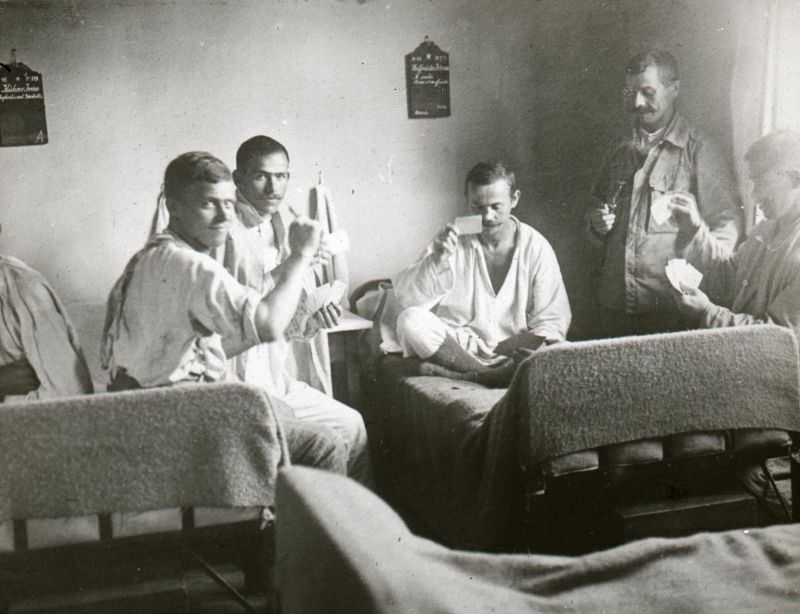
For the enlisted men, card games were among the most common ways to fill time. Photographs of the crew camp show soldiers gathered around tables, playing cards in groups. These informal games were a daily constant in the camp — simple, requiring no equipment beyond a deck of cards, and giving men a reason to sit together and interact.
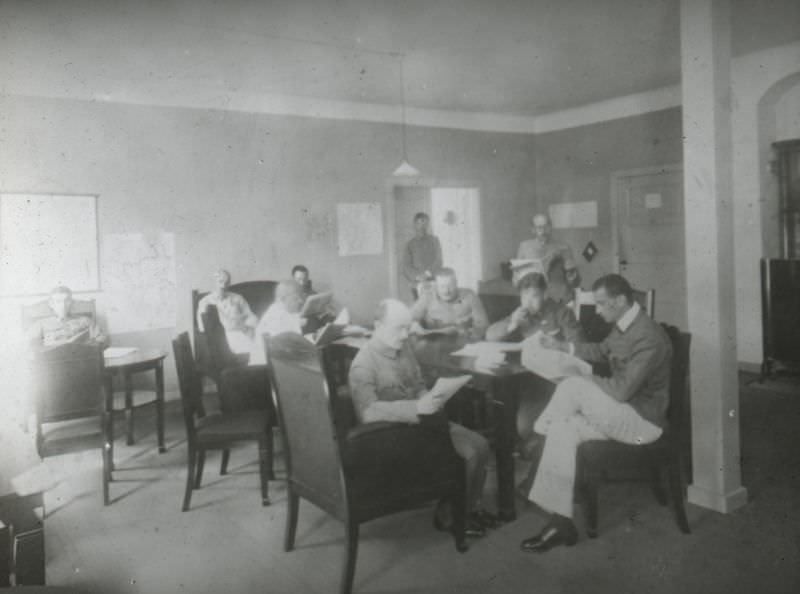
The officers’ reading room was one of the more furnished spaces in the camp. Stocked with books and periodicals, it gave officers a quiet place away from the wards and common areas. Reading, like music and card games, was encouraged as a way to keep men mentally occupied during what was, for many, a years-long period of forced inactivity.
The lounges at Hald provided communal space where prisoners could gather informally. These rooms were part of the camp’s broader effort to prevent the kind of psychological deterioration that came with total idleness and isolation. The Red Cross, which had funded and organized the camp, placed real emphasis on maintaining the mental wellbeing of the interned men alongside their physical health.
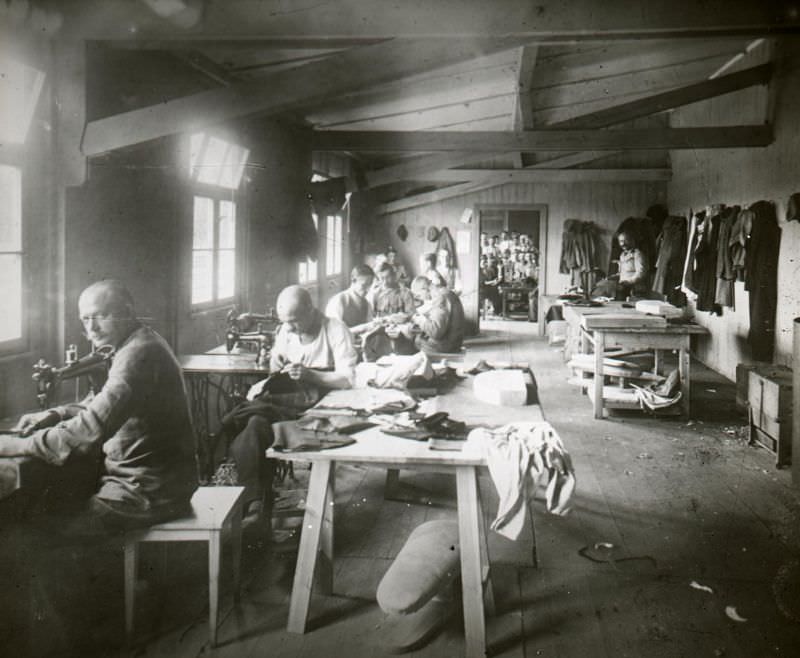
The camp’s workshop gave prisoners an outlet for skilled labor. Men could work with their hands on craft projects, repairs, and other practical tasks. Workshops in prisoner of war camps during World War I often produced a significant amount of handmade goods — from furniture to artwork — that prisoners kept, traded, or sent home to their families.
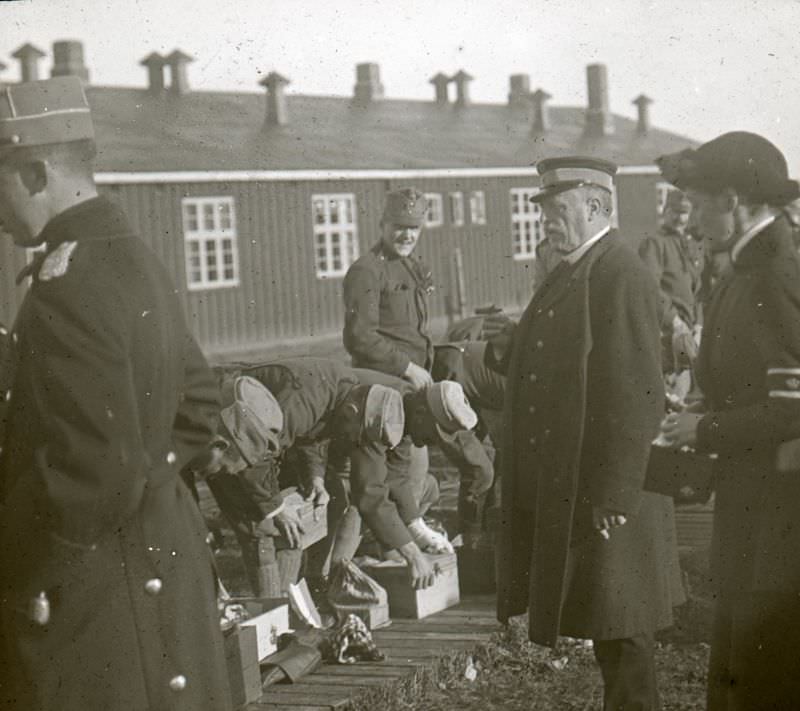
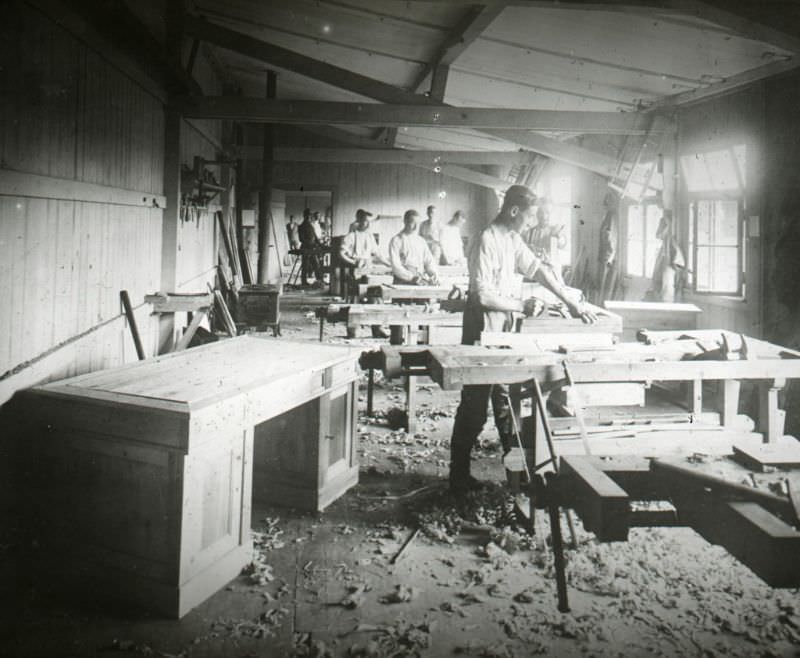
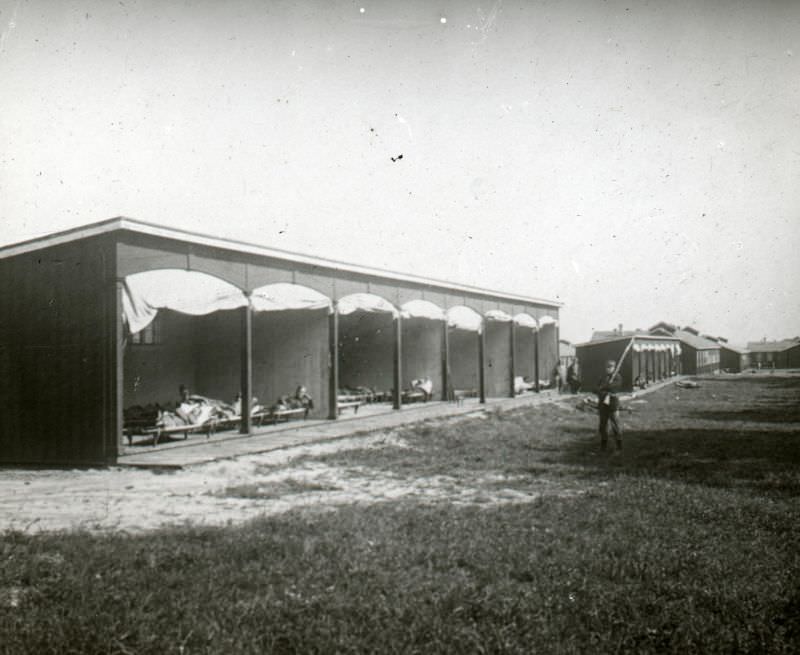
General views of the hospital camp show the scale and layout of the facility. Wooden barracks stretched across the flat landscape of western Hald Ege, surrounded by fencing and organized pathways. The camp was not small — it housed hundreds of men at a time, requiring constant logistics to feed, treat, and manage a population drawn from the battlefields of a continental war.
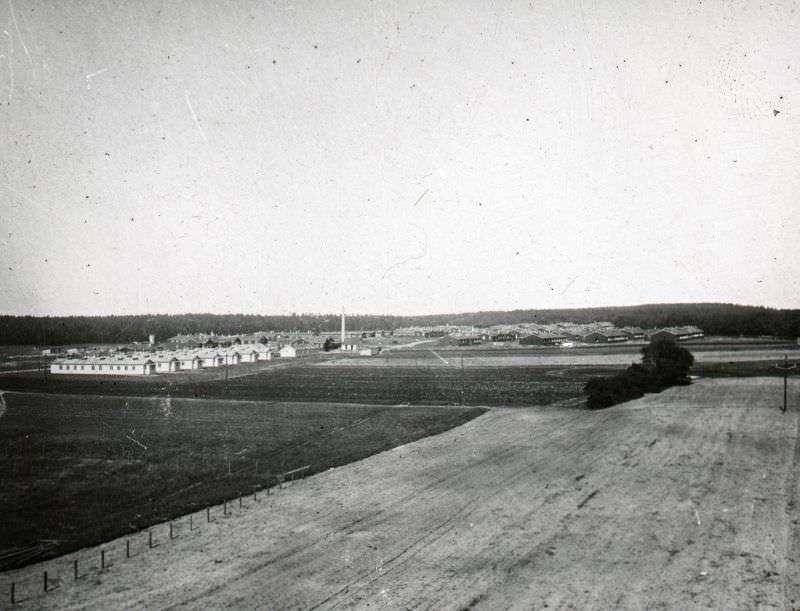
The view from the water tower gave a clear picture of just how much ground the camp covered. From that height, the full scope of the facility was visible — the rows of buildings, the open areas between sections, and the surrounding Jutland landscape extending outward in every direction. The water tower itself was a functional necessity, providing clean water to the entire camp population.
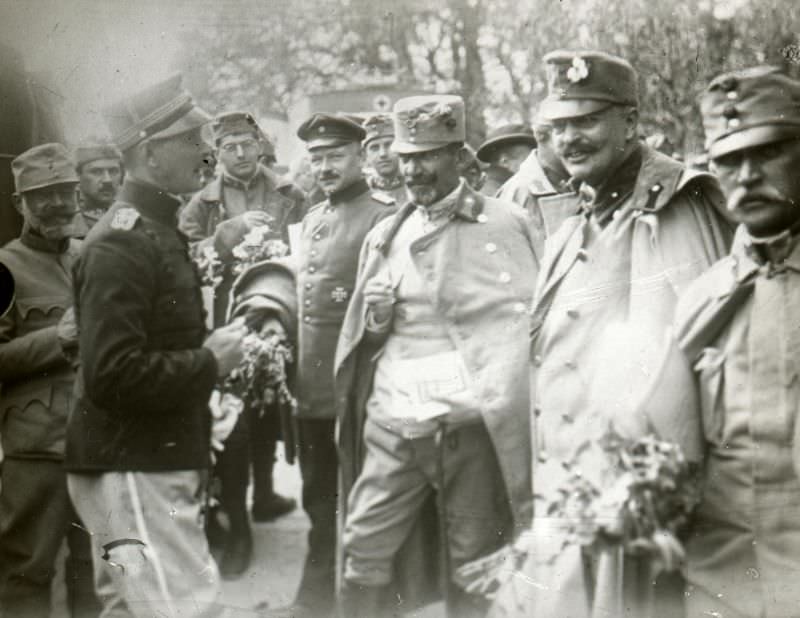
Officers at the Viborg hospital camp at Hald were photographed regularly during their time there. These images show men in uniform, some recovering from wounds, others appearing in reasonable health after months of internment and medical care. The officer population at Hald represented multiple ranks and nationalities from the German and Austro-Hungarian armies.
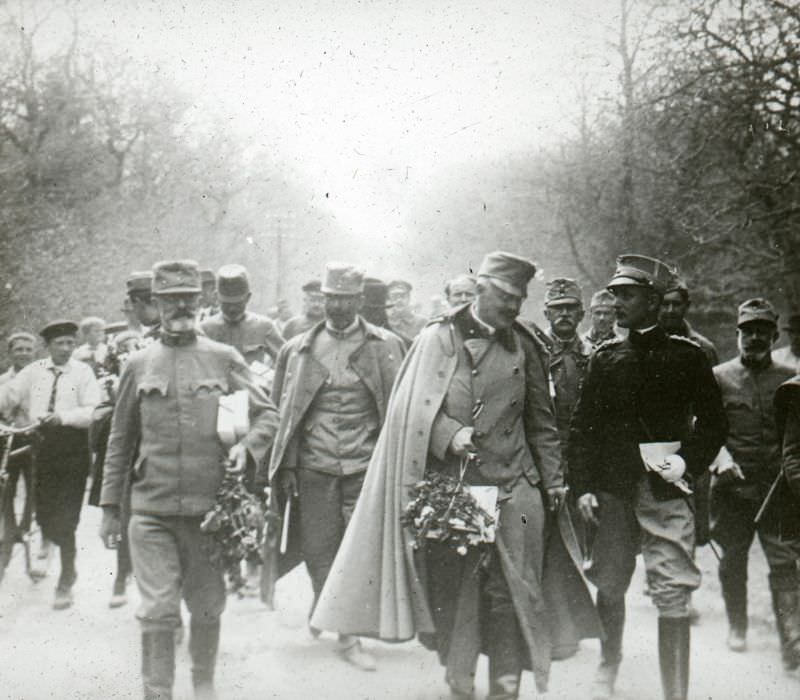
The arrival of officers at the Viborg hospital camp at Hald marked a distinct moment in the camp’s daily rhythm. New arrivals brought news from the outside world — from the front, from the countries at war, and from the lives the prisoners had left behind. These photographs from 1917 document that moment of arrival, one that repeated itself throughout the years the camp operated, as wounded men from both sides of a brutal war found themselves in the unlikely quiet of the Danish countryside.



