Iran in the 1960s was a country caught between two worlds. On one side stood centuries of tradition — ancient mosques, bazaars, nomadic caravans, and deeply rooted religious life. On the other stood a government pushing hard toward Western-style modernization. The tension between these two forces defined the decade and touched every corner of Iranian society, from the capital Tehran to remote villages near the Russian frontier.
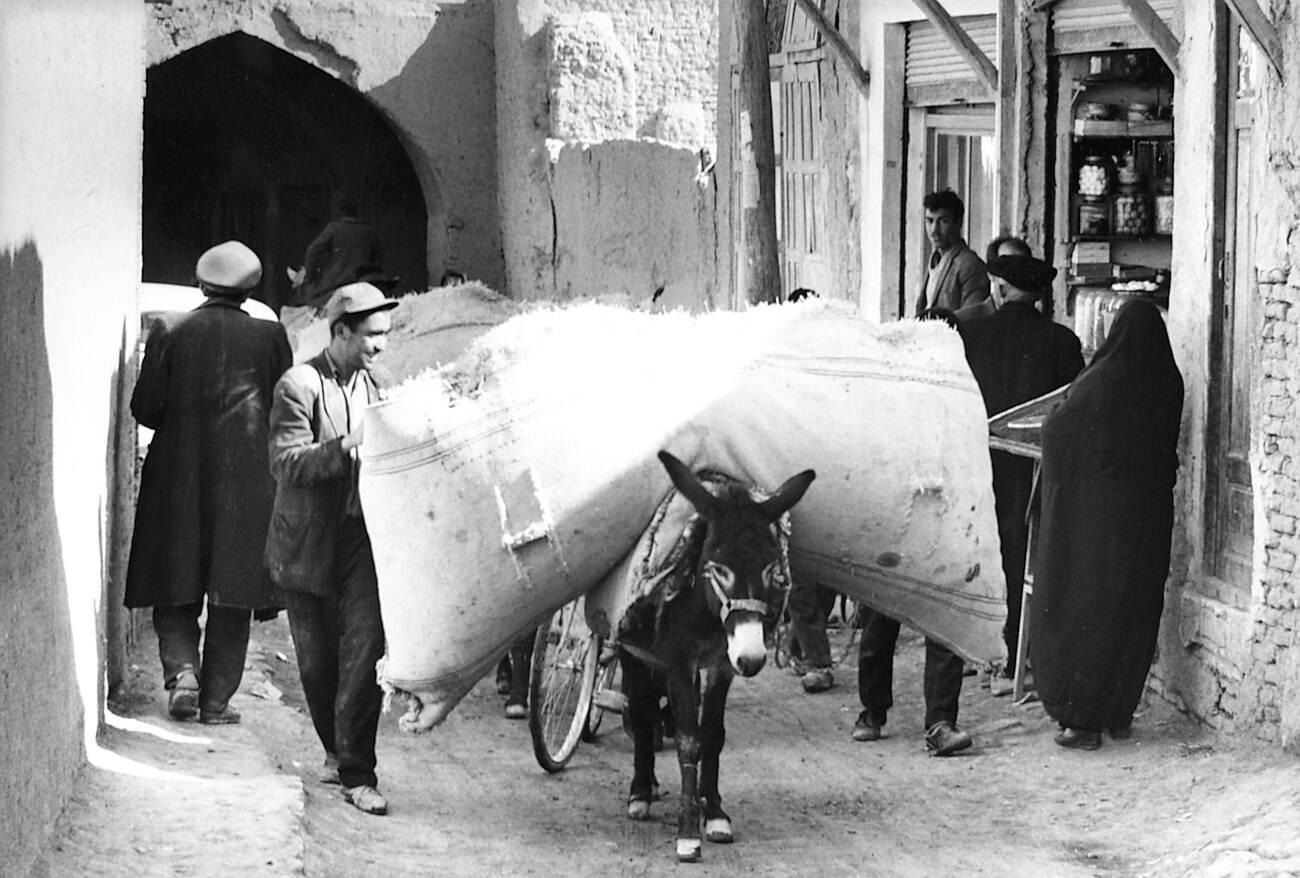
A donkey in an old street, Isfahan, Iran, 1960s.
Mohammad Reza Shah Pahlavi held firm control over Iran throughout this period. His grip on power traced back to 1953, when a CIA- and British-backed operation restored him to the throne after he had been briefly removed. From that point forward, he ruled with authority and moved the country in a deliberate direction — toward industrialization, Western alliances, and a modern national identity. Not everyone welcomed the path he chose.
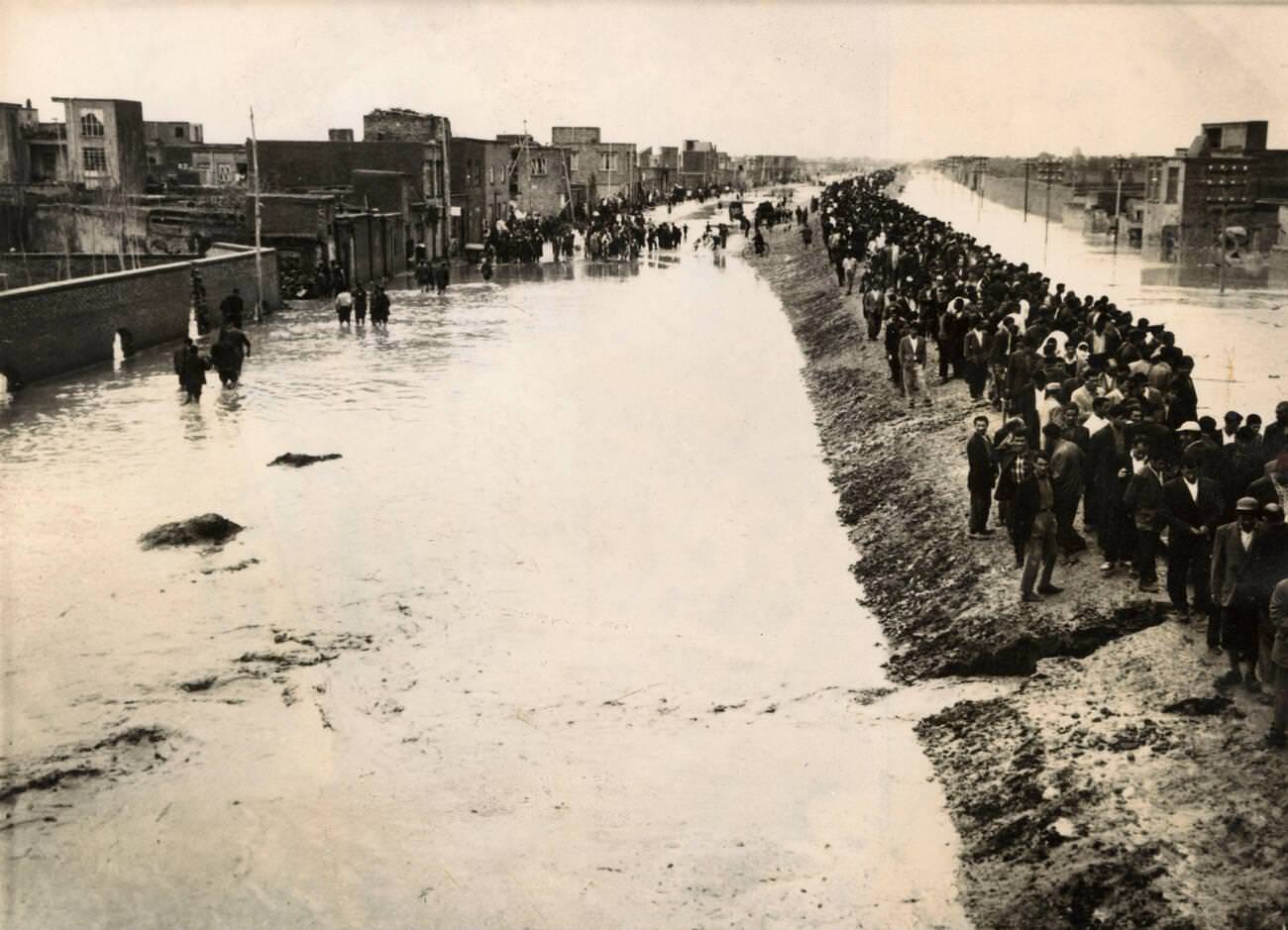
Flooding in a town south of Tehran, Iran, 1960s.
In 1963, the Shah launched the White Revolution, a sweeping package of reforms that would reshape Iranian society. Land that had long been concentrated in the hands of wealthy landowners was redistributed to poor farmers. Women gained the right to vote and to work outside the home. Girls’ education was expanded, with new schools opening across the country. These changes were real and significant — but they came with fierce opposition from religious leaders and traditionalists who saw them as a direct attack on Iranian culture and Islamic values.
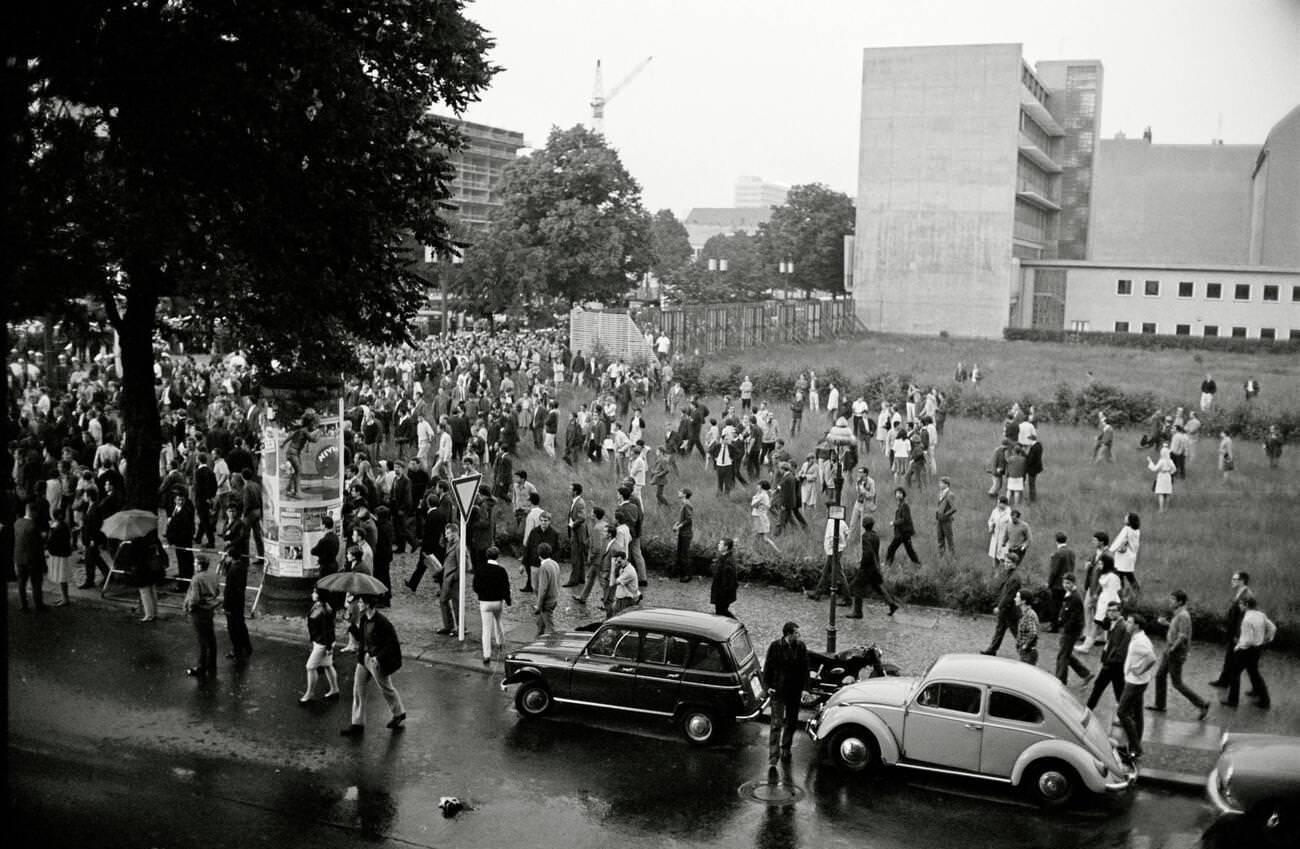
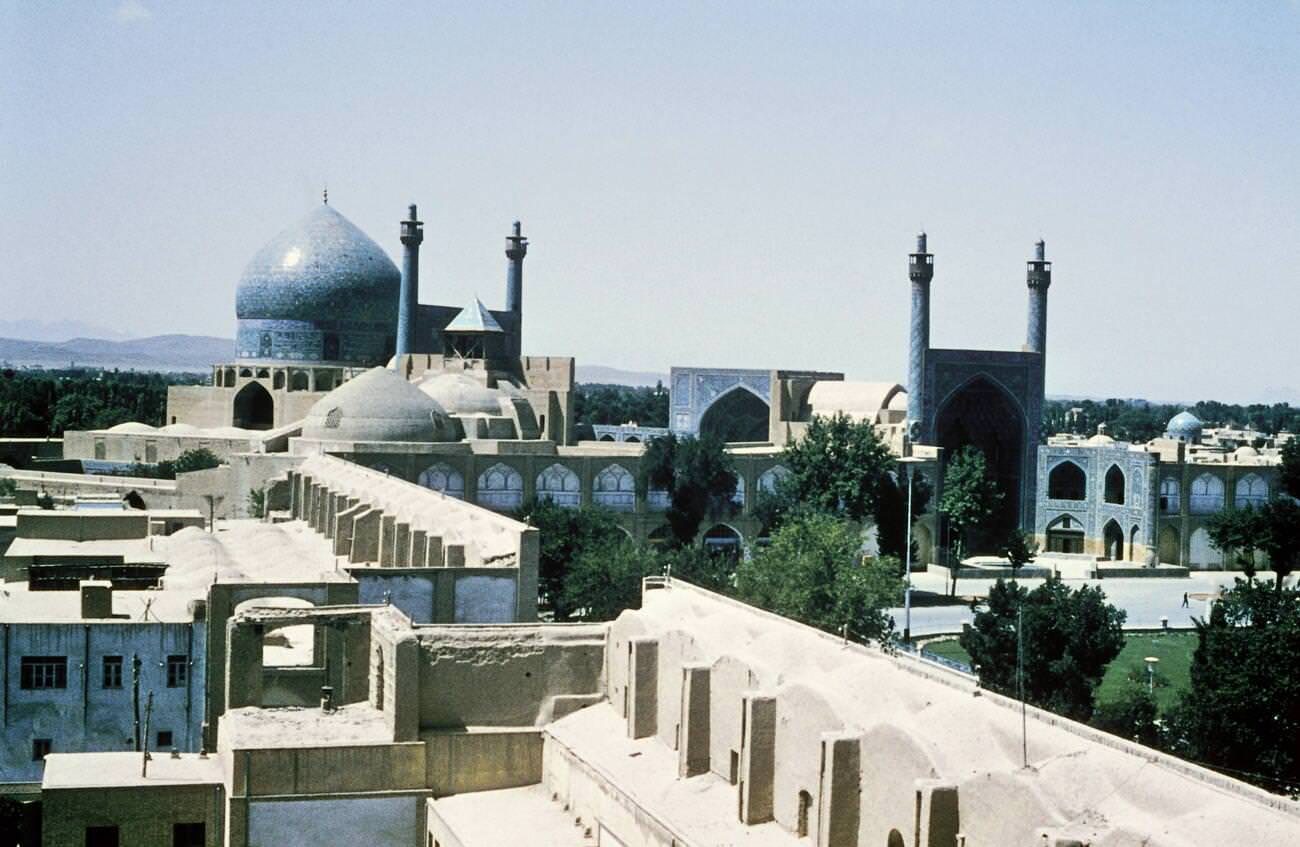
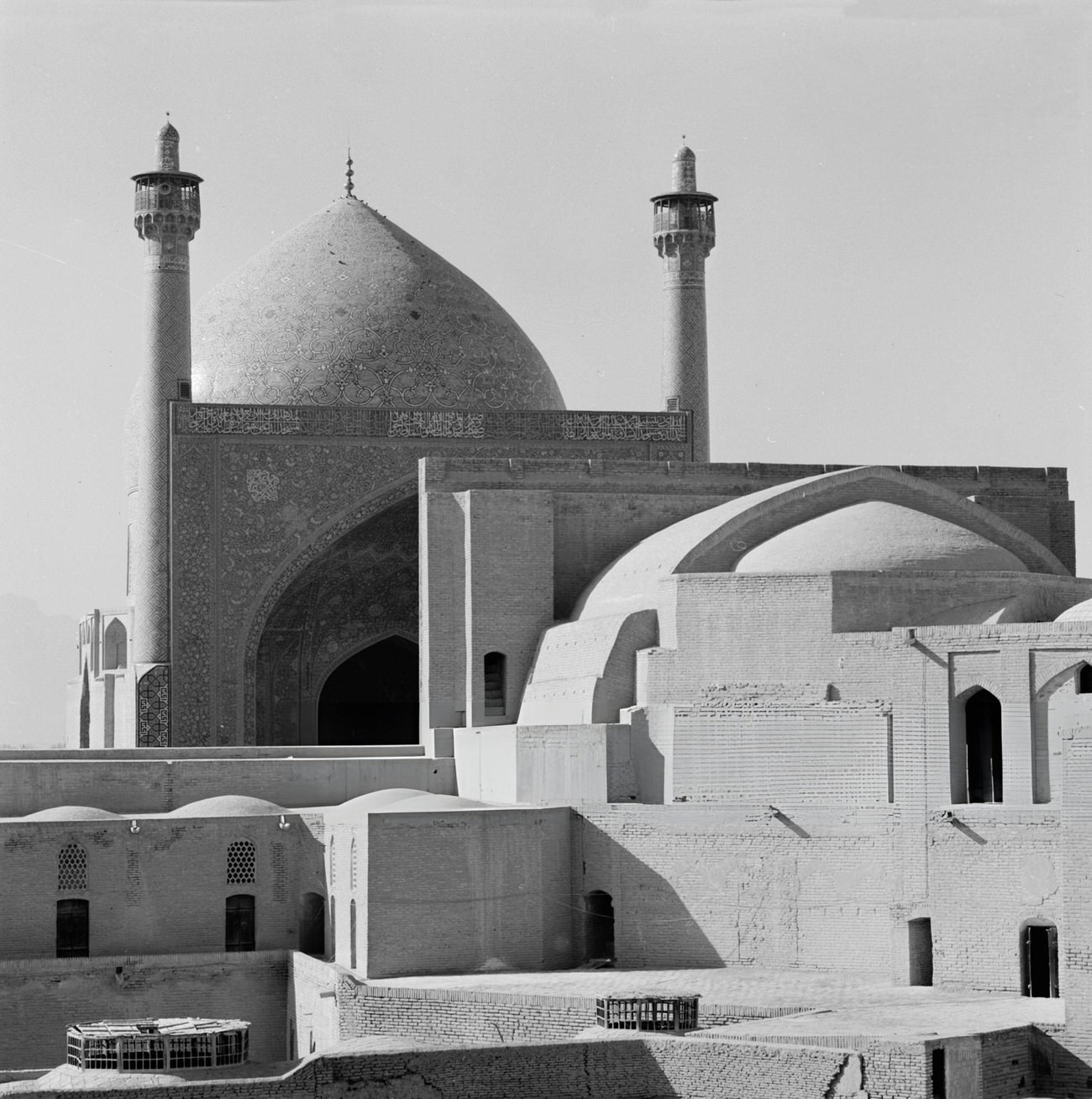
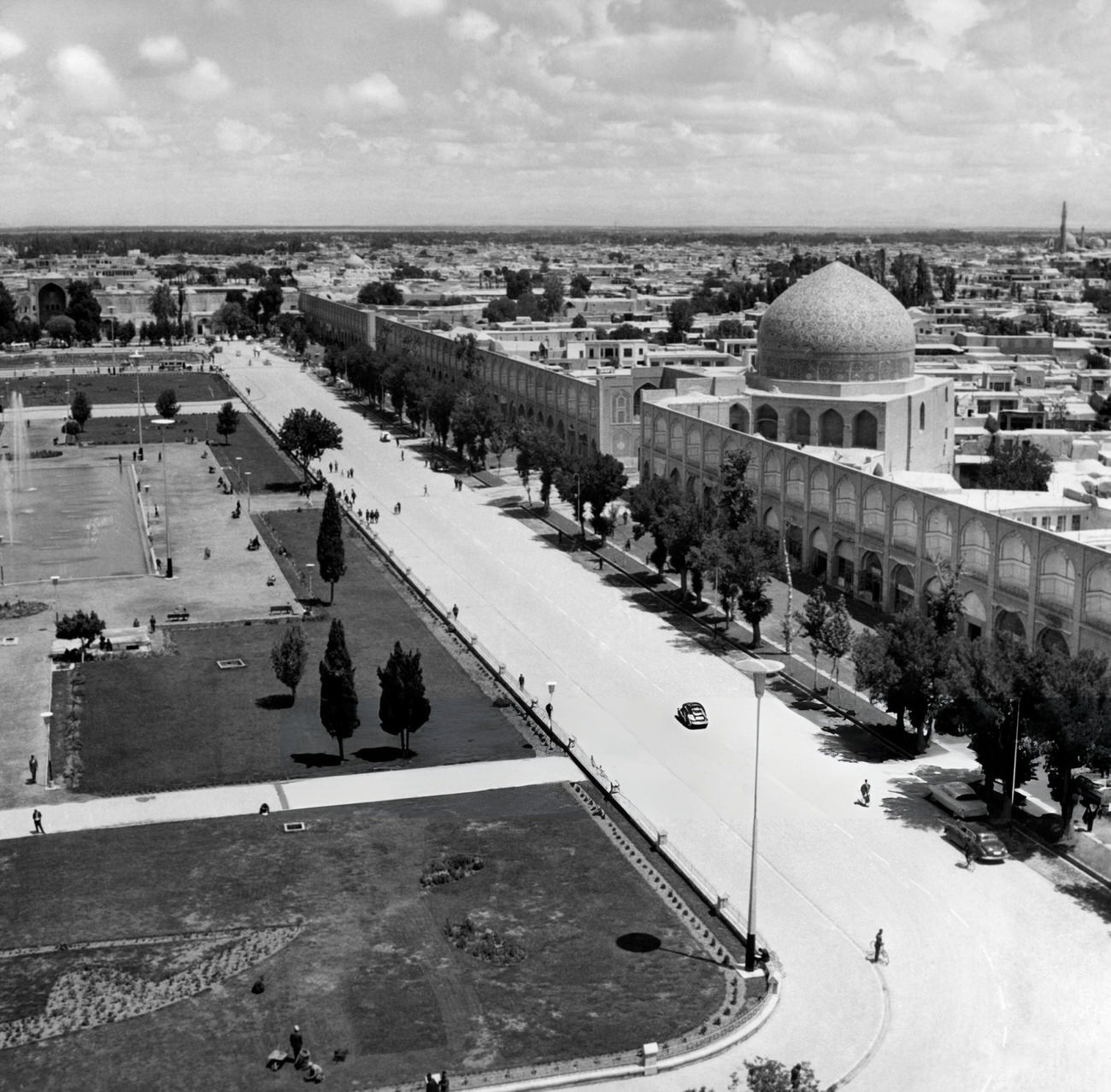
Protesters and spectators during the Shah of Iran’s visit to the Deutsche Oper in Berlin, 1967.The Imam Mosque in Naqsh-e Jahan Square, Isfahan, Iran, 1960s.
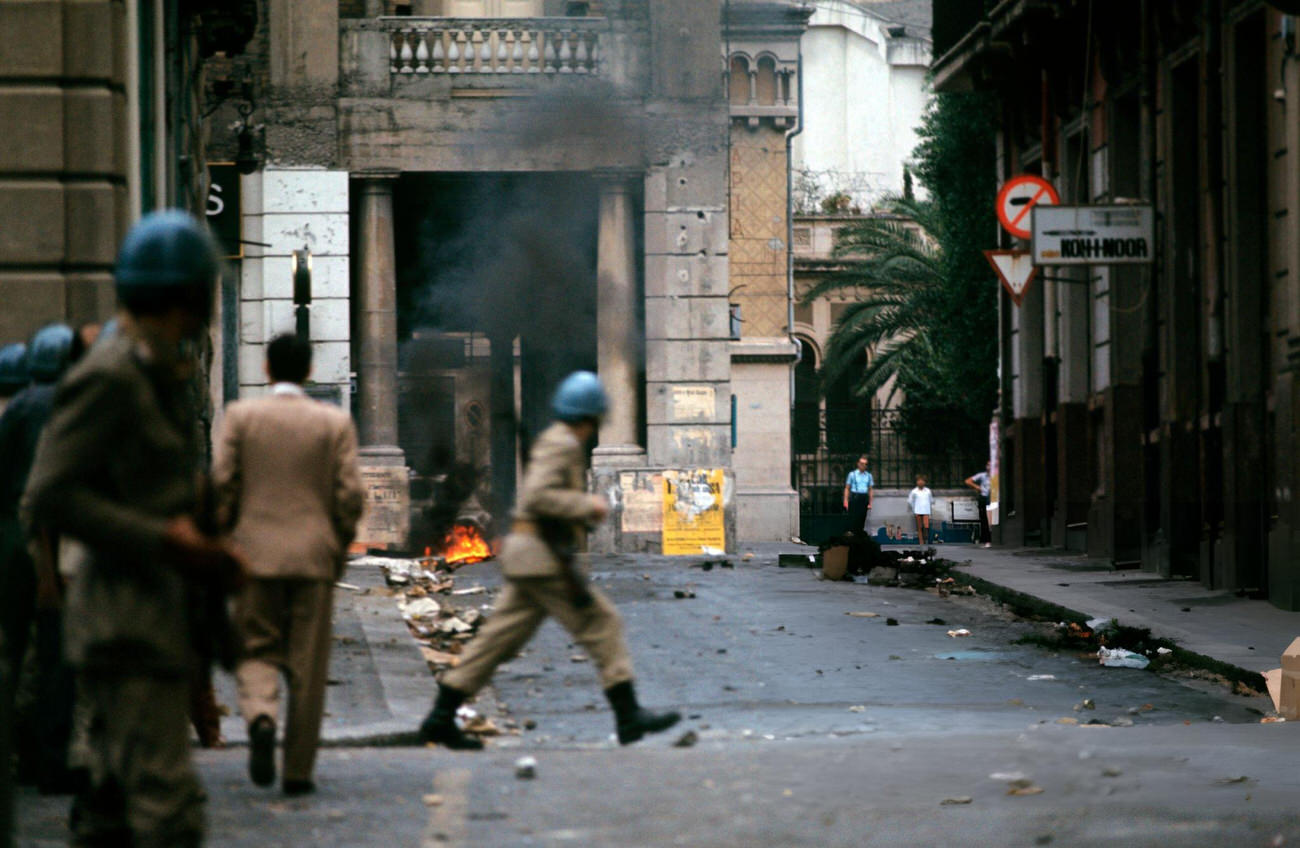
The most prominent religious voice against the Shah’s reforms belonged to Ayatollah Ruhollah Khomeini. When the Shah had him arrested in 1963, violent protests erupted across the country. The government cracked down hard, and Khomeini was eventually exiled. But the unrest that surrounded his arrest signaled something deeper — a population divided over who should have authority in Iran and what kind of country it should be.
Violent protests in Iran after the arrest of Ayatollah Khomeini, 1963.
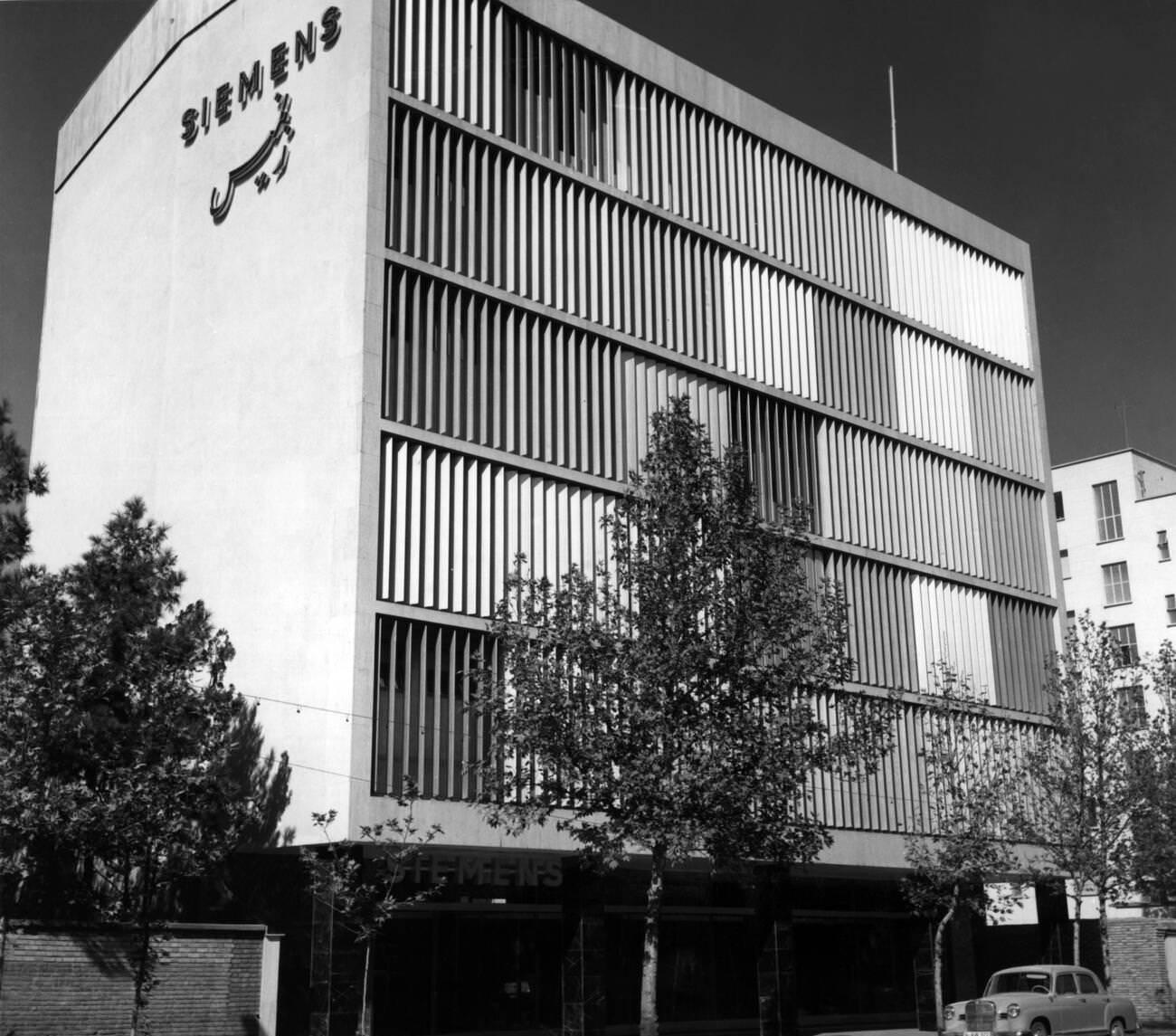
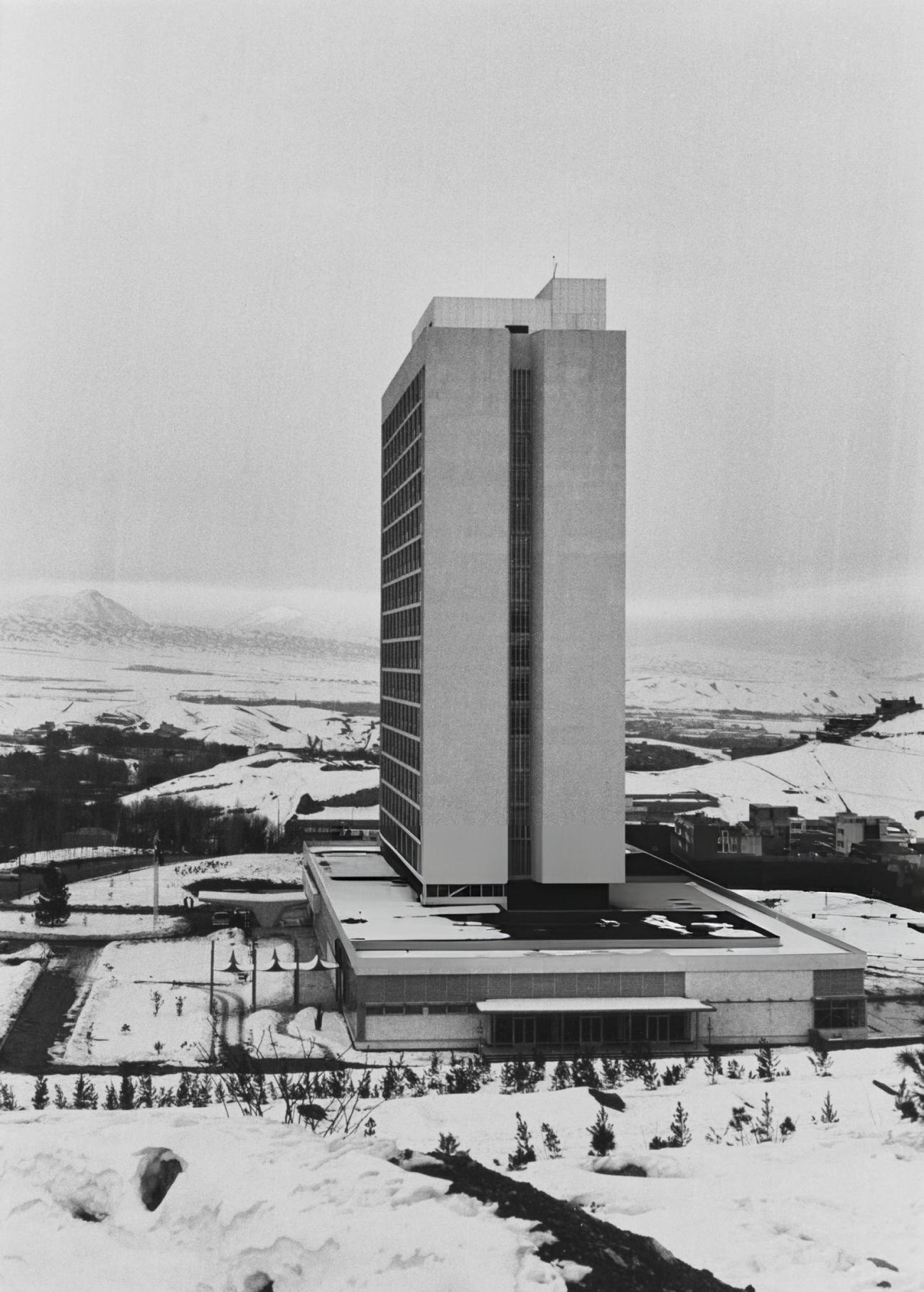
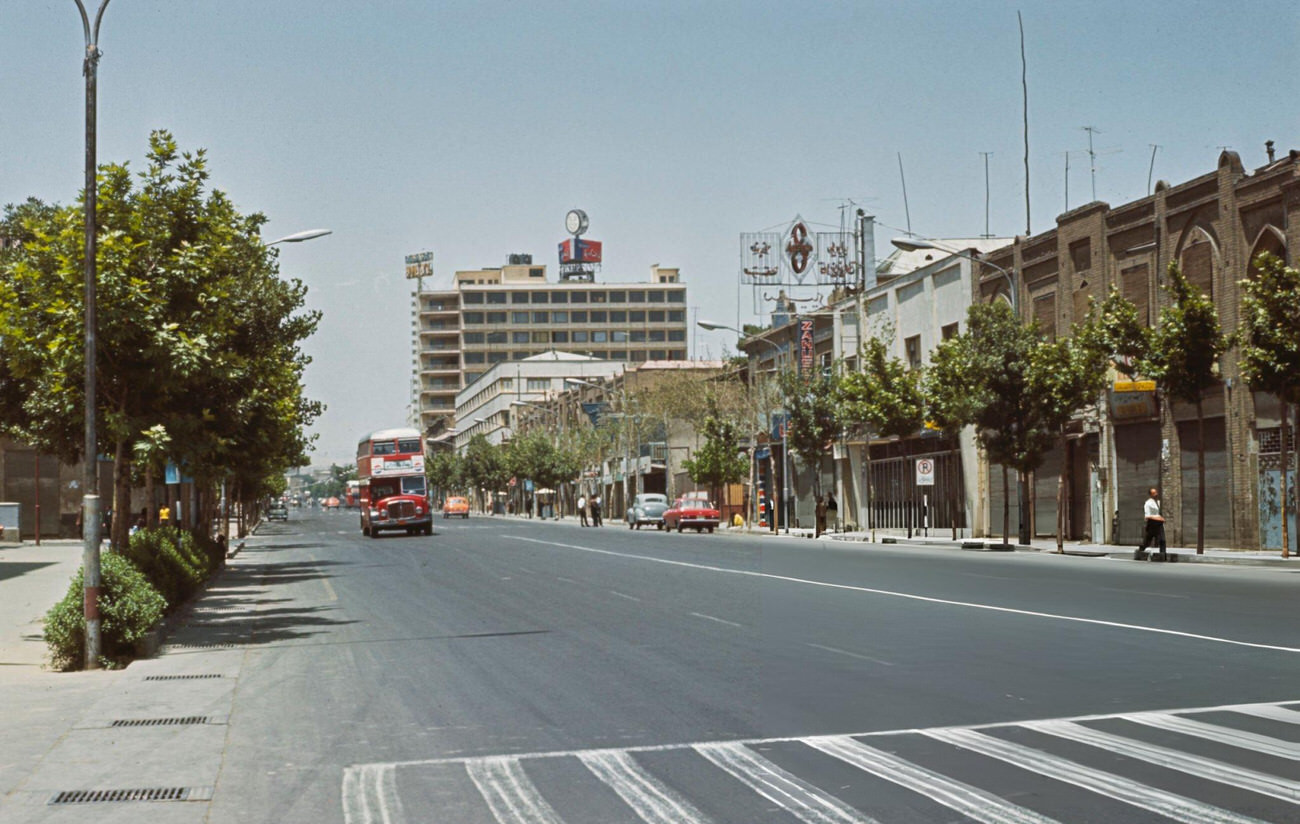
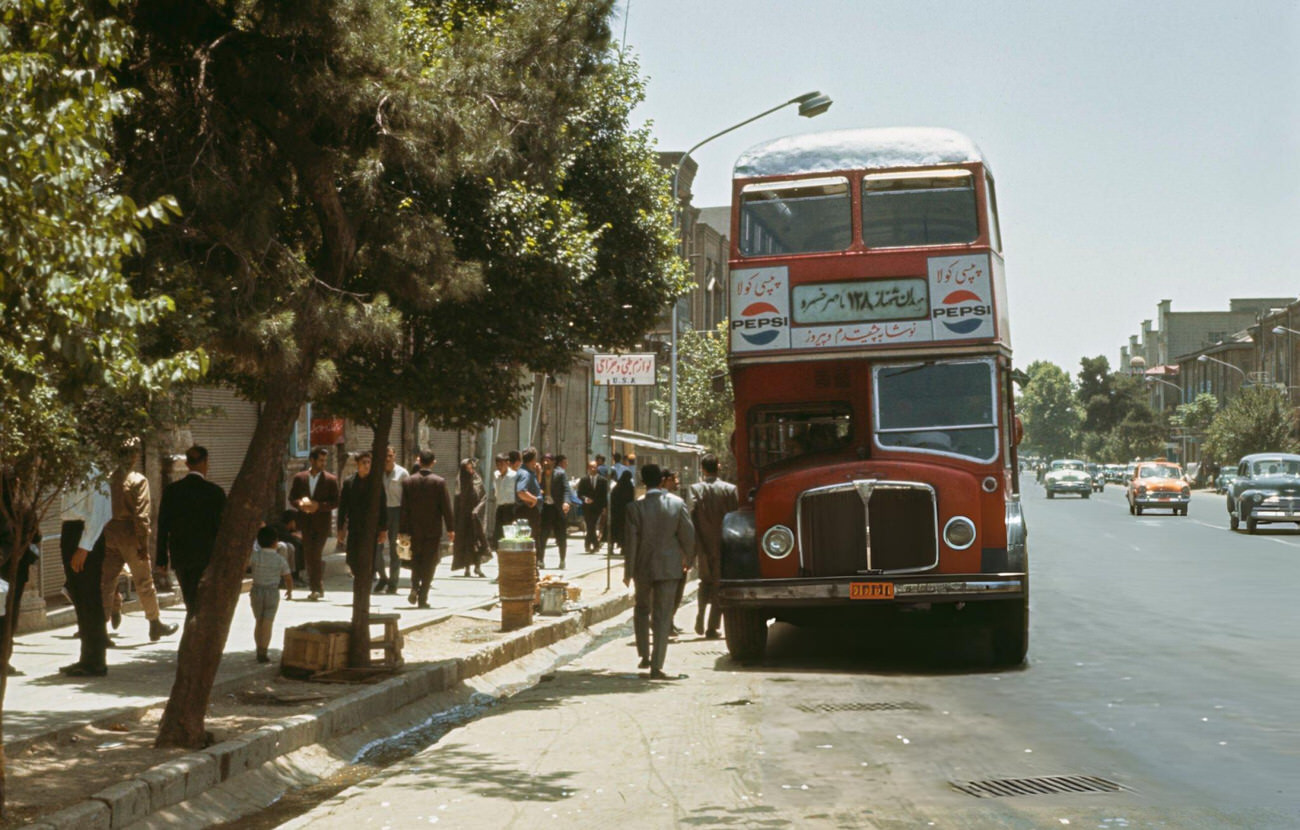
Meanwhile, Iran’s oil wealth was funding rapid urban development. Roads, hospitals, and government buildings went up across the country. In Tehran, foreign companies like Siemens established a visible commercial presence, and the city took on an increasingly modern character. American cars rolled through busy intersections, double-decker buses ran along major avenues, and luxury hotels like the Royal Tehran Hilton catered to international visitors and Iran’s growing elite.
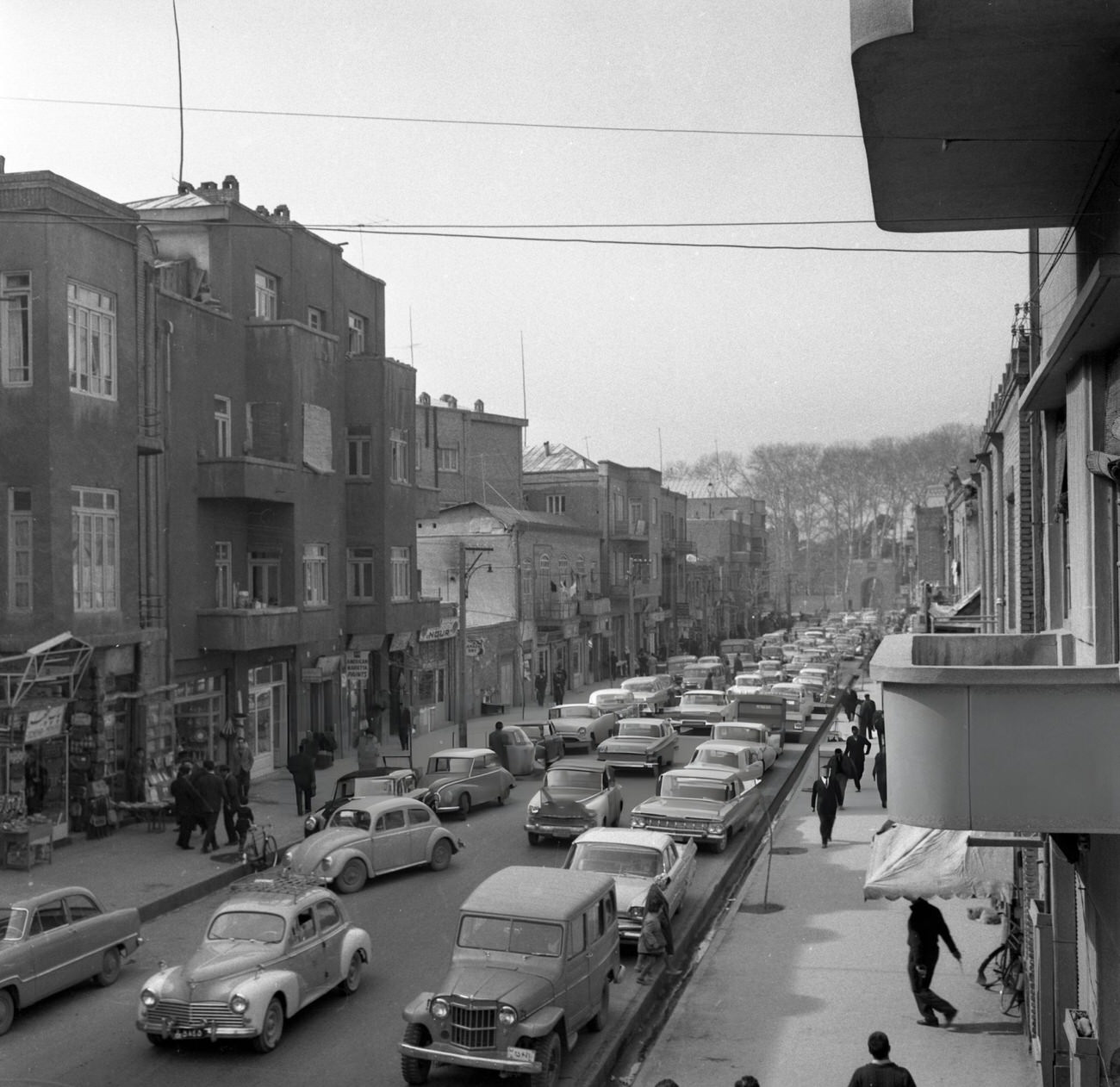
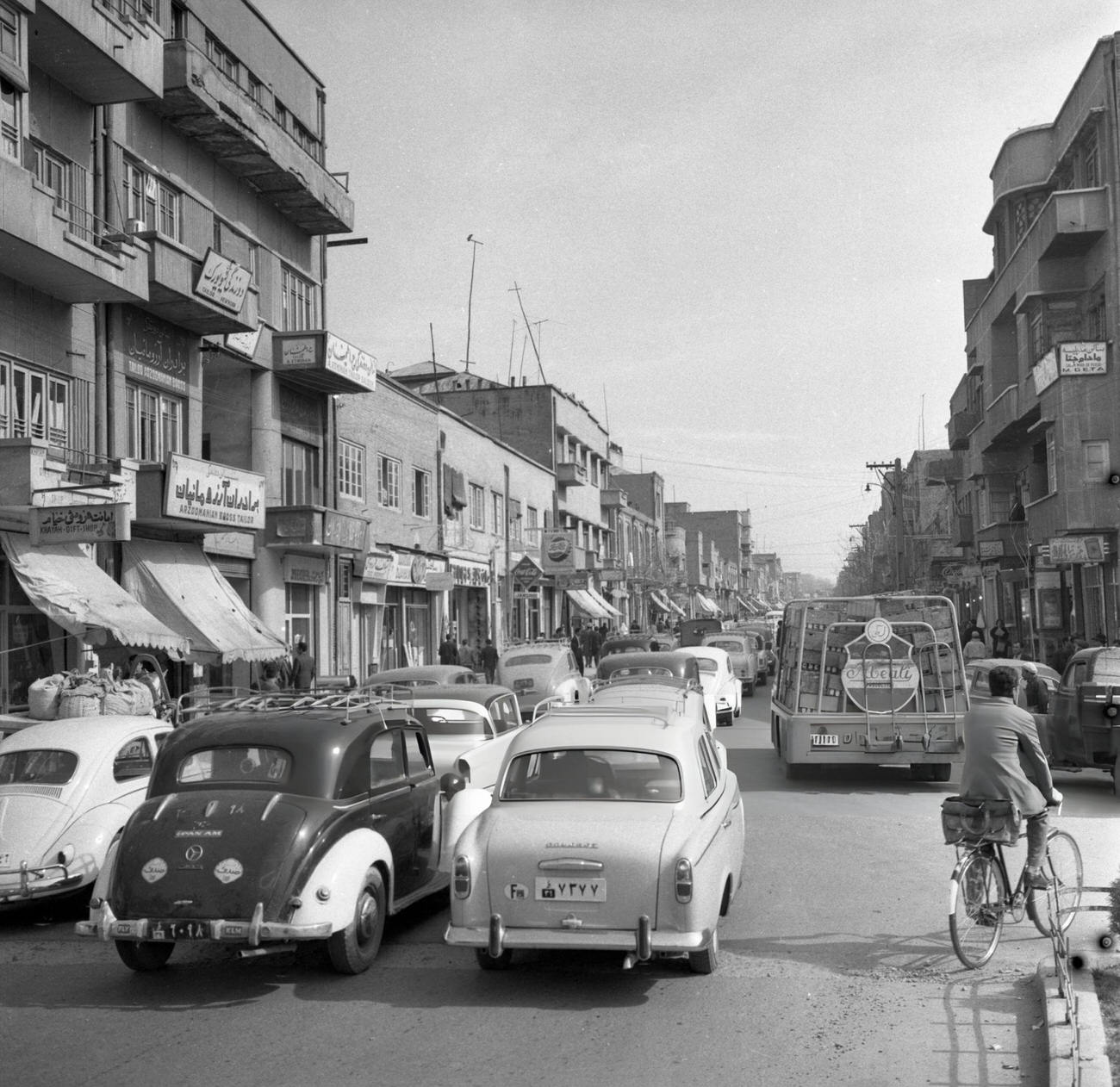
The exterior view of a branch of Siemens AG in Tehran, Iran, 1962.A traffic jam in Tehran, Iran, 1964.
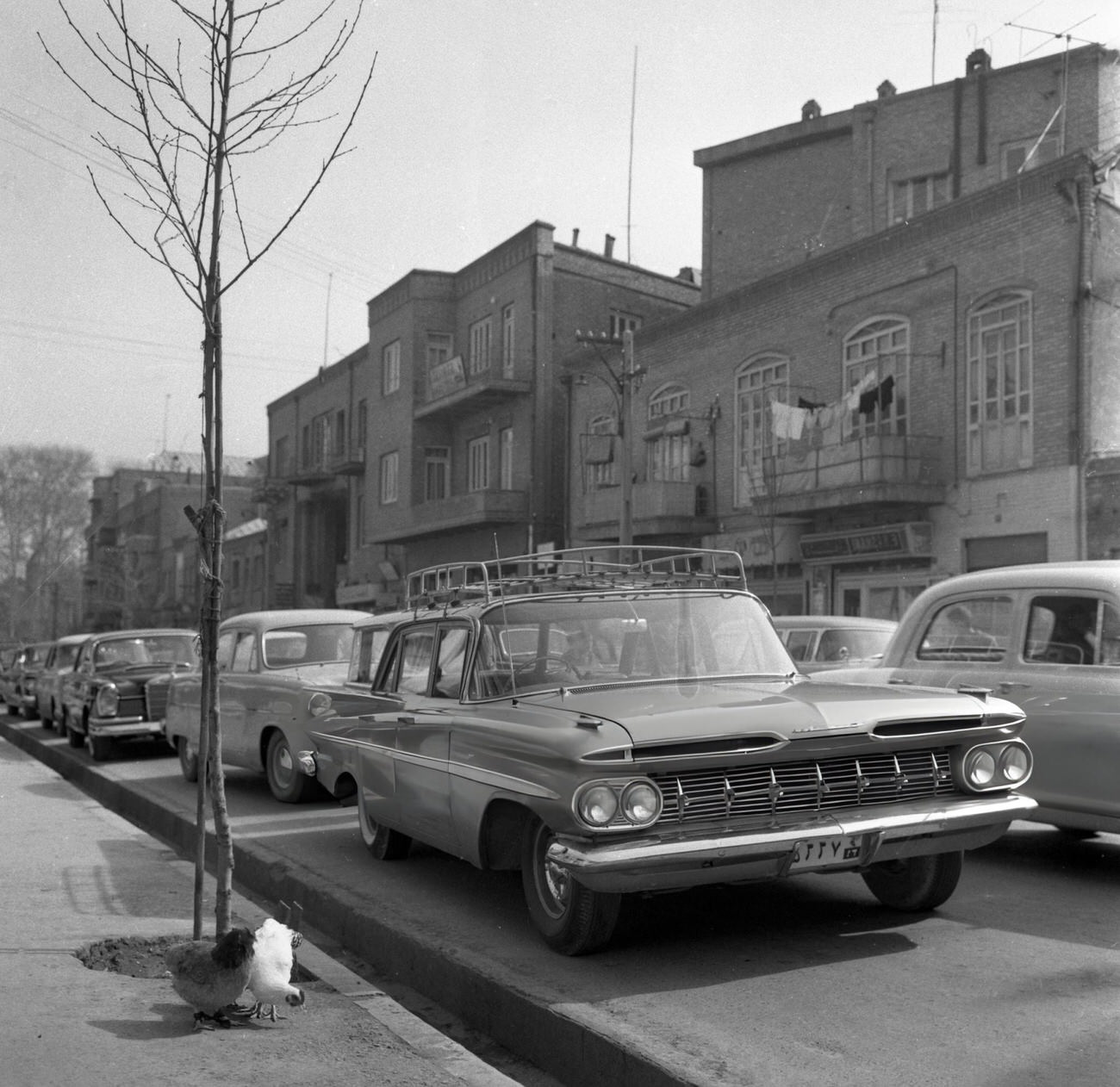
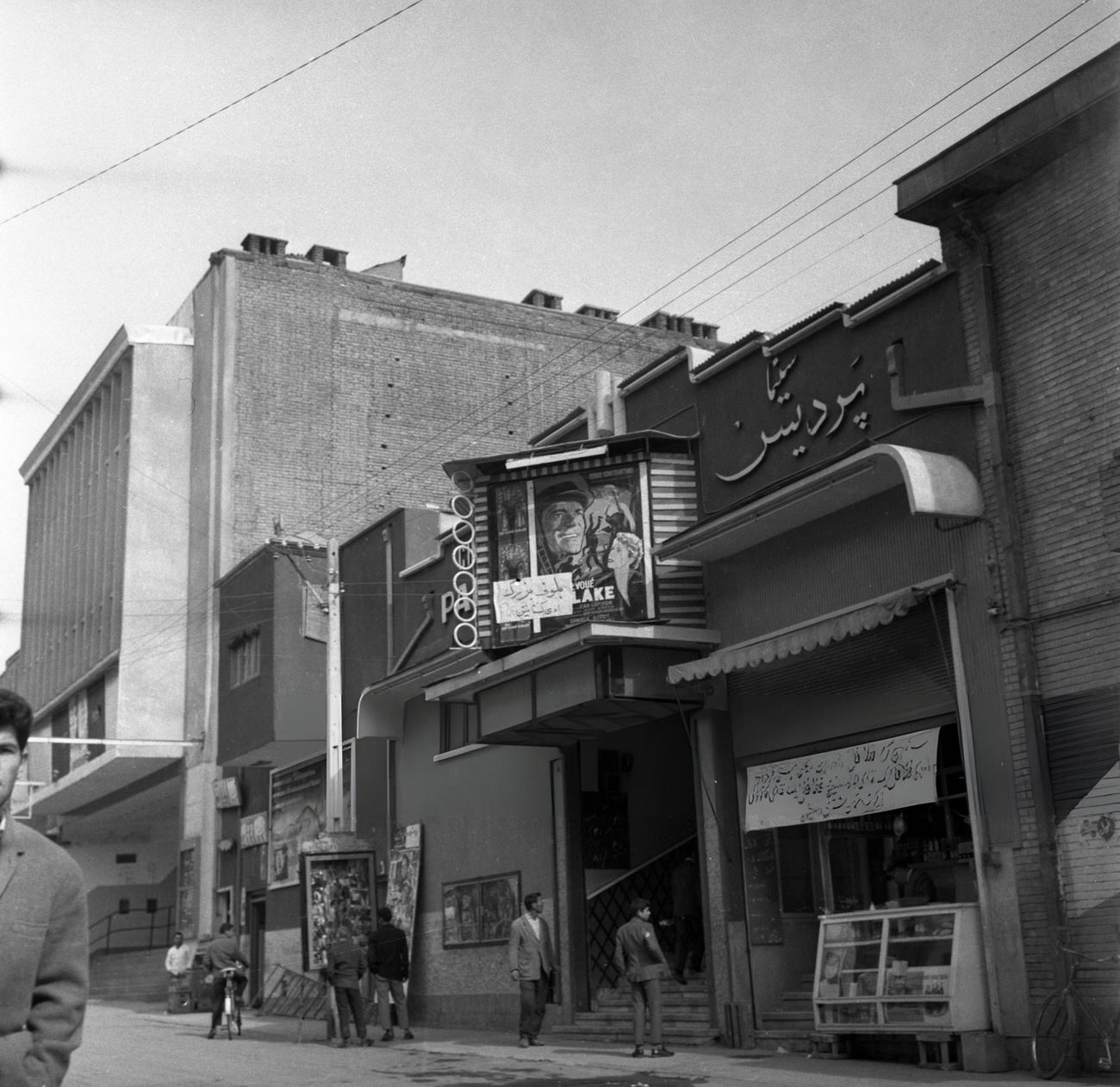
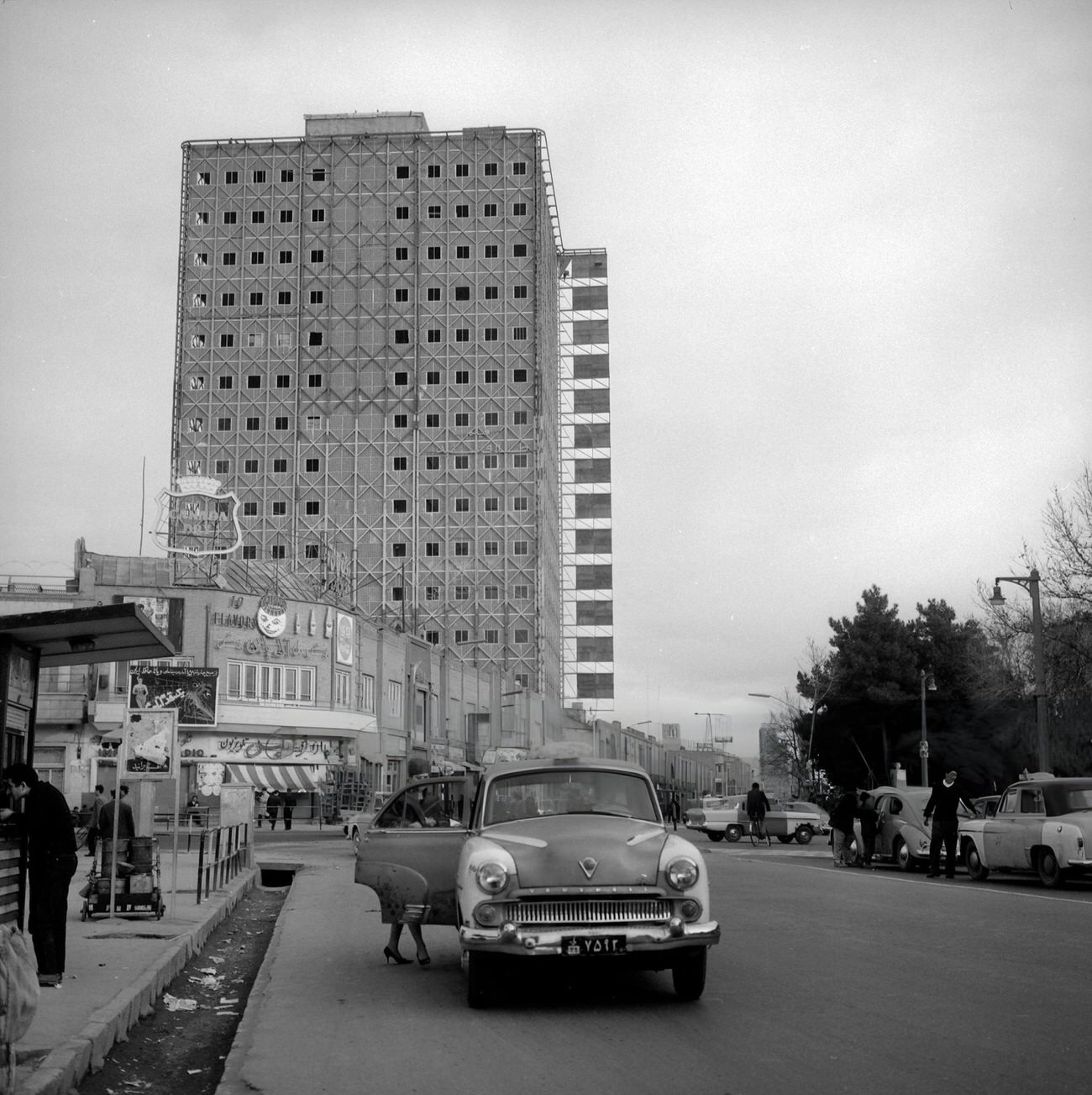
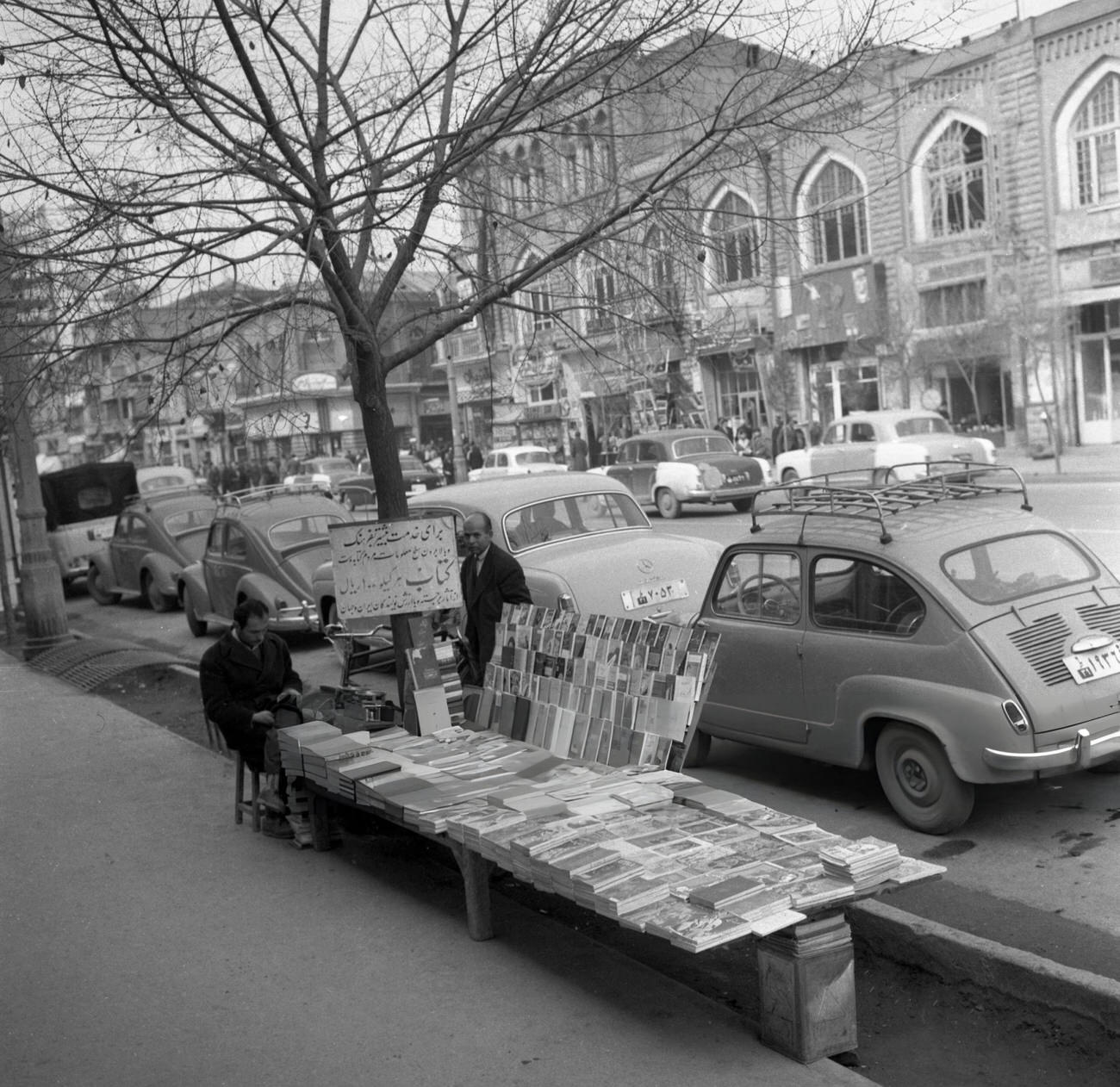
Tehran’s streets in the mid-1960s told the story of a city transforming at speed. Chevrolets and Volkswagens shared roads that a generation earlier had seen only horses and carts. Bookstalls lined the sidewalks. Grocery stores stocked imported goods. Movie theaters played both Iranian and foreign films, drawing crowds of young people eager for entertainment and new ideas.
An American ‘Chevrolet’ car on the streets of Tehran, Iran, 1964.A movie theater in Tehran, Iran, 1964.
Iranian cinema itself was evolving. In 1968, director Dariush Mehrjui released Gaav (The Cow), a film that used rural life as a lens for examining identity and loss. It became one of the most important Iranian films ever made and signaled the rise of a serious, thoughtful film culture that looked inward rather than simply imitating the West.
“Gaav” (The Cow Year), a 1968 Iranian film directed by Dariush Mehrjui, starring Ezzatollah Entezami.
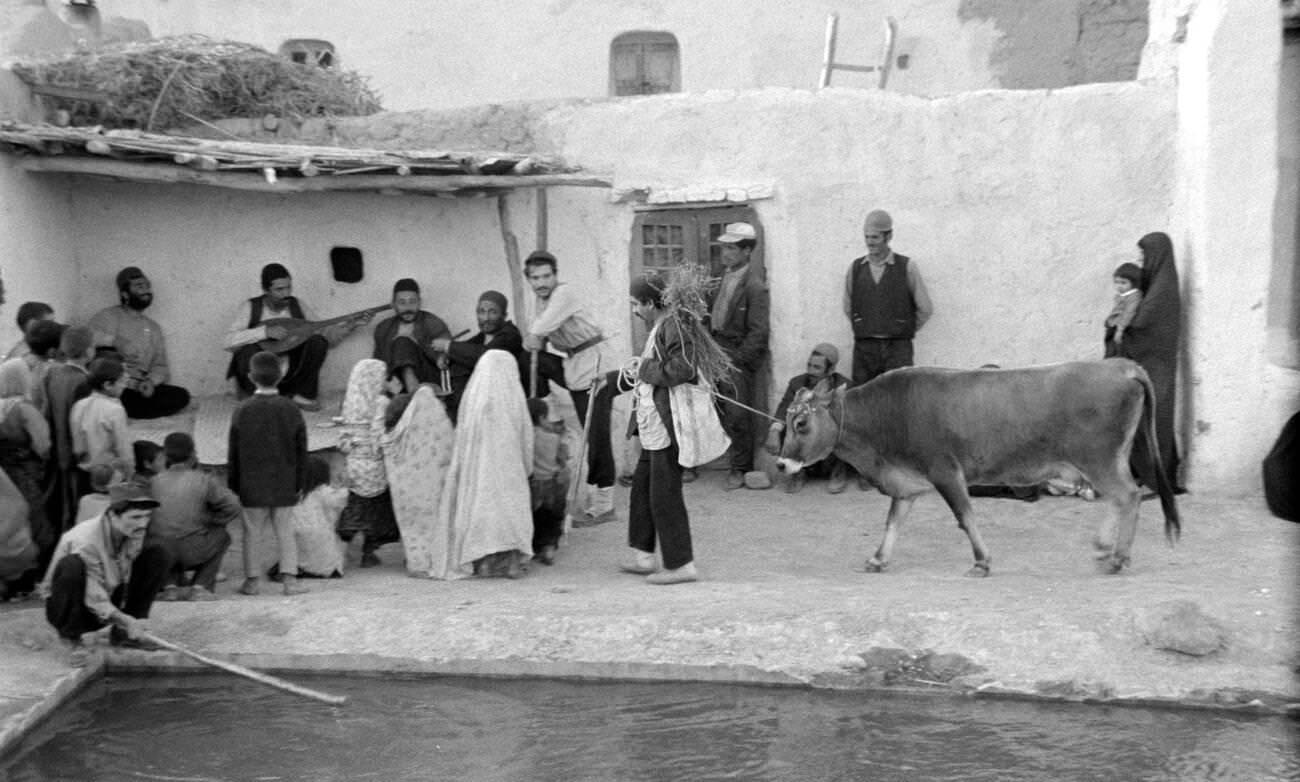
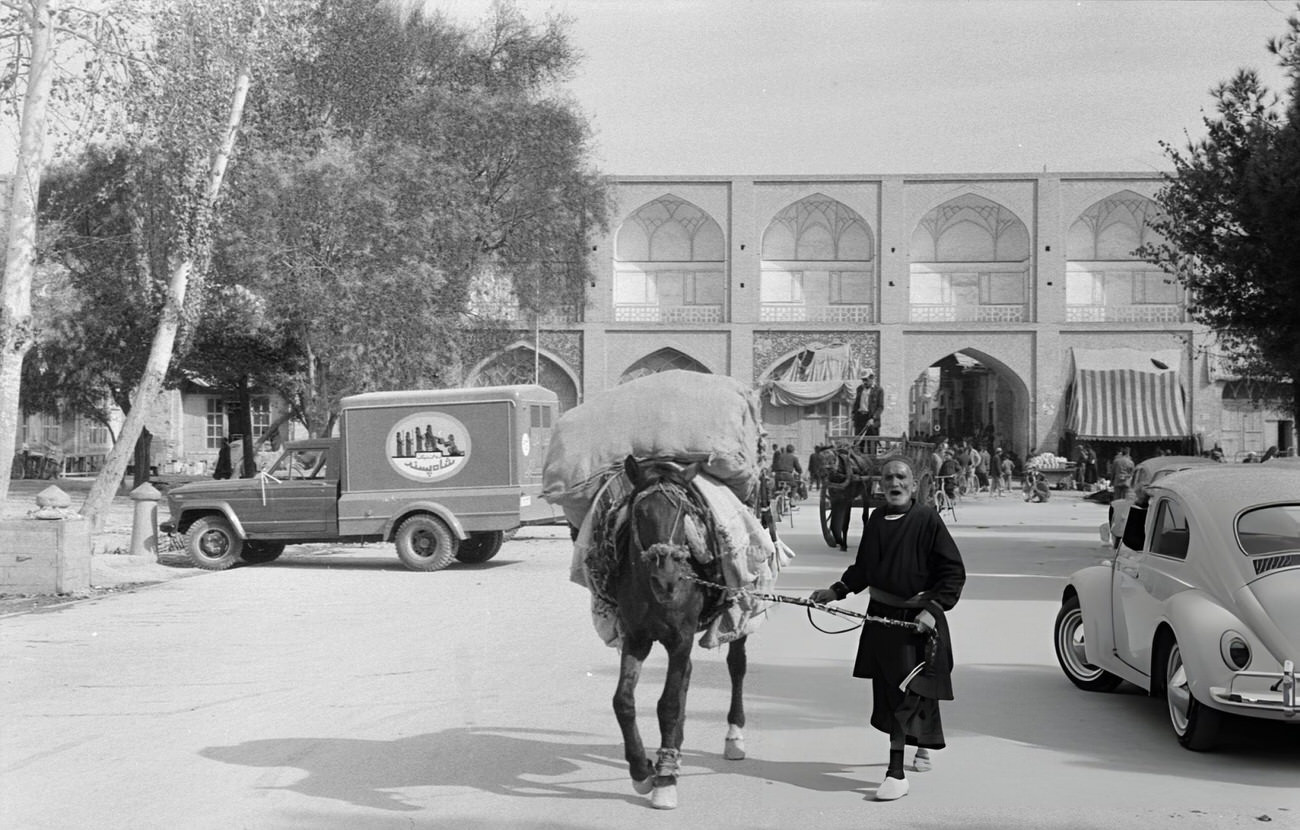
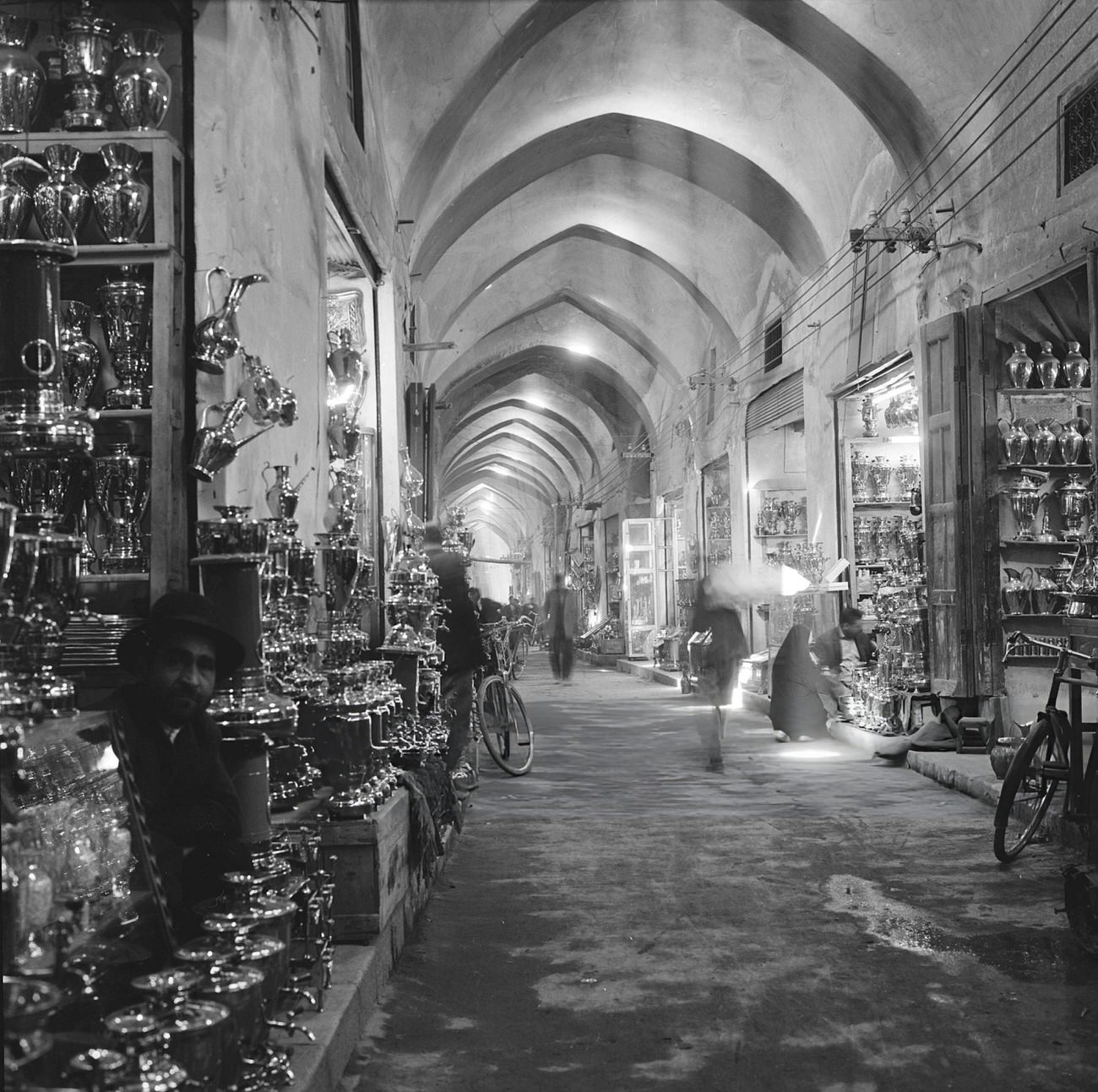
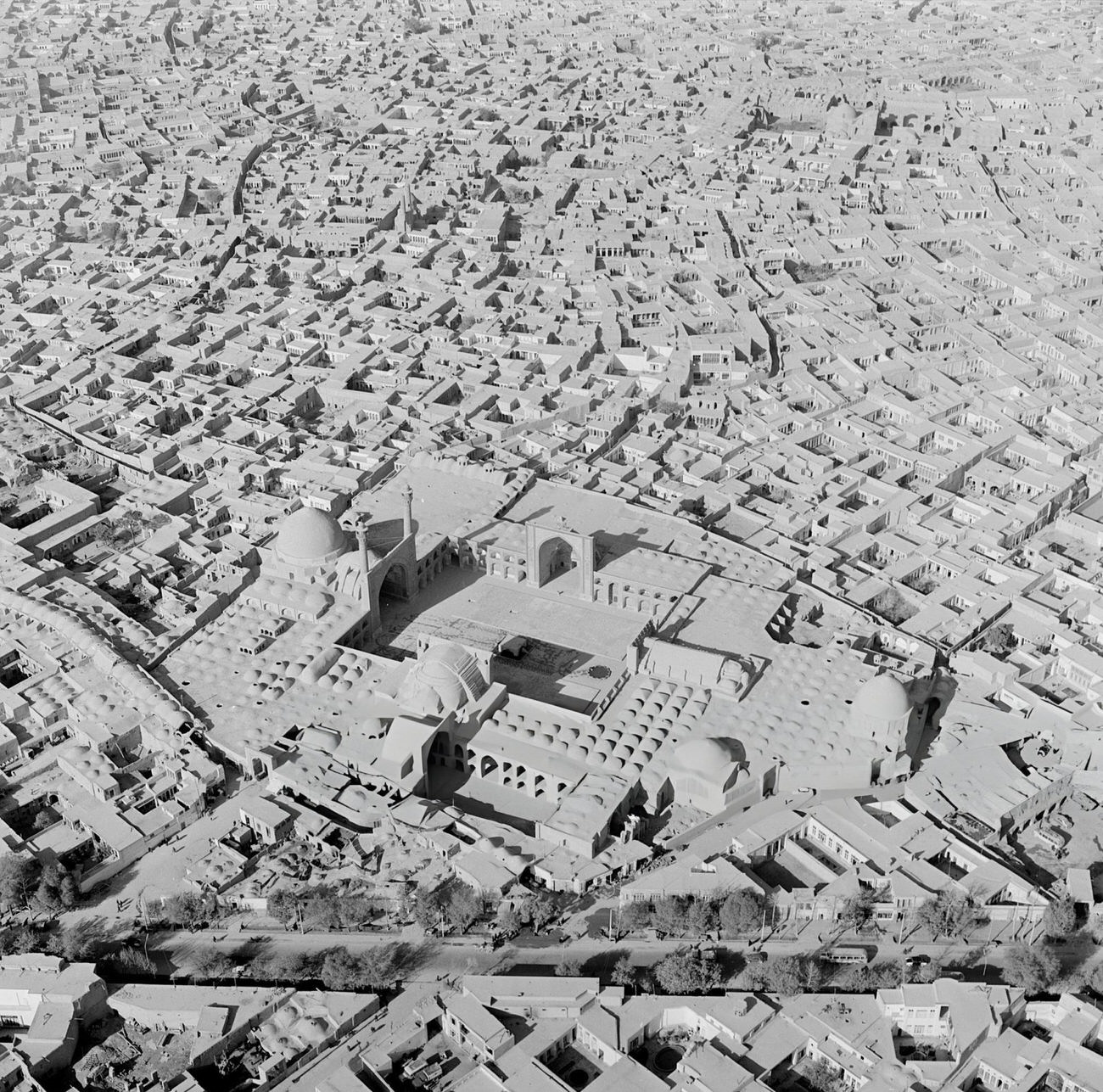
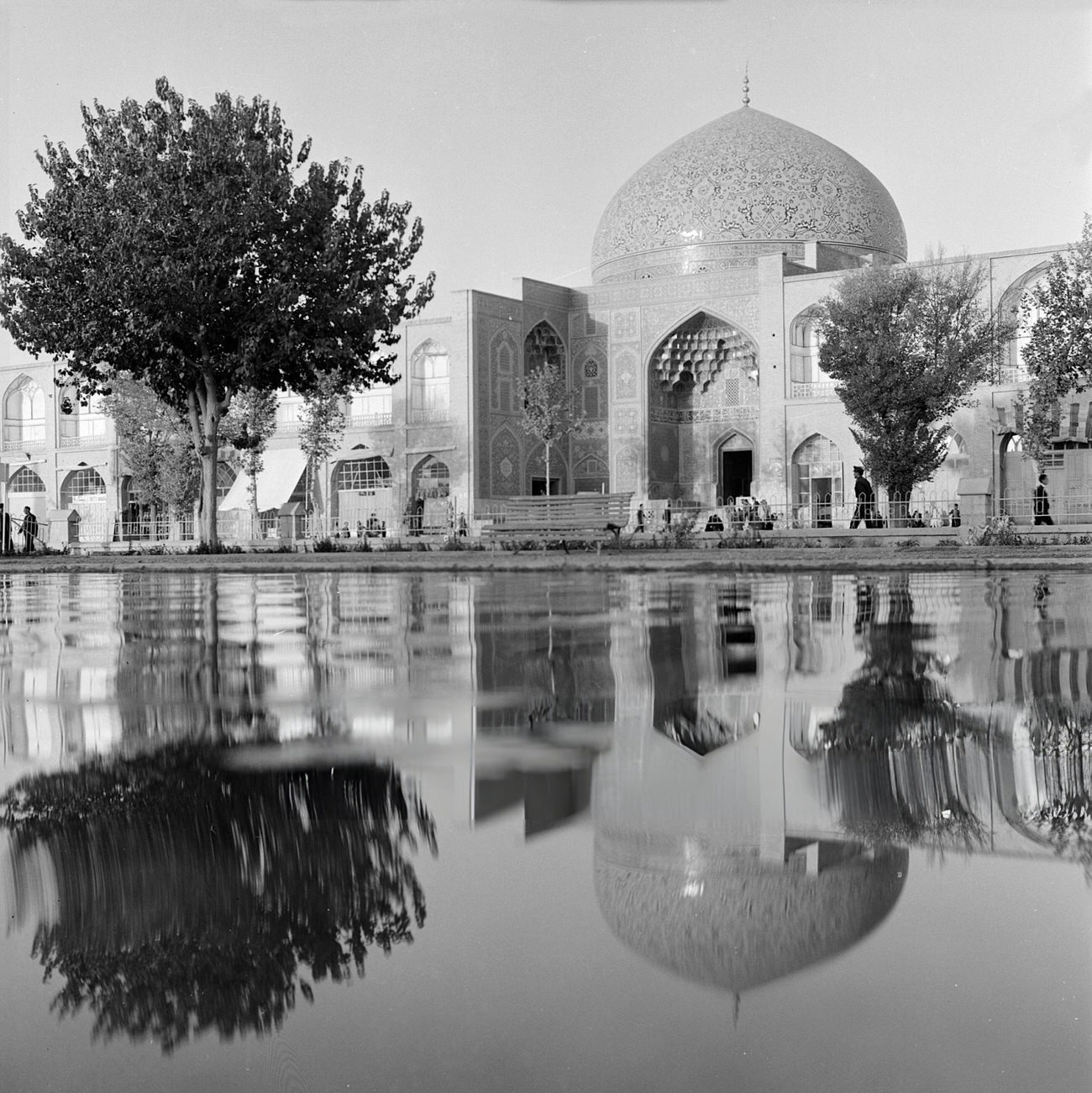
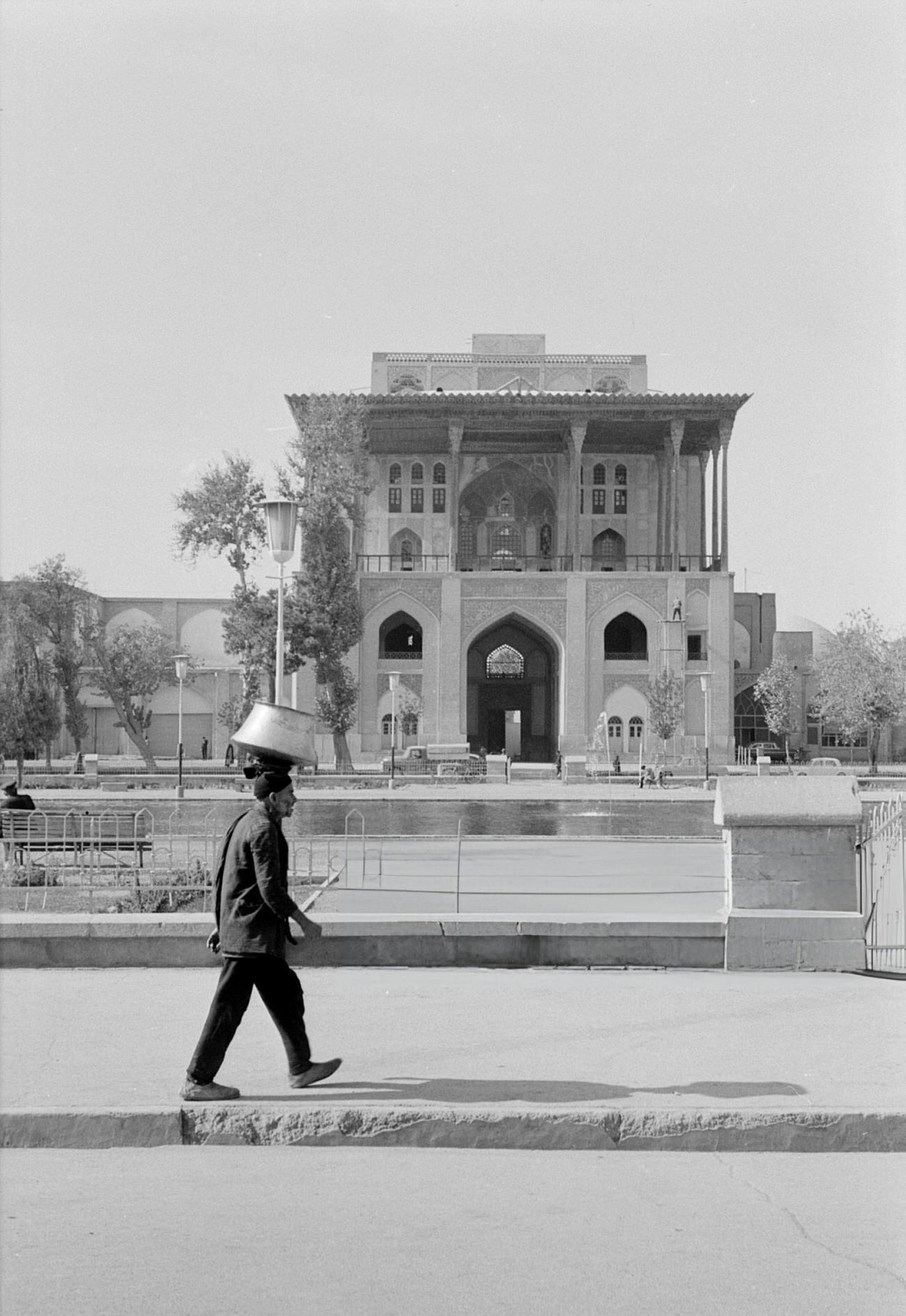
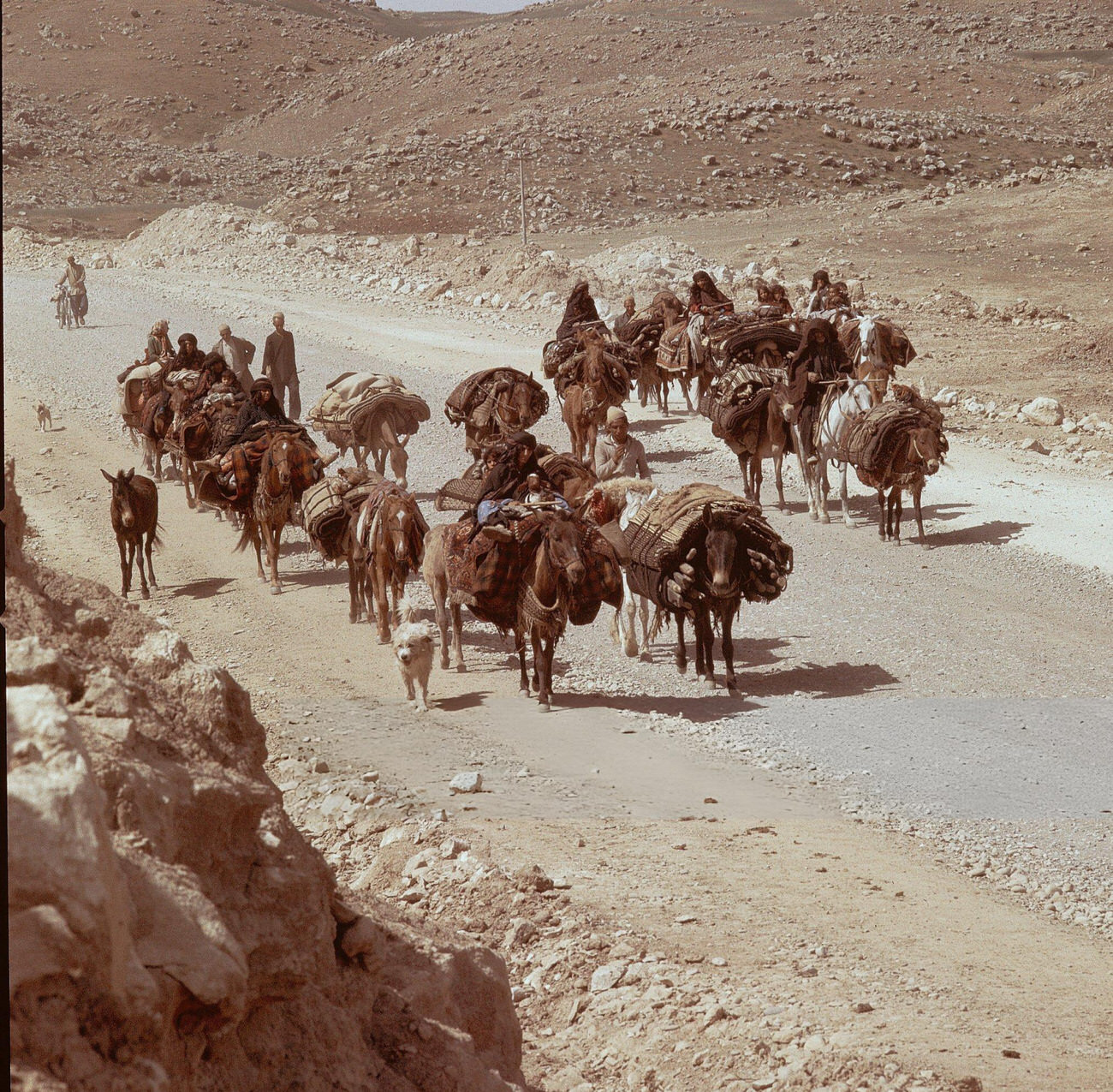
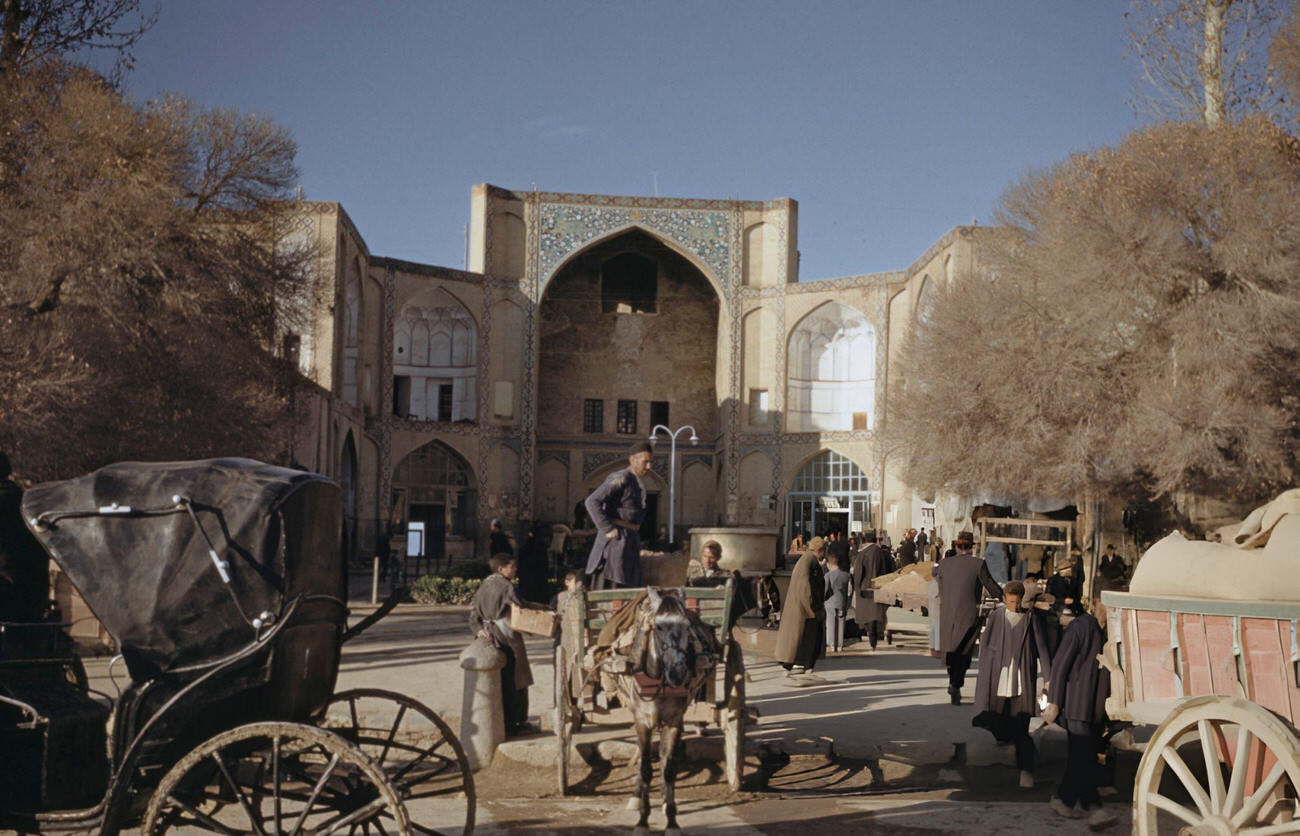
Outside the cities, life moved at a different pace. Nomadic groups still traveled ancient routes with horses and camels loaded with their belongings. In Isfahan — one of the world’s oldest cities — traders unloaded carts at bazaar entrances, and merchants worked the same narrow lanes their ancestors had for centuries. The grand mosques of the city, including the Imam Mosque and Sheikh Lotfollah Mosque, stood as reminders of an architectural tradition that no modernization program could erase.
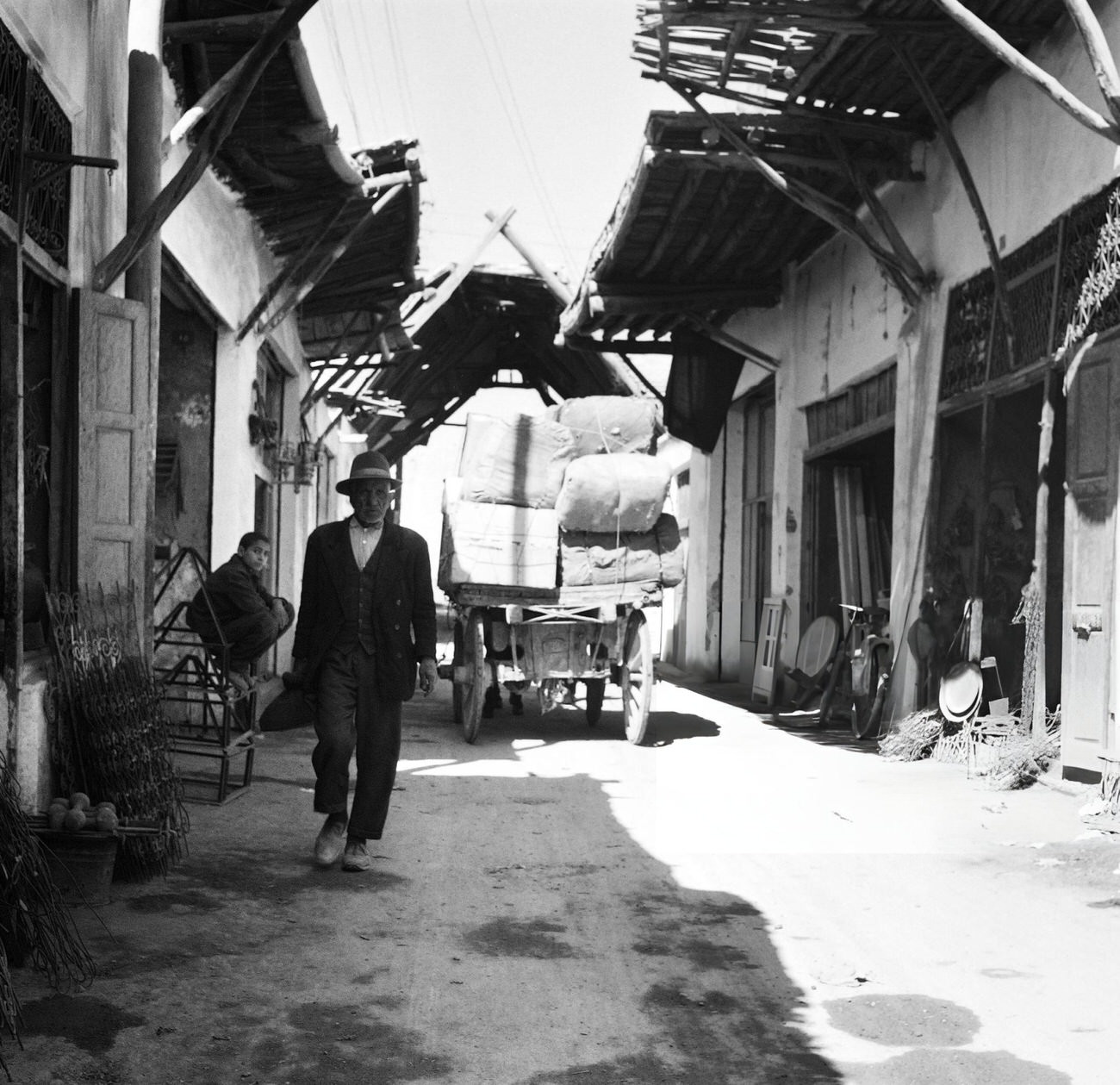
A man leading his horse loaded with goods, Isfahan, Iran, 1964.The Isfahan Bazaar, the center of the city’s commercial life, Isfahan, Iran, 1964.An aerial view of Isfahan, one of the world’s oldest cities, Iran, 1964.
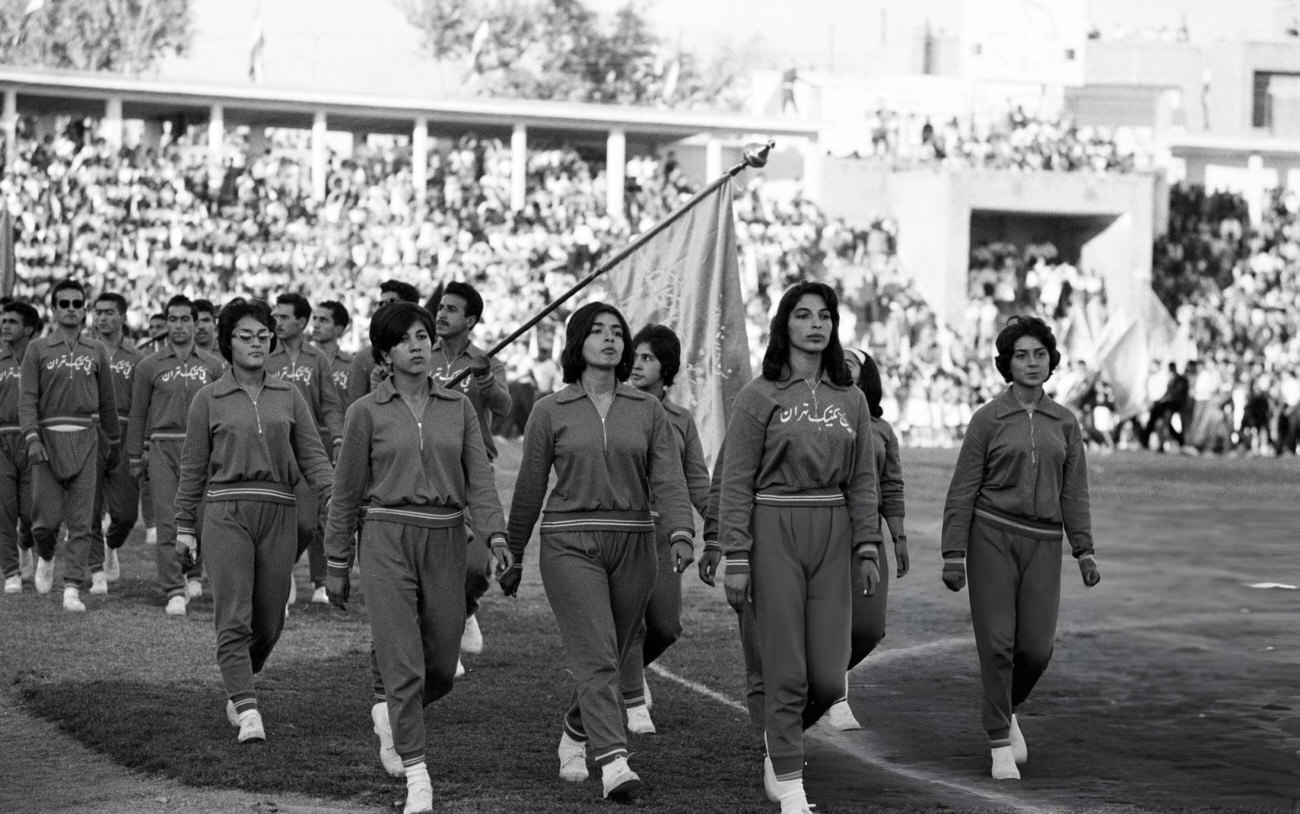
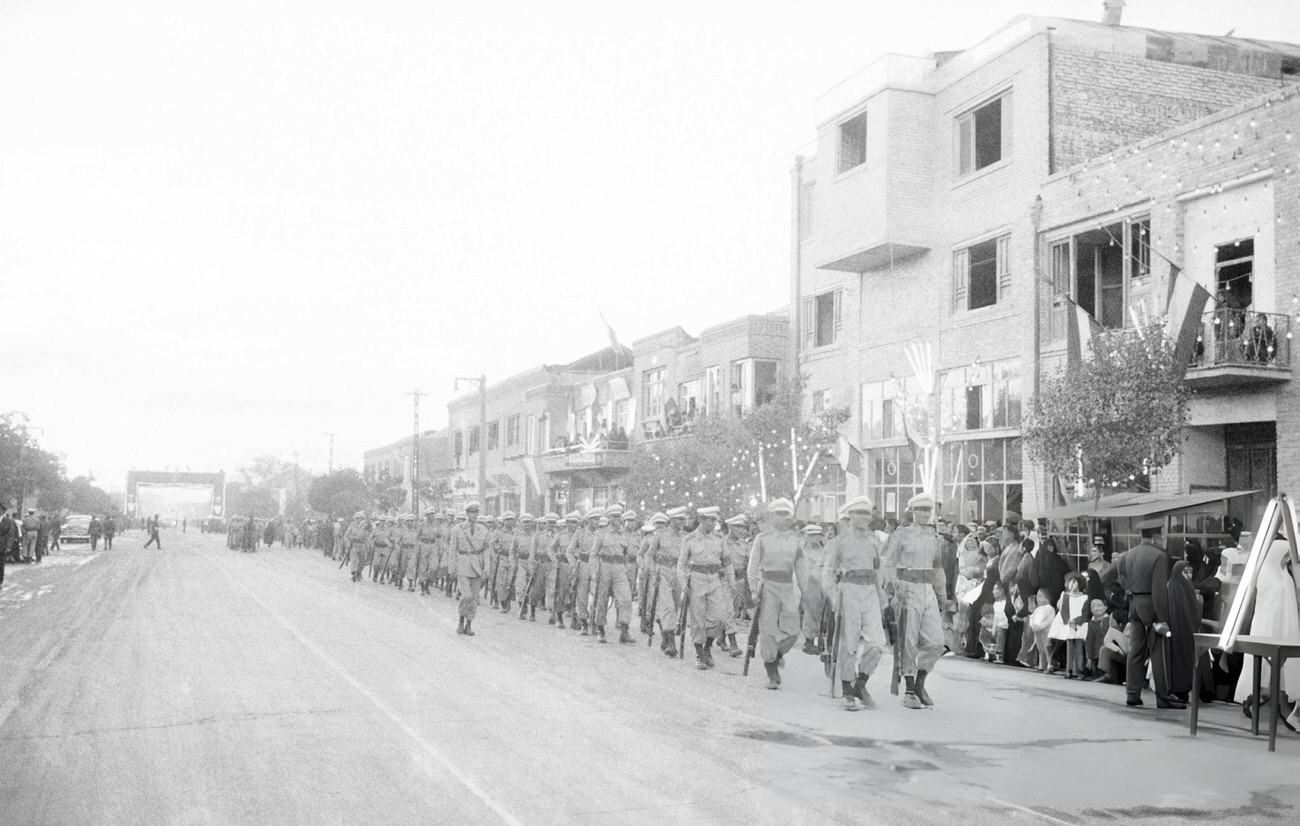
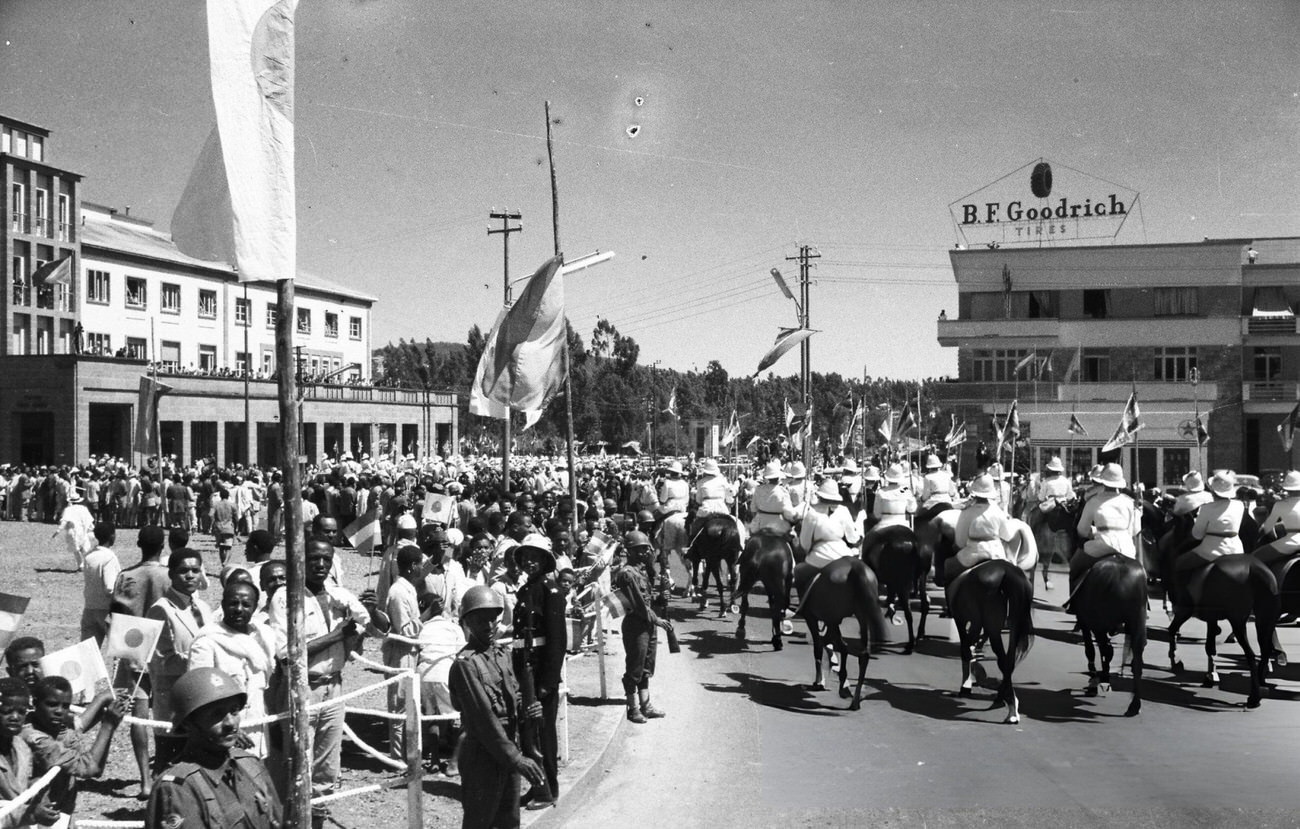
The Shah used public ceremony to reinforce his authority. In 1960, Tehran celebrated his 42nd birthday with a large stadium event featuring parades of young athletes, decorated avenues, and crowds gathered along the route. That same year, the birth of Crown Prince Reza Cyrus Pahlavi drew massive celebrations in the streets. When Crown Prince Akihito and Crown Princess Michiko of Japan visited Tehran, the city organized elaborate welcoming festivities including dancers, horseback military escorts, and public processions.
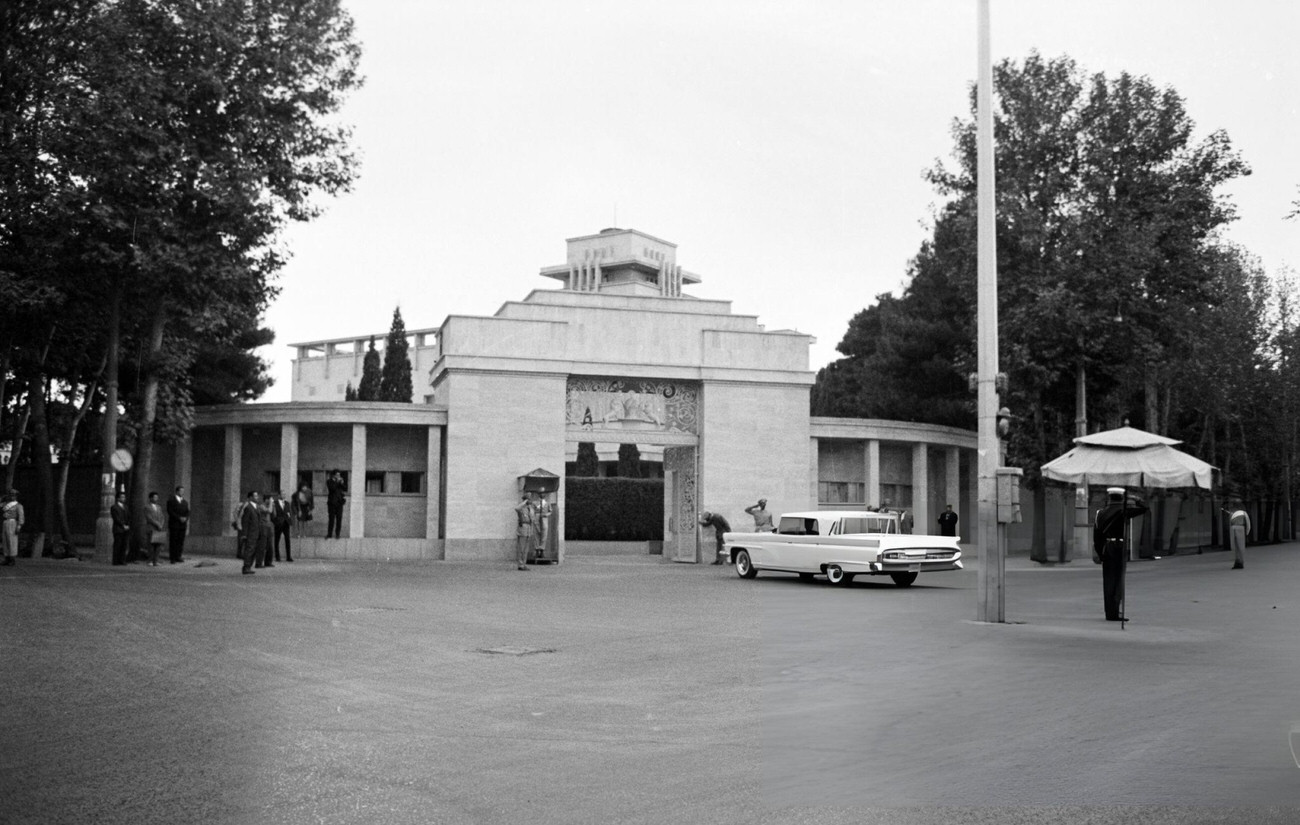
Entrance to the stadium where festivities are taking place for the 42nd birthday of Shah Mohammad Reza Pahlavi, Tehran, 1960.A parade of young people in sports attire hoisting a flag in the stadium for the 42nd birthday of Shah Mohammad Reza Pahlavi, Tehran, 1960.A military parade in the streets of Tehran for the birth of Prince Reza Cyrus Pahlavi, Tehran, 1960.
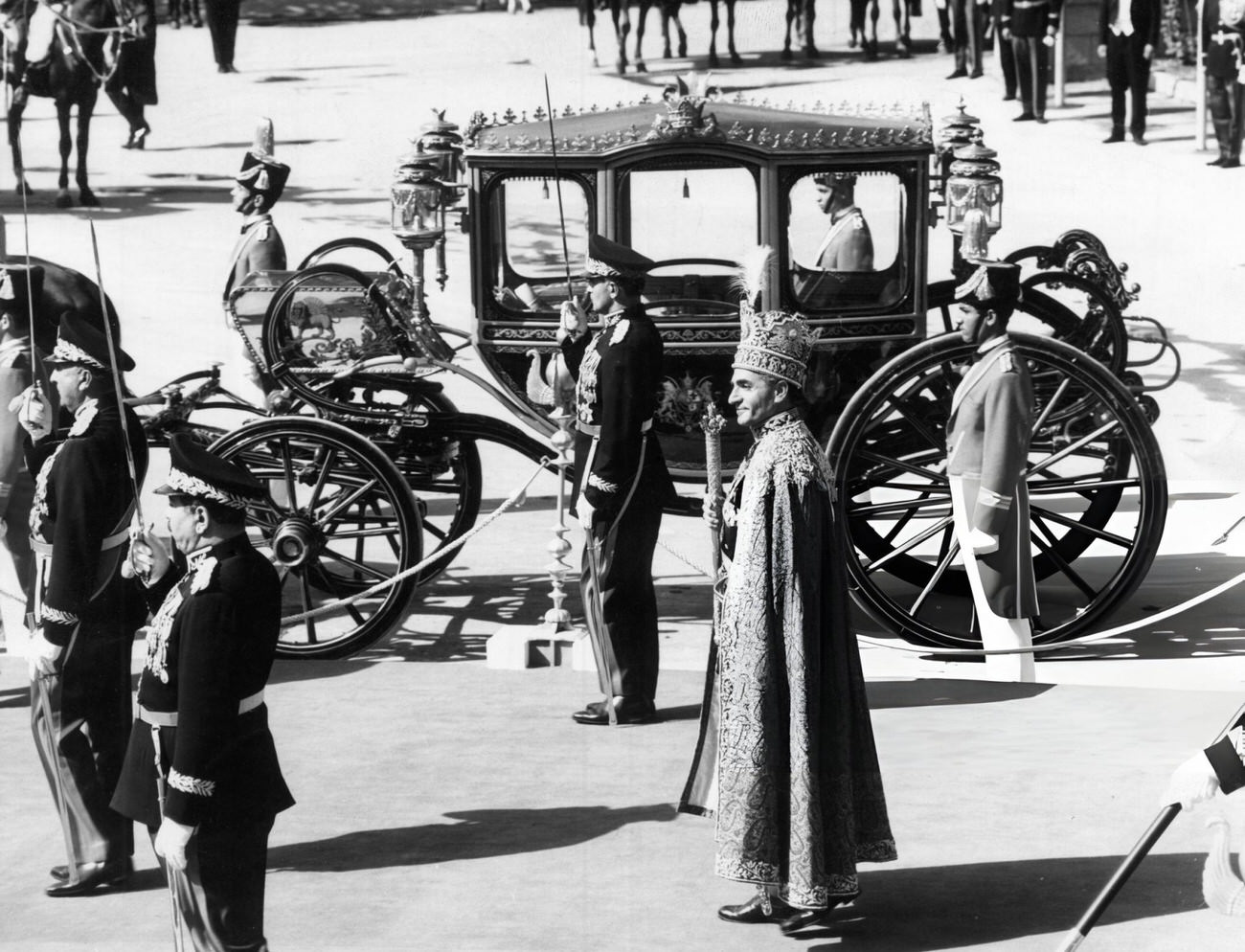
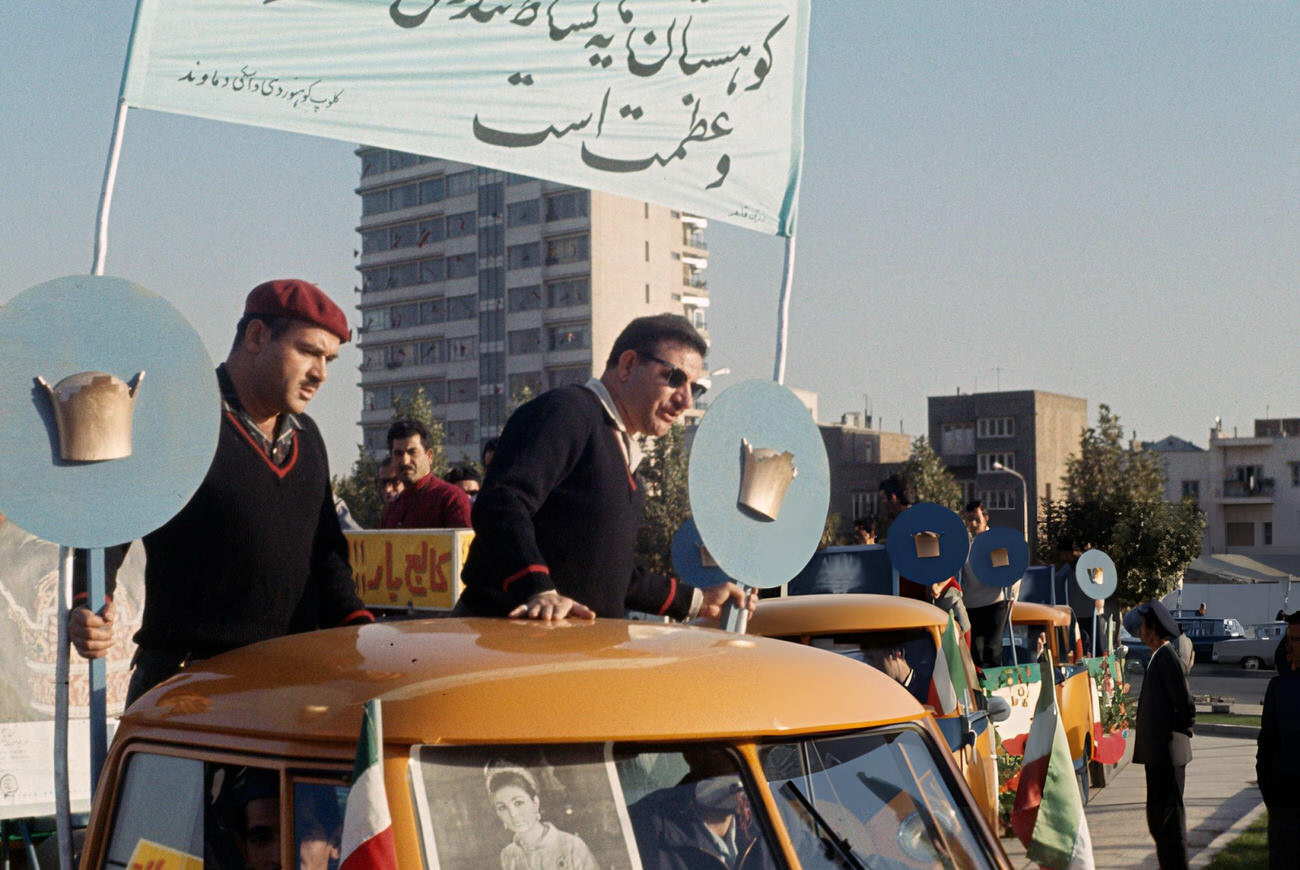
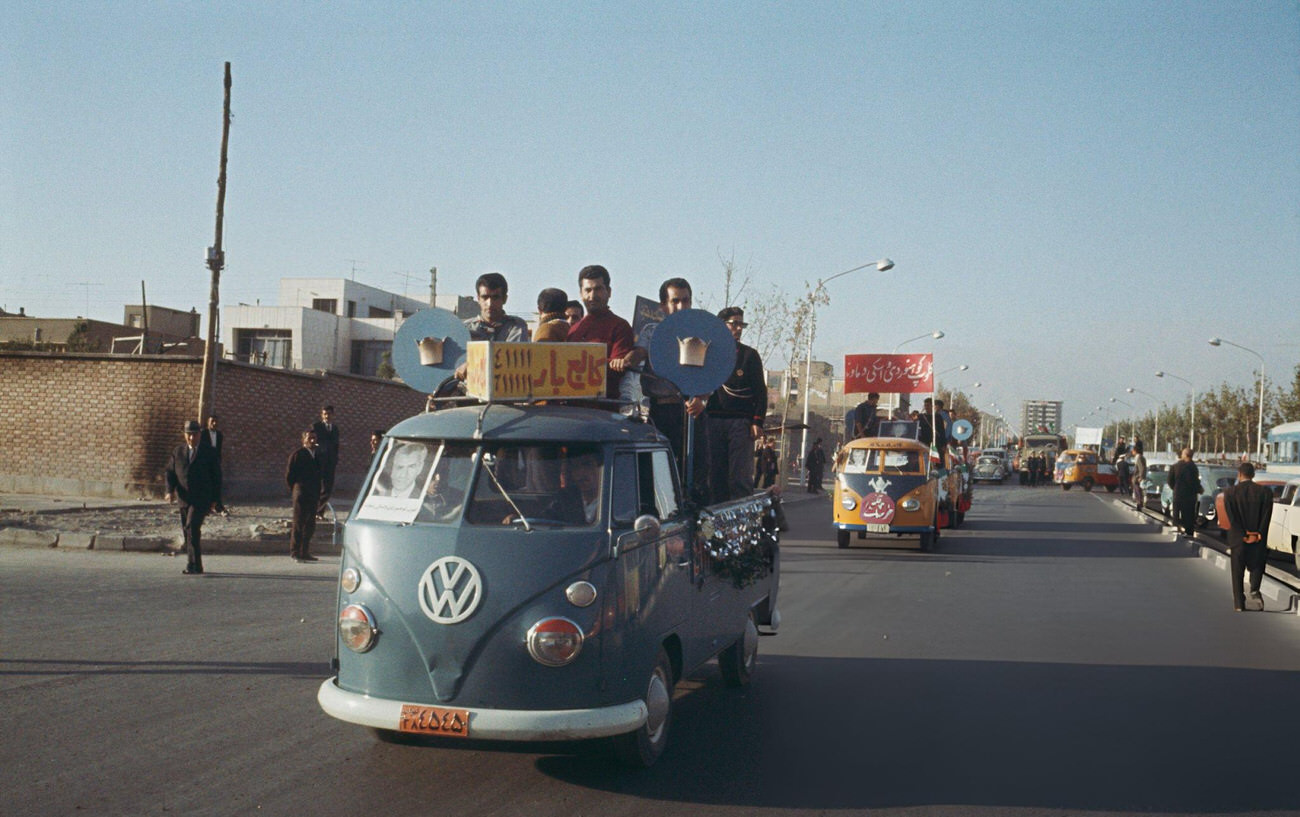
The Shah’s coronation in 1967 was a major state event. He had actually been on the throne since 1941 but chose to formally crown himself only after the birth of a male heir. The ceremony was held at Golestan Palace in Tehran, and the streets were decorated with flags, crowns, and displays of royal imagery. The pomp surrounding the event reflected the Shah’s desire to position himself within the long lineage of Persian kings.
Shah of Persia Reza Pahlavi leaving Golestan Palace after his coronation to reach the golden carriage, Tehran, 1967.Cars decorated with flags and crowns in preparation for the coronation of Shah Mohammed Reza Pahlavi, Tehran, Iran, 1967.
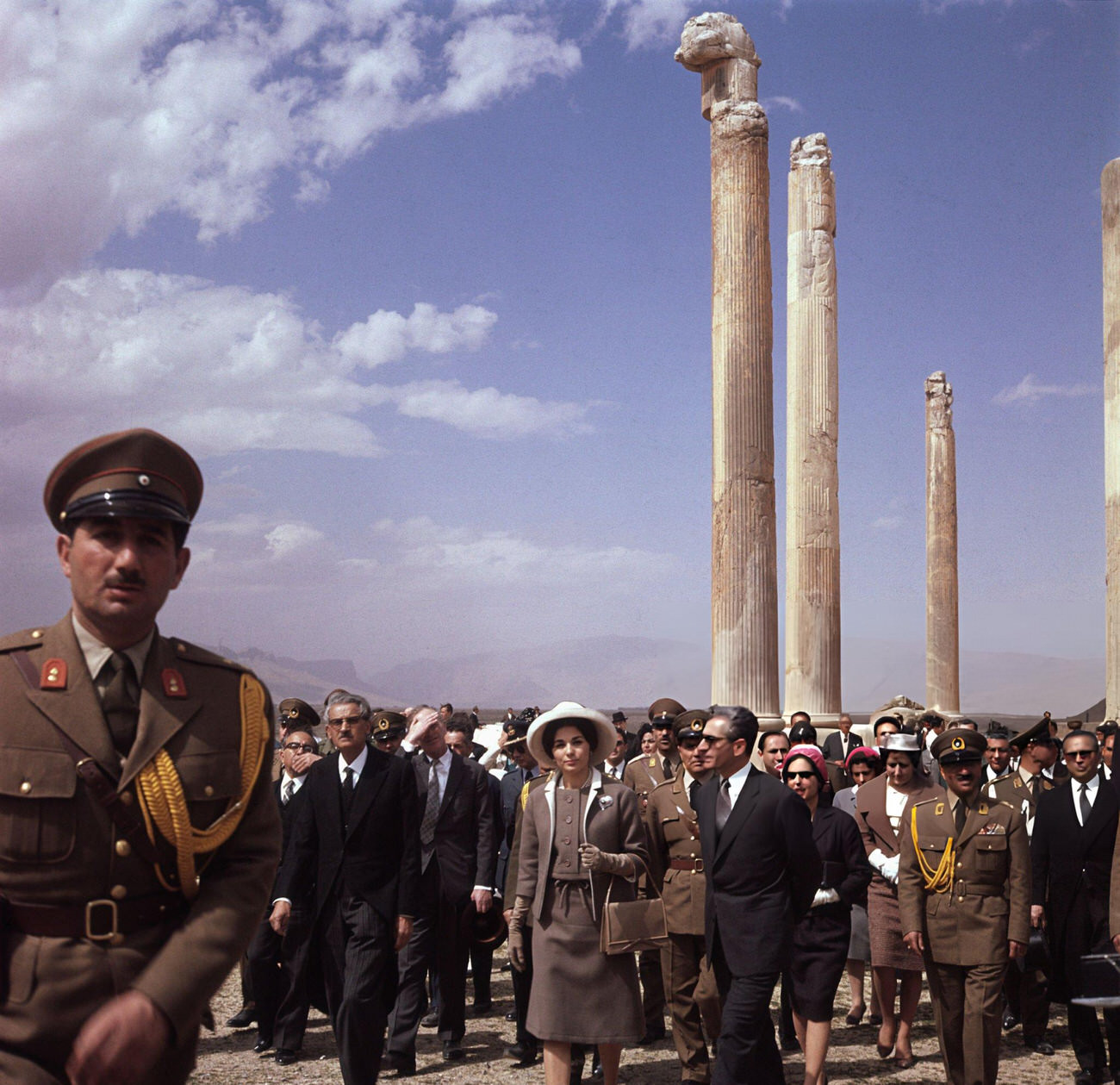
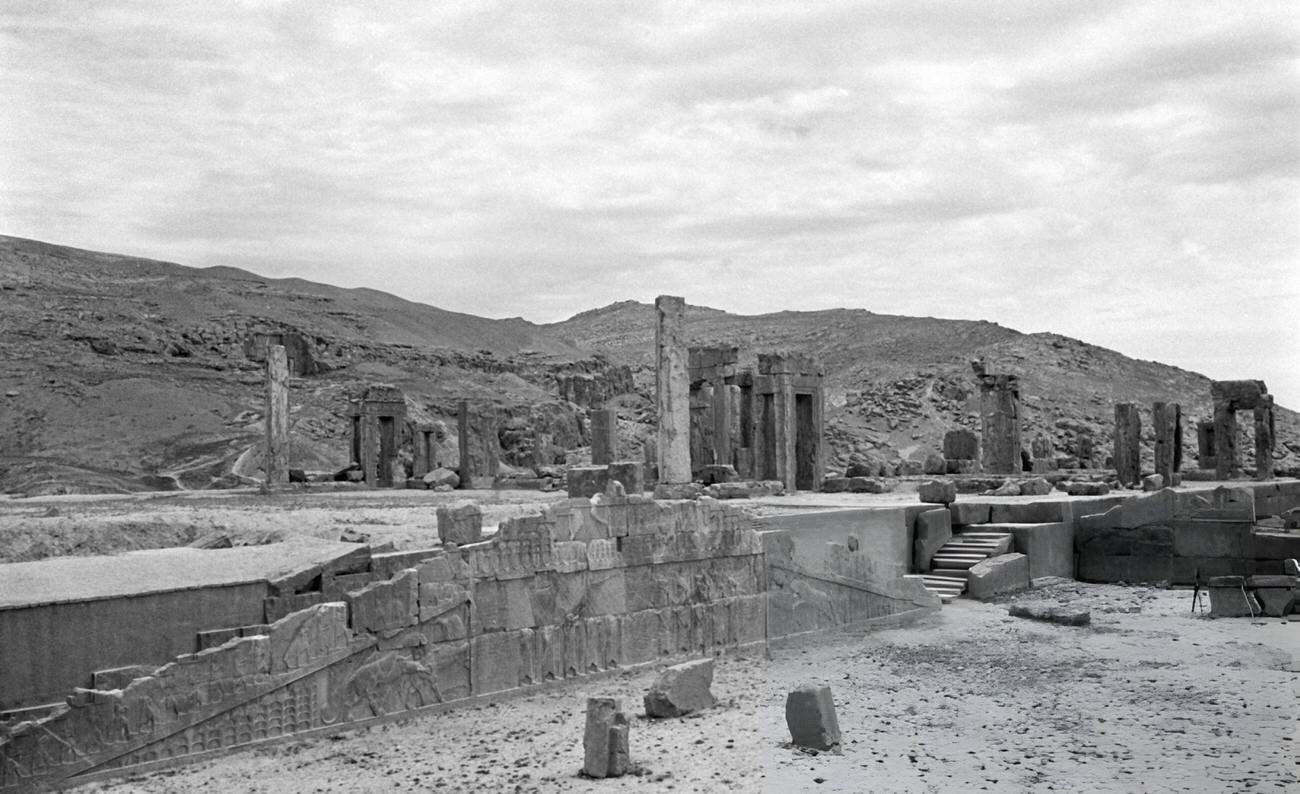
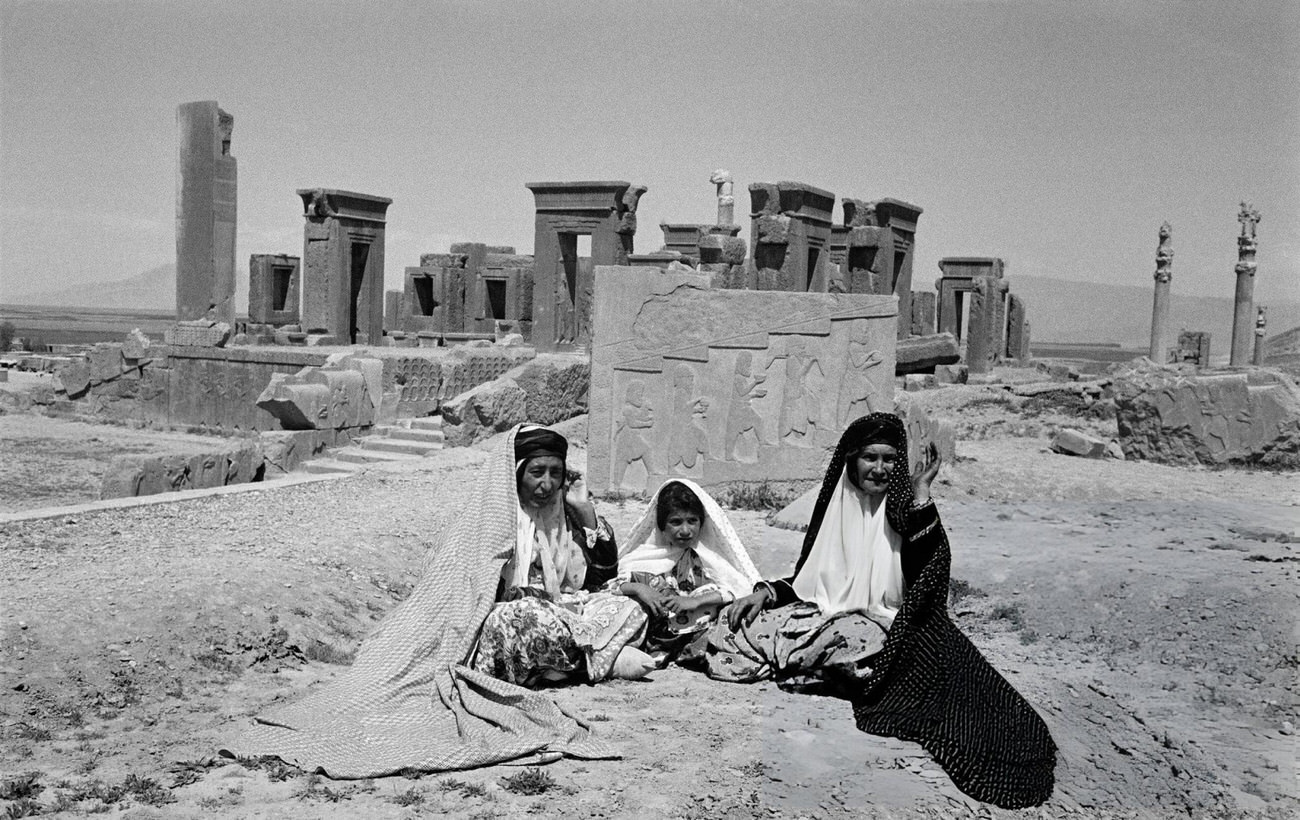
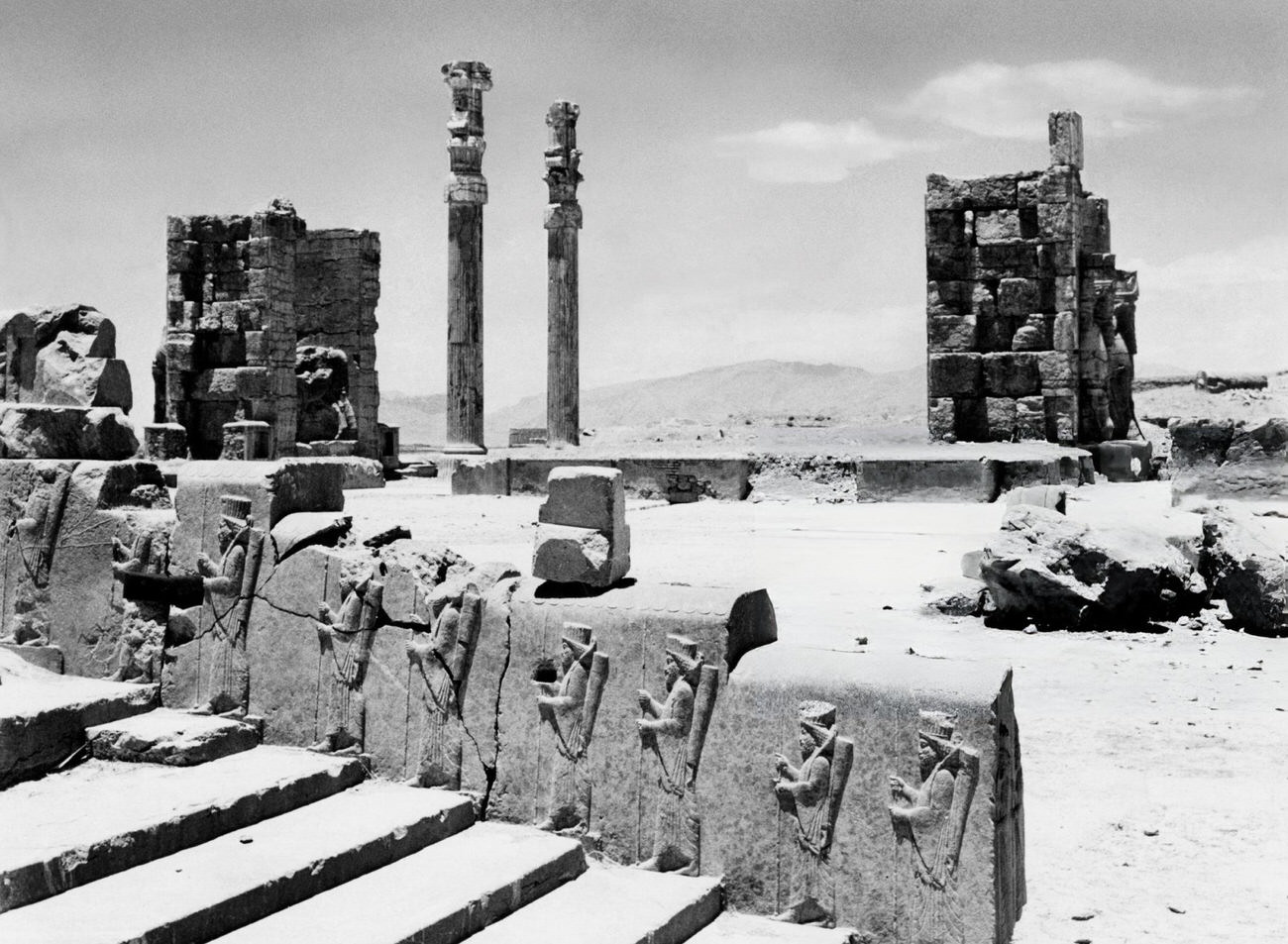
The Shah also made use of Iran’s ancient heritage to build his international image. Persepolis, the ruins of the ancient Persian capital, became a site of diplomacy and prestige. The Shah visited it with Queen Farah and received foreign dignitaries there, including the French president in 1968. By connecting his modern rule to the grandeur of ancient Persia, he worked to legitimize his authority on a historical scale.
The Shah of Iran and his third wife, Queen Farah, accompanied by officials, on a visit to Persepolis, the ancient capital of Persia, 1960s.The archaeological site of Persepolis, Iran, 1968.
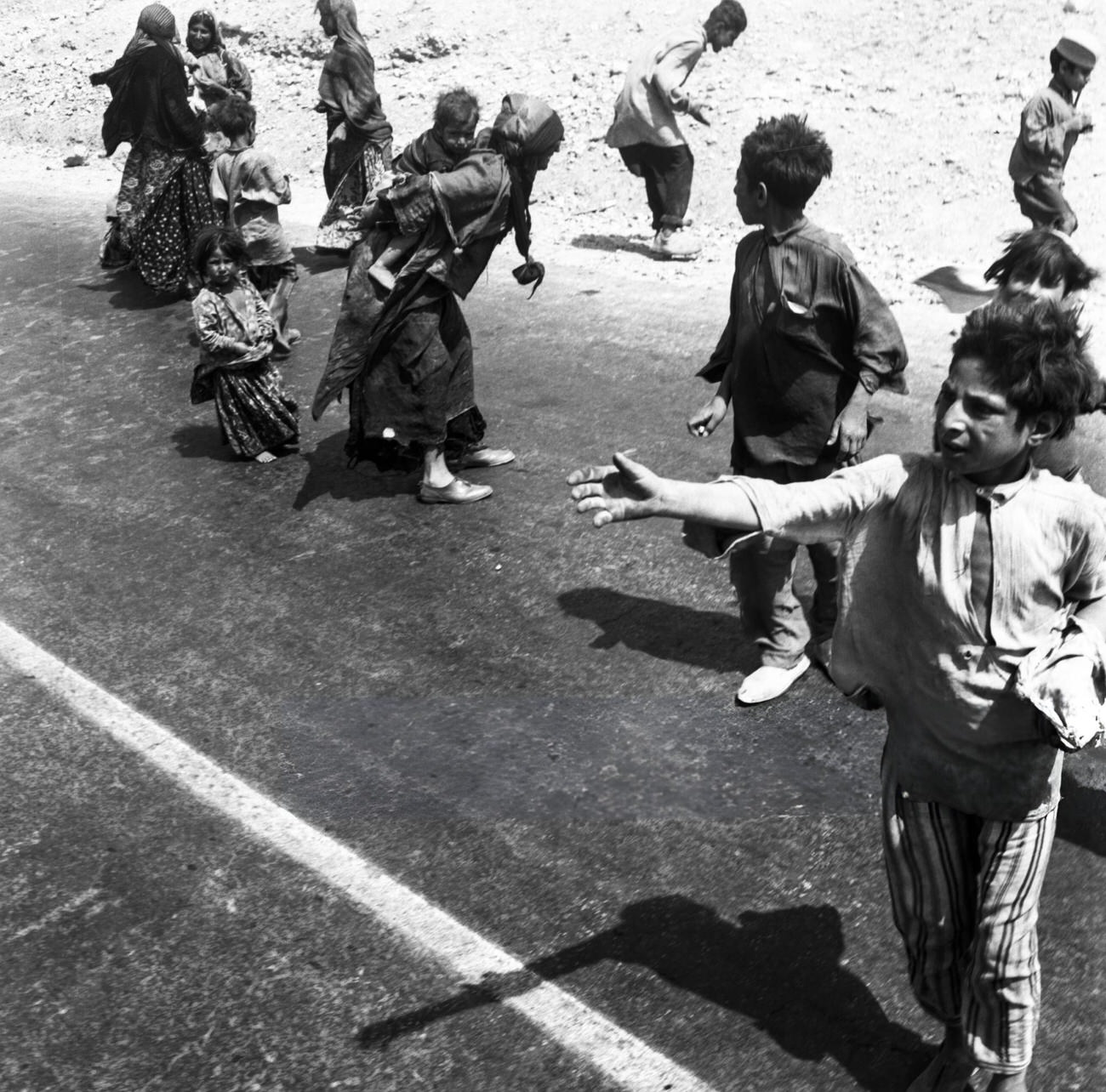
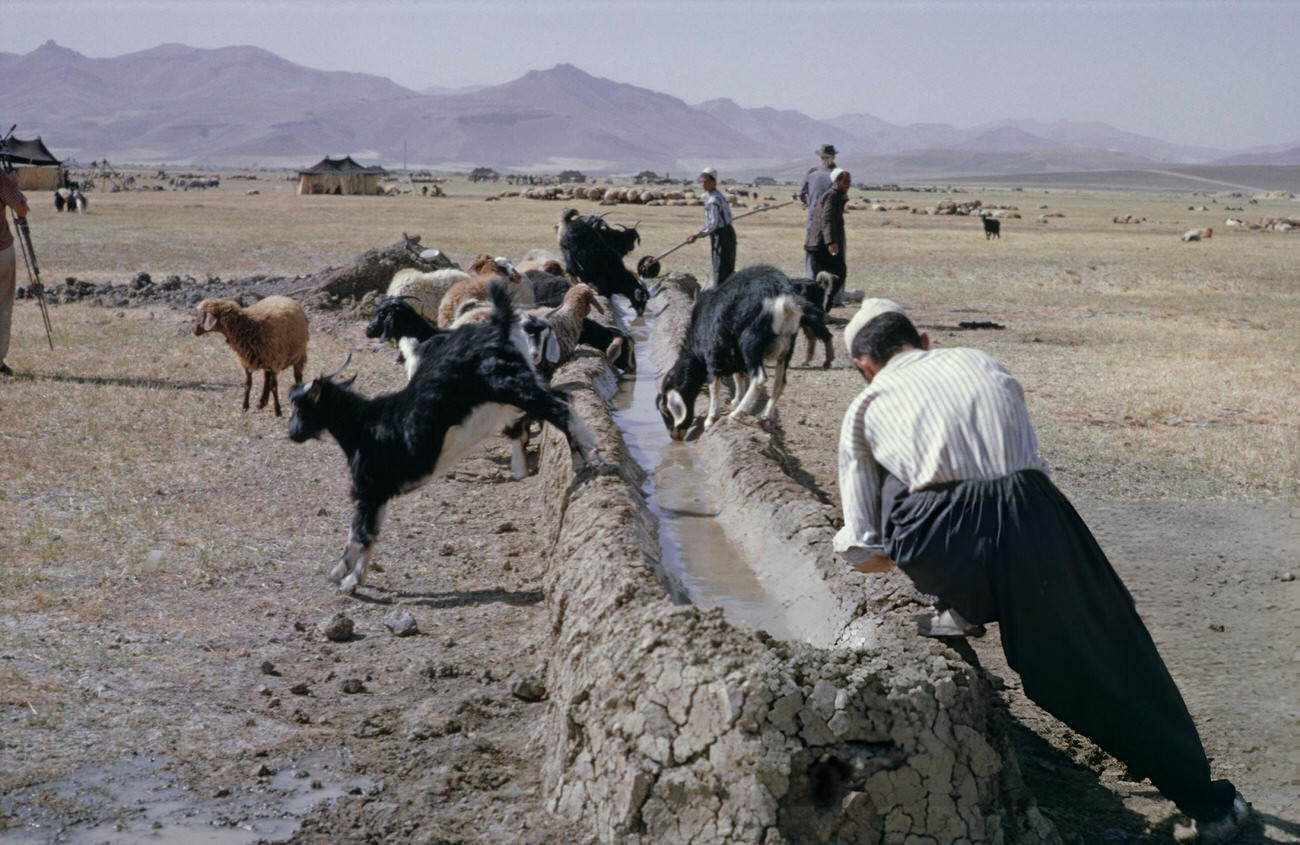
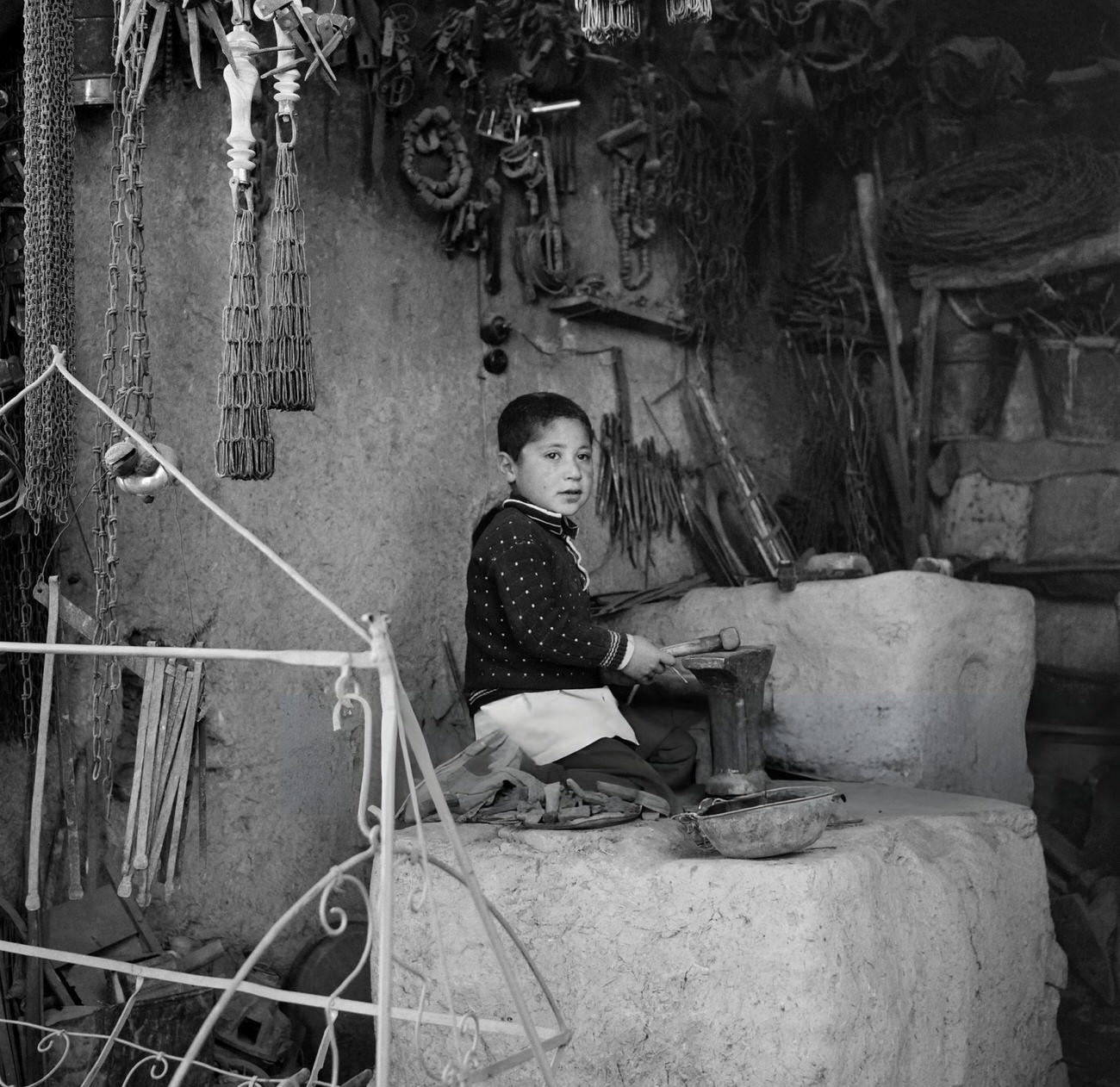
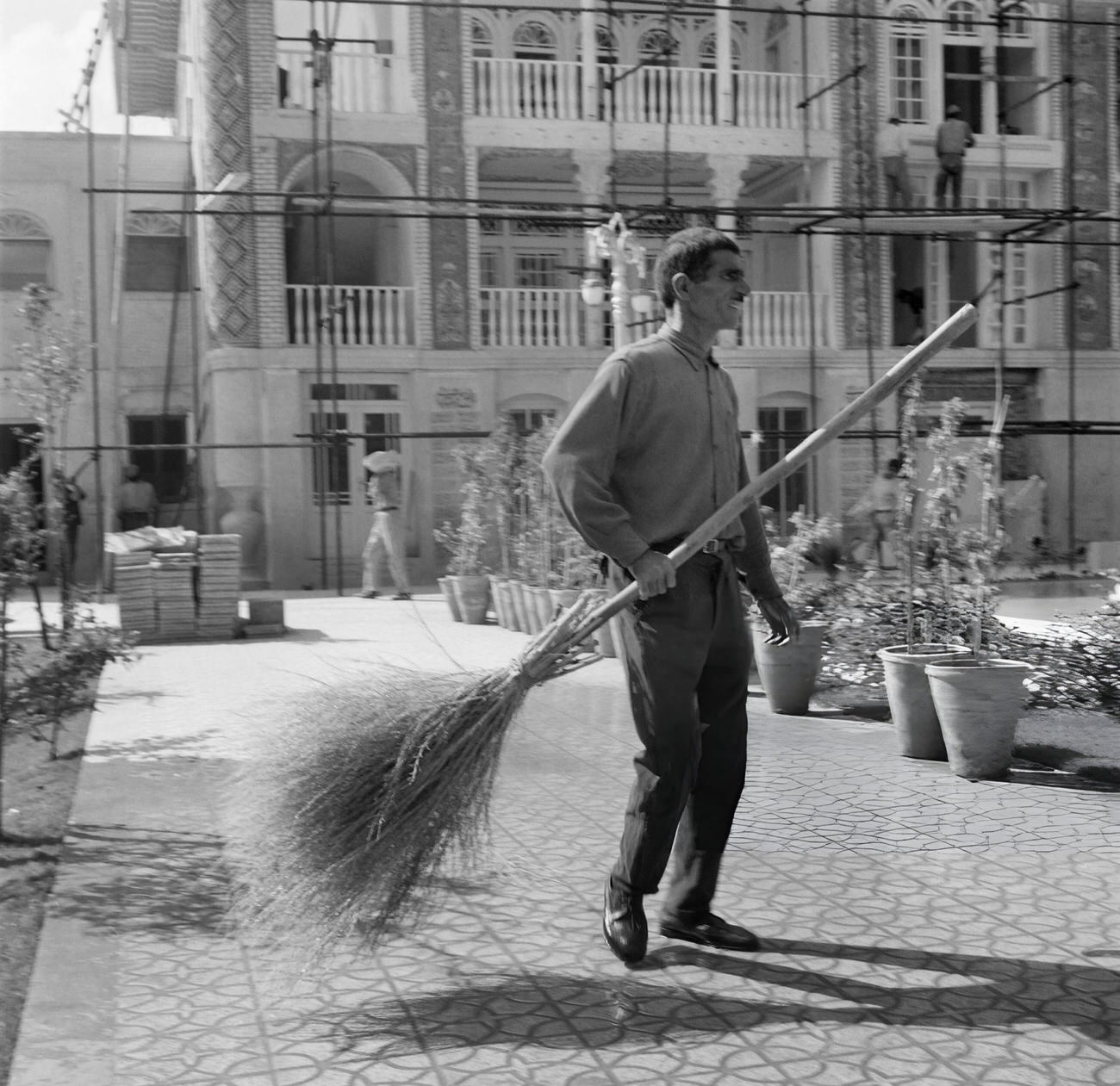
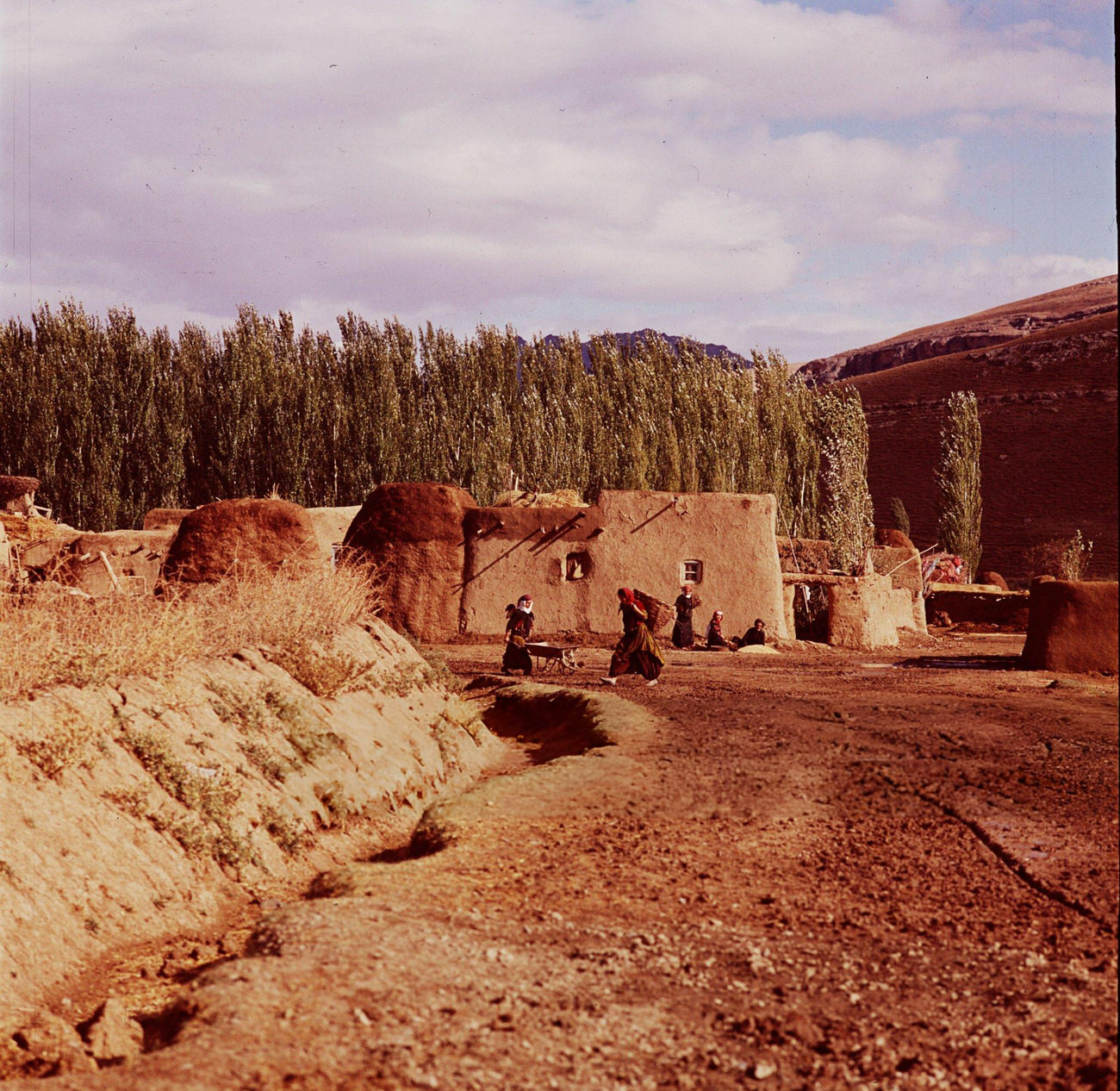
Economic growth did not reach everyone equally. Children begged along roadsides. In rural areas, farmers worked irrigation canals by hand. Women in Kurdish villages near Lake Rezaiyeh carried out hard physical labor in the fields. Meanwhile, in Tehran, a child played in a workshop, and a street sweeper cleared city pavement — daily images of ordinary life that existed far from the palace ceremonies and oil revenues.
Children begging along a road in Iran, 1960s.Farmers and laborers tending to and repairing an irrigation canal in Kurdistan, Iran, 1960s.A child plays in a workshop in Tehran, Iran, 1968.
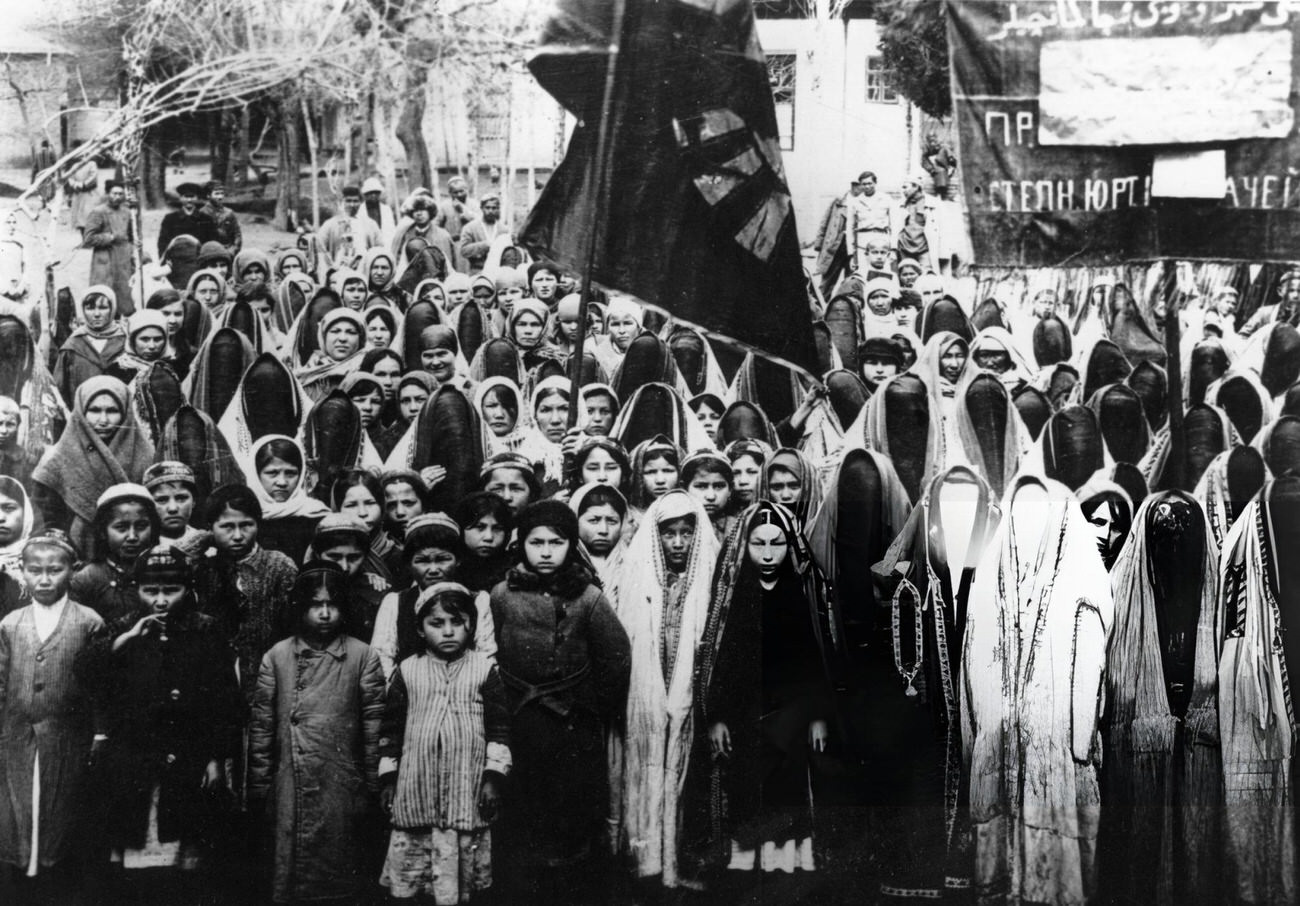
The demand for women’s rights stretched beyond the Shah’s top-down reforms. Kurdish women organized their own demonstrations near the Russian frontier, demanding equal rights on their own terms. These protests were grassroots and independent — a sign that women across different regions and ethnic groups were actively pressing for change, not simply waiting for government policy to grant it.
Kurdish women demonstrating in Iran near the Russian frontier, demanding equal rights for women, 1960s.
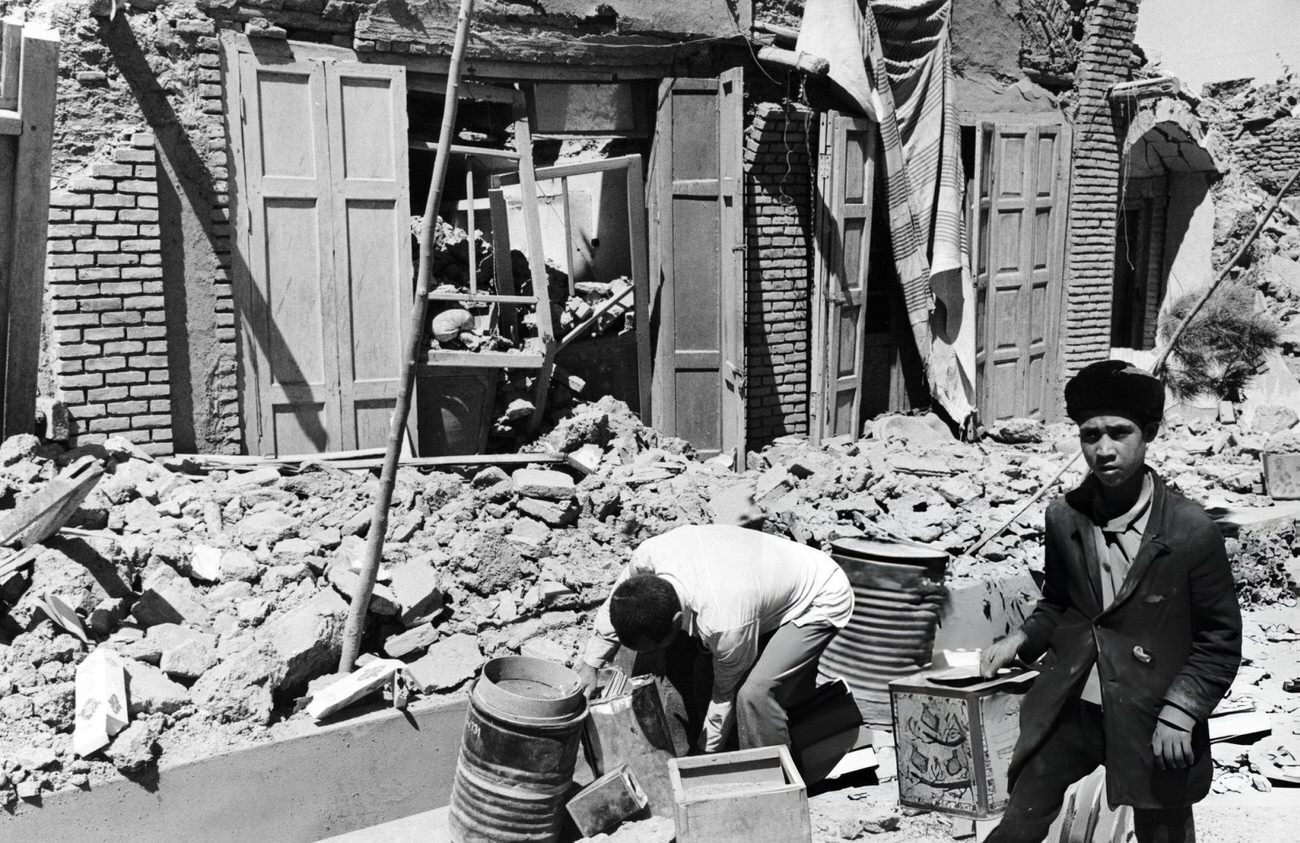
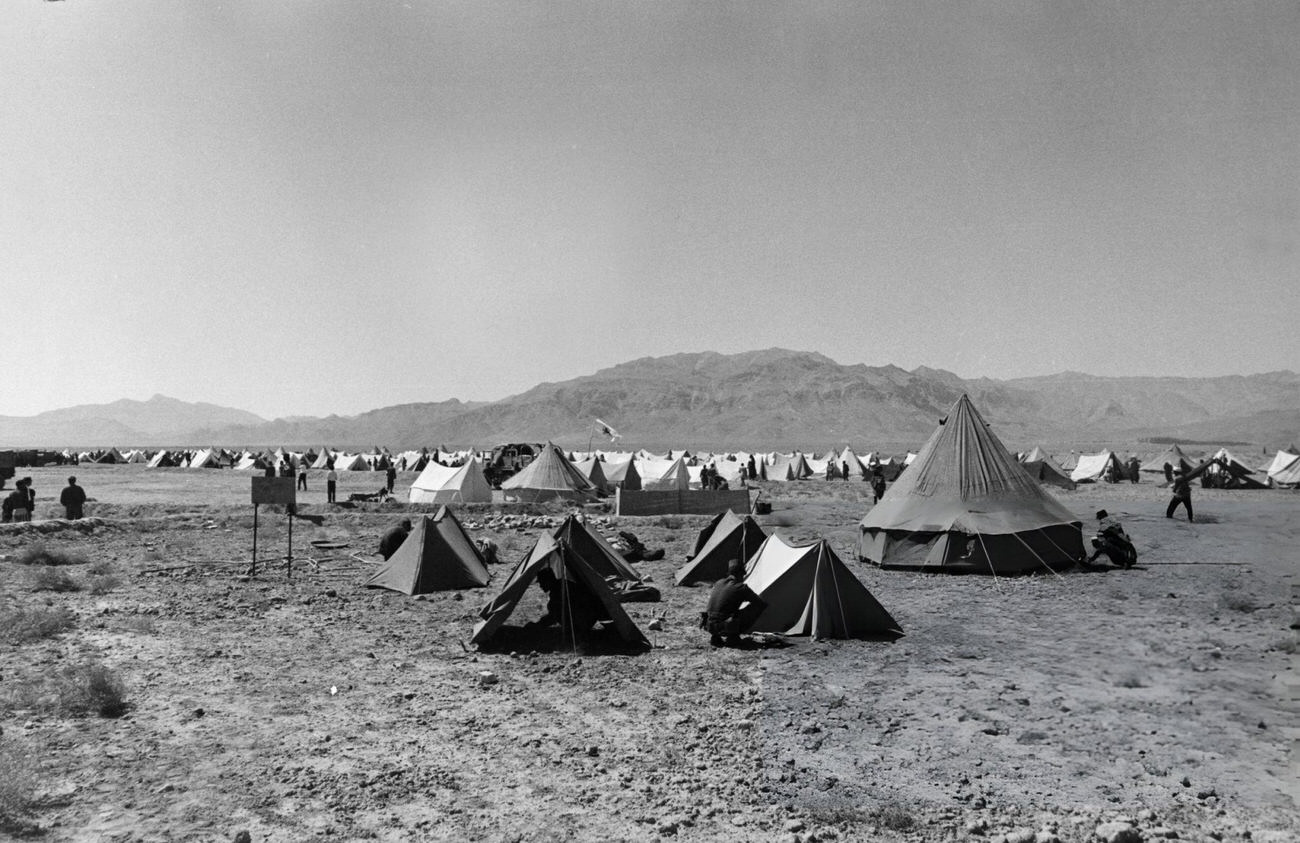
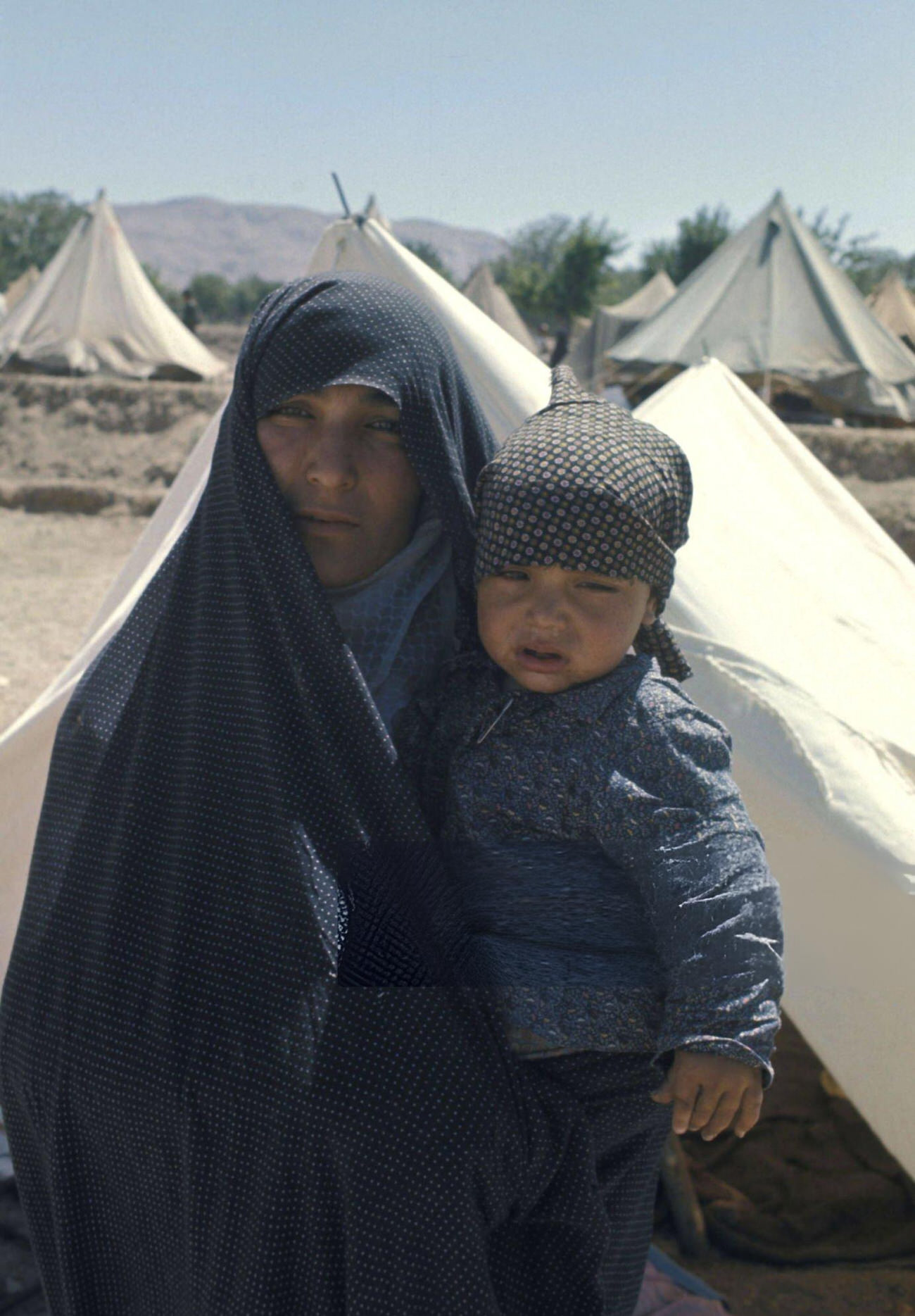
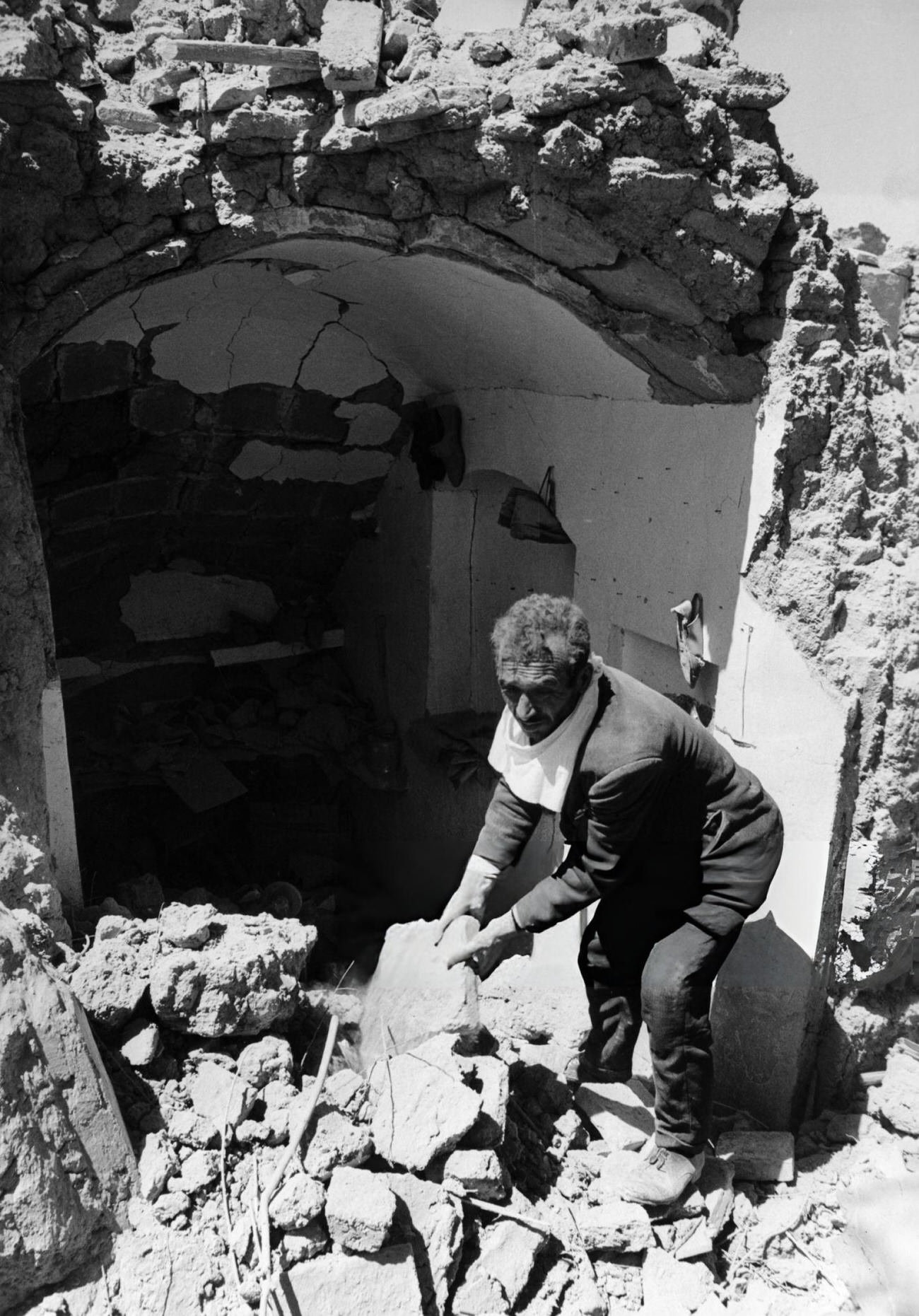
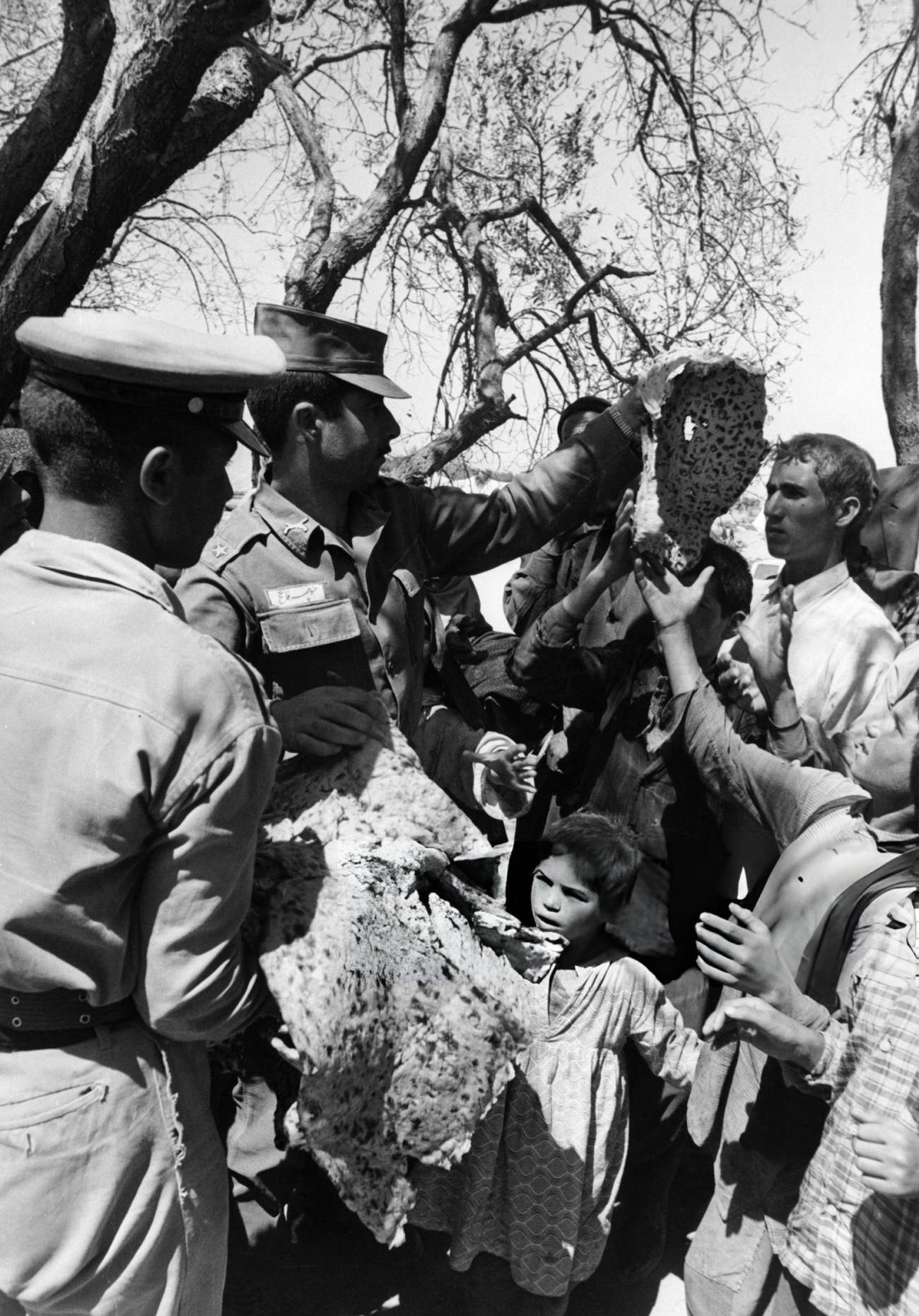
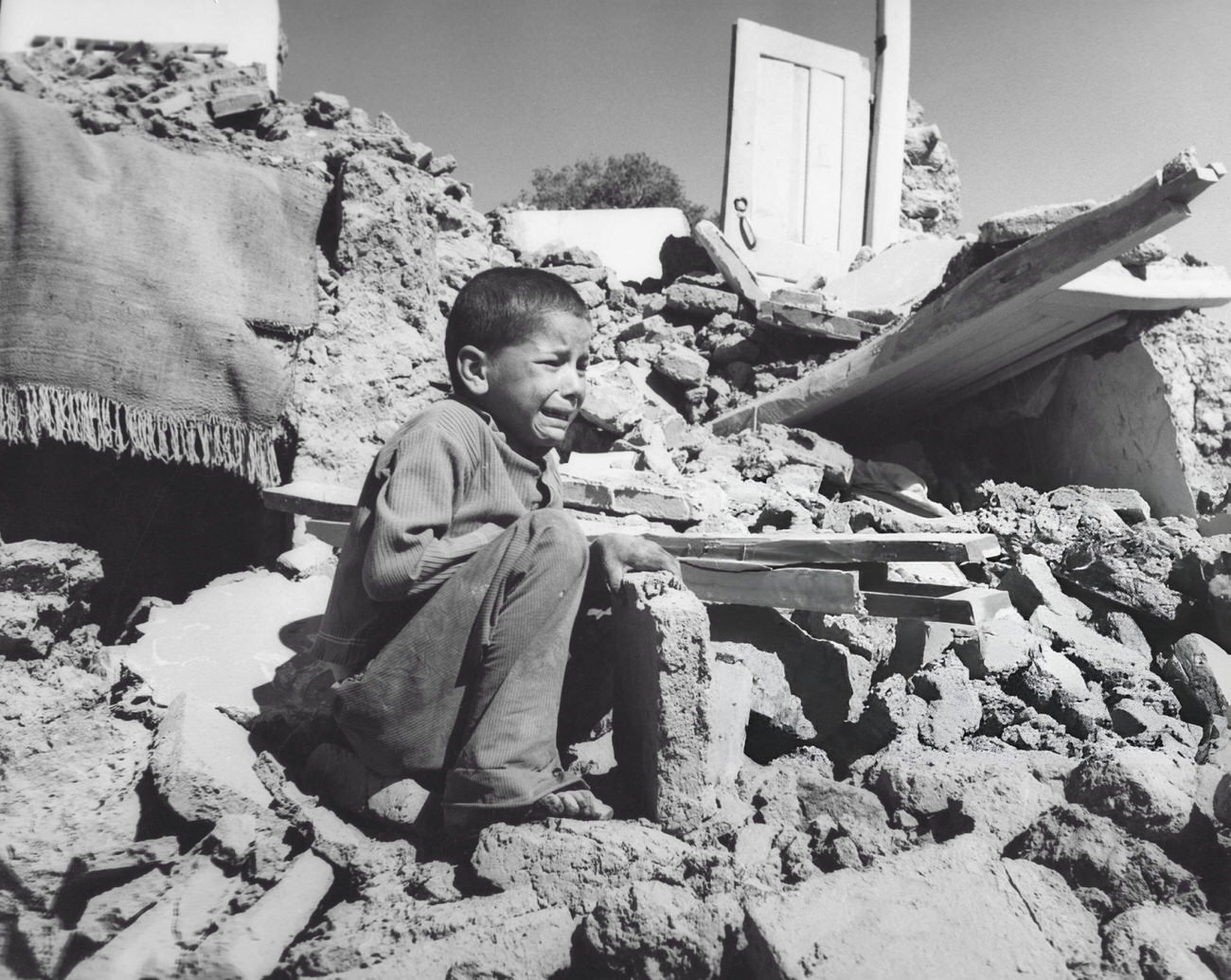
In August 1968, a catastrophic earthquake struck Khorasan Province in northeastern Iran. It killed 20,000 people and flattened entire villages. The Imperial Army and the Red Lion and Sun Society — Iran’s equivalent of the Red Cross — set up emergency camps to shelter survivors. The scale of destruction was immense, and the disaster exposed how vulnerable rural communities were despite the country’s oil-funded development spending.
An earthquake in Khorasan Province, Iran, 1968, killing 20,000 people.A view of some of the camps set up by the Imperial Army and the Red Lion and Sun Society to shelter the earthquake victims in Khorasan Province, Iran, 1968.Refugees in one of the camps set up by the Imperial Army and the Red Lion and Sun Society to shelter the earthquake victims in Khorasan Province, Iran, 1968.
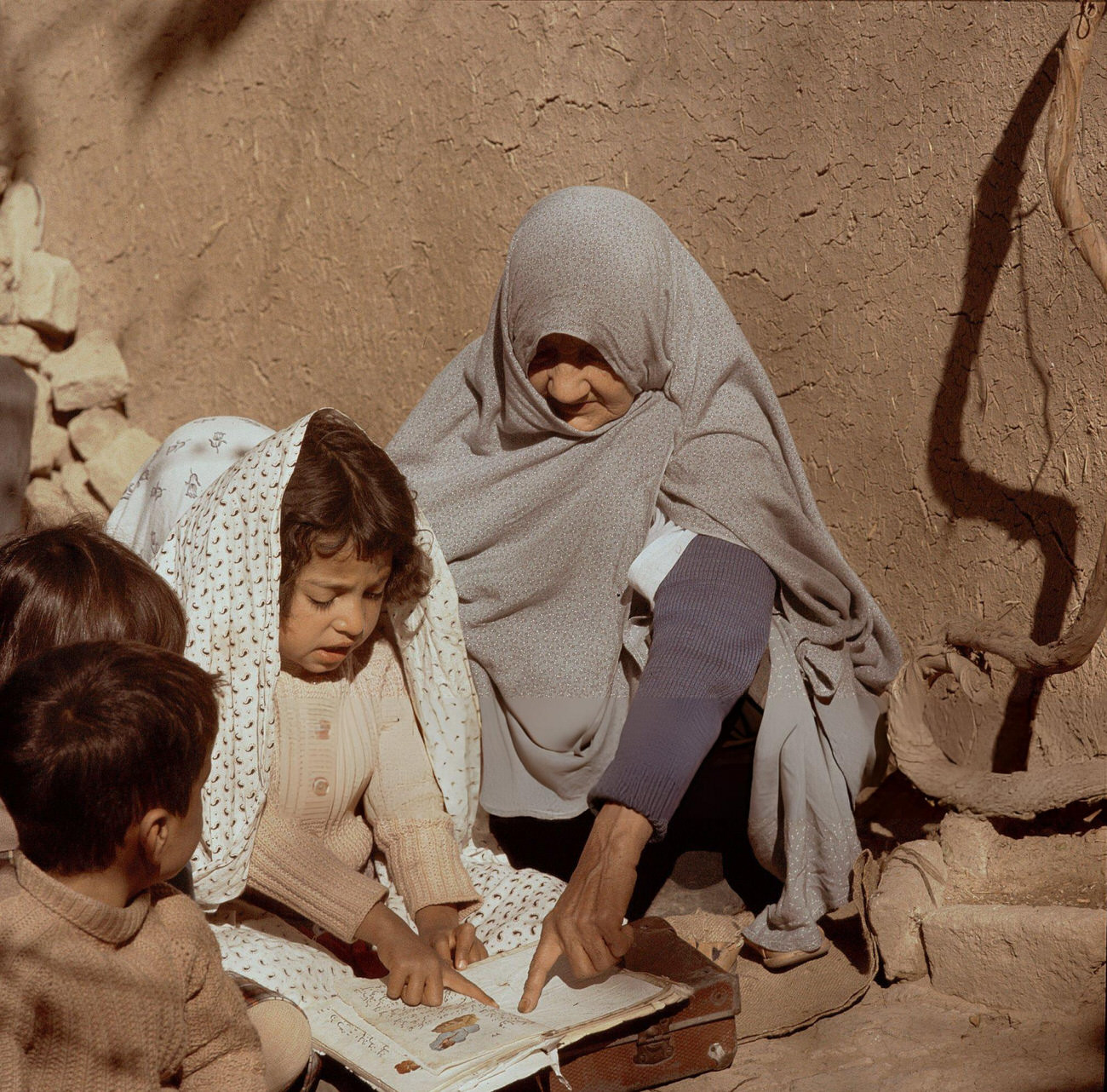
Across the decade, education expanded significantly. The government opened new schools, and literacy rates rose. In small village classrooms, elderly teachers instructed young girls in reading — a scene that would have been rare a generation earlier. As more students reached university, intellectual movements grew. Students questioned the government’s relationship with the United States, debated democracy and social justice, and organized protests that the government met with arrests and force.
An elderly teacher instructs a girl how to read in a small village school in Iran, 1960s.
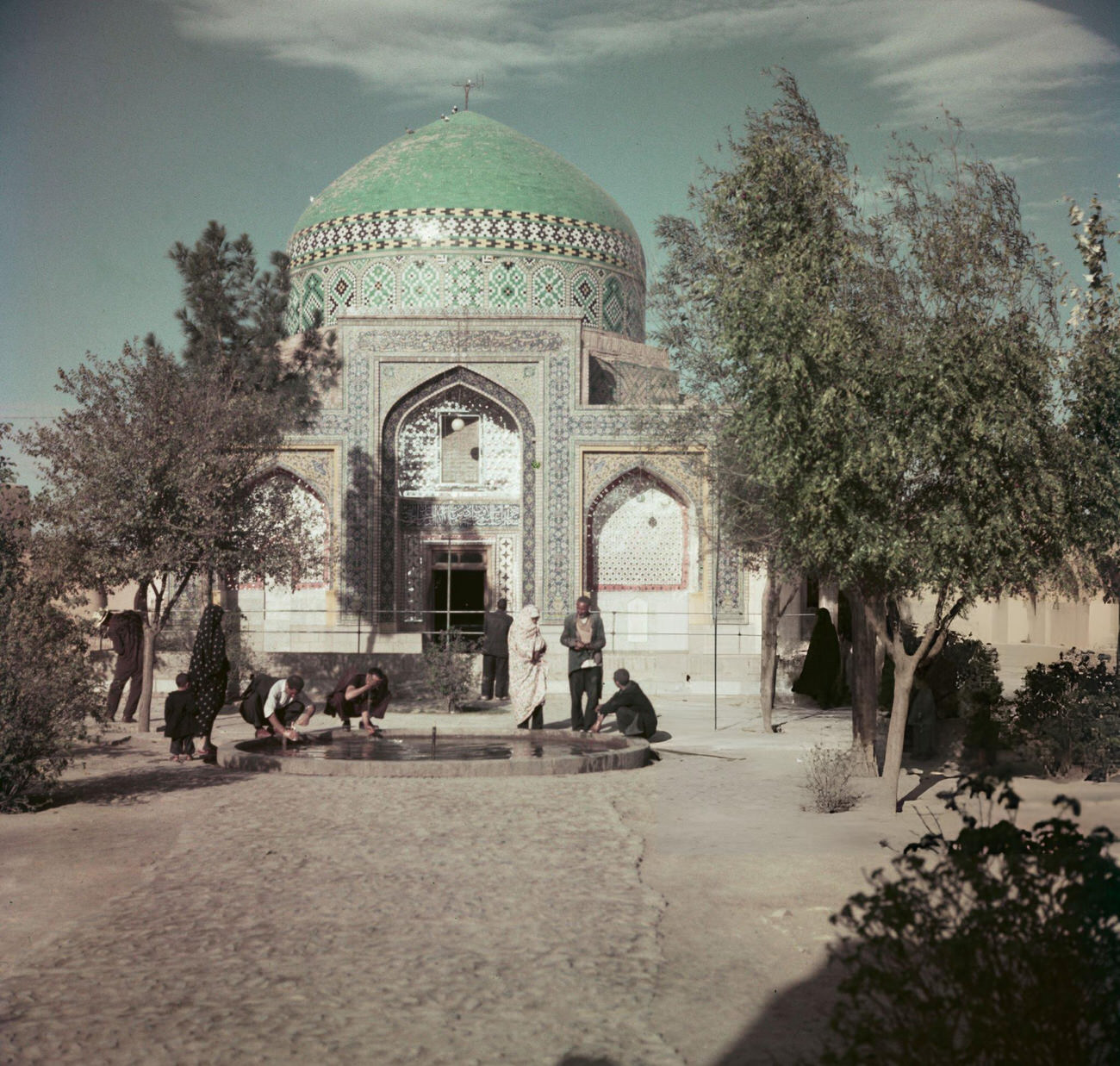
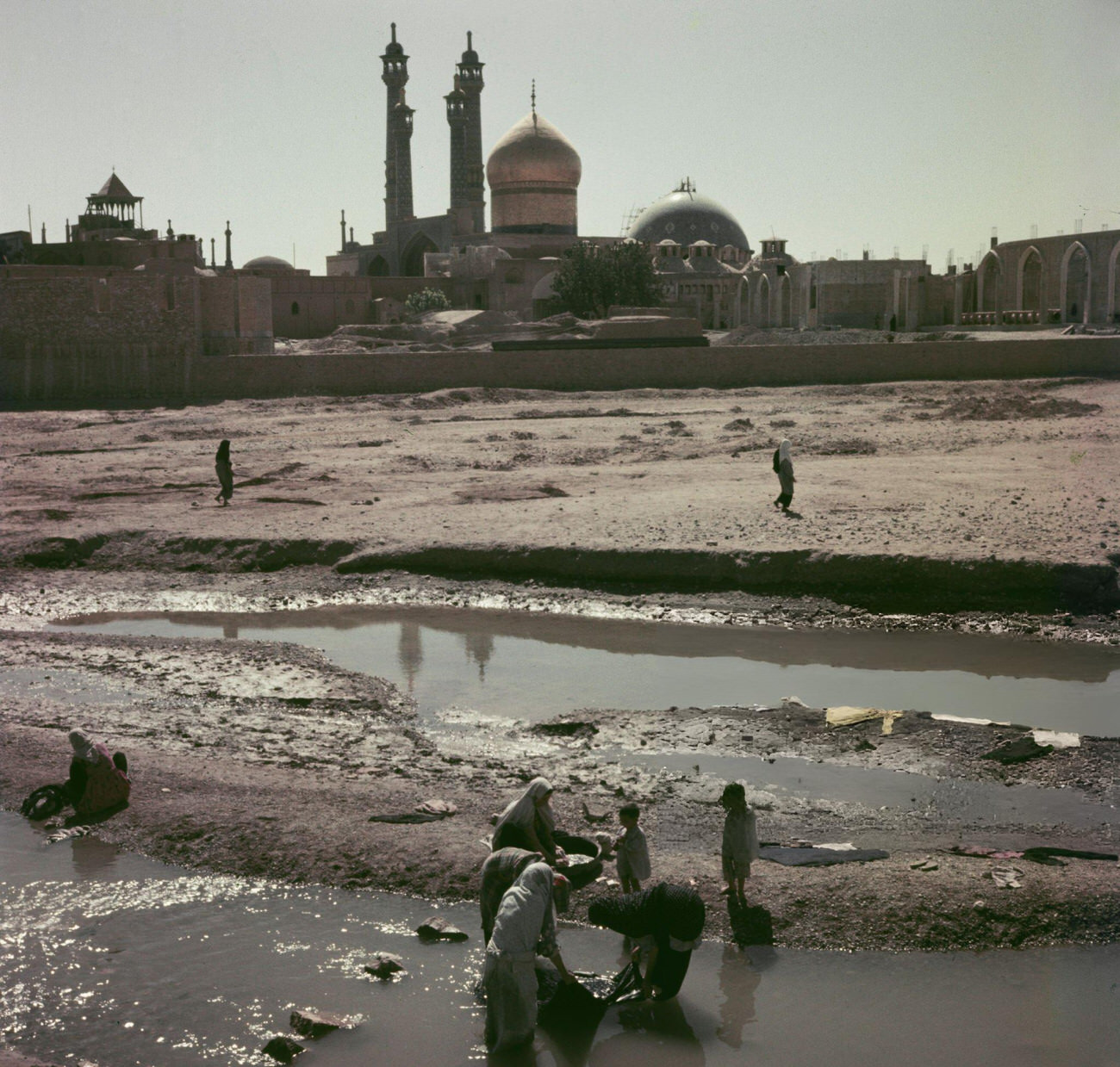
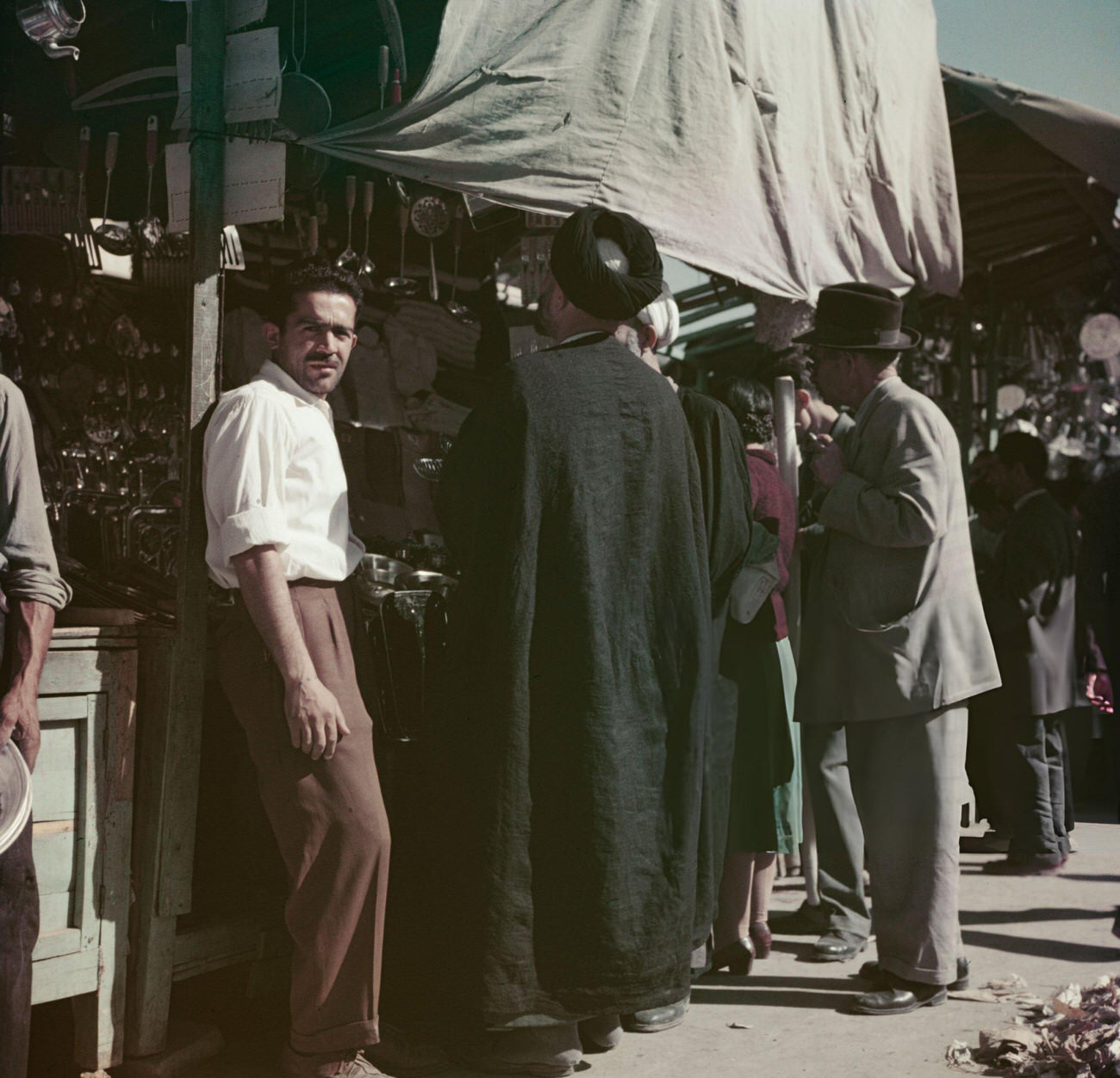
Religious practice remained central to daily life even as Western culture spread through the cities. Visitors washed at shrines near Mashhad. Residents laundered clothes in the Qom River in the shadow of the Fatima Masumeh Shrine. A mullah browsed goods at a Tehran street bazaar. The physical presence of Islam — in architecture, in public ritual, in daily routine — was not diminished by modernity. It ran alongside it, and often in direct opposition to it.
Visitors washing their hands and faces in a pool in front of a shrine near Mashhad, the capital of Razavi Khorasan Province in Iran, circa 1960.Residents washing clothes in the waters of the Qom River, with the Fatima Masumeh Shrine and Azam Mosque of Qom behind, in the city of Qom, the capital of Qom Province in central Iran, circa 1960.A mullah browsing goods for sale at a street bazaar in Tehran, the capital of Iran, circa 1960.
These photographs capture Iran at a specific and consequential moment. Street vendors, ancient caravans, royal ceremonies, earthquake survivors, protesting women, and oil-era construction sites — together they show a country being pulled in multiple directions at once. The 1960s in Iran were not a simple story of progress or resistance. They were both, unfolding simultaneously, in the same streets and across the same landscape.
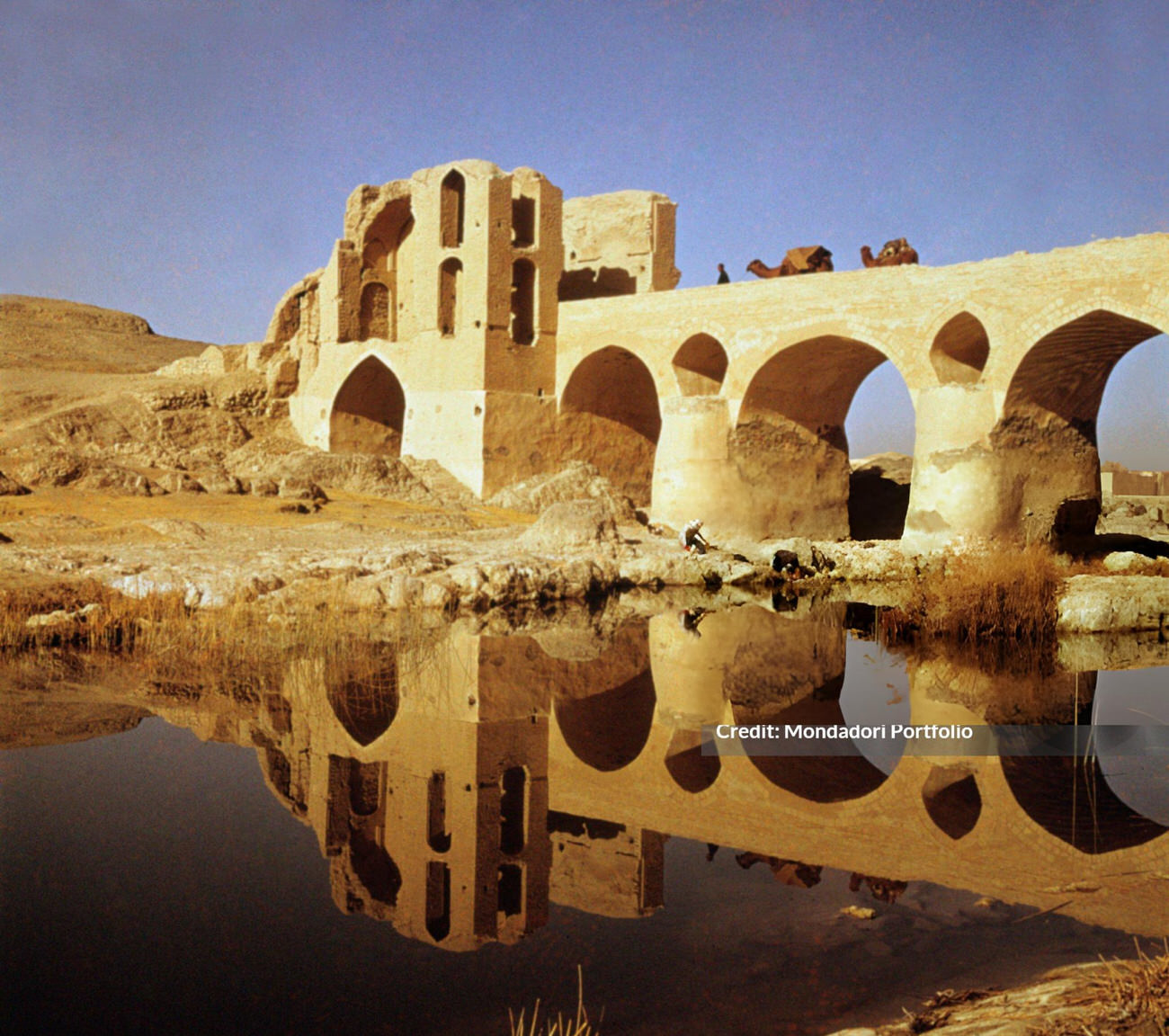
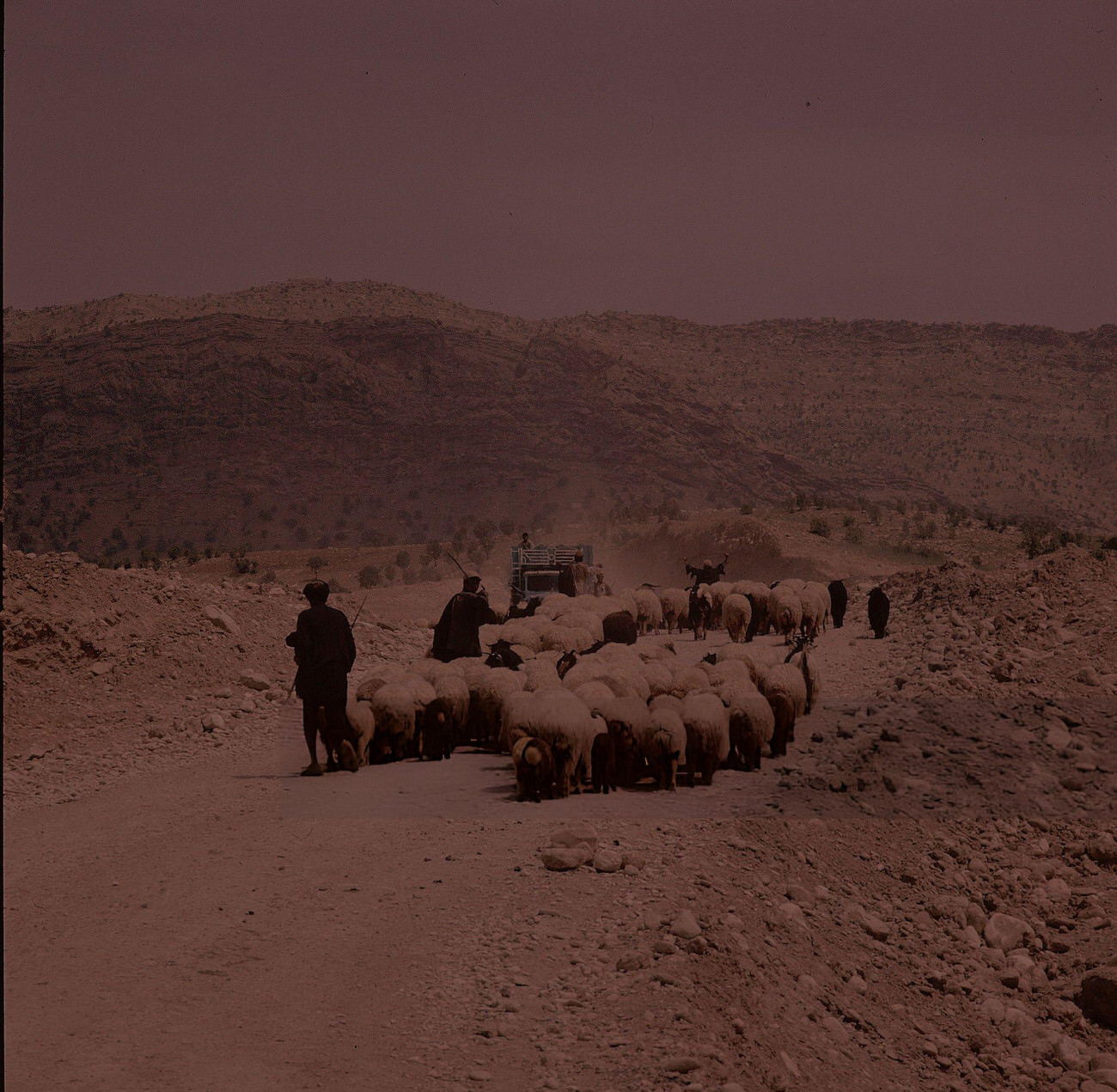
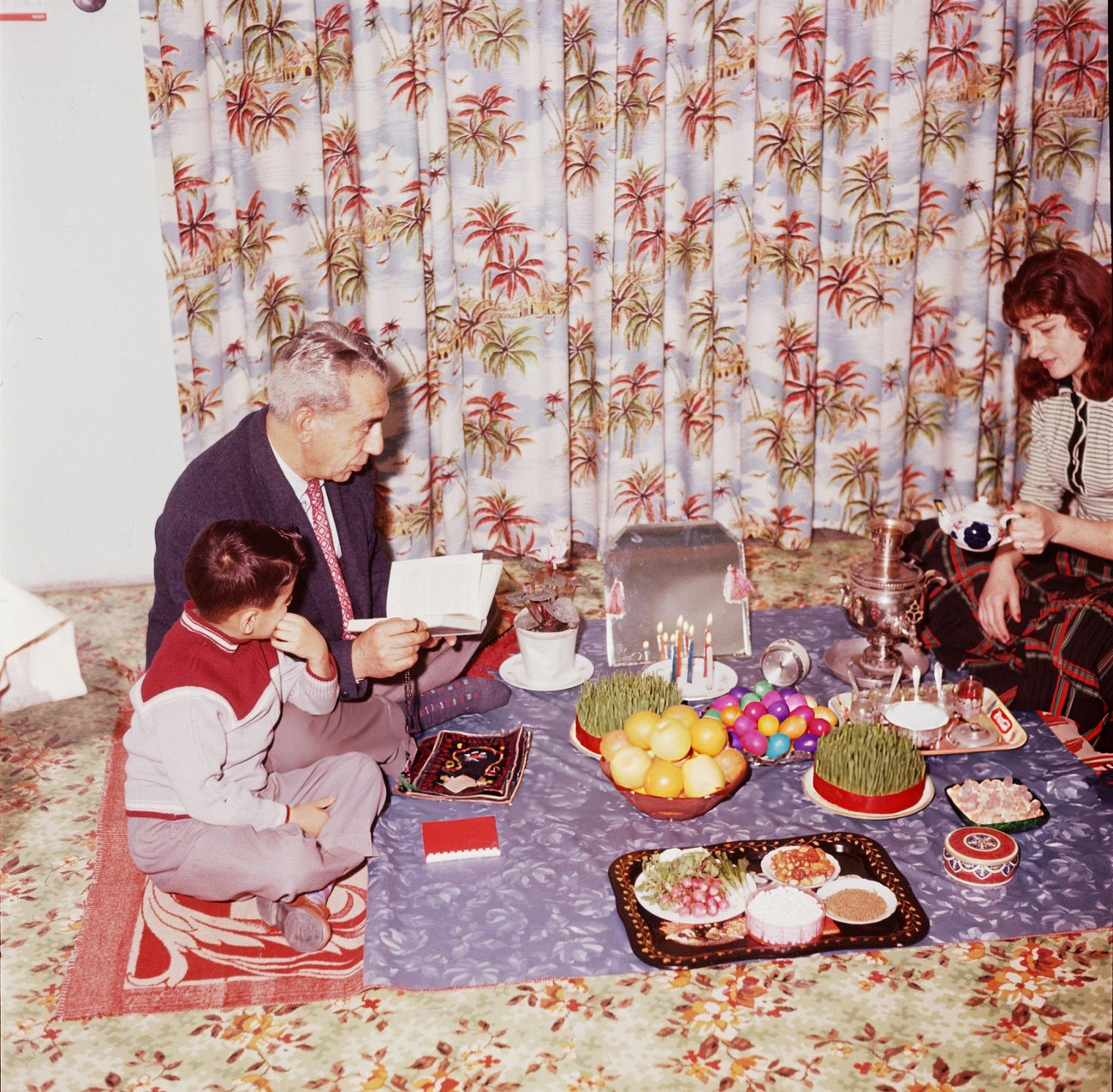
The Shah Mosque, Isfahan, Iran, 1964.The Sheikh Lotfollah Mosque, Isfahan, Iran, 1964.The Ali Qapu Palace, Isfahan, Iran, 1964.A caravan of camels crossing the Sharestan bridge reflected in the water, Iran, 1960s.A small group of nomads traveling with horses loaded with equipment on the long dirt road from Chatt-el-Arabe towards the high plateau of Sultanabad, Iran, 1960s.Nomadic shepherds leading their herd along a road in Iran, 1960s.A family gathers for a ceremony celebrating Nou-Roz, the Iranian New Year, 1960s.
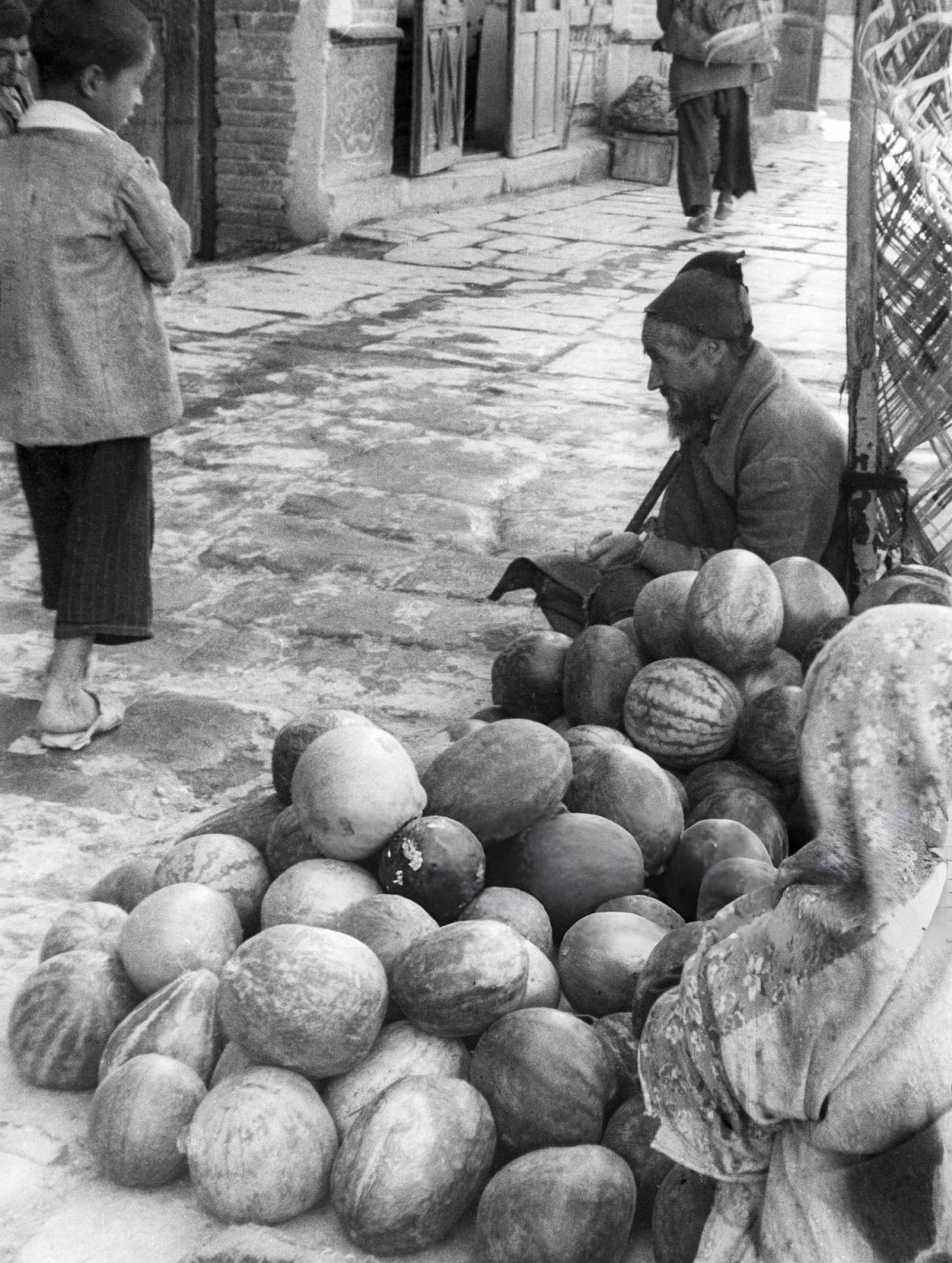
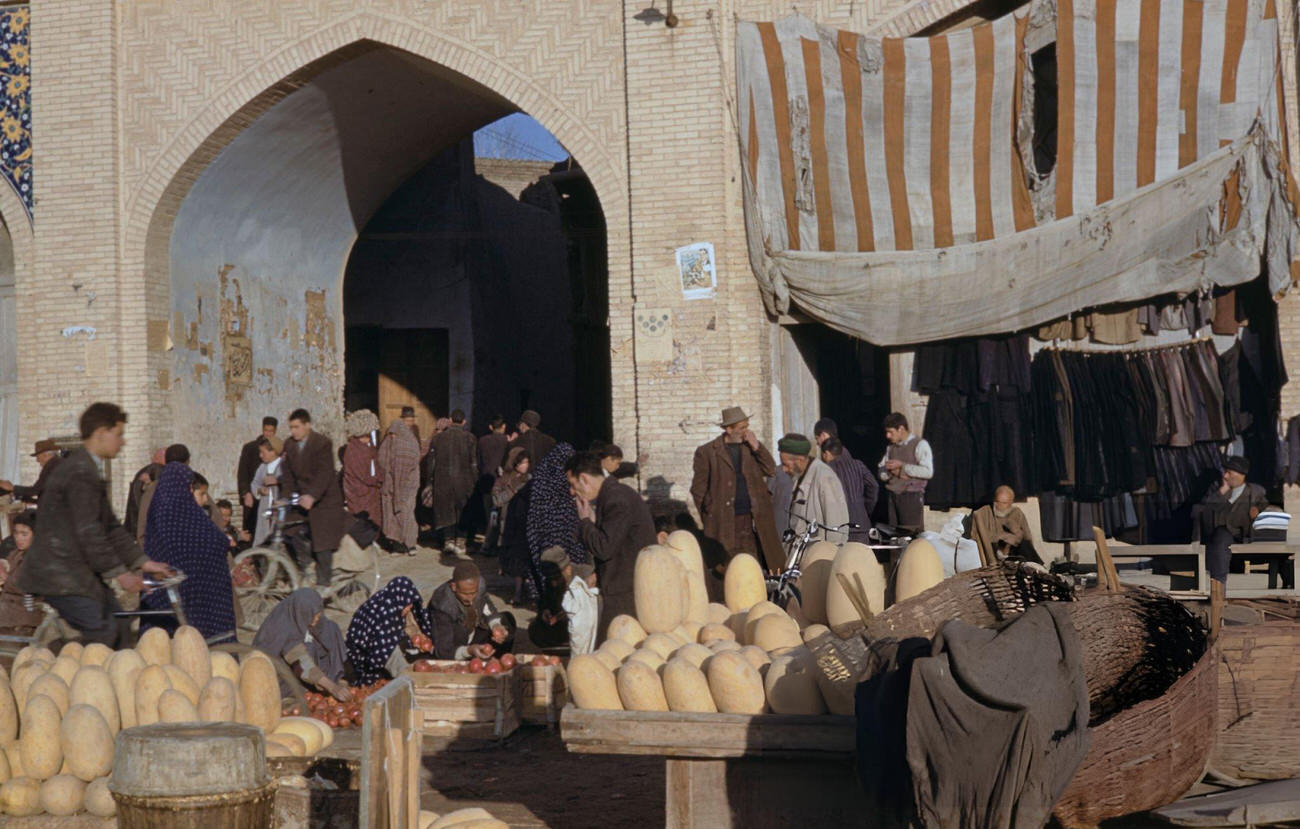
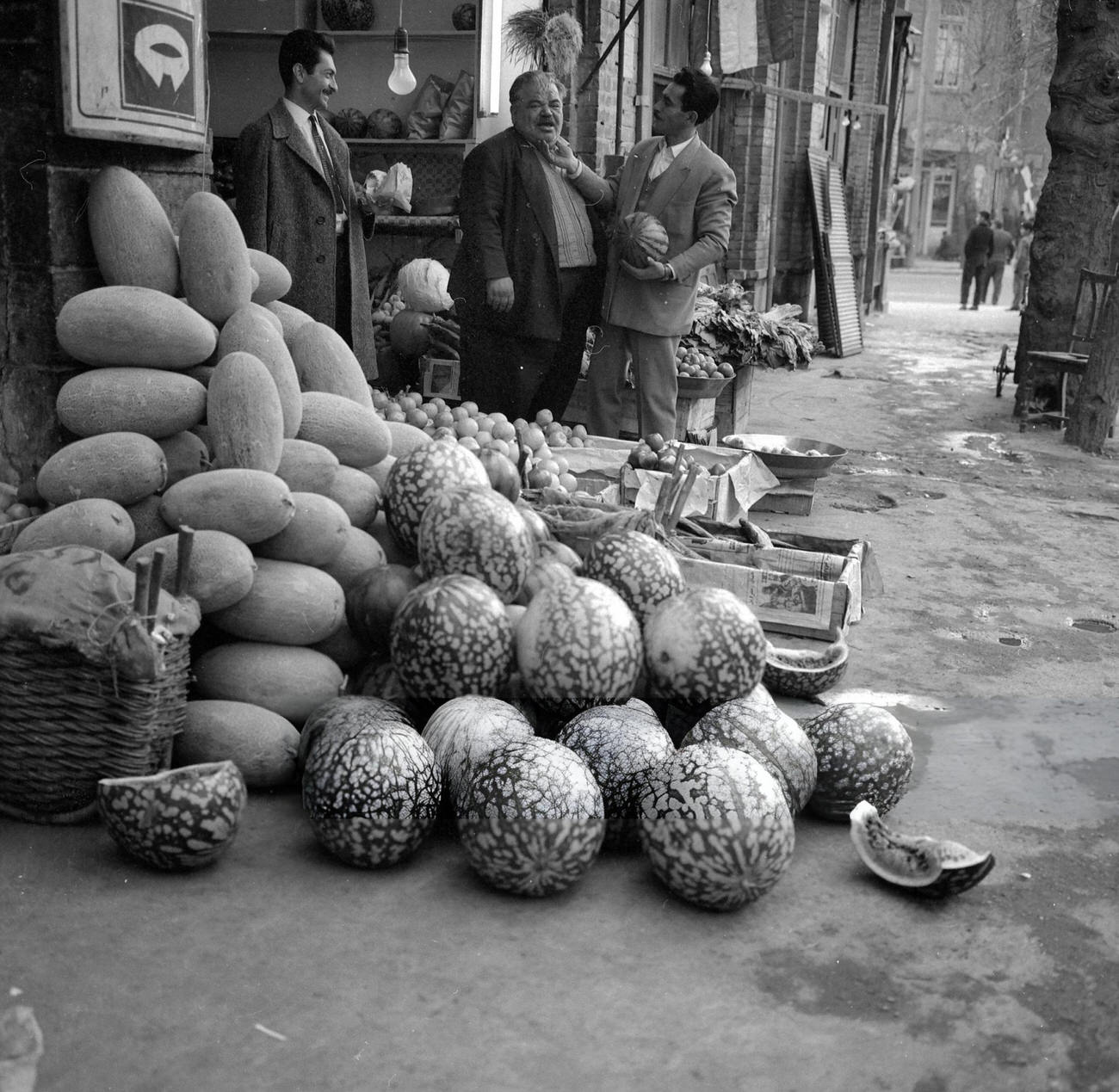
A watermelon vendor in Iran, 1960s.
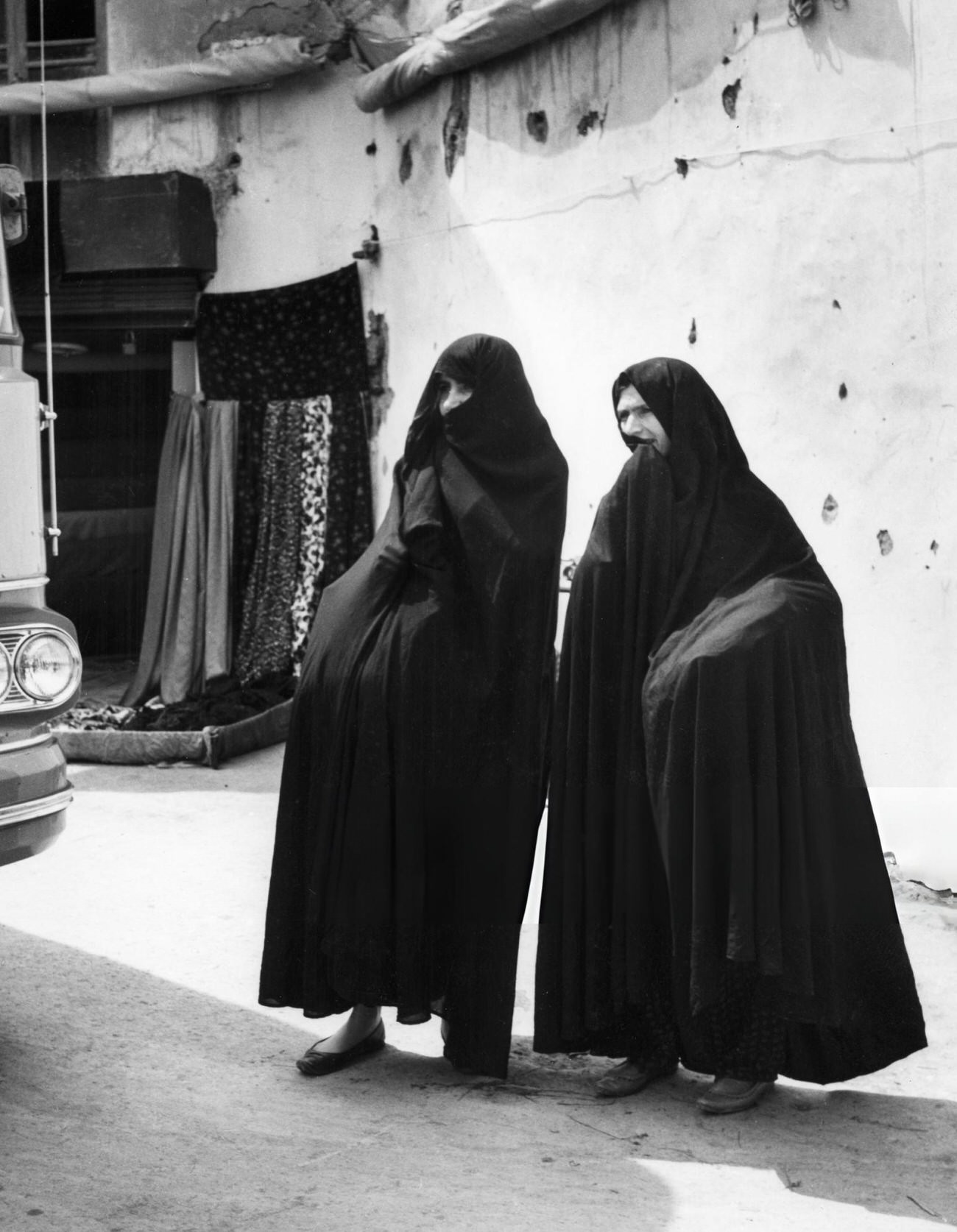
Veiled women walking in the streets of Tehran, Iran, 1960s.
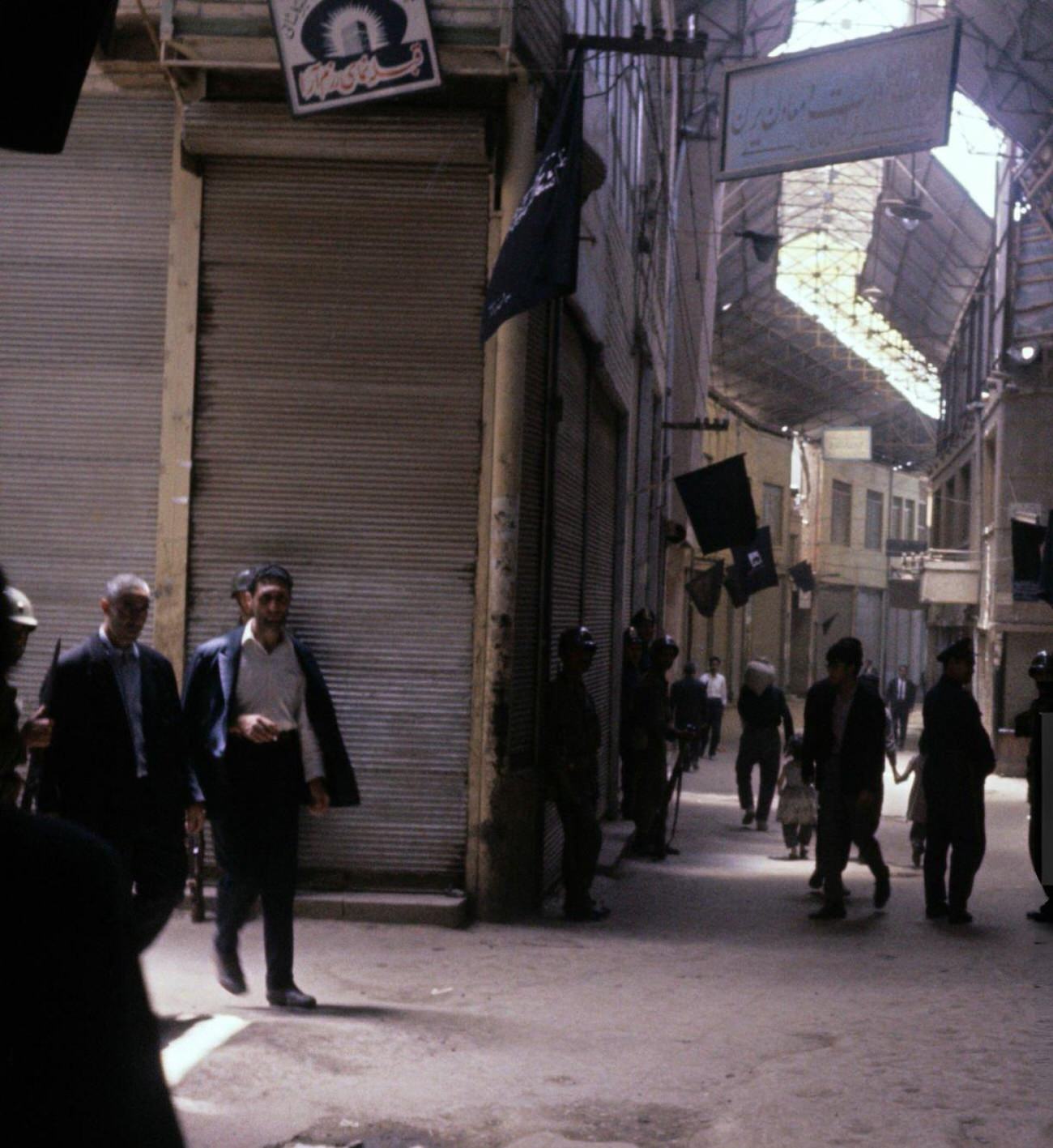
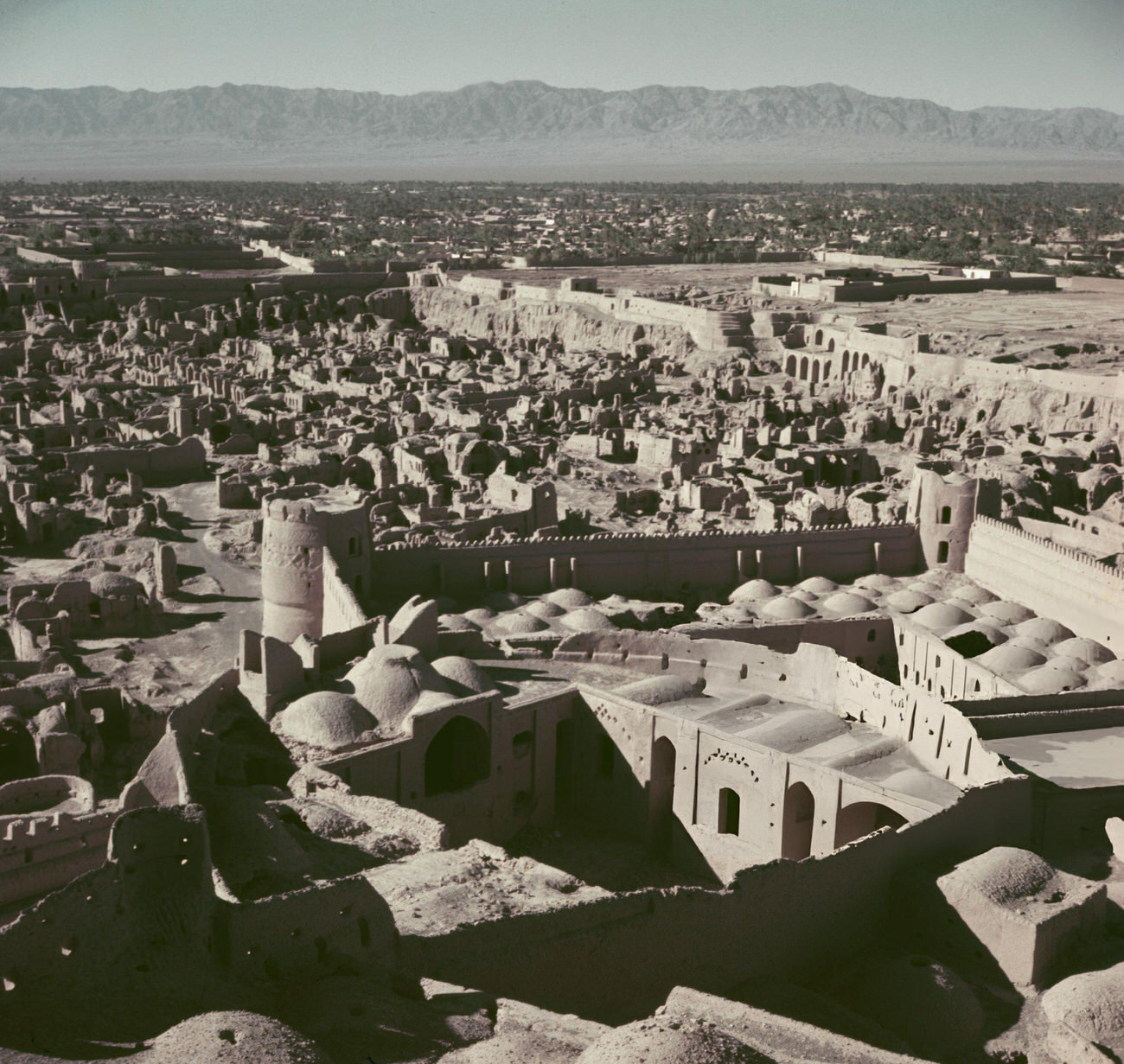
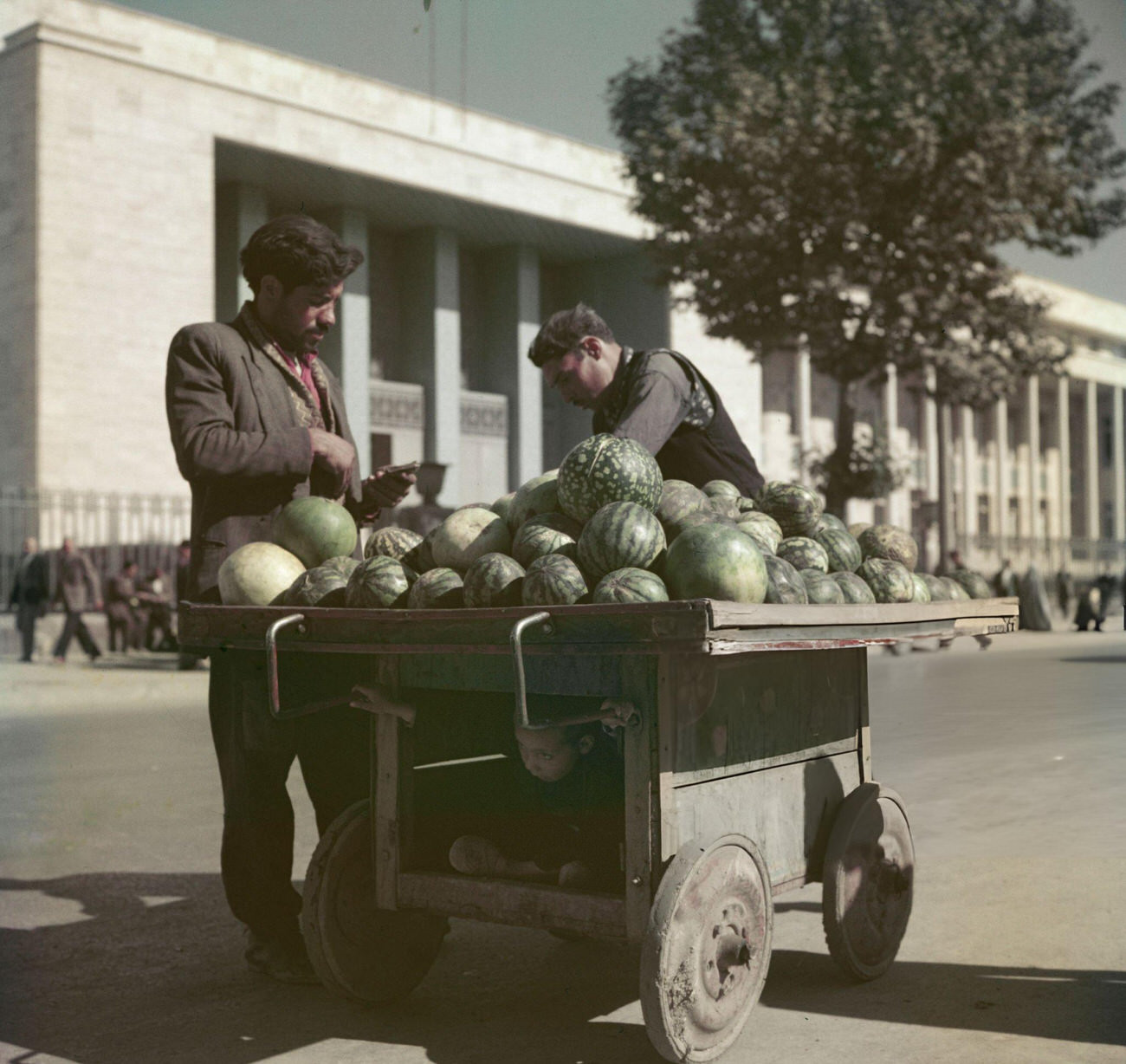
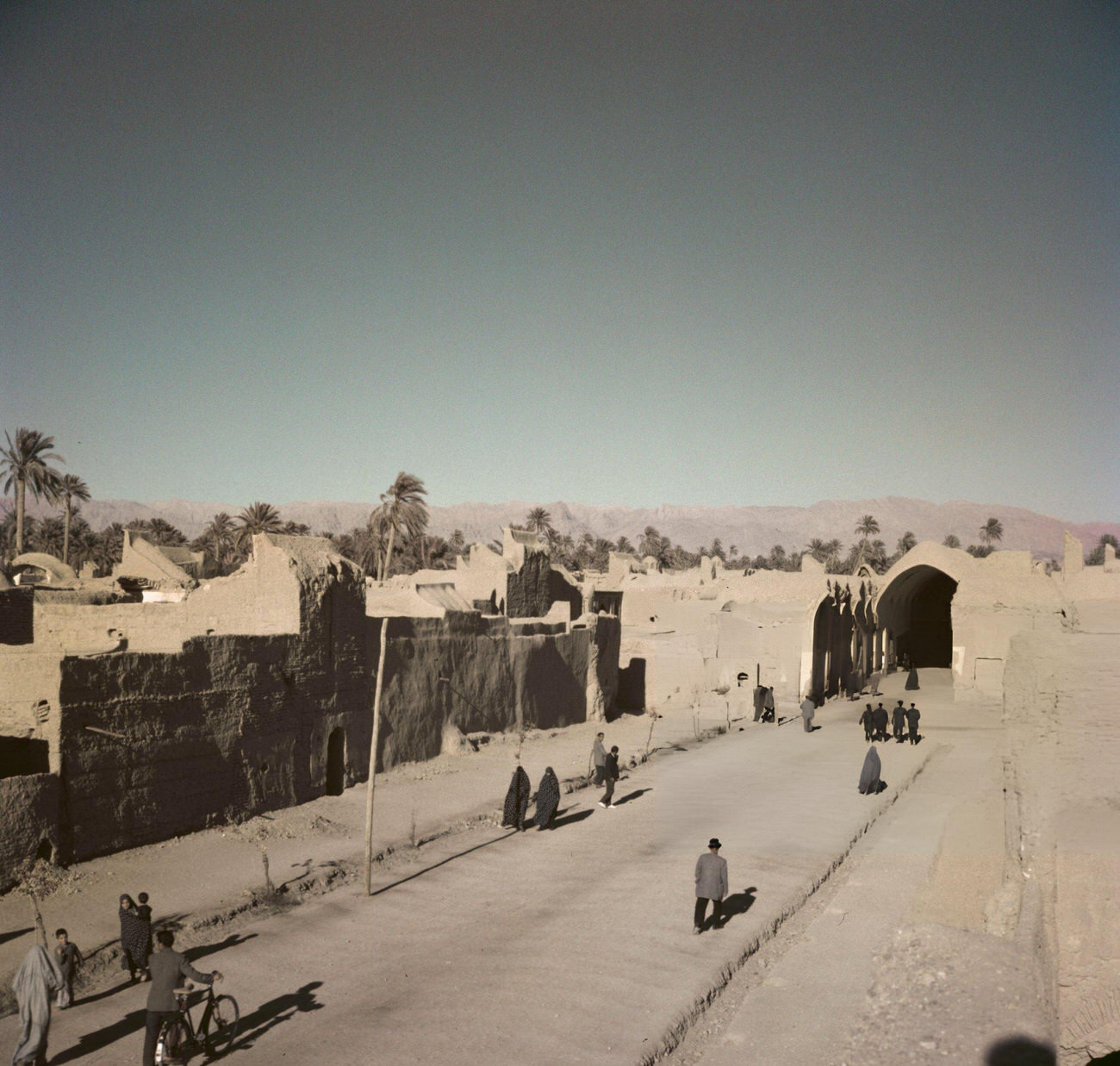
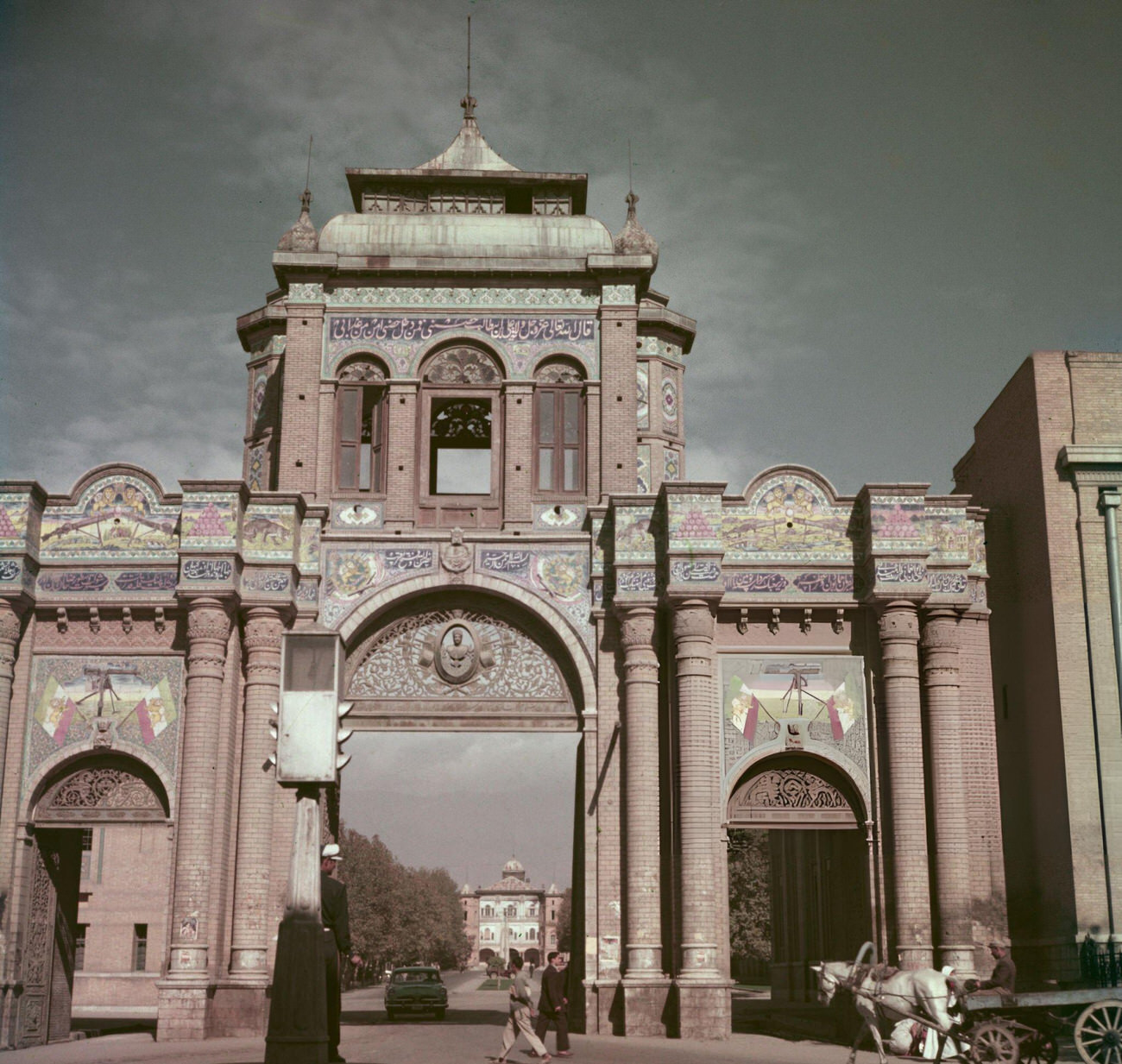
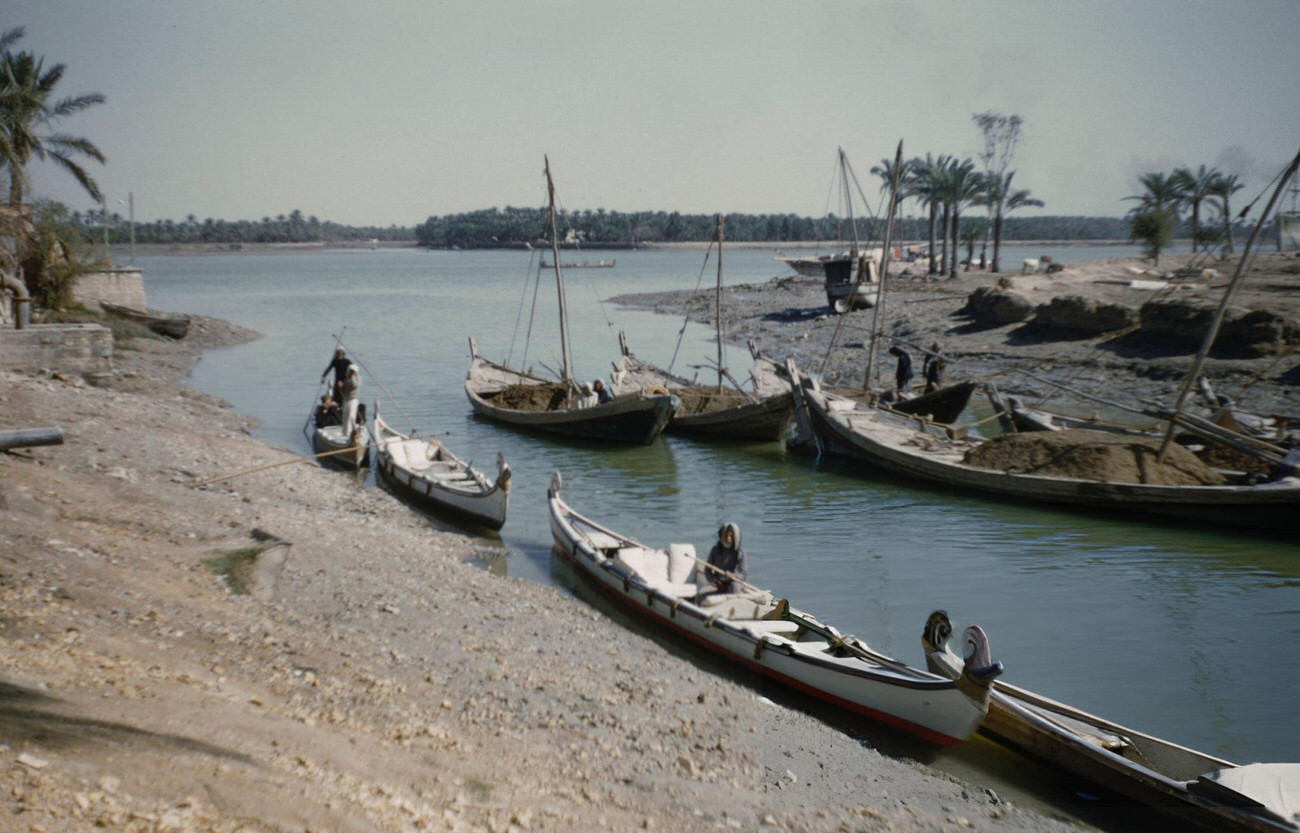
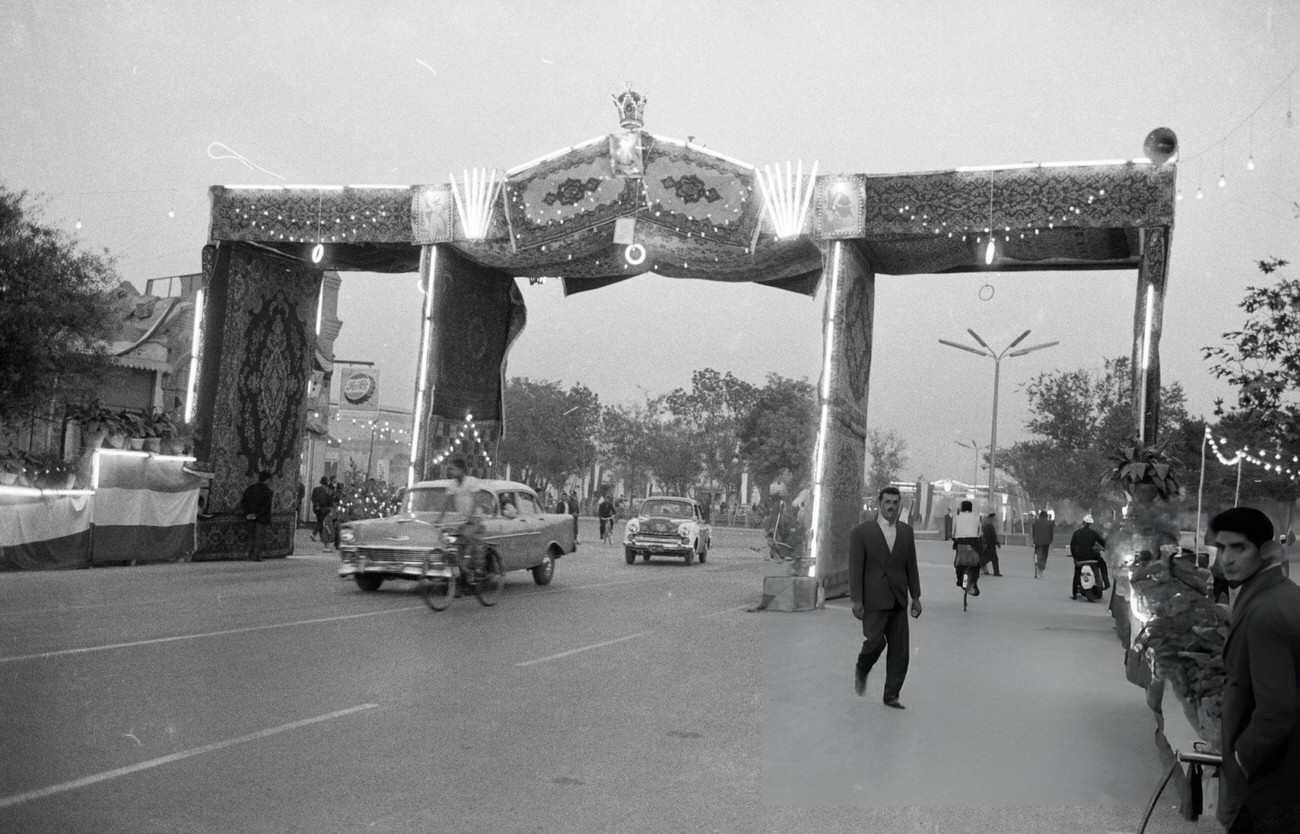
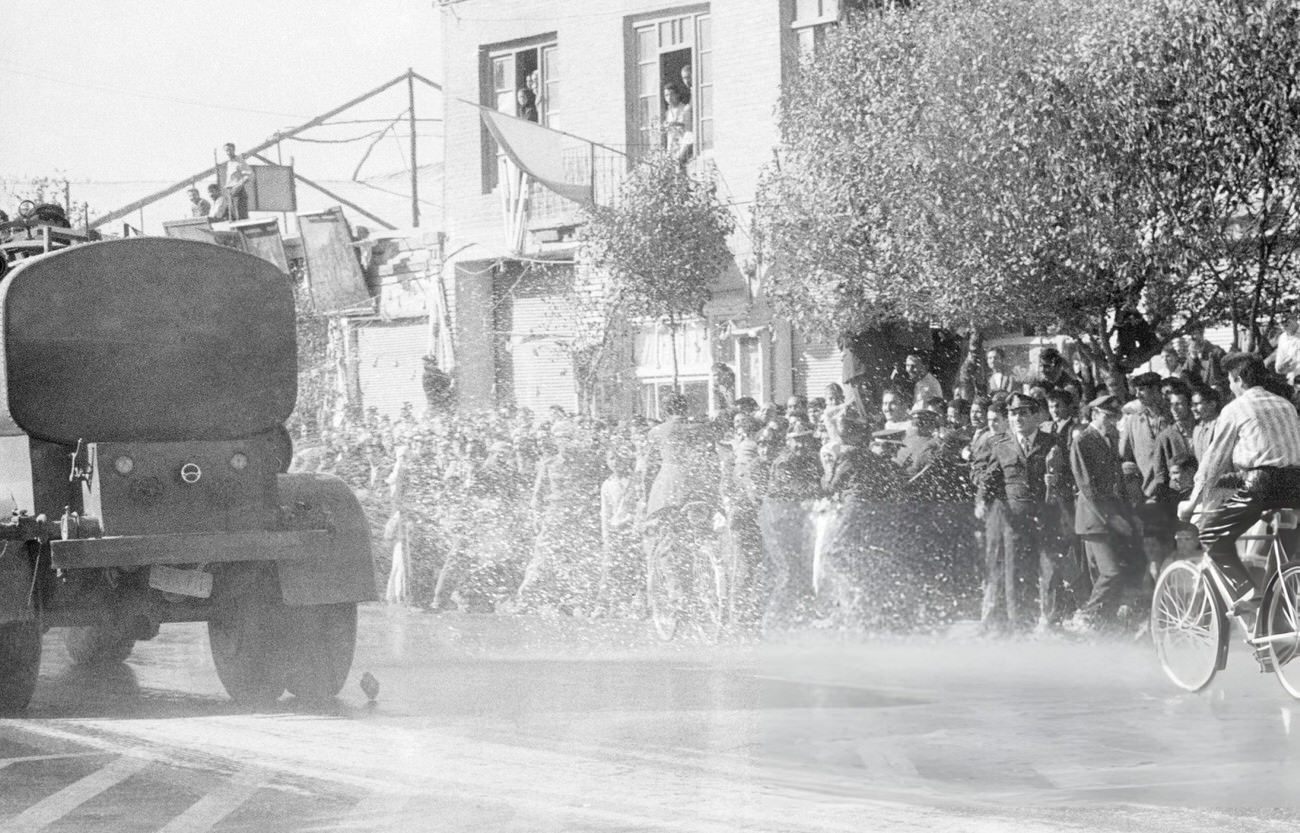
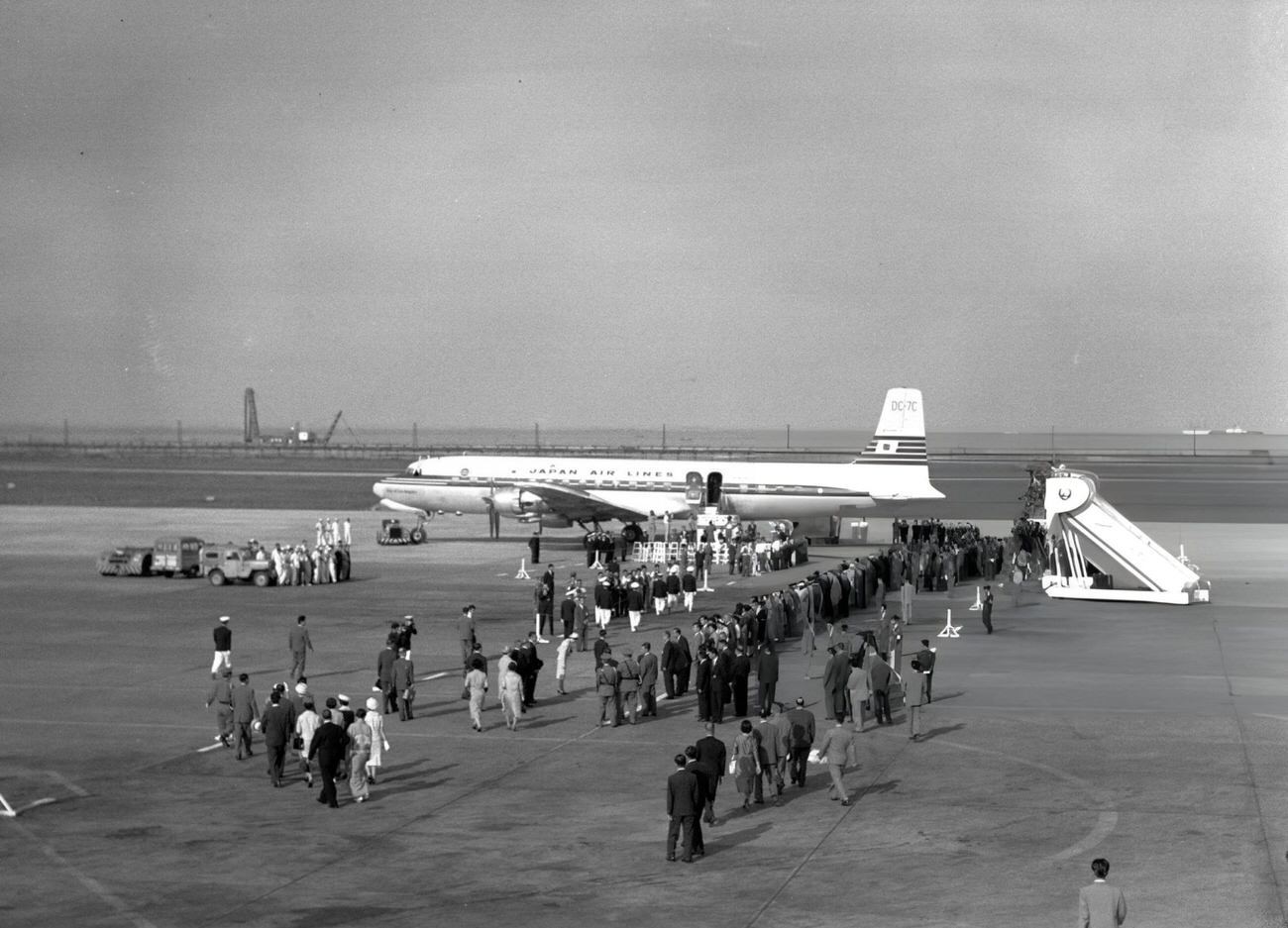
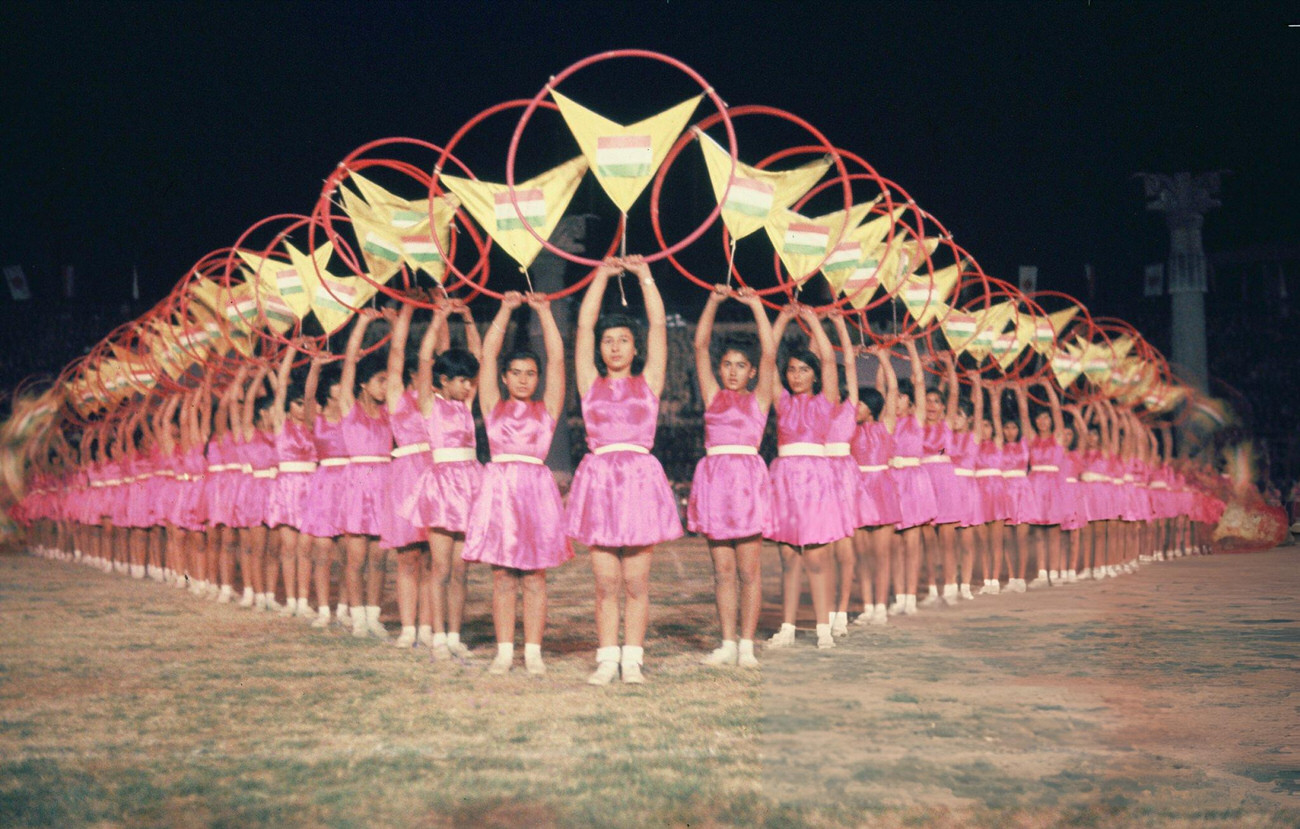
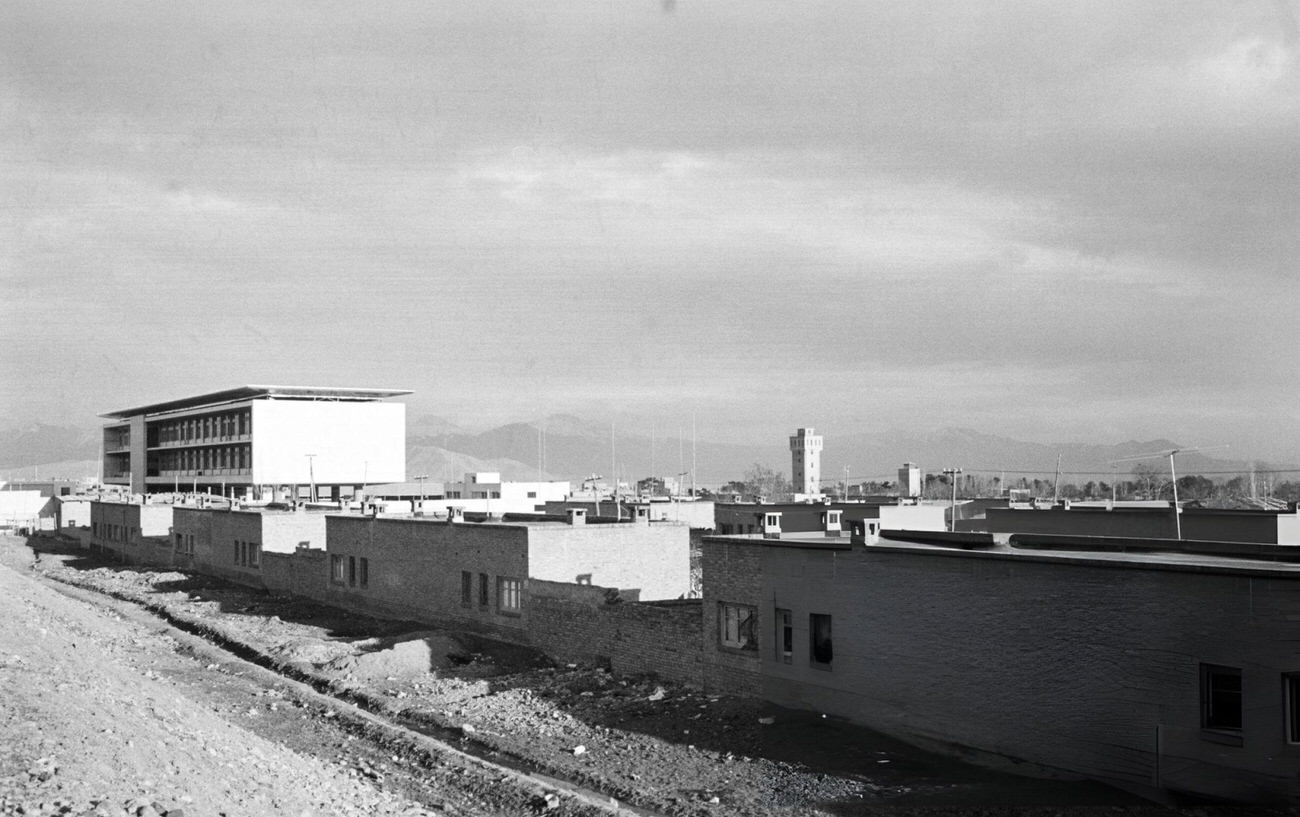
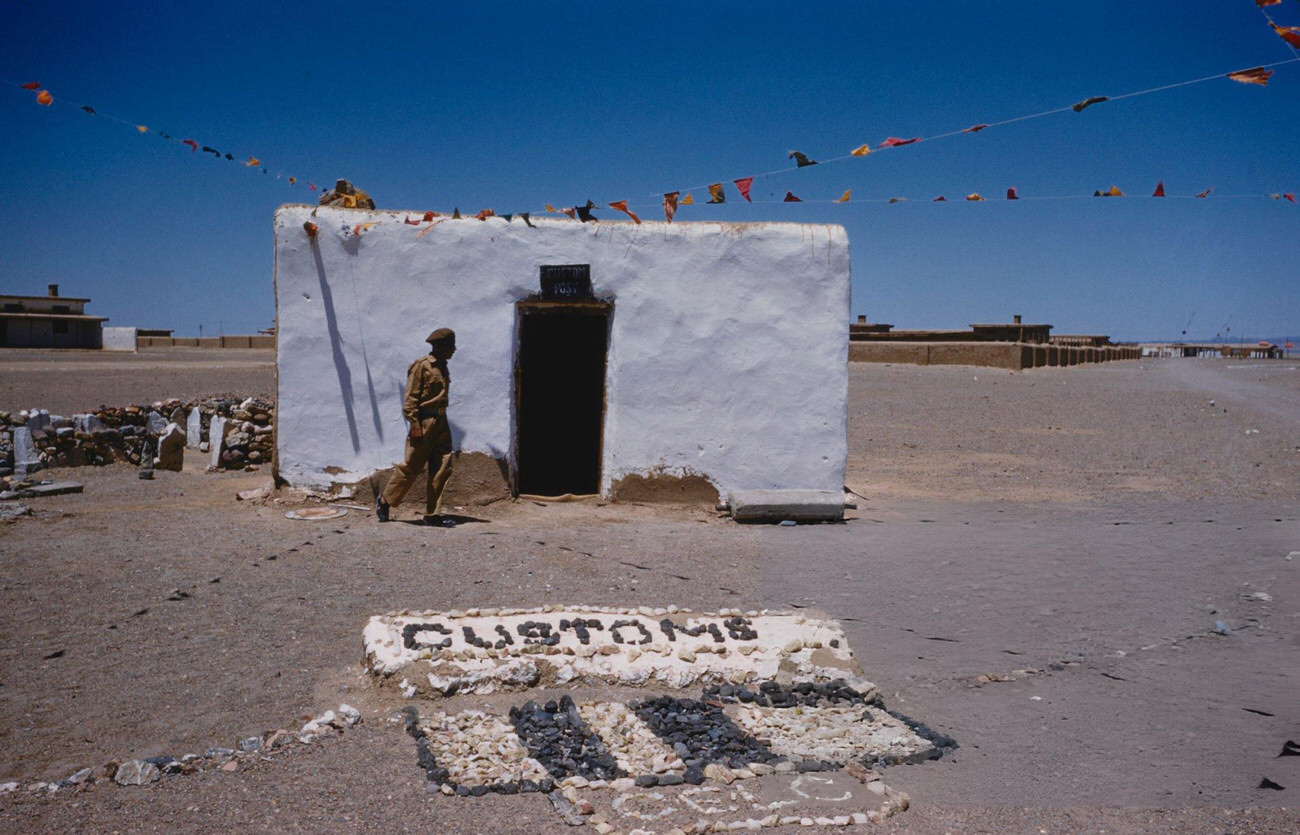
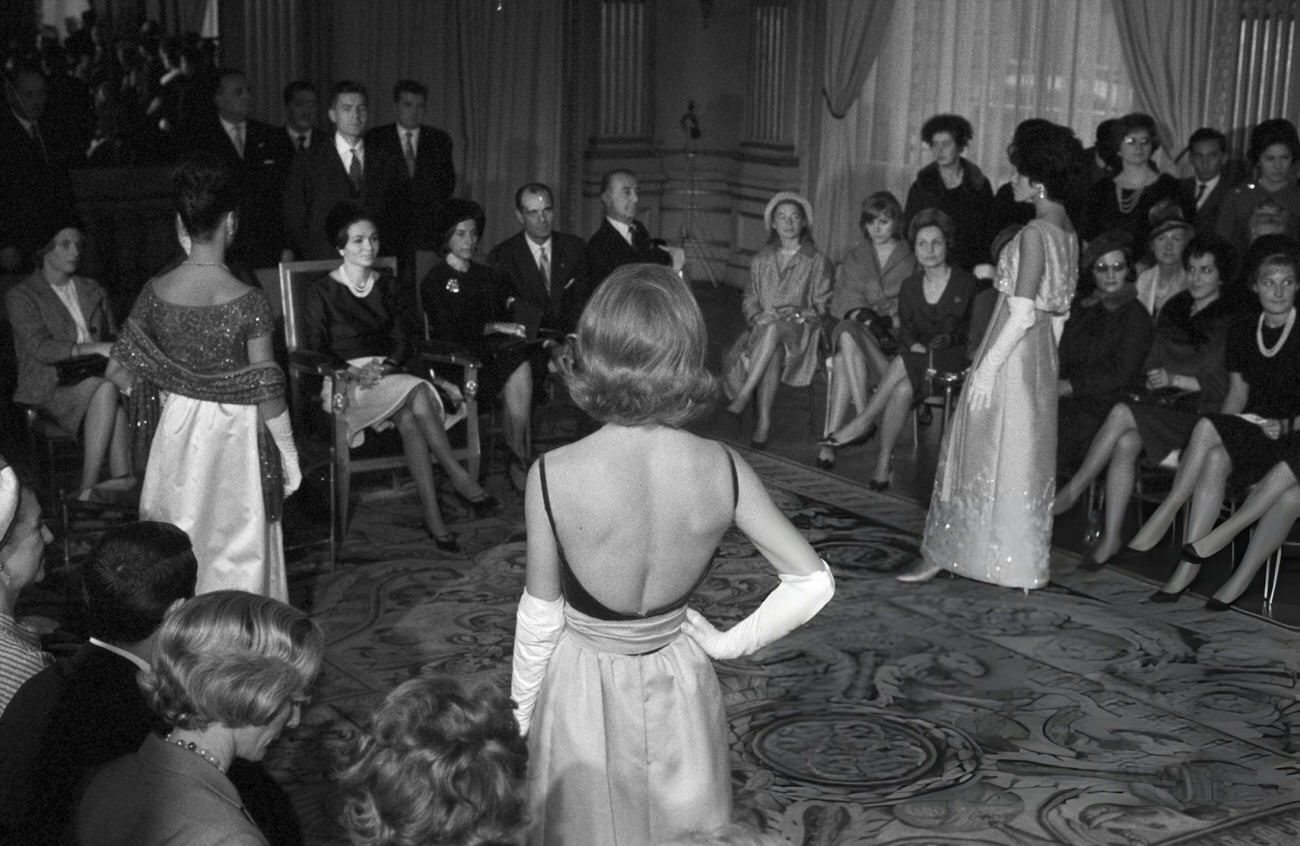
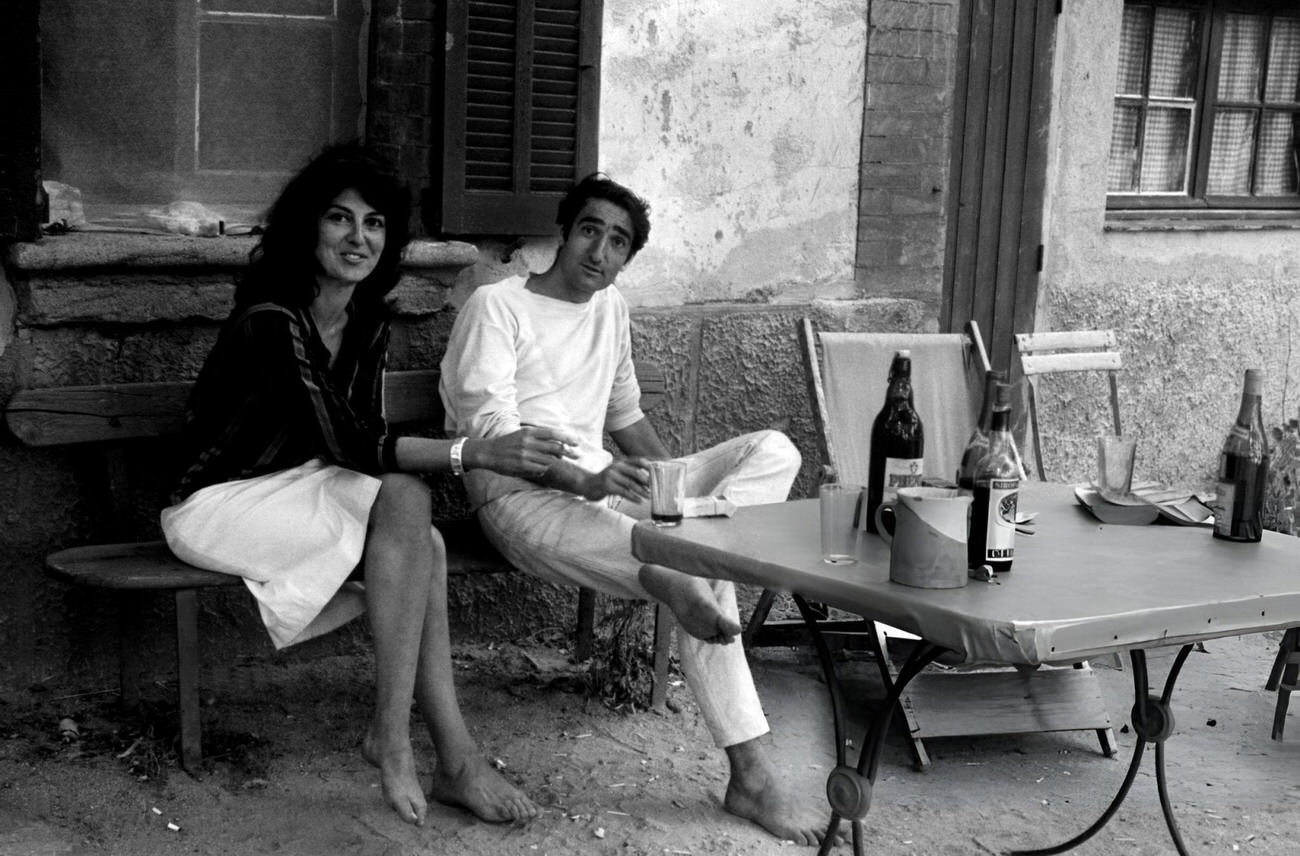
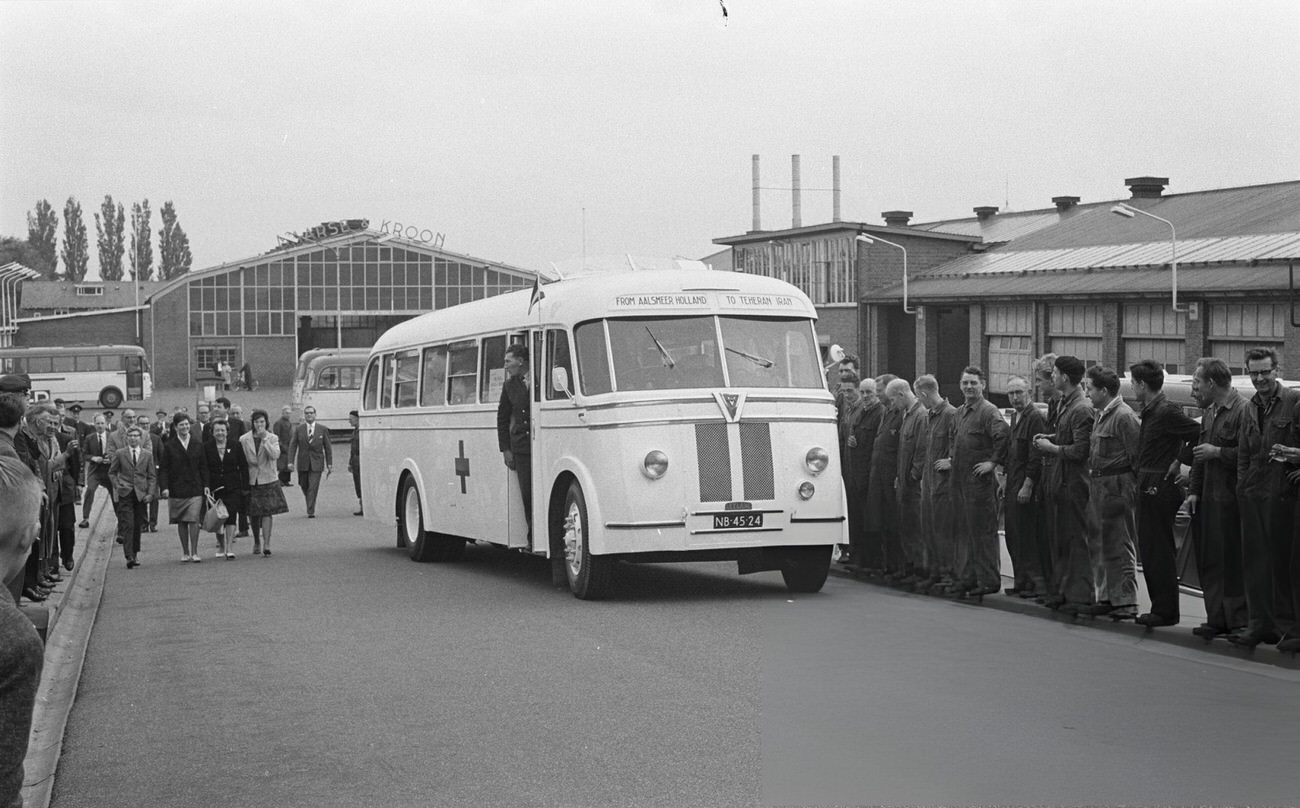
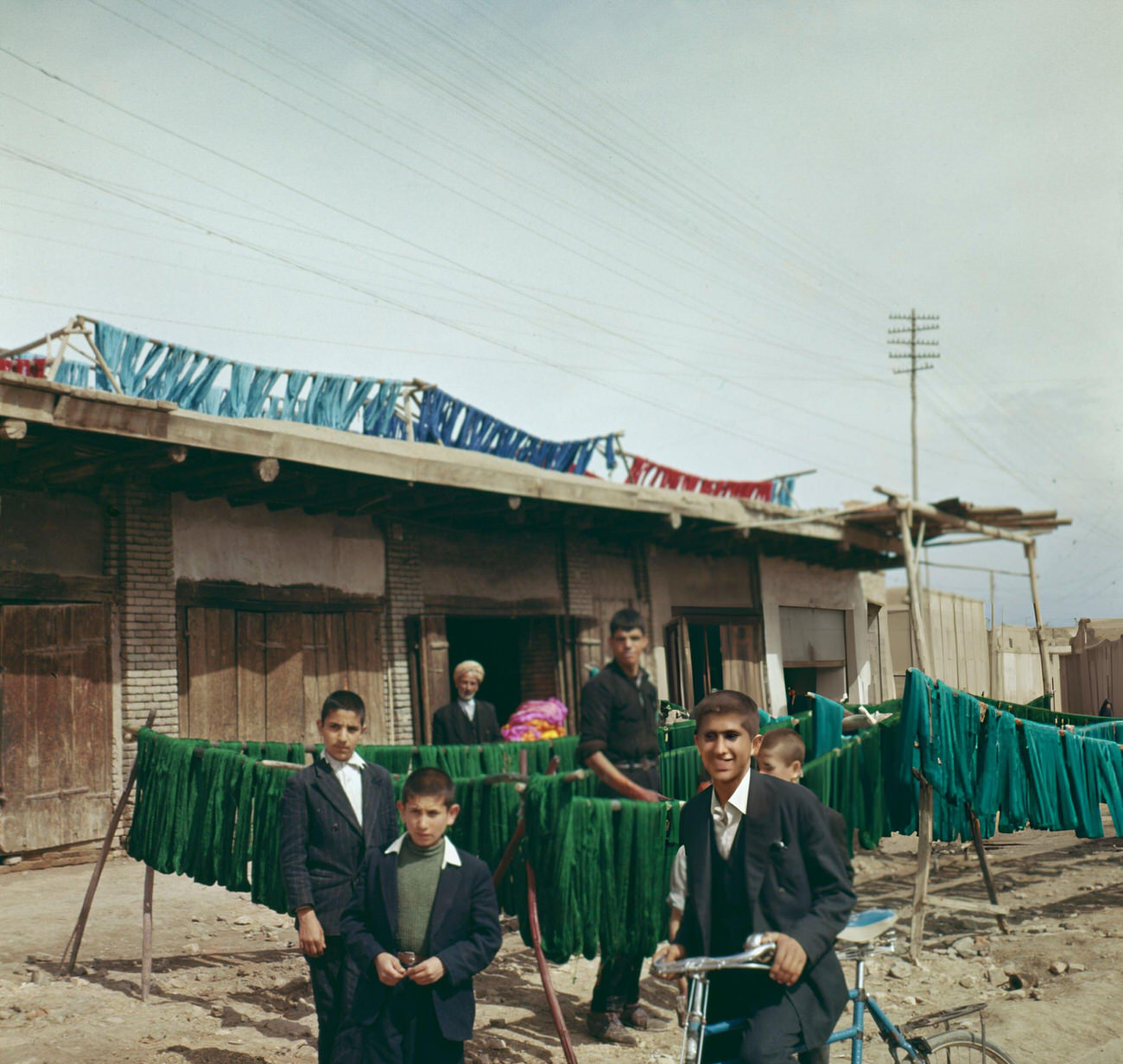
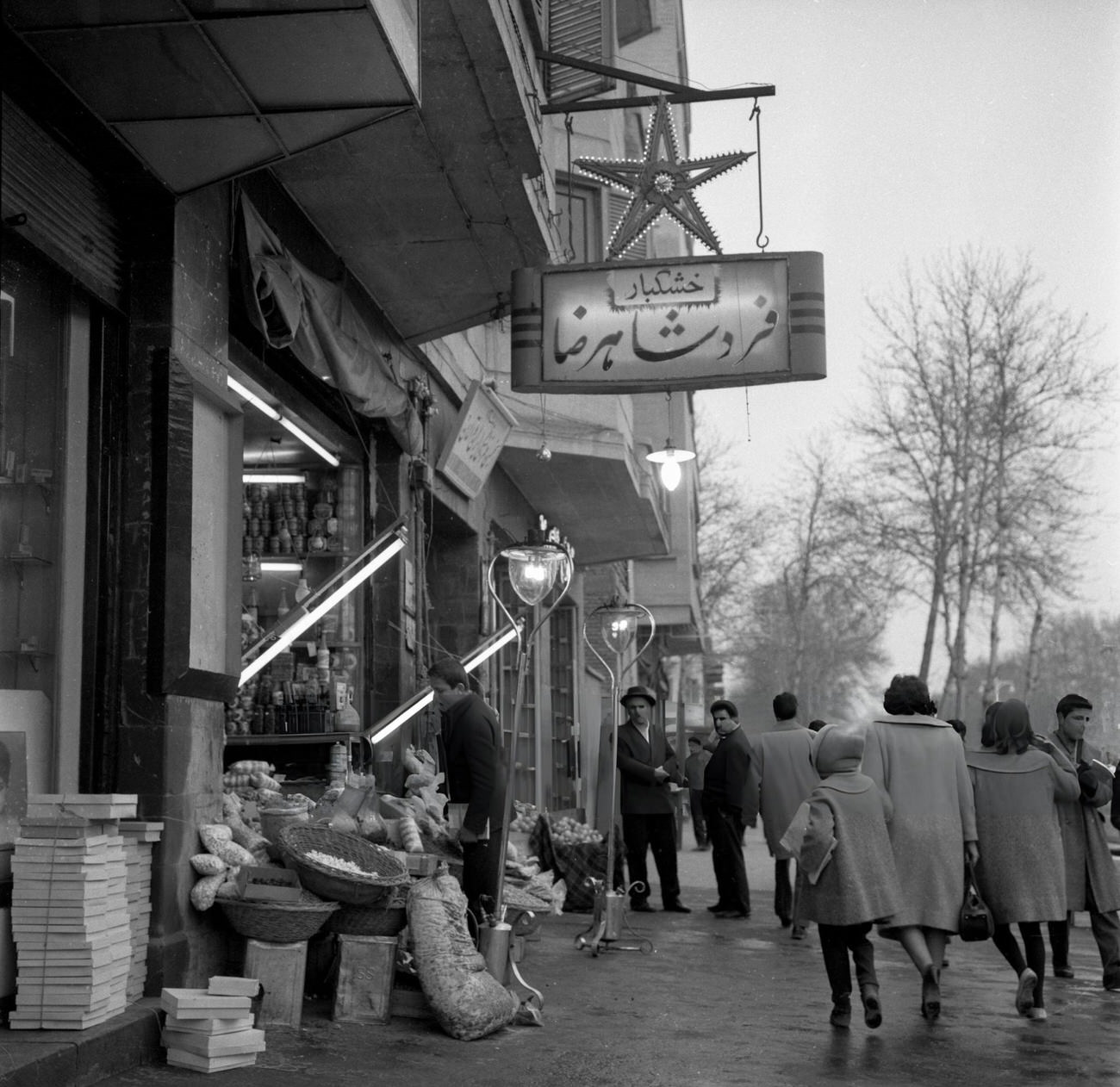
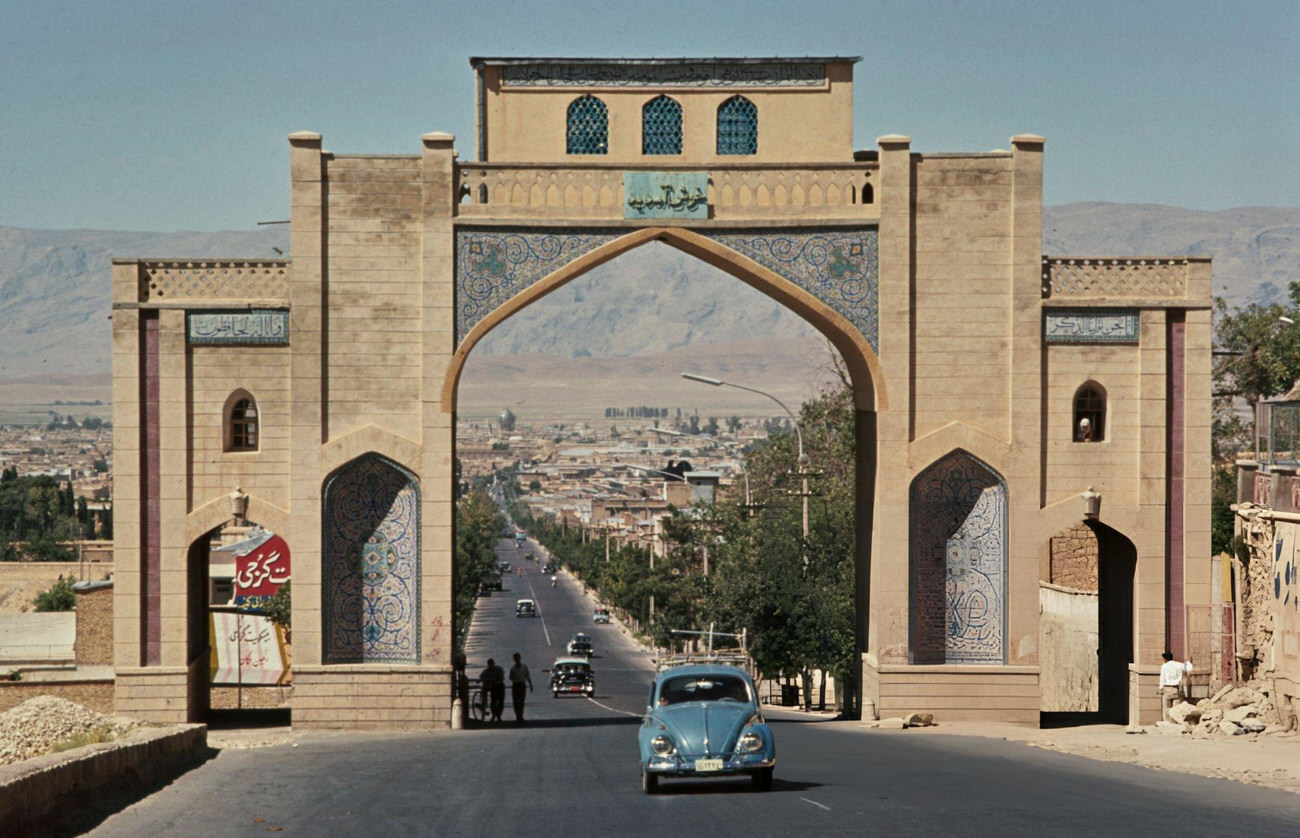
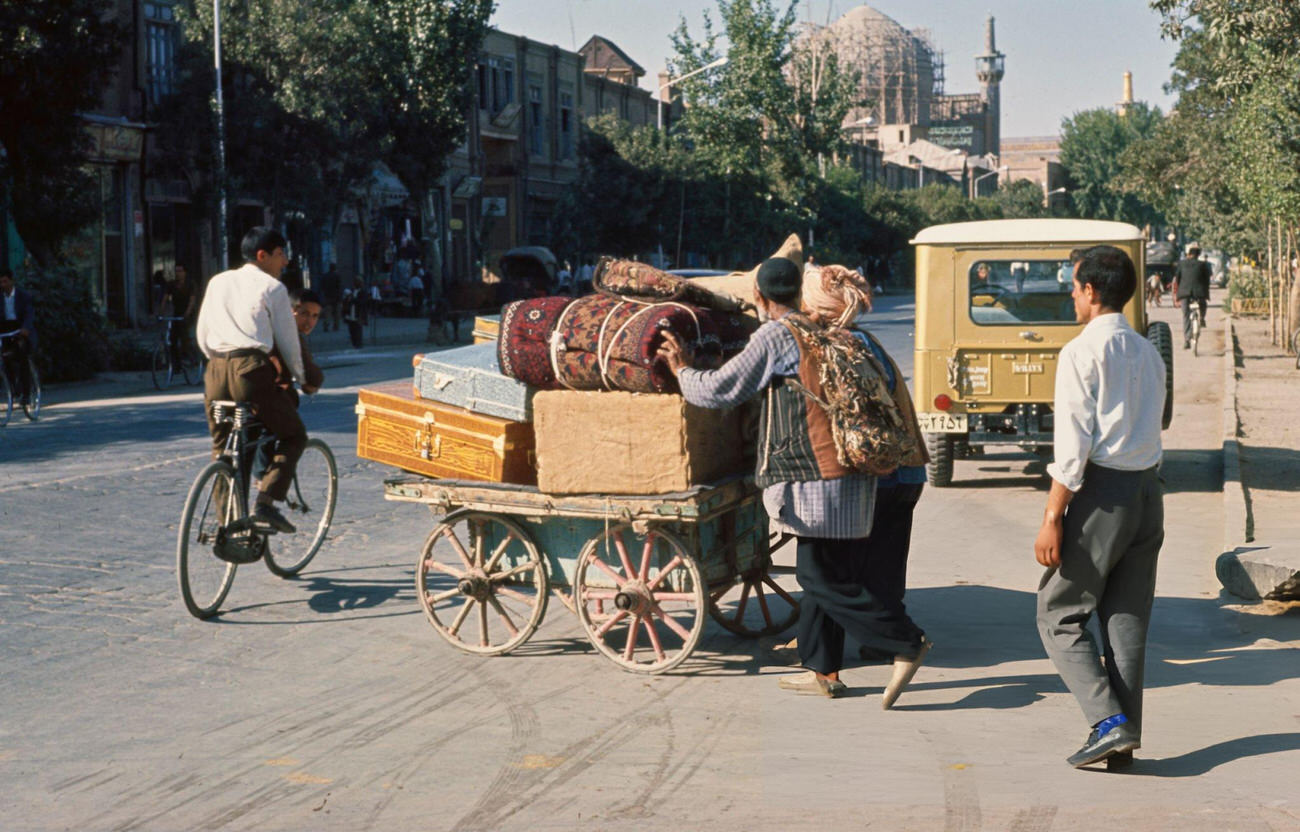
An aerial view of the ruins of the Arg-e Bam mudbrick fortress and citadel in the city of Bam in Kerman Province, Iran, circa 1960.A customer buys a watermelon from a trader at his market stall in front of a bank building in Tehran, the capital of Iran, circa 1960.Pedestrians walking along a road in the oasis city of Tabas, formerly known as Golshan, in the province of South Khorasan in central Iran, circa 1960.Pedestrians passing a decorative archway over a road leading to the Ministry of Defence building in Tehran, the capital of Iran, circa 1960.Traders’ carts unloaded outside the entrance to the bazaar in Isfahan, in the Isfahan Province of Iran, circa 1960.Sailboats and rowing boats moored on a tributary of the Shatt al-Arab river near Khorramshahr, just north of the city of Abadan in Khuzestan Province of southwest Iran, circa 1960.Pedestrians passing customers being served by market traders on a street in the bazaar district of Isfahan, in the Isfahan Province of Iran, circa 1960.Women in Persepolis, Iran, circa 1960.Cars driving under arches decorated with Persian carpets, neon lights, and flags on a grand avenue for the 42nd birthday of Shah Mohammad Reza Pahlavi, Tehran, 1960.A joyous crowd being sprayed with water jets to clear the way for the Shah on his way to the maternity hospital for the birth of Prince Reza Cyrus Pahlavi, Tehran, 1960.Crown Prince Akihito and Crown Princess Michiko depart for Iran, Ethiopia, India, and Nepal at Haneda Airport, Tokyo, 1960.Dancers performing during the sports festival welcoming Crown Prince Akihito and Crown Princess Michiko, Tehran, 1960.Horseback soldiers leading cars carrying Crown Prince Akihito and Crown Princess Michiko under an arch where a drawing of Crown Princess Michiko is hung on the way to the Guenete Leul Palace, Addis Abeba, 1960.The crossroads of Ferdowsi Avenue, Tehran, 1961.A watermelon seller in Tehran, 1961.A building designed by French architect and urban planner Fernand Pouillon: the General Staff Headquarters and the Ministry of War or ING under construction, Tehran, 1961.A security official walks past a customs post building in the desert town of Nok Kundi near the border with Iran in Balochistan, 1961.Farah Diba, Empress of Iran, attends a fashion show organized in her honor during the official visit of Shah Mohammad Reza Pahlavi to France, 1961.Serge Rezvani, painter and writer of Iranian origin, and his wife Lula in their home in La Garde-Freinet, France, 1962.A bus from Maarse and Kroon departs from Aalsmeer for Persia as a gift for the affected area, 1962.The stairway of King Darius depicted with his servants at the ruins of Persepolis, 1963.Local boys congregate in front of carpet wools being hung out to dry after dyeing in various colors at a workshop on a street in Iran, 1963.A grocery store in Tehran, Iran, 1964.A traffic jam on a street in Tehran, Iran, 1964.A book seller on a street in Tehran, Iran, 1964.The Royal Tehran Hilton, later the Parsian Esteghlal International Hotel, Tehran, Iran, 1960s.A Volkswagen Beetle car driving through the Qur’an Gate on the road from the northeast into Shiraz, in Fars Province, Iran, 1960s.The Sheikh Lotfollah Mosque, Isfahan, Iran, 1960s.A porter pushing a cart loaded with luggage and carpets across a road in Mashhad, the capital of Razavi Khorasan Province in Iran, 1965.Shah Mohammad Reza Pahlavi, with his wife, followed by other people, Iran, 1971.Double-decker buses and cars driving along Ferdausi Street in Tehran, the capital of Iran, 1967.Pedestrians walking past an AEC Regent V double-decker bus at a bus stop on Ferdausi Street in Tehran, the capital of Iran, 1967.Residents and supporters of the Iranian monarchy being driven in Volkswagen Type 2 kombi vans along a main road in Tehran prior to the coronation of Mohammad Reza Pahlavi, 1967.
An earthquake in Khorasan Province, Iran, 1968, killing 20,000 people.
An earthquake in Khorasan Province, Iran, 1968, killing 20,000 people.
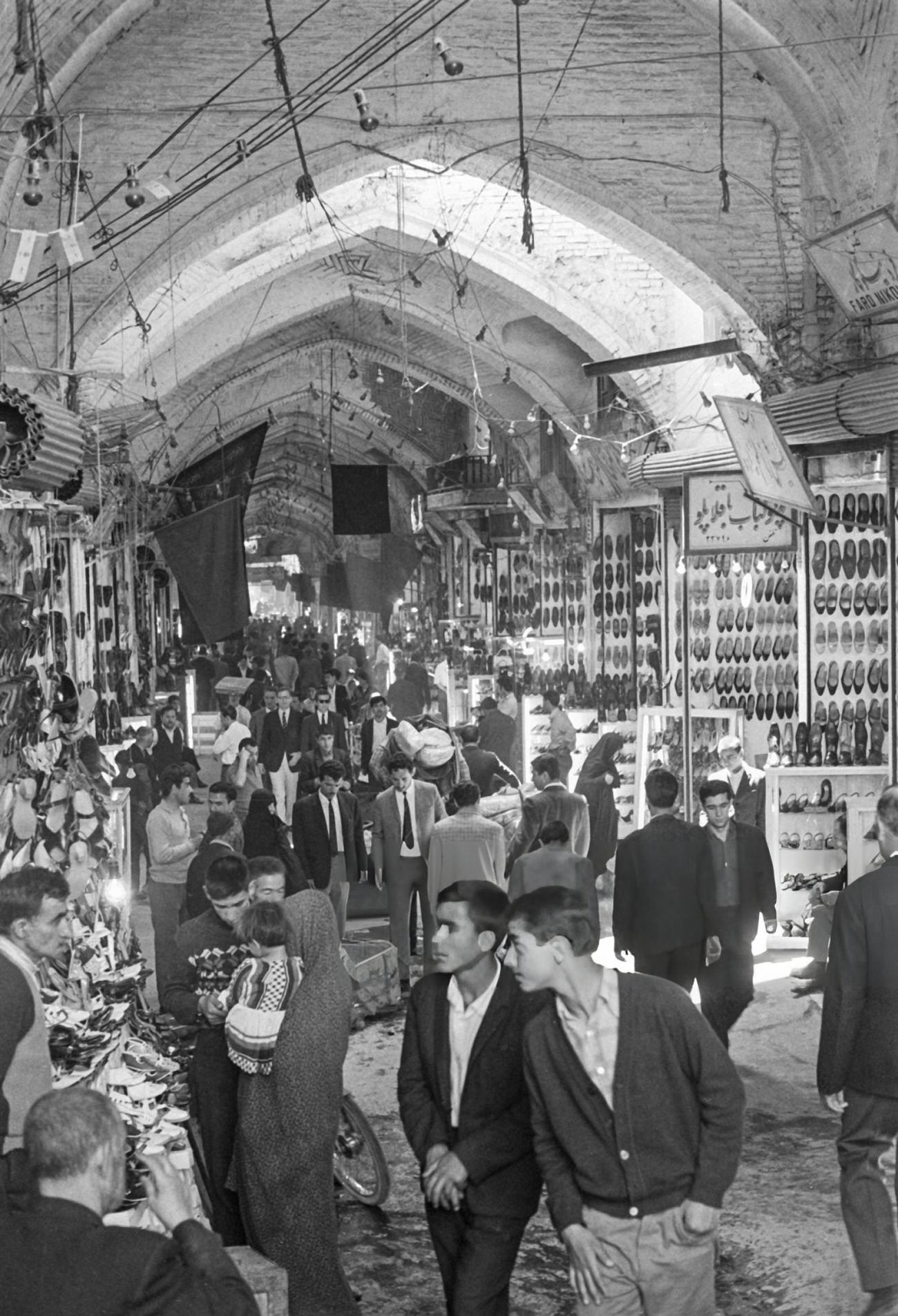
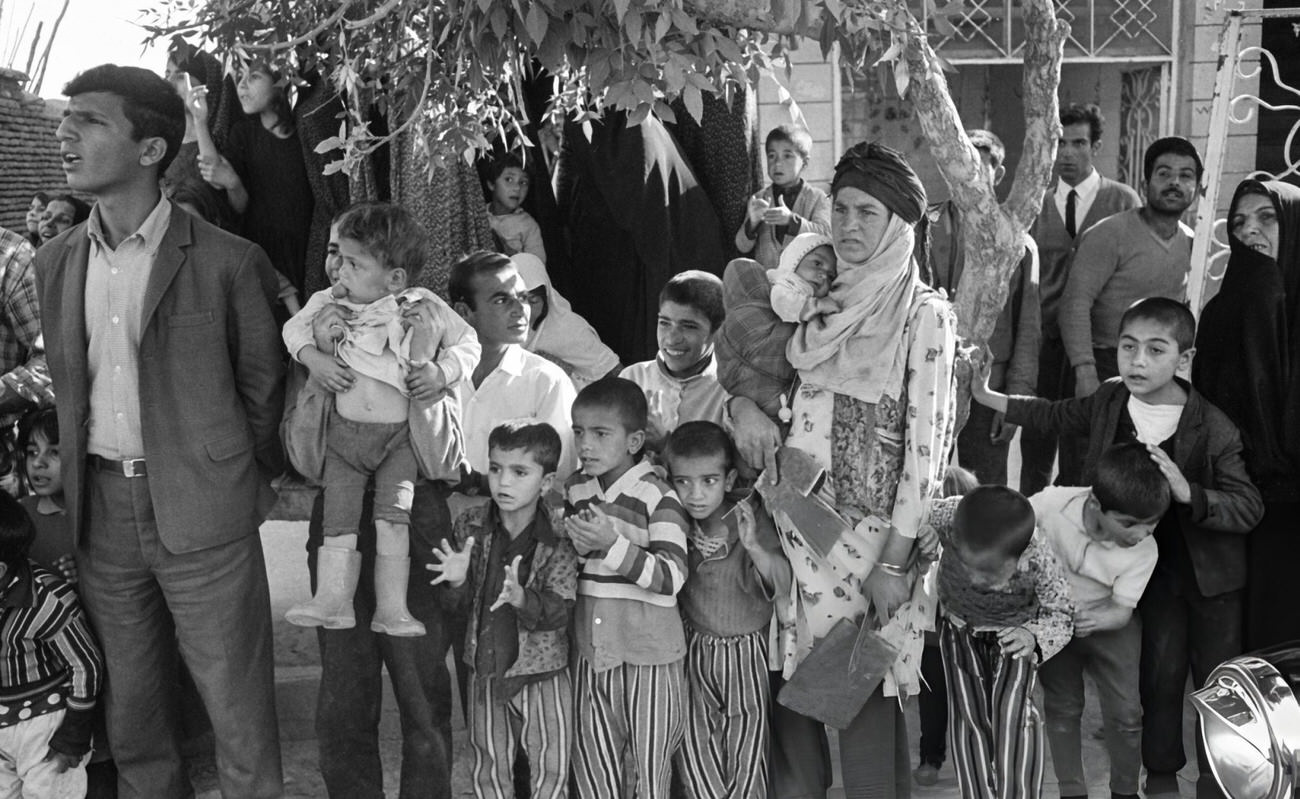
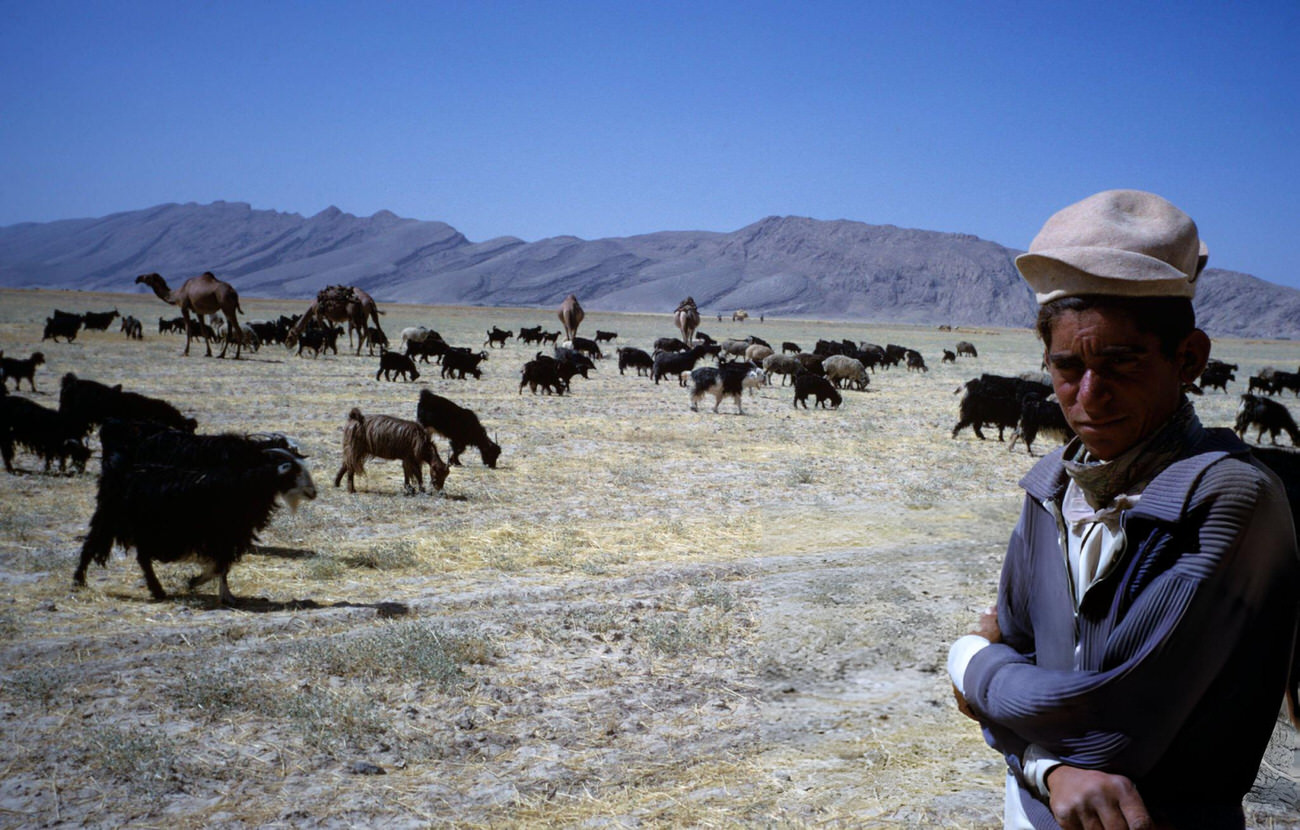
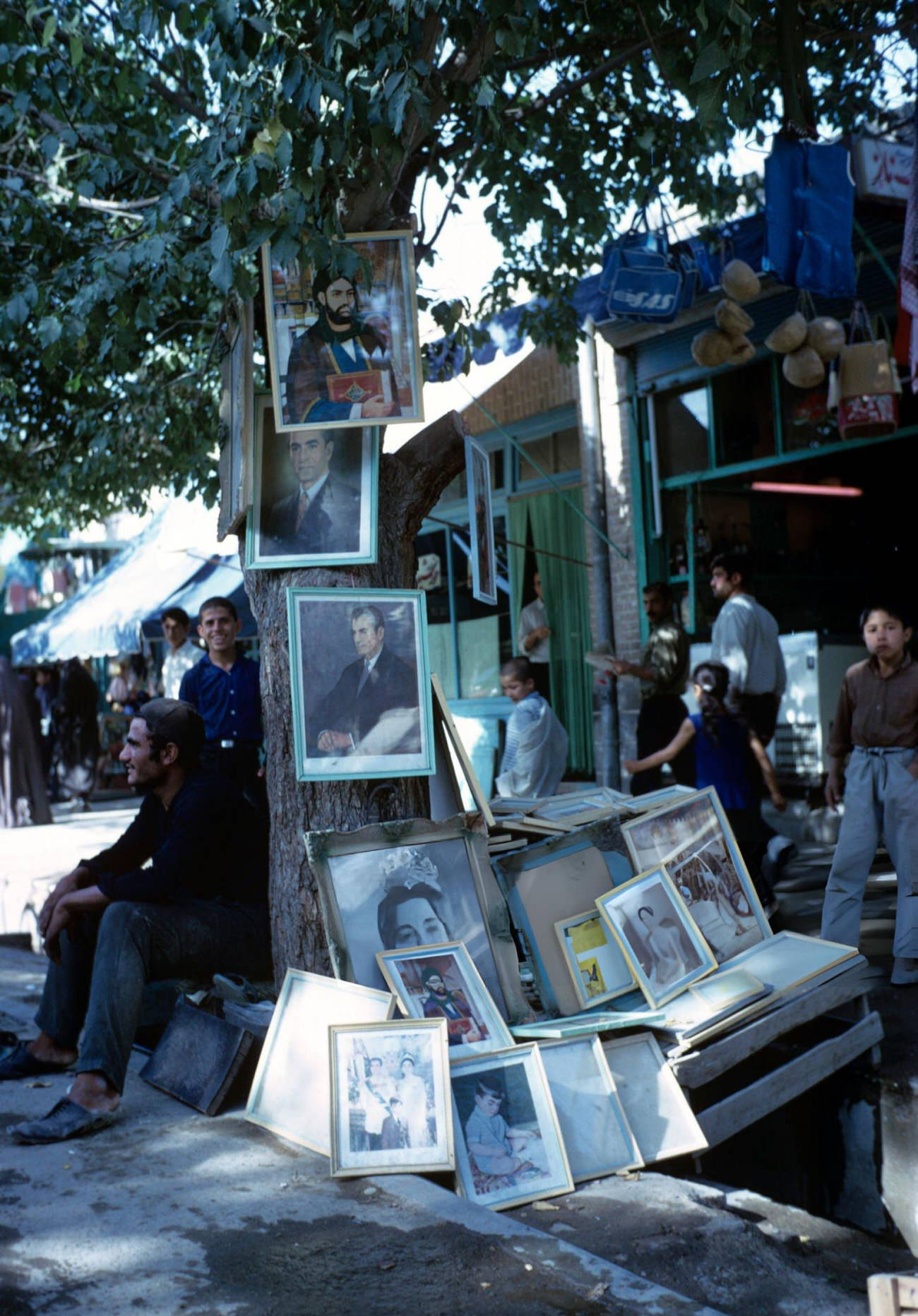
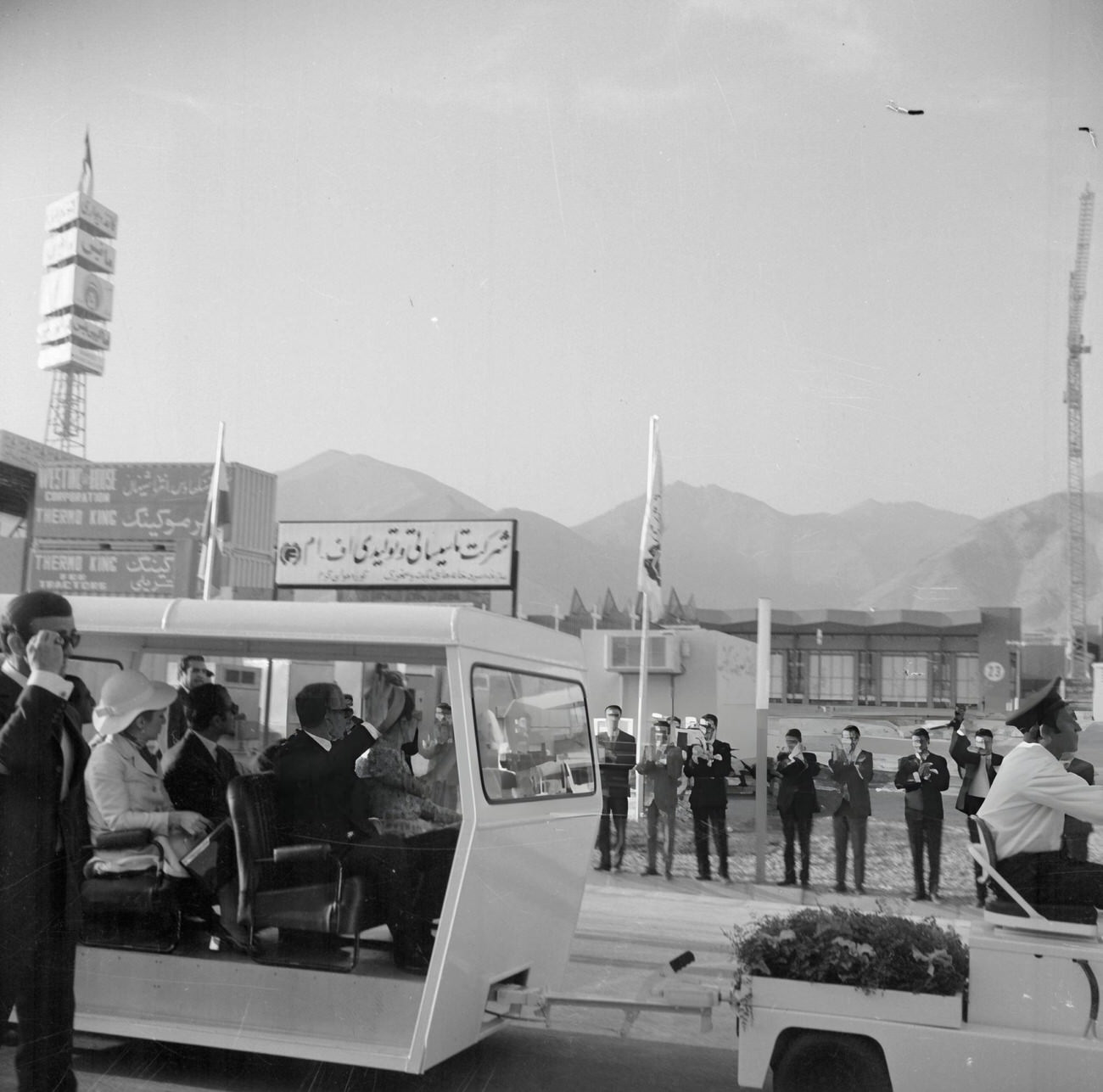
An earthquake in Khorasan Province, Iran, 1968, killing 20,000 people.The interior of the Grand Bazaar in Tehran, Iran, 1968.Iranian women and children on the route of the procession upon the arrival of the French President in Persepolis, Iran, 1968.A man walks in a street of Tehran, Iran, 1968.An Iranian man sweeping a street in a city of Iran, 1968.Kurdish women working in a village south of Lake Rezaiyeh in the Azerbaijan area of Iran, 1960s.A man standing with his arms crossed in front of a herd of goats and camels in Iran, 1969.Portraits of the royal family and religious dignitaries hanging on the trunk of a tree in a street in Iran, 1969.Mohammad Reza Pahlavi, the former Shah of Iran, and Empress Farah Pahlavi, at the Asian Trade International Exhibition of Industries and Manufacturing in Tehran, Iran, 1969.
Kevin Clark is a historian and writer who is passionate about sharing the stories and significance behind historical photos. He loves to explore hidden histories and cultural contexts behind the images, providing a unique insight into the past.