
Hong Kong in the 1980s was a city moving at full speed. Its skyline climbed higher every year, its streets buzzed with commerce, and its reputation as one of the world’s great financial centers was solidifying fast. Property prices surged to levels that shocked even seasoned observers, and the city’s entertainment and political scenes kept pace with that energy. At the start of the decade, Hong Kong’s population had just crossed five million people. Over the following ten years, it grew at roughly 1.3% per year, reaching 5.73 million by 1990 — an increase of around 700,000 residents in a single decade.
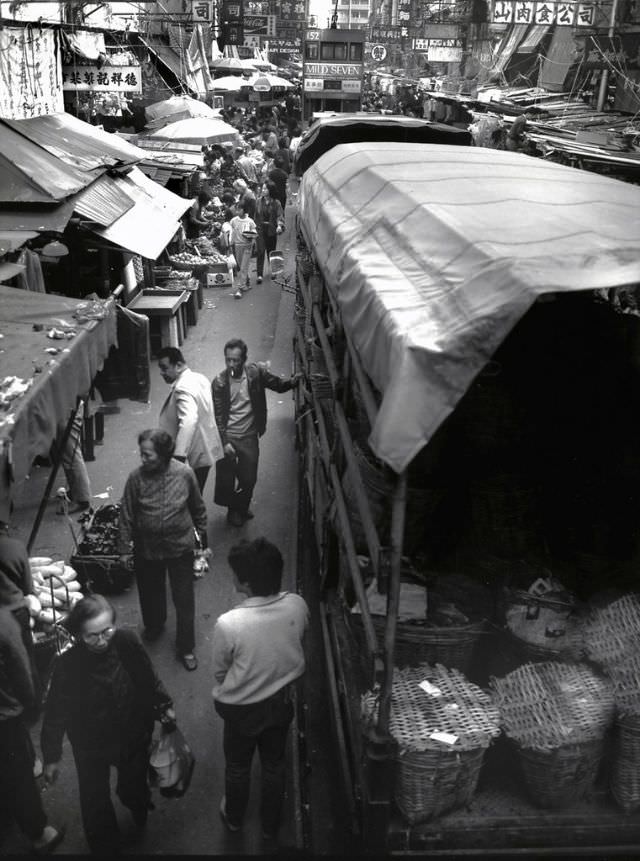
That growth brought tension alongside opportunity. In the early 1980s, a large wave of immigrants arriving from mainland China pushed wages down, triggering public protests and widespread frustration among local workers. Hong Kong’s streets carried that friction alongside their usual energy — the markets, the trams, the narrow alleys lined with shops — all of it playing out against a backdrop of real economic strain for many families.
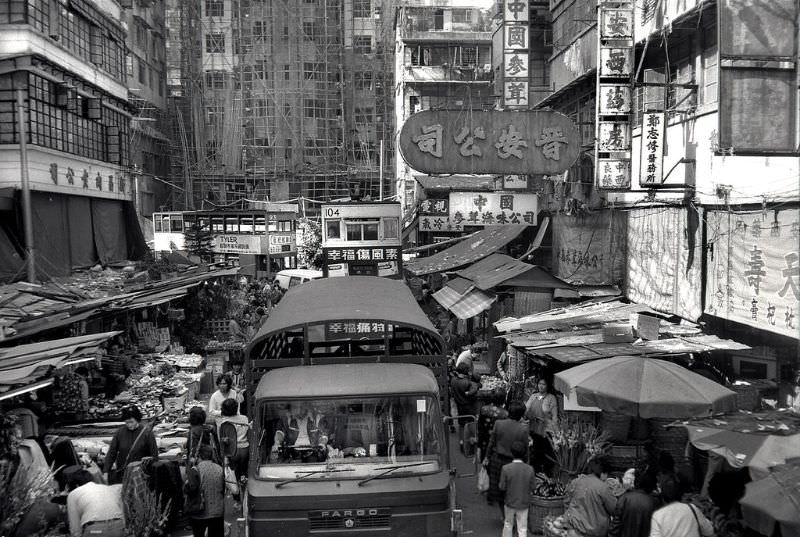
Looming over everything was a single date: 1997. The scheduled handover of Hong Kong from British to Chinese sovereignty created deep uncertainty across the population. Many residents began making plans to leave. Between 1980 and 1986, approximately 21,000 people departed Hong Kong permanently each year, heading mainly to the United Kingdom, Canada, and the United States. By 1987, that number had climbed sharply to 48,000 people annually. Families who had built lives across generations in Hong Kong were quietly packing up and going.
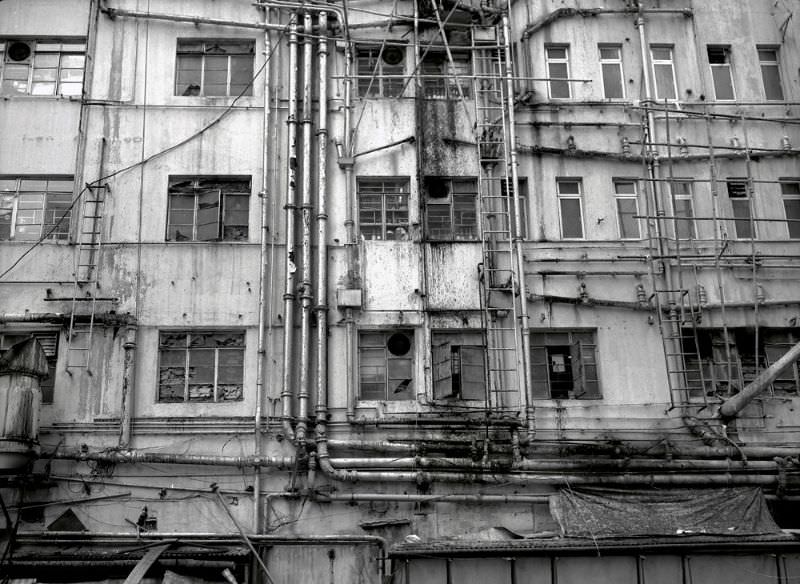
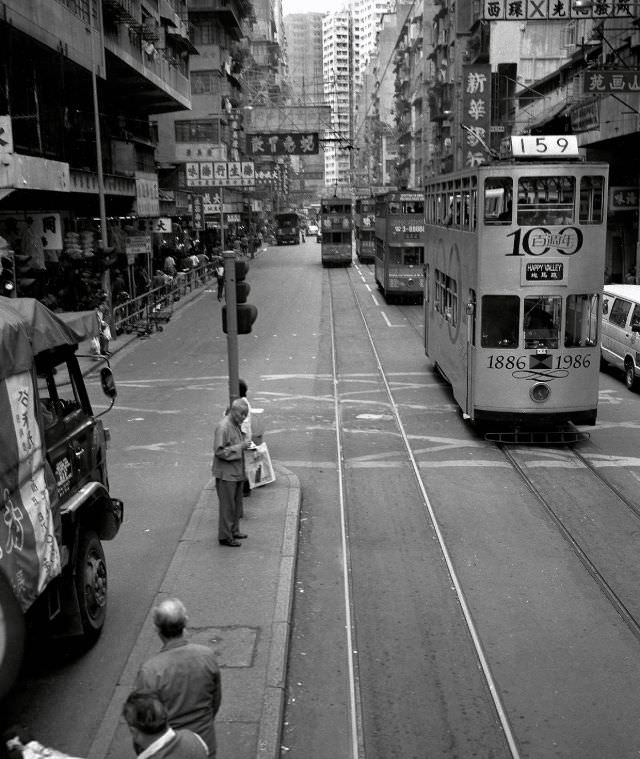
It was into this city — prosperous on the surface, anxious underneath — that photographer Dave Glass walked with his camera in 1986 and 1987. His photographs do not editorialize. They simply show what was there: the residential towers packed tightly together in Kowloon, the trams rolling along Queen’s Road, the shopkeepers at their stalls, and the ferry passengers making their daily crossings.
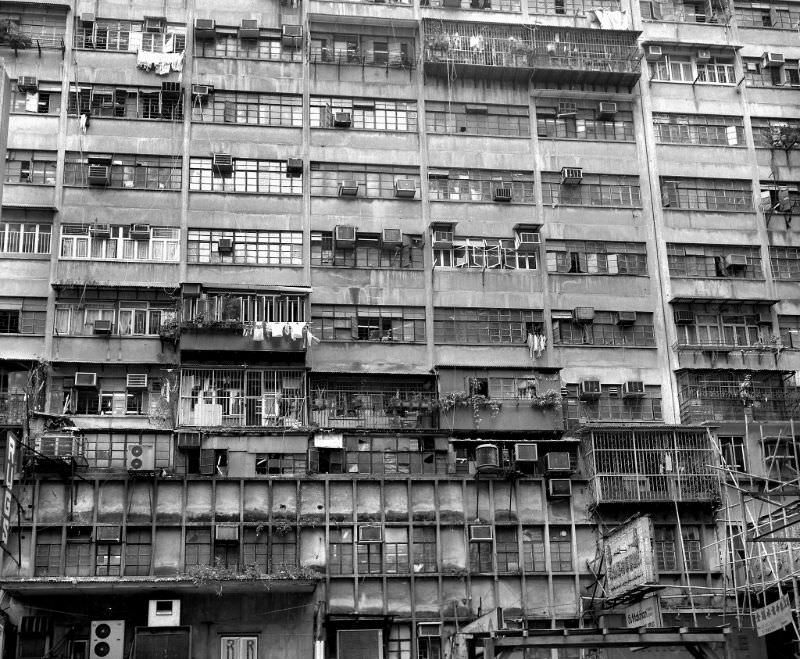
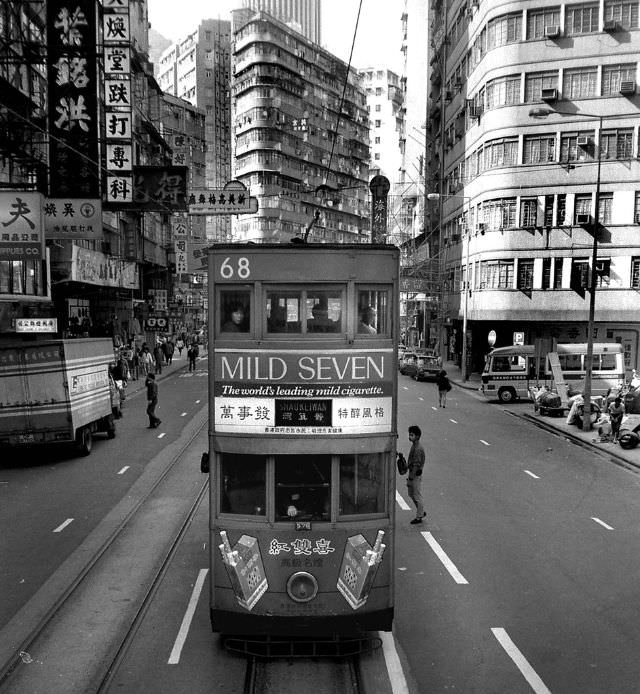
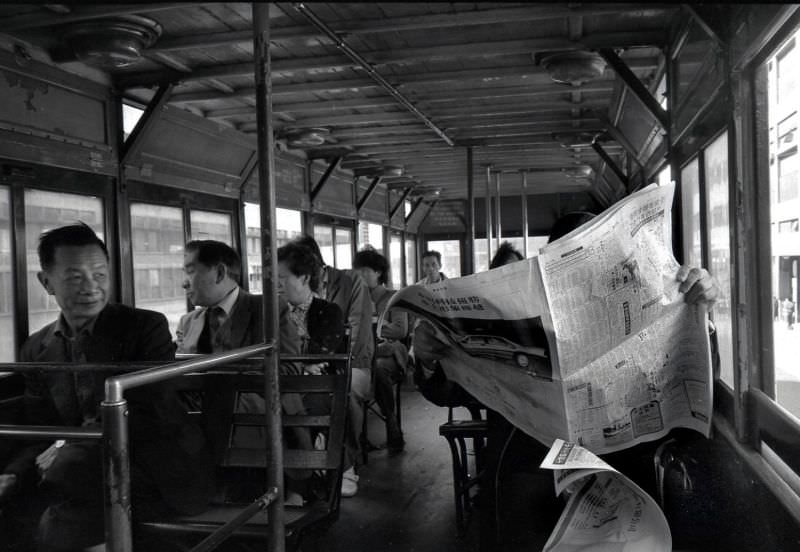
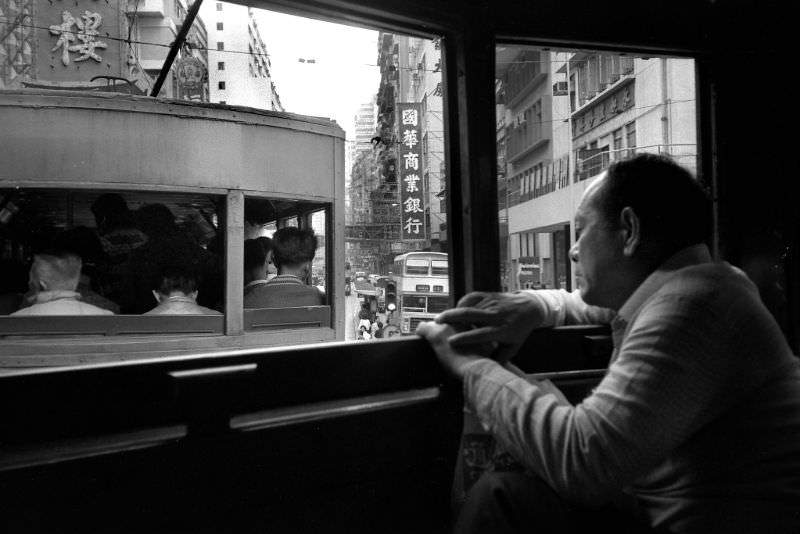
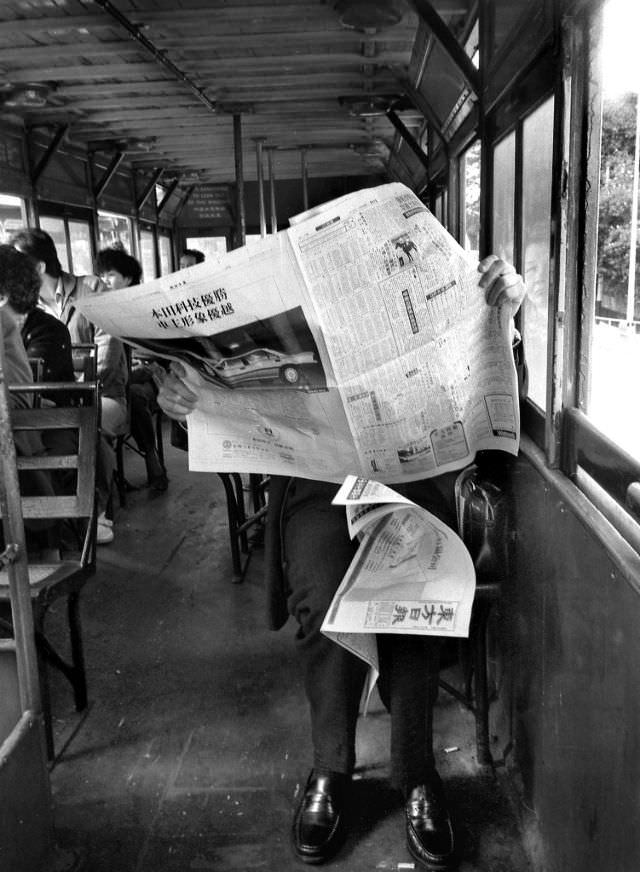
The trams of Queen’s Road were one of the defining features of everyday Hong Kong life. Double-decked and slow-moving, they threaded through some of the most crowded commercial corridors in the world. Passengers packed the upper and lower decks, watching the city slide past at street level. Glass captured these moments with an eye for the ordinary — the way people sat, looked out windows, and existed together in a shared urban space.
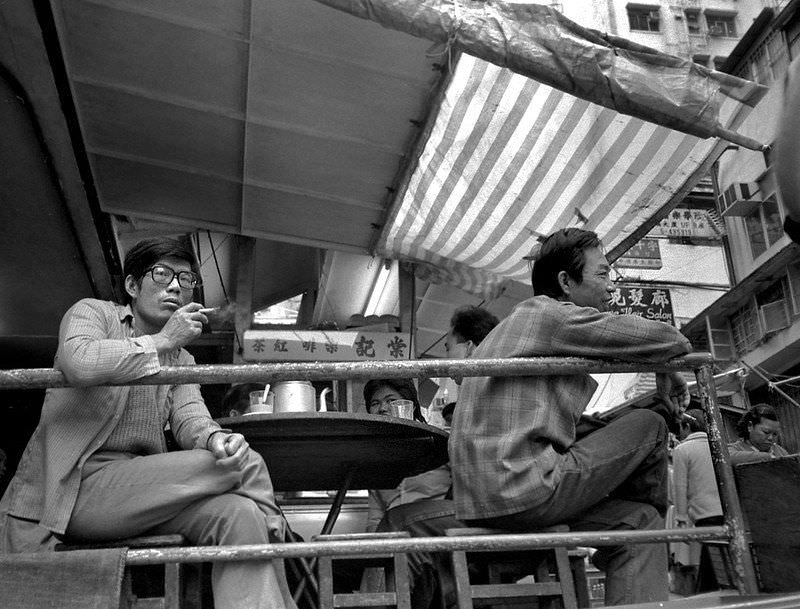
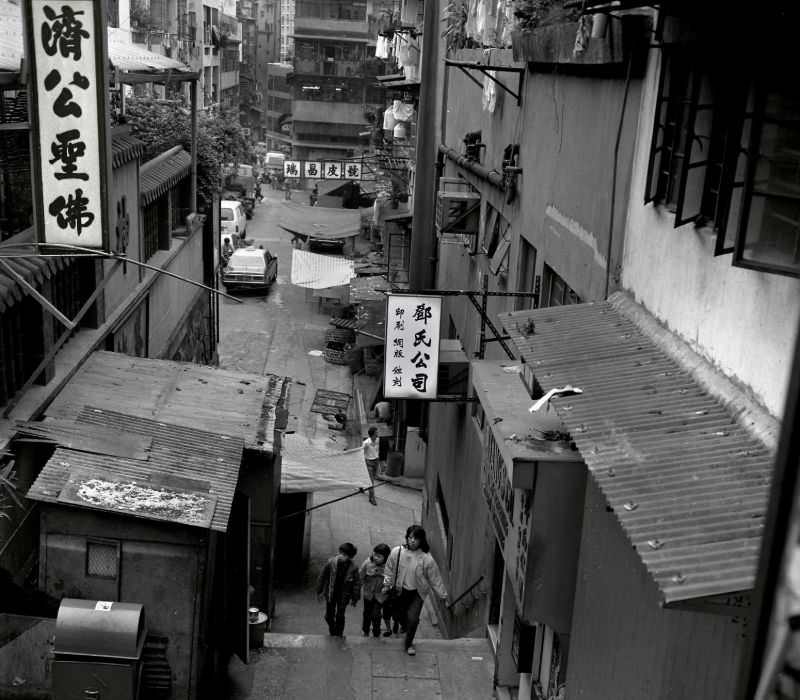
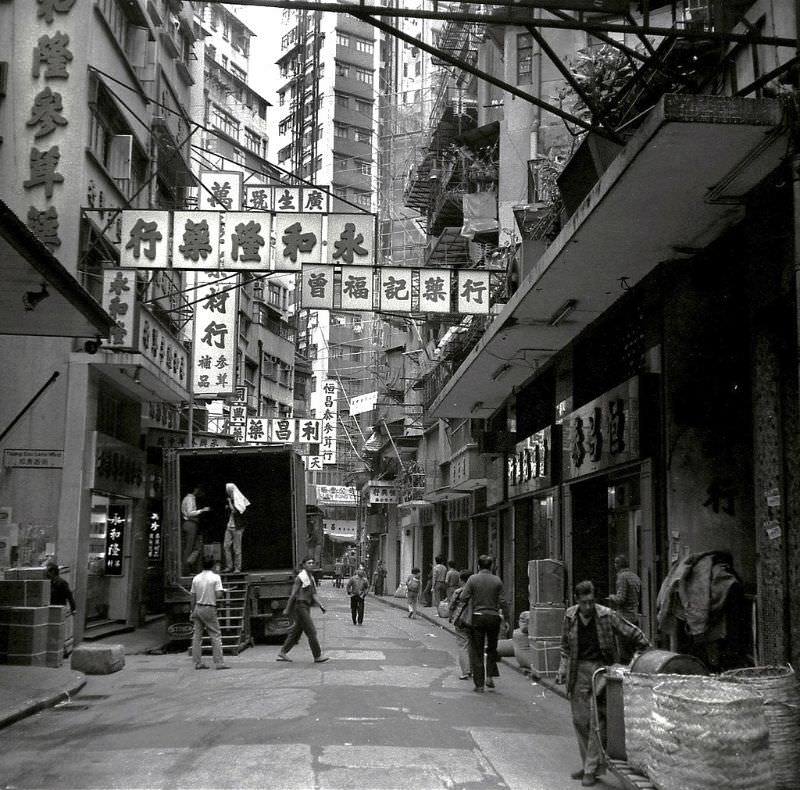
Ladder Street, a stepped thoroughfare in the Sheung Wan area, was home to small shops and tea houses that catered to locals rather than tourists. A tea shop on Ladder Street in 1986 was a place where older residents gathered, where the pace of the city slowed slightly, and where traditional routines held firm against the relentless modernization pressing in from every direction.
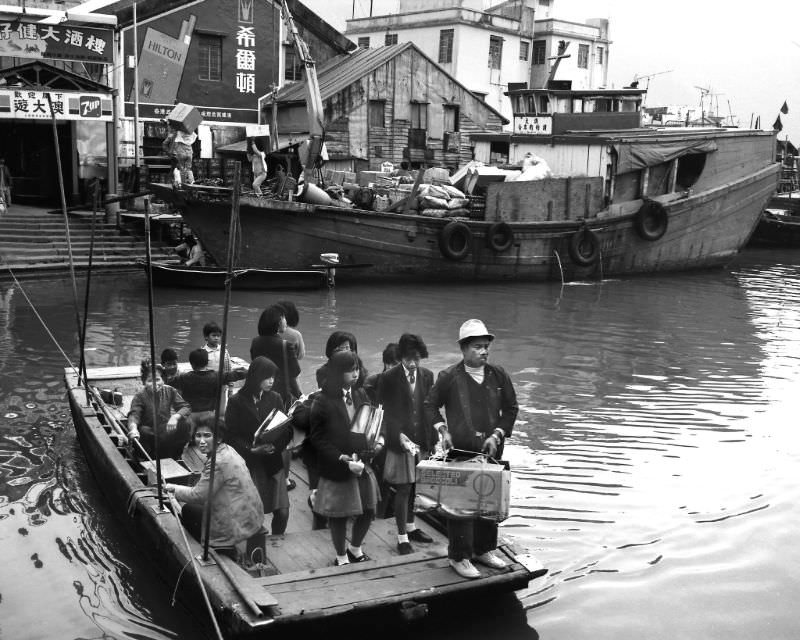
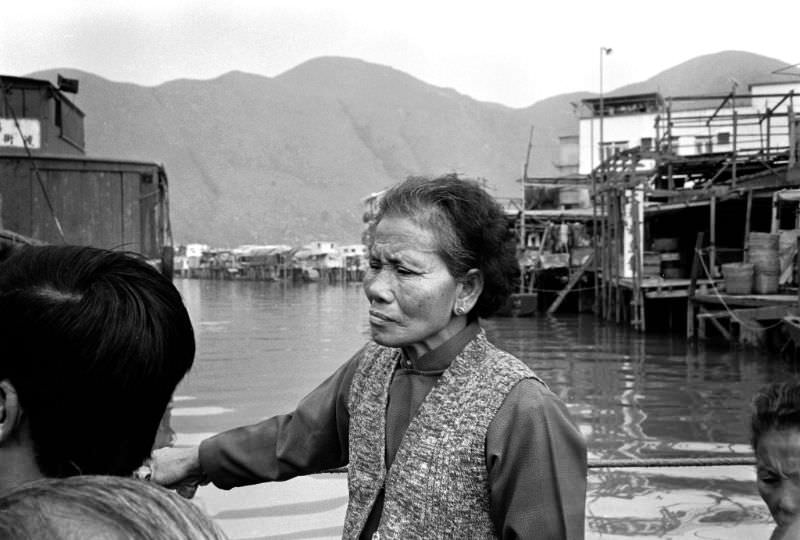
Beyond the urban core, Glass also documented the outlying islands and fishing communities that existed at the edges of Hong Kong’s metropolitan identity. Tai O, a village on Lantau Island, was known for its stilt houses built over tidal channels and its small-scale fishing economy. Getting around there meant relying on a rope ferry — a simple flat-bottomed boat pulled across the water by hand, carrying a handful of passengers at a time.
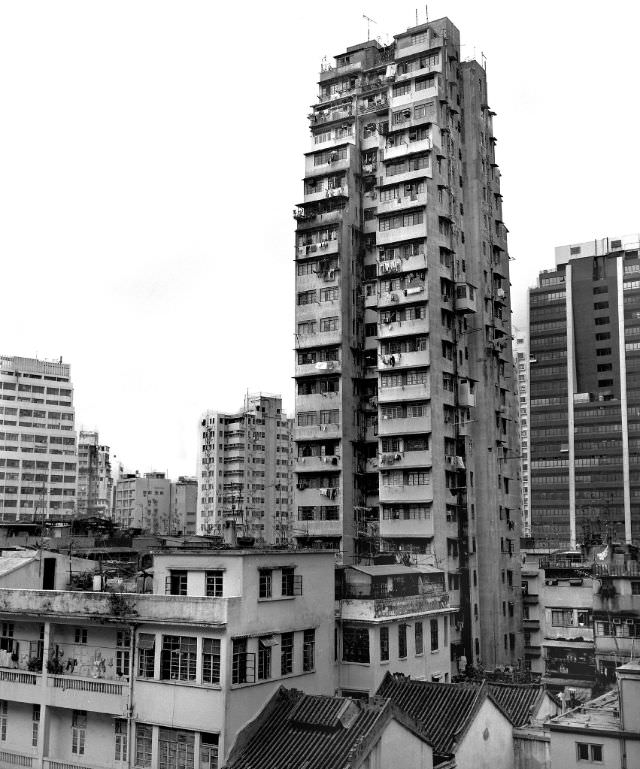
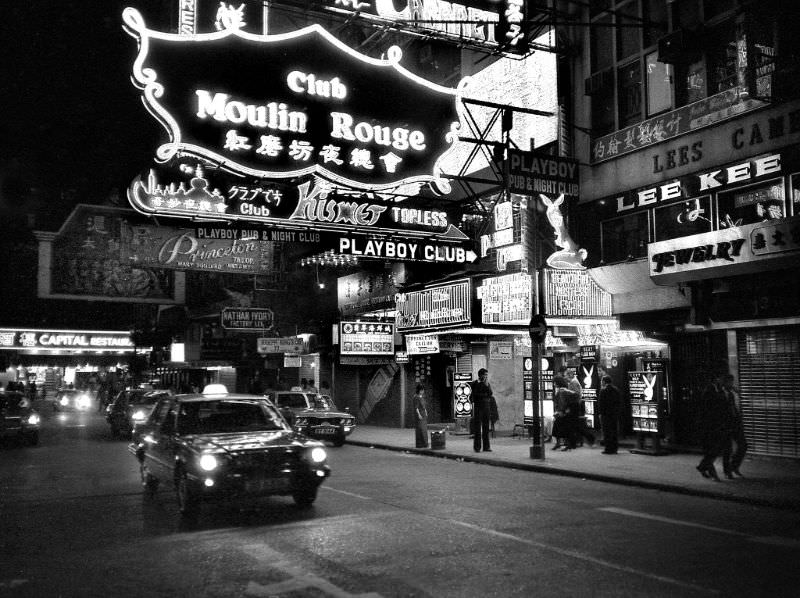
Nathan Road in Kowloon was Hong Kong’s most famous commercial street — a long, neon-lit corridor lined with electronics shops, tailors, restaurants, and hotels. It cut through the heart of Tsim Sha Tsui and served as the spine of the Kowloon peninsula’s retail economy. Chungking Mansions, the enormous mixed-use building at 36-44 Nathan Road, was already one of Hong Kong’s most distinctive addresses, housing budget guesthouses, restaurants, and small trading businesses across its many floors.
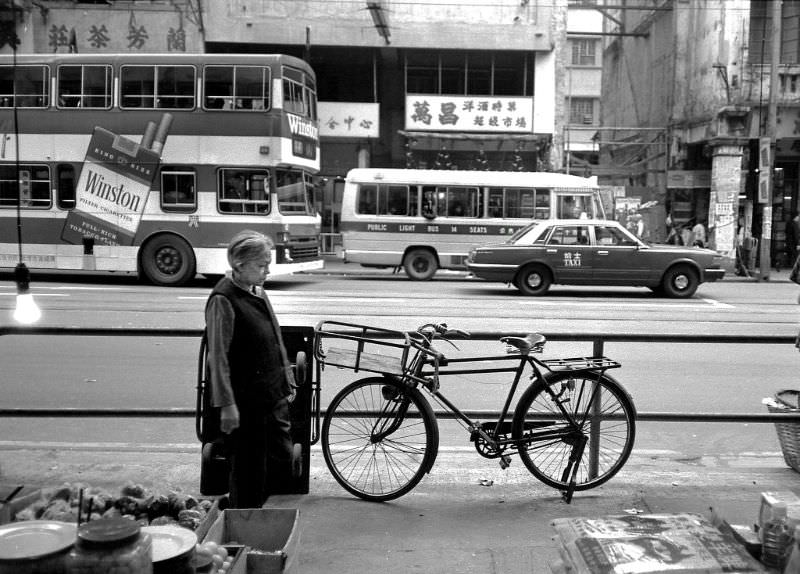
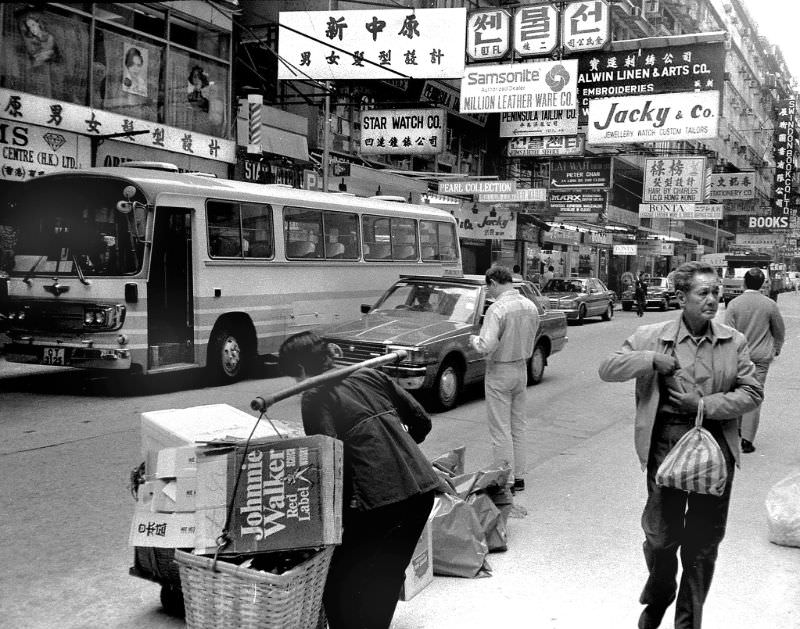
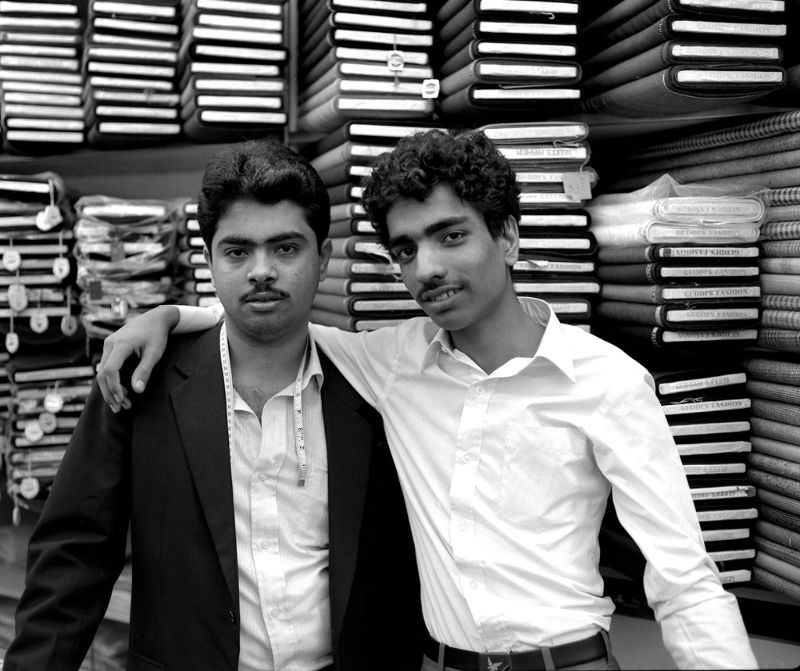
Kowloon’s tailor shops were a well-known institution. Suit makers operating small storefronts offered custom-made clothing at competitive prices, drawing both local customers and visitors. These businesses had been part of the district’s commercial fabric for decades, and in 1986 they were still very much active — measuring, cutting, and stitching in shops that often doubled as family workrooms.
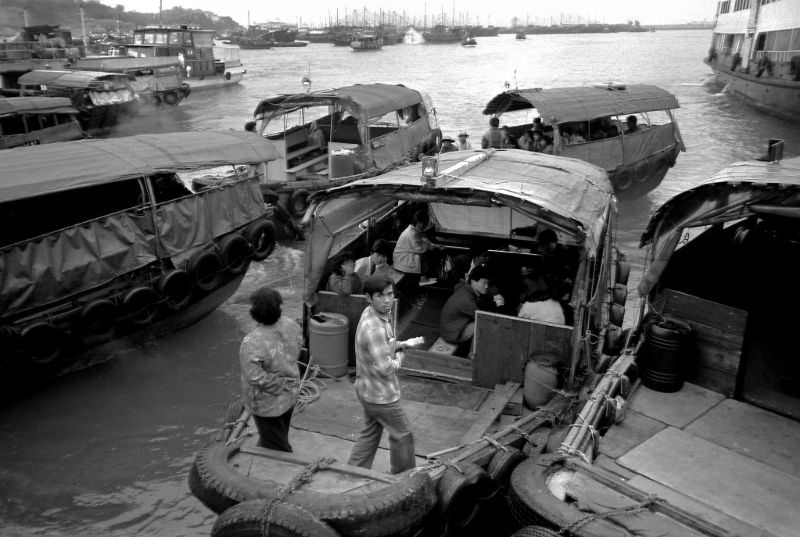
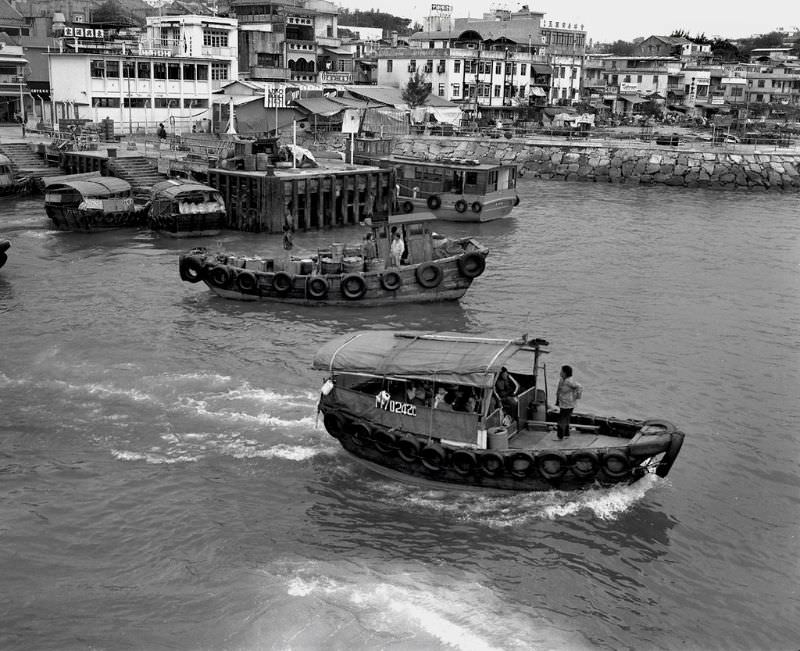
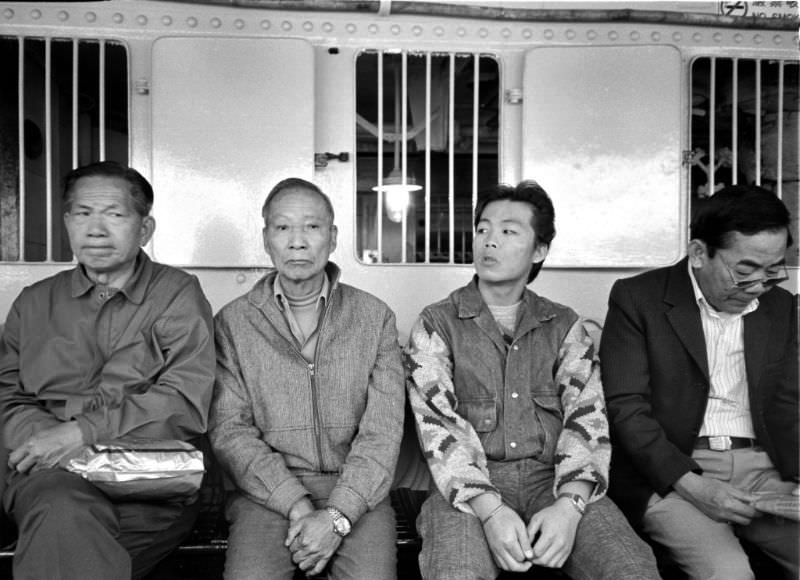
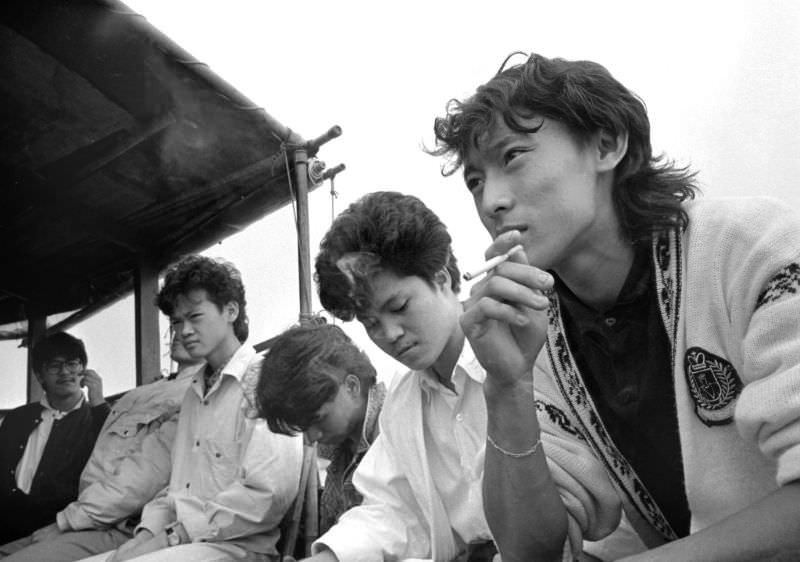
The Star Ferry crossing between Kowloon and Hong Kong Island was more than a commute — it was a daily ritual for hundreds of thousands of people. The short harbour crossing offered one of the most recognizable views in Asia: the dense cluster of towers on Hong Kong Island rising from the waterfront, the water traffic weaving between cargo ships and smaller vessels. Ferry passengers on the route to Lantau Island had a longer ride, heading toward a quieter part of the territory where communities like Tai O still operated at a different tempo.
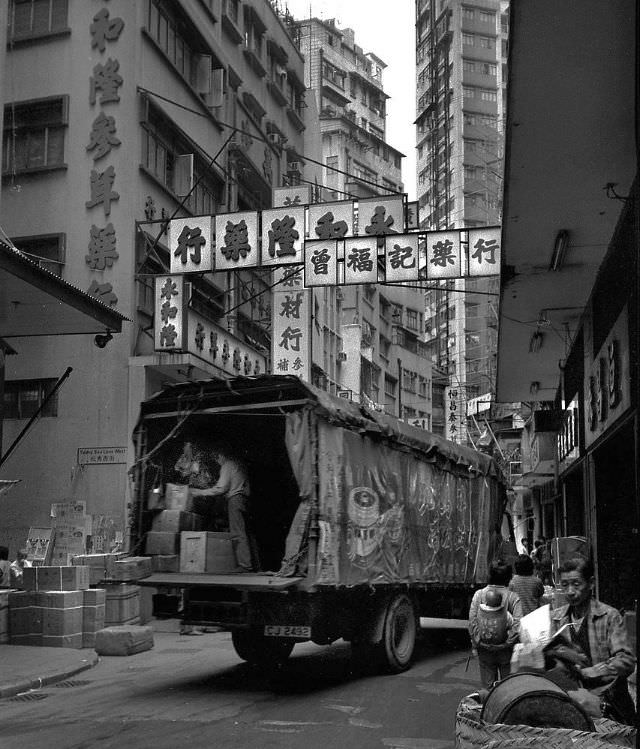
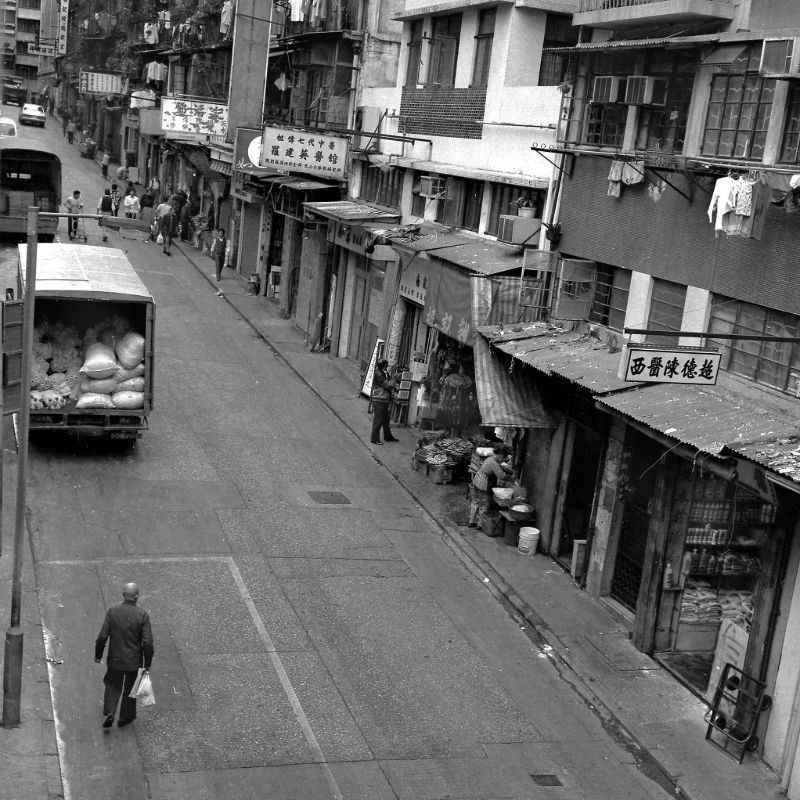
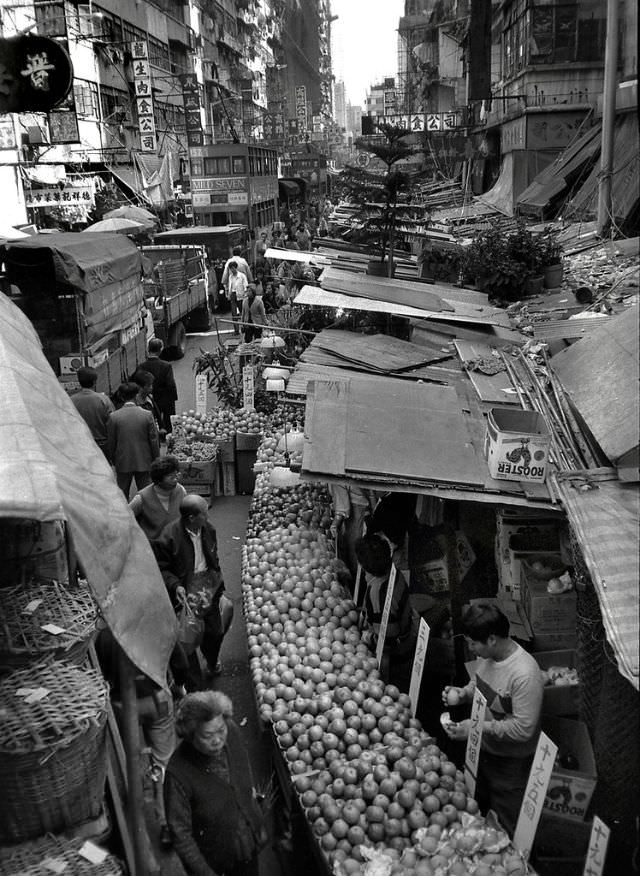
Wan Chai, one of Hong Kong Island’s most layered districts, mixed residential blocks with markets, bars, and street commerce. Its streets in 1986 showed the full range of the city’s social geography — working-class vendors operating steps away from busy entertainment venues, old shophouses standing alongside newer construction. The Sheung Wan district, further west, retained more of its traditional character, with dried goods merchants and herbal shops occupying the same streets they had for generations.
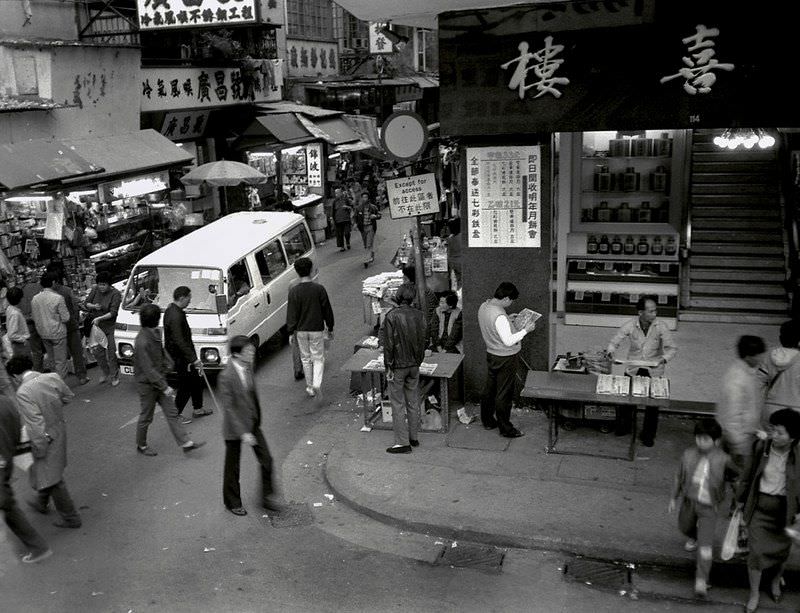
The outlying island community of Peng Chau offered a sharp contrast to the density of the urban core. Small enough to walk across in under an hour, Peng Chau had a quieter street life, with local shops and narrow lanes that felt far removed from the noise of Kowloon or Central, even though the ferry ride from the city was relatively short.
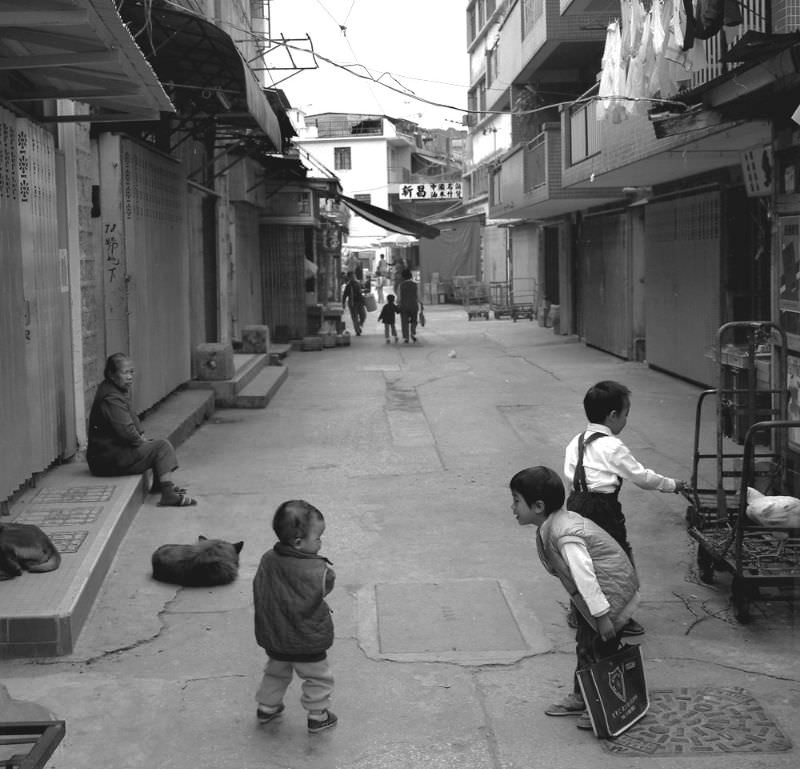
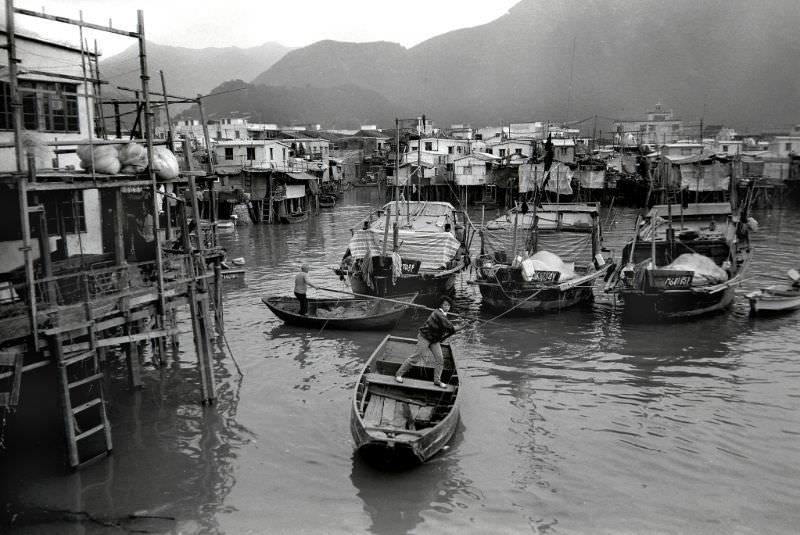
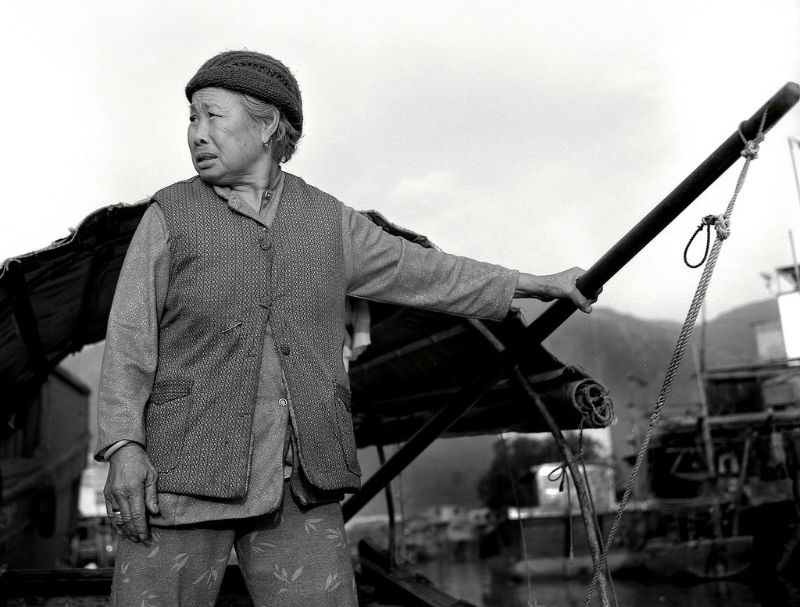
Tai O’s water taxis and ferries connected the village to the rest of Lantau Island and beyond. The drivers who operated these small boats worked the same routes day after day, navigating the narrow channels between the stilt-house settlements. By 1987, when Glass returned to photograph the village again, little had changed in Tai O’s basic structure — the same wooden boats, the same waterways, the same rhythm of daily life.
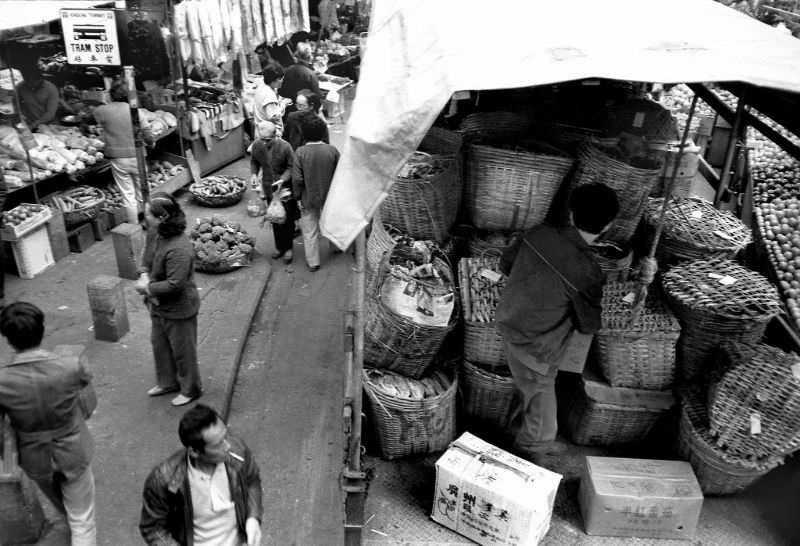
Back in Wan Chai, the streets mixed the practical and the commercial in ways that were specific to Hong Kong’s urban culture. Vendors, pedestrians, and vehicles competed for space on roads that had not been designed for the volume of activity they now carried. These scenes were ordinary to those living them — just another day in a city that had long since stopped being surprised by its own density.
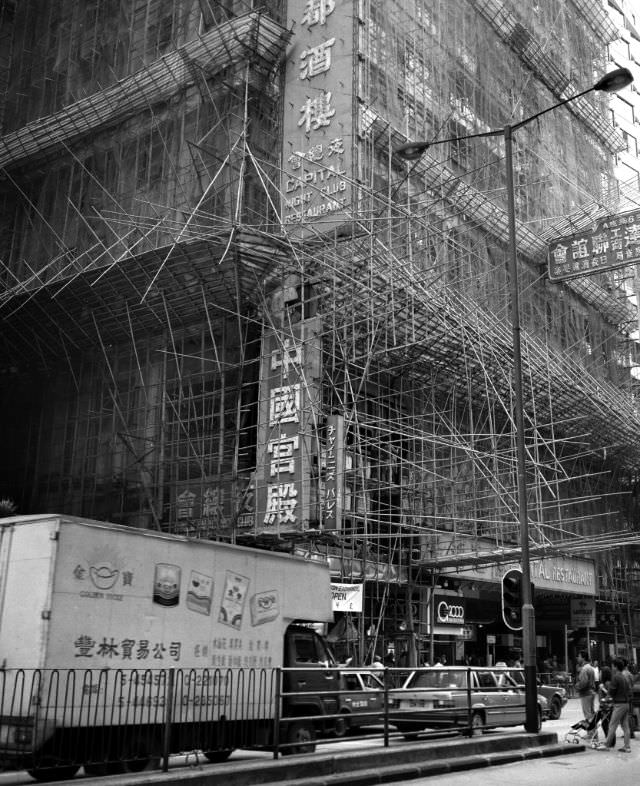
By 1987, construction was accelerating across Hong Kong. On Nathan Road in Kowloon, bamboo scaffolding wrapped around buildings under renovation — a method that had been used in Hong Kong for over a century and remained standard practice. Entire building facades disappeared behind dense latticeworks of bamboo poles, held together with plastic strips, built by workers who moved across the structures with remarkable ease.
Dave Glass’s final photograph from this collection brings the lens back to Tai O — a water taxi driver at work in 1987, an image that anchors the entire series in the human scale of daily labor. Across two years of shooting, Glass documented a city that was simultaneously one of the wealthiest places on earth and one carrying serious anxiety about its own future.





I live ther from 1990 to 1994. It was very similar and these photos take me back….