
Hong Kong in the first decade of the twentieth century was a city in constant motion. Its population was growing steadily, trade was booming, and its streets told the story of a place caught between deep-rooted Chinese tradition and expanding British colonial rule. The photographs in this collection come from the Kien family archives and offer a rare window into what daily life actually looked like on the ground during that period.
The colony had already established itself as one of the most important ports in East Asia. The British China Station — the Royal Navy’s regional headquarters — operated out of Hong Kong, reinforcing its strategic value. Merchant vessels, cargo junks, and passenger steamers crowded the harbor. The waterfront was one of the busiest places in the city, and the photographs reflect just how central the sea was to life here.
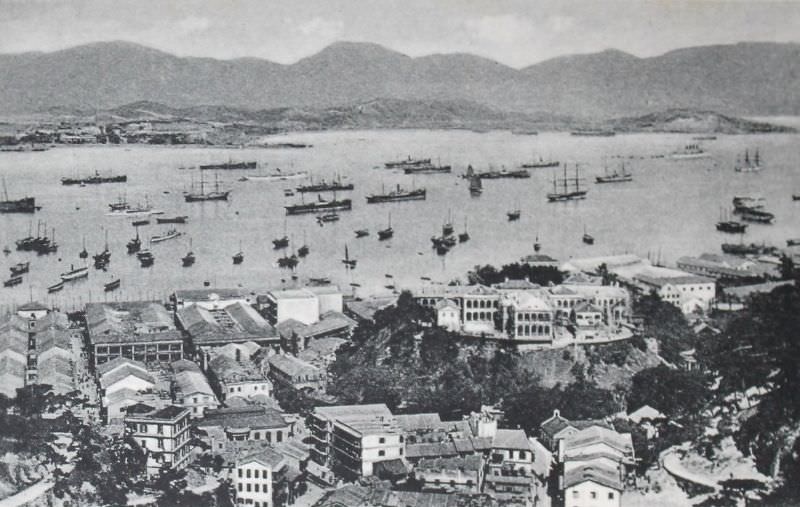
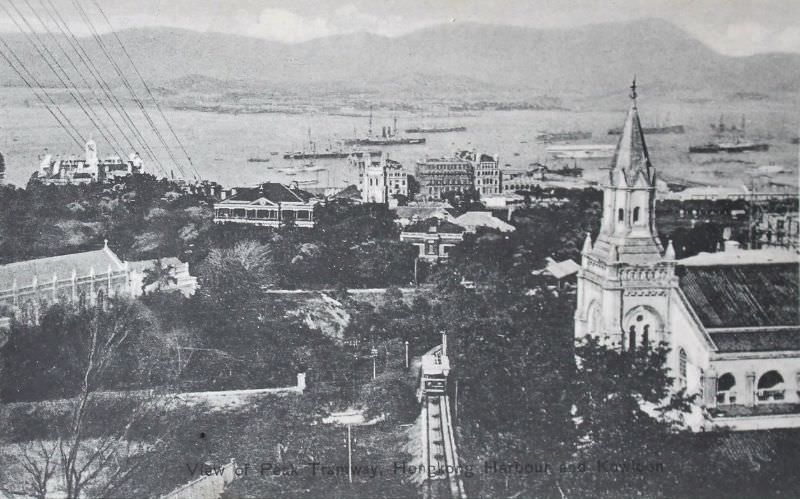
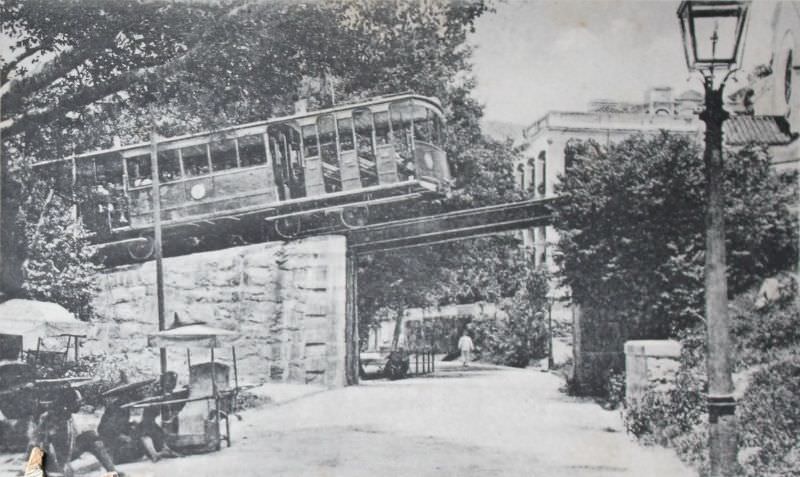
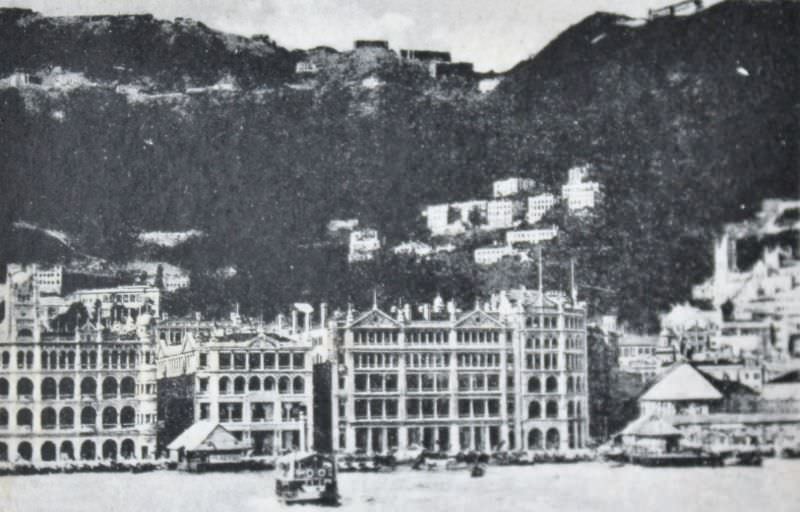
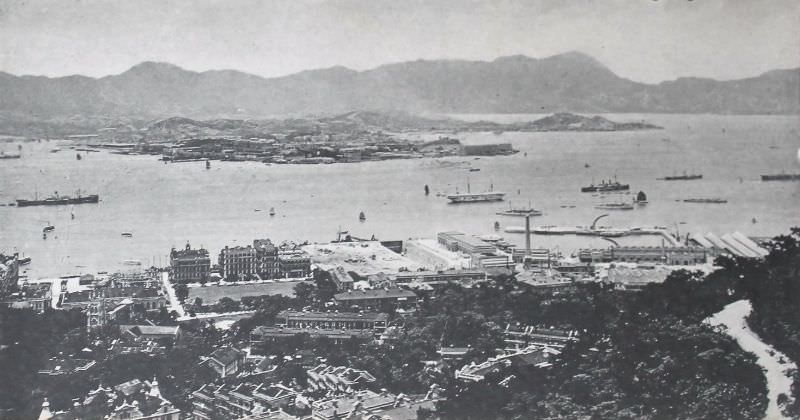
The harbor separated Hong Kong Island from Kowloon, and both sides were developing fast. The views across the water showed a skyline that was already dense with colonial buildings, warehouses, and hillside residences. The Peak Tramway, which had opened in 1888, connected the lower city to the heights above, where wealthier residents lived to escape the heat.
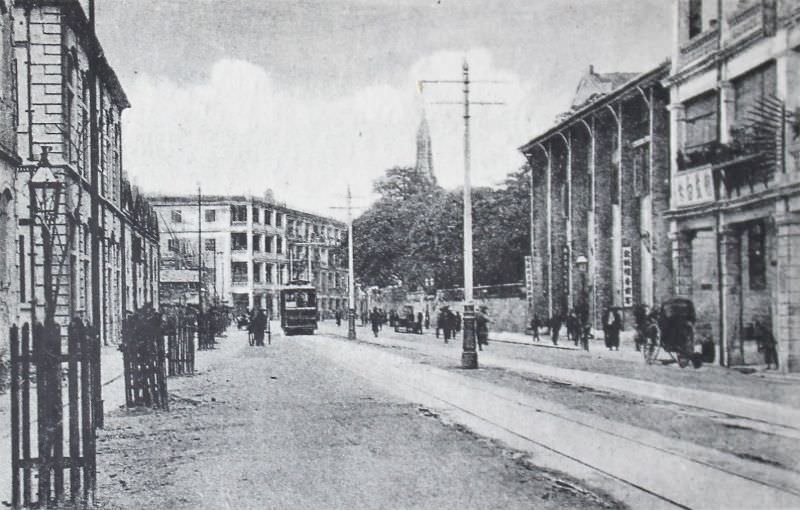
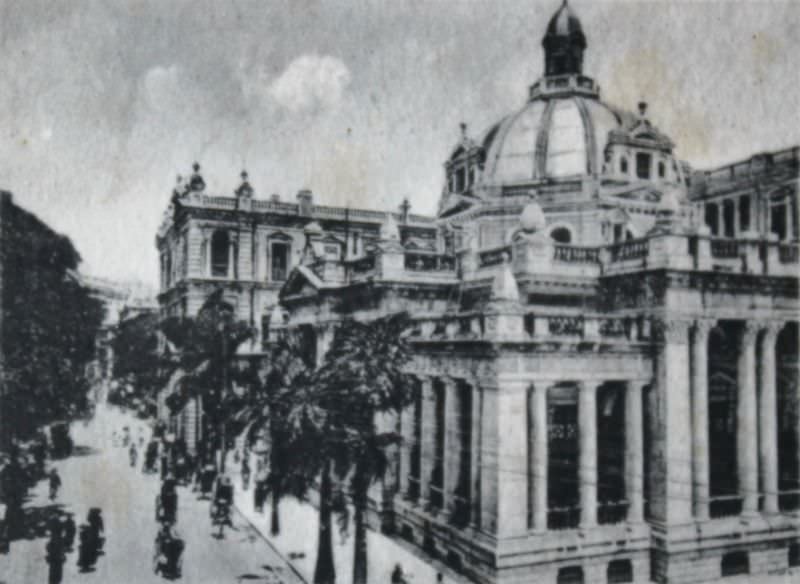
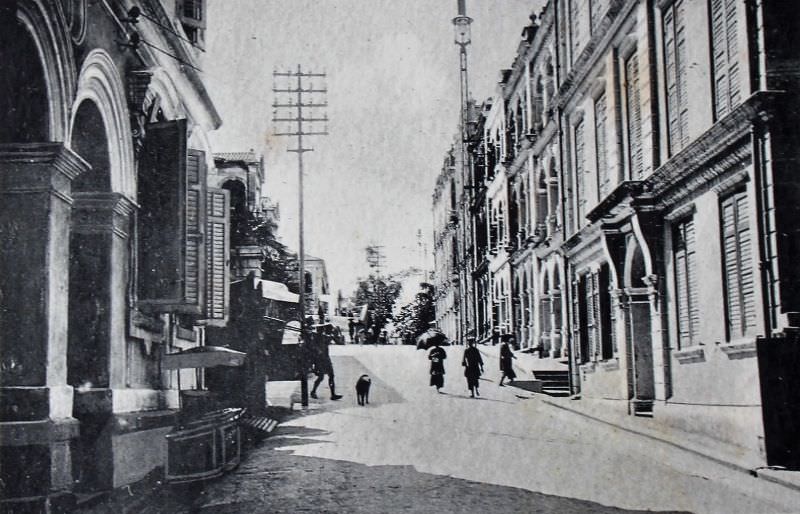
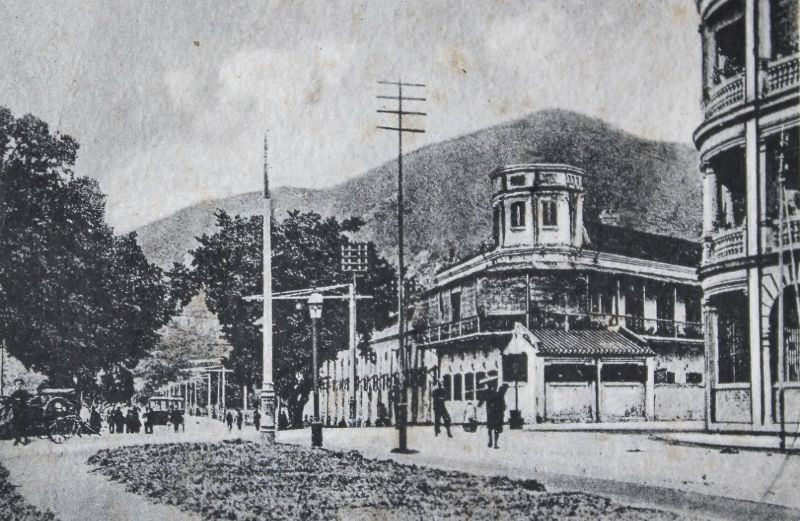
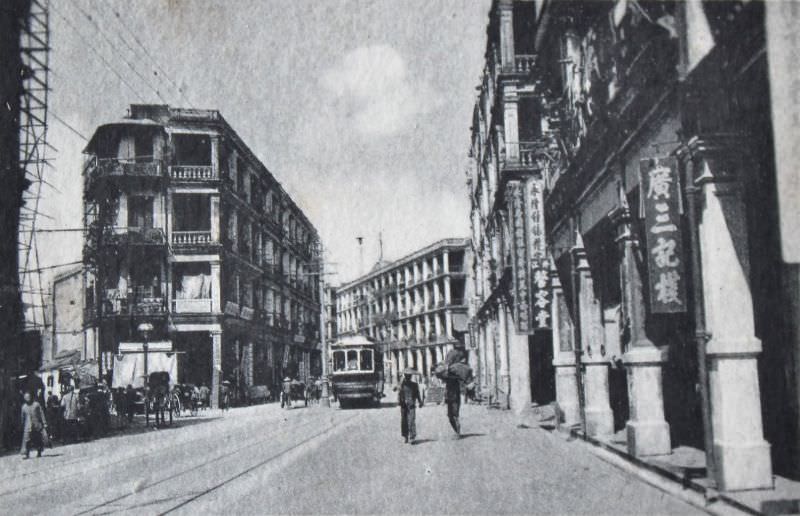
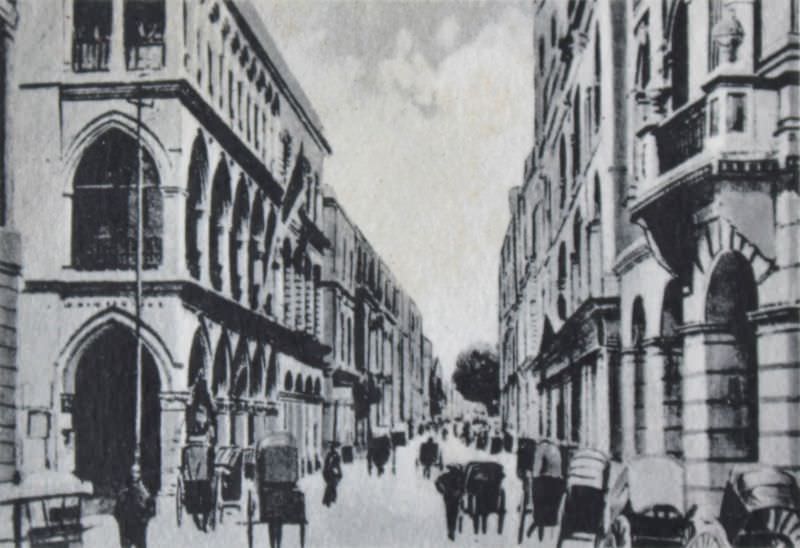
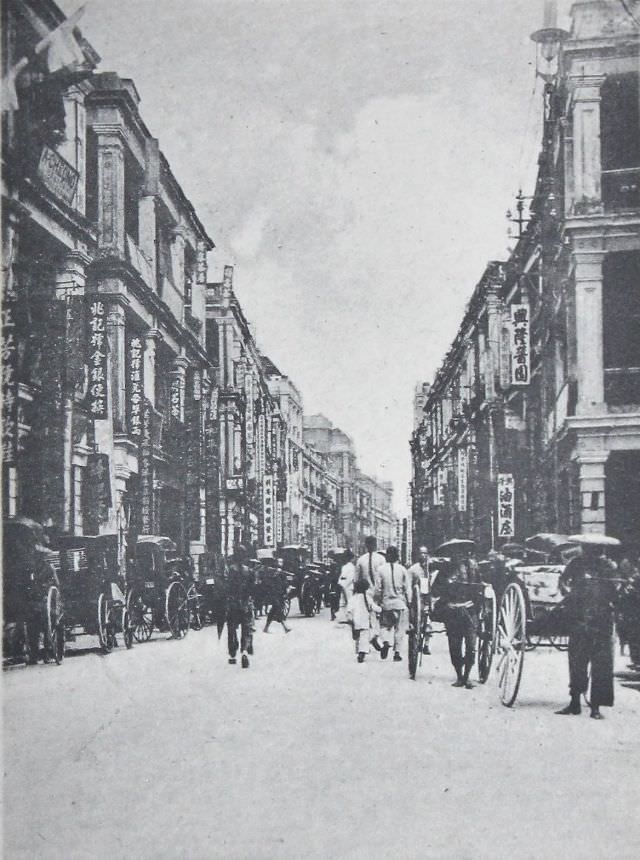
Down in the city, the main commercial roads were always busy. Des Voeux Road Central was one of the colony’s main arteries, lined with shops, banks, and public buildings. By this period, electric trams had been introduced, running alongside older forms of transport like the sedan chair and rickshaw. The contrast between old and new was visible on nearly every block.
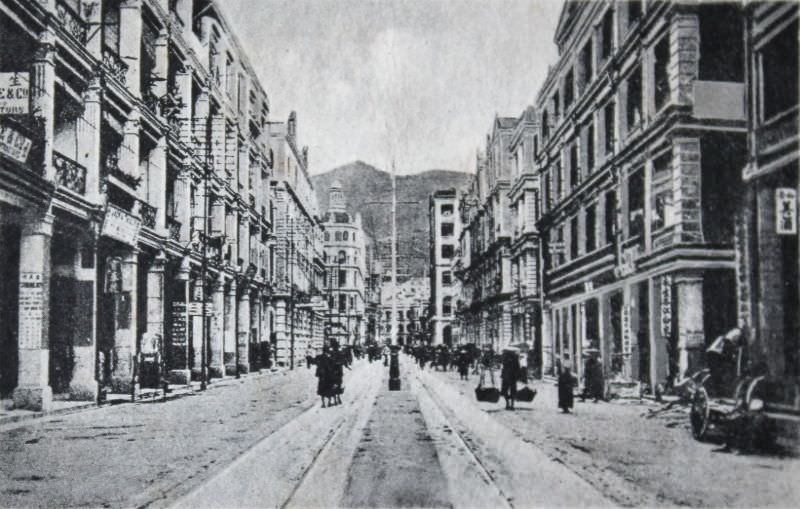
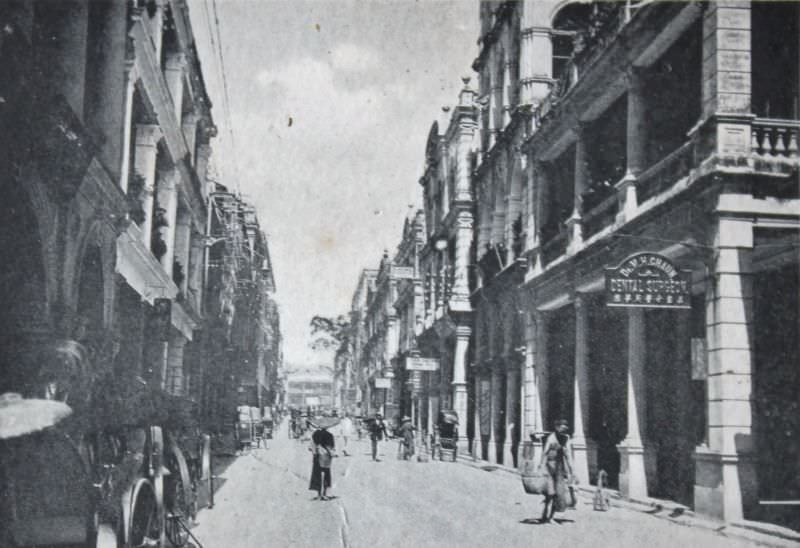
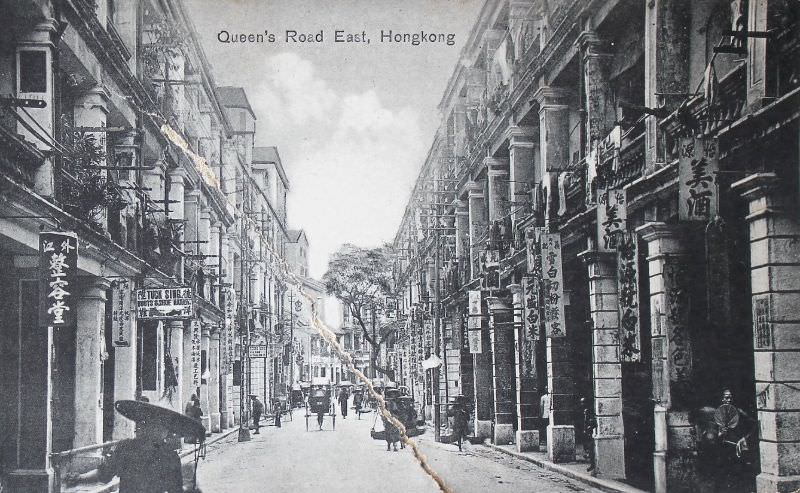
Queen’s Road Central was another major thoroughfare. It ran along the northern edge of Hong Kong Island and was home to some of the colony’s most prominent institutions, including the Hongkong and Shanghai Banking Corporation. Pedestrians, laborers, and merchants all shared the same crowded pavement.
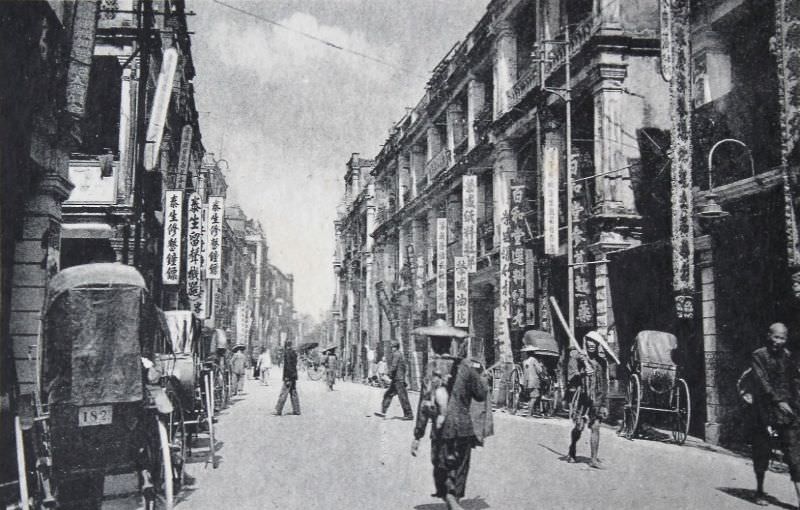
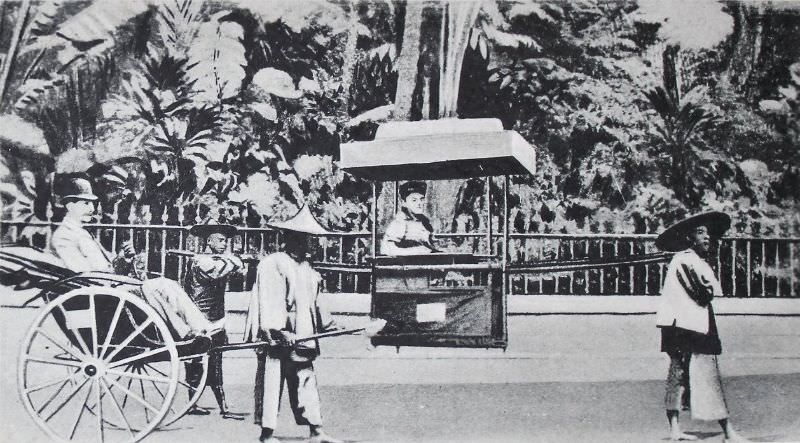
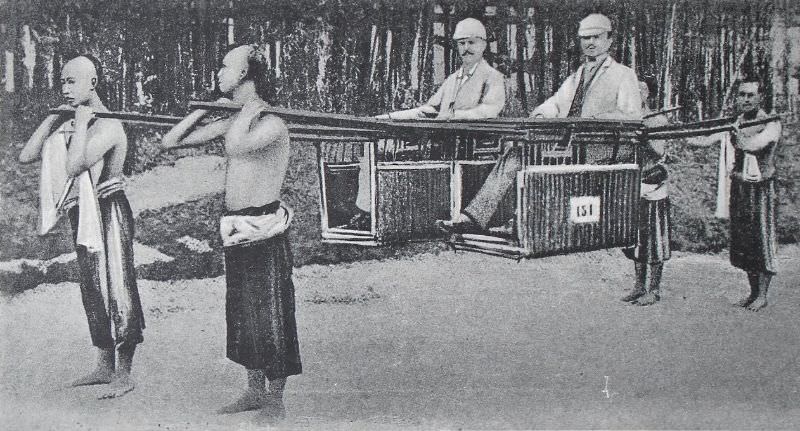
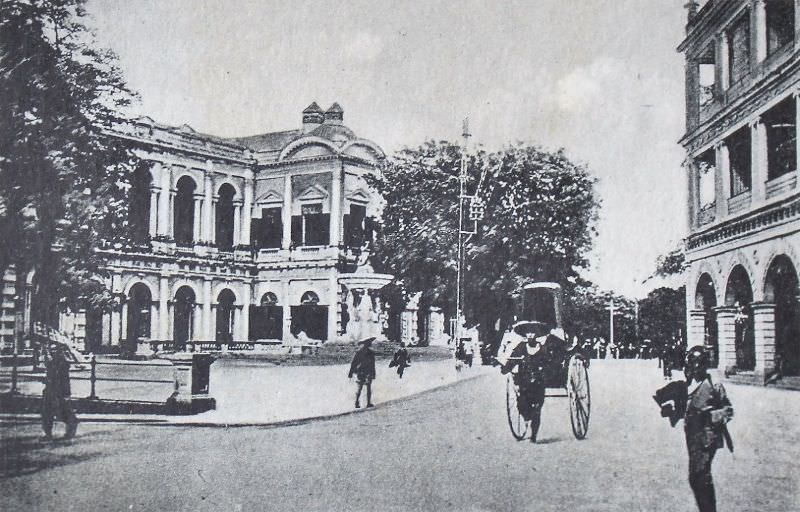
Getting around the city meant relying on human-powered transport for most people. Sedan chairs were carried by two or more bearers and were commonly used by wealthier residents or officials. Rickshaws, a more recent introduction, were pulled by a single man on foot. Both were everyday sights on Hong Kong’s steep and narrow roads.
The working class formed the backbone of this busy economy. Street coolies — laborers who carried goods, materials, and loads of all kinds — were a constant presence throughout the city. They worked long hours for minimal pay, doing the physical work that kept commerce moving. Their meals were often eaten in the street, wherever they could find a moment to stop.
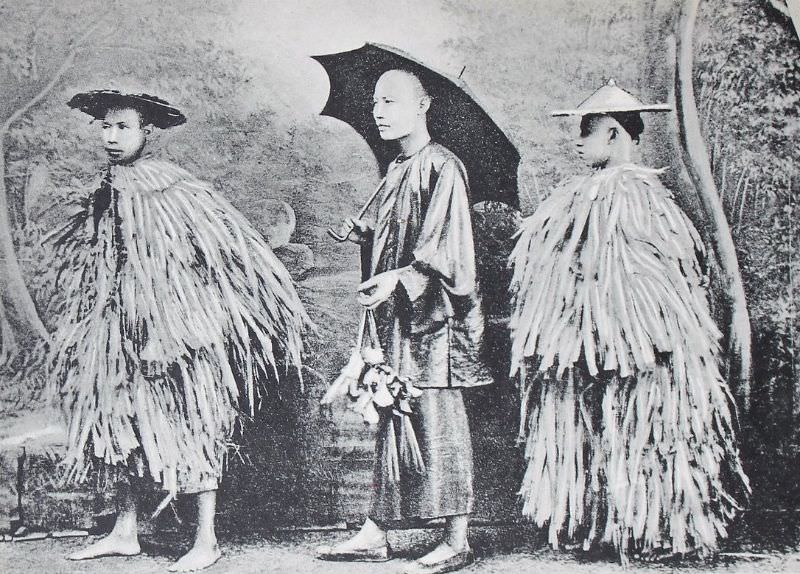
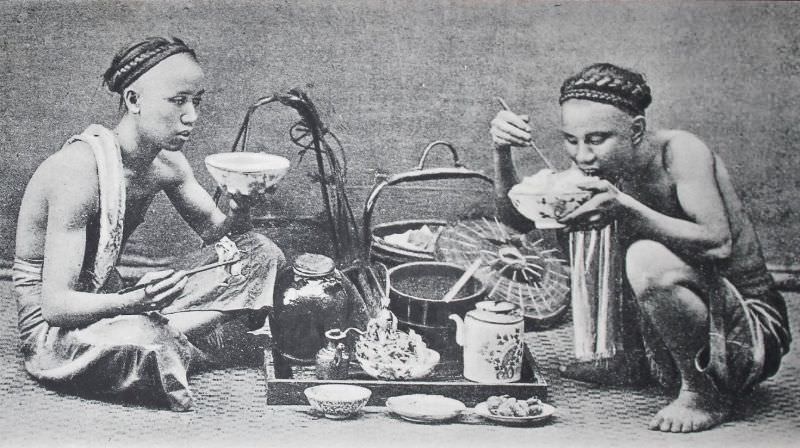
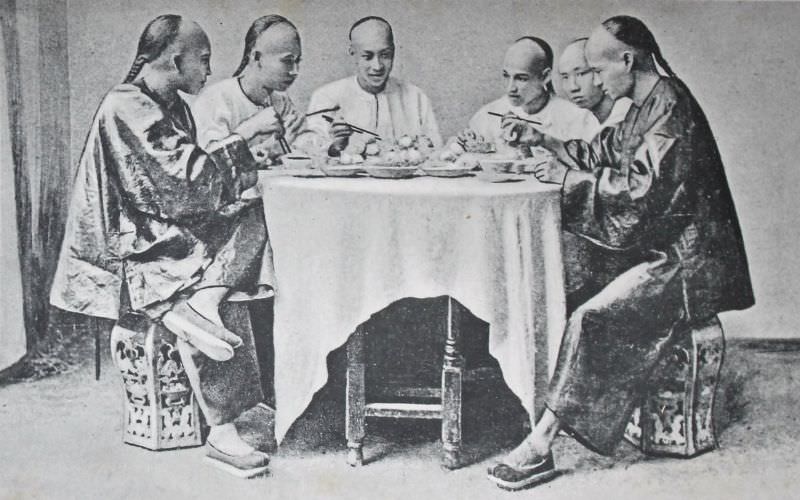
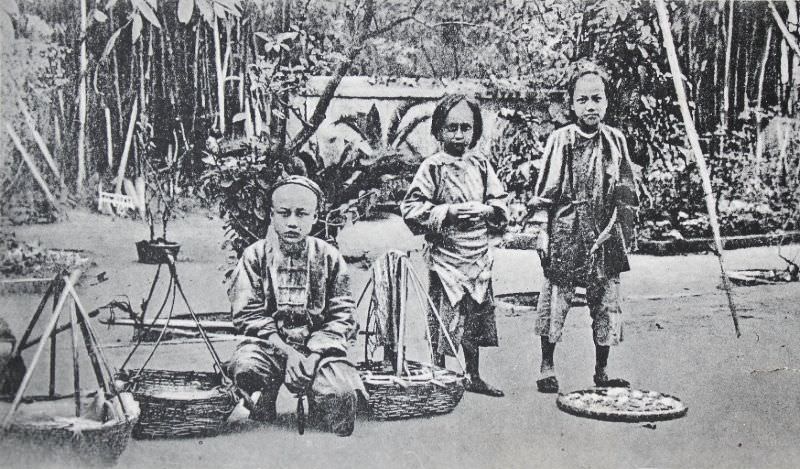
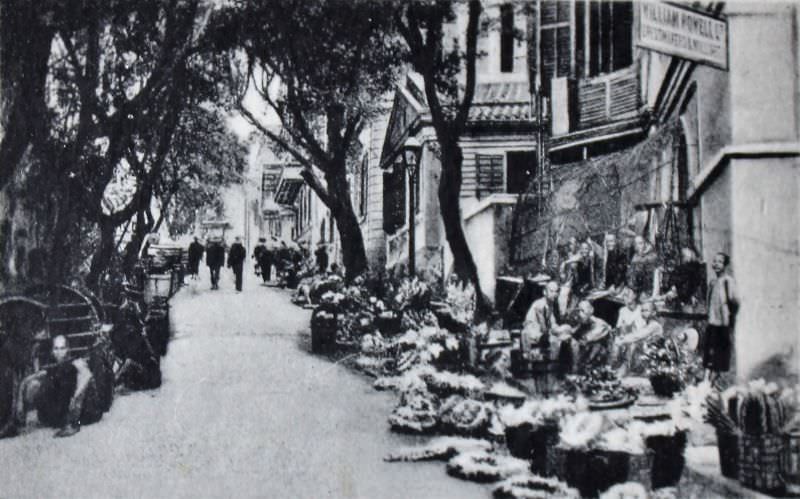
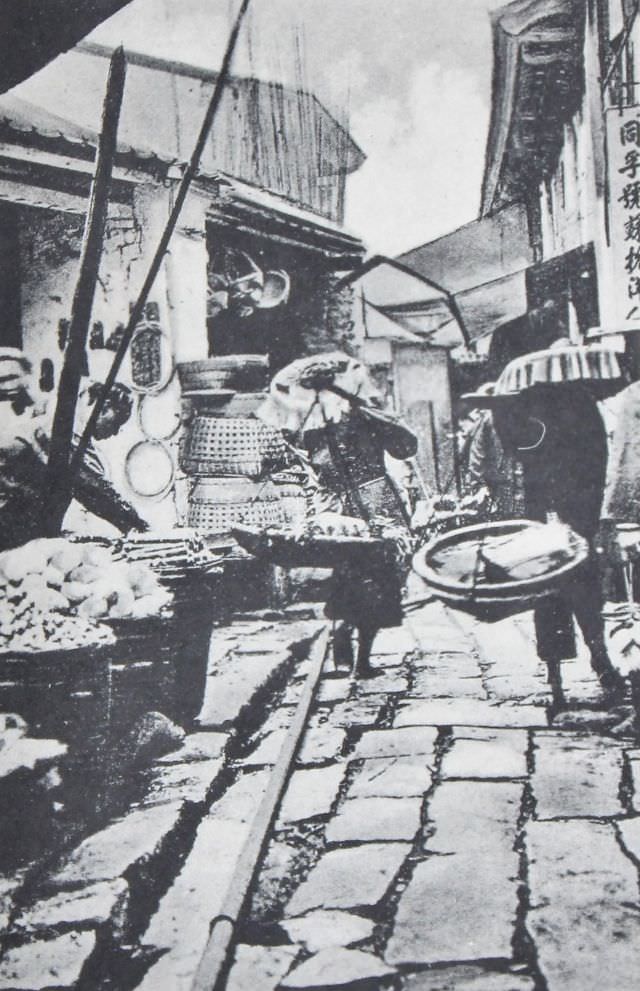
Street vendors were everywhere, selling food and small goods to passersby. Sweetmeat sellers offered sugary snacks from portable setups, while other traders set up along busy roads to catch foot traffic. Wyndham Street was known as a spot where flowers were sold, adding a slice of color to the urban landscape.
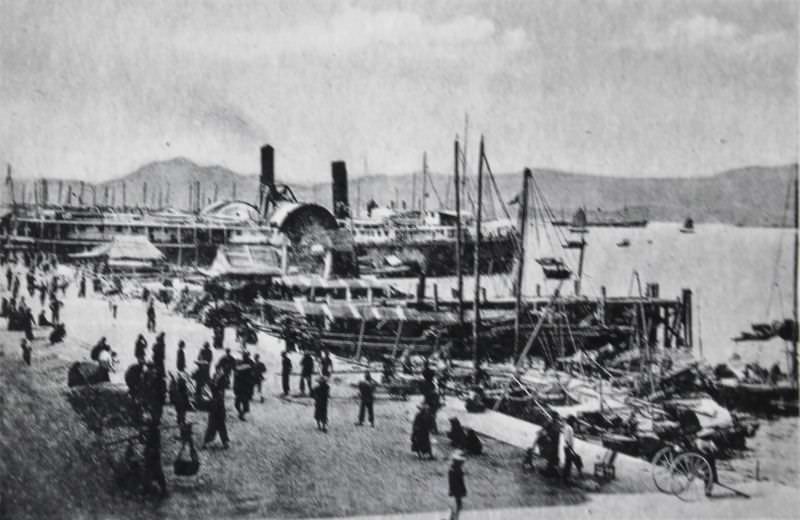
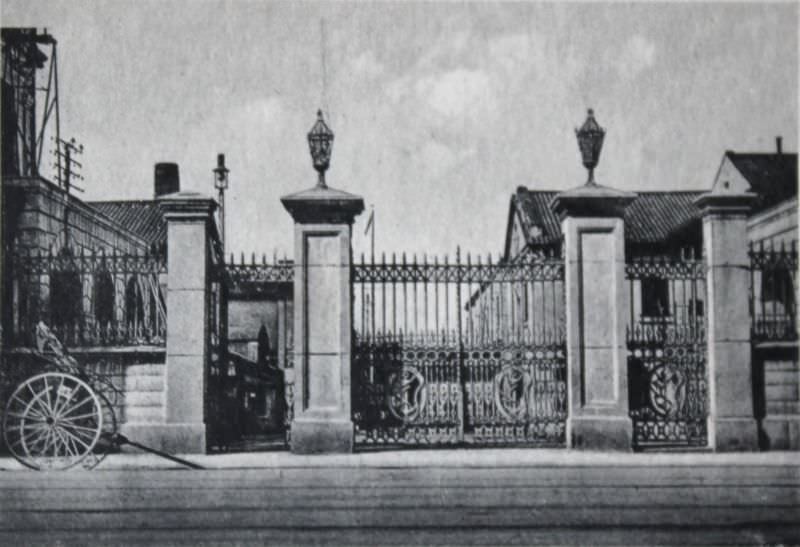
The waterfront was just as lively as the streets. The Canton steamer wharf handled regular passenger and cargo traffic between Hong Kong and Canton (now Guangzhou), one of the busiest routes in southern China. At the naval yard, British warships were maintained and serviced, a visible sign of the colony’s military importance.
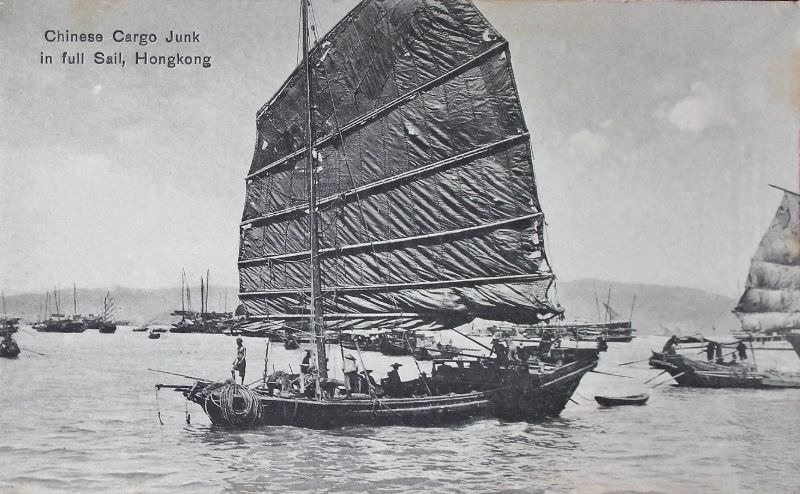
Chinese cargo junks remained a fixture on the water throughout this period. These traditional wooden sailing vessels had been used for centuries for trade and fishing. Their large sails made them recognizable from a distance, and they continued to work alongside modern steamships well into the twentieth century.
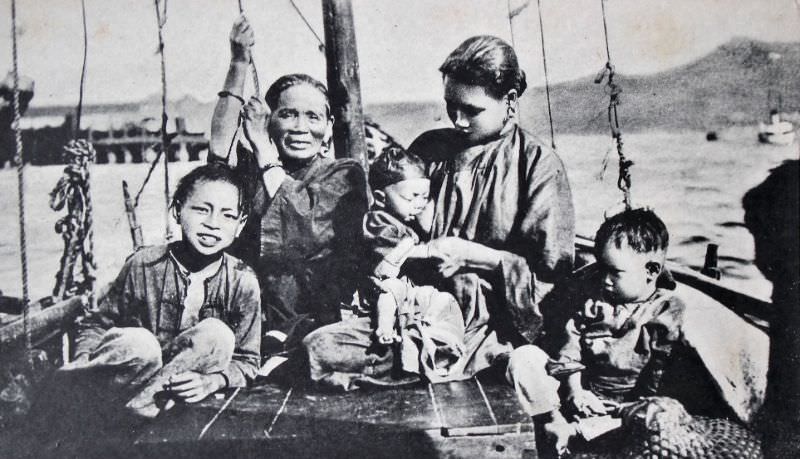
Many families lived and worked entirely on the water. Sampans — small flat-bottomed boats — served as permanent homes for some communities. A photograph from the archives shows three generations of one family living aboard a single sampan, a way of life that had continued for generations along Hong Kong’s coastline.
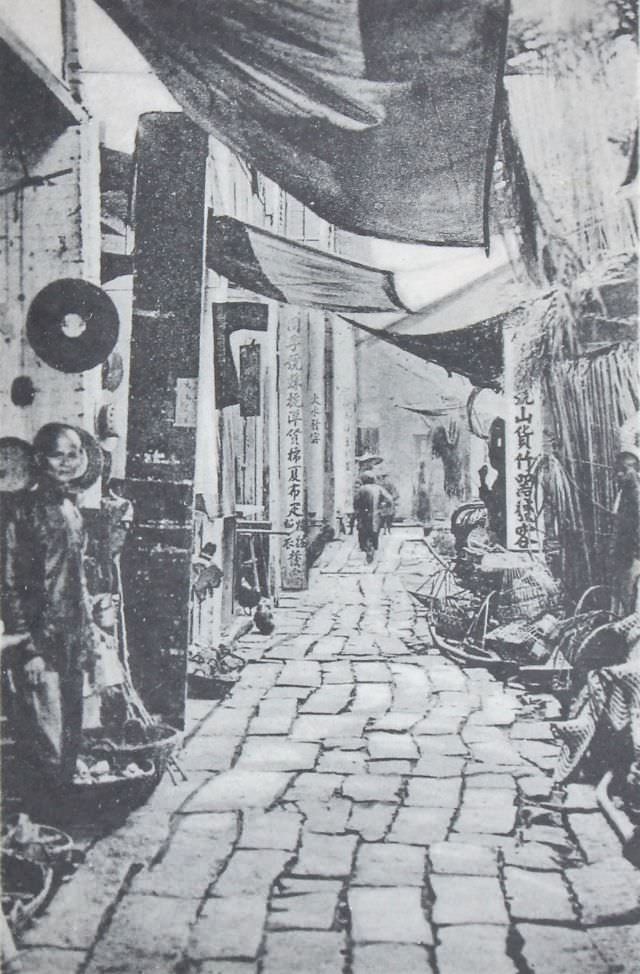
On land, the neighborhoods of Kowloon and the older parts of Hong Kong Island had their own distinct character. Old Kowloon City had narrow winding streets where daily life played out in close quarters. Residents cooked, worked, and socialized within a dense urban fabric that was very different from the wide colonial boulevards nearby.
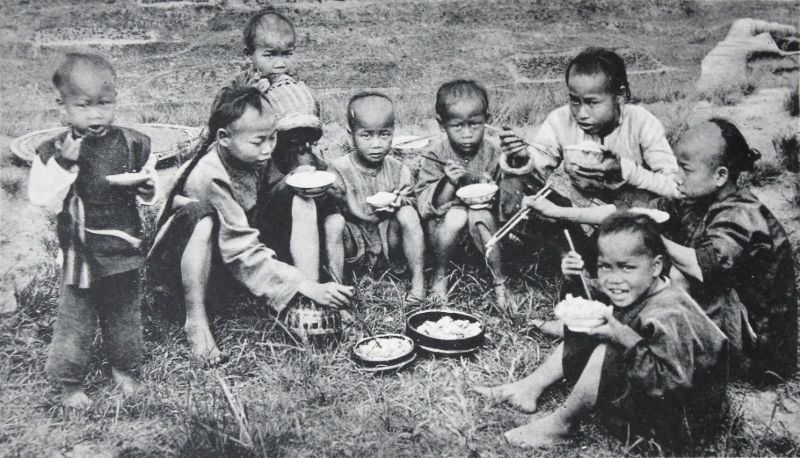
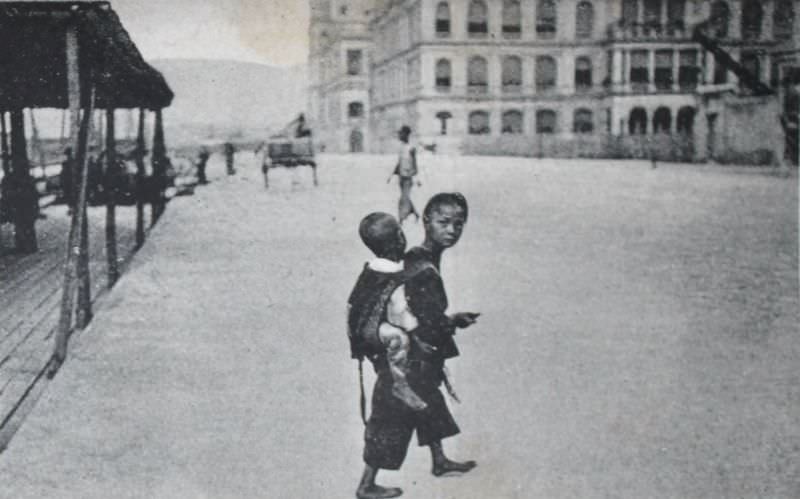
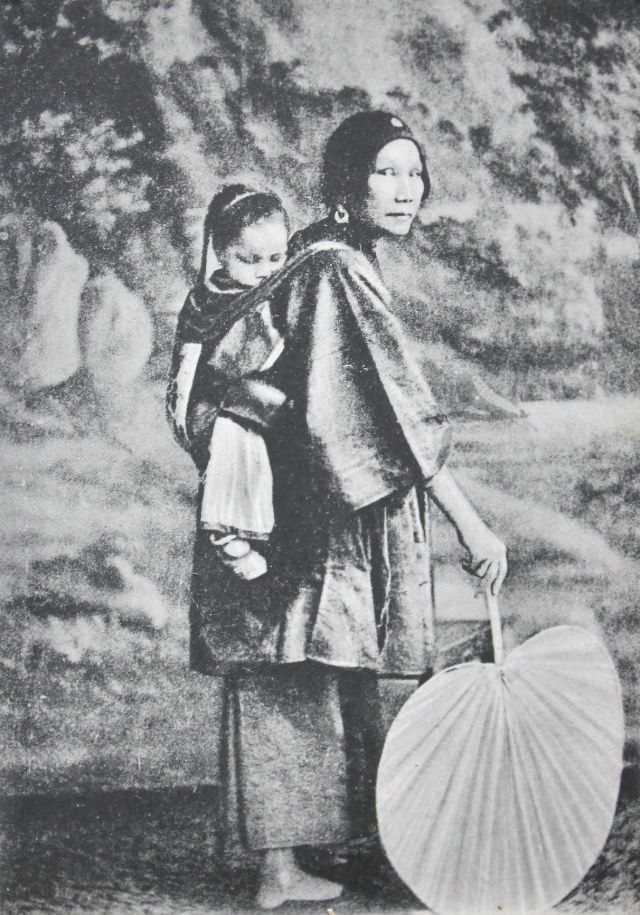
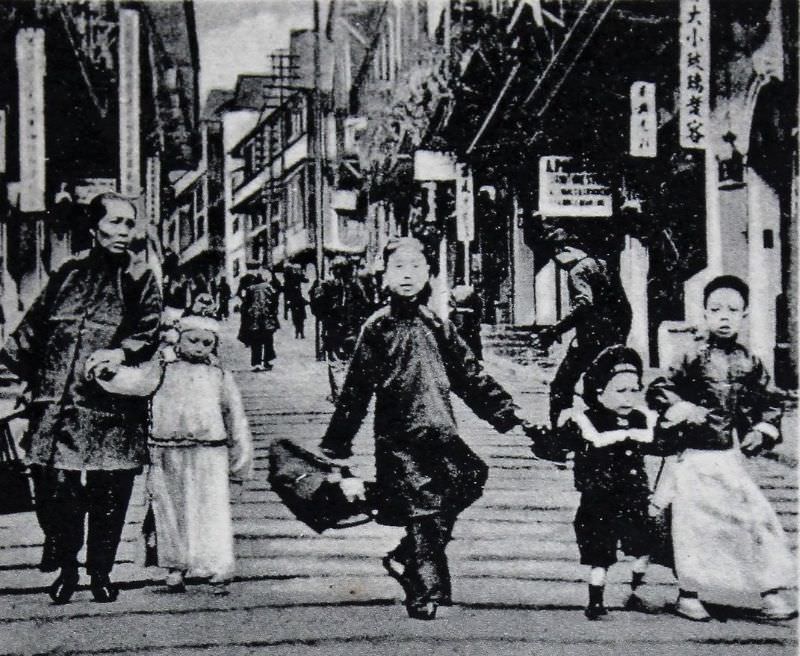
Children were visible throughout the city’s public spaces. Boys ate on hillsides, and children as young as ten or eleven were photographed carrying younger siblings on their backs — a common childcare practice in households where parents worked all day. A photograph taken at Praya Central captures exactly this: a child carrying another child while adults went about their work nearby.
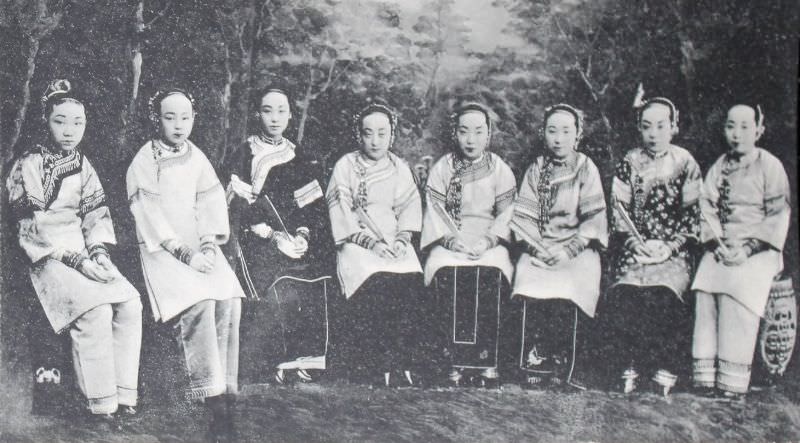
Foot binding was still practiced among some Chinese women during this period, though it was beginning to decline. The practice involved tightly wrapping young girls’ feet to prevent normal growth, resulting in dramatically small feet that were considered a mark of social status. A photograph in the collection shows a group of Chinese ladies with bound feet, a custom that would be officially banned in mainland China by 1912.
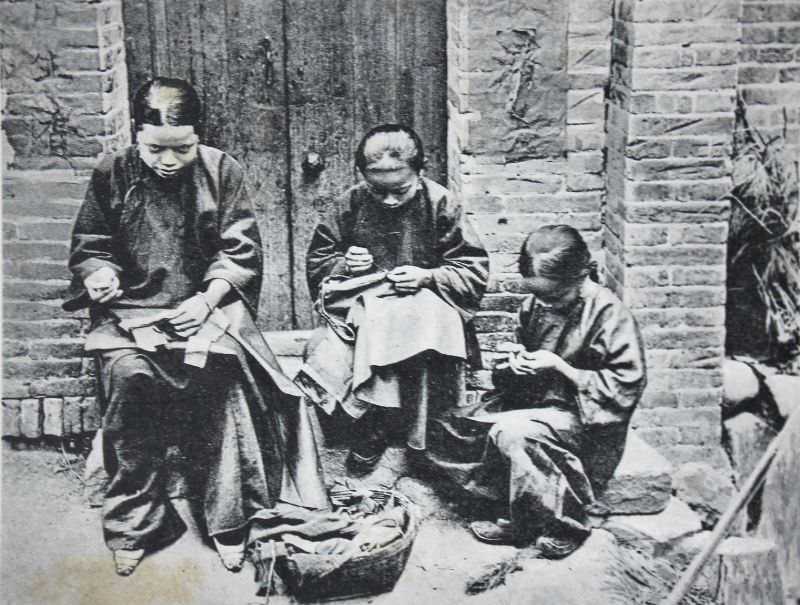
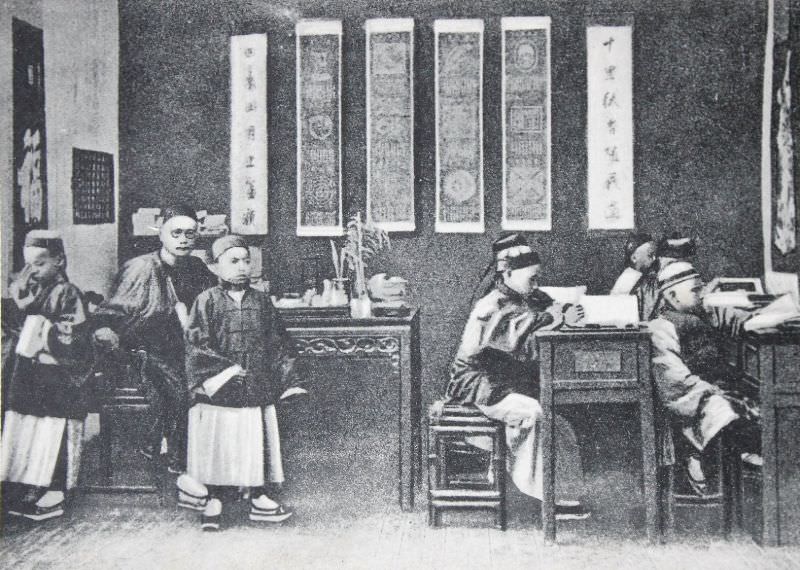
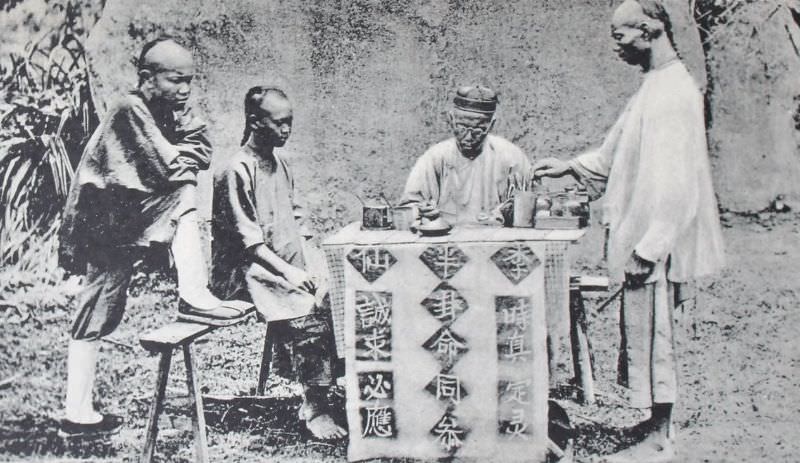
Tailor girls worked outdoors along certain streets, sewing and mending in the open air. Chinese schools operated in the city, educating children in the Chinese language and classical tradition alongside the English-language schools run by the colonial government. Fortune tellers also practiced their trade on street corners, reading palms and casting predictions for those who stopped.
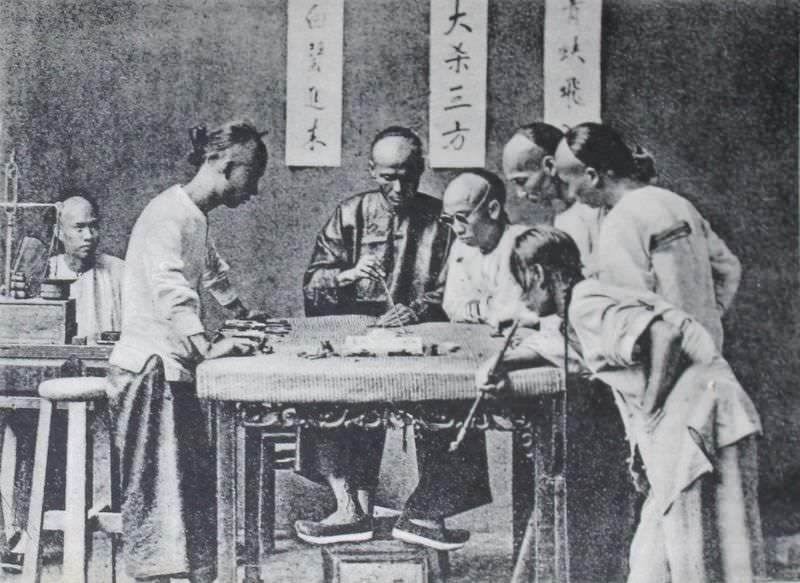
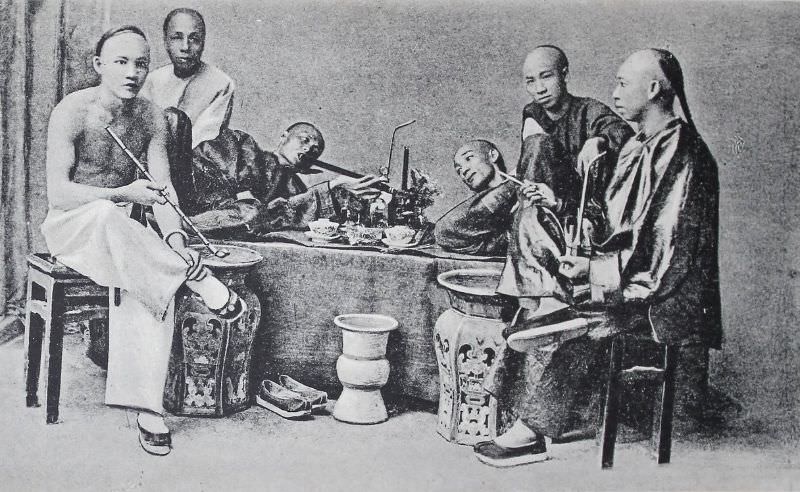
Gambling was deeply embedded in the social fabric of the city despite attempts by authorities to control it. Fantan was one of the most popular games, played with small objects under a cup and bet on by groups of men who gathered in dedicated rooms or back alleys. Opium smoking was another widespread practice. Pipe smokers gathered in dens throughout the city, and opium remained a significant part of the colonial economy well into this period, even as reform movements pushed for its restriction.
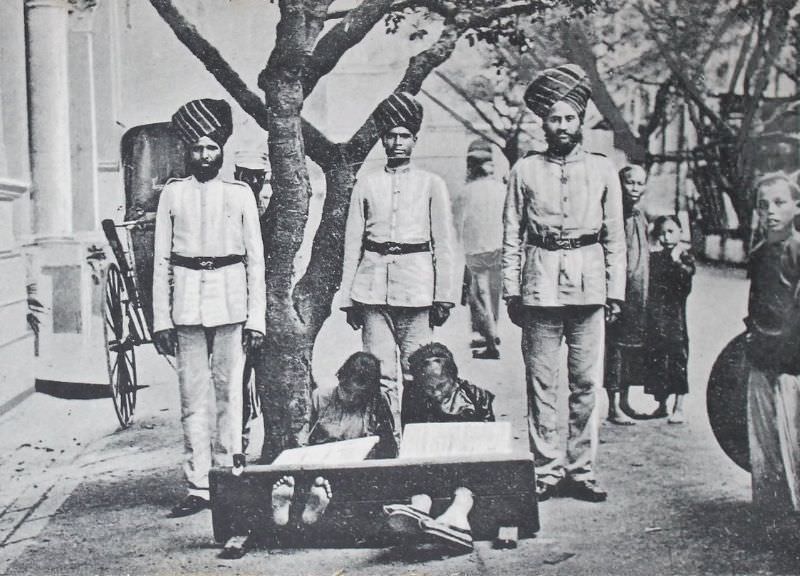
Hong Kong’s legal system in the early 1900s included punishments that reflected its colonial era. Prisoners were placed in stocks — wooden restraints that locked around the ankles and sometimes the wrists — as a form of public punishment. A photograph in the archive documents this practice directly, showing Hong Kong prisoners held in stocks.
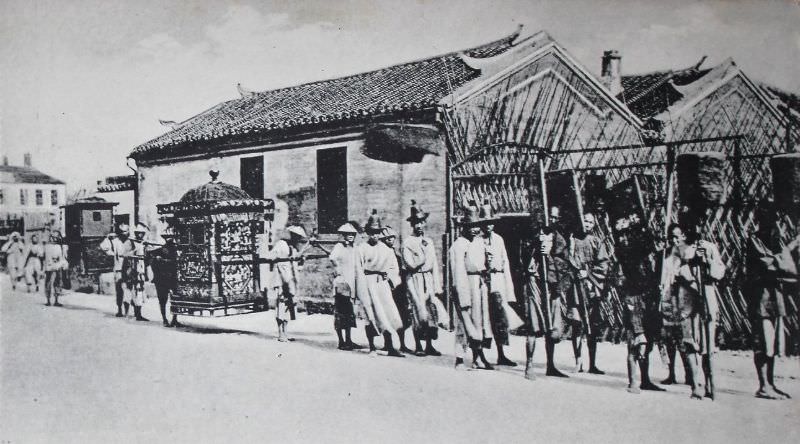
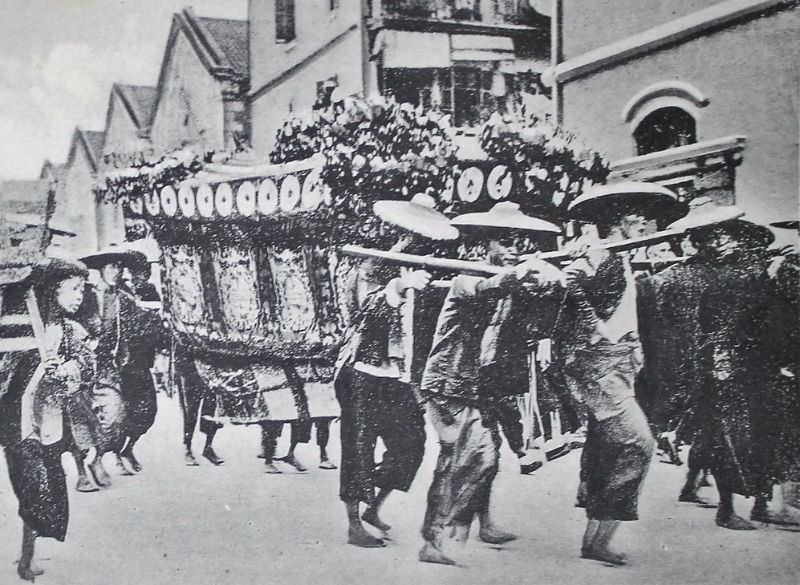
Religion and ceremony were central to life for Hong Kong’s Chinese population. The city’s Chinese community held elaborate wedding processions through the streets, complete with musicians, attendants, and a decorated bridal sedan chair. Funerals for wealthy residents were equally elaborate — the hearse procession for a rich man would march through every major street before reaching the cemetery, a public display of status and mourning.
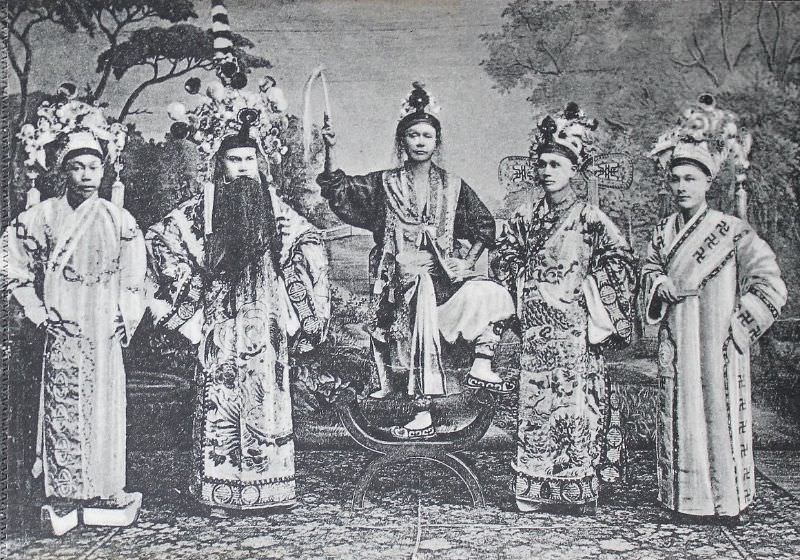
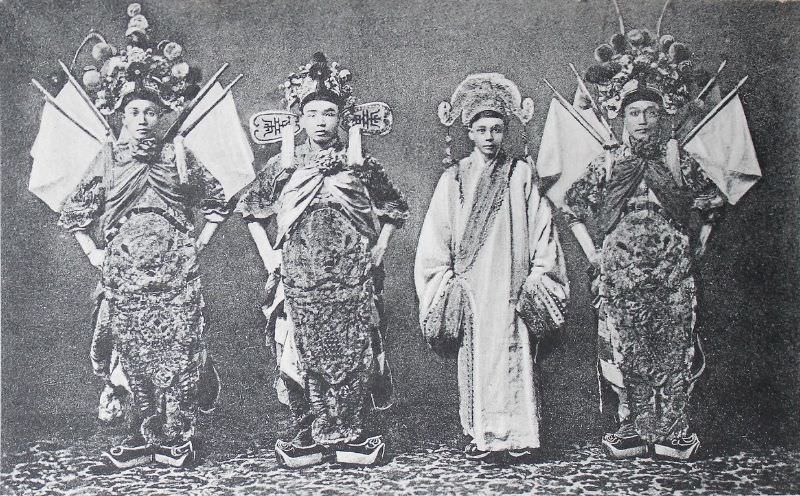
The city also had a strong theatrical tradition. Chinese actors performed in outdoor and indoor venues, presenting traditional opera and dramatic pieces rooted in centuries-old storytelling. Their costumes and painted faces followed strict conventions tied to the characters they portrayed.
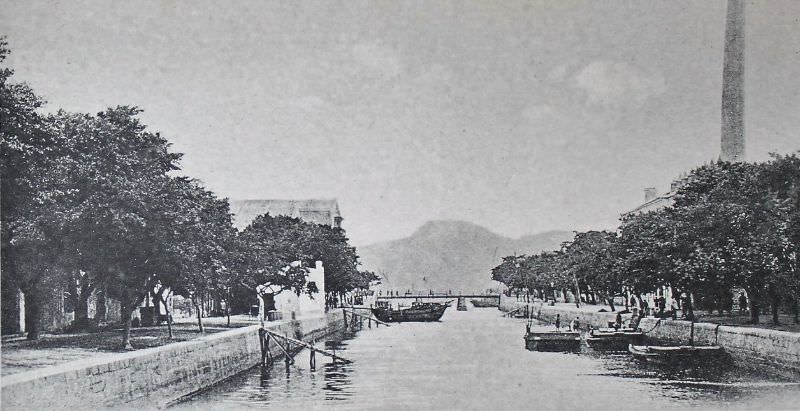
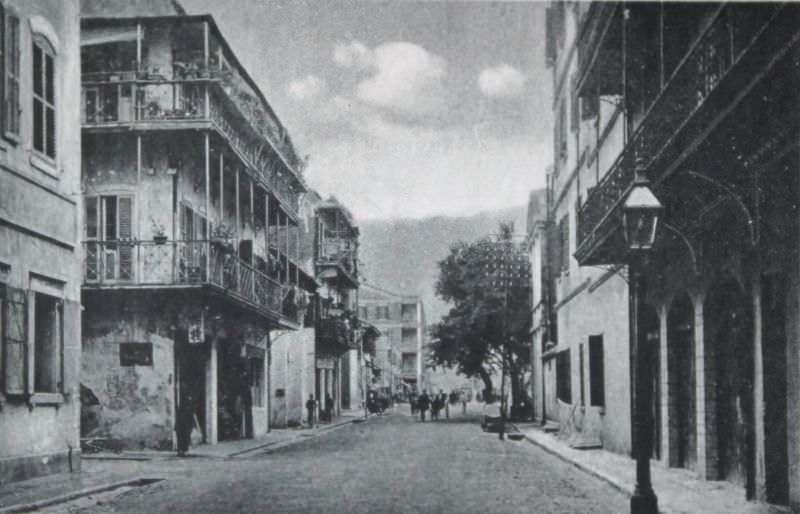
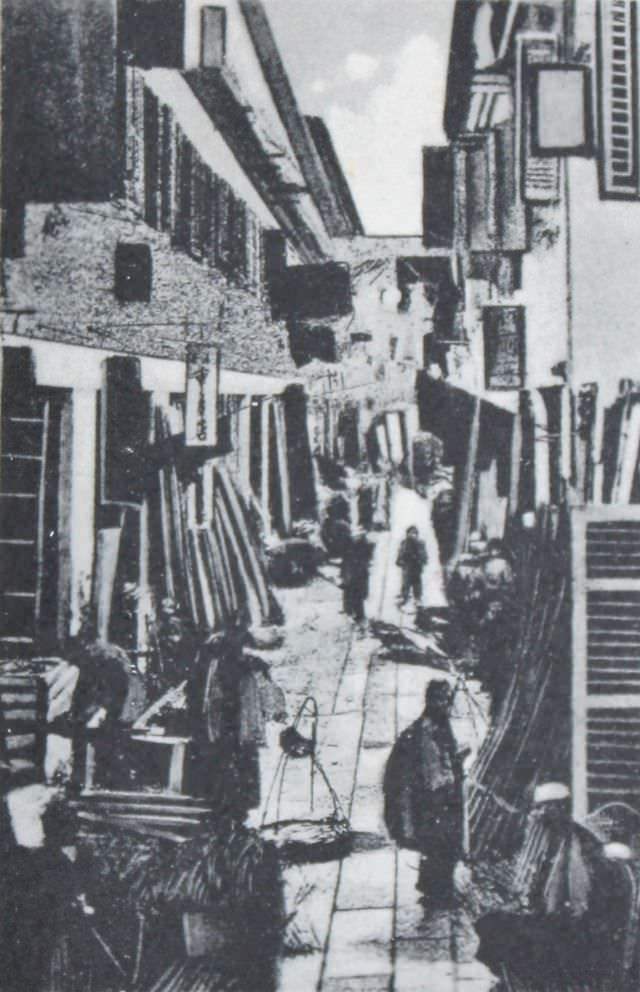
Some photographs in the collection document Hong Kong’s built environment in detail — its canals, roads, and public squares. Bowrington Canal in Wan Chai was an important waterway used for drainage and transport. The City Hall Square served as a civic gathering point. Pottinger Street, with its stone steps climbing the hillside, connected the lower commercial district to the residential areas above.
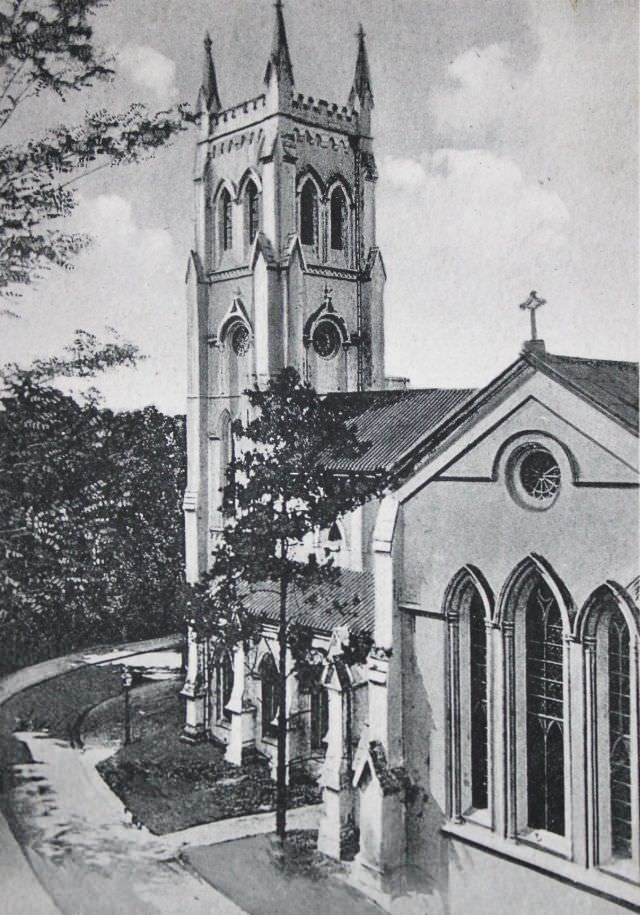
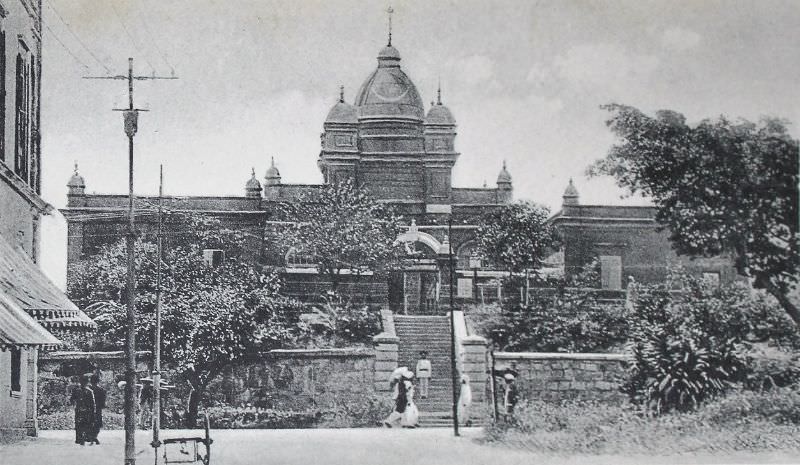
Places of worship reflected the city’s diverse population. St. John’s Cathedral, completed in 1847, remained the center of the Anglican community in Hong Kong. The Mahomedан Mosque in Kowloon served the city’s Muslim residents, many of whom had come from South Asia as part of the British colonial workforce. Both buildings were already well-established landmarks by the time these photographs were taken.
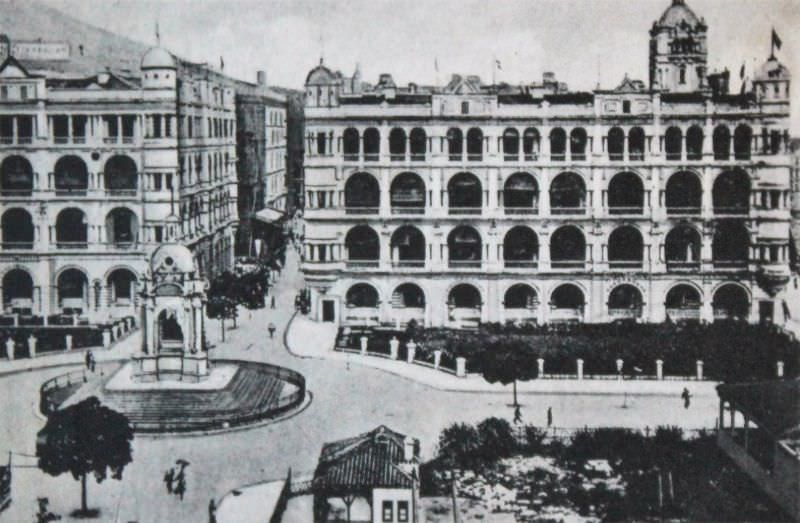
The statue of Queen Victoria stood in a prominent public space, a clear symbol of British sovereignty over the territory. Nearby, the Central Market on Des Voeux Road was a daily gathering point where residents bought fresh produce, meat, and fish. These two landmarks — one political, one practical — captured the dual character of colonial Hong Kong.
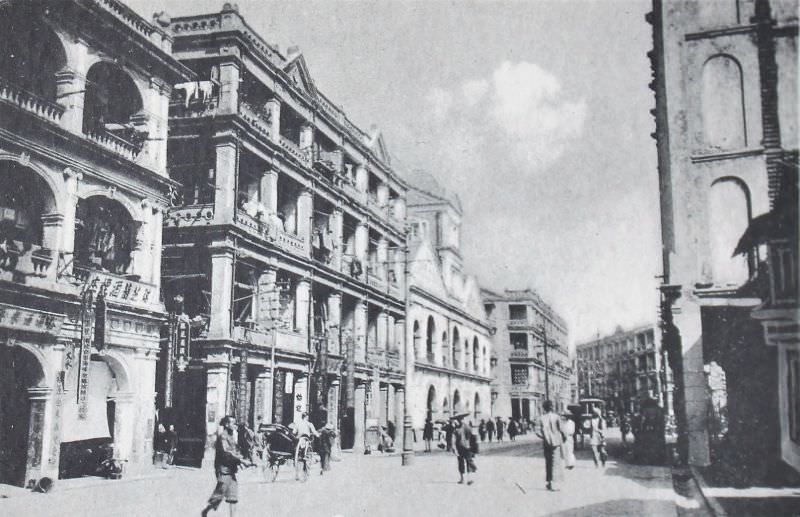
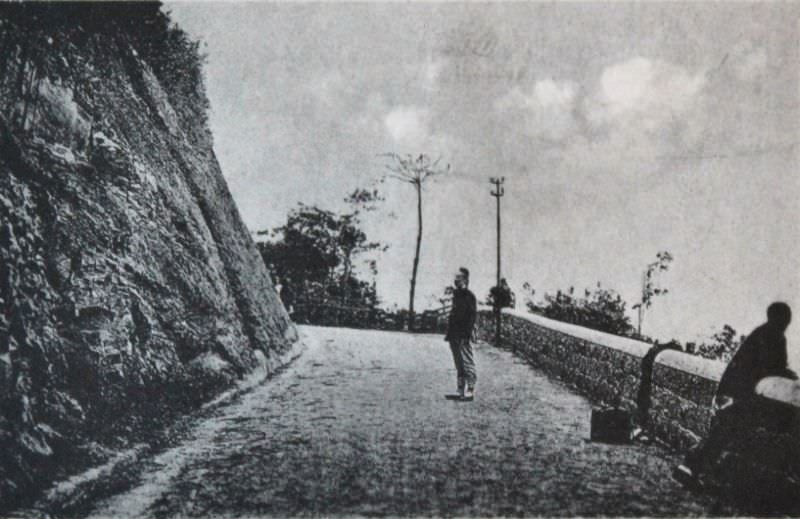
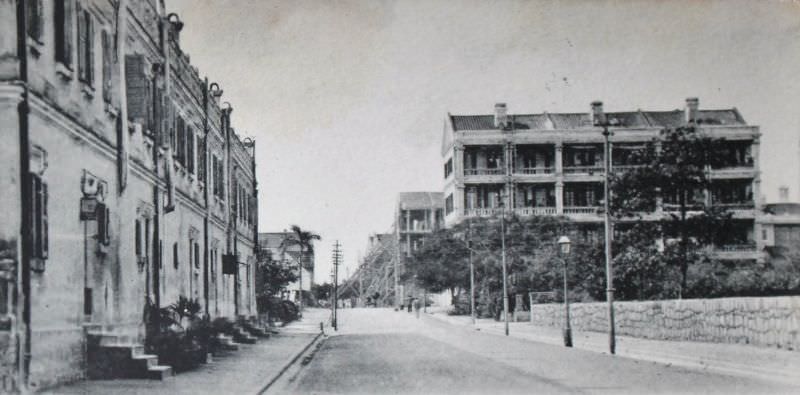
Other roads across the city each had their own personality. Caine Road wound across the Mid-Levels, linking residential neighborhoods above the downtown area. Kennedy Road ran alongside the lower Peak Tramway route. Wanchai Road passed through one of the city’s most densely populated districts. Jubilee Road, Causeway Bay, and the broader Central district all appear across the archive, giving a comprehensive picture of the city’s geography.
Across the water in Kowloon, the city was growing rapidly. Kowloon had been ceded to Britain in 1860, and by the early 1900s it was a fully functioning urban district with its own streets, markets, and neighborhoods. The New Territories, leased to Britain in 1898, added further depth to the colony’s hinterland.
One photograph in the collection stands apart from the rest. It shows men dressed as warriors of the Ming Dynasty, a tradition connected to theatrical performance or ceremonial reenactment rooted in a period four centuries before the photographs were taken. It serves as a reminder that even in a fast-changing colonial city, the past was never entirely absent from the streets.
The remaining photographs round out the picture of early twentieth-century Hong Kong — its roads, its people, and the small details of daily life that rarely make it into official historical records.





These historical photos are fantastic!
Stunning, thanks for the list.