Hey There! Before You Go. 😧
Get the best vintage content straight into your inbox!

Don't worry, we don't spam

Living in the Shadow: Vintage Photographs Document Hitler Youth’s Lives During the 1930s

On the night of January 30, 1933, torchlight parades swept through Berlin to mark Adolf Hitler’s appointment as Chancellor of Germany. Hitler Youth units marched prominently in those processions, signaling what was to come. Within months, Hitler secured dictatorial powers through the Enabling Act, passed by a Nazi-controlled Reichstag. That single piece of legislation gave the full authority of the state to every Nazi organization — including the Hitler Youth.
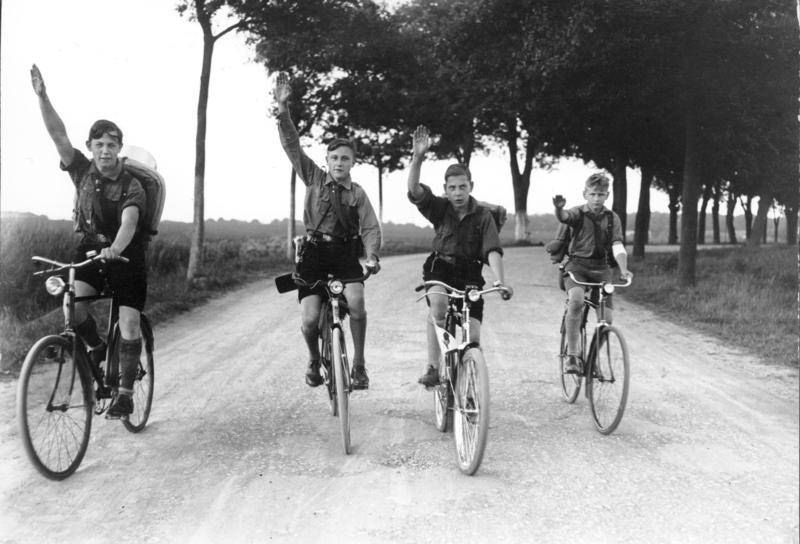
Members of Hitler Youth giving the Nazi Party salute on their bicycles, near Berlin, Germany, 1932.

The process that followed was called Gleichschaltung — forced coordination. German institutions were either brought under Nazi control or shut down entirely. Baldur von Schirach, the Hitler Youth Leader, moved quickly to eliminate competition. At the time, roughly 400 independent youth organizations existed across Germany, representing millions of children. Schirach intended to absorb or destroy all of them.
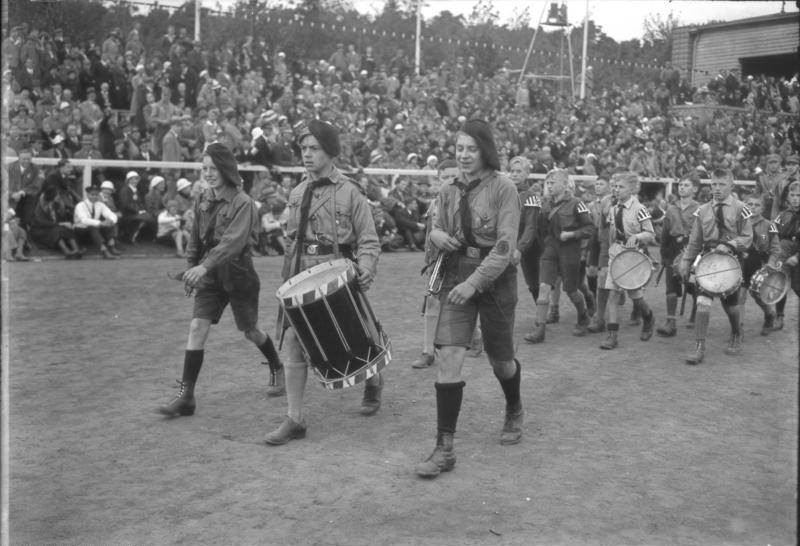
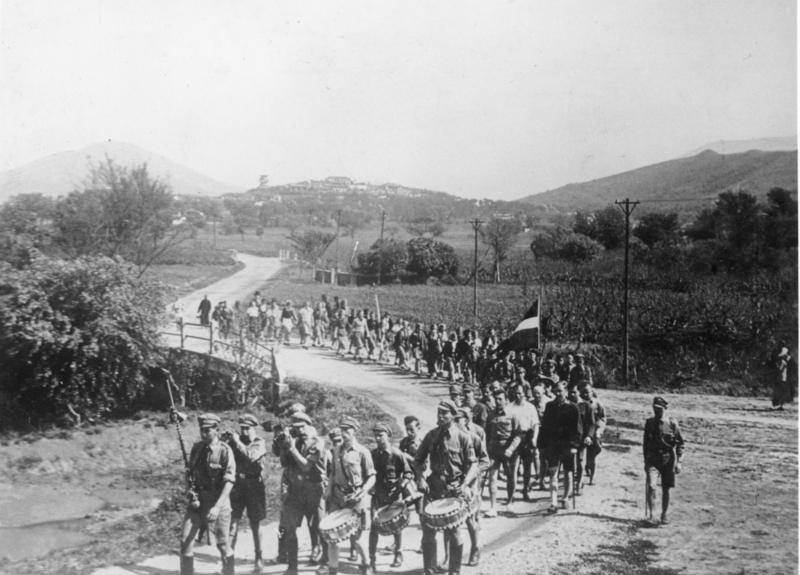
Members of Hitler Youth in march, Potsdam, Germany, 1932.

On April 3, 1933, Schirach sent fifty Hitler Youth members storming into the Berlin offices of the Reichs Committee of German Youth Associations — an umbrella body representing nearly six million children. It was a direct show of force. Conservative and nationalist youth groups folded into the Hitler Youth voluntarily. Socialist Workers’ Youth offices were raided. Police and Nazi storm troopers shut down other gatherings, labeling them “public nuisances.”
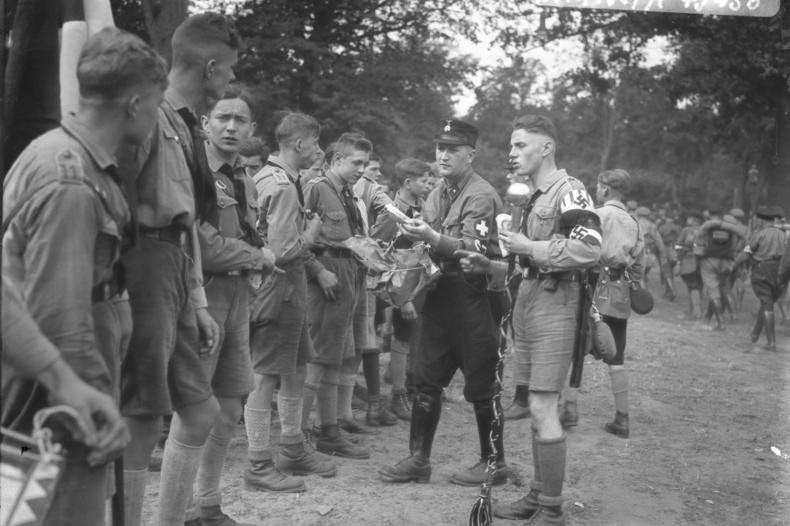
Members of Hitler Youth receiving rations at a camp near Potsdam, Germany, 1932.
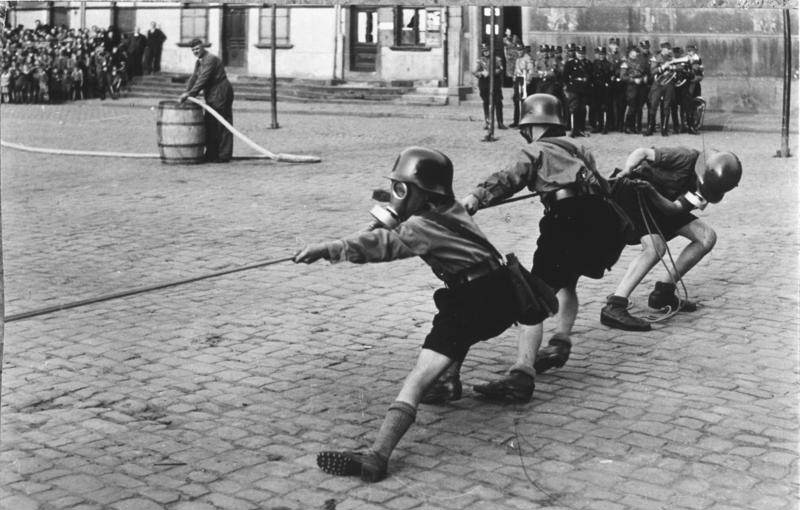
Hitler Youth members playing tug of war while donning helmets and gas masks, 1933.

Communist and Jewish youth organizations were disbanded outright. Various Protestant groups yielded to Nazi pressure and merged into the Hitler Youth. The only major organization that survived intact was the Catholic Youth Organization. The Vatican’s international reach — and a formal agreement called the Concordat, struck between the Holy See and Hitler’s government — shielded Catholic institutions from dissolution, at least for a time.
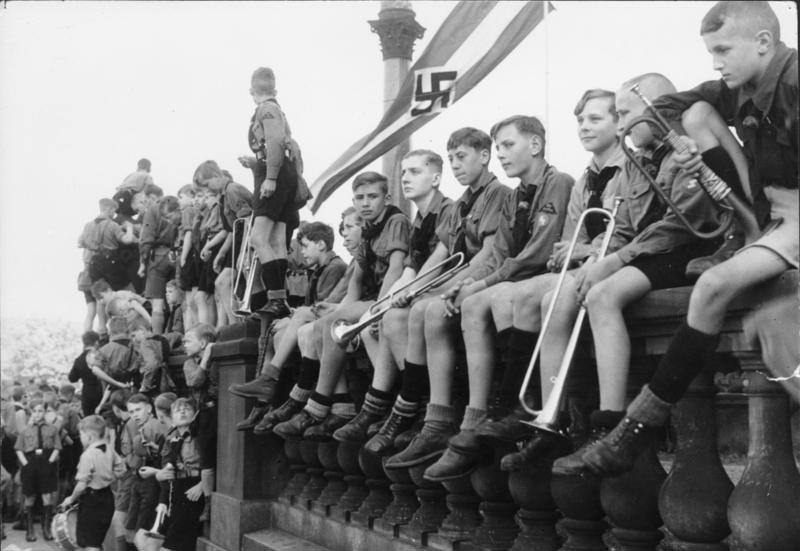
A Hitler Youth marching band resting near Lustgarten, Berlin, 1 May 1933.

On June 17, 1933, Hitler promoted Schirach to Jugendführer des Deutschen Reiches — Youth Leader of Germany — a title answerable only to Hitler himself. The following month, Schirach dissolved the old Reichs Committee entirely, since no independent youth organizations remained to represent. He now held absolute authority over every organized youth activity in the country.
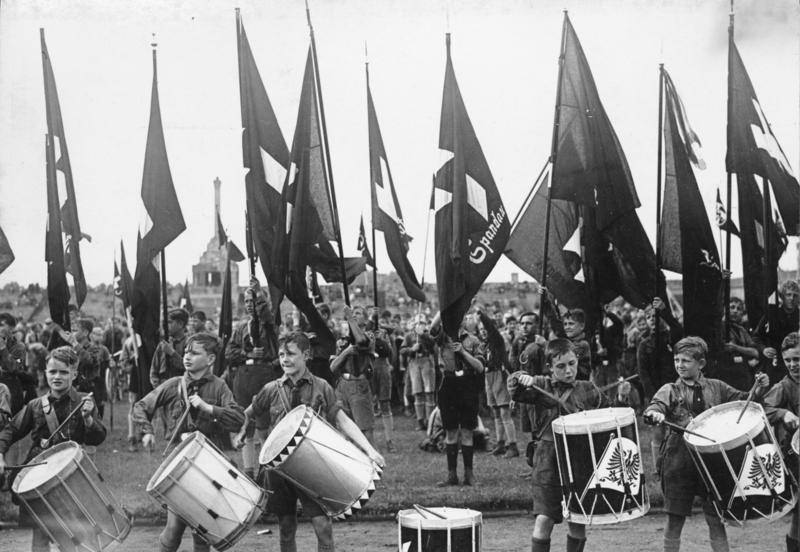
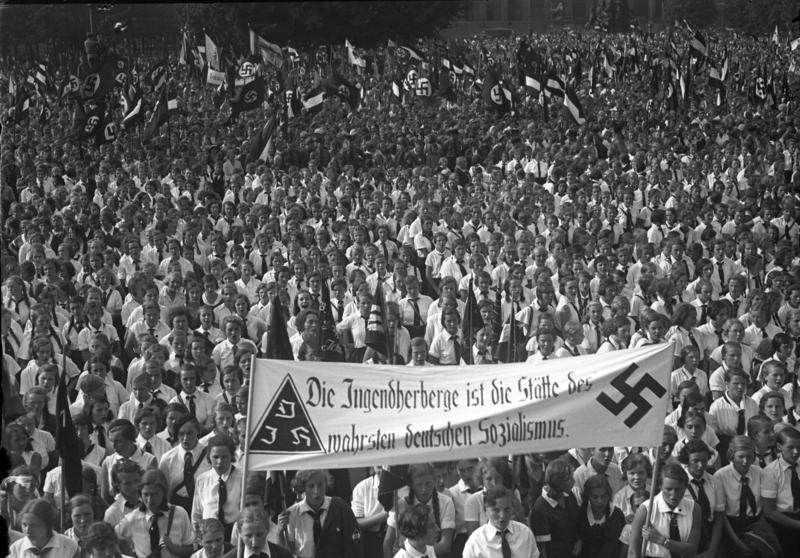
Hitler Youth meeting at the stadium in Grunewald, Berlin, Germany, Jun 1933.
Hitler Youth gathering at Lustgarten, Berlin, Germany, 19 Aug 1933.

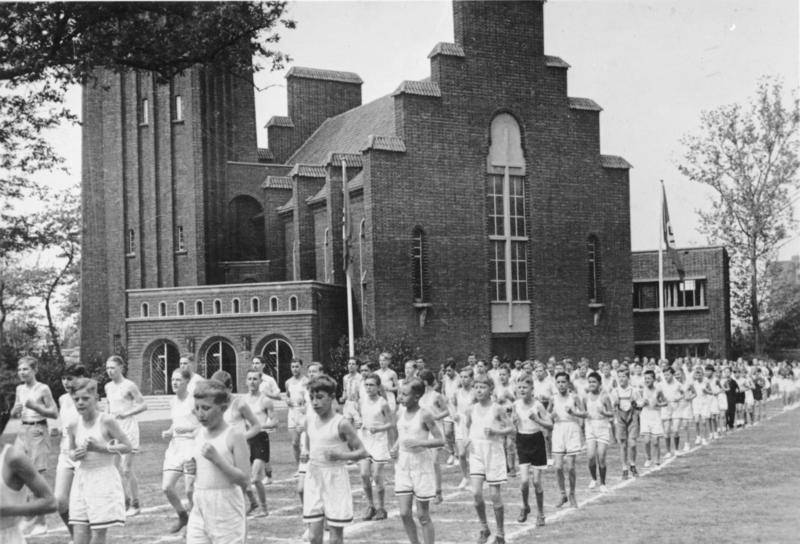
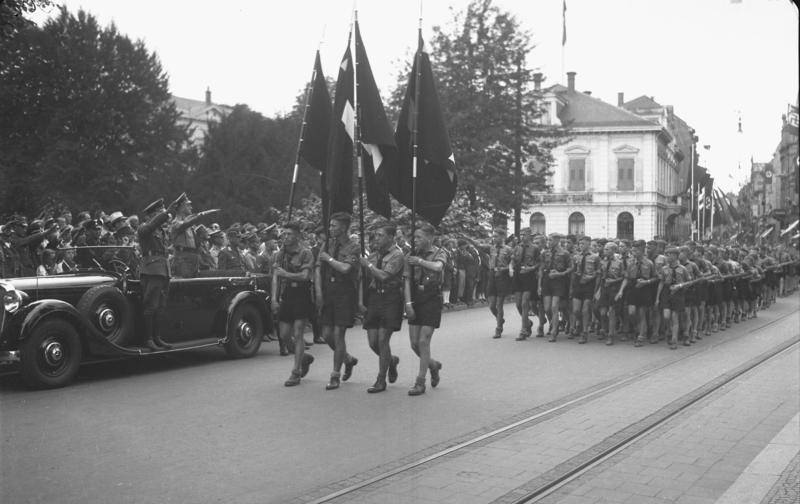
The vintage photographs from this era show what membership actually looked like on the ground. Boys in uniform attended mass rallies at stadiums across Germany. They marched in formation, carrying flags and banners. They drilled, camped, and trained — not just as youth activities, but as deliberate preparation for a militarized future.
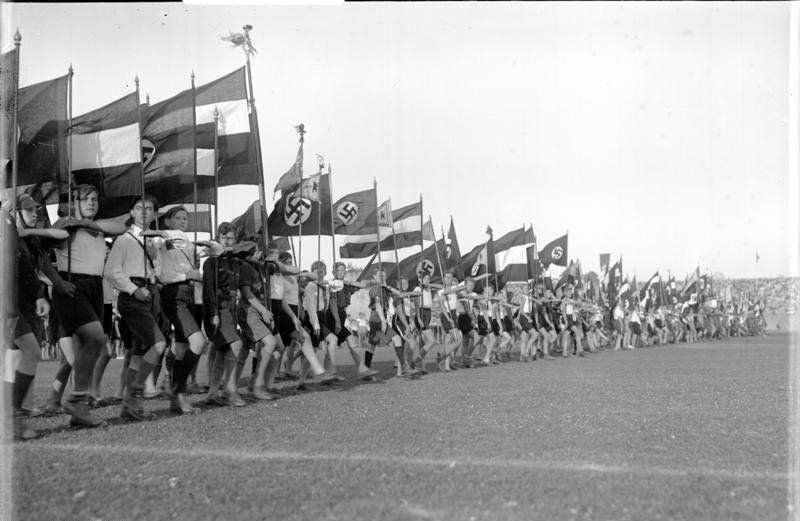
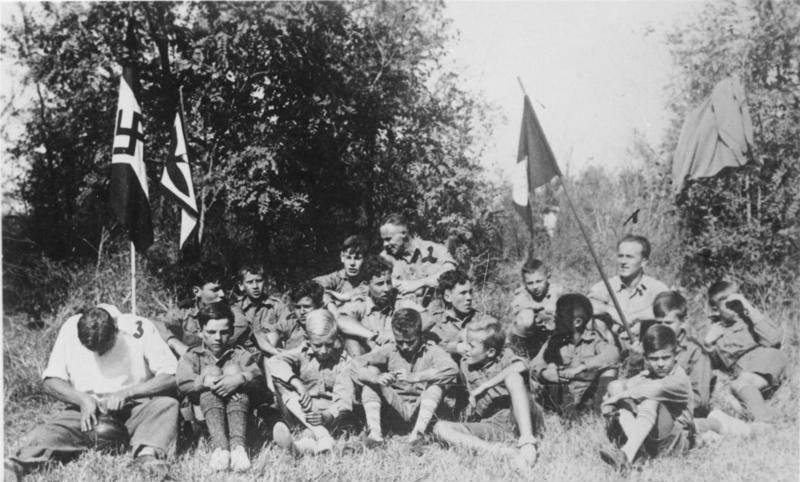
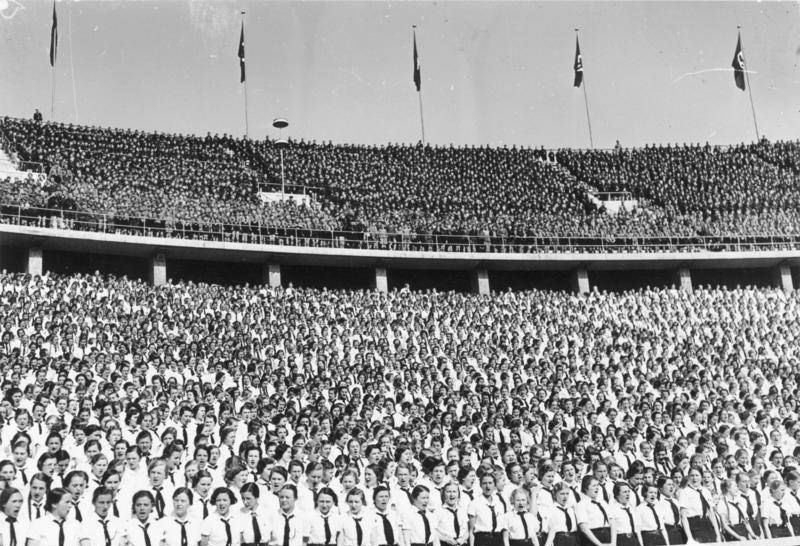
German children parading in a Berlin stadium, Germany, Sep 1933
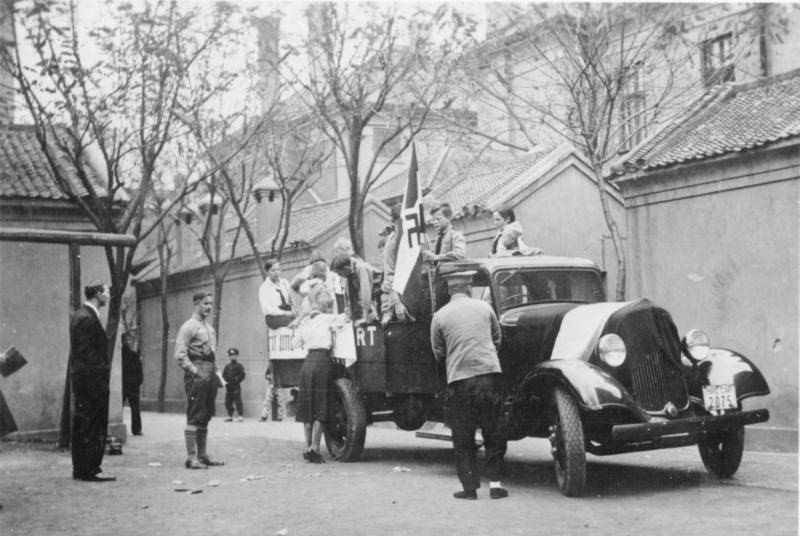
Hitler Youth members on a trip to Tianjin, China, Oct 1933.

The Hitler Youth was not confined to Germany. Chapters operated in cities across China, including Tianjin, Shanghai, and Wuxi, serving German expatriate communities. These overseas units held the same drills, marches, and ceremonies as their counterparts back home — carrying the movement’s structure into foreign cities thousands of miles from Berlin.
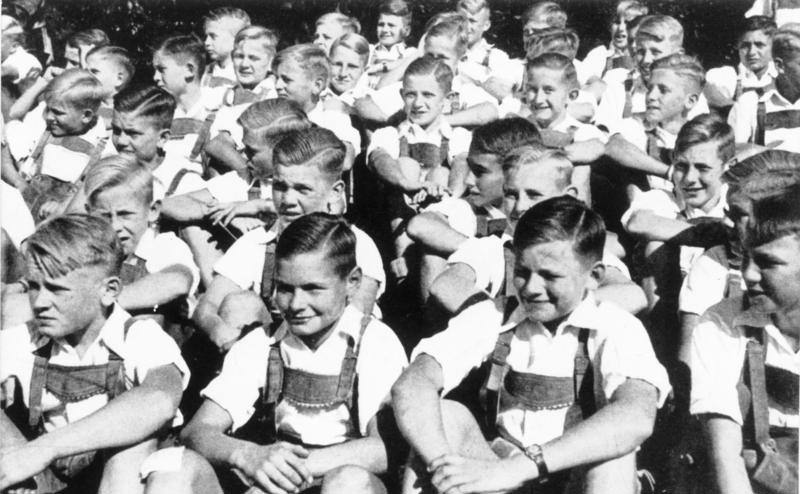
A group of Hitler Youth boys, date unknown.
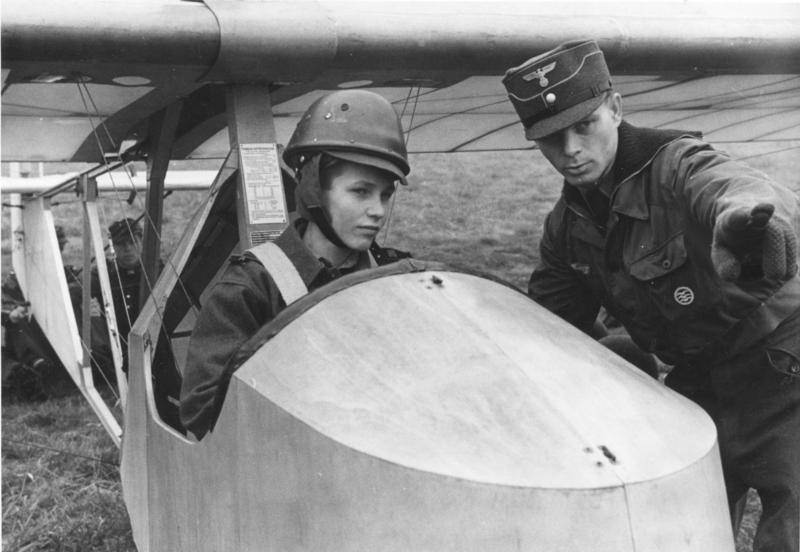
Hitler Youth member being instructed on a glider

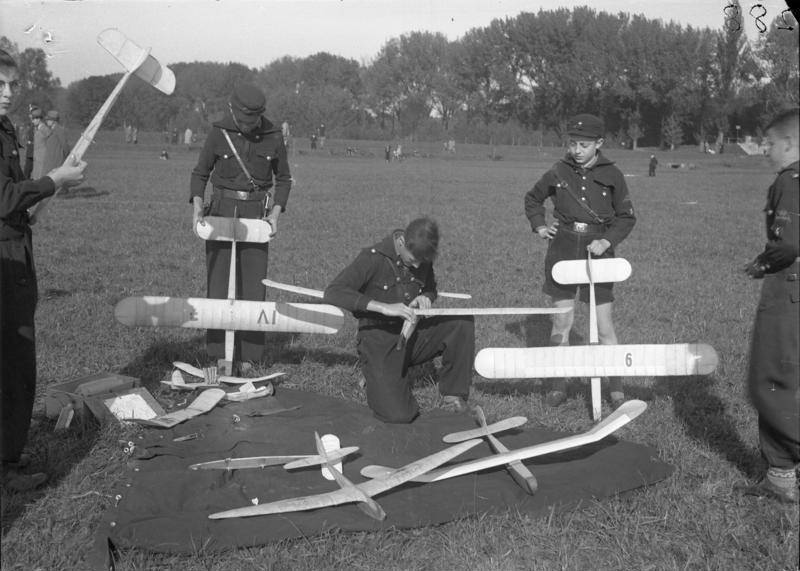
Aviation training was a core part of the curriculum. Members learned to fly gliders, giving them skills directly applicable to the German air force. Glider schools operated throughout Germany, and boys competed in homemade glider competitions as early as 1938. The line between youth activity and pre-military conditioning was deliberately thin.
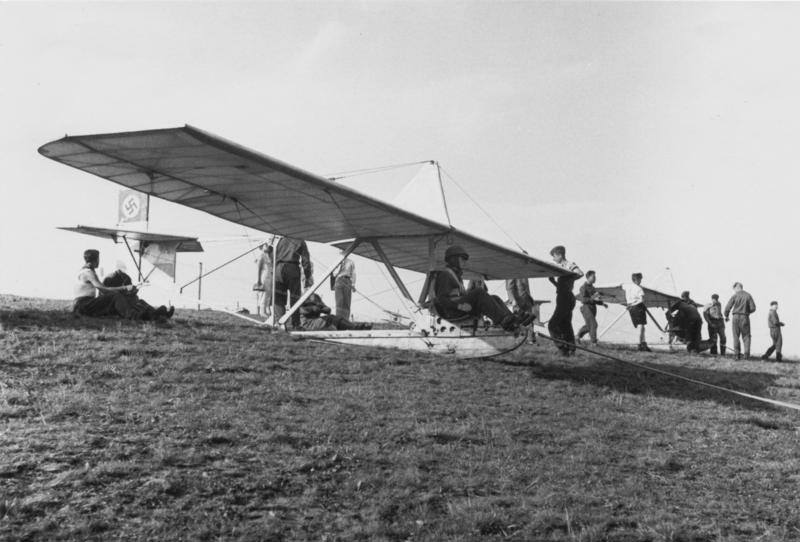
Hitler Youth members at a glider school, Germany
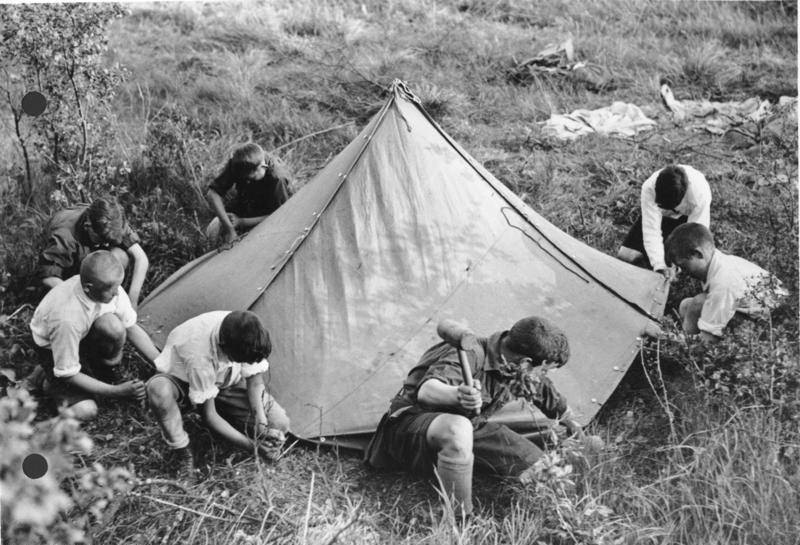
Hitler Youth members camping, 1930s.

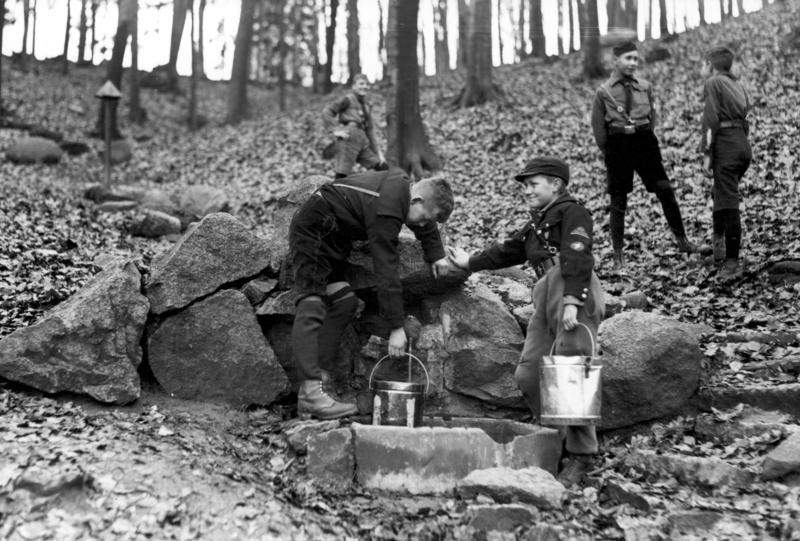
Camping trips, hikes through forests, and outdoor exercises were standard. So were resource drives — members collected scrap metal and recycled tin foil as part of organized national campaigns. Signal flag training and field telephone exercises introduced communications skills straight out of a military handbook.
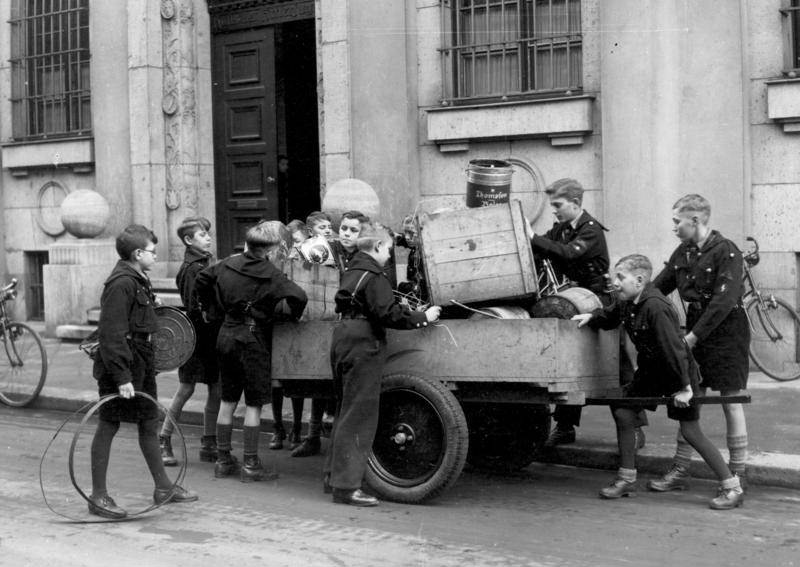
Hitler Youth members collecting scrap metal, 1930s.
Hitler Youth members in the field, 1930s.
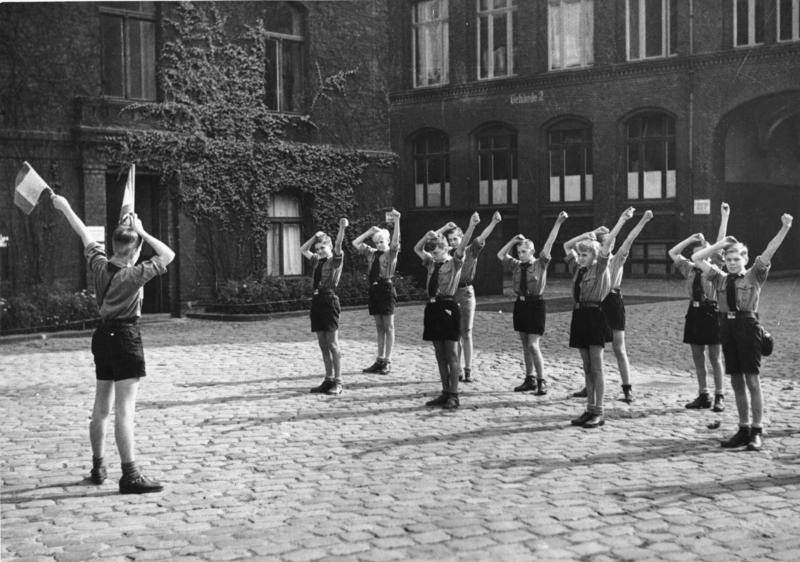
Hitler Youth members learning signal flags, Germany, 1930s.

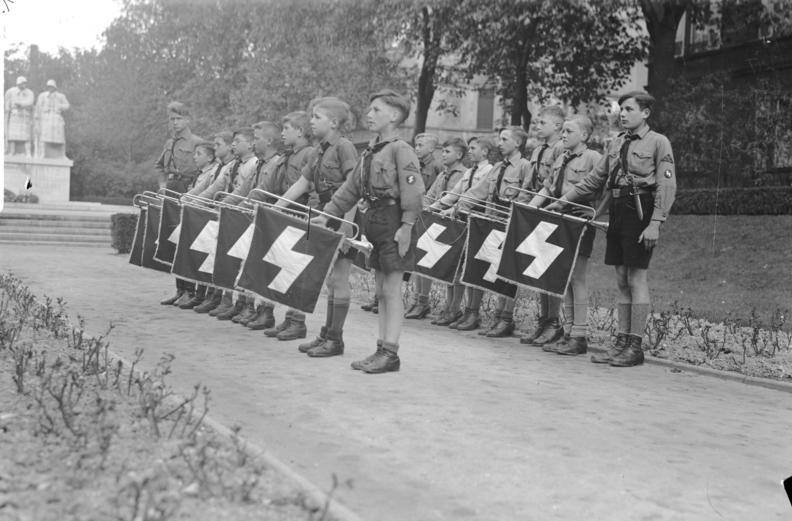
Music was woven into Hitler Youth culture. Marching bands, trumpeters, and organized musical performances appeared at nearly every public event. The brass-heavy sound of a Hitler Youth band became a fixture of rallies, parades, and camp ceremonies throughout the decade.
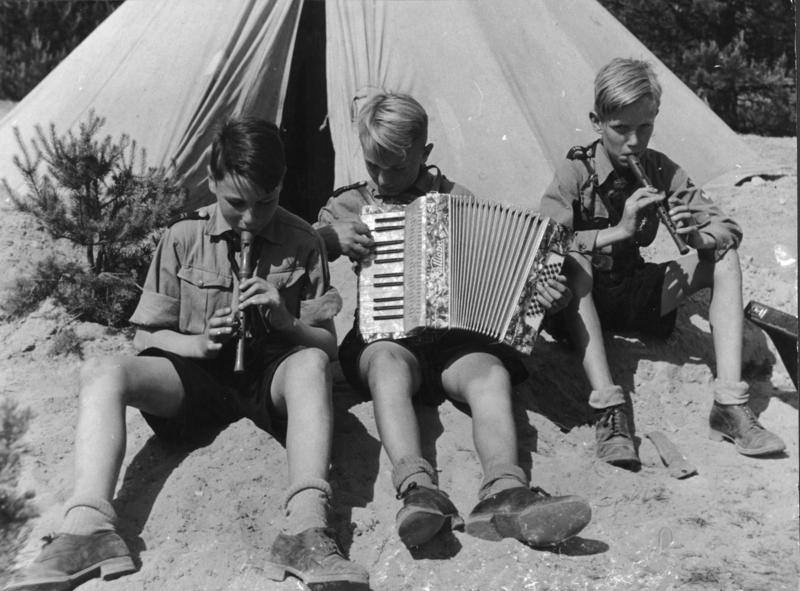
Hitler Youth members playing musical instruments, 1930s.
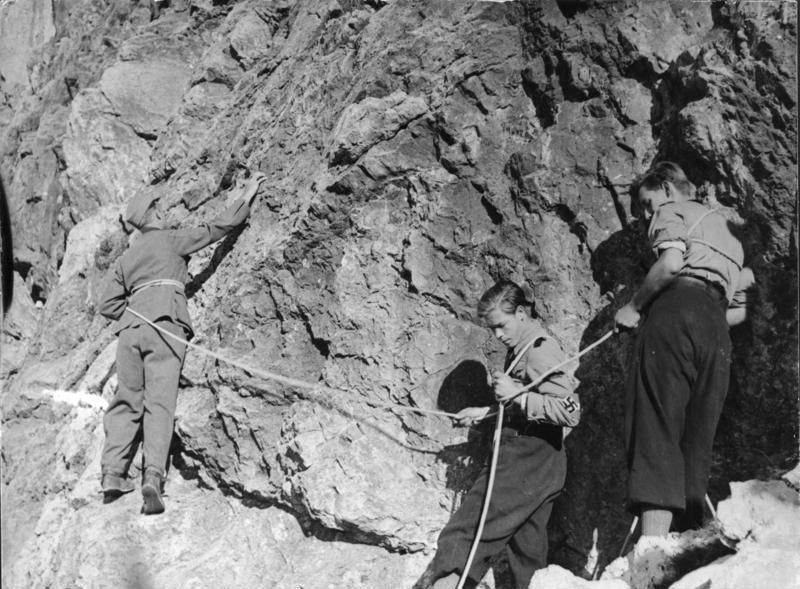
Hitler Youth members rock climing, Germany, 1930s.
Hitler Youth members standing in formation, Worms, Germany, 1930s.

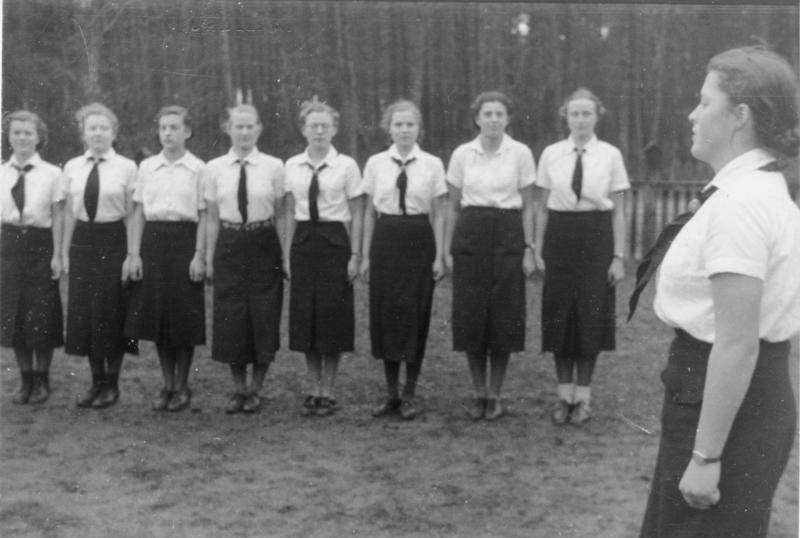
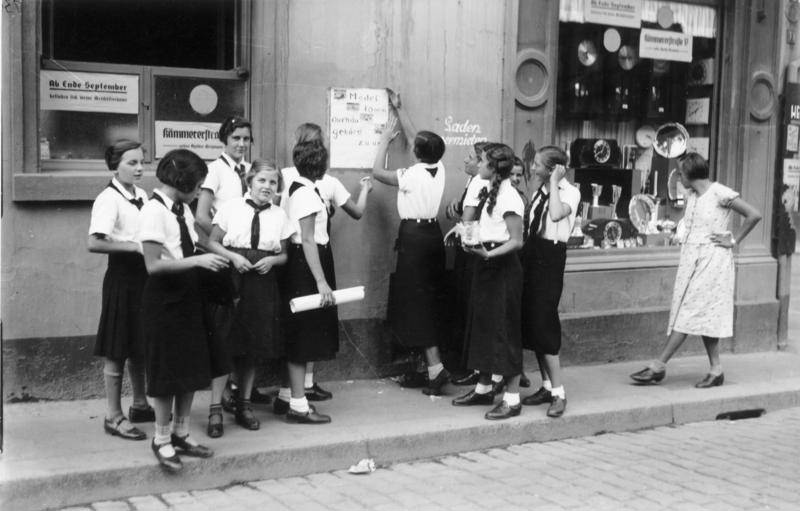
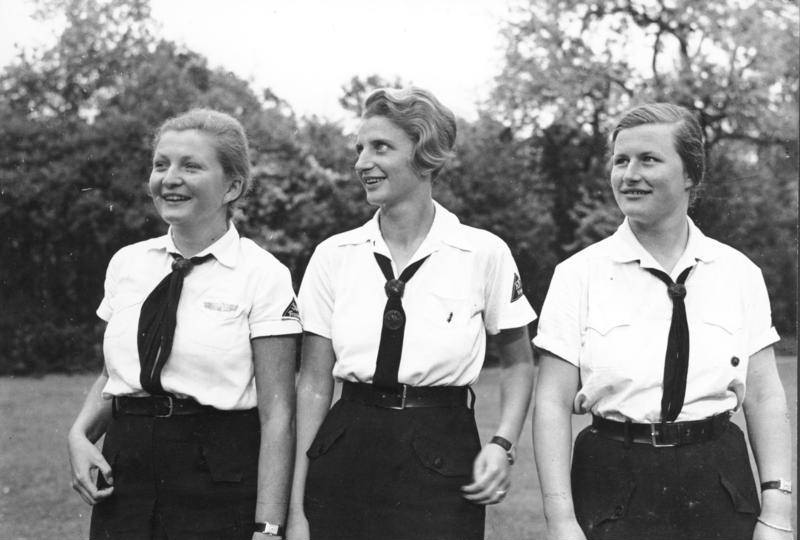
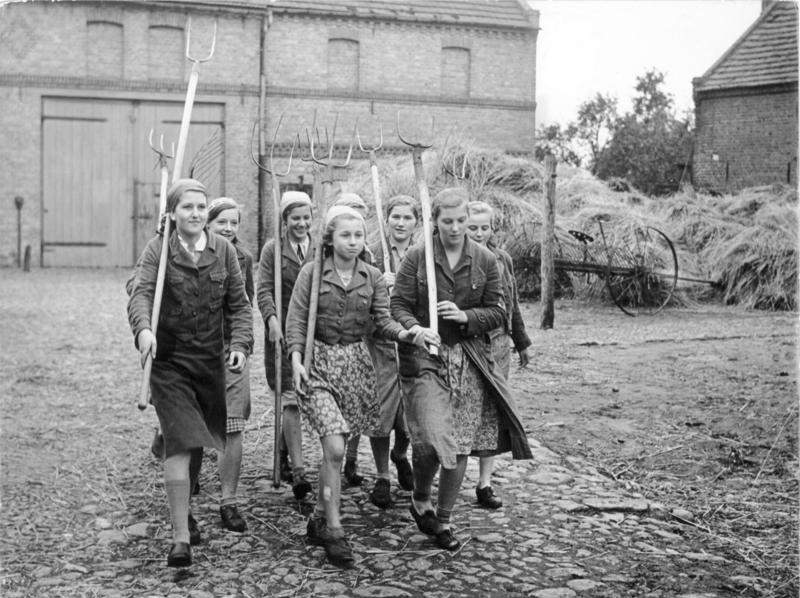
Girls were organized separately under the Bund Deutscher Mädel — the League of German Girls. They marched in formation, put up recruiting posters, worked farming duty, and participated in their own rallies and camps. The organization mirrored the Hitler Youth in discipline and structure, with its own uniform, hierarchy, and ideology.
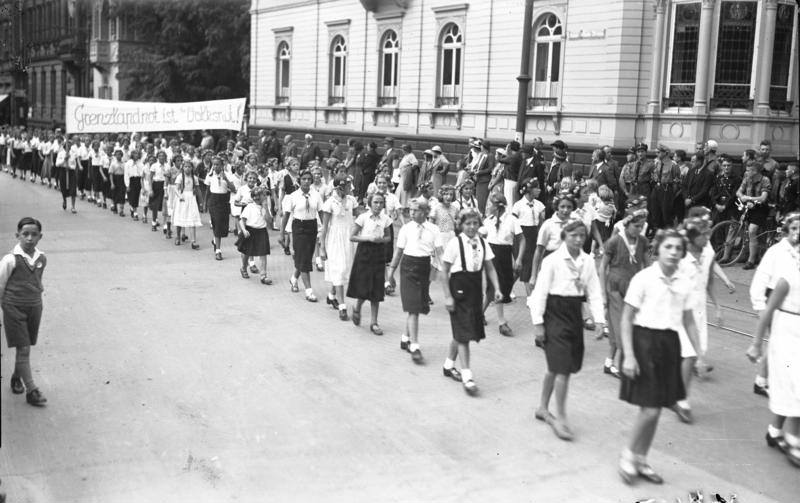
Young female members of the Nazi Party in march, Worms, Germany, 1933-1939.
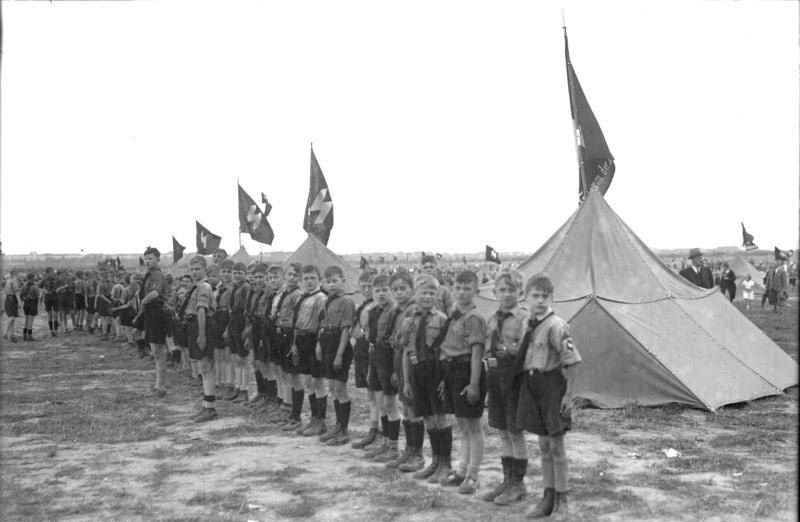
Hitler Youth camp at the Tempelhof Field in Berlin, Germany, 10 Jun 1934.
Members of the Hitler Youth at Tempelhofer Feld, Berlin, Germany, 10 Jun 1934.

The Nuremberg rallies gave the Hitler Youth some of their most visible public moments. Thousands of uniformed boys assembled at the annual Nazi Party gatherings, serving as a living display of the regime’s grip on the next generation. These mass formations were photographed and filmed extensively for propaganda purposes.
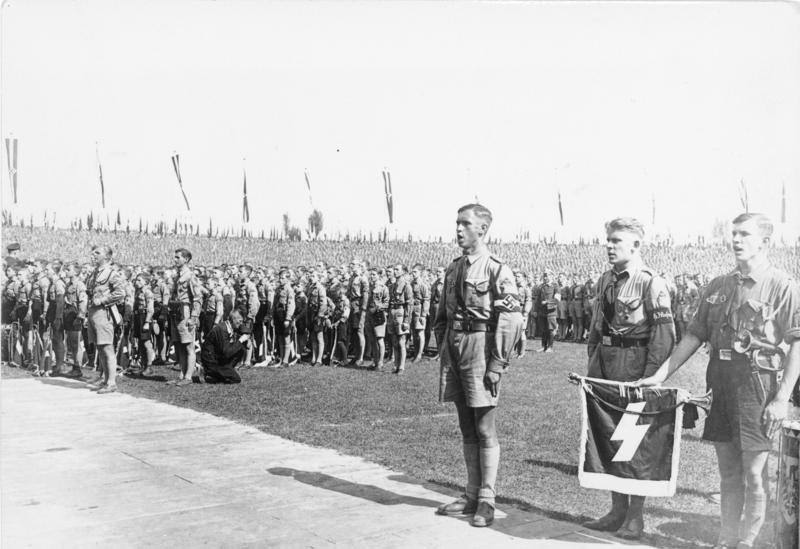
Hitler Youth members at a Nazi Party rally, Nürnberg, Germany, 5-10 Sep 1934.
Hitler Youth campground, 1930s.
Hitler Youth members in Shanghai, China, 1930s.

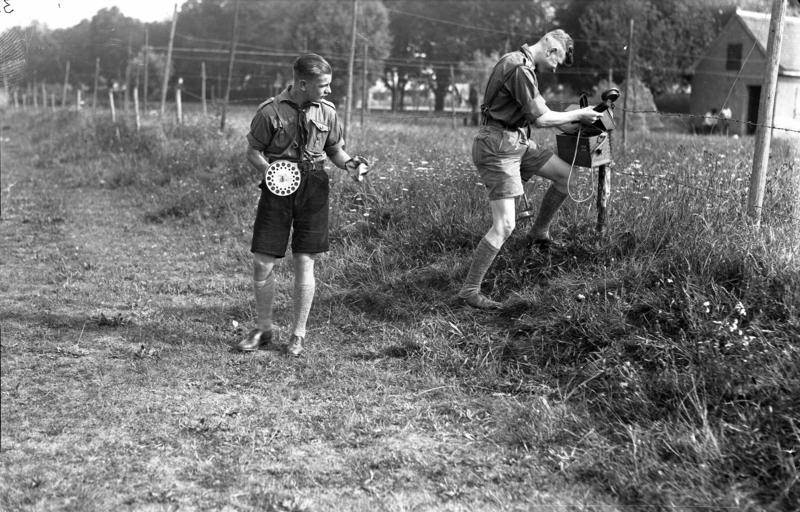
Map reading and navigation were taught as practical skills within the movement. Members were expected to move through terrain, lay telephone wires in mock field exercises, and handle themselves in outdoor conditions. These were not recreational programs — they were structured to produce capable recruits.
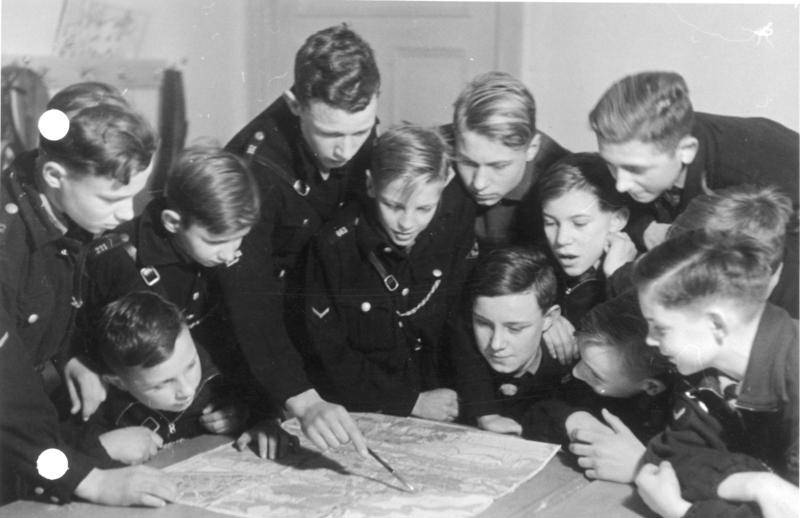
Hitler Youth members learning how to read a map
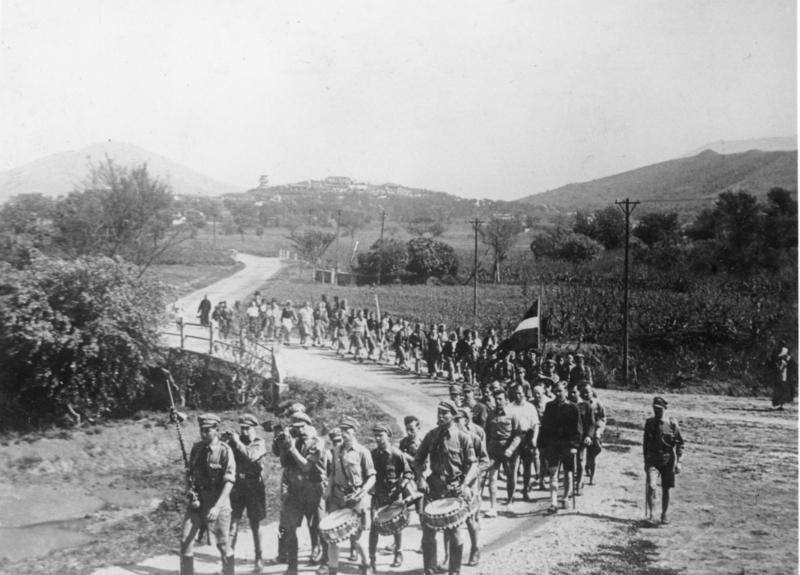
Hitler Youth members marching in Wuxi, Jiangsu, China, 1935.
Hitler Youth members preparing for a Winter Relief drive in Tianjin, China, 1934-1935.

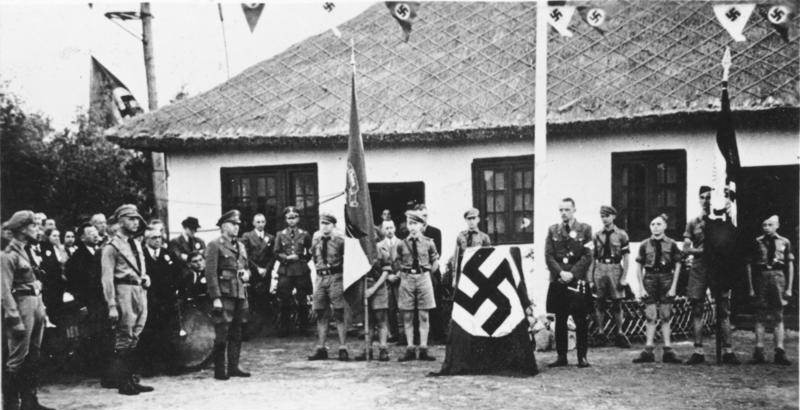
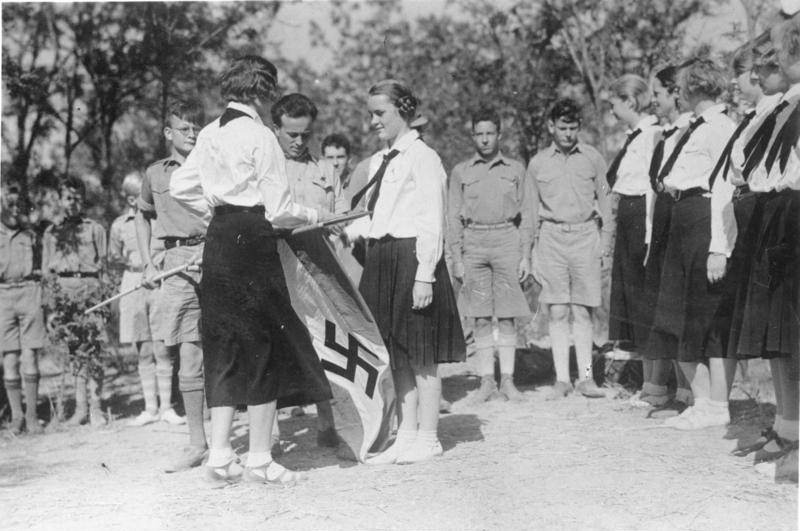
Flags held a central place in Hitler Youth culture. Carrying, displaying, and guarding flags were ceremonial duties assigned to members. Units in Worms and other German cities were regularly photographed with their flags — a visual shorthand for the loyalty the movement demanded.
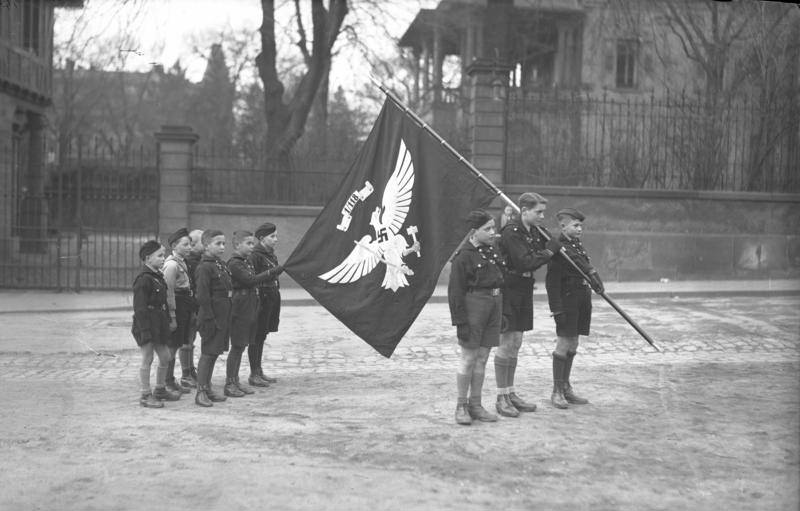
Hitler Youth members with a flag, Worms, Germany, 1930s.
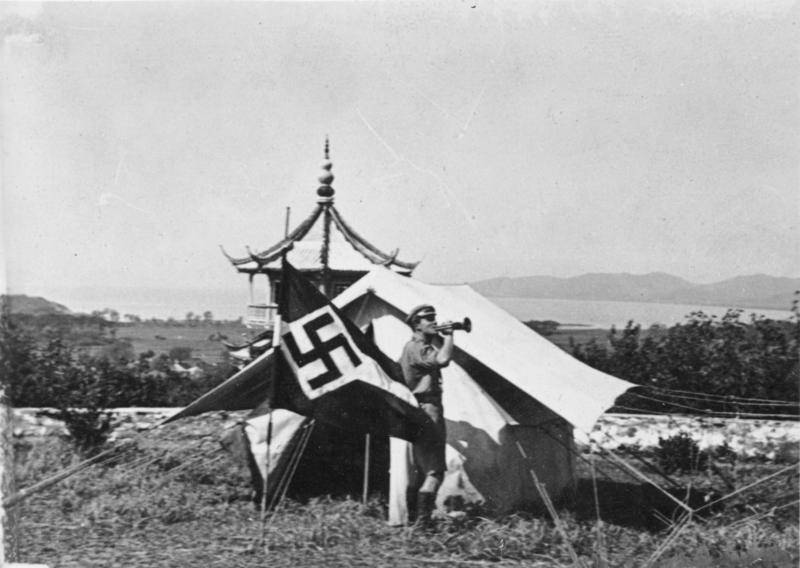
Hitler Youth trumpeter at a camp in Wuxi, Jiangsu, China, 1935.
Hitler Youths marching near Shanghai, China, circa 1935.

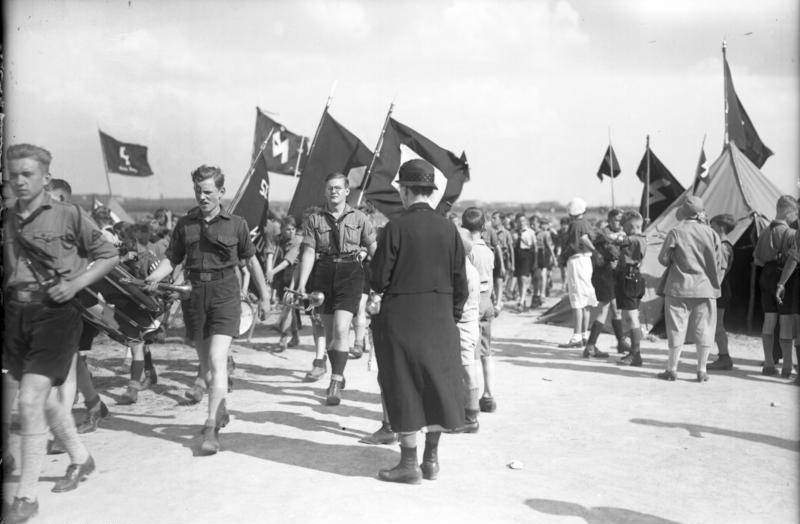
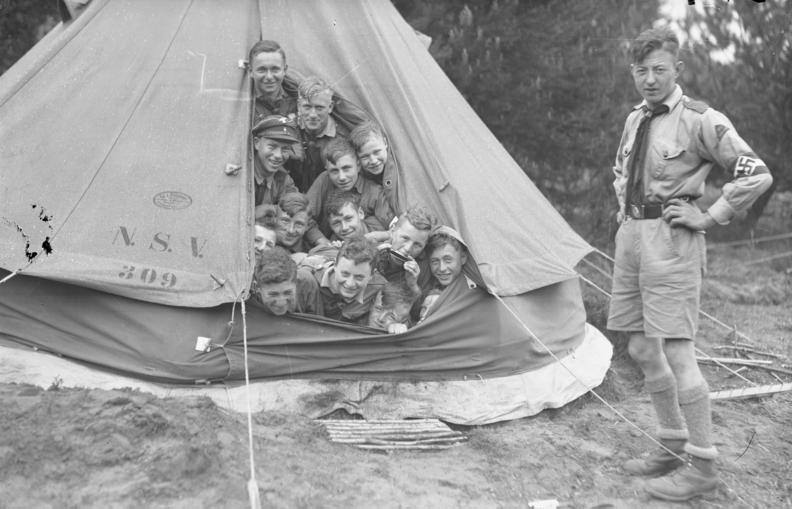
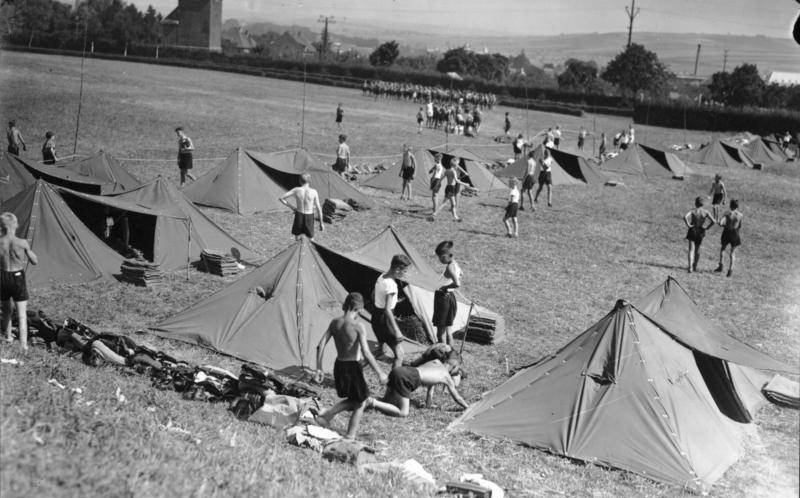
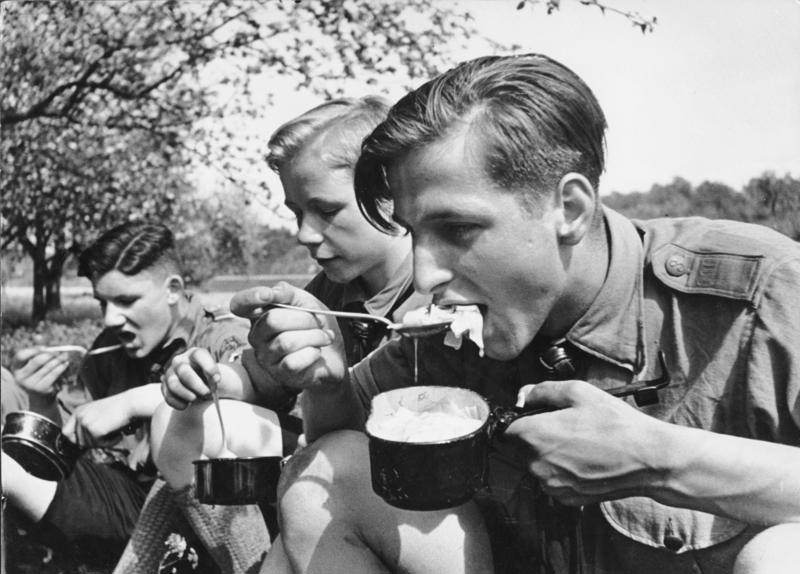
Daily life at camps followed a regimented routine. Meals were communal and rationed. Members slept in tents, performed physical drills in the morning, and attended ideological instruction. The photographs from these camps show boys eating together, resting in tents, and exercising in open fields — scenes that look ordinary only until context is applied.
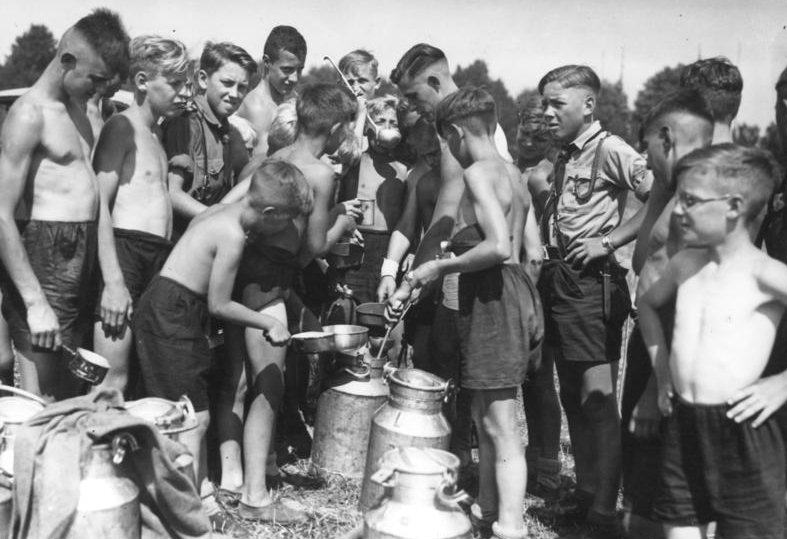
Meal time at a Hitler Youth camp, Germany, 1930s.
Members of Hitler Youth and League of German Girls in Tianjin, China, 1935.
Members of the Hitler Youth in a tent at camp, 1930s.
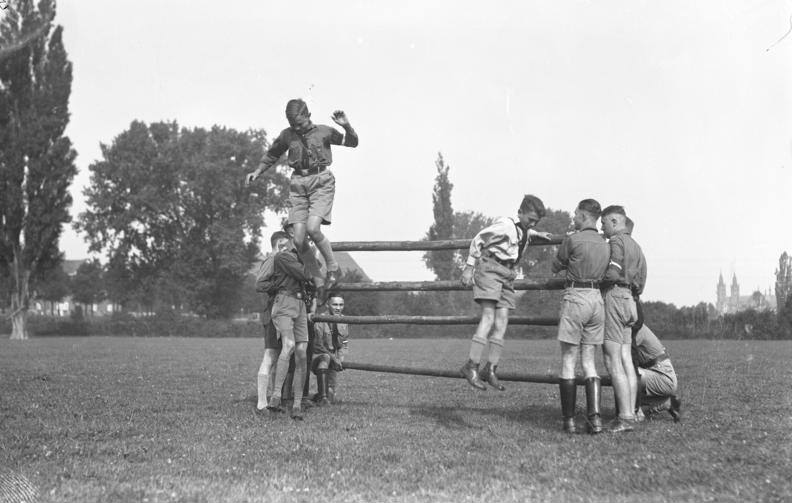
Members of the Hitler Youth in exercise, 1930s.

The League of German Girls operated internationally as well. Members in Wuxi, Jiangsu participated in the same organizational life as those in Germany — marching, recruiting, and attending events. Back in Germany, they put up propaganda posters and drilled on parade grounds alongside their male counterparts.
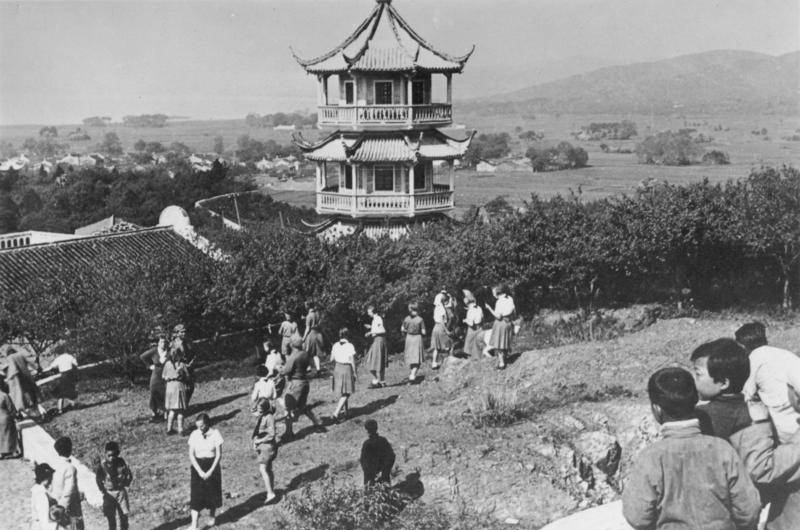
Members of the League of German Girls in Wuxi, Jiangsu, China, 1934-1935.
Members of the League of German Girls putting up recruiting posters, Worms, Germany, 1933-1945.

The regime used children as visible props at major state events. Hitler Youth children attended Hermann Göring’s 42nd birthday celebration in Berlin in January 1935. Their presence at the event — in uniform, in formation — illustrated how the Nazi Party embedded children into the machinery of the state at every level.
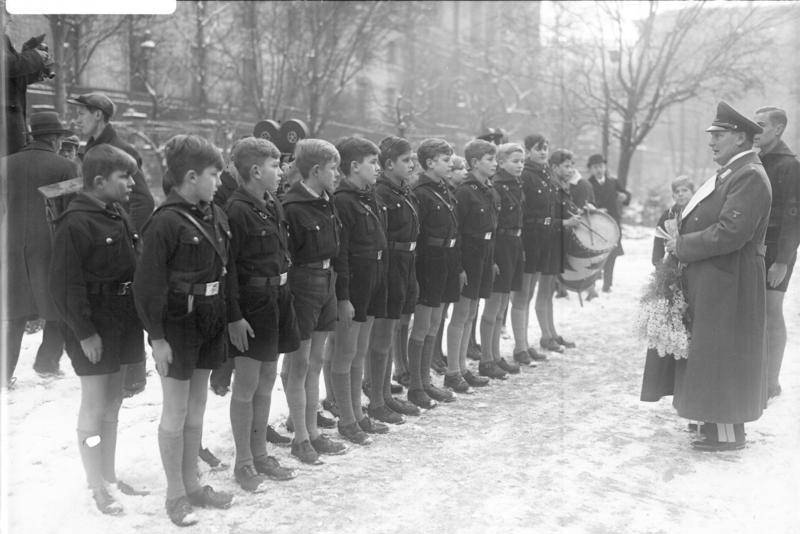
Hitler Youth children at Herrmann Göring's 42nd birthday celebration, Berlin, Germany, 12 Jan 1935.
Hitler Youth children at Herrmann Göring’s 42nd birthday celebration, Berlin, Germany, 12 Jan 1935.
Girls of the Nazi Party Bund Deutscher Mädel organization, Potsdam, Germany, May 1935

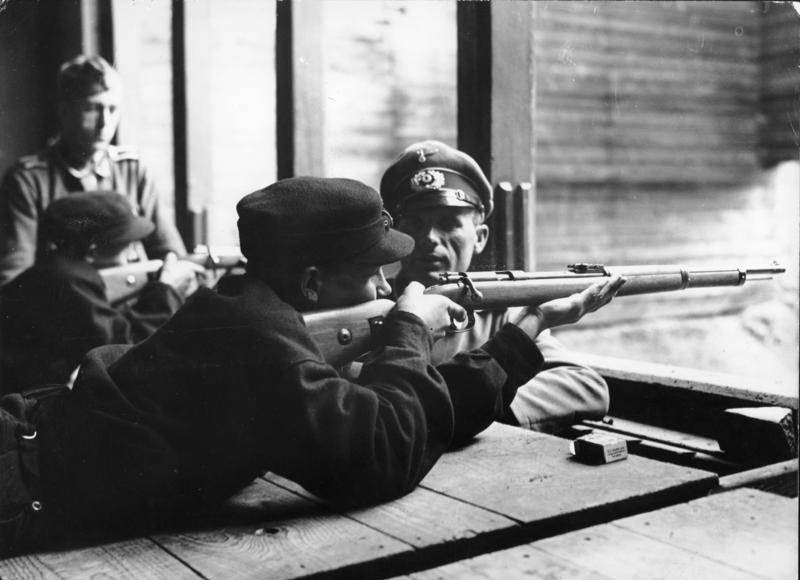
Beyond marching and ceremonies, members received training in practical and military skills. Motorcycle riding, rifle firing, and field communications were taught as standard parts of the program. These were not elective activities — they were built into the curriculum from the mid-1930s onward.
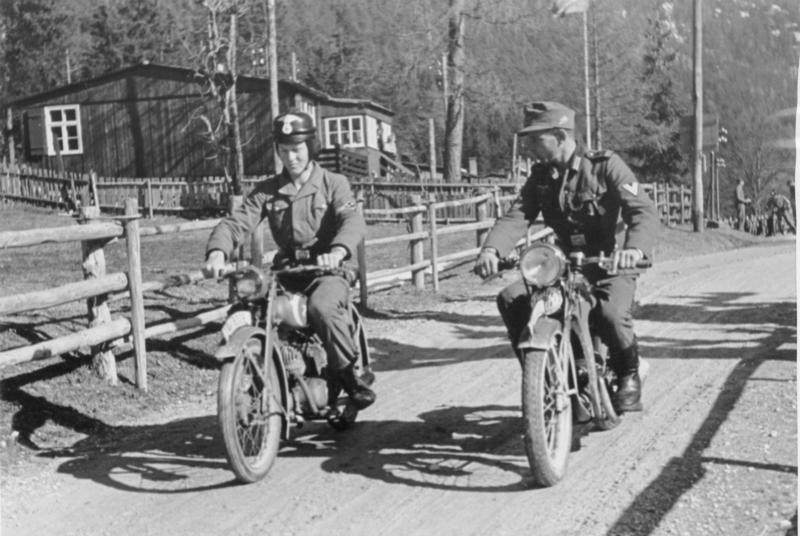
Hitler Youth member learning how to ride a motorcycle, date unknown.
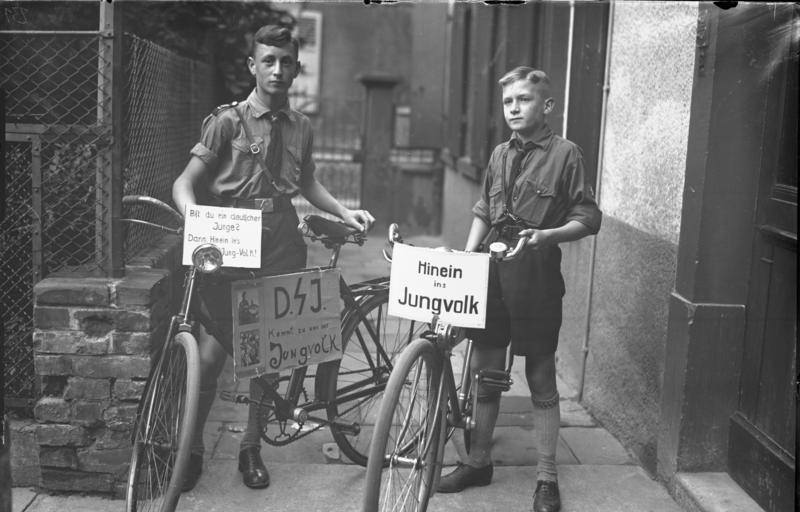
Members of the Hitler Youth with party slogan on display on their bicycles, Worms, Germany, 1930s.
Hitler Youth members exercising near the German Evangelical Church in Shanghai, China, 1 May 1936.

In May 1936, League of German Girls leaders were taken on a visit to Dachau concentration camp. The visit was documented photographically. It represents one of the most direct recorded instances of Nazi youth leadership being brought face to face with the regime’s apparatus of detention.
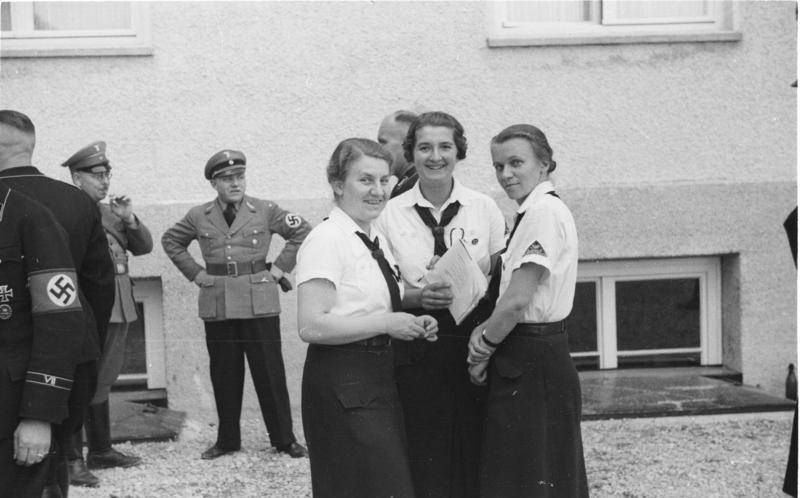
League of German Girls leaders visiting Dachau Concentration Camp, Germany, 8 May 1936.
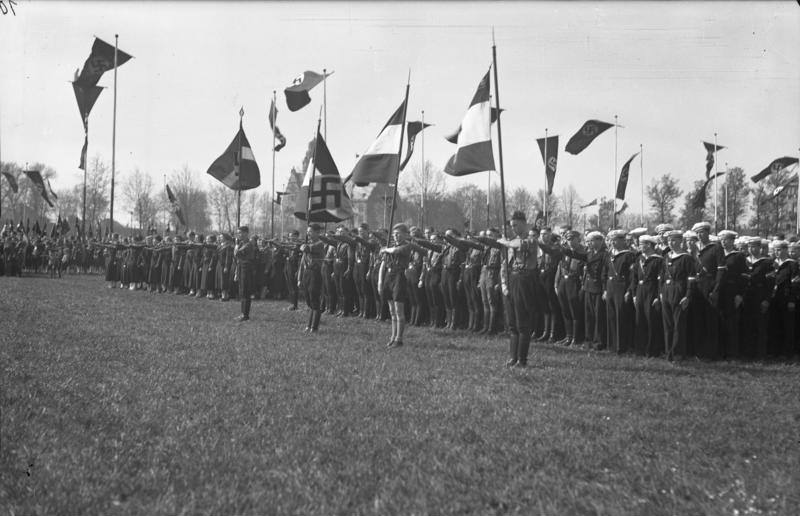
Hitler Youth, Bund girls, and naval Hitler Youth children on a parade ground, Germany, 1 May 1937.
Nazi Party youth organization members at the Berlin Olympic Stadium, Germany, 1 May 1937.

Solstice fires were a regular feature of Hitler Youth events. In June 1937, members in Berlin jumped over open flames as part of a ceremonial gathering — a practice rooted in Germanic pagan tradition that the Nazi Party deliberately revived to replace Christian observances. The regime worked steadily to shift the loyalties of German youth away from religion and toward the state.
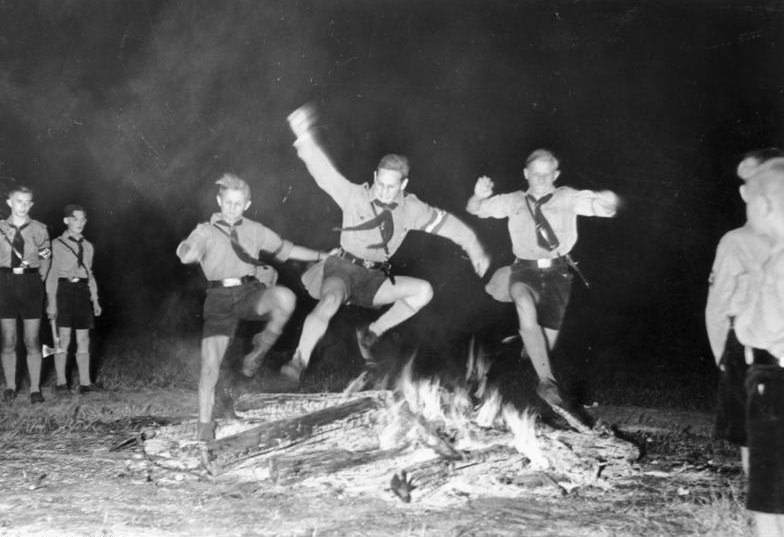
Hitler Youth members jumping over the solstice fire, Berlin, Germany, Jun 1937.
Hitler Youth boys in a homemade glider competition, Worms, Germany, 1938
Hitler Youth boys marching, Worms, Germany, 1938

Recycling drives in 1938 sent Hitler Youth members into their communities to collect tin tubes and foil. The effort was framed as national service — a way to teach boys that every action, no matter how small, served the Reich. Similar drives collected scrap metal throughout the decade as Germany began preparing its war economy.
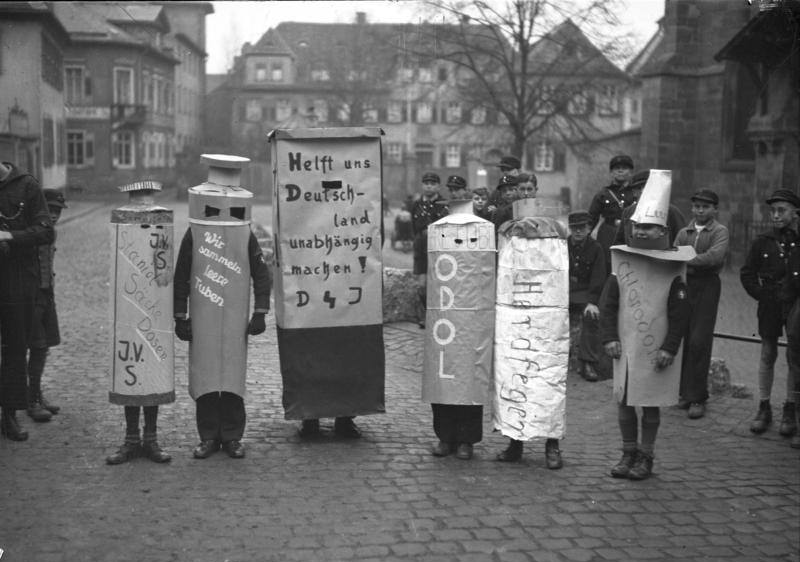
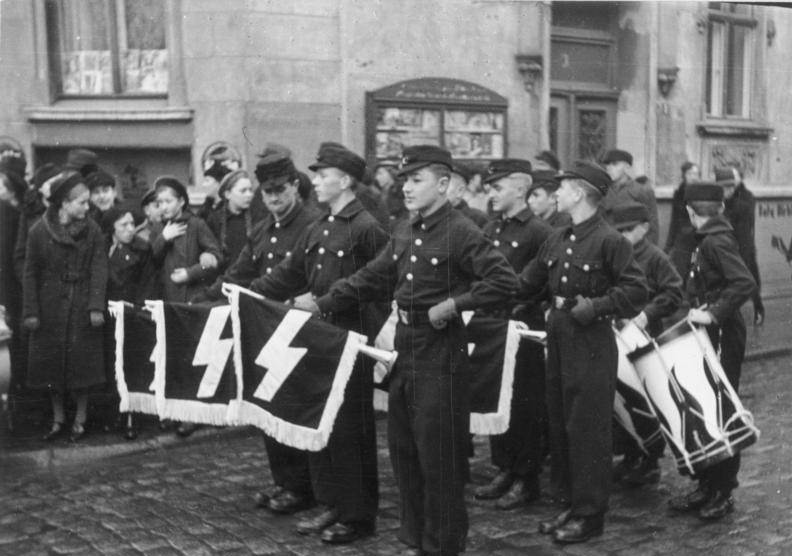
Hitler Youth members in an event to encourage the recycling of tin tubes and foil, Worms, Germany, 1938.
Hitler Youth members in Memel, Germany, 1938.
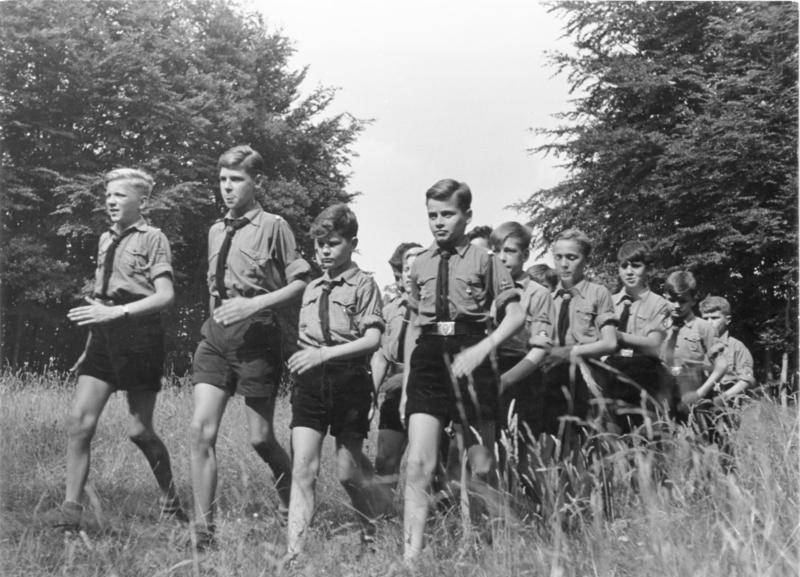
Hitler Youth members on a hike through woods

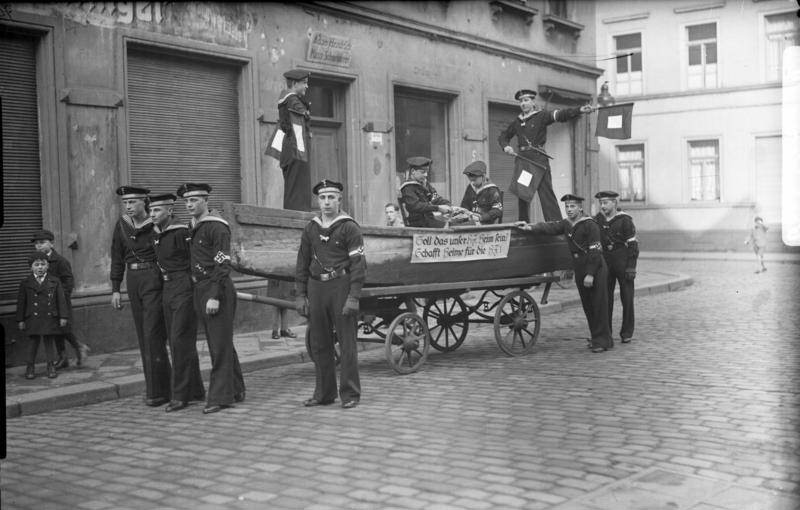
Travel was used as a reward and a recruiting tool. Groups prepared for trips to destinations like Bodensee in southern Germany — excursions that blended leisure with continued ideological immersion. Marine divisions of the Hitler Youth ran their own recruitment campaigns, expanding the movement’s reach into naval training.
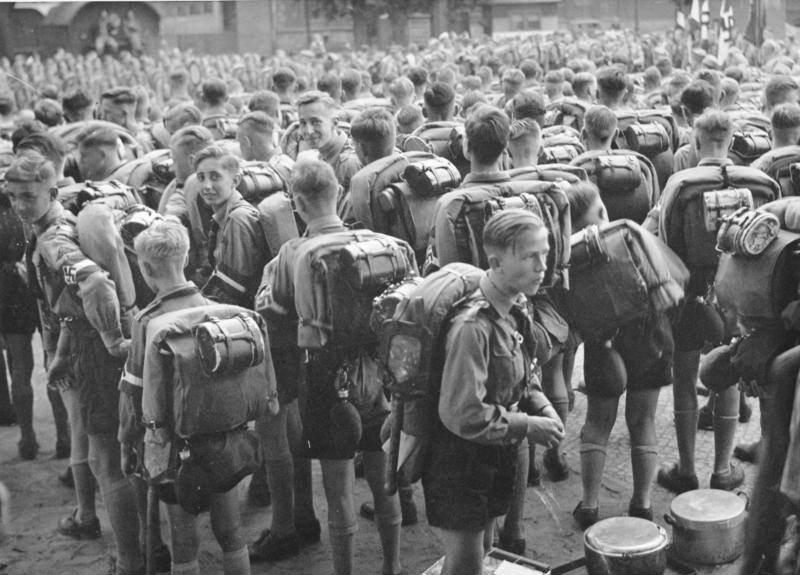
Hitler Youth members preparing for a trip to Bodensee (Lake Constance) in southern Germany
Members of the Hitler Youth laying field telephone wires in a military exercise, 1930s.
Members of the League of German Girls on a parade ground, Germany, 1938.
Marine Hitler Youth recruiting

Members also stood ceremonial guard at altars for fallen soldiers — a ritual that connected the Hitler Youth directly to the culture of military sacrifice. These guard duties were performed in full uniform, blending mourning with the pageantry the regime used to glorify death in service to Germany.
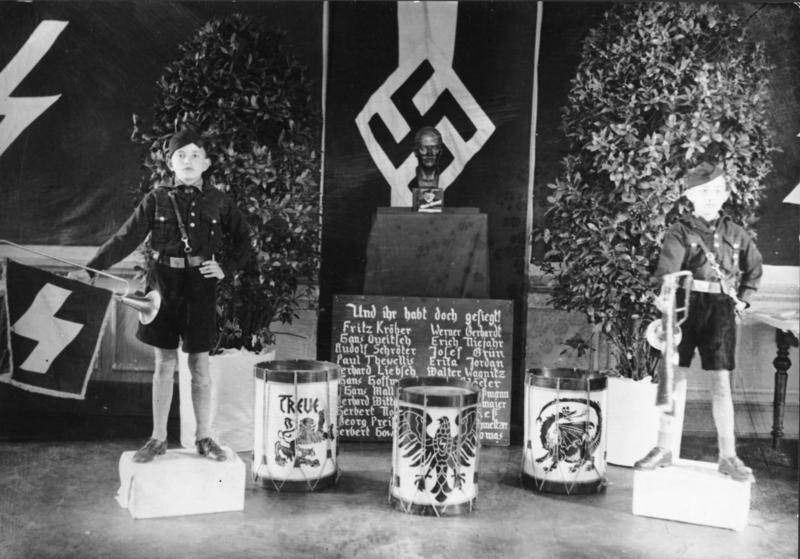
Hitler Youth members standing guard at an altar for fallen soldiers
Members of the League of German Girls on farming duty, Sep 1939.

By October 1939, with Germany already at war, Hitler Youth members were still marching in formal state ceremonies. They appeared at the inauguration of Arthur Greiser and Wilhelm Frick in Posen — a visible reminder that the movement continued functioning as a state institution even as the war machine it had helped build was now fully in motion.
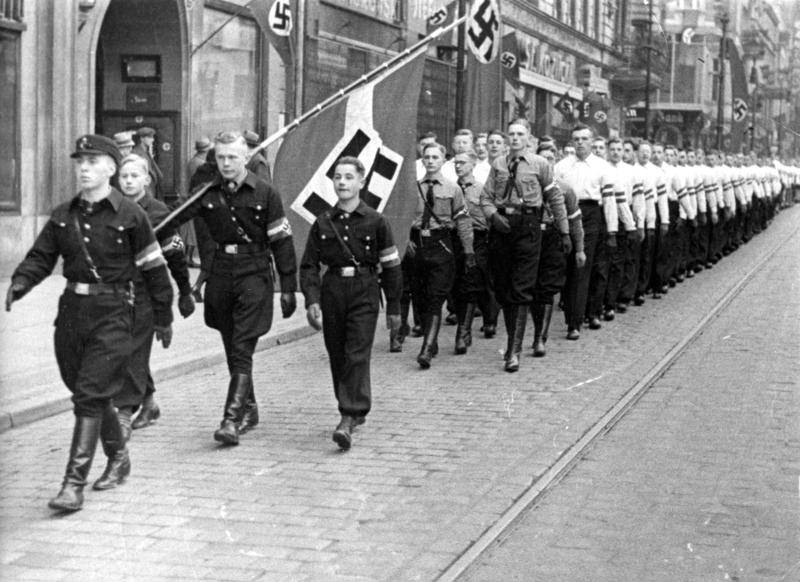
Hitler Youth members marching during the inauguration of Arthur Greiser and Wilhelm Frick, Posen, Germany, Oct 1939.
Hitler Youth members eating a meal while on a field exercise
Hitler Youth members learning how to fire rifles, date unknown.
Enjoyed this post? Get new ones in your inbox.

Leave a Comment

Your email address will not be published. Required fields are marked *

Share this Post 🥺

Please take a moment to share this content. Your support is greatly appreciated! 🙌🙏

Share this Post 🥺

Please take a moment to share this content. Your support is greatly appreciated! 🙌🙏
Scroll to Top
 
Hey Friend, Before You Go.. Please like & follow for more interesting content