
Tijuana Bibles were small, palm-sized comic books that circulated across the United States from the 1920s through the early 1960s. They were illegal, anonymous, and wildly popular — especially during the Great Depression, when they reached their peak. The name itself was a bit of misdirection, since they had nothing to do with Tijuana. The label was simply slang for something dirty and forbidden.
Most Tijuana Bibles were shameless parodies of the era’s most famous newspaper comic strip characters. Strips like “Blondie,” “Popeye,” “Barney Google,” “Moon Mullins,” “Tillie the Toiler,” and “Little Orphan Annie” all got the treatment. Movie stars and athletes were fair game too — Mae West, Clark Gable, and Joe Louis all appeared in thinly disguised versions with altered names. No one asked for permission, and no copyright or libel law was respected.
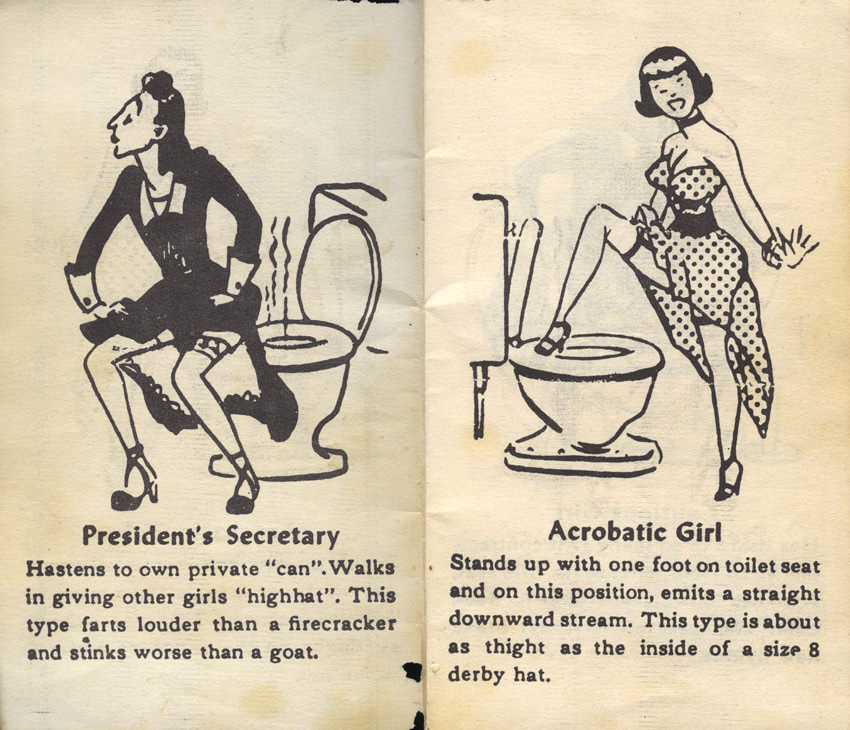
The standard Tijuana Bible ran eight pages, printed in black ink on cheap white paper, and fit neatly into a wallet. Each book told a story across eight panels. Before World War II, the content leaned more toward crude humor than pure shock value — many were simply cartoon versions of dirty jokes that had already been circulating by word of mouth for decades. The art quality ranged from surprisingly skilled to barely legible, depending on who drew it.
Because publishing these booklets was a criminal offense, the artists, writers, and distributors almost always stayed anonymous. To this day, most creators remain completely unidentified. That secrecy is a big reason why so many of these comics survived — they were passed hand to hand, hidden in pockets, and traded quietly rather than sold openly.
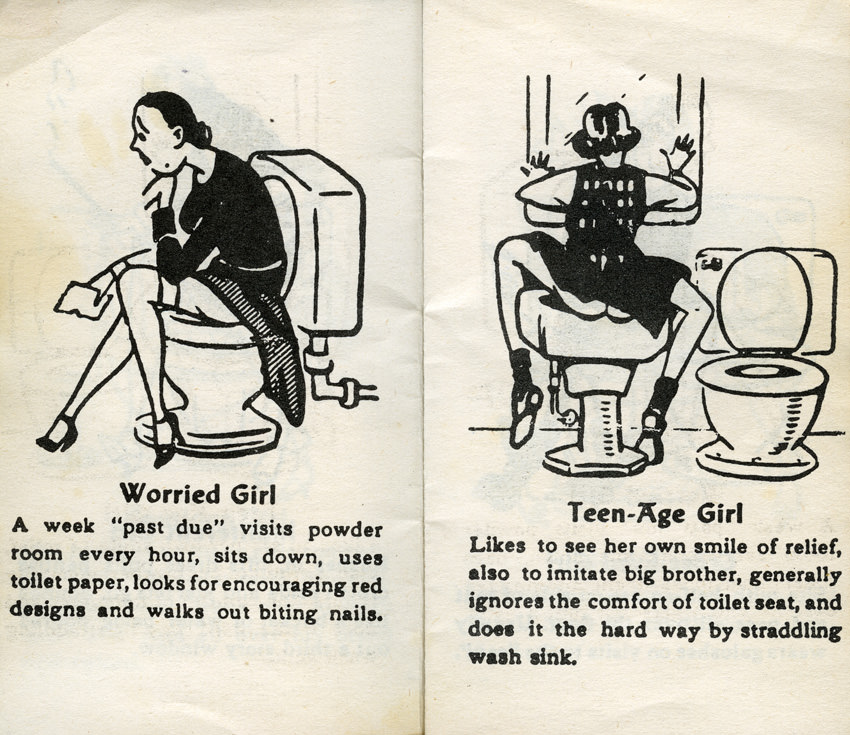
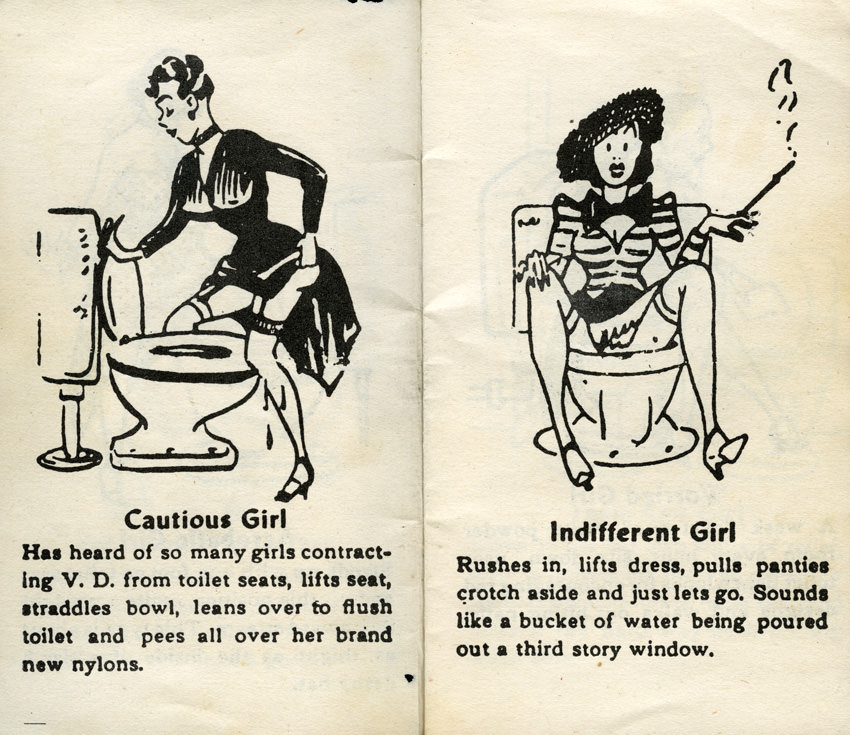
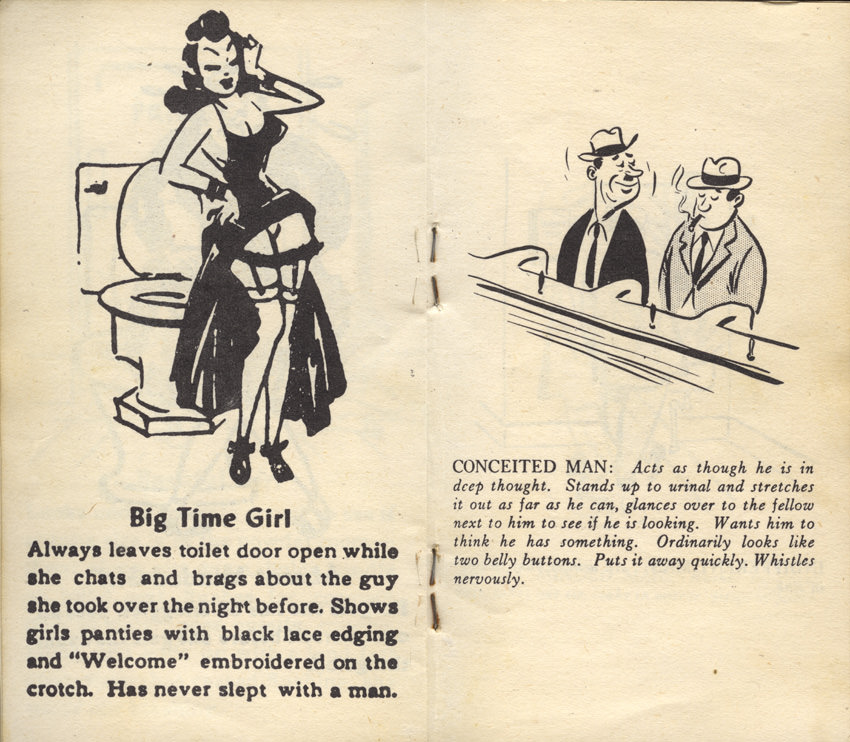
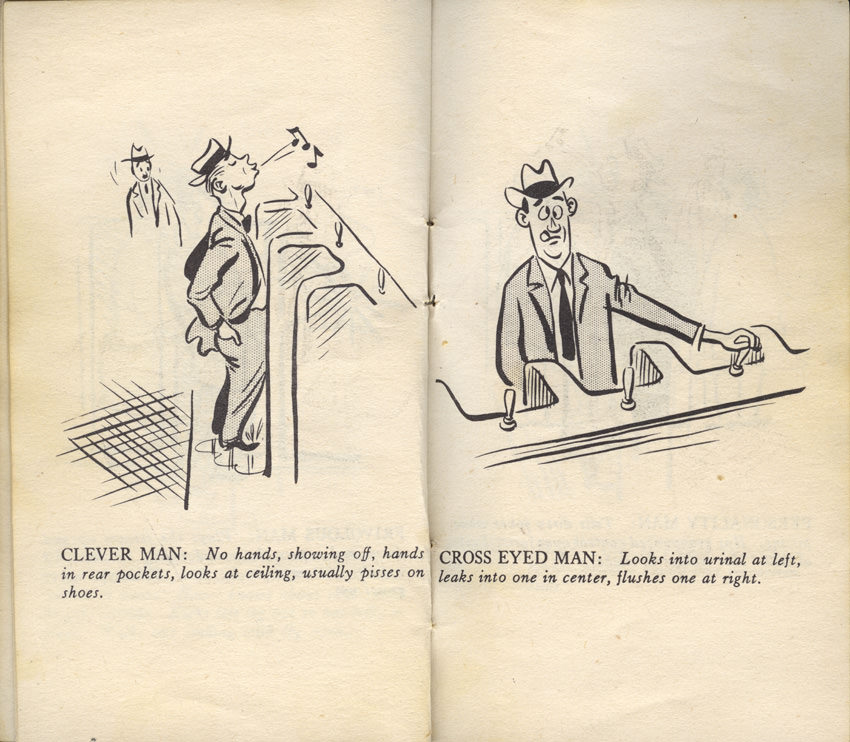
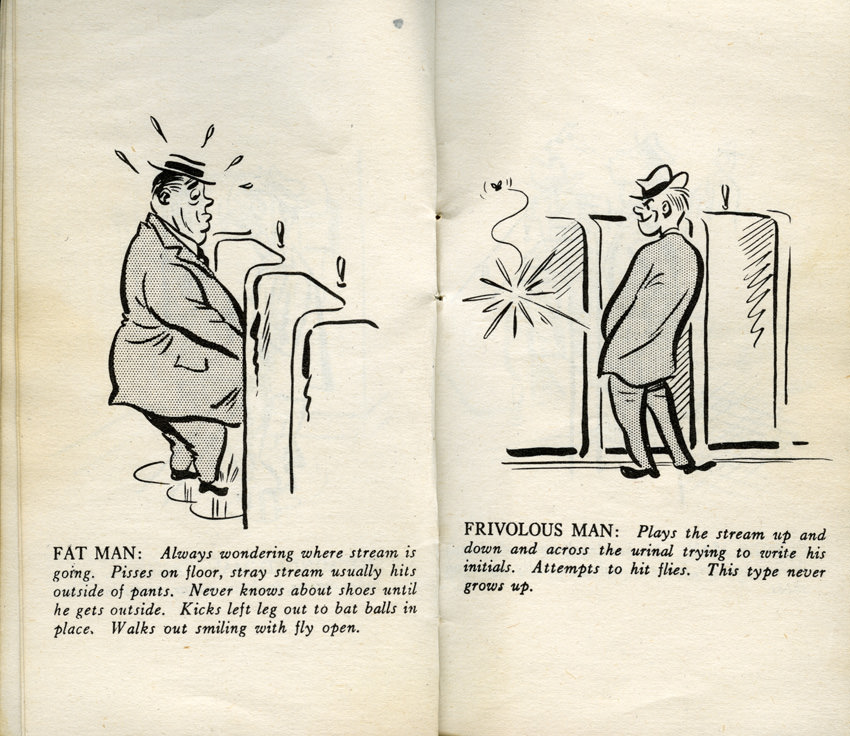
One recurring theme in Tijuana Bibles was bathroom humor — including comics that poked fun at the many ridiculous ways different types of people relieve themselves. These urination-themed panels used character archetypes with names like “The Worried Girl,” “The Absent-Minded Man,” and “The Conceited Man” to land their jokes. The humor was broad, bawdy, and deliberately absurd.
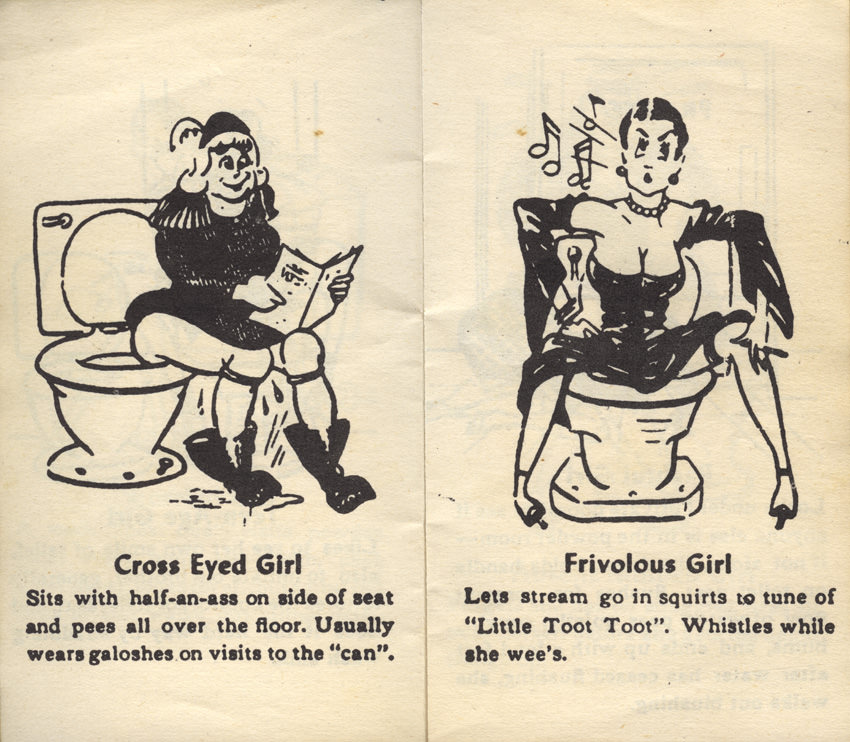
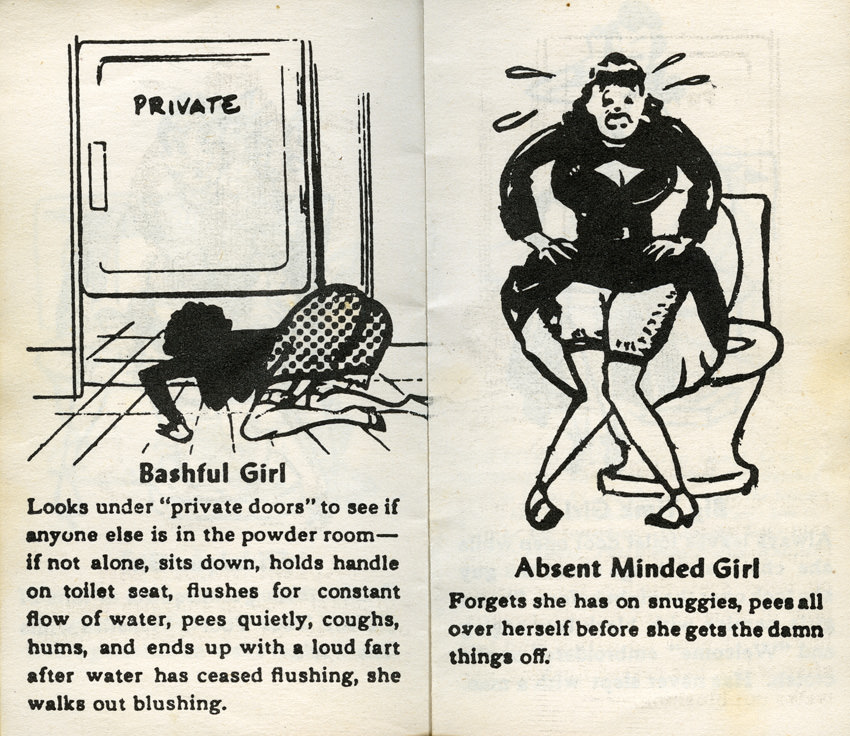
The character types used in these comics reflected how Americans stereotyped personality traits in the mid-20th century. Labels like “Bashful,” “Frivolous,” “Sneaky,” and “Clever” were applied to both men and women, with each type performing the same basic act in a wildly different way. The joke was always in the contrast — and in how recognizable each type felt to the reader.
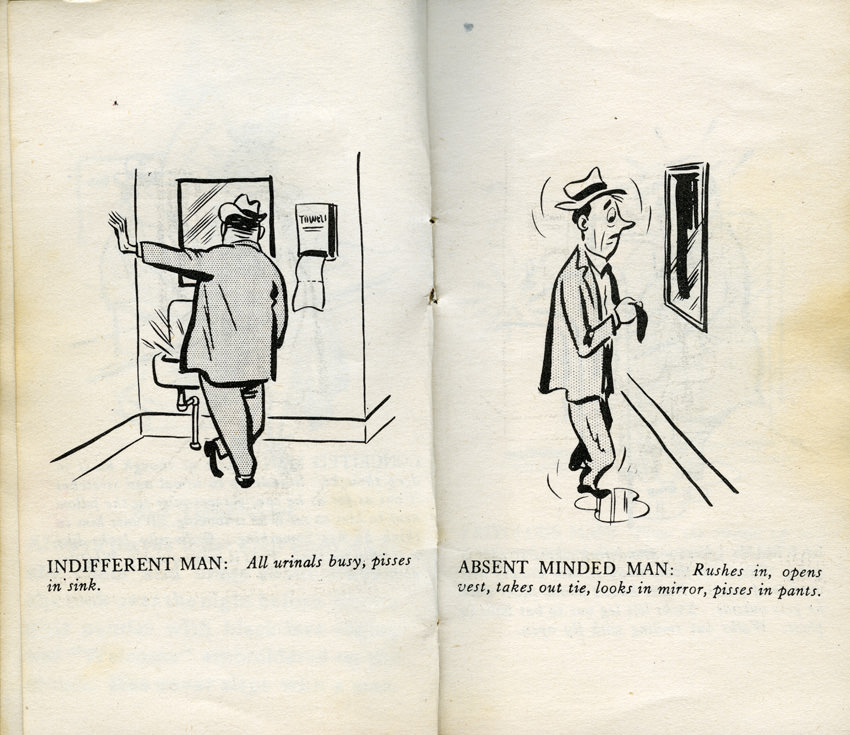
These comics were never meant to be high art. They were made fast, sold cheap, and consumed quickly. But they captured something real about American underground culture — a desire to laugh at subjects that polite society refused to acknowledge. The fact that they had to stay hidden only made them more appealing to the people who sought them out.
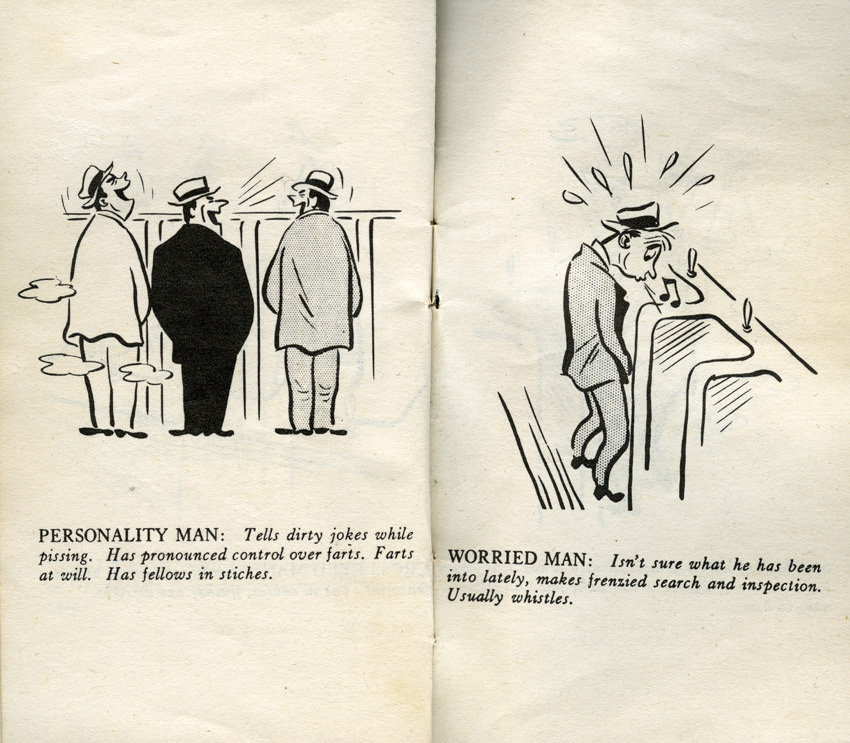
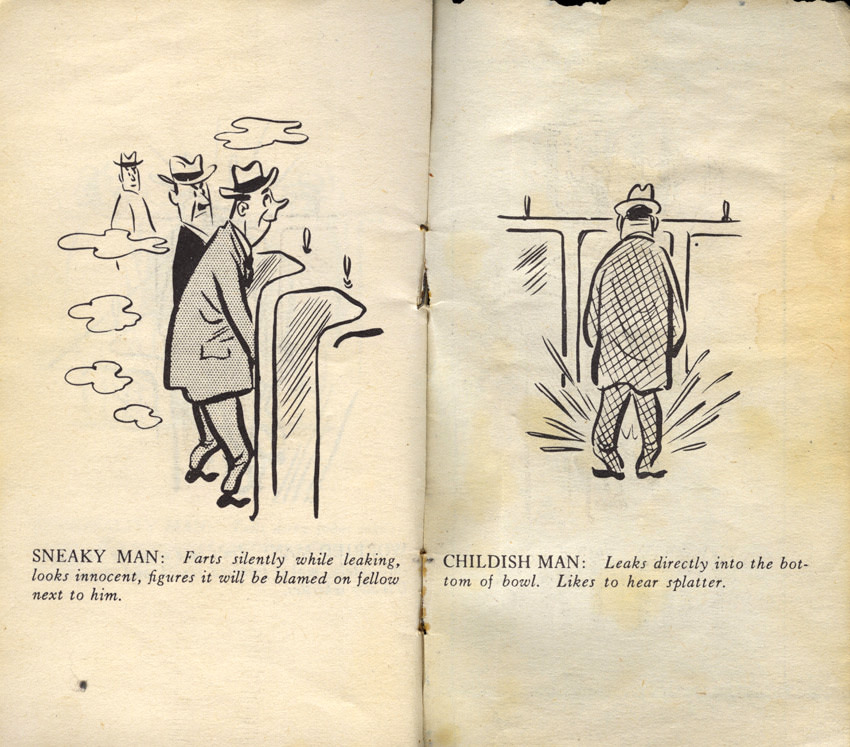
Below, you’ll find the full lineup of personality types from this particular comic series — both the women’s and men’s editions. Each panel pairs two contrasting characters side by side for maximum comedic effect. Vote for your favorites and share the ones that make you laugh the most.

It’s pretty good. Although some expressions are really old, we can get the idea, but not always the humour. It would be nice to see more of those.
What the hell did I just See?
The writer has a fetish for this.
This is too funny
As a teen, I didn’t know I was supposed to pee backwards into a sink