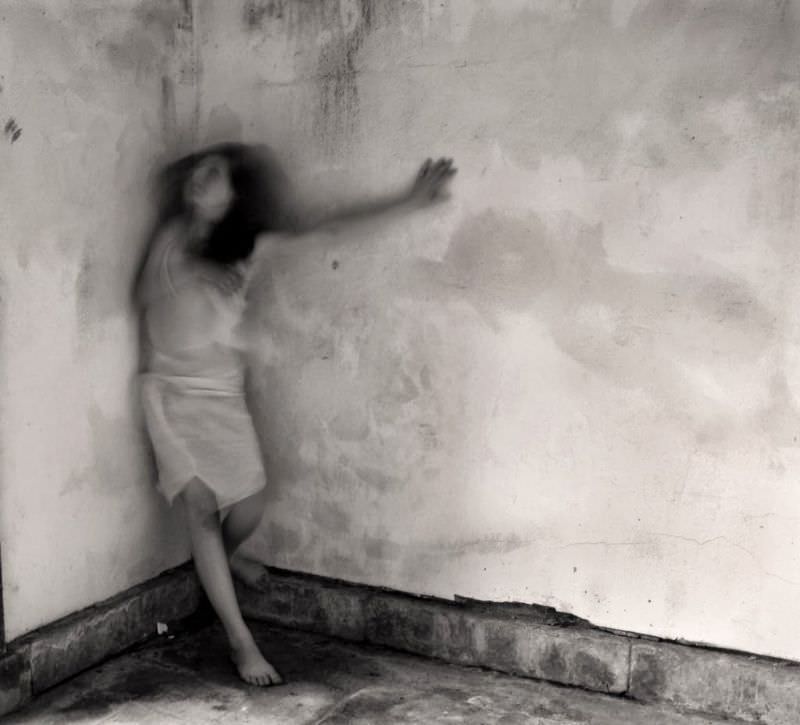
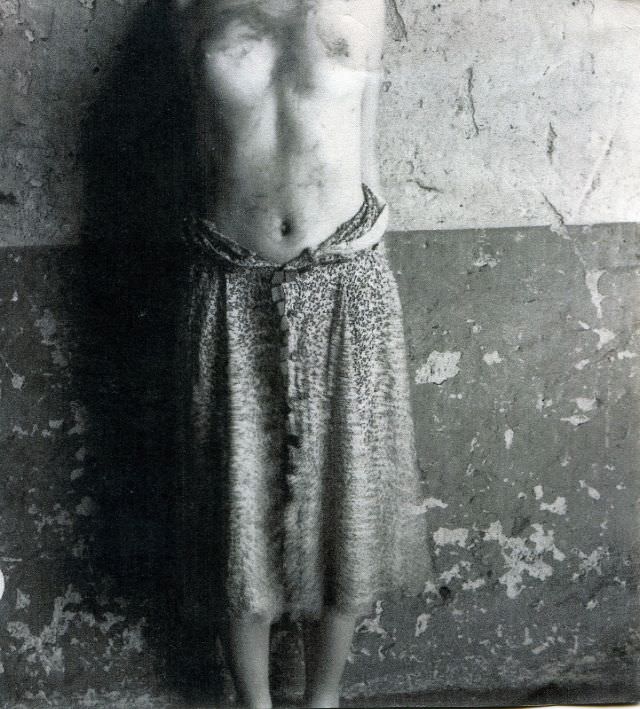
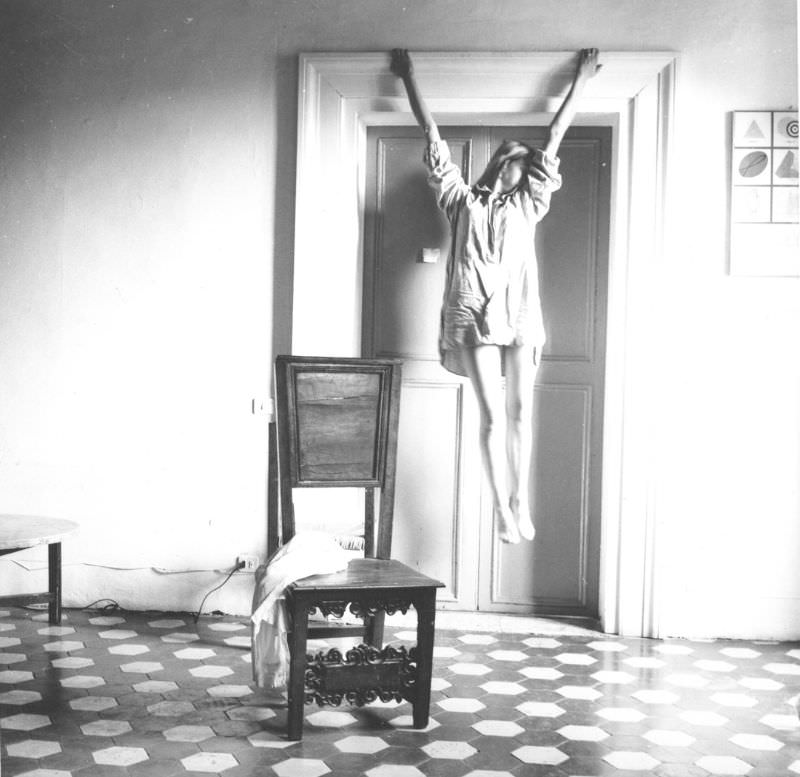
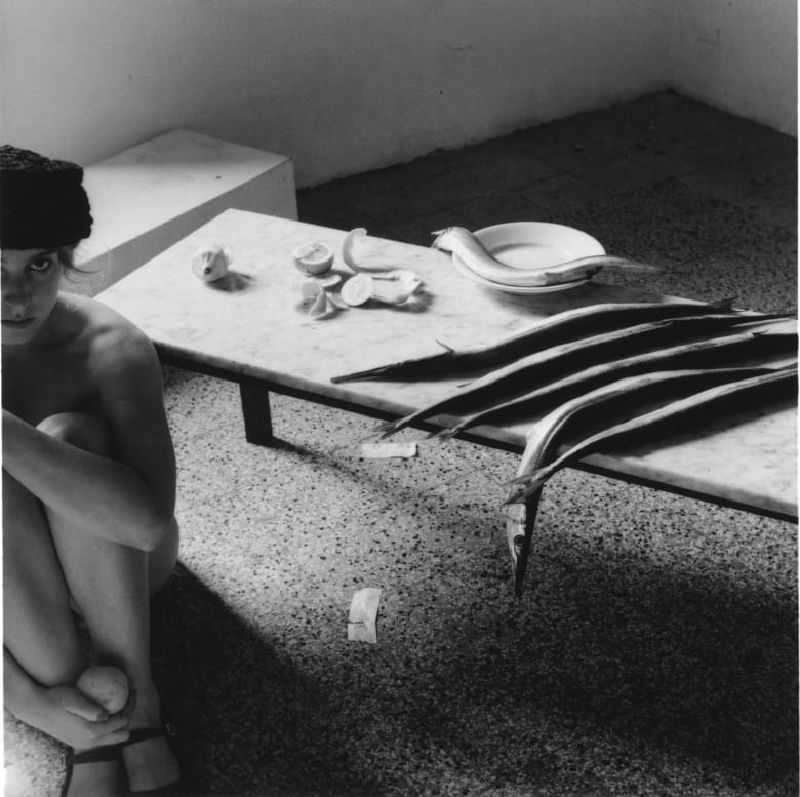
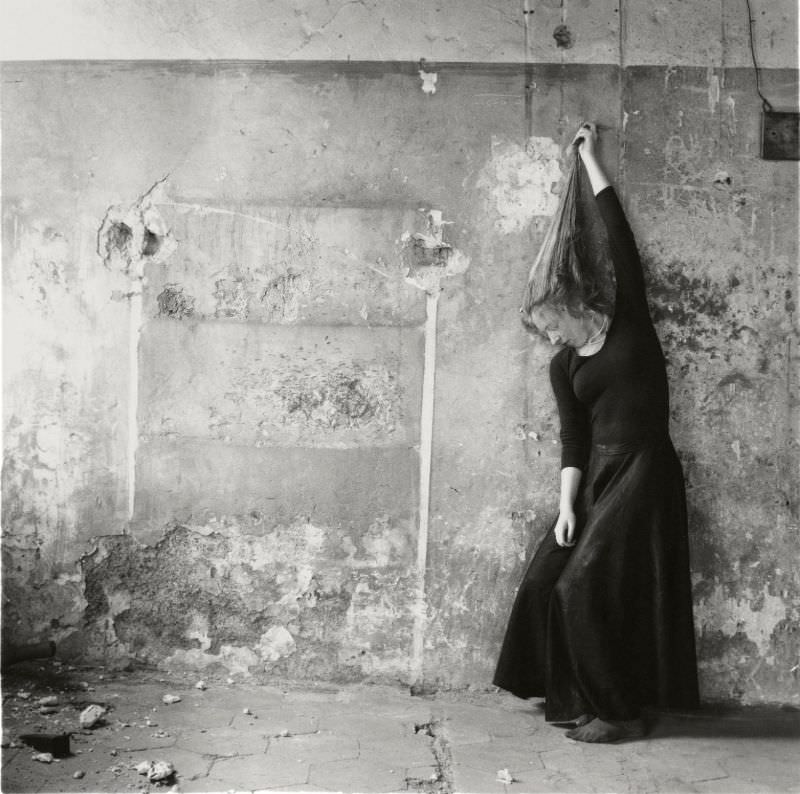
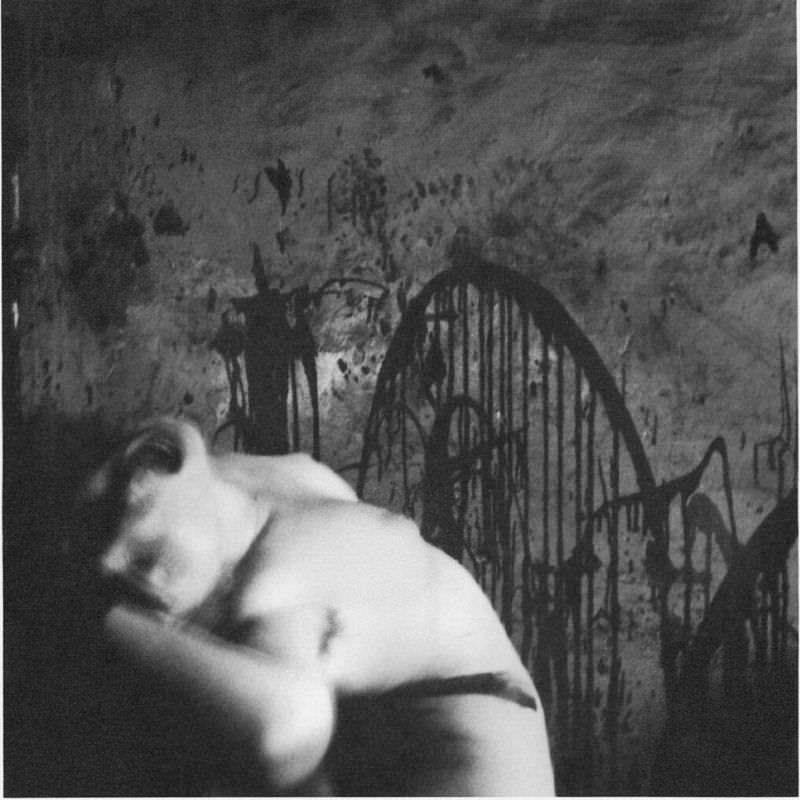
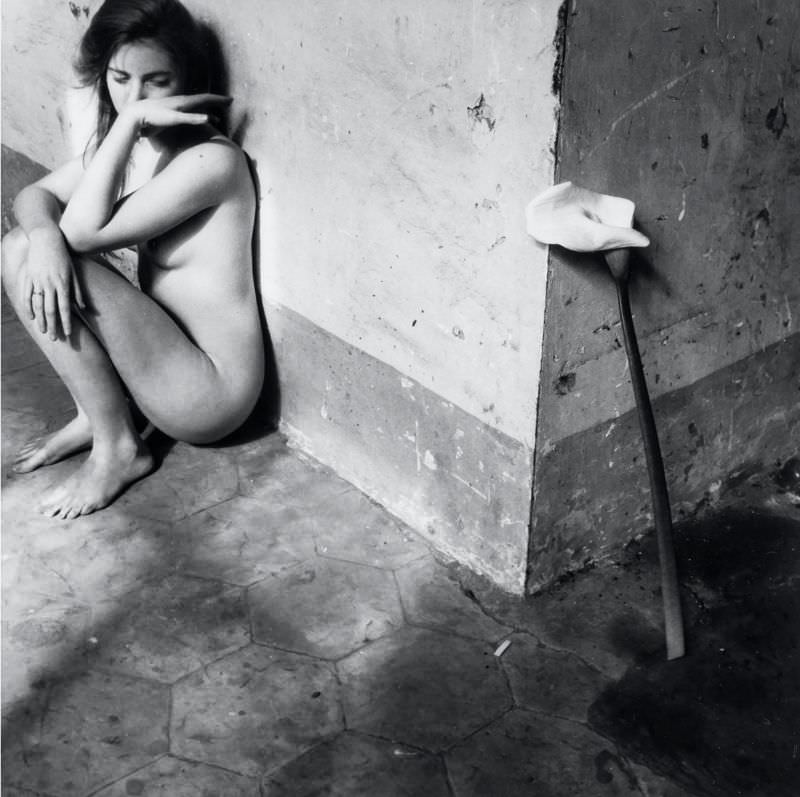
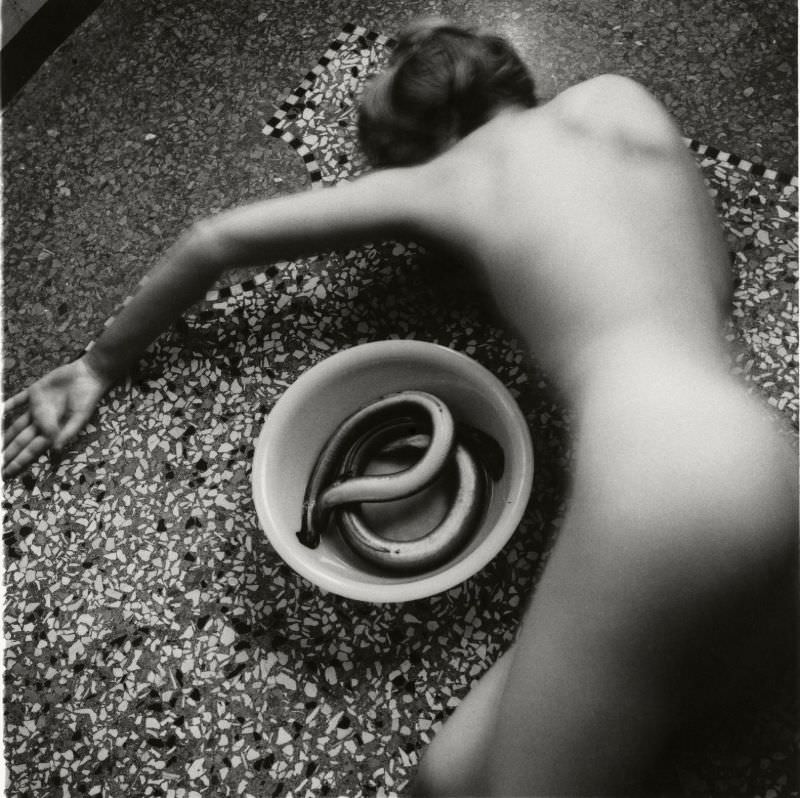
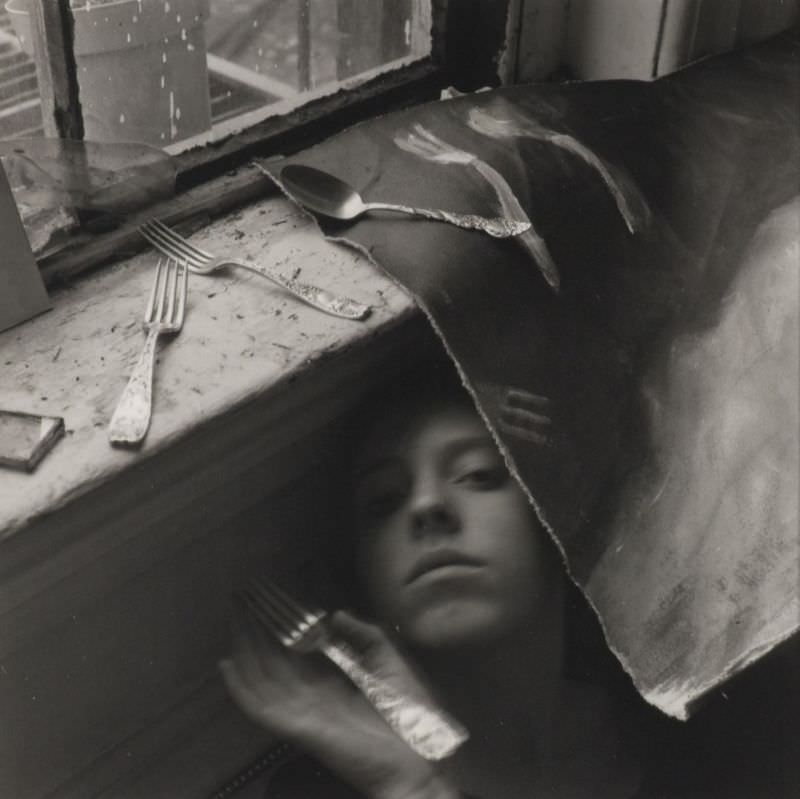
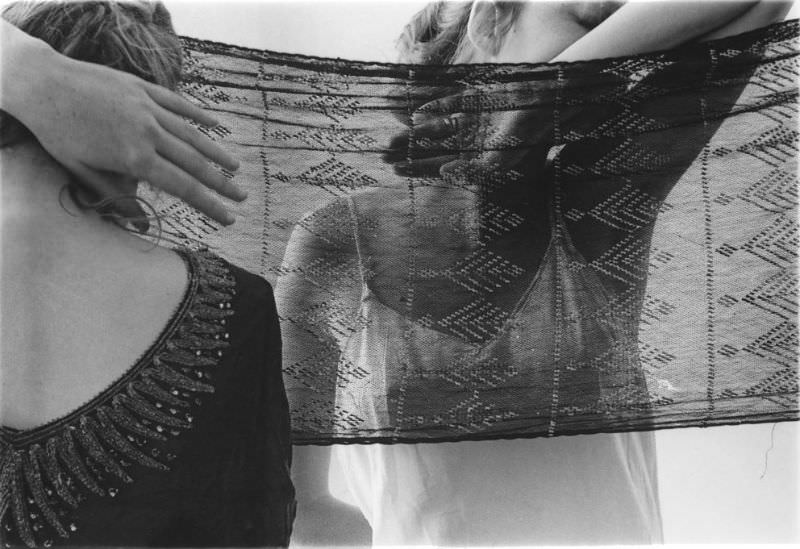
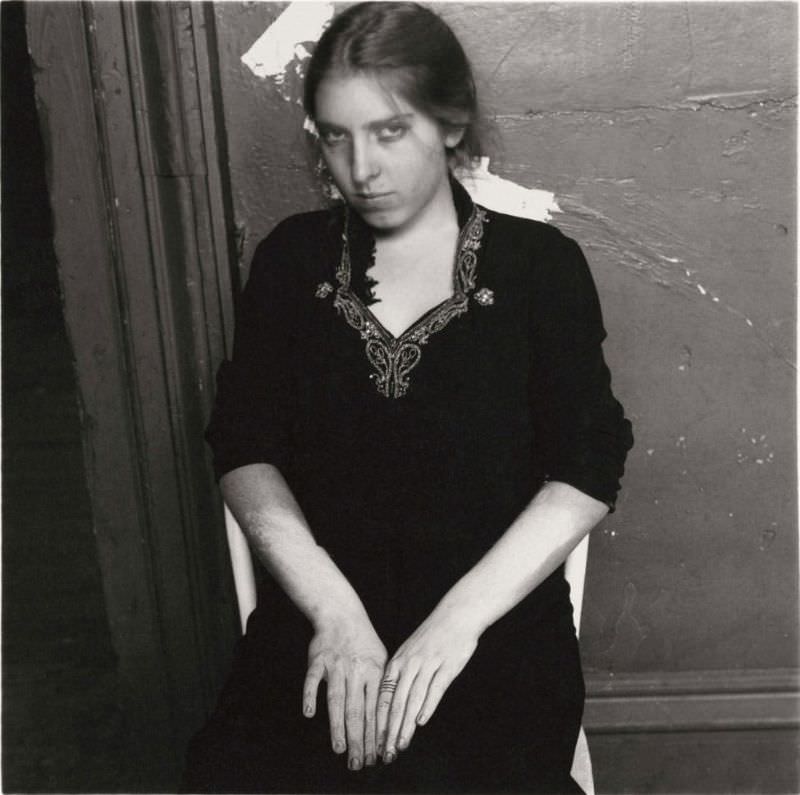
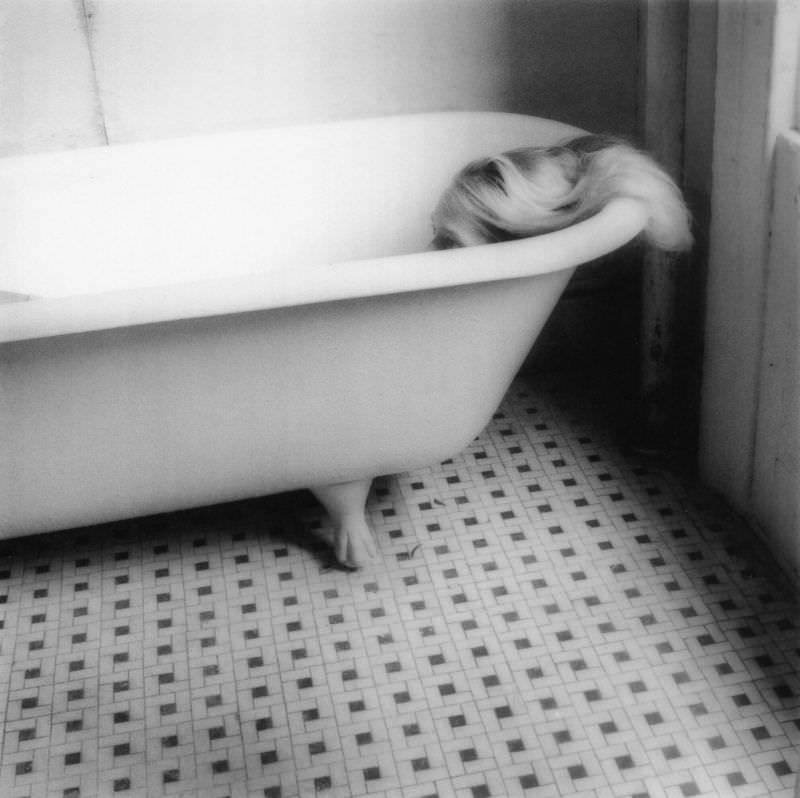
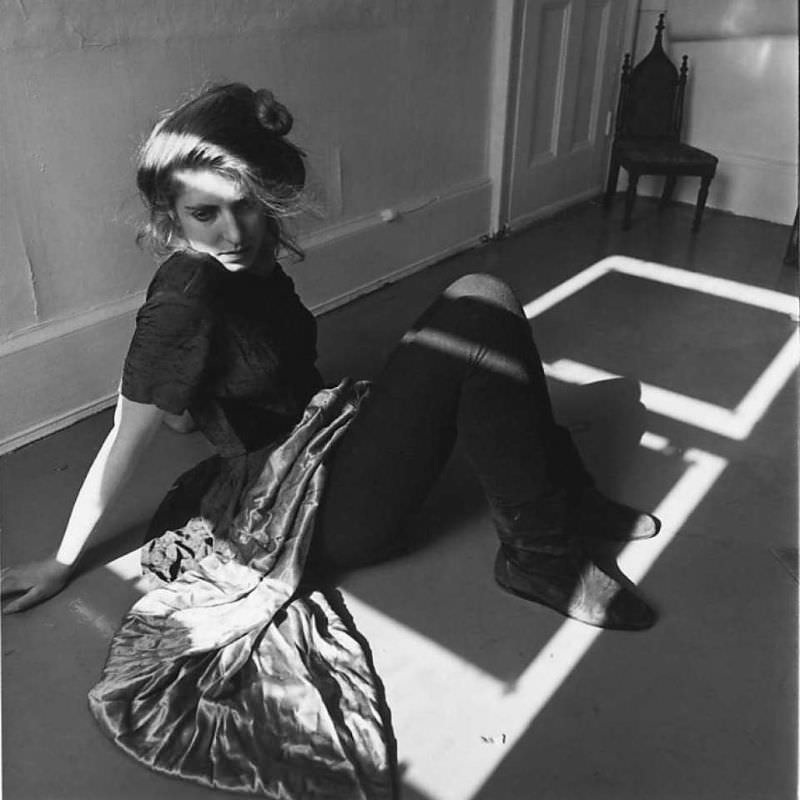
Francesca Woodman is one of the most distinctive photographers of the twentieth century. She is best known for her self-portraits — but these are nothing like traditional photographs of a person posing for the camera. In Woodman’s work, she is often partially hidden or blurred, concealed behind furniture, pressed into peeling walls, or dissolved into motion by long exposure times. The result is a body of work that feels both deeply personal and strangely timeless.
Woodman was born into a creative family. Her father, George Woodman, was a painter and photographer, and her mother, Betty Woodman, was a ceramicist. She began photographing herself at age thirteen, and from that point on, the self-portrait became her primary artistic tool. The family divided their time between the United States and Italy, and Woodman attended public school in Boulder, Colorado, between 1963 and 1971. In 1972, she enrolled at Abbot Academy in Massachusetts, a private high school where her photographic skills began to take real shape.
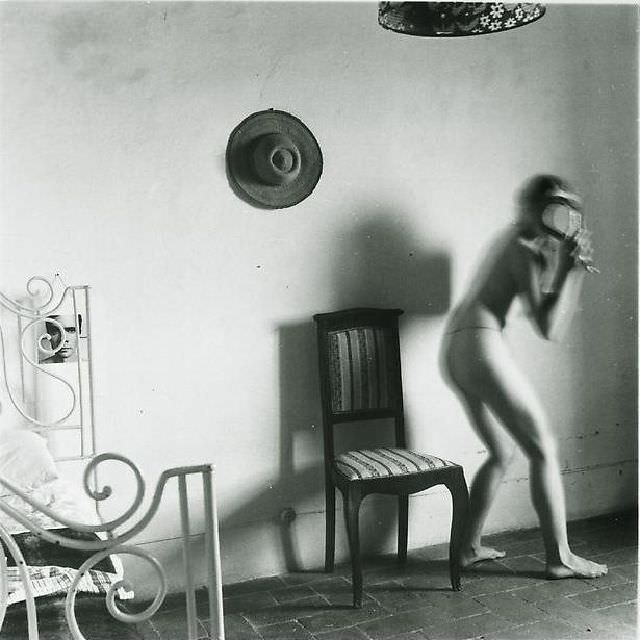
When Abbot Academy merged with Phillips Academy in 1973, Woodman eventually completed her high school education at Boulder High School, graduating in 1975. That same summer, she spent time with her family at their farmhouse in the Tuscan countryside of Italy. The rural, weathered environment of that old farm became a backdrop for some of her early work, and the textures and decay of those spaces would become recurring elements throughout her career.
In the fall of 1975, Woodman enrolled at the Rhode Island School of Design (RISD) in Providence. This is where her vision truly developed. At RISD, she had the resources and freedom to push her ideas further. She worked primarily with medium format cameras that produced square negatives measuring 2¼ by 2¼ inches (6×6 cm). Over the course of her career, she created at least 10,000 negatives. Her parents now own that archive, which contains over 800 images — though as of 2006, only around 120 of those prints had been exhibited or published.
Woodman’s artistic influences were largely rooted in European Surrealism. She was drawn especially to the work of Man Ray and Claude Cahun, two artists who used the human body to question identity and reality. Like them, Woodman treated her own body not as a subject to be presented clearly, but as a material to be manipulated. She used long shutter speeds, dramatic lighting, vintage clothing, and decaying interiors to build a gothic atmosphere that felt far older than her years.
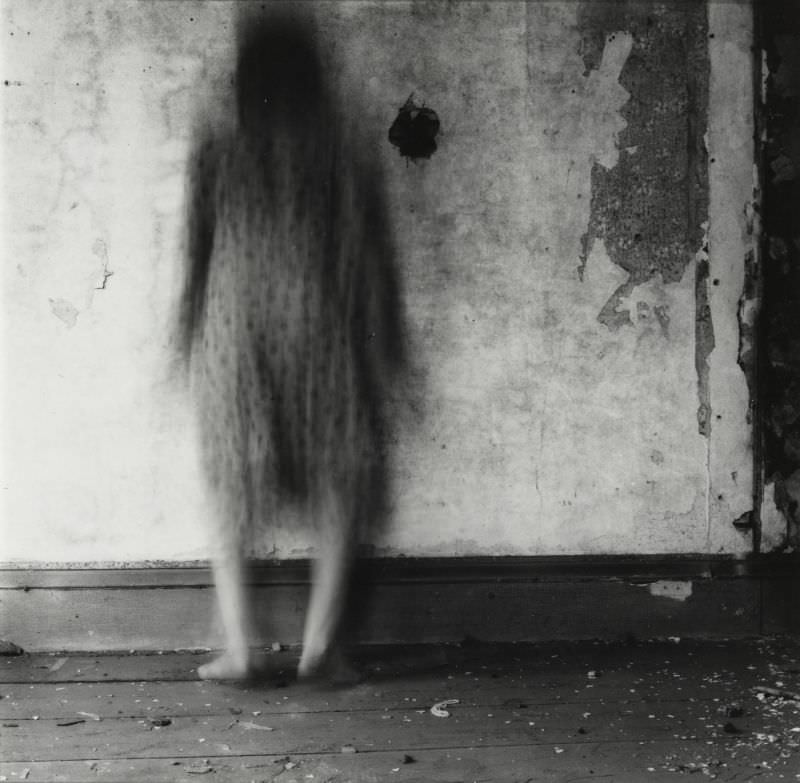
One of Woodman’s central ideas was that photography does not have to freeze a single moment in time and space. That assumption — that the camera captures one fixed instant — was something she deliberately challenged. By using slow exposures, she let her body blur across the frame, creating a ghostly presence that seemed to exist between moments rather than within one. Her photographs asked viewers to reconsider what the camera actually does.
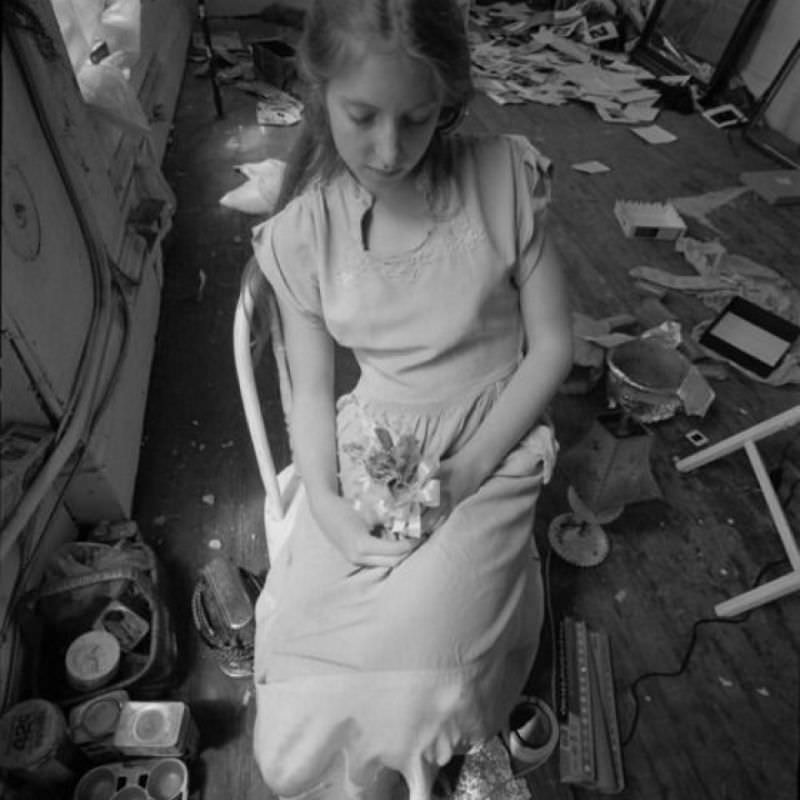
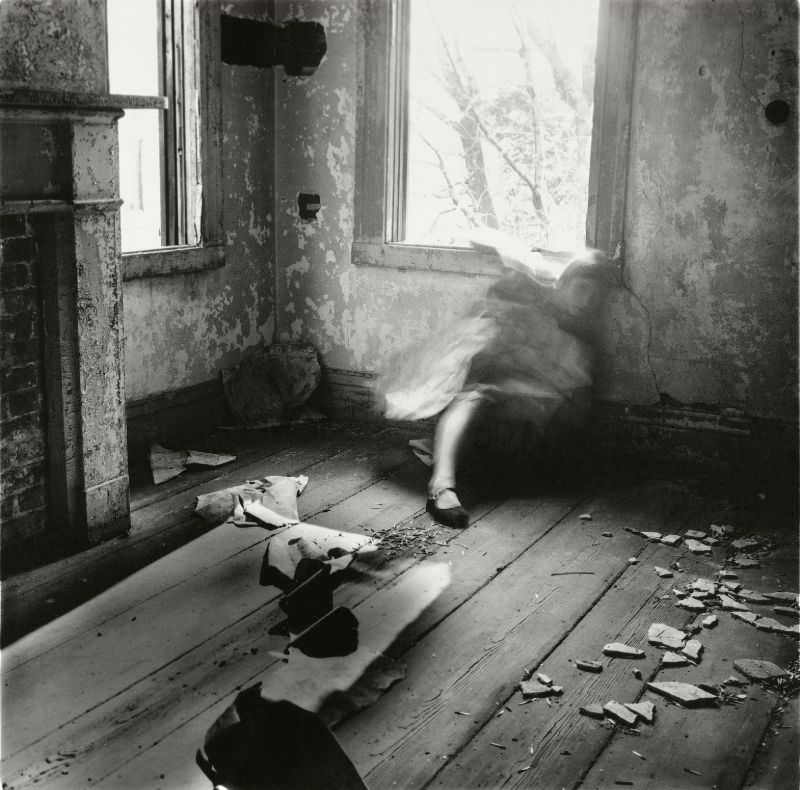
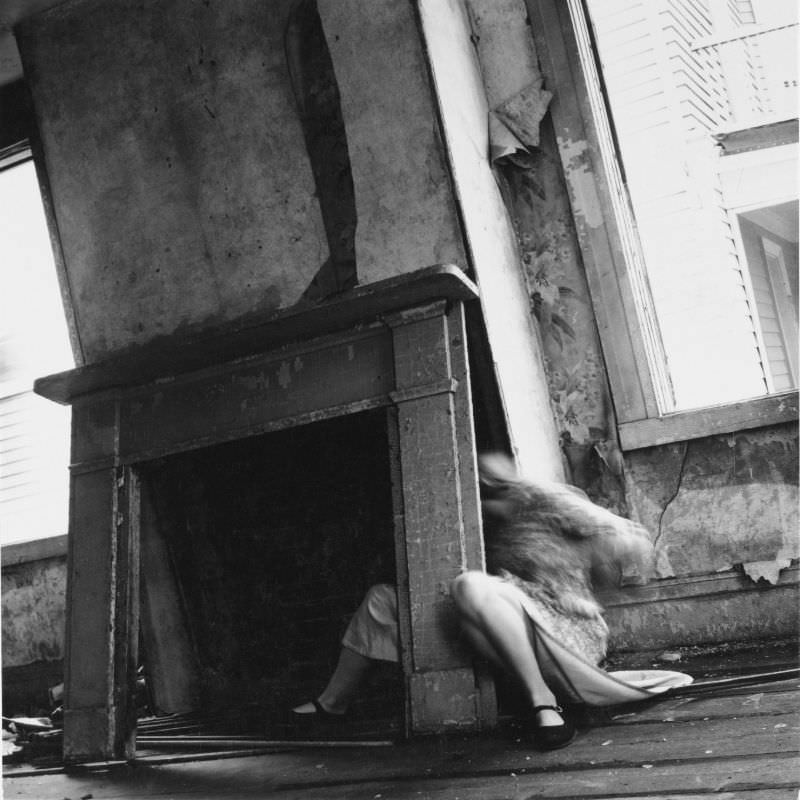
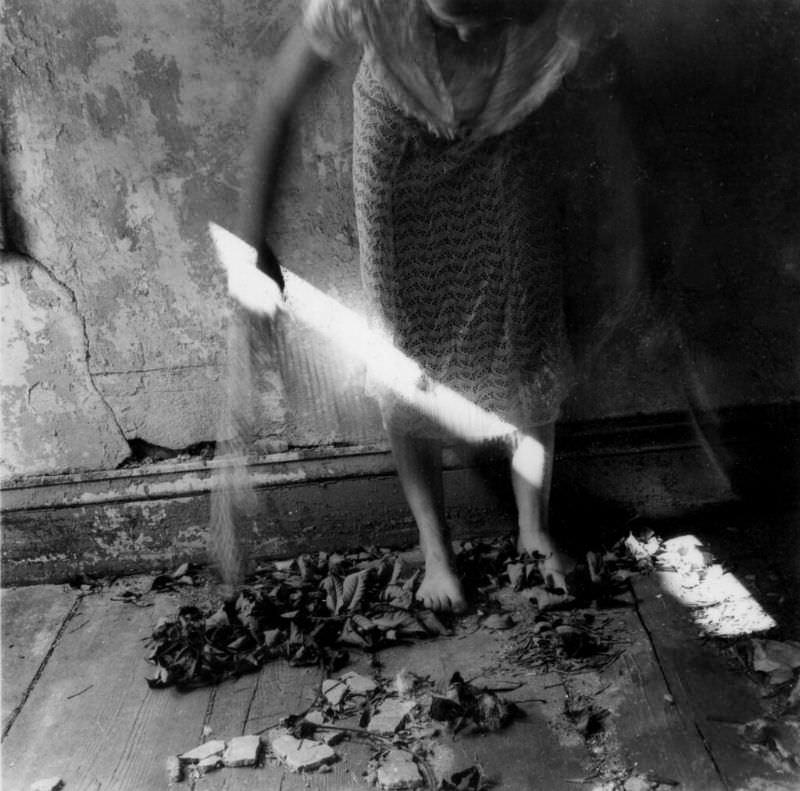
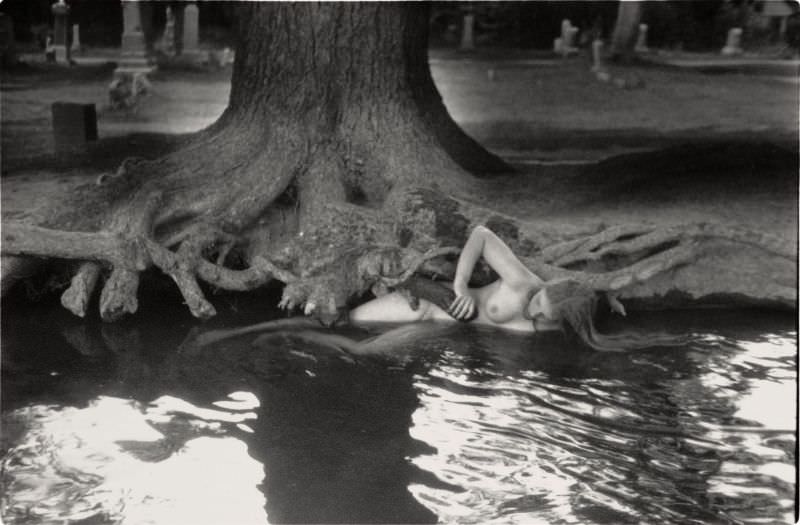
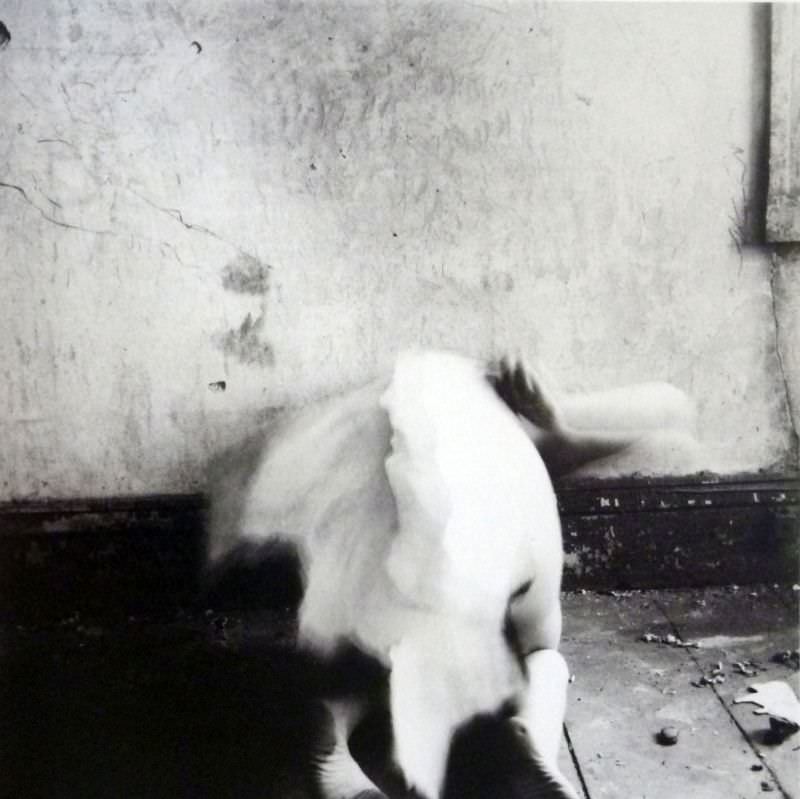
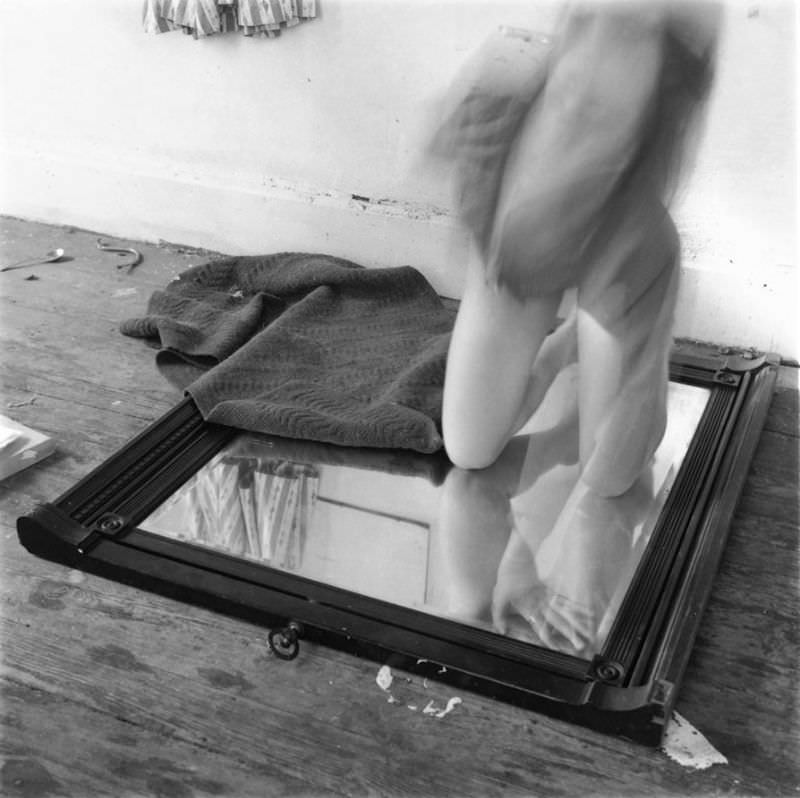
In 1977, Woodman spent time in Rome as part of RISD’s European Honors Program. Italy had long been a second home for her family, and working in Rome gave her photographs a new visual richness. The crumbling plaster walls, ornate architectural details, and filtered light of Roman interiors fed directly into her work. Her Angel Series, produced during this period, shows her figure draped in white fabric or pressed against stone surfaces, appearing more like an apparition than a living subject.
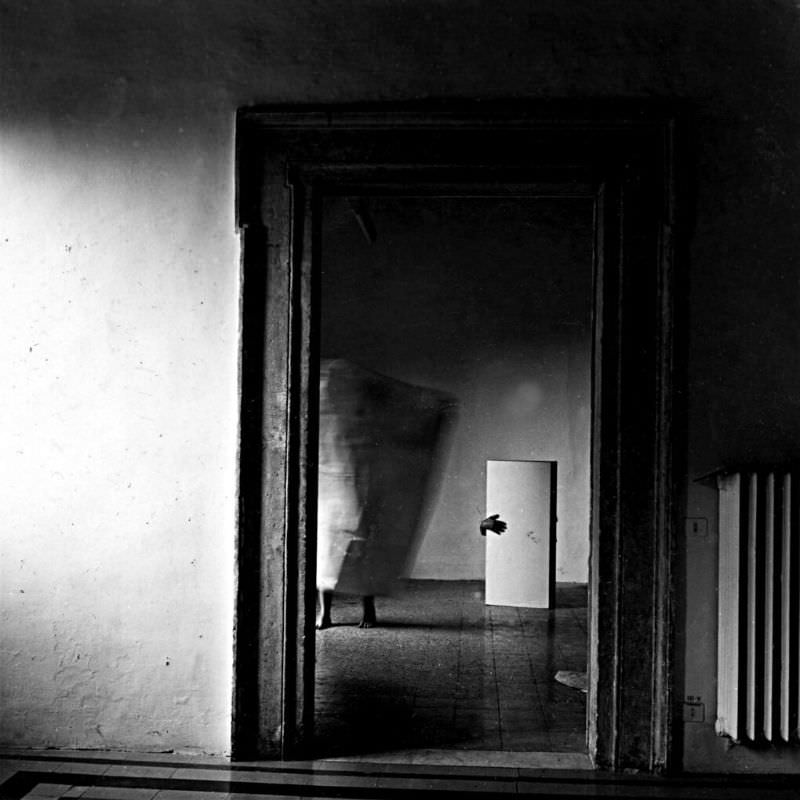
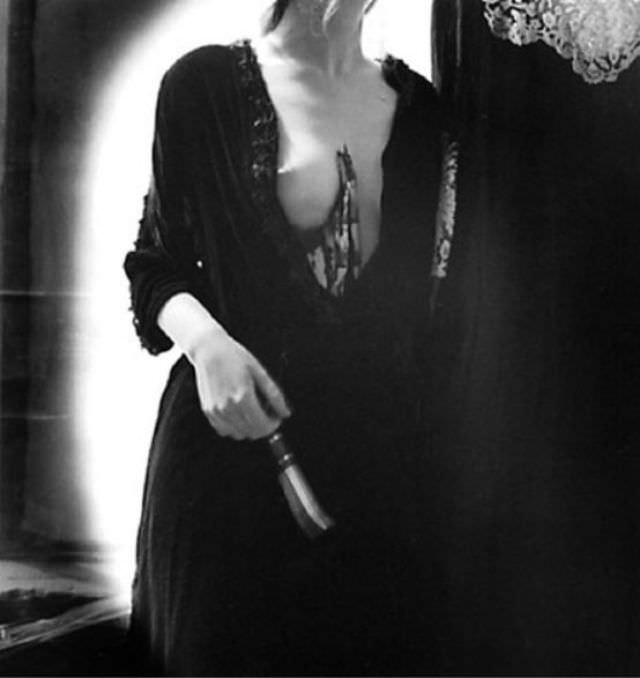
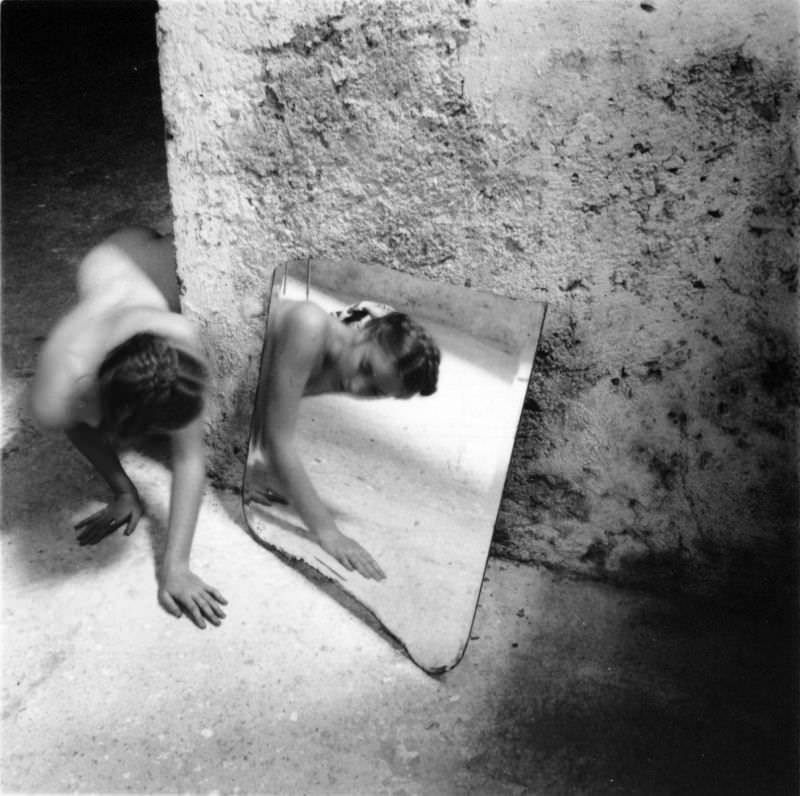
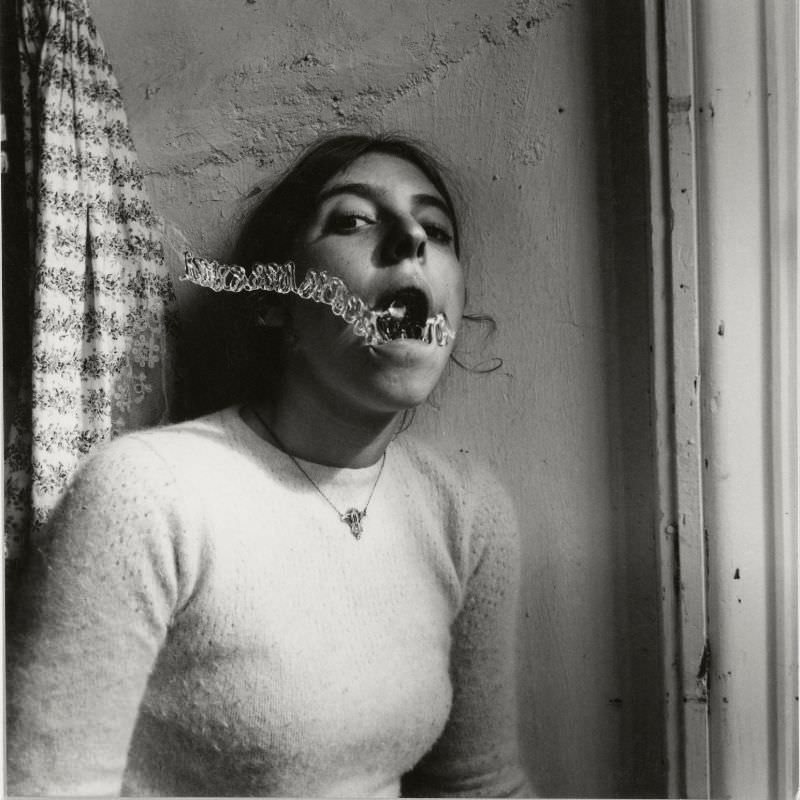
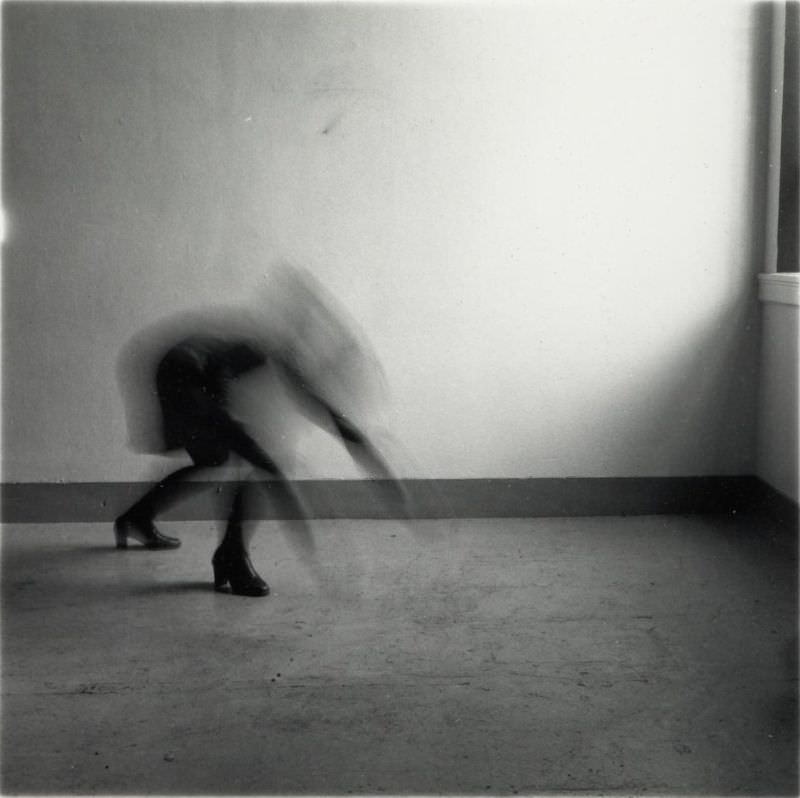
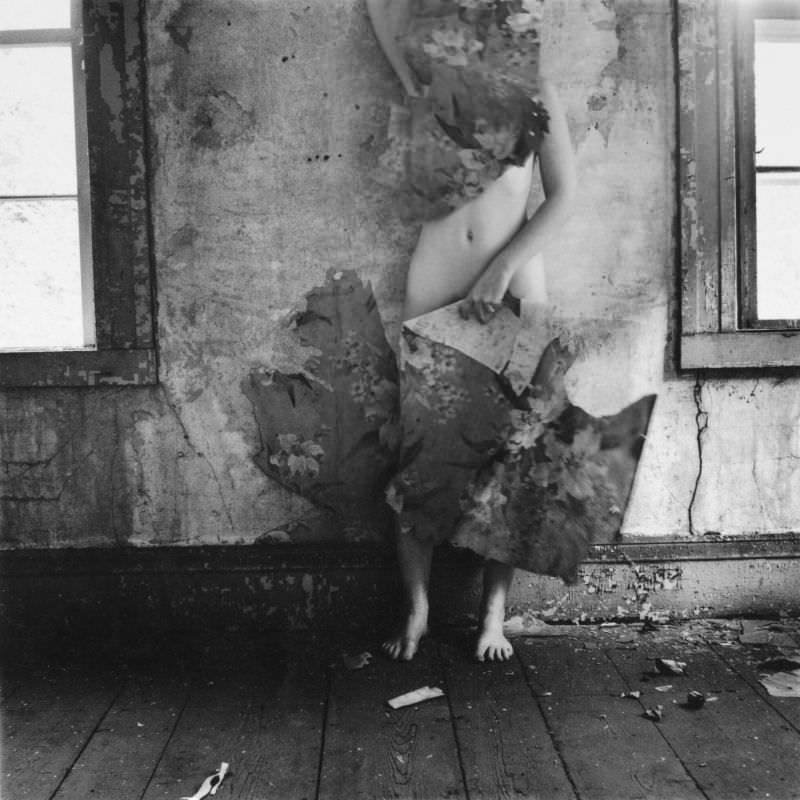
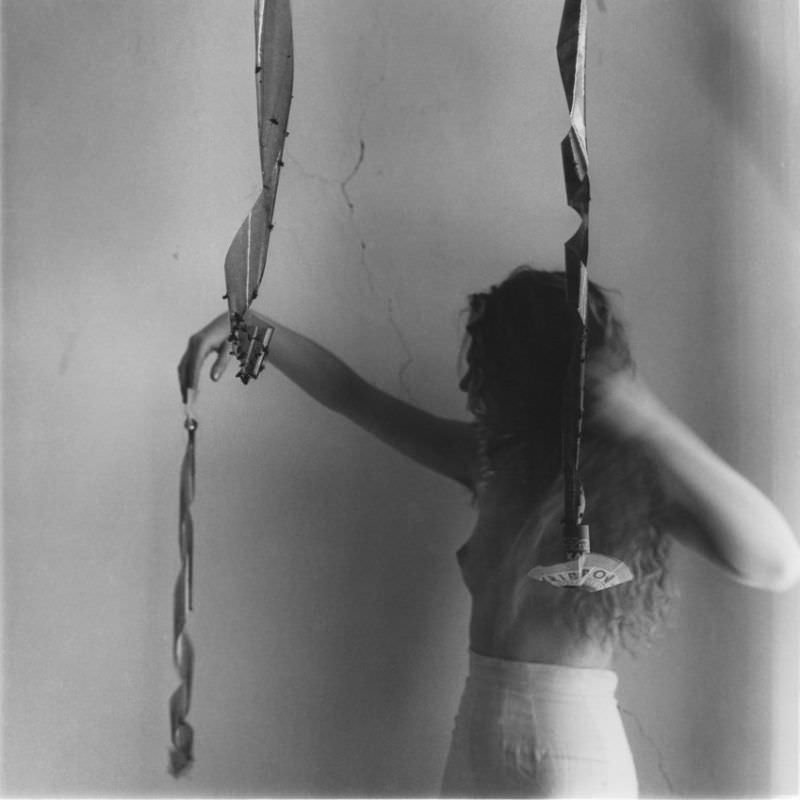
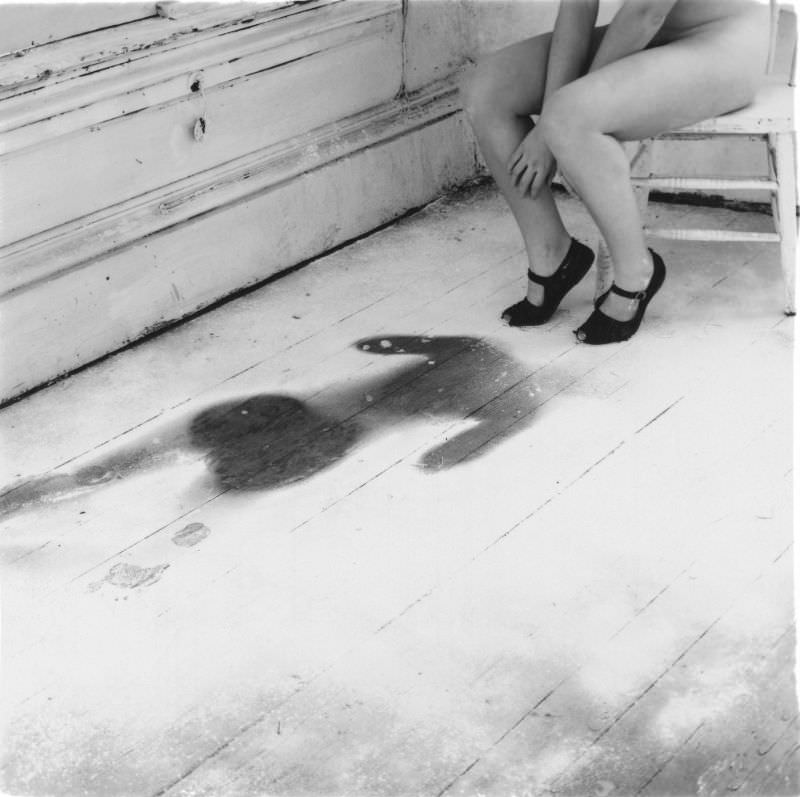
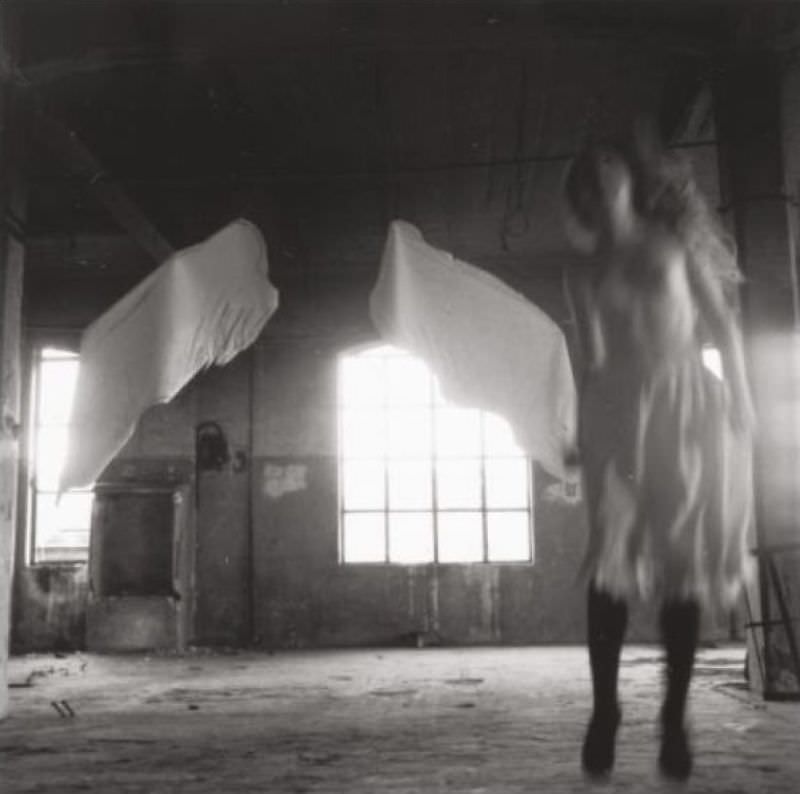
Her time in Rome extended into 1978, and she continued to produce work with the same raw intensity. The rooms she used as sets were often stripped bare or marked by years of neglect. Peeling paint, broken fixtures, and bare floorboards were not accidental choices — they were deliberate elements that gave her photographs their sense of displacement and unease. She was not photographing beauty. She was photographing something harder to name.
After graduating from RISD, Woodman moved to New York City in 1979. She hoped to establish herself in the art world there, but the transition was difficult. Her photography was not well received, and a grant proposal she submitted to the National Endowment for the Arts was rejected. She also went through a painful personal breakup during this period. According to an acquaintance, things had been difficult for some time, though she had sought therapy and there had been a period of improvement before her condition worsened again.
On January 19, 1981, Francesca Woodman died by suicide, jumping from a loft window on the East Side of New York City. She was twenty-two years old. In the decade since she first picked up a camera at thirteen, she had produced a body of work remarkable in both its volume and its depth. Her parents have carefully managed her estate, preserving the thousands of negatives she left behind and ensuring that her photographs continue to reach new audiences.