Charlotte, North Carolina looked very different in the 1970s. The city was in the middle of a major transformation — new buildings were going up, old ones were coming down, and neighborhoods were finding their identities. Banking, education, and civic pride all played a role in shaping what Charlotte would become. These rare historical photos capture the city during one of its most active and exciting decades.
At the center of Charlotte’s growth was Uptown, the city’s original town layout divided into four wards. All four ward corners meet at the town square, and Tryon Street runs straight through the heart of it. A new skyline began to take shape along that corridor throughout the decade. The City Council officially recognized the name ‘Uptown’ in 1974, after longtime merchants made clear it had always been called that. The name stuck, and it remains the official term for Charlotte’s downtown core today.
Charlotte’s banking industry also made major moves in the 1970s. Hugh McColl, a bold financier, was turning North Carolina National Bank into a nationally recognized institution — one that would eventually become part of Bank of America. Meanwhile, First Union Bank, also headquartered in Charlotte, was growing into what would later become Wachovia Bank. Two of the country’s largest banks had their roots right here in this city during this decade.
Much of Charlotte’s transformation in the 1970s is visible in the buildings that were being built, renovated, or demolished during that period. The Van Every building stands as one example of the architecture that defined the era.
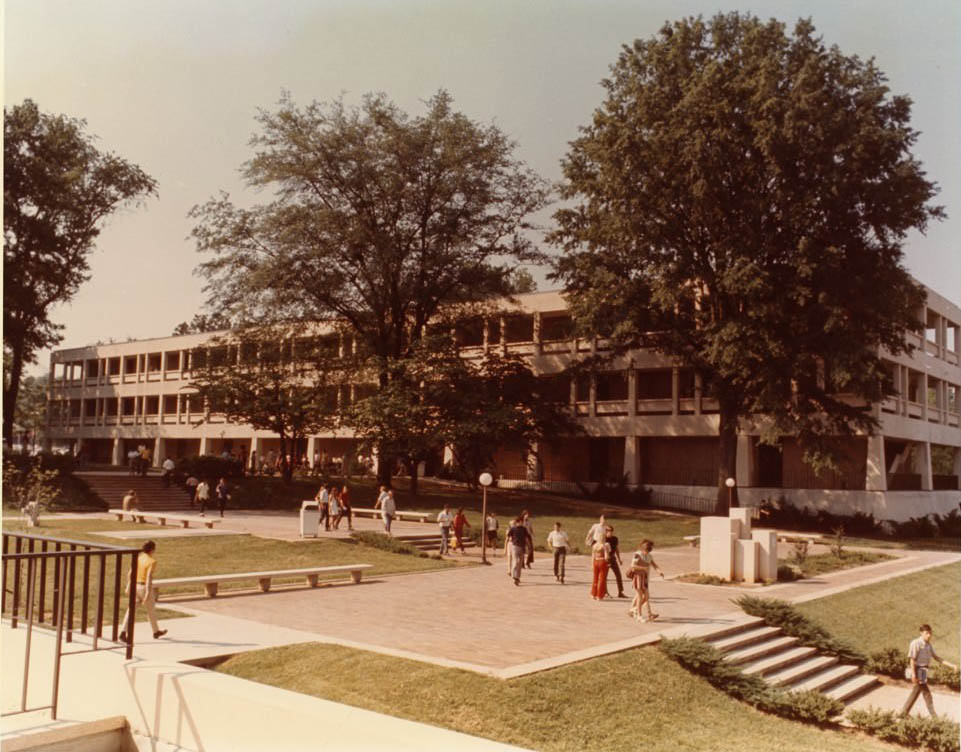
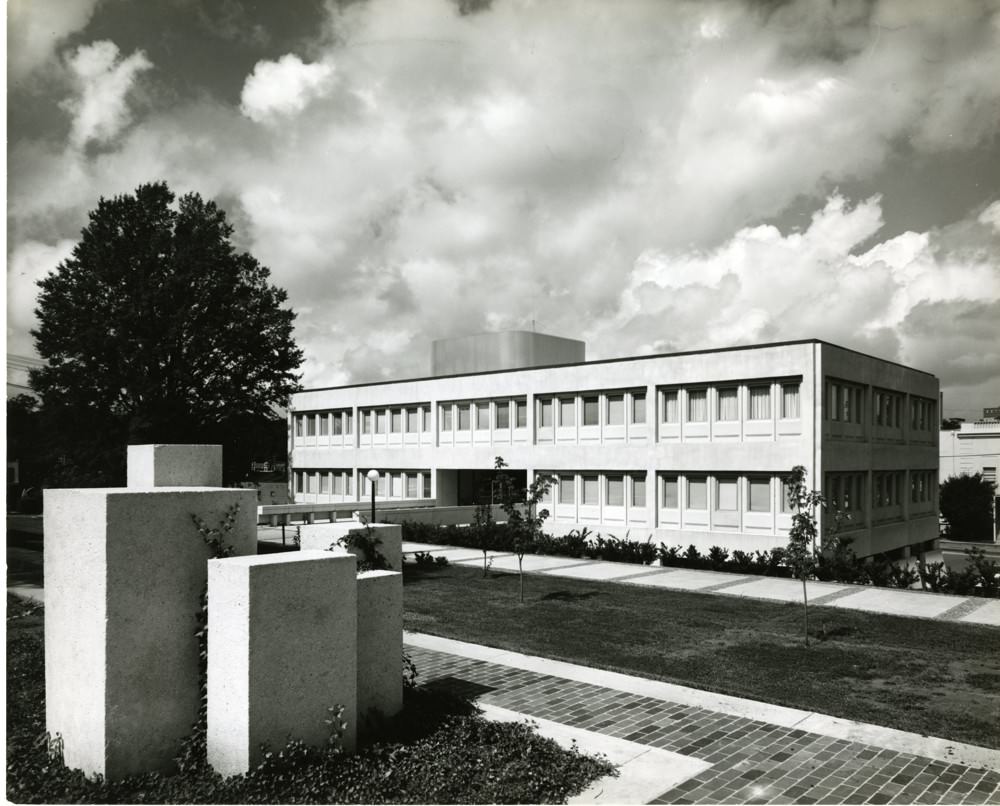
The Terrell building was another structure that reflected Charlotte’s changing face. It stood as a key part of the Central Piedmont Community College campus, which was itself growing rapidly throughout this period.
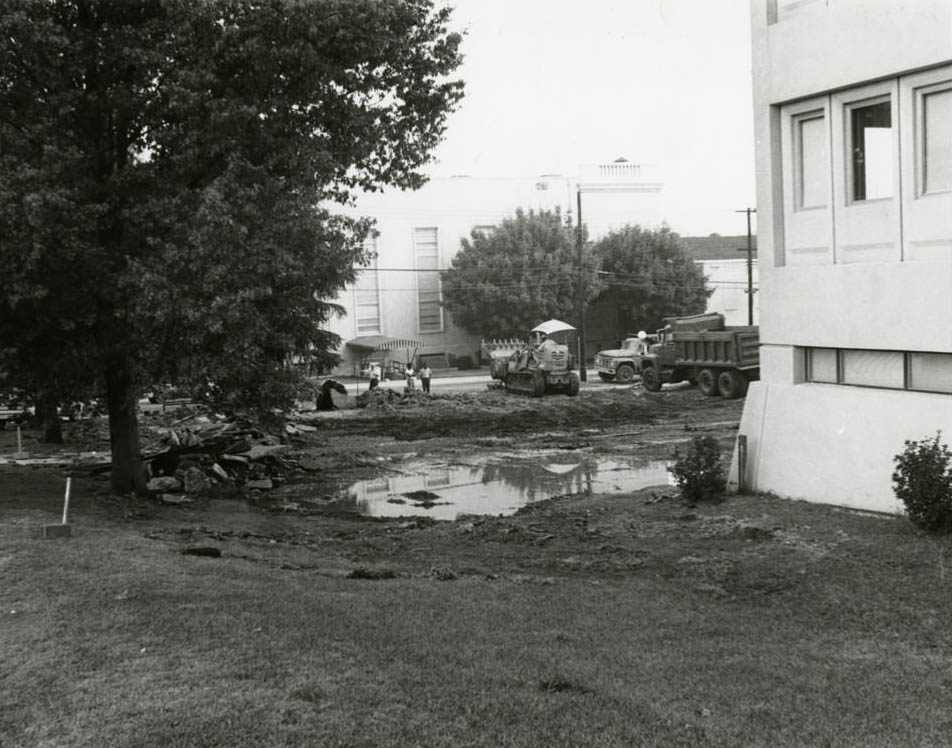
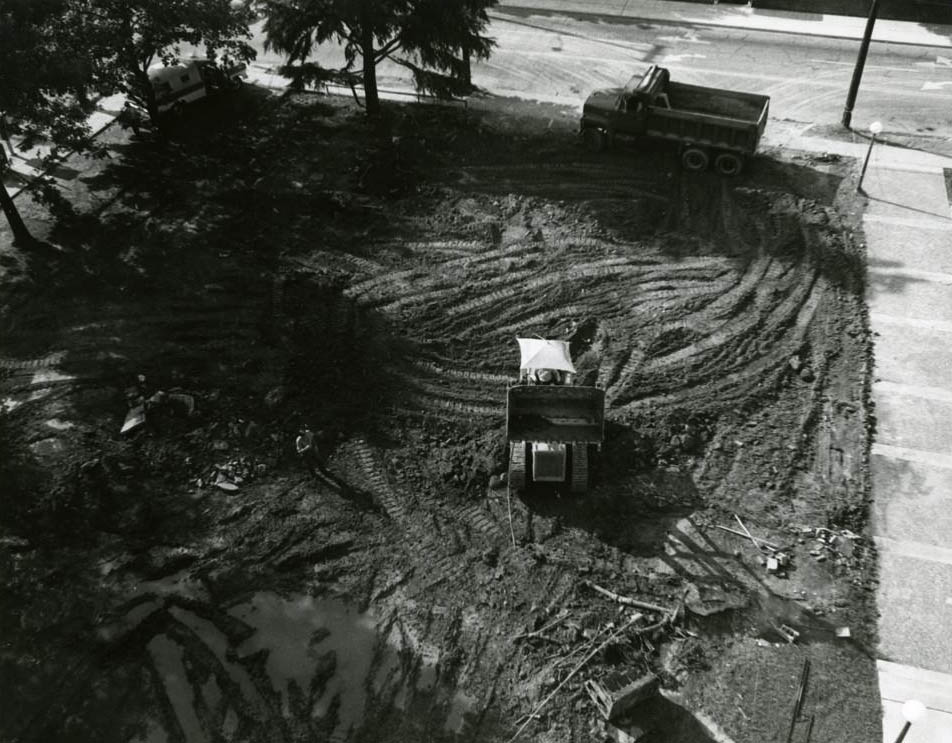
Construction and demolition often happened side by side during this era. The Woodruff building came down as the Terrell building went up, a physical symbol of Charlotte trading its older layers for something new.
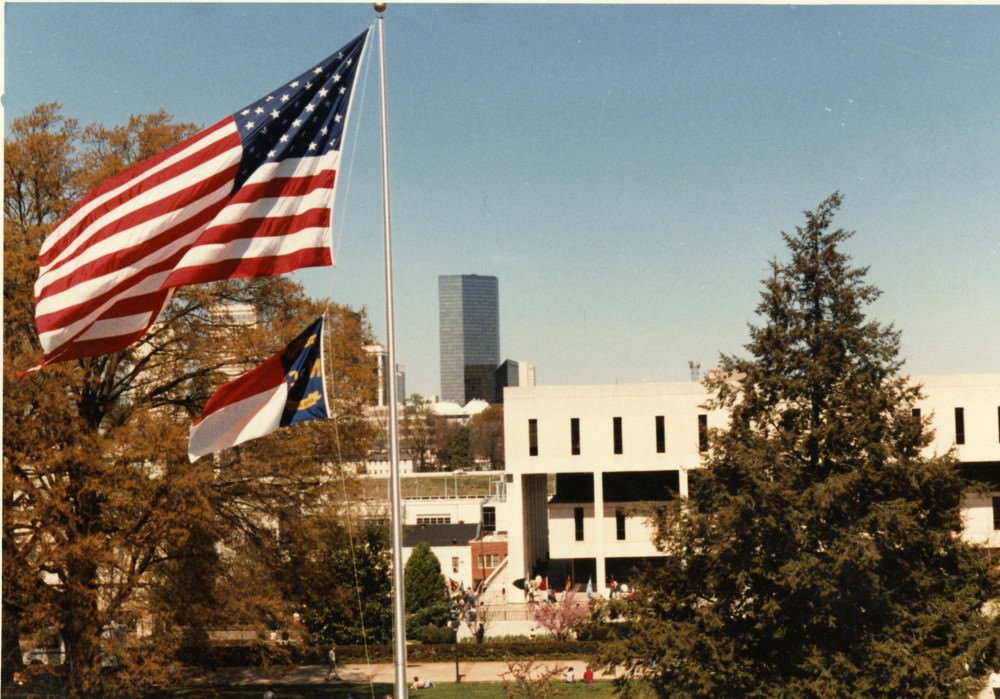
Central Piedmont Community College, known as CPCC, was one of the most active sites of development in 1970s Charlotte. The college’s campus expanded significantly during the decade, with new facilities serving a growing student population. The Library, also called the Learning Resource Center (LRC), became a focal point of the campus — visible from the quad and framed by a view of Uptown in the background.
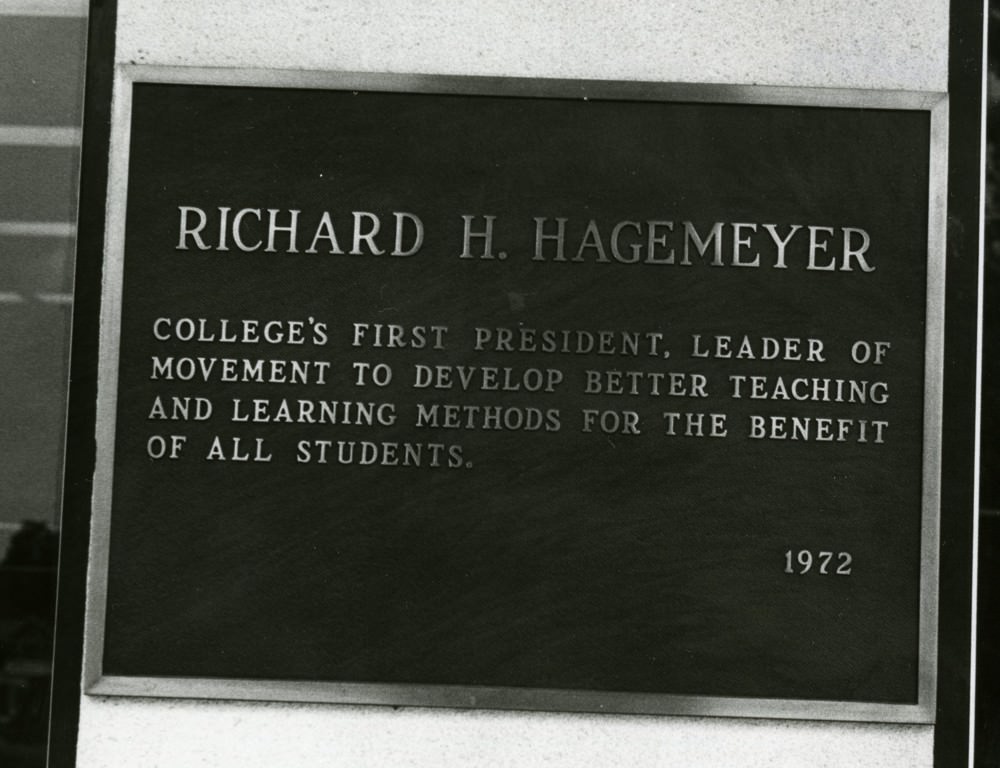
In 1972, the library was formally dedicated to Dr. Richard Hagemeyer, the college’s first president. A plaque marking the dedication was installed at the building, honoring his role in establishing the institution.
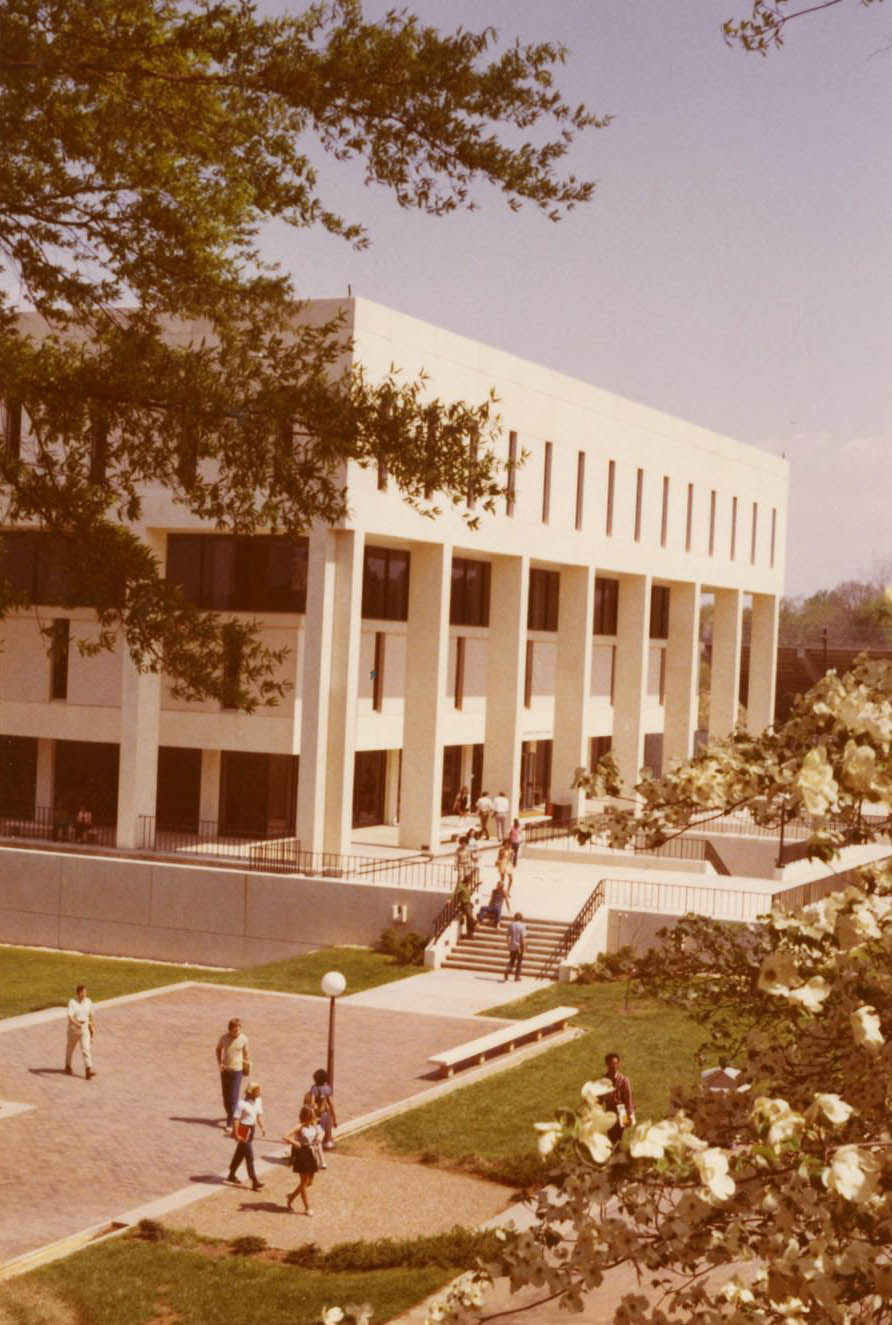
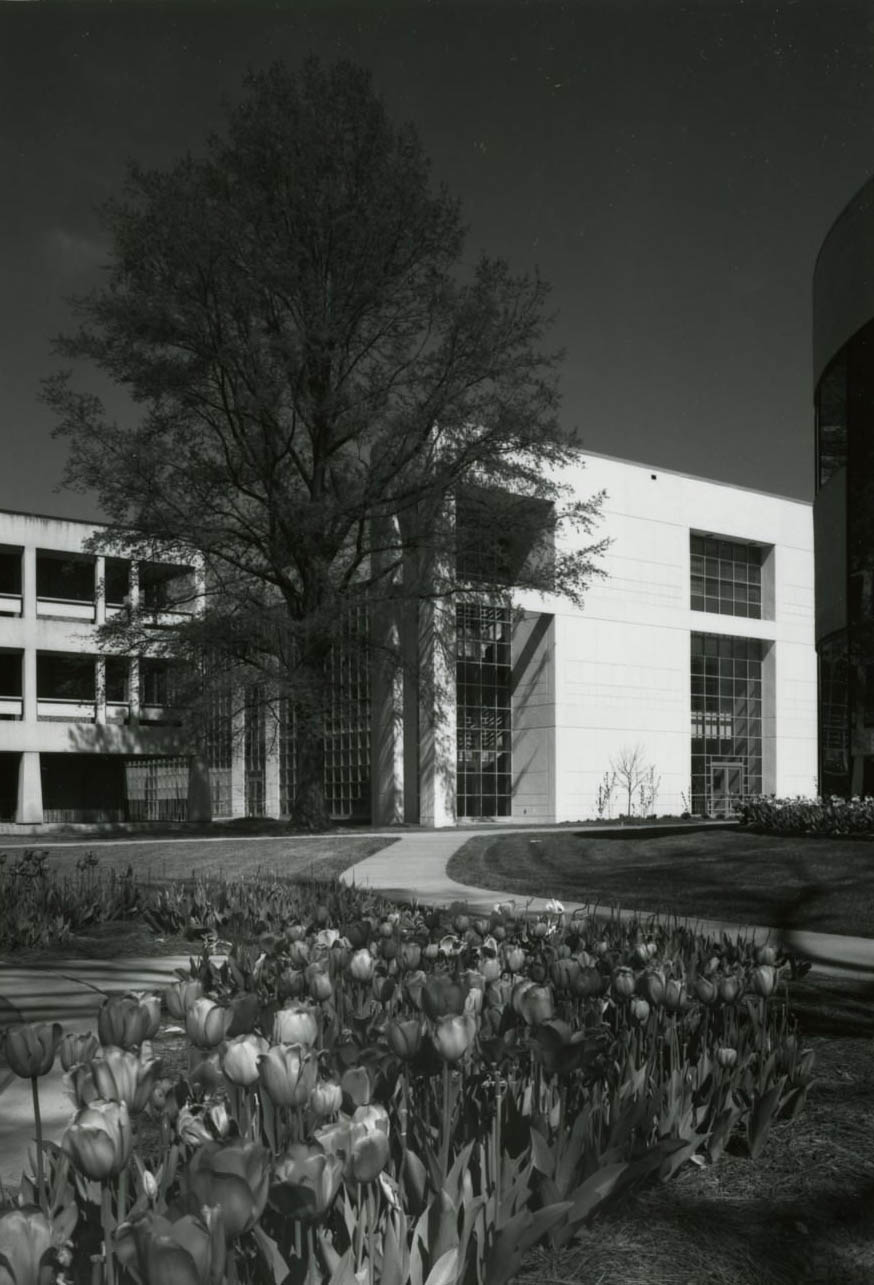
Once construction on the library wrapped up, the completed exterior made a strong architectural statement on the CPCC campus. The building served both students and the surrounding community as a place of learning and resources.
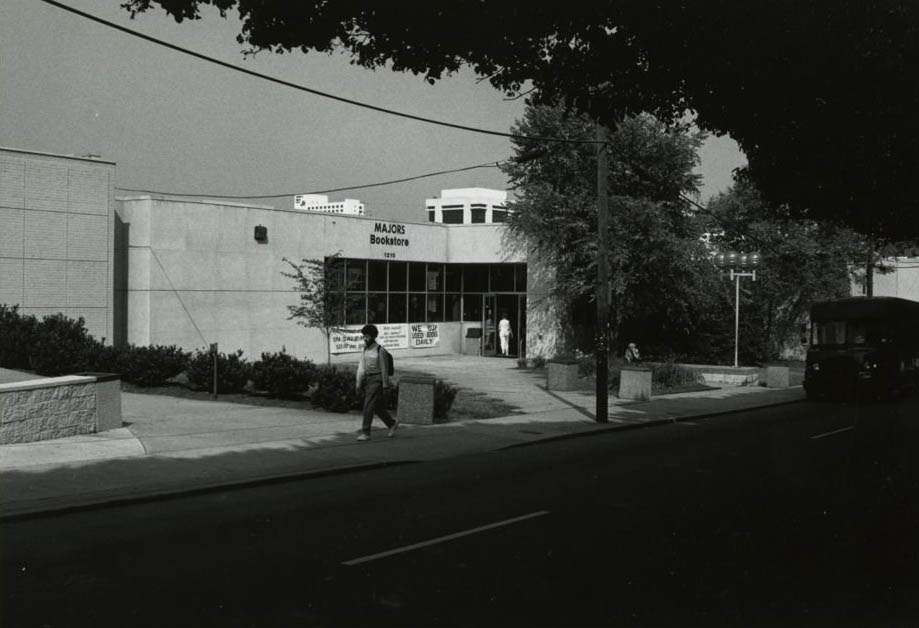
Off campus, local businesses were also part of Charlotte’s daily life. Majors Bookstore was one of those neighborhood staples that served residents across the city during the decade.
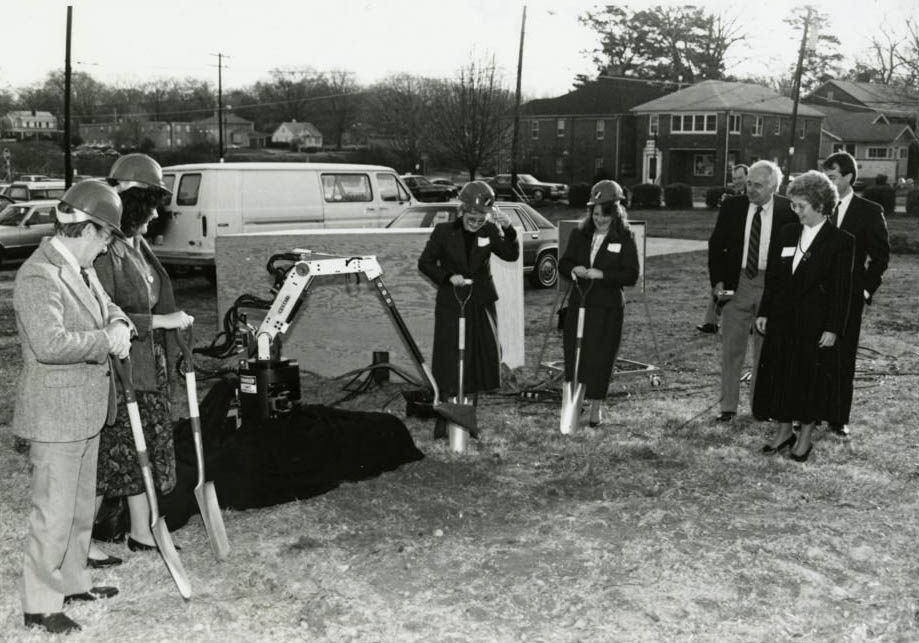
Back at CPCC, the Advanced Technology Center was one of the most significant building projects of the era. A groundbreaking ceremony marked the beginning of construction, with Dr. Ruth G. Shaw — a prominent figure in the college’s history — joining others on site with shovels in hand.
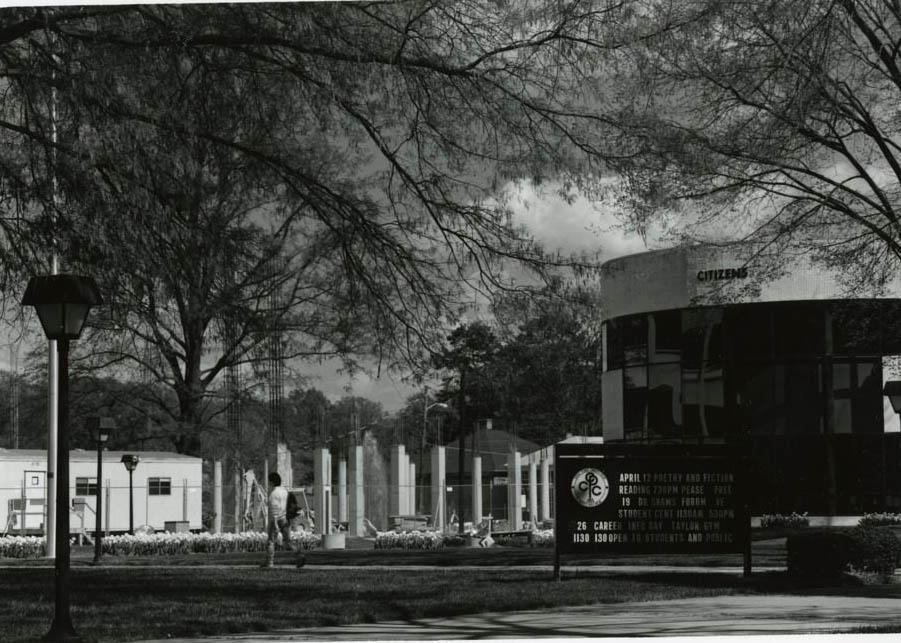
As the Advanced Technology Center rose from the ground, photos captured the construction in progress — a sign of just how quickly the campus was evolving.
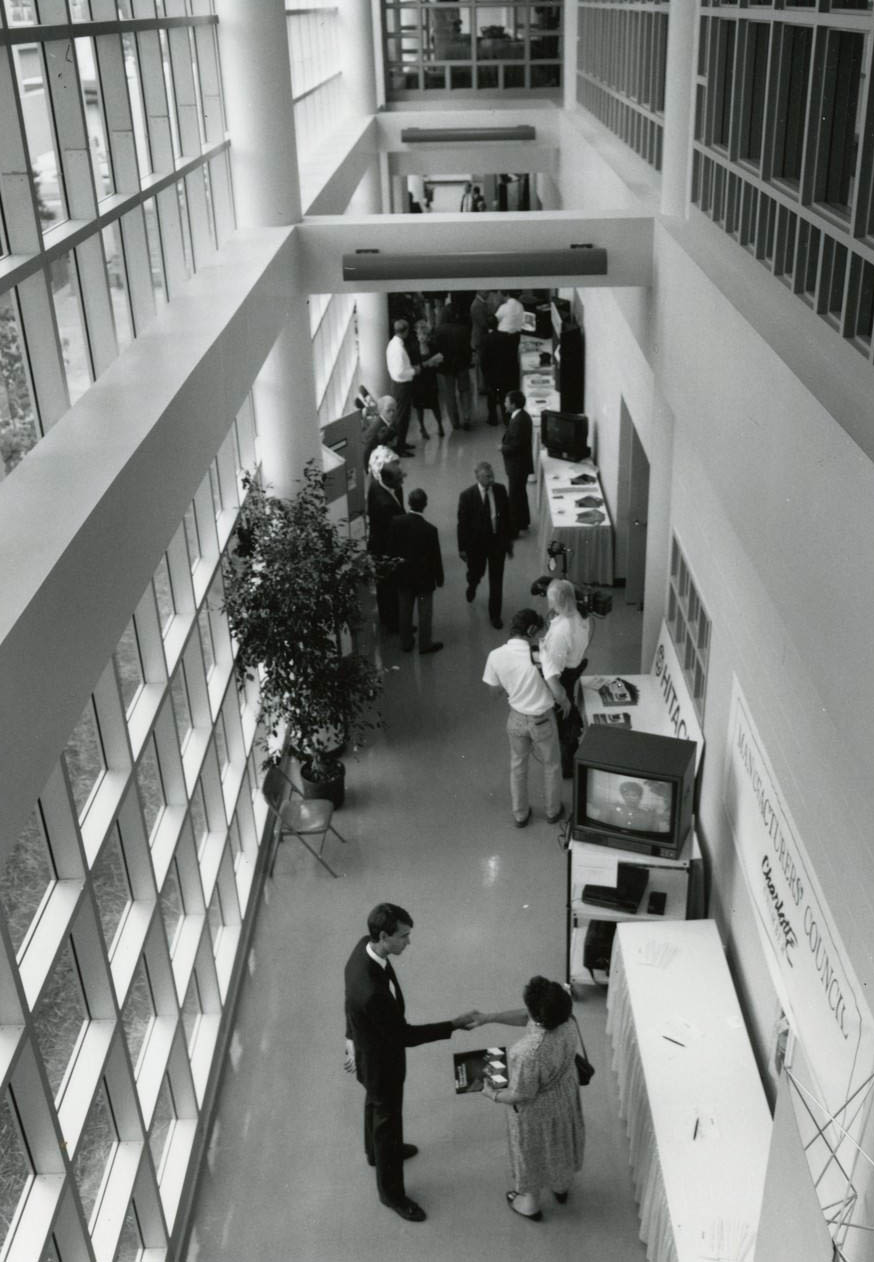
Once completed, the interior of the Advanced Technology Center provided students with modern facilities designed to support technical education and hands-on training.
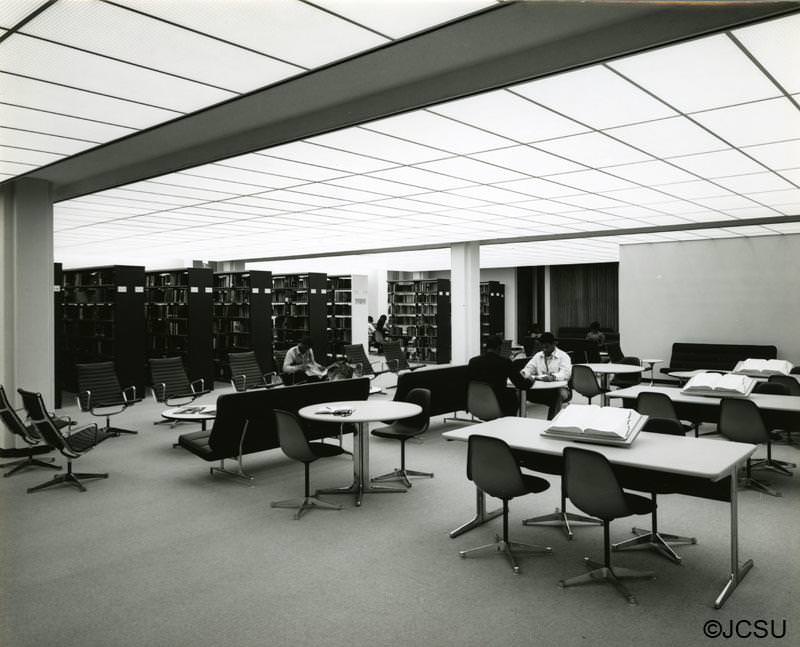
Charlotte’s educational infrastructure extended beyond CPCC. The James B. Duke Memorial Library offered another important resource for students in the city, with an interior that reflected the era’s approach to academic spaces.
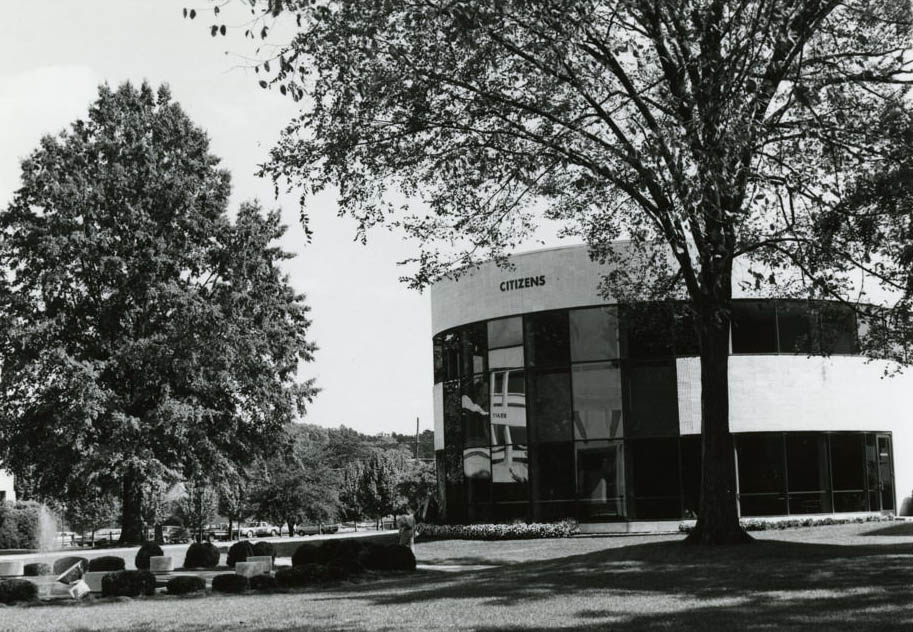
The Citizens Center on the CPCC campus served as a community gathering point, reinforcing the college’s role not just as an academic institution but as a neighborhood anchor.
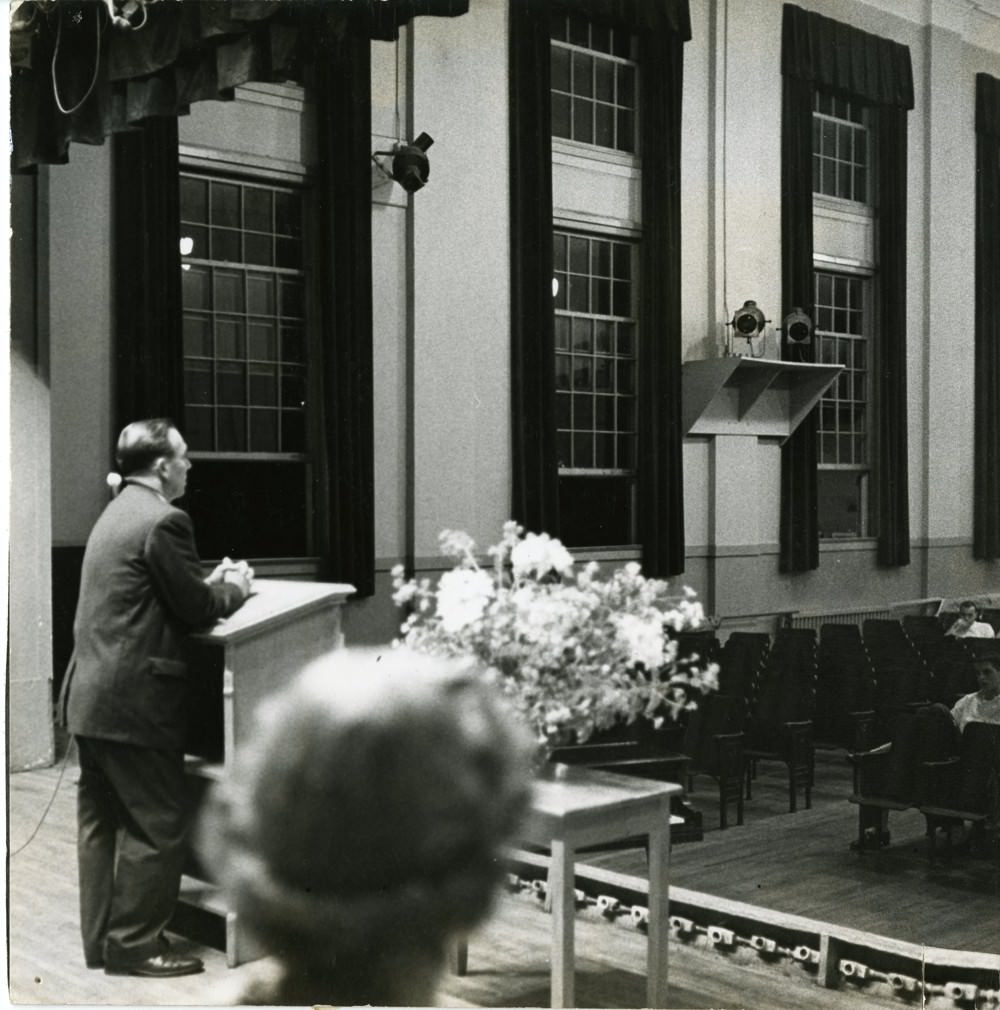
Graduation ceremonies during this era were held in historic spaces across the city, including Old Central High. The auditorium filled with students and families as an unidentified speaker addressed the crowd from the stage.
The Belk building at CPCC was another key structure on campus during the 1970s, part of the college’s growing collection of facilities that served thousands of Charlotte-area students each year.
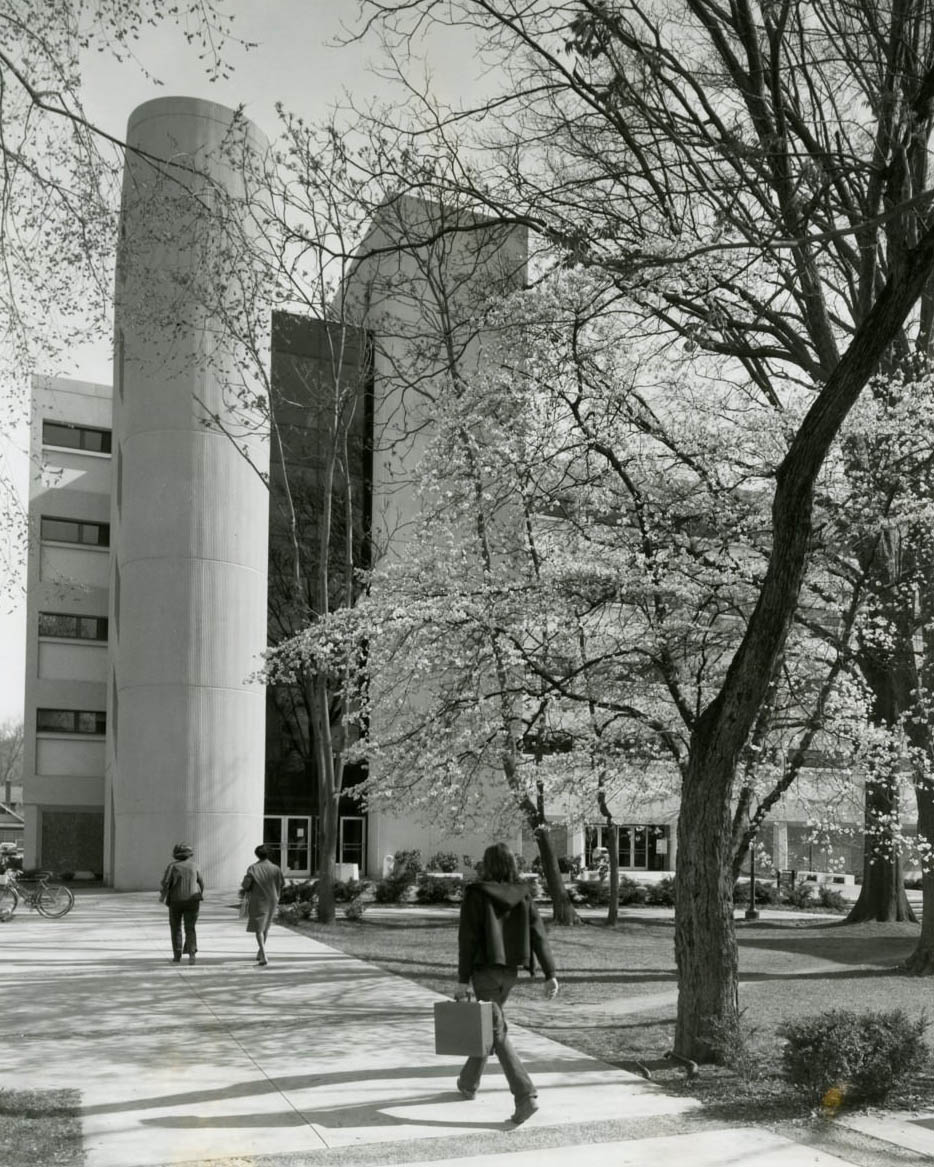
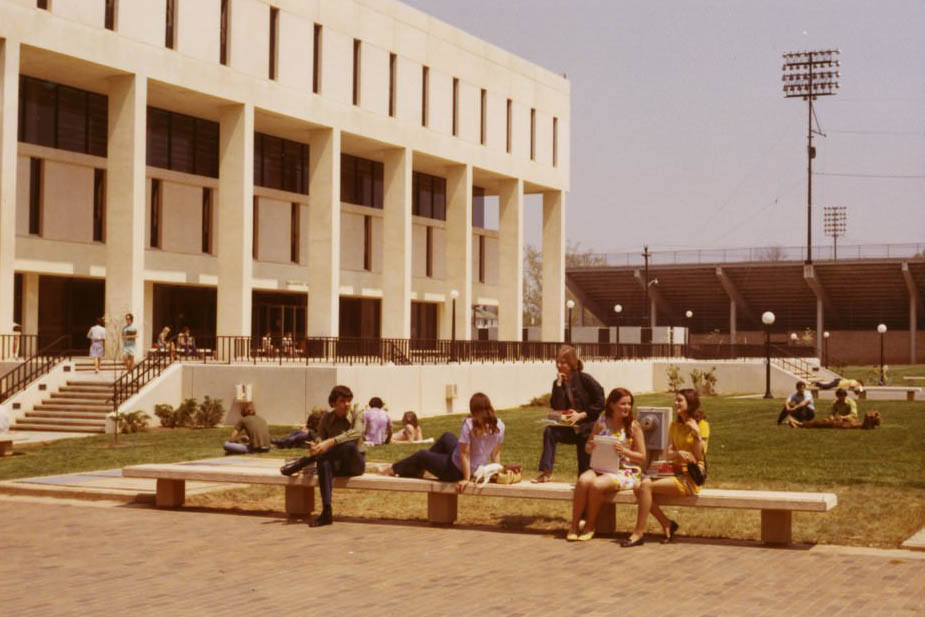
Student life at CPCC was active and visible. The quad in front of the library was a regular gathering spot where students socialized between classes, giving the campus a lively, community-driven energy.
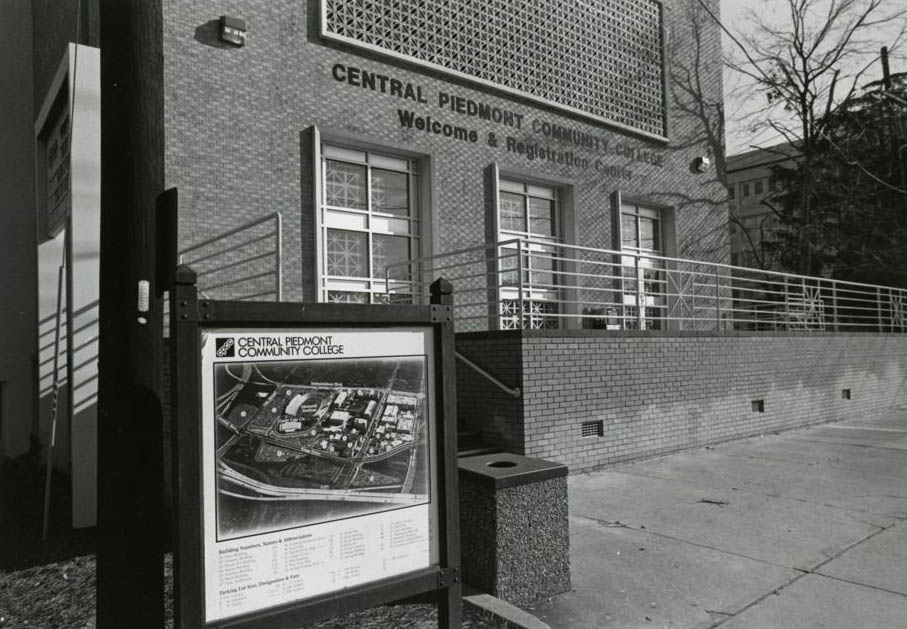
New and prospective students entered through the college’s welcome and registration center, which served as the official front door to the CPCC experience throughout the decade.
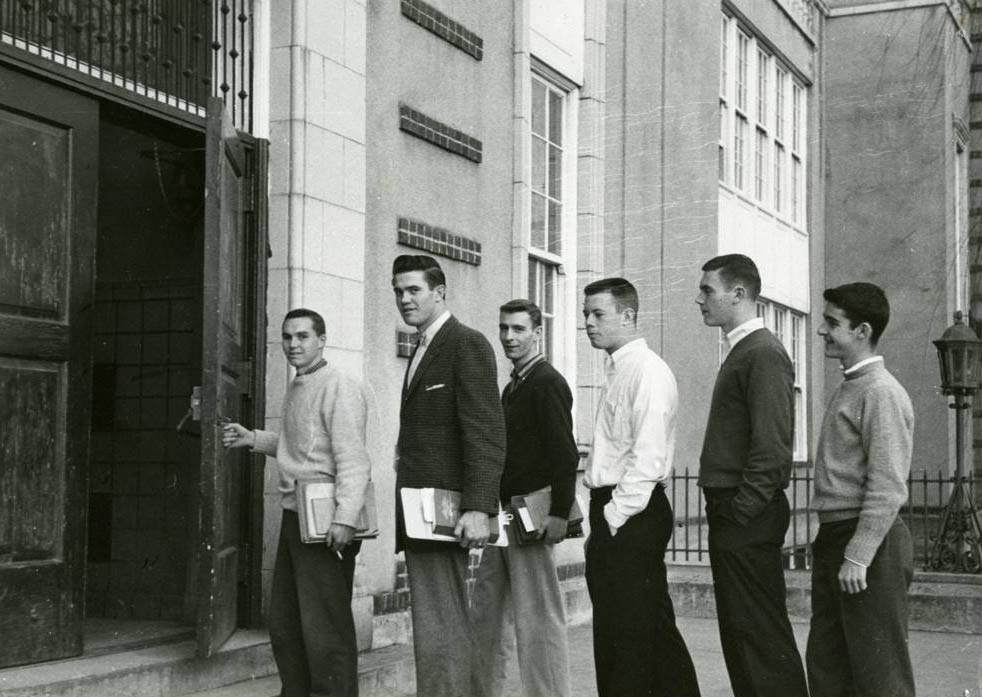
Students could also be seen entering the Central High building, also known as Garinger, which was part of the CPCC campus during this time.
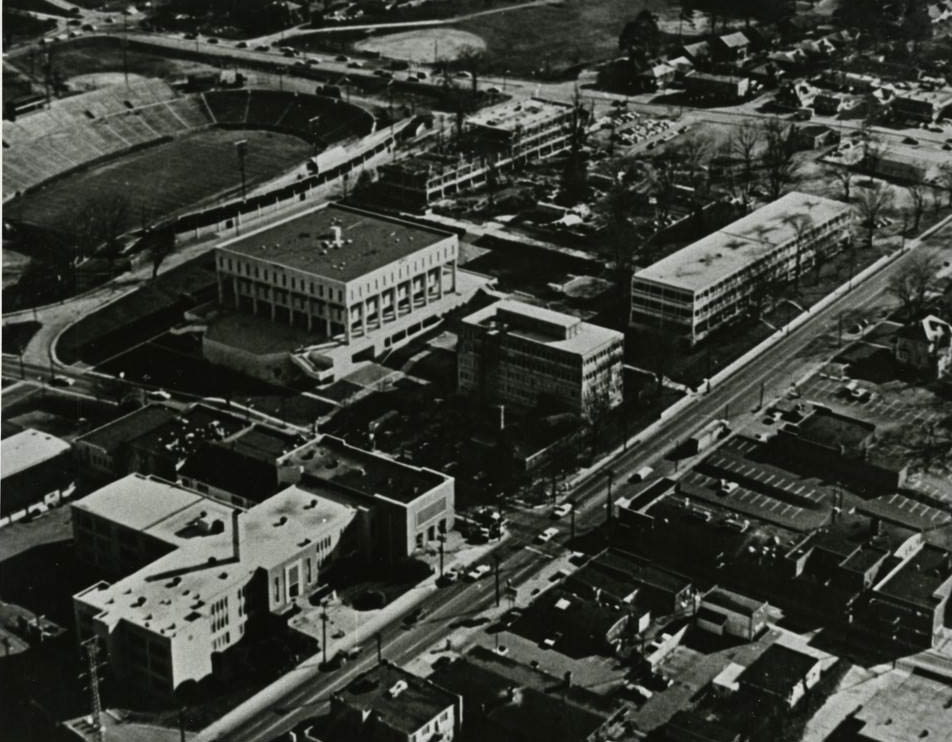
An aerial view of the entire CPCC campus puts the decade’s growth in full perspective. From above, you can see just how much land the college occupied and how the individual buildings fit together as a cohesive campus.
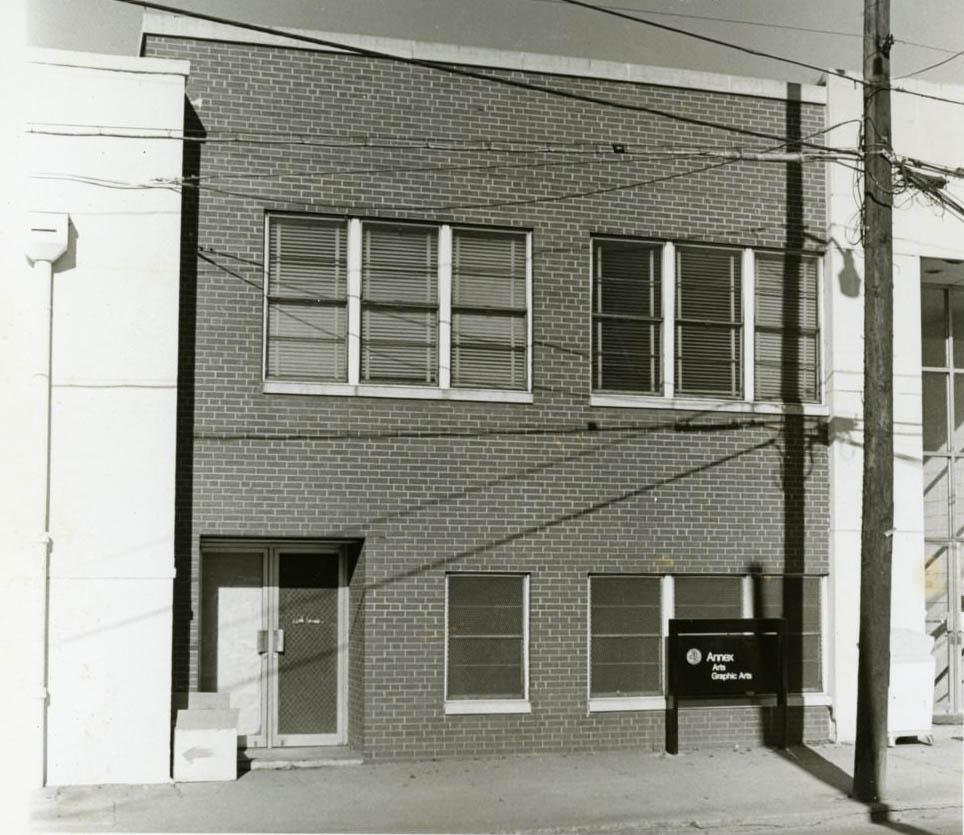
Beyond the college campus, other Charlotte buildings were also making their mark. The Annex building was one of the lesser-known but still notable structures in the city during the 1970s.
The CPCC Terrell building, seen here in a separate view, was central to the campus layout and one of the most recognizable structures associated with the college’s identity during the decade.
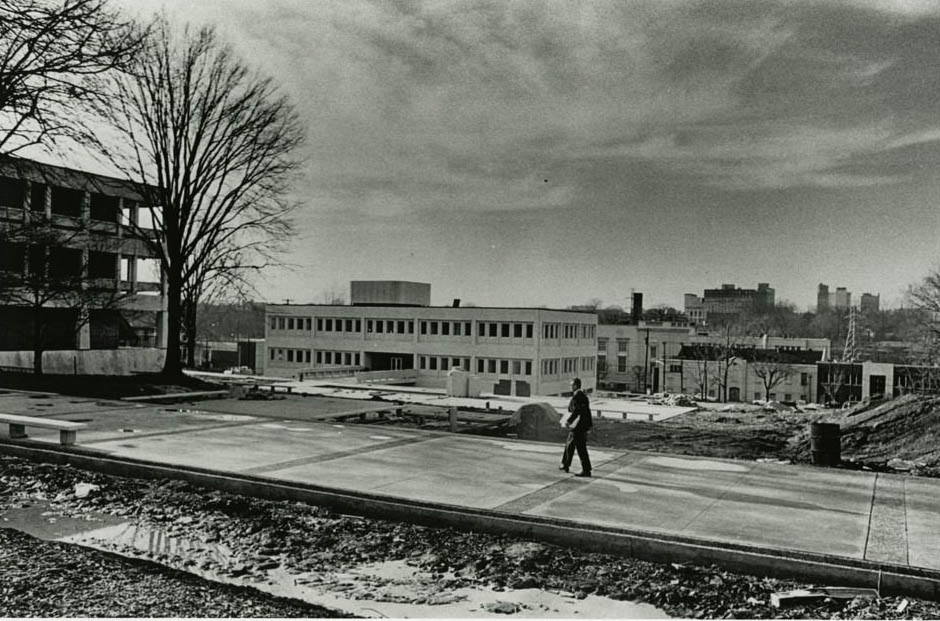
The completed Advanced Technology Center, viewed from the exterior, showed a modern design that matched the forward-thinking mission of the programs it housed.
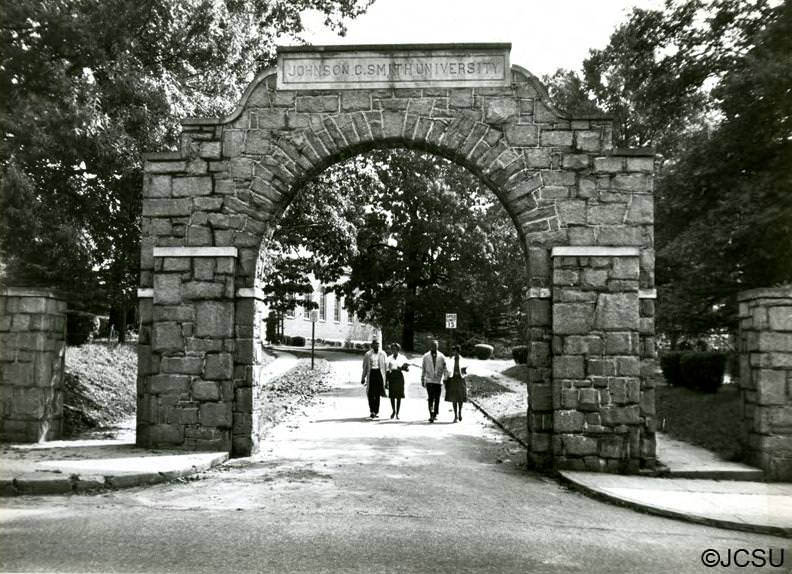
Campus entrances were busy places. Students passed through the campus arch regularly, and photos from this era show the kind of everyday foot traffic that defined college life in 1970s Charlotte.
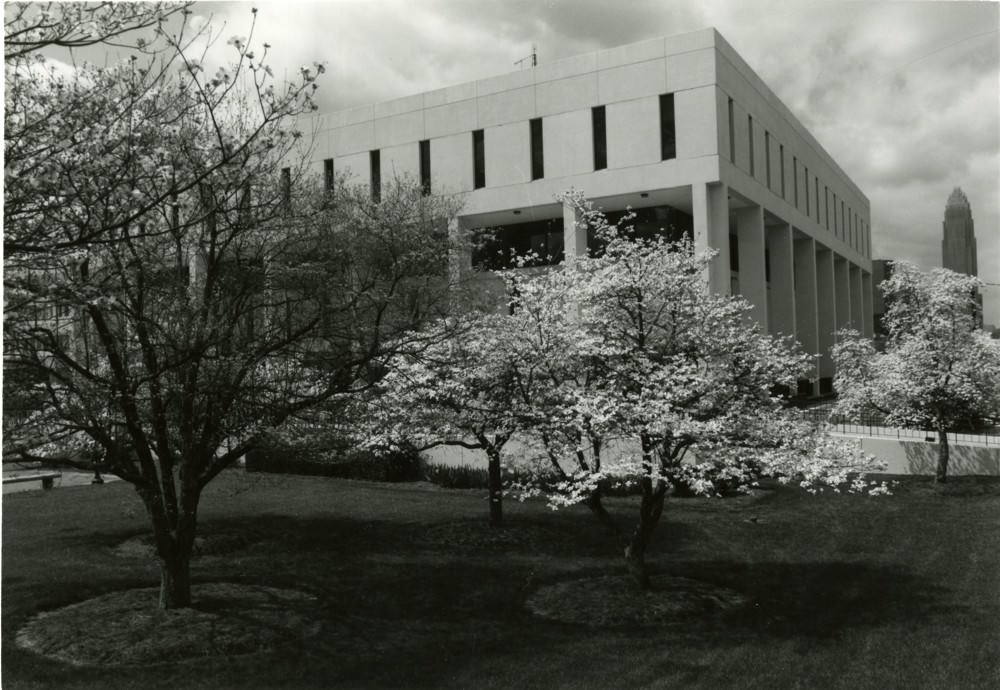
The LRC library, framed by blooming cherry blossoms, offered one of the most visually striking scenes on the CPCC campus each spring. It was the kind of quiet, beautiful moment that balanced out the bustle of construction happening elsewhere.
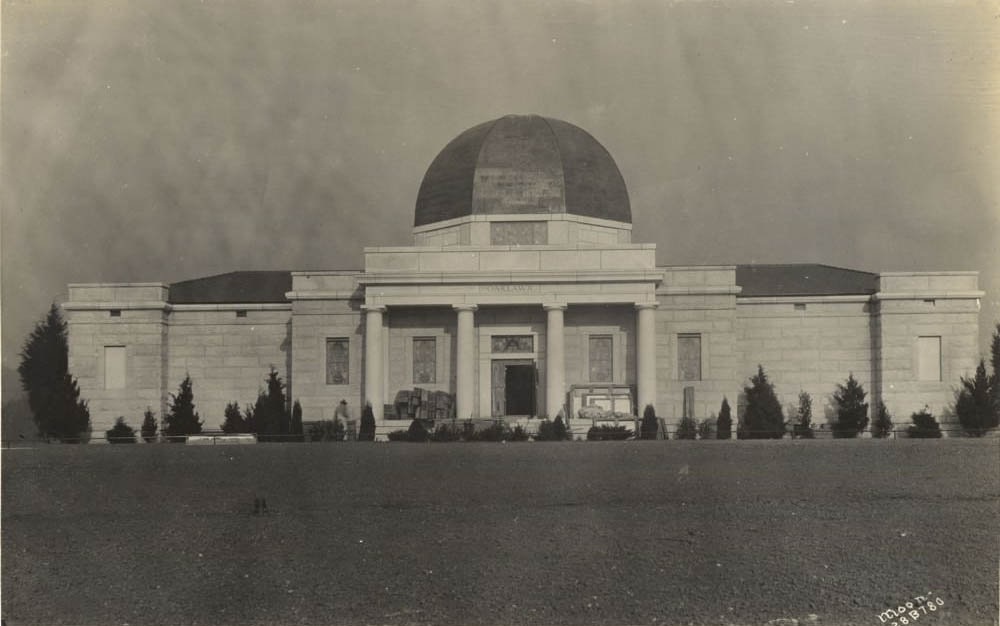
Charlotte’s Oaklawn Community Mausoleum provided a glimpse into a quieter, more solemn side of the city — a reminder that amid all the development, Charlotte also preserved spaces dedicated to memory and community.
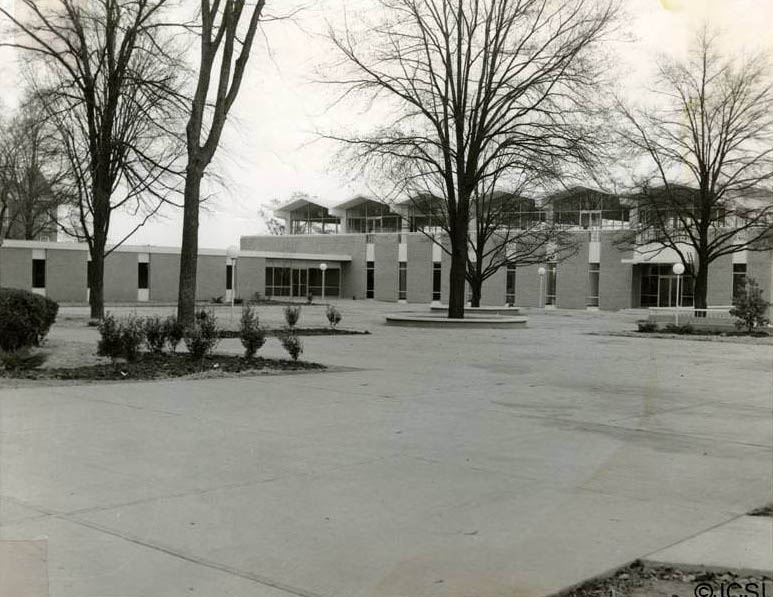
The University Memorial Union was another landmark that served Charlotte’s academic community during the 1970s, providing a central space for students and faculty to connect outside the classroom.
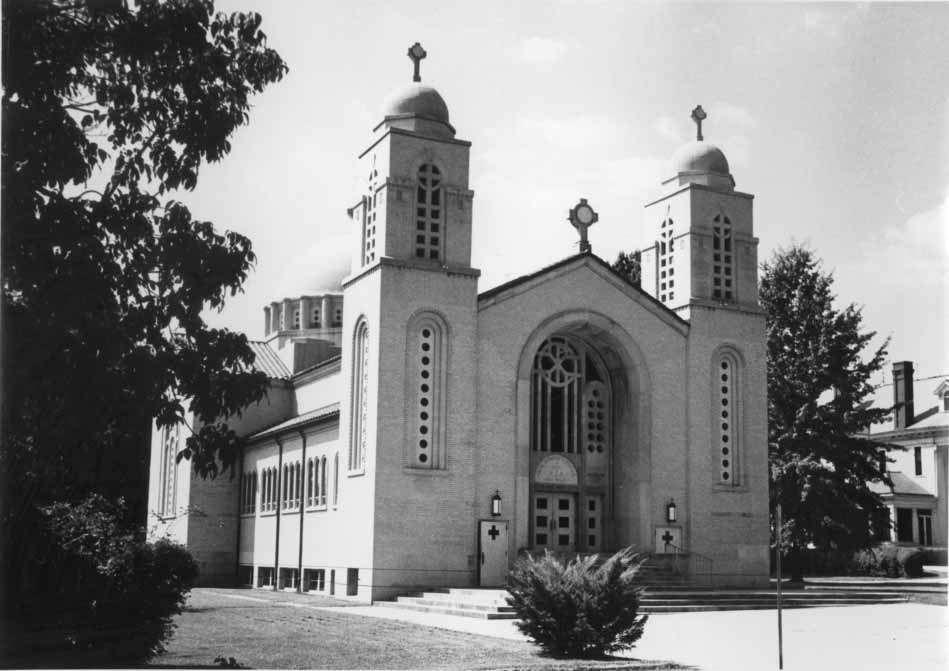
Religion and cultural traditions were also woven into Charlotte’s identity. Holy Trinity Greek Orthodox Church, located on East Boulevard, has been a fixture in the community for decades. Every September, the church hosts The Greek Festival, one of the most popular annual events in the city.
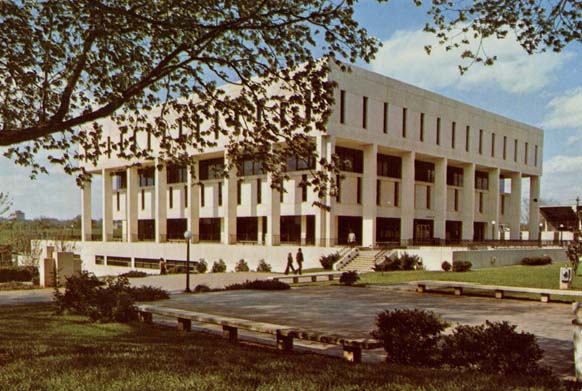
This postcard image of Central Piedmont Community College captures the Richard H. Hagemeyer Learning Resource Center on Elizabeth Avenue in 1974 — the same year the City Council formally recognized the name ‘Uptown’ Charlotte.
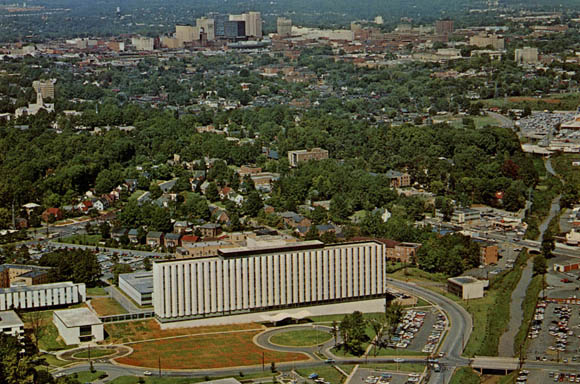
Healthcare was also expanding in Charlotte during this era. Charlotte Memorial Hospital, seen here in a 1972 aerial view, served as the city’s primary medical center before it was eventually renamed Carolinas Medical Center.
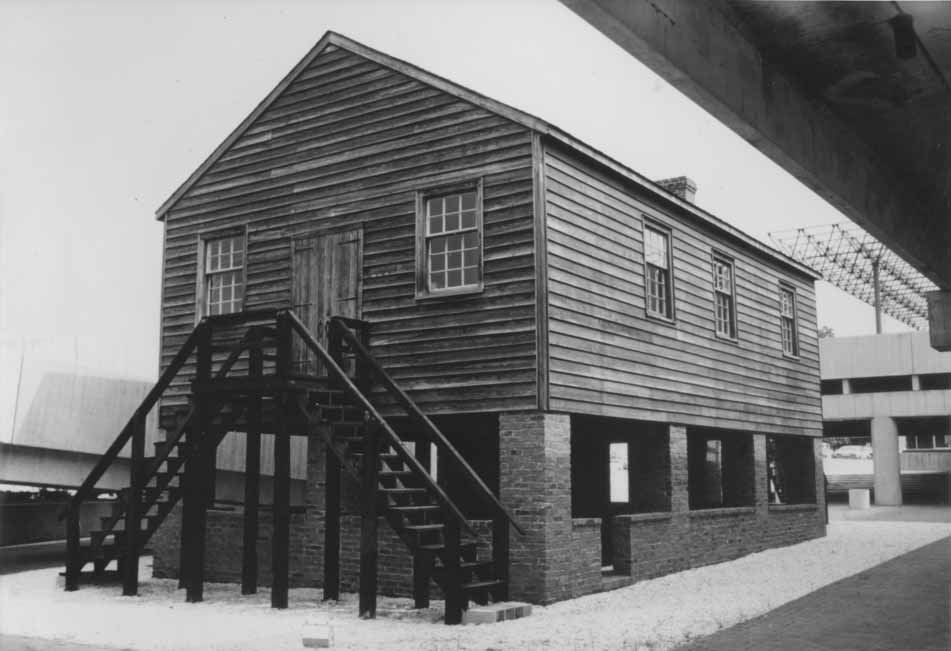
In 1976, the United States celebrated its 200th birthday, and Charlotte marked the occasion with a replica of the First Mecklenburg County Courthouse. The original courthouse once stood at the intersection of Trade and Tryon Streets, the historic heart of Uptown. The city built the replica specifically in honor of the Bicentennial celebration.
The Mint Museum of Art on Randolph Road was one of Charlotte’s most storied institutions by the time the 1970s rolled around. The building had originally served as the Charlotte Branch of the United States Mint on Mint Street. It was physically moved to its Randolph Road location and reopened in 1936, making it one of the most unusual relocations in Charlotte’s architectural history.
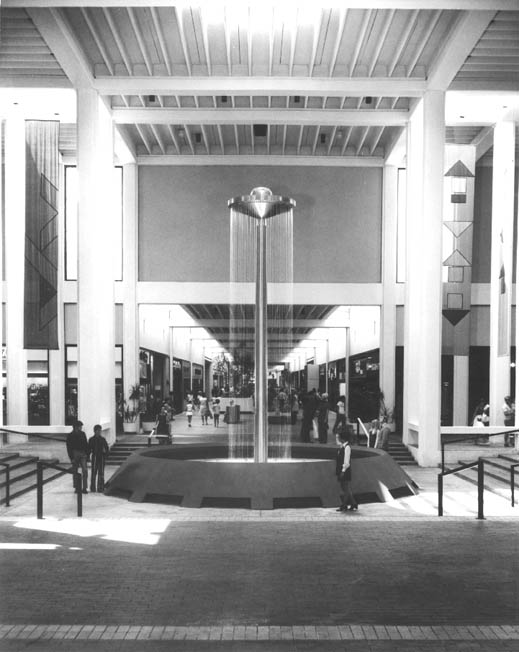
South Park Mall opened and became a defining part of Charlotte’s suburban retail scene. In the 1970s, the mall featured a fountain at its center, giving it a design that felt both modern and welcoming. That interior layout has since been completely redesigned.
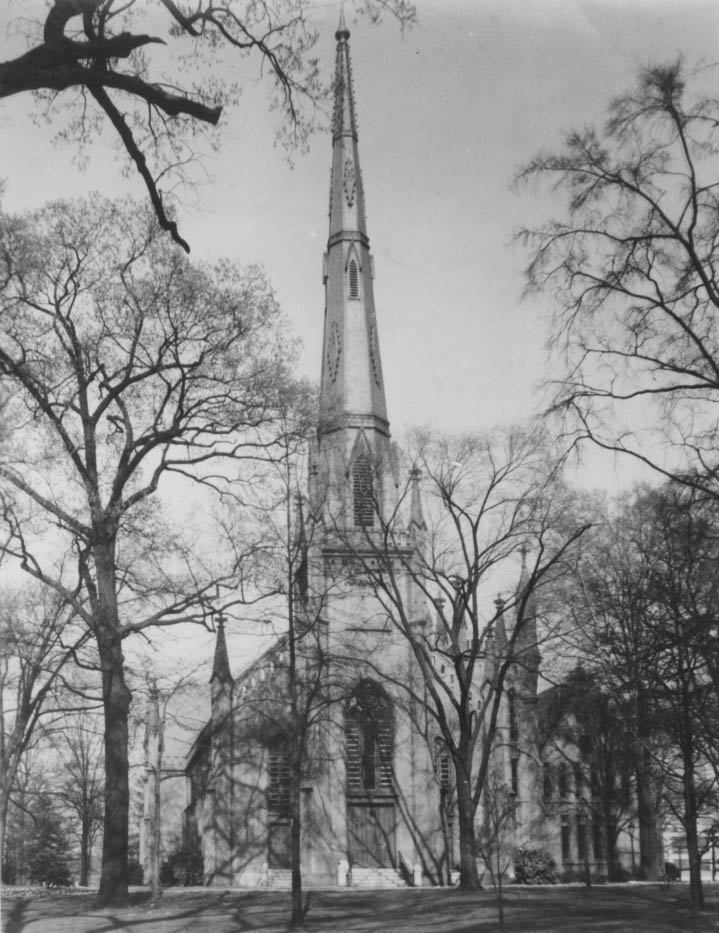
First Presbyterian Church on West Trade Street is one of Charlotte’s oldest congregations. Organized in 1832, the church’s current building opened in 1895 and remained a prominent landmark in Uptown Charlotte throughout the 1970s.
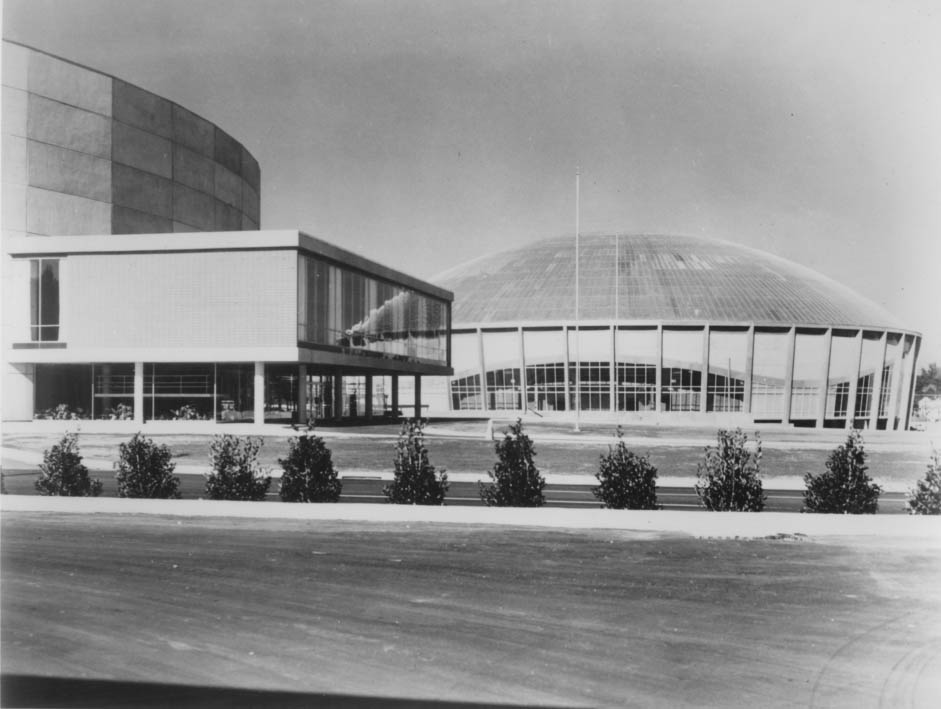
Ovens Auditorium and the first Charlotte Coliseum were captured together in a photograph taken on September 18, 1976. Both venues played an important role in Charlotte’s entertainment and civic life during the decade, hosting everything from concerts to sporting events.