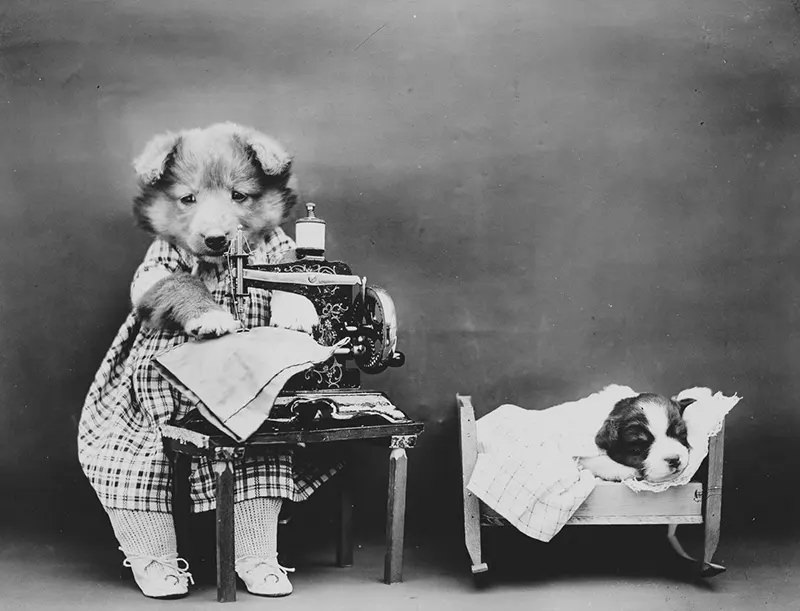
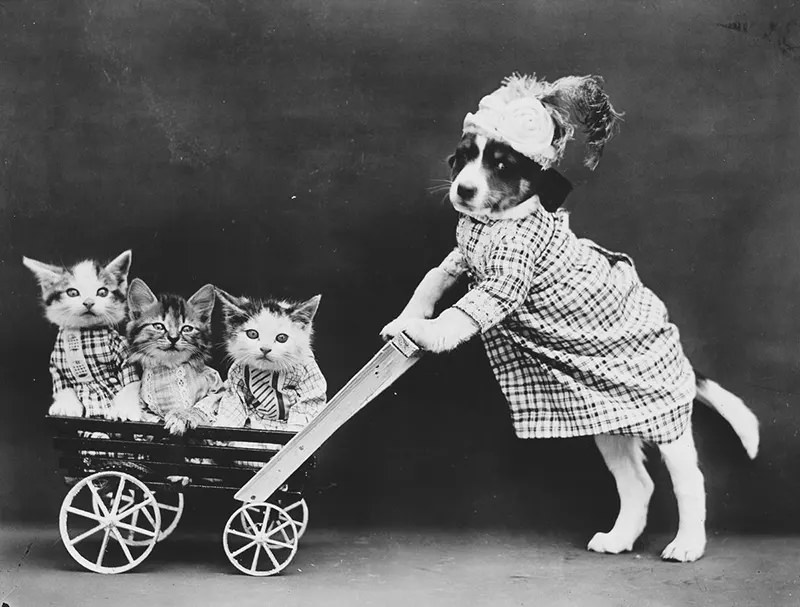
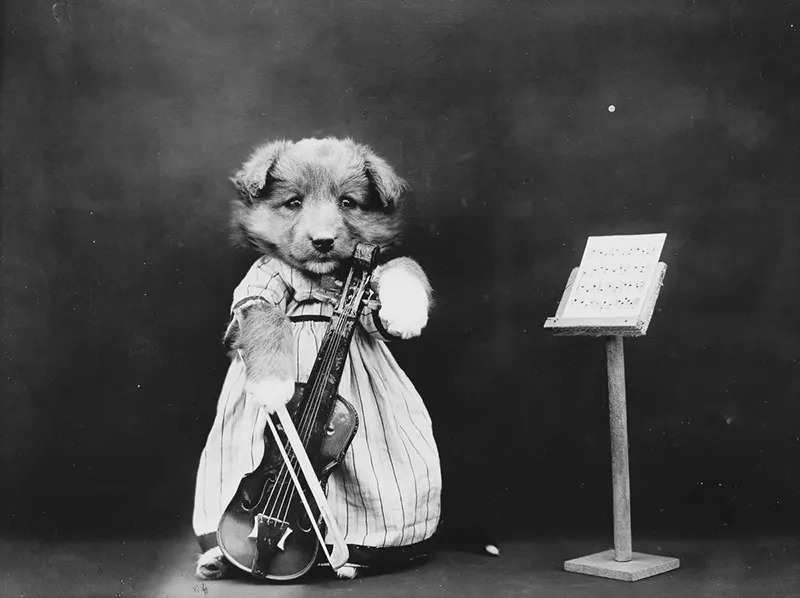
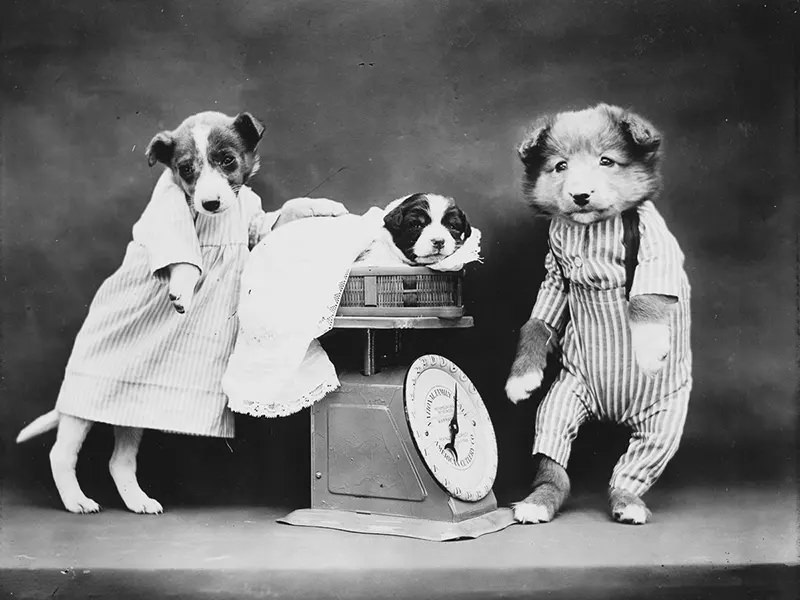
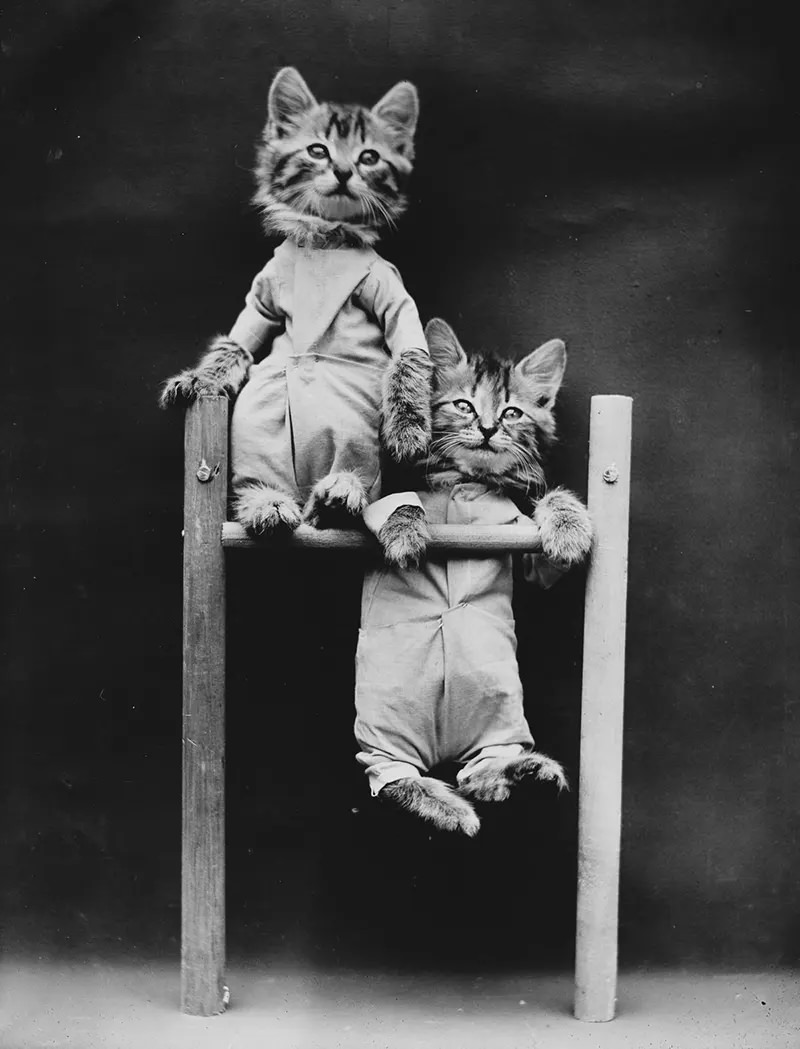
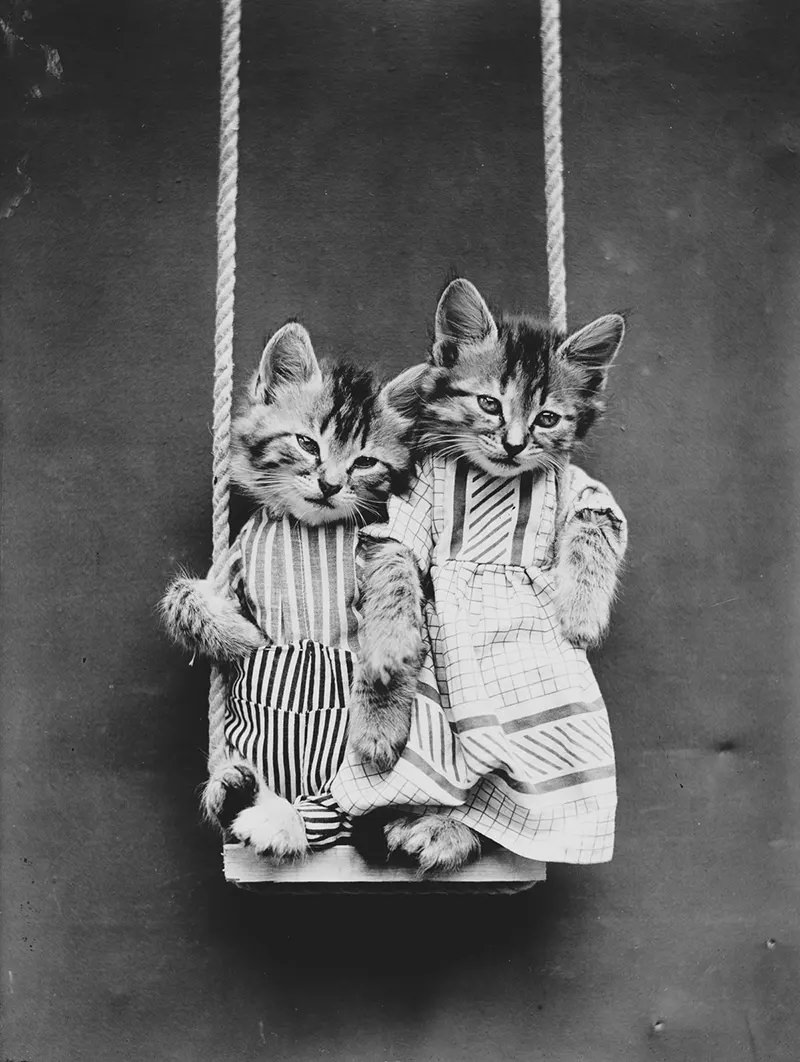
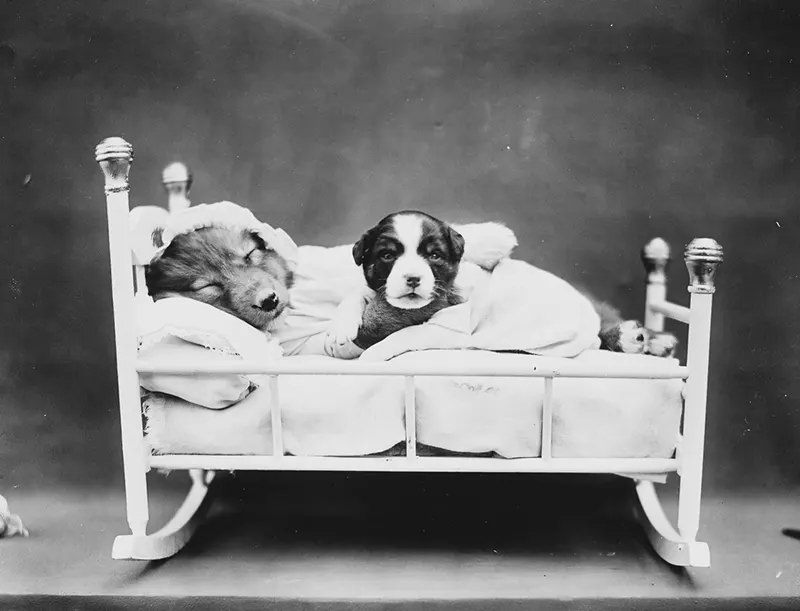
Long before the internet gave us cat memes and viral pet videos, a photographer named Harry Whittier Frees was already making the world laugh with pictures of cats and dogs dressed in tiny human costumes. Working through the 1900s and 1910s, Frees built a career around novelty postcards, books, and calendars featuring animals posed in everyday human scenes. His images were massively popular, and looking at them today, it’s easy to see why.
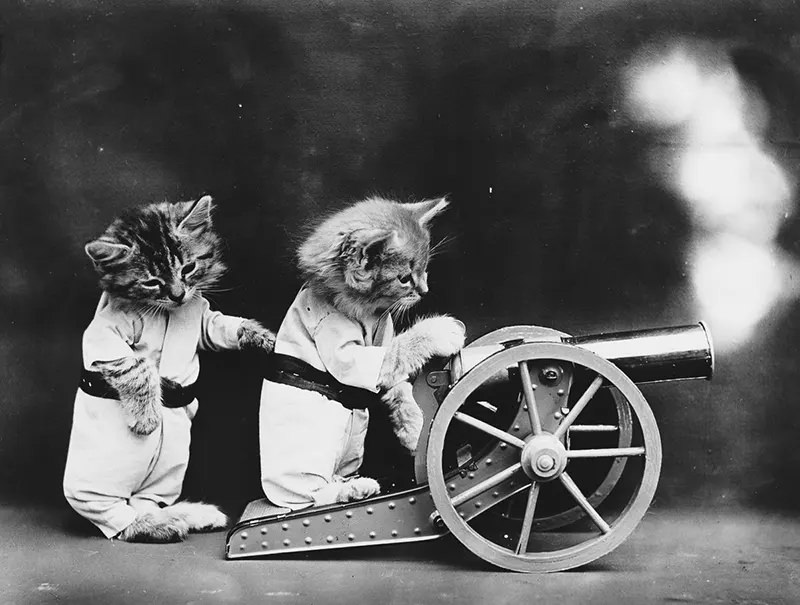
Frees first started photographing animals in 1902, but he didn’t put them in costumes until 1905. The idea came to him at a family birthday party. Someone placed a paper party hat on the family cat as a joke, and Frees grabbed his camera. The postcard manufacturer he worked with loved the shot immediately, and it sold extremely well. That one accidental photo set the direction for the rest of his career.
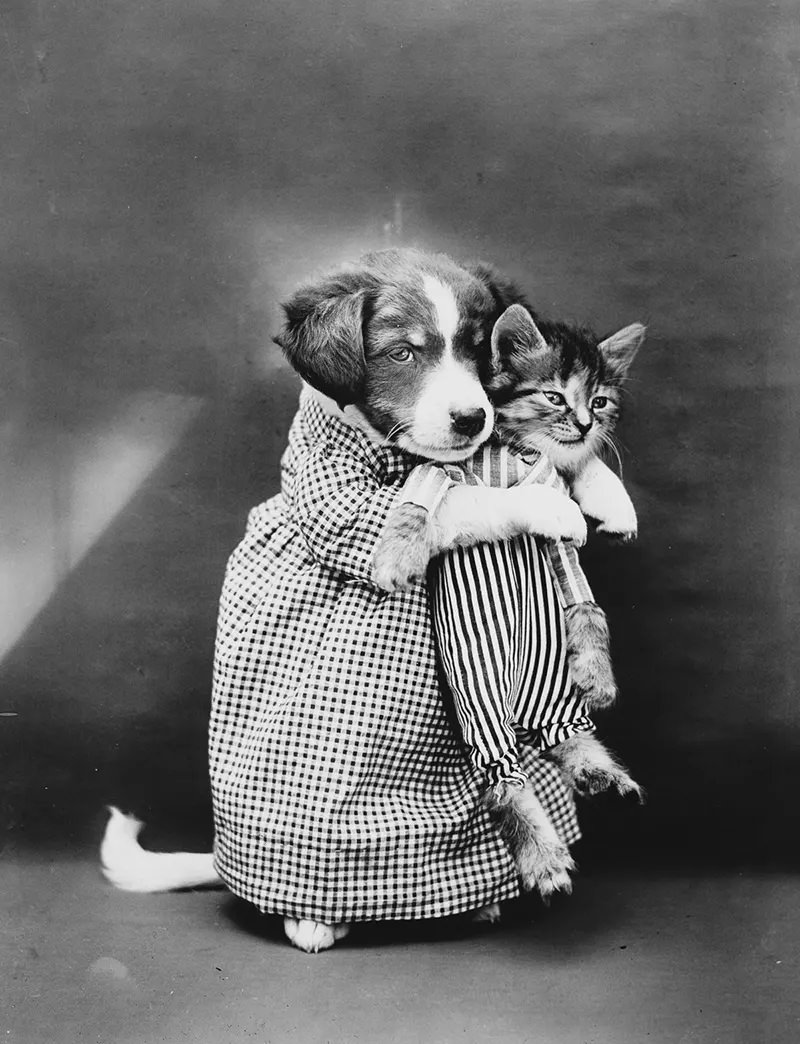
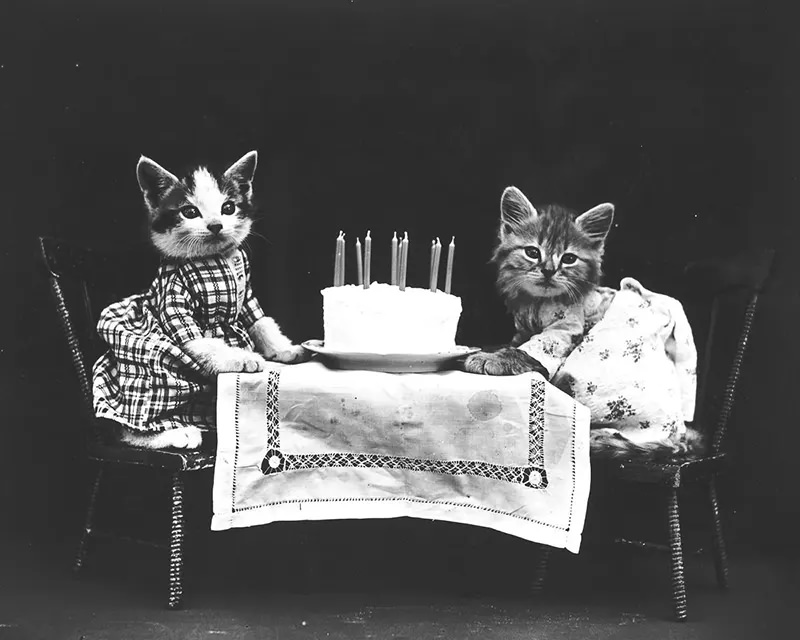
The scenes Frees constructed for his animal subjects were surprisingly elaborate. He built or sourced miniature props that matched the human world at a tiny scale — a movie studio camera, a washtub, an ironing board, a ladder, an old-fashioned microphone, a scooter, and a sled. Animals appeared in kitchen settings, at weddings, and even as firefighters. There was almost no human activity he didn’t find a way to recreate with a cat or a puppy.
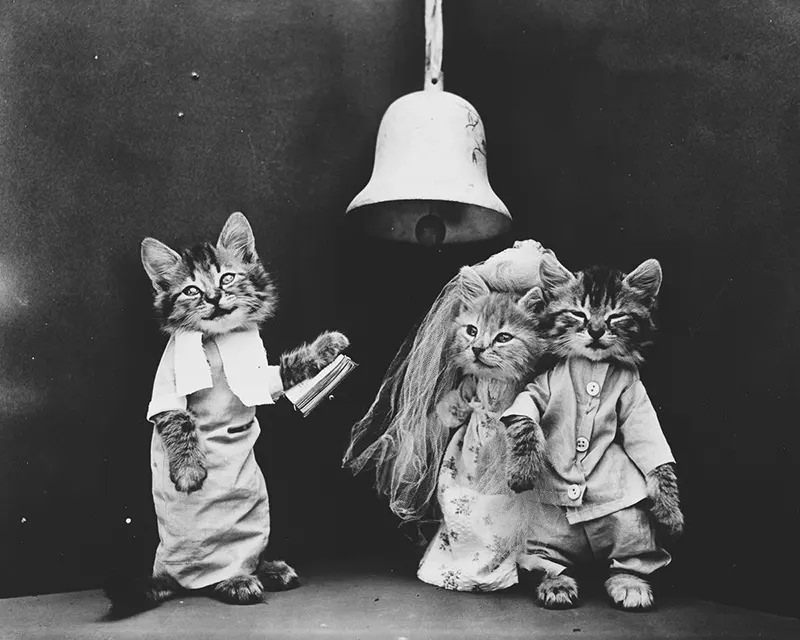
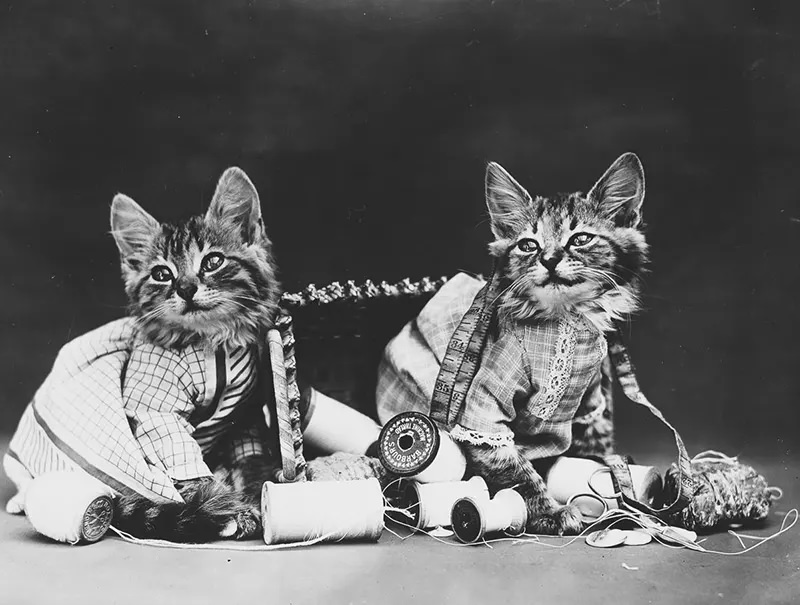
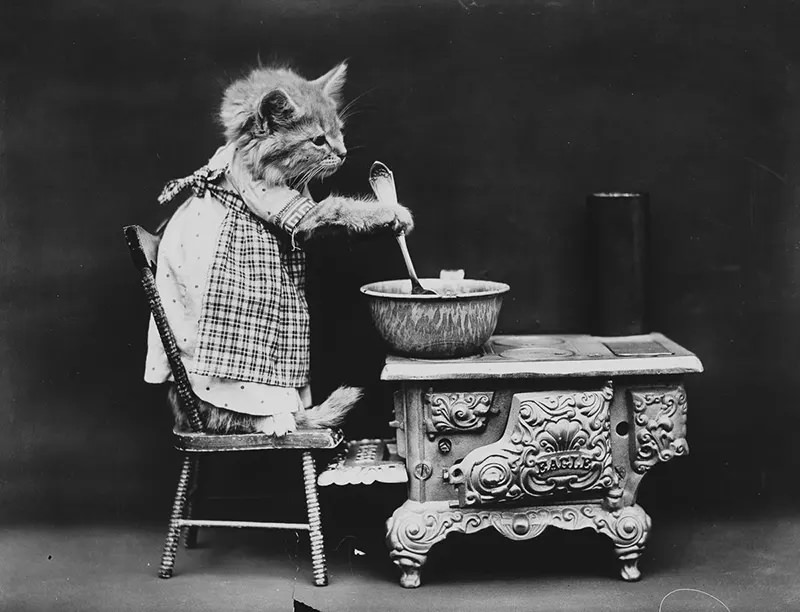
Getting the animals to hold a pose was the central technical challenge of his work. Frees used a 1/5th of a second exposure, which was fast for the era but still required the subject to stay still. He managed this with stiff costuming, pins, and forks that held the animals in position just long enough to capture the shot. The results looked natural and expressive, even though keeping a kitten still for any length of time is no small feat.
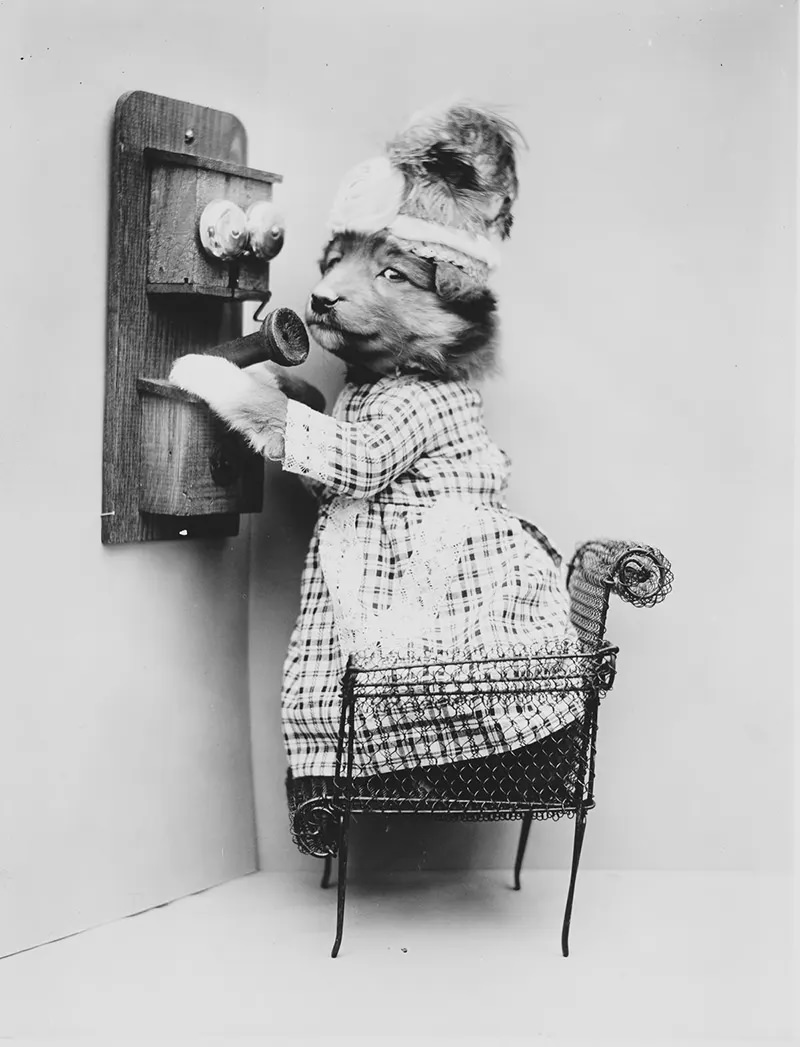
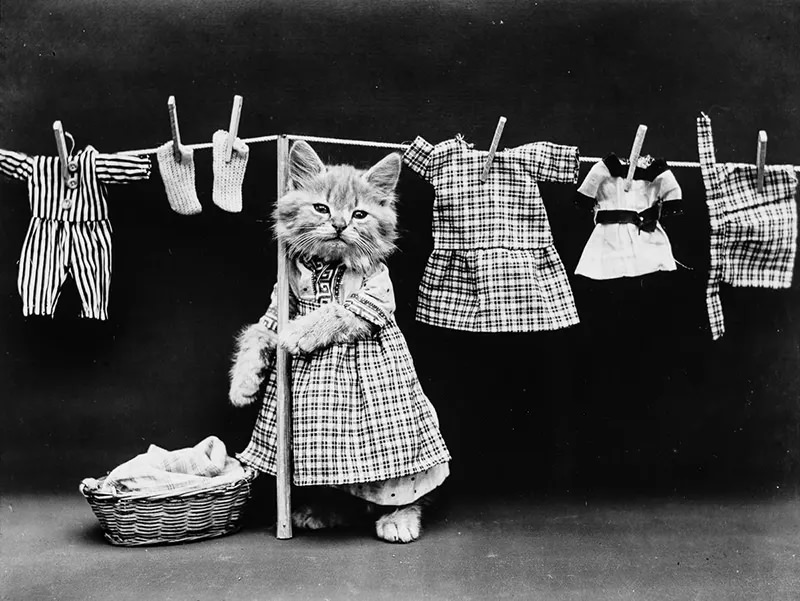
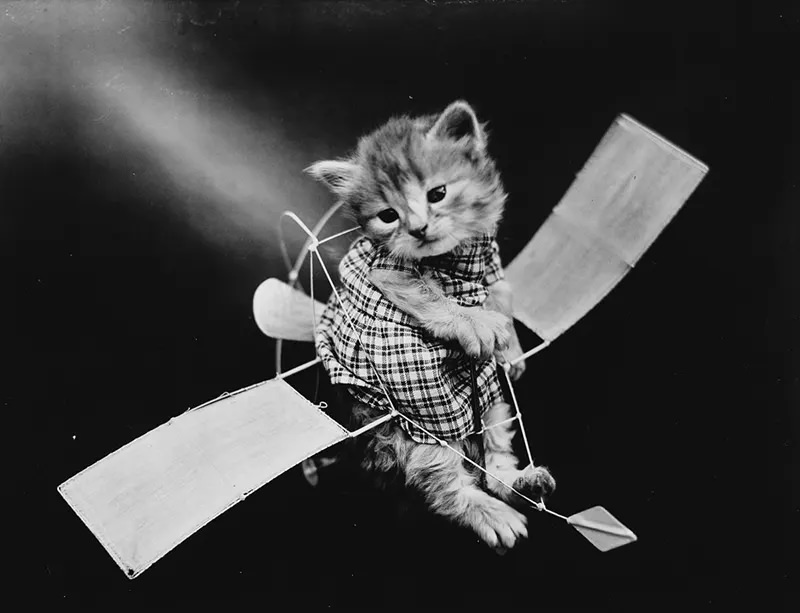
Frees quickly learned that young animals drew the strongest reaction from audiences. Puppies and kittens between six and ten weeks old are at their most photogenic, and he leaned into that. Supplying himself with a steady stream of young animals meant borrowing them from neighbors or renting them from a local pet store. On occasion, he also photographed chicks, rabbits, and even a piglet.
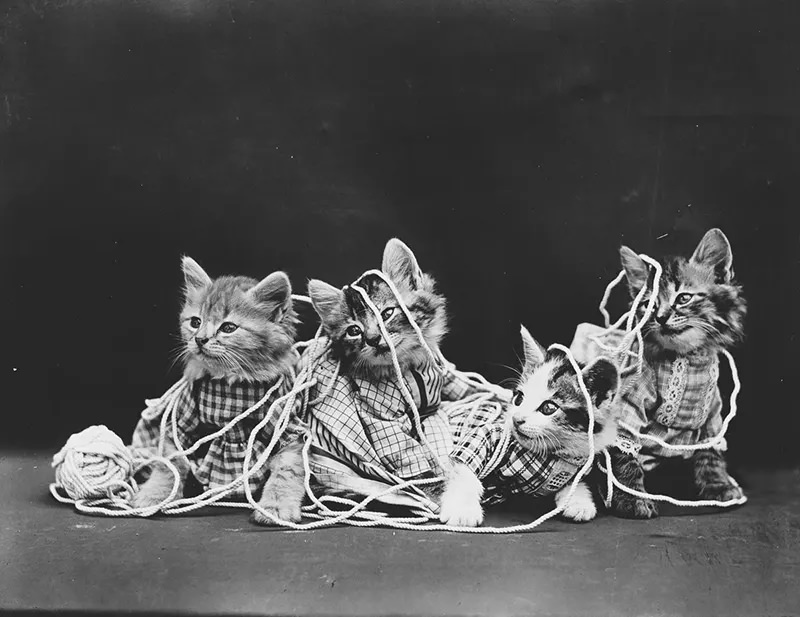
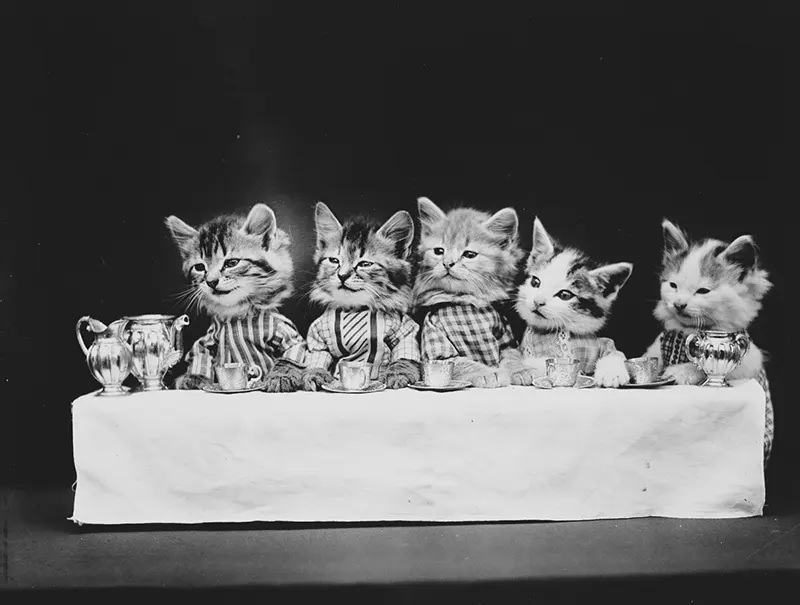
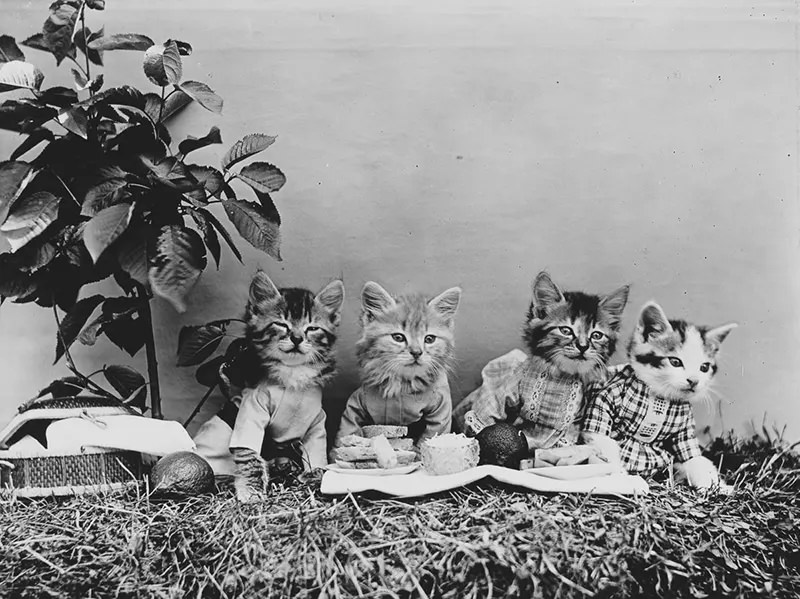
In his book Animal Land on the Air, Frees shared his honest assessments of each animal as a subject. Rabbits, he wrote, are the easiest to photograph in costumes but are limited in how many human-like expressions and poses they can pull off. Kittens, by contrast, he considered the most versatile animal actors, capable of the widest variety of appeal when handled correctly. His work across thousands of photographs backed up that opinion.
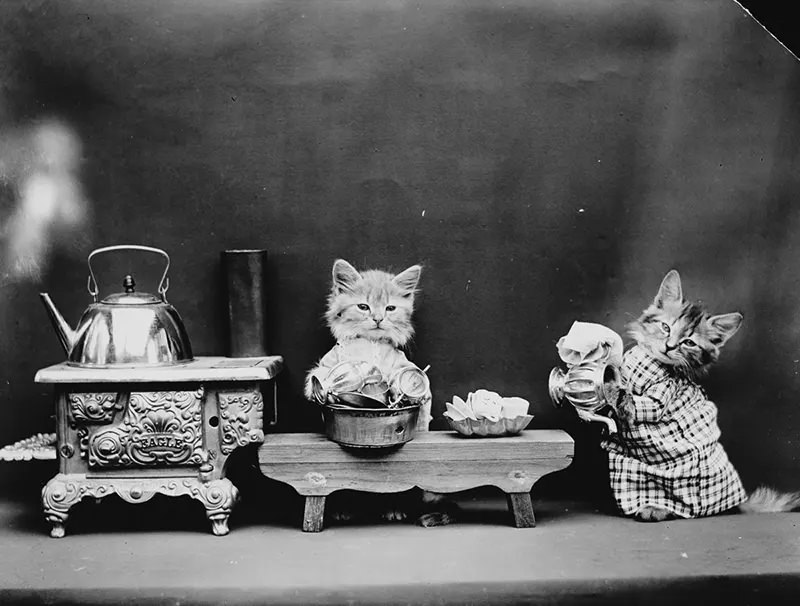
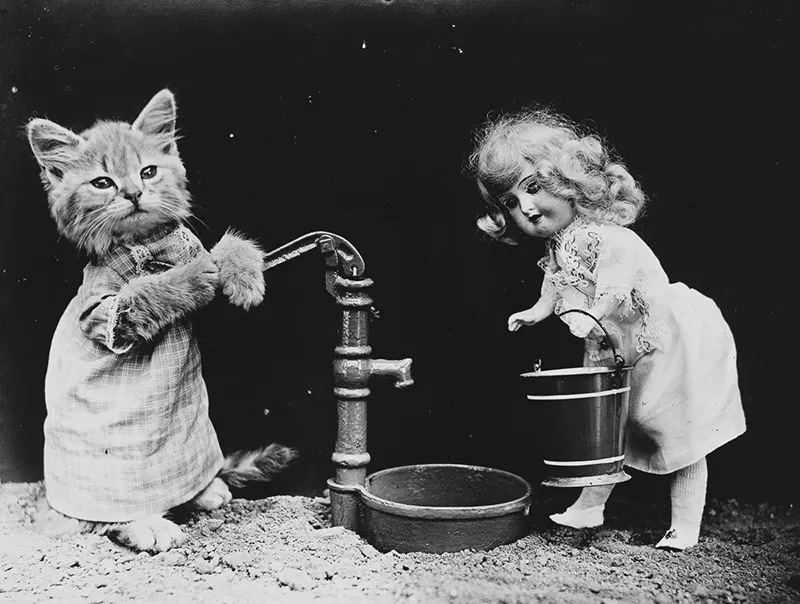
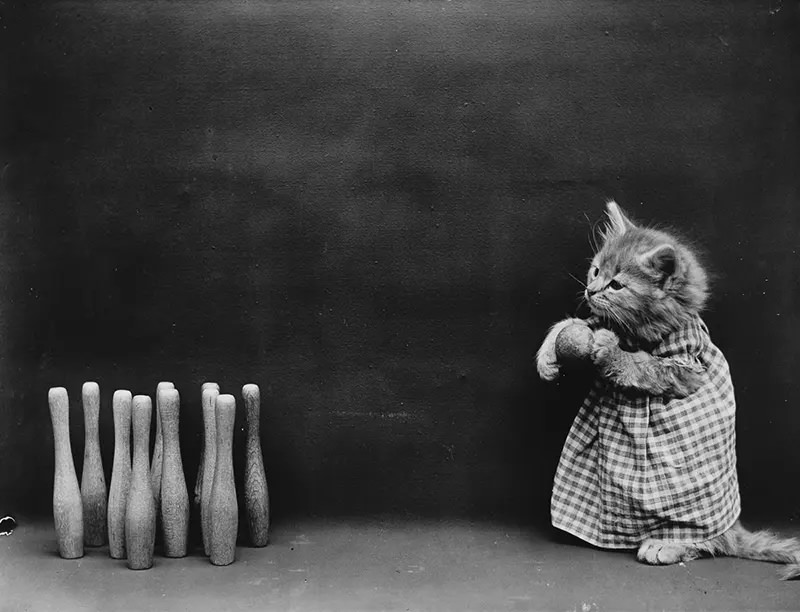
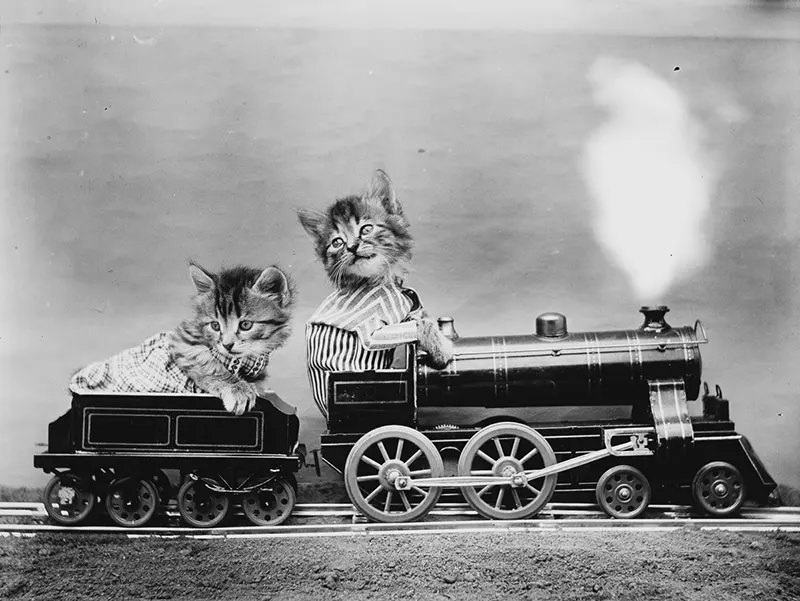
The photographs appeared in novelty postcards, books, magazines, and calendars throughout the 1910s. Each image typically carried a short caption that played up the human scenario the animal was acting out — a format that feels remarkably close to what we now call a meme. The humor was gentle, the animals were undeniably cute, and the combination proved to be a winning formula that audiences couldn’t resist.
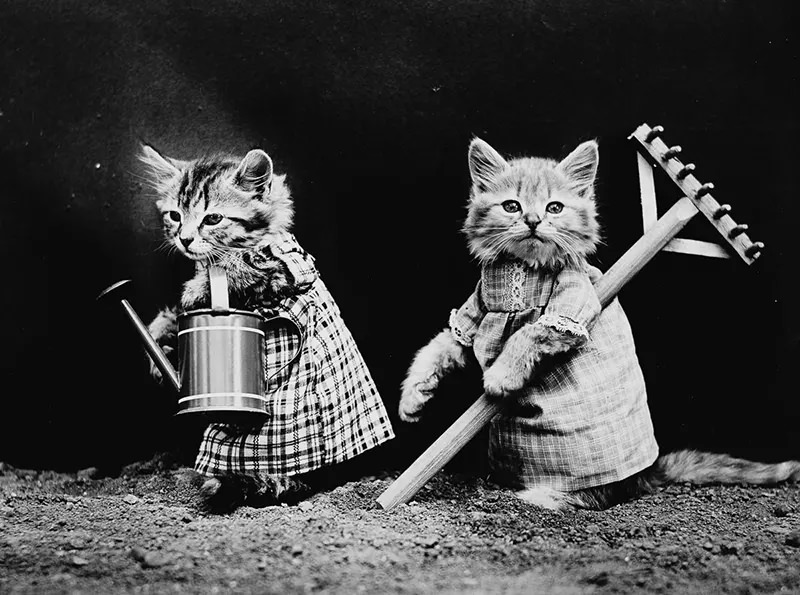
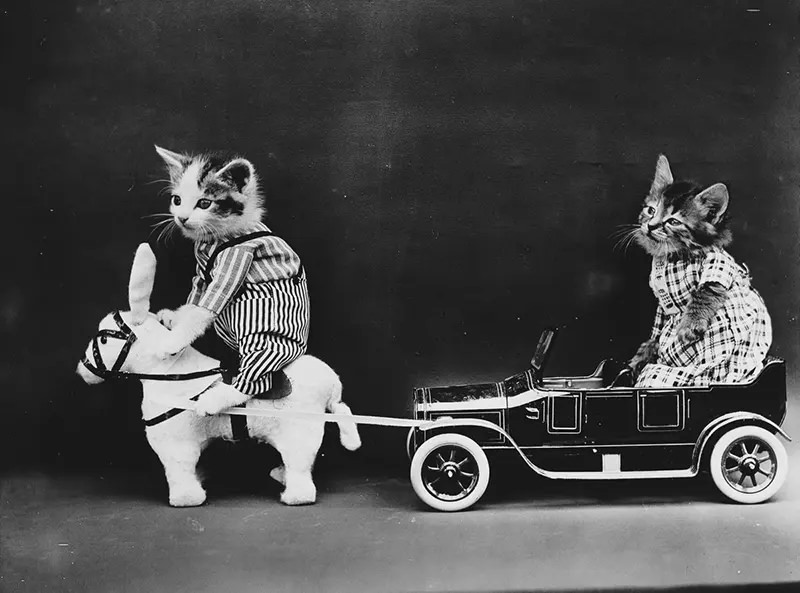
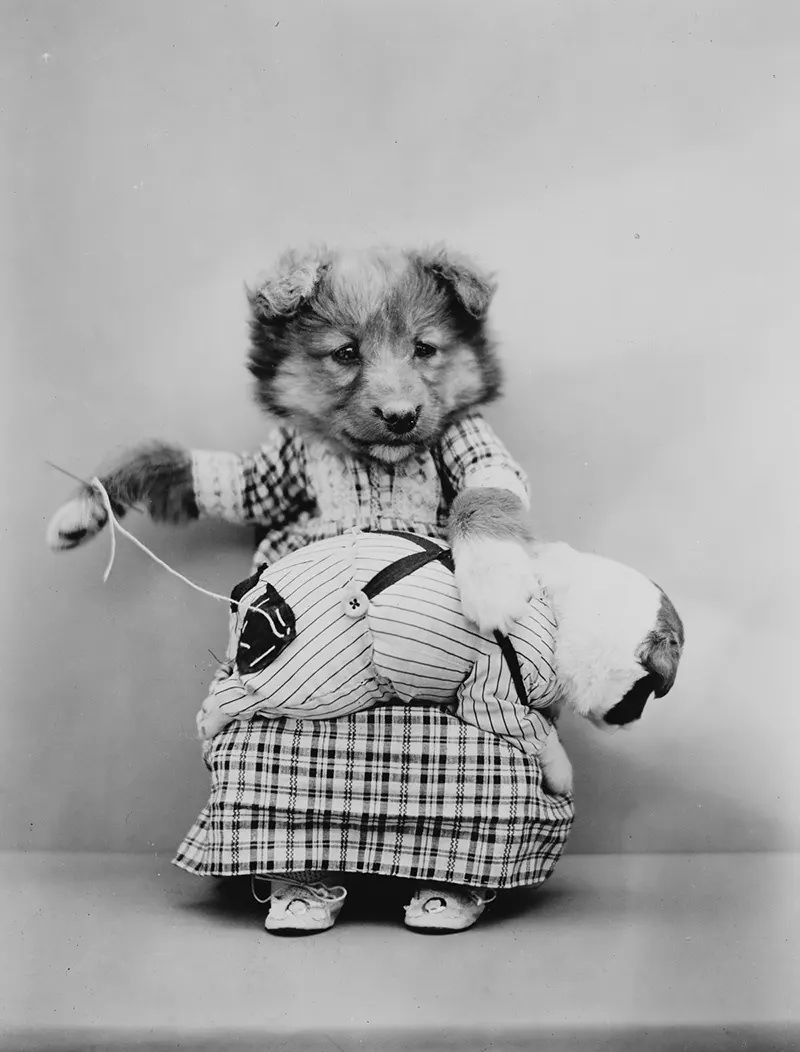
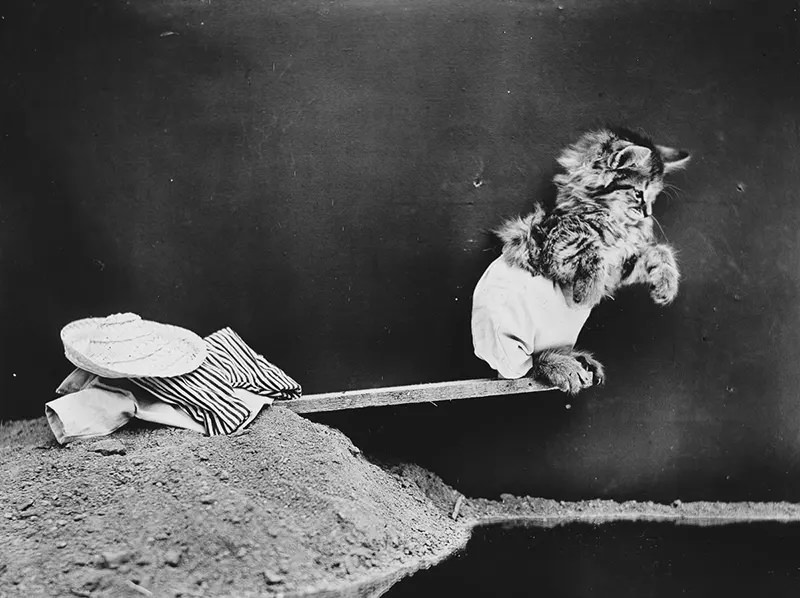
What made Frees stand out was the sheer range of his output. He wasn’t repeating the same basic setup over and over. Each new photograph presented a different domestic scene, a different character, and a different emotional beat. A cat ironing clothes, a puppy bowling, a kitten playing the fiddle — each one required specific props, a specific pose, and an animal willing to cooperate long enough for the shutter to close.
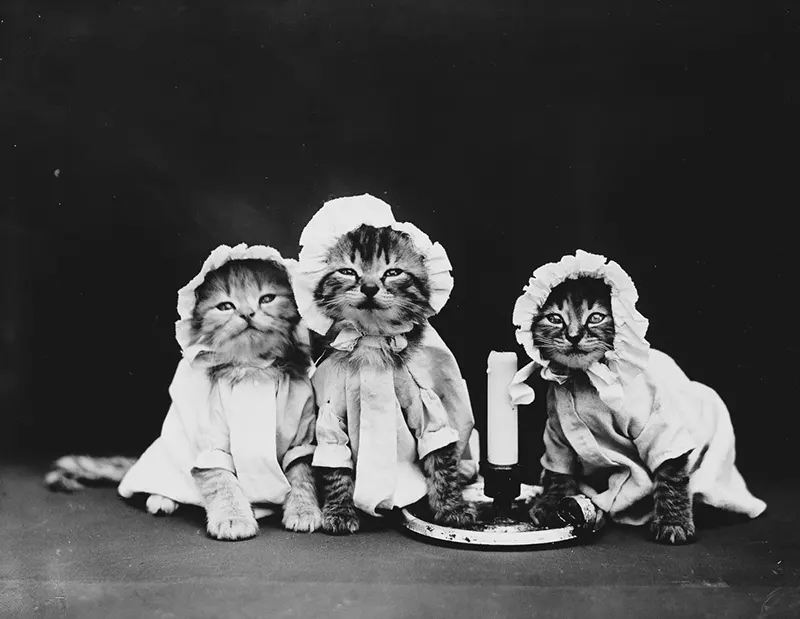
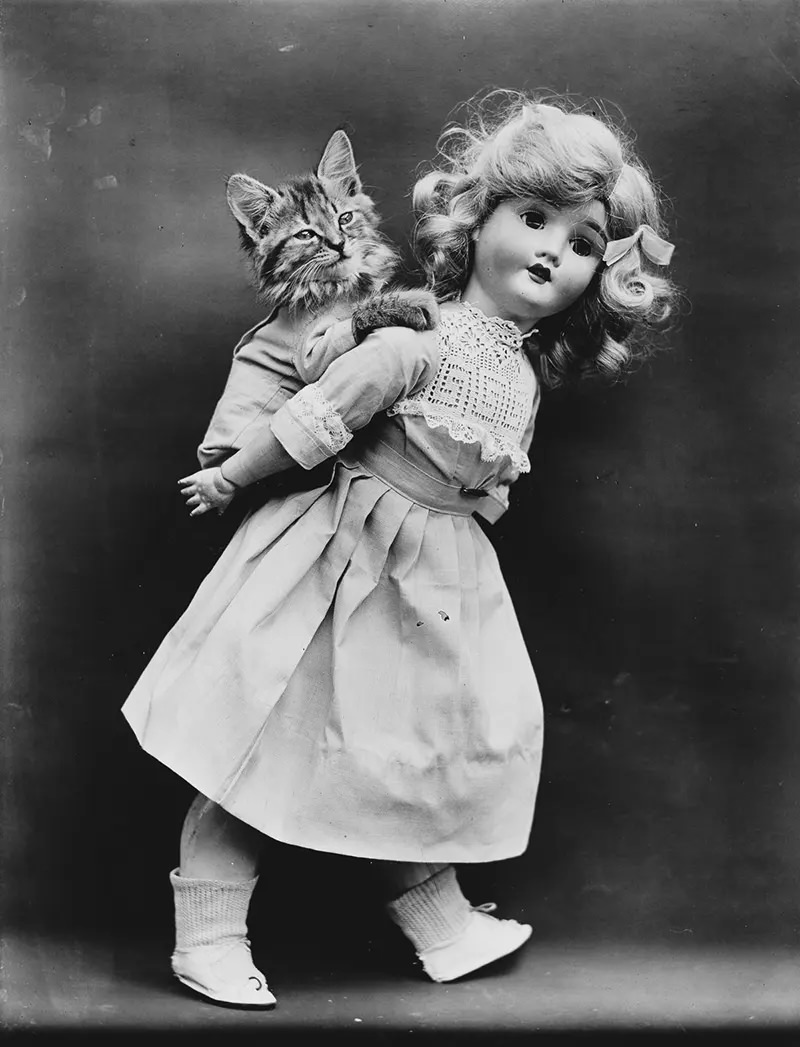
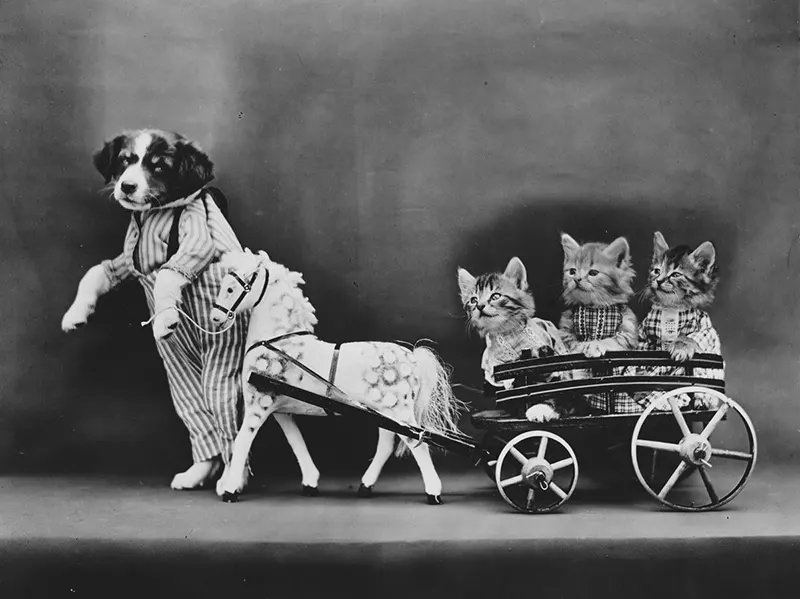
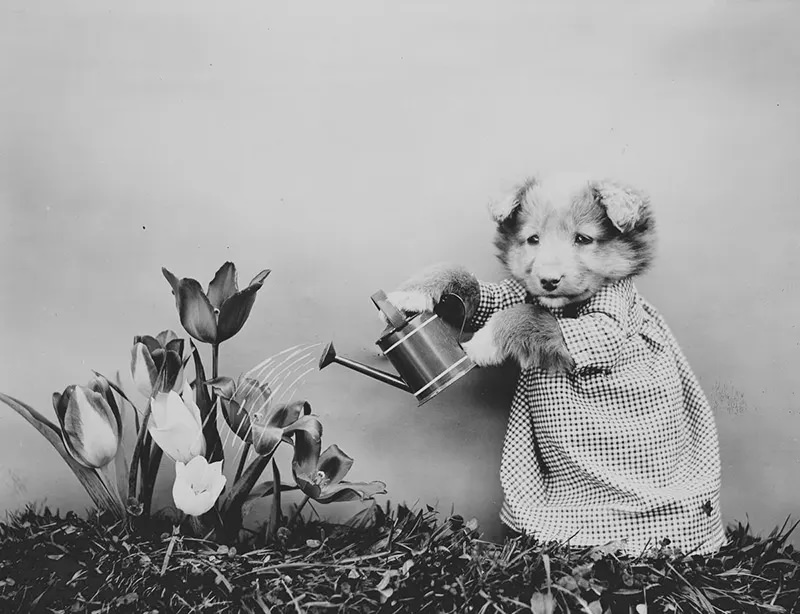
The photographs carry a handmade quality that digital imagery can’t replicate. Every tiny costume was physically sewn and fitted. Every prop was physically placed. The animals reacted to a real environment, not a computer-generated one, and that reality gives the images a warmth that still holds up more than a century later.