The cancan is one of the most recognizable dances in history — a blur of petticoats, high kicks, and roaring crowds. Born in France, it became a symbol of rebellion, entertainment, and physical daring. Its exact origins are murky, but the trail leads back to the public dance halls of Paris in the early 19th century, where a social dance called the quadrille was the main attraction.
The quadrille was a structured set dance performed by four or more couples. Its final figure allowed dancers to let loose — arms swung wide, legs kicked high. That final, freewheeling moment is where the cancan is believed to have broken free and become its own thing. One entertainer who helped push things further was Charles Mazurier, a popular performer from the 1820s known for performing the grand écart, a dramatic jump split that would become one of the cancan’s defining moves.
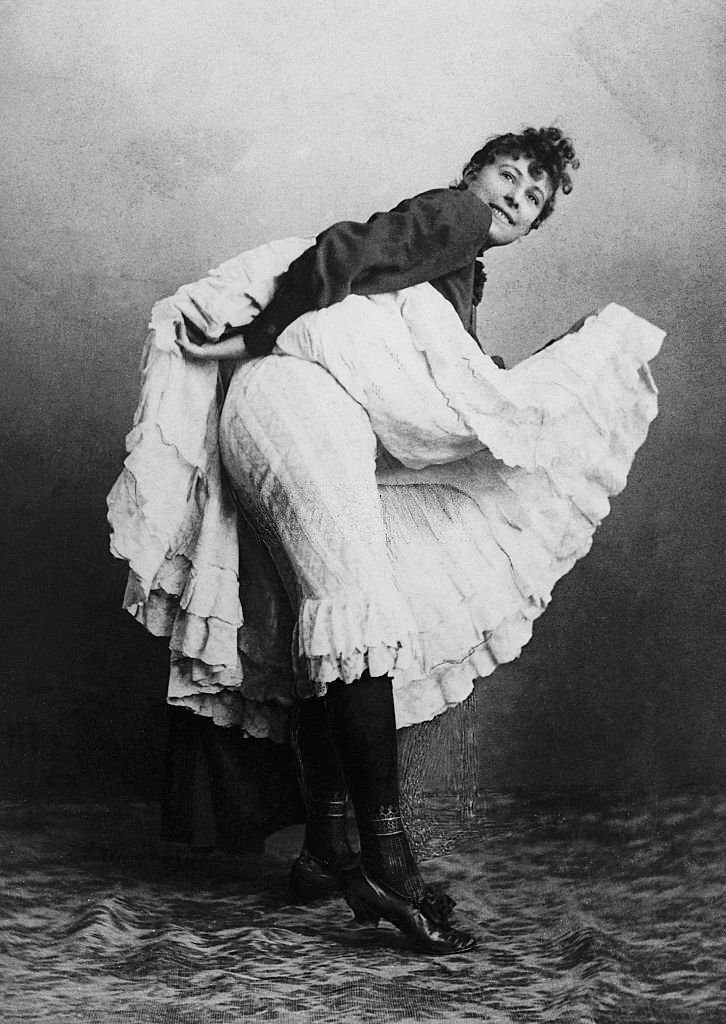
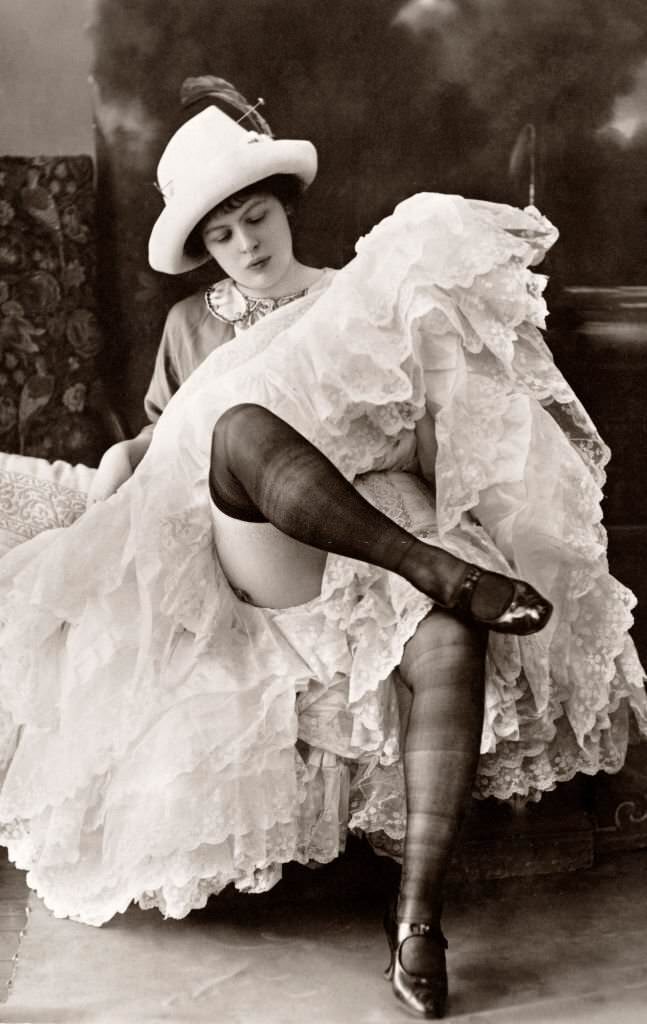
A cancan dancer lifts her skirt to reveal her bloomers, 1900s
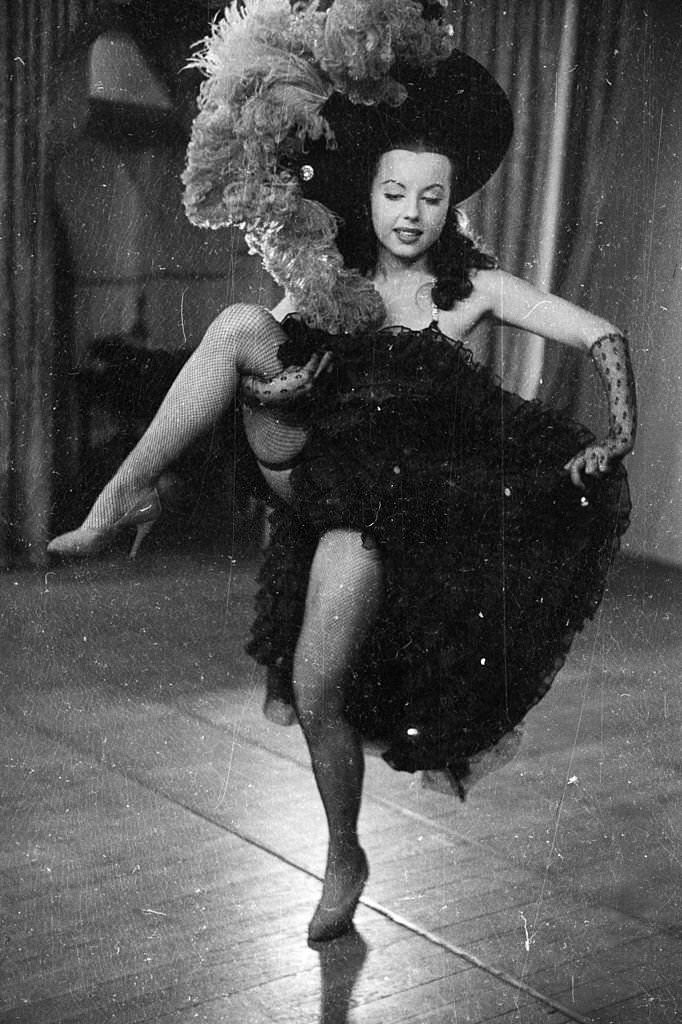
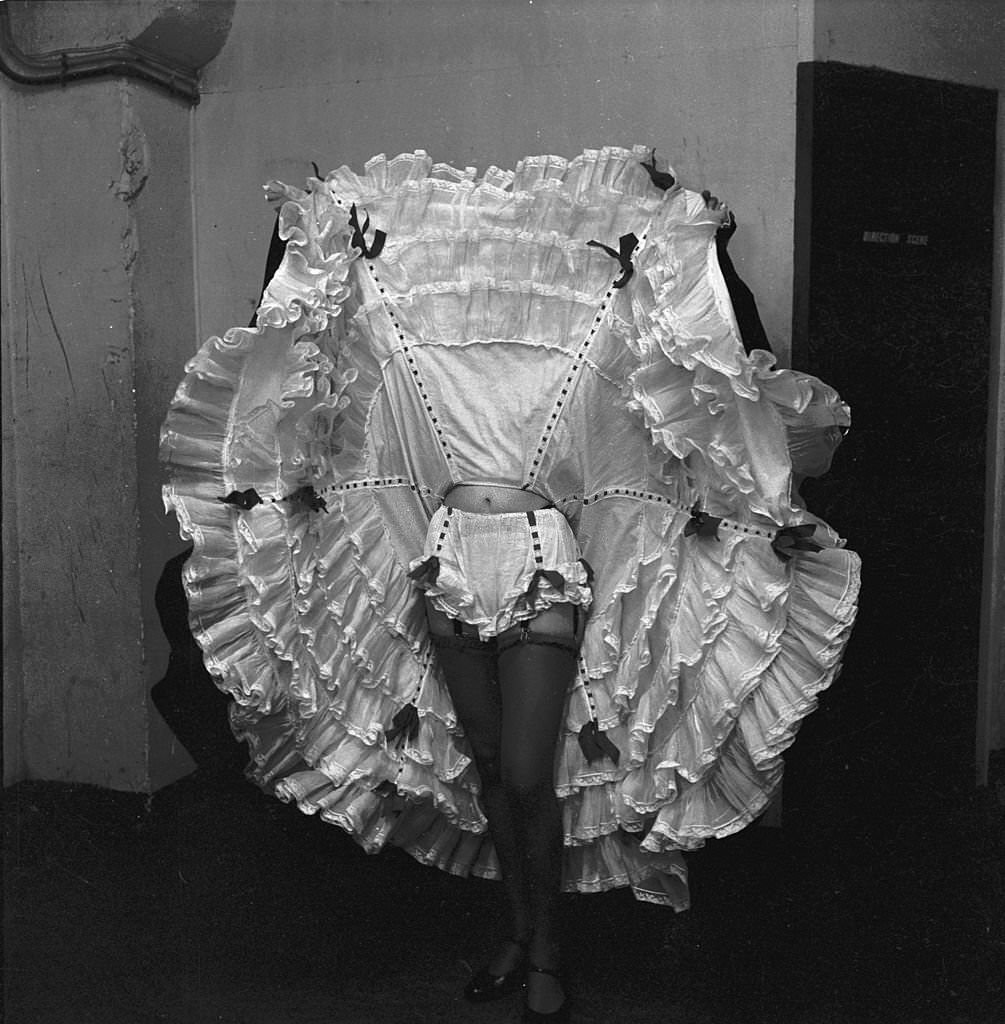
From the very start, the cancan was considered scandalous. Women in 19th-century France wore open-crotch pants beneath their skirts, and a high kick revealed exactly that. The act of lifting a leg high into the air — when women were not even supposed to be seen out of breath or show their ankles — was a direct challenge to the social rules of the time. It was labeled “disreputable,” and the closeness between dancers and their audiences broke every expectation of Victorian-era propriety.
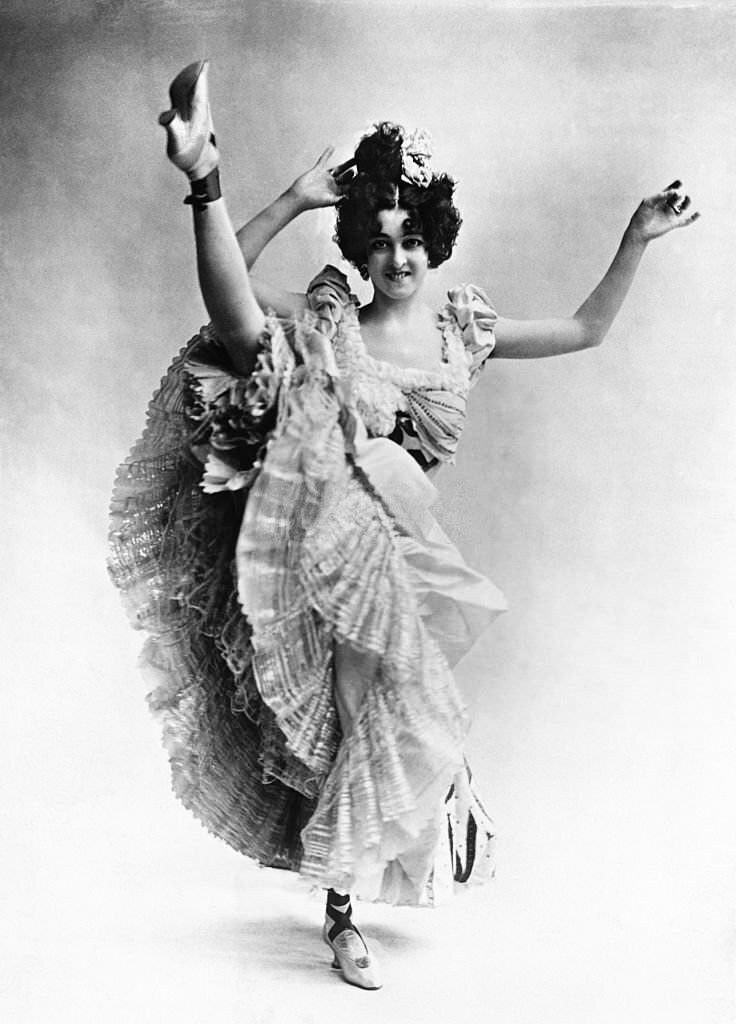
The cancan dancer Saharet kicks her leg into the air, 1900s
In the 1830s, cancan dancing at public dance halls was largely performed by men — particularly students who used it as a form of energetic, irreverent fun. It was not yet performed by a chorus line. Instead, individuals took the floor and improvised. As the dance grew in popularity through the 1840s, professional male performers emerged. An all-male group called the Quadrille des Clodoches even took the cancan to London in 1870. But it was women who ultimately became the dance’s biggest stars.
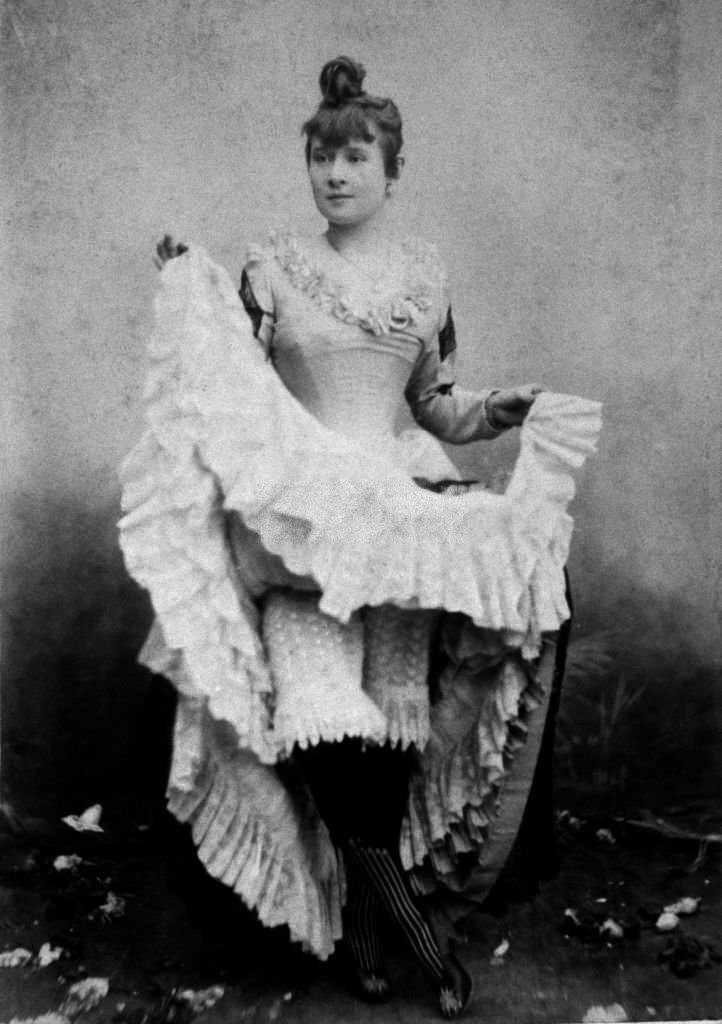
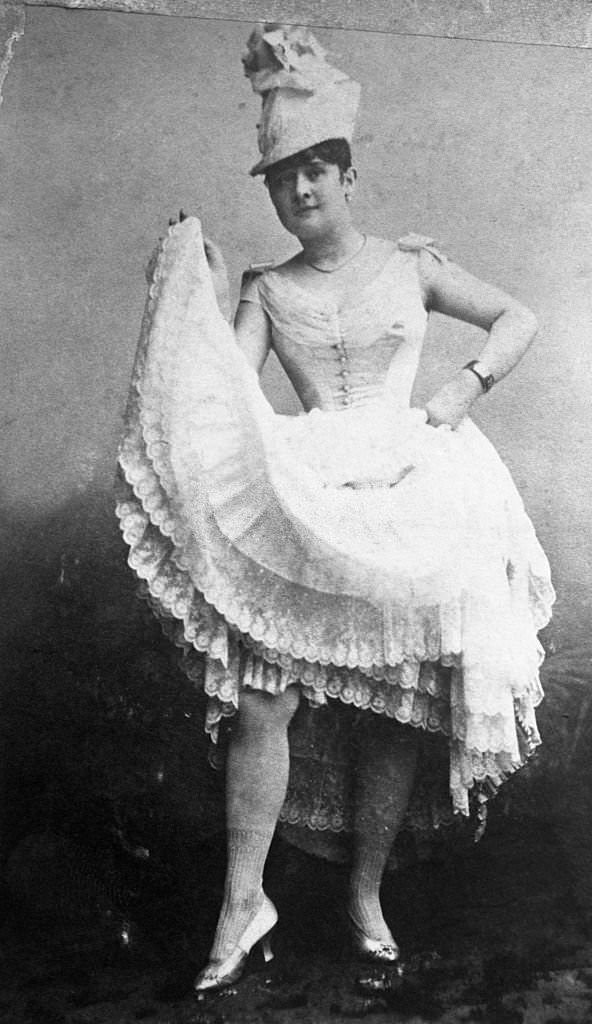
La Goulue, popular cancan dancer in Paris, France, 1890s
La Goulue was one of the most famous cancan dancers of the 19th century. Performing at the Moulin Rouge in the 1890s, she was bold, commanding, and utterly unlike anything audiences had seen before. Her regular partner was a man known as Valentin le Désossé — Valentin the Boneless — named for the extraordinary flexibility he brought to his performances. Another major star of the era was Jane Avril, whose style was more refined but no less thrilling. By the 1890s, dancing had become a viable full-time profession, and these performers were genuine celebrities.
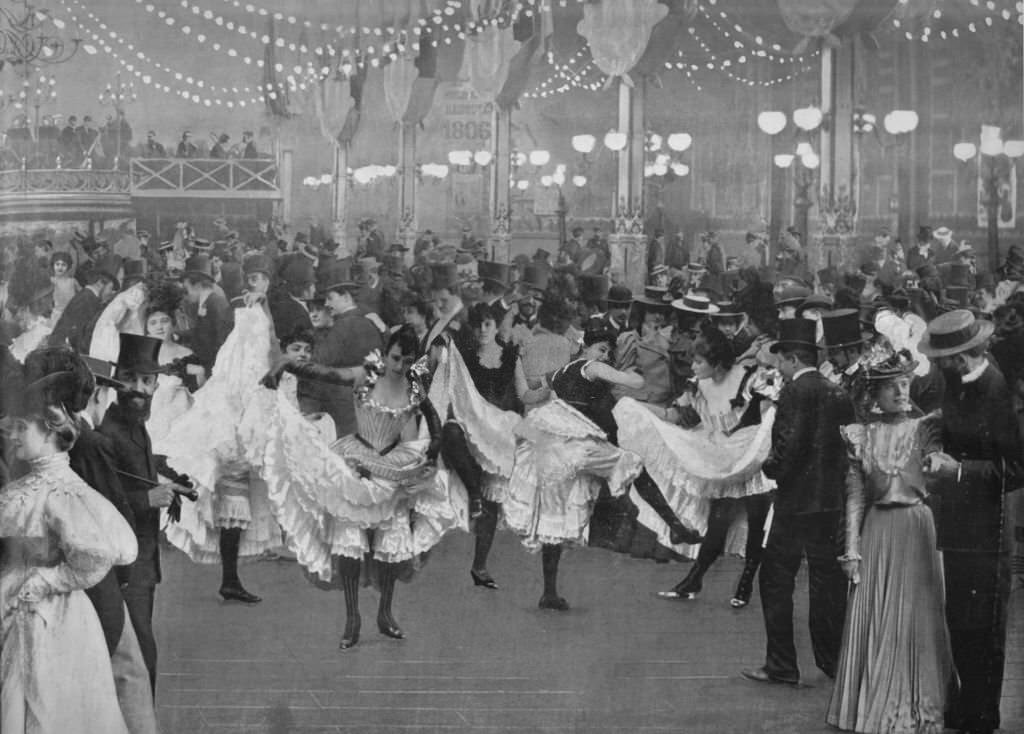
Le Bal Du Moulin-Rouge’, 1900.
The Moulin Rouge, which opened in the Montmartre district of Paris in 1889, became the spiritual home of the cancan. Tourists from around the world traveled to see what was being called the most wicked dance on earth. The reputation was partly theater — accounts from the time note that the cancan performed at places like the Bal Tabarin was considered far less risqué than what was being done on American stages — but the mystique drove enormous crowds regardless.
The ‘Wicked’ Bal Tabarin in Paris, 1907The Wicked Dance the Tourists Flock to See, 1904
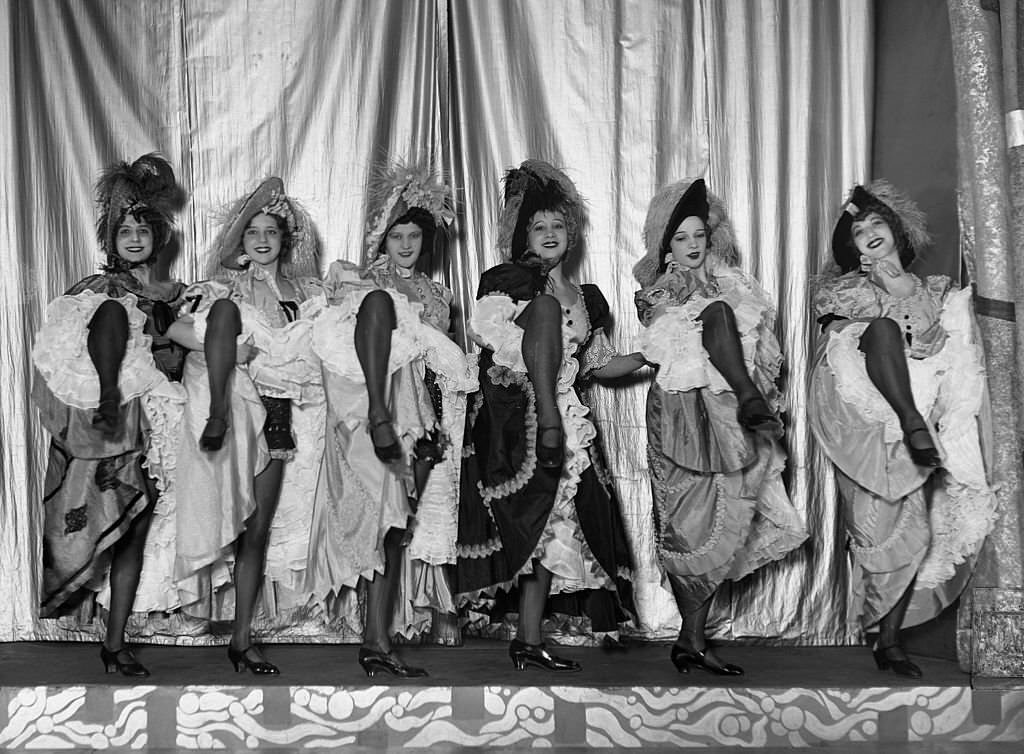
The Bal Tabarin in Montmartre drew crowds of Americans and Europeans eager to witness the infamous dance firsthand. Early photographs from around 1900 show dancers in full costume — layered skirts, black stockings, and garters — performing in front of packed houses.
A dancer of the “can-can” at the old days at the old Bal Tabarin in Paris, 1900
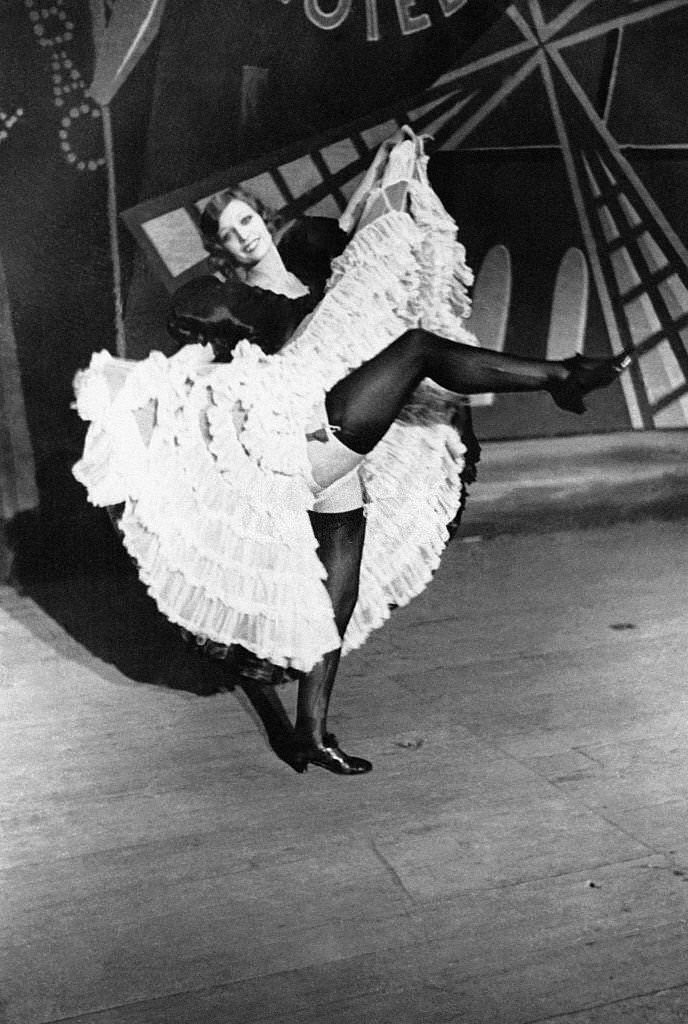
A Cancan dancer takes a break by raising her leg on stage in front of the wings of a windmill, 1900
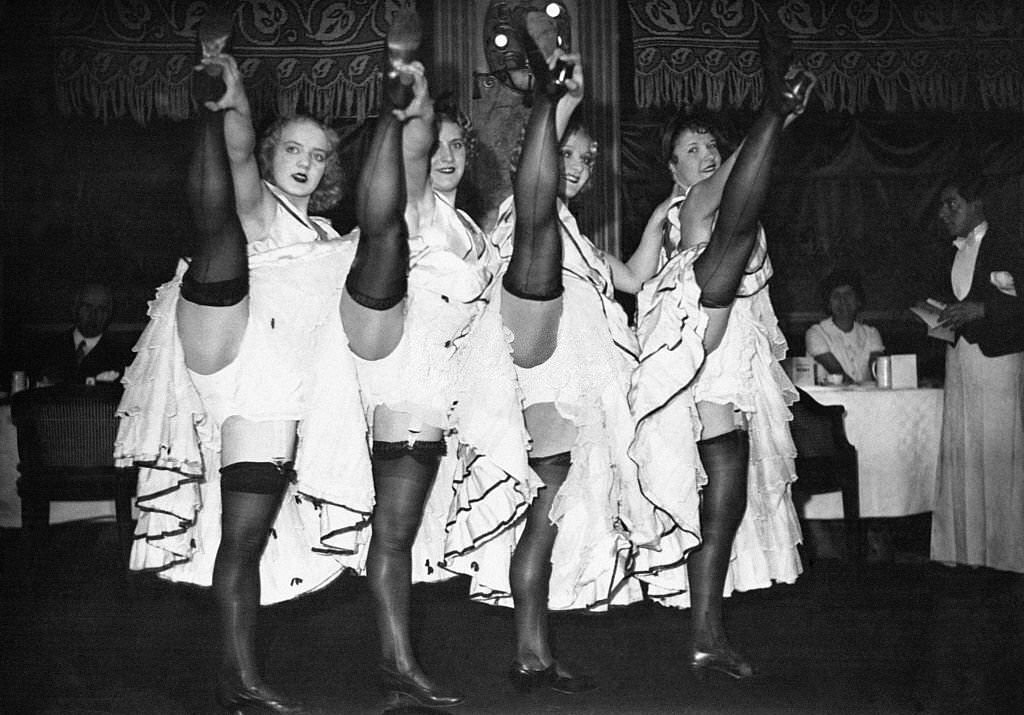
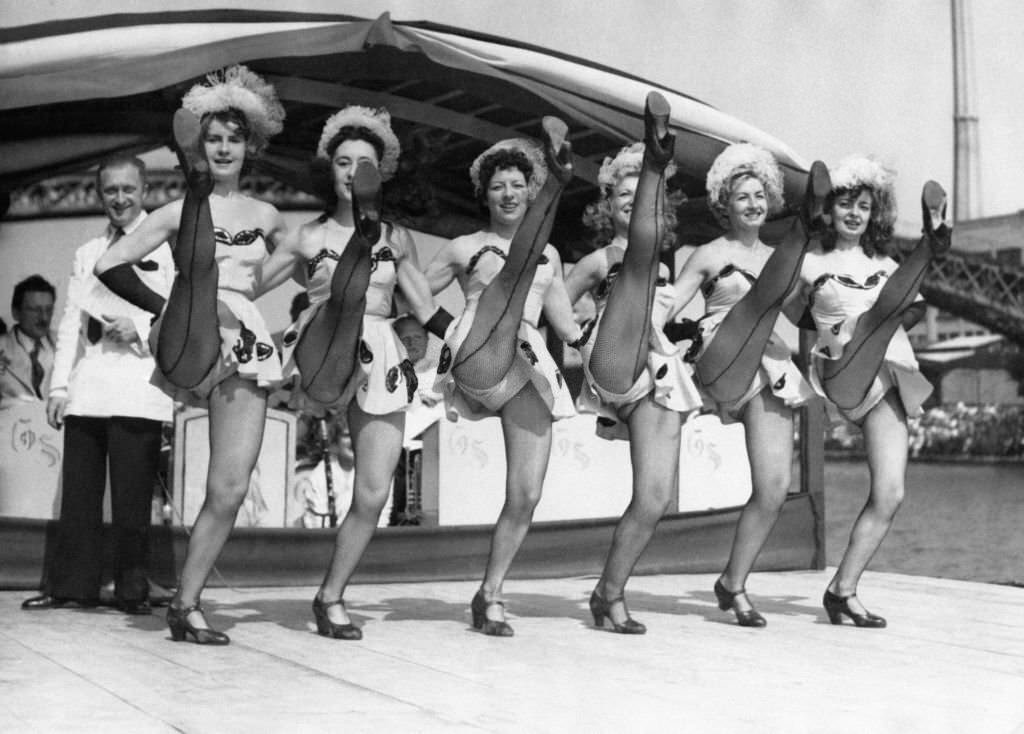
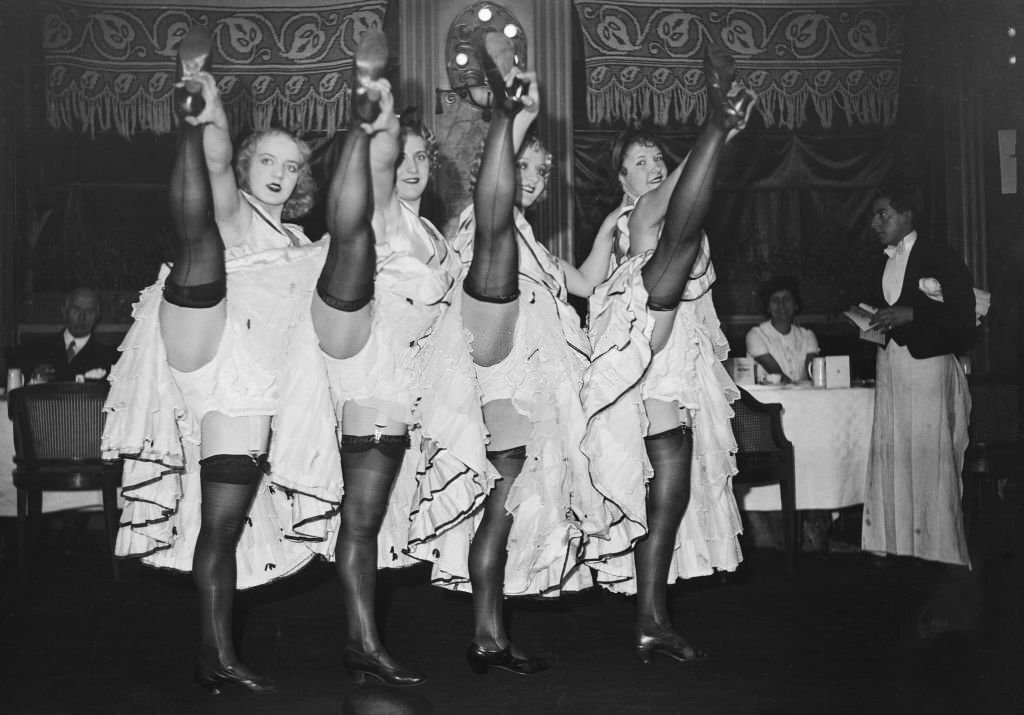
Four cancan dancers raise their legs high in garters and holding each other by the heel under the gaze of spectators and a waiter, 1900
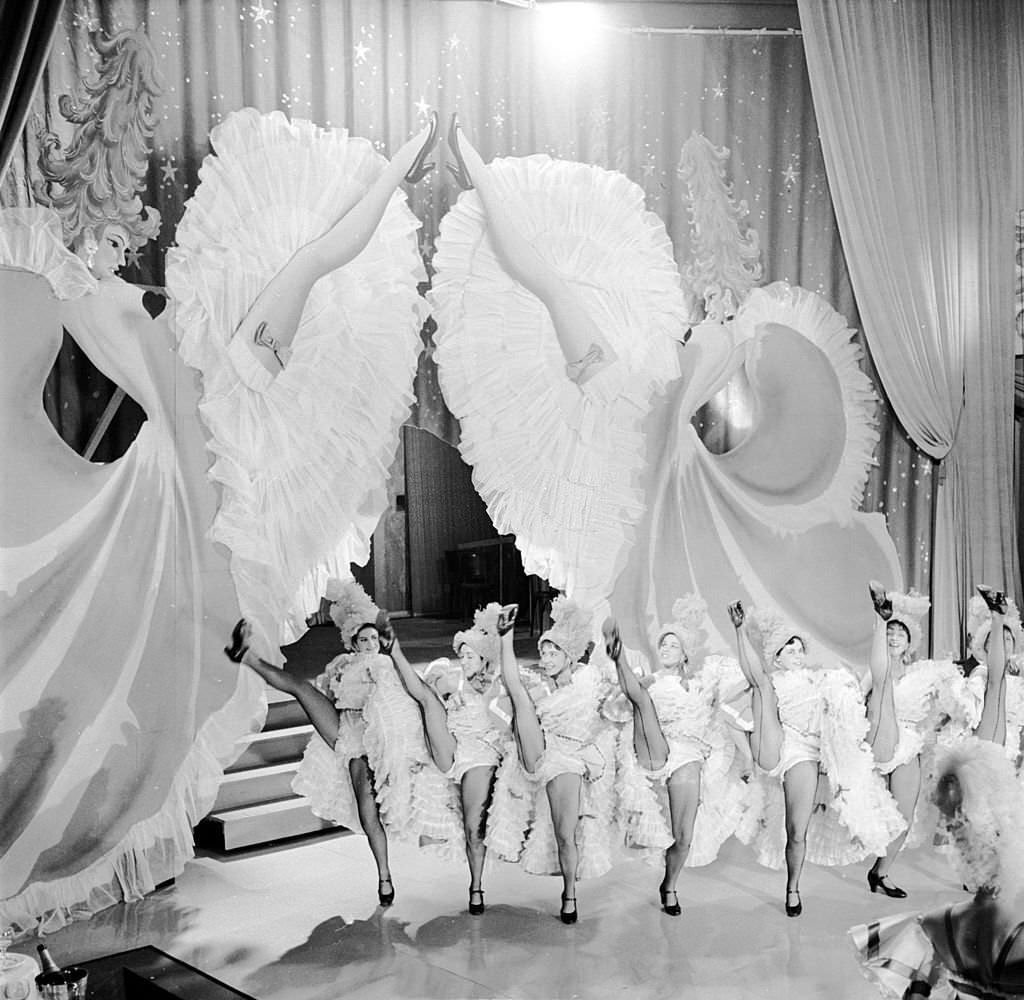
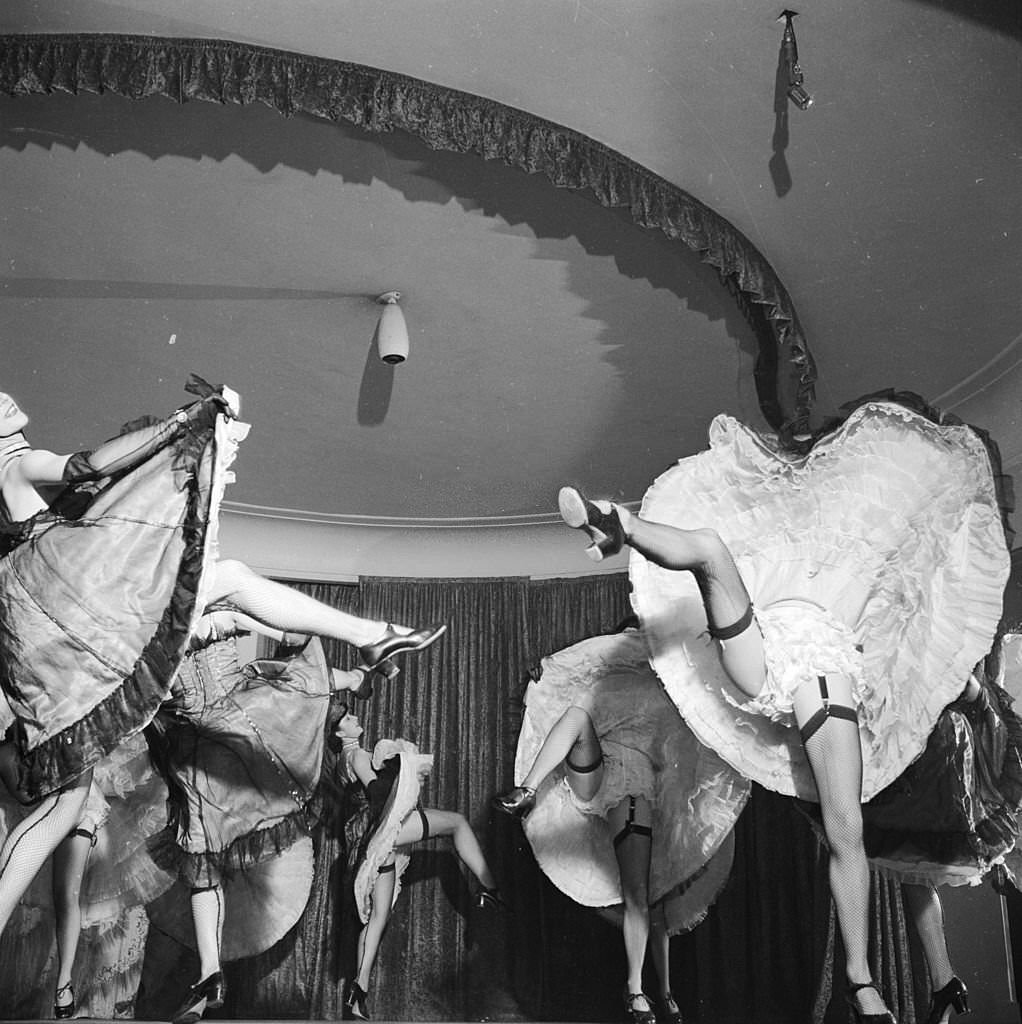
The physical demands of the cancan were serious. Performing the grand écart — a full split jump — required strength and flexibility that took years to develop. High kicks had to be sustained through long sets, and dancers performed multiple shows each week. The Folies Bergère and the Moulin Rouge both featured full chorus lines by the early 20th century, blending the individual showmanship of the Parisian dance hall tradition with the disciplined line formations borrowed from British and American music halls.
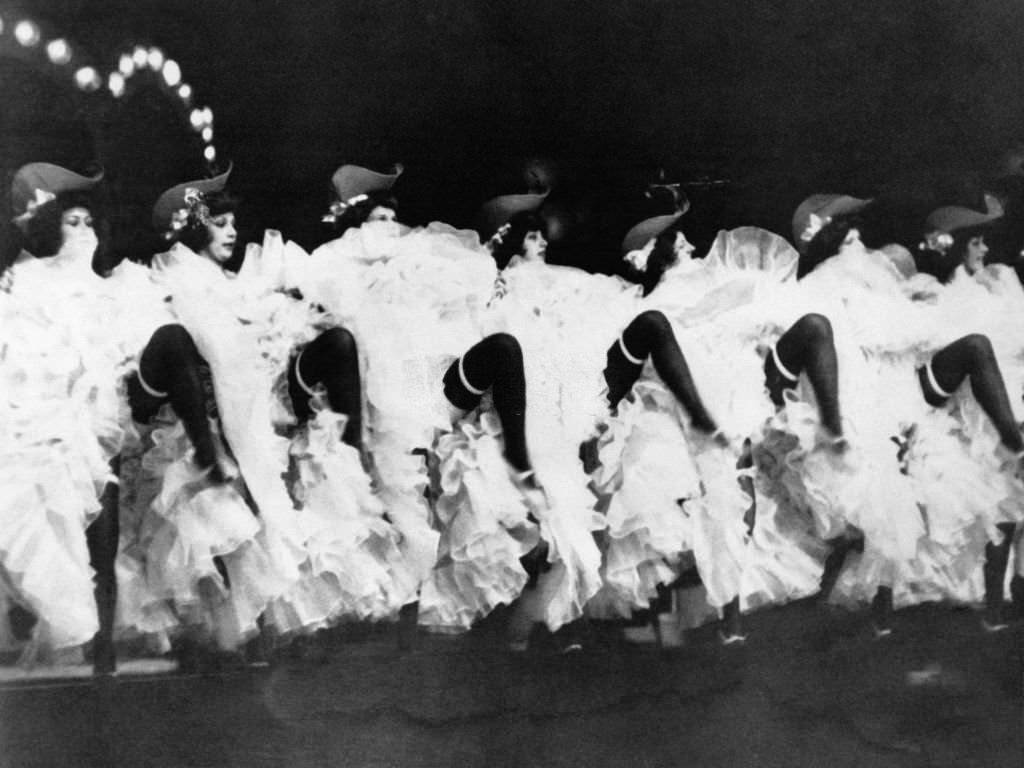
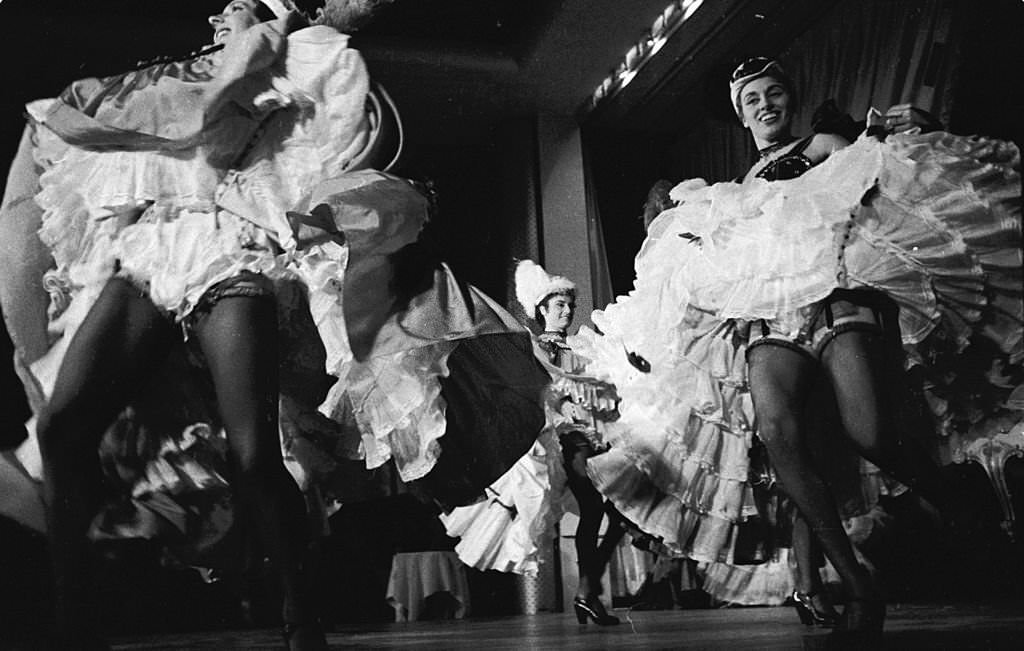
French cancan show in the Folies Bergères music hall in Paris, 1900
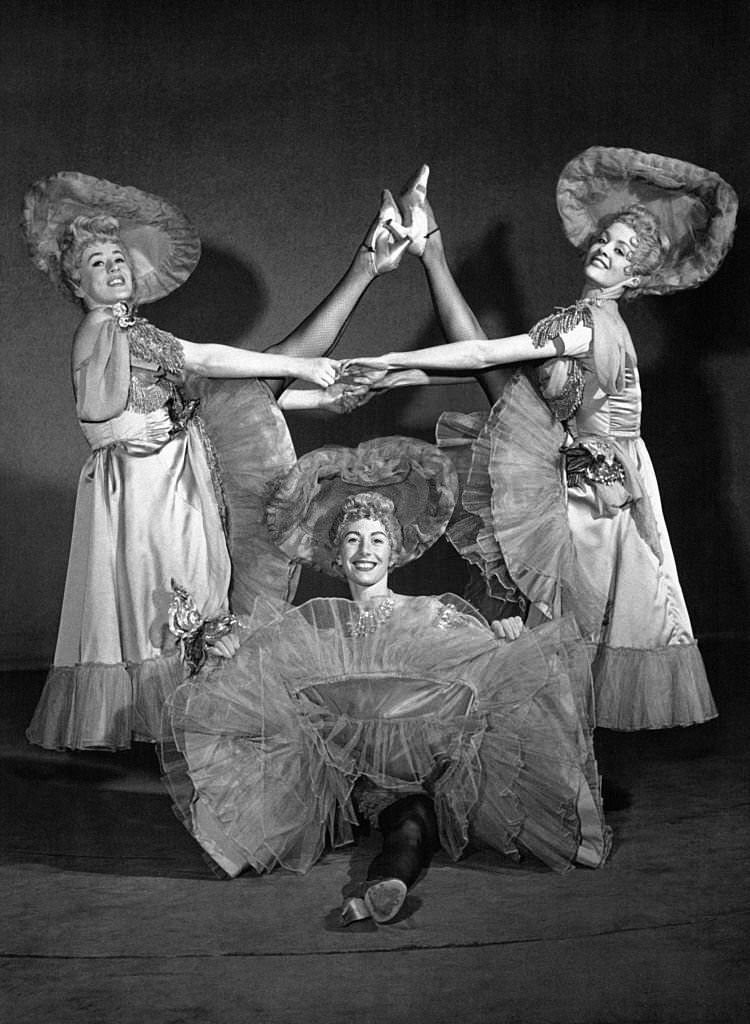
Clare Courtney, Valerie Dawling and Angela Bracenell in a quick French Cancan number, the highlight of the show, 1900
Can-can dancers during the performance of Emmerich Kalman’s operetta ‘Gräfin Mariza’ (Countess Mariza) in the Neues Schauspielhaus, Berlin, 1900
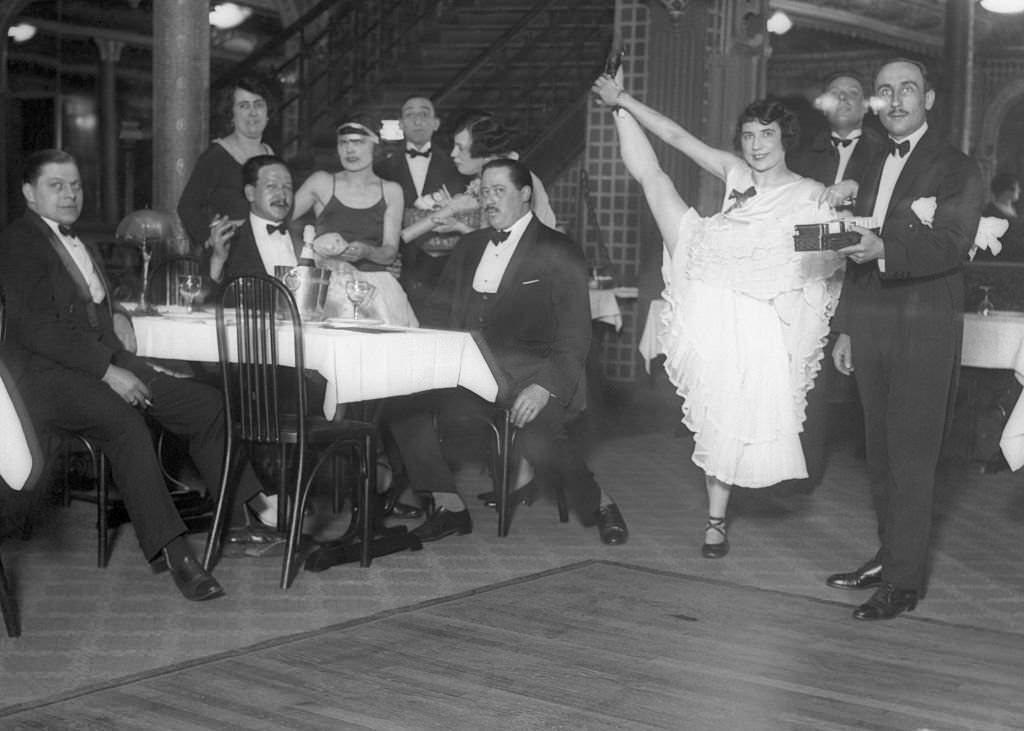
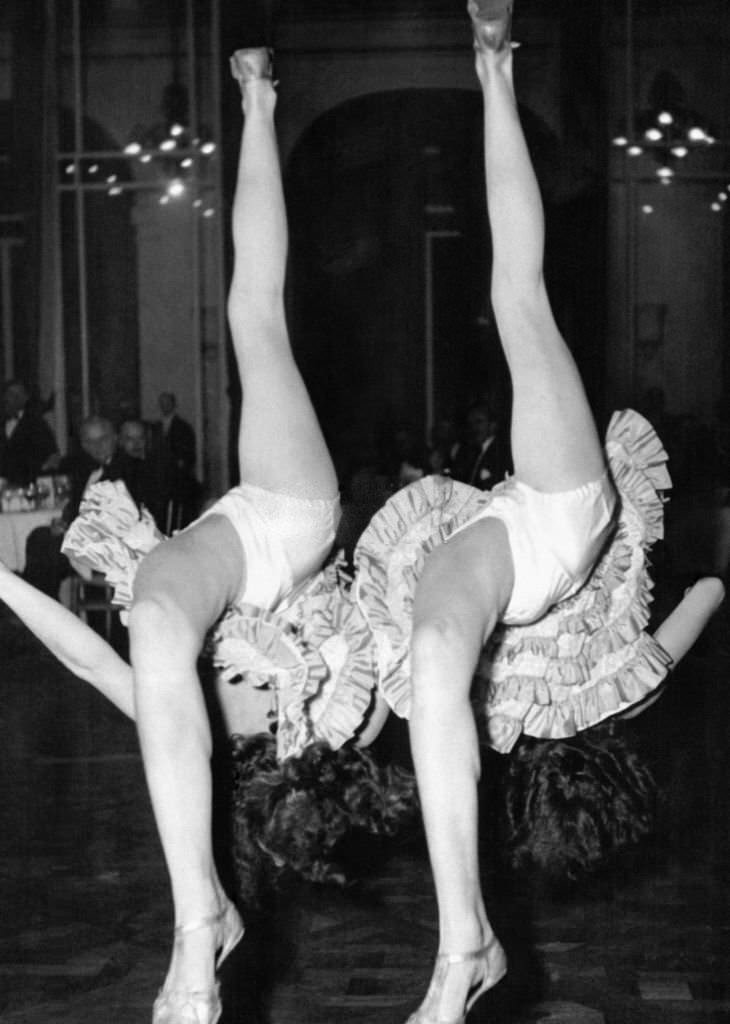
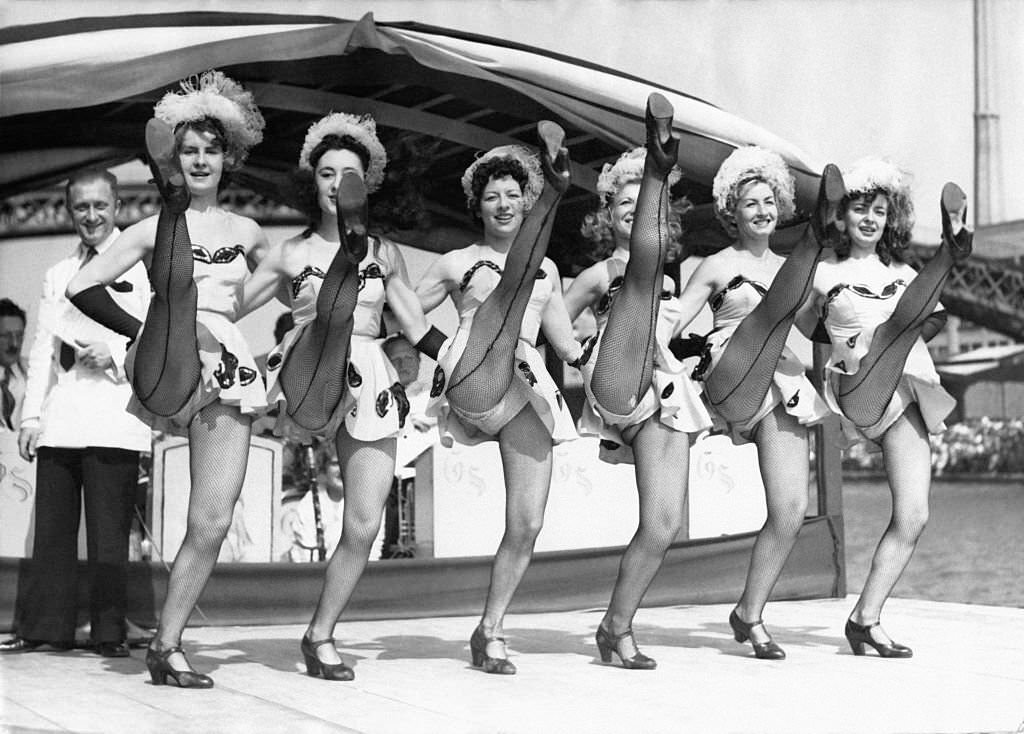
A troupe of French Can-can dancers on a barge in the Bassin de la Villette in Paris, France, 1907Two cancan dancers are the attraction of a dinner offered by the Anglo-American press at the Claridge Hotel, 1906Cancan dancers on stage at Radio Music City Hall in New York City, 1900
By the 1910s and 1920s, the cancan had spread well beyond Paris. It was being performed in Berlin variety theaters, London cabarets, and New York stages. The dance that had once been suppressed was now a standard feature of entertainment programs across the Western world.
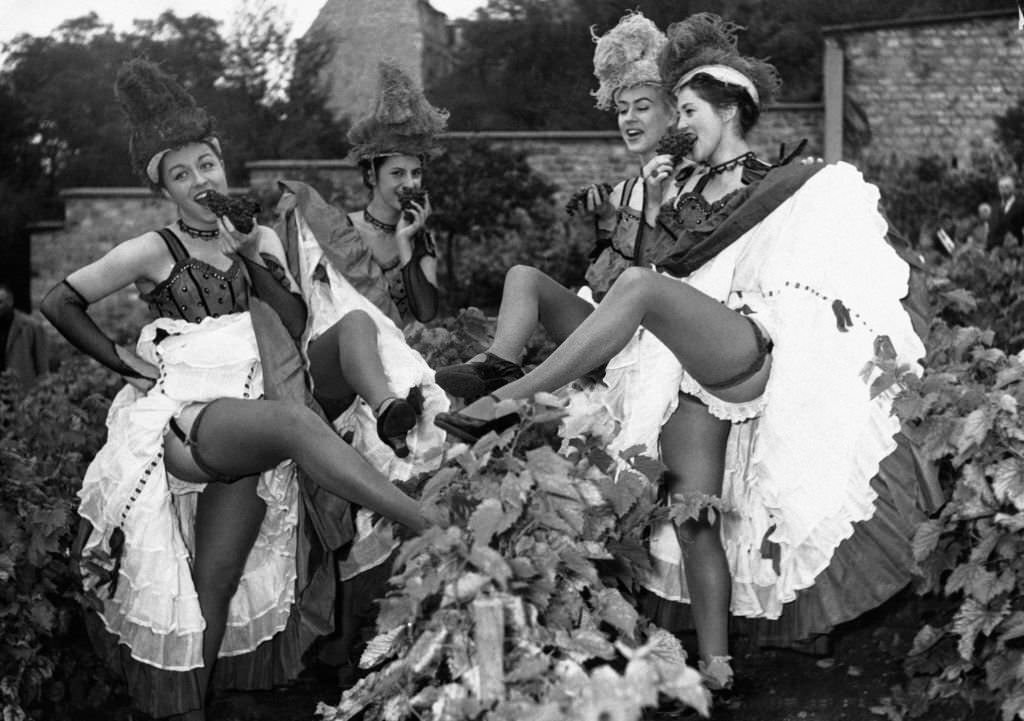
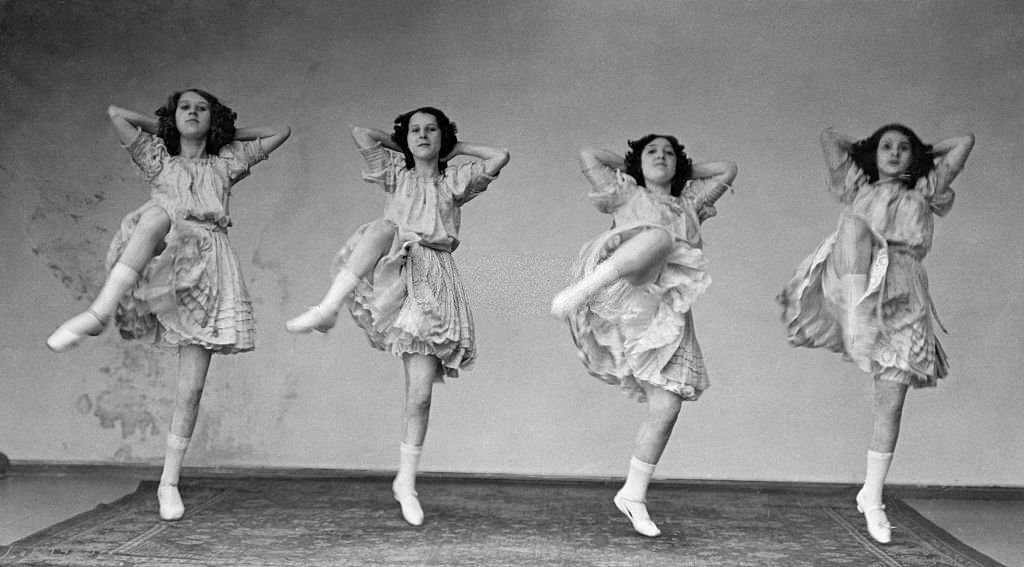
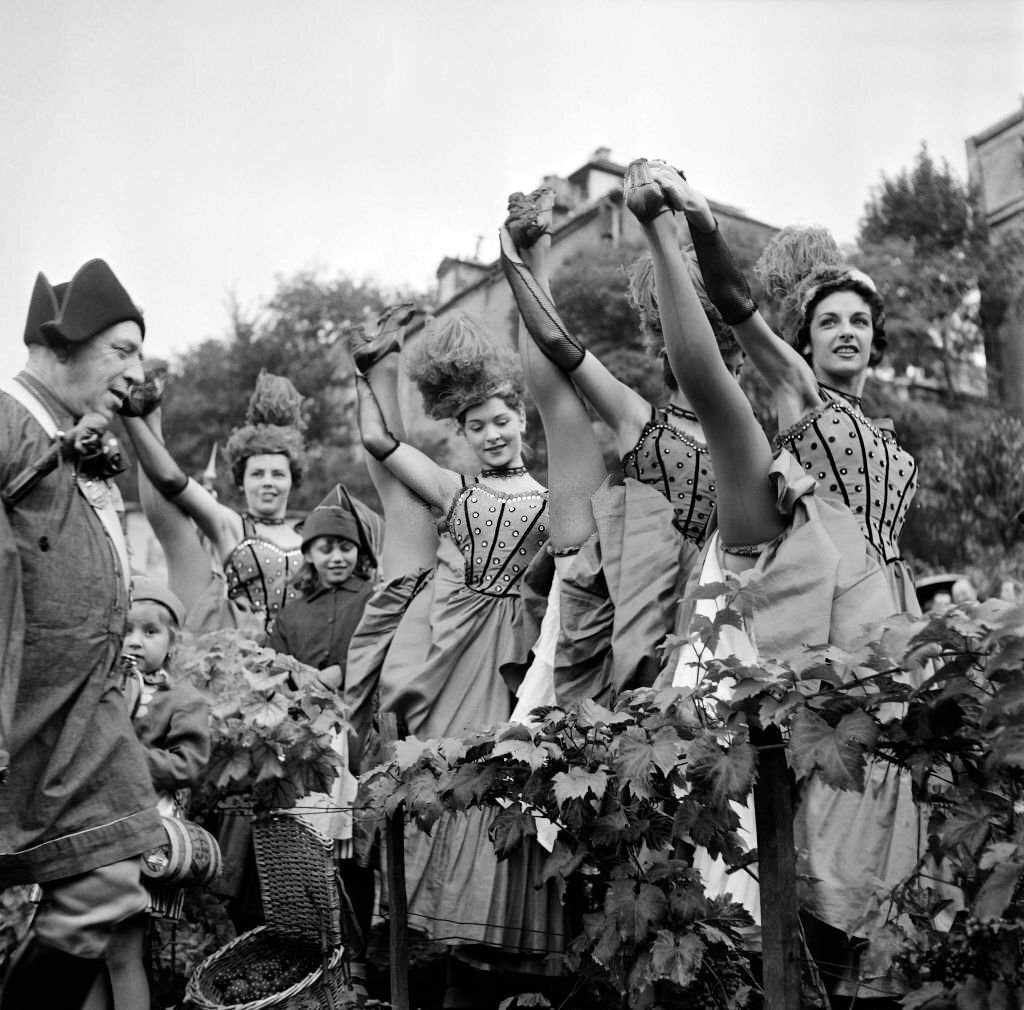
Moulin Rouge French cancan dancers, 1910sThe Girls of the French cancan taste bunches of grapes for the harvest festival in Montmartre in Paris, 1910sThe Dancing English Teenager’ on stage, four girls at a can-can number, date unknown, probably around 1910
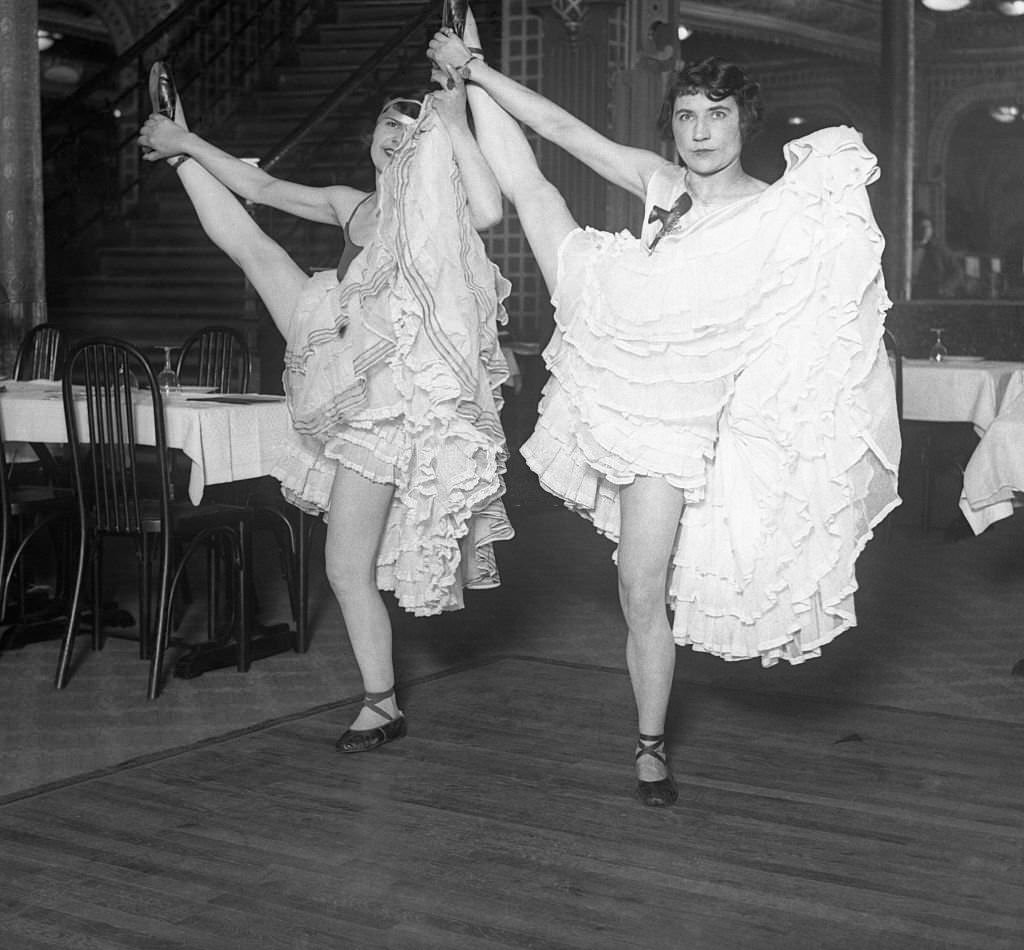
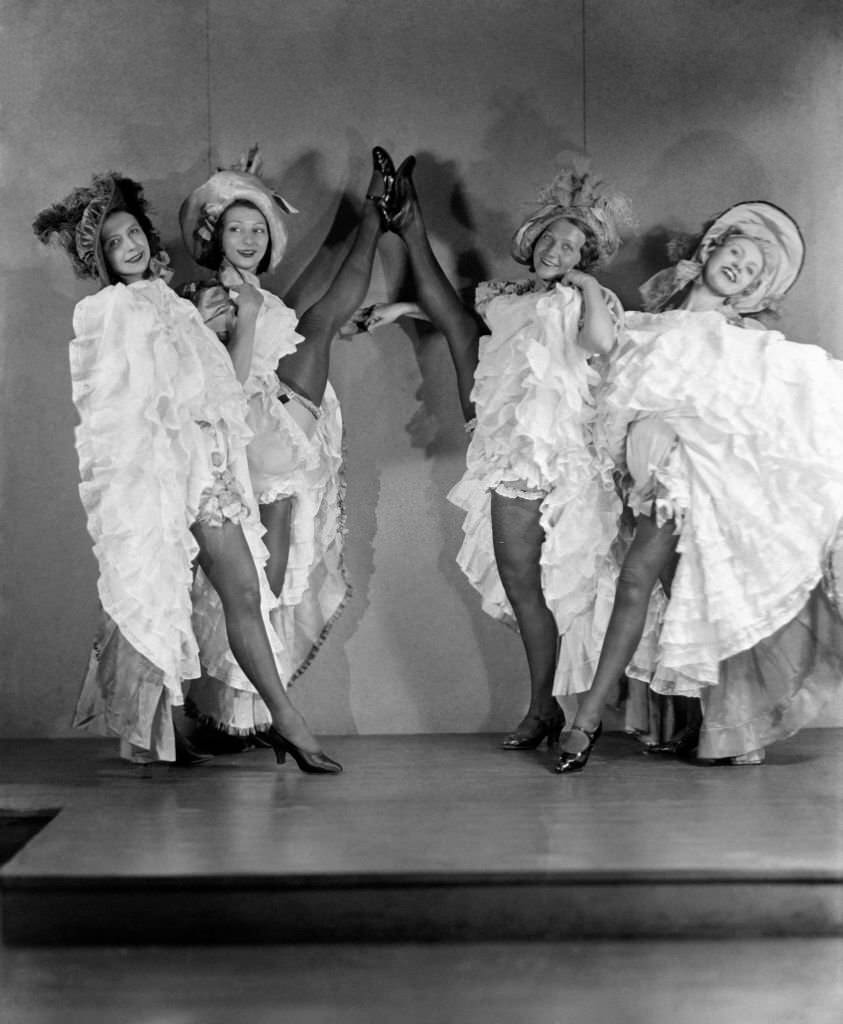
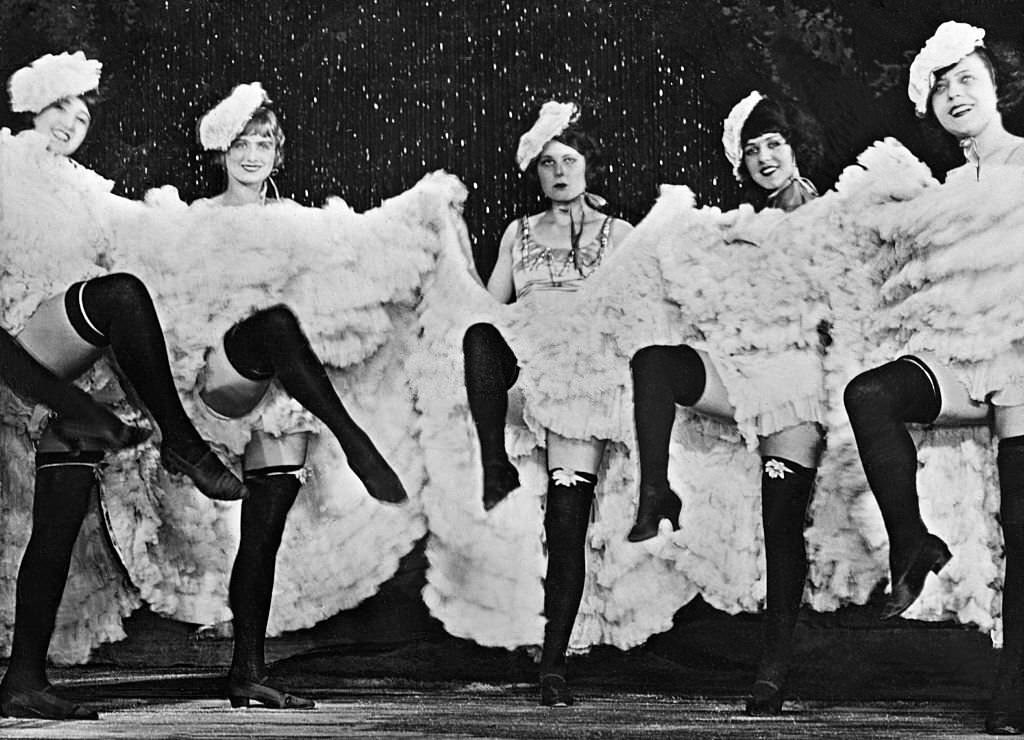
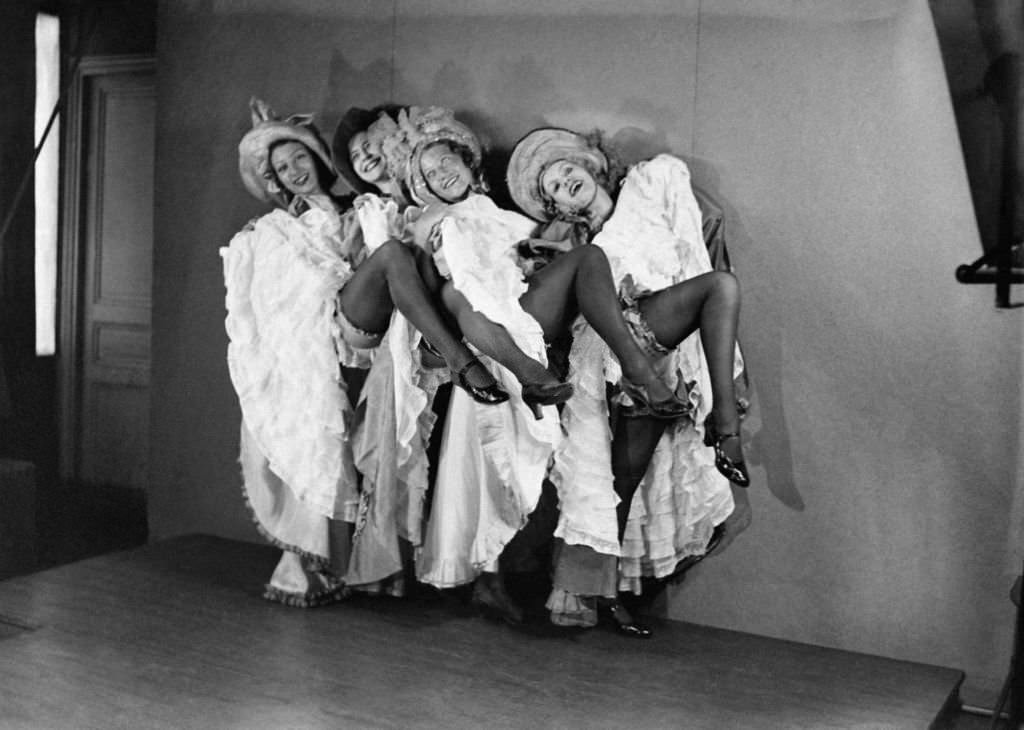
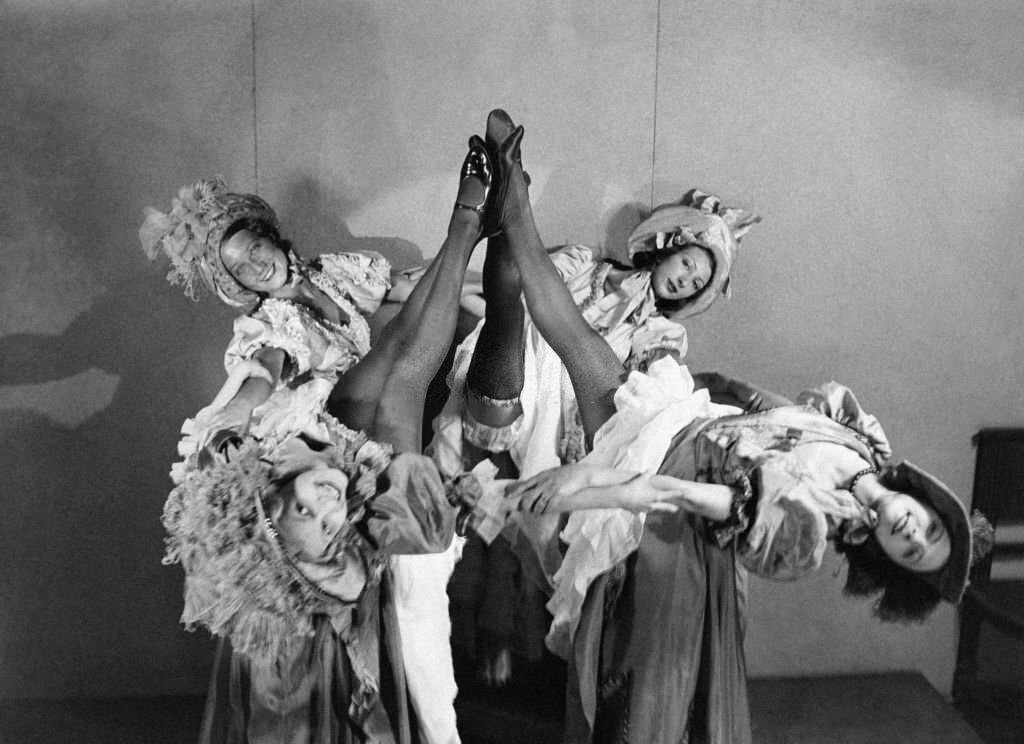
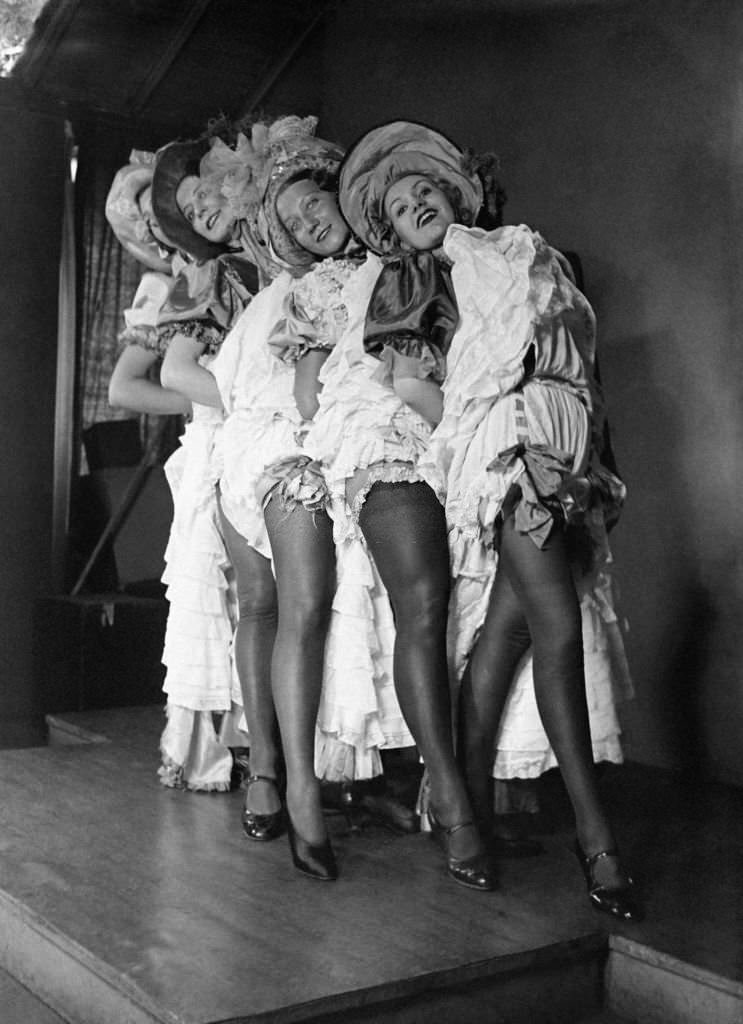
French cancan dancers, 1920
French cancan dancers, 1920
The choreographer Pierre Sandrini played a key role in shaping the modern cancan. In the 1920s, he formalized the French Cancan at the Moulin Rouge, and in 1928, he brought his signature style to his own venue, the Bal Tabarin. His version merged the free-form individual flair of the original Parisian hall style with the tight, synchronized chorus-line format that music hall audiences in Britain and America had come to expect. The result was a polished but still explosive spectacle.
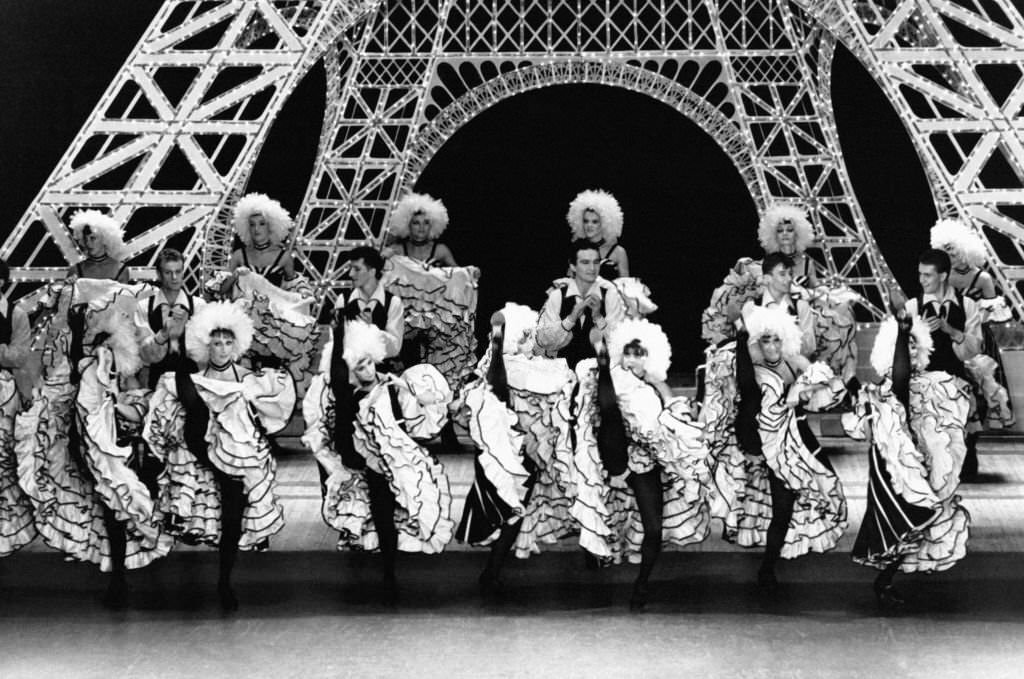
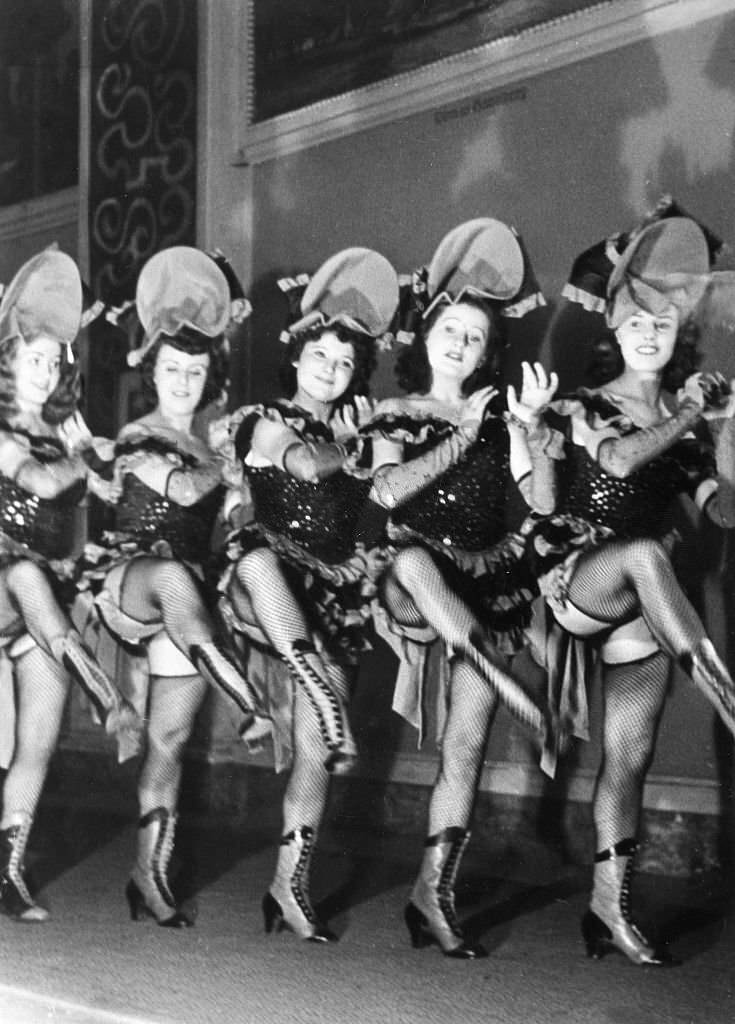
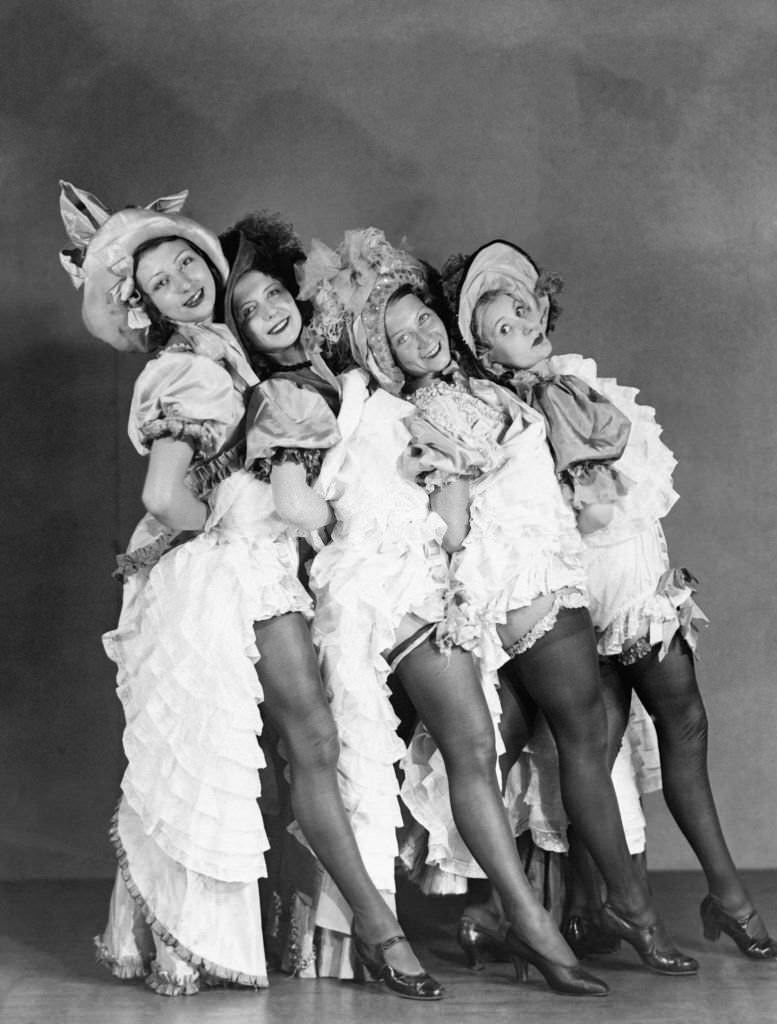
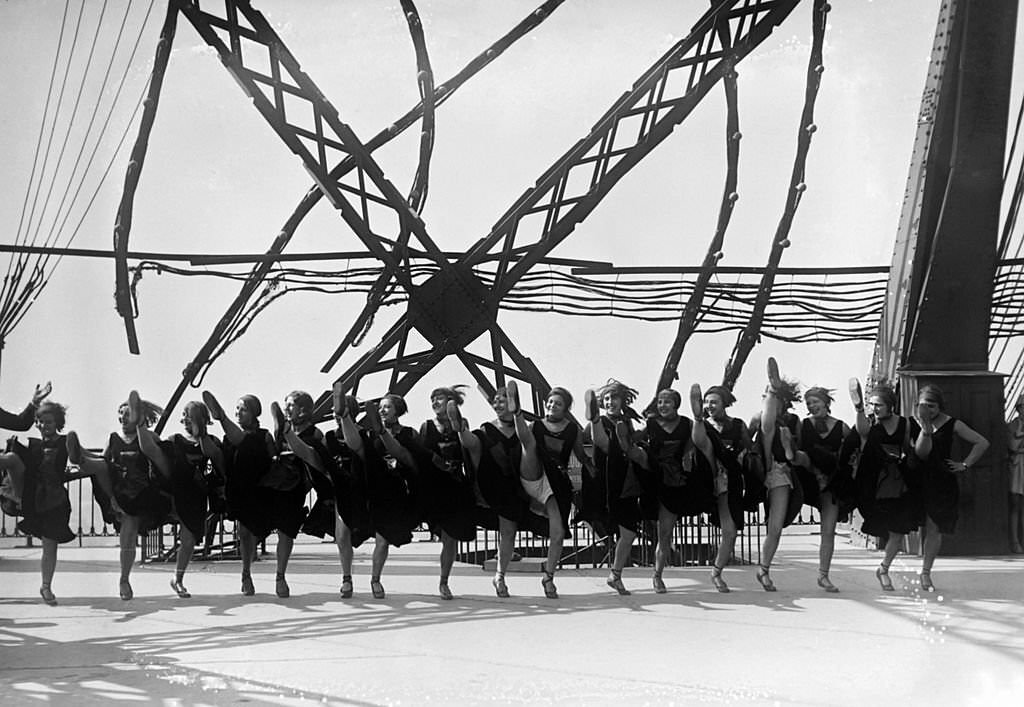
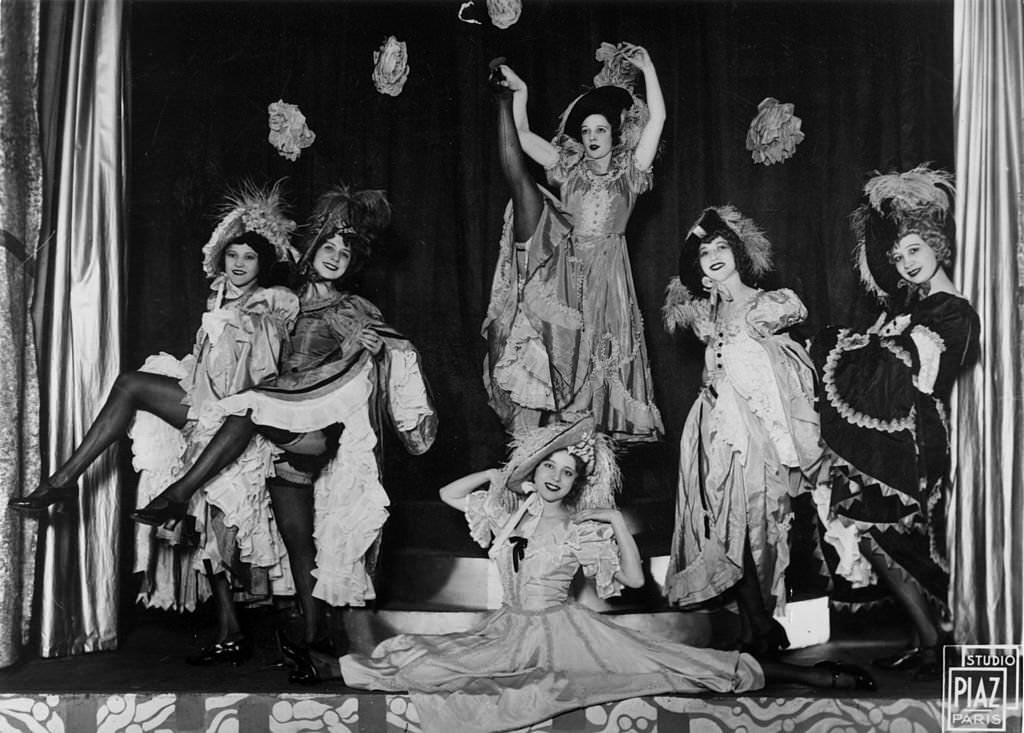
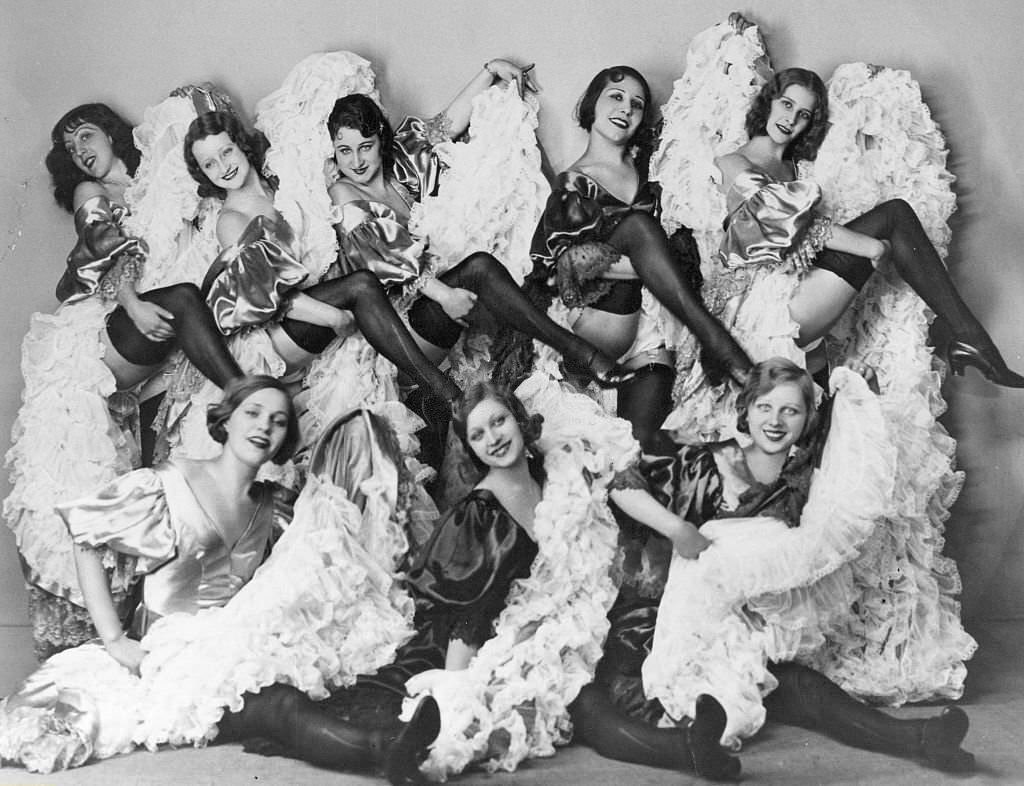
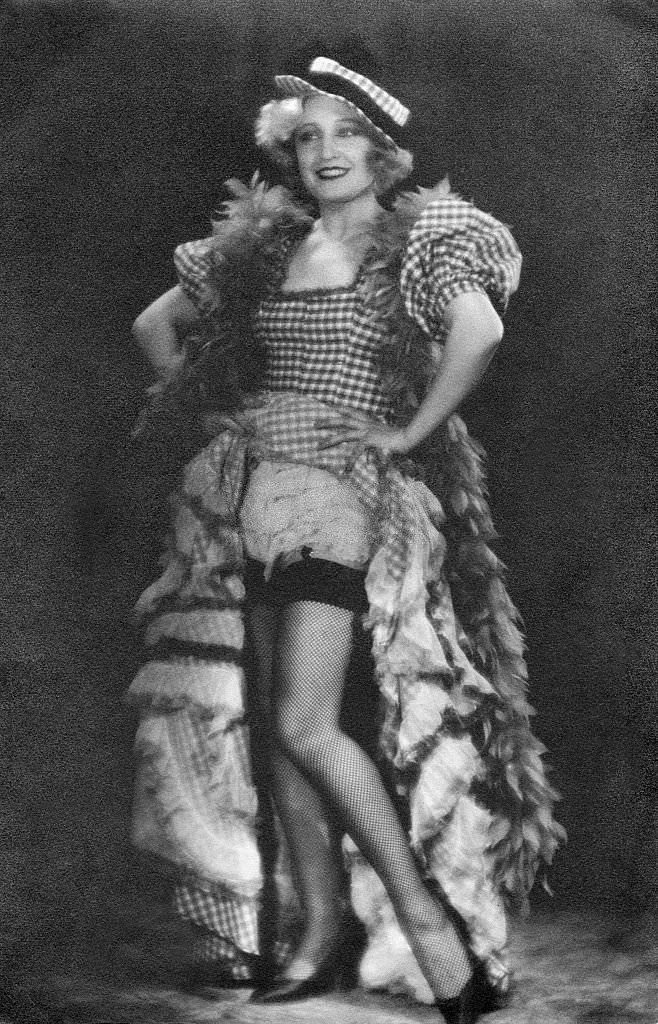
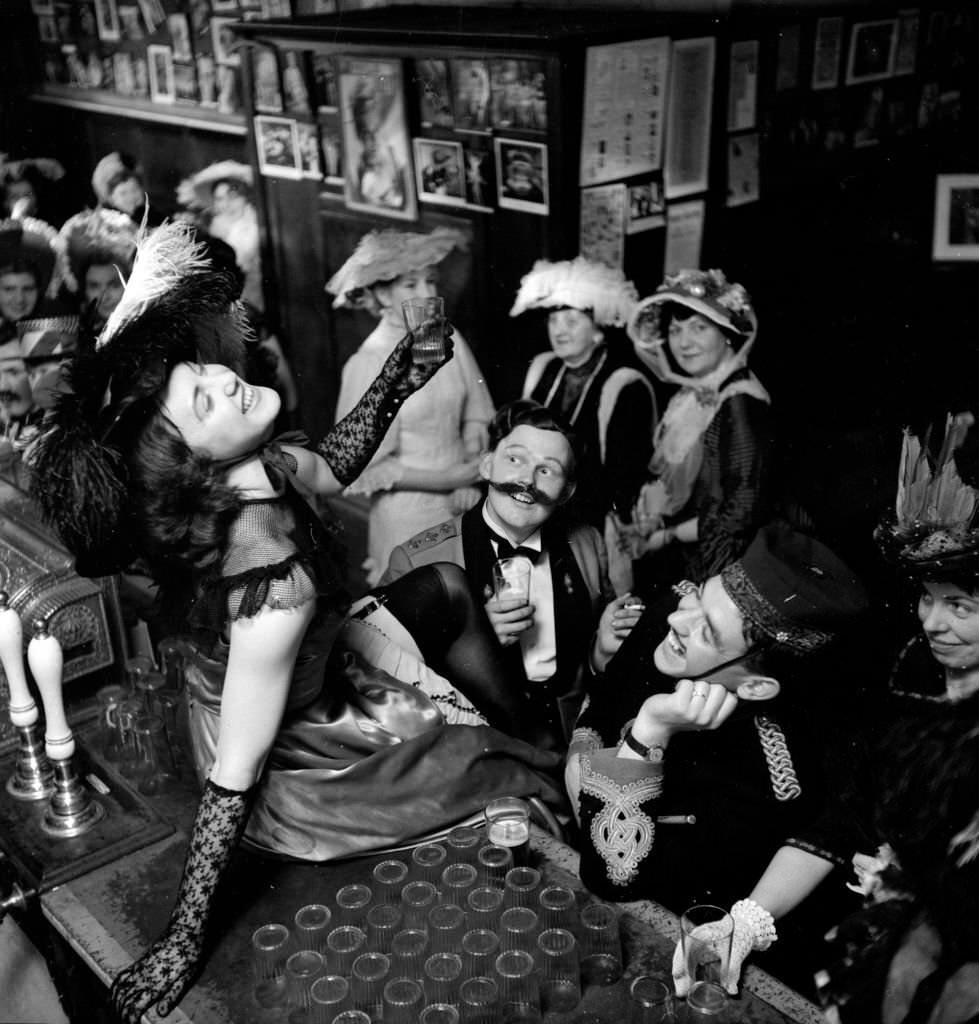
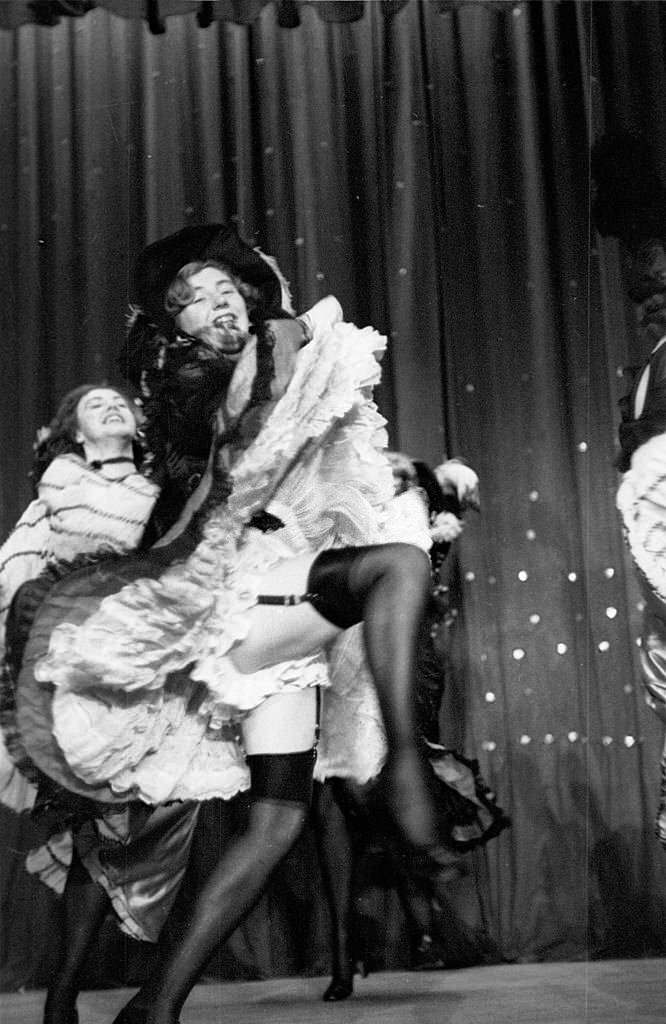
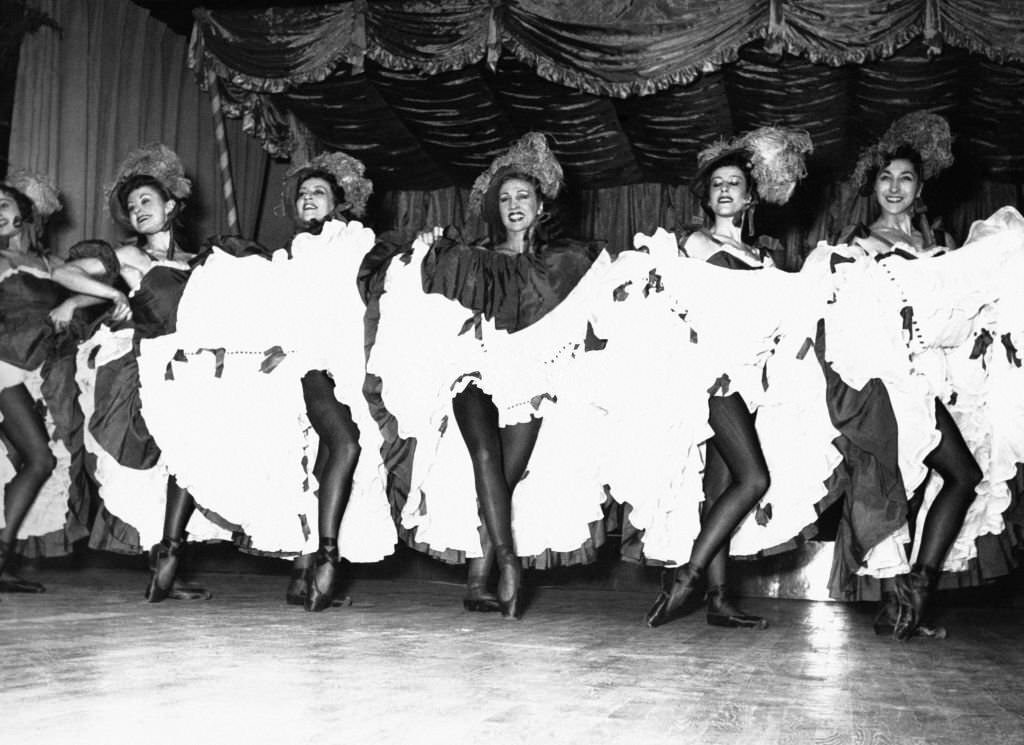
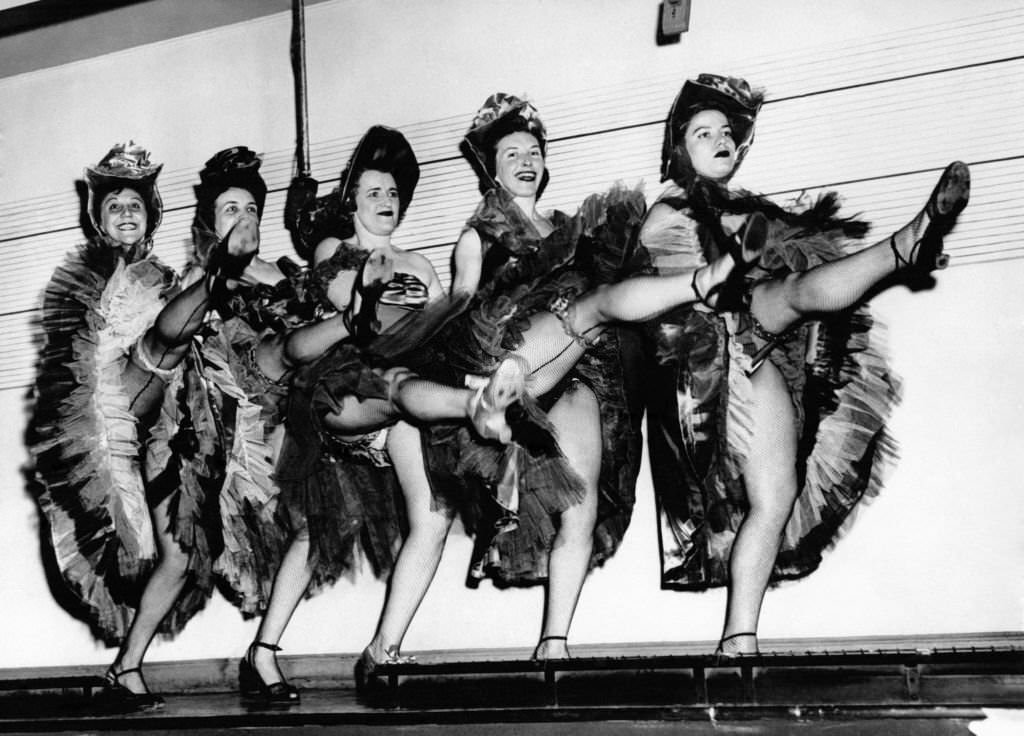
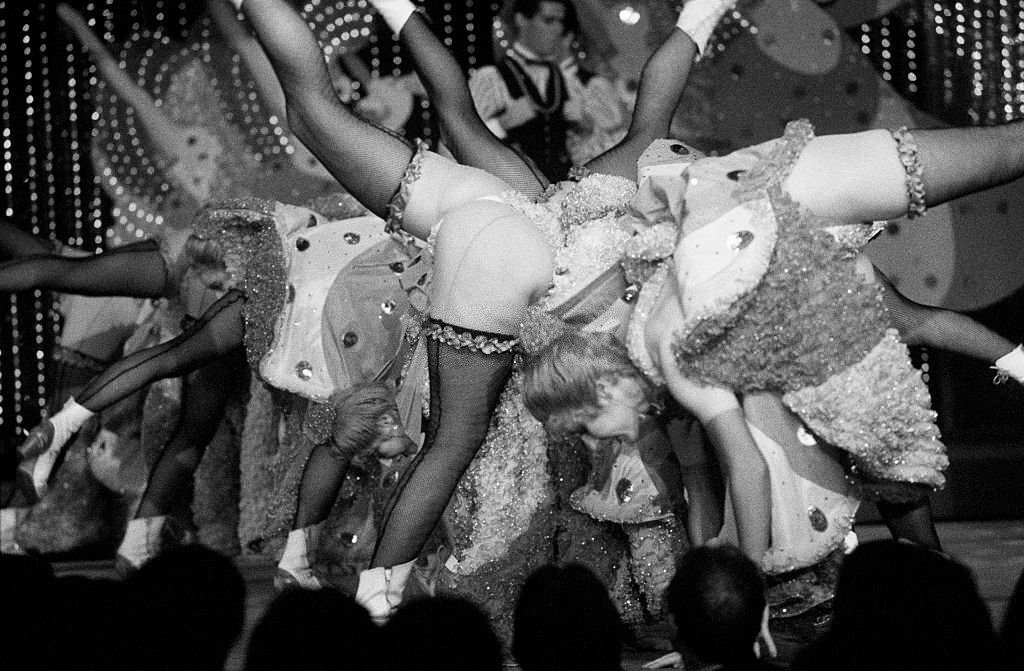
Dance & dancers Revue girls dancing the cancan at the Wintergarten Variety Theater, Berlin, 1928.Dancers of famous cabaret ‘Moulin Rouge’ at the Eiffel Tower in September 1929 in Paris, France.A can-can dancer in repose at the Bal Tabarin, a cabaret night club in Paris, 1915.Cancan cabaret at the Piccadilly Hotel, London, 1930A group of showgirls dance the cancan in a line.Dancers of the Dayelma Ballet dancing Cancan (April program), 1931Revue girls The dancer Gerty Reichenall in a can-can costume with black stockings, Berlin, 1932French cancan dancers in a cabaret, in Paris, 1933French cancan dancers in a cabaret, in Paris, 1933French cancan dancers in a cabaret, in Paris, 1933
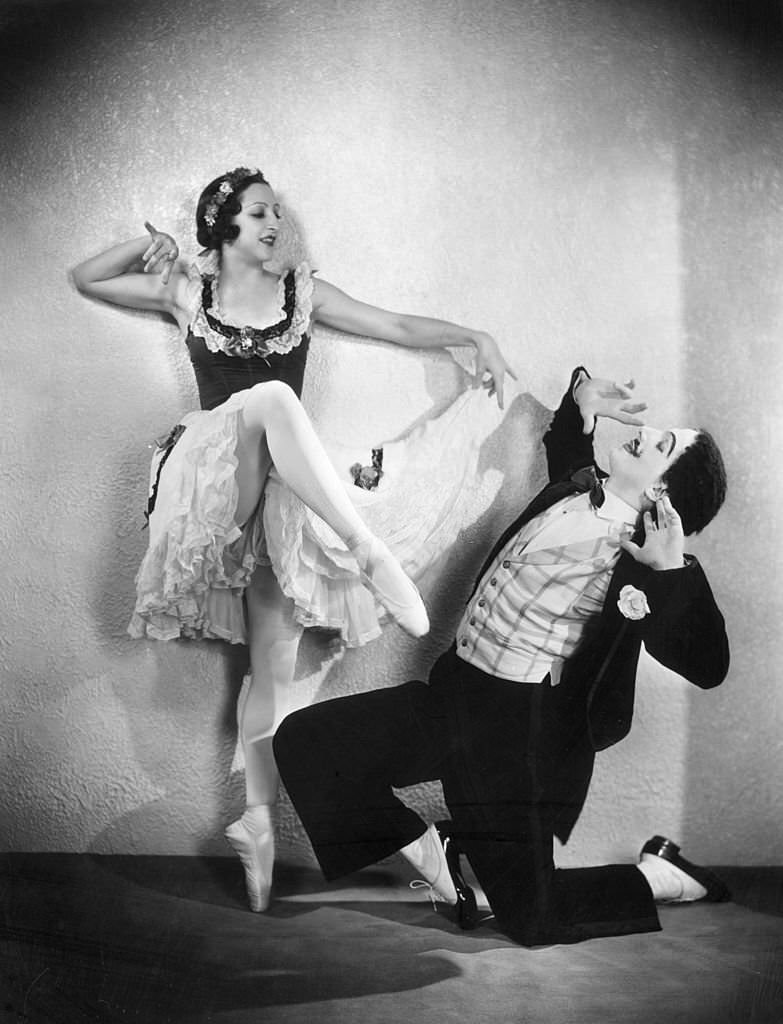
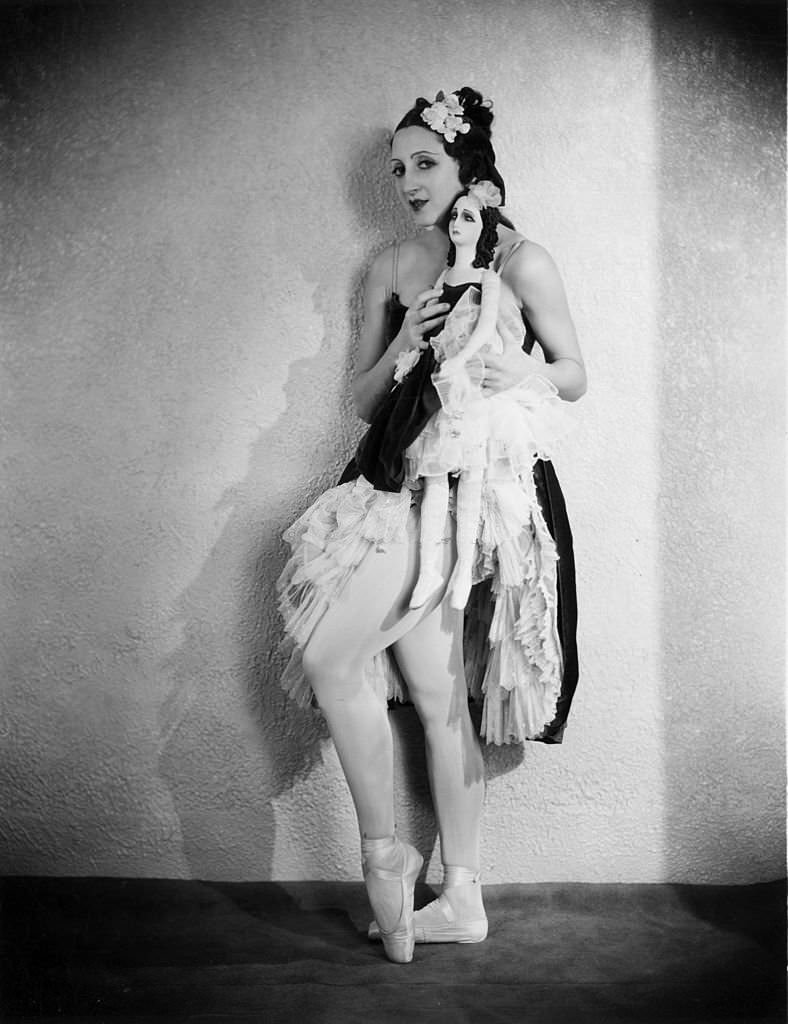
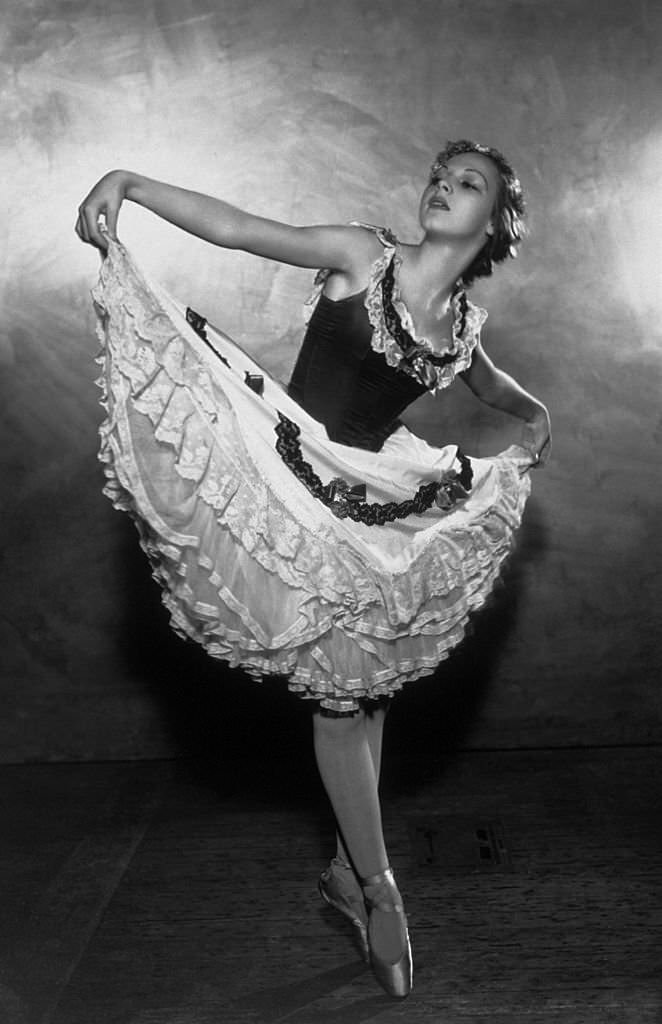
The cancan also found its way into classical ballet. The choreographer Léonide Massine incorporated a cancan-style dancer doll into his 1919 ballet La Boutique Fantasque, performed at Covent Garden in London. Alexandra Danilova, one of the most acclaimed ballerinas of the era and a member of the Ballet Russe de Monte Carlo, took on the role in subsequent productions through the 1920s and 1930s.
Alexandra Danilova and Leonide Massine, as the cancan dancer dolls in Massine’s ballet of 1919
Ballerina Alexandra Danilova of the Ballet Russe de Monte Carlo, as then can-can dancer appearing in ‘La Boutique Fantasque’ at Covent Garden, London, 1920s
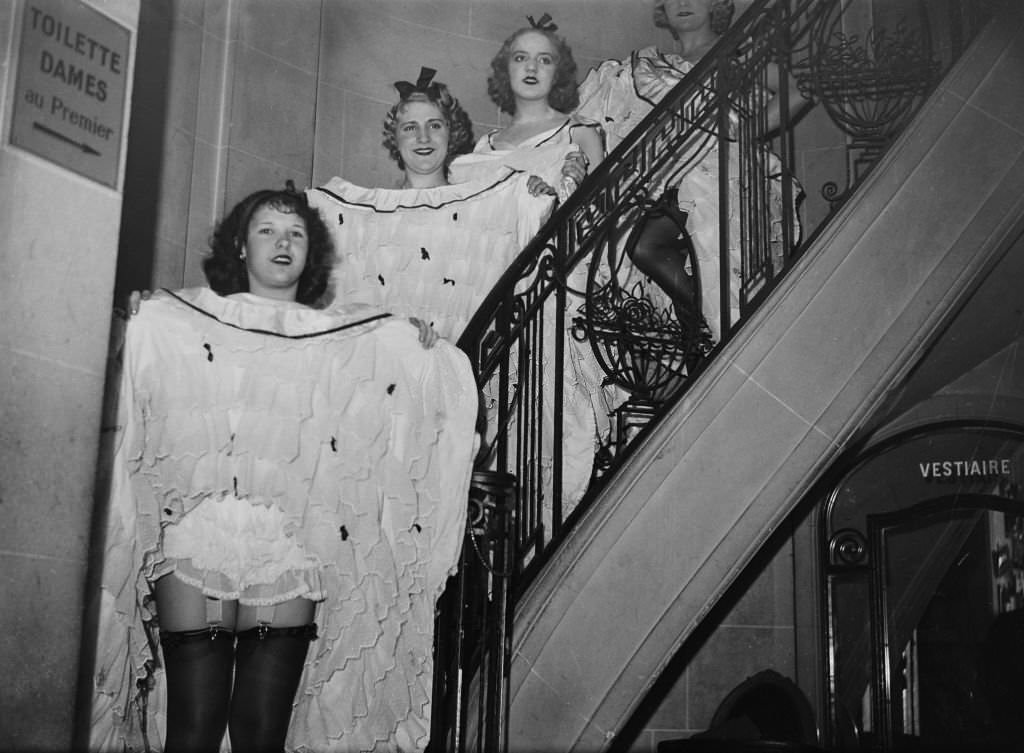
A Russian ballet dancer, as the can-can dancer in Leonid Massine’s ballet ‘La Boutique Fantasque’, at Covent Garden, London, 1934French cancan dancers at Henry’s restaurant in Paris, 1935French cancan dancers at Henry’s restaurant in Paris, 1935
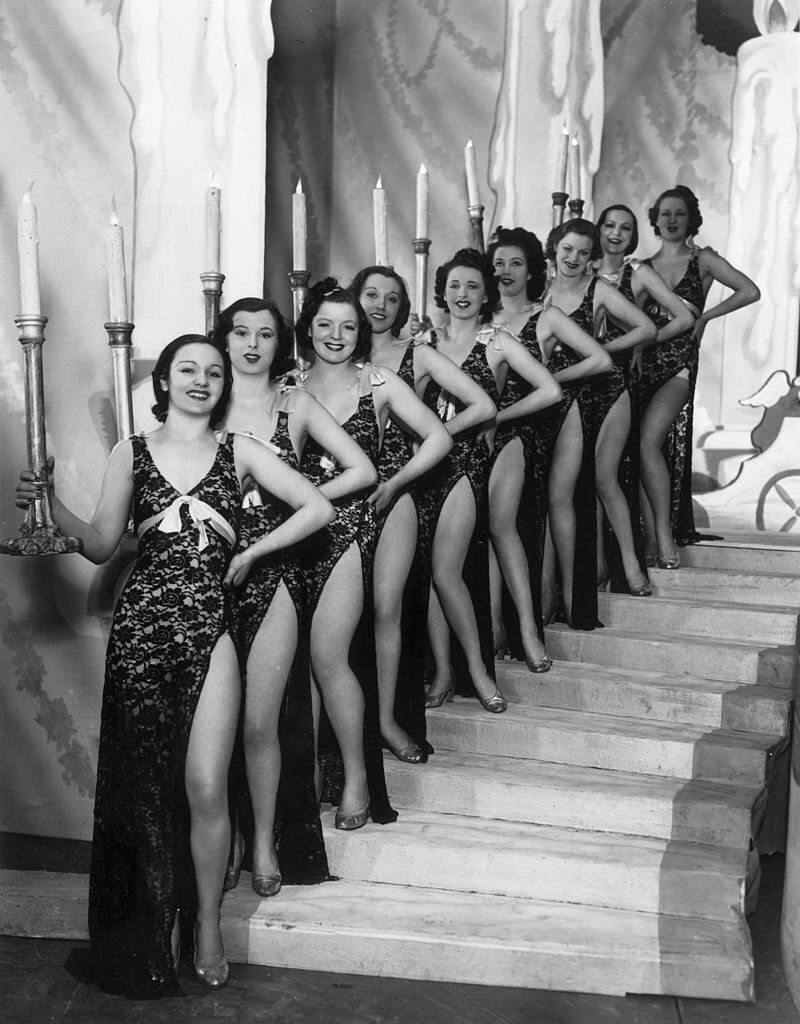
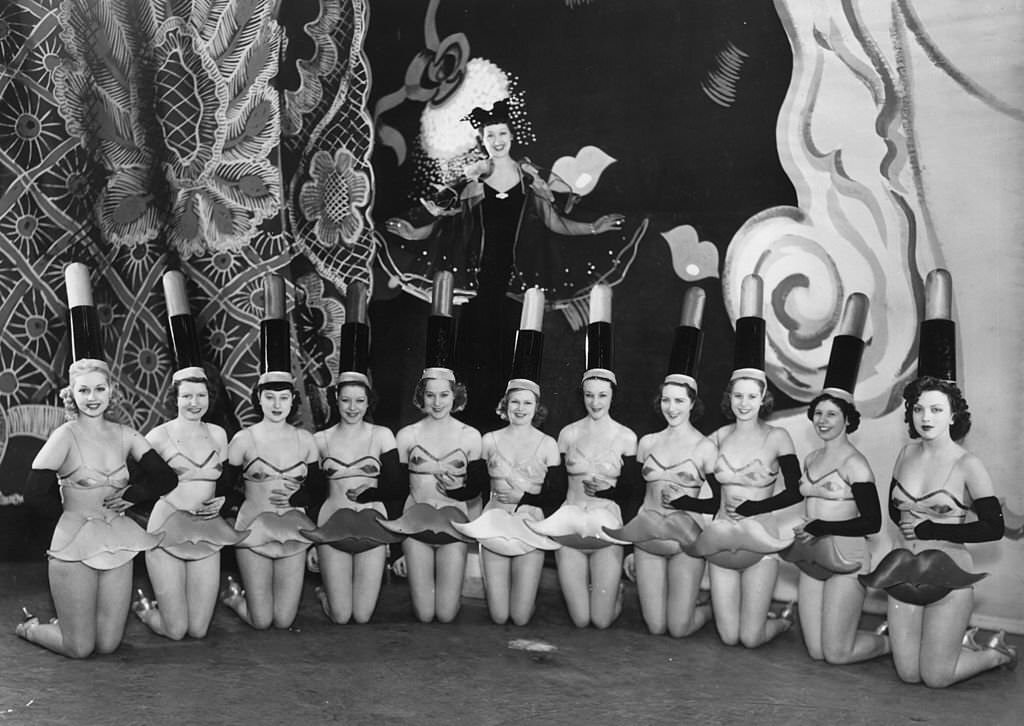
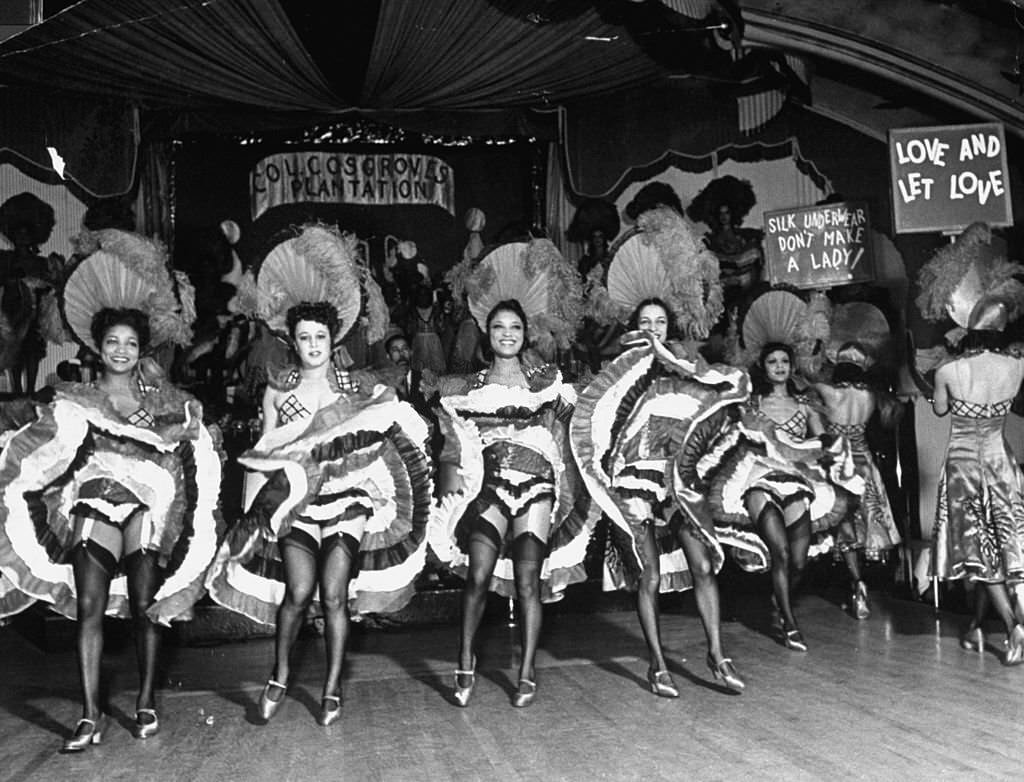
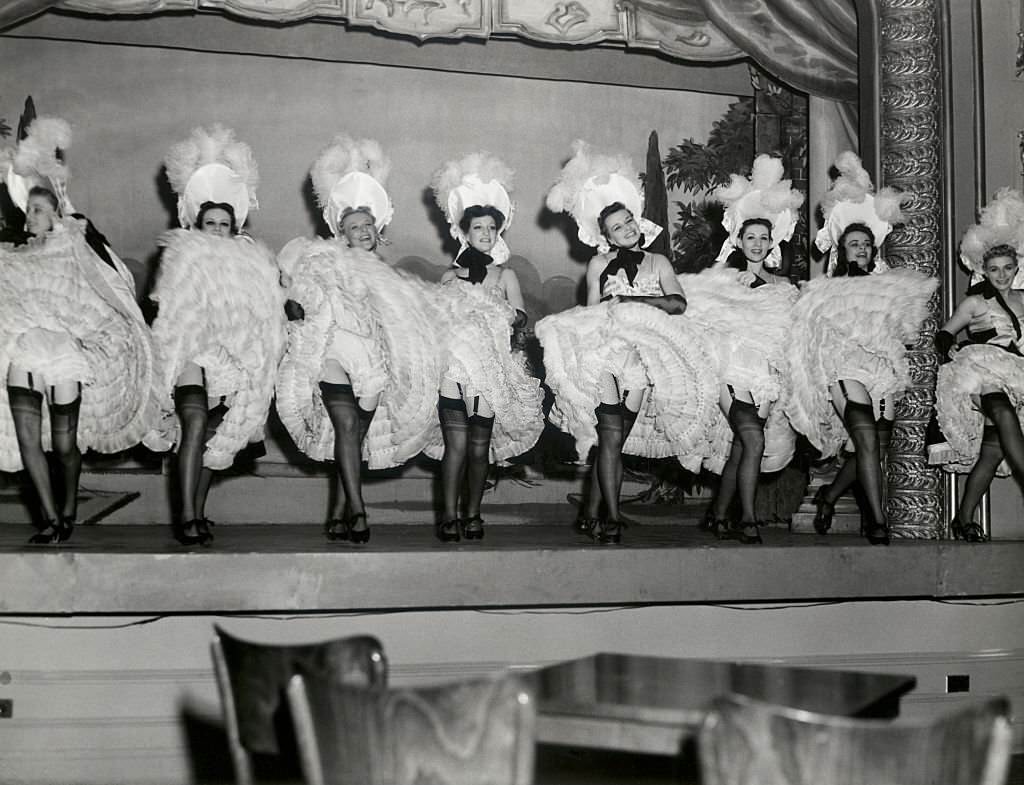
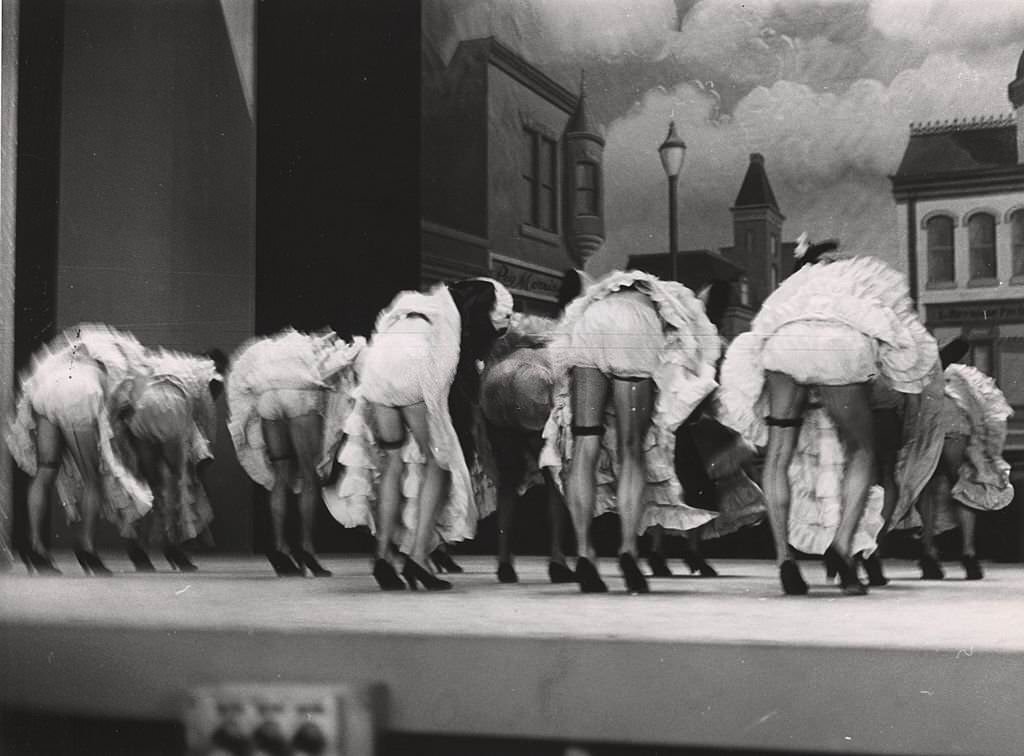
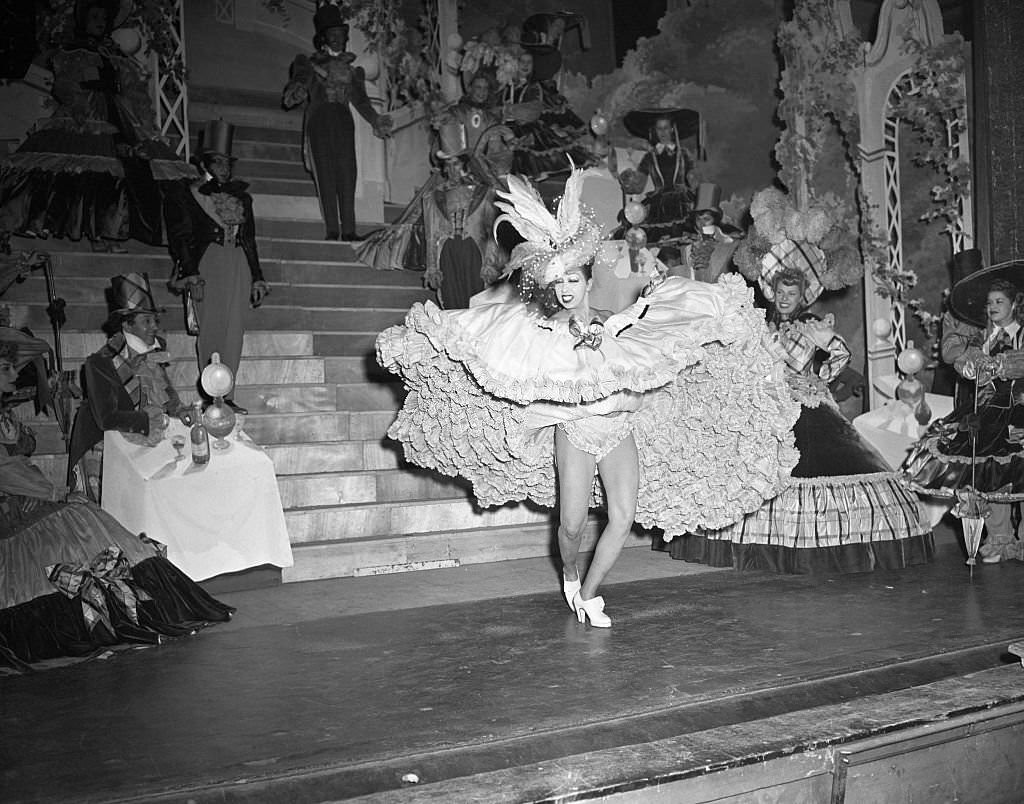
By the late 1930s, the cancan had become a fixture of theater productions across Europe and America. London’s Prince of Wales Theatre hosted the Folies de Can-Can, a full production built entirely around the dance. Chorus lines appeared in Broadway shows, Cotton Club revues, and cabarets from New York to Berlin.
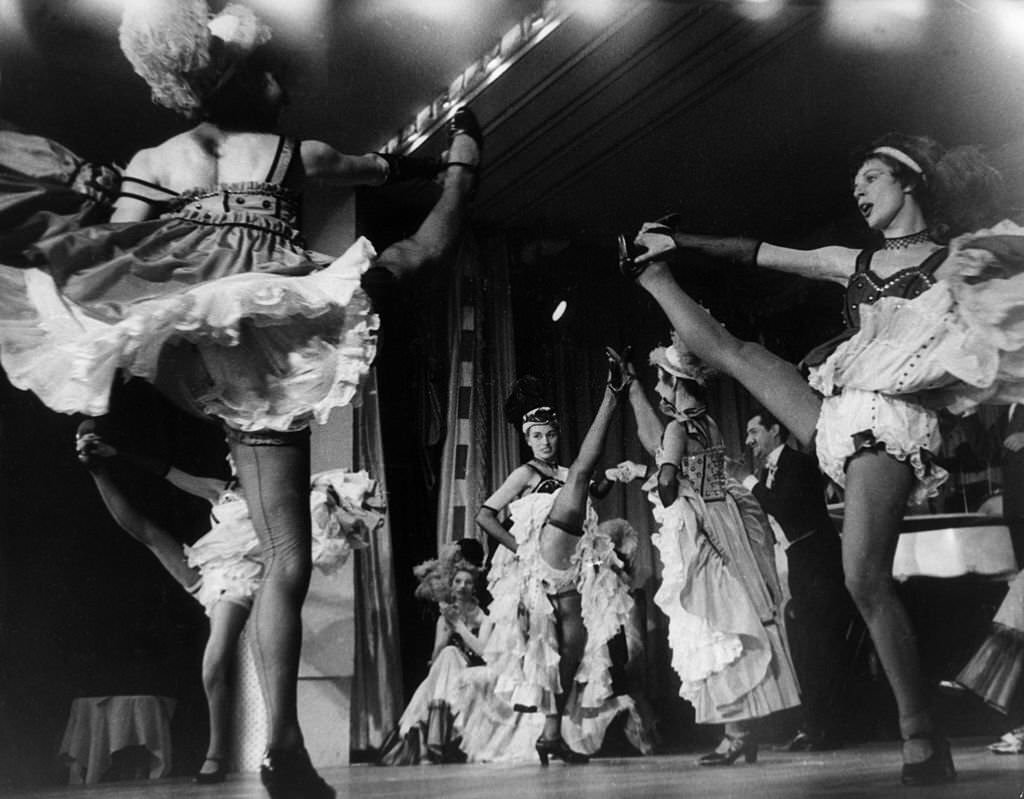
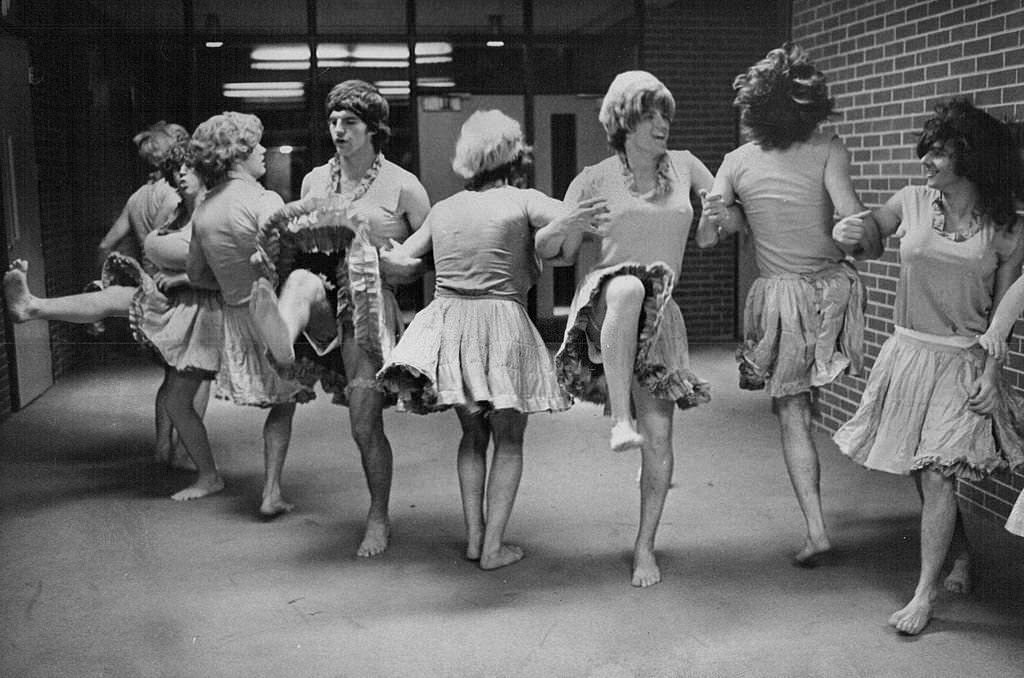
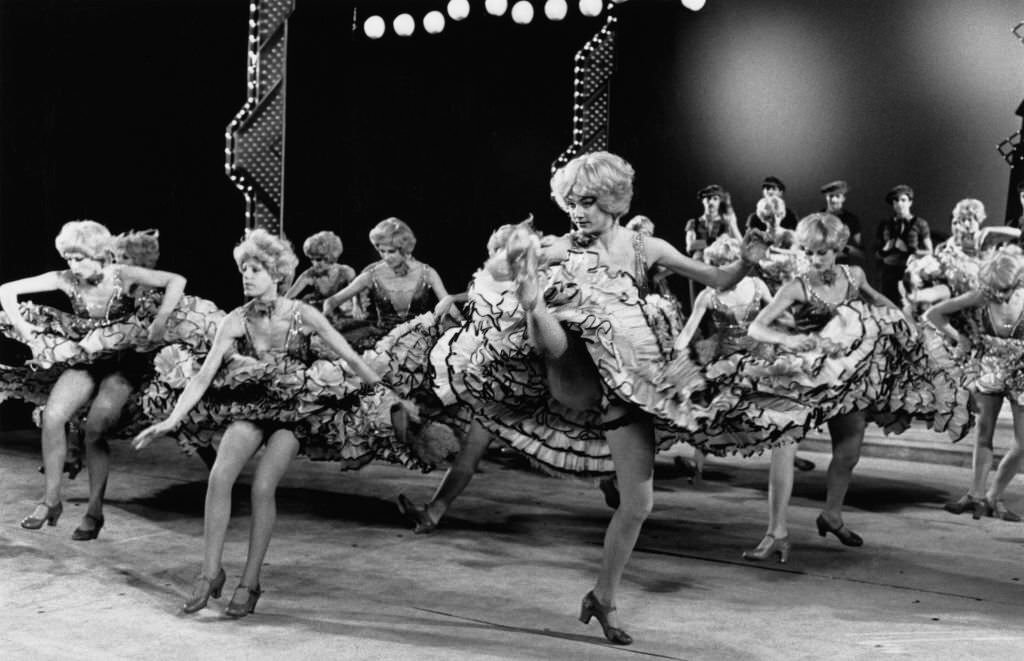
Holding candles in large candlesticks chorus girls from the ‘Folies de Can-Can’ pose on a staircase, 1938Chorus line from the ‘Folies de Can-Can’ at the Prince of Wales theatre, London, 1938A chorus line dancing the cancan at the Cotton Club.George Jessel Show at the Knickerbocker Inn, during the New York Fair.Men dressed as women dancing on stage, with their backs to the audience, New York, 1940s.
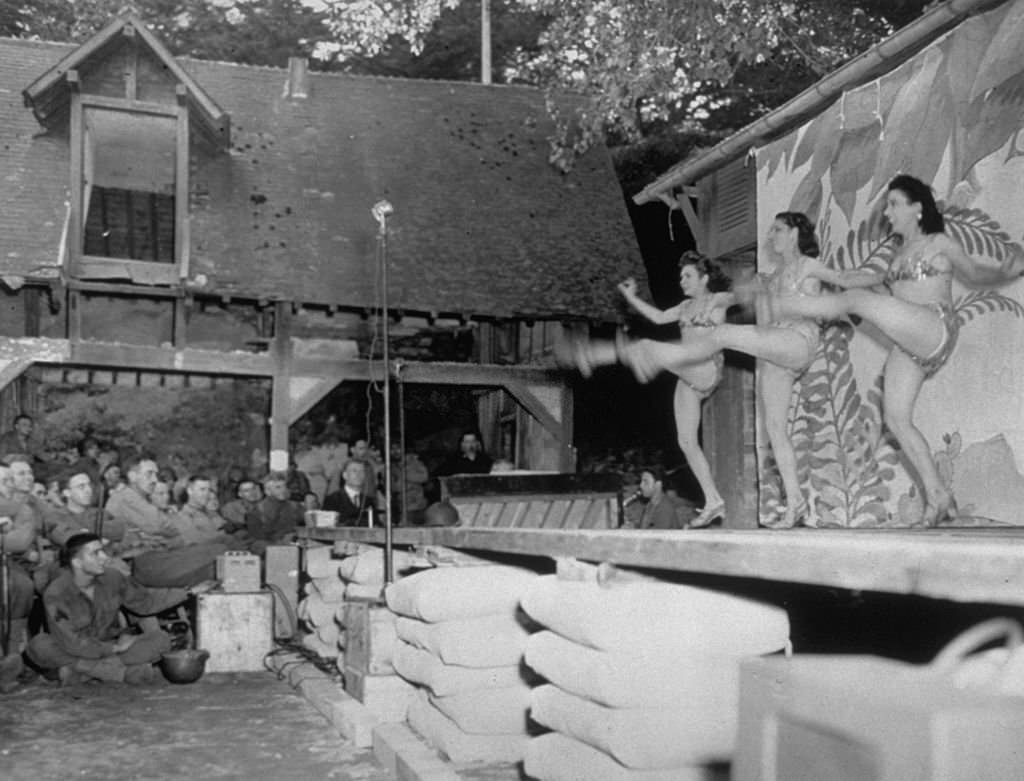
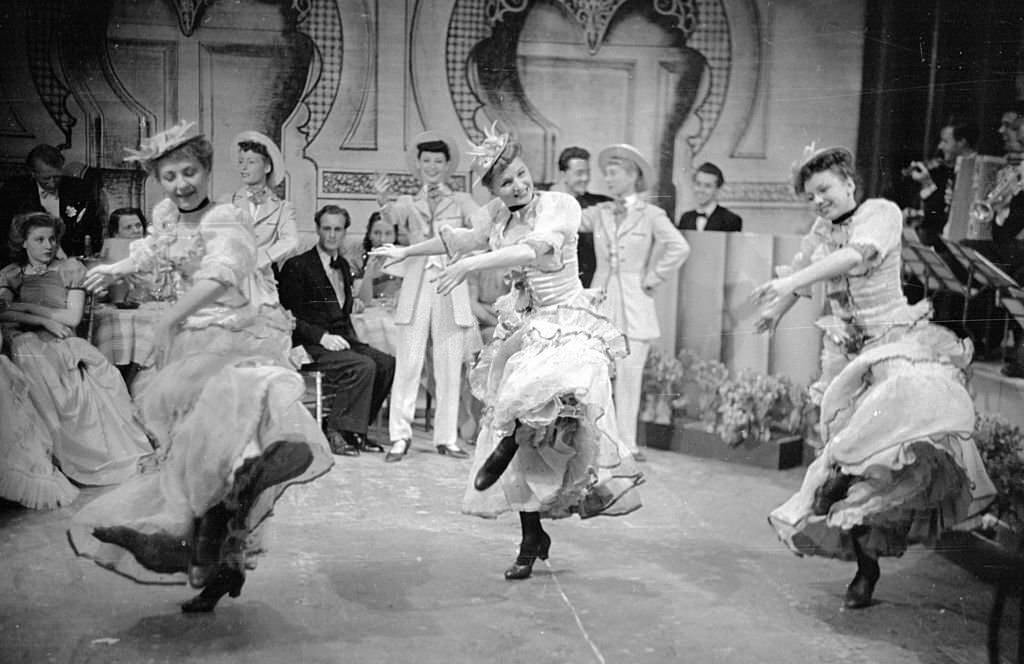
During World War II, the cancan continued to be performed even close to the front lines. In 1944, a trio of French women danced the cancan for American GIs stationed in the rear echelon of an infantry unit in France — a vivid reminder that the dance had become not just entertainment, but a symbol of French cultural identity.
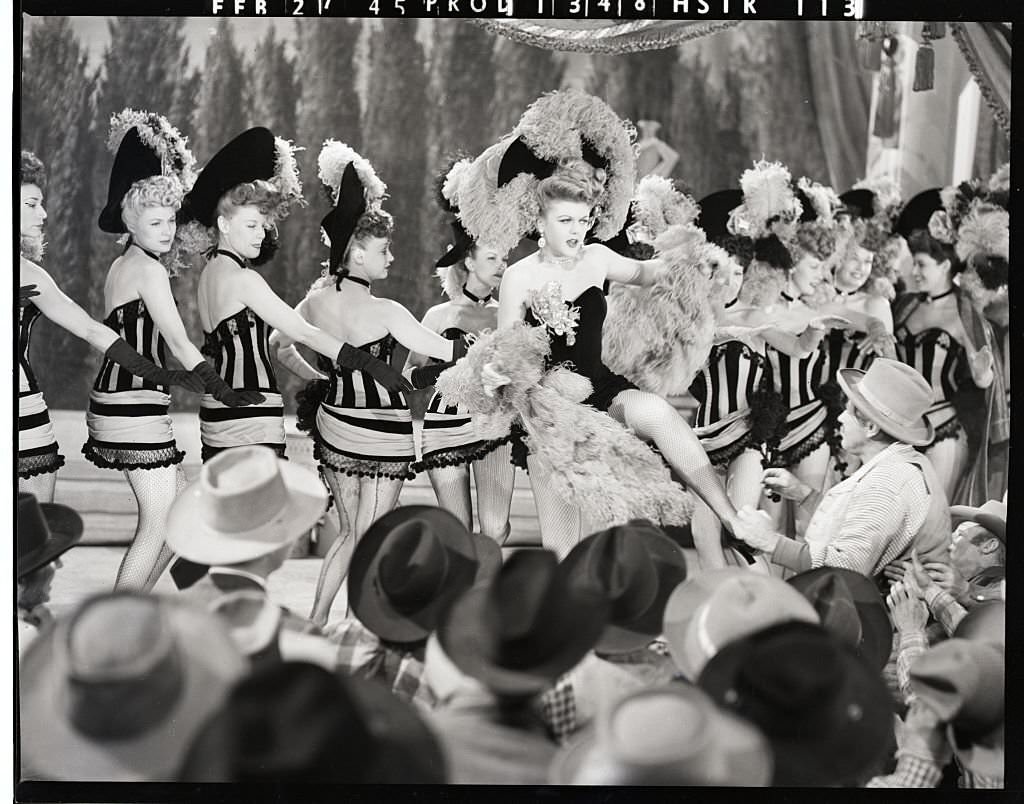
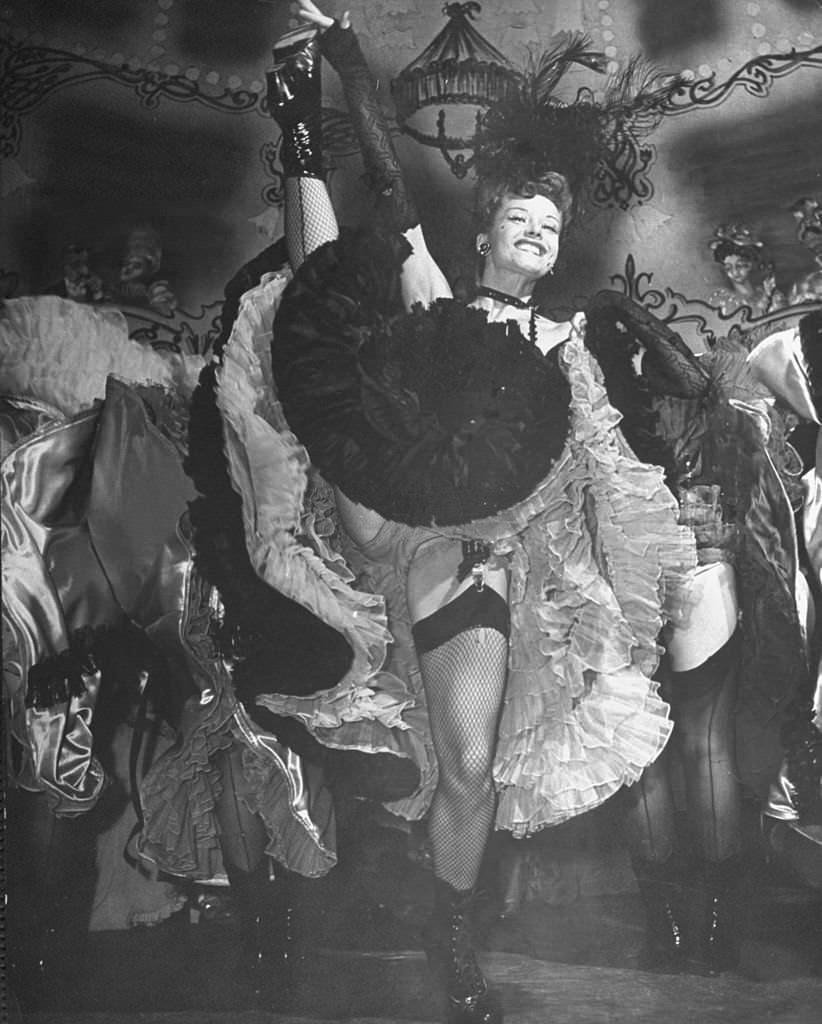
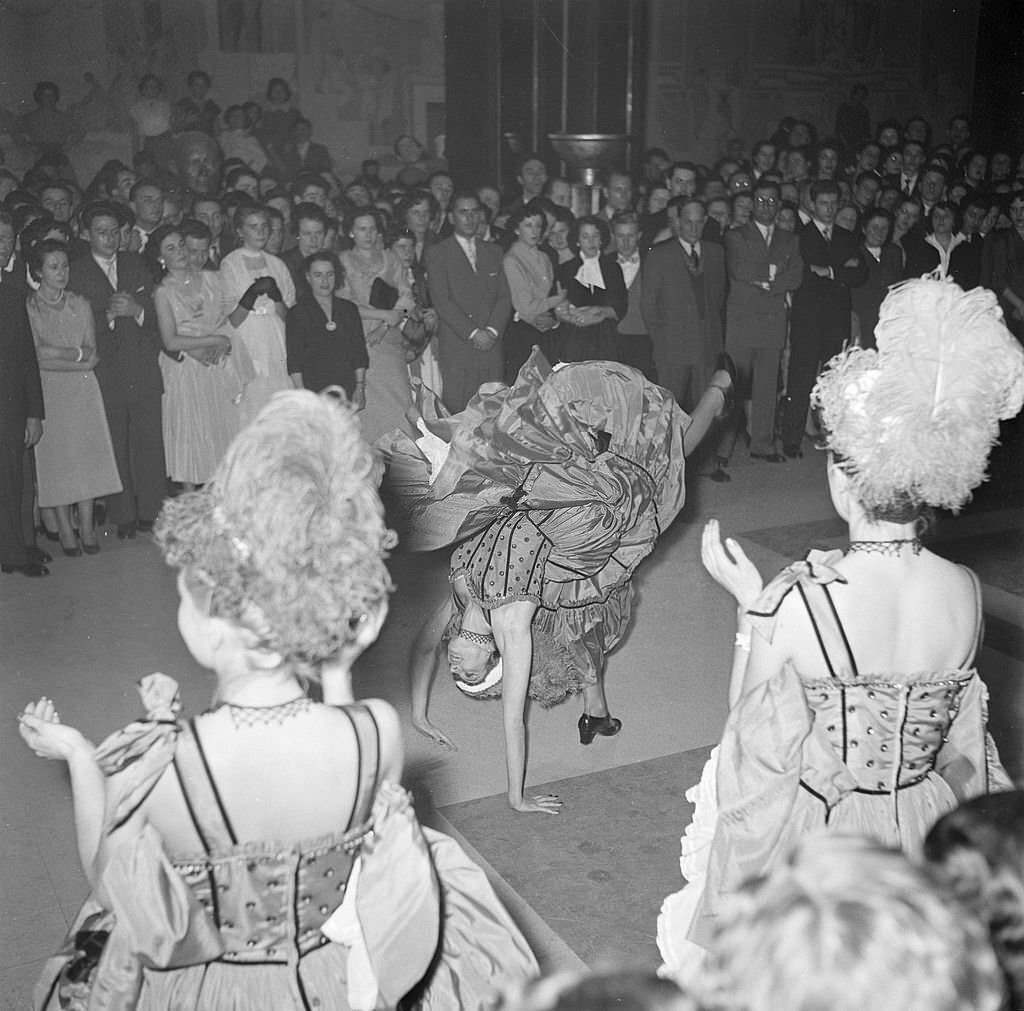
A trio of French girls dance the can-can for GI’s in the rear echelon of an infantry unit in France, 1944Ladies of the Chorus: Angela Lansbury, who portrays em, a dance hall queen, in MGM’S musical “The Harvey Girls,” puts her all into her work as she leads the chorus in an old-fashioned “can-can.”A black-stockinged, petticoated chorine demonstrates that the ever-popular Can-Can is back in Paris and the city is once again as gay as it was before the war.
Girls performing the Can Can during the New Opera Company’s Broadway production of Merry Widow.
Girls performing the Can Can during the New Opera Company’s Broadway production of Merry Widow.
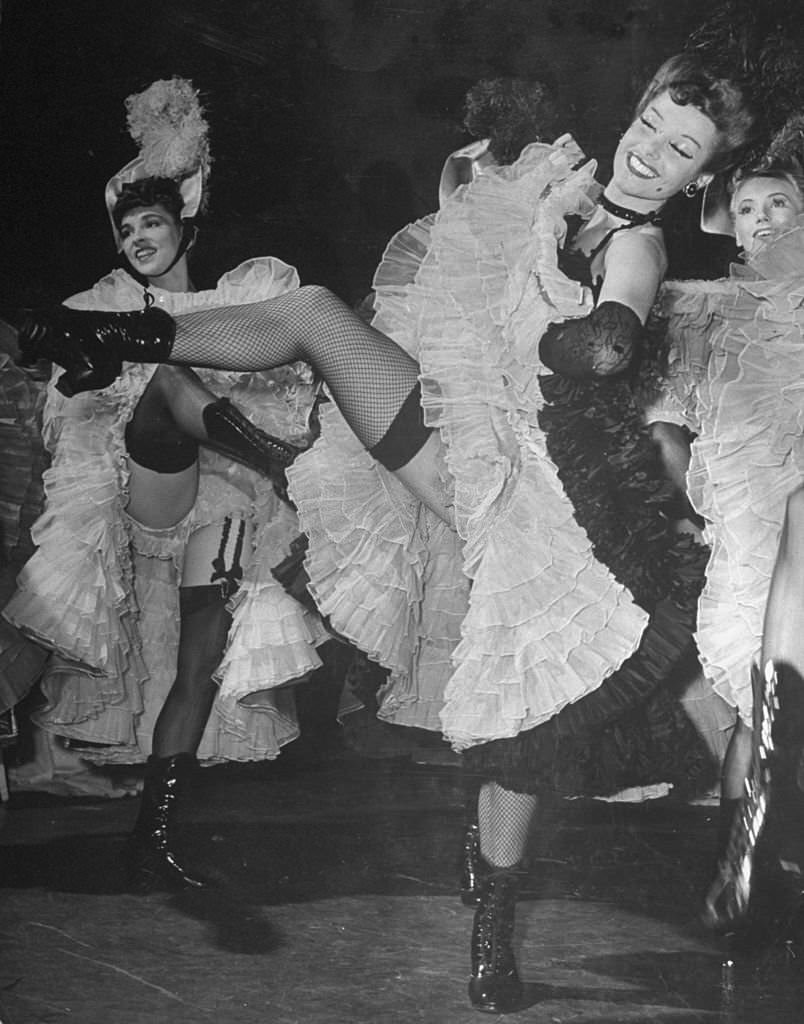
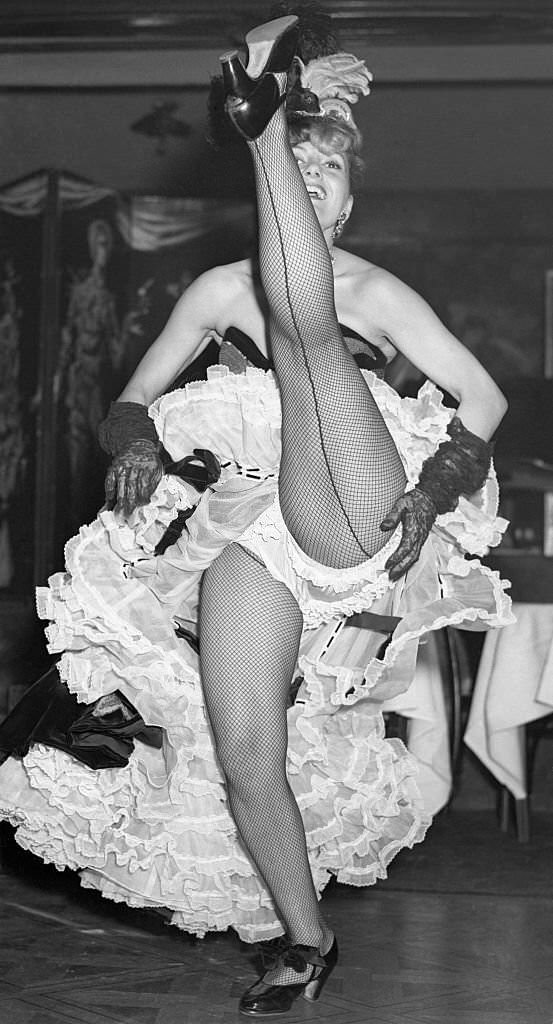
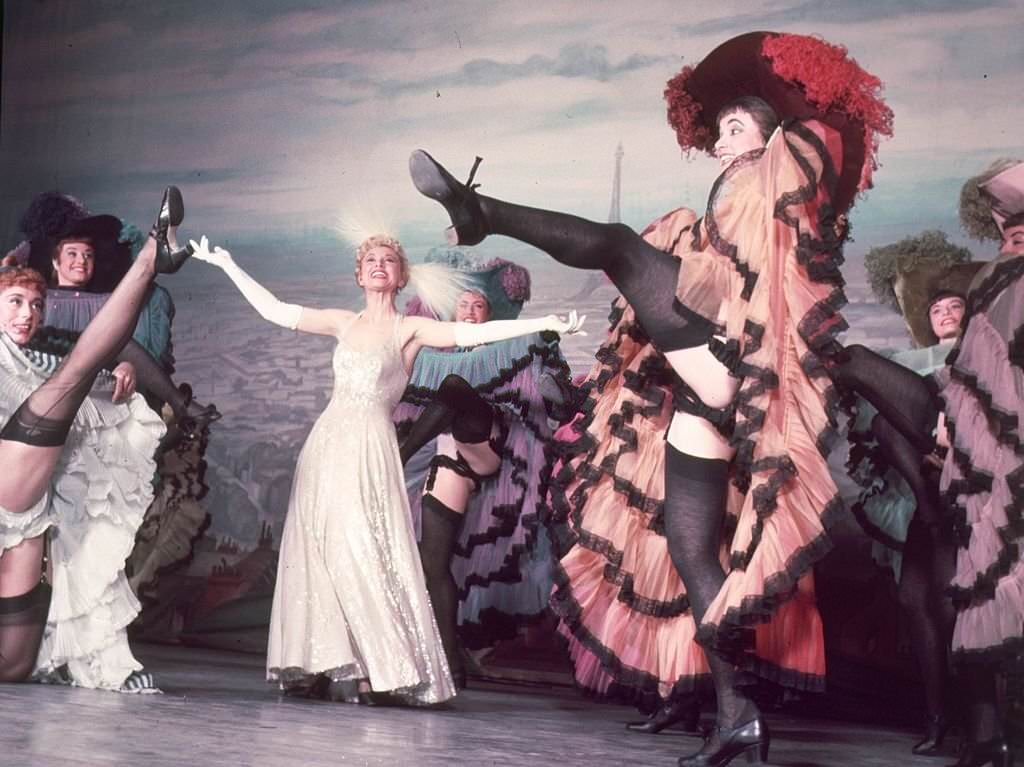
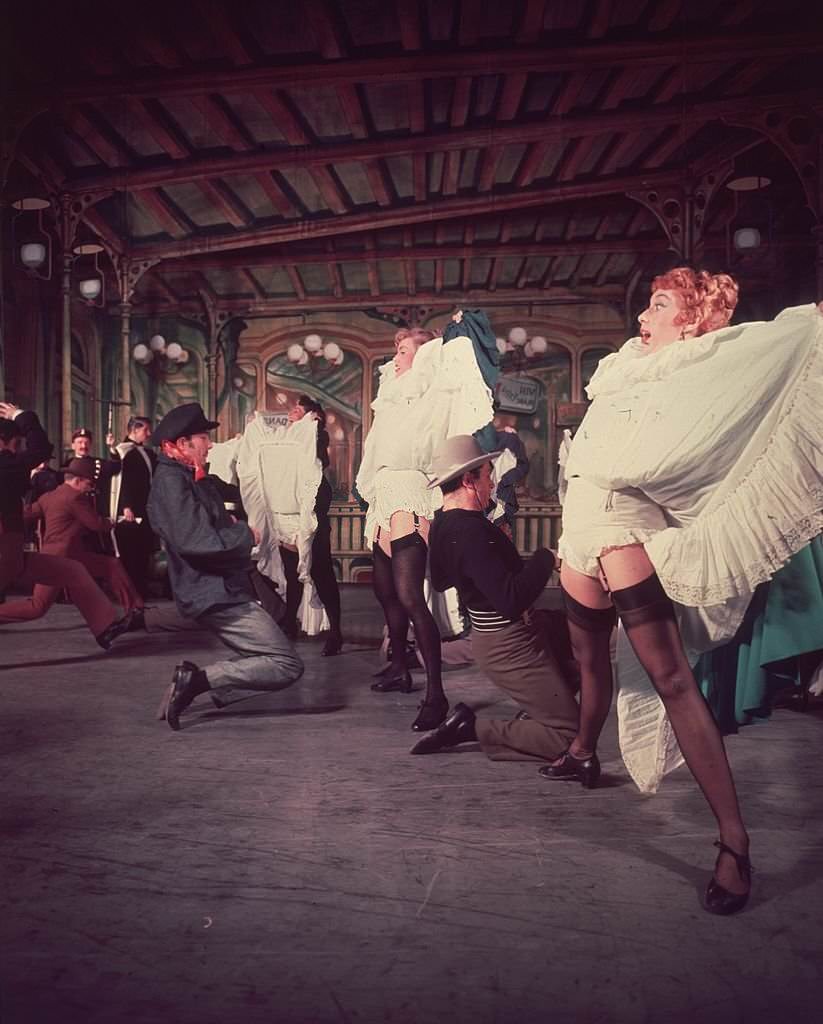
The postwar years brought a full cancan revival. Paris venues like the Bal Tabarin and the Moulin Rouge reopened to eager audiences, and new stars emerged to carry on the tradition. Josephine Baker, already an international icon, performed the cancan in the Bal Mabille act. French cabaret dancer Gaby Bruyère built her career as a cancan specialist and was planning an American tour. The dance was back — louder, higher, and more popular than ever.
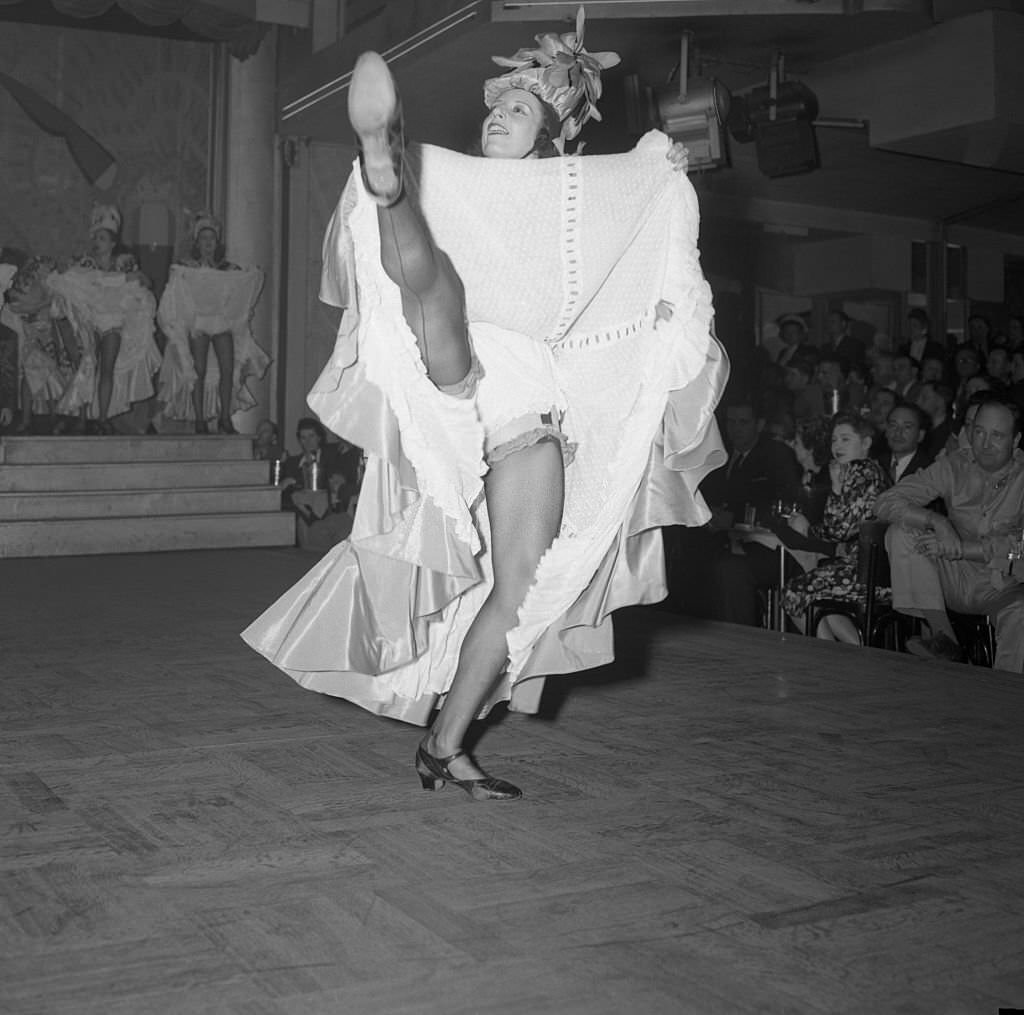
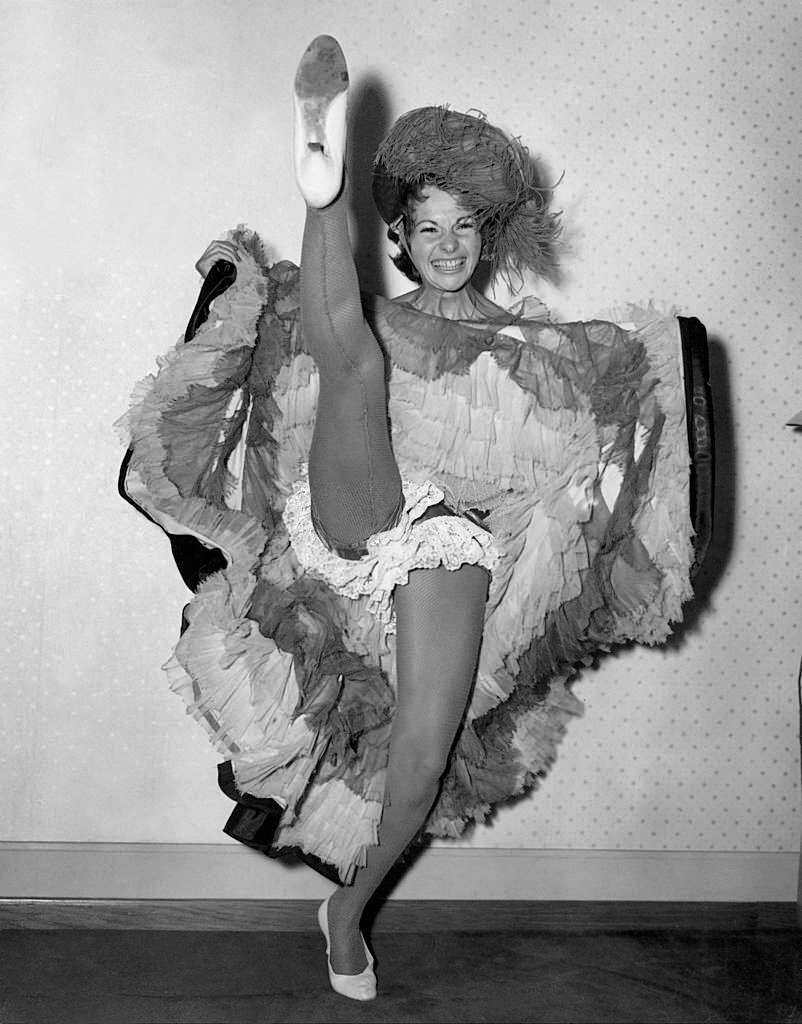
Josephine Baker dancing the Can-Can in the “Bal Mabille” act.French cabaret dancer Gaby Bruyere flashes a beautiful smile from behind a straight-up kick, doing her act at a Paris nightclub. Gaby, a “CanCan” specialist, is soon to make an American tour–and there’s no kick from us.One of France’s most famous revue dance-teams, the Ballet Avila comes from Paris to Alexandra Palace in London, 1948Menes and Desta rehearse their cancan at Alexandra Palace on November 16, 1948A dancer performs a cancan during the National Advertising Benevolent Fund Ball at the Dorchester Hotel on May 3, 1949Cabaret dancers at the Bal Tabarin nightclub in New York City, 1949.A can-can scene from the film ‘So Long At The Fair’, which captures the authentic atmosphere of Montmartre during the 1889 Paris Exposition, 1949Three young women (Anne Greatrex, Pamela Beckman and Elizabeth Zinn) dance the French cancan with shorts nicknamed the ‘Lollipop’ (the lollipop), 1950Jimmy Handley watches French cancan dancers rehearsing for the Roehampton Theater and Film Festival, 1950French-style can-can dancers, 1950.Women dancing the cancan, Montmartre-style, at Piccadilly, London, 1951.
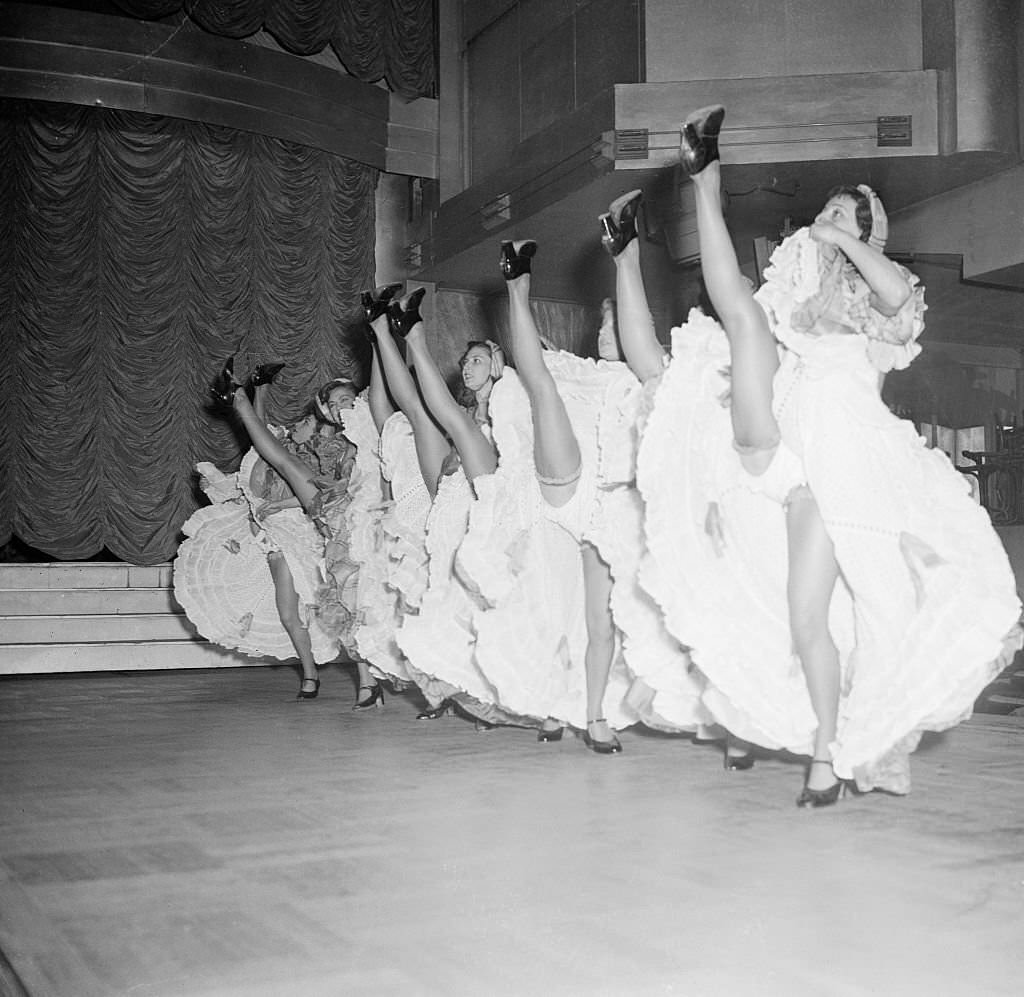
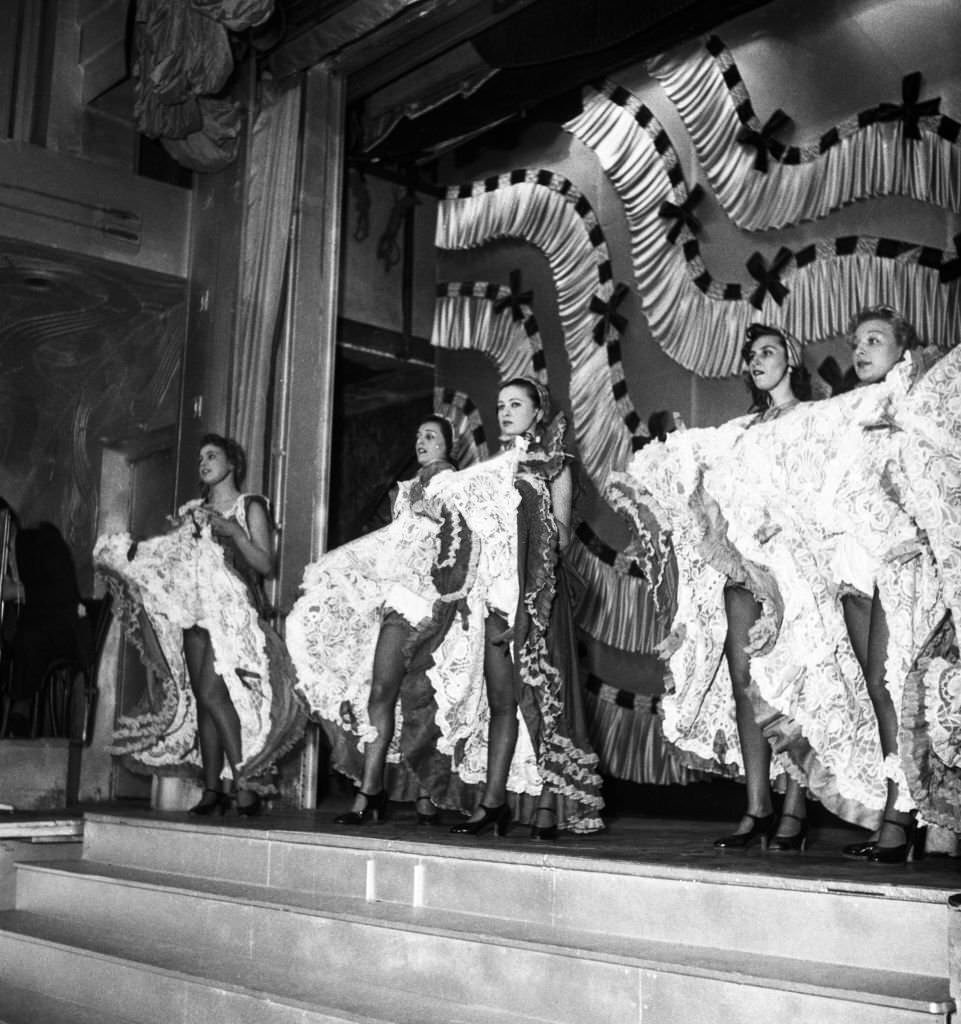
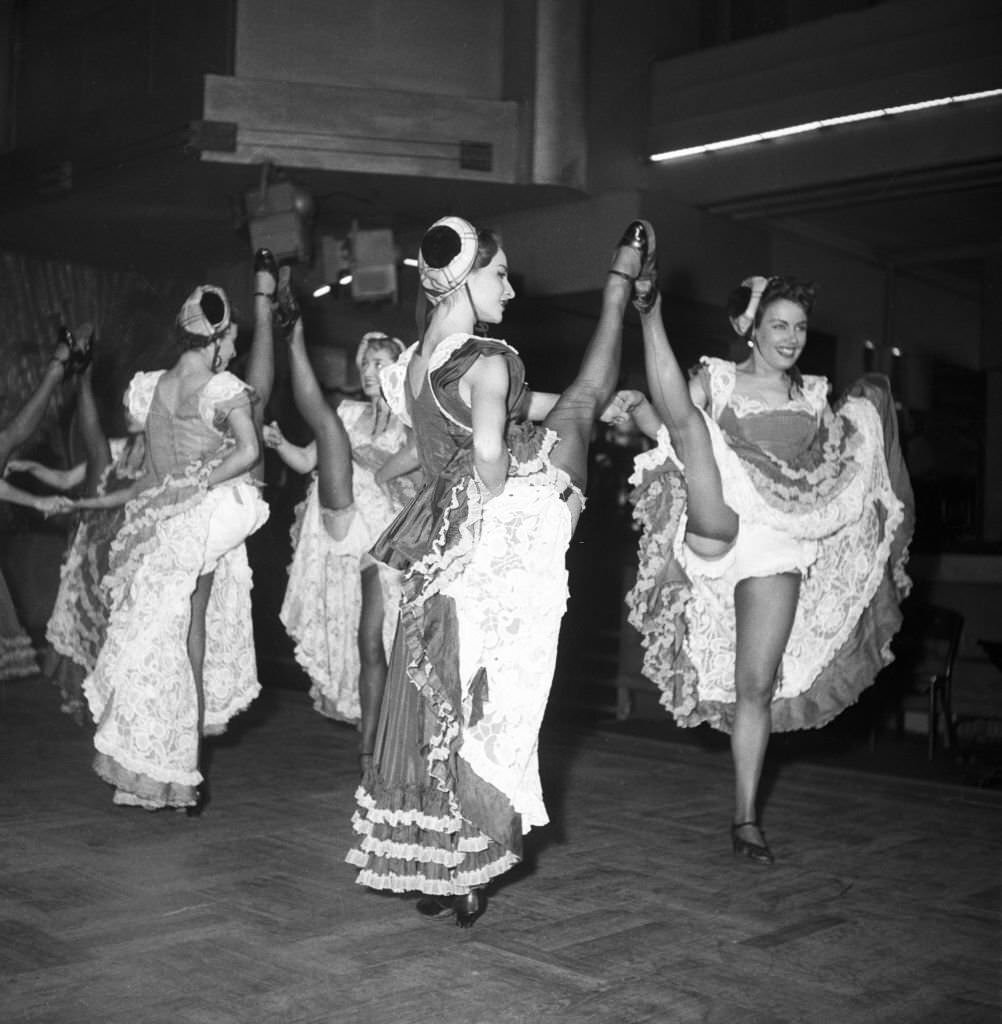
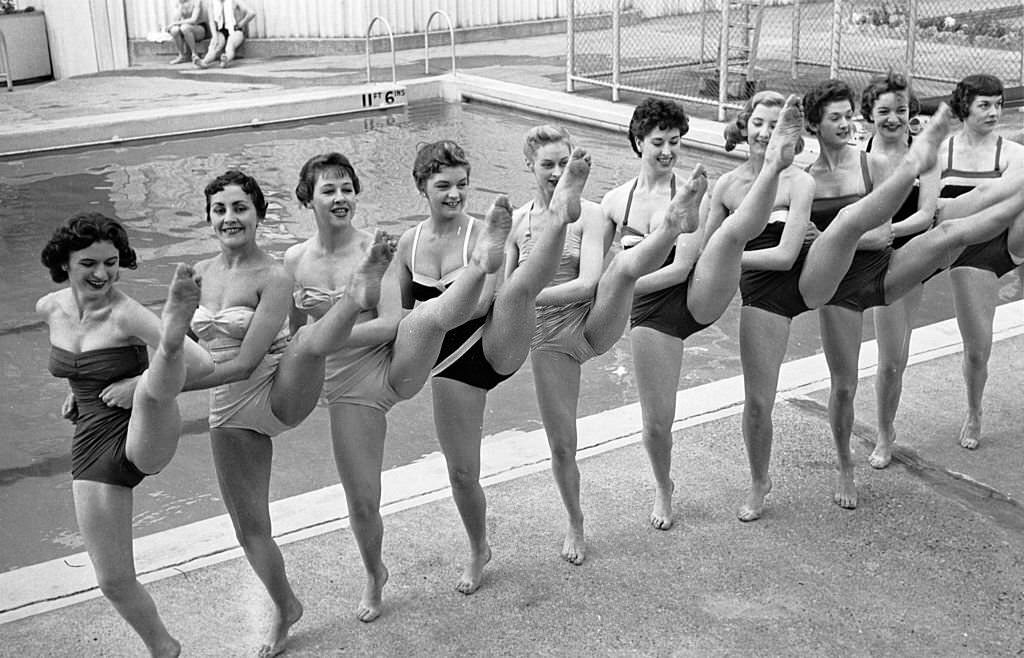
The early 1950s were a peak period for the cancan’s international reach. London stages hosted Parisian troupes regularly, and the dance appeared everywhere from coronation-year cabaret shows to TV rehearsals at open-air pools. In 1953, the TV Toppers performed the cancan at the Oasis Pool in Holborn. That same year, cancan troupes appeared at the City Varieties Music Hall in Leeds, and the Bal Tabarin sent its dancers on London engagements.
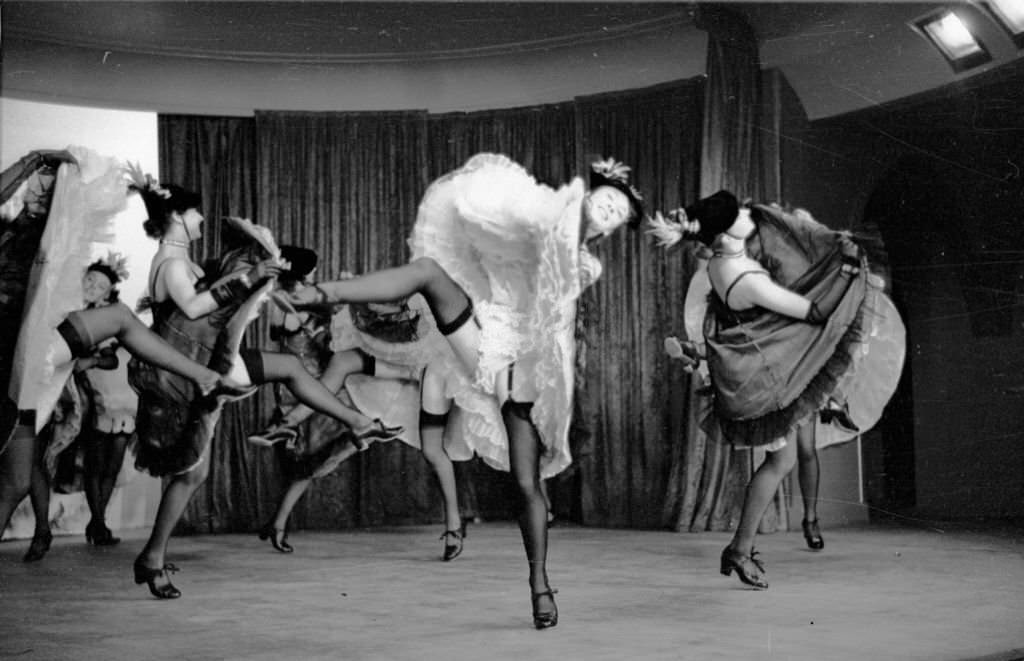
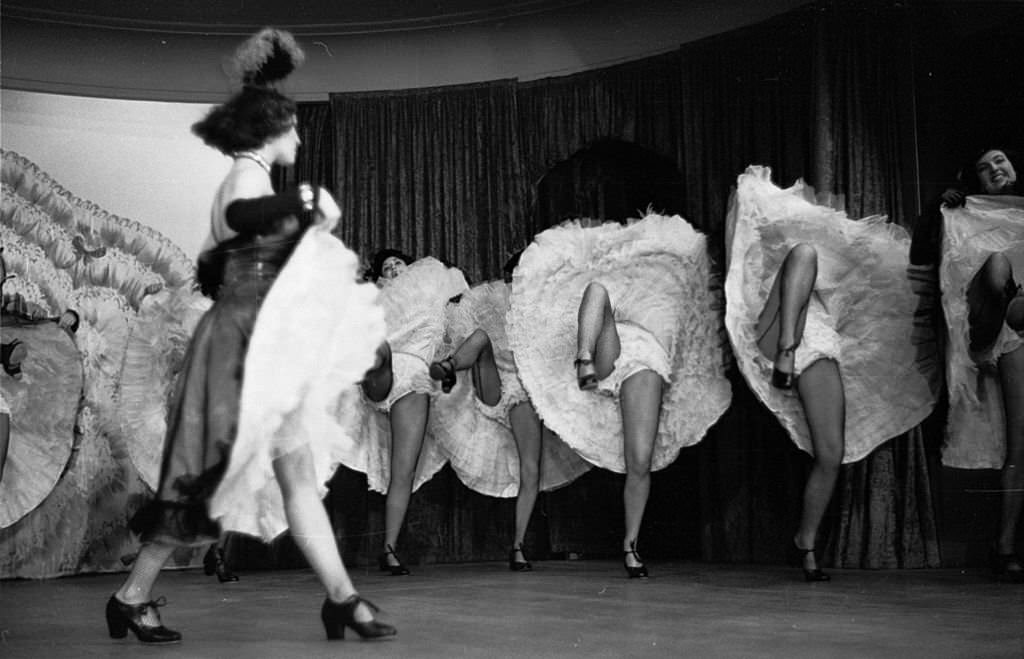
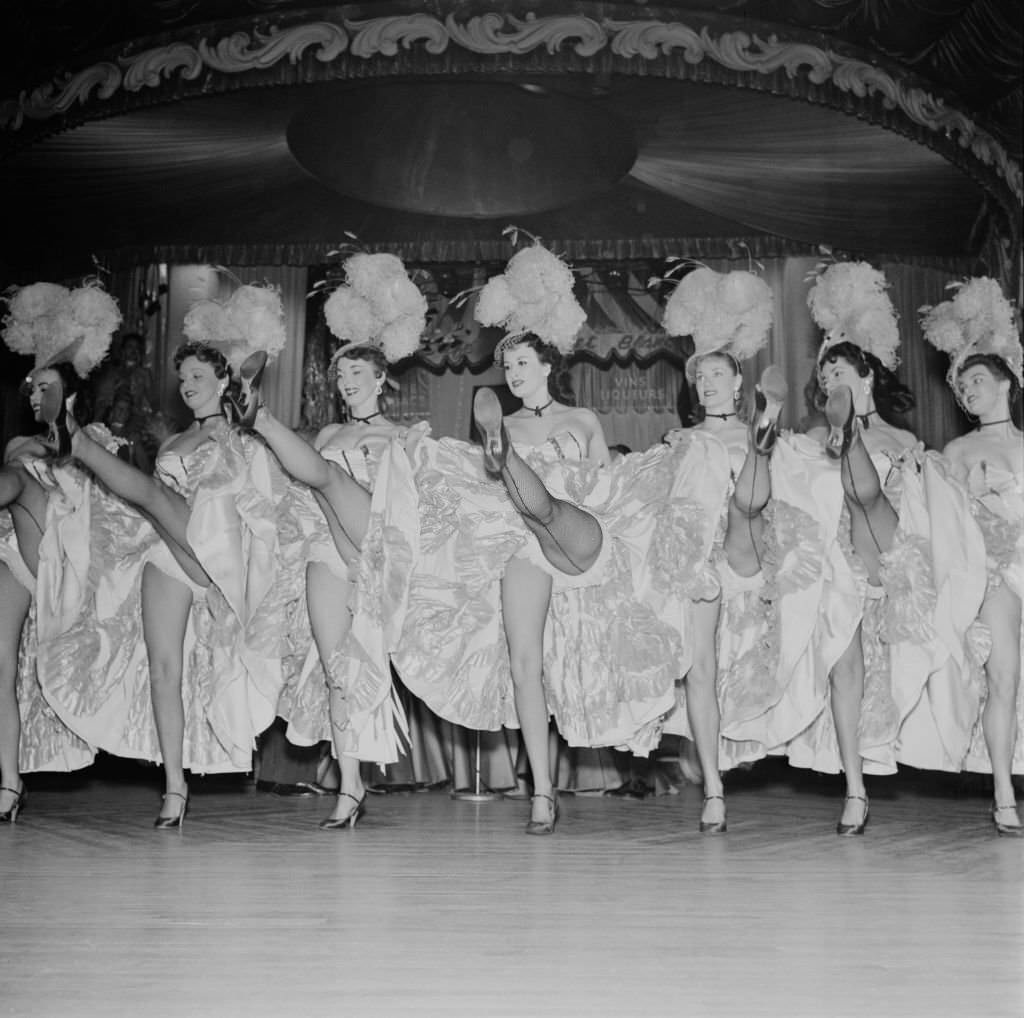
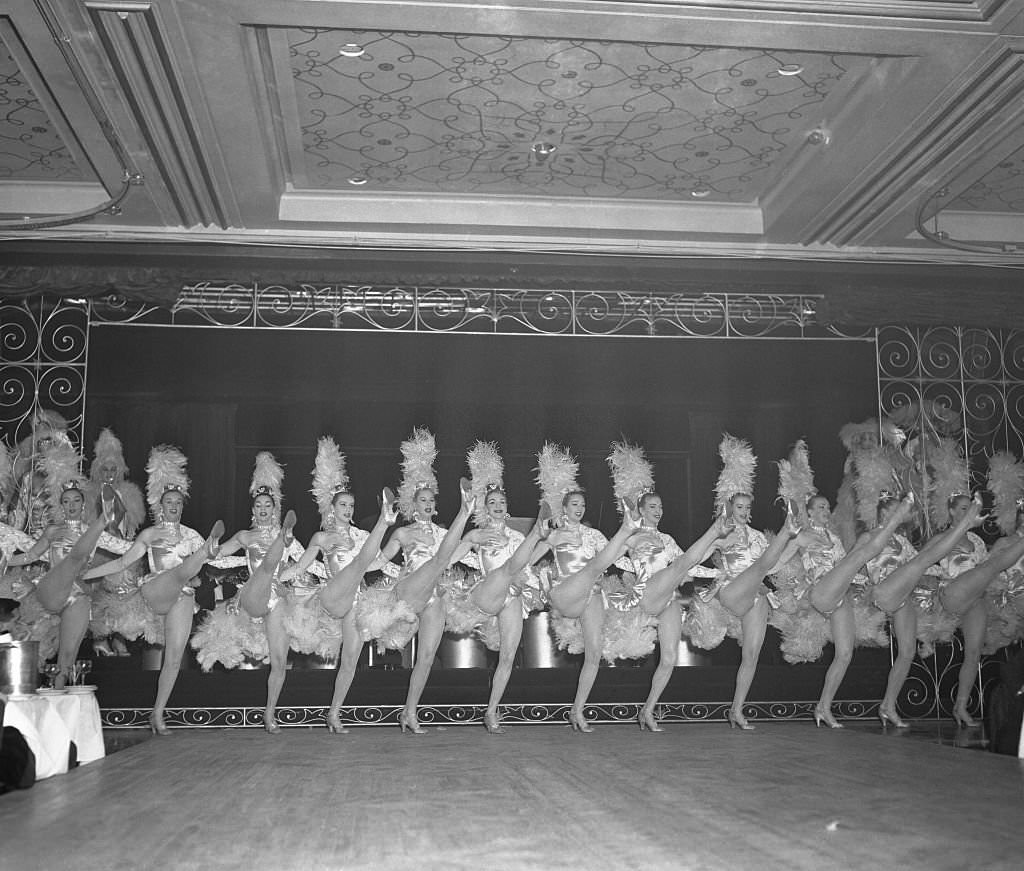
A chorus of high-kicking Cancan dancers go through their paces in preparation for the reopening, of the Parisian Music Hall Tabarin.The French cancan dancers of the ‘Bal Tabarin’ in London, 1953French cancan dancers at the ‘Bal Tabarin’ in London, 1953The TV Toppers performing the Can-Can at a rehearsal at the Oasis pool in Holborn, London, 1953.Can-Can dancers cavorting on the bar at the City Varieties Music hall at Leeds, 1953.A troupe of Parisian can-can dancers performing at the City Varieties music hall in Leeds, 1953Star dancers from the Paris Opera dance the French Cancan at the Moulin Rouge, 1953New York policewomen dance the French Can-can at the arrest line for suspects on May 18, 1953A troupe of can-can dancers leave little to the imagination during a performance of ‘The Blue Bird’, a cabaret show at London’s Pigalle restaurant celebrating the coronation year of Queen Elizabeth II, 1953.A troupe of can-can dancers leave little to the imagination during a performance of ‘The Blue Bird’, 1953
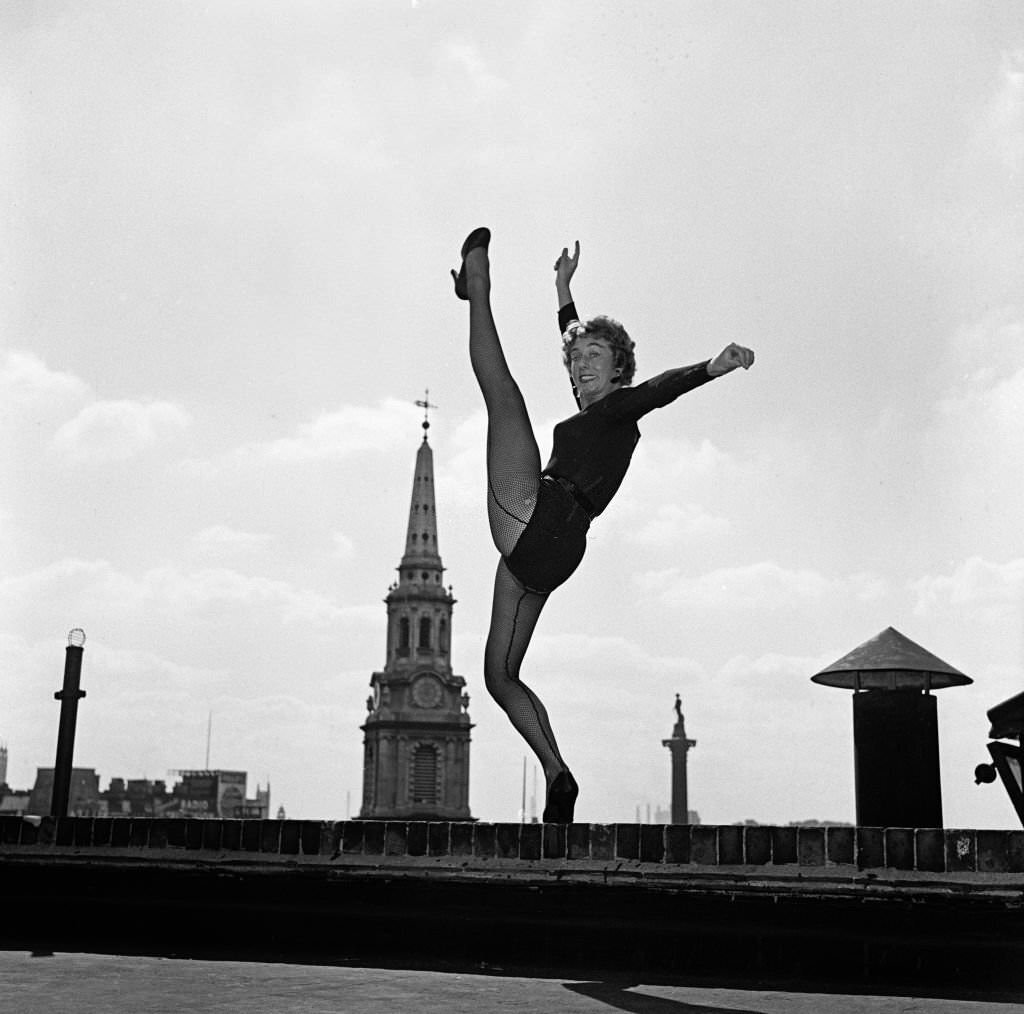
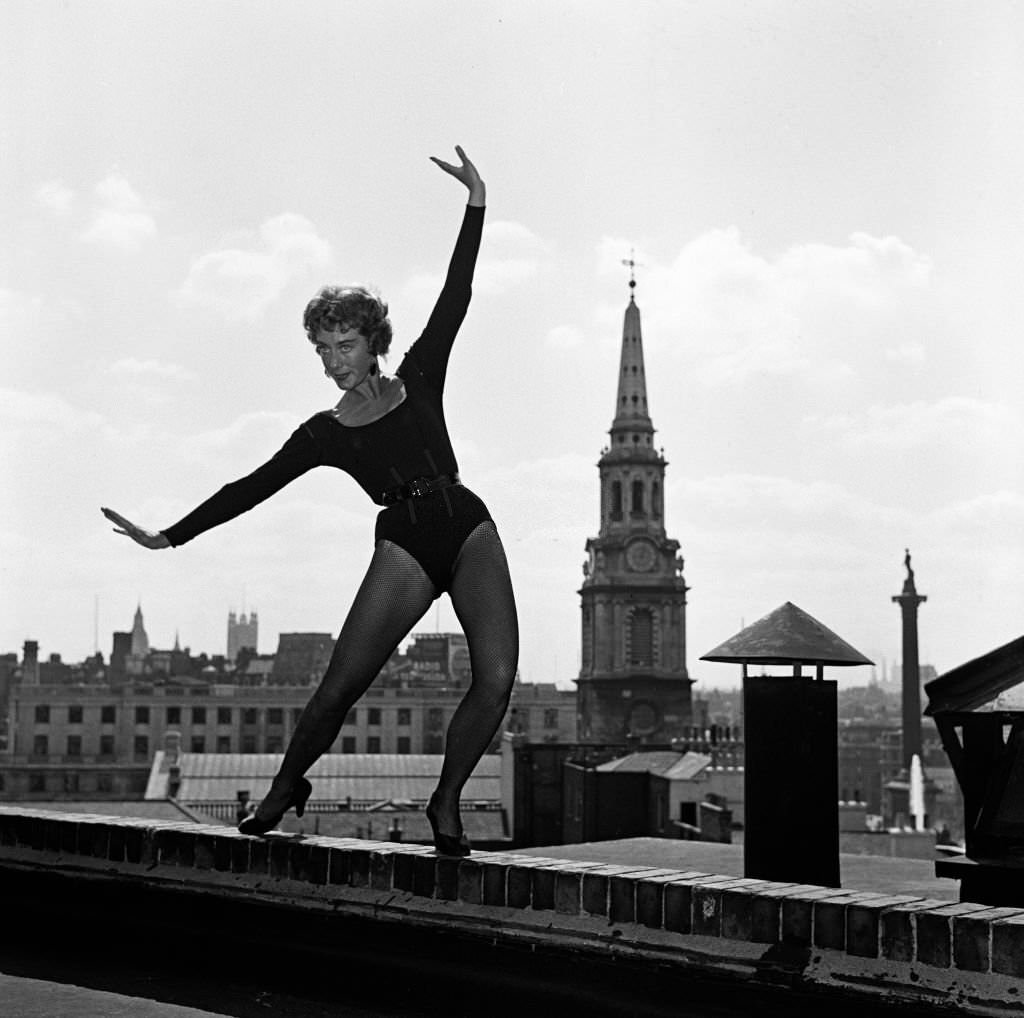
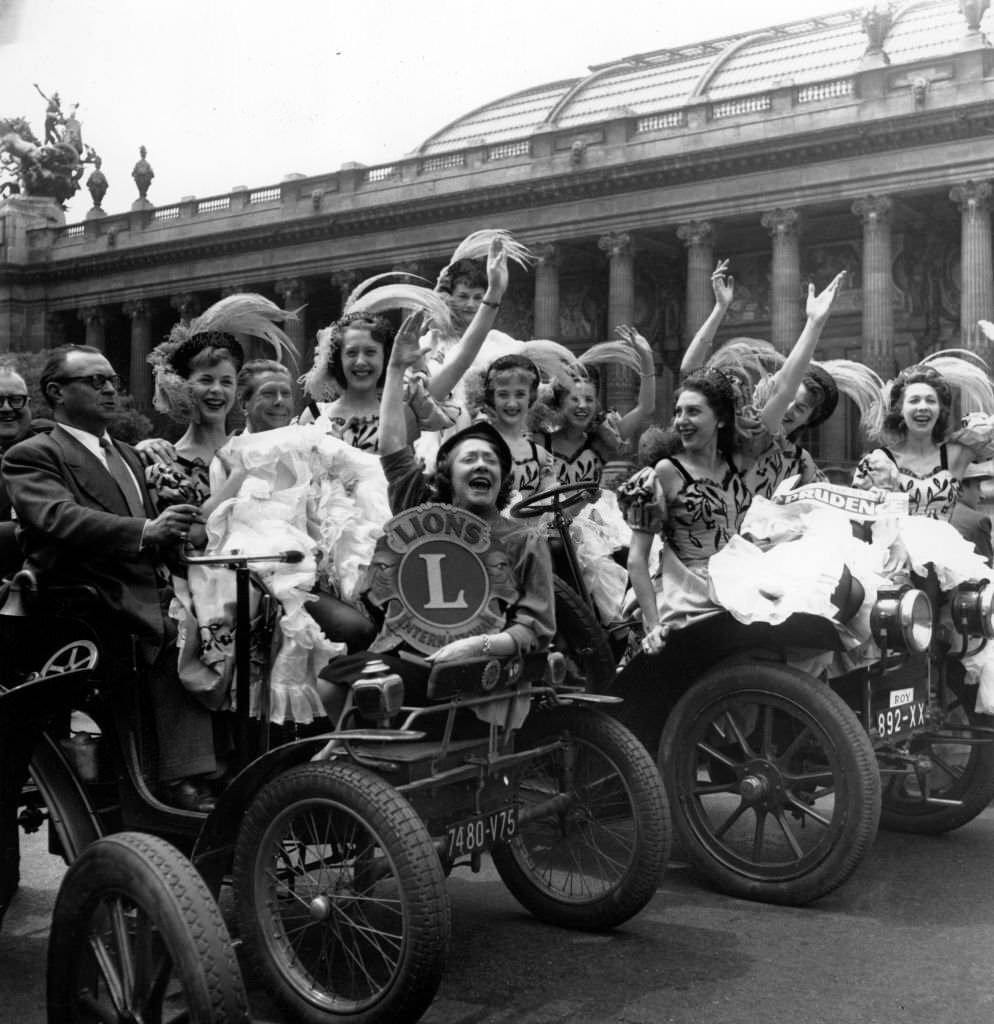
In 1954, the cancan hit the West End in a big way. Cole Porter’s musical Can-Can opened at the Stoll Theatre in London, with Gillian Lynne as lead solo dancer. The show also ran at the Coliseum with a full cast of cancan performers. That same year, French director Jean Renoir released his film French Cancan, starring Françoise Arnoul, which dramatized the founding of the Moulin Rouge. Back in Paris, the Moulin Rouge dancers staged a public event outside the Grand Palais to kick off the ‘Crusade of Prudence 54.’
Dancer Gillian Lynne, the lead solo dancer of a new American musical Can Can which is opening at the Stoll Theatre, 1954Dancer Gillian Lynne, the lead solo dancer of a new American musical Can Can which is opening at the Stoll Theatre, 1954Can-Can dancers performing in a Cole Porter show at the Coliseum in London, 1954.
Can-Can dancers performing in a Cole Porter show at the Coliseum in London, 1954.
Francoise Arnoul as a Dancer in Fench Cancan in 1954.
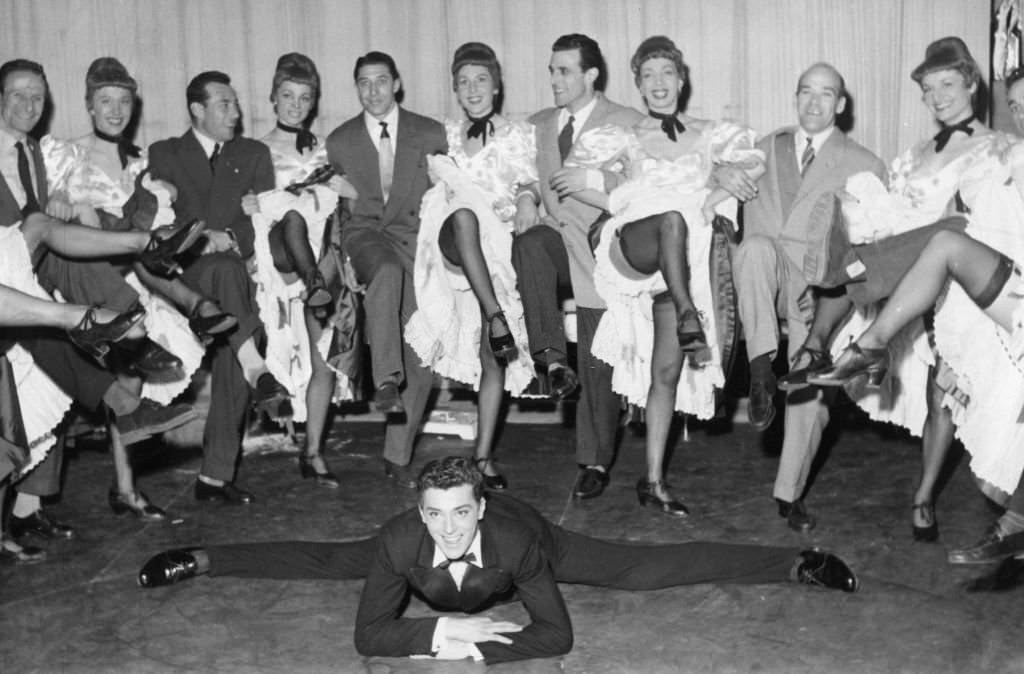
The French cancan dancers of the Moulin Rouge give the start of the ‘crusade of prudence 54’ in front of the Grand Palais in Paris, 1954The winners of the Six days dancing the french cancan.
Gala of the Lion’s Club in Paris, 1954
Gala of the Lion’s Club in Paris, 1954
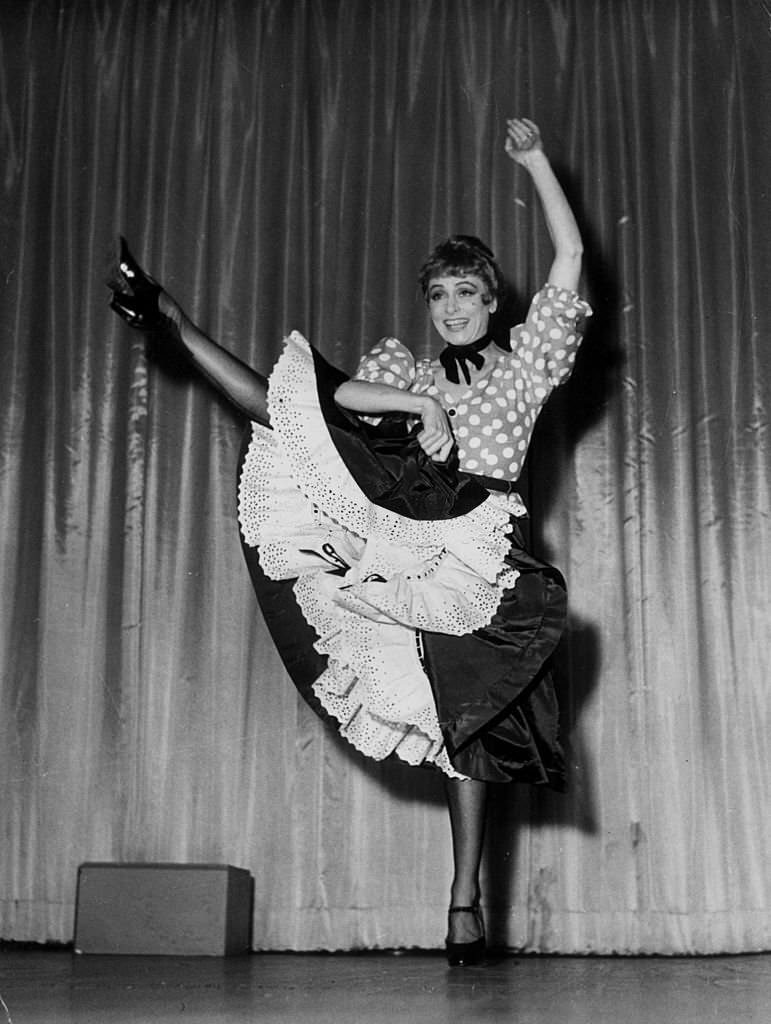
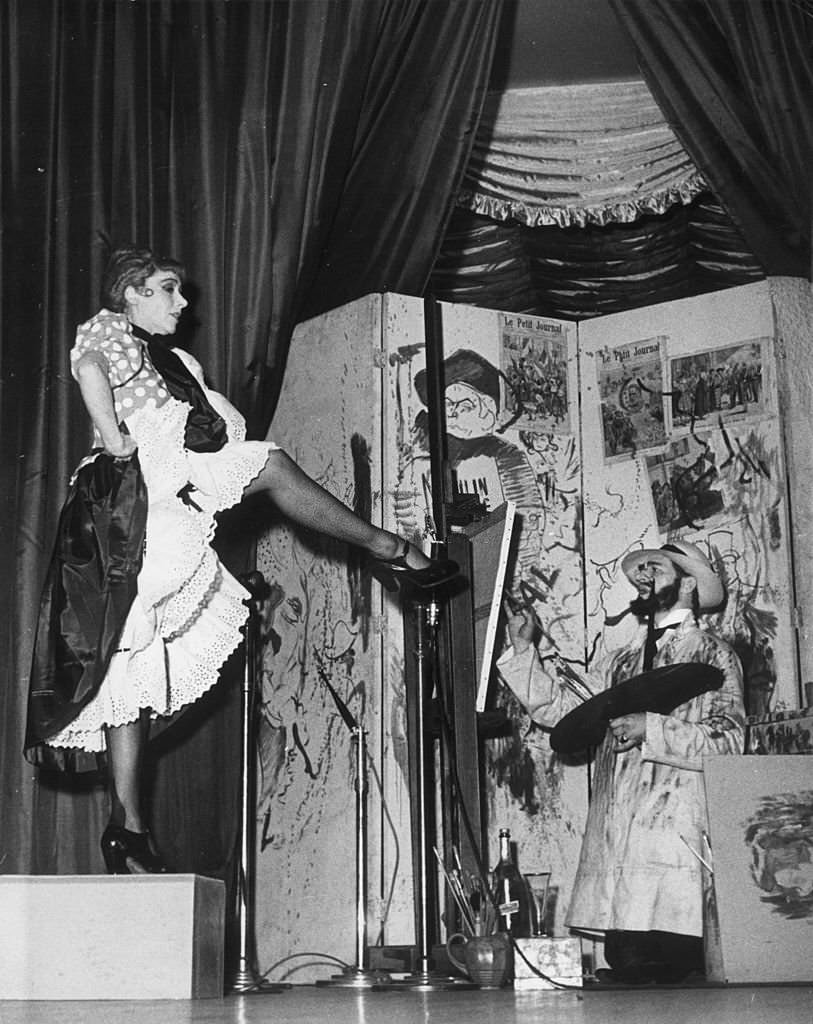
Scene of the French cancan in the red mill in a broadcast reconstitution of Toulouse Lautrec’s life by Gilles Margaritis
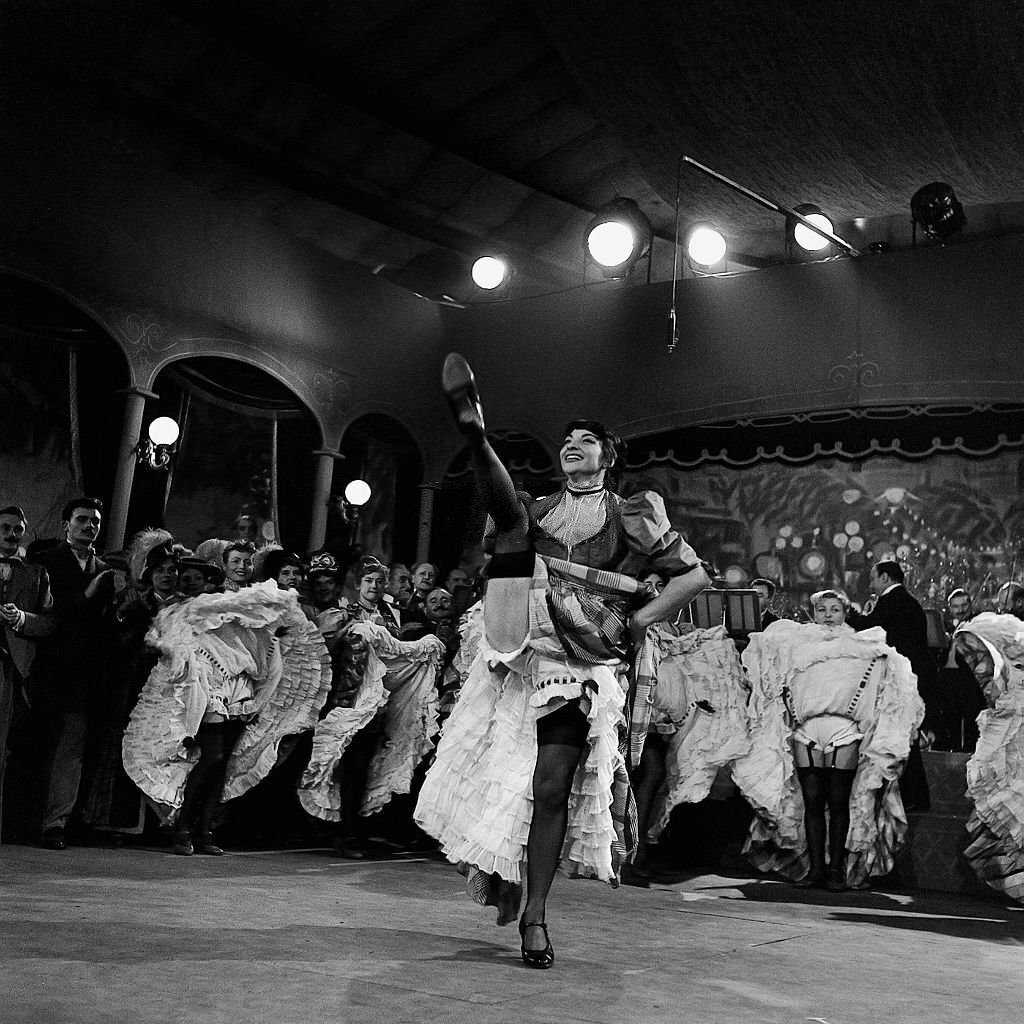
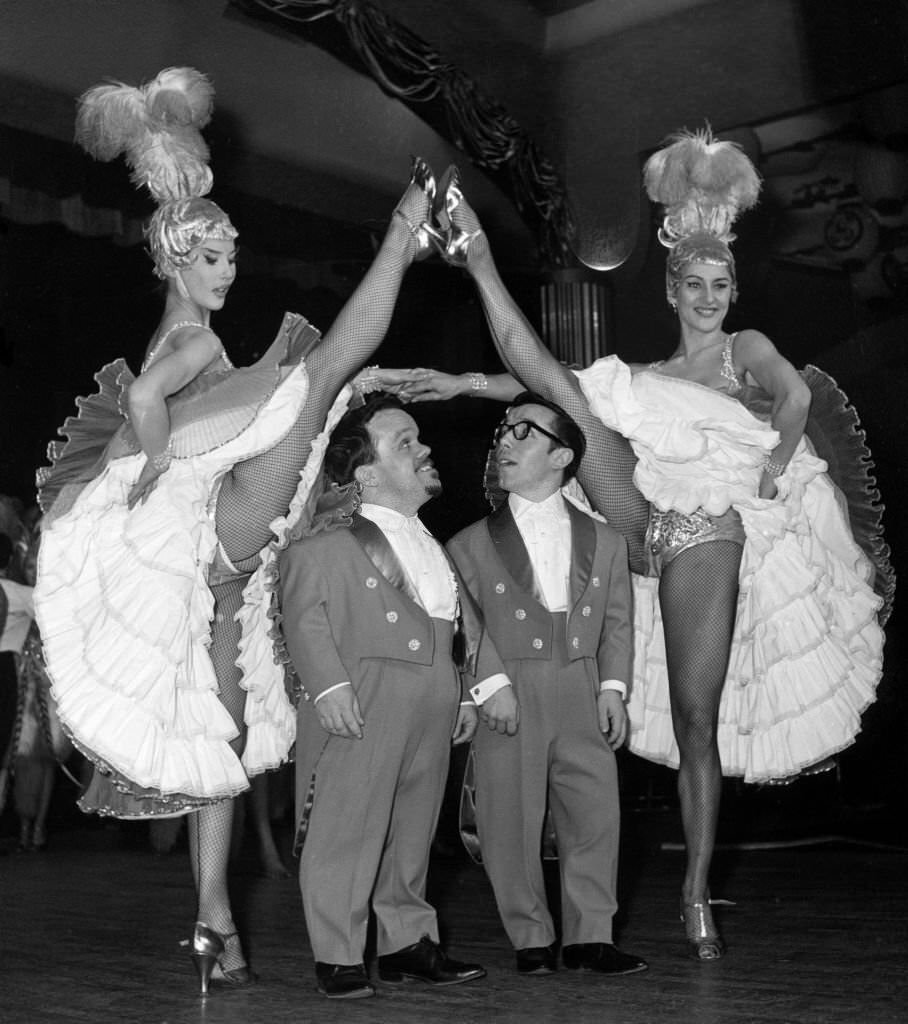
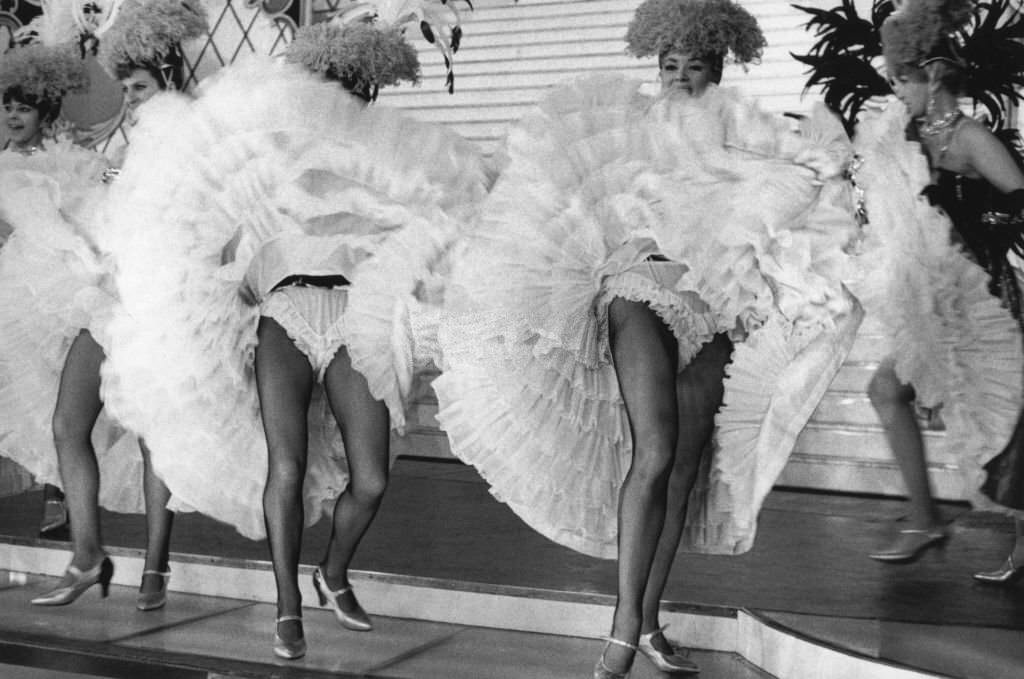
The mid-1950s produced some of the most iconic cancan photographs ever taken. Dancers at the Moulin Rouge, the Folies Bergère, and various London nightclubs were documented in full performance. One of the most recognizable figures from that era was a dancer named Régine, who performed regularly at the Moulin Rouge and appeared in several widely published photographs showing both her solo work and her place within the larger troupe.
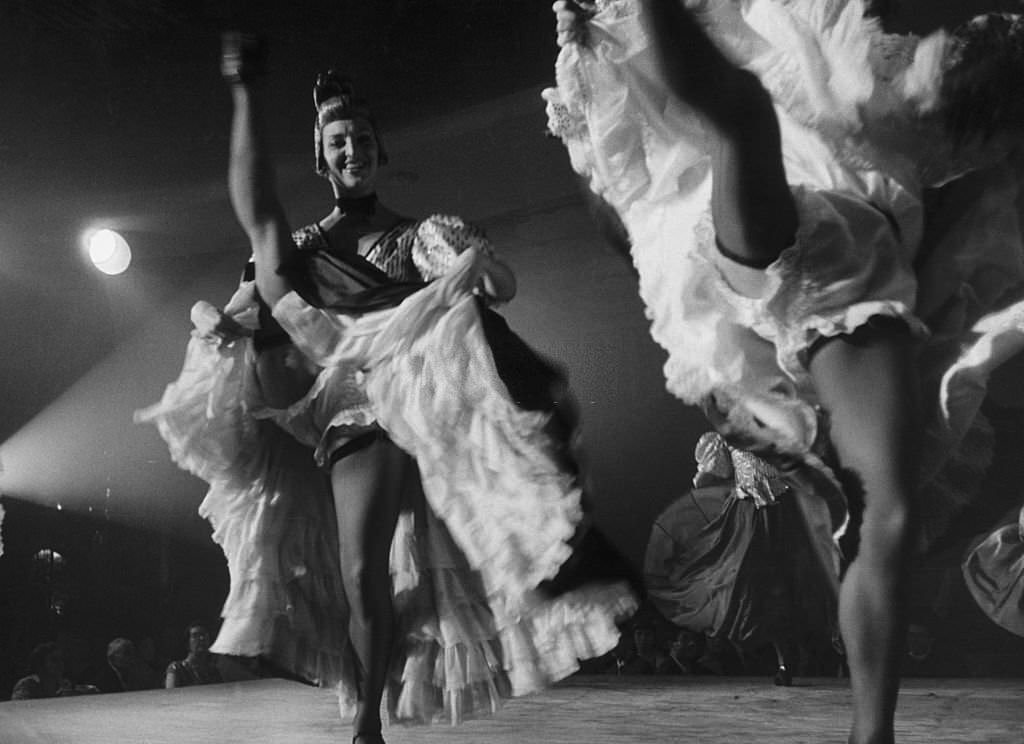
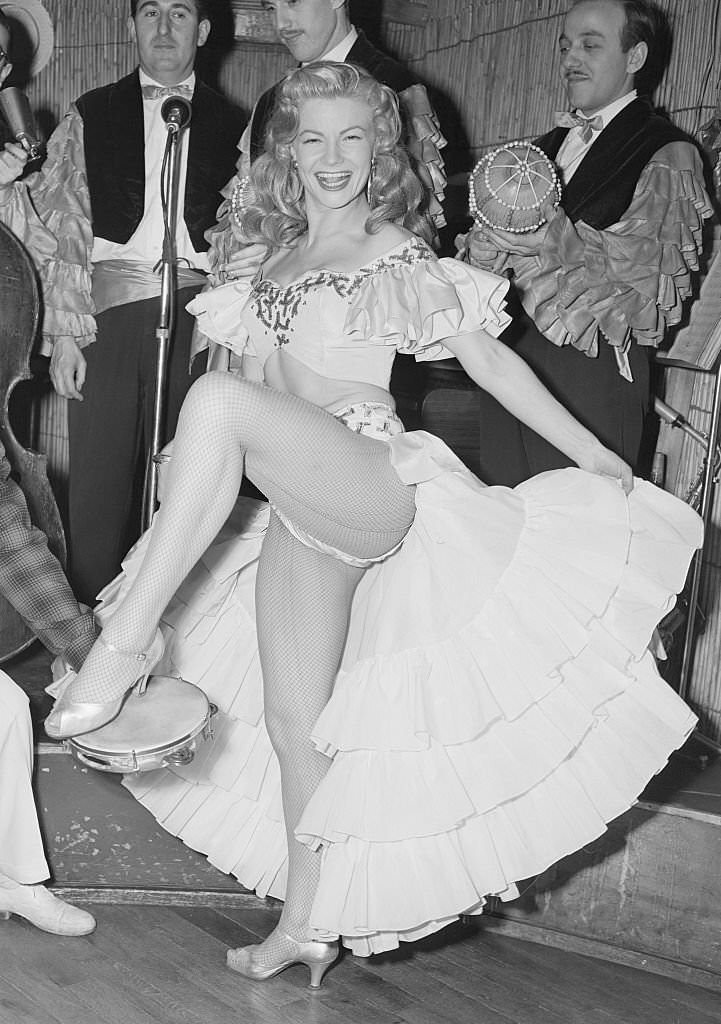
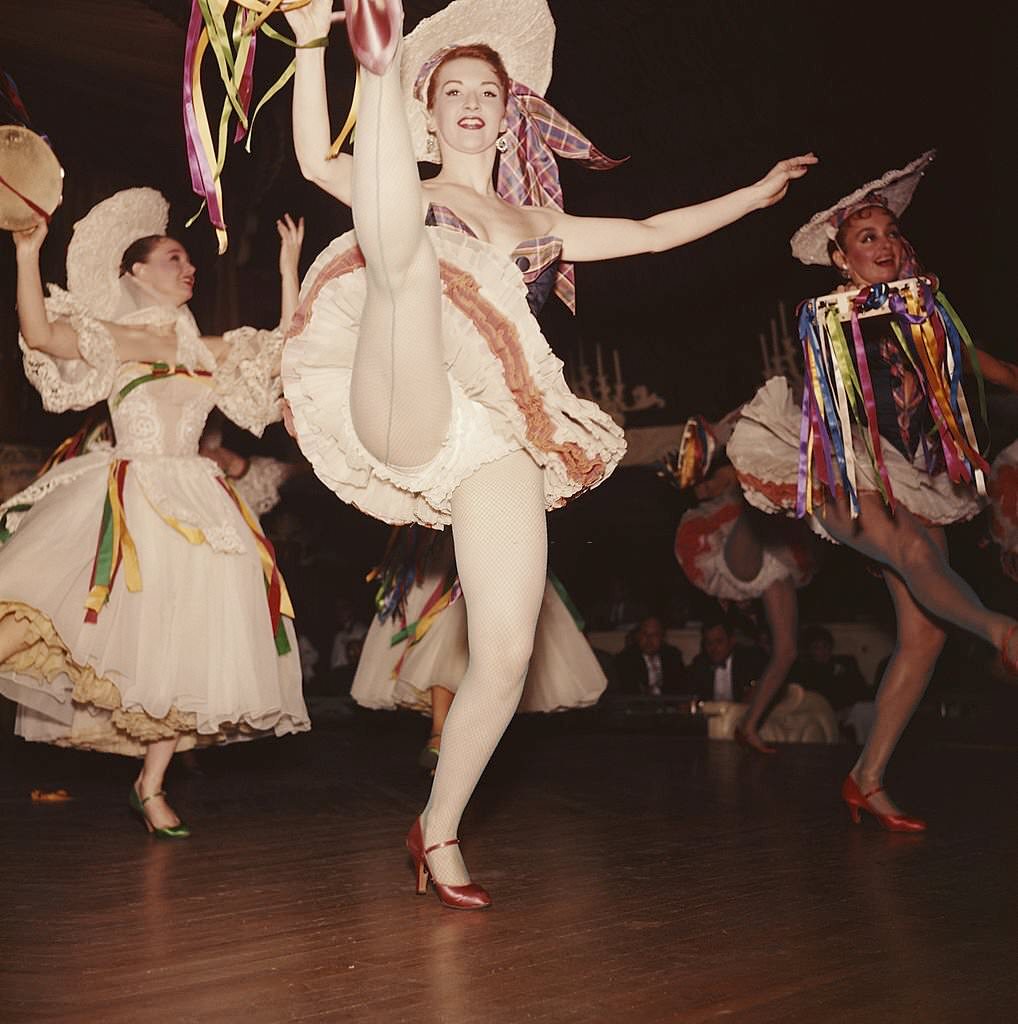
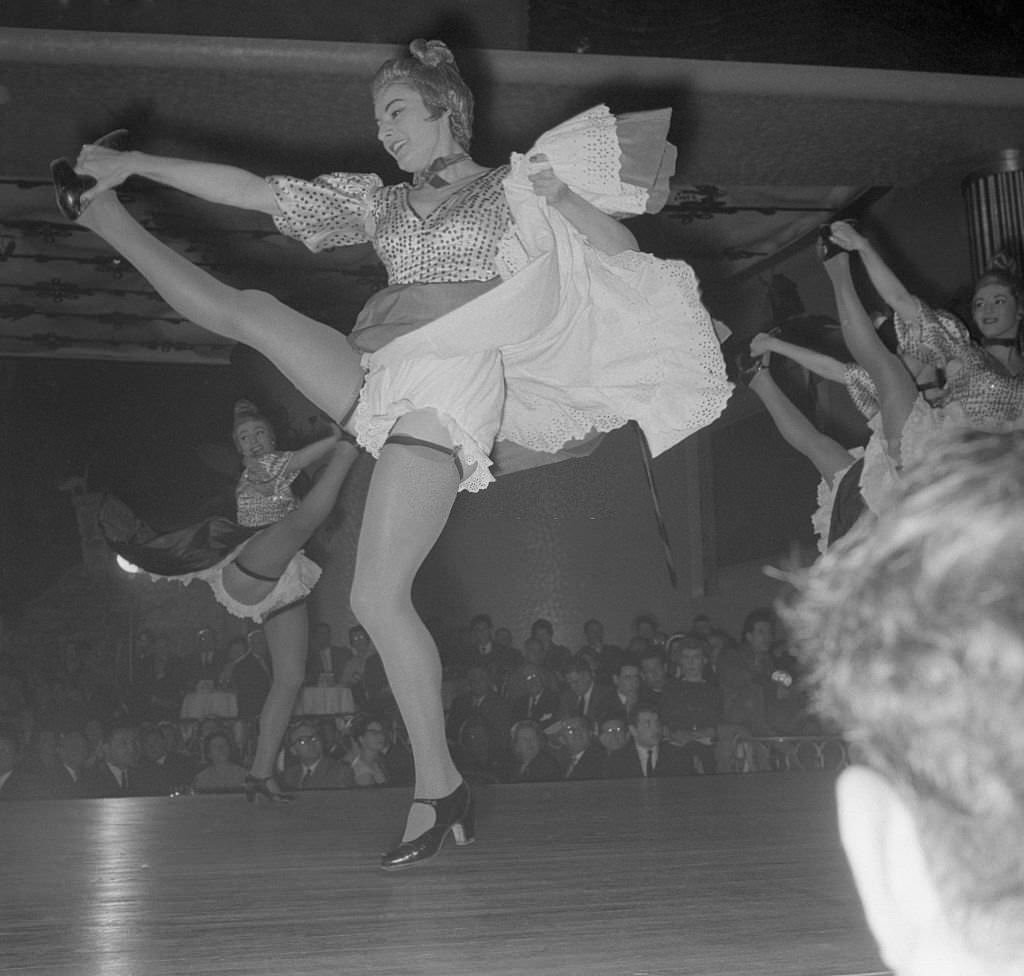
Can-Can girl Regine reveals the underwear beneath her layers of lace, 1955.Can-Can girl Regine performing with the rest of the troupe at the Moulin Rouge in Paris, 1955.Can-Can dancer Regine performing on stage at the Moulin Rouge theatre in Paris, 1955.French Cancan at Moulin Rouge, 1955Dancers from Miss May’s troupe perform French Cancan on a barge during the river festival at Bassin de la Villette, 1955The chorus line at the Folies Bergere performing high kicks while dancing to ‘Gaite Parisienne’, 1955.A cabaret dancer performs at London’s Pigalle nightclub in Piccadilly, 1955.Legs on view during the cancan, 1955.Ball Of The Catherinettes at Renault, 1955Dancers of French Cancan taking part to traditional grape harvest on Montmarte hill at Paris, 1956French actress Anne Marie Mersen treats a Paris cabaret gathering to her version of a South American dance called the Toada.Cancan dancers at a nightclub in the Latin Quarter of New York City, 1956.A Kick ComingCancan Dancing in the Latin Quarter of New York City, 1957.Girls give out with a thrilling version of the famed dance The Can-Can.
By the late 1950s, the cancan had firmly planted itself in American popular culture. Nightclubs in New York’s Latin Quarter featured regular cancan performances, and Hollywood took notice. The 1960 film Can-Can, based on Cole Porter’s Broadway show, starred Frank Sinatra and featured Juliet Prowse in the role of Claudine — a performance that brought the dance to a global film audience.
Juliet Prowse plays Claudine in the 1960 film Can-Can.The Moulin Rouge cabaret presents its new revue Le French cancan in Paris, 1961French cancan dancers at the ‘Folies Bergère’, in Paris, in 1962
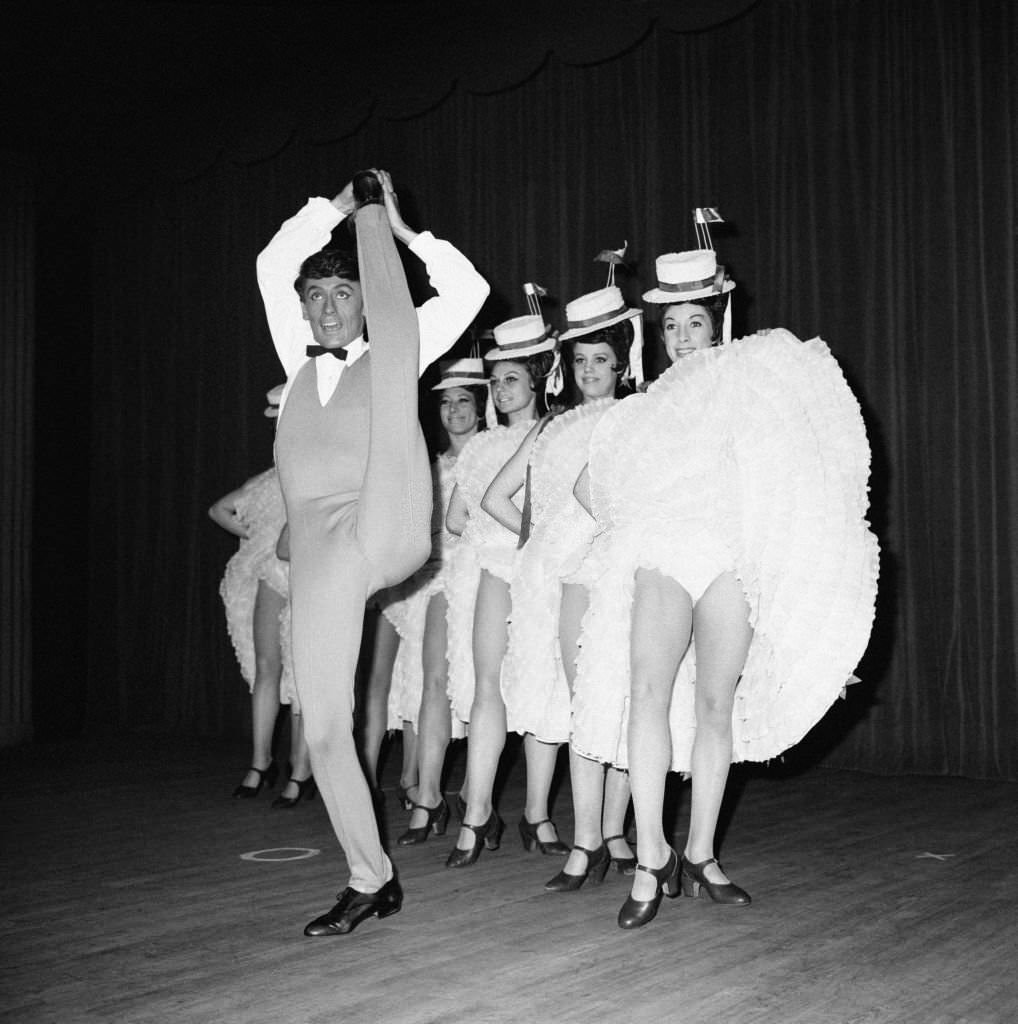
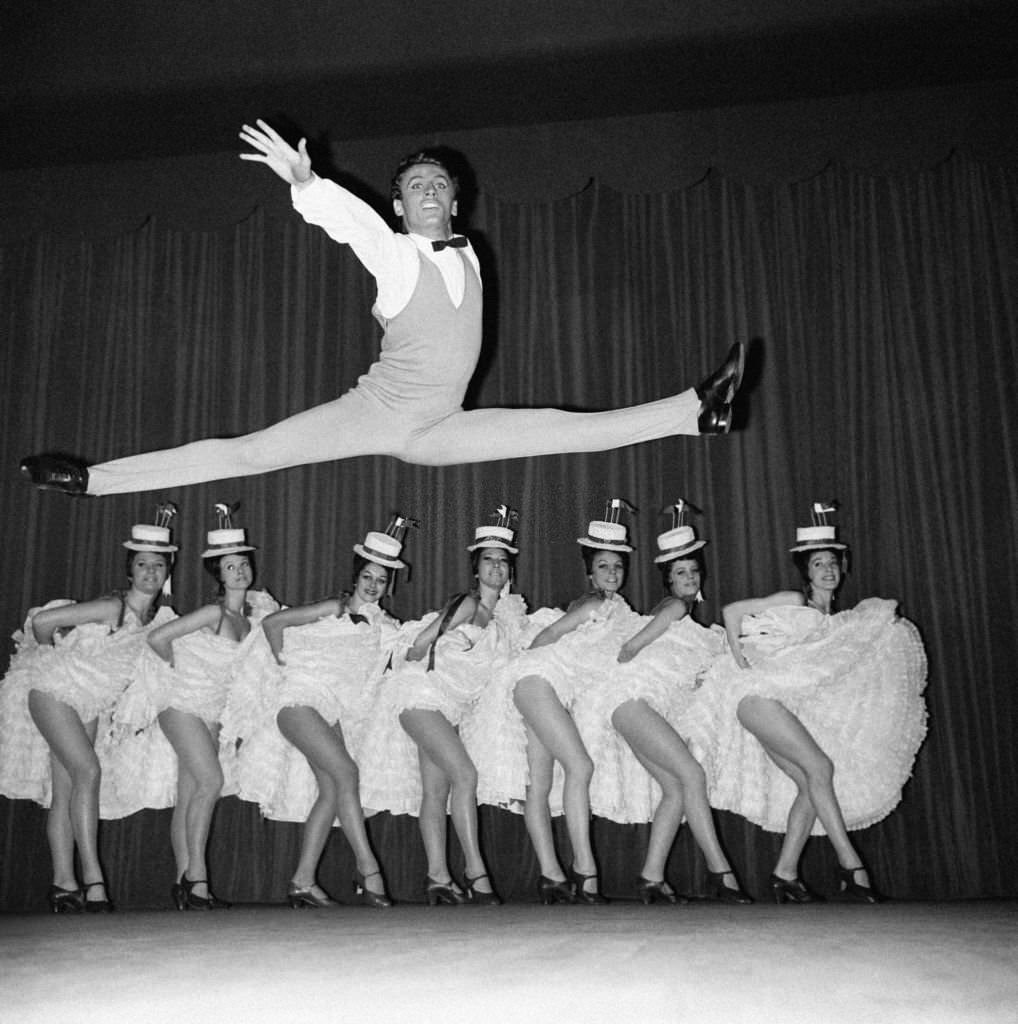
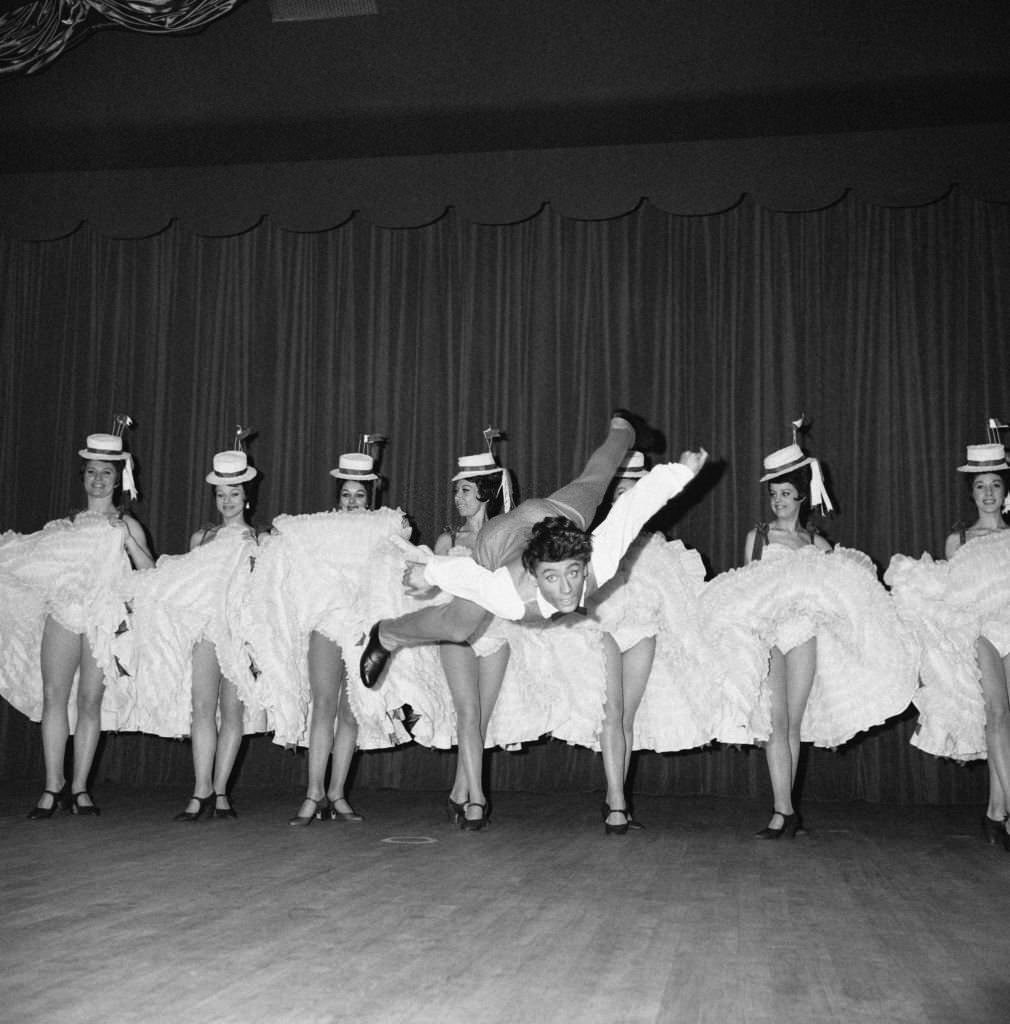
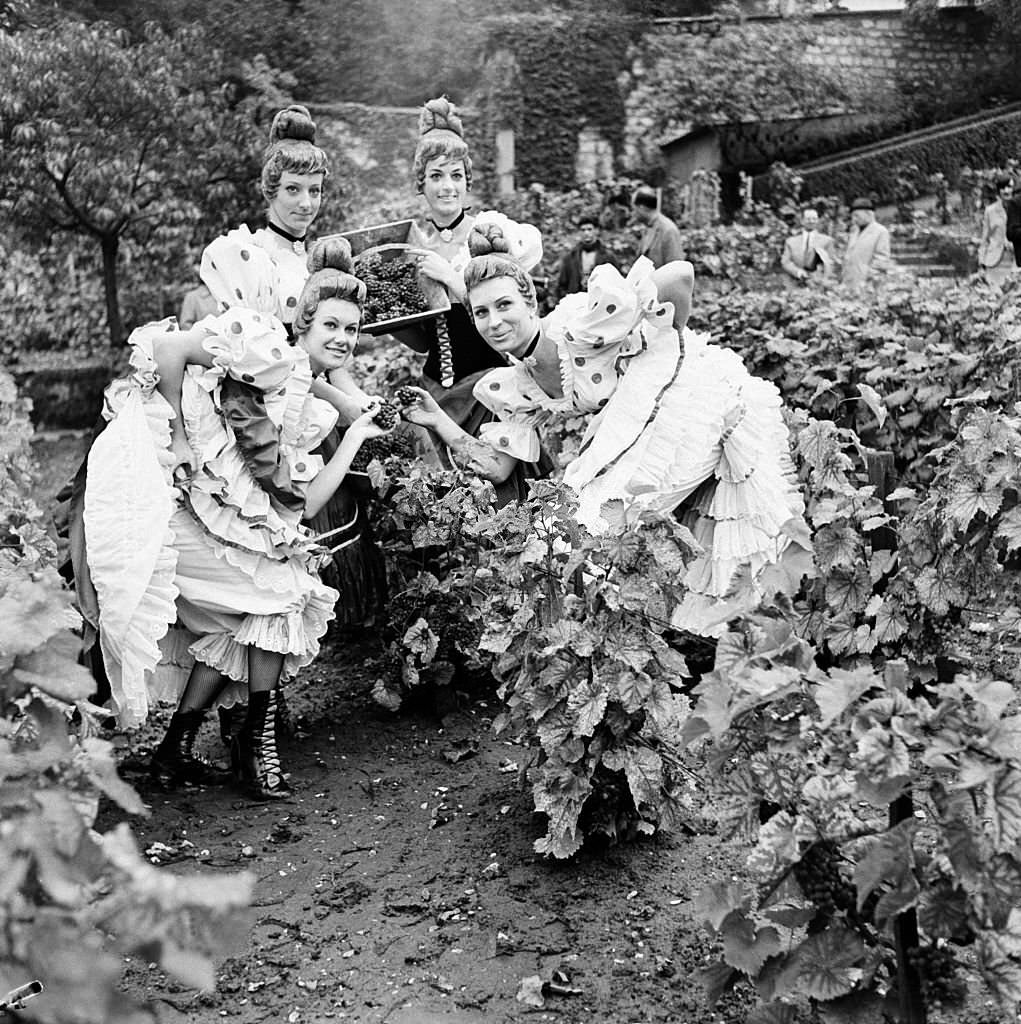
The 1960s brought new revues and new stars to the Moulin Rouge stage. In 1964, Jean-Pierre Charnas headlined the new revue Frou-Frou alongside a full company of cancan dancers. The Folies Bergère continued its own long-running cancan tradition. And in 1965, four Moulin Rouge dancers took a break from the stage to pick grapes in the vineyards on the Butte Montmartre — the same hill where the cancan had first taken hold nearly 130 years earlier.
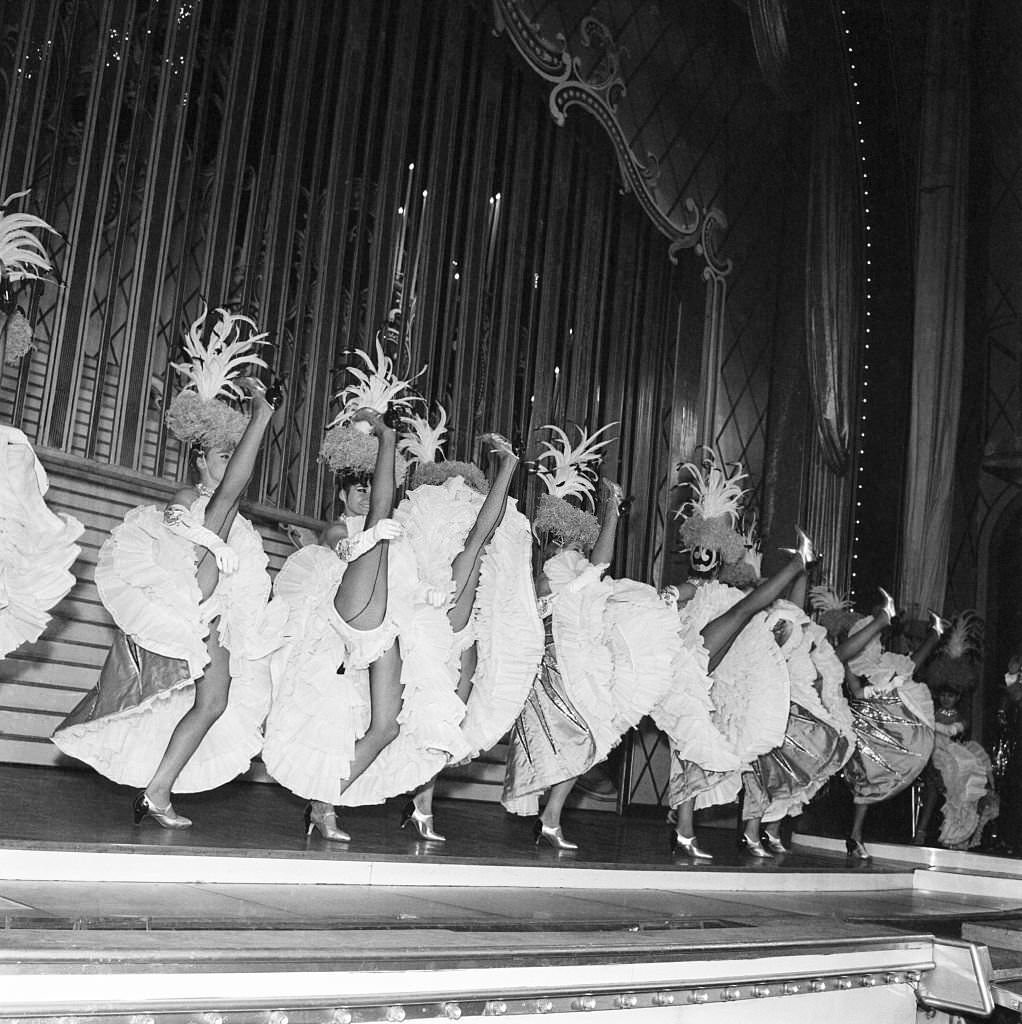
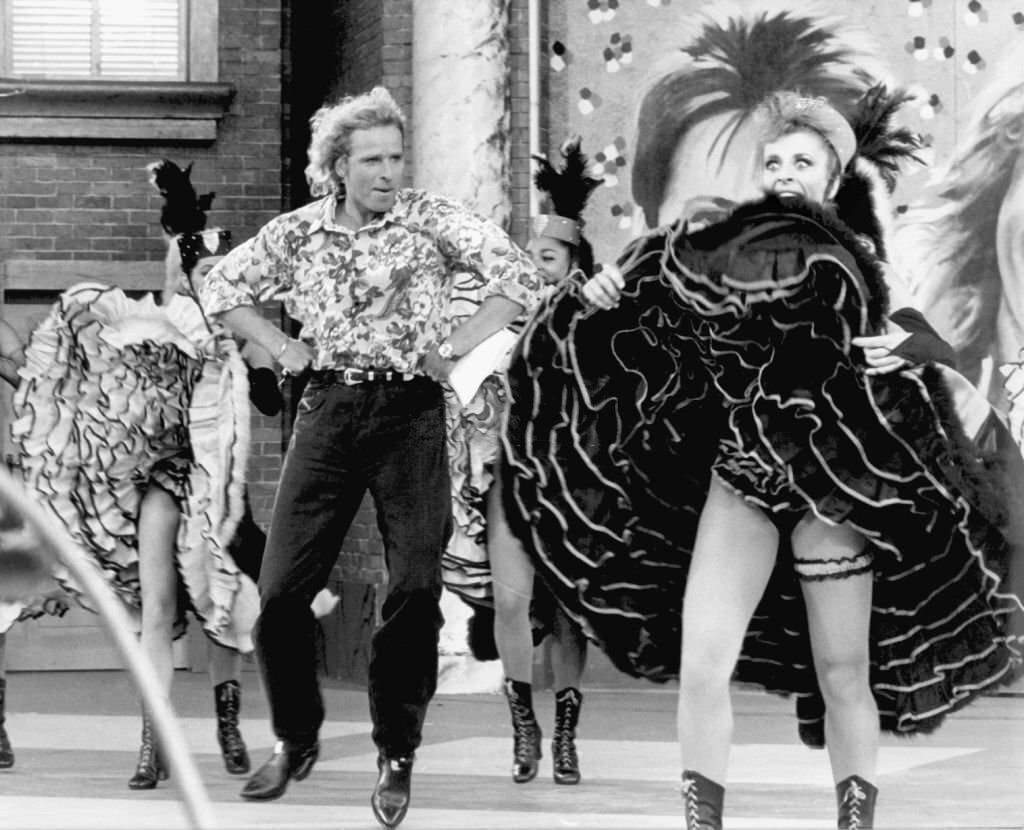
Star dancer Jean-Pierre Charnas during his number with the cancan dancers in the new revue ‘Frou-frou’ at the Moulin Rouge, in Paris, 1964Star dancer Jean-Pierre Charnas during his number with the cancan dancers in the new revue ‘Frou-frou’ at the Moulin Rouge, 1964Star dancer Jean-Pierre Charnas during his number with the cancan dancers in the new revue ‘Frou-frou’ at the Moulin Rouge, in Paris, 1964Four of the French-Cancan dancers of the Moulin Rouge picking grapes in the vineyards of the Butte Montmartre in Paris, 1965The French CanCan is a lways popular at the Paris Folies Bergere theater.The famous ‘French cancan’ on the stage of the ‘Bal Tabarin’ before its final closing, in Paris, 1966
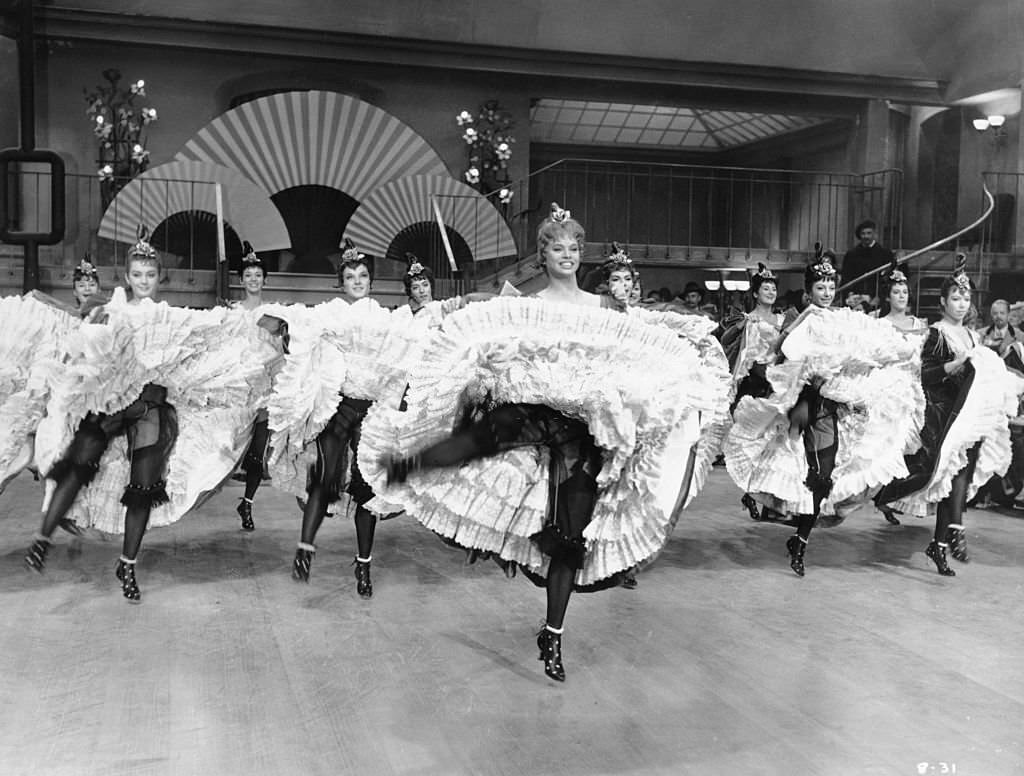
The Bal Tabarin, one of the original homes of the cancan in Paris, gave its final performance in 1966. A photograph from just before closing night captures the dancers on stage in full costume — a last document of a venue that had showcased the dance for generations. The Moulin Rouge and the Folies Bergère carried on, but the Bal Tabarin’s closure marked the end of an era for the dance’s founding venues.
Stage show in homage to past cabaret acts with reference to Toulouse-Lautrec, La Goulue and Aristide Bruant, who were frequent visitors to the Moulin Rouge at the end of the 19th century.
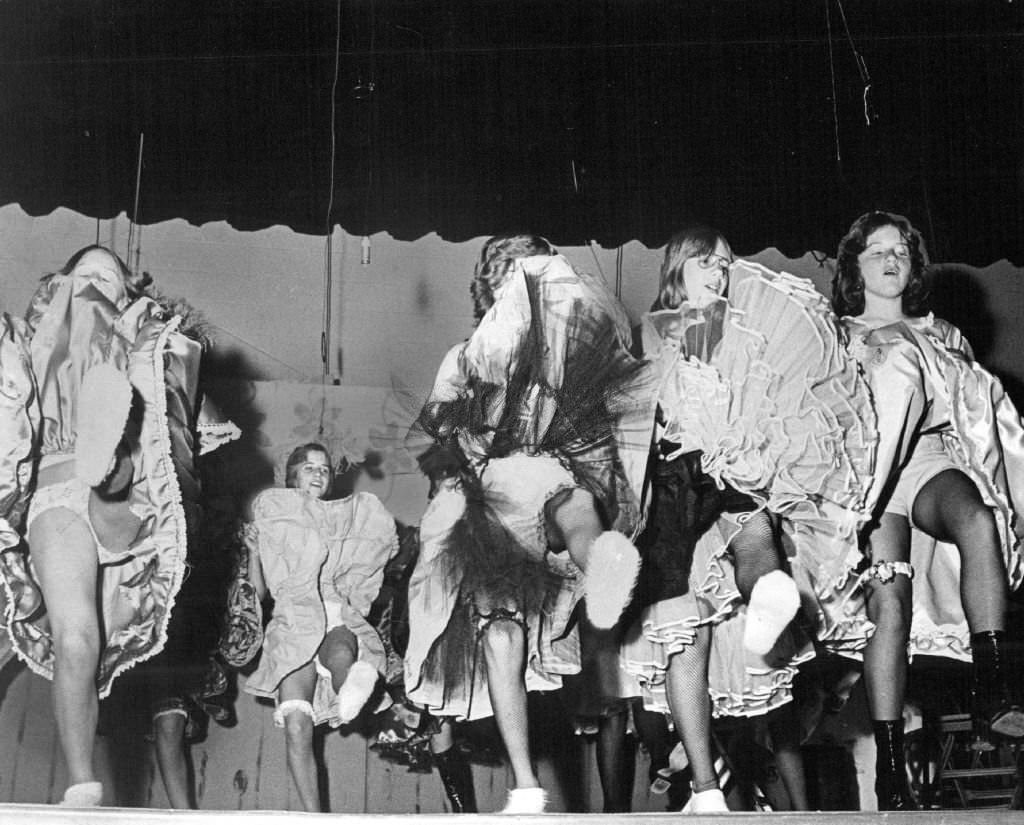
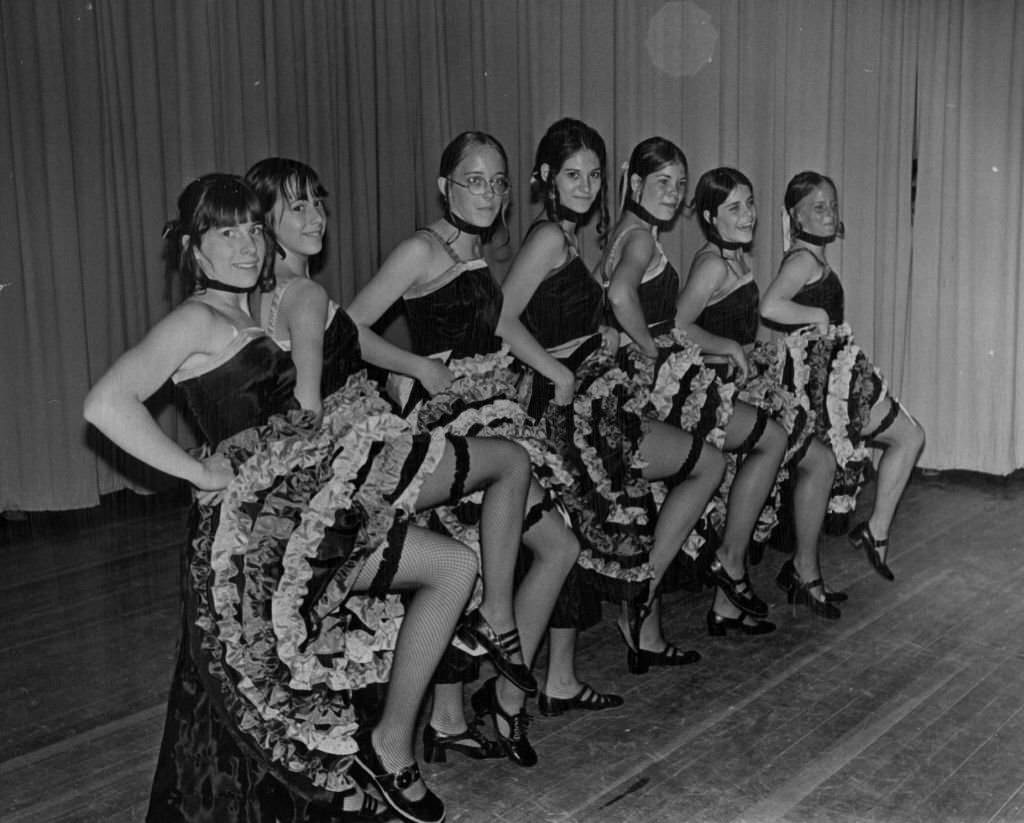
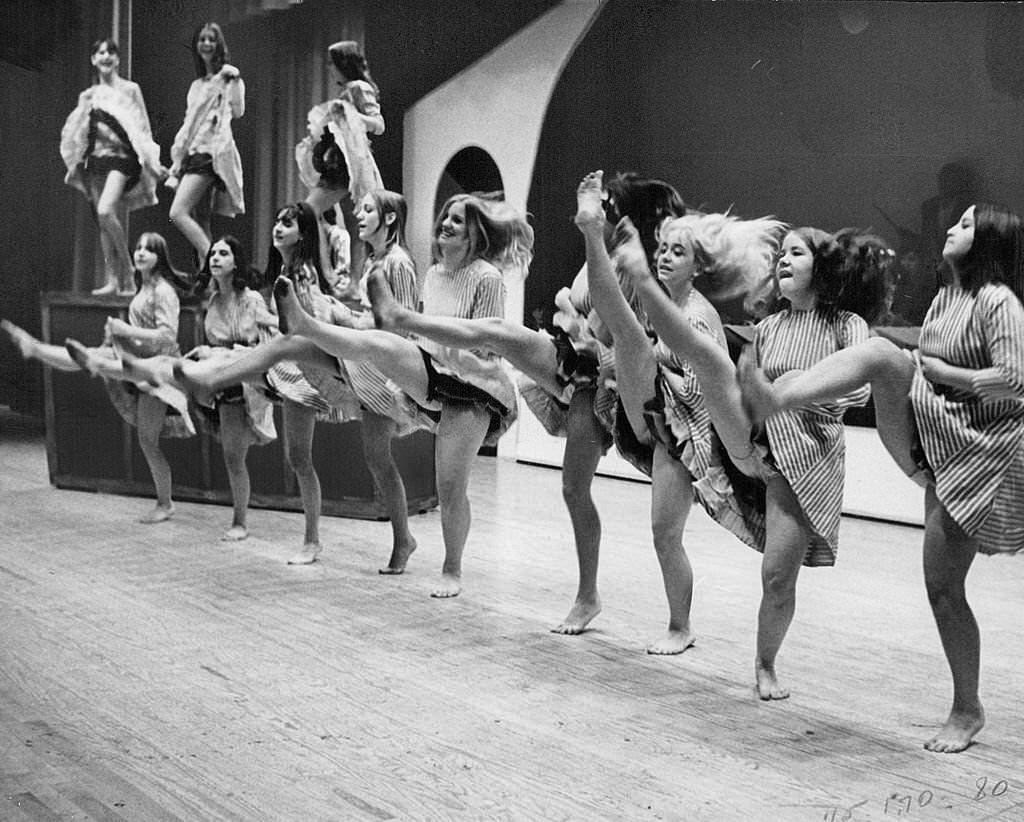
The cancan continued to be performed in schools, community theaters, and amateur productions throughout the 1970s. Sixth graders in Arvada, Colorado staged a can-can chorus line for a centennial project in 1976. Junior high students in cities across the United States practiced the steps for school performances. The dance had traveled so far from the scandal-soaked floors of 19th-century Paris that it had become a fixture of children’s entertainment programs.
Secrest Elementary School In Arvada Presents ‘GOLD’ Fever’ As a Centennial sixth grade project students staged town skit complete with chorus line of can-can girls, 1976Cancan Dancers to be featured in Creighton Junior High PerformanceJunior High Students Practice Dance; Ninth graders at John F. Kennedy Juni, 1971Can-Can line steps out in routine with Enthusiasm, if not exactly precision, 1973
The cancan even made an unlikely appearance in a 1975 agricultural promotion, when four dancers — Biba Brookman, Diana Regal, Robbie Hart, and Nicky Billiyard — performed to promote Brittany cauliflower arriving in Britain during a mild winter. It was a far cry from the Moulin Rouge, but it showed just how embedded the dance had become in public life as a shorthand for spectacle and celebration.
Due to the Mild winter we are enjoying new Cauliflower from Brittany is reaching thi, 1975Four Can-Can dancers Biba Brookman, Diana Regal, Robbie Hart and Nicky Billiyard introduced the delicious vegetable is a spirited Can Can, 1975.Four Can-Can dancers Biba Brookman, Diana Regal, Robbie Hart and Nicky Billiyard introduced the delicious vegetable is a spirited 1975.
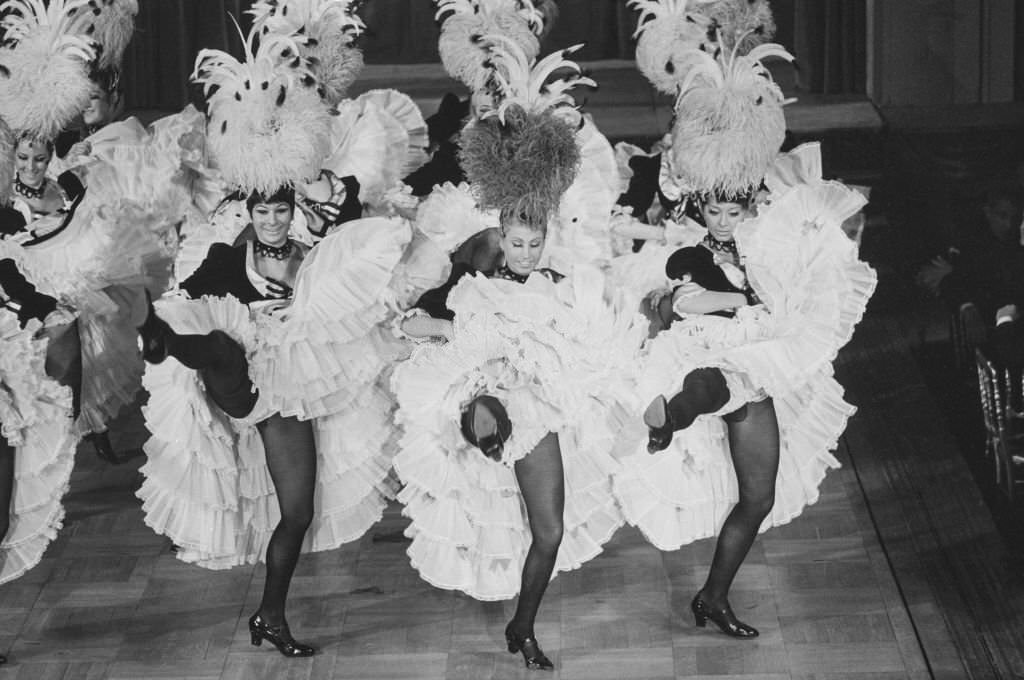
At the professional level, the Moulin Rouge remained the gold standard. A Moulin Rouge dancer performed the cancan at the Royal Variety Show, attended by Queen Elizabeth II, in a final rehearsal that drew intense media attention. The international Radio Exhibition in Berlin featured television ballet dancers performing the cancan as late as 1989. The dance that had started as a scandalous improvisation in a Parisian dance hall had become one of the most enduring performance traditions in the world.
Moulin Rouge dance troupe.International Radio Exhibition in Berlin with the ladies of the television ballet dancing a can-can, 1989

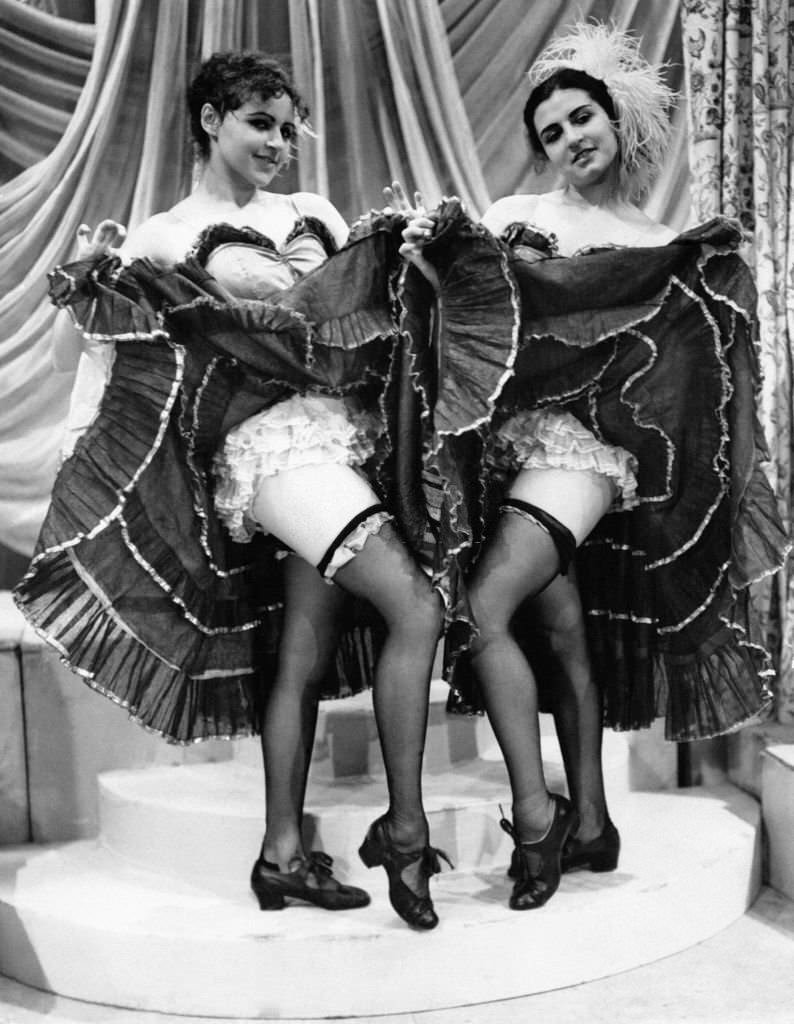
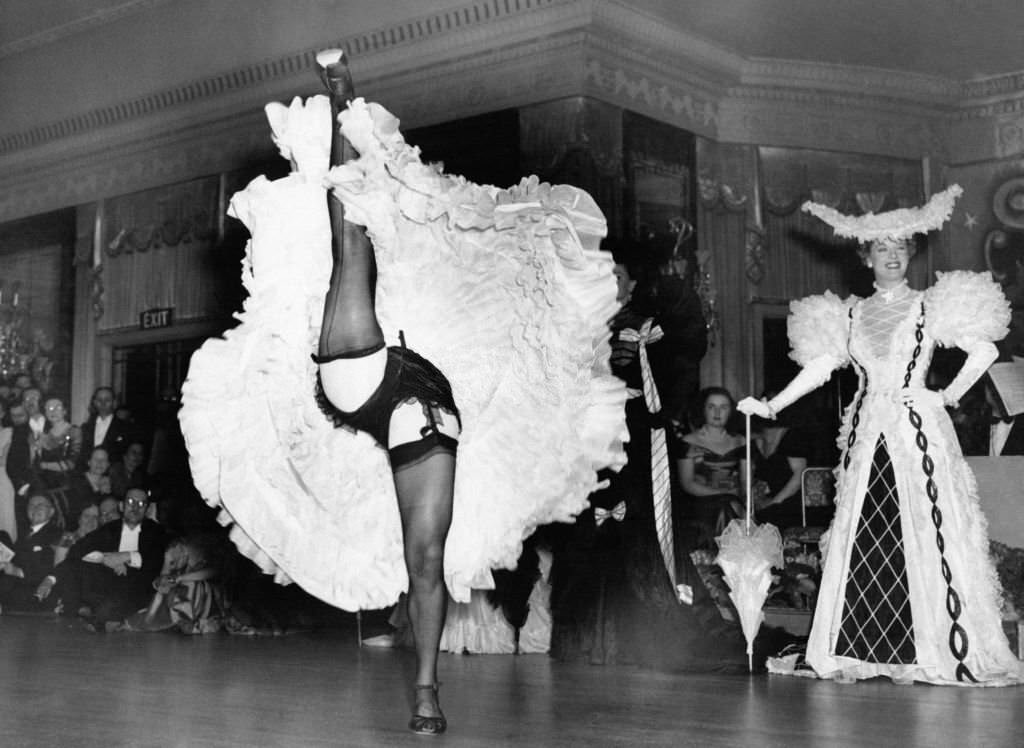
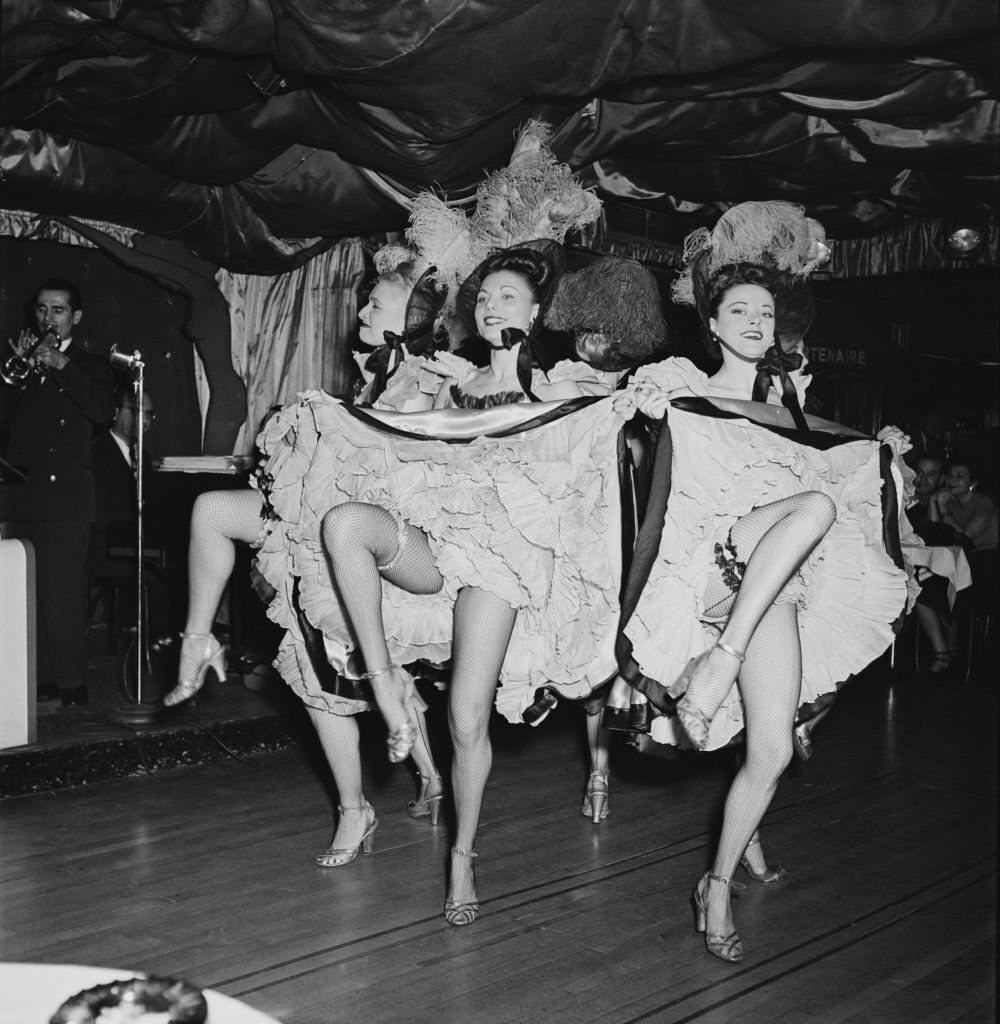
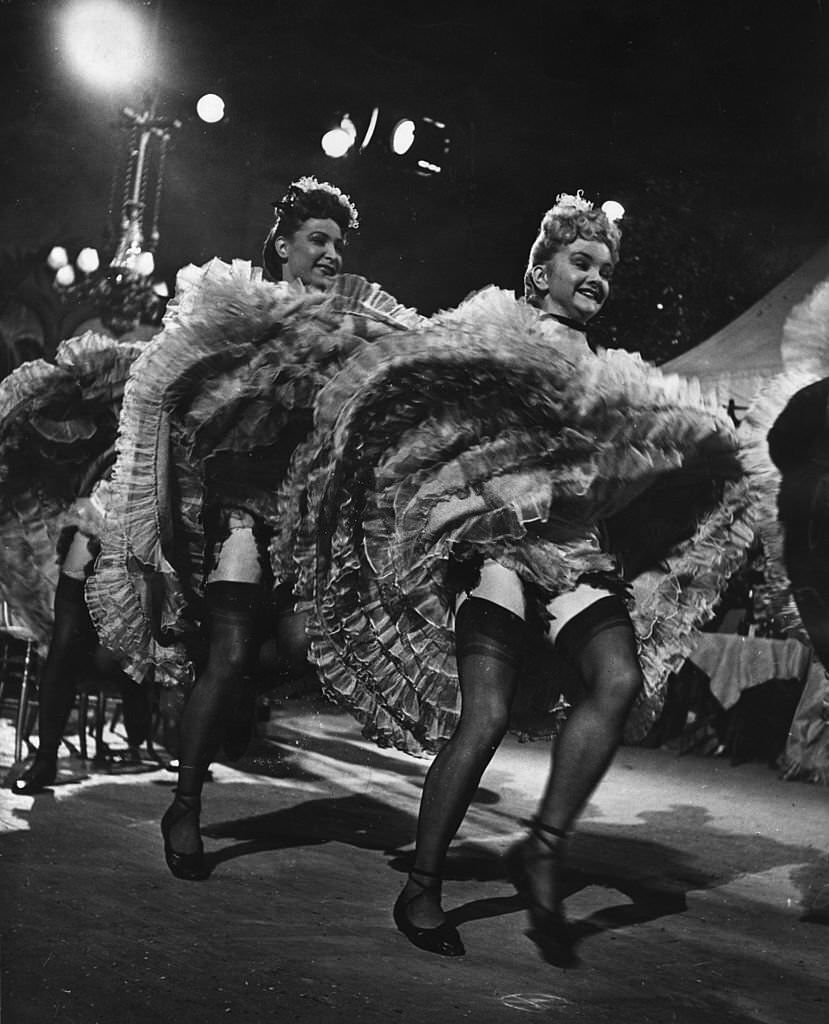
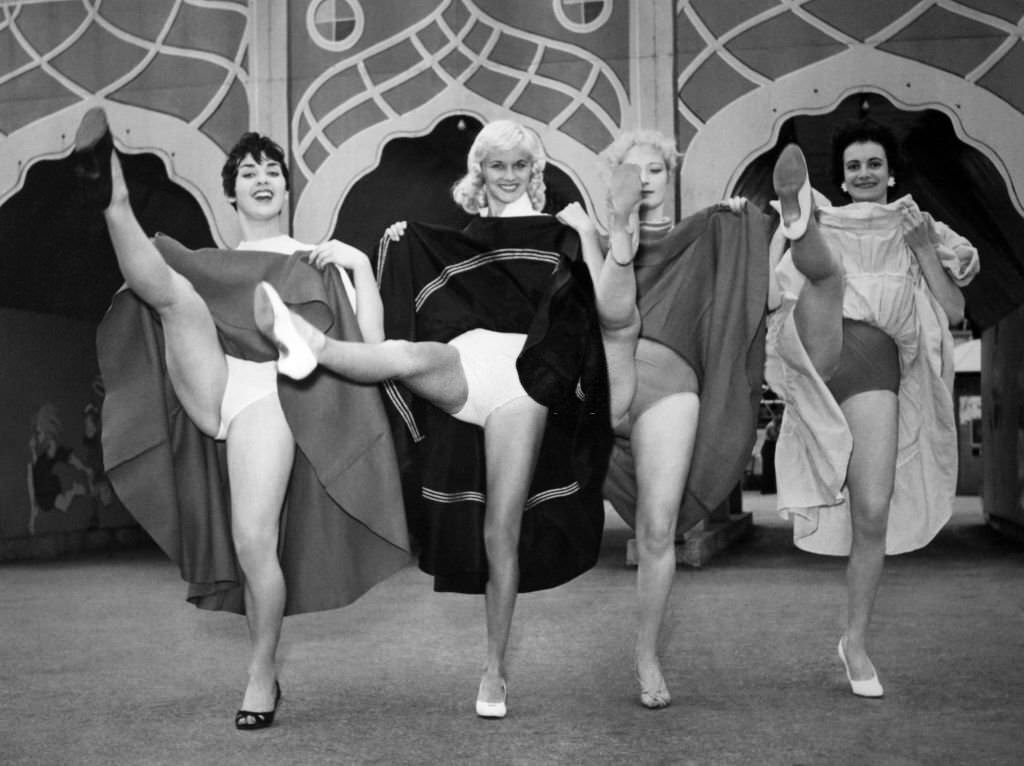
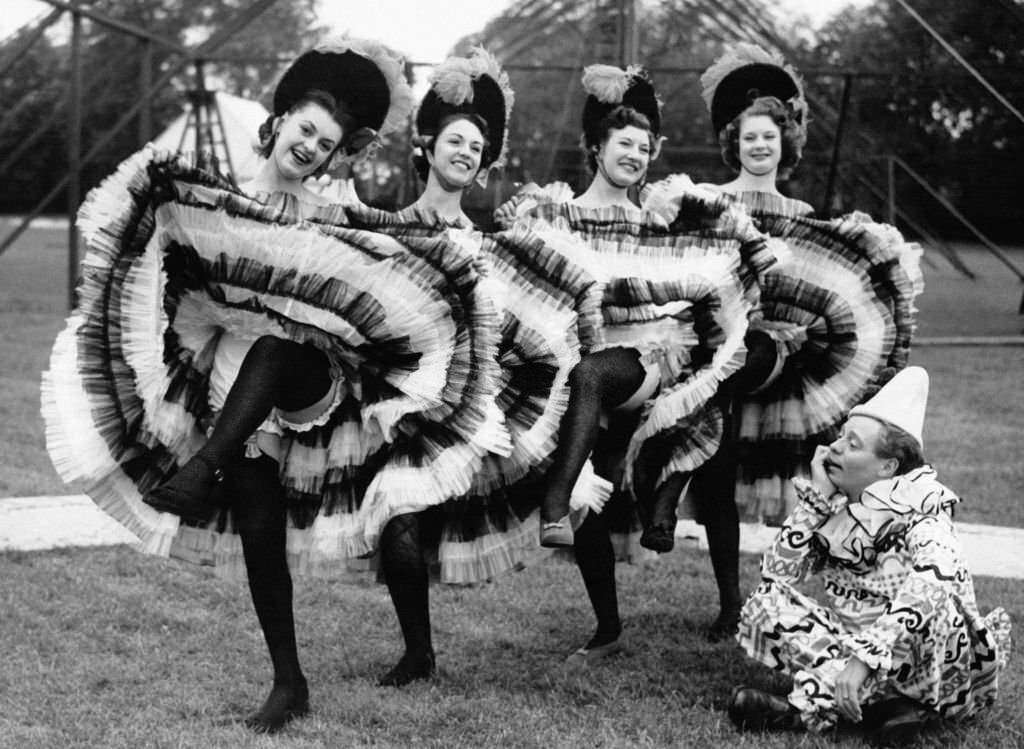
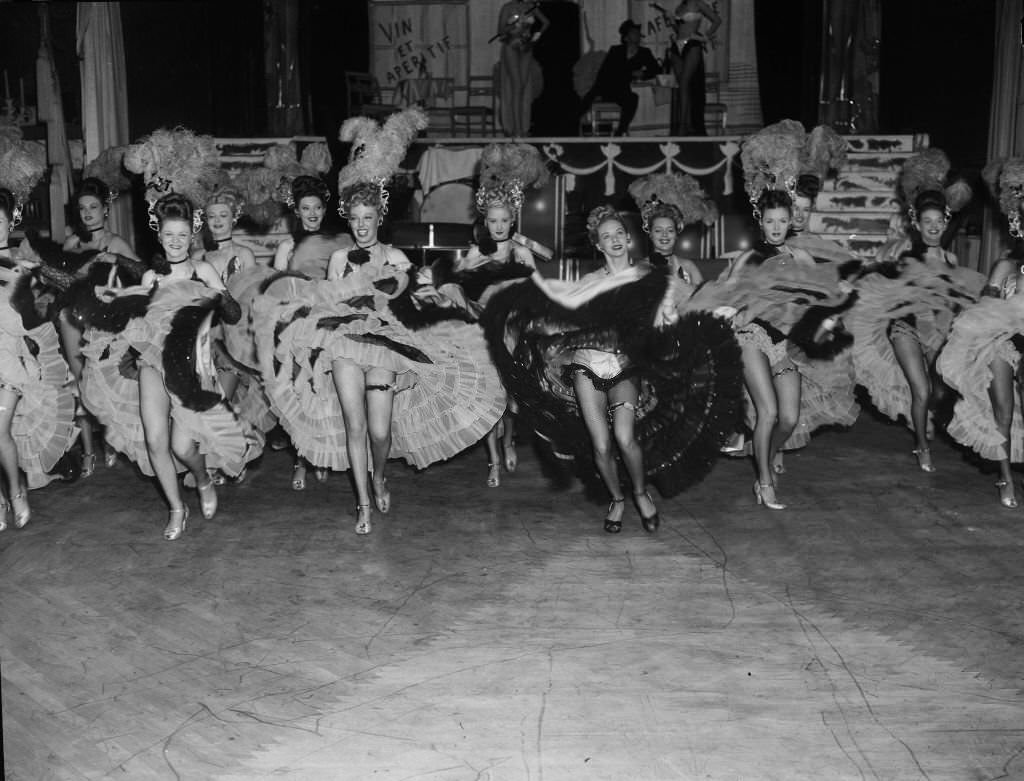
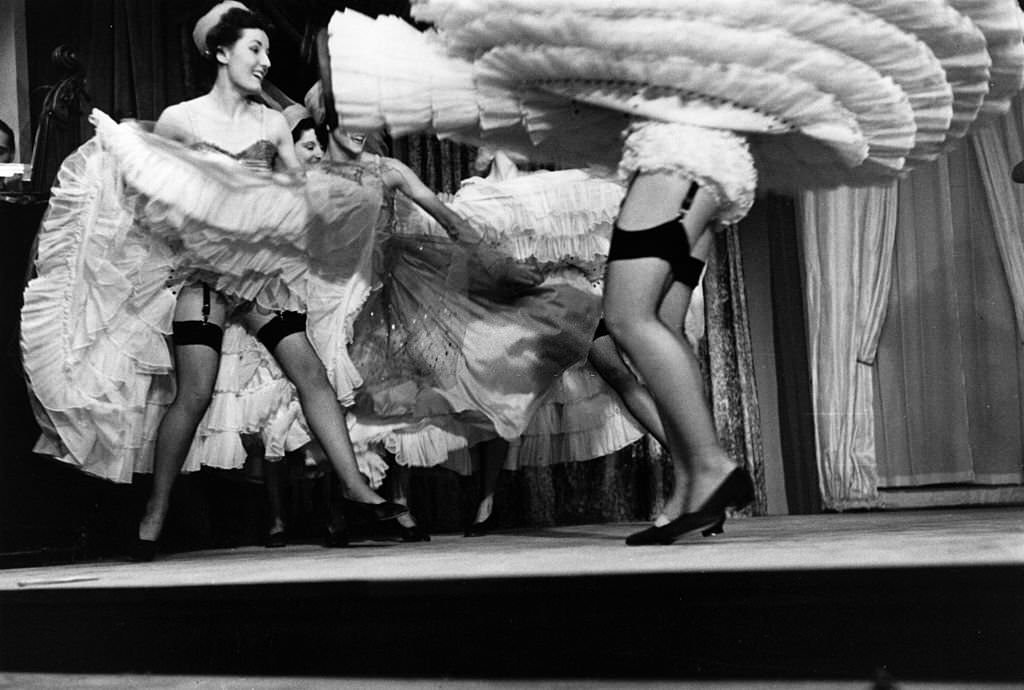


Thank you for sharing this.