Before World War II, the idea of women working in large numbers outside the home was not widely accepted. Many people believed women should only take jobs men didn’t want. Others thought working women were taking jobs from unemployed men. Women from the middle class or above were often expected never to work at all. But when war came, those attitudes were forced aside by necessity. Britain needed workers — and women answered in enormous numbers.
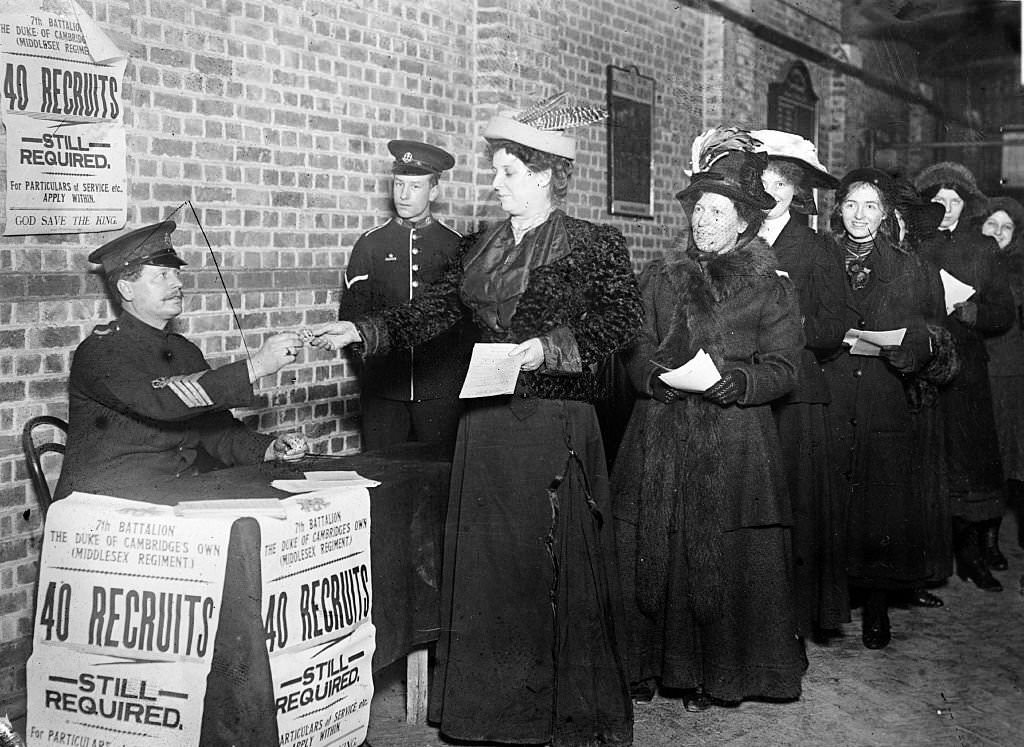
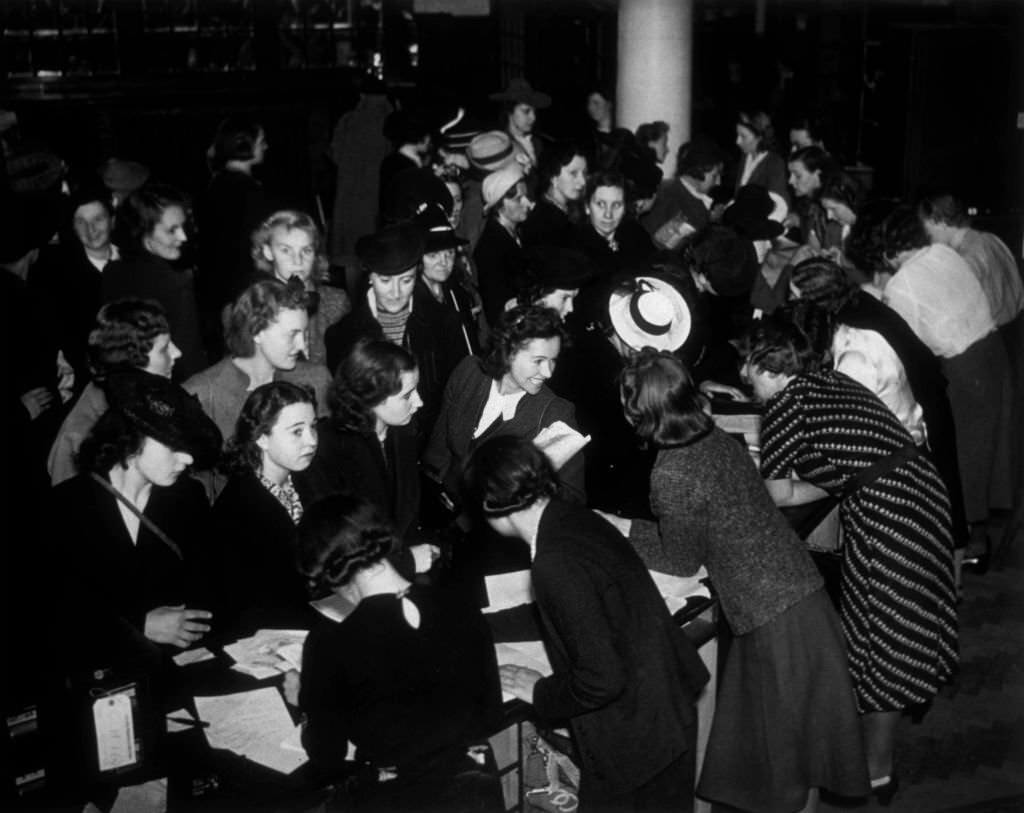
Women enlisting for war work.
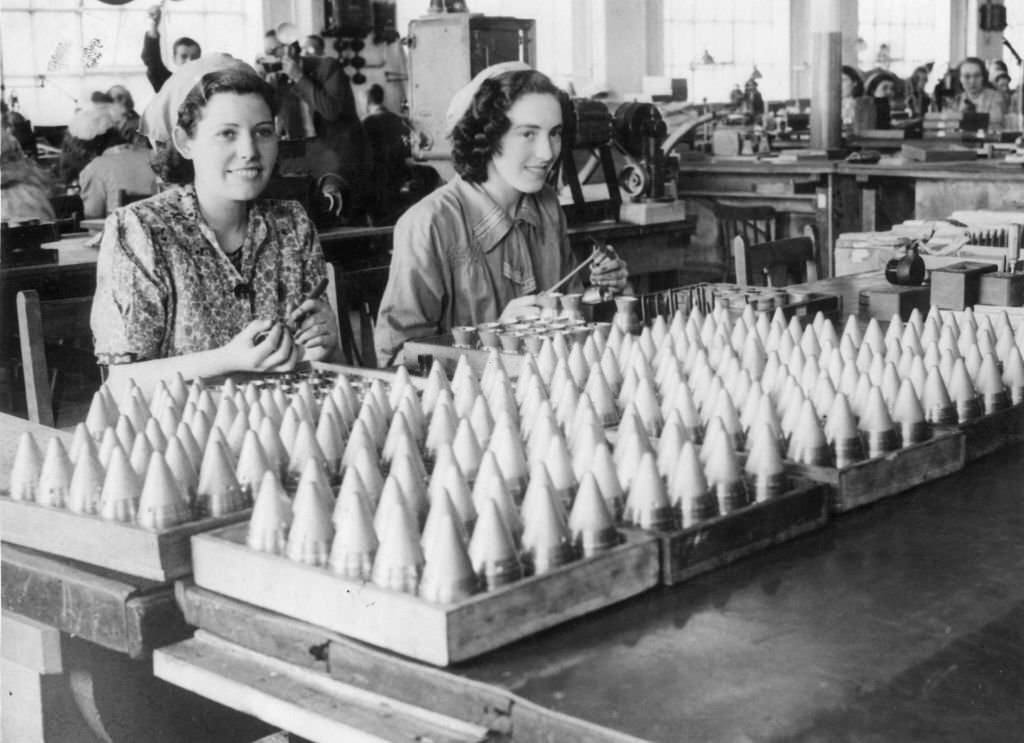
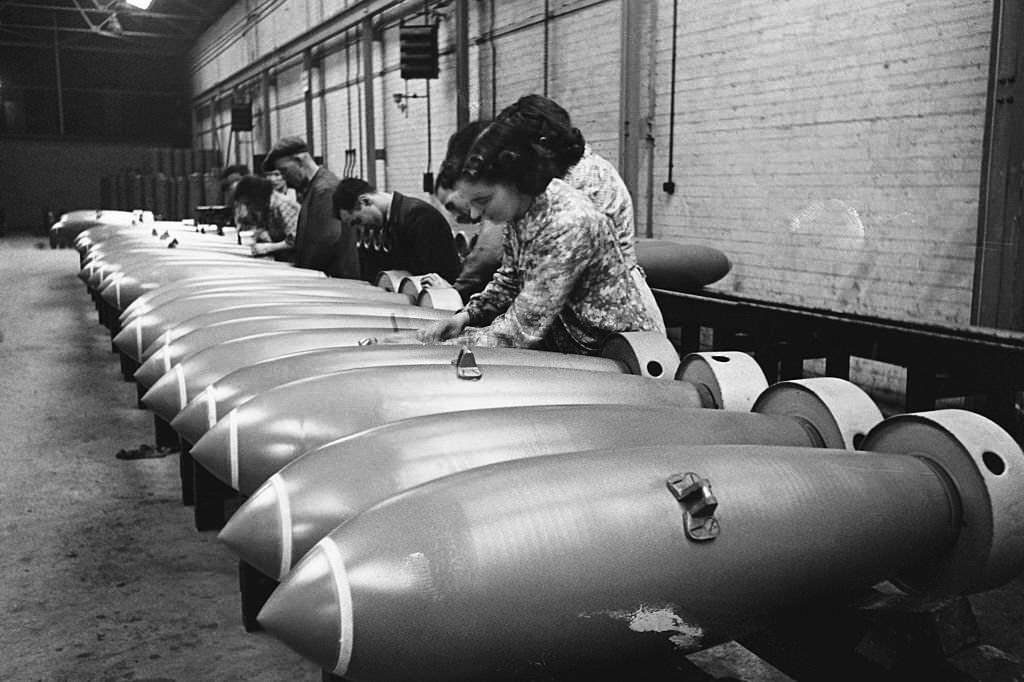
From 1941 onward, the British government began calling women up for war work. The call-up started with single women between the ages of 20 and 30. By mid-1943, nearly 90% of single women and 80% of married women were working — in factories, on farms, or in the armed forces. More than 7,000,000 British women worked in munitions factories alone, producing shells, bullets, and bombs. The scale of their contribution was unlike anything seen before.
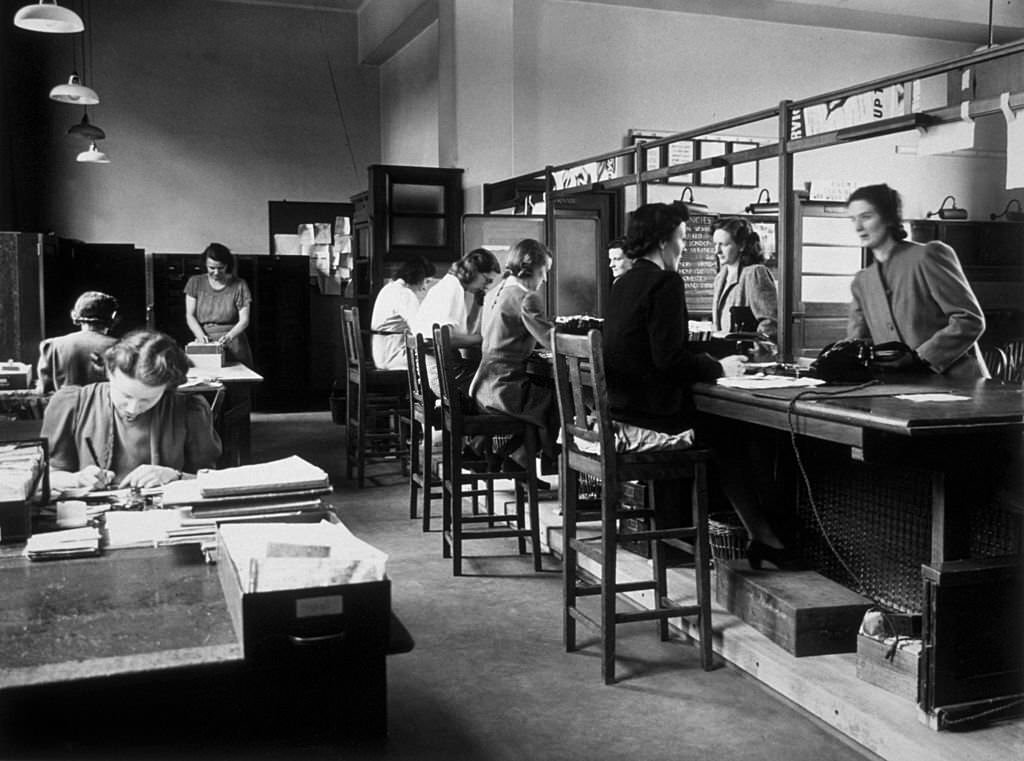
Women applicants at the counter of Tooting Labour Exchange, signing up for employment in essential war work.
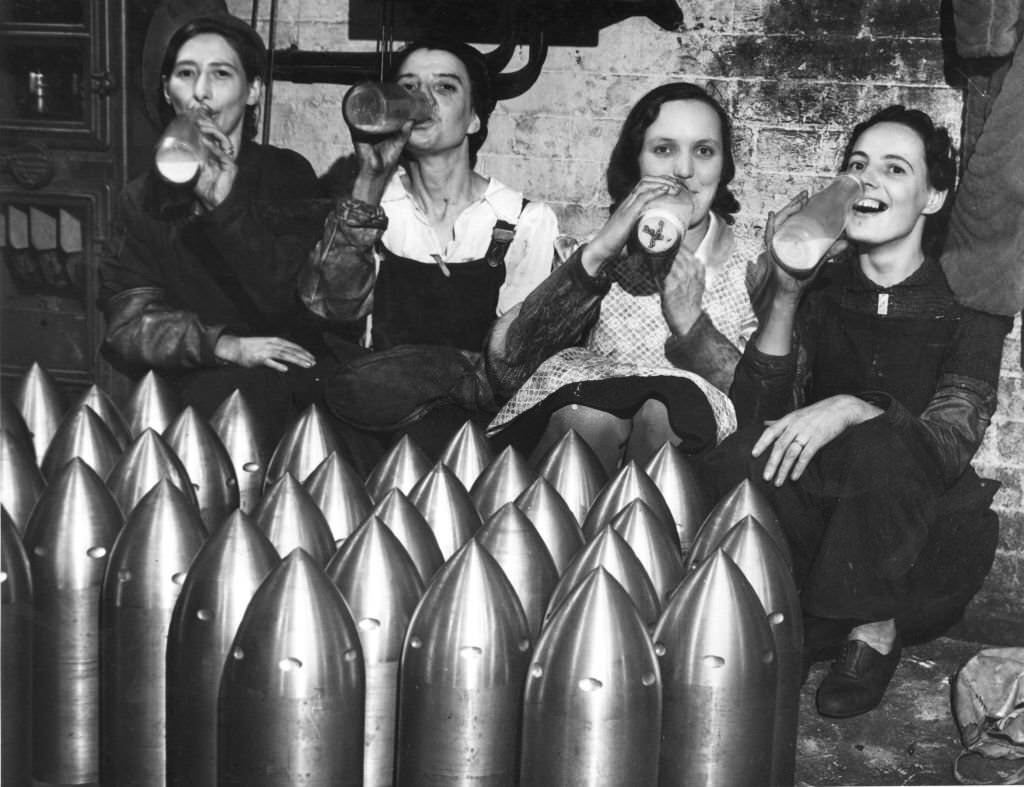
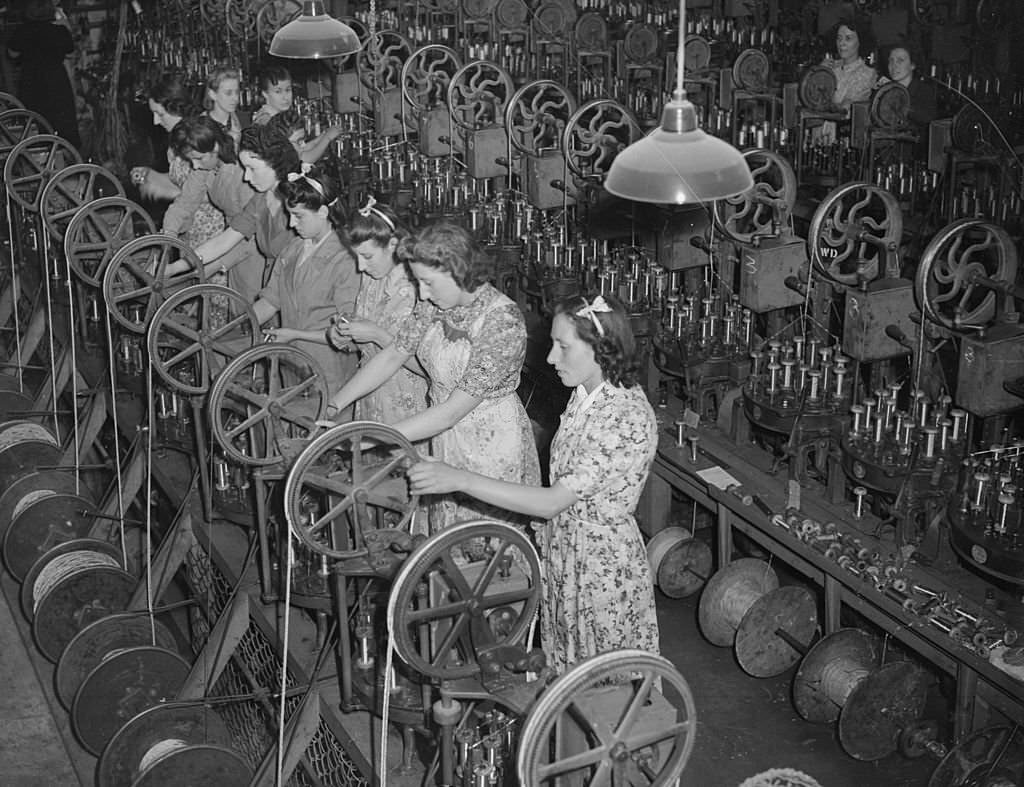
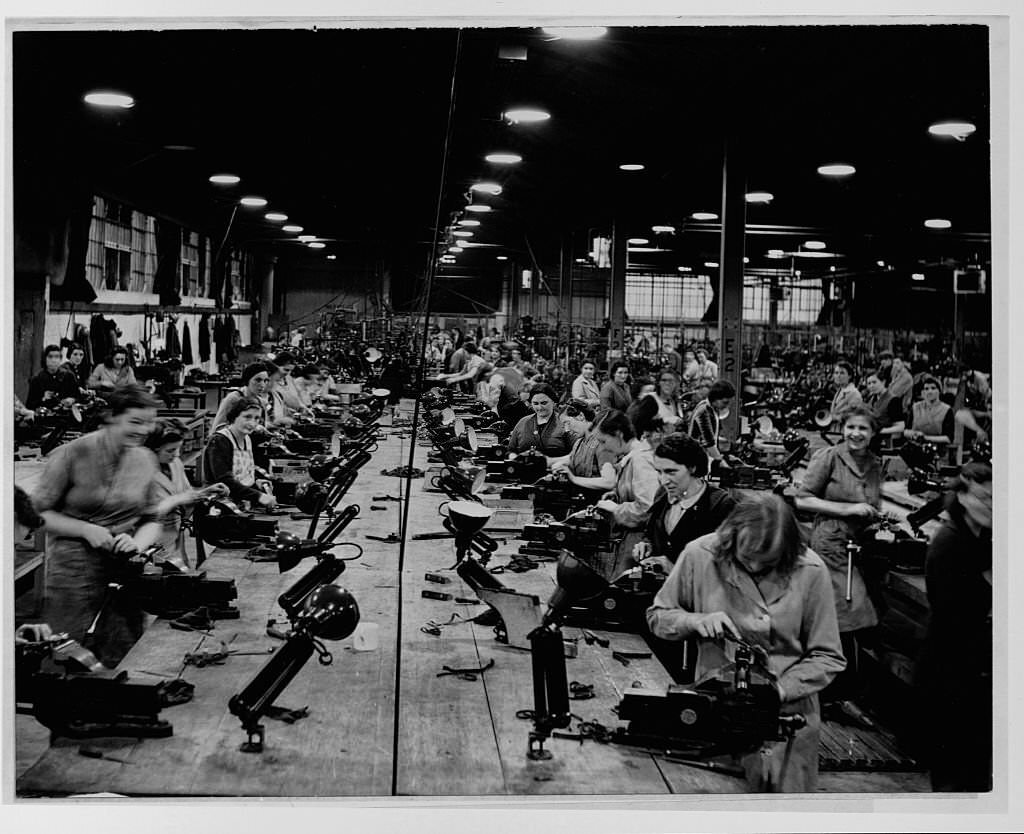
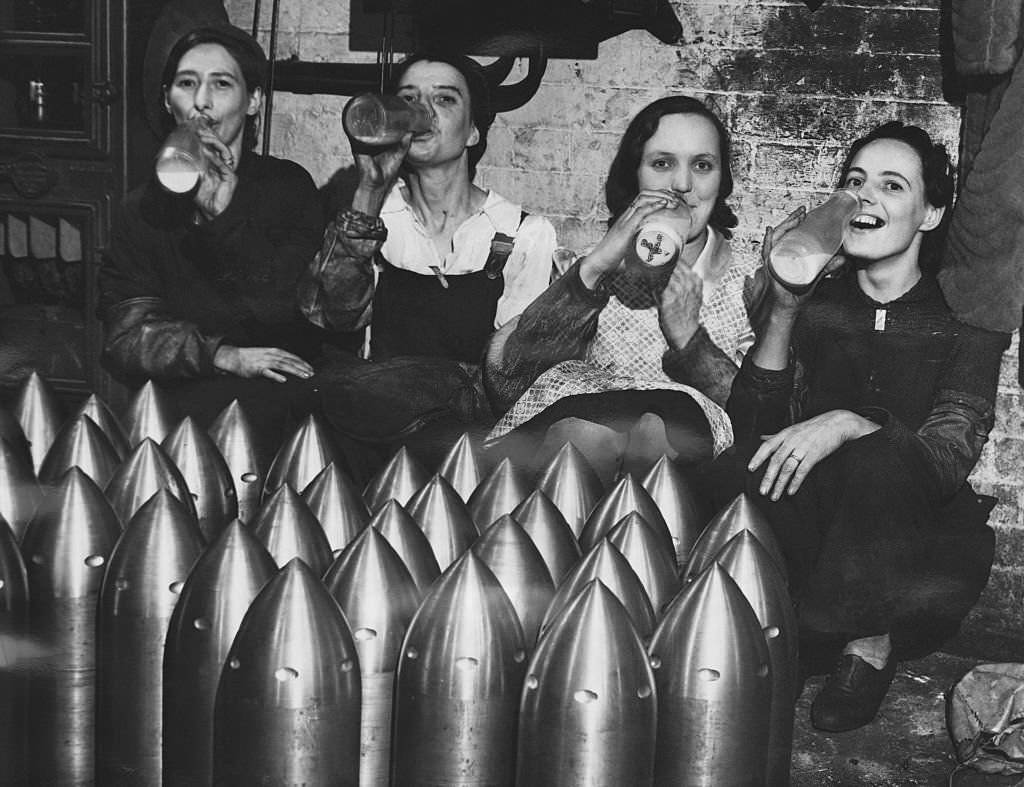
Factory work was demanding and dangerous. Women operated heavy machinery, handled explosive materials, and worked long hours — often up to seven days a week. Some handled toxic chemicals daily. Workers in shell-filling factories who handled sulphur developed yellow skin from prolonged exposure, earning them the nickname “canary girls.” Armoury workers drank milk during their shifts to help counteract the lead they absorbed from the air around them.
Armoury workers drinking milk to counteract the effects of their exposure to lead in the atmosphere of their factory, 1941Women Workers in a Munitions Factory, 1939
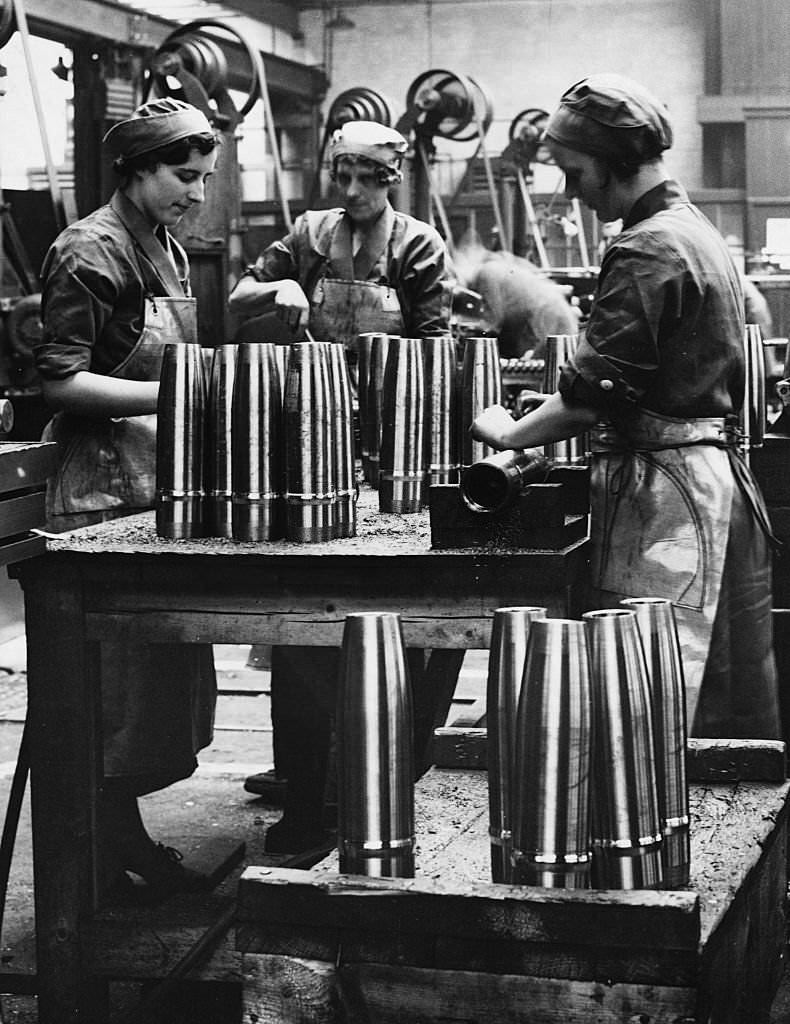
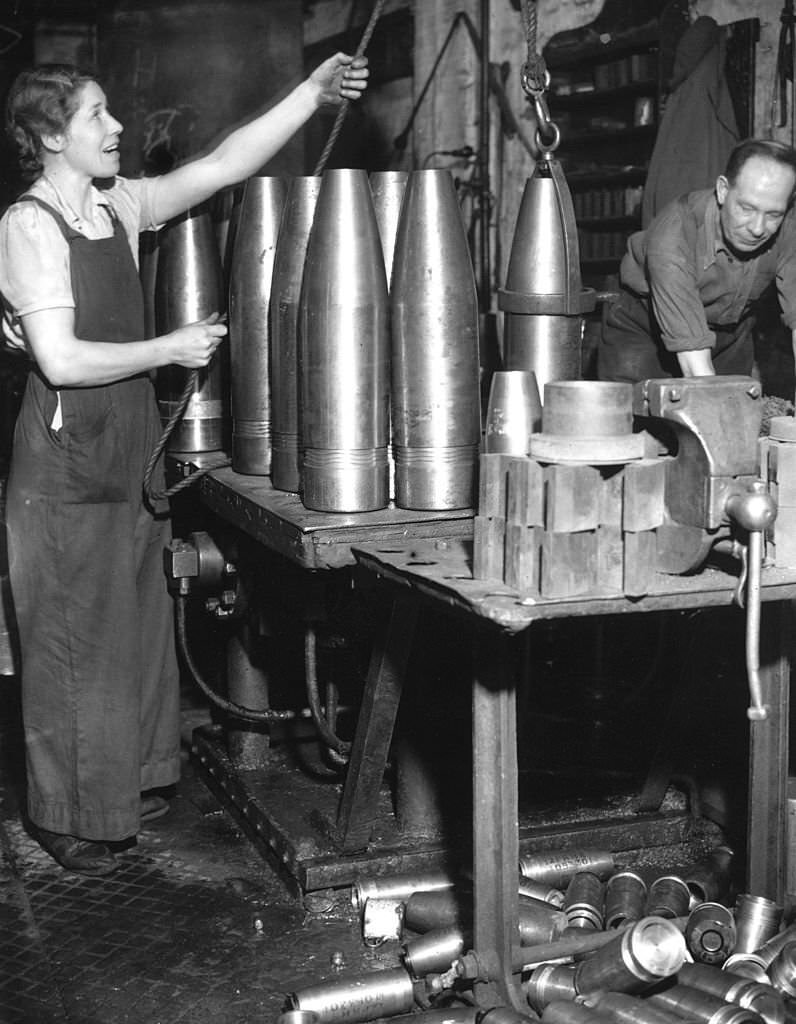
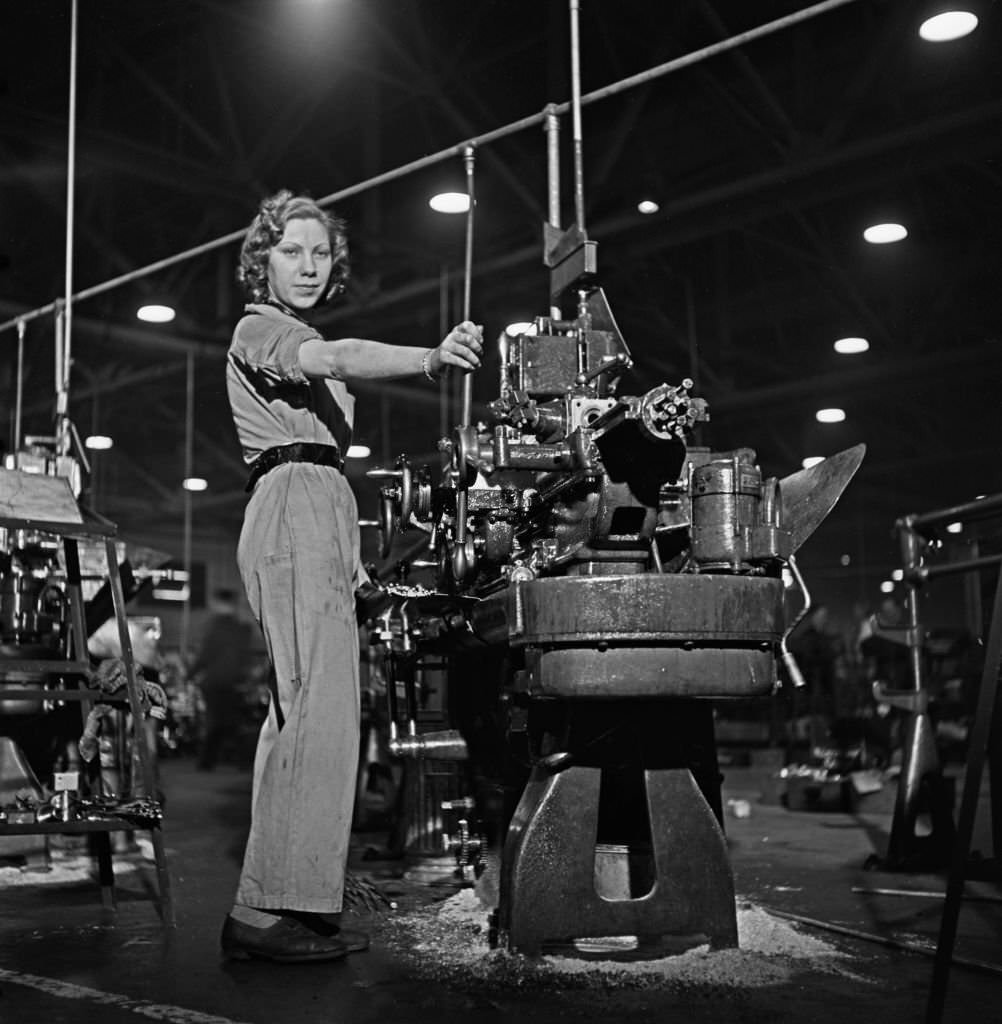
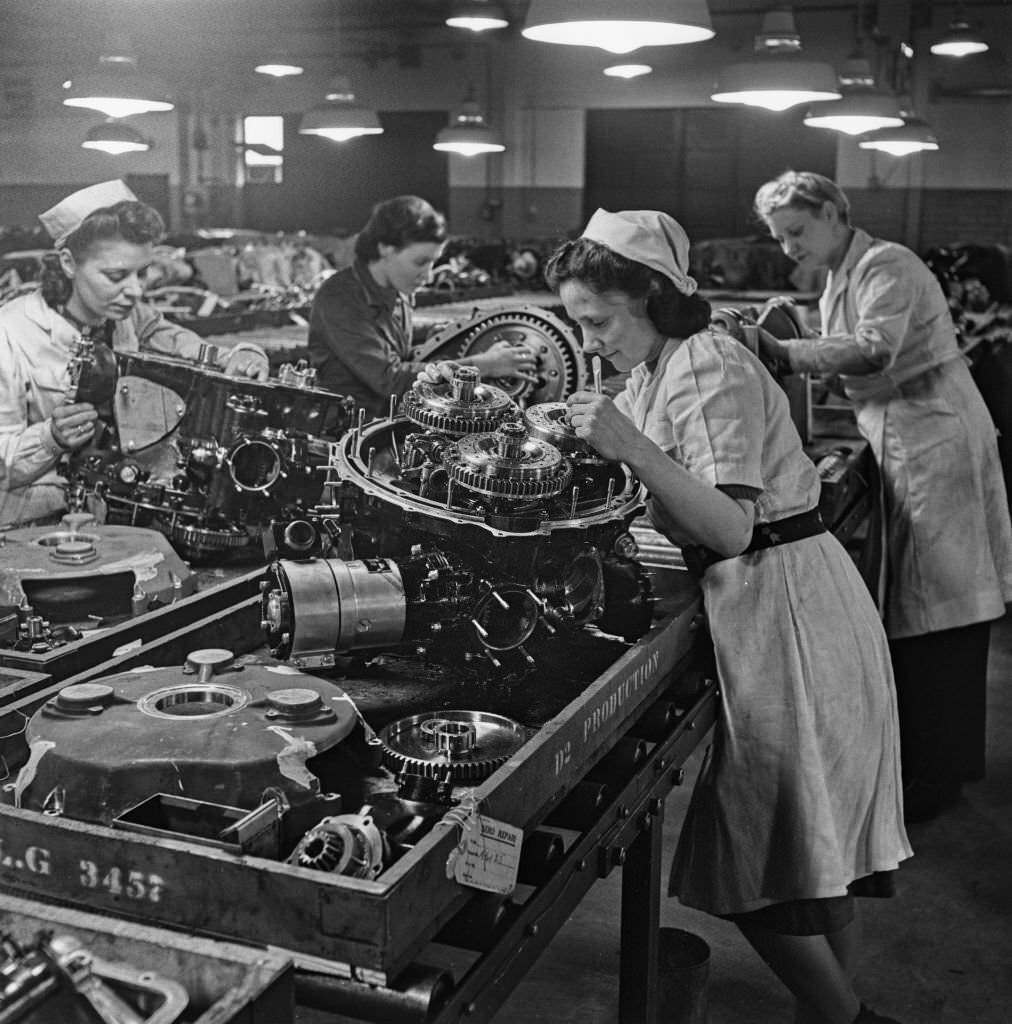
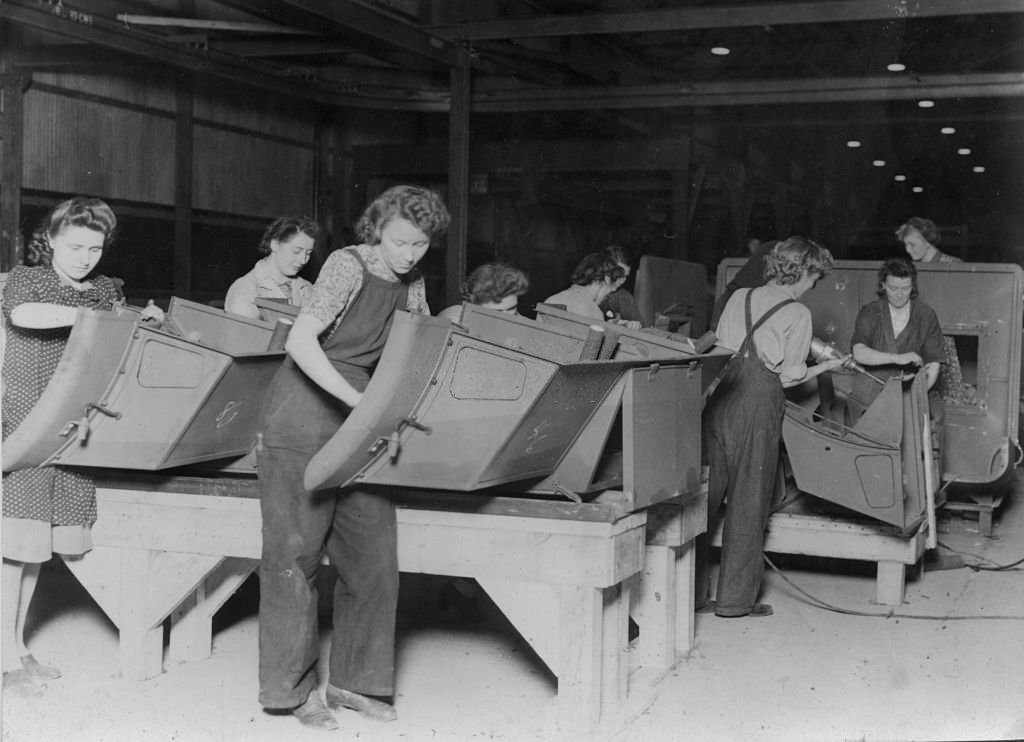
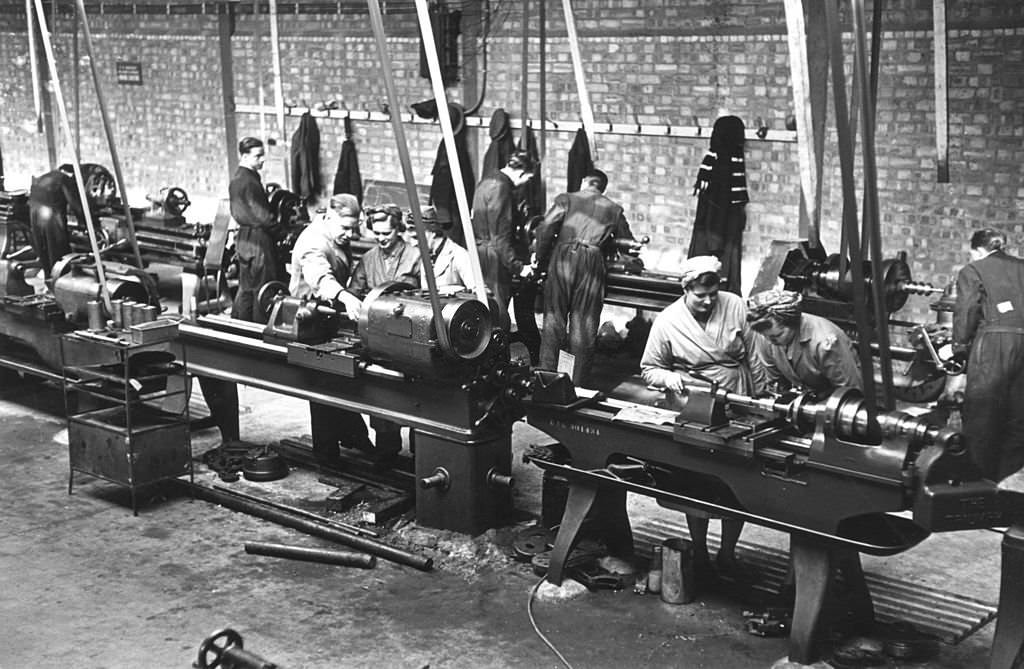
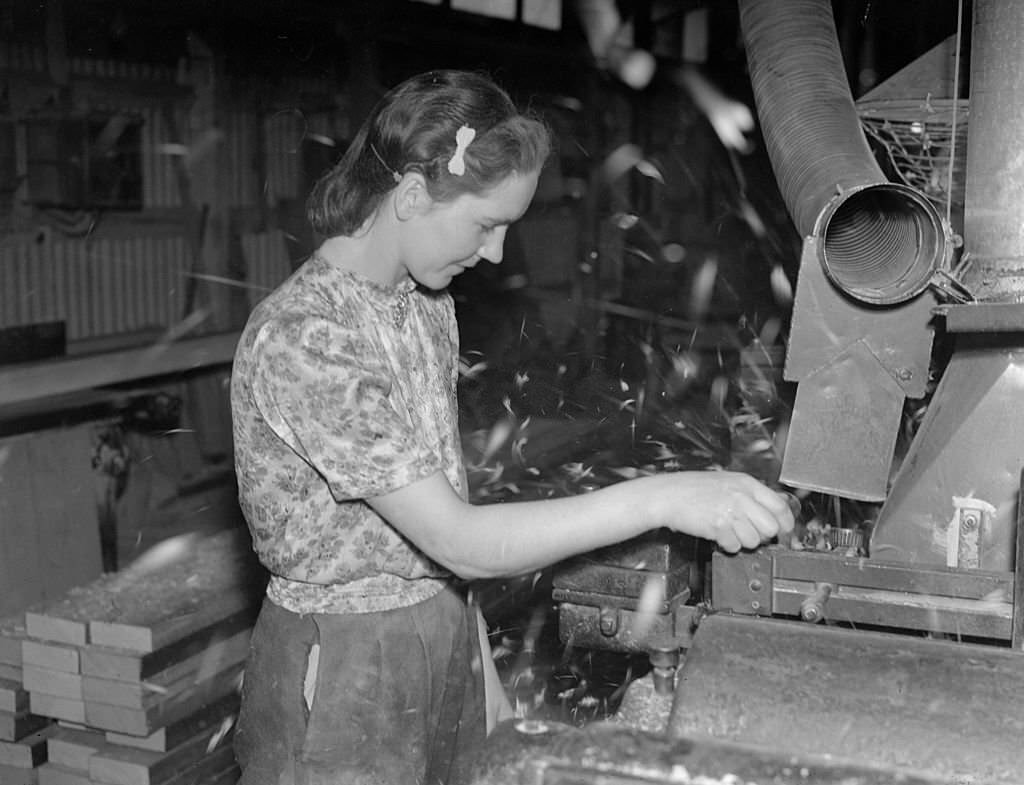
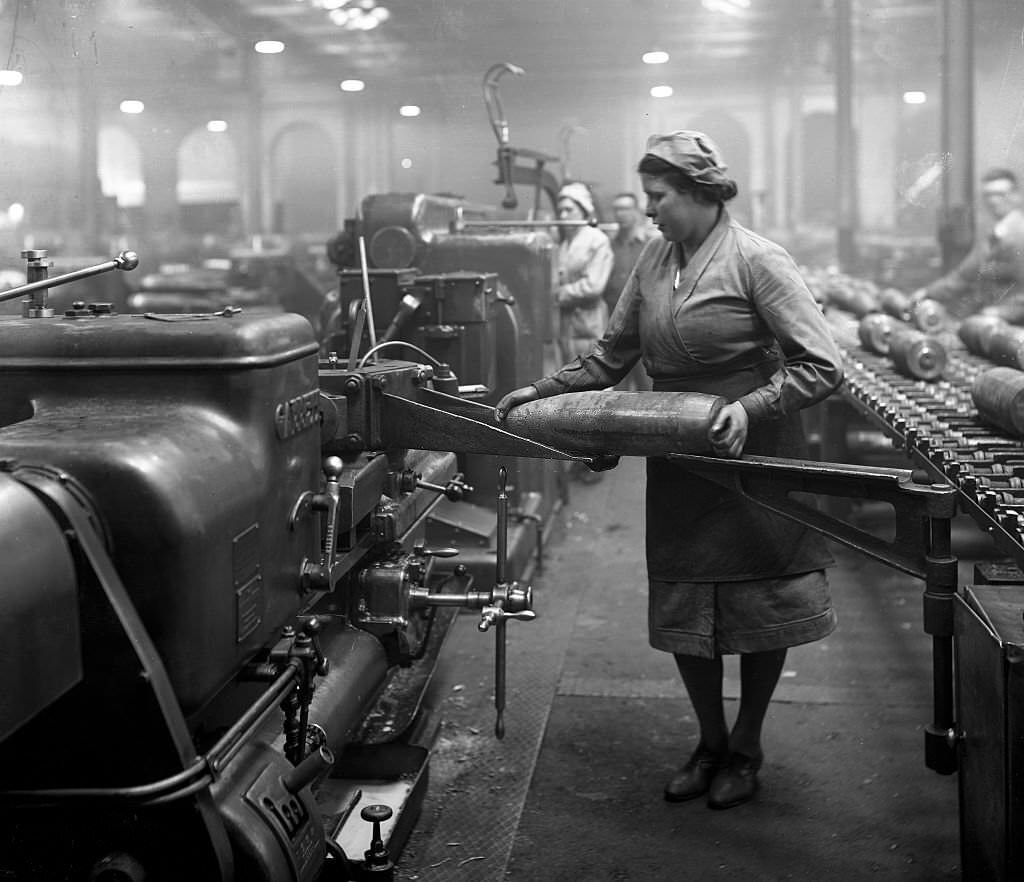
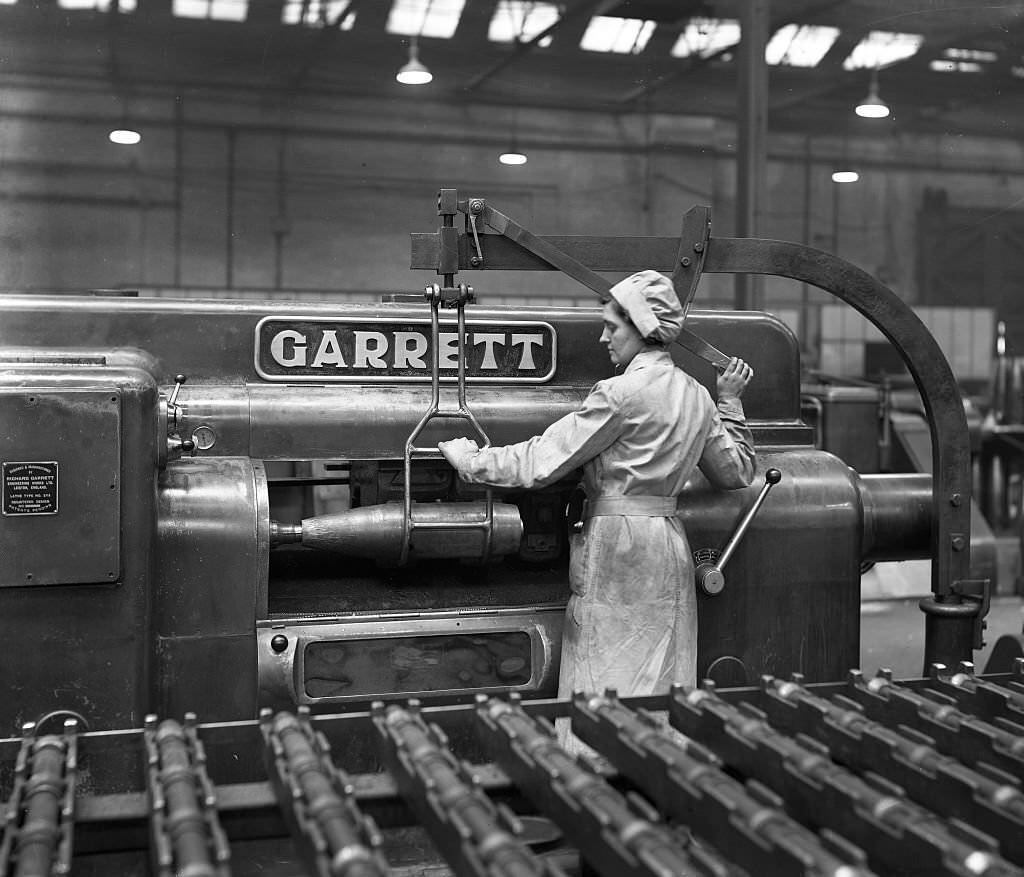
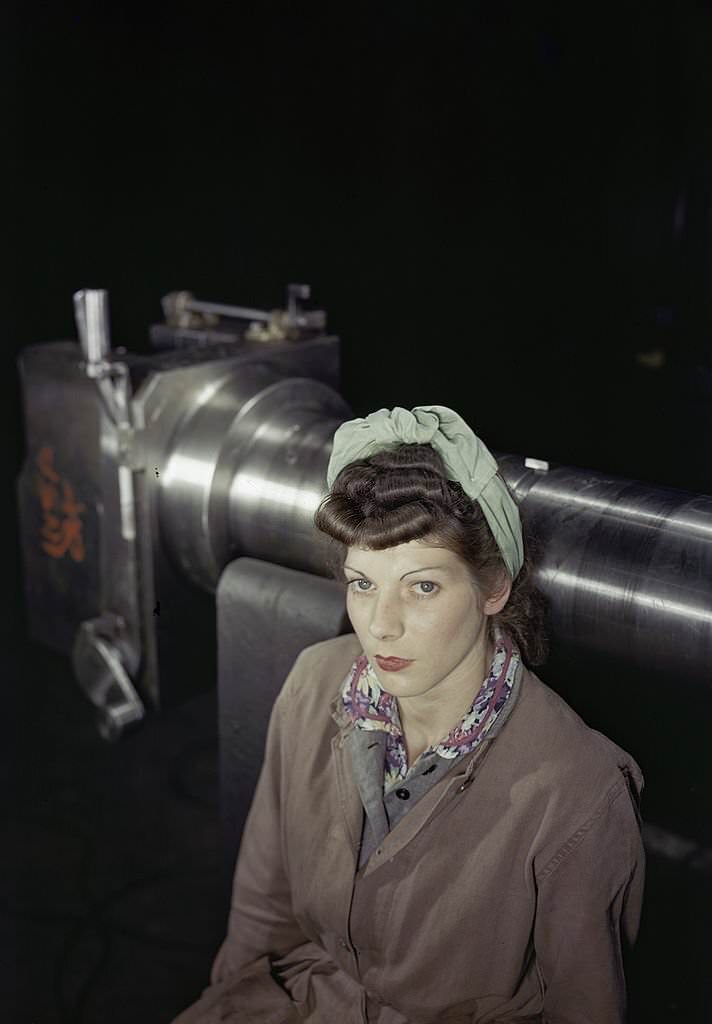
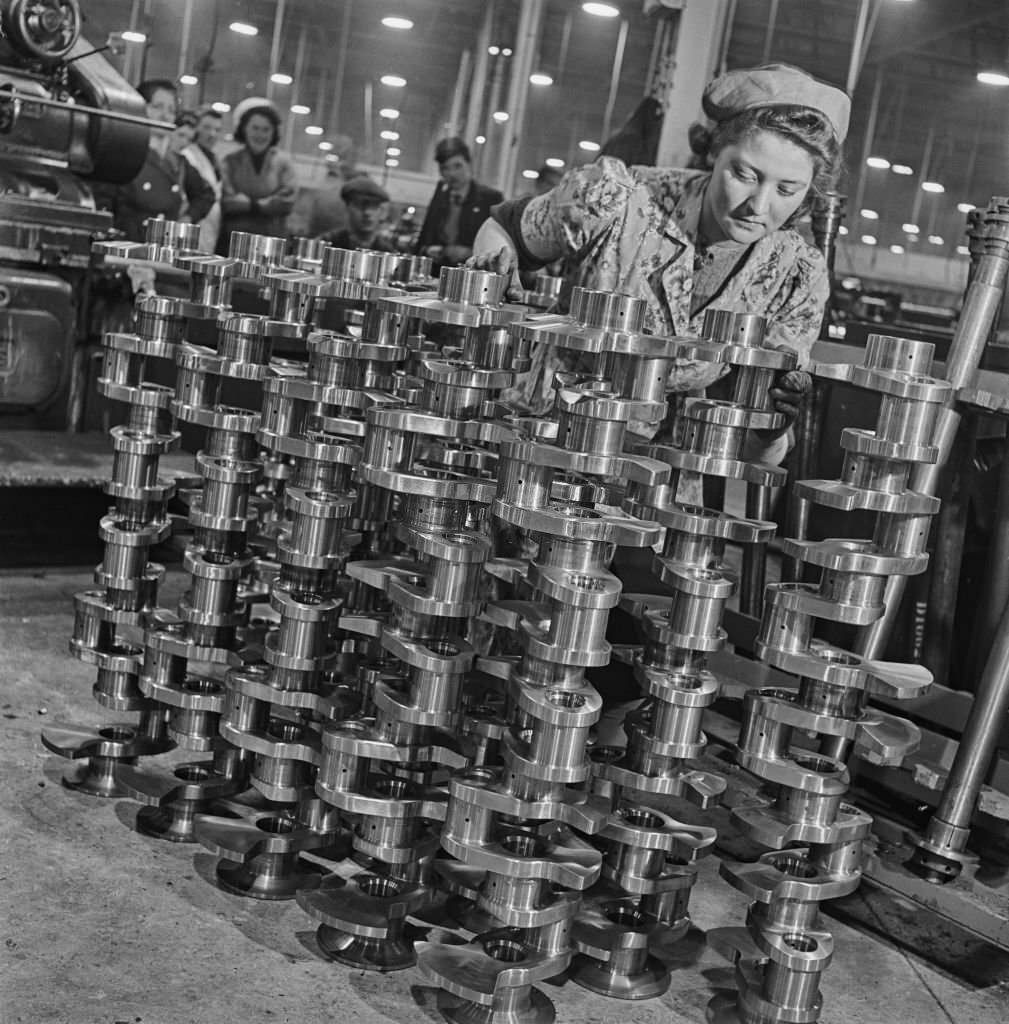
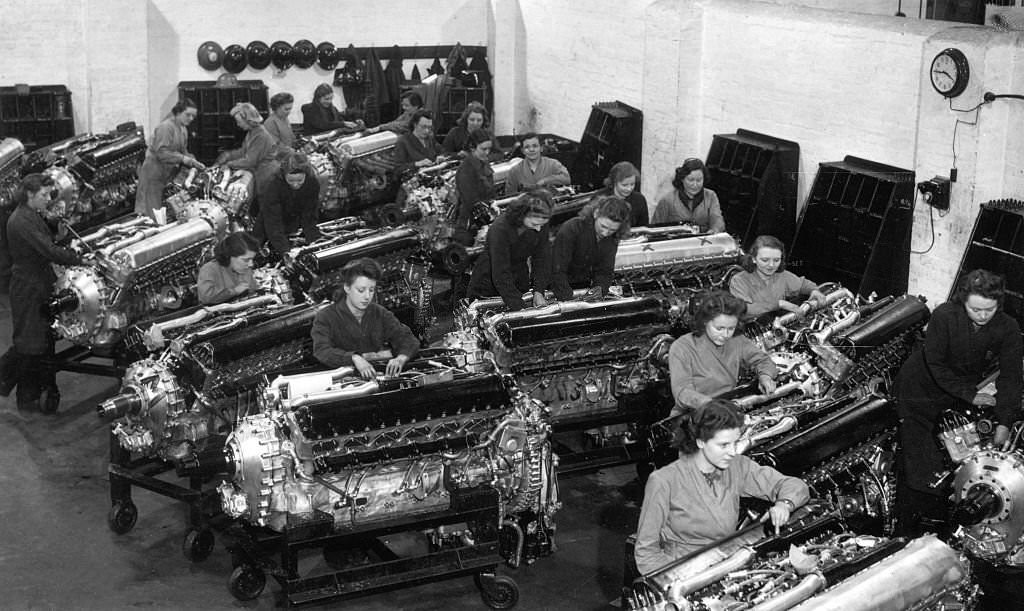
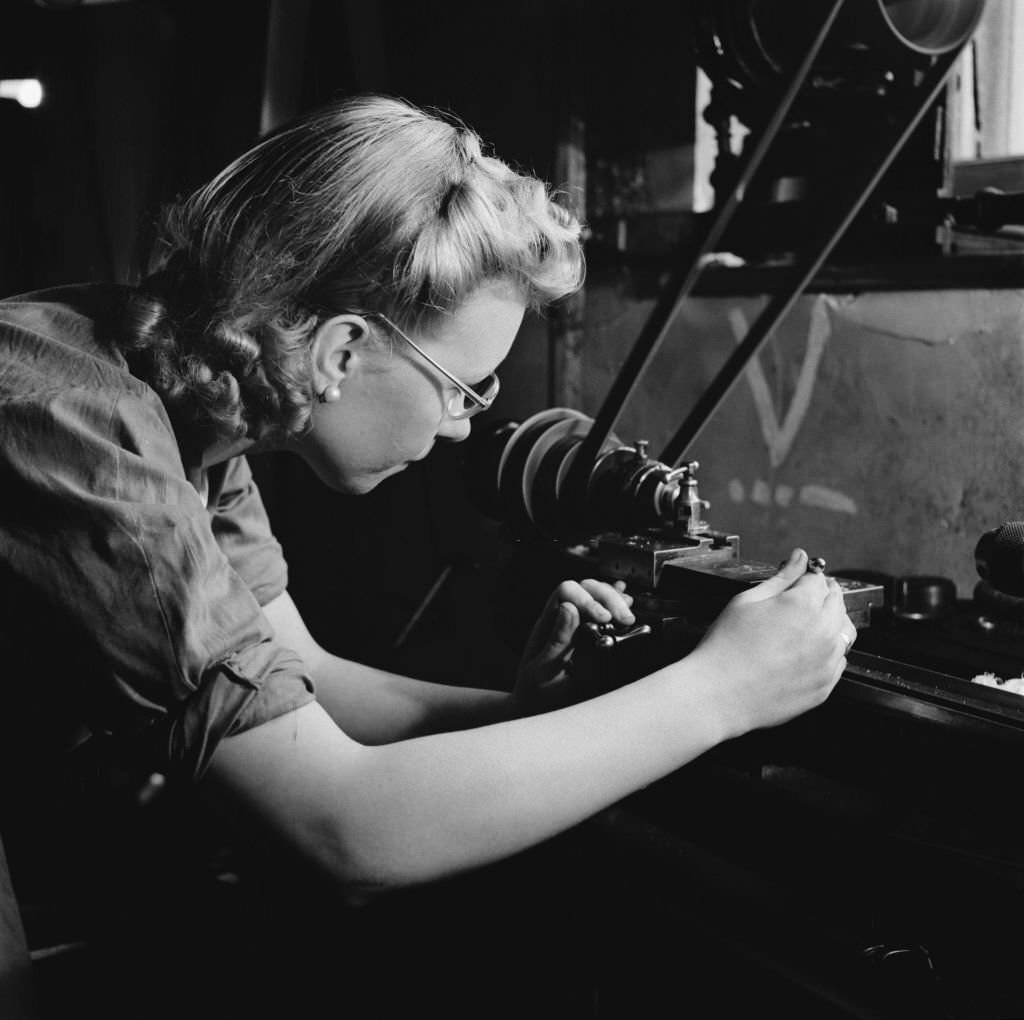
Munitions factories operated at full speed. Women filled shells, assembled bomb components, operated lathes, and hoisted heavy munitions by hand and winch. Some factories had women producing parts for Supermarine Spitfire fighter aircraft. Others manufactured components for Rolls-Royce Merlin engines — the same engines that powered the RAF’s bombers and fighters.
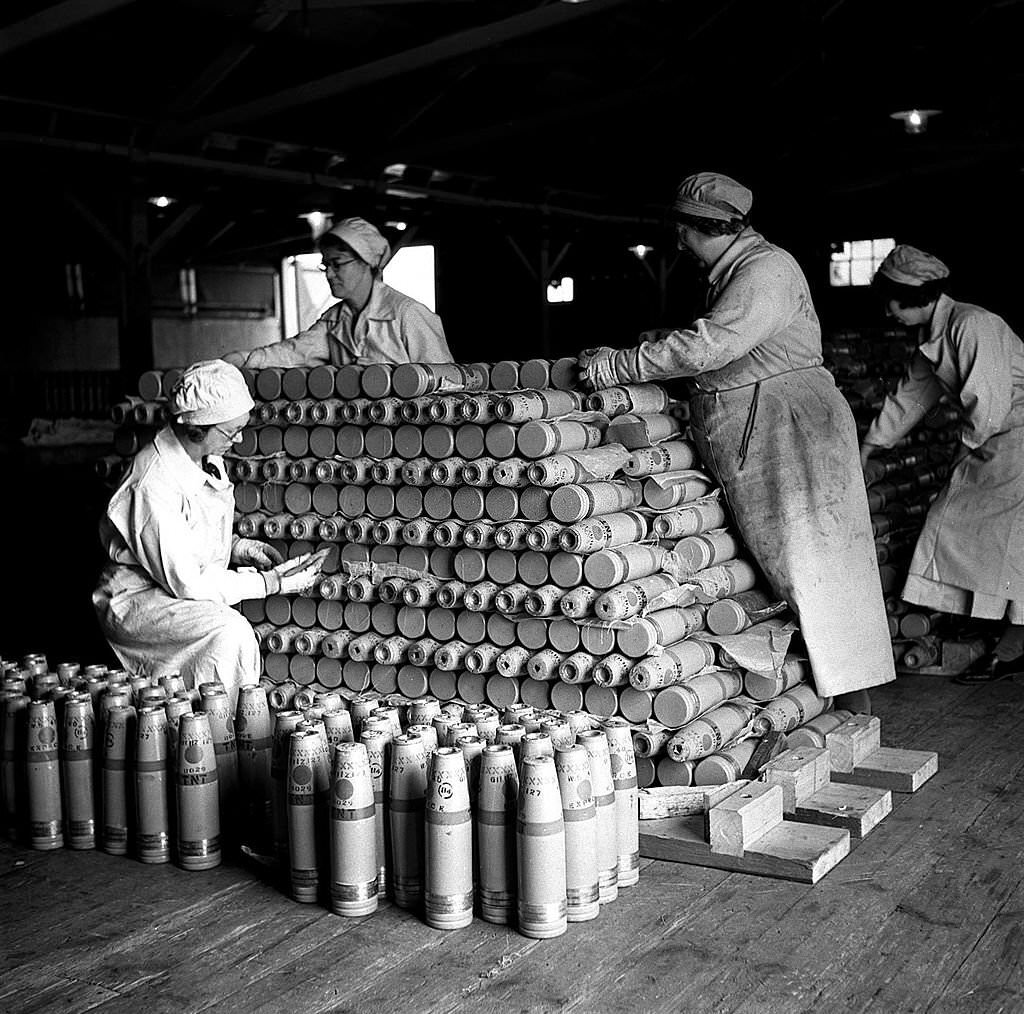
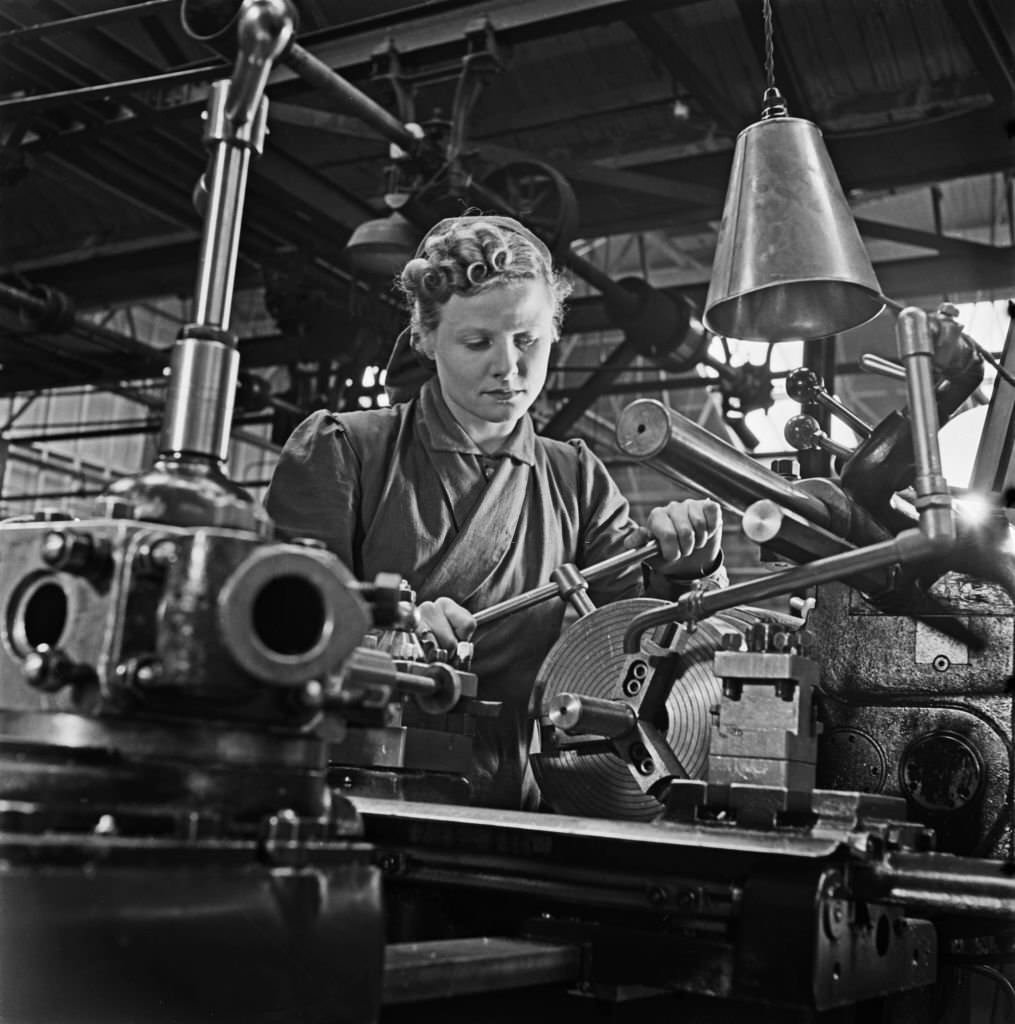
A woman hoisting a shell at a munitions factory during World War II.A skilled female munitions worker at work on her metal working lathe to produce parts for Supermarine Spitfire fighter aircraft at an aircraft factory in England, 1941.Women workers stack ammunition shells at a factory in Woolwich, London, 1940
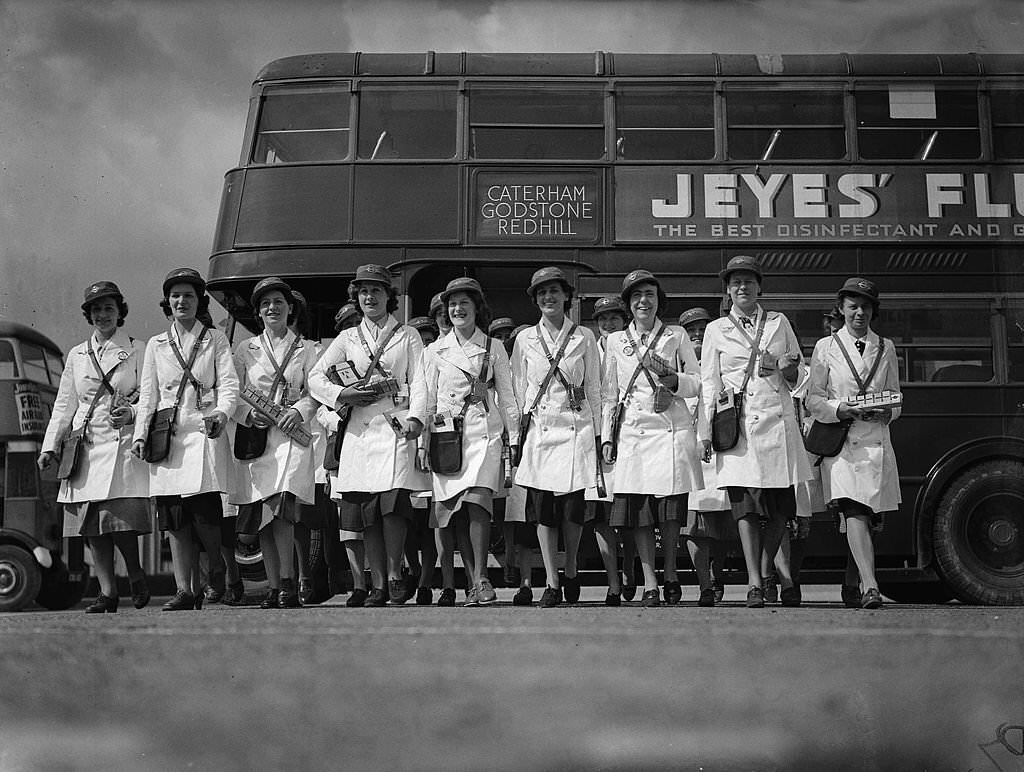
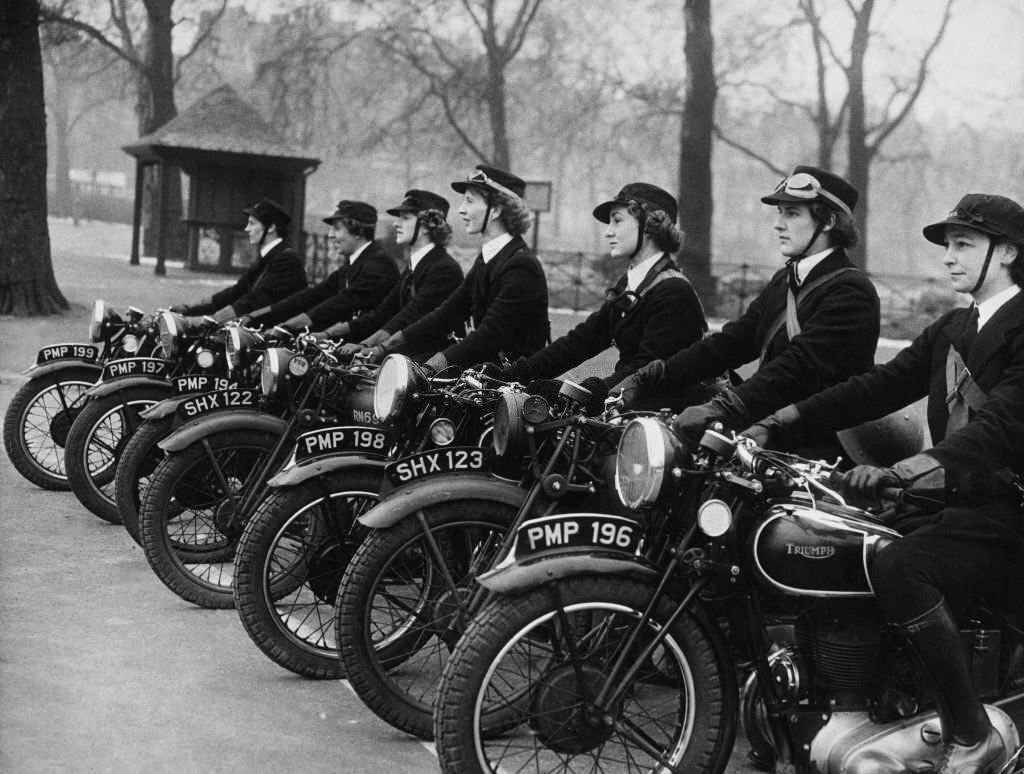
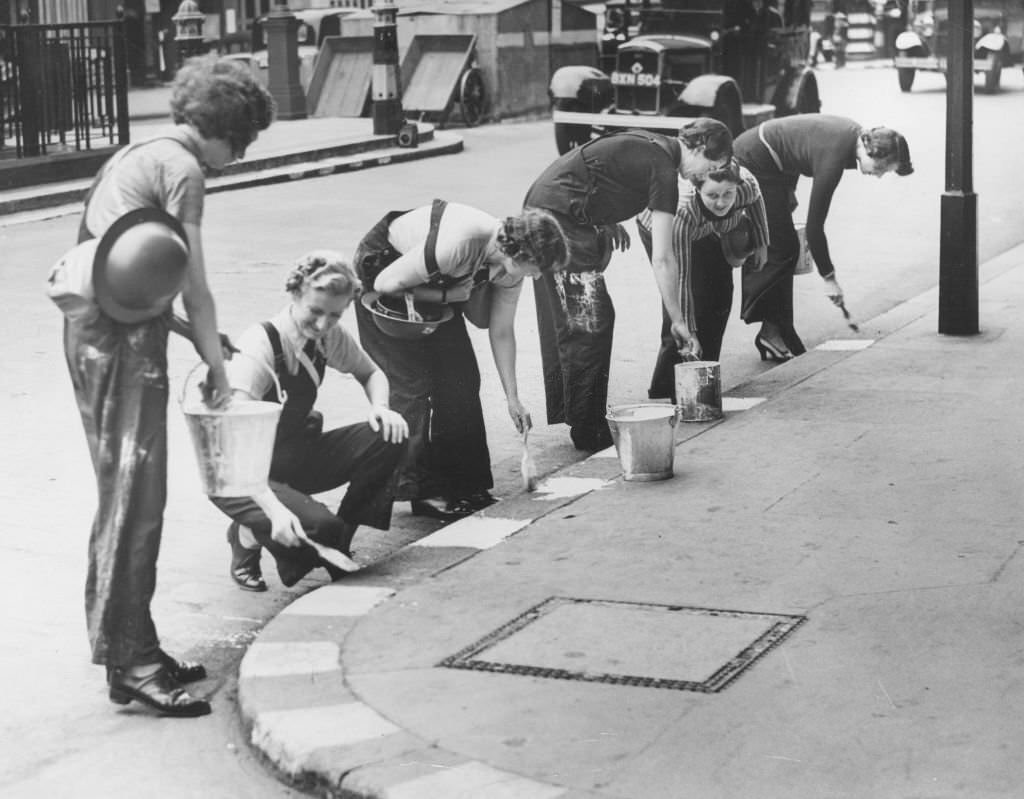
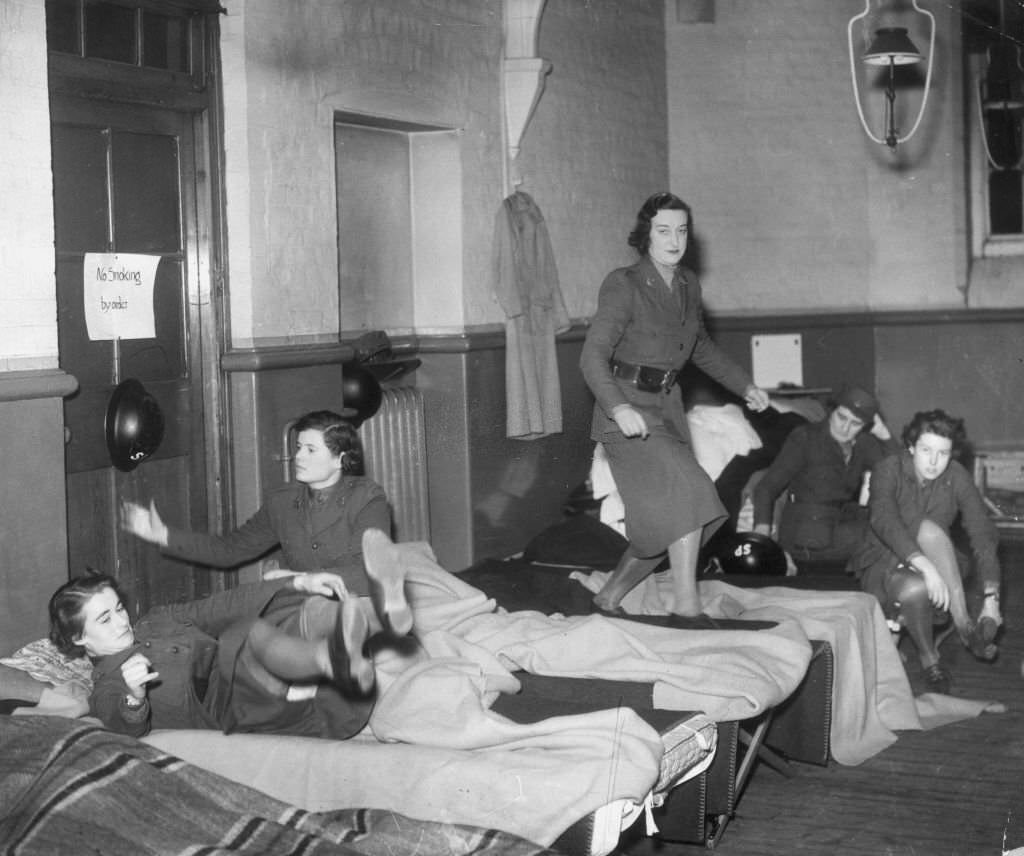
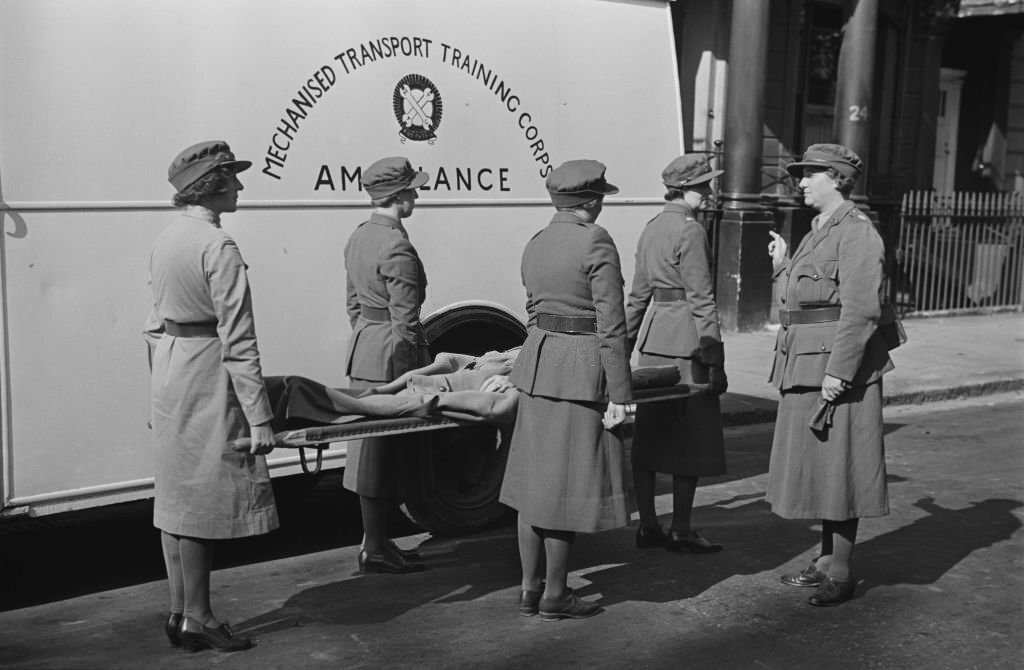
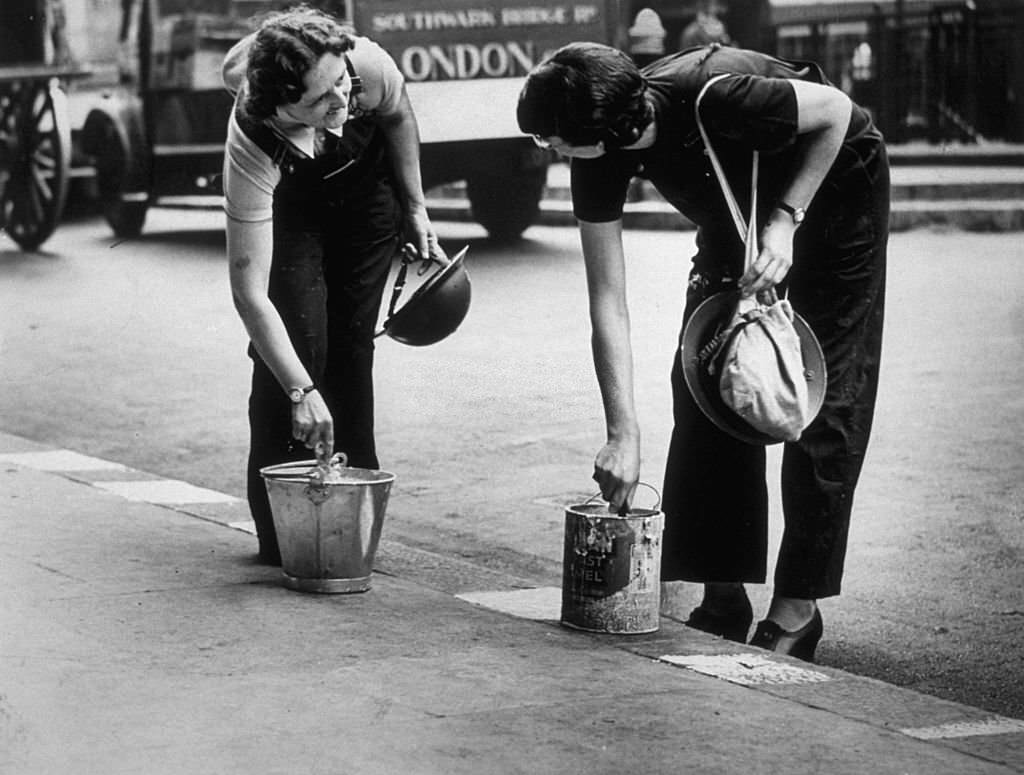
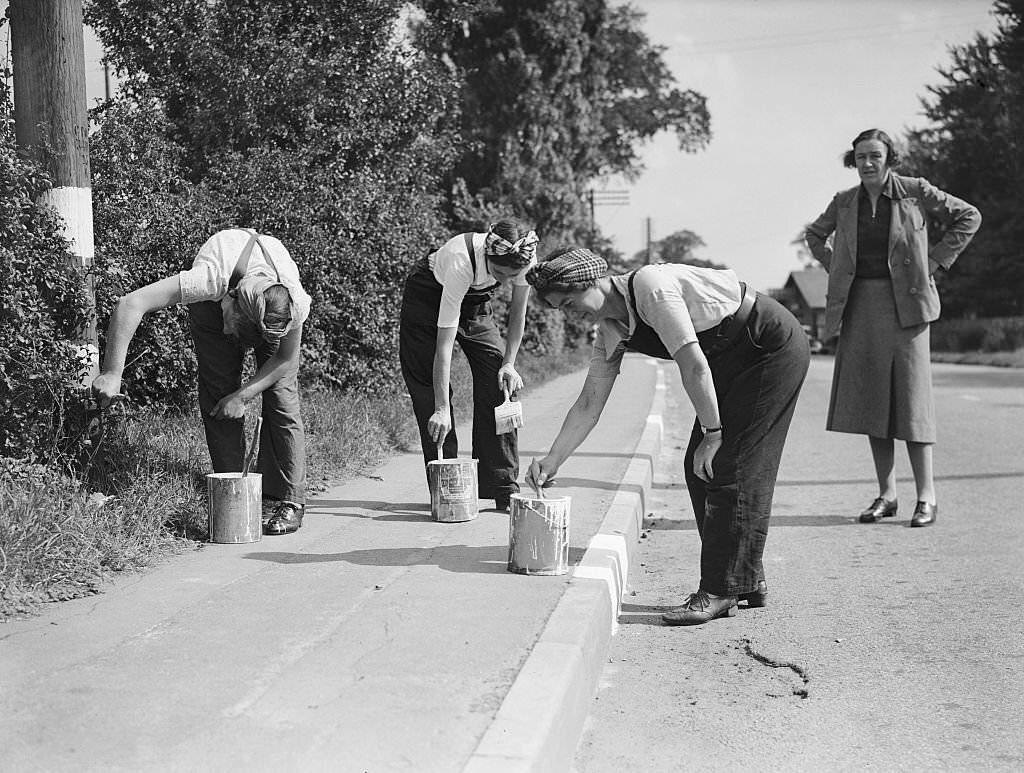
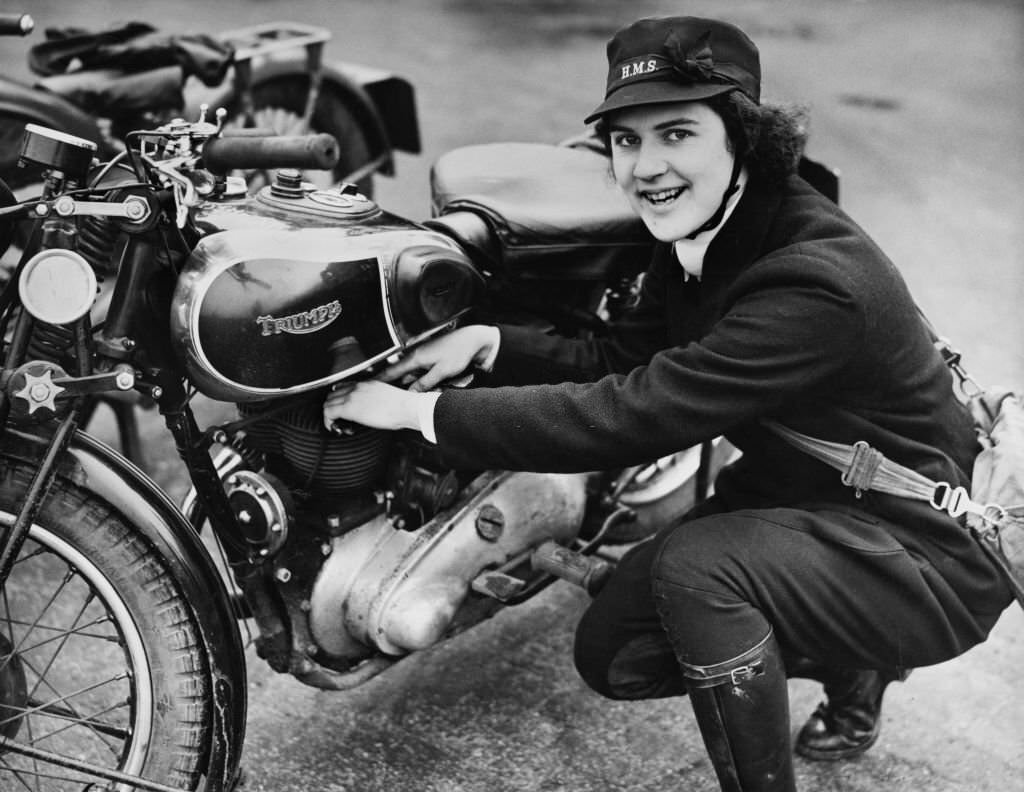
Beyond the factories, women took on roles that had been exclusively male just years before. They drove buses, operated fire engines, worked as air raid wardens, and maintained vehicles. Women in the Mechanised Transport Corps slept in their clothes when on duty so they could respond immediately. Dispatch riders for the Women’s Royal Naval Service maintained and rode Triumph motorcycles through London. Women in civil defence units painted white squares along kerbs so drivers could navigate safely during the blackout.
The first women bus conductors all wearing their uniforms and holding equipment as they walk to their buses at a London transport depot during World War TwoWren despatch riders for the Women’s Royal Naval Service (WRNS) attached to WRNS London Headquarters with their Triumph 350CC 3SW motorcycles on 11th March 1941 in London, England.Women in a civil defence unit paint white squares along the kerb to facilitate night-time driving in London, 1939
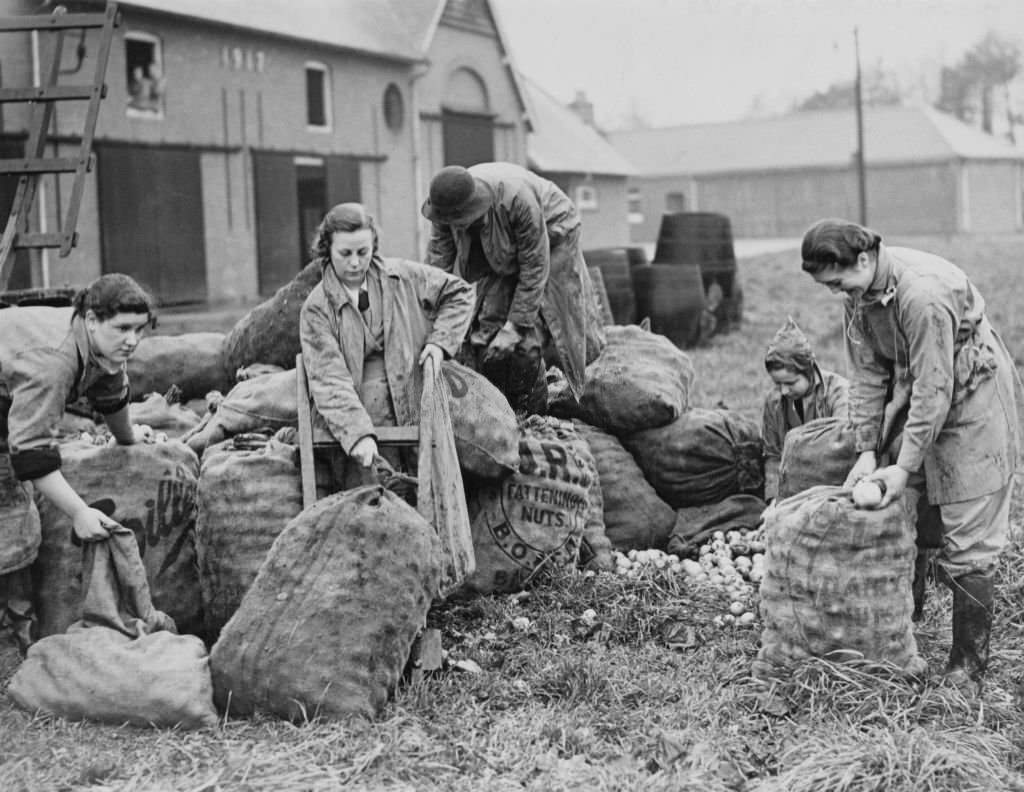
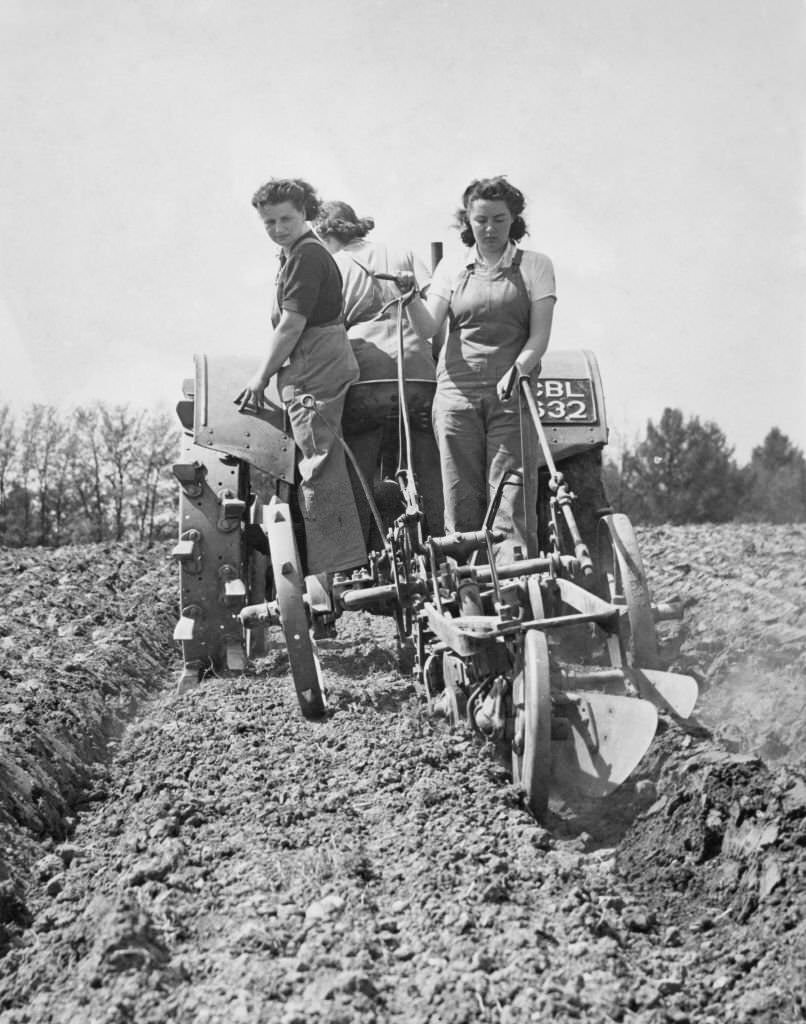
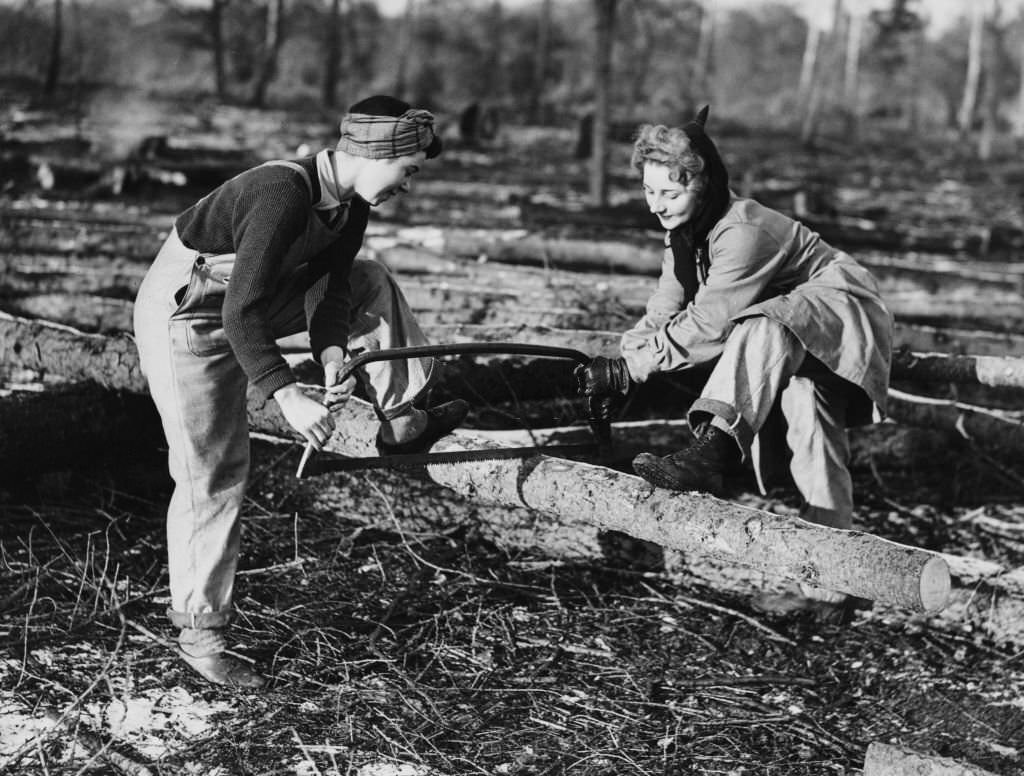
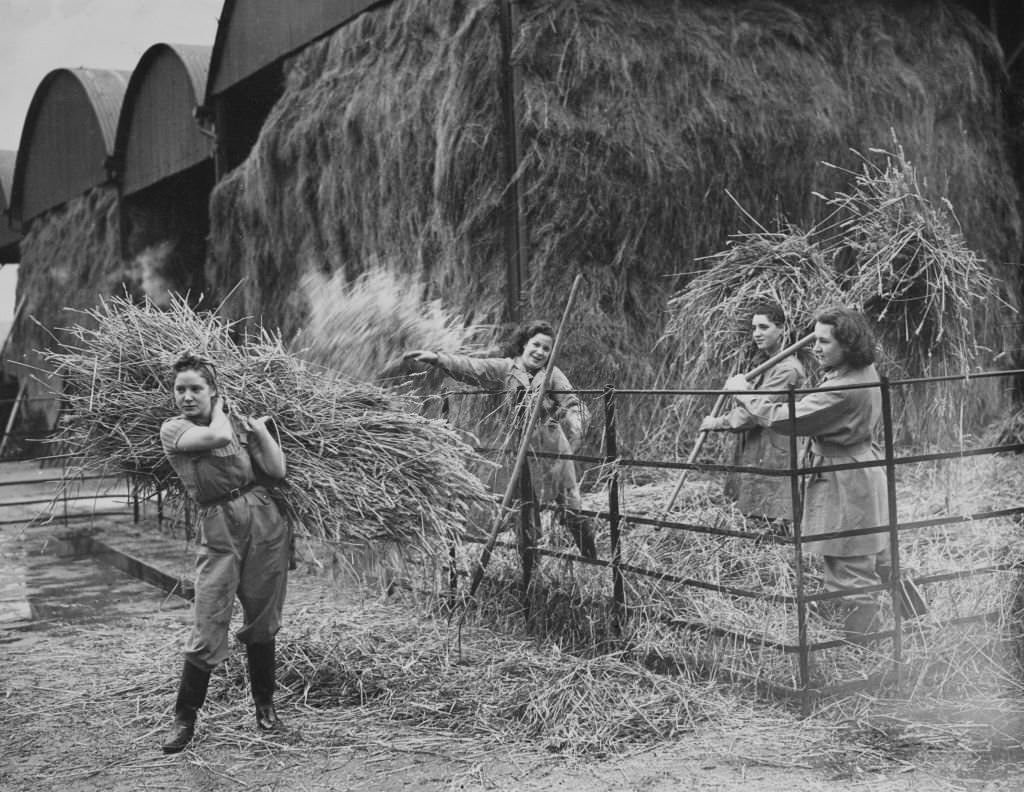
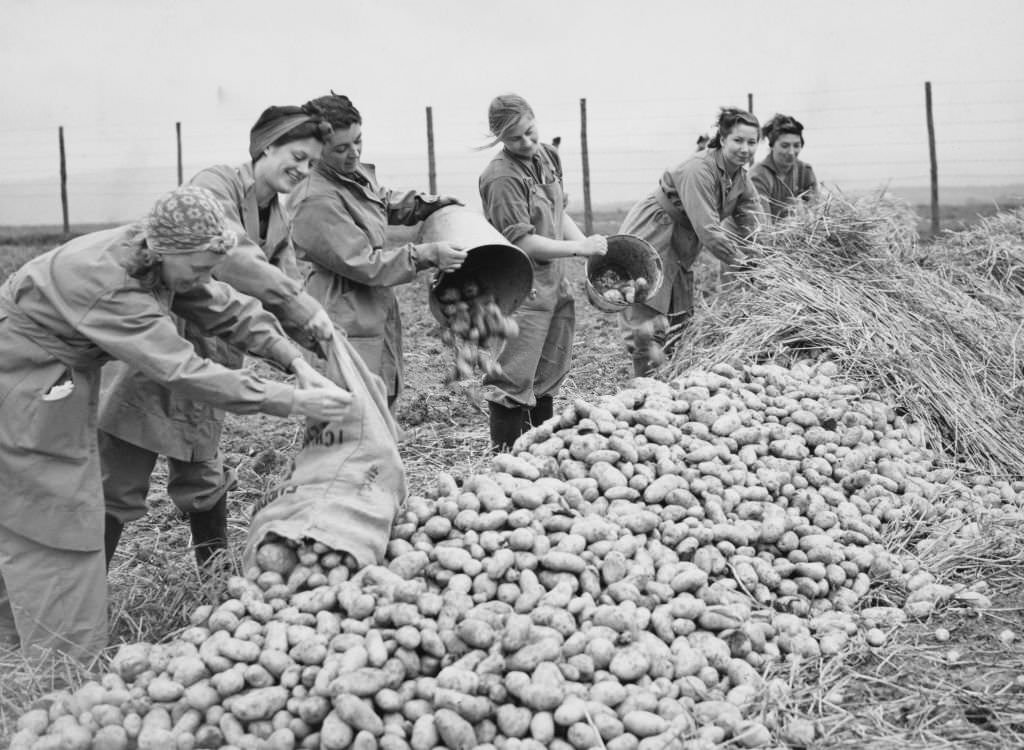
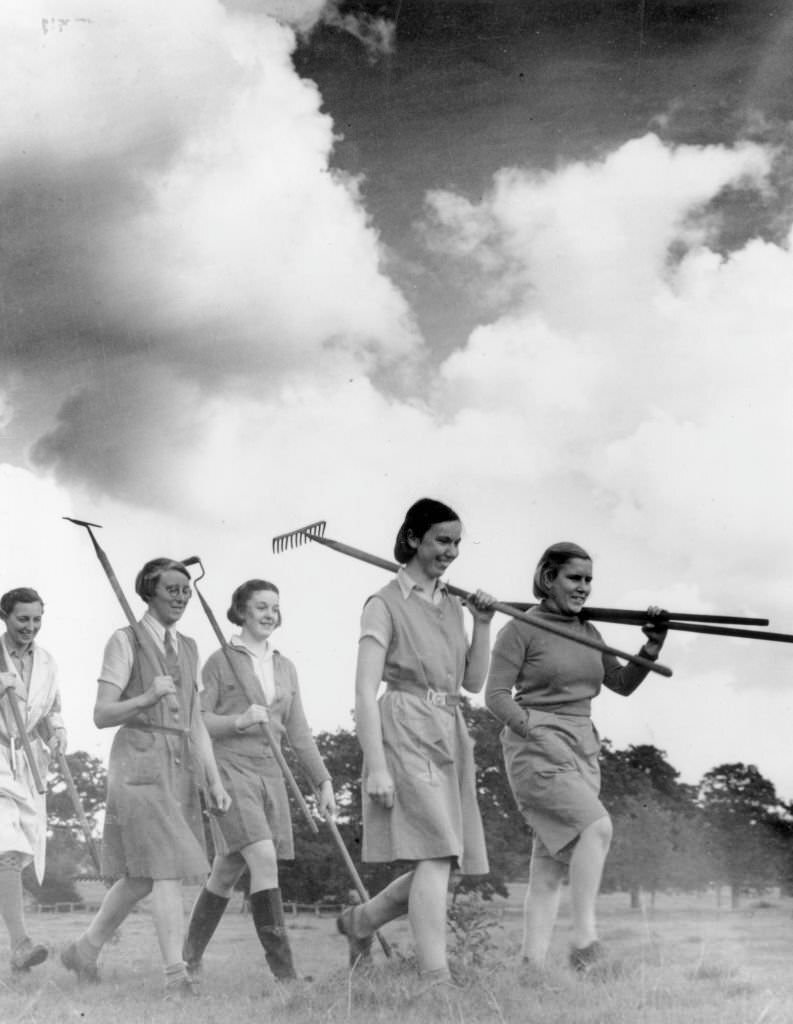
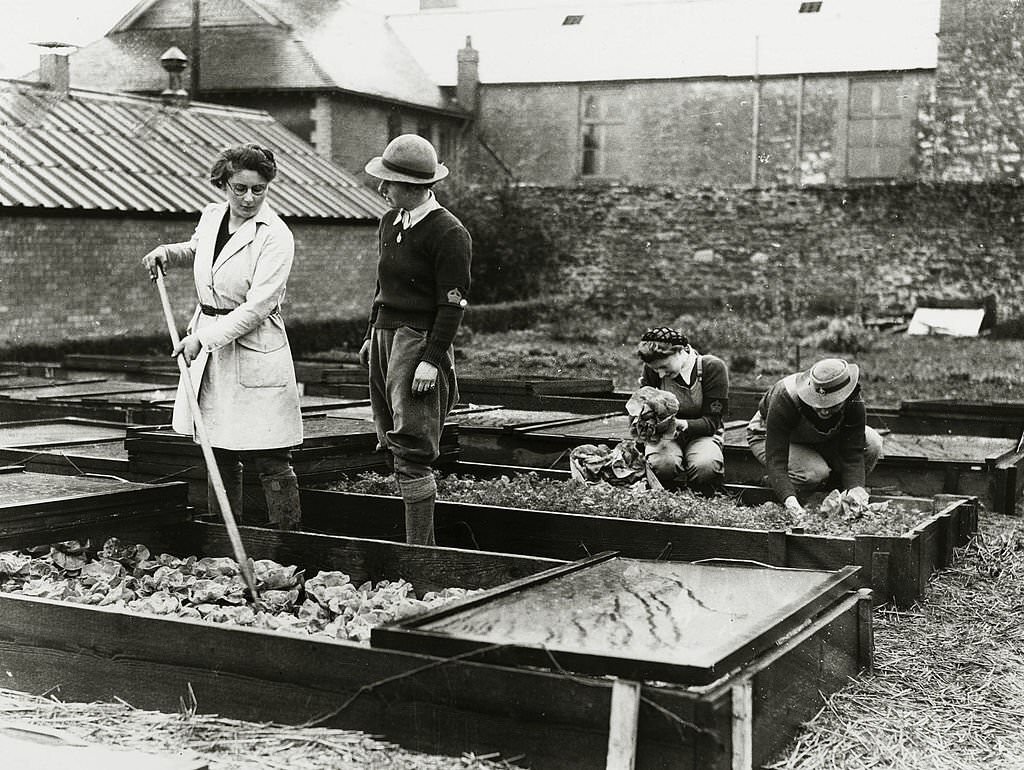
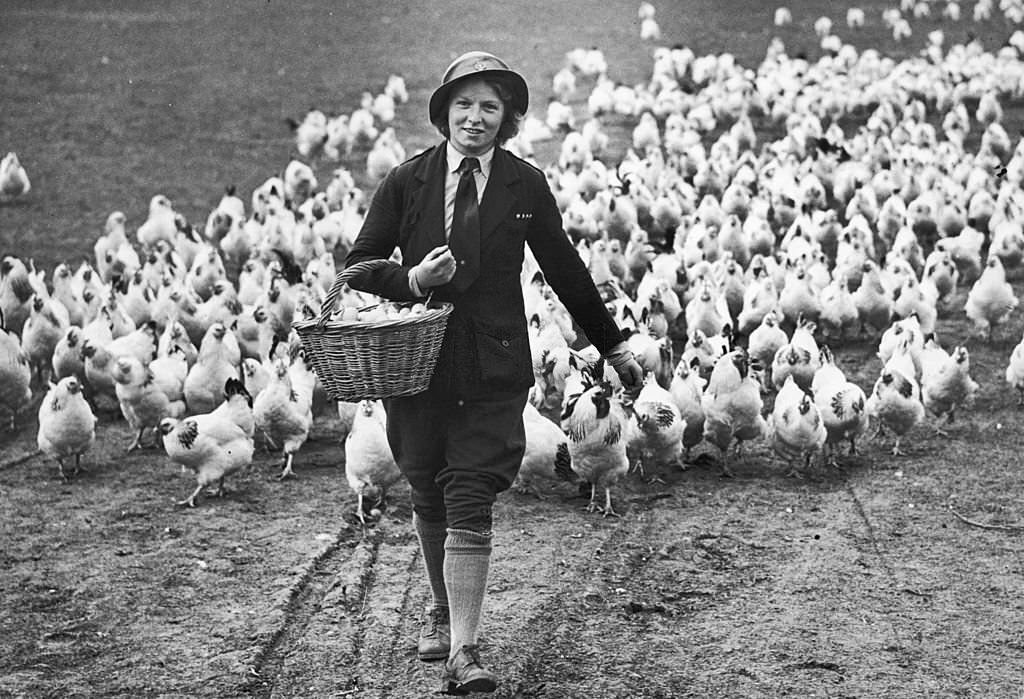
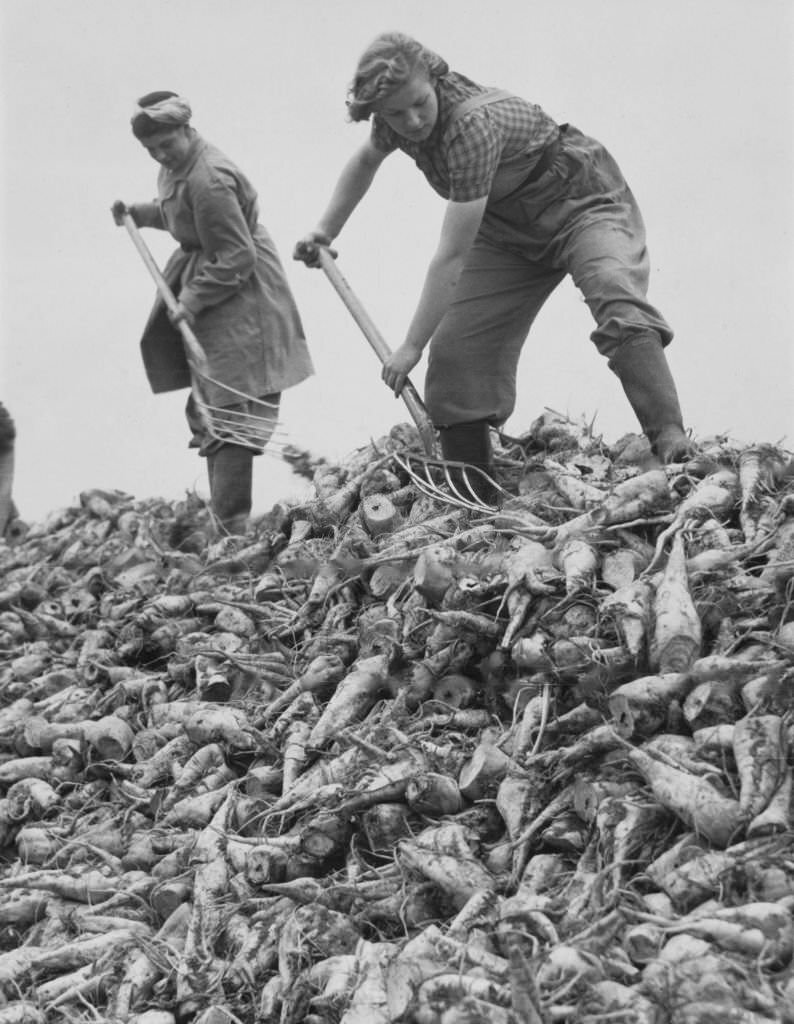
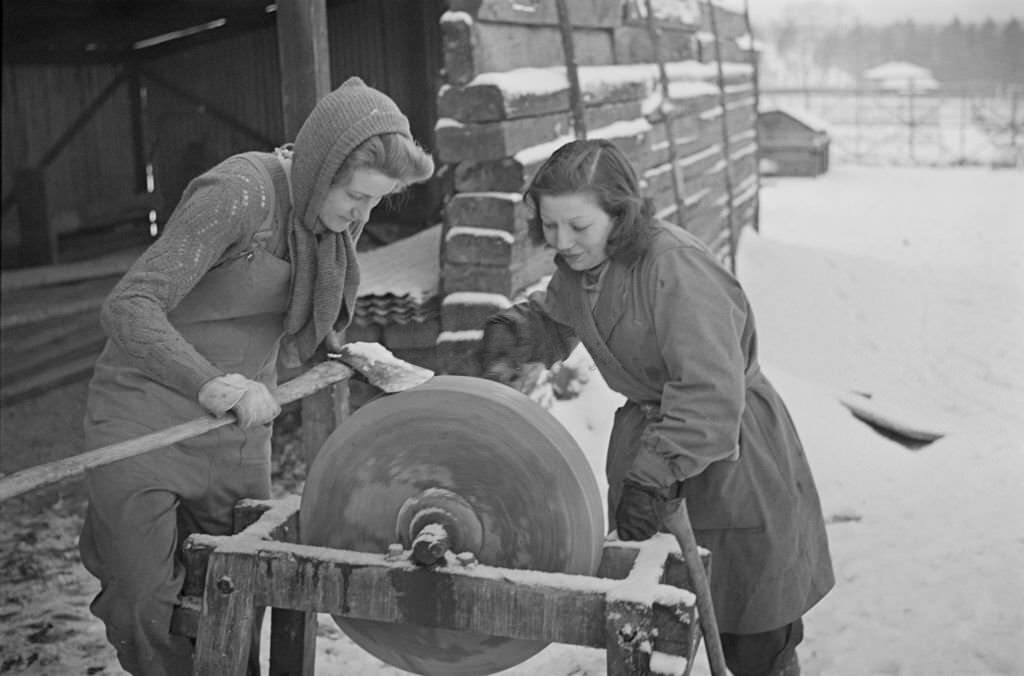
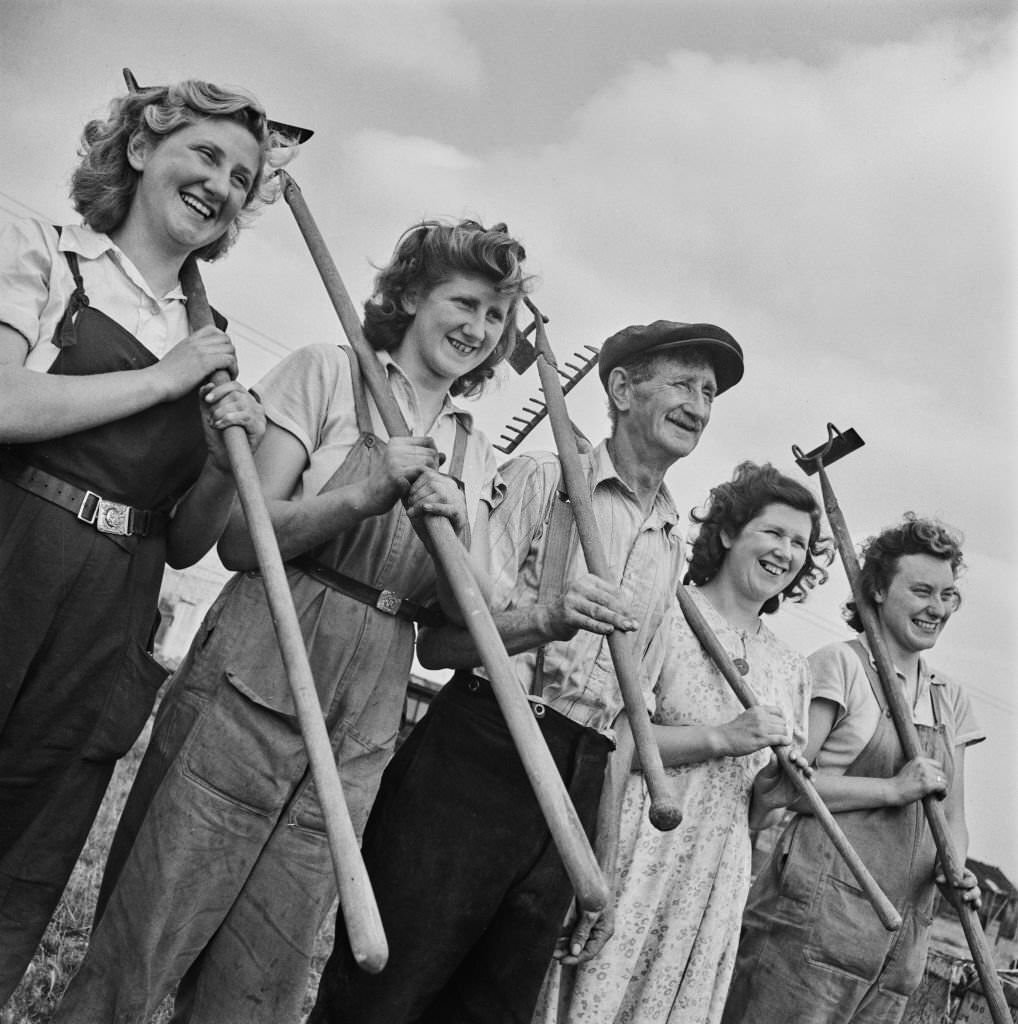
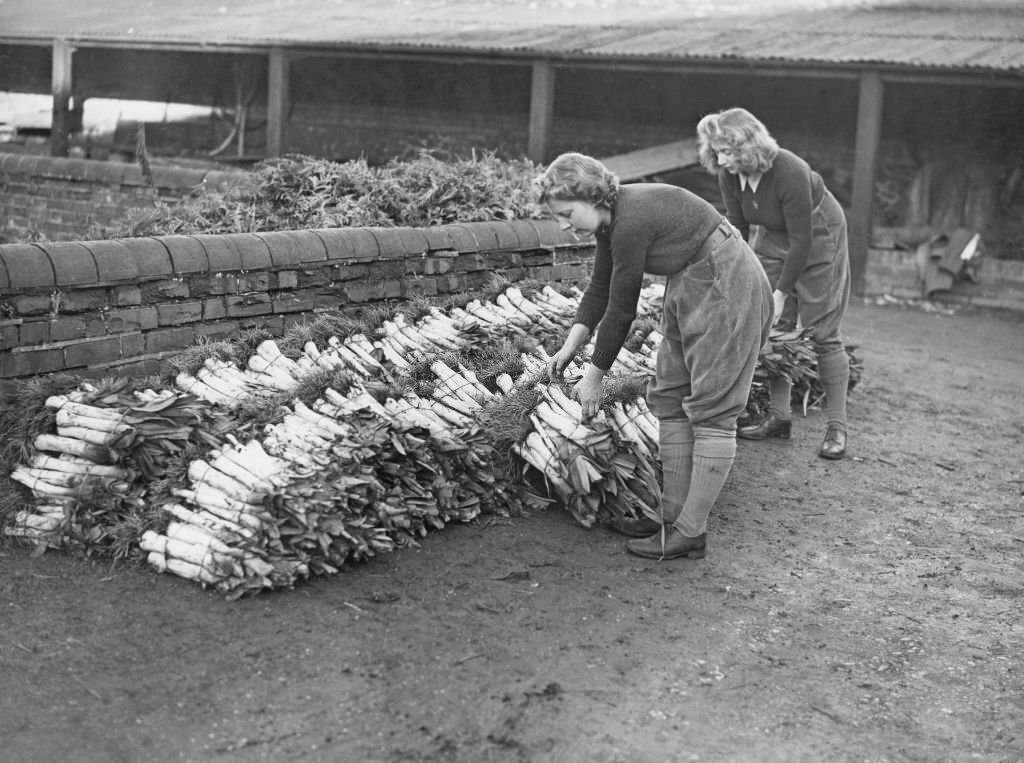
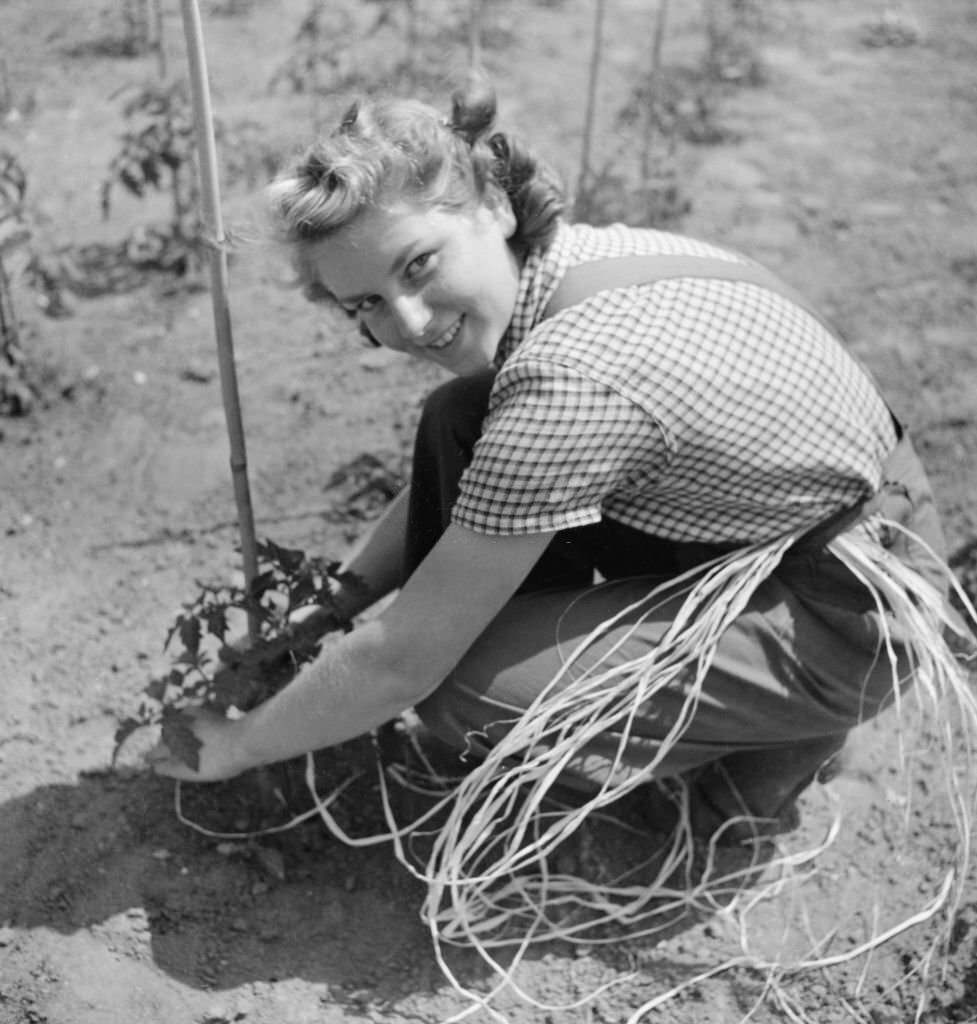
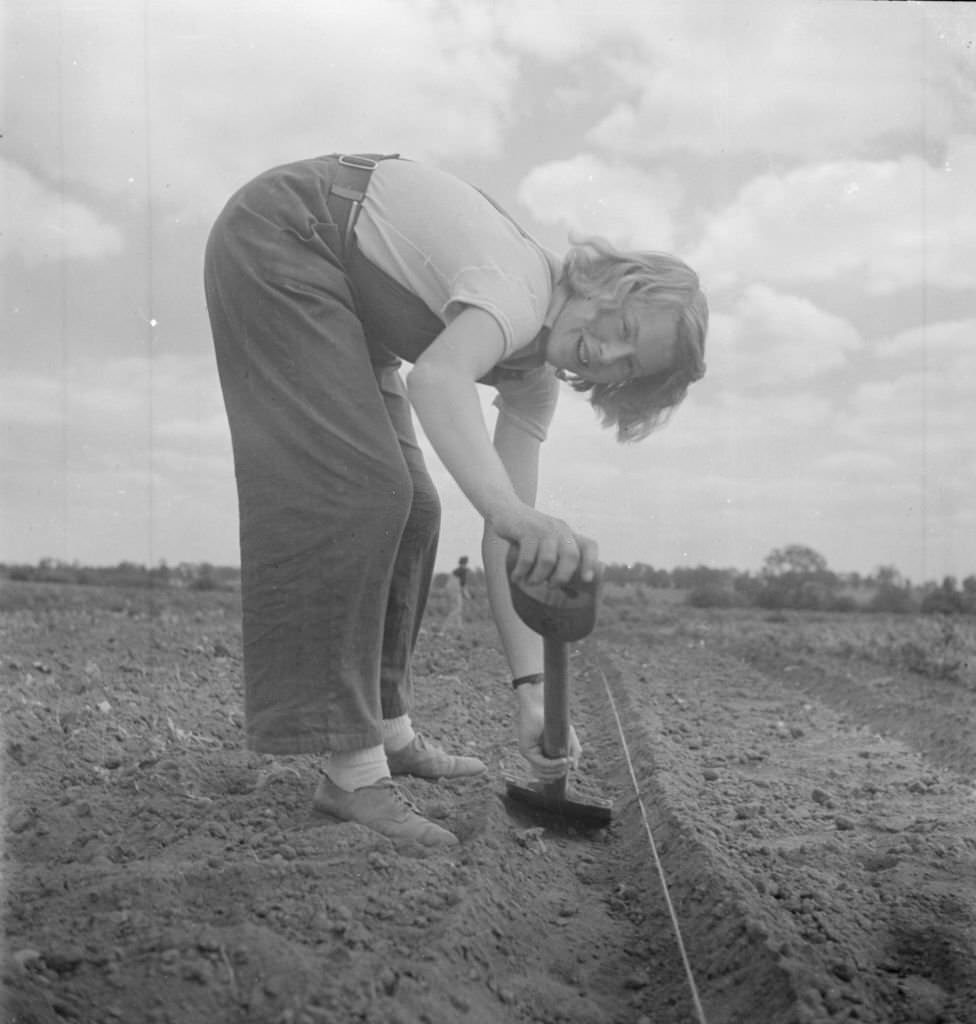
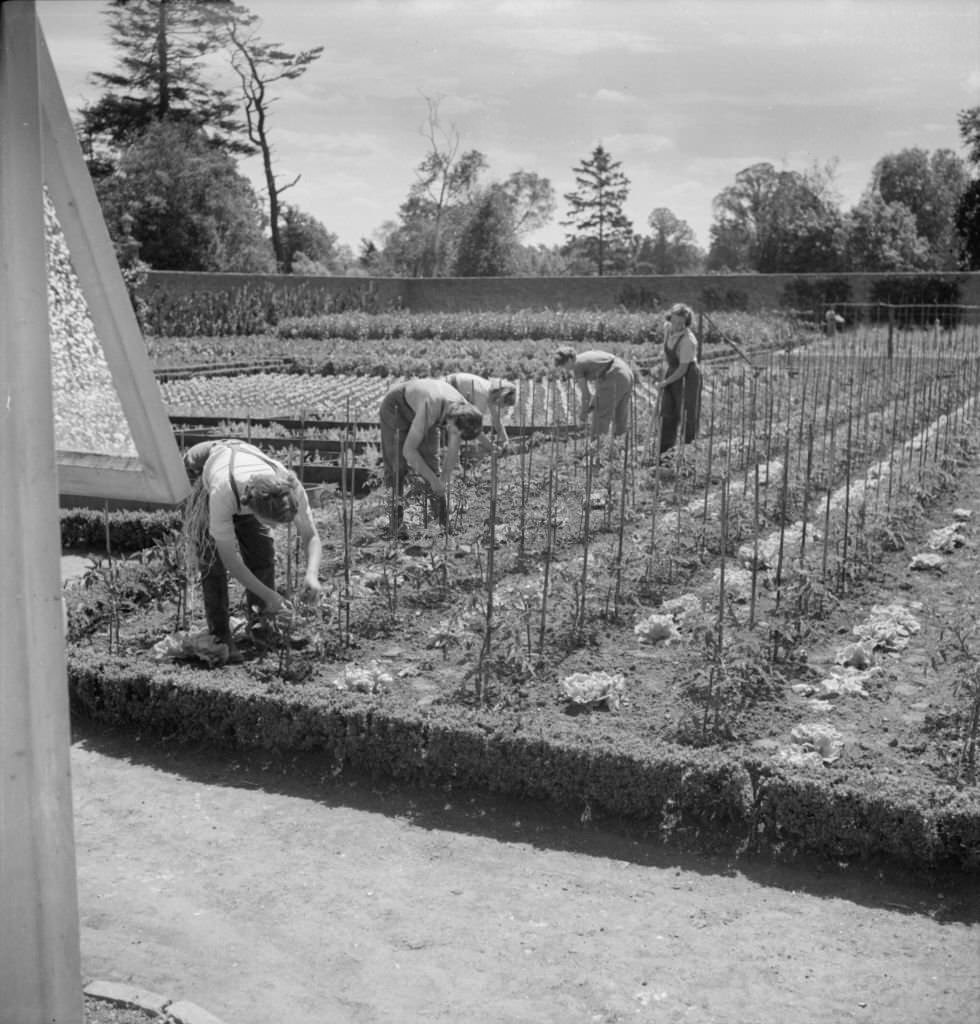
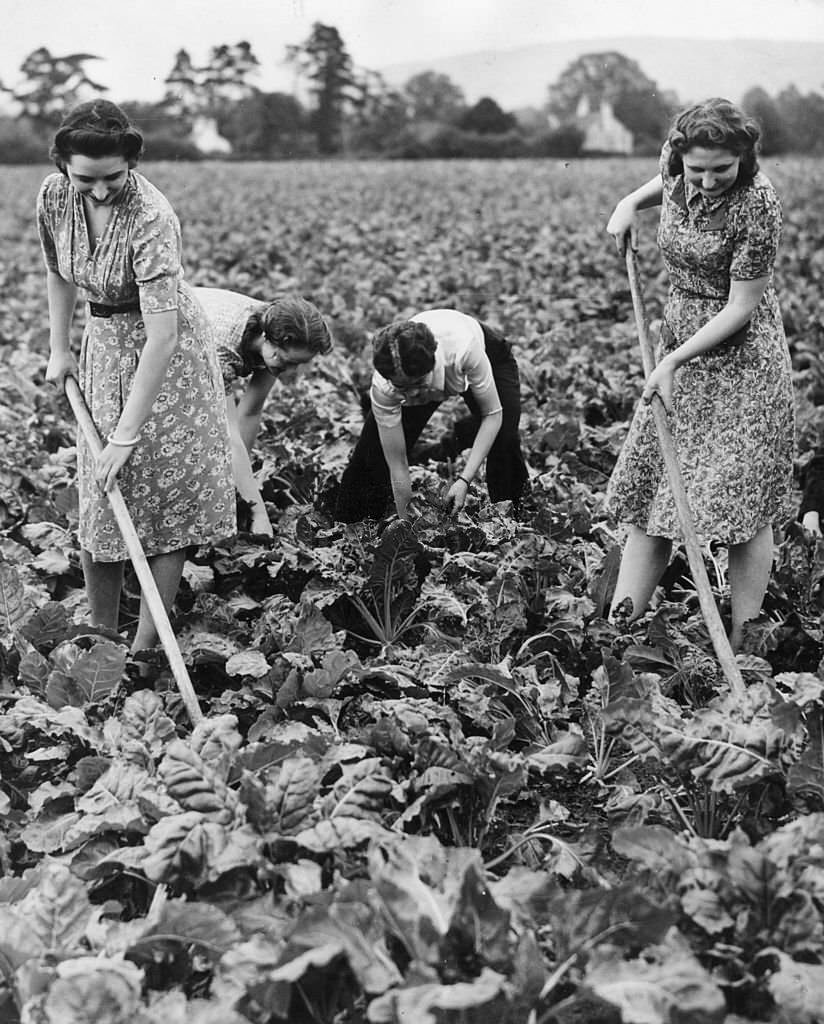
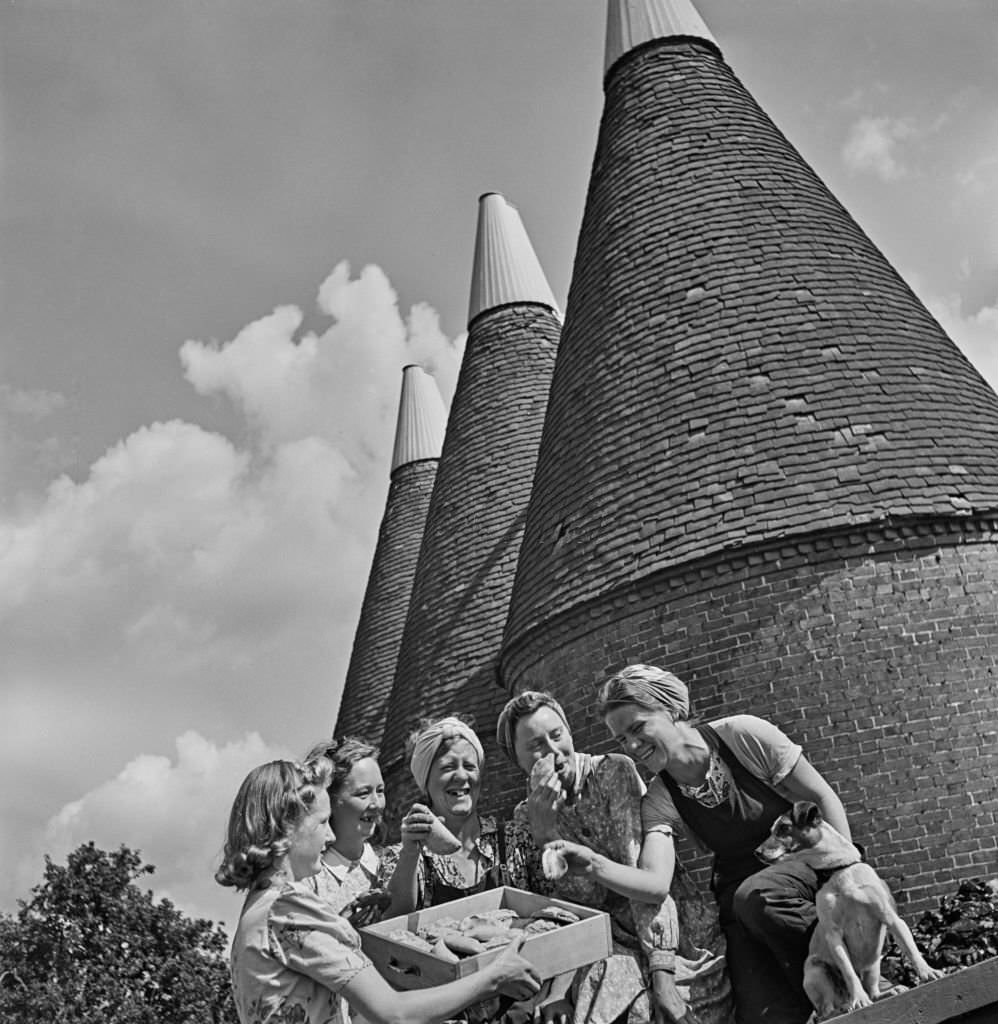
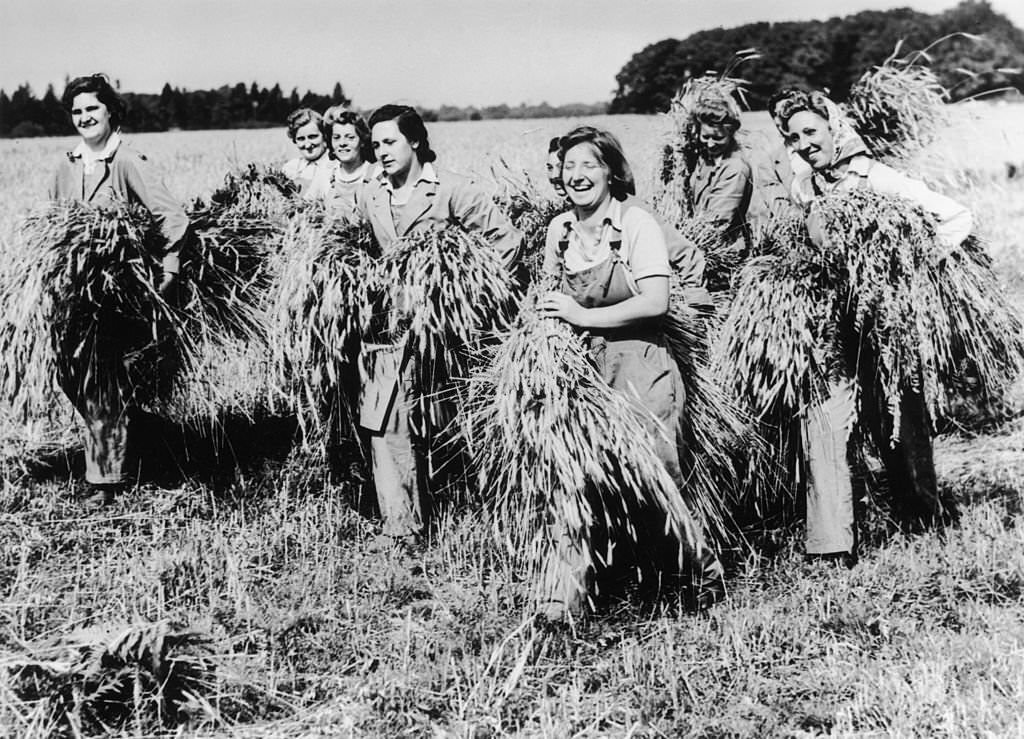
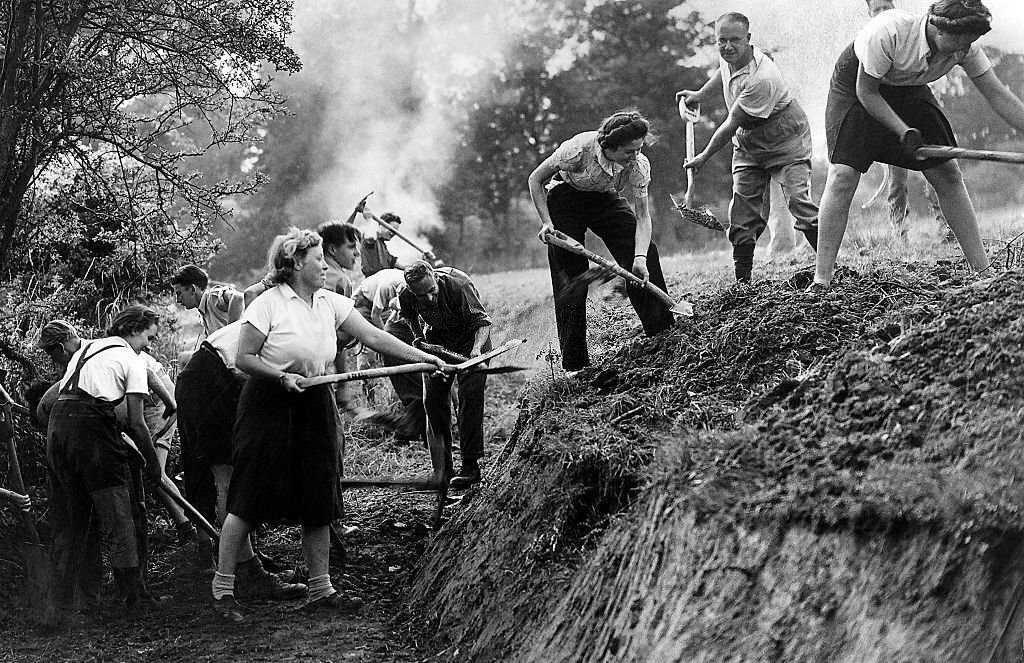
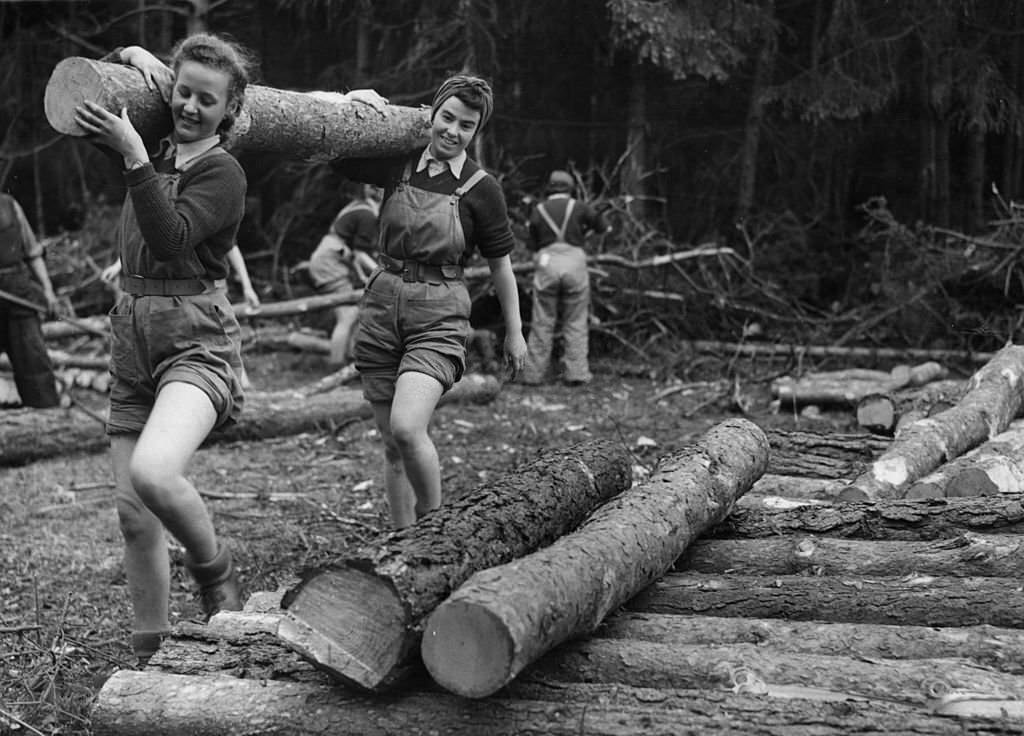
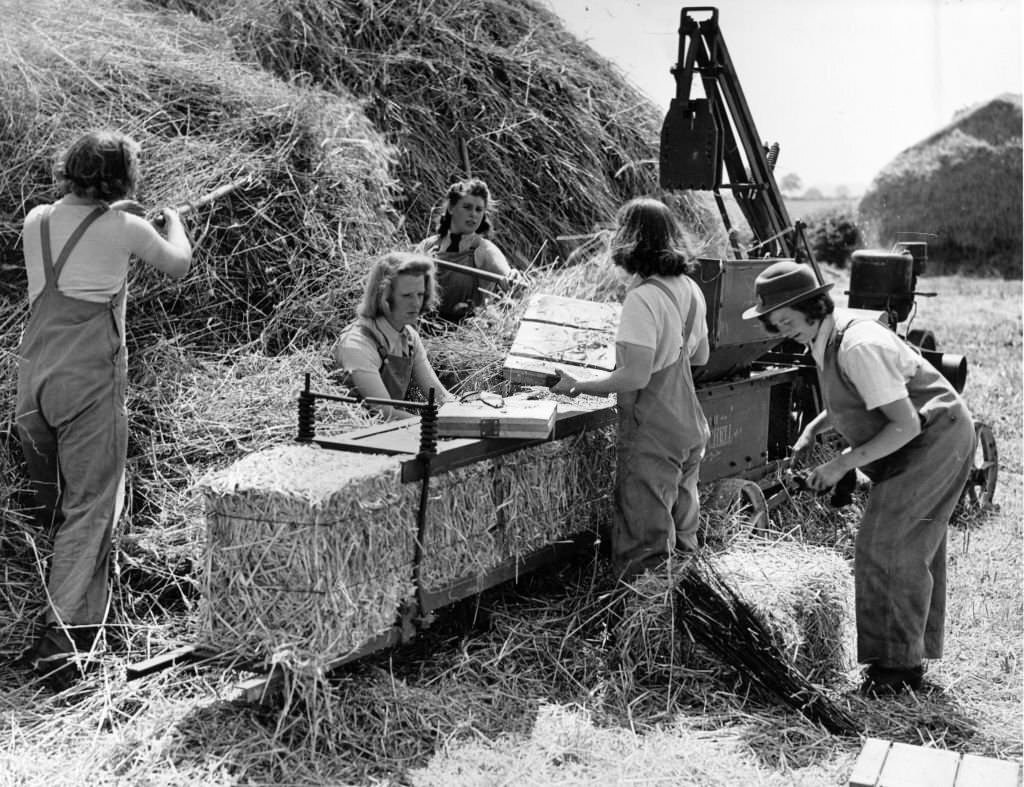
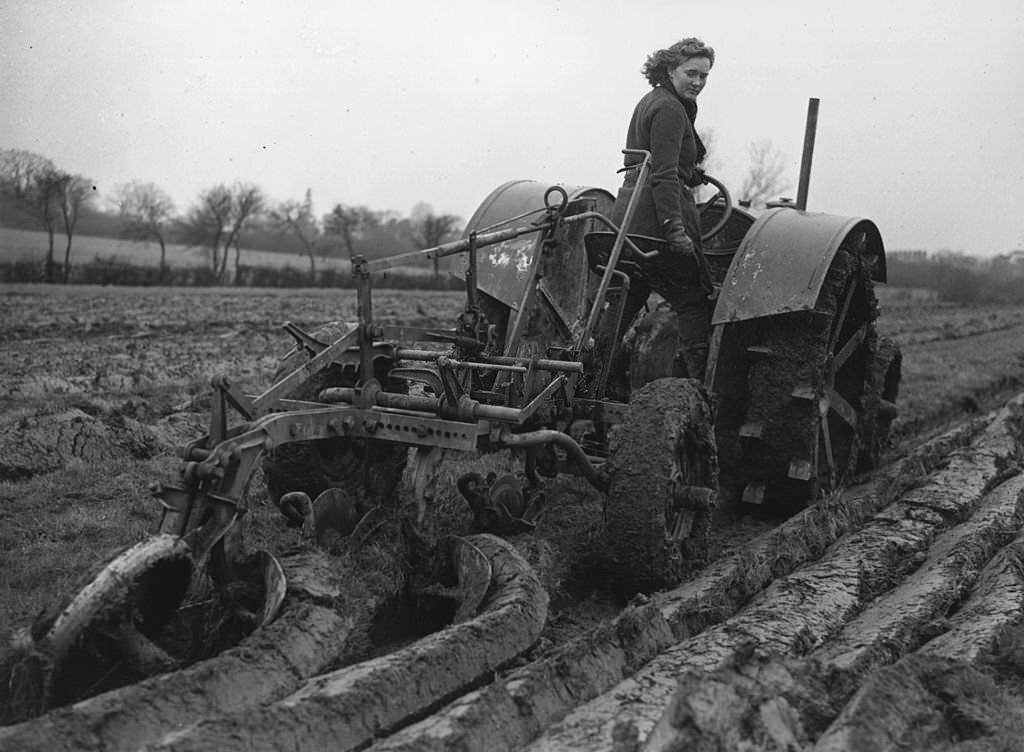
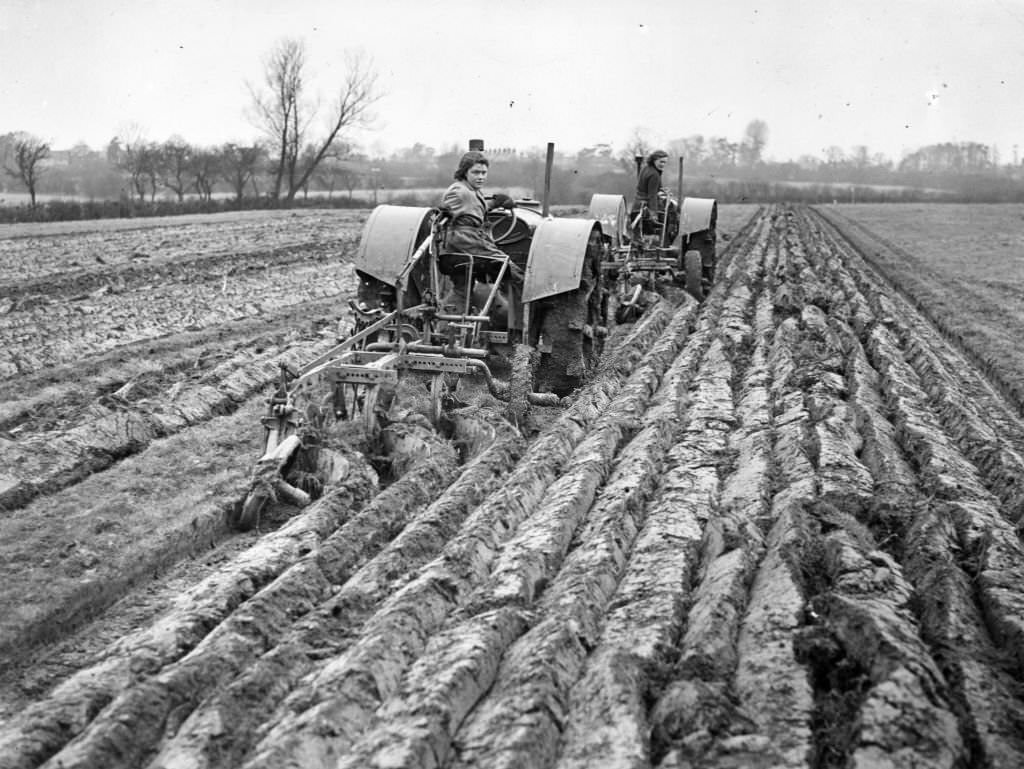
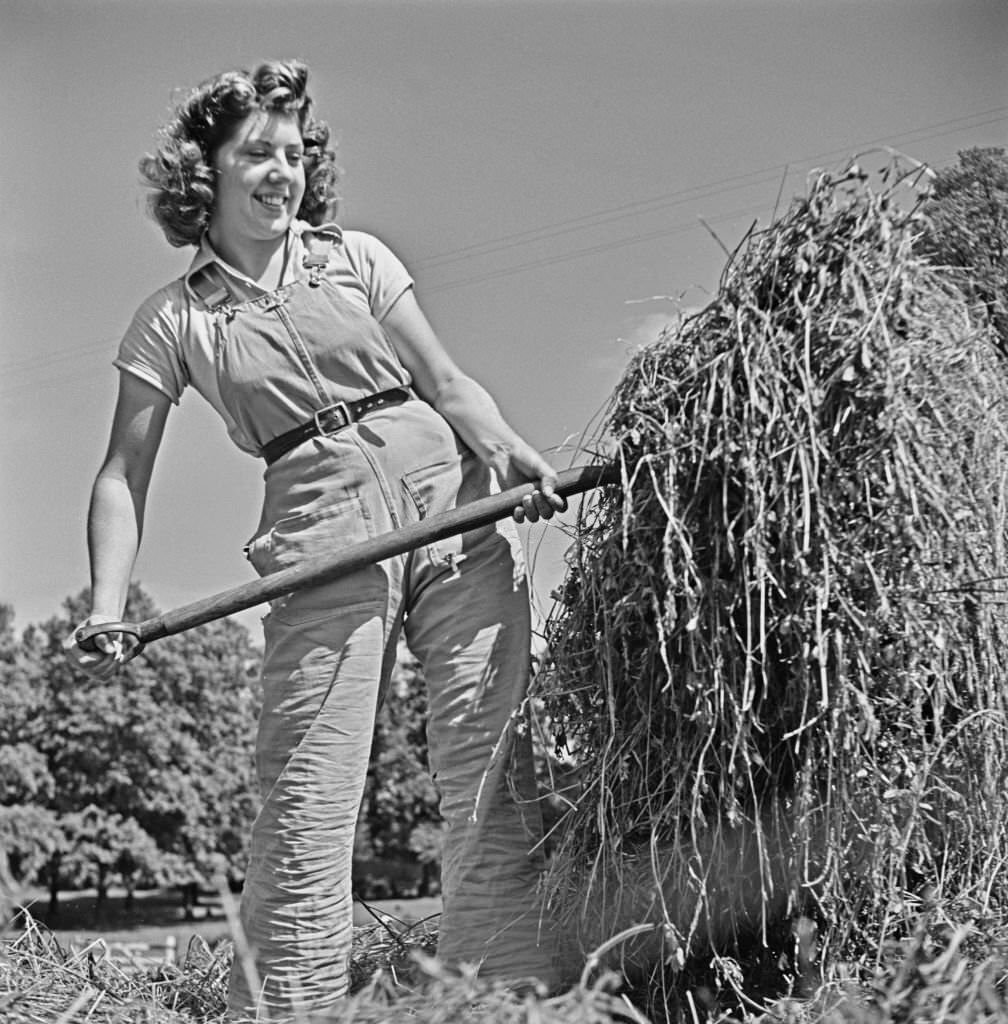
The Women’s Land Army (WLA) sent women to work on farms across Britain. They had to live on the farms where they were posted. Their work was physically gruelling — ploughing fields, harvesting crops, stacking bales, digging drainage ditches, and protecting potato harvests from frost. Over 80,000 women volunteered for the WLA. A separate branch, the Women’s Timber Corps — known as the Lumber Jills — was formed in 1942 after German forces occupied Norway and cut off Britain’s imported timber supply. Nearly 13,000 women joined that corps alone.
Members of the Women’s Land Army (WLA) sort and pack apples into sacks for cider making on 21st November 1939 at the Monmouthshire Institute of Agriculture at Usk in Monmouthshire, South Wales, UK.Three members of the Women’s Land Army (WLA) at work ploughing furrows in the earth behind a tractor on 16th May 1942 at Hewens Wood farm in Bradfield, Berkshire, United Kingdom.Women’s Timber Corps (WTC)
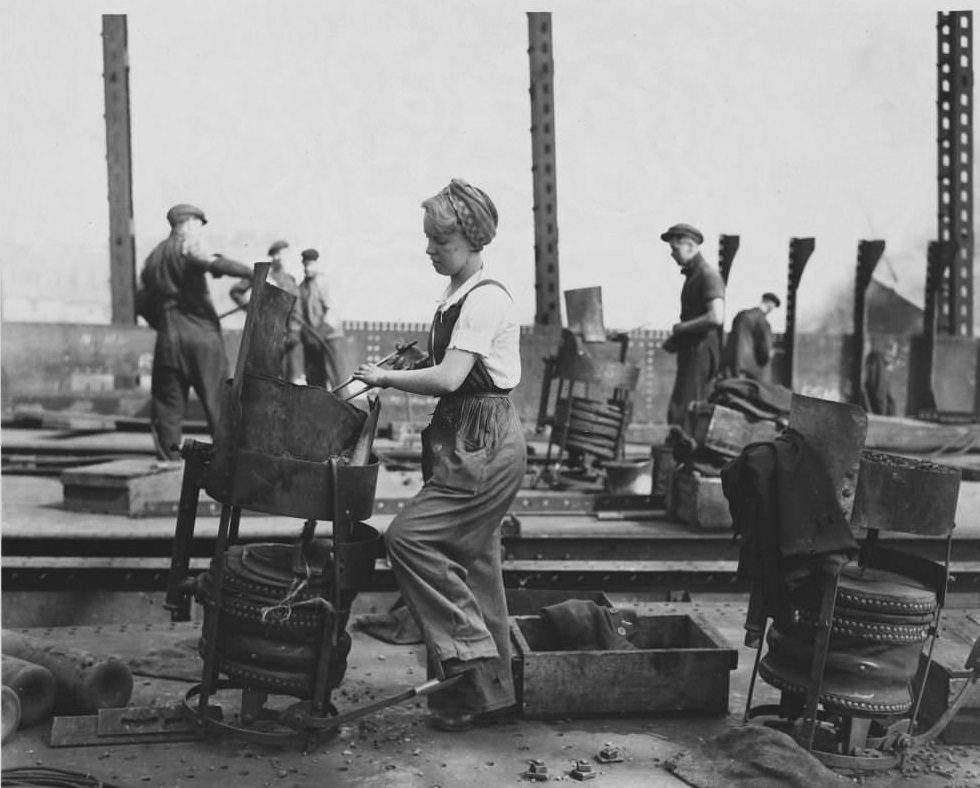
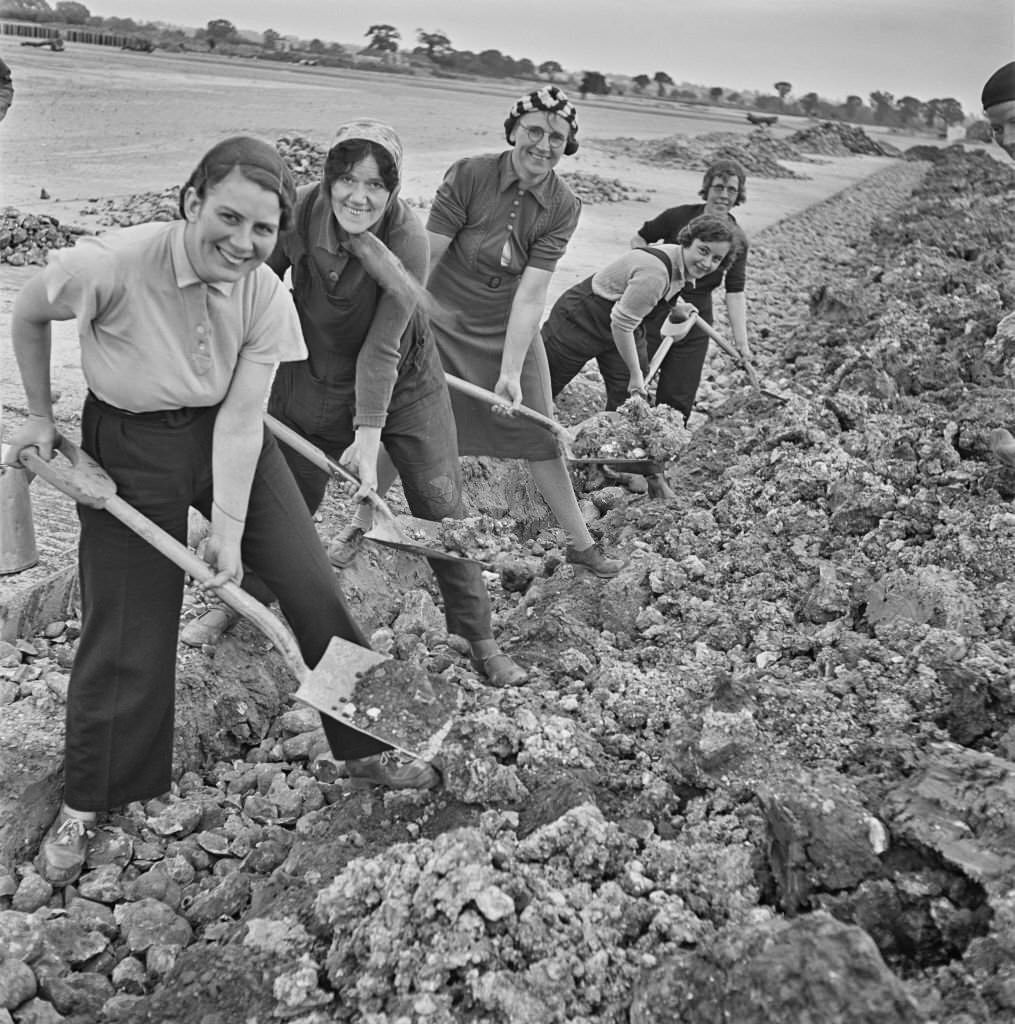
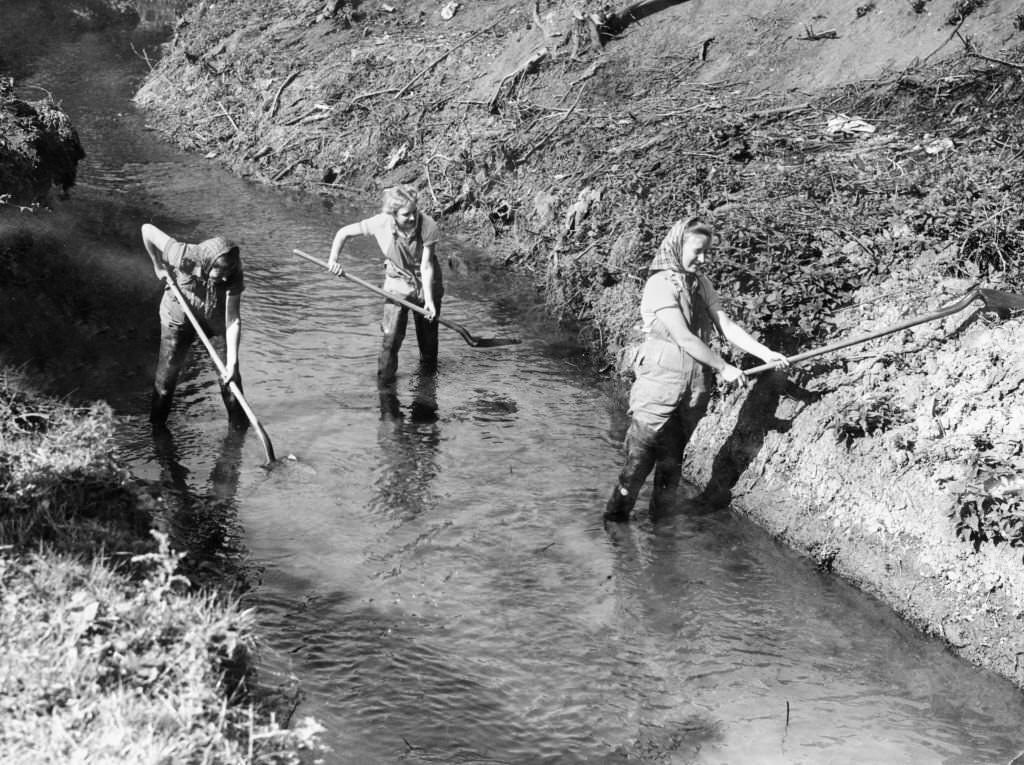
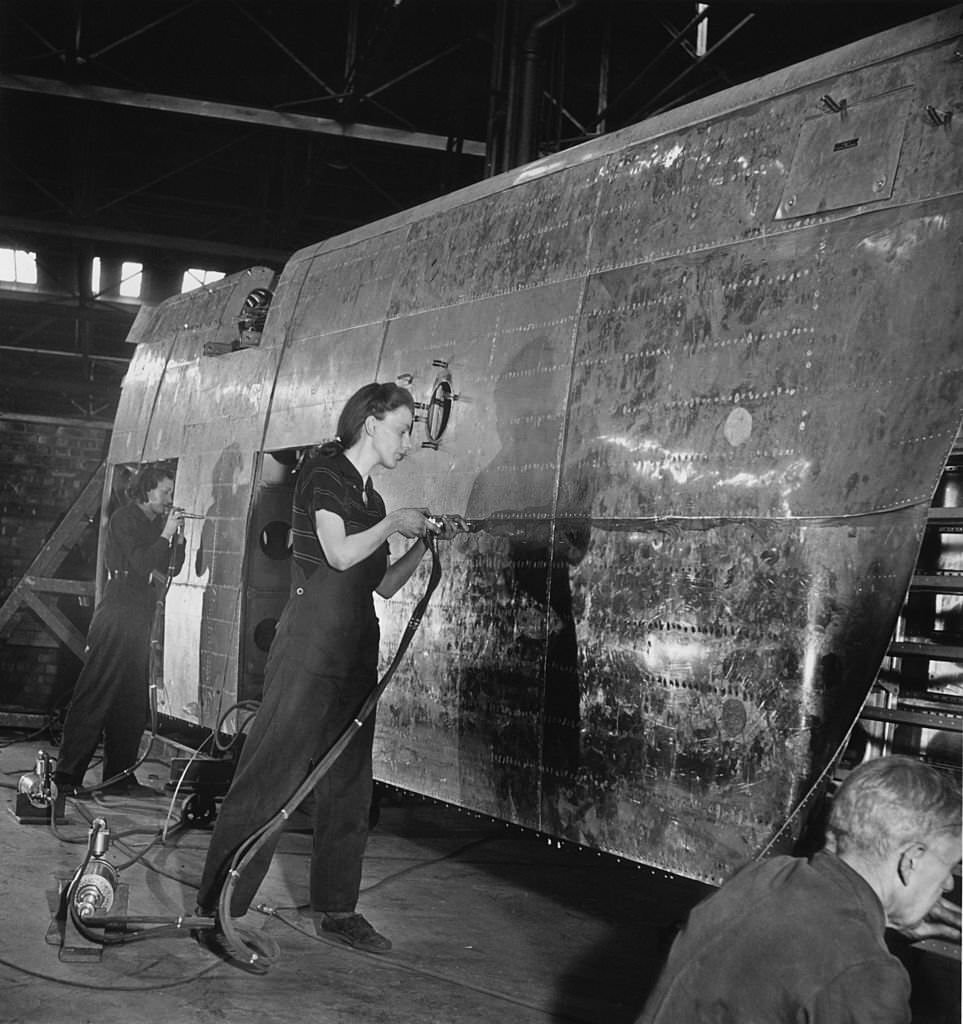
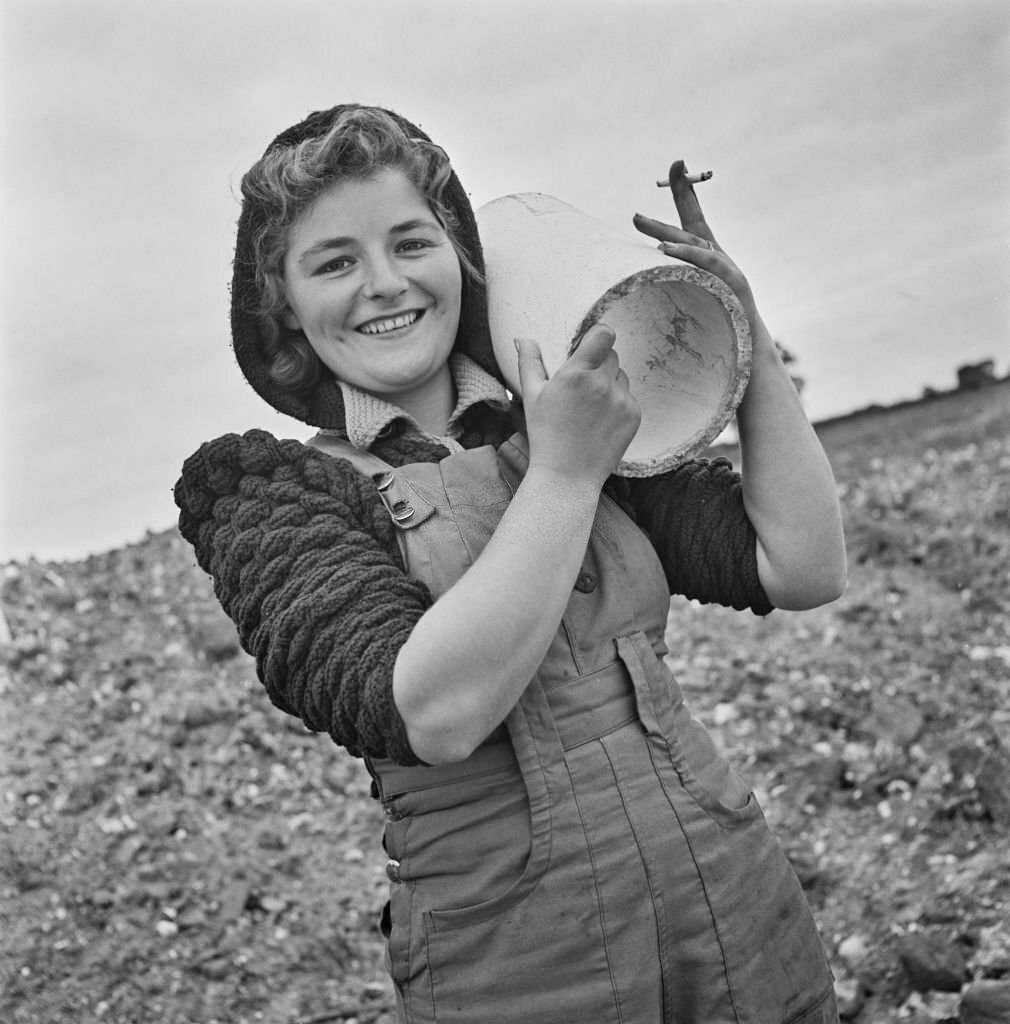
Women also took on construction work. Mrs Peggy Devine, an evacuee from London, hauled sections of pipe on an aerodrome construction site in East Anglia in September 1941. Groups of women filled drainage trenches alongside male labourers building new airfields. At shipyards, women heated rivets, cut steel plates with oxygas equipment, and operated cranes. Roles that had seemed impossible for women to hold just a few years earlier were now simply part of the war effort.
A woman heating a rivet on a ship under construction. Women have entered previously male job fields in England during wartime, specifically shipbuilding.Holding shovels, a group of female construction workers fill in drainage trenches as they carry out rough navvying work on the site of a new aerodrome being built in East Anglia during World War II on 16th September 1941.
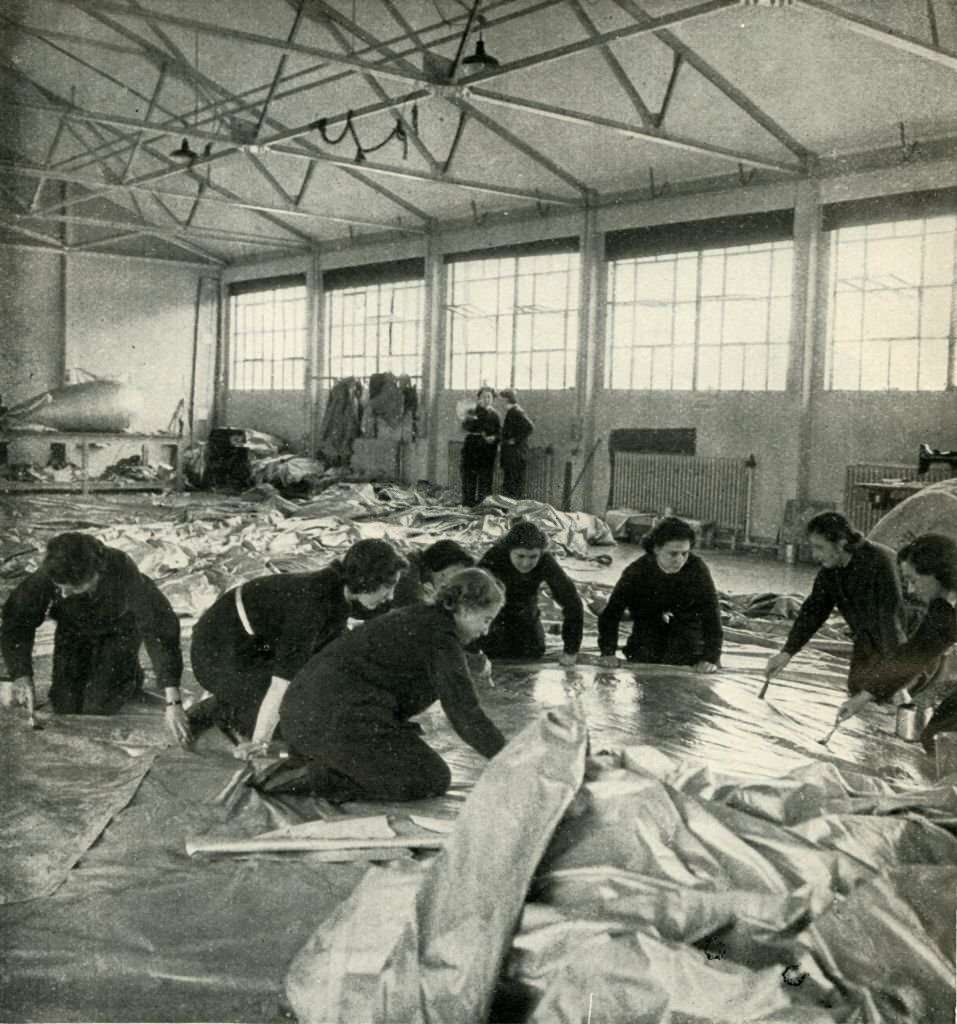
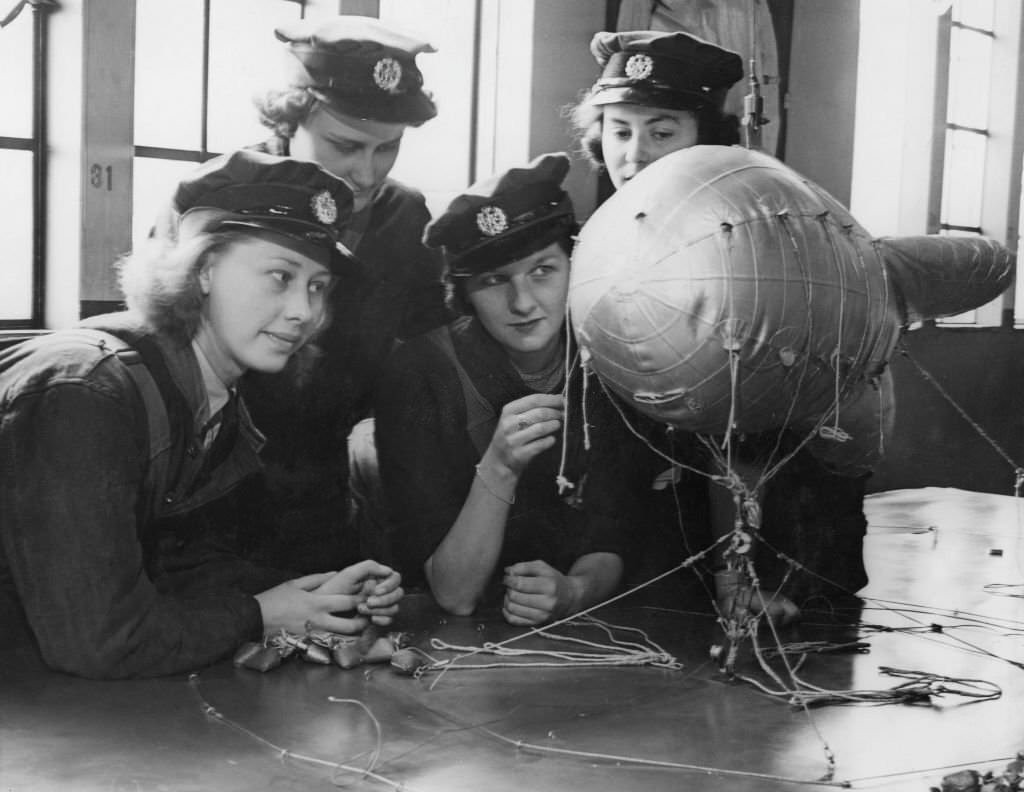
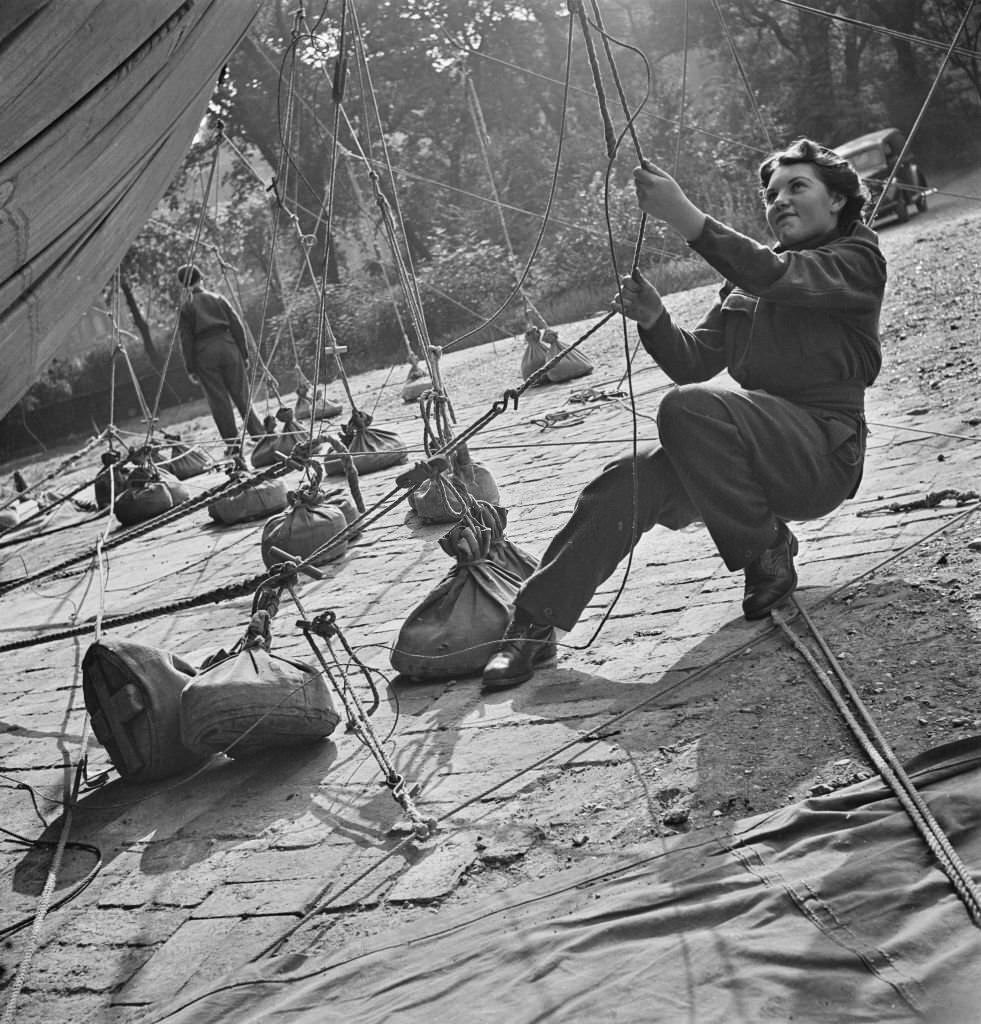
The Women’s Auxiliary Air Force (WAAF) reached a peak strength of more than 180,000 members in 1943, with over 2,000 women enlisting per week. WAAF members crewed barrage balloons, worked in meteorology, operated radar, maintained aircraft, and handled wireless communications. They were not classified as combat personnel, but they worked at military installations and faced the same dangers as anyone else on the home front.
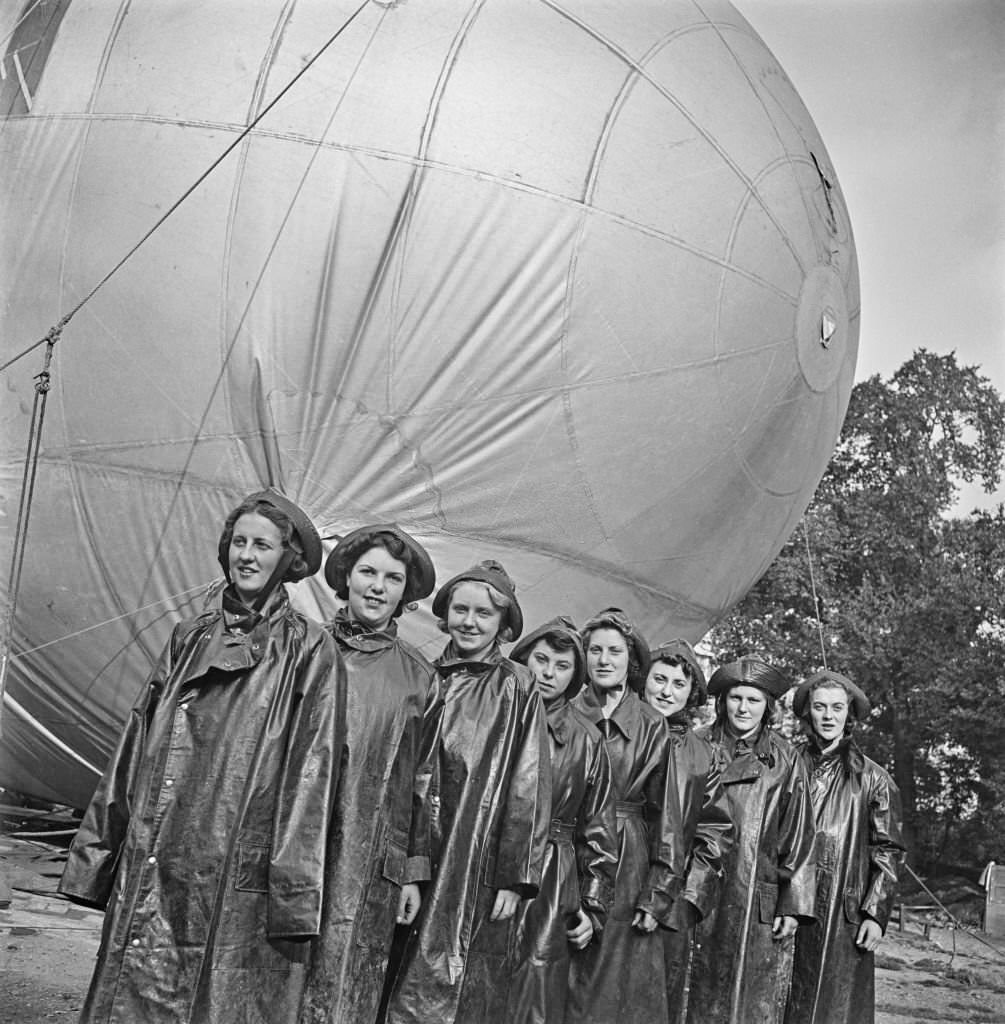
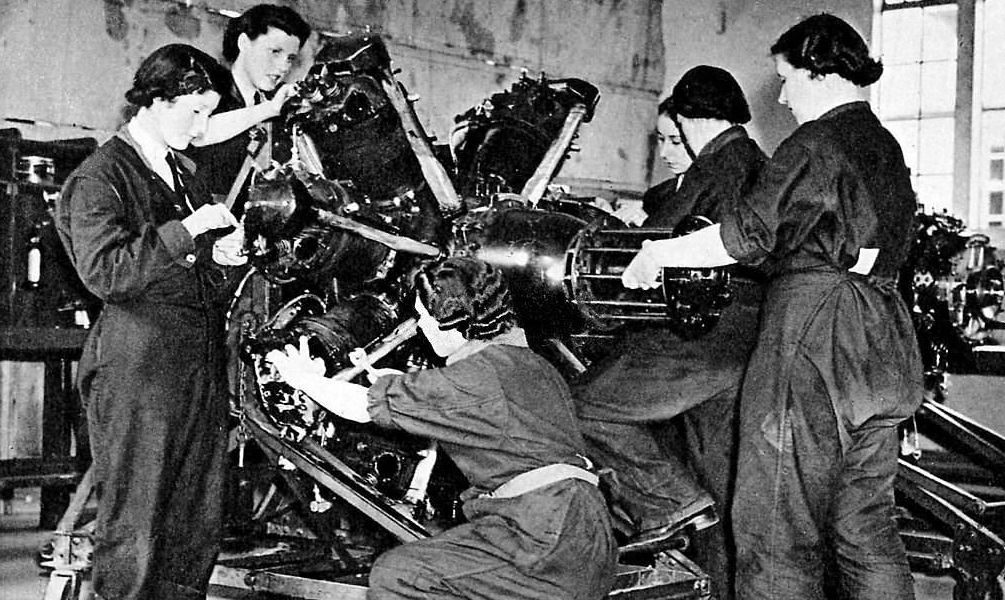
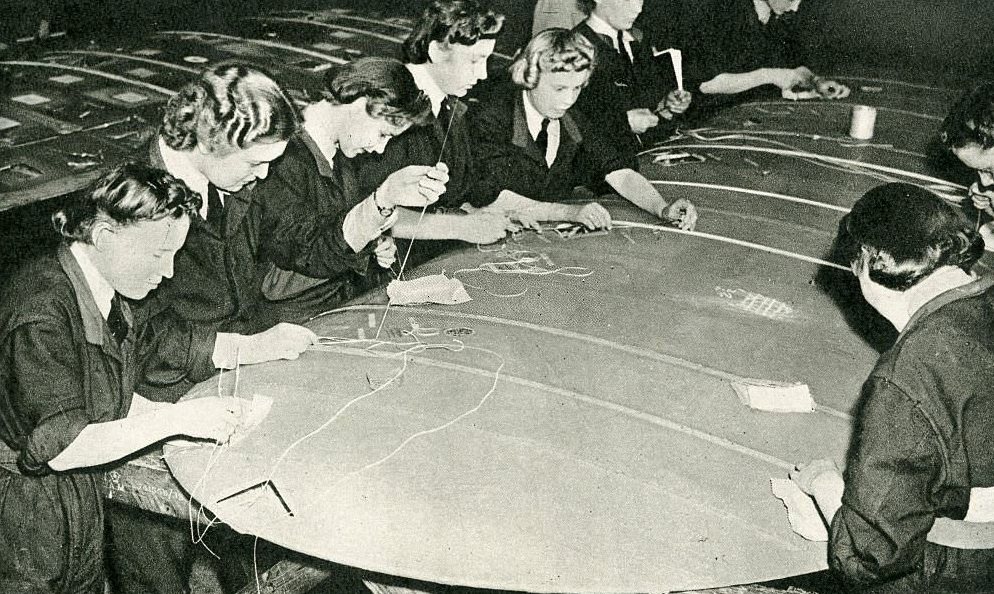
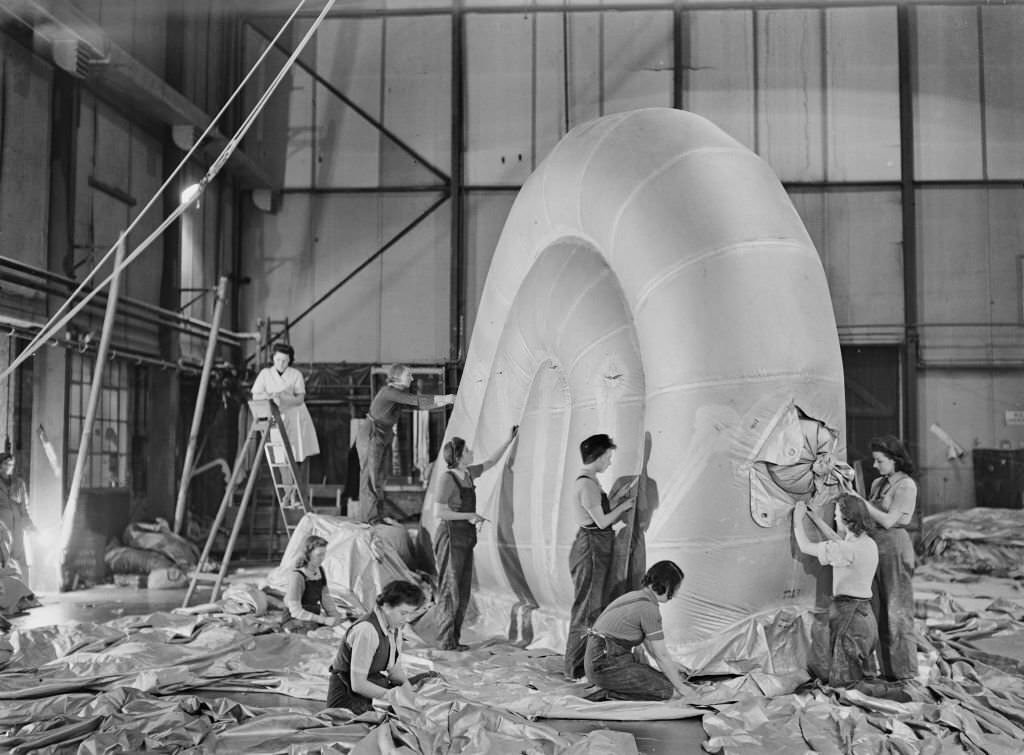
Balloon Fabric Workers, 1943Members of the Women’s Royal Air Force (WRAF) from RAF Balloon Command stand together in their wet weather waterproof oilskins in front of their allocated barrage balloon tethered in Grosvenor Gardens, London. 11th September 1941.Women’s Auxiliary Air Force (WAAF) – Female mechanics in training. A group of women in overalls study the construction of a radial dial engine.
Prime Minister Churchill personally recruited around 60 women for the Special Operations Executive (SOE), which he tasked with setting Europe ablaze. These women were inserted behind enemy lines by parachute or fishing boat and worked as part of a secret resistance network helping prepare the ground for the Allied invasion. Their work was extraordinarily dangerous — capture meant torture and execution.
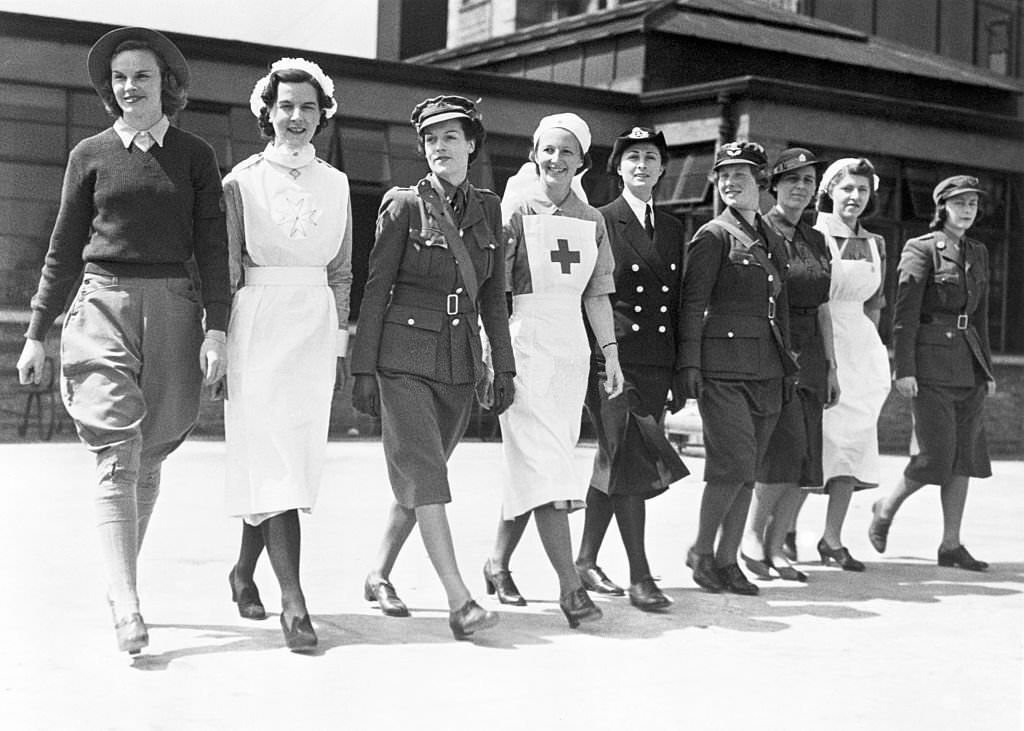
British Women Wear Ww II Army Uniforms
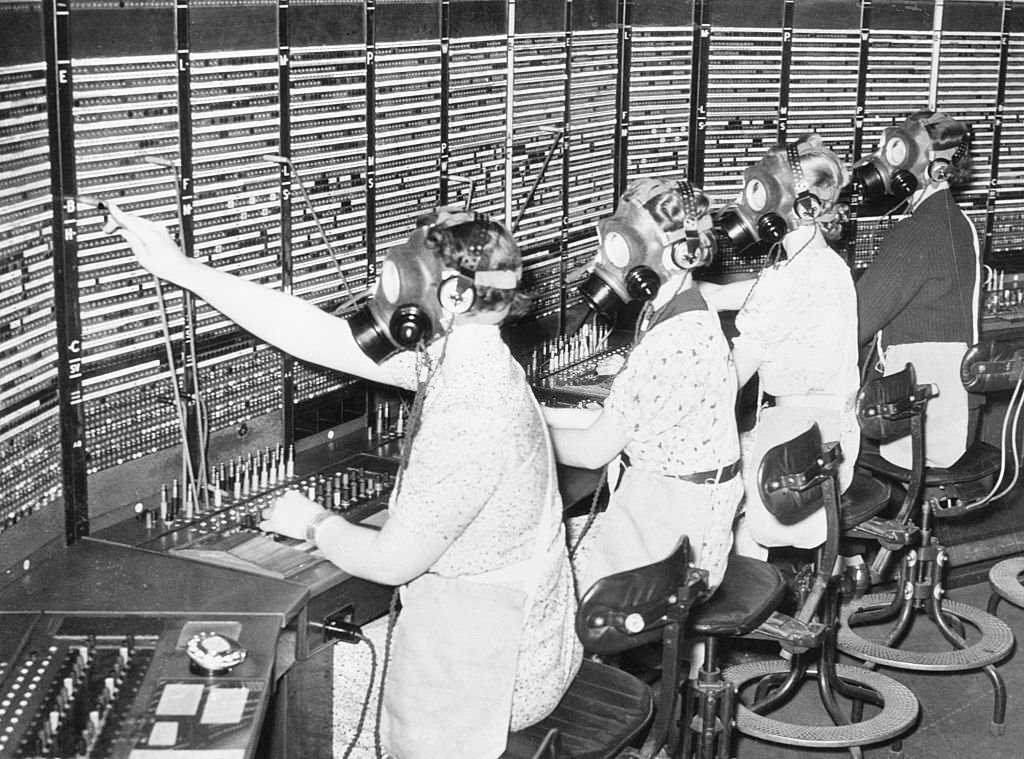
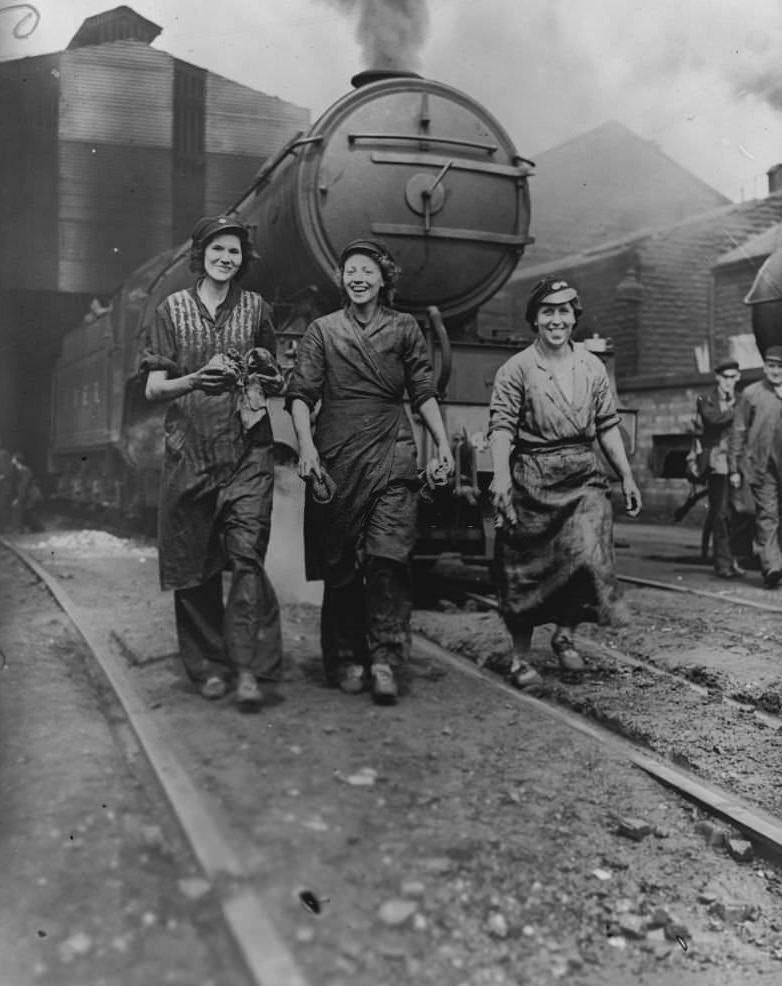
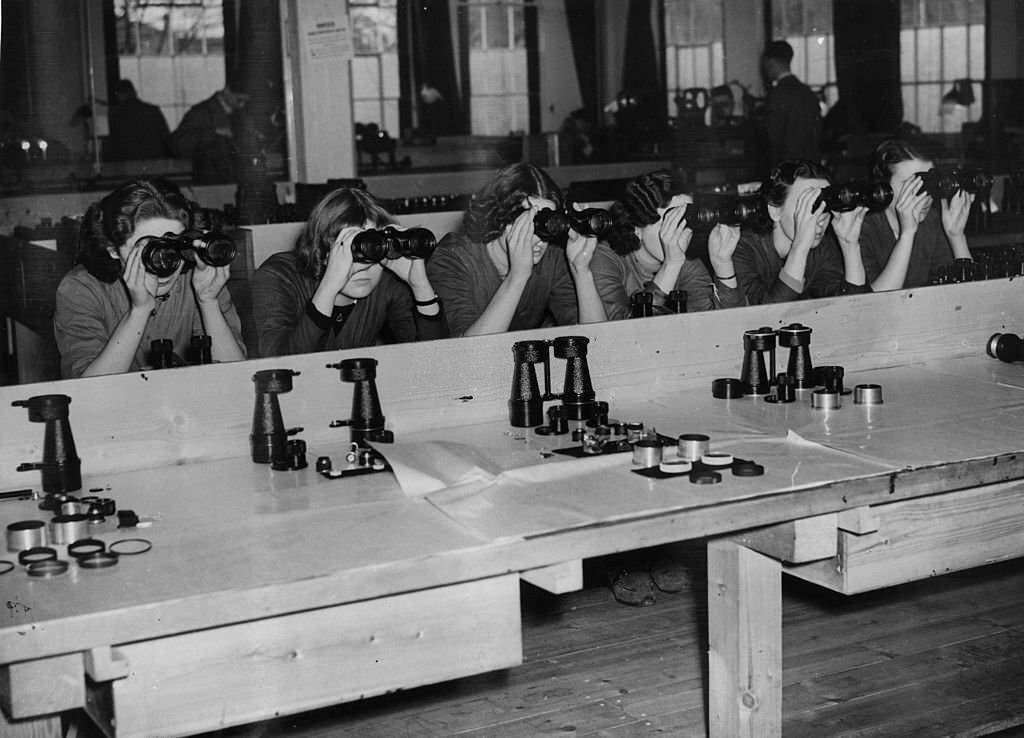
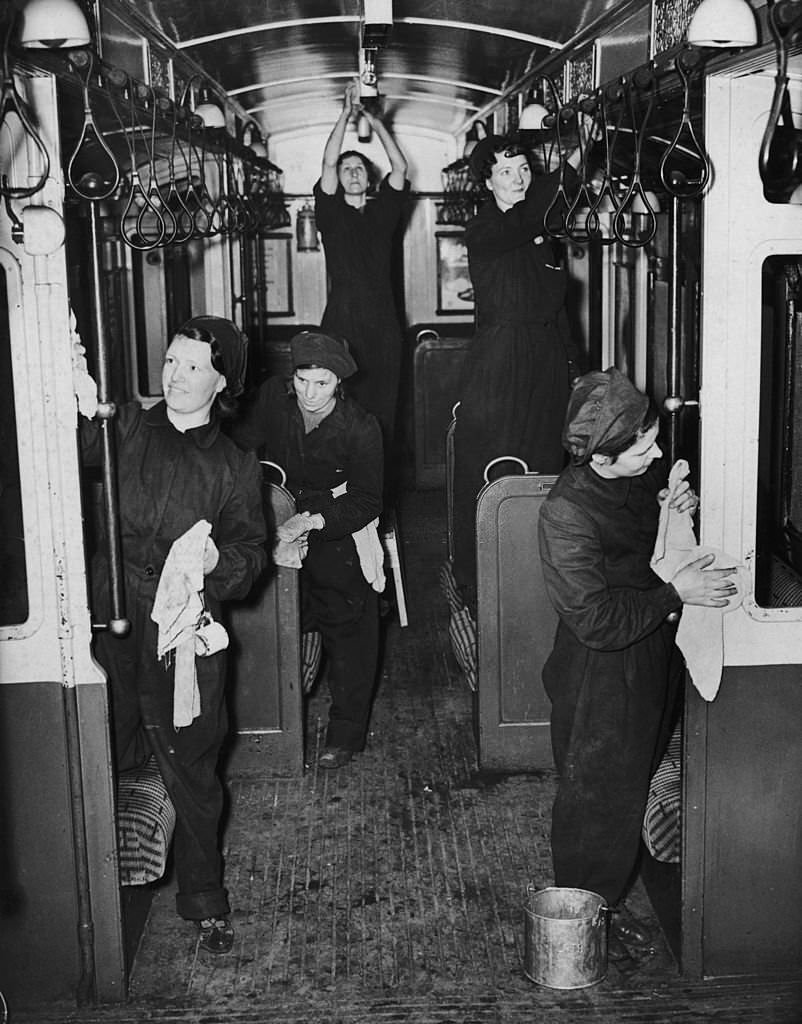
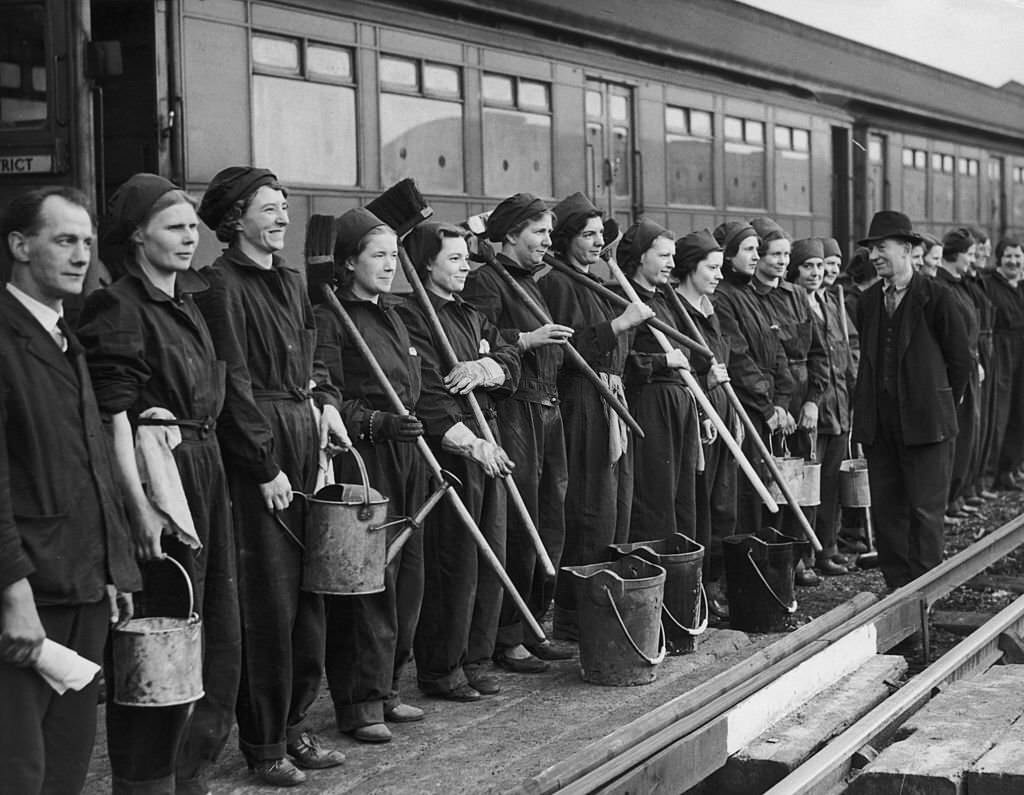
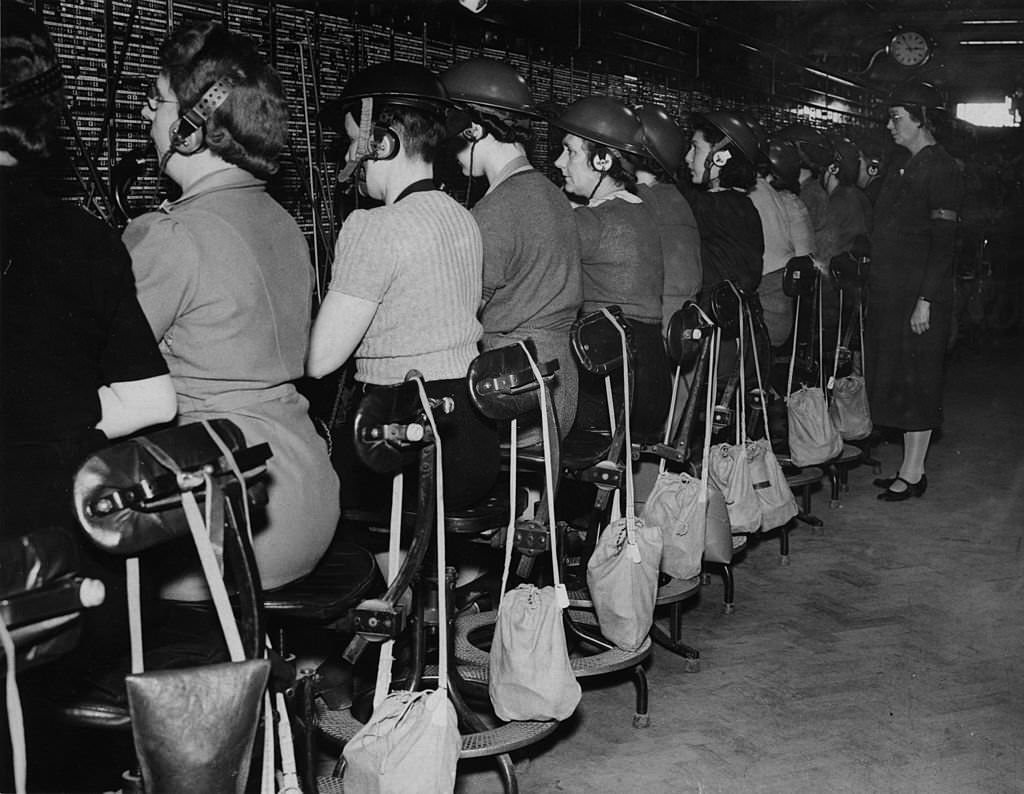
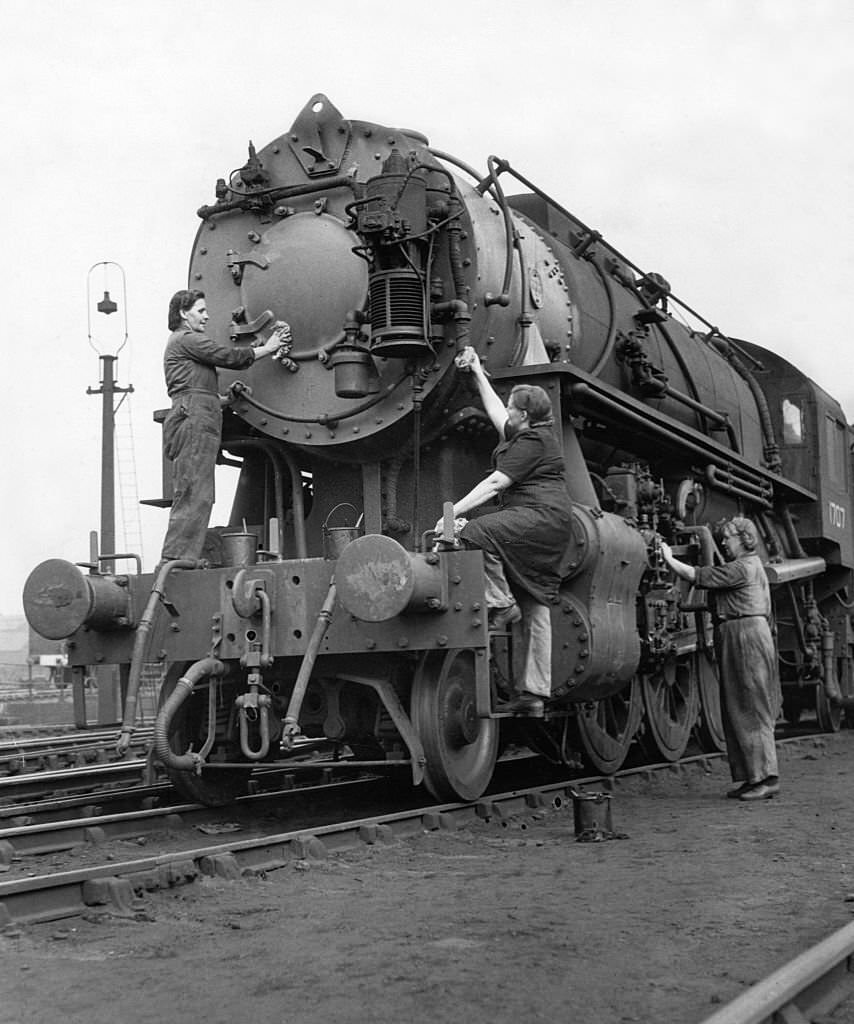
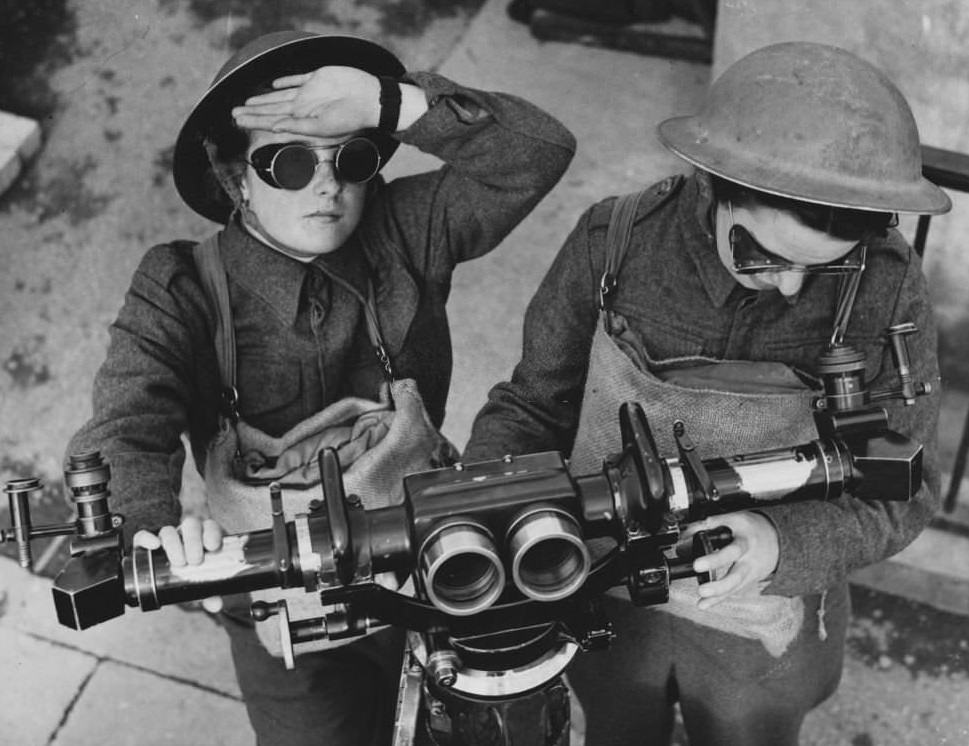
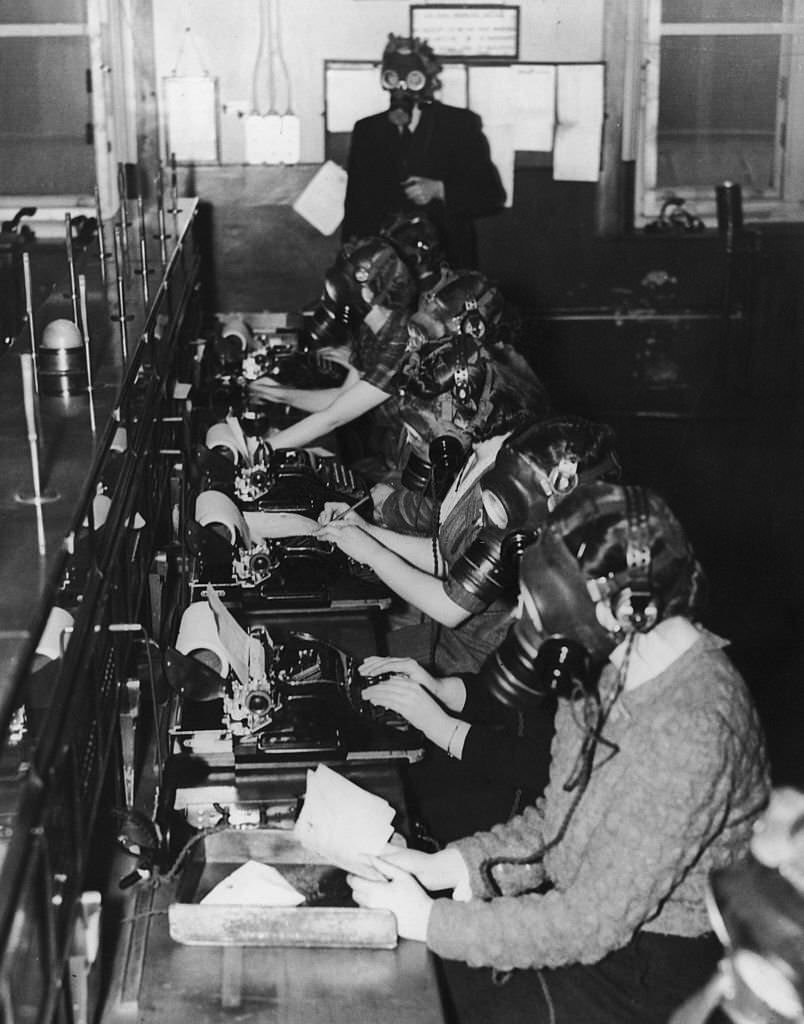
Women also kept essential services running. Telephone operators at trunk exchanges trained to handle all calls while wearing gas masks fitted with microphone devices, ensuring Britain’s communication lines stayed open during air raids. Women at London Underground depots cleaned and maintained carriages. Railway workers nicknamed the “Three Musketeers” cleaned and maintained locomotives at a Northern England yard. Women at optical instrument factories produced binoculars, telescopes, and photographic lenses for the armed forces.
British “Hello-girls” ready to “carry on” In case of an air-raid, England will expect every telephone operator to do her duty, 1939Three cleaners, nicknamed the Three Musketeers, who are employed to clean and maintain locomotives at the London and North Eastern Railway yard, Northern England, June 1941.Workers in one of the largest optical instrument making factories in Britain, where binoculars, telescopes, photographic lenses and other scientific devices are made for the armed forces.
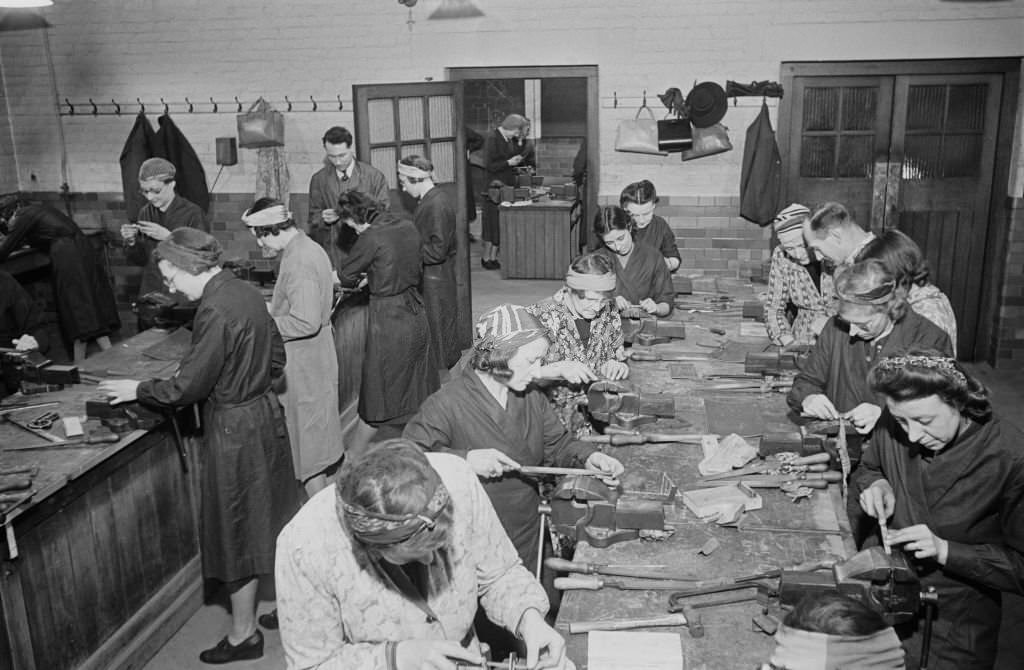
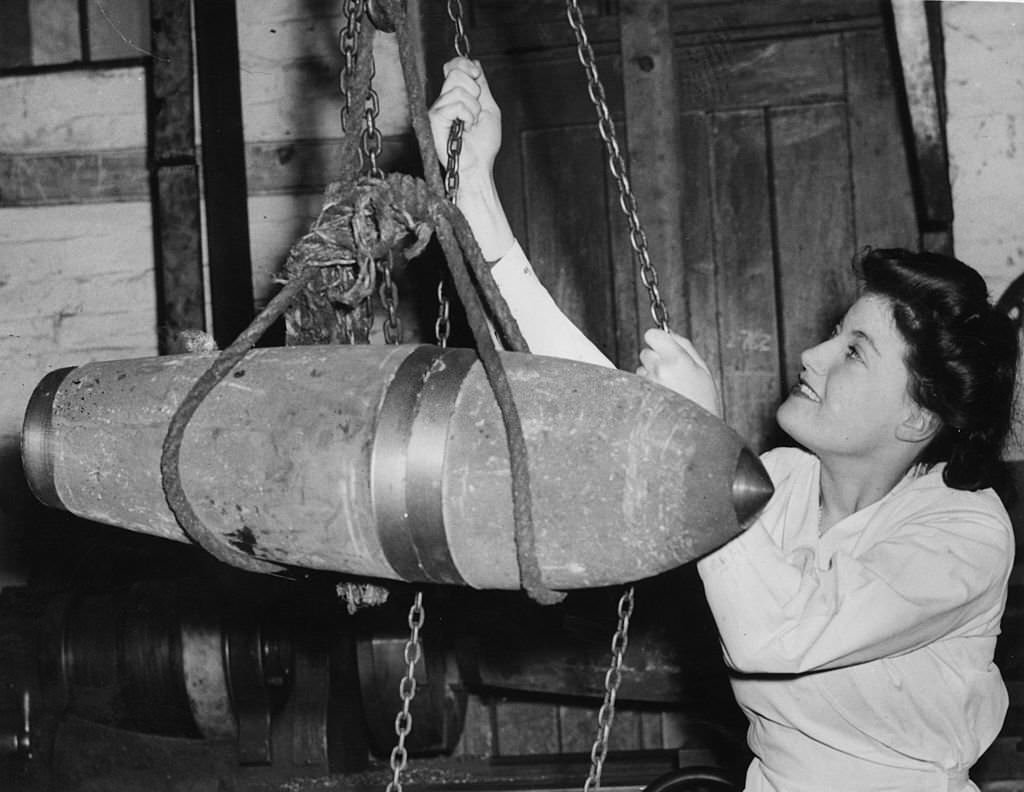
Women trained in metalworking at government centres like the Westminster Institute in London and the Ministry of Labour training centre at Chelsea Polytechnic. Former cinema usherettes became capstan lathe operators. Former waitresses hauled 500-pound bombs on winches inside disused churches converted into bomb factories. The range of backgrounds was vast — but the work required the same skill and the same risk.
Women, many wearing headscarves, use files to deburr metal held in vices in a metalworking class at the Westminster Institute in London during World War II, 28th November 1940.Once a waitress, Lilian Nye now works at a bomb factory in a disused church in Banbury, Oxfordshire, and is hauling a 500lb bomb on a winch, 4th April 1941.
The question of pay was never fully resolved. Women were entitled to equal pay when they performed exactly the same job as men without assistance or supervision. In practice, employers found ways around this. Unskilled and semi-skilled jobs were classified as “women’s careers” and excluded from equal pay negotiations entirely. On average, women’s wages remained around 53% of what the men they replaced had earned. Trade unions were also concerned about what would happen once men returned — they worried women’s lower wages would drive down the rates for everyone.
The seven Mills sisters work side by side at a munitions factory in Enfield during World War II. From left to right, they are Kitty, Beryl, Irene, Marjorie, Doris, Phyllis and Violet, 1942Female factory workers assemble parts, possibly the reduction gear, for Rolls-Royce Merlin V-12 piston aero engines at the Hillington Rolls-Royce aero engine factory in Glasgow, Scotland on 30th November 1942.
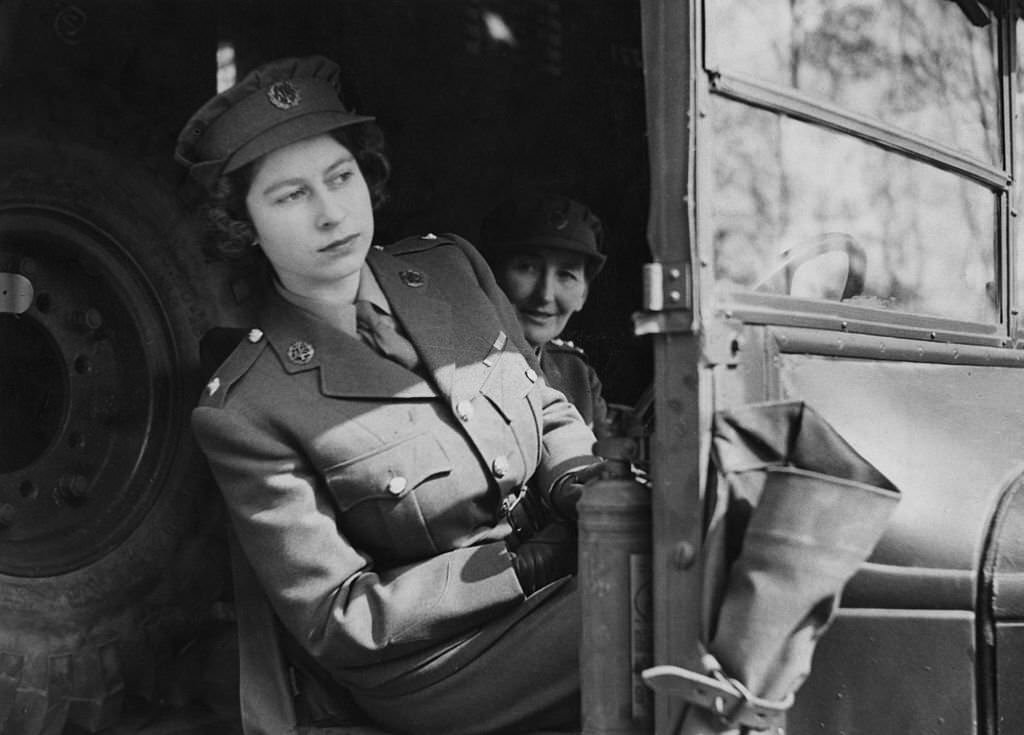
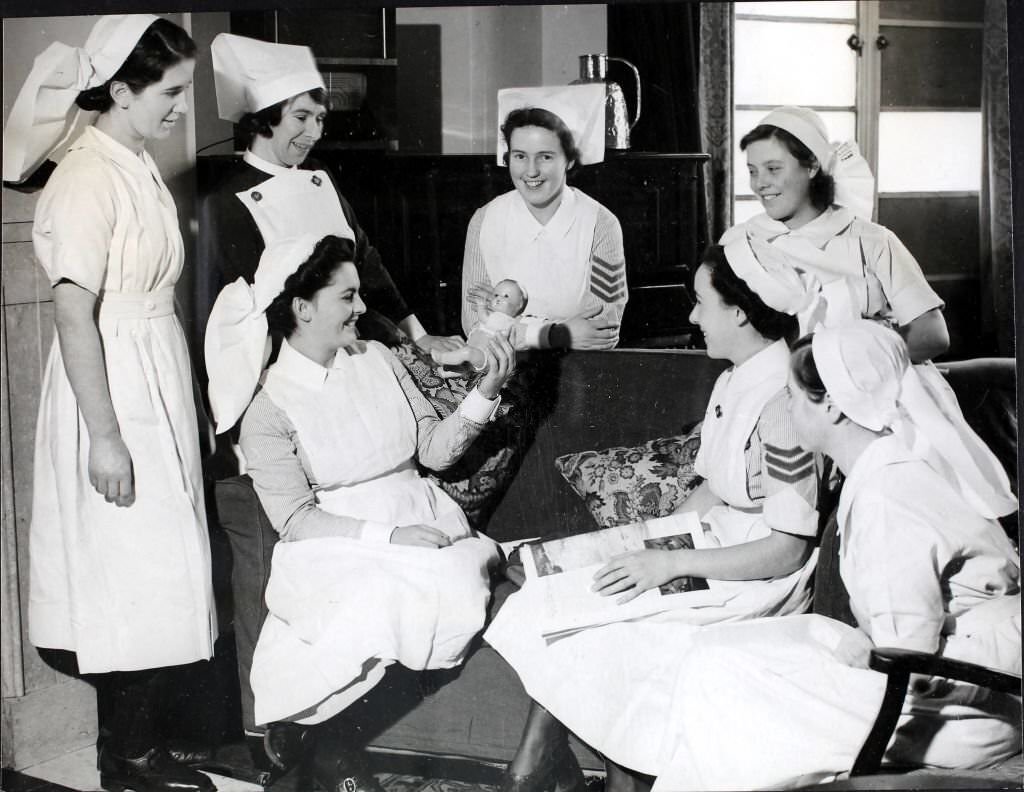
Among those who served was Princess Elizabeth, who drove an ambulance as part of the Auxiliary Territorial Service in 1945. Nurses at St. Charles’s Training Centre in London were part of a national recruitment push — Britain needed at least 10,000 more nurses to bring hospitals up to adequate strength, and nursing was designated an essential national service from which women could not be pulled for other war work.
Princess Elizabeth (now Queen Elizabeth II) driving an ambulance during her wartime service in the A.T.S. (Auxiliary Territorial Service), 10th April 1945.A small baby doll causes some amusement amongst the nurses as they taken a few minutes off in their comfortable rest room at the St. Charles’s Training Centre in London, England, World War II, December 1941.
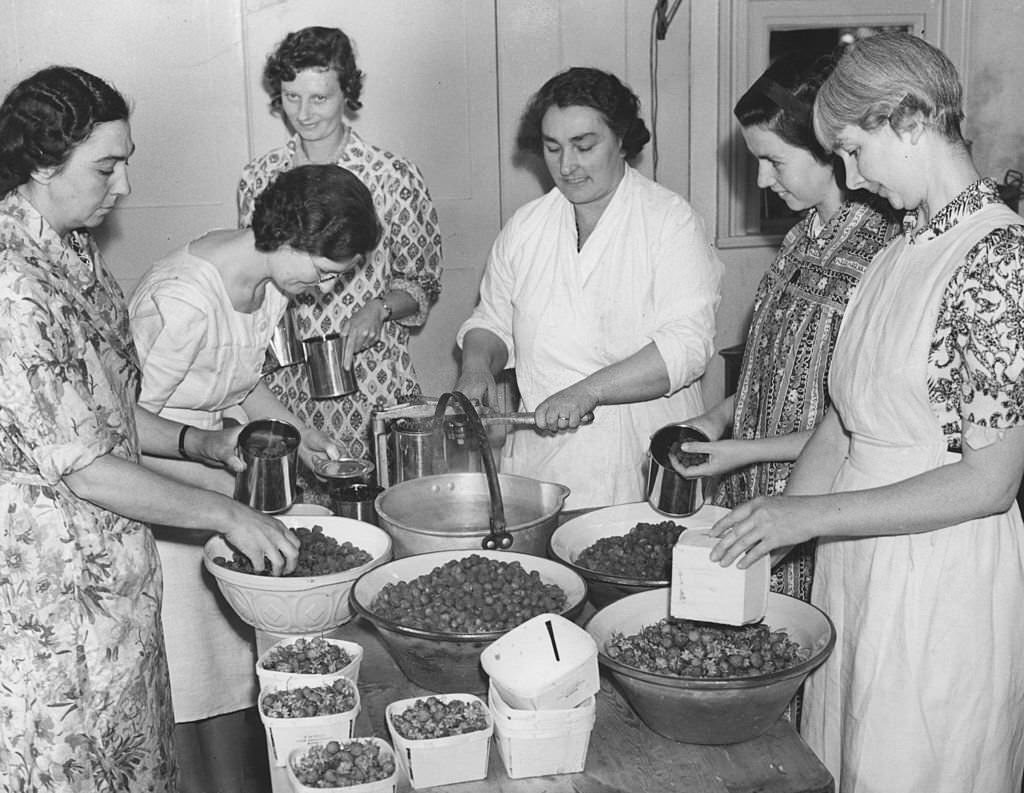
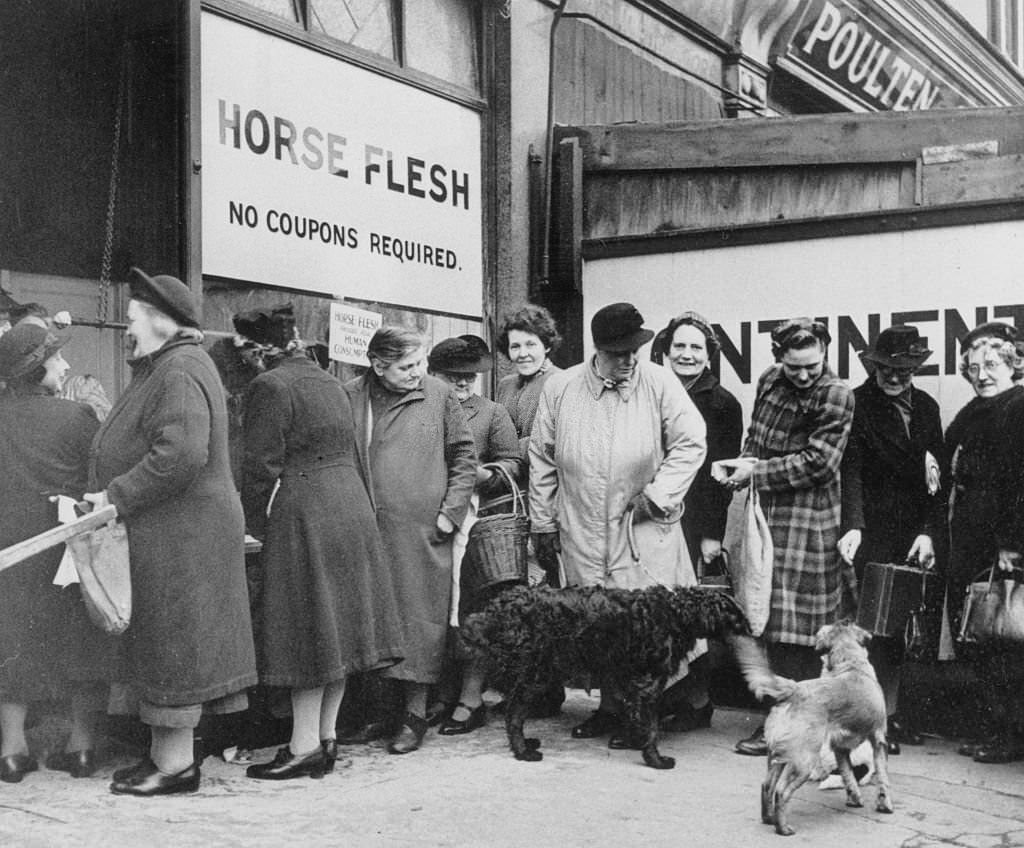
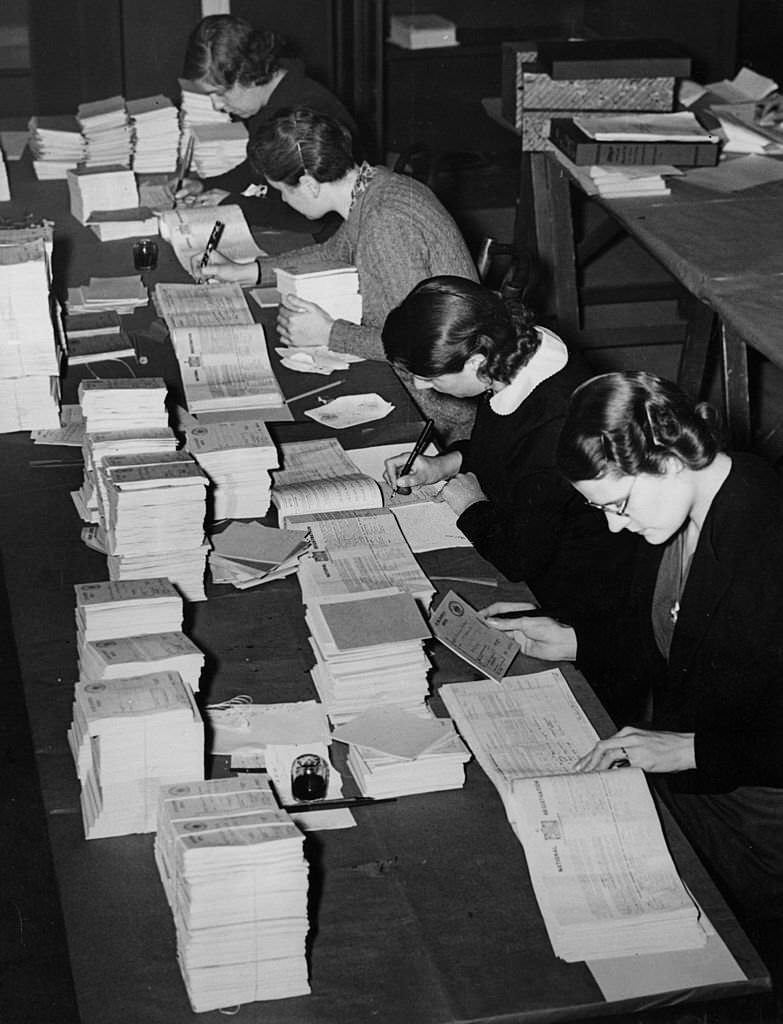
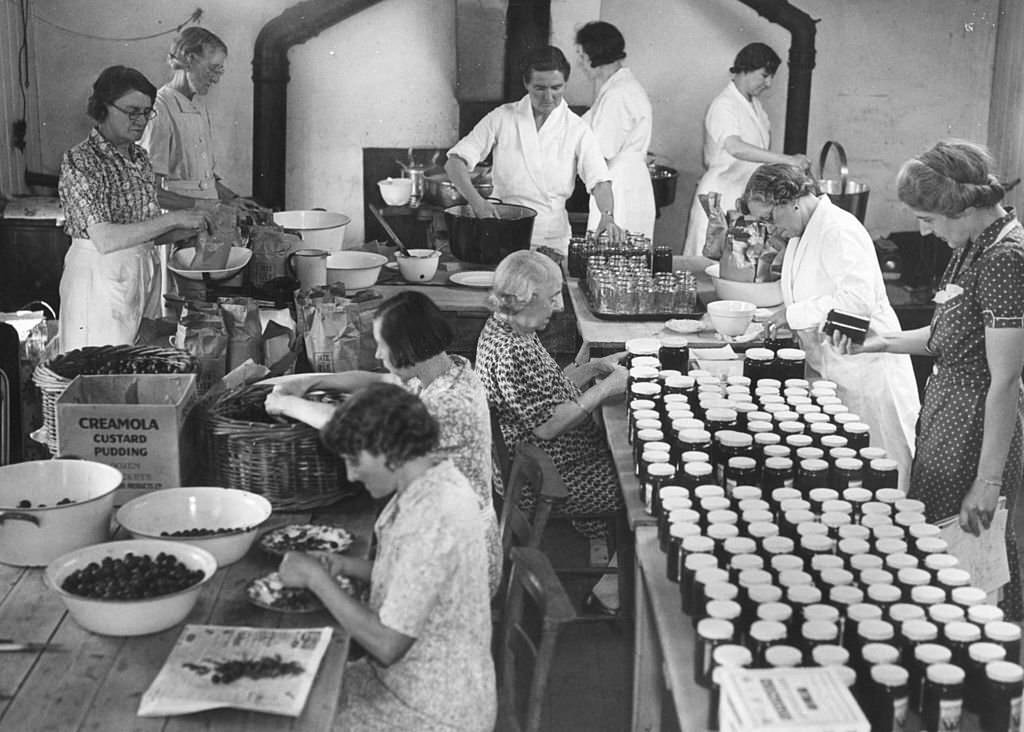
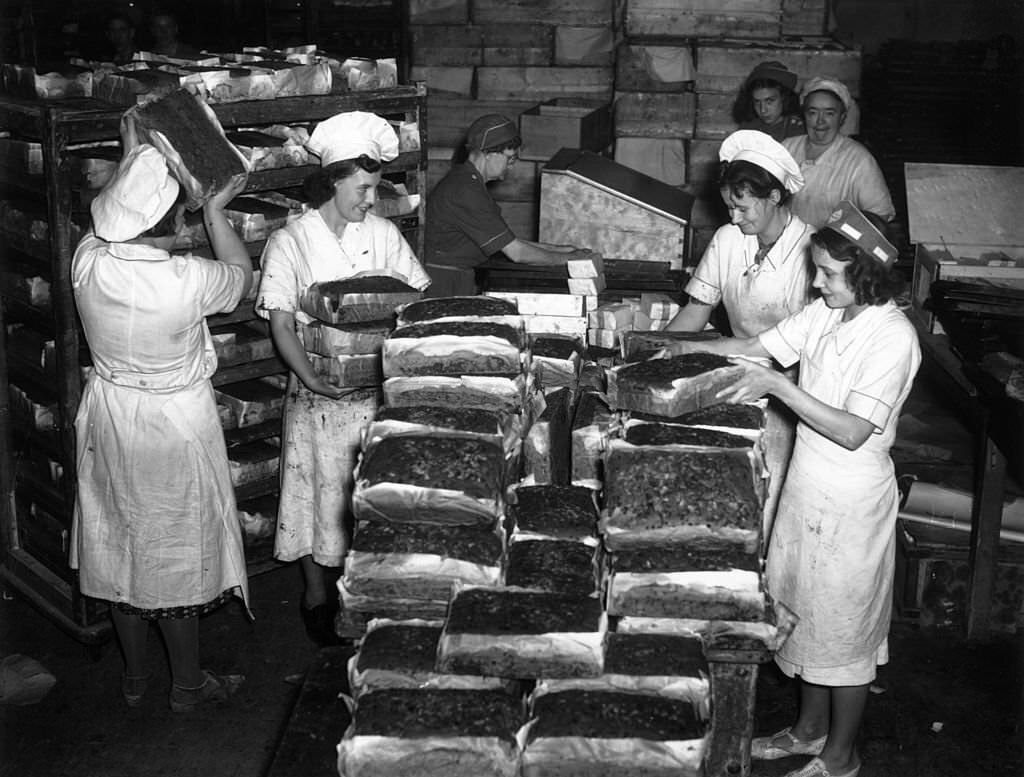
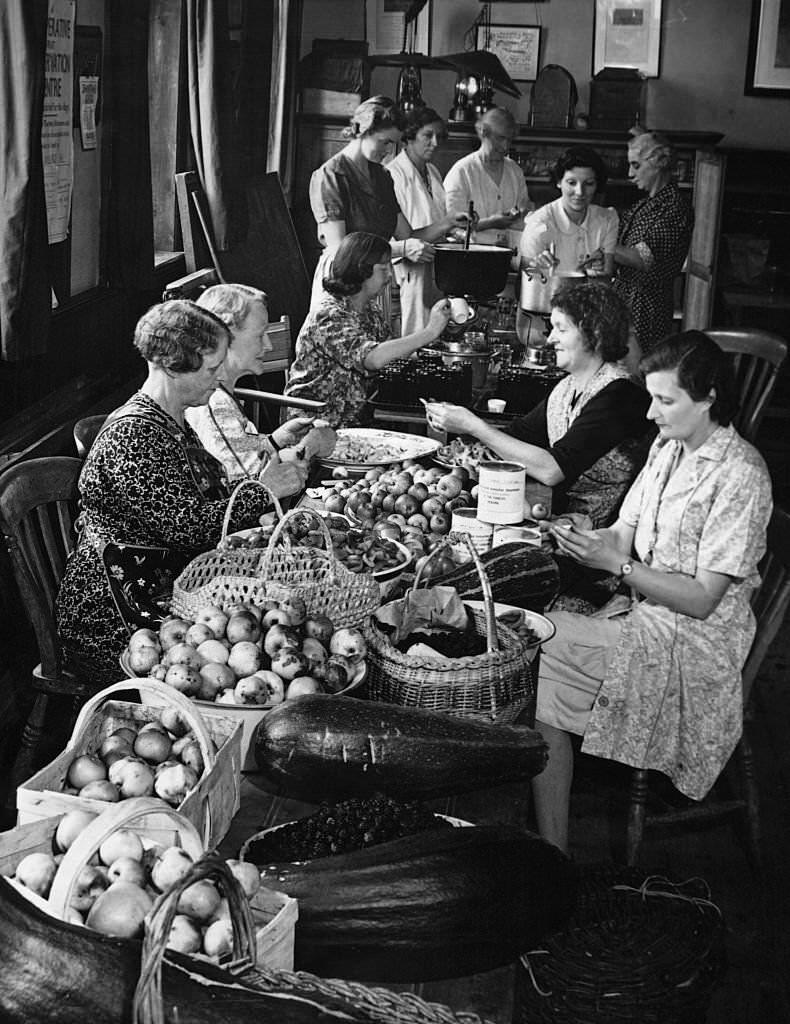
Food production and preservation became a front-line concern as German attacks on shipping cut off imported goods. Women’s Institute branches across Britain turned surplus fruit into jam by the hundreds of pounds. In Mereworth, Kent, the Women’s Institute produced over 5,000 pounds of jam by 1944. The government also set up communal kitchens to reduce food waste. Women prepared ration books, queued for horsemeat — which was not rationed — and organised every available resource to keep people fed.
A village ‘jam depot’ organised by the Women’s Institute on behalf of the government to use up all excess home grown fruit, 1941World War Two Rationing in Britain During the World War II
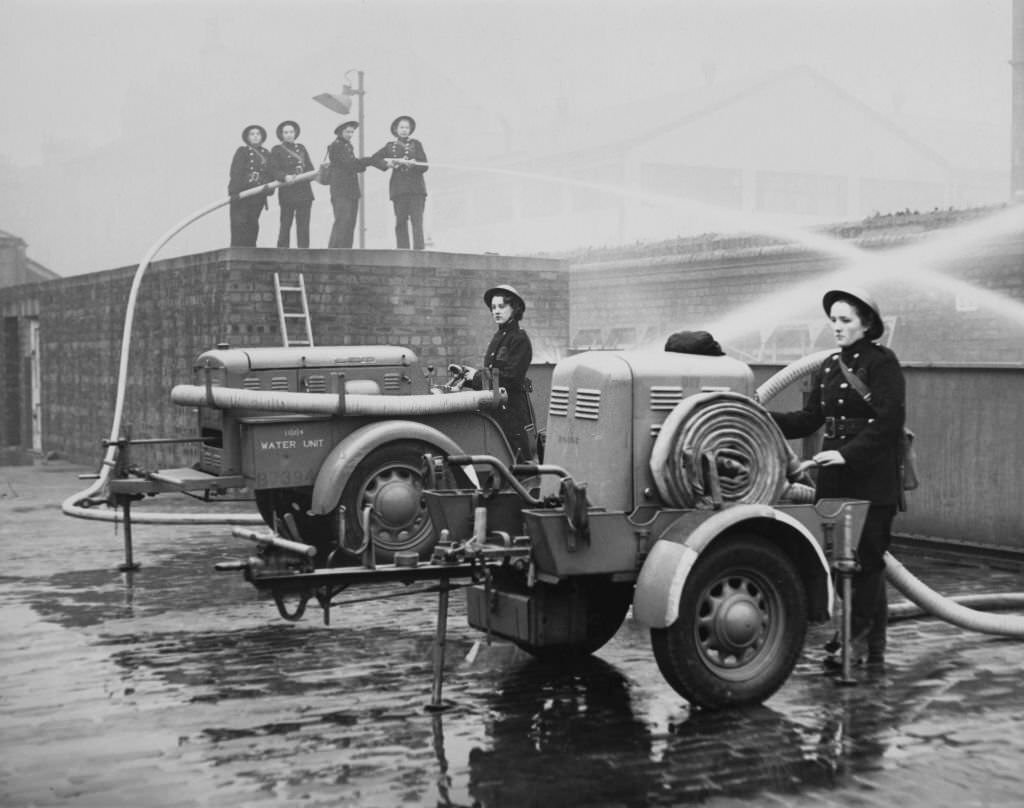
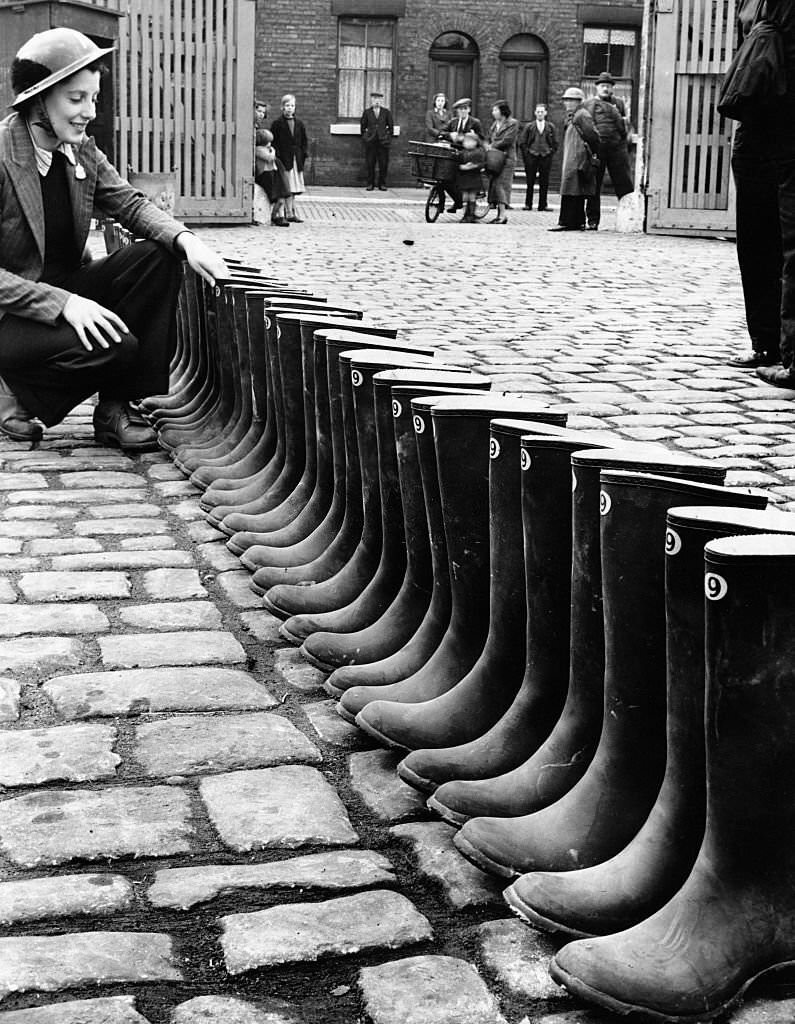
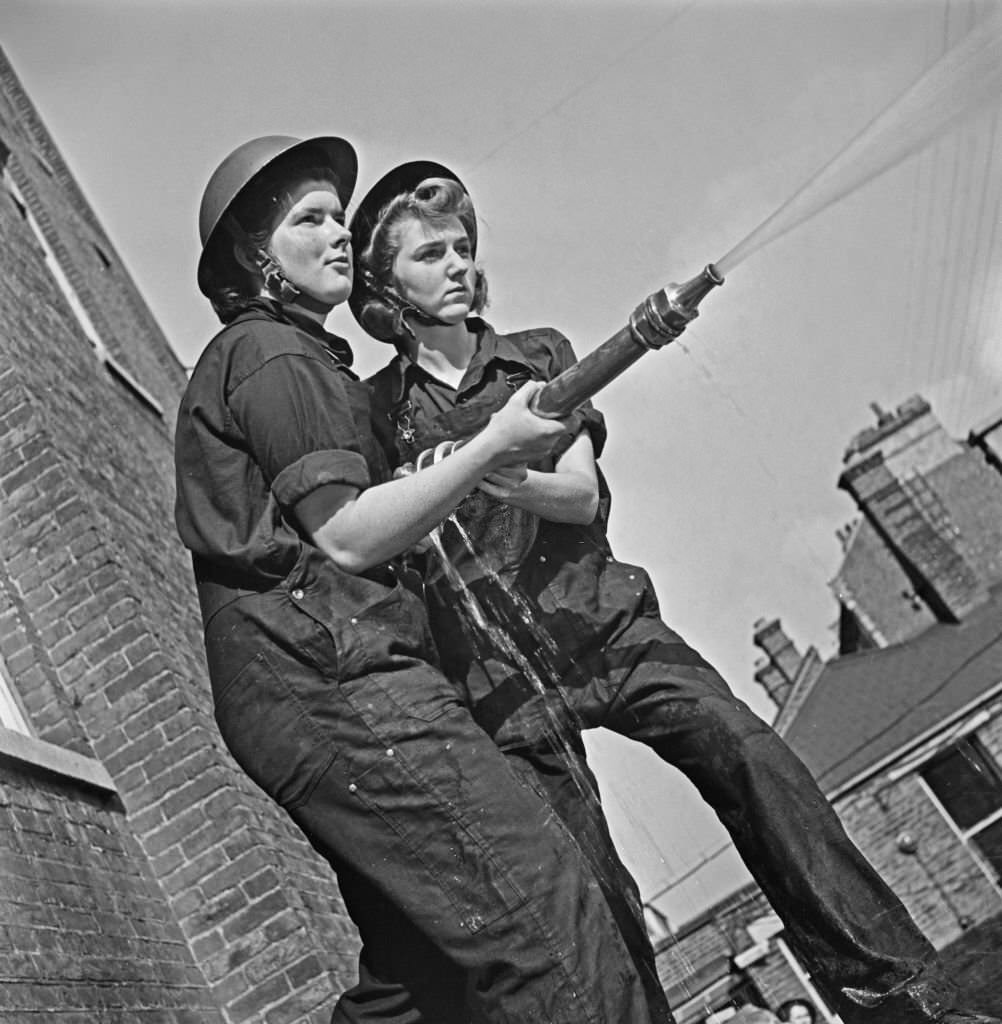
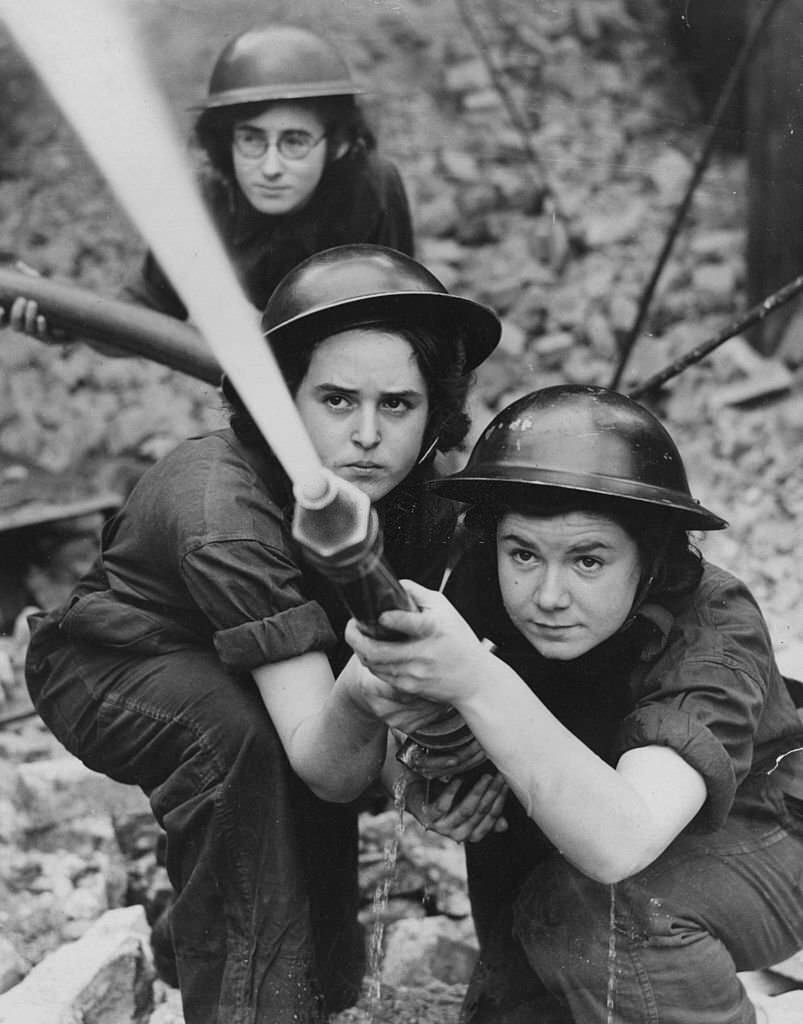
Fire training was another critical area. The first all-female Auxiliary Fire Service station in Northumberland trained with 80-pound portable water pressure hoses. Female ward housekeepers at the Royal Northern Hospital in Holloway set up their own fire-fighting service and trained with water hoses to prepare for Blitz fires. Women firefighters in Walthamstow drilled on the rooftops of their own headquarters. Fire preparedness was not optional — the Blitz made it a matter of survival.
Members of the first all female Auxiliary Fire Service (AFS) fire station in Northumberland undergo training with a portable 80lb water pressure hose and pump powered by a Coventry Climax engine on 3rd February 1942 in Glasgow.Women firefighters exercise on the roof of their headquarters in Walthamstow, 1944.
The photographs collected here span the full breadth of what British women did during the war — from factory floors to open fields, from telephone exchanges to bomb bays. They show women in overalls and uniforms, driving vehicles and operating machines, drilling and harvesting and building. Each image is a document of a moment when the old limits on what women could do were simply set aside because the country needed them to be.
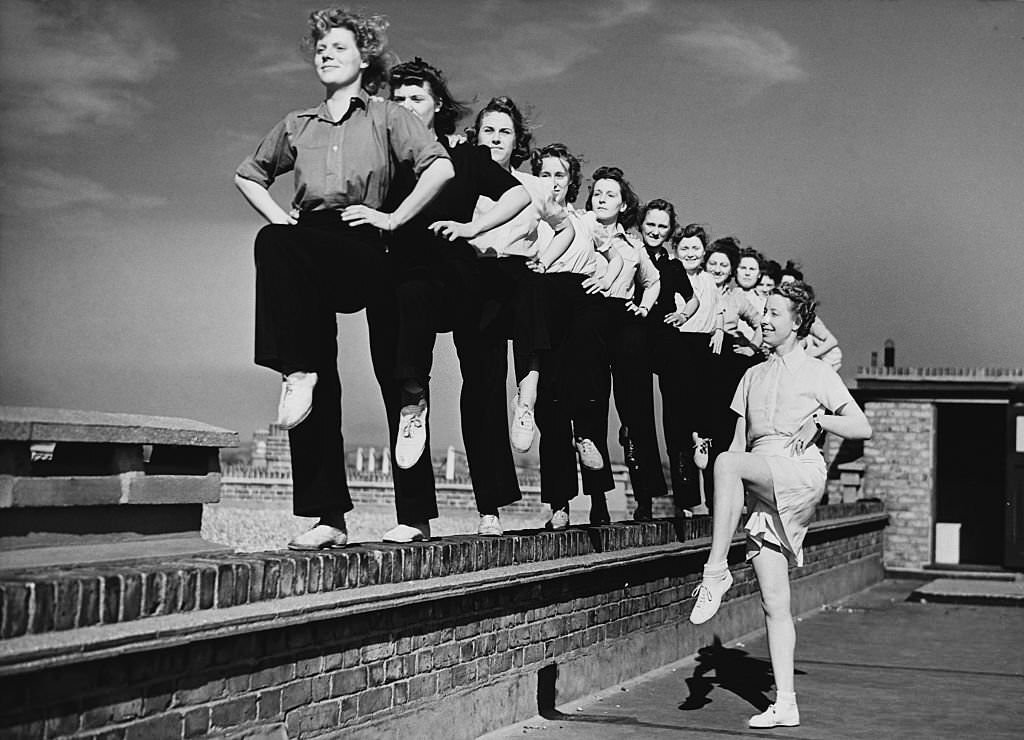
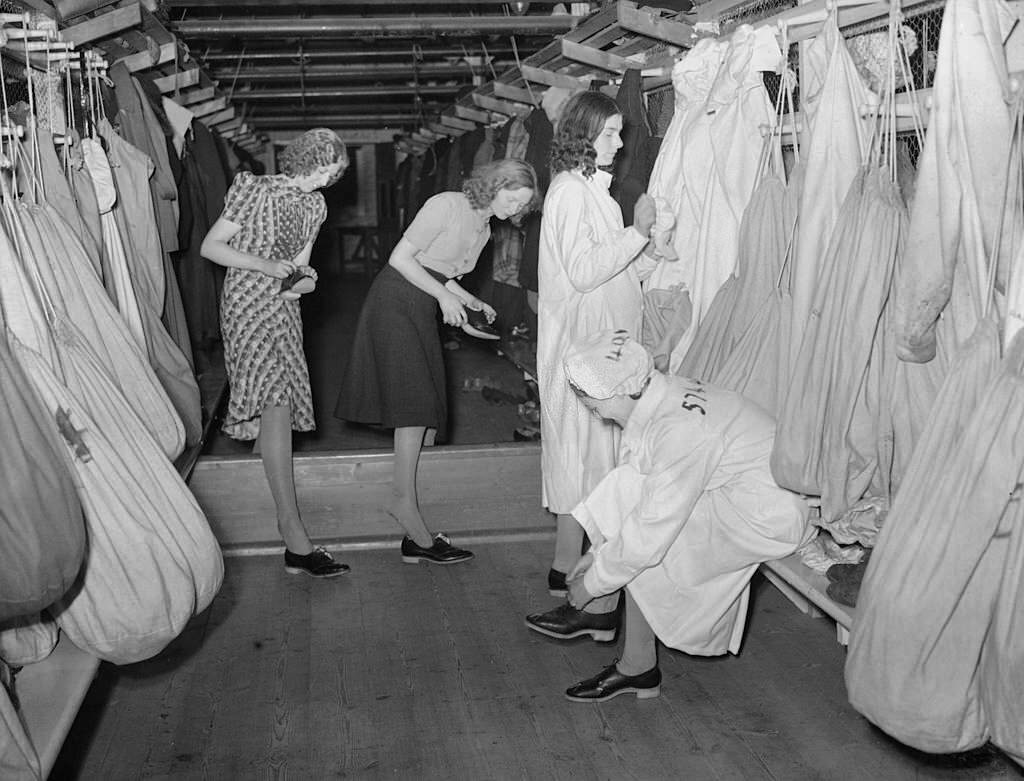
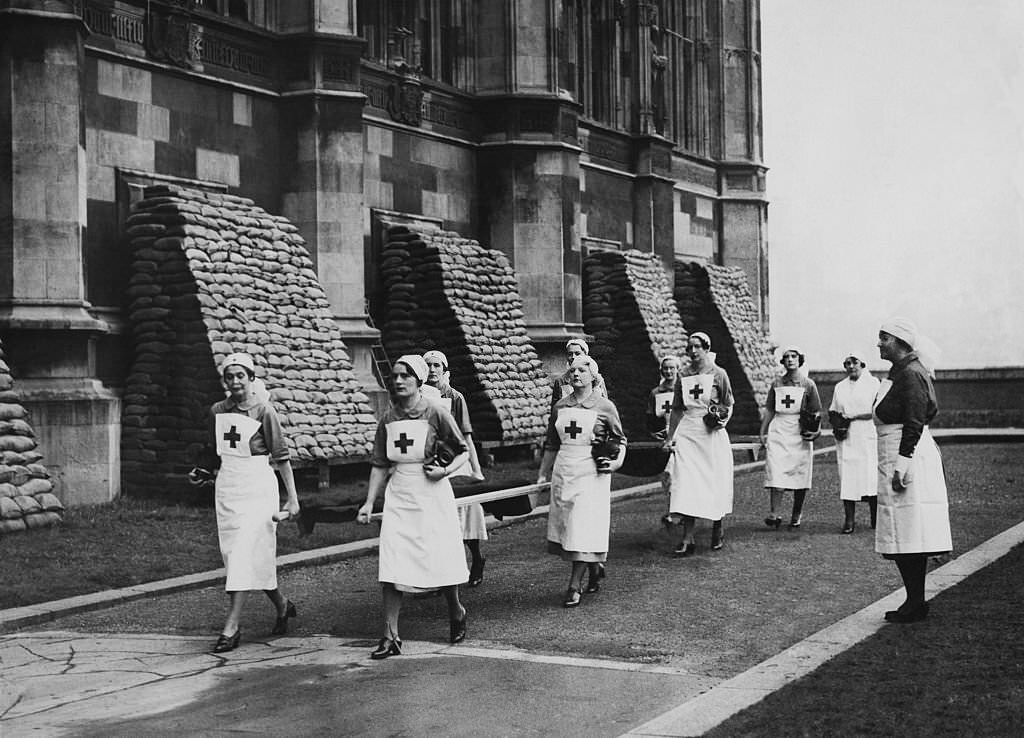
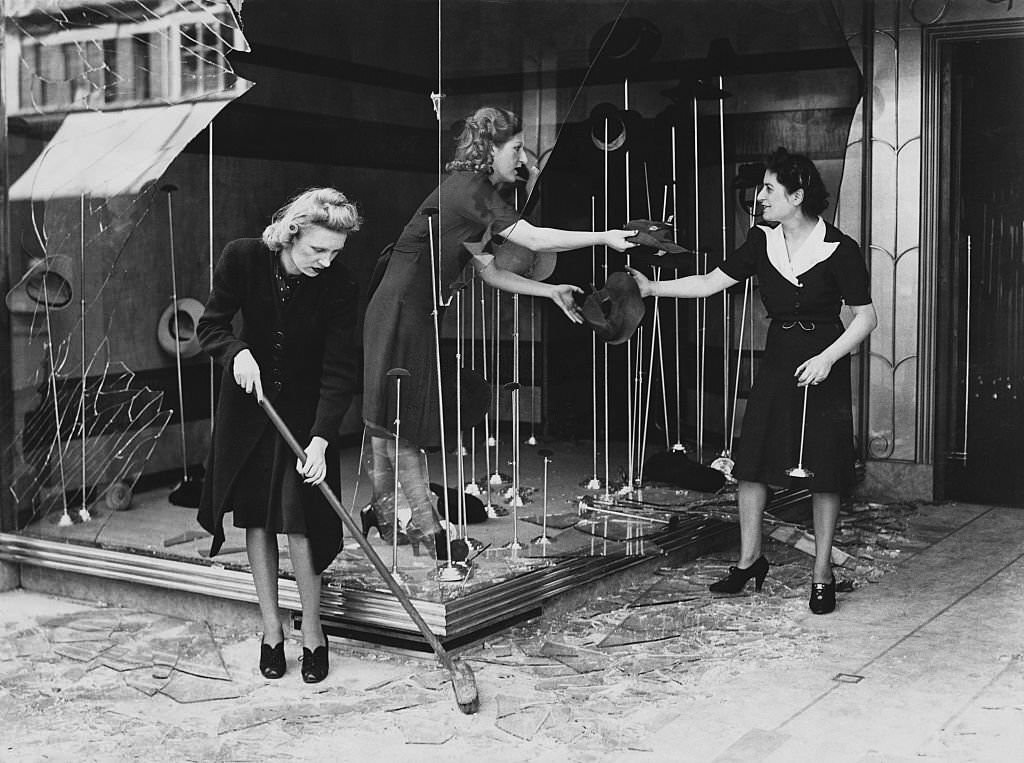
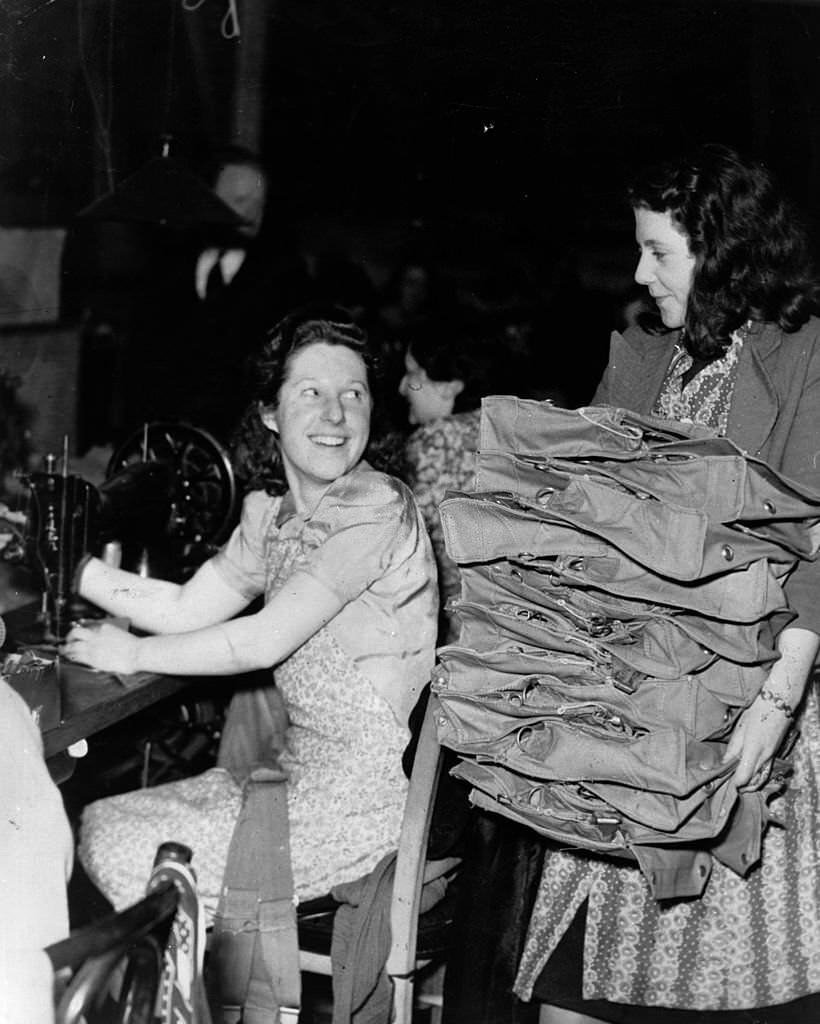
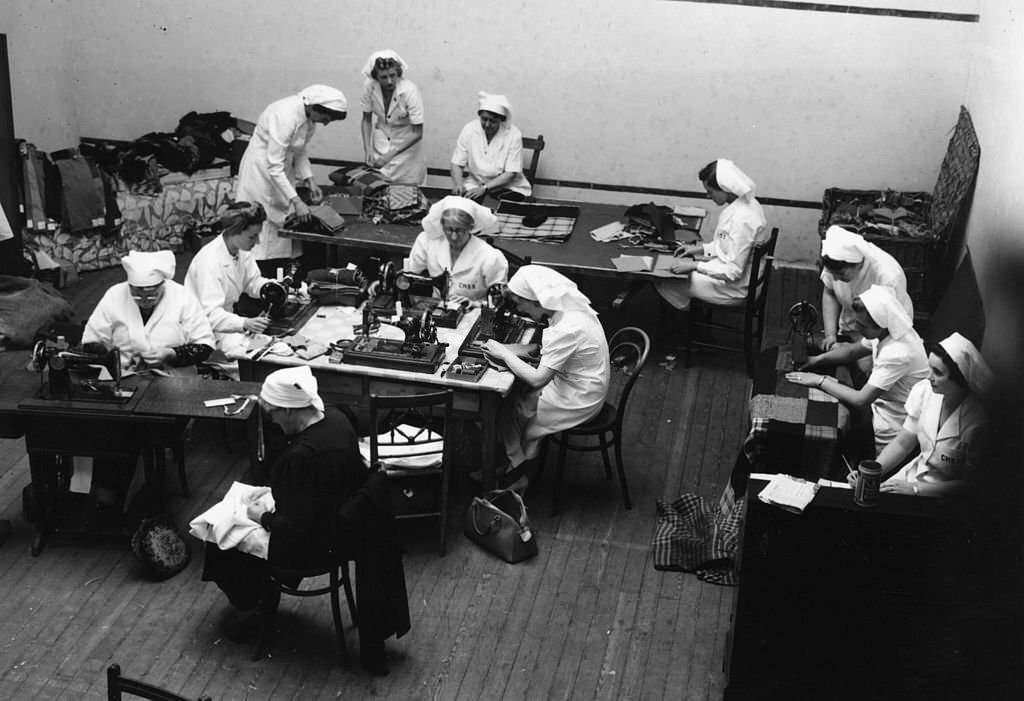
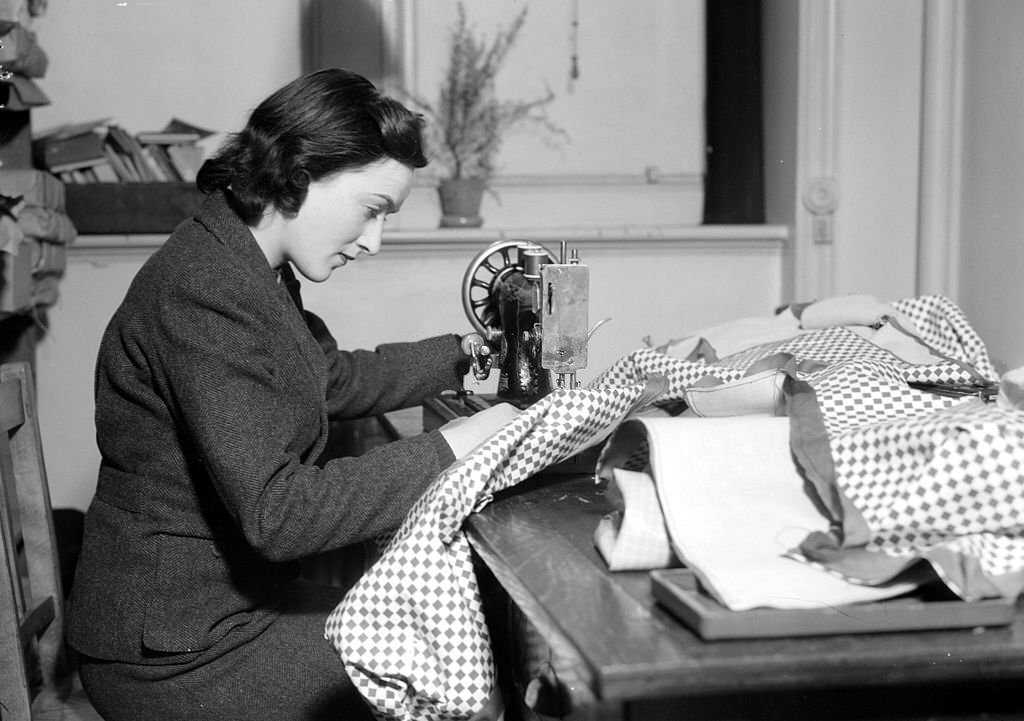
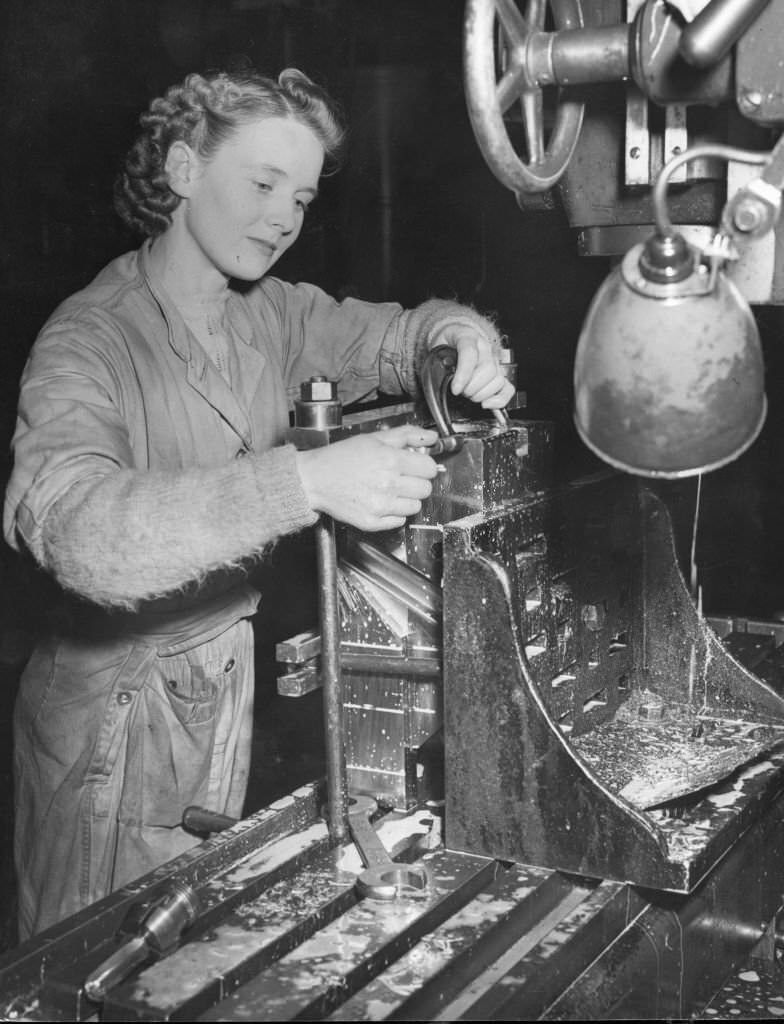
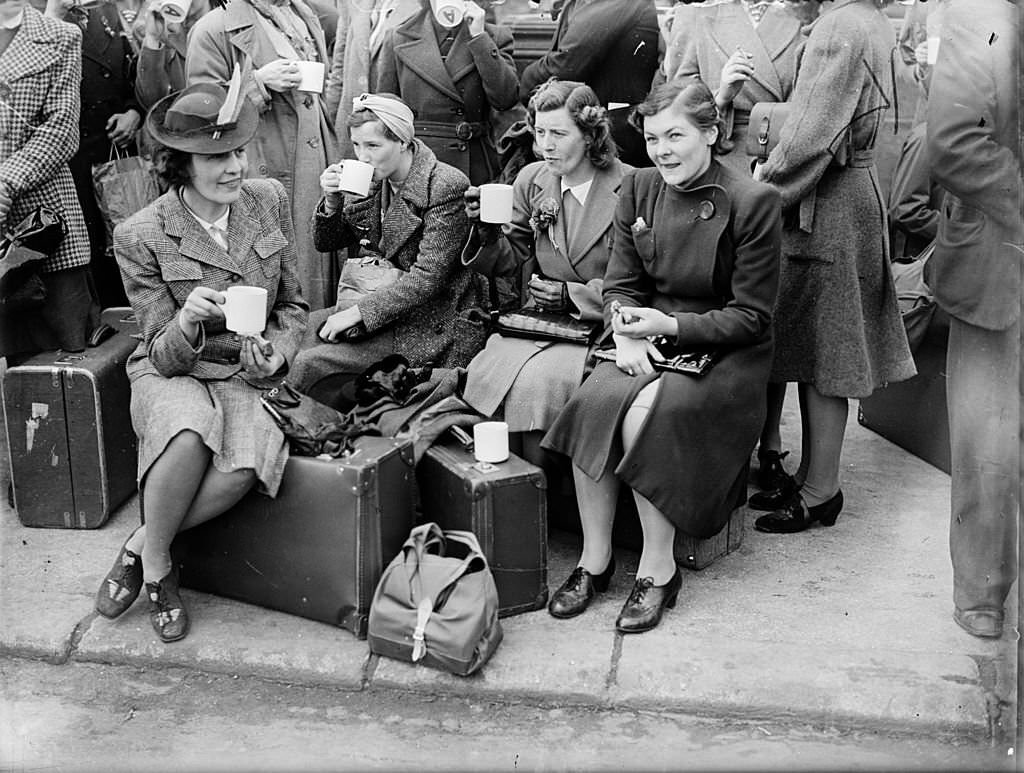
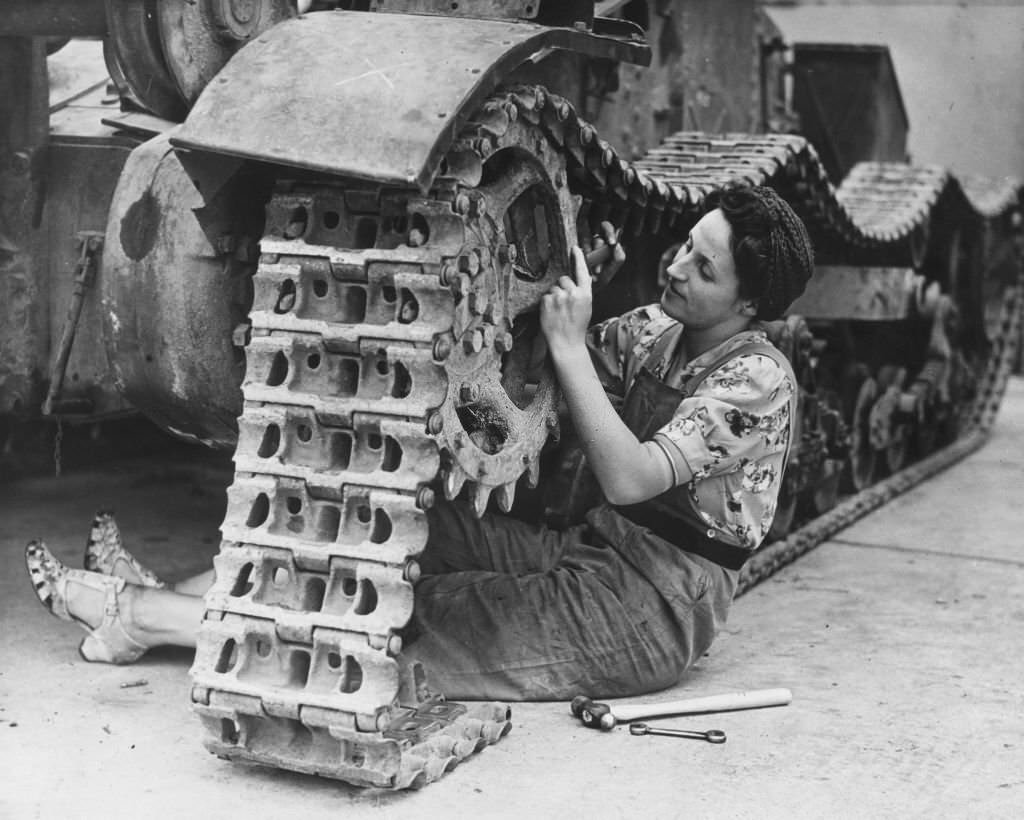
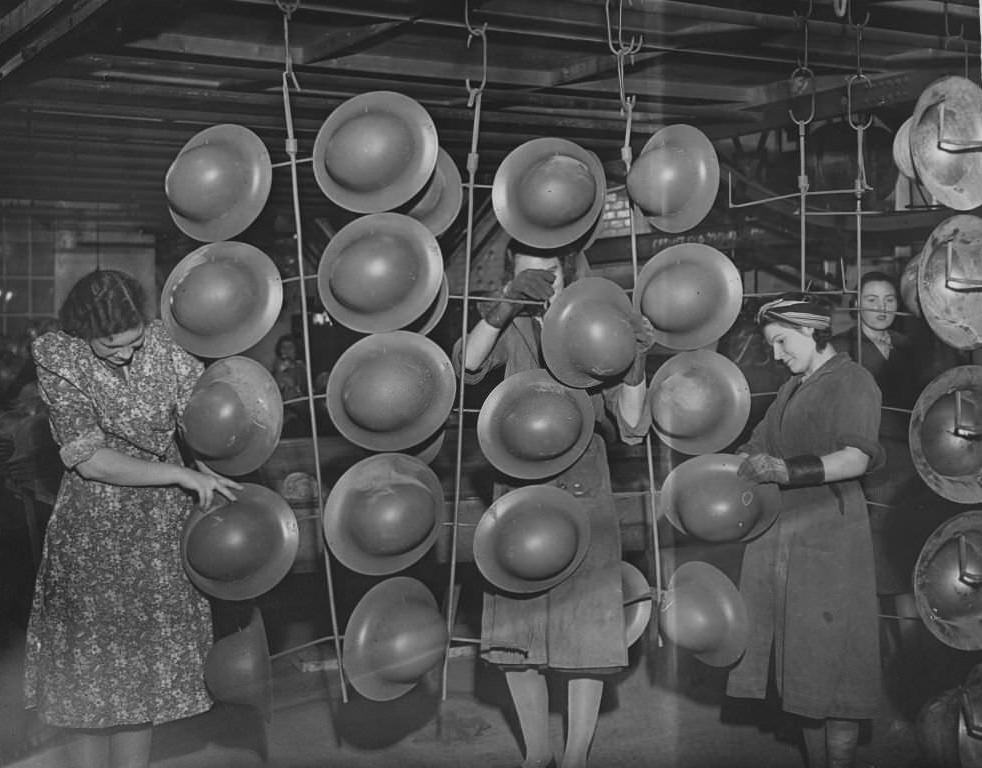
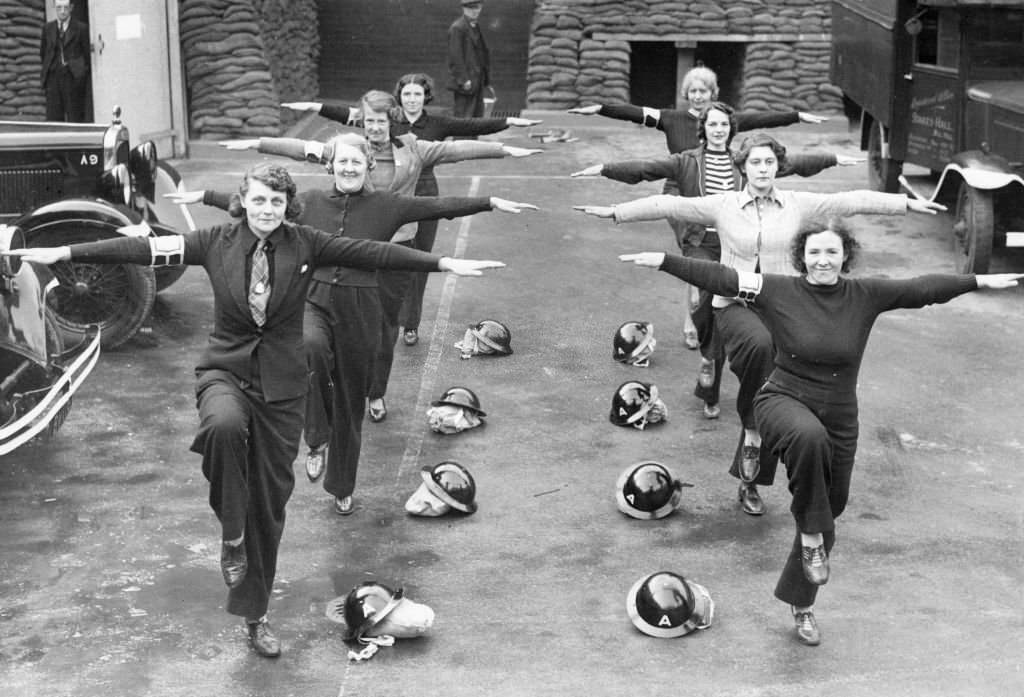
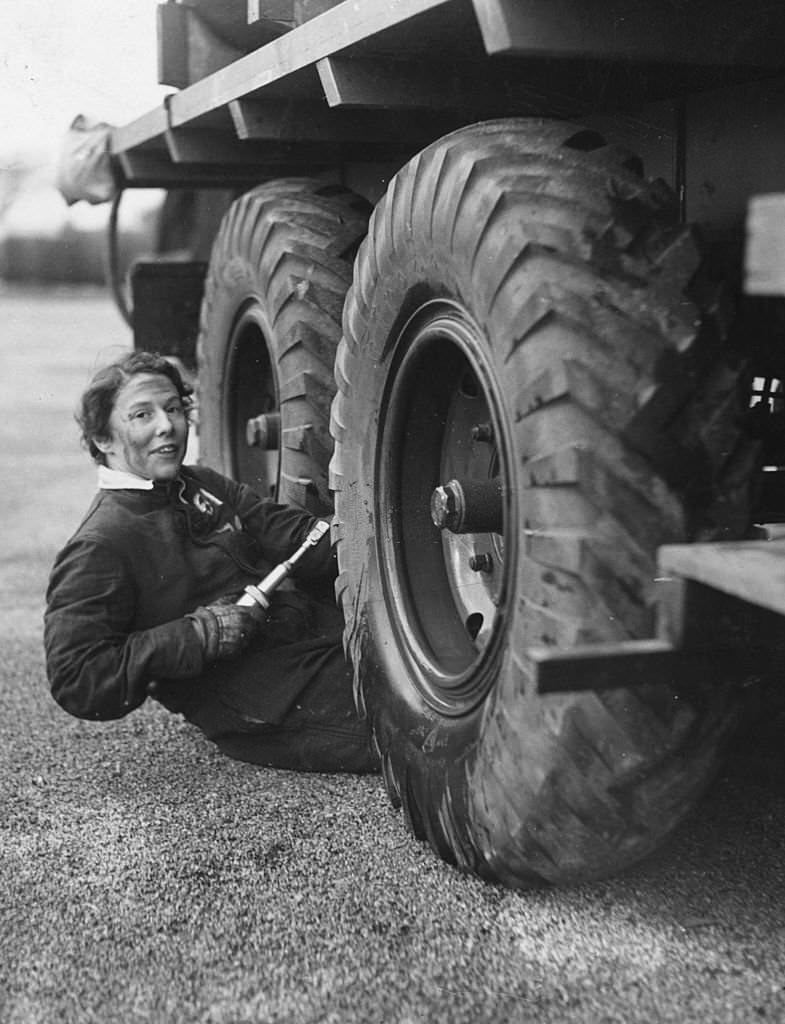
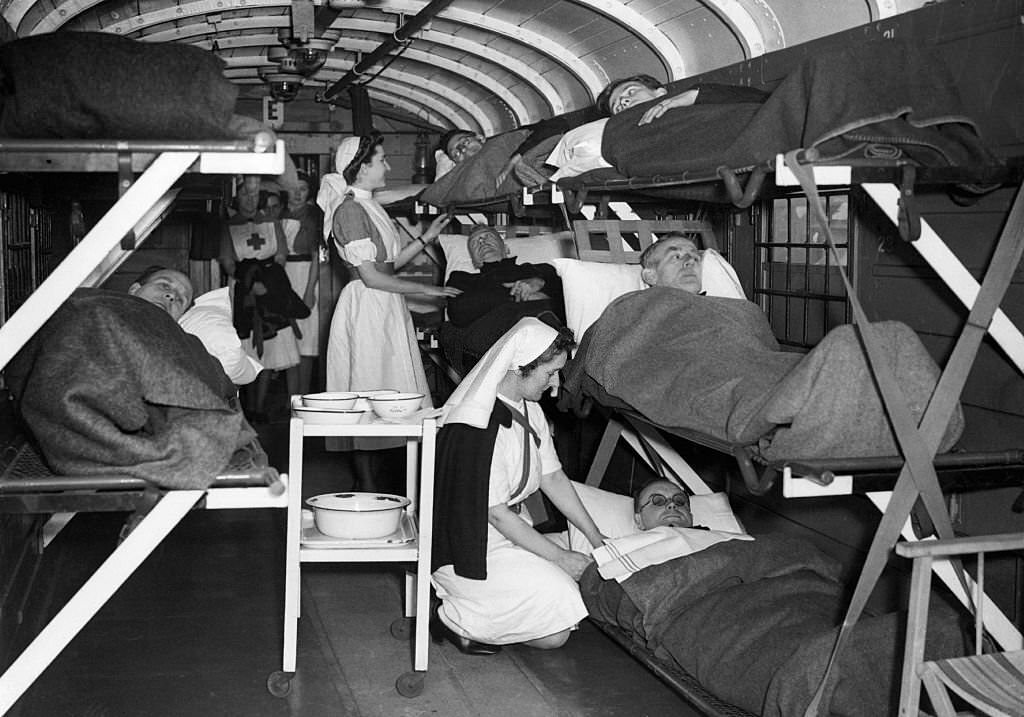
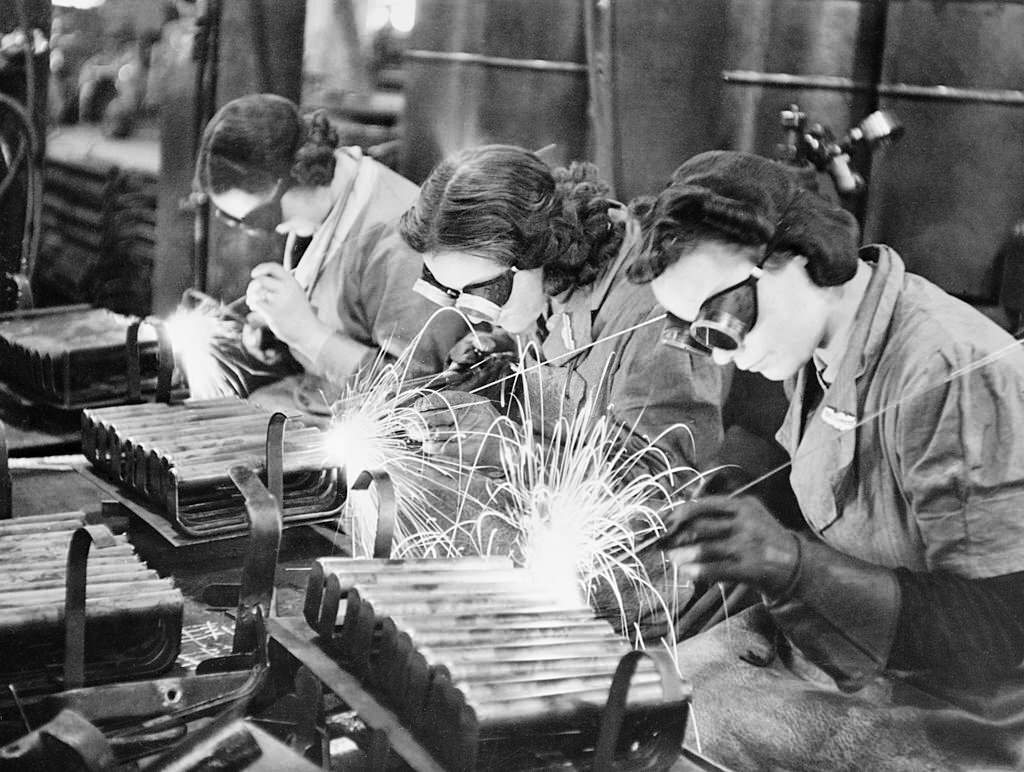
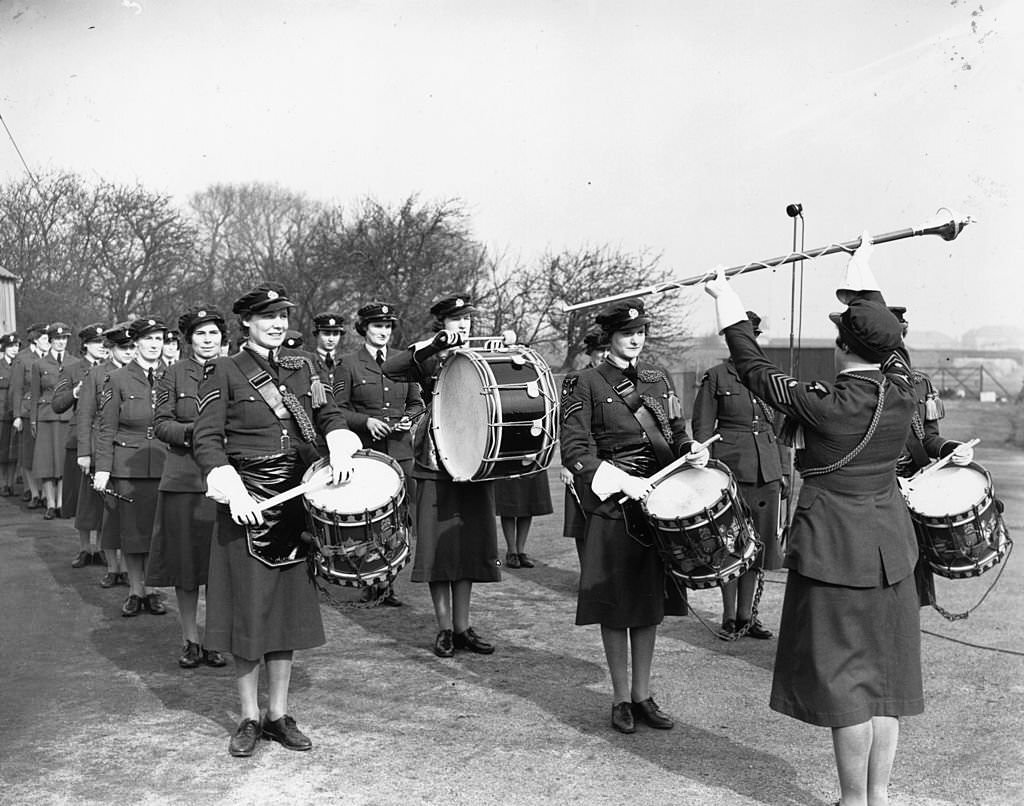
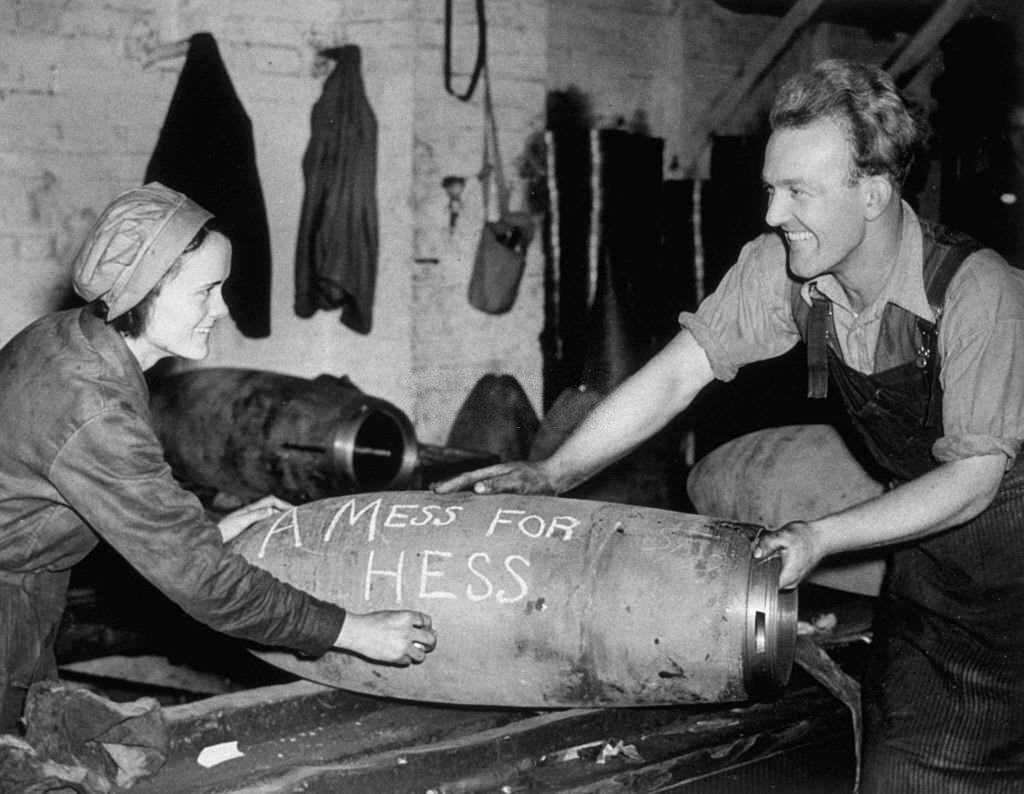
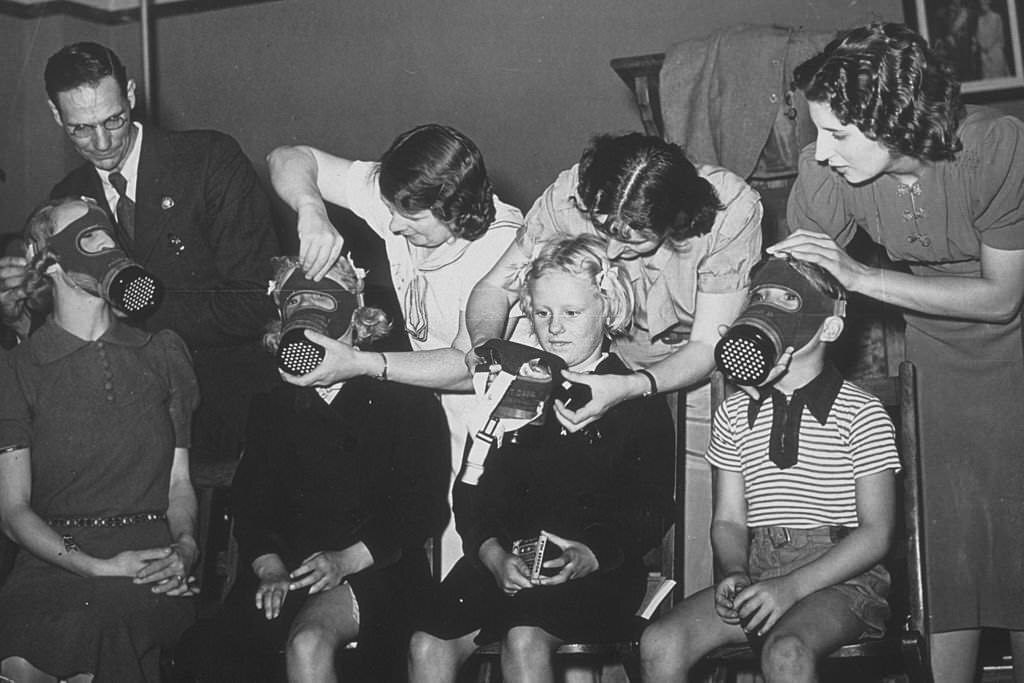
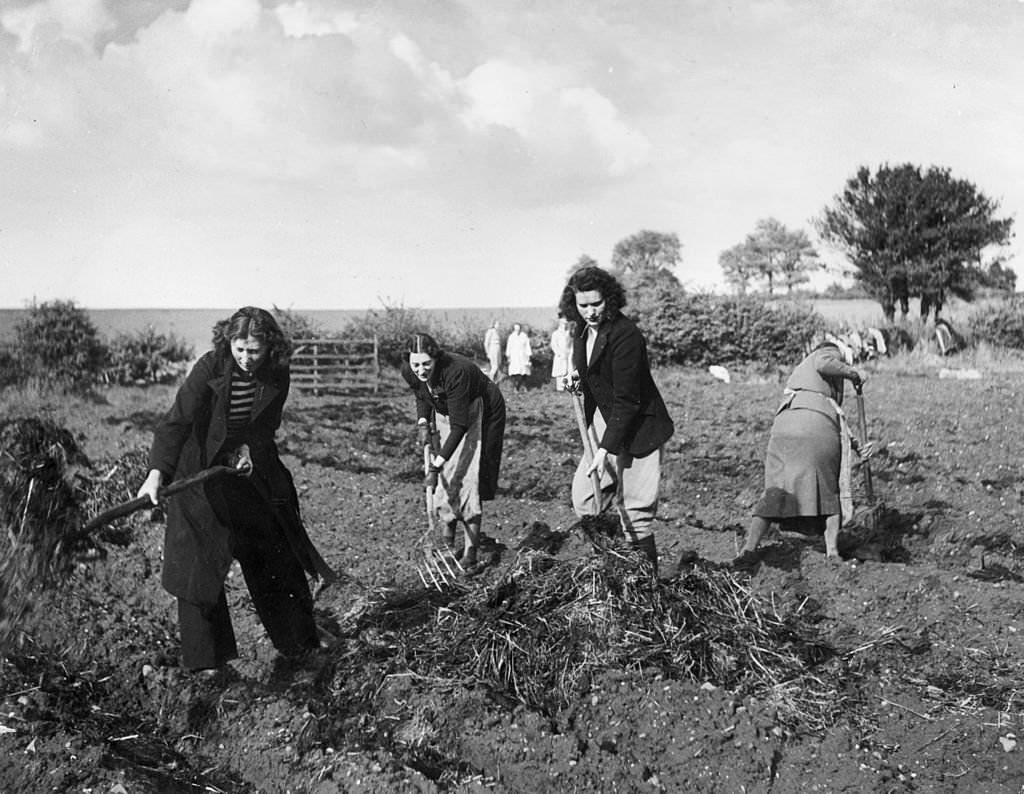
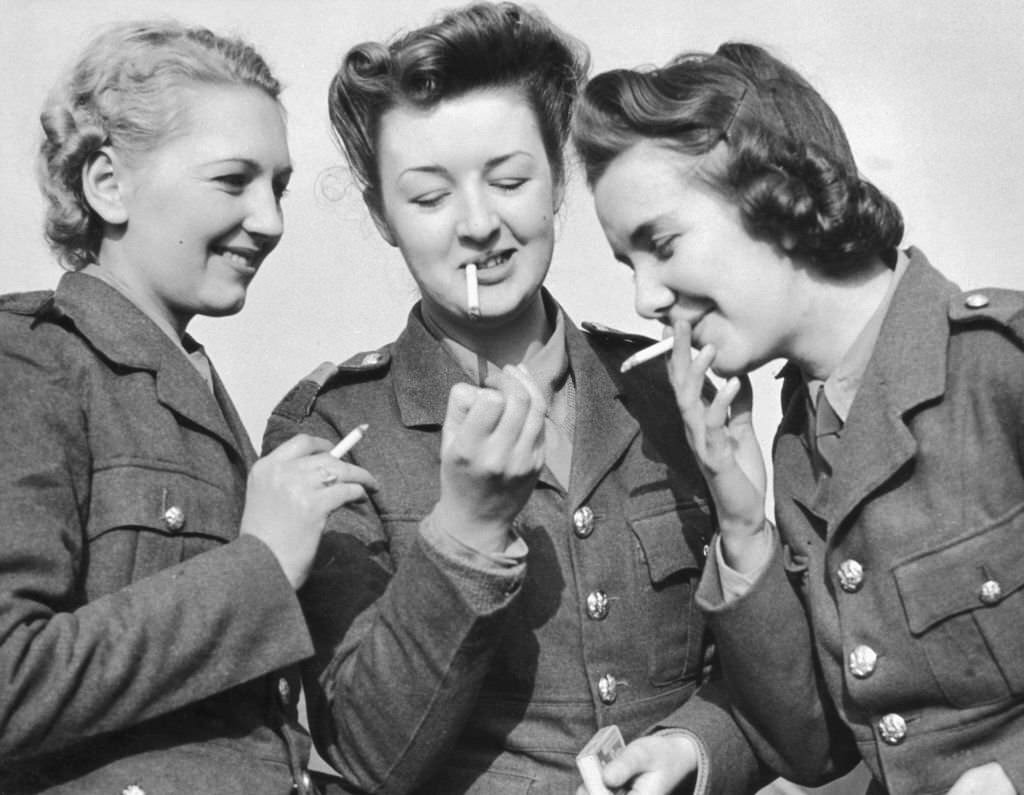
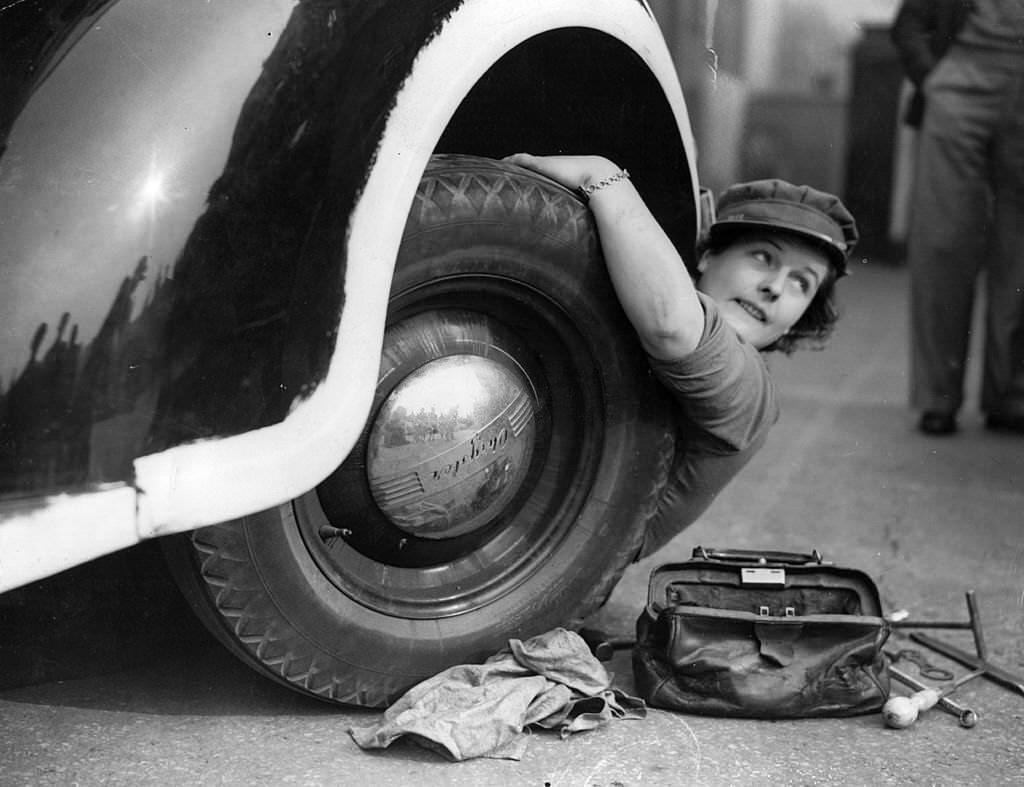
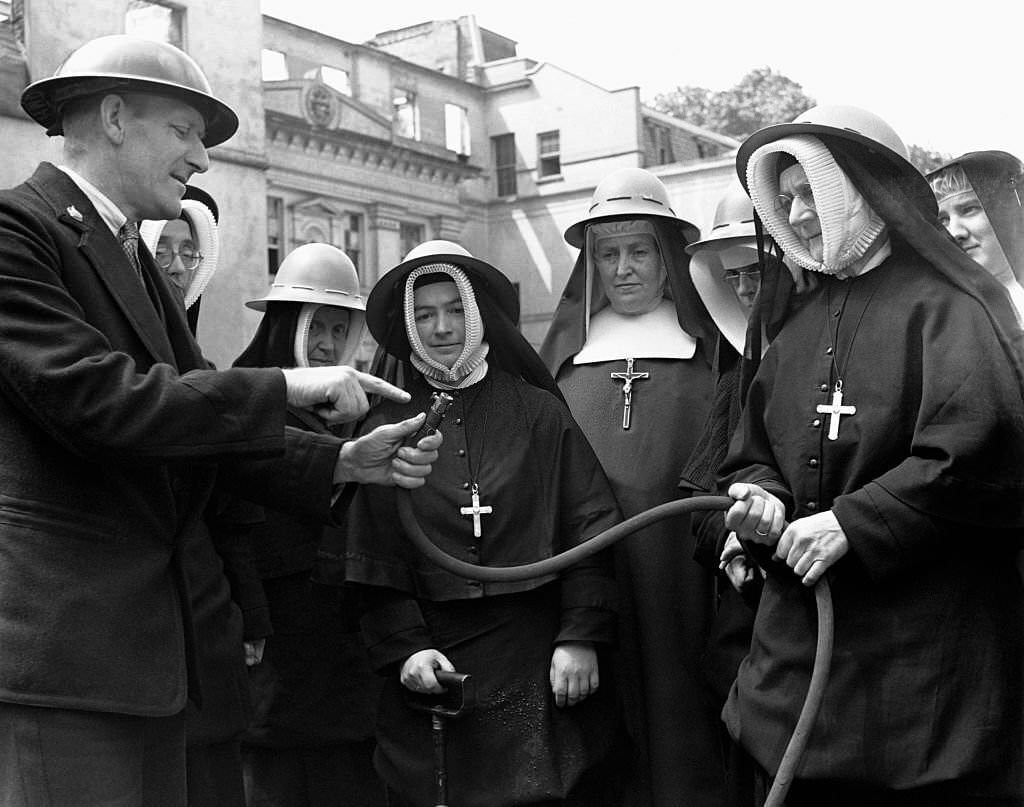
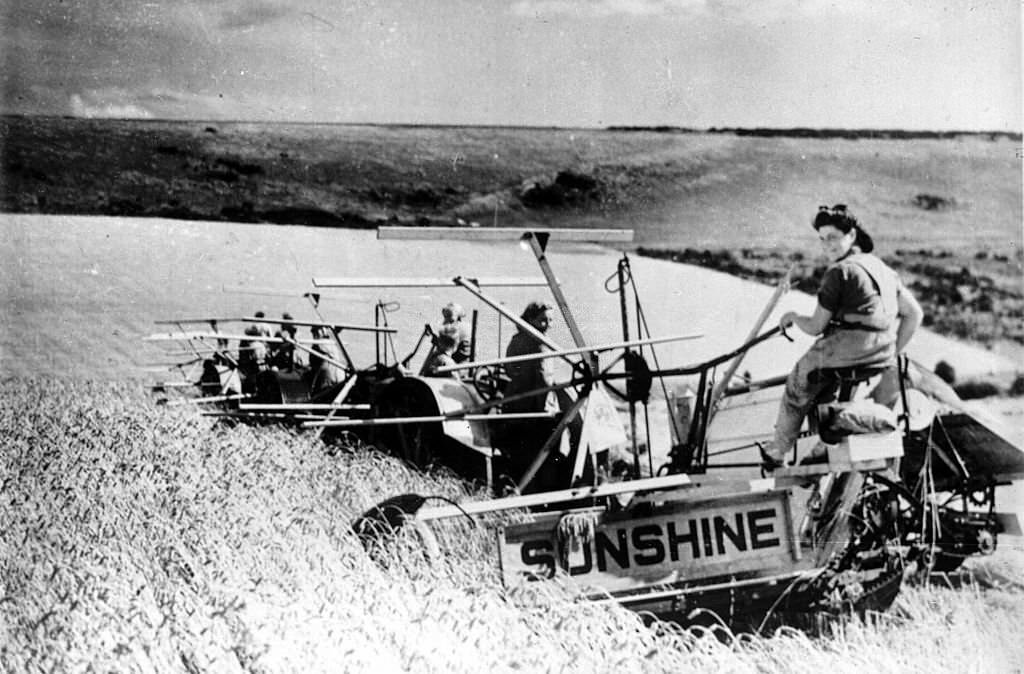
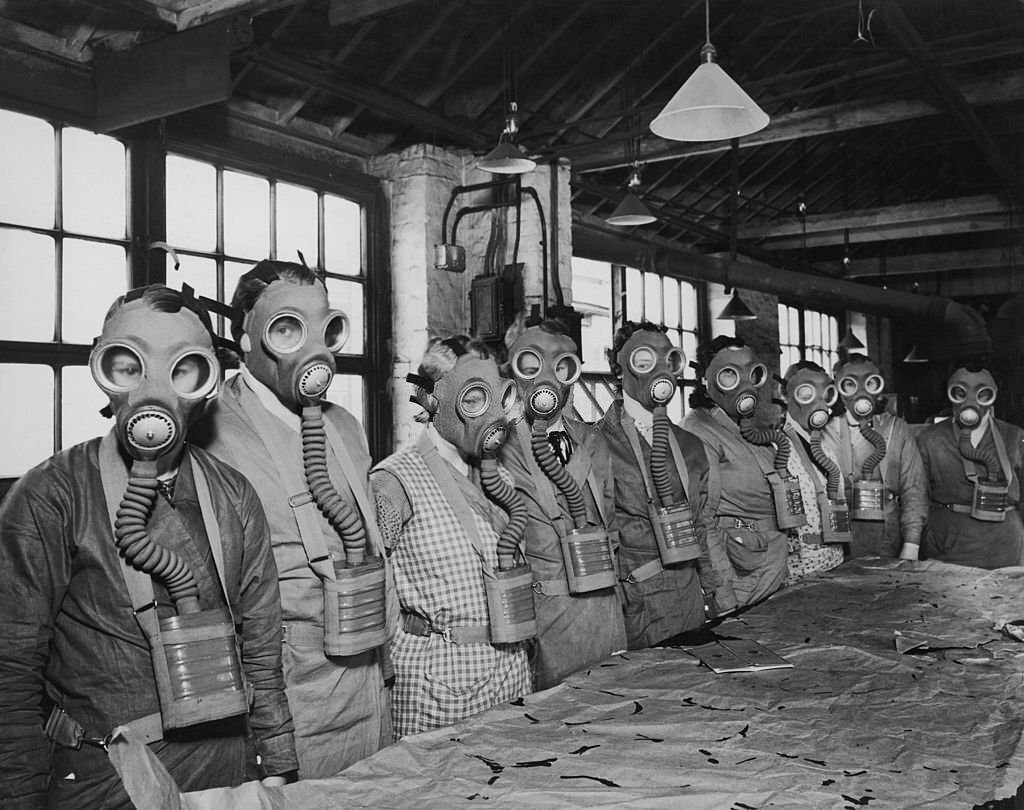
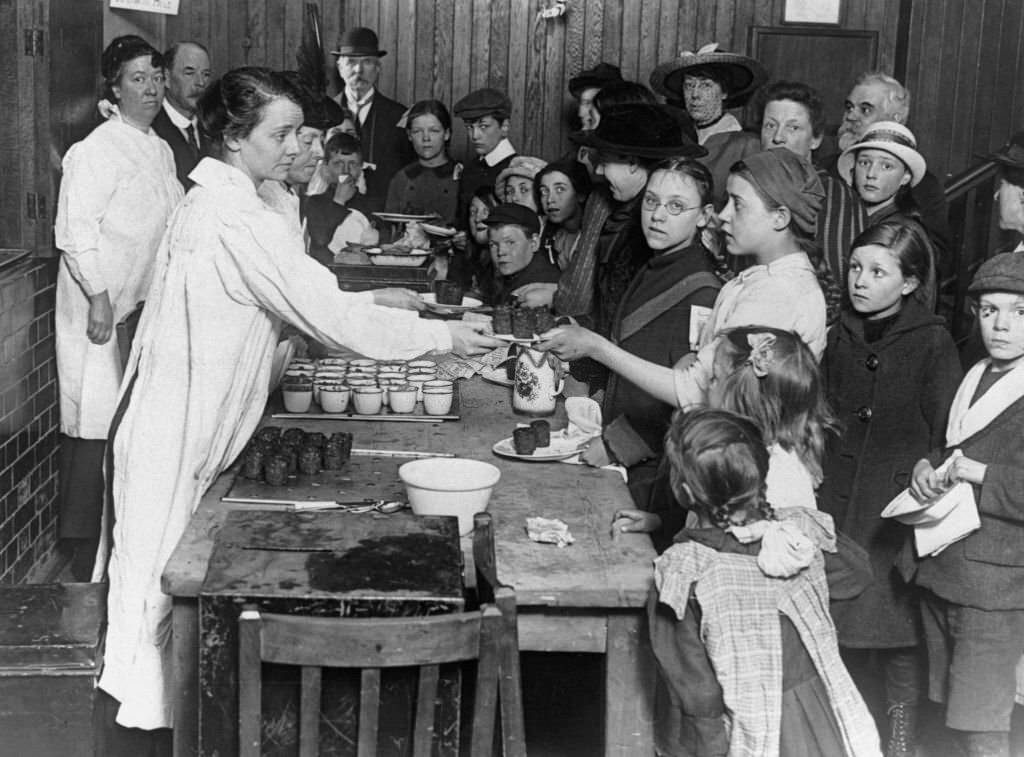
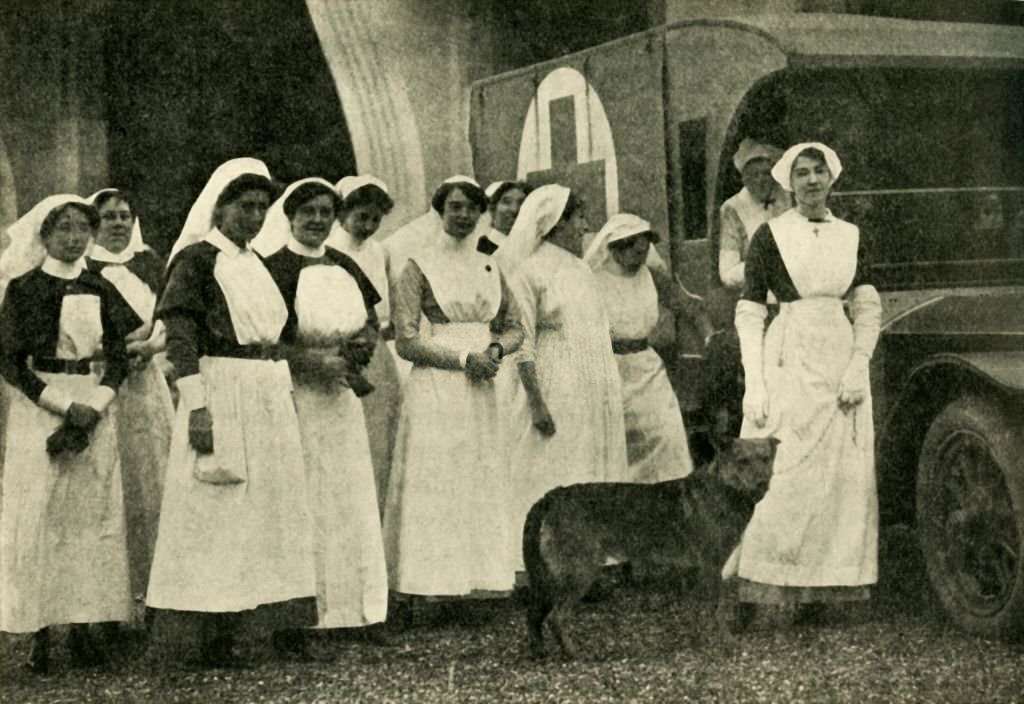
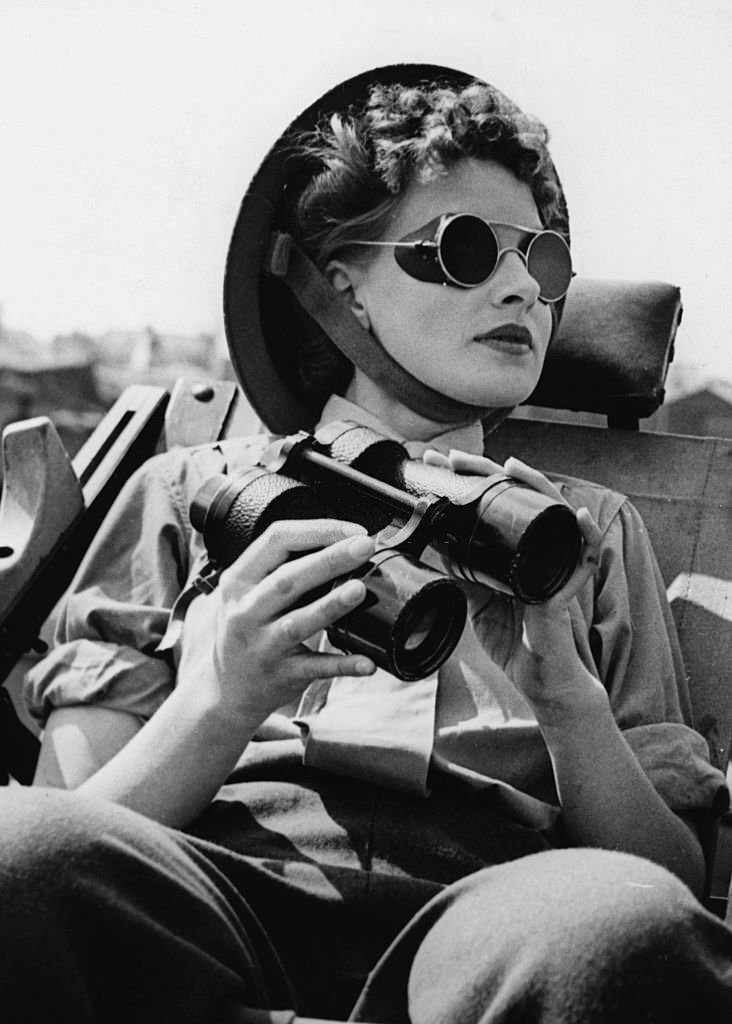
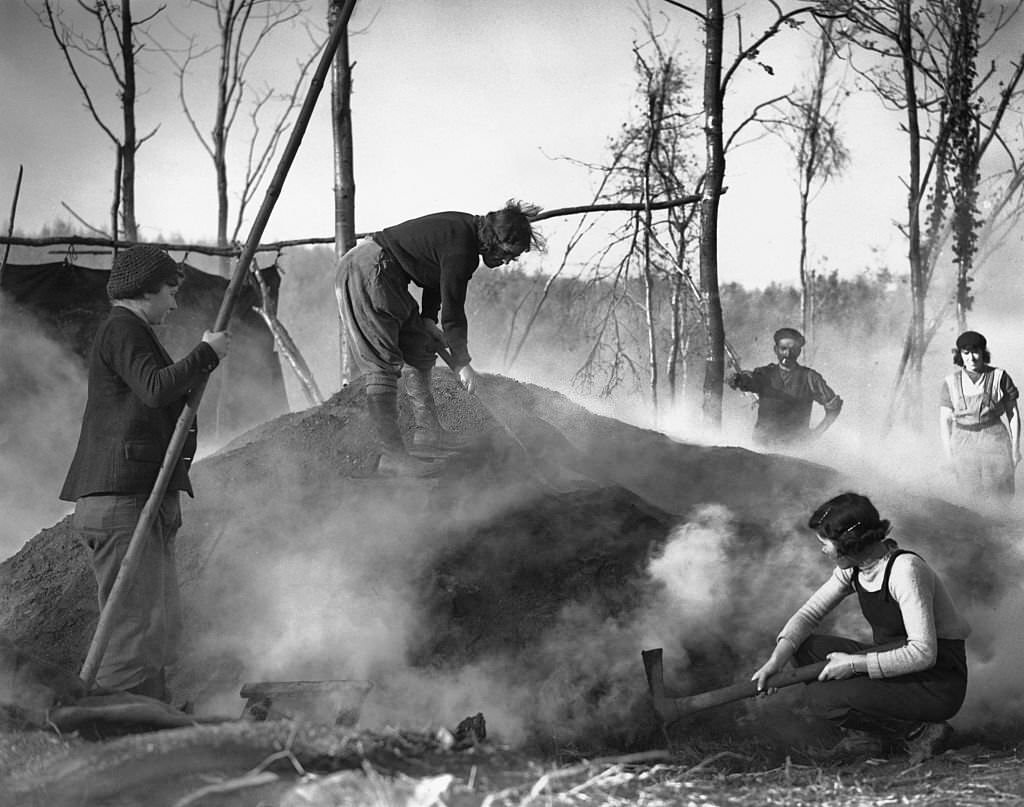
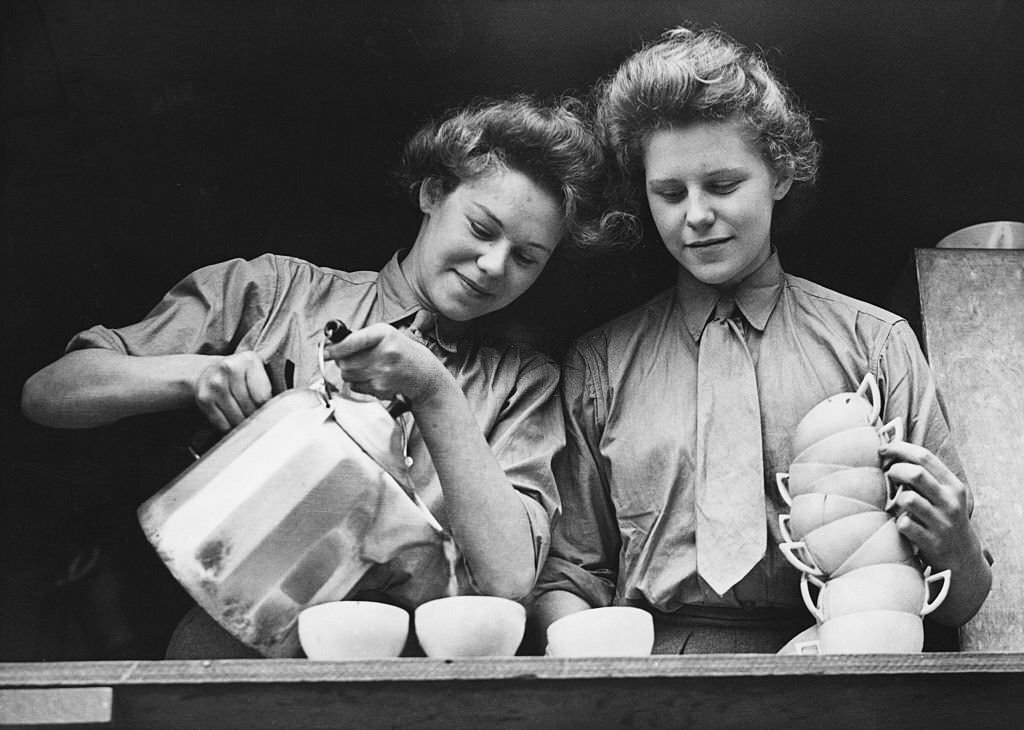
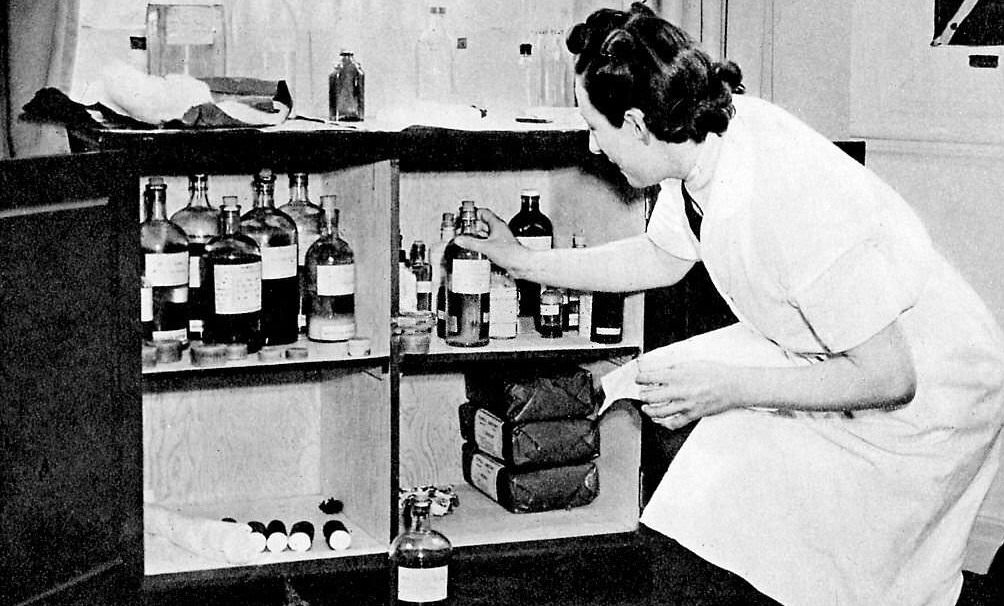
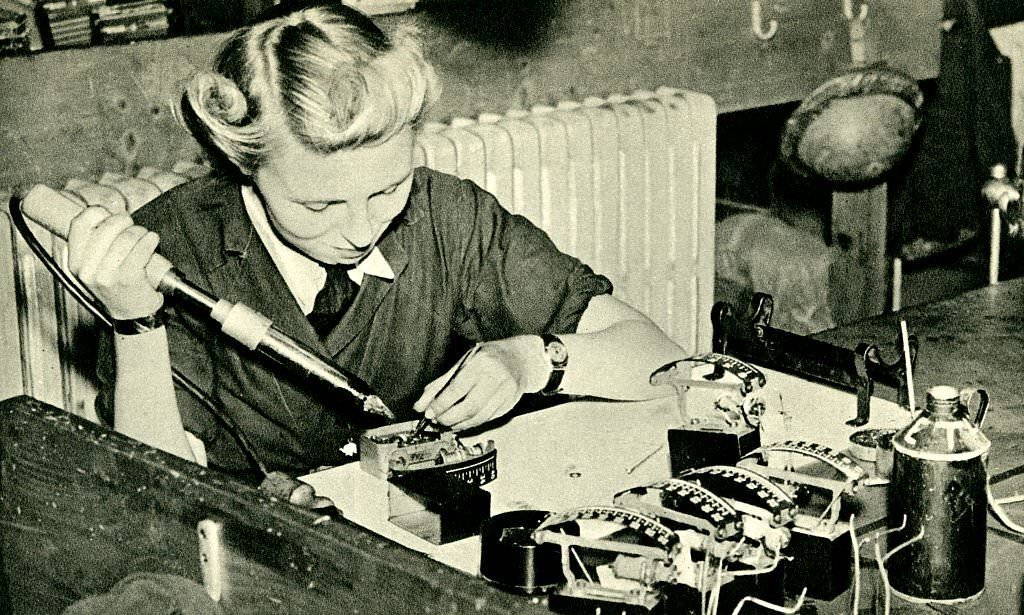
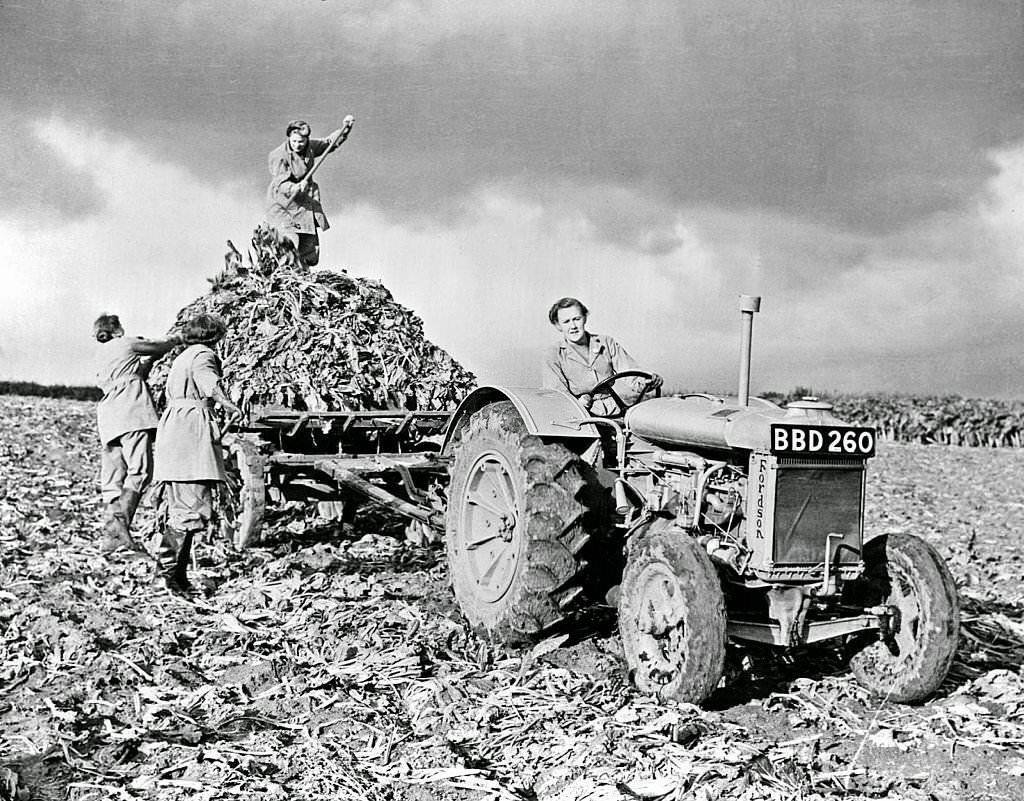
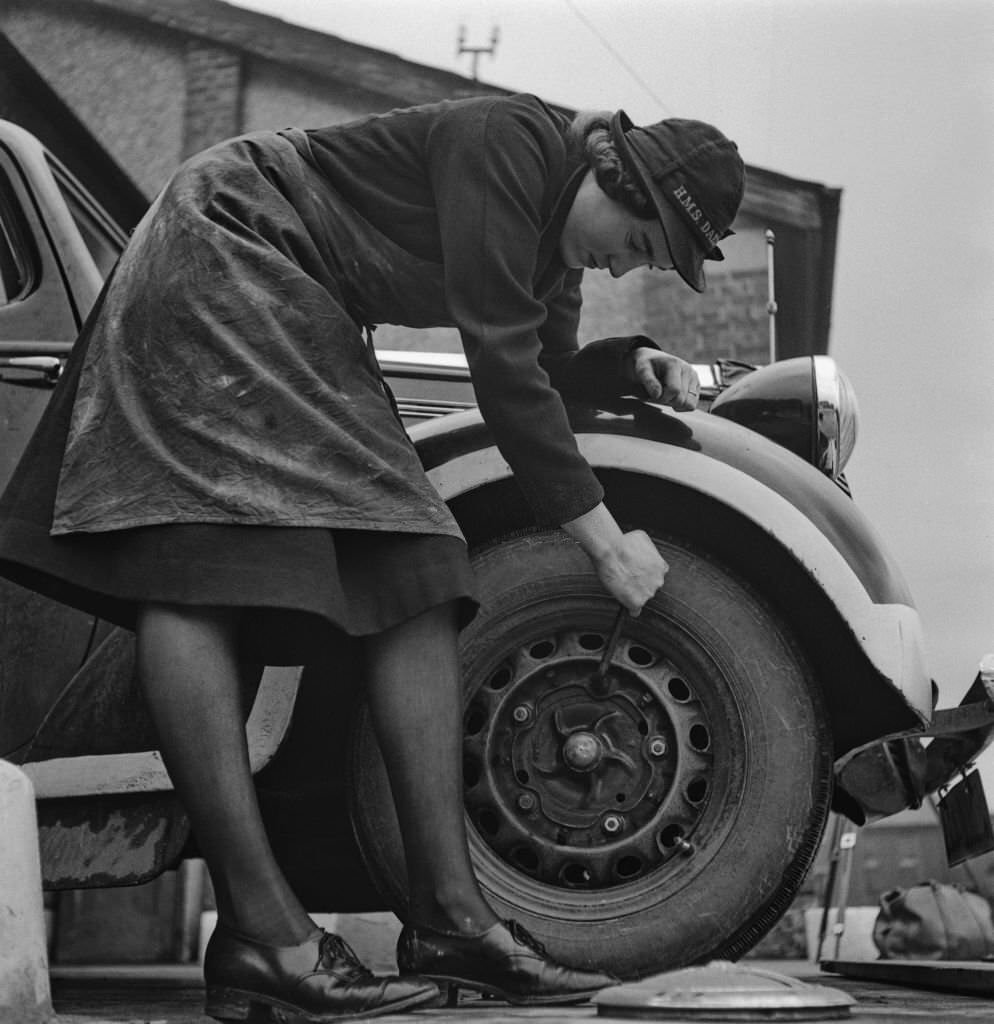
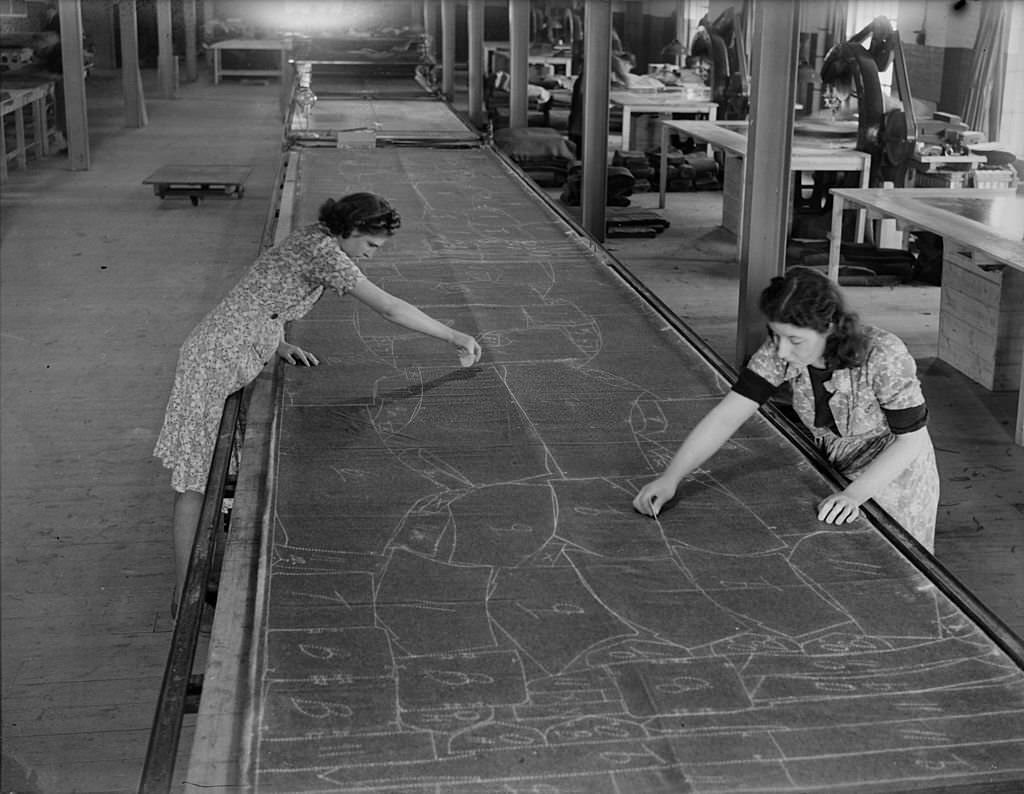
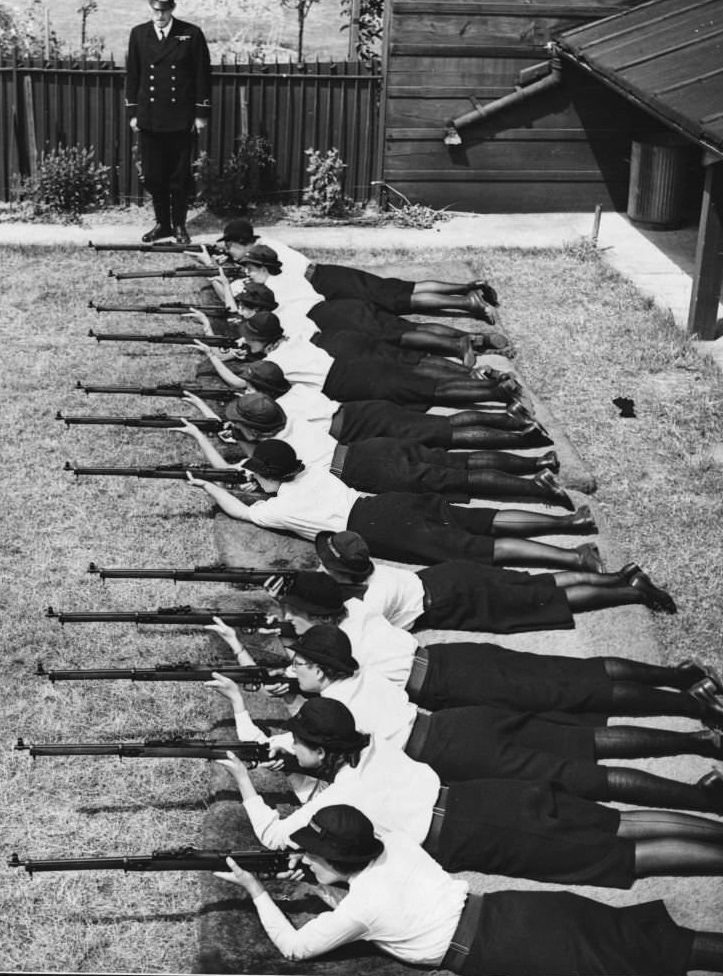
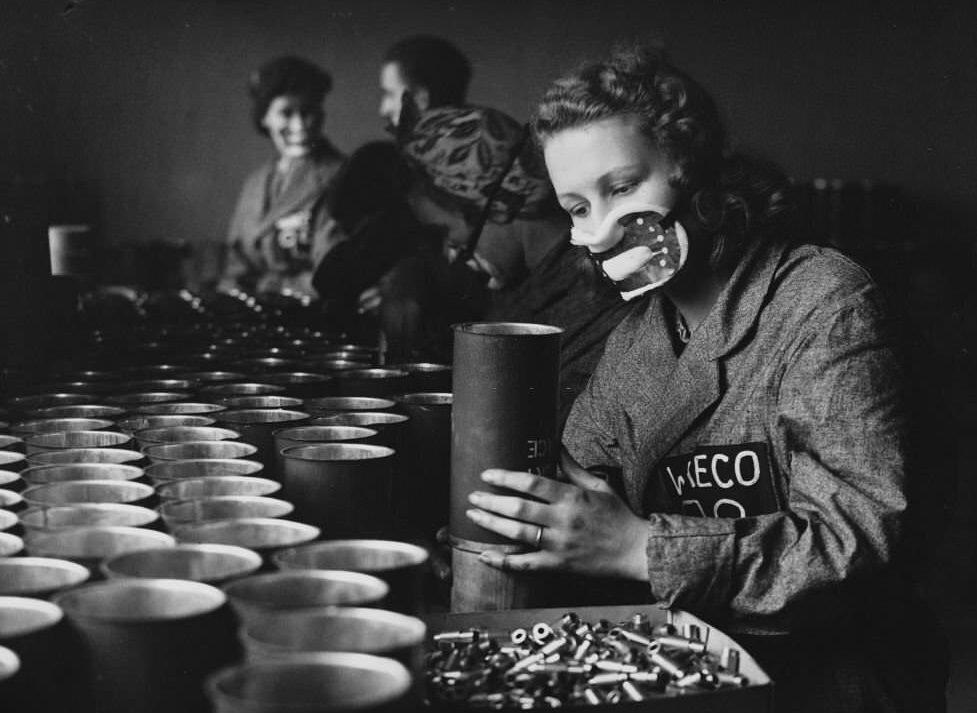
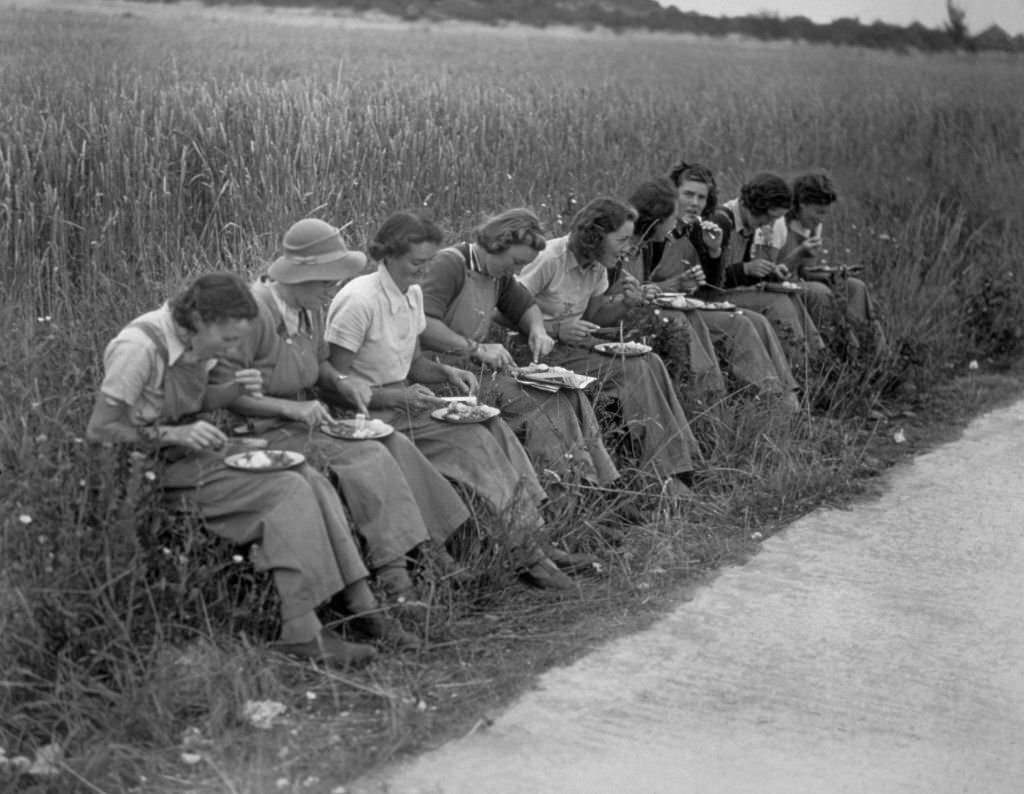
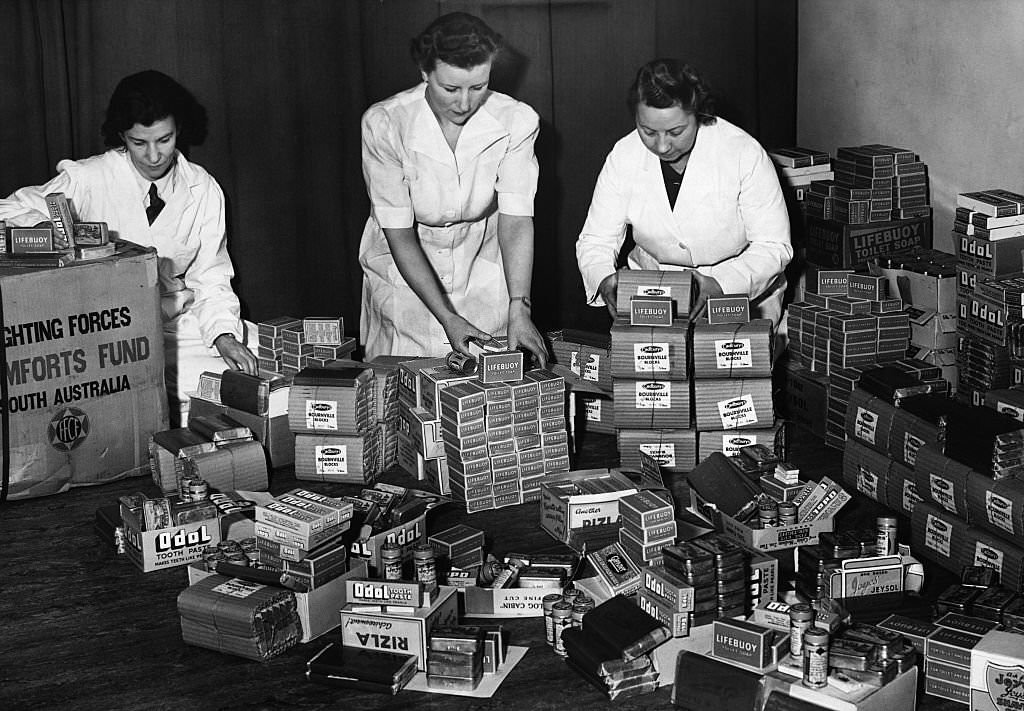
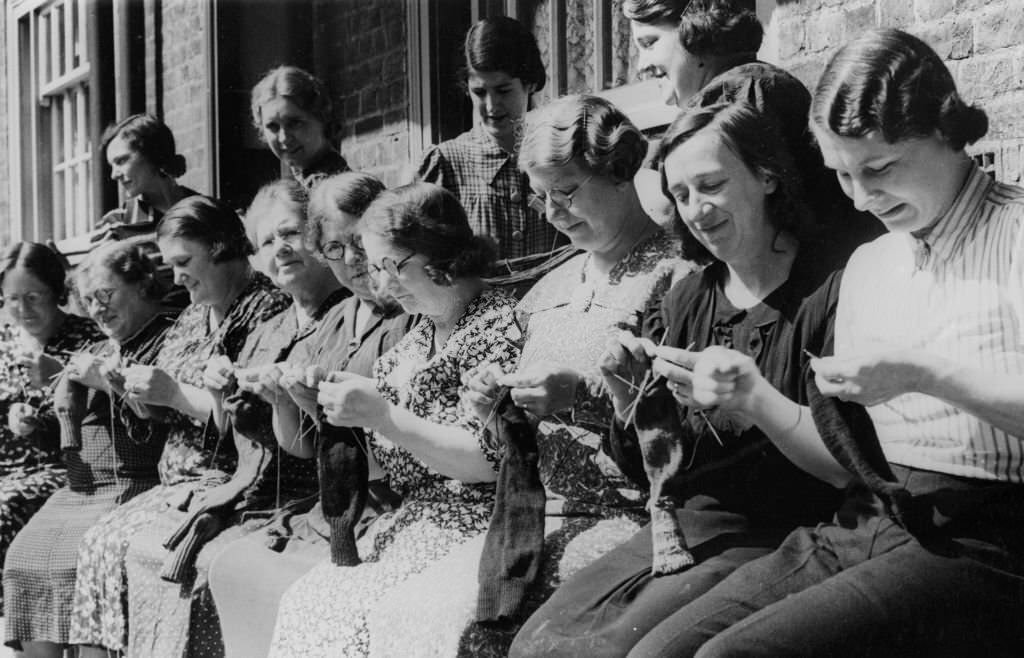
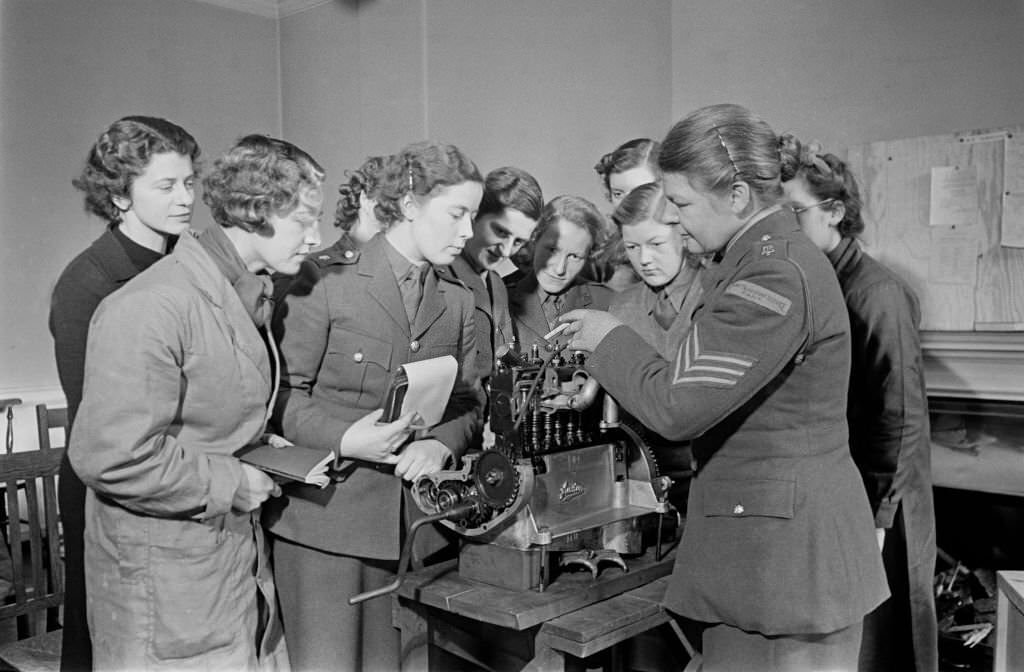
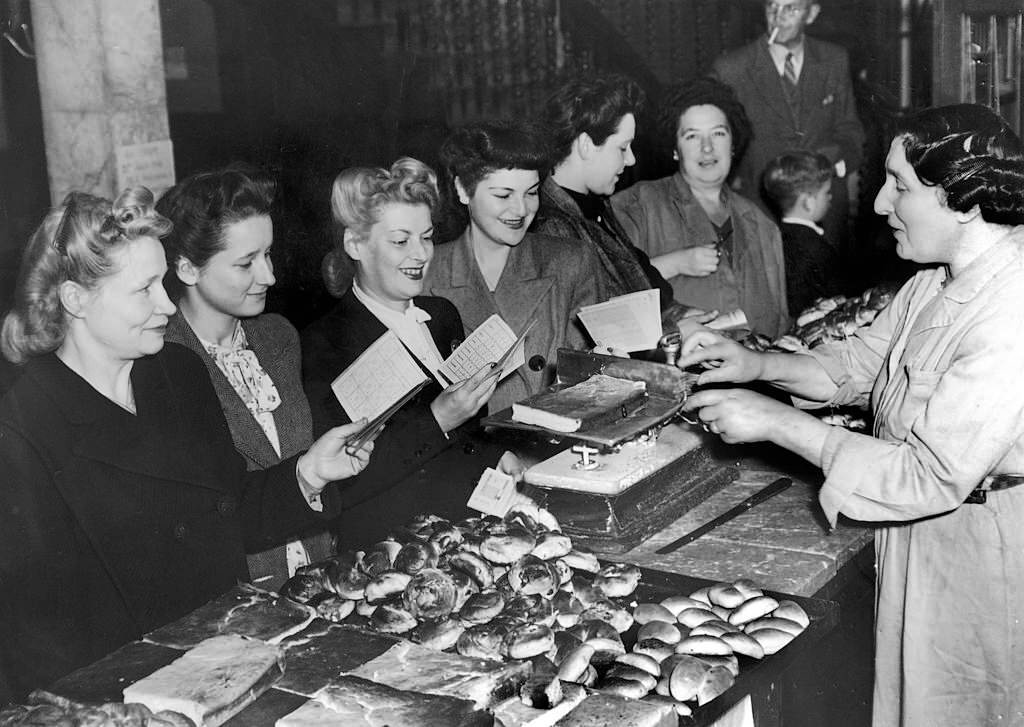
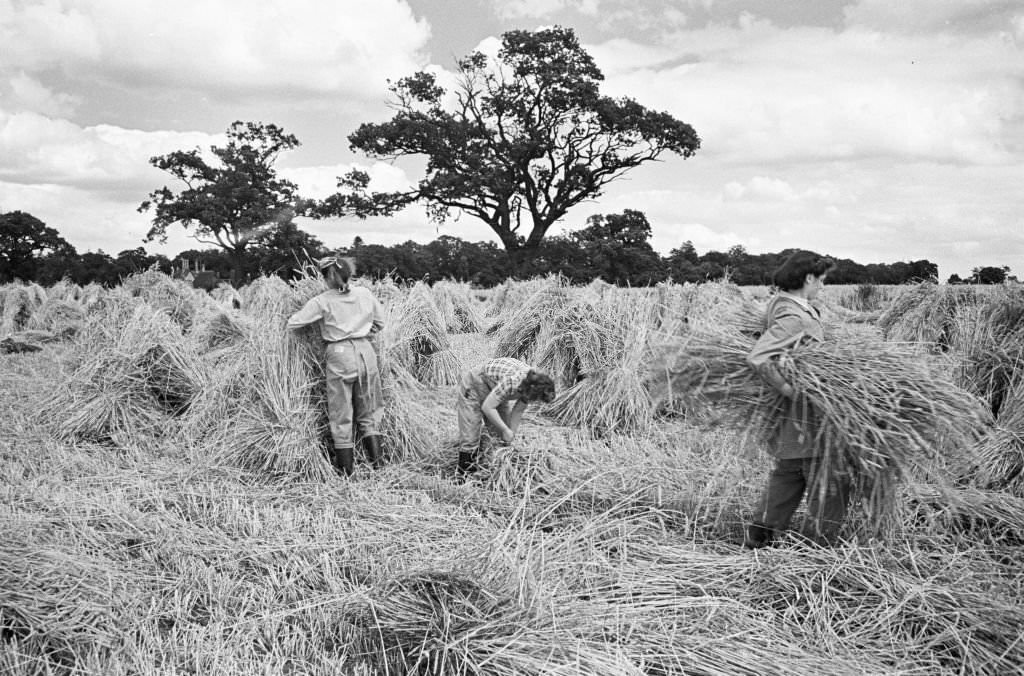
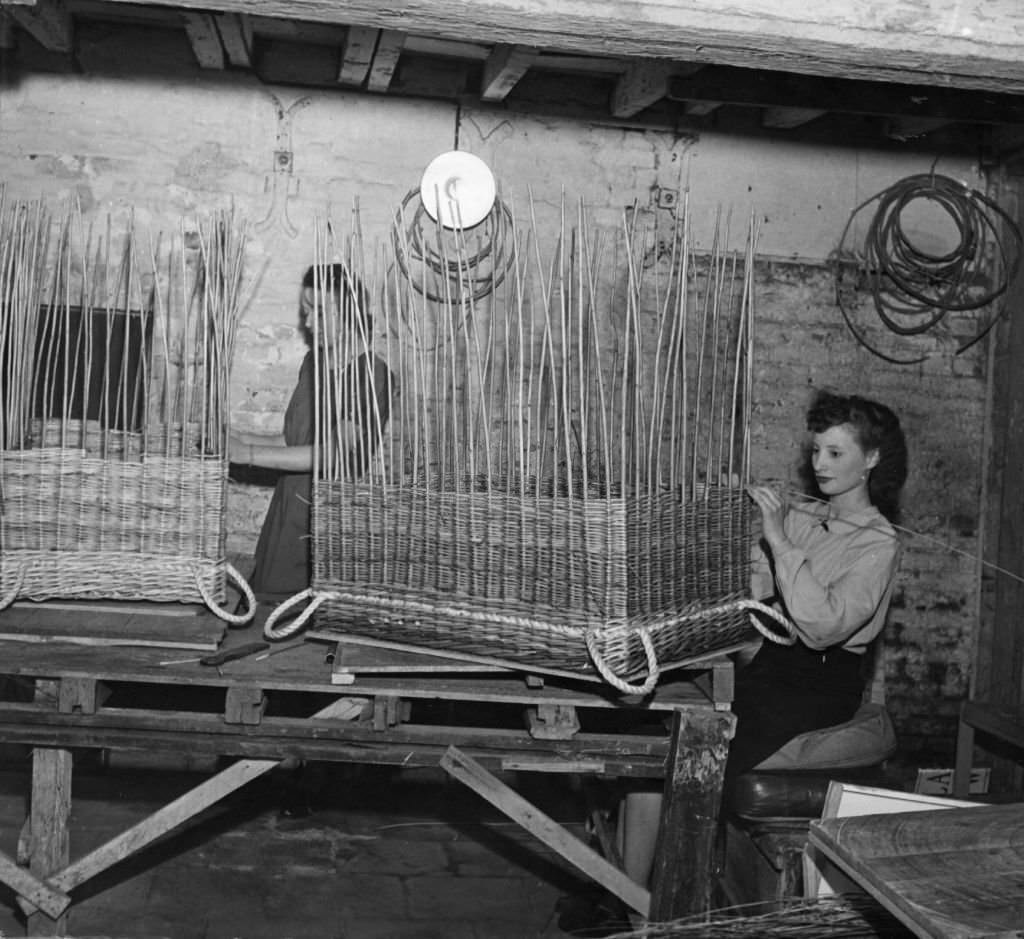
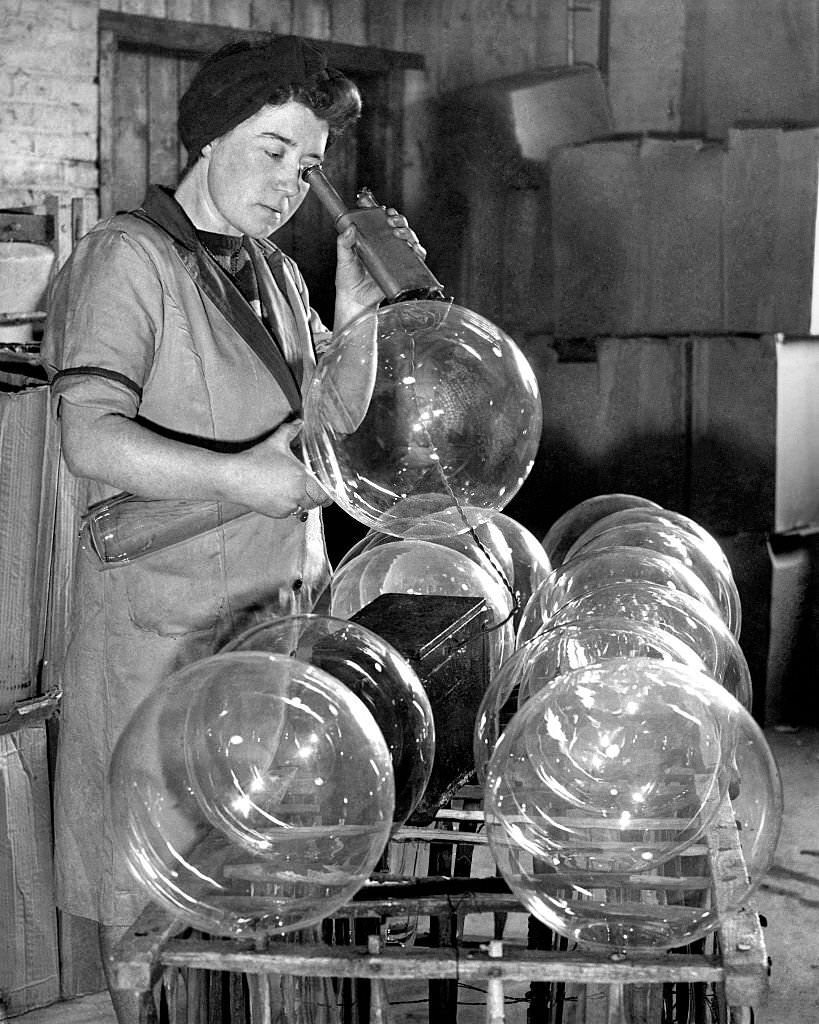
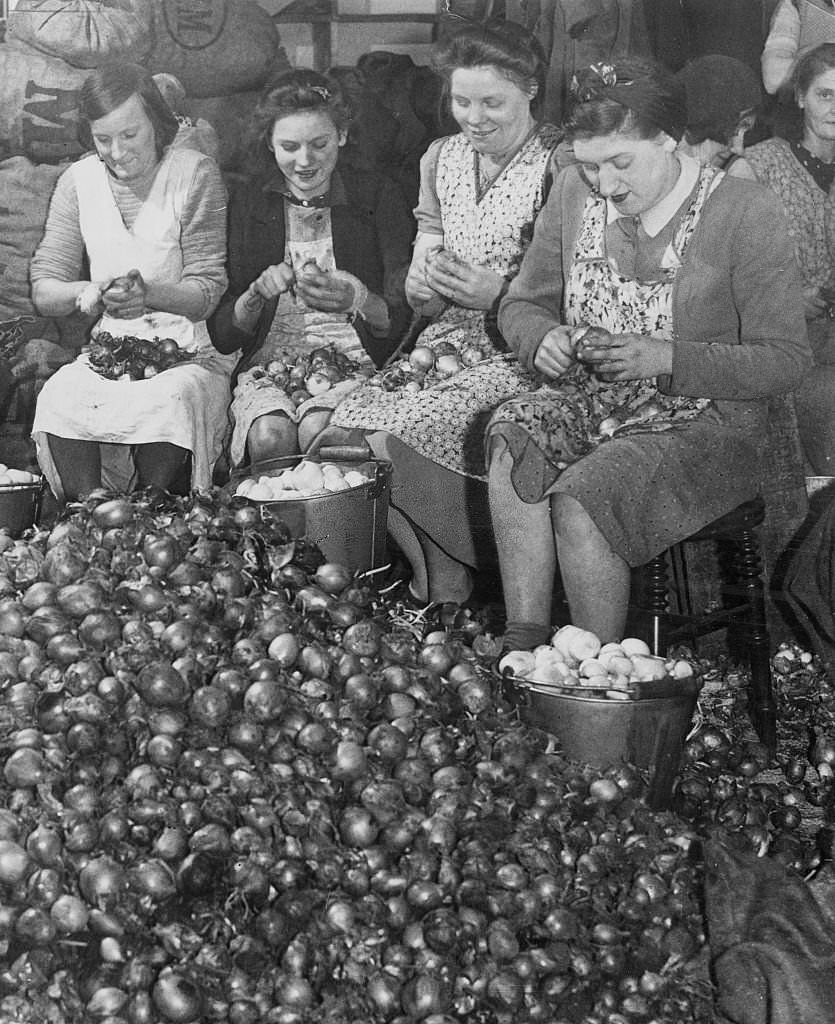
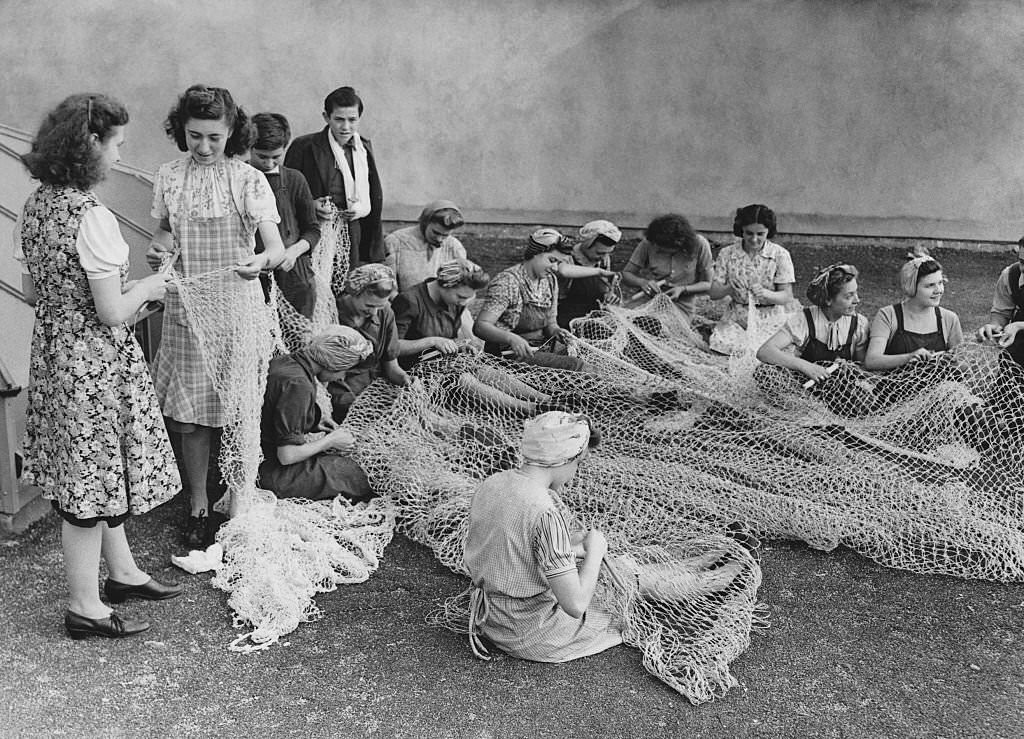
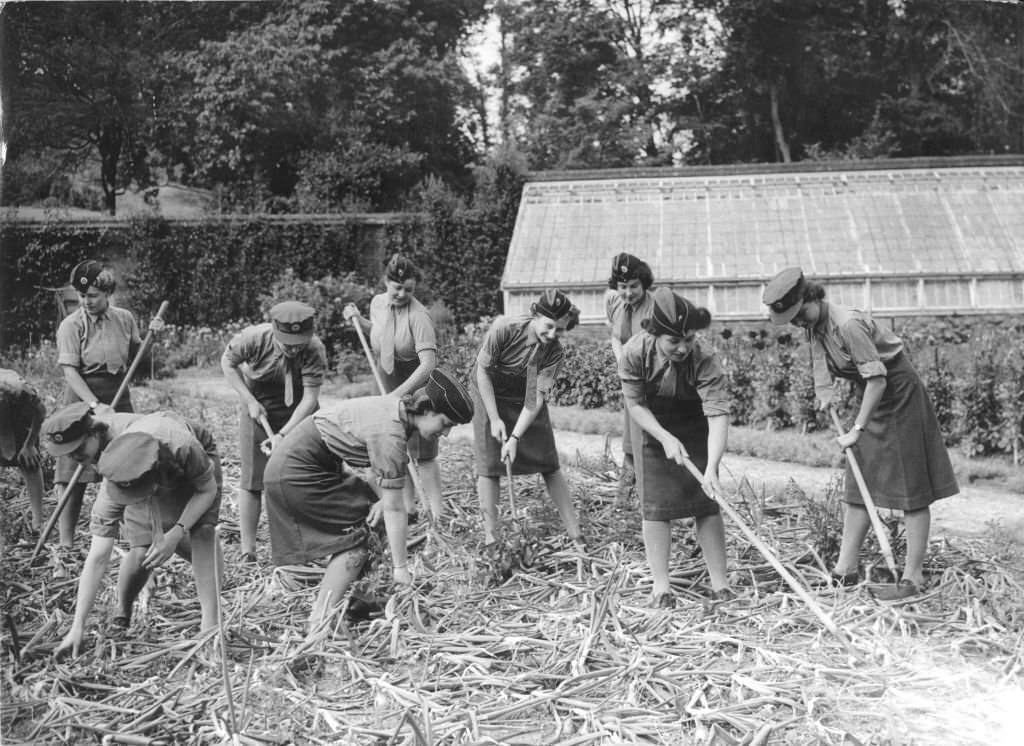
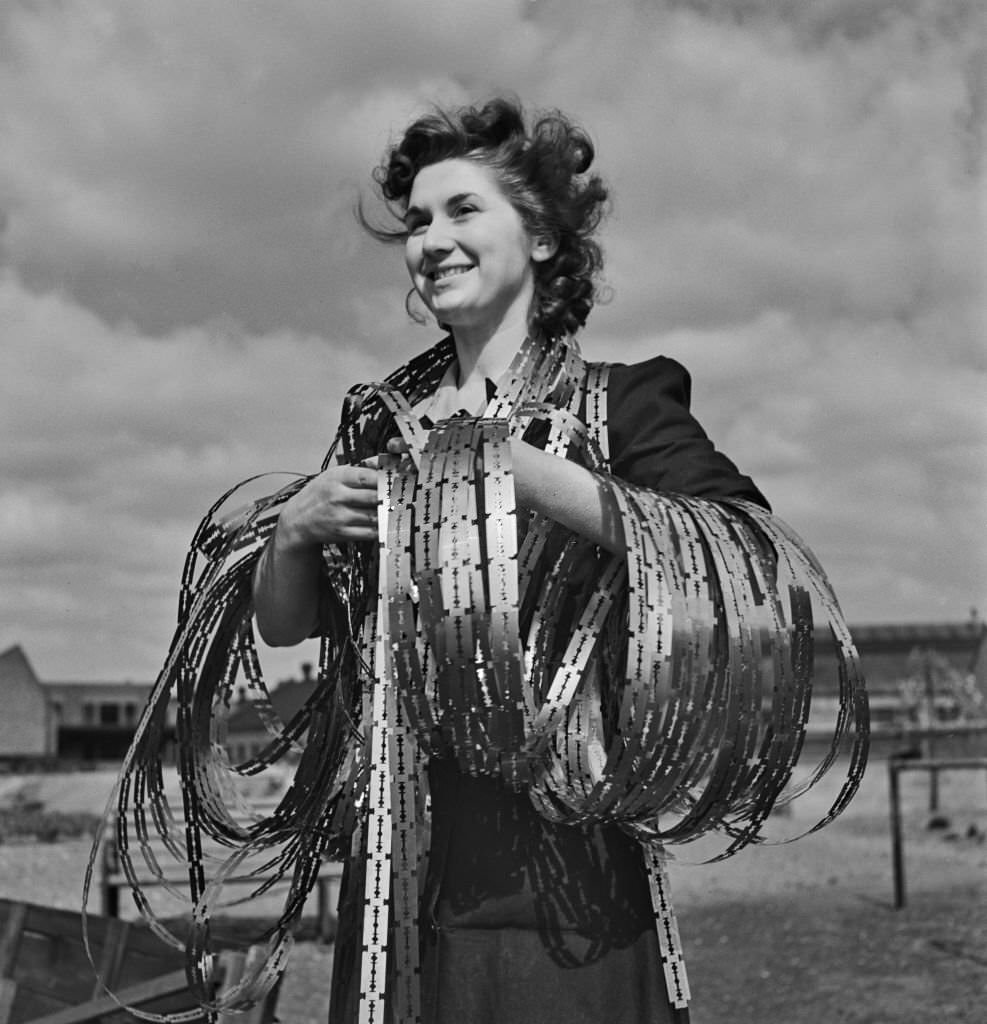
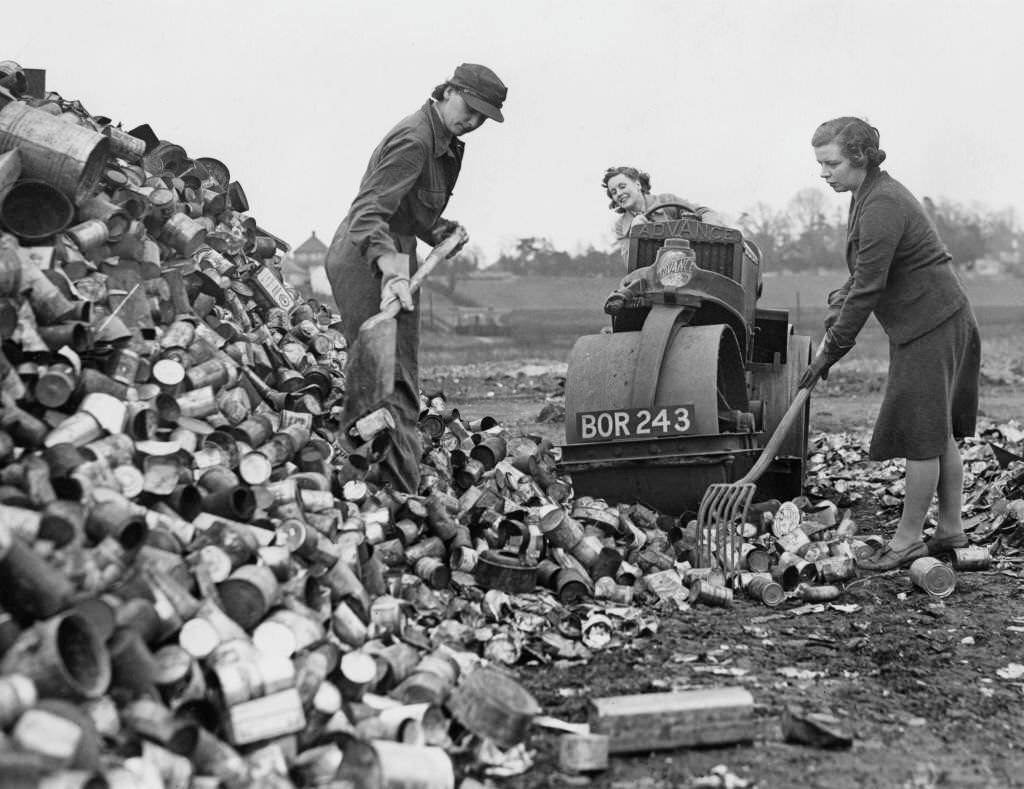
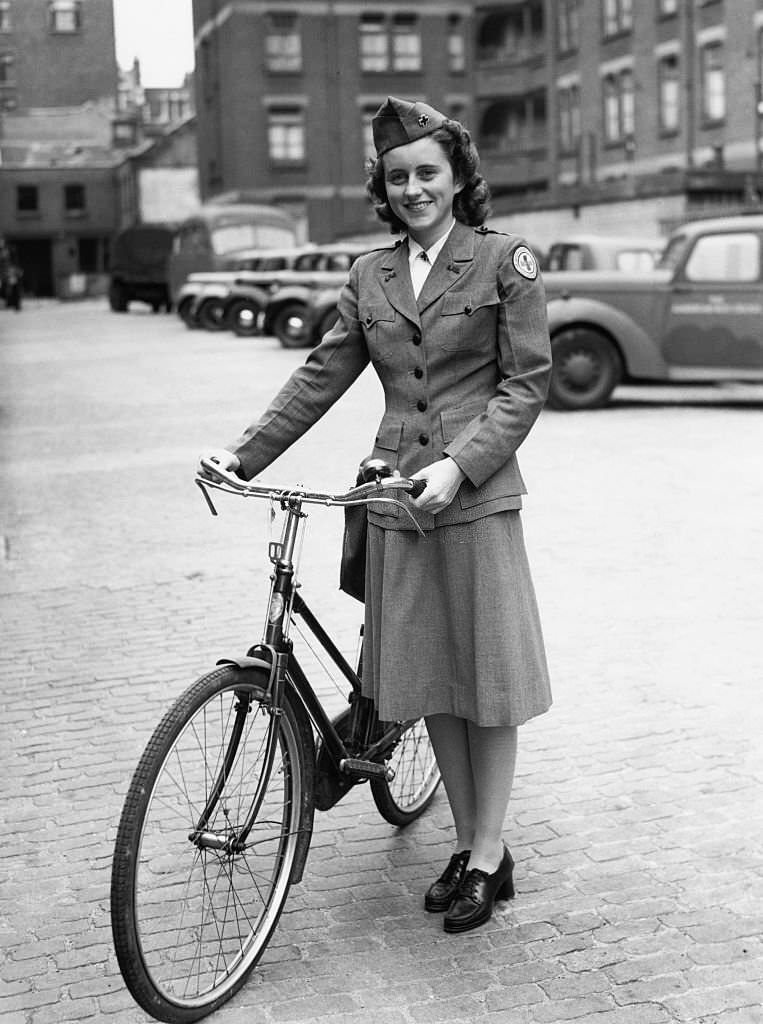
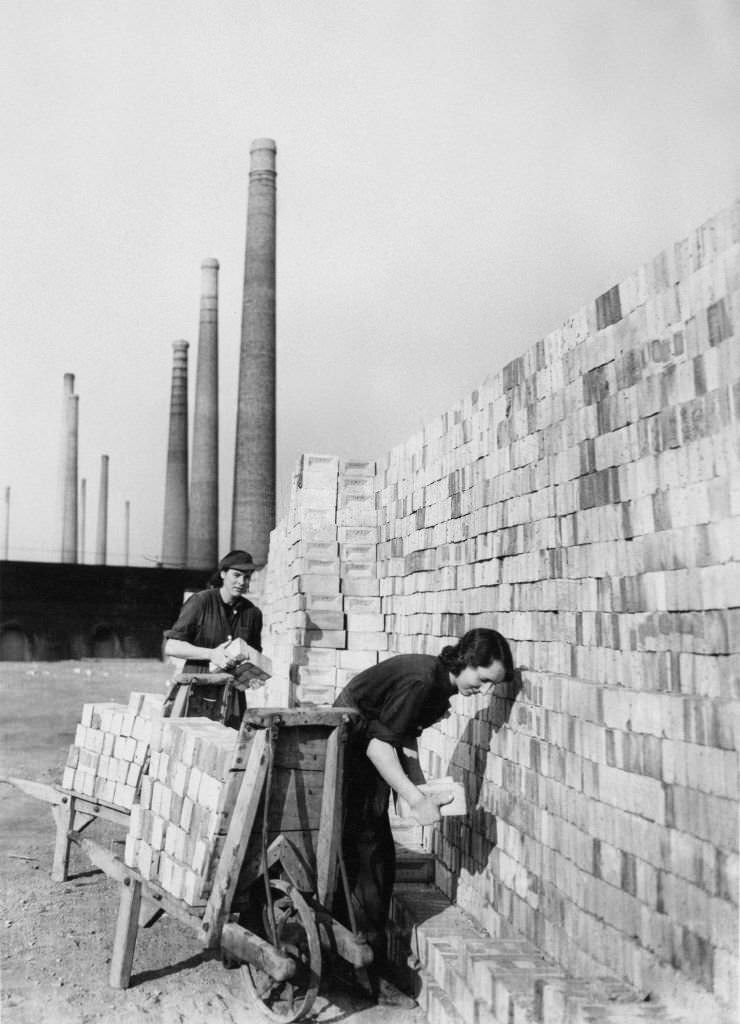
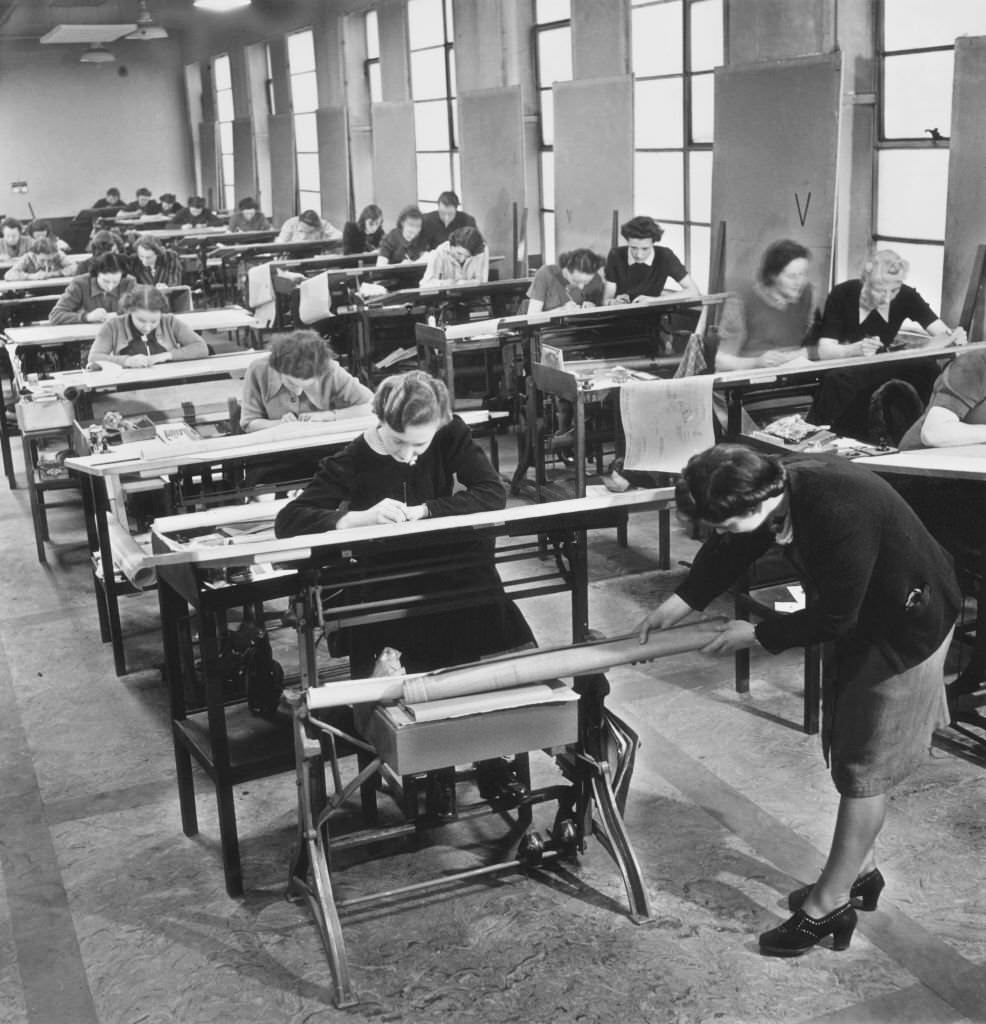
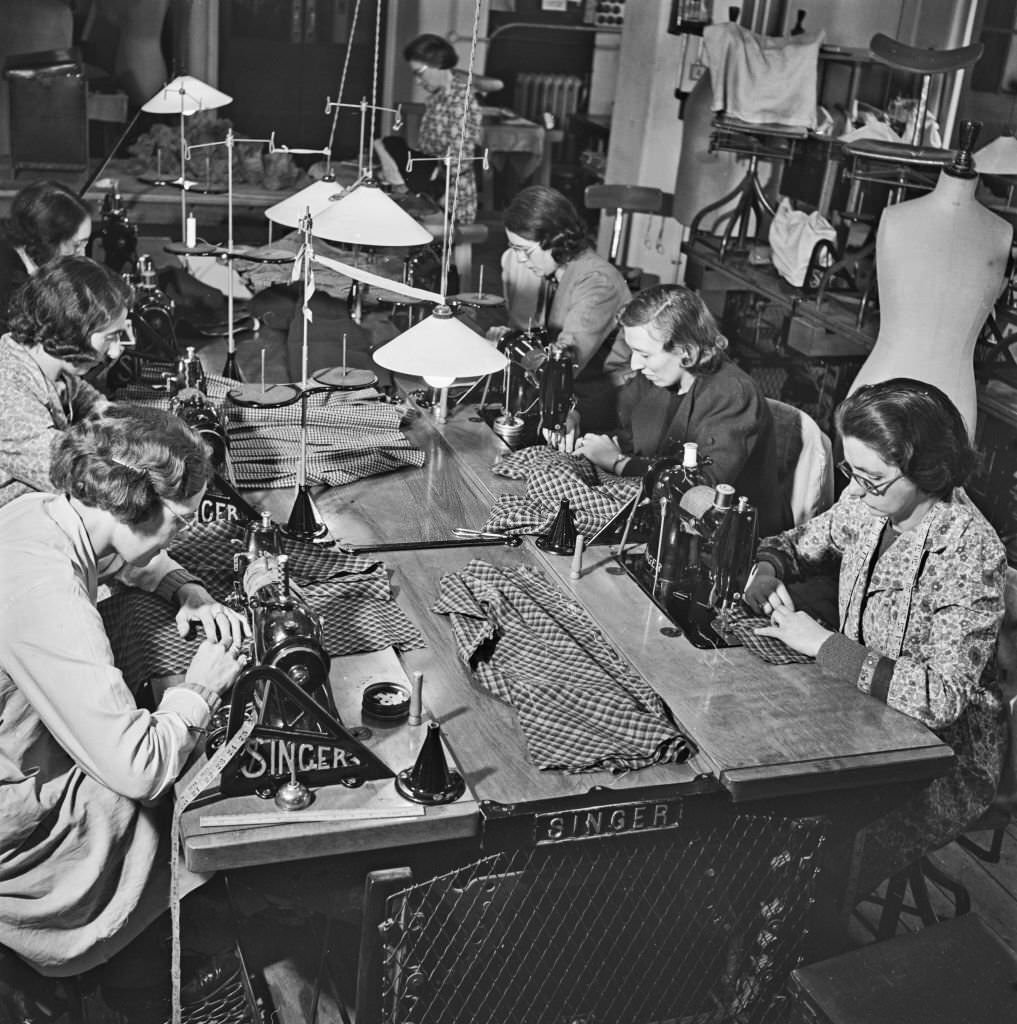
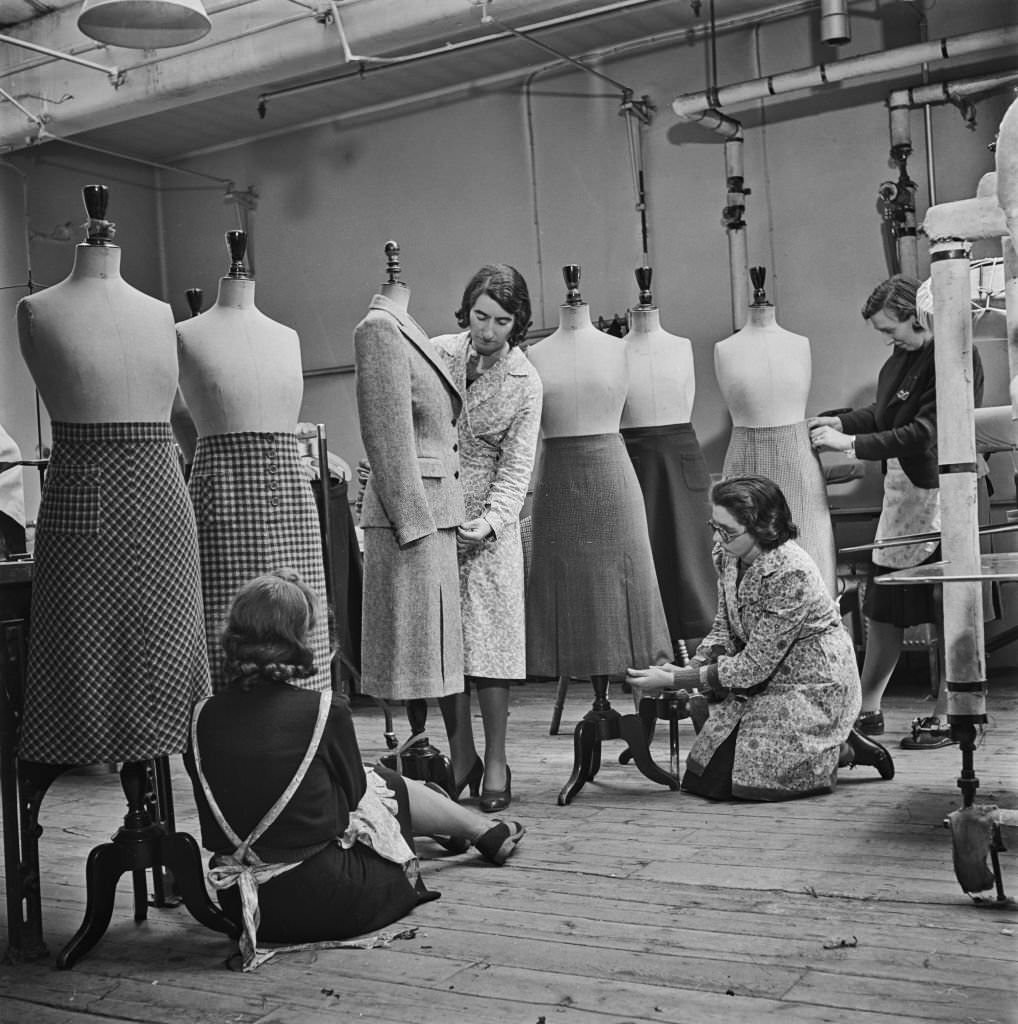
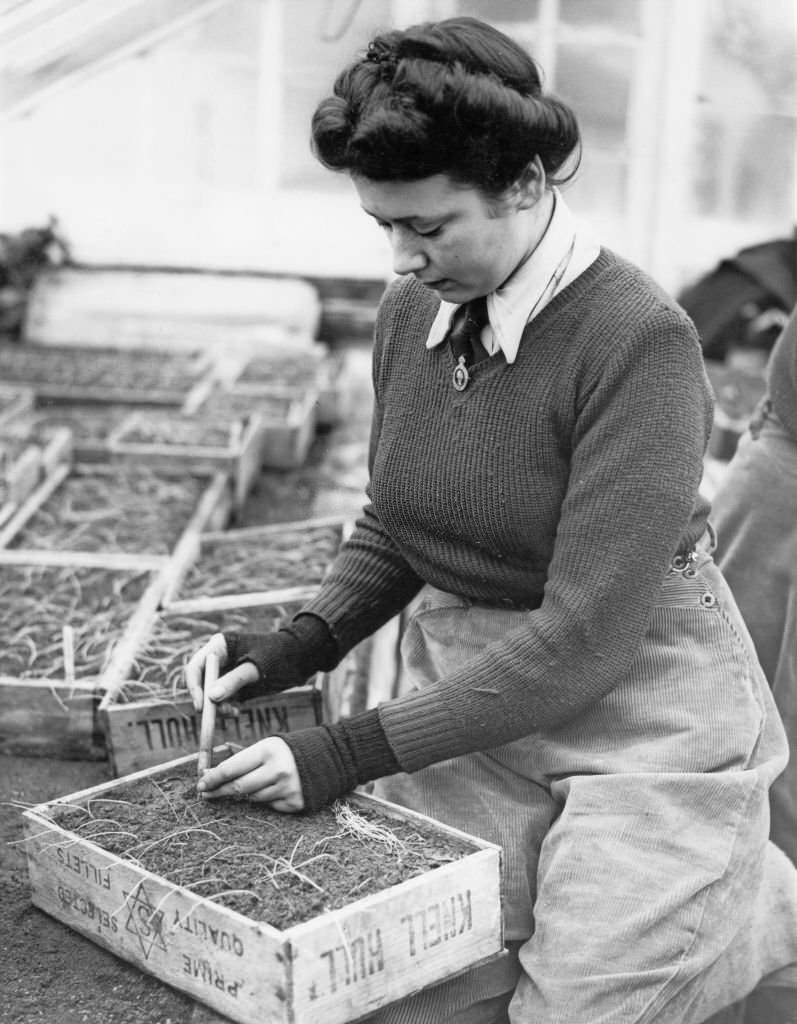
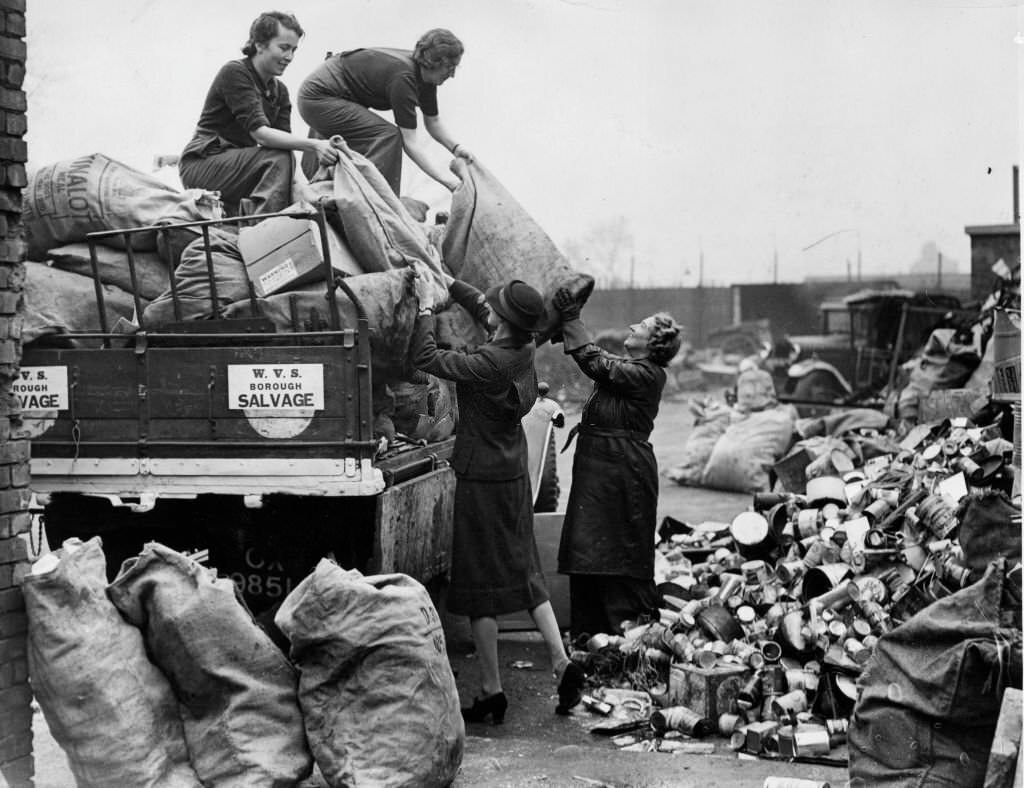
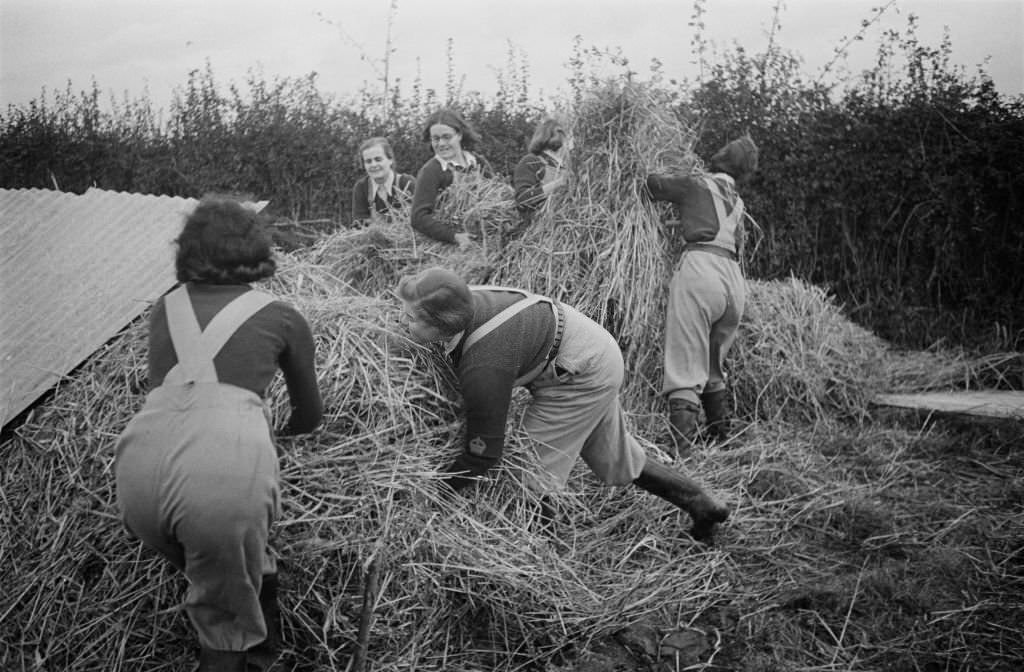
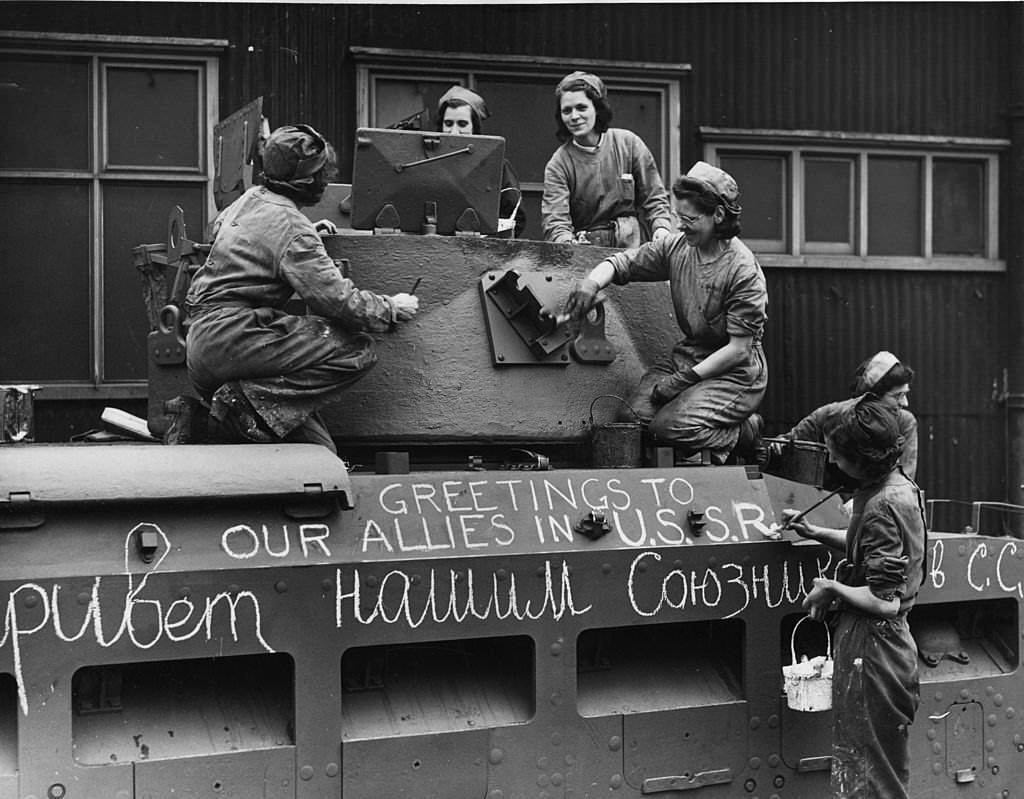
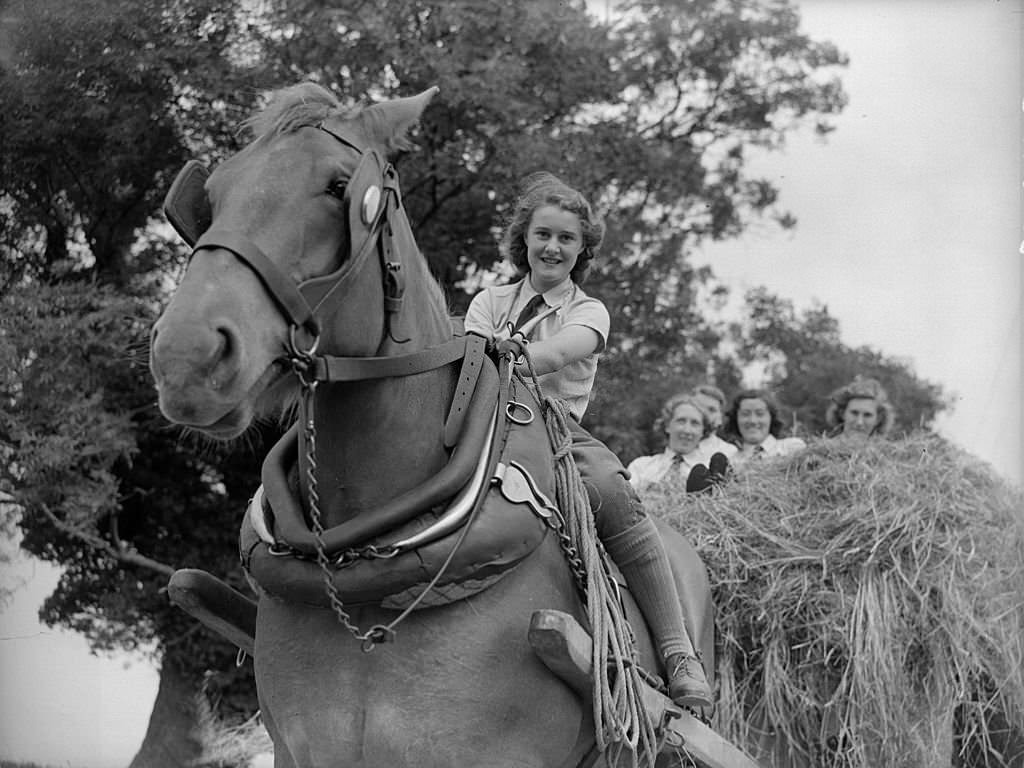
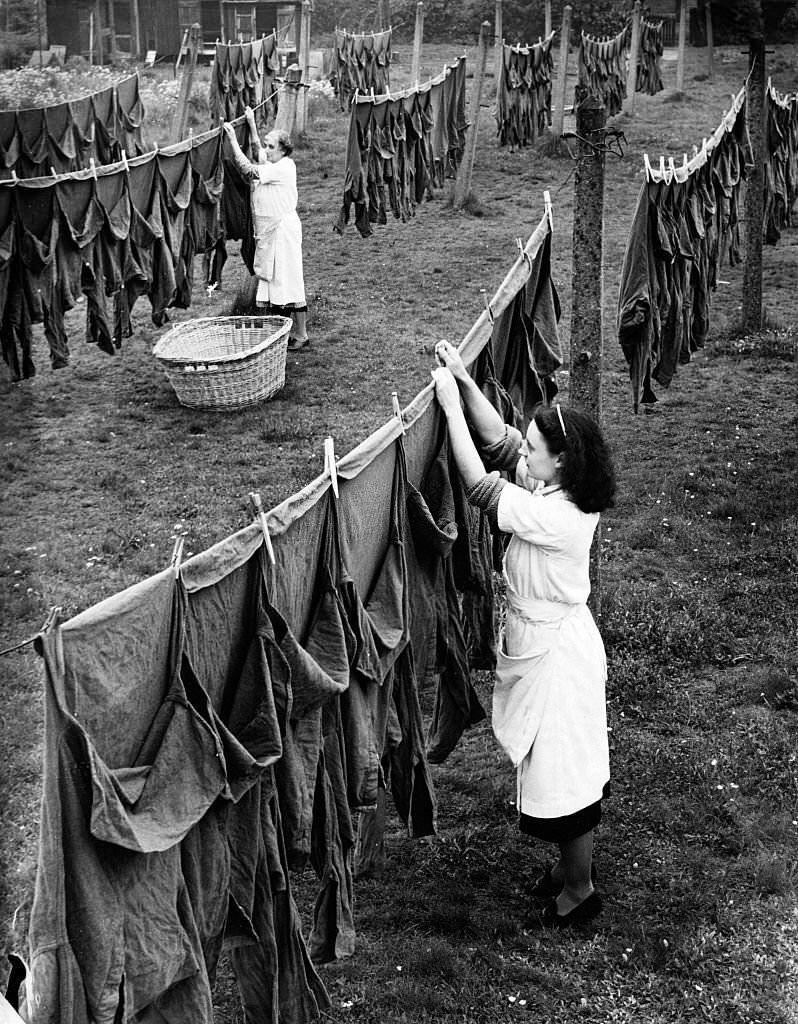
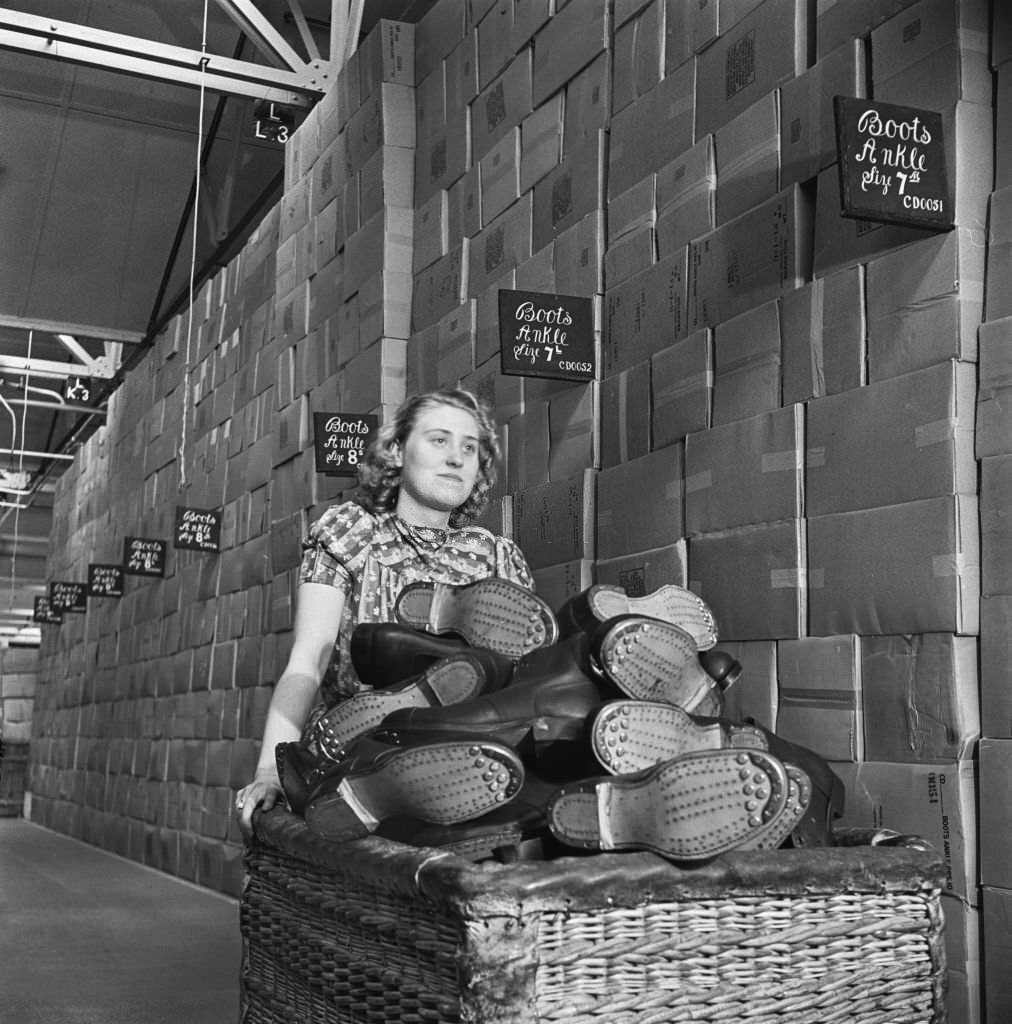
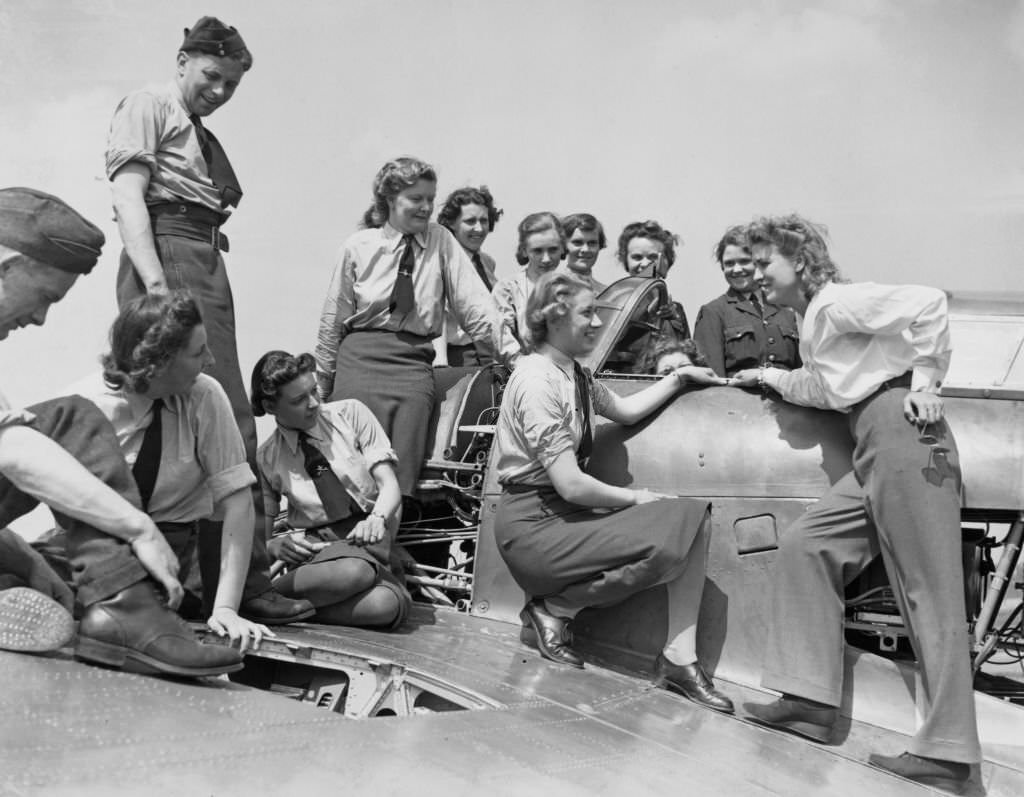
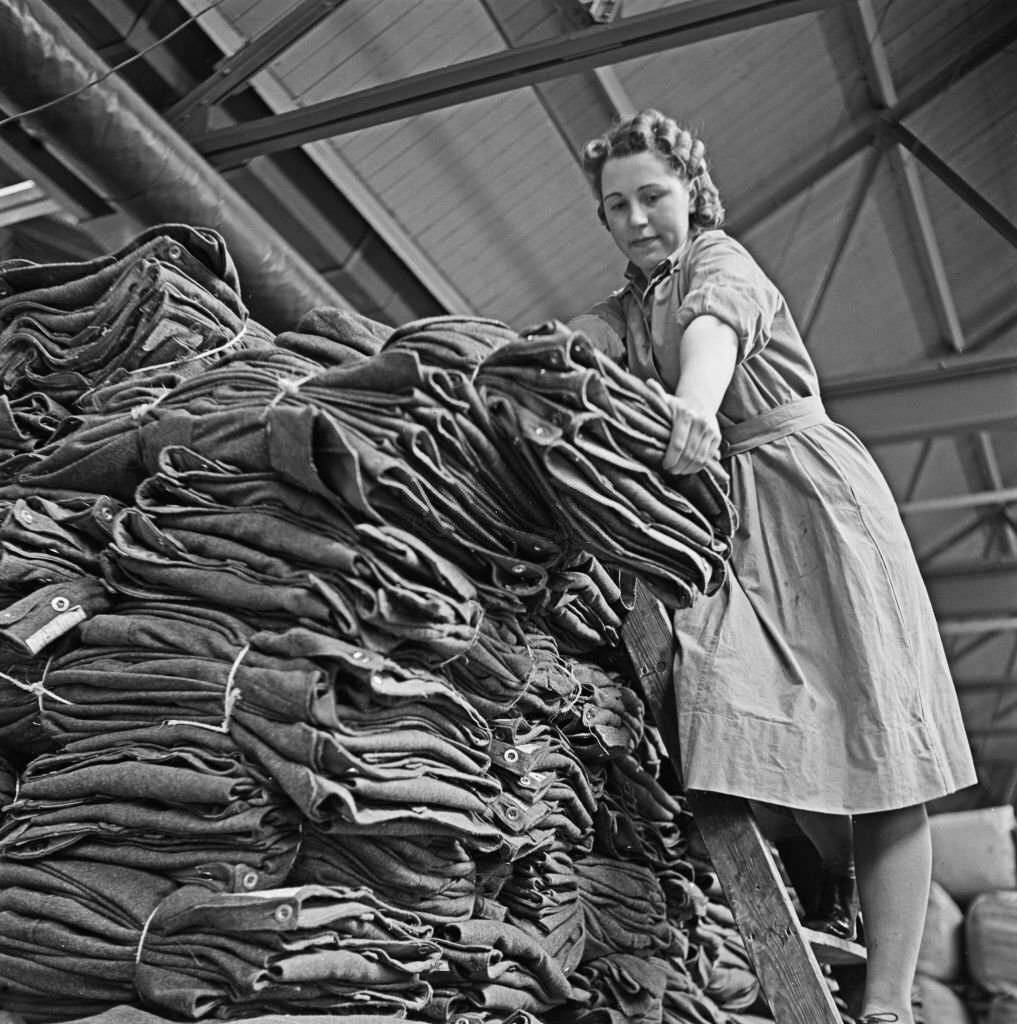
Female staff at an Arms Factory somewhere in Britain, prepare for work in the factory changing area.Fashion of Red Cross Nurses front English Parliament at London.Store clerks recover hats from a display window at a fashionable shop in the center of London.Women war workers, one at a sewing machine, in a factory.Women at work at the Central Hospital Supply Service.Lady Reading using a sewing machine at the Women’s Voluntary Services headquarters during world War II.A woman using a micropeter in the manufacture of tank guns at a Royal Ordnance factory during the Second World War.British munitions workers sent at short notice from their shell filling factory in the North-East to meet an urgent demand for labour in the North-Midlands.A woman war worker adjusting the tracks on a tank.Women workers hang out tin hats which have just been spray painted, to dry, 1940.Women ambulance drivers at Blackburn doing their daily physical training exercises, 1931A member of the Women’s Auxiliary Air Force working in the motor transport section greases the giant wheels of a lorry in Lancashire, 1939Members of the Women’s Land Army (WLA) at work harvesting bushels of straw and hay for animal forage at a WLA training farm on 27th October 1939 in Monmouthshire, South Wales, United Kingdom.Women at the Food Executive Office in London prepare ration books from the National Registration returns.Members of the Mechanised Transport Corps in their dormitory where they sleep with their clothes when on duty, 1940Inspecting wellingtons of Auxiliary Fire Service in Manchester, England, 1939.Members of the Women’s Land Army (WLA) stacking and protecting potatoes from frost with layers of straw during the potato harvest on 28th September 1939 on farmland in Monmouthshire, South Wales, United Kingdom.Commandant of the Women’s Mechanised Transport Training Corps (MTTC), Mrs G M Cook gives instructions to four female MTTC stretcher bearers beside an ambulance in London on 28th September 1939.Young members of the Women’s Land Army set out for a day’s work on a farm in Cheshire, 1939Many trains in Britain, called “casualty evacuation trains,” have been converted to mobile hospitals during World War II.British factory workers do light bench work on various components at a small arms factory during World War II.Women in Industry in Britain during the Second World War, Women welders making stirrup pump handles during the Second World War, 1939.A Women’s Auxiliary Air Force band with Drum Major, Senior Sergeant Manley, 1939The recruiting office for the Women’s Auxiliary Air Force, 1939Ambulance workers paint the street kerbs white in order to assist them to drive at night from their London depot, 1939A typical message chalked on bombs at munitions factories throughout Britain, 1939Three children and a young woman being fitted for gas masks, 1939Women with pitchforks clear the straw from a field in Wolverhampton, West Midlands, during World War II.Three women of the ATS light up together. ATS regulations forbid smoking when soldiers are wearing their hats, 1939A member of the Mechanised Transport Training Corps changes a wheel at an ARP post in Lambeth, south London.Nuns receiving fire drill instruction in the UK during World War II, 1939World War II. Harvesters driven by women in England, 1939A group of workers at the Seibe Gorman factory in London modelling the company’s gas masks which are being produced in preparation for gas attacks, 1938.Women serving children meals in communal kitchens.The Duchess pf Westminster With NursesMiss Parker, a member of the Auxiliary Territorial Service, on duty as an enemy aircraft spotter near London, 1943.Land army girls helping a charcoal burner in the West Country, 1940.Members of the A.T.S (Auxiliary Territorial Service) pour tea at the canteen of the Vehicle Reserve Depot, July 1943.Women’s Auxiliary Air Force (WAAF) – A nurse takes a bottle from a medicine cabinet.British Womens Auxiliary Air Force. Women repairing plane fabric. Female auxiliary division of Royal Air Force.British Womens Auxiliary Air Force. Woman repairing electical engine speed indicators. Female auxiliary division of Royal Air Force. British postcard series, No. 11.World War two Home front in Britain: Fordson tractor with members of British Women’s Land Army, 1940s.Women Road Painters, 1941. Women doing men’s jobs, painting the kerb white so it can be seen during the blackout in World War Two.Ford Factory Women Workers during World War II.A member of the WRNS (Women’s Royal Naval Service), the women’s branch of the Royal Navy, changing the tyre of a car during her tour of duty on the ‘HMS Daedalus’ during World War II, UK, March 1941.Women at work cleaning the inside of a London Underground train during World War II, 20th February 1941.A group of women war workers on parade at a London Underground depot before starting work cleaning carriages, 17th February 1941.Women marking the pattern of uniforms onto material with chalk in preparation for the cutting stage of the process. Nine hundred miles of khaki serge produces 5,000,000 battle suits and 6,000,000 pairs of trousers.January 1941: Women factory workers during World War II.Members of the Women’s Royal Naval Service, nicknamed Wrens, train in marksmanship at a rifle range during WWII.A woman factory worker makes canisters filled with smoke known as the “Wessex” Daylight Smoke Signals for use as distress flares on ships, 1941.Women workers in a munitions factory drinking milk during their break, 1941.Munition workers at a RAF munition factory fit the components to bombs.Great Britain, Members of the Womens Land Army receiving instruction on varied forms of farm work in Somerset at the Agriculture Institute.One of many women taking up farming jobs during the war. Miss Marshall collects eggs from chickens in Worcestershire, 1941.British women being trained at a munitions factory during World War II.A woman war worker operating industrial machinery, 1941Land girls enjoying their midday meal beside a Kent wheat field, 1941Women prepare care packages of chocolate, tobacco, cigarette papers, toothpaste, razor blades, and soaps for British troops, all gifts from the South Australian Fighting Forces Comfort Fund.Staff at work at a major London telephone exchange wearing tin helmets during an alert.Members of the Women’s Land Army (WLA) at work forking sugar beet harvest ready for transportation to a sugar processing plant on 14th October 1940 on farmland in Lincolnshire, England.Women from the Duchy of Cornwall Estate in South London knit socks with wool bought from the proceeds of their children’s salvage efforts.Two new members of the Women’s Land Army (WLA), later to become the Women’s Timber Corps, pictured operating a sharpening stone to sharpen axes in a wood in England during World War II on 2nd January 1940.British Army’s Women’s Transport Service (FANY) being instructed in the working of an internal combustion engine during a mechanics class by a section leader at an army establishment in England in January 1940.London Women With Their Notebooks, on which are listed and deducted their Food Rations, in a Bakery on Petticoat Lane On July 21, 1946.Members of the Women Land Army (WLA) at work on a farm in Hertfordshire, England after the Second World War, June 1946.Two women at work in a basket factory making specially designed panniers for Britain’s invasion armies.Testing beacon light bulbs at the Lemington Glass Works Ltd, Lemington, Newcastle upon Tyne, Tyne and Wear. 25th January 1945.Works photograph of female employee transferring a 6 inch shell from the bench to a bore fuse hole machine, Female employee transferring a 6 inch shell from the bench to a bore fuse hole machine.female employee loading a 6in. shell onto the finish turning machineLand Settlement Association Tenants, 1944Women’s Land ArmyWomen workers peeling thousands of onions that will eventually be pickled in jars destined for household dinner tables, 1944Women Mending Fishing Nets, 1943Preparing jam in Kent to preserve as much fruit as possible for the winter. Over 5,000 lbs of jam has already been made by the Women’s Institute in Mereworth, Kent, 1944Women of the South Eastern Command of the ATS (Auxiliary Territorial Services) help local English farmers weed their onions, 1943An American locomotive, one of the first batch to arrive in the United Kingdom for many years, being cleaned by women.A female employee posed with strips of freshly stamped out steel razor blades yet to be being hardened, sharpened and cut at a Gillette razor blade factory in England during World War II on 12th April 1943.Recycling for the War Effort, 1943Kathleen Kennedy later Kathleen Cavendish, Marchioness of Hartington, whilst working for the American Red Cross in London, 1943.Cecil Beaton Photographs: Women’s Horticultural College, Waterperry House, Oxfordshire, 1943Cecil Beaton Photographs: Women’s Horticultural College, Waterperry House, Oxfordshire, 1943Cecil Beaton Photographs: Women’s Horticultural College, Waterperry House, Oxfordshire, 1943Miss M Greatorex machines spring cases for 17-pounder guns, 1943.Female workers, including a number wearing dungaree overalls, construct and assemble the fin of a barrage balloon in a factory hanger in England during World War II on 2nd December 1942.A female factory worker polishes completed crankshafts for fitting in Rolls-Royce Merlin V-12 piston aero engines at the Hillington Rolls-Royce aero engine factory in Glasgow, Scotland on 30th November 1942.Shop assistants from Boots the Chemist hoeing and weeding a field of mangold (mangel).Wartime Meat Pie Delivery.Recruits of the Women’s Land Army prepare for ploughing at Hanley Brook, Upton On Severn, Worcestershire during the Second World War, 11th September 1942.Smoke stack chimneys of the London Brick Company form the backdrop to two women war workers stacking new bricks for the construction industry and the war effort on 1st September 1942 at Stewartby in Bedfordshire, United Kingdom.Women gathering in the rye harvest in East Suffolk, since the wartime announcement that the crop may now be used in Britain’s bread, 11th August 1942.A “Ditching” party of Women of the Volunteer Land Corps at work digging a deep drainage ditch in the fields at CheshuntTwo members of the Women’s Timber Corps do their bit for the war effort by carrying a felled log through the lumber camp at Bury St Edmunds, Suffolk.Women of the Women’s Land Army using a baling machine to bale hay on a farm in West Suffolk, 1942Lancaster Under ConstructionFemale workers in the Tracing Office at an Avro factory in Greater Manchester, 16th March 1942Peggy Ayres working for the Land Army in which women are encouraged to fill job vacancies left by men who have gone to fight in World War II.Two young women ploughing a field with a triple (foreground) and a single furrow plough hauled by tractors, 1942Seamstresses at work on sewing machines to create utility skirt suits to a design by Irish fashion designer Digby Morton at a Bourne and Hollingsworth department store workroom in London, 10th March 1942.Four seamstresses make final adjustments to utility suits and skirts at a Bourne and Hollingsworth department store workroom in London during World War II.Rolls Royce Merlin engines being made at a factory in the Northwest of England, 2nd March 1942A member of the Women’s Land Army (WLA) hand picking onion plants that had been grown from seed on 7th February 1942 at the Coronation Greenhouses in Cheltenham, Gloucestershire, United Kingdom.The WVS (Women’s Voluntary Service) unloading salvage at a depot where it is to be sorted, 1941Land Girls’ of the Women’s Land Army, gathering straw to be used as winter bedding for the cows, on a farm in southern England, November 1941.Two female trainee ward housekeepers practice with a water hose after setting up their own fire fighting service at the Royal Northern Hospital in Holloway, north London, October 1941.Women in the Army Transport Service working as artillery spotters adjust a range finder.A team of firewomen belonging to the Royal Northern Hospital in Holloway, train their hose on an imaginary fire during practice for Blitz fires.NAAFI chefs prepare Christmas meals for the British army at a depot in London during World War II, 24th September 1941.British women working on a tank destined for Russia, with ‘Greetings to our Allies’ chalked on the side in Russian, 1941Mrs Peggy Devine, an evacuee from London, holds a section of pipe as she carries out rough navvying work on the site of a new aerodrome being constructed in East Anglia during World War II on 16th September 1941.Ladies of the Women’s Institute at Brimpton are busy making jam of all kinds – plum, apple, marrow, ginger and blackberry.Members of the Women’s Auxiliary Air Force (WAAF) using a model to study the construction of barrage balloons, UK, 11th September 1941.A member of the Women’s Royal Air Force (WRAF) pulls on a rope to tighten up lines to a barrage balloon tethered in Grosvenor Gardens, London, September 1941.Women and baby seen here leaving the city for the country side to avoid the nightly bombing. September 1941Women Peeling Potatoes for soldiers, 1941A woman inside a Dunlop aeroplane tyre and holding a smaller tyre in Birmingham, England, during World War II, August 1941.A young woman training for war work in the machine shop of the Ministry of Labour training centre at Chelsea Polytechnic, later the Chelsea College of Arts in London, July 1941.Members of the Essex women’s land army homeward bound with a cart full of hay, 25th June 194117 year old Land Girl Paddy Coleman of the Women’s Land Army uses a pitch fork to move cut grass from a silo at London County Council’s Horton Estate Farms near Epsom in Surrey, England. 16th June 1941.Women hang out army shirts at a laundry in Surrey, England in 1941.A female warehouse worker pushes a wicker basket full of Britsh Army standard issue Ammunition boots past stacks of hobnail boot boxes at a Central Ordnance Depot for British Army uniform and equipment in England during World War II.Jacqueline Cochran far right, American pilot Jacqueline Cochran talks to members of the Women’s Auxiliary Air Force at work on a Hawker Hurricane MkIIb fighter aircraft of 242.Female warehouse worker Dorothy Durber handles bundles of khaki standard issue military uniform at a Central Ordnance Depot for British Army uniform and equipment in England, 1941.
Teleprinter telephone operators at work during a 15-minute gasmask drill, Scotland, 24th April 1941.
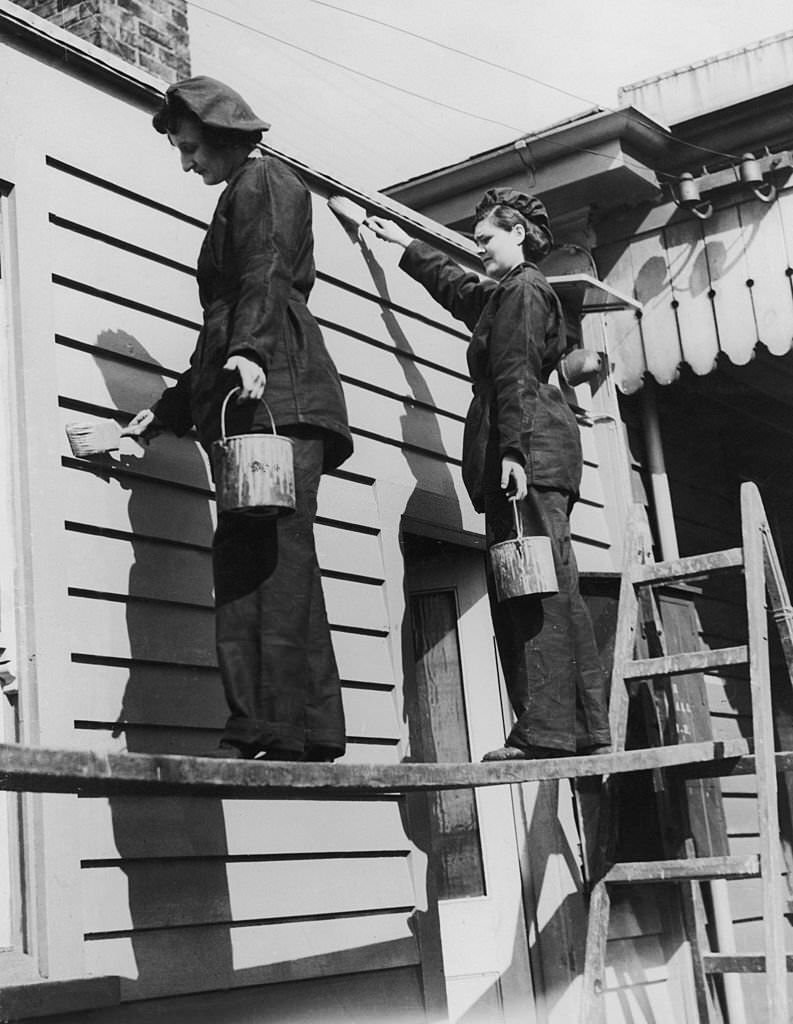
Women war workers, known as ‘Pollies’, at work painting woodwork at a station on the Southern Railway, 21st April 1941.
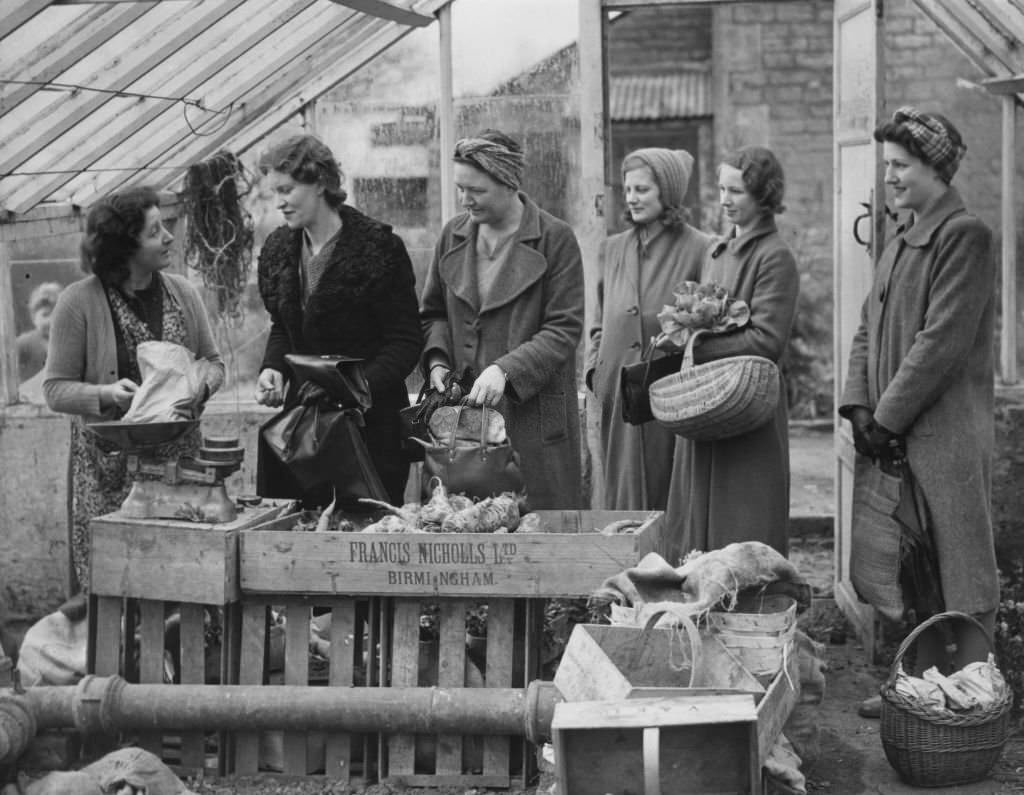
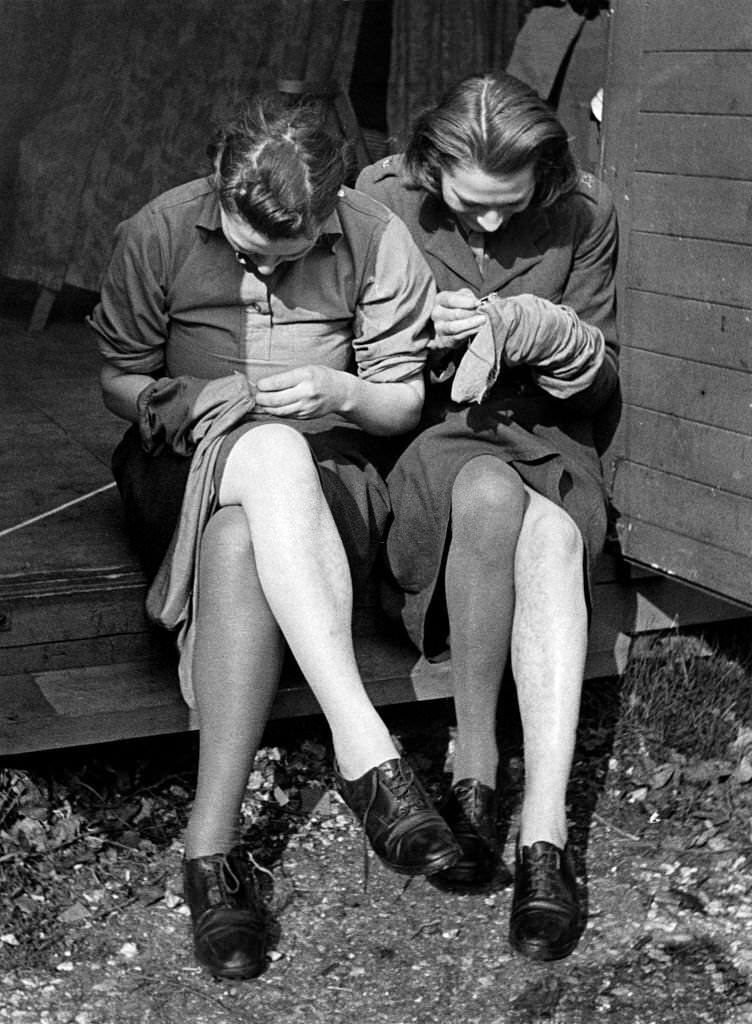
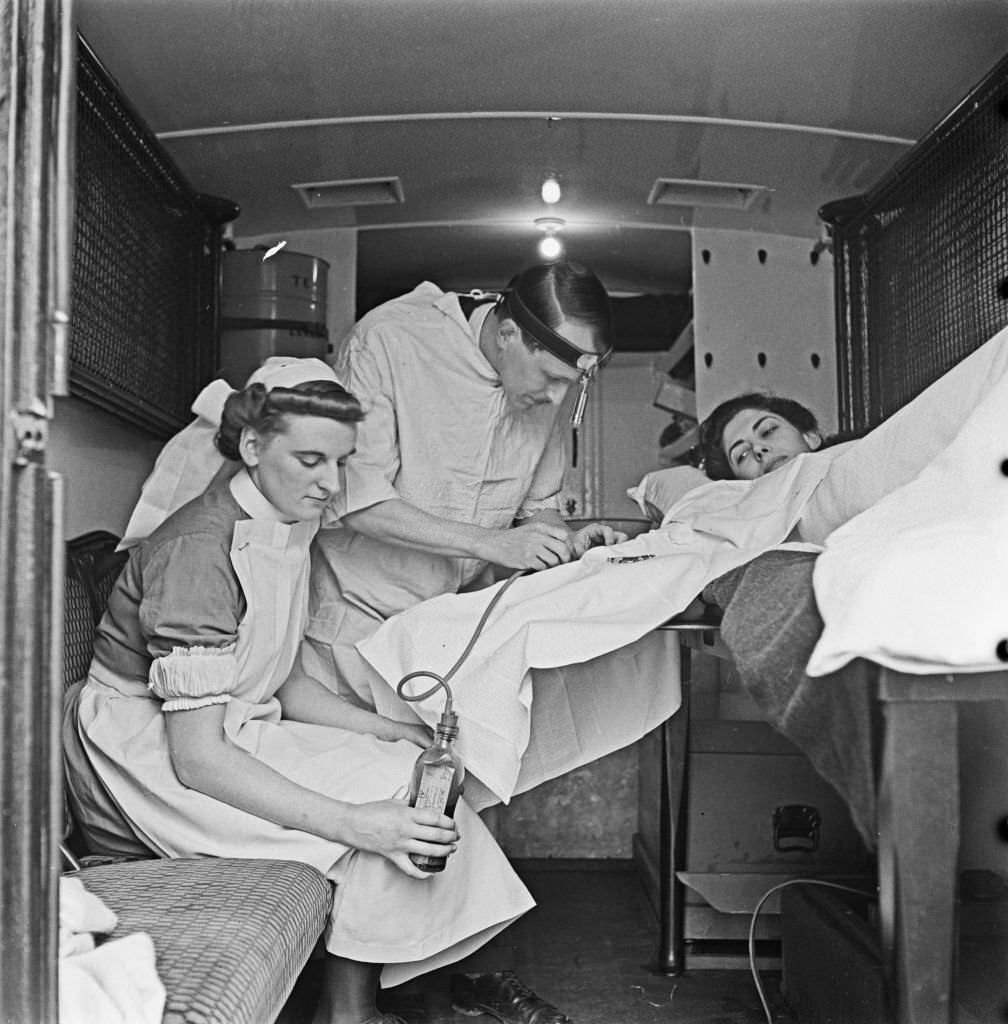
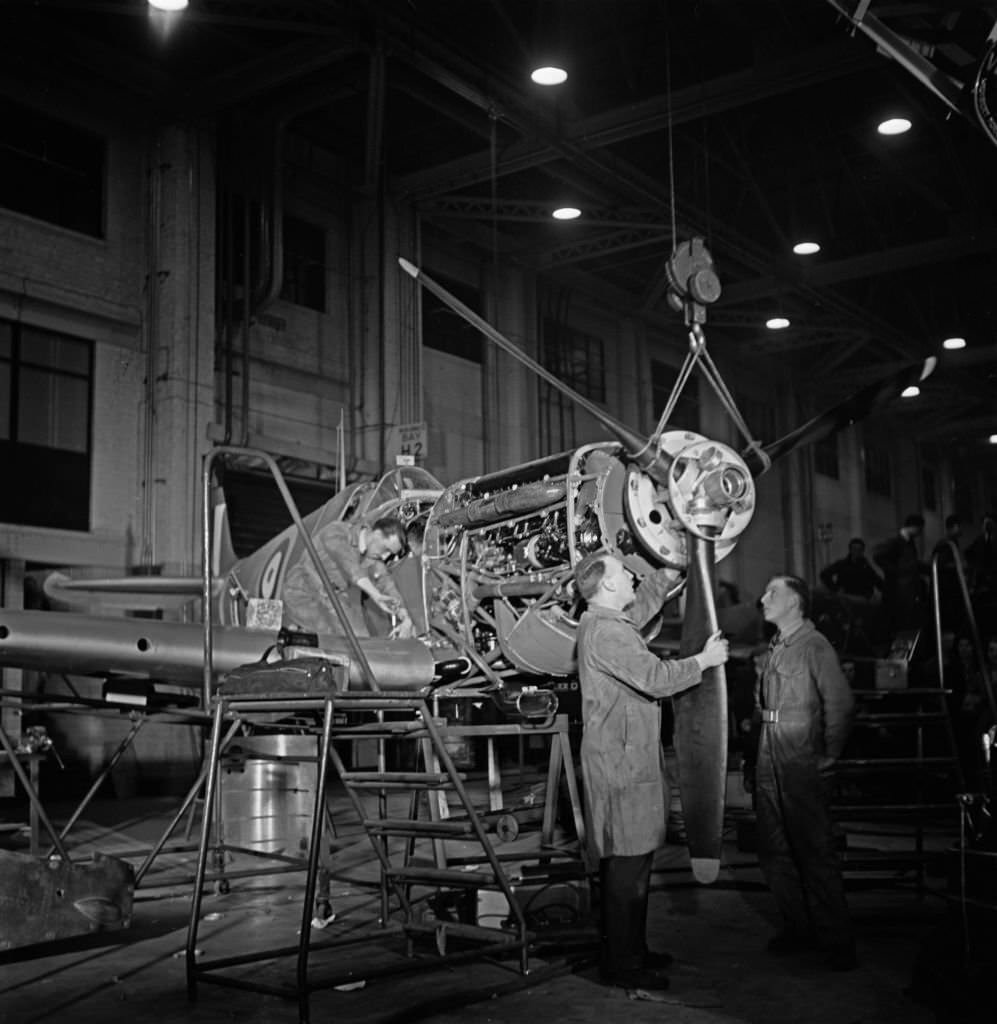
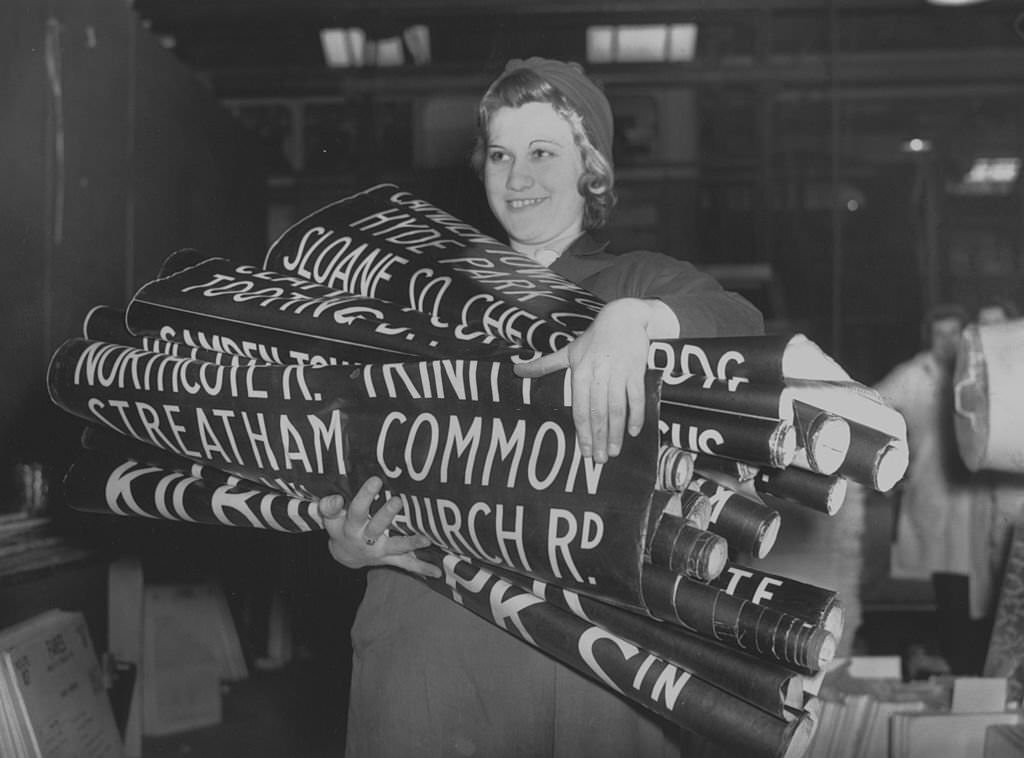
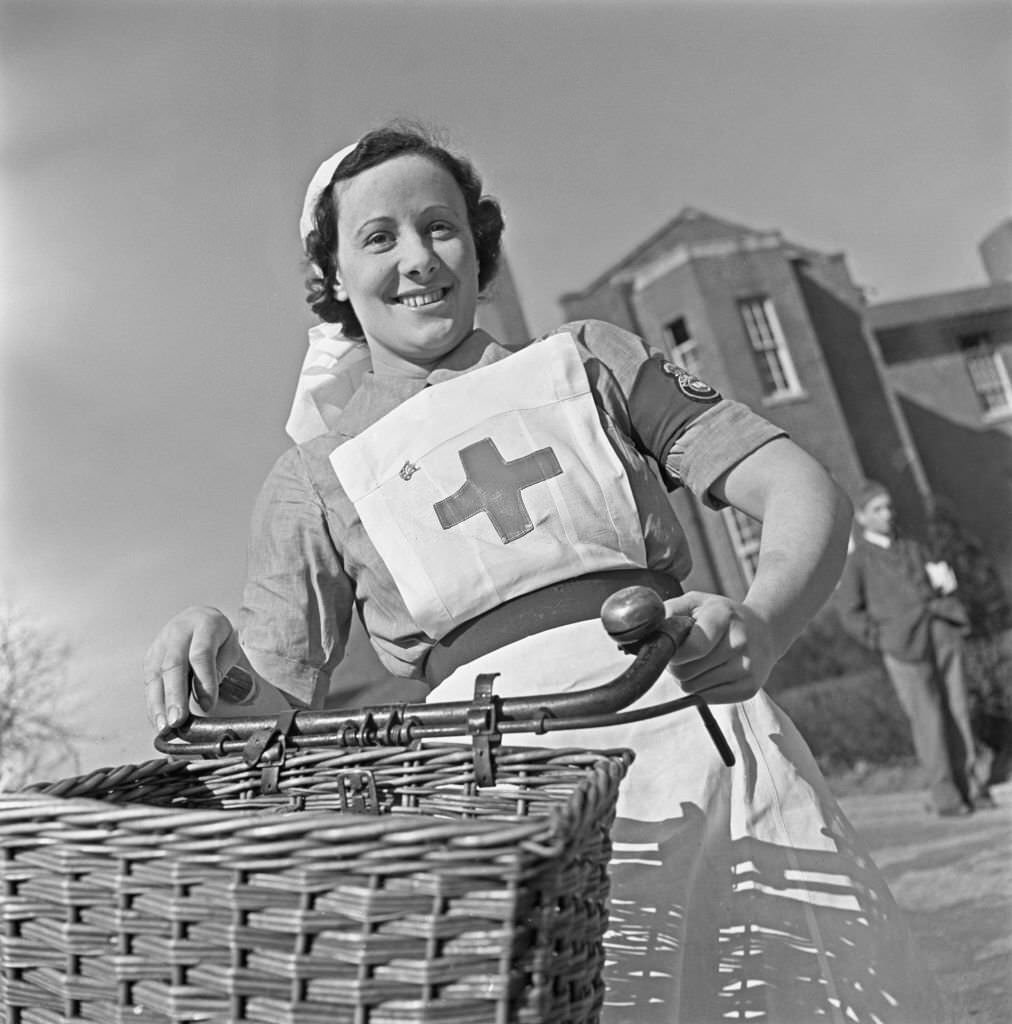
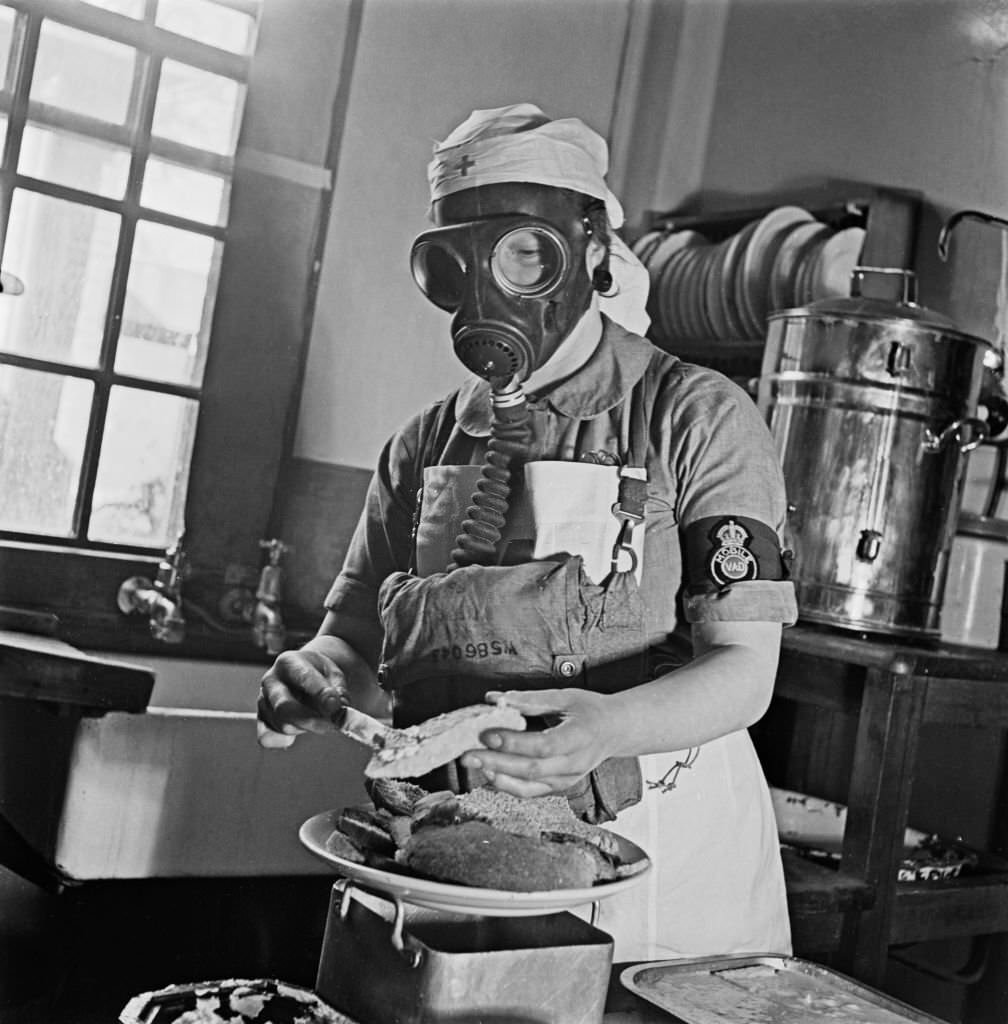
Women evactuated from the bombing in London queue in line to buy fresh vegetables from a box stall on 15th April 1941 at a farm shop in Bishops Cleeve, Gloucestershire, United Kingdom.Mending their stocking at training and reception Depot for ATS girls in Aldermaston, Berkshire, April 1941Nurse Marjorie Harrison and Doctor W Stanbury administer a transfusion of blood to a patient lying in an ambulance Great Britain vehicle following a German Luftwaffe air raid over the city of Ripon in Yorkshire.Skilled technicians attach the propeller on to the nose section of a Supermarine Spitfire fighter aircraft at an aircraft factory in England, 1941.June Barrington-Ward a despatch riders for the Women’s Royal Naval Service (WRNS) carries out maintenance on her Triumph 350CC 3SW motorcycles at WRNS London Headquarters on 11th March 1941.Woman war worker E Oakham, carrying bus destination signs at the London Passenger Transport Board, 1941Nurse M S Sparkes uses a bicycle to cycle through the grounds to her ward at Shenley Hospital, a military hospital at Shenley near St Albans in Hertfordshire, England during World War II on 24th March 1941.A nurse wears a gas mask respirator as she prepares food in the kitchens at Shenley Hospital, a military hospital at Shenley near St Albans in Hertfordshire, England, 24th March 1941.Trainee munitions worker Muriel Maggs, a former cinema usherette, operates a capstan lathe at a British Government training centre in Reading, England, 31st March 1941.