Addison Scurlock grew up in Fayetteville, North Carolina, but it was Washington, D.C. that became the backdrop for his life’s work. He moved to the city to apprentice under Moses Rice, a white photographer, and spent three years learning the craft. When that time was up, he opened his own small studio, starting modestly outside his home. What followed was one of the most important documentary records of African American life in U.S. history.
Scurlock’s camera found its way into formal weddings, elegant cotillions, ballet studios, and quiet family living rooms. He photographed community leaders, working-class families, and high-society events with equal care. His images pushed back against the narrow, degrading portrayals of Black Americans that dominated mainstream media at the time. The Scurlock Studio showed a Black middle class that was thriving — dignified, educated, and fully alive.
Among the most compelling subjects in the studio’s archive are the women of Washington, D.C. From summer camps to university halls, from tennis courts to political committees, these photographs document Black women living full, layered lives. The images below span decades of Scurlock’s work, each one a precise window into a moment that history might otherwise have overlooked.
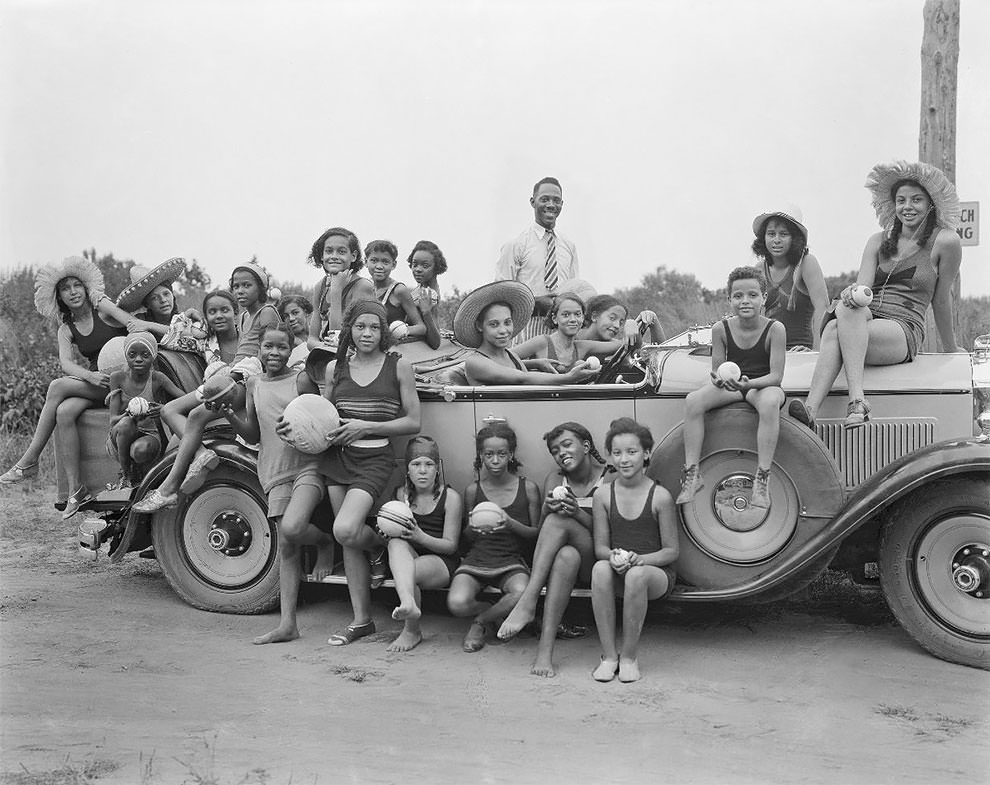
Highland Beach, Maryland, was founded in 1893 by Charles Douglass, son of Frederick Douglass, after a segregated resort refused him entry. By 1930, it had become a beloved retreat for Black families from D.C. This YWCA camp photo captures girls enjoying a space that was built specifically for them — a direct answer to exclusion.
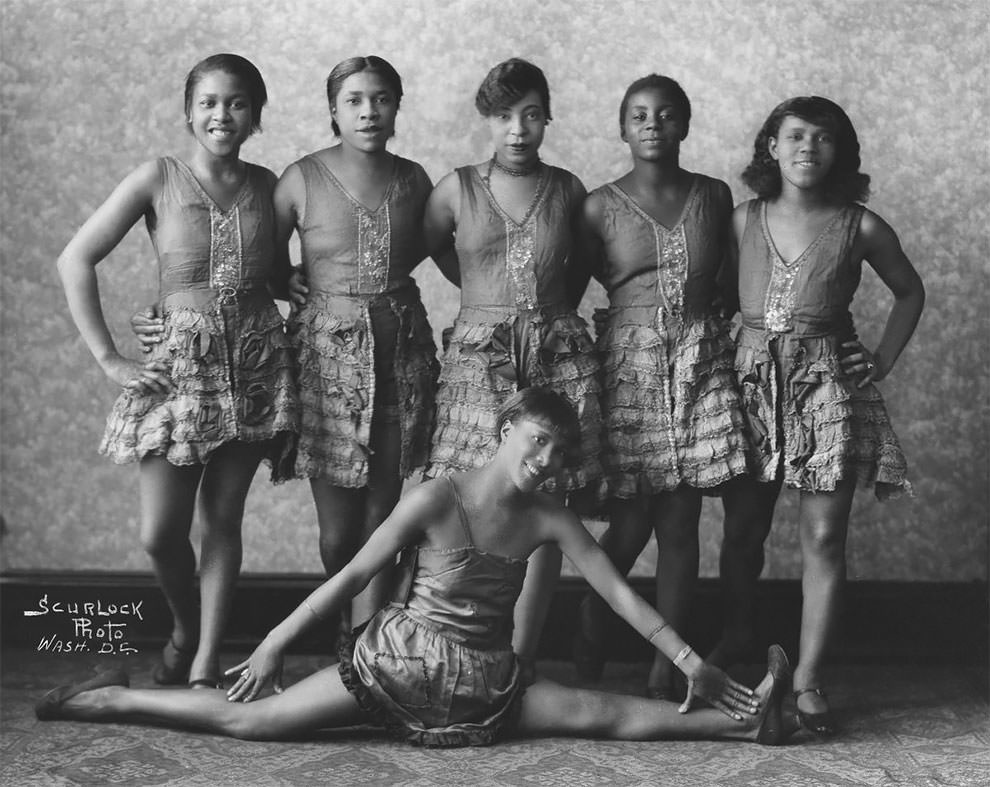
Dance was a serious pursuit in D.C.’s Black community during the 1920s. Studios like Effie Moore’s trained young women in technique and performance, giving them a formal artistic outlet at a time when many professional stages across the country were closed to them.
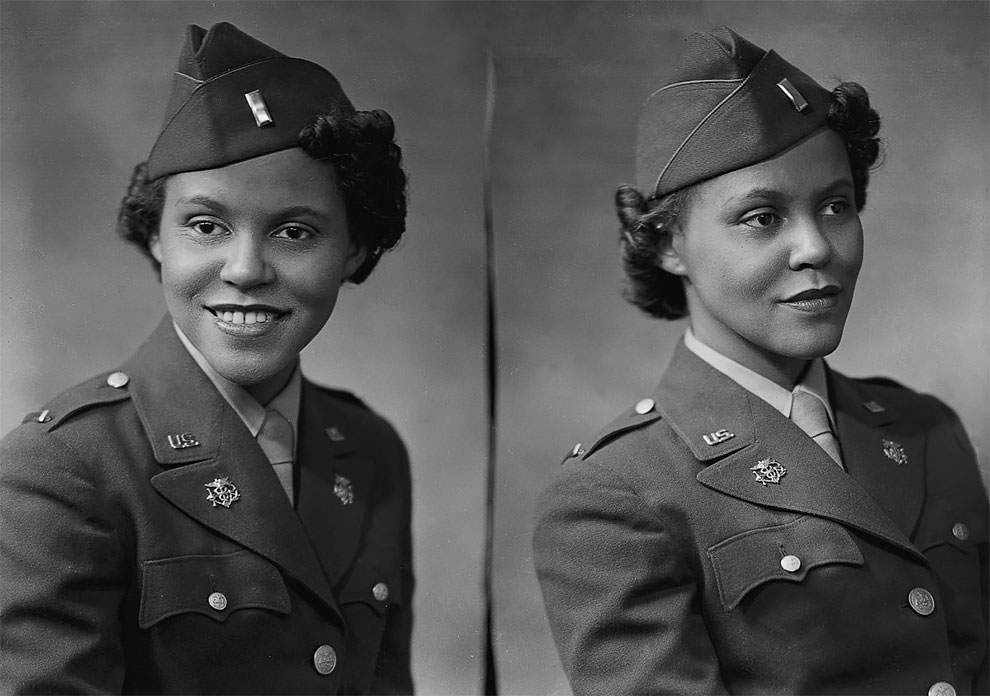
Military portraits were a staple of the Scurlock Studio. Lieutenant Alma Jackson’s photograph is a record of service — a Black woman in uniform at a time when that representation carried enormous weight both inside and outside the armed forces.
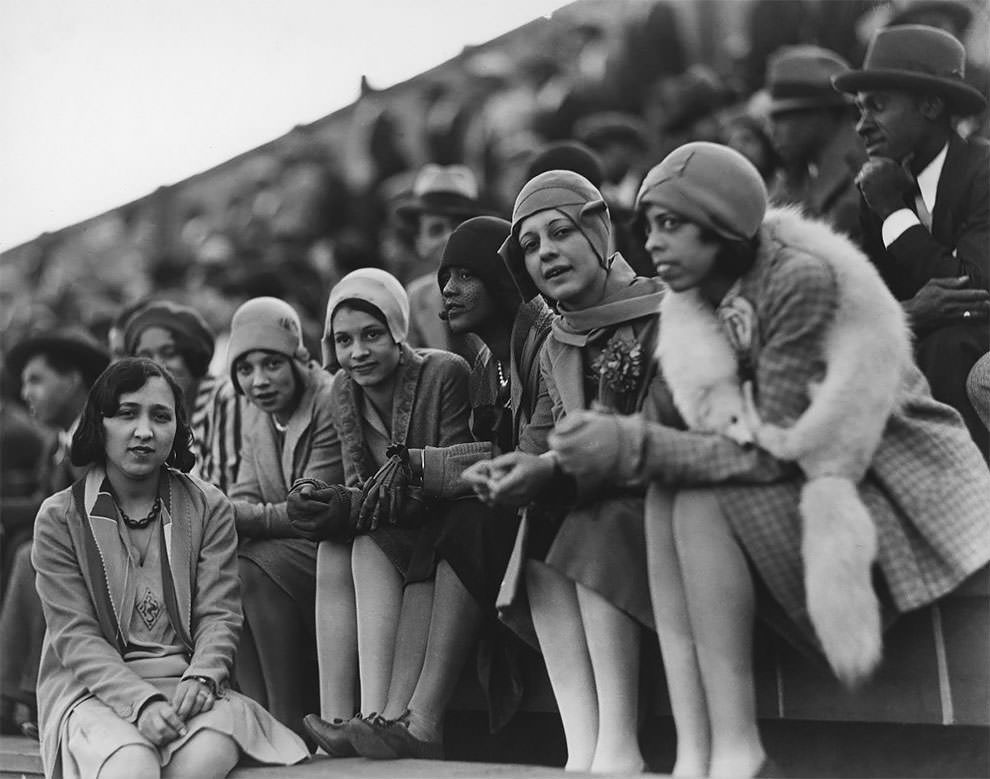
Griffith Stadium on Georgia Avenue NW was a central gathering point for D.C.’s Black community. While the stadium was also home to the Washington Senators baseball team, it hosted Howard University football games that drew large, stylish crowds. These women, dressed in the fashion of the era, are a reminder that leisure and style were very much part of Black community life in the 1920s.
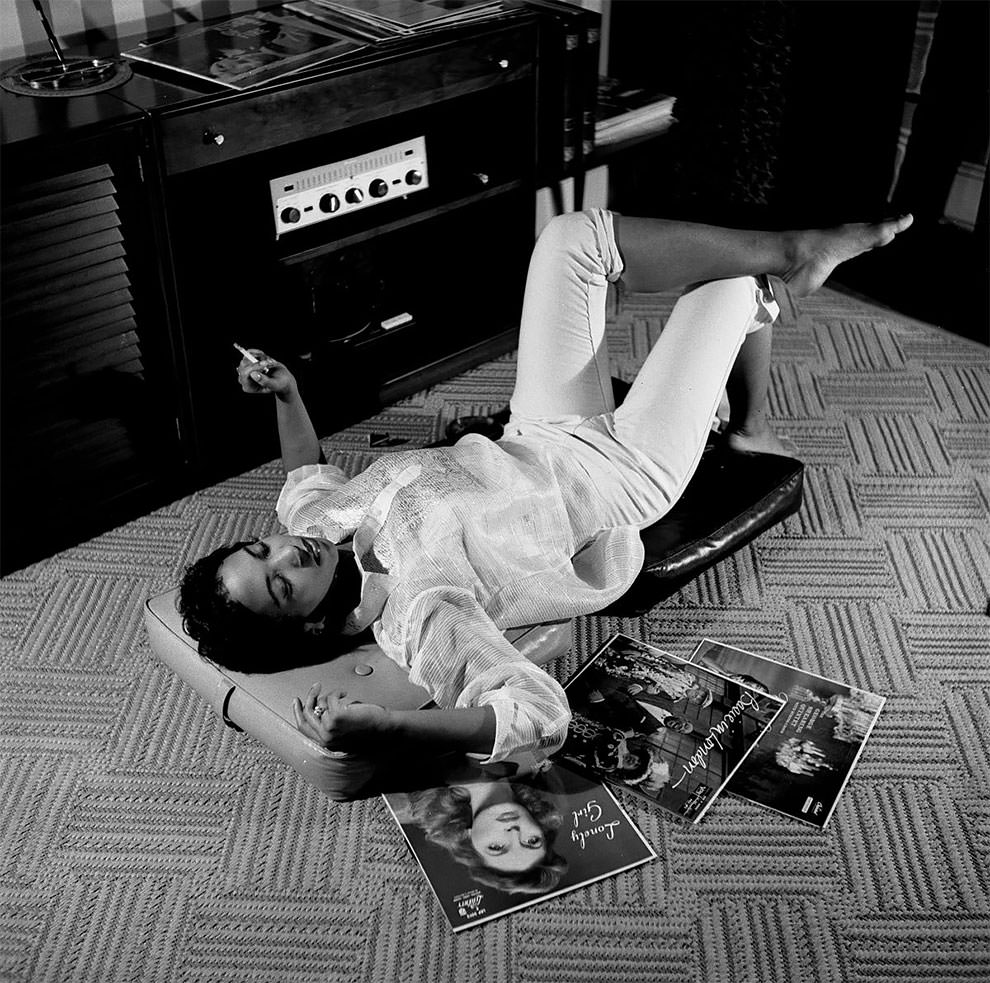
By the mid-1950s, the Scurlock Studio’s work had grown more relaxed and intimate. This image — a woman stretched out on the floor, cigarette in hand, surrounded by record albums — captures private life with a candid ease rarely seen in studio photography of that era. Julie London’s “Lonely Girl” visible among the albums dates the scene to 1956 or later.
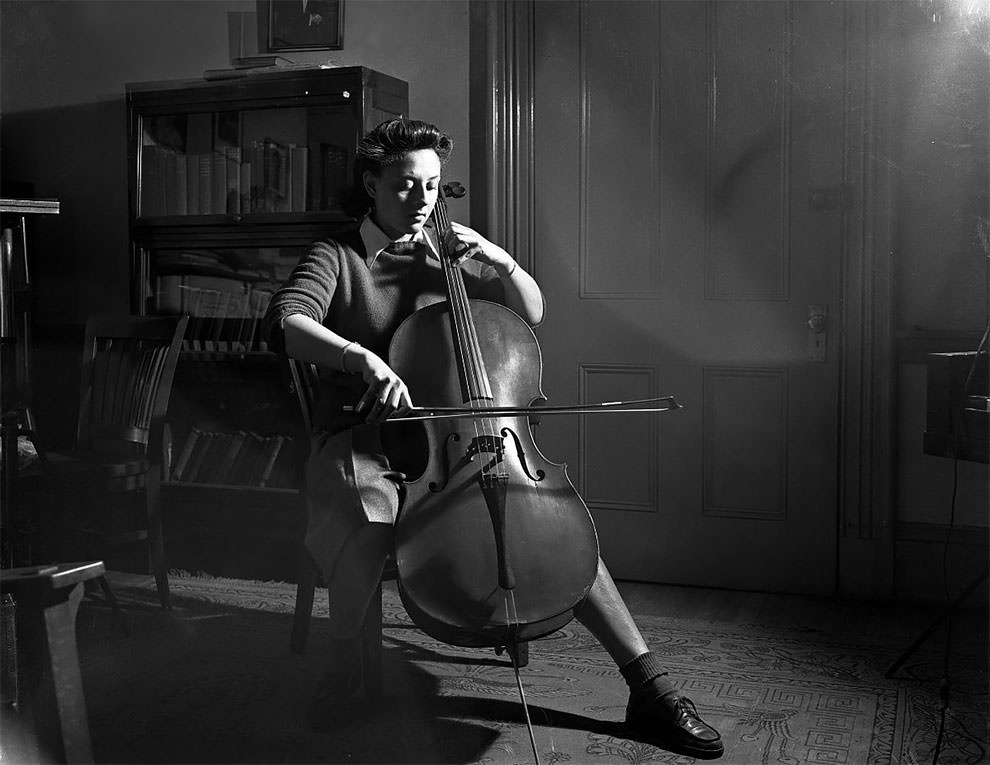
Howard University sat at the heart of Black intellectual and artistic life in Washington. The School of Music produced trained musicians who performed at a professional level. This cellist, photographed with her instrument, represents the rigorous classical training that Howard provided to students who had few other options at predominantly white institutions.
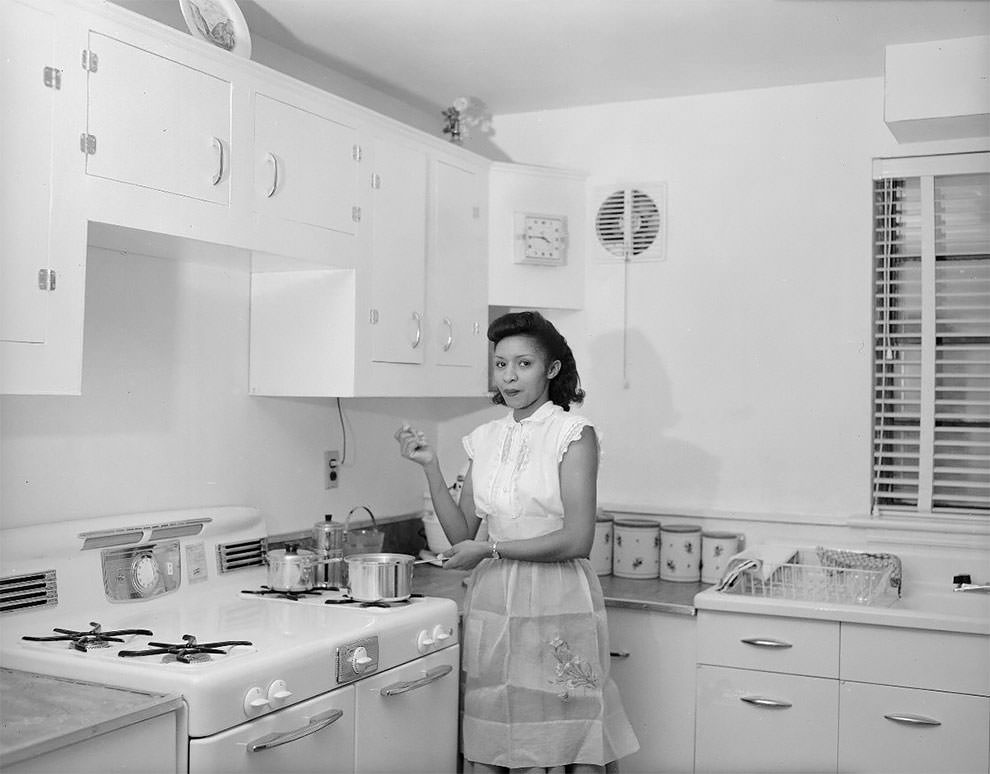
Eastland Gardens in northeast D.C. was developed in the 1940s as housing for Black federal workers who were excluded from many other neighborhoods due to racial covenants. Scurlock’s photograph of a woman in her kitchen there is a document of domestic life in one of D.C.’s planned Black residential communities.
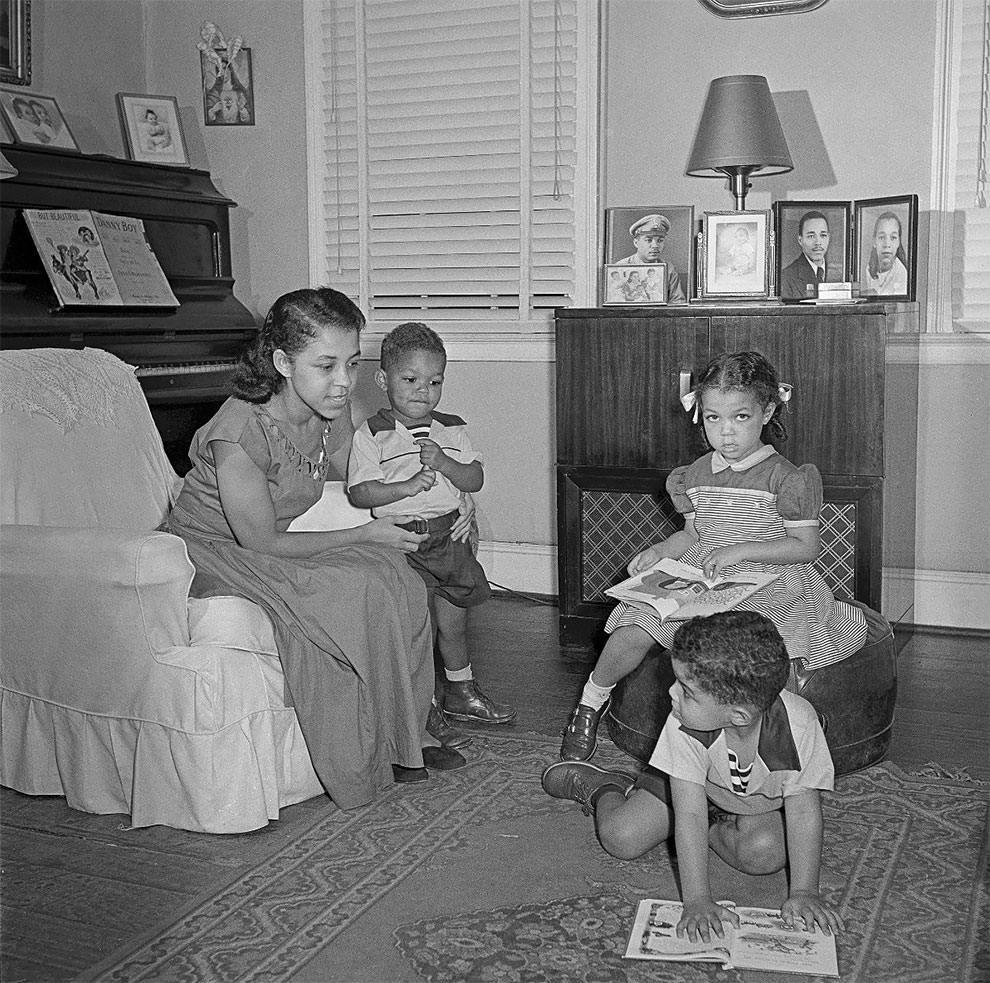
Family portraits were among the most personal work the Scurlock Studio produced. The piano in the background of this image is not incidental — it signals a household that valued music and education, common markers of the Black middle class that Scurlock so carefully documented.
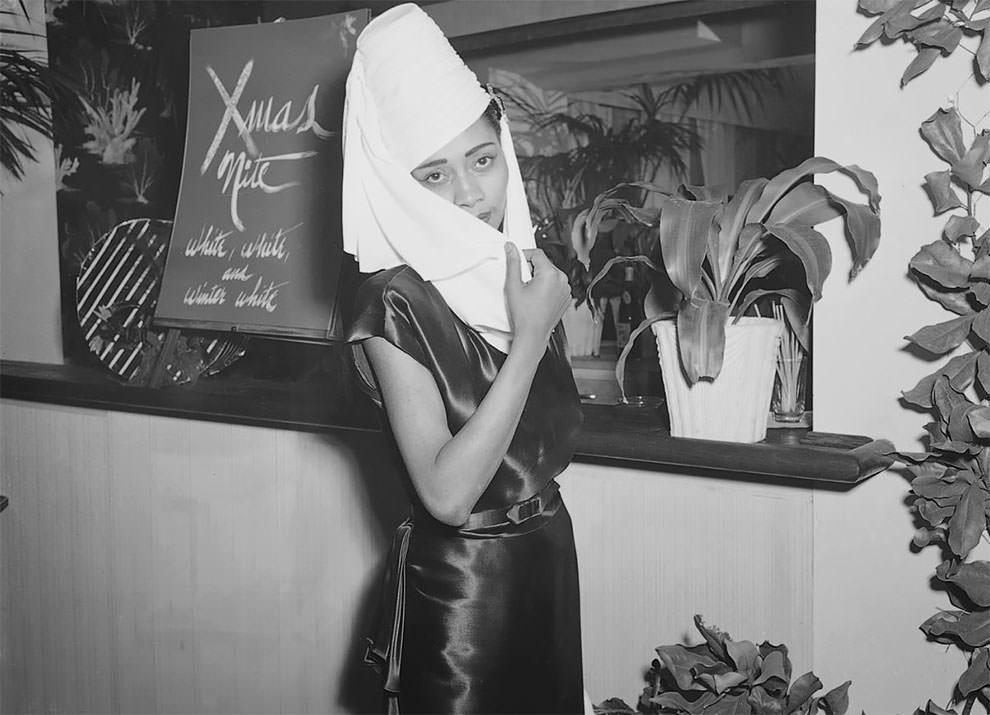
Fashion events were a fixture in D.C.’s Black social calendar. The Louise Robins Hat Show in December 1949 brought together women who dressed with deliberate elegance — a public assertion of refinement and community pride during an era of enforced segregation.
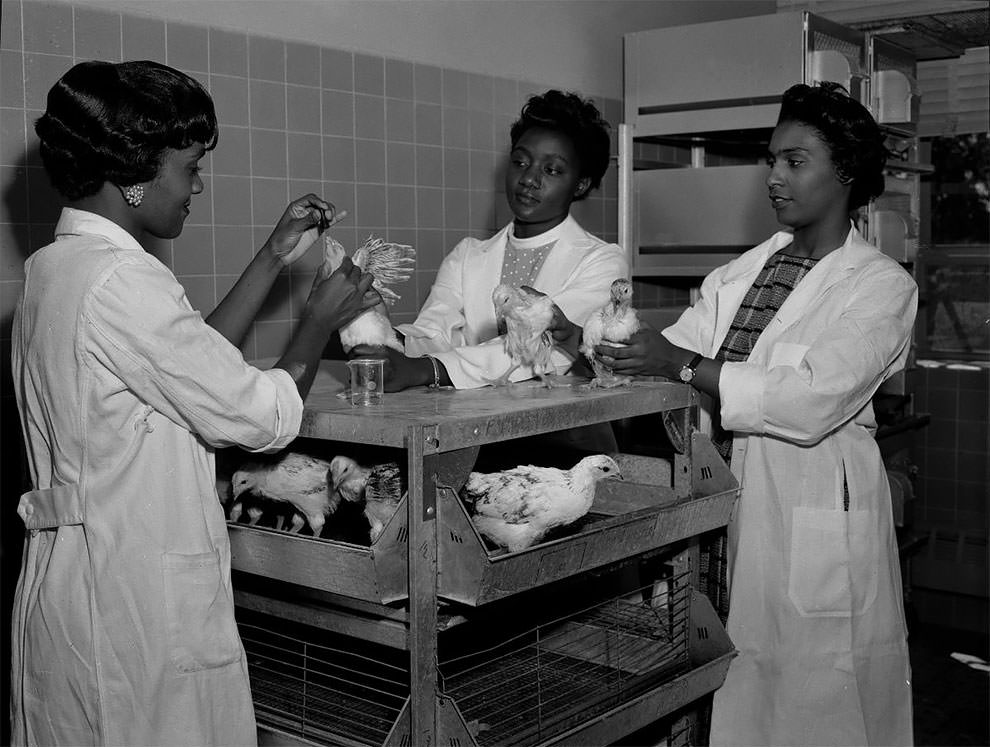
Howard University was not only a liberal arts institution — it housed active medical and scientific research programs. This photograph of nurses participating in the Cornell Johnson experiment reflects the university’s role as a training ground for Black medical professionals at a time when most American hospitals and medical schools refused Black applicants.
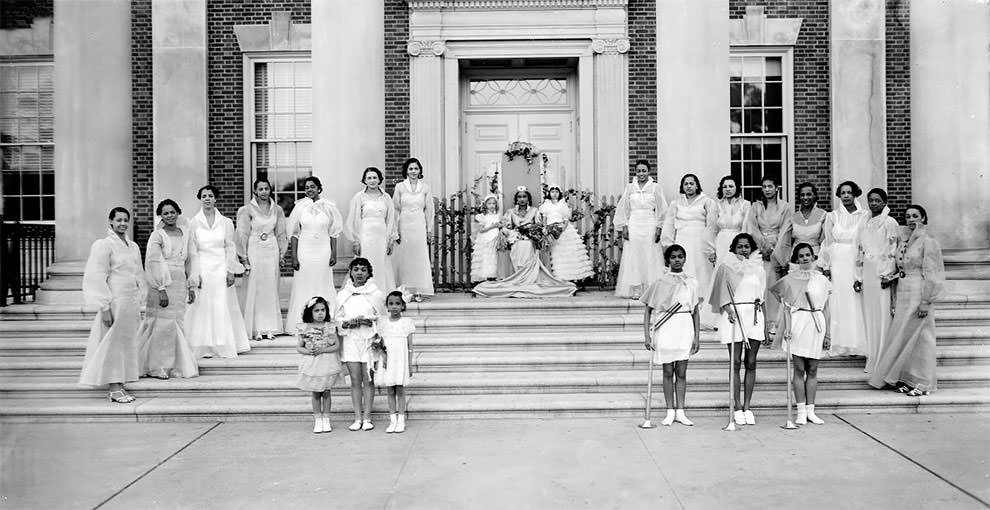
Group portraits like this one were often made to mark special occasions — graduations, sorority events, or formal society gatherings. The women’s formal dress and structured posing reflect both the occasion’s importance and the care with which the Scurlock Studio approached each sitting.
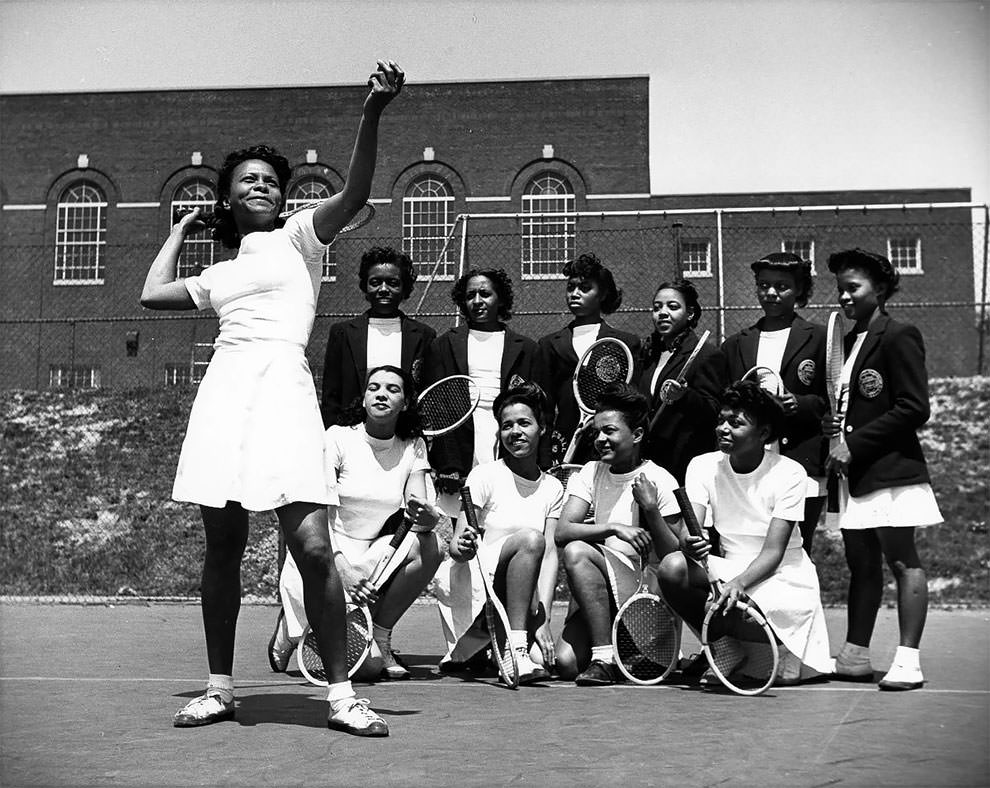
Athletics were taken seriously in D.C.’s Black community. With access to many public sports facilities restricted by segregation, organizations and universities built their own athletic programs. Women’s tennis teams like this one trained and competed within networks that operated largely separate from — and often rivaling — mainstream white institutions.
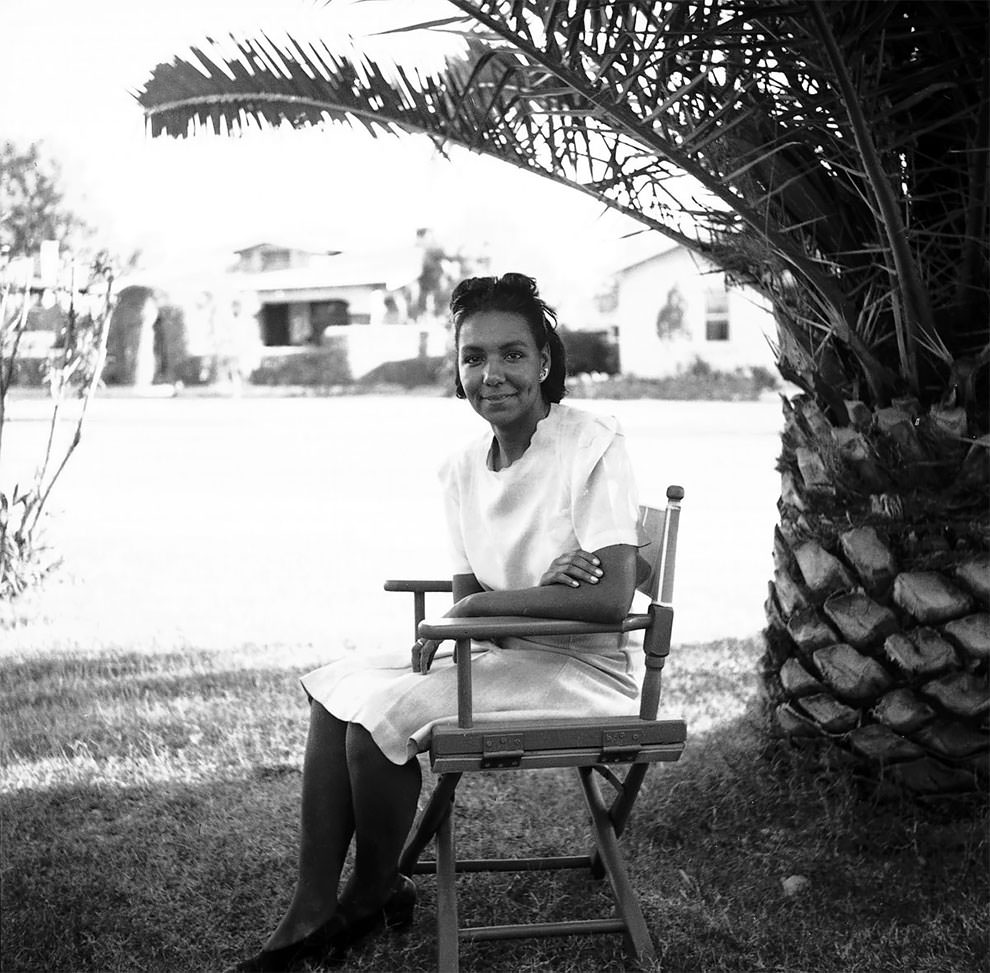
Not all of Scurlock’s photographs were taken in formal settings. This relaxed outdoor portrait, with its palm tree and folding chair, suggests travel or a warm-weather retreat — another reminder that the women in this archive led lives that extended well beyond D.C.’s borders.
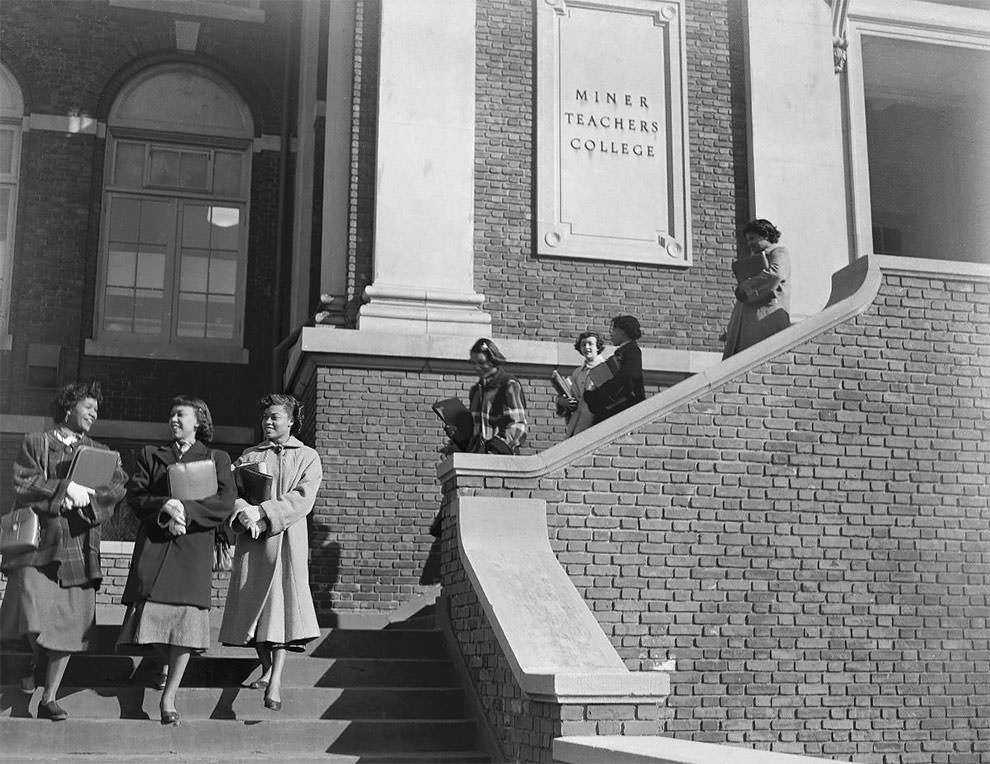
Miner Teachers College on Georgia Avenue NW had a direct connection to one of D.C.’s most important educational milestones. Emma V. Brown, the first African American to teach in D.C. public schools, was among its alumni. The women walking out of its doors in this photograph were stepping into a tradition of Black educators who shaped the city’s schools for generations.
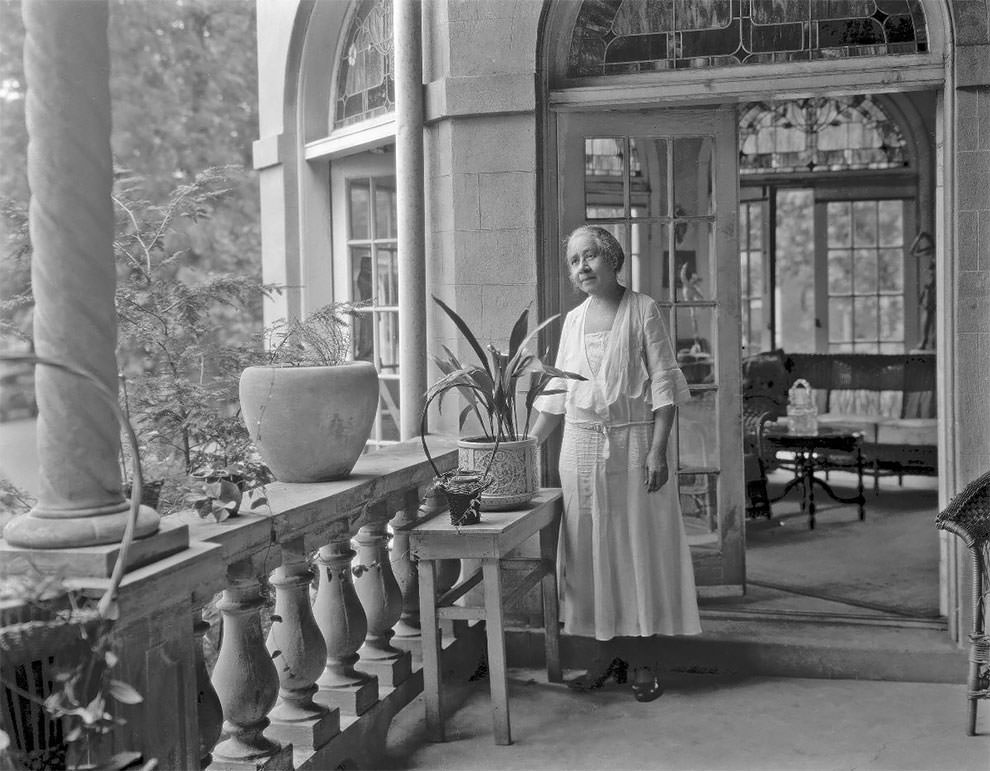
Dr. Anna J. Cooper was one of the most significant Black intellectuals of the 20th century. Born into slavery in 1858, she earned a Ph.D. from the University of Paris–Sorbonne in 1924, becoming one of the first African American women to do so. By 1930, when this photograph was taken in her garden, she was in her early seventies and still actively working in education. Scurlock’s portrait of her at home is quietly powerful.
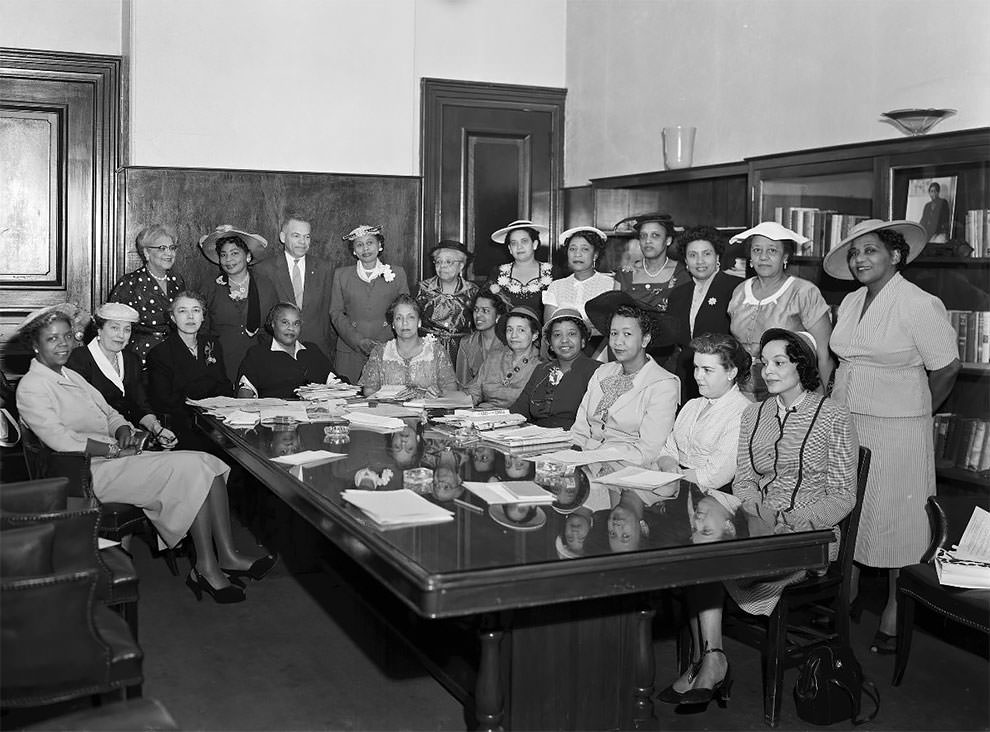
June 22, 1954 — just weeks after the Supreme Court’s landmark Brown v. Board of Education ruling — the National Council of Negro Women gathered for this committee photograph. Dorothy Height, who would go on to lead the organization for four decades, appears among the group. Scurlock’s camera was present at one of the most consequential moments in American civil rights history.