
The United Kingdom has a history stretching back thousands of years, but the last 200 have brought some of the most dramatic changes to its towns, cities, and coastlines. Some landmarks have been transformed beyond recognition. Others look almost exactly as they did when Queen Victoria sat on the throne. These vintage postcards and photographs put the two side by side, and the results are striking. Few seaside towns capture the spirit of a British holiday like Blackpool. In the 1800s, its Northern Pier was the centerpiece of a growing resort town, drawing visitors who arrived by the newly built railway.
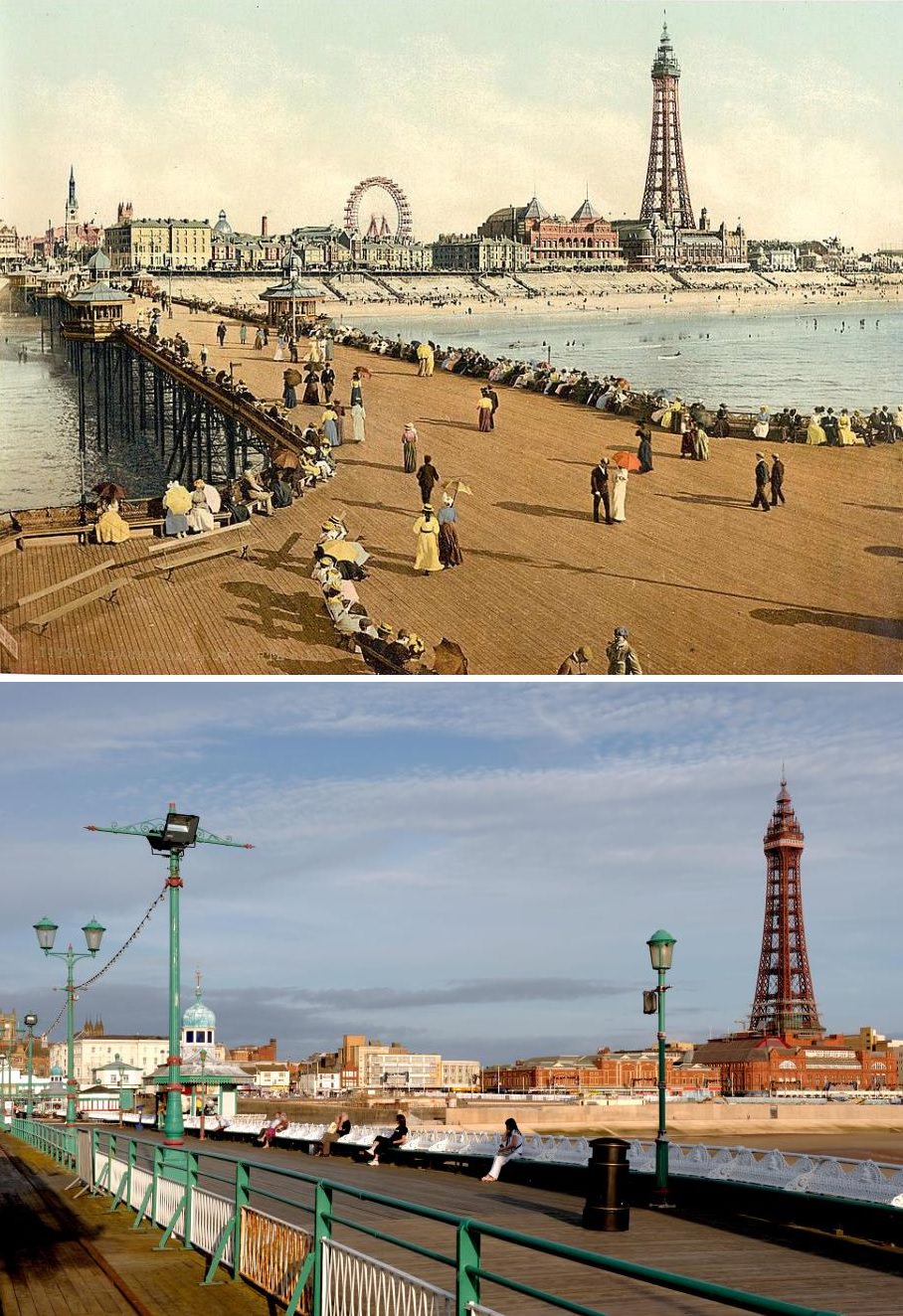
The Blackpool Tower still stands today, as recognizable as ever. The old Ferris wheel that once dominated the skyline has been replaced by newer attractions, but the pier itself endures. Not far down England’s southwest coast, Weston-super-Mare has its own pier story to tell.
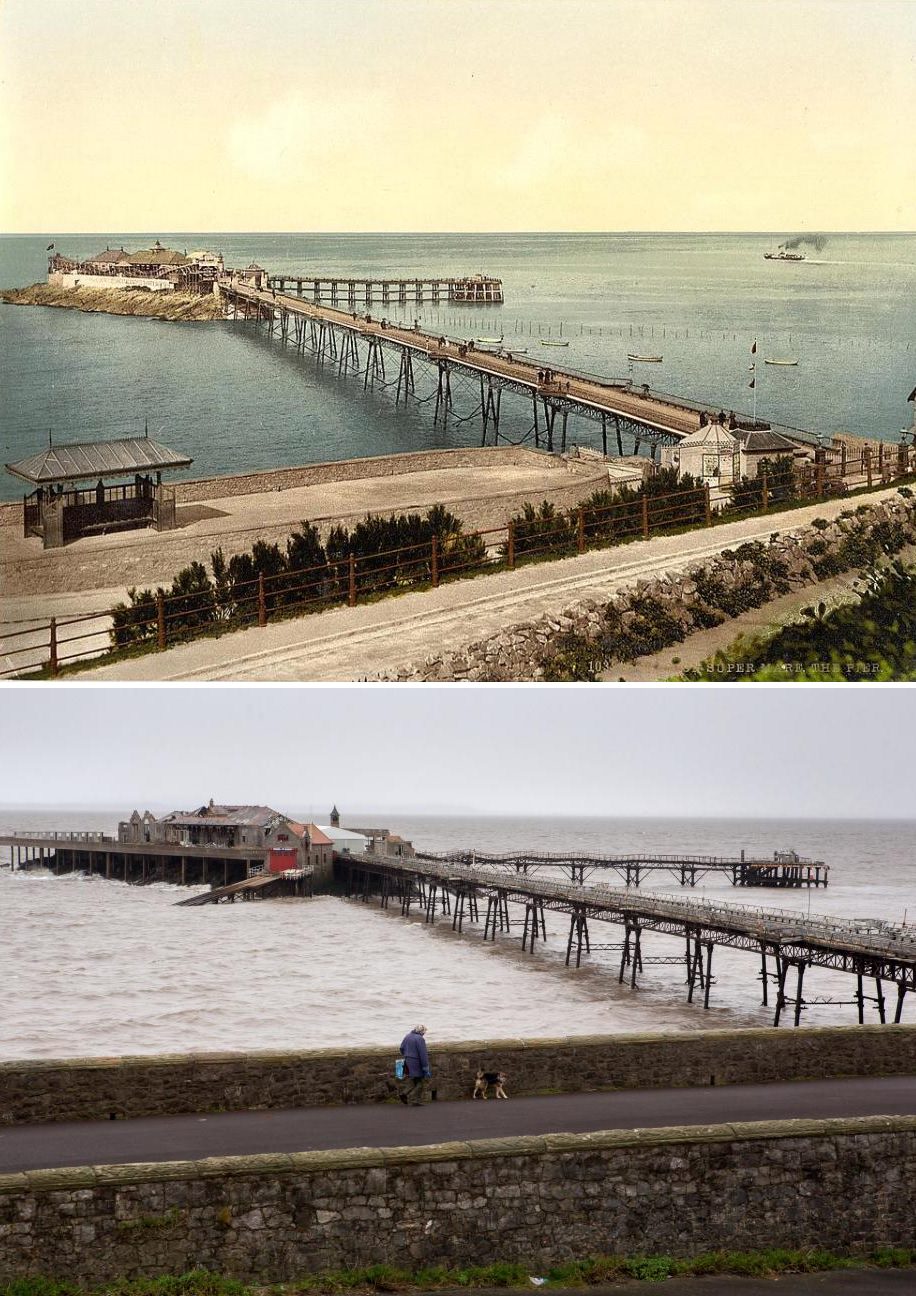
The pier at Weston-super-Mare began as a simple landing stage in the 19th century. Over the decades it expanded into a full amusement attraction, though in recent years it has faced serious structural challenges, at one point coming close to collapse. Meanwhile, some British landmarks have shown almost no change at all. The White Cliffs of Dover are a perfect example.
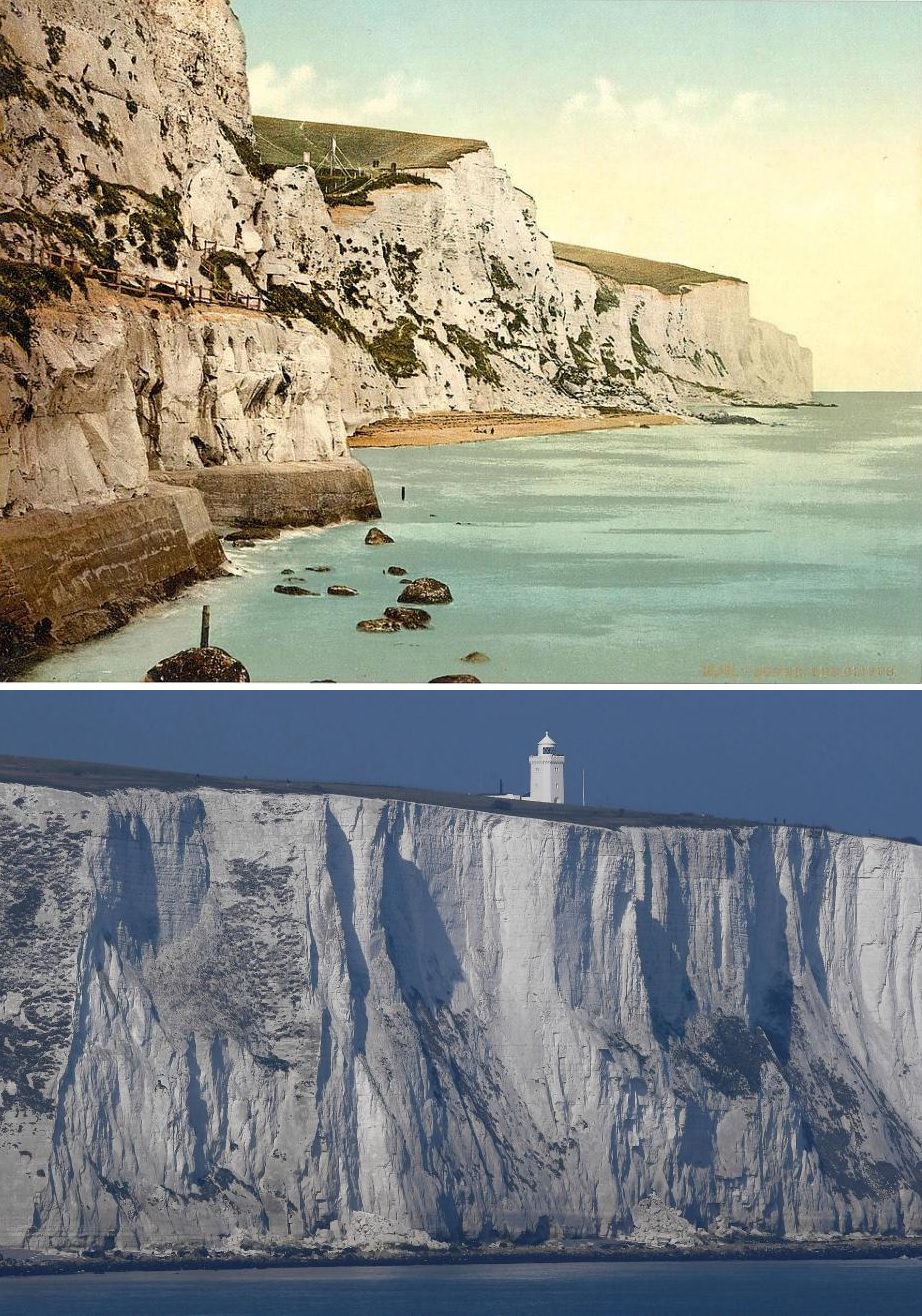
The chalk cliffs at Dover have greeted travelers crossing the English Channel for centuries, and they look no different today than they did in 19th-century photographs. The same can be said for one of London’s greatest institutions. The British Museum, founded in 1753, had already taken on its iconic neoclassical form by the 1800s.
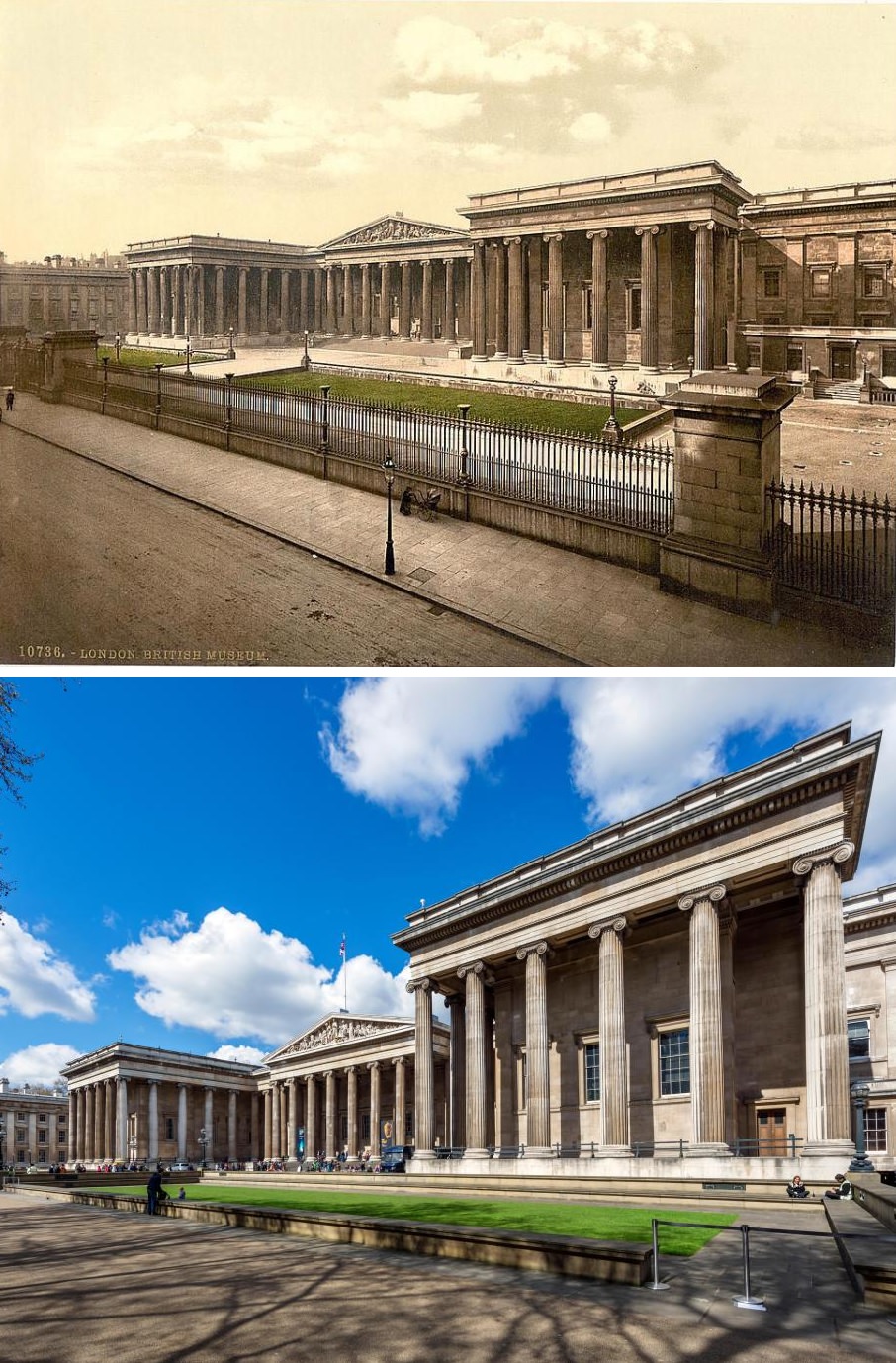
The museum’s grand colonnaded facade is identical today to how it appeared more than 200 years ago. Just across London, another Victorian engineering triumph tells a different story — one of a city growing rapidly in size and ambition. Tower Bridge, completed in 1894, was already drawing crowds when the earliest photographs were taken.
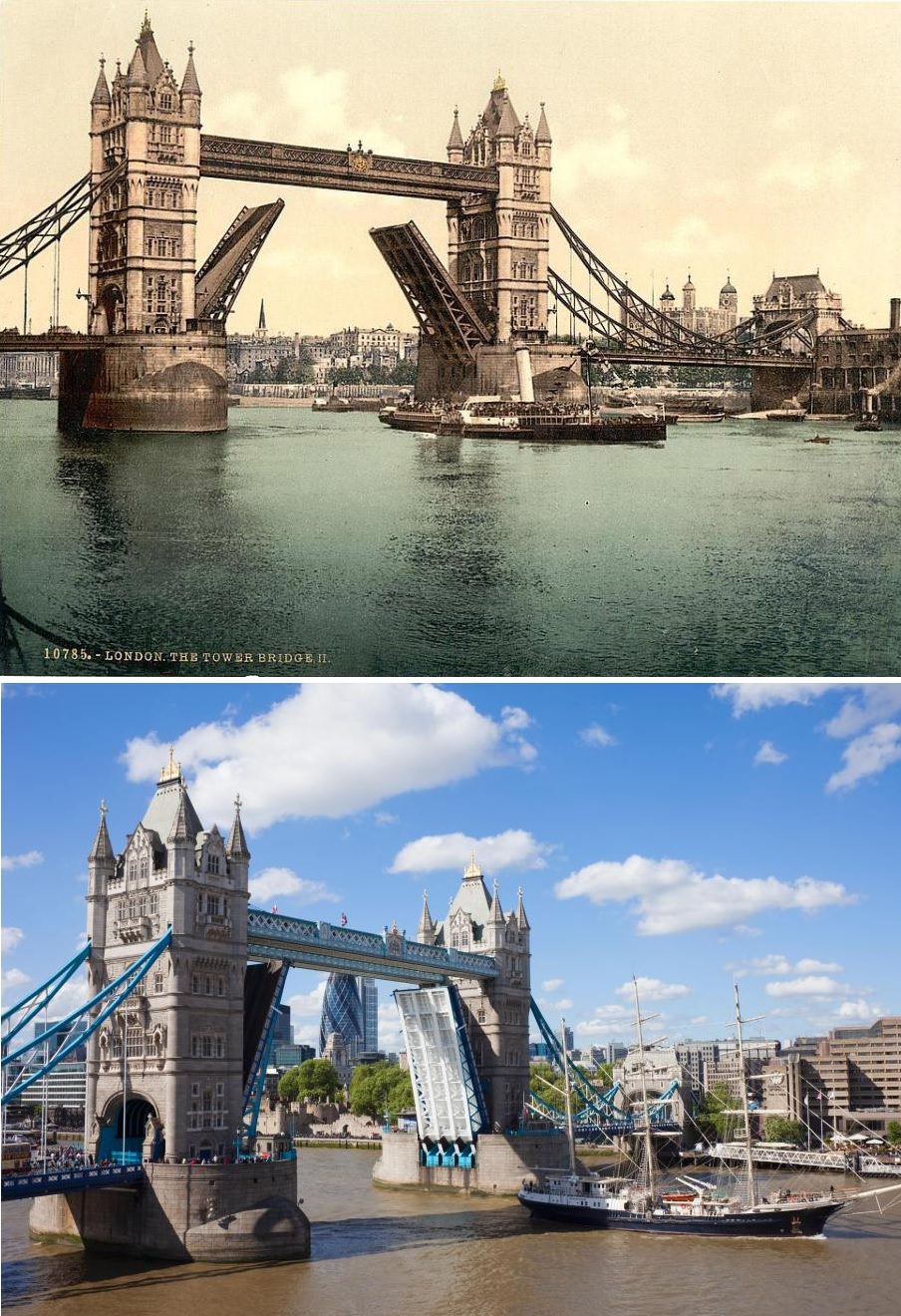
Tower Bridge remains the most recognizable crossing over the River Thames. Its bascules still lift to allow tall ships through, just as they did when the bridge first opened. A short distance upstream, the heart of British democracy has stood largely unchanged on the riverbank for centuries.
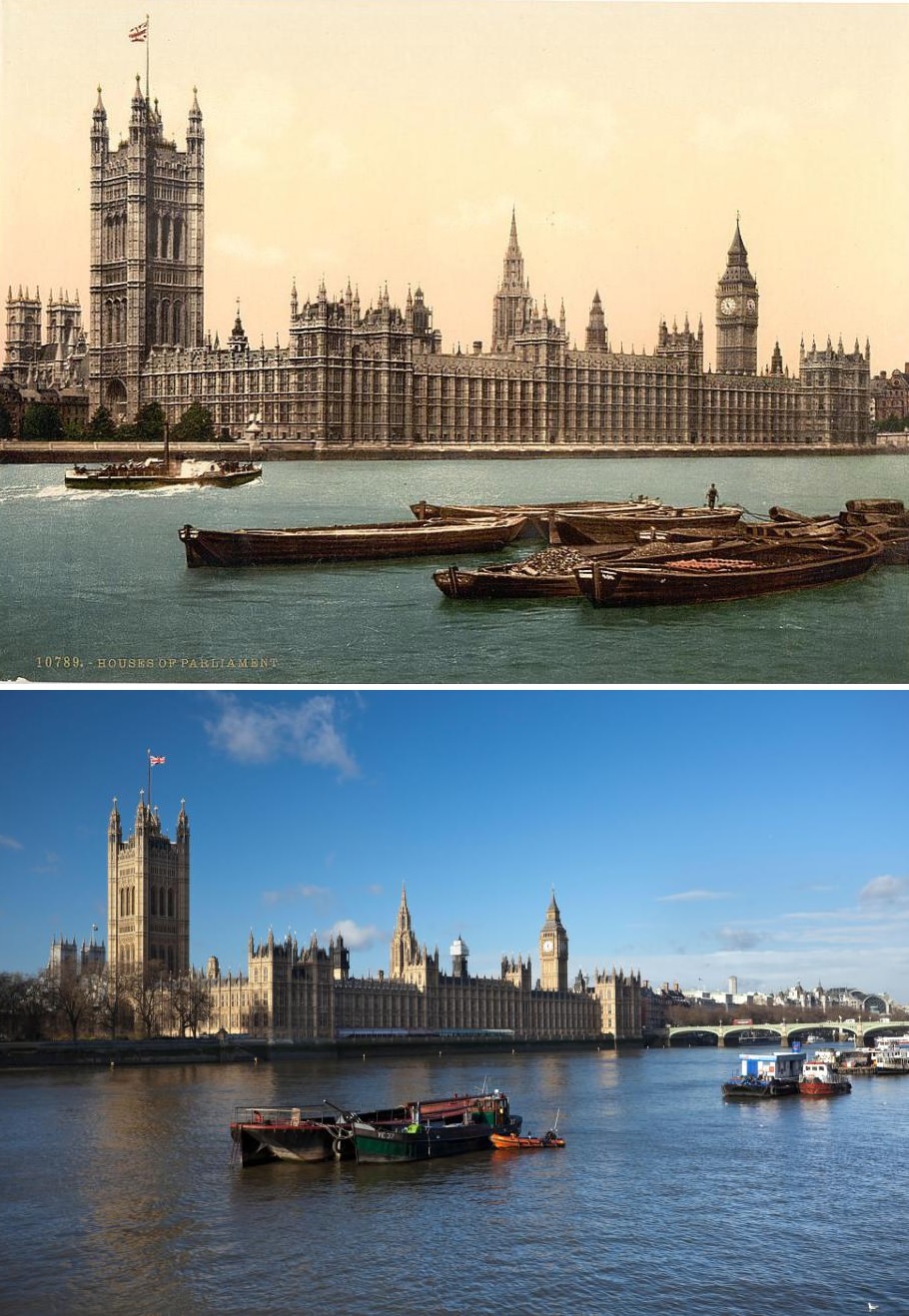
The Houses of Parliament and the clock tower known as Big Ben defined the Westminster skyline in the 1800s and still do. Nearby, Trafalgar Square has been a gathering place since Nelson’s Column was erected in the 1840s to honor Admiral Horatio Nelson, who died at the Battle of Trafalgar in 1805.
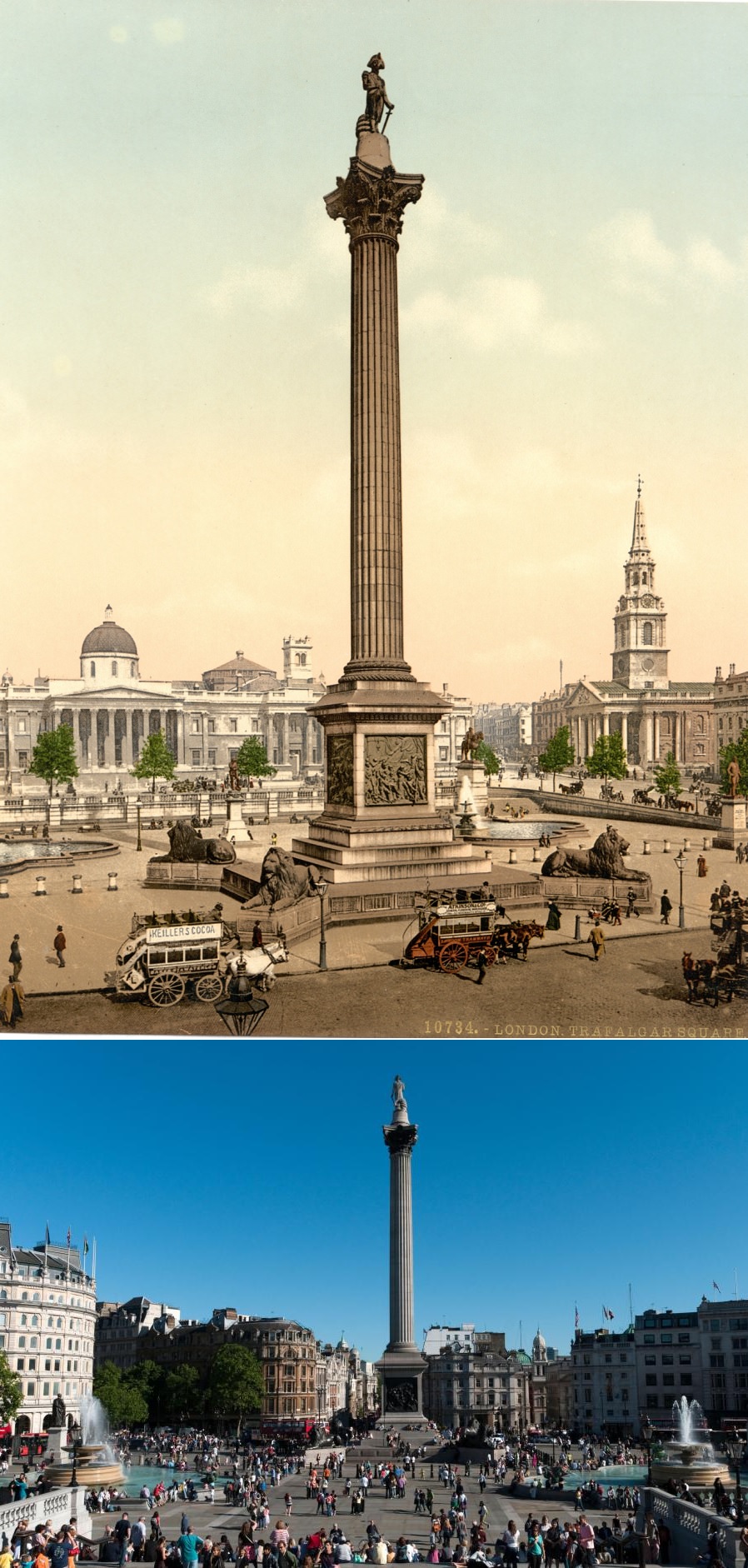
Nelson’s Column still dominates the square today, flanked by the National Gallery and the famous bronze lions added in 1867. Just a short walk away on Whitehall, the ceremonial heart of British military tradition shows perhaps the least change of any site in the capital.
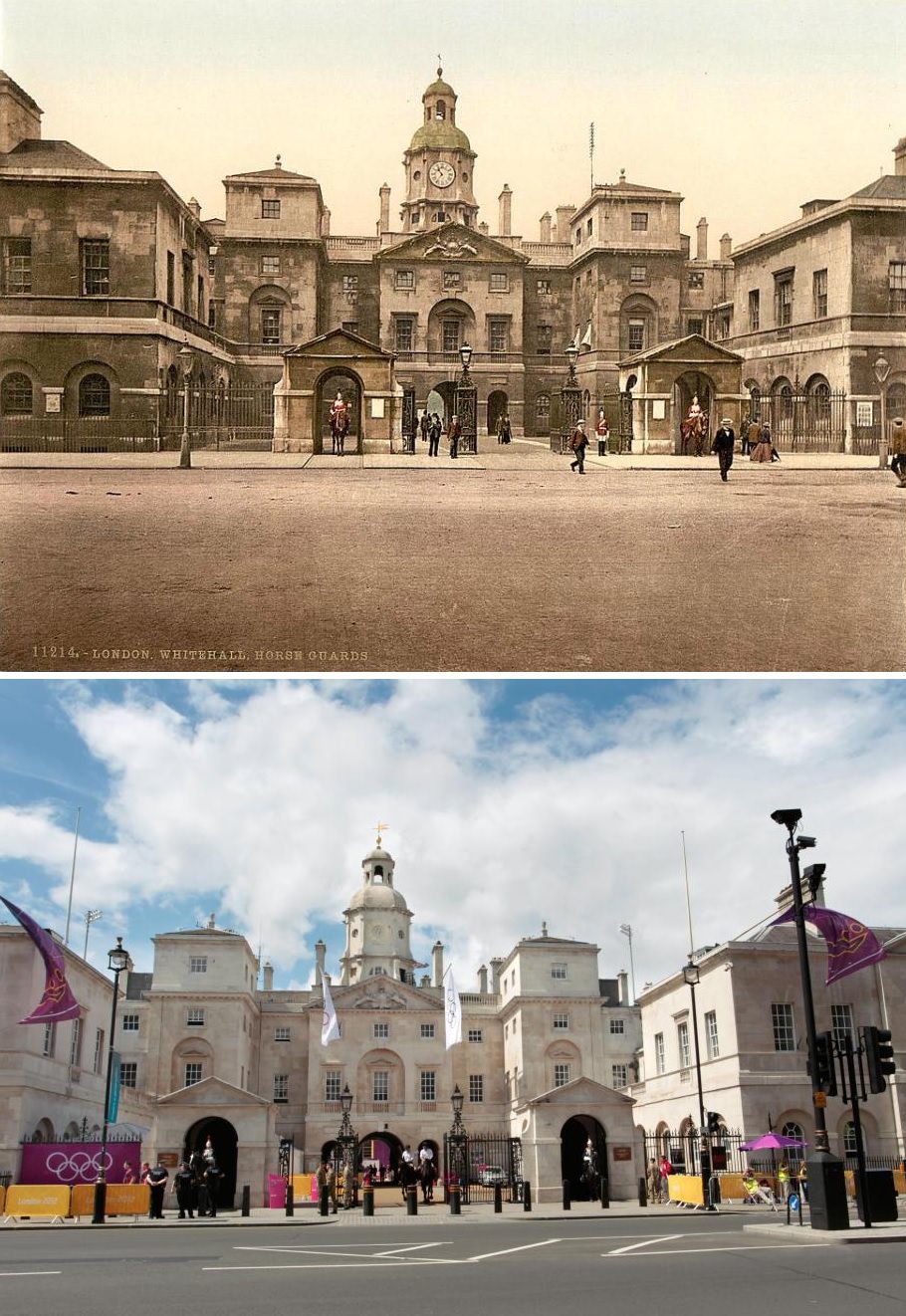
The mounted soldiers outside Horse Guards Parade on Whitehall wear the same uniforms and follow the same rituals as their predecessors did 200 years ago. The building itself is unchanged. Outside of London, England’s university towns preserve their own remarkable continuity. Girton College in Cambridge was founded in 1869 as one of the first colleges to admit women.
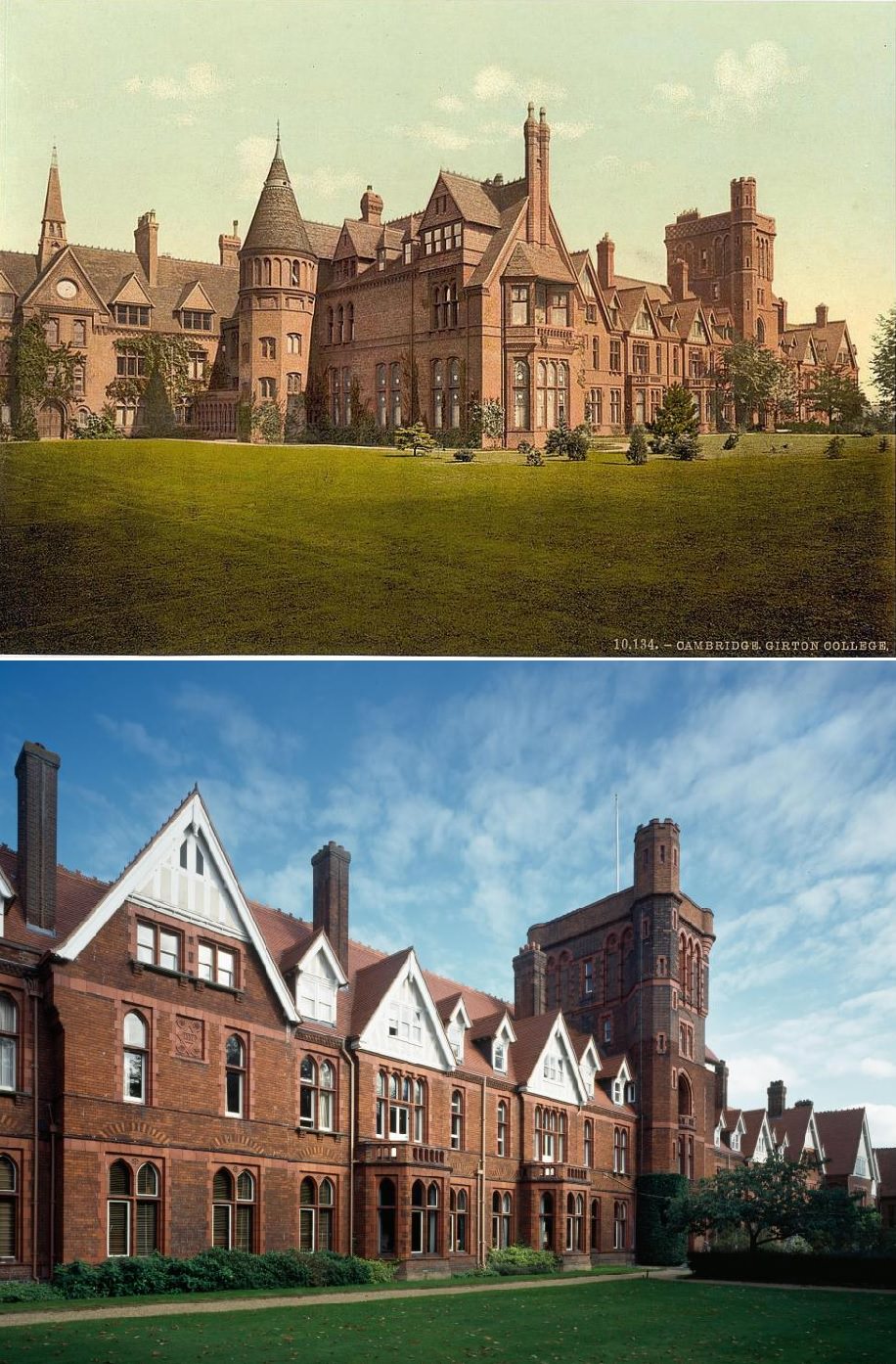
The red brick buildings of Girton College look the same today as they did in the Victorian era. Royal residences have proven equally enduring. Windsor Castle’s East Terrace was already a popular destination for visitors in the 19th century.
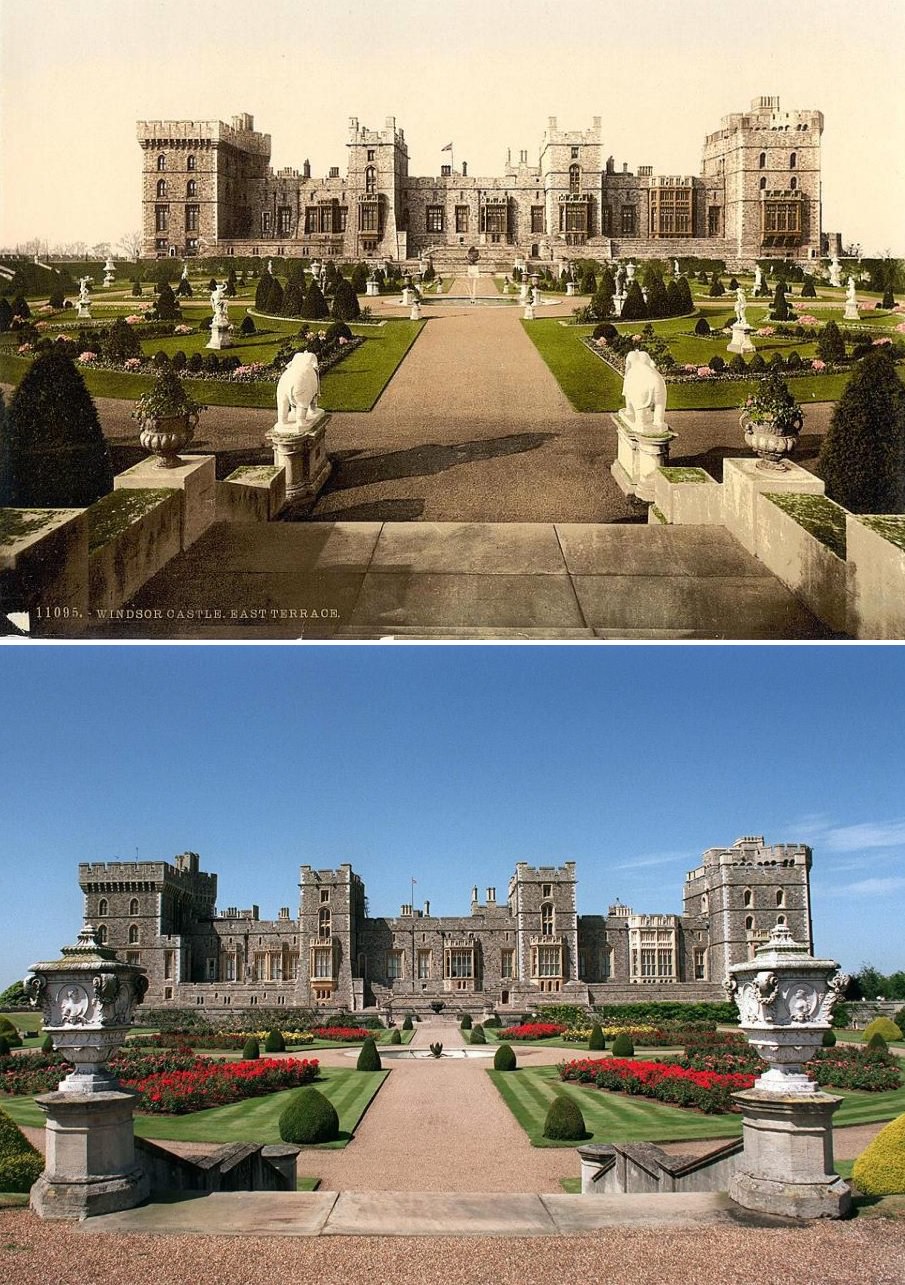
The East Terrace of Windsor Castle, a favored residence of the late Queen Elizabeth II, remains open to visitors and looks much as it always has. In the northeast of England, Durham Cathedral has watched over its city for even longer — it was begun in 1093 and completed in the early 12th century.
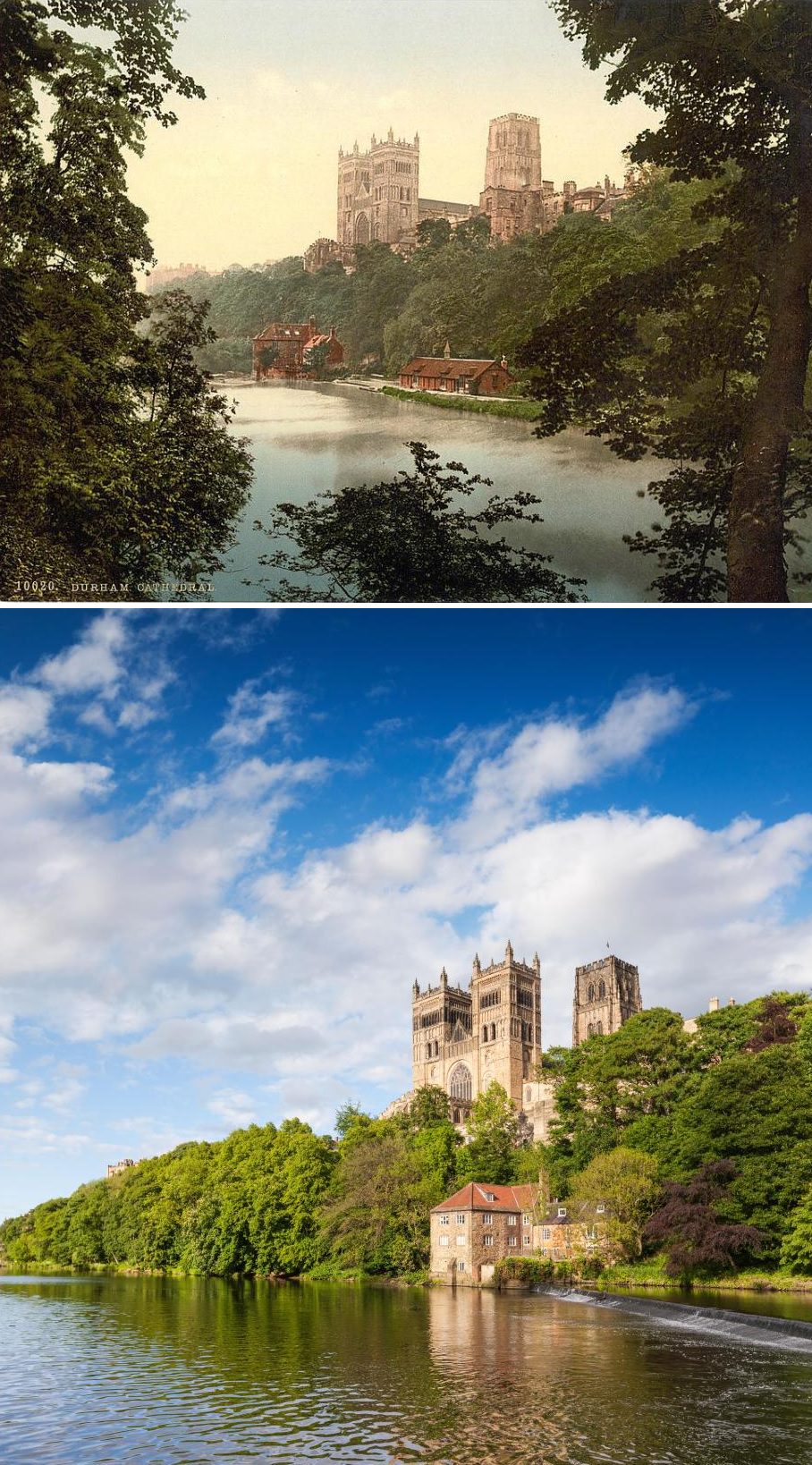
Durham Cathedral still looms over the River Wear with the same commanding presence it had in 19th-century prints. Further south in Bath, the Roman Baths offer a connection to an even deeper past. Built by the Romans around 70 AD, the baths were a major tourist draw in the 1800s.
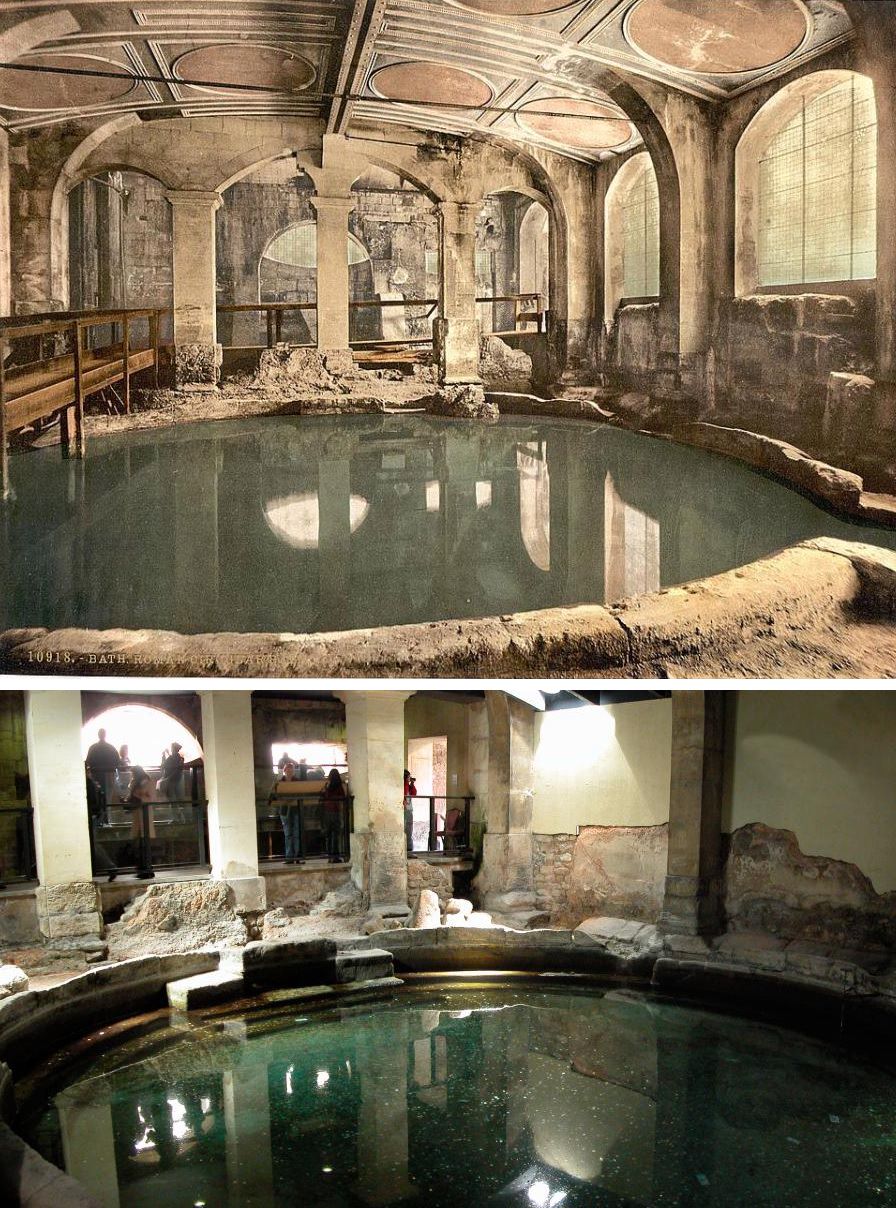
The Roman Baths remain almost identical to how they appeared 200 years ago, with the green thermal water still filling the main pool. In Bristol, the Clifton Suspension Bridge — designed by Isambard Kingdom Brunel and completed in 1864 — made an equally lasting mark on the landscape.
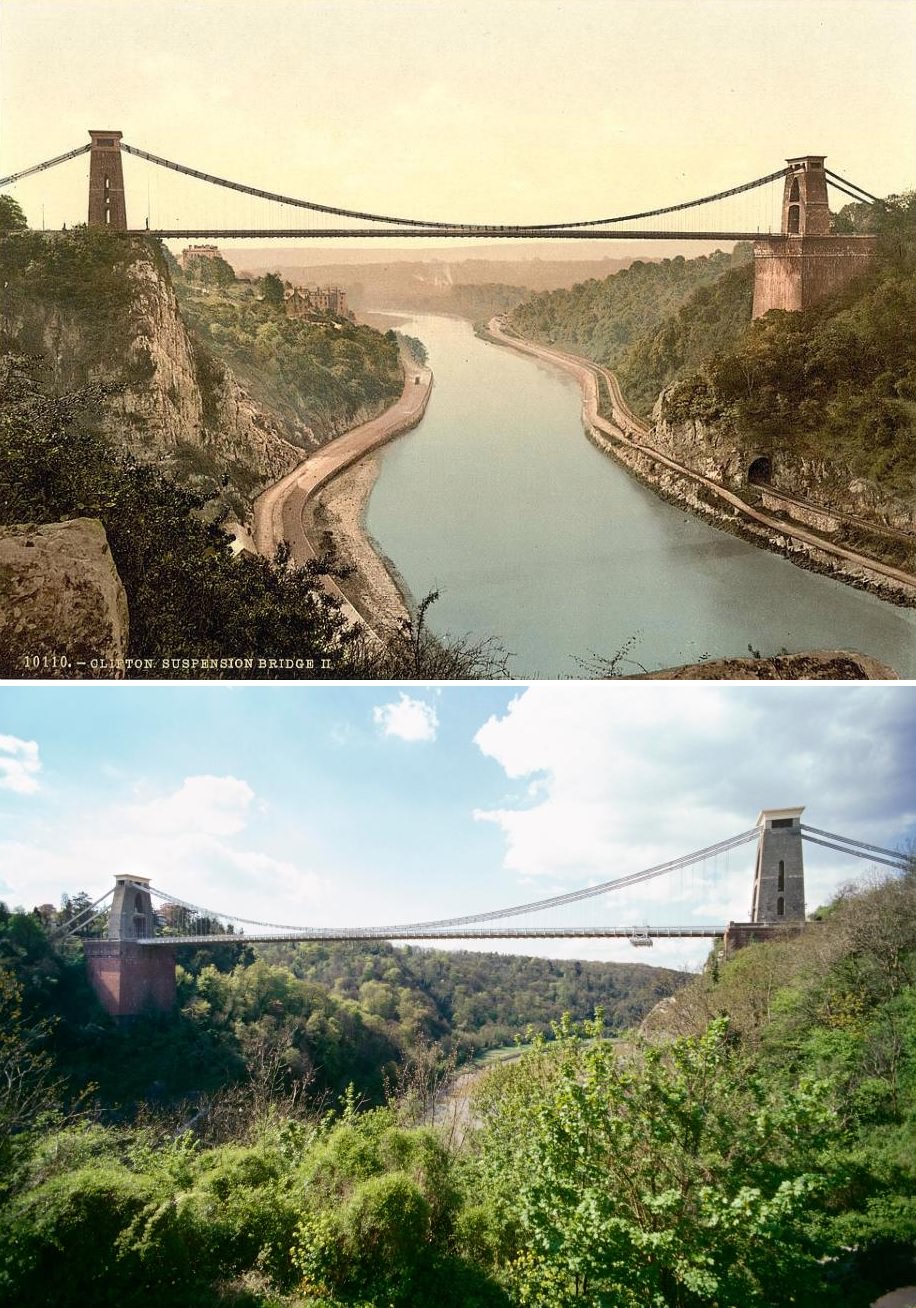
The Clifton Suspension Bridge still spans the Avon Gorge today, carrying traffic 245 feet above the river below. Finally, on England’s far southwest tip, St Michael’s Mount in Cornwall has drawn visitors for centuries. The tidal island, topped by a medieval castle, sits just off the coast of Penzance.
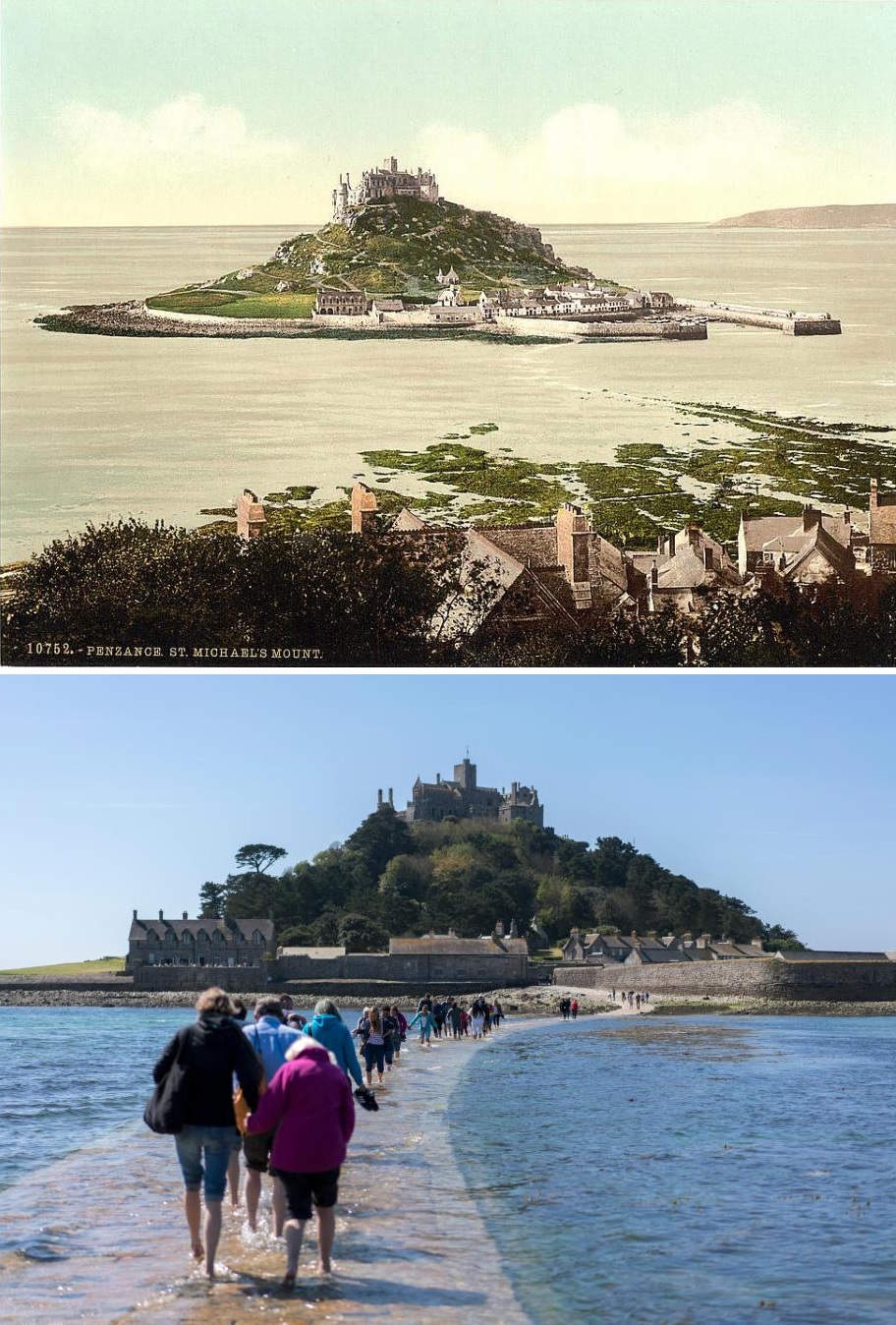
When the tide drops, visitors still walk across the cobbled causeway to reach St Michael’s Mount, just as they did in the 19th century. Across the UK, these photographs reveal a country where change and continuity exist side by side — where a Roman bath and a Victorian bridge can both still be in active use today.



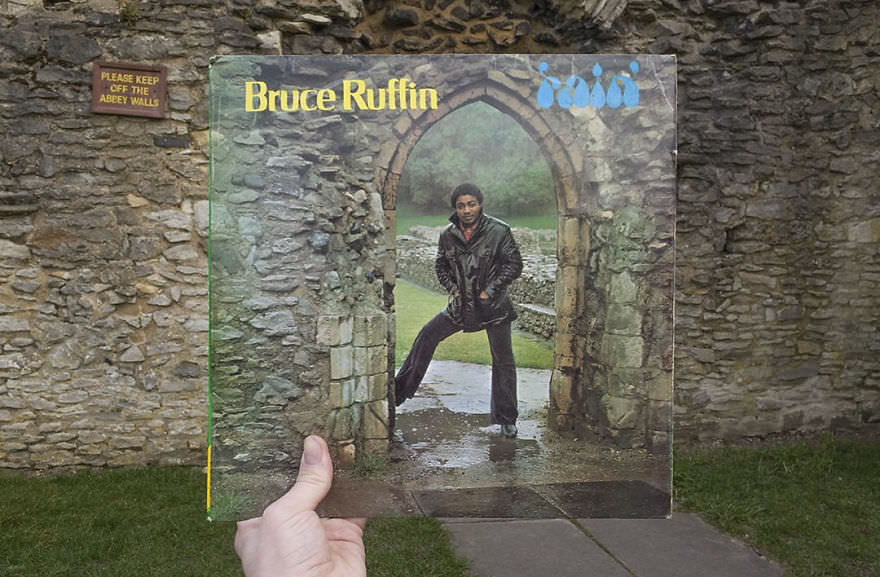
The after is always the same as the before.
Disappointed
They nearly all look the same; even the descriptions point it out. I suppose the answer is not much.
It’s hard to believe that there are countries which don’t just tear their old buildings