Battersea sits on the south bank of the River Thames in the London borough of Wandsworth. Road and rail bridges cross the Thames, linking it to Kensington and Chelsea to the north. The area has a long history — it was the home of Battersea enamelware production in the mid-18th century and once had a riverside park. But by the 1980s, Battersea looked nothing like the polished district it would later become. It was a working, gritty, industrial stretch of south London, filled with factories, gasholders, warehouses, and sheds. Photographer Peter Marshall walked these streets and documented what he found — and what he captured is a remarkable record of a place on the edge of major change.
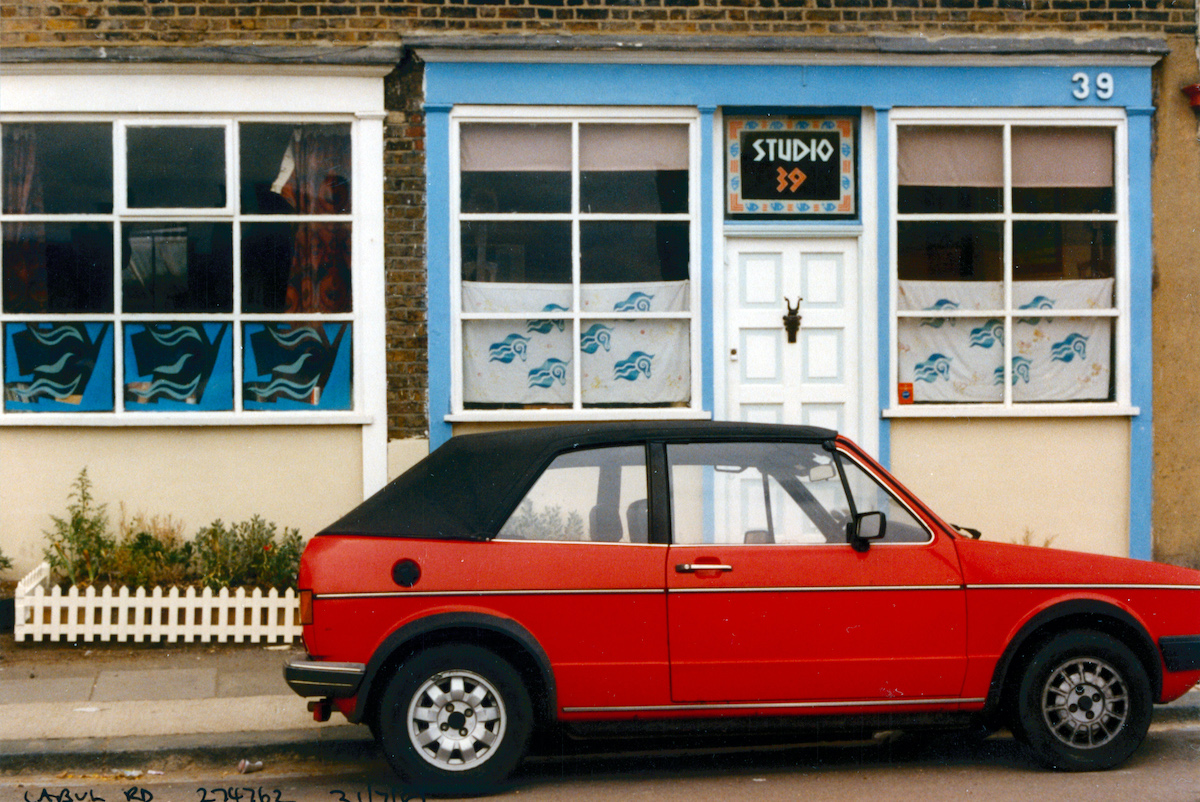
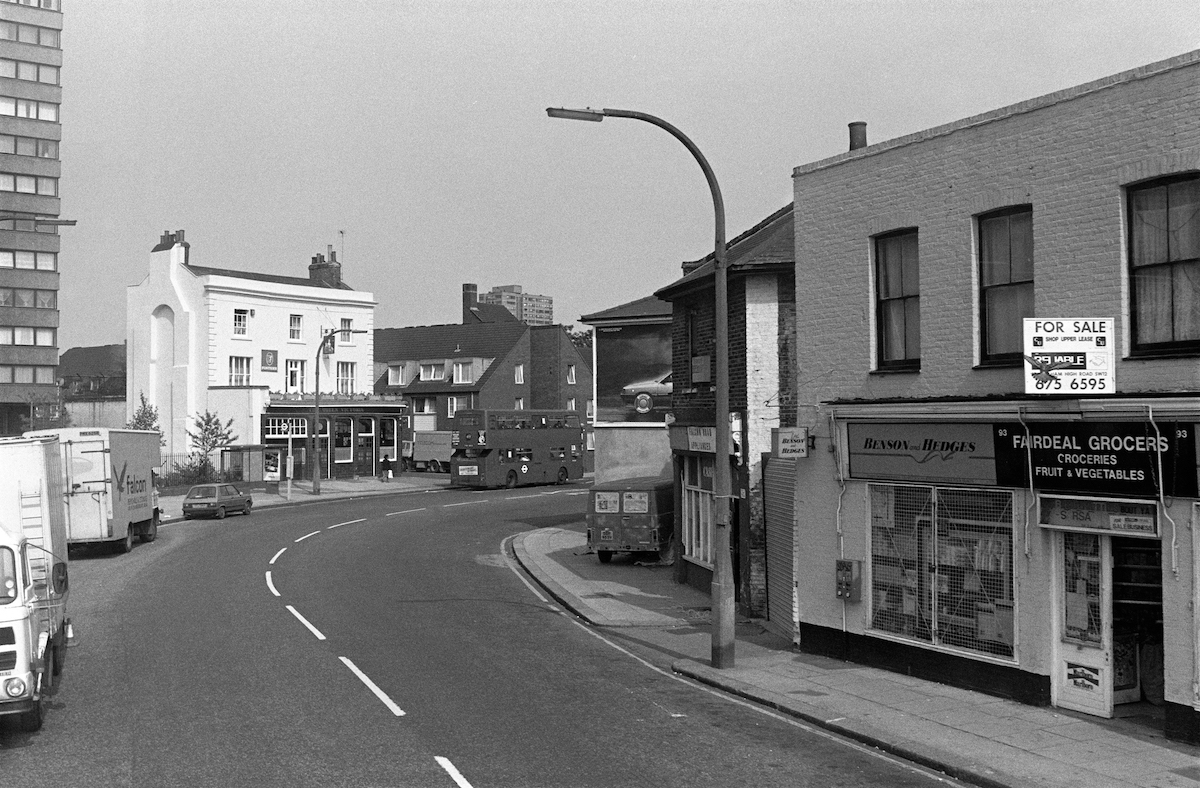
Marshall’s photos span from 1980 to 1990, covering a decade when Battersea was still largely working-class and industrial. The streets he photographed were lined with small businesses, local shops, and the kind of everyday places that rarely make it into history books. His camera caught the texture of daily life — the signs on shopfronts, the graffiti on walls, the people going about their routines.
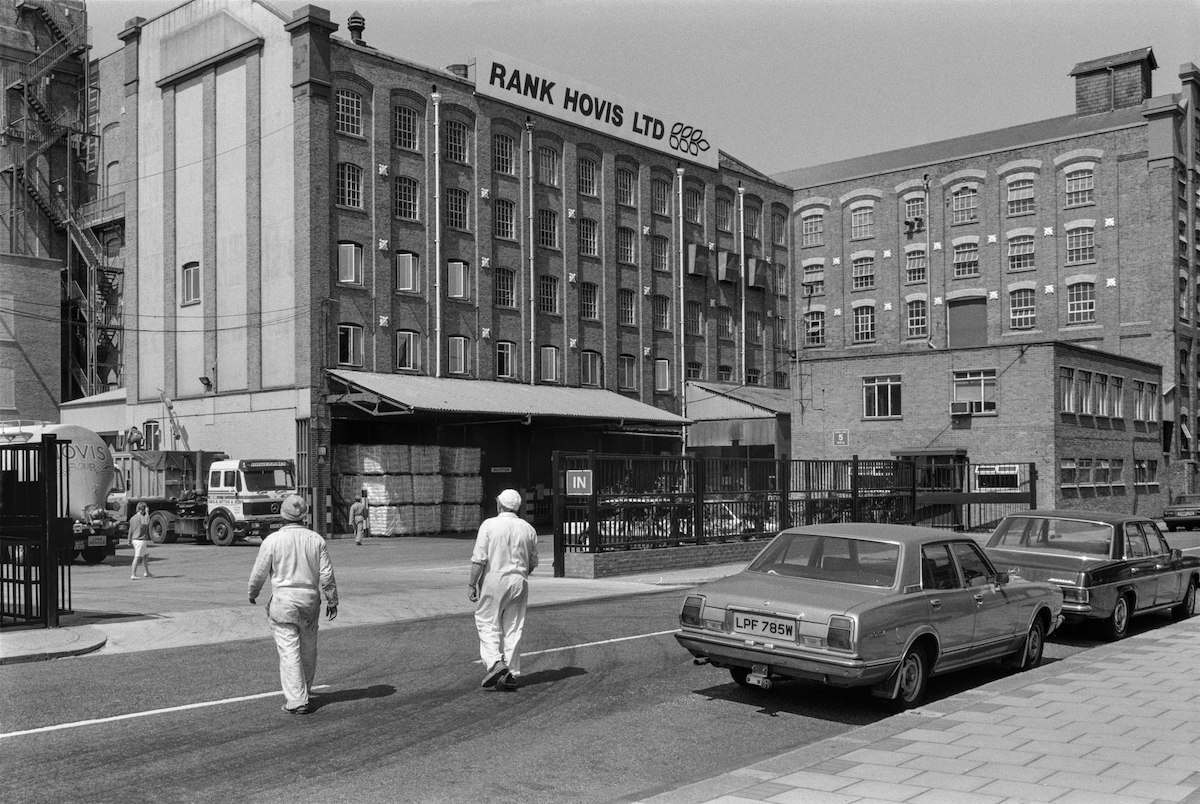
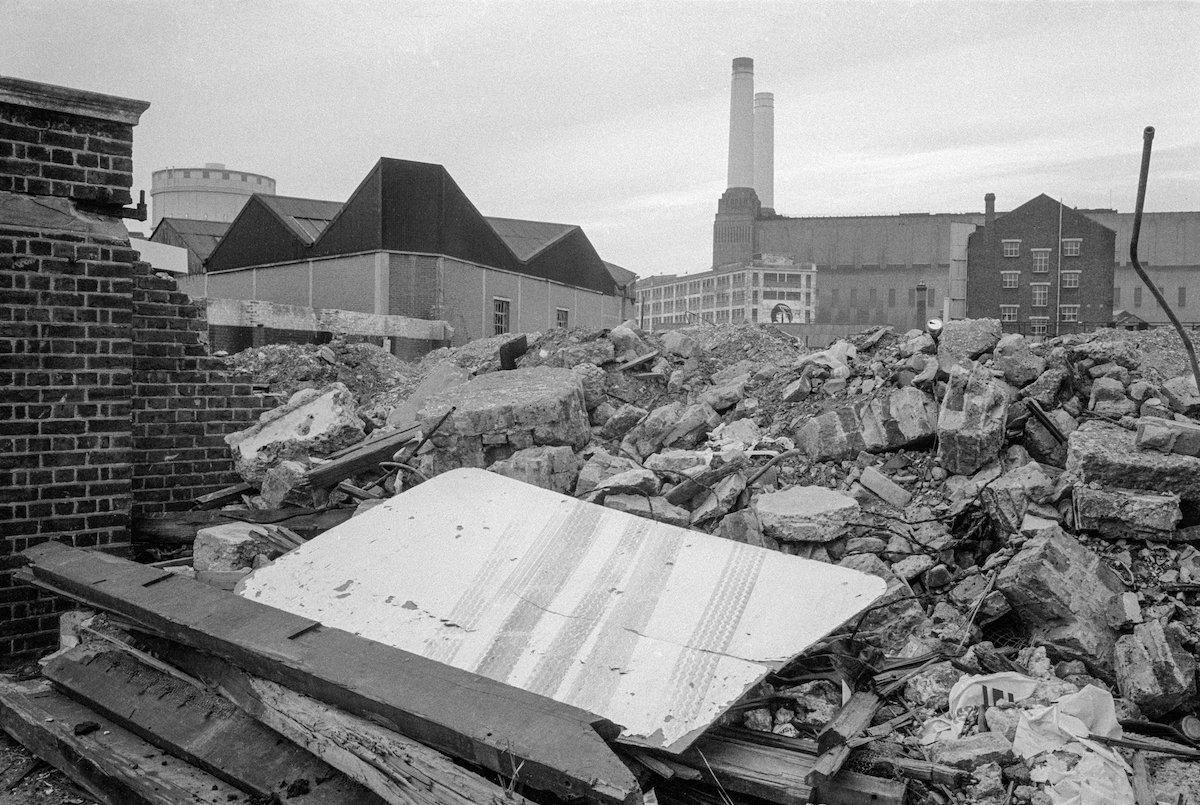
Nine Elms, just east of Battersea proper, was one of the most run-down corners of the area. In the early 1980s, it was described as a wasteland — a stretch of industrial land that had lost much of its original purpose. Before the US Embassy relocated here from Grosvenor Square in Mayfair, Nine Elms was defined by demolition sites, goods yards, and the remnants of heavy industry.
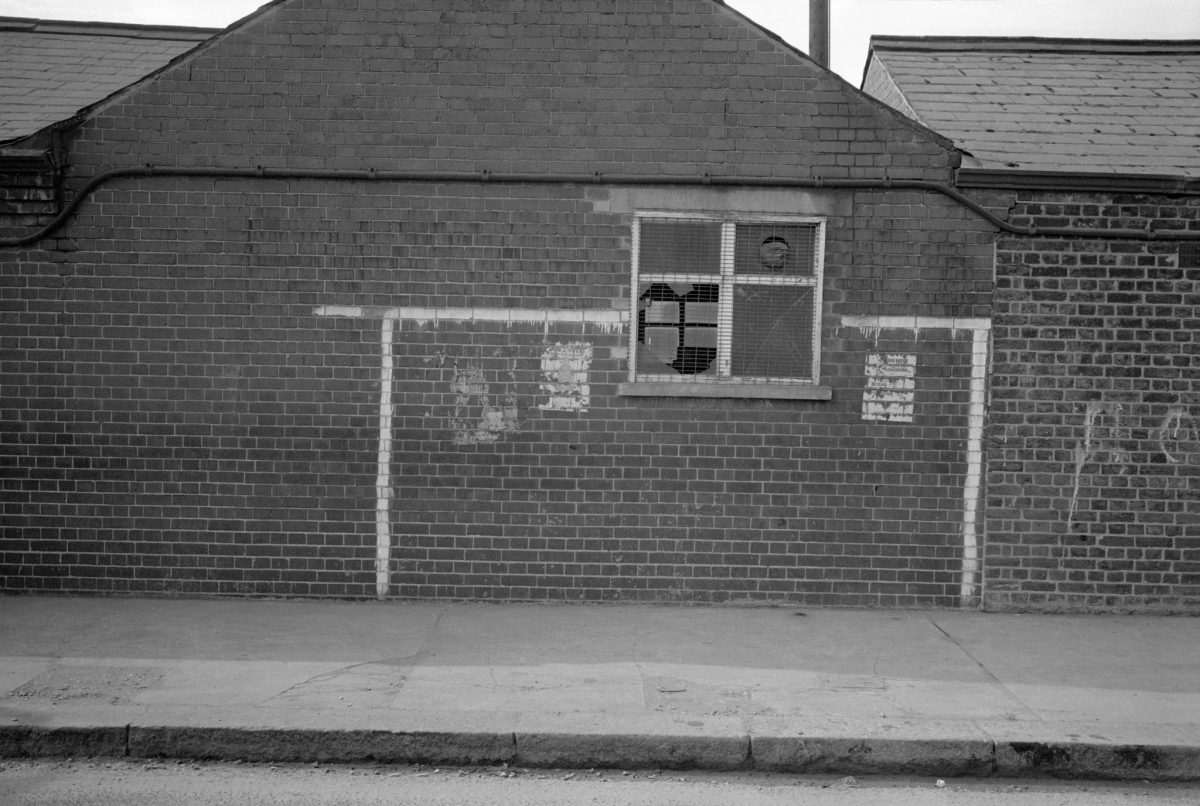
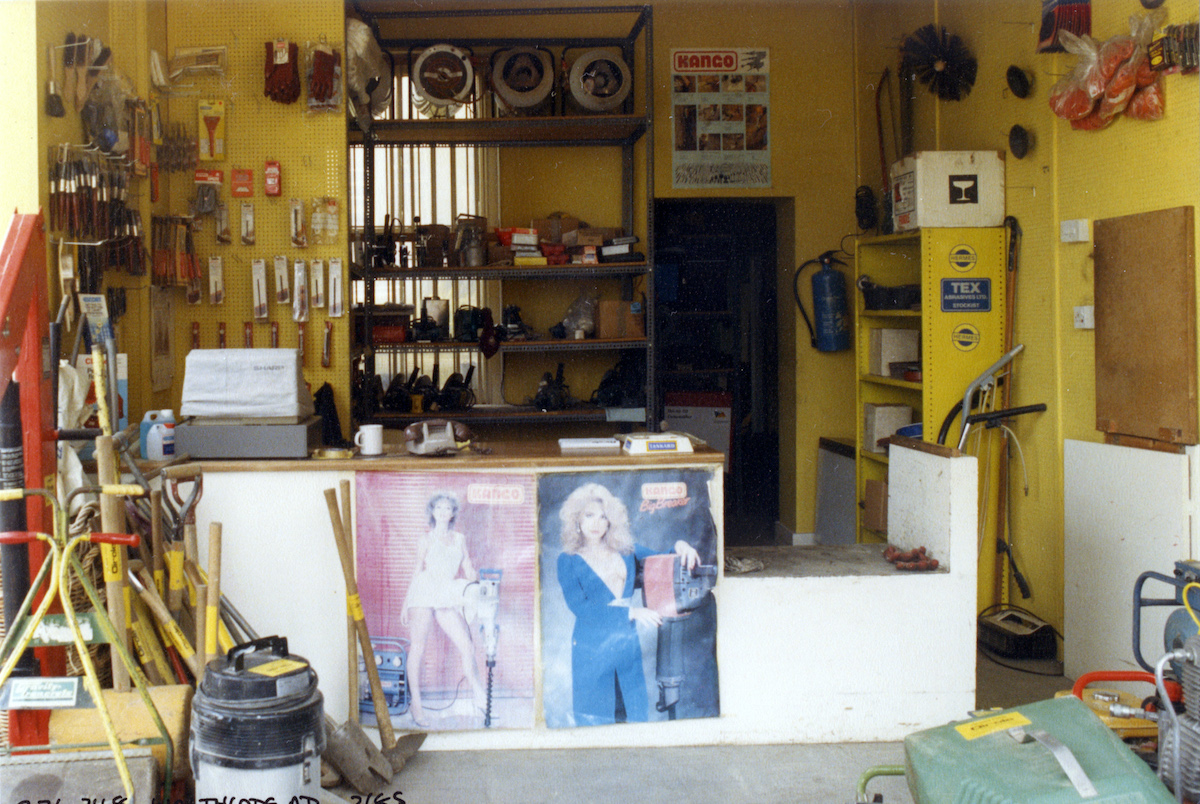
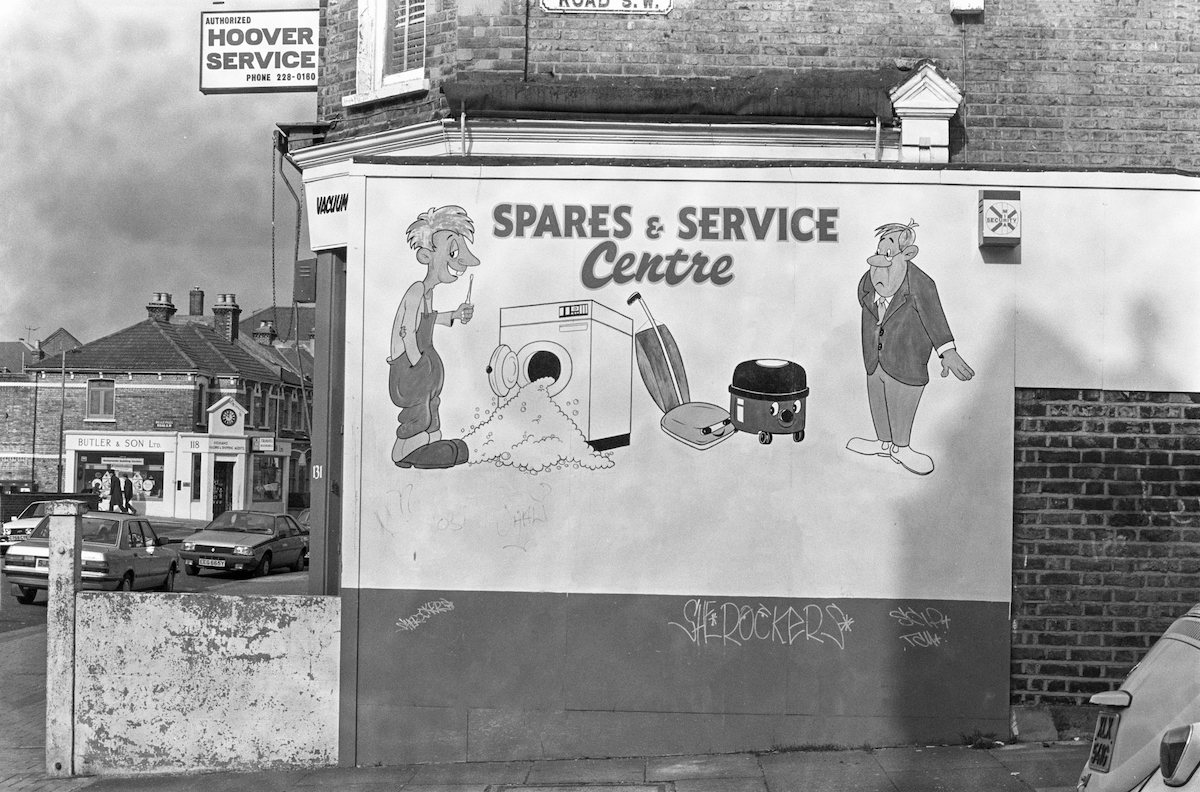
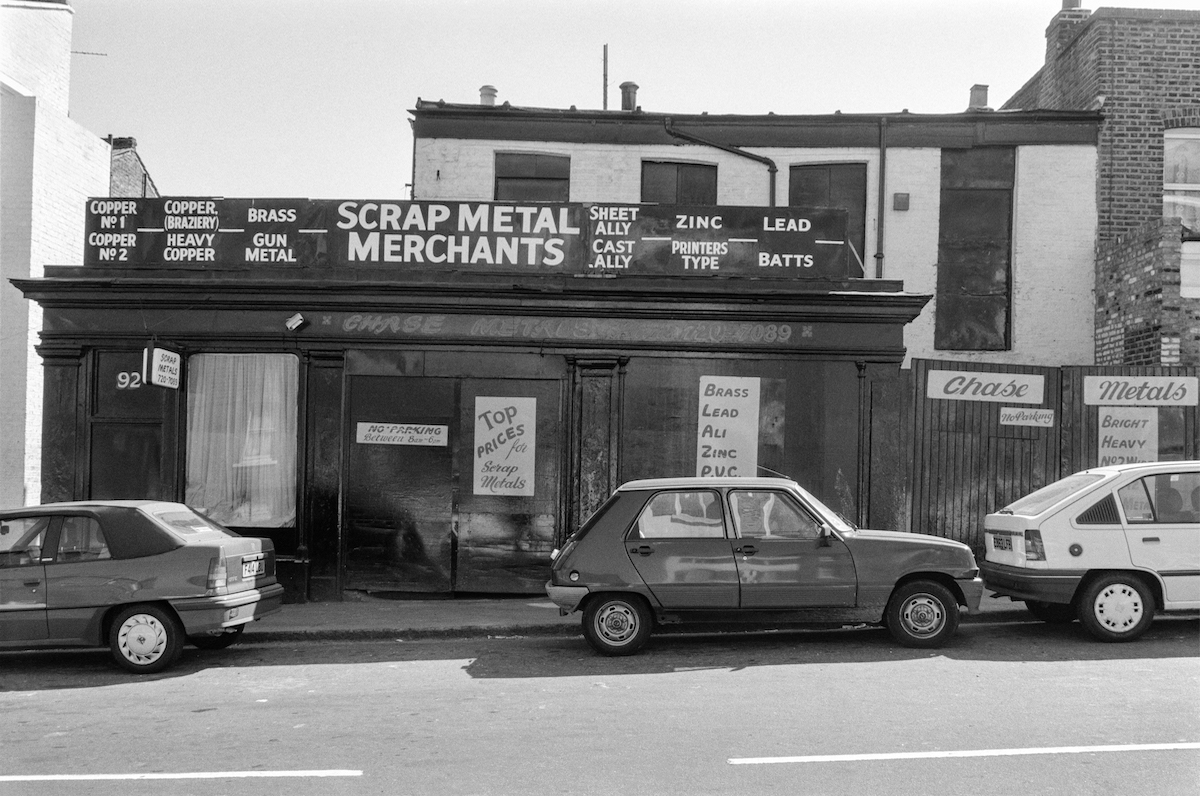
Northcote Road was one of the main commercial arteries running through Battersea. Marshall returned to it more than once over the decade. The shops along this stretch were practical and local — a tool shop, a hairdresser, a service centre. These weren’t boutique businesses; they served the neighbourhood’s working population directly.
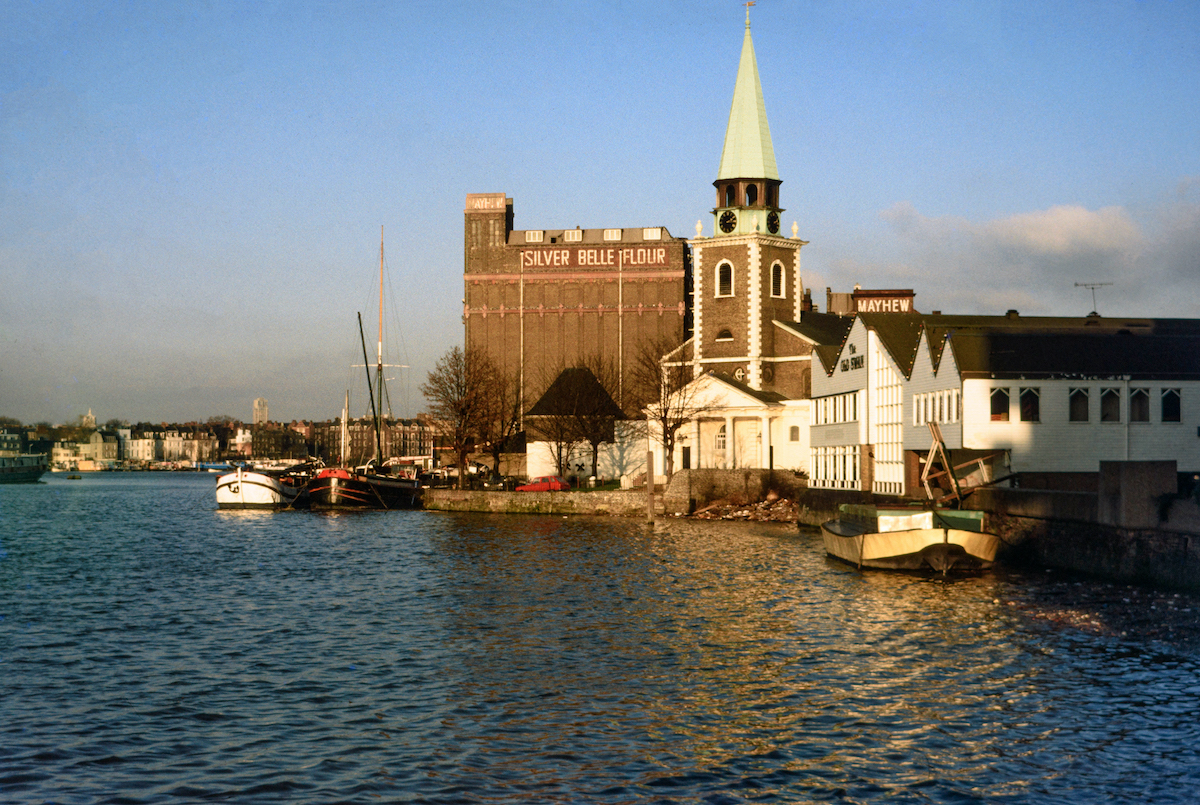
Along the riverfront, Battersea’s industrial past was impossible to ignore. Old wharves and mills had been operating here for generations. The Silver Belle Flour brand, photographed at Old Swan Wharf near St Mary’s in 1980, was one of many remnants of the river trade that had defined the area for over a century.
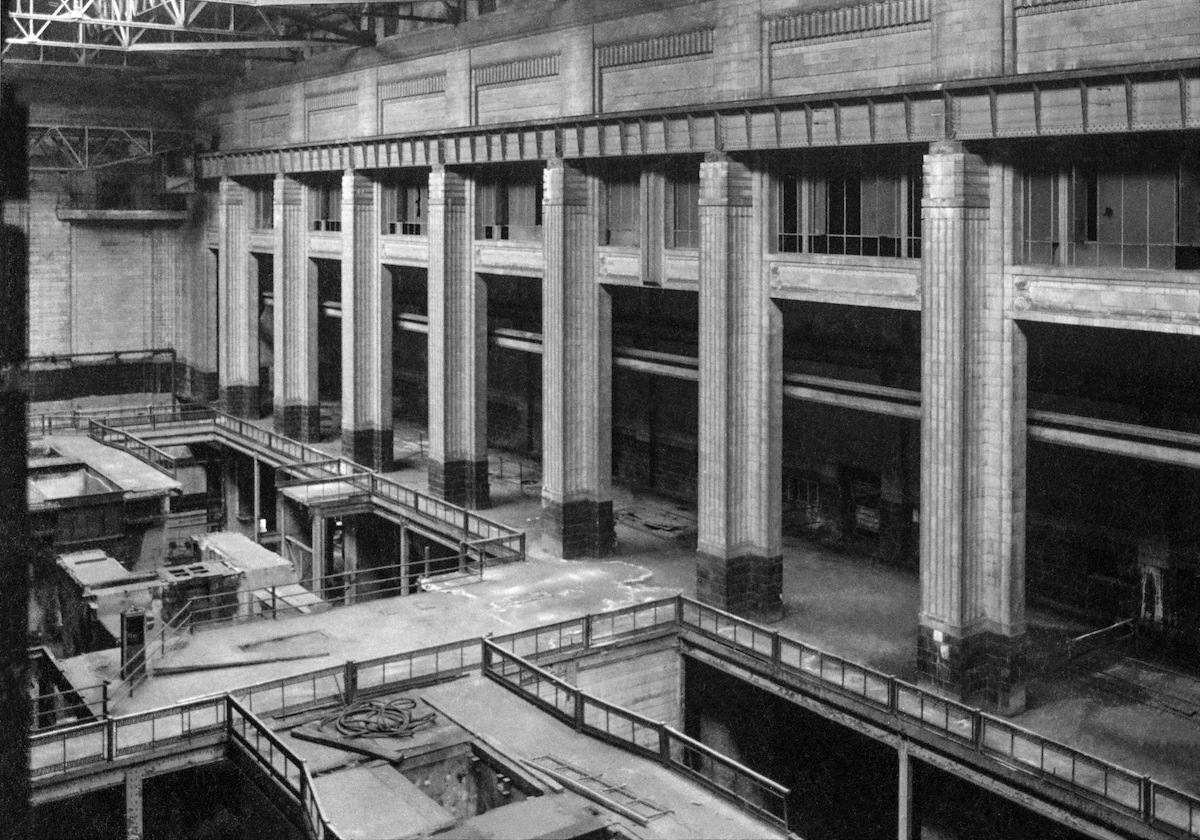
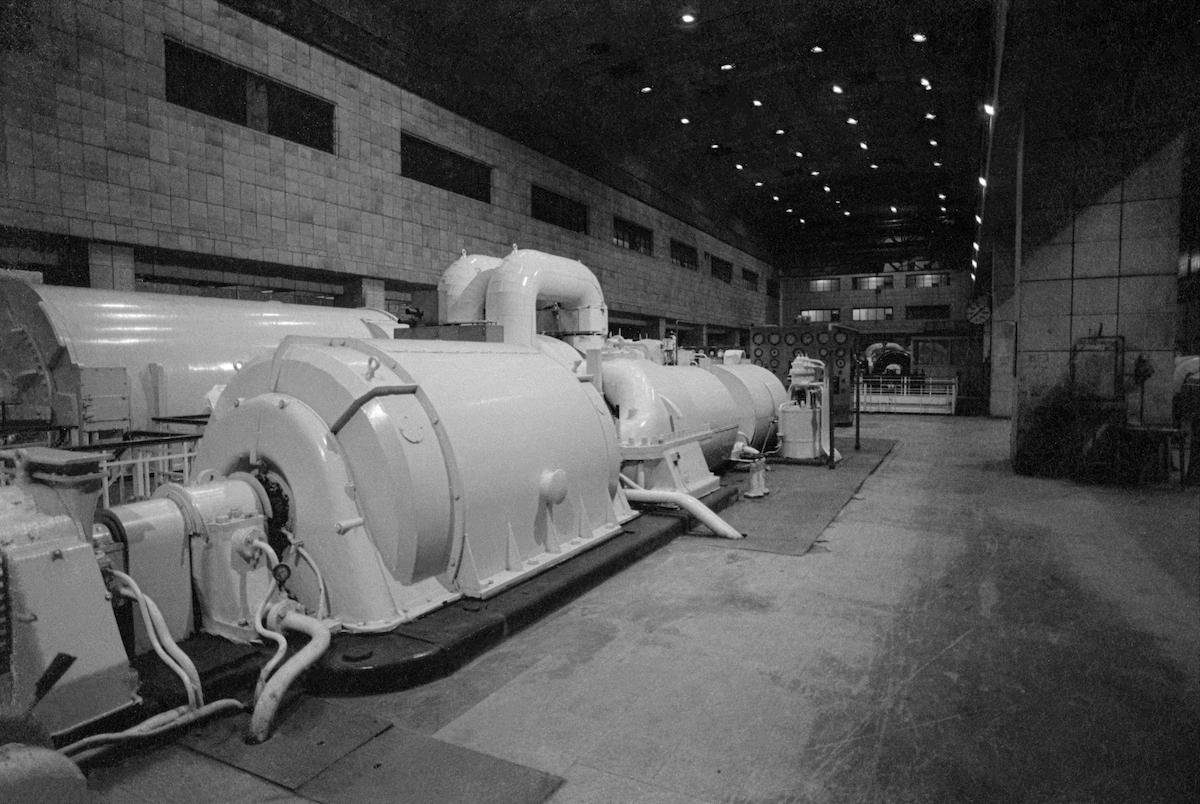
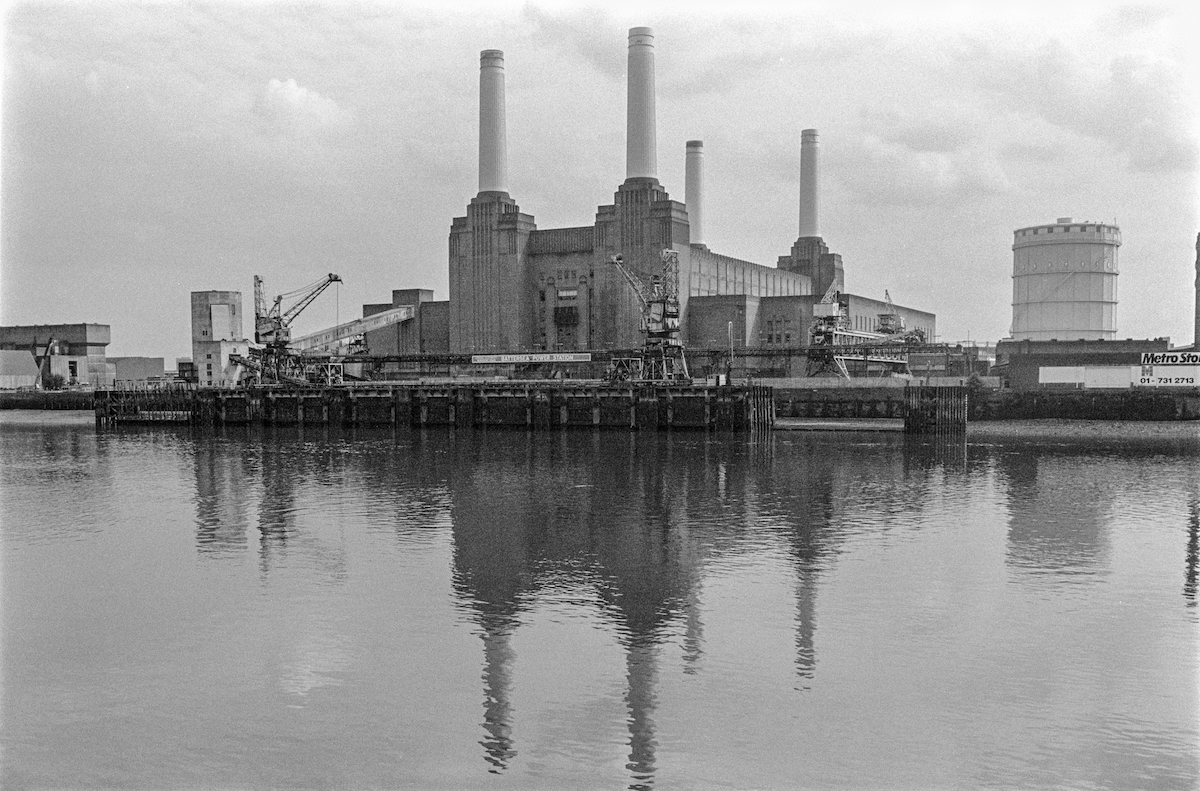
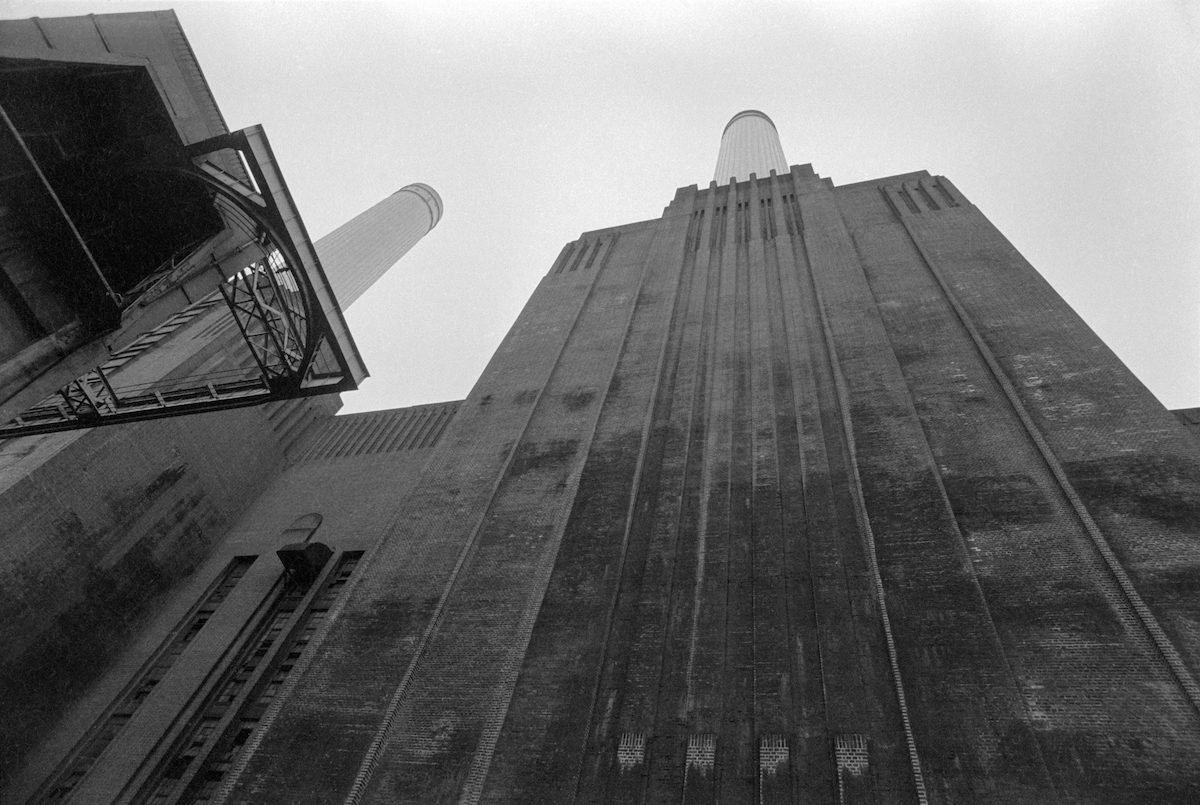
No building defined 1980s Battersea more than the Power Station. Built in two phases between the 1930s and 1950s, Battersea Power Station was decommissioned in 1983. Marshall photographed it multiple times throughout the decade, capturing it from different angles and in different states of decay. Its four white chimneys towered over the Thames, visible from miles away, and yet the building sat empty and increasingly derelict.
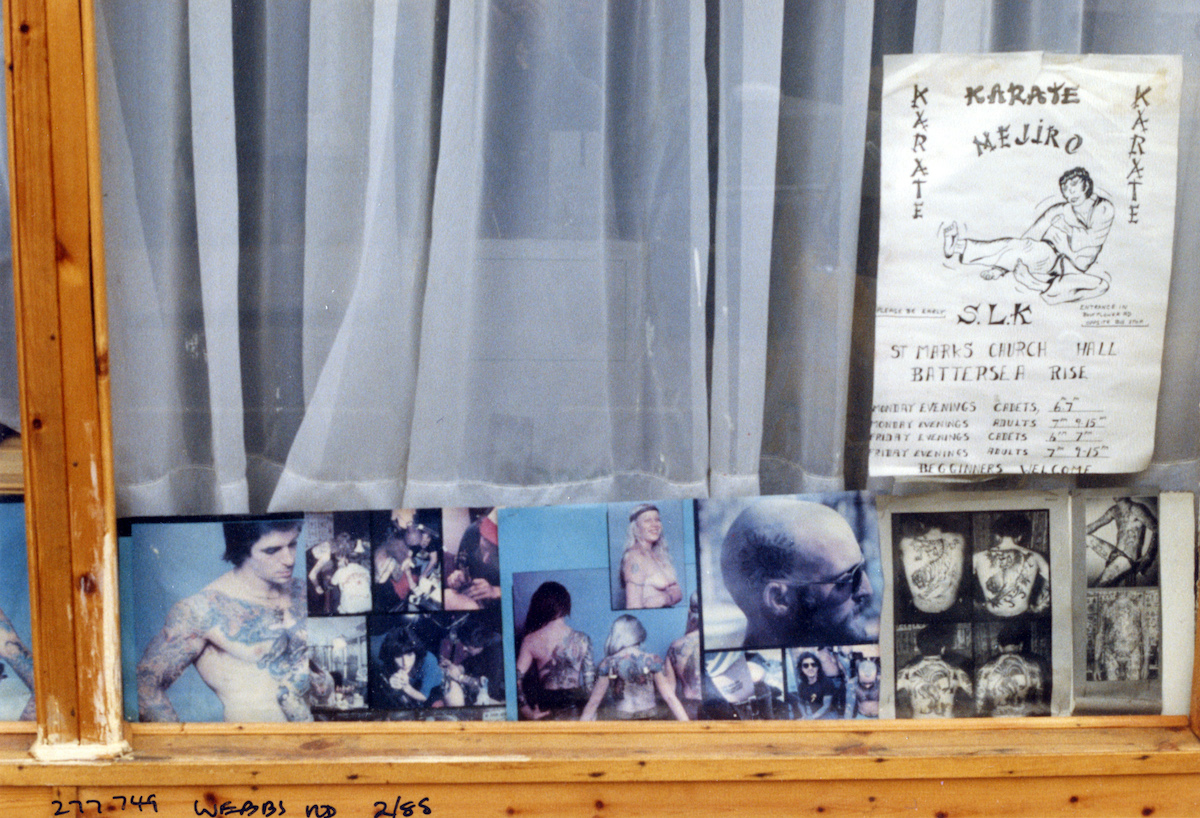
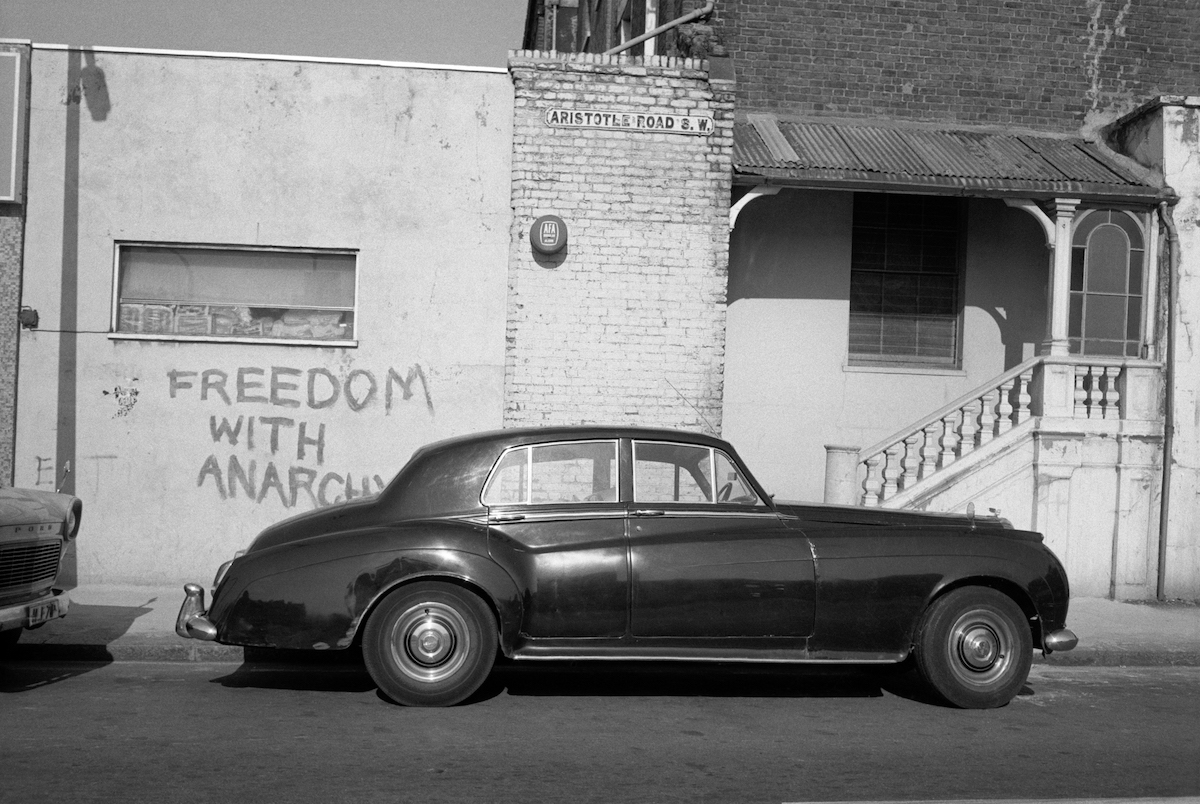
The streets around Battersea and neighbouring Clapham carried the political mood of the era. Graffiti and murals were common. On Aristotle Road in Clapham, Marshall photographed the blunt message ‘Freedom With Anarchy’ painted on a wall — a reminder that south London in the 1980s was a politically charged place, with high unemployment and deep tensions between communities and authorities.
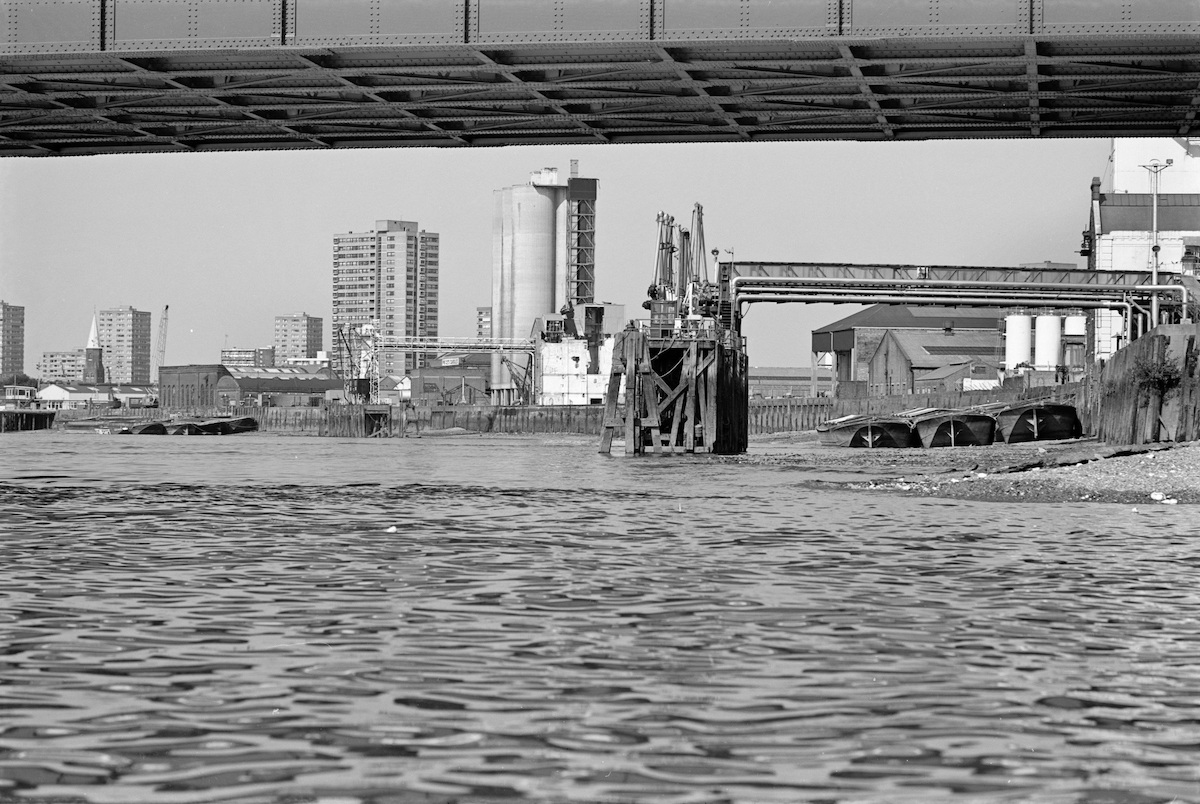
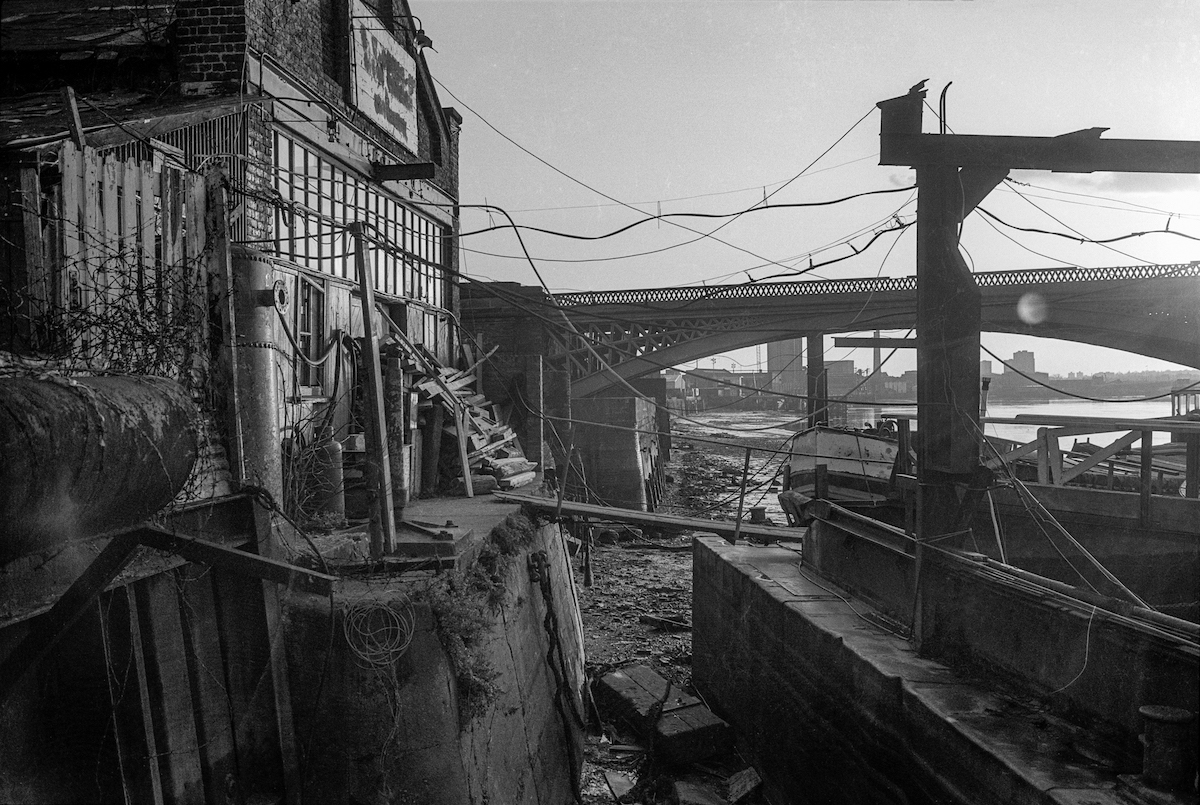
Seen from the Thames itself, Battersea’s riverside told a story of industry and neglect side by side. The riverbank was not the cleaned-up walkway it would later become. In 1983, Marshall photographed it as a raw, unpolished edge of the city — a working waterfront that hadn’t yet been touched by redevelopment.
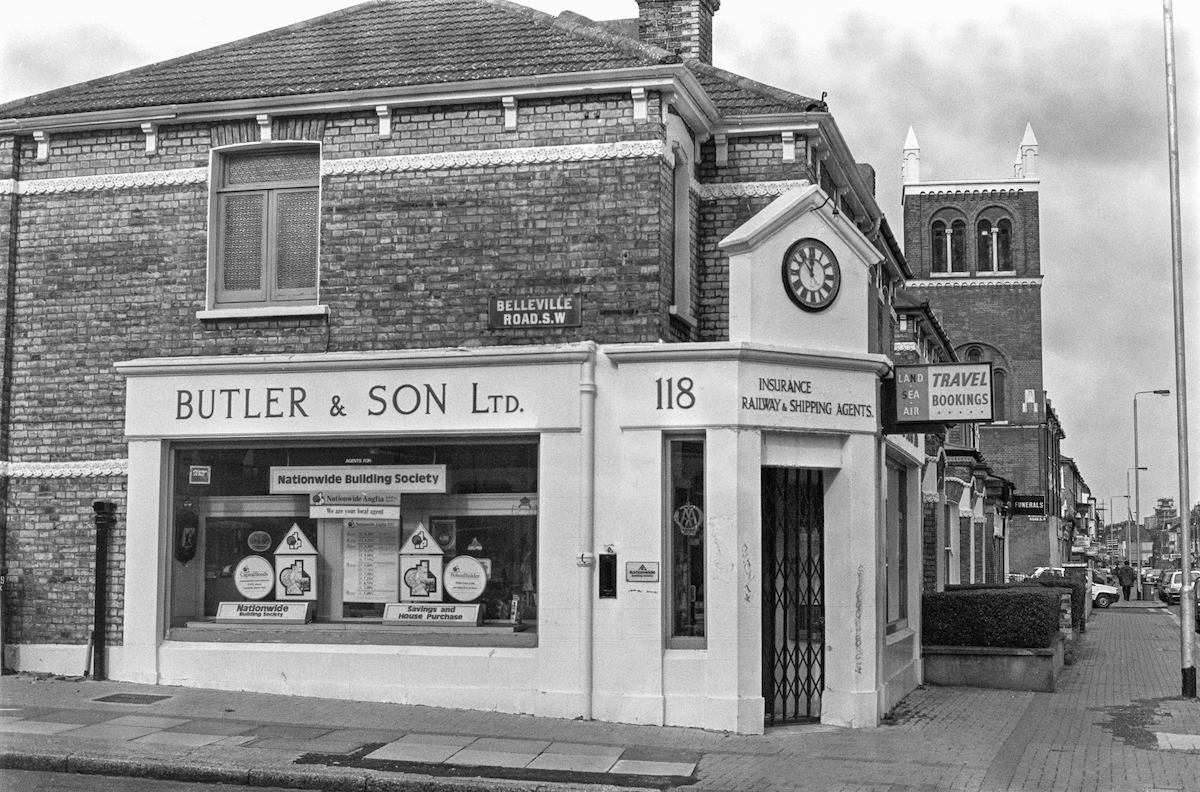
Residential streets like Belleville Road near Northcote Road showed a different side of the neighbourhood. These were lived-in streets, full of terraced houses and local life. Battersea was never just an industrial zone — people raised families here, shopped locally, and built communities in the shadow of the factories and power stations.
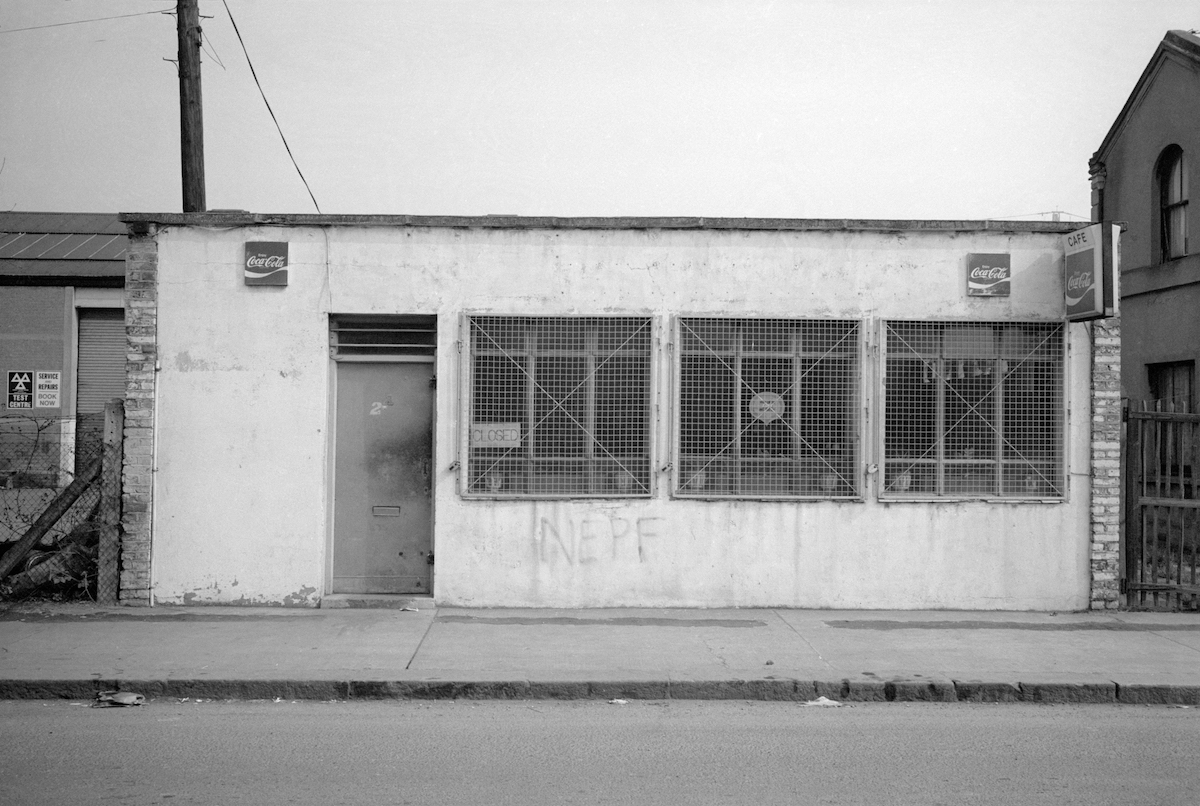
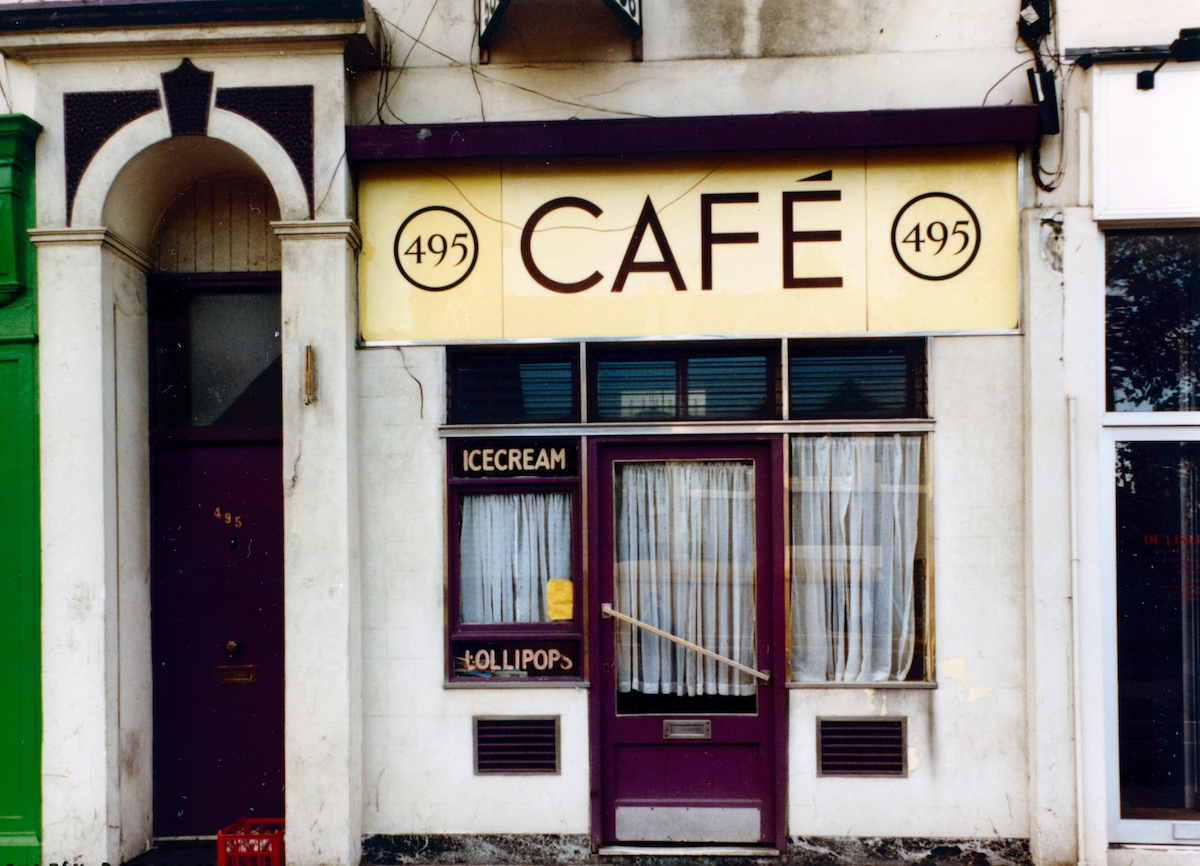
Nine Elms Lane had its own ecosystem of small businesses. A café photographed there in 1982 was the kind of place that fed the workers from the nearby market and industrial sites. The New Covent Garden Market had moved to Nine Elms in 1974, and workers from early-morning shifts needed somewhere to eat.
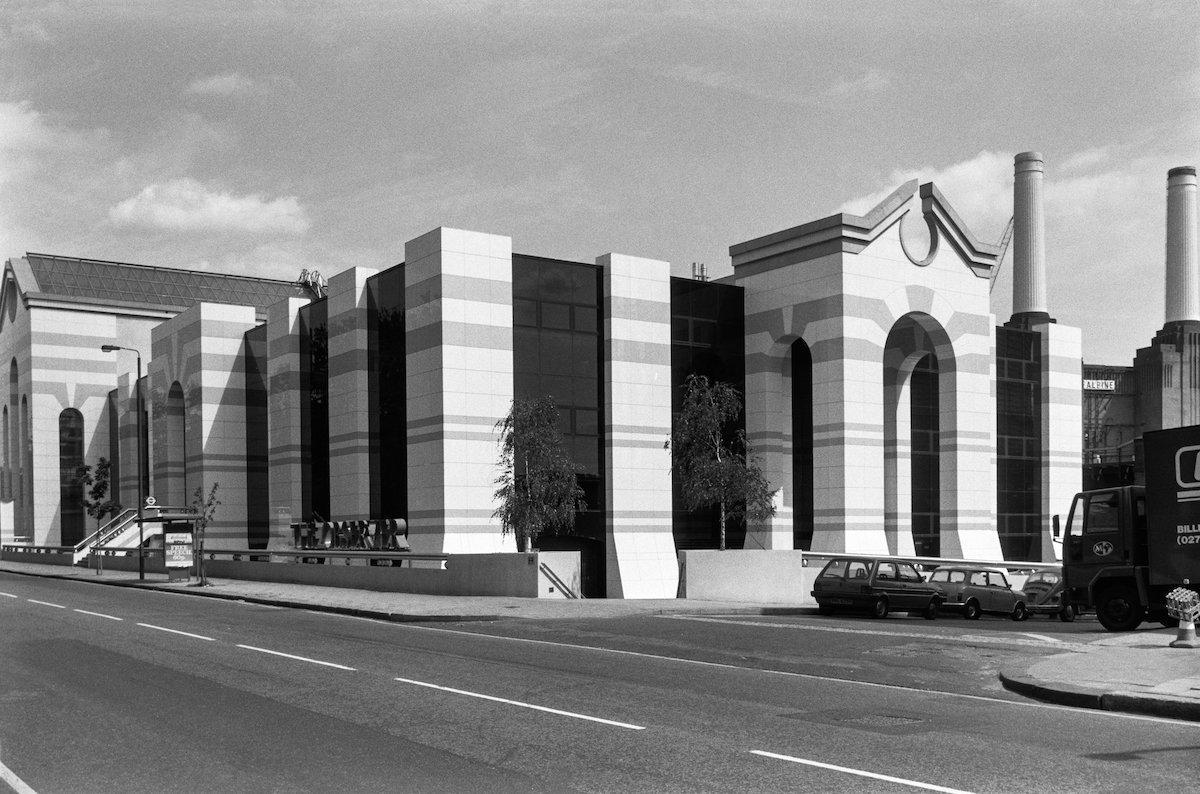
By 1989, some newer commercial buildings had begun appearing in Battersea. Marco Polo House on Queenstown Road was one of them — a postmodern office building that housed The Observer newspaper for a period. It stood as an early sign that the area’s identity was beginning to shift, even as the older fabric of the neighbourhood remained largely intact.
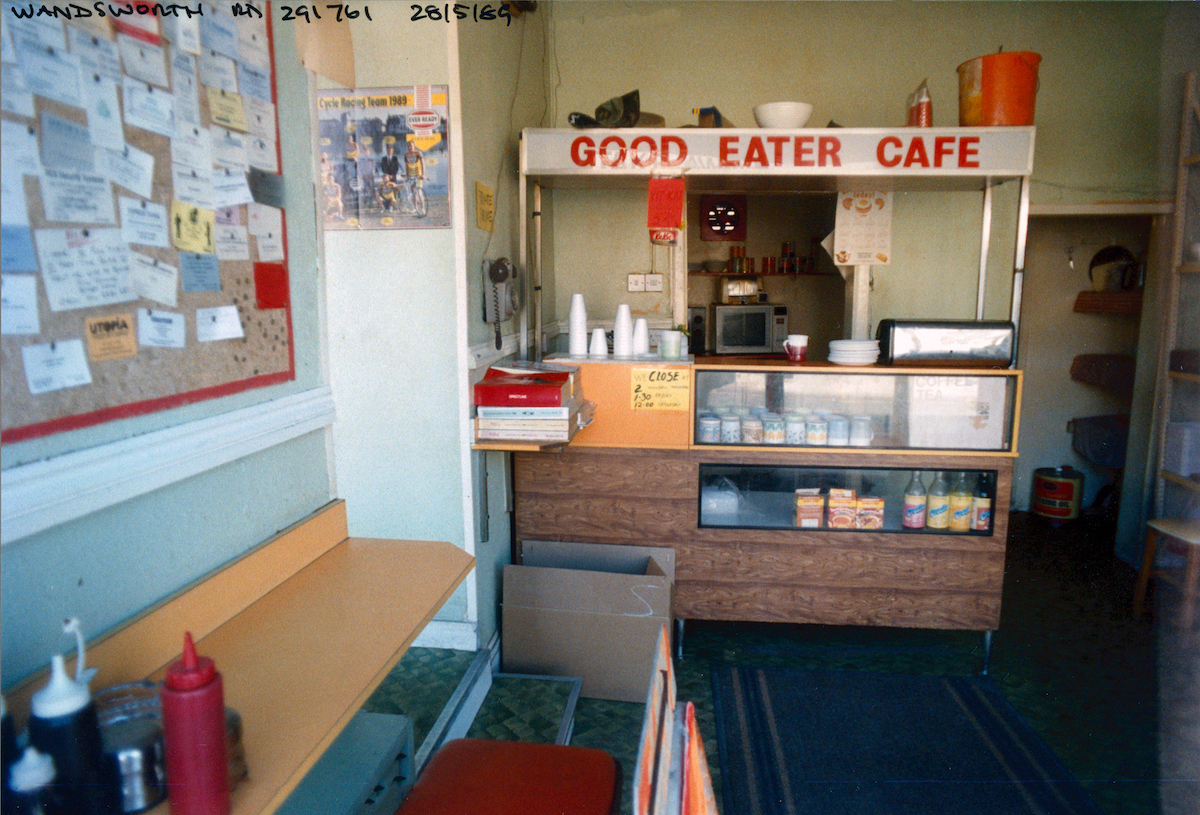
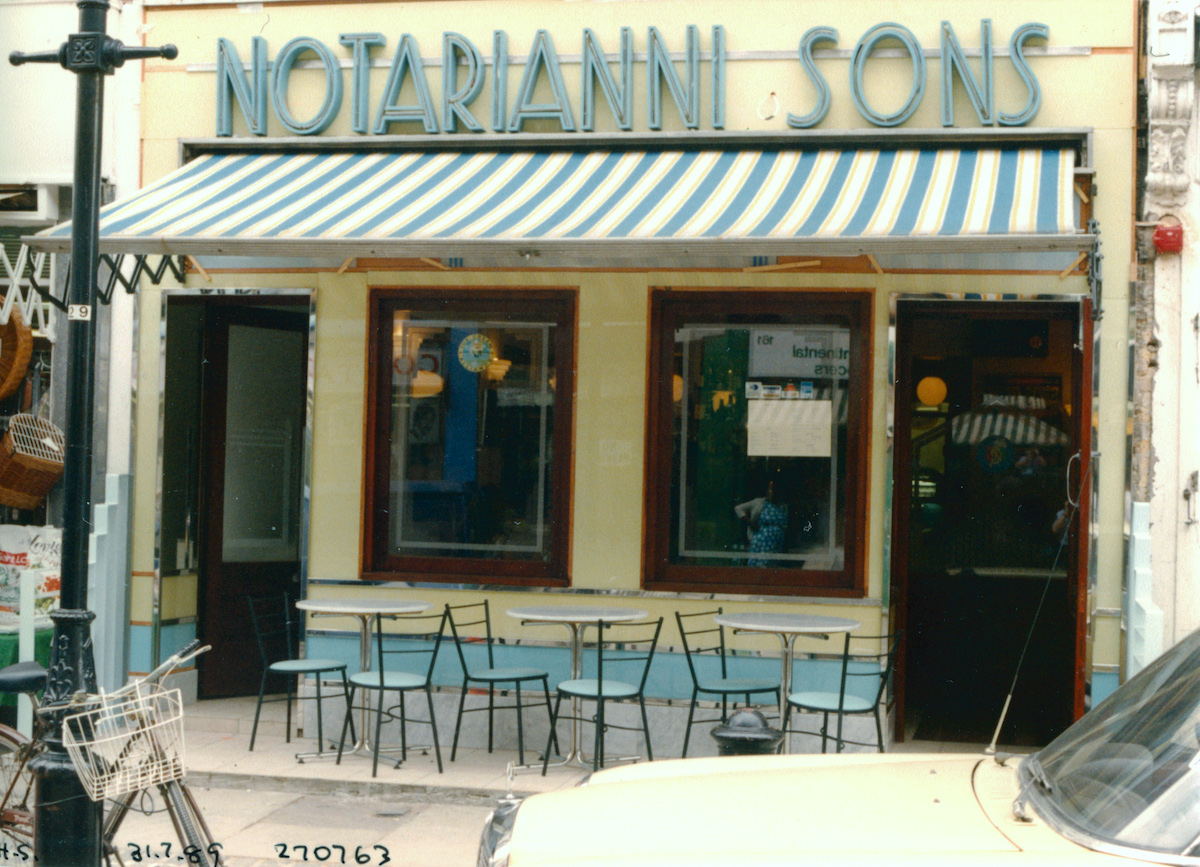
Food and drink businesses of all kinds appeared across Marshall’s work. The ‘Good Eater Cafe’, photographed in 1989, was the type of straightforward, unpretentious eatery that was common across working-class south London at the time. These were places where a full meal cost very little and the clientele were regulars, not tourists.
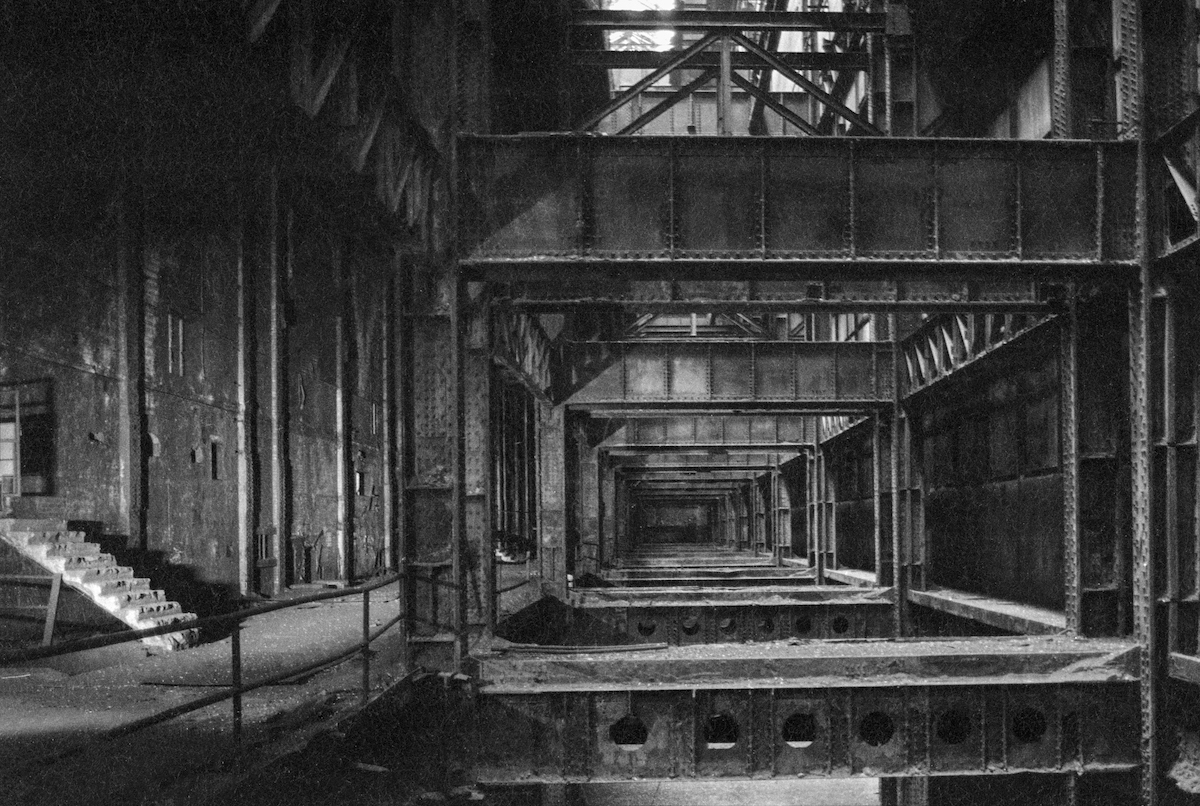
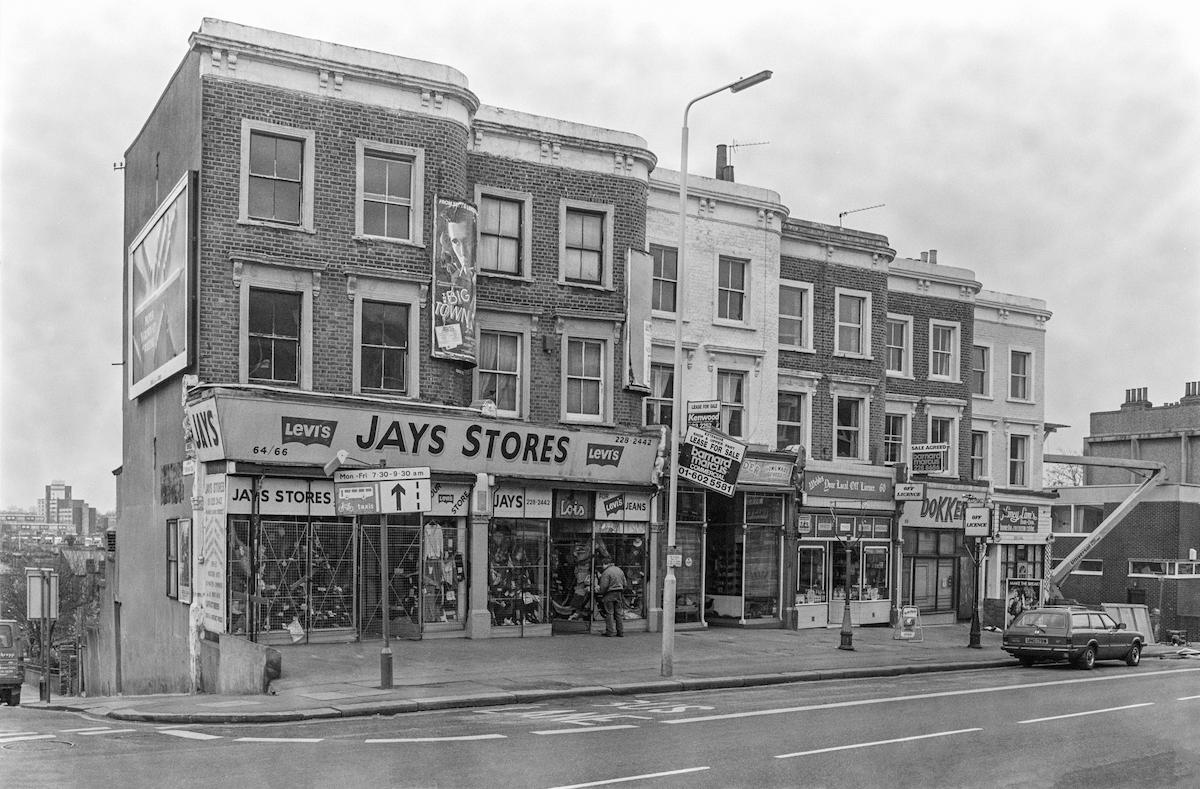
St John’s Hill connected Battersea to Clapham Junction, one of the busiest railway junctions in Europe. The streets around it were active and commercially busy. Marshall photographed it in 1988, capturing the ordinary rhythm of a south London high street going about its day.
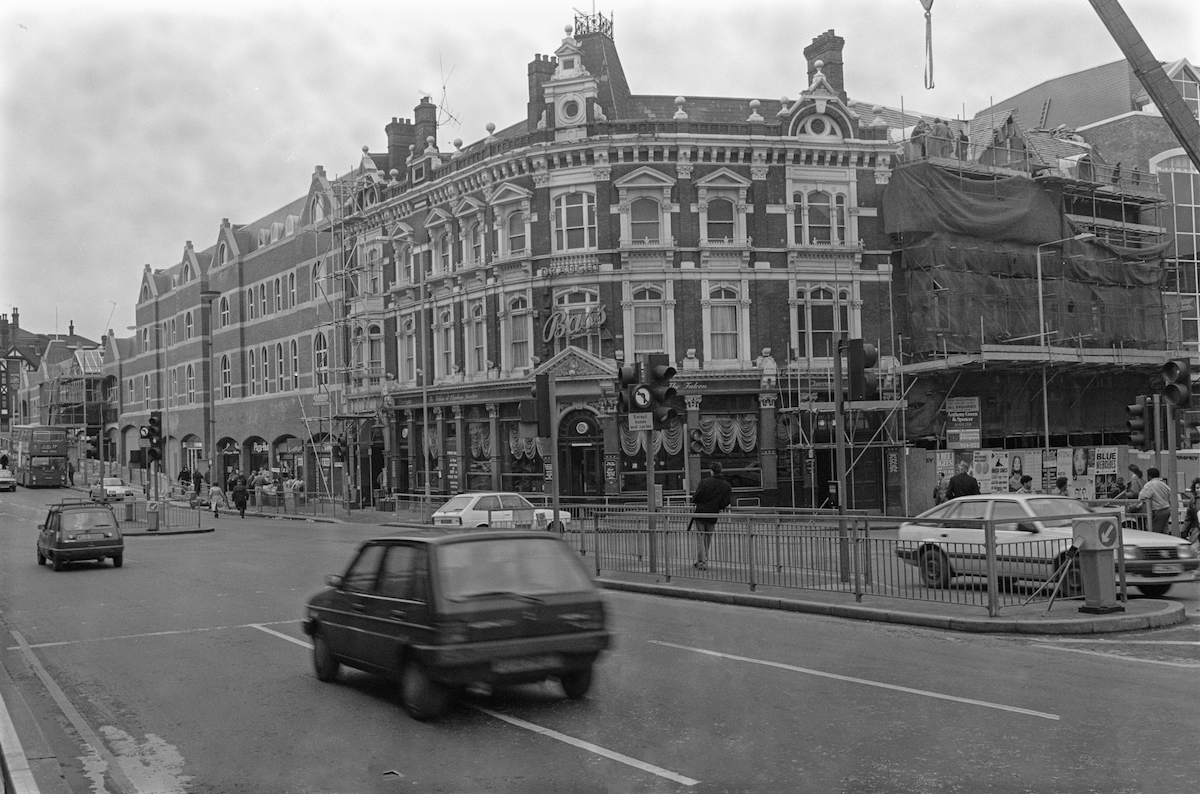
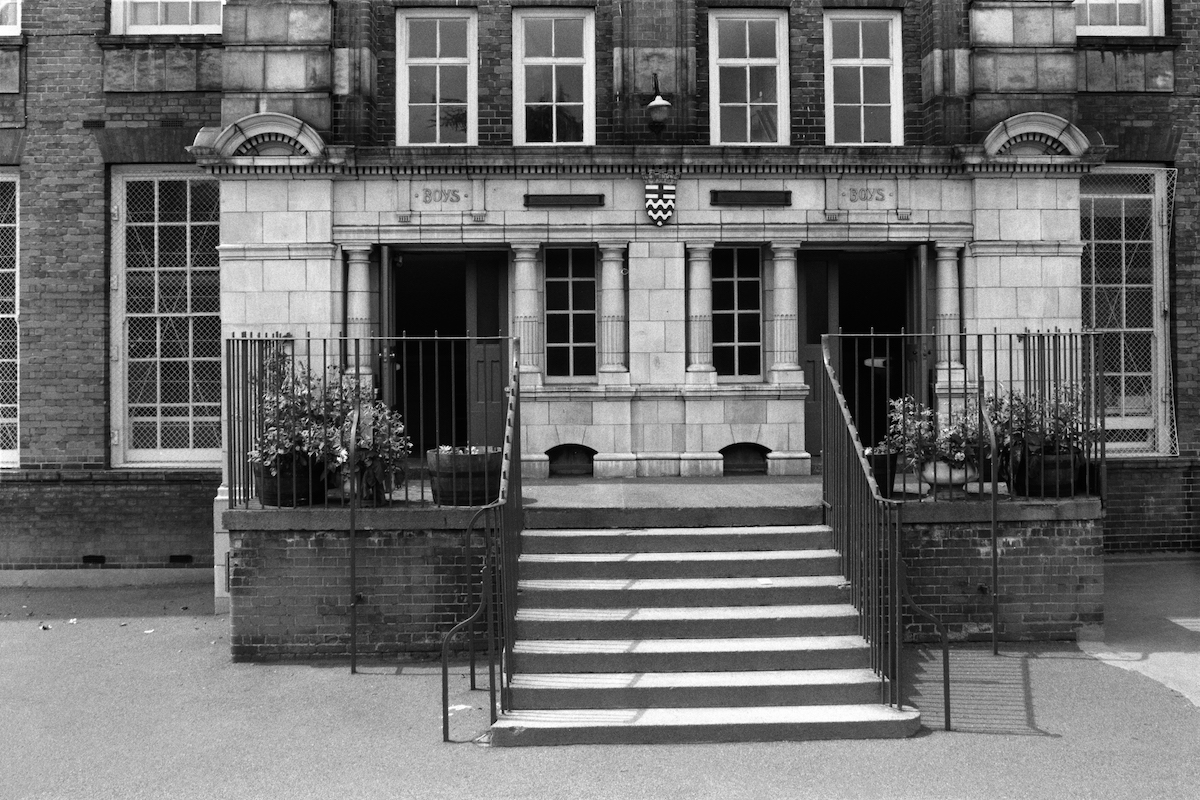
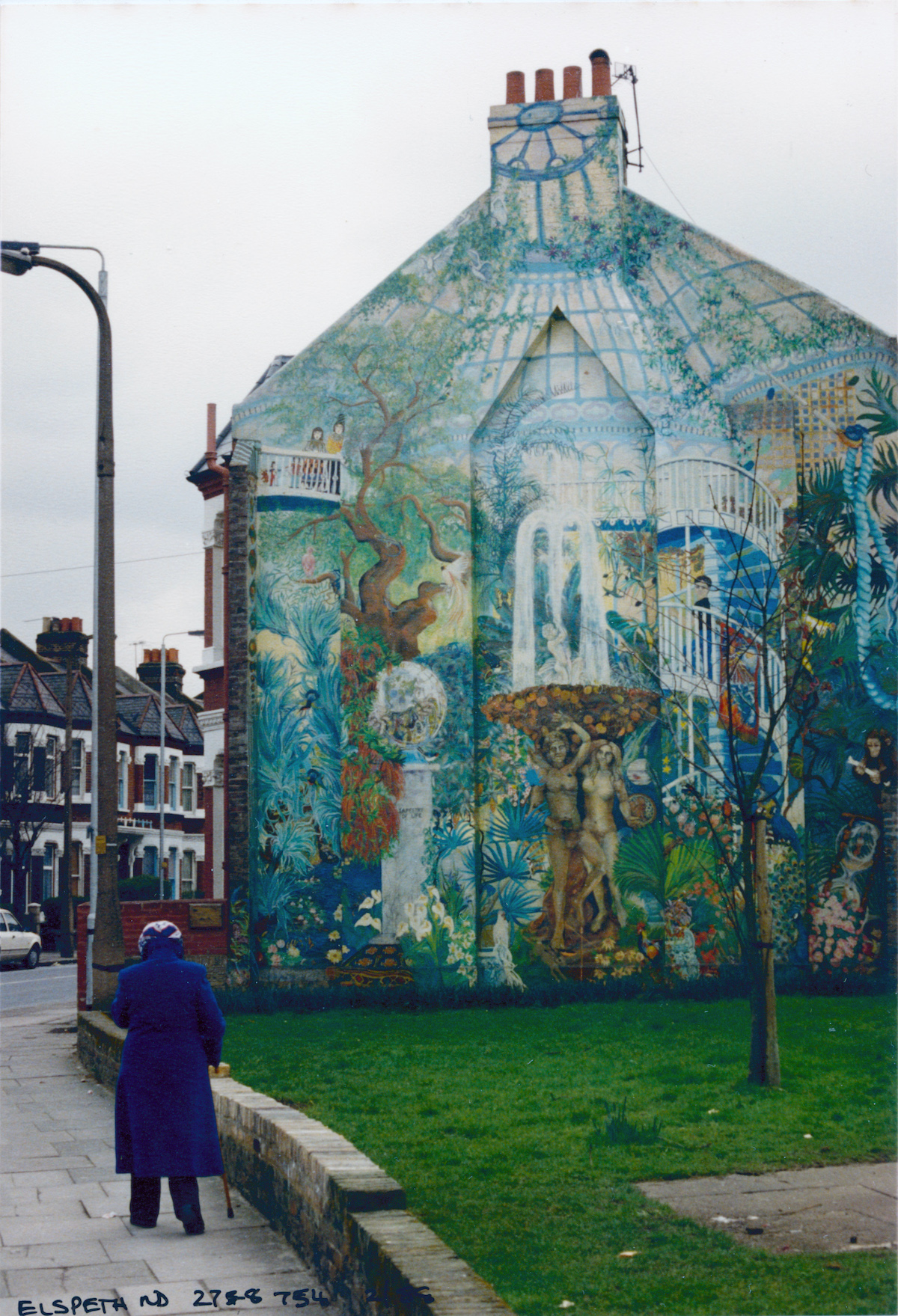
Public art was also part of Battersea’s streetscape. On Elspeth Road near Lavender Hill, artist Christine Thomas painted a large mural called ‘Tapestry of Life’ in 1988. Community murals like this were common in inner London during the 1980s — partly funded by local councils as part of broader community arts initiatives.
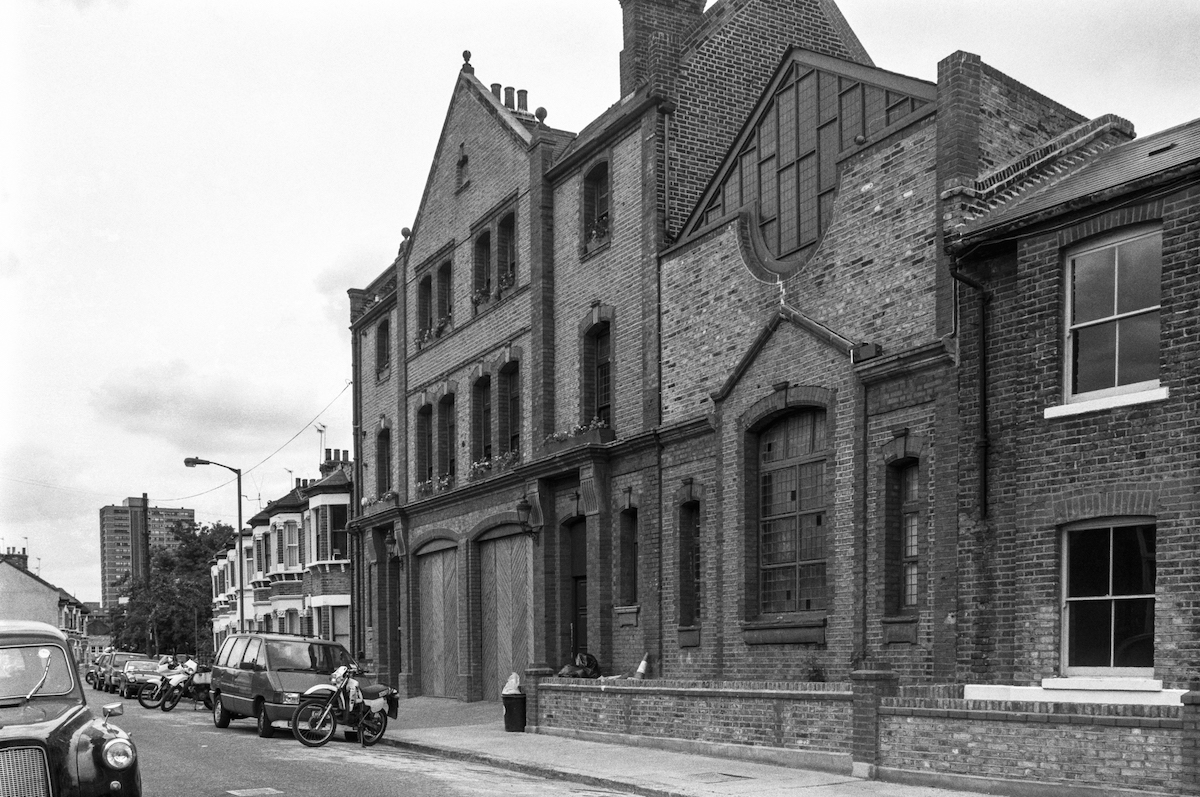
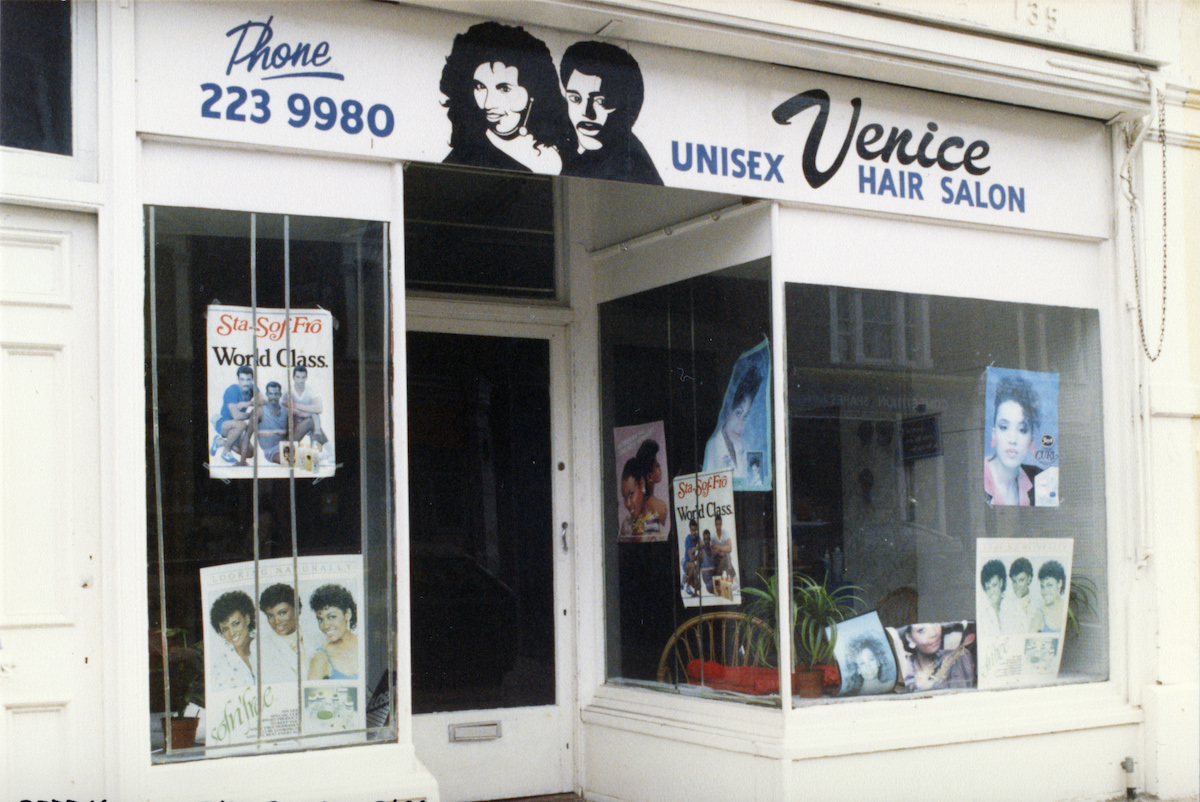
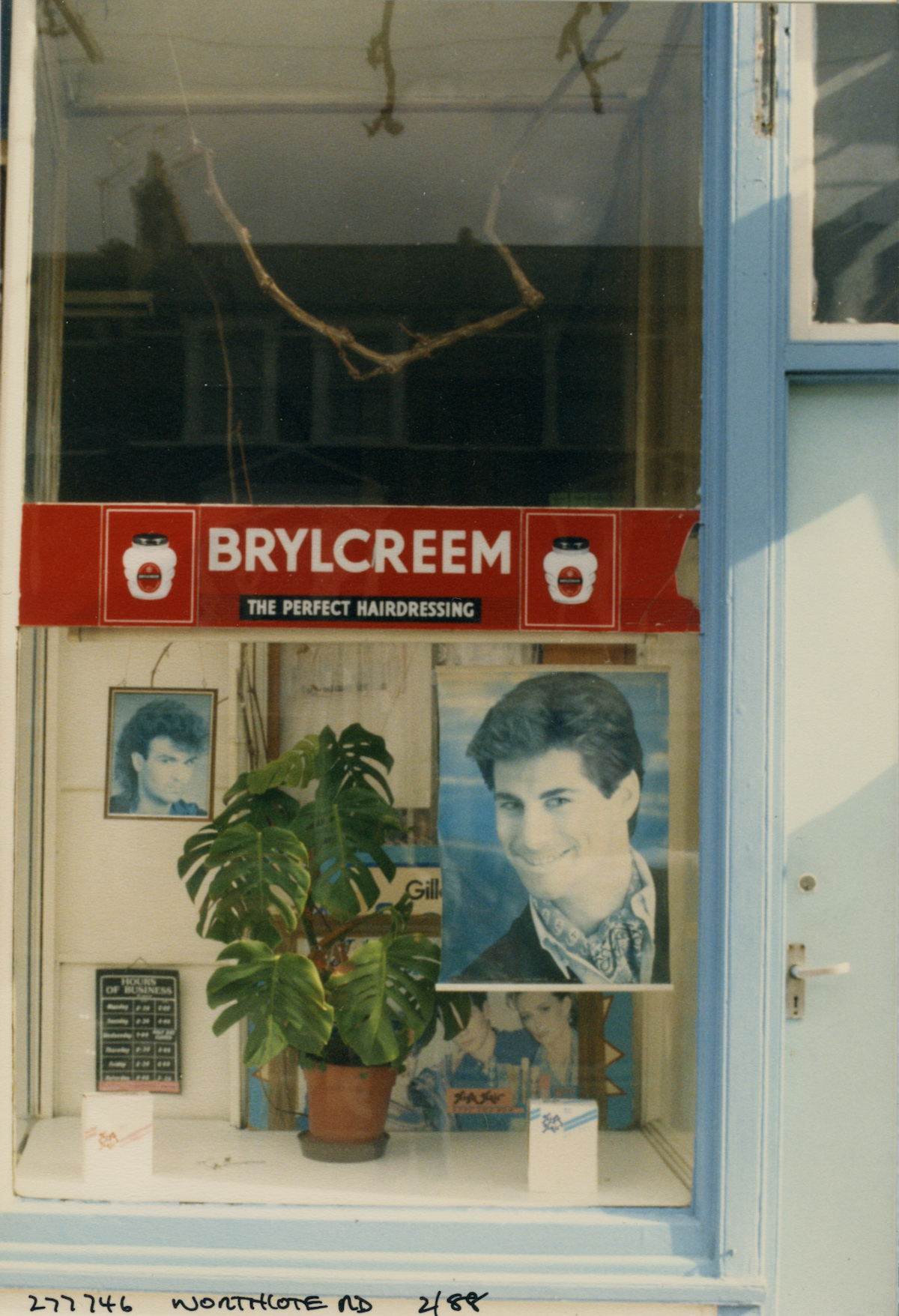
Northcote Road’s hairdressers were small, local operations — a far cry from the styled salons that would arrive in later decades. Marshall photographed at least two of them: a general hairdresser and one called Venice, each a snapshot of the kind of neighbourhood business that anchored streets like this.
Demolition work was underway in Nine Elms throughout the early 1980s. Marshall photographed it on Nine Elms Lane in 1983 — old buildings coming down to make way for whatever came next. At that point, no one was entirely sure what that would be. The area sat largely unused, waiting.
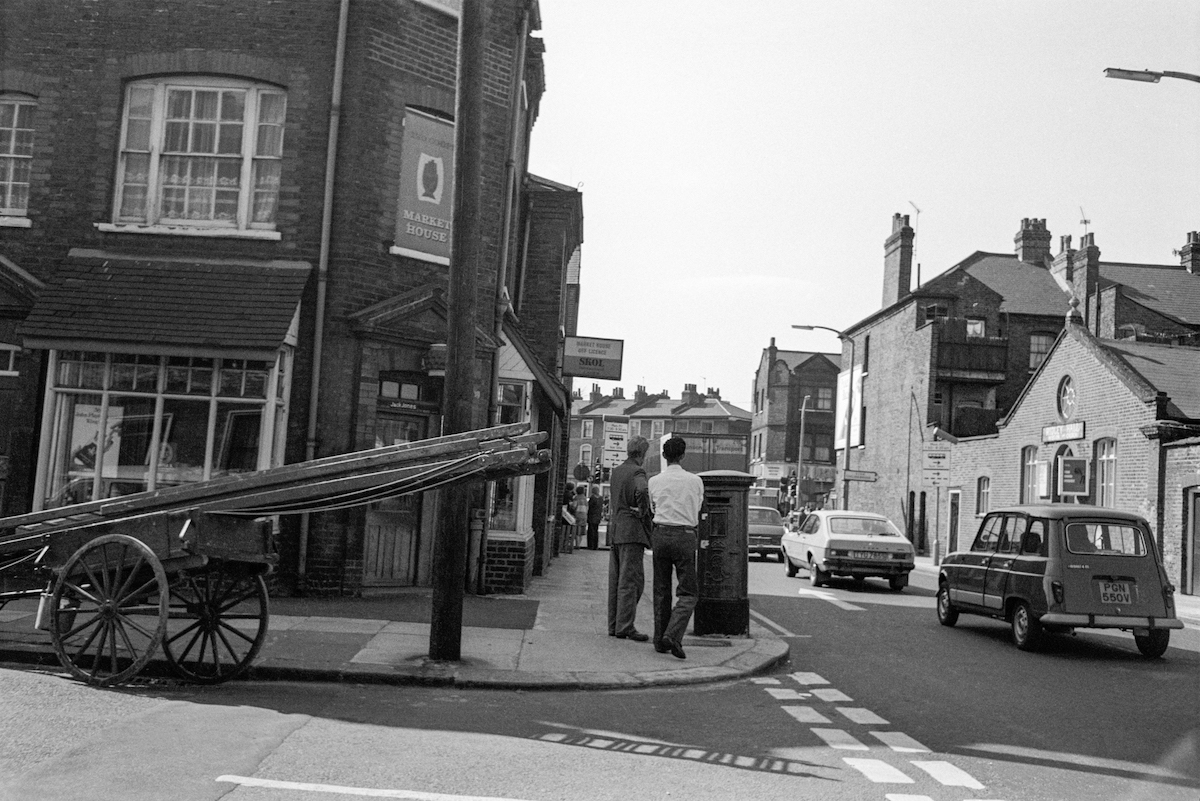
Broughton Street in 1980 shows how residential parts of Battersea looked at the very start of the decade — rows of terraced houses, parked cars, and the quiet ordinariness of a neighbourhood that wasn’t making headlines. These streets looked almost unchanged from how they’d appeared decades earlier.
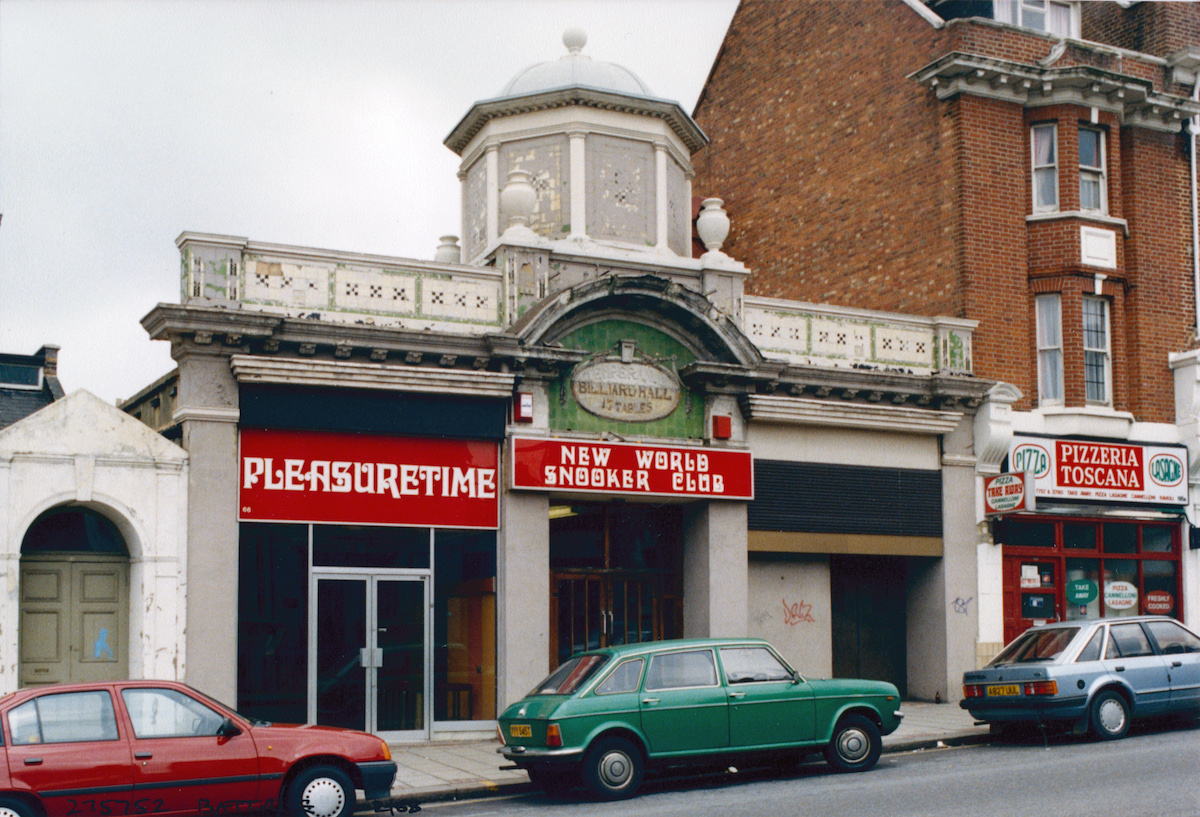
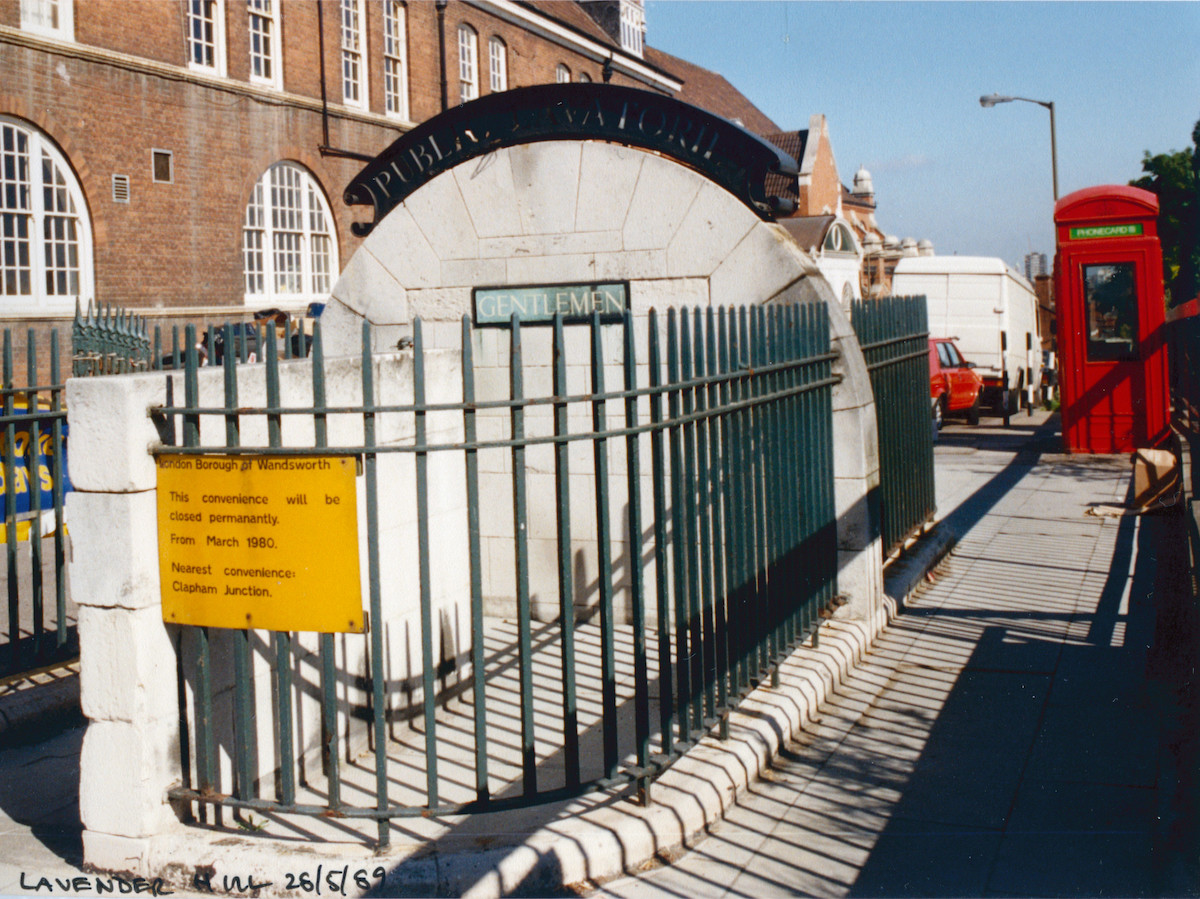
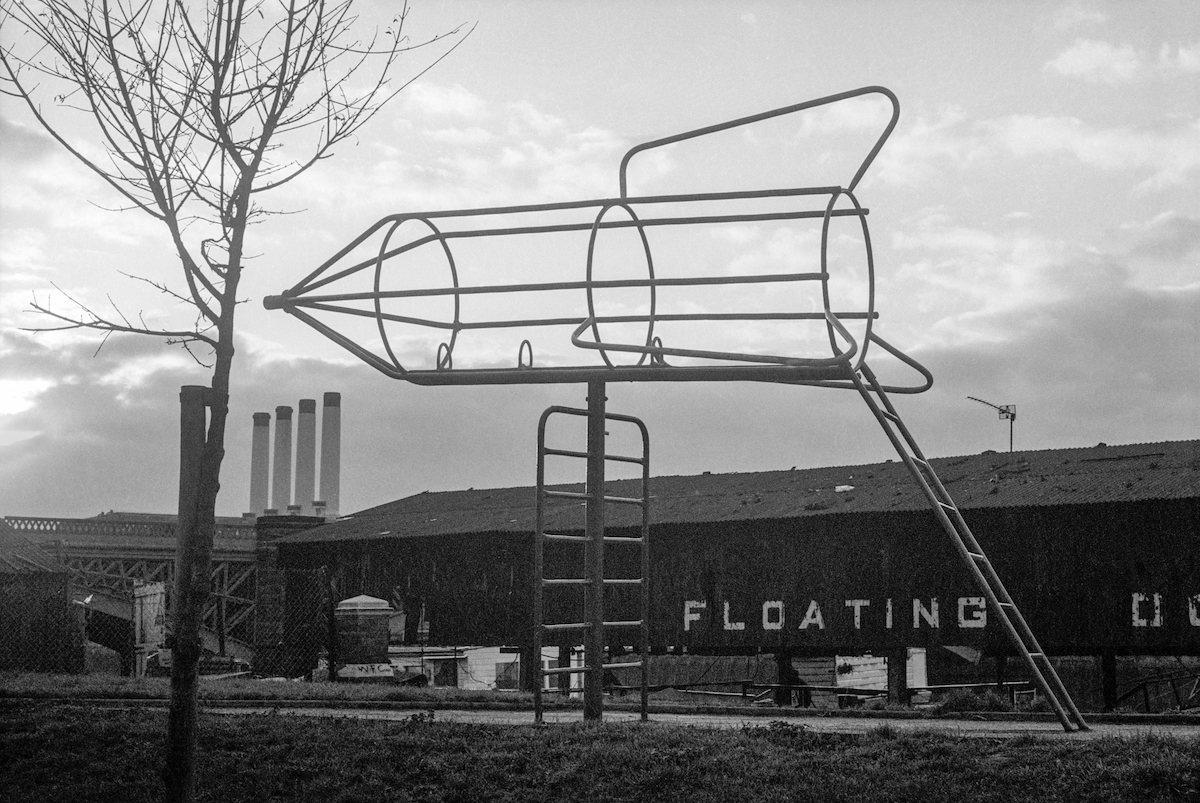
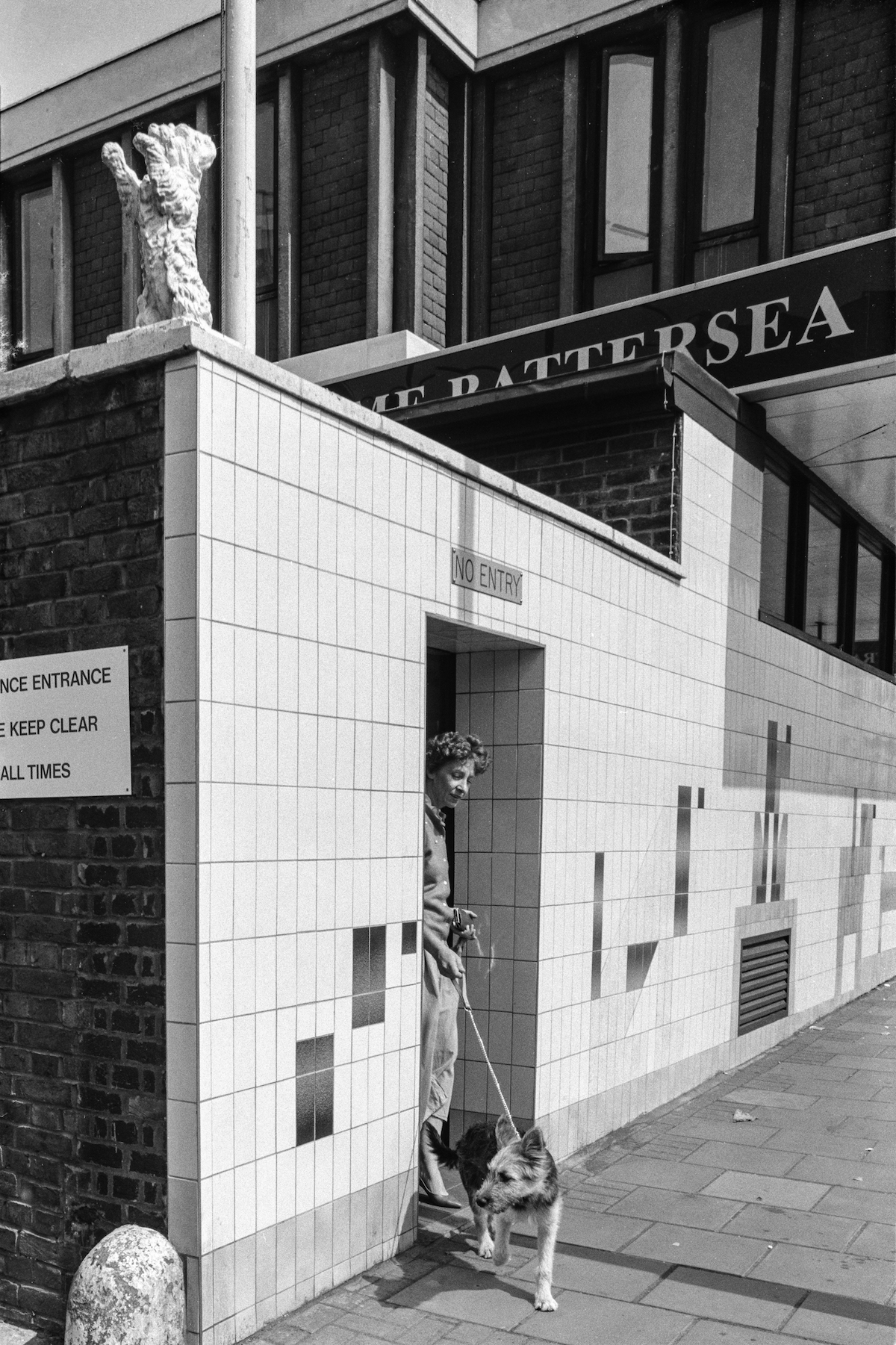
Public conveniences, playgrounds, and street furniture were all part of the scene Marshall documented. Lavender Hill’s public convenience in 1989 and a Battersea playground from 1980 speak to the basic infrastructure of the area — maintained, but only just, by a borough dealing with tight budgets and shifting priorities.
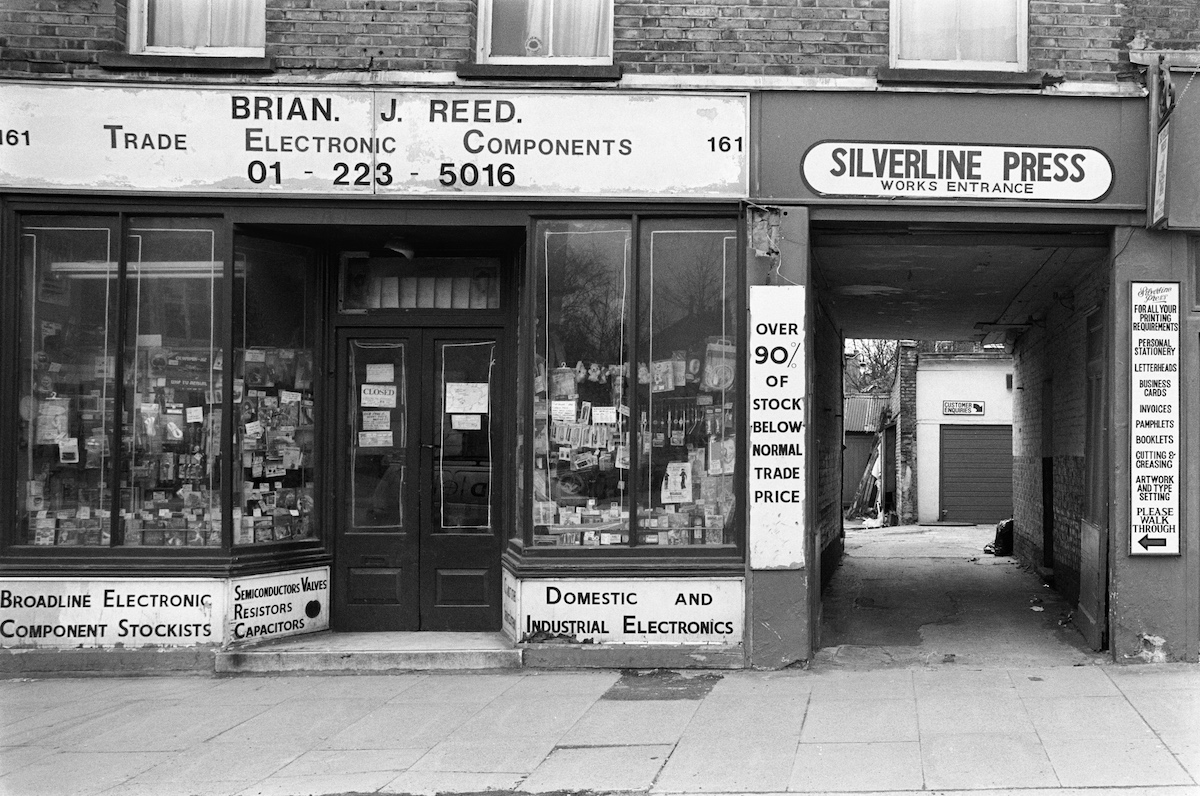
Small printing businesses were a feature of many London streets before digital technology changed the industry. Brian J Reed’s Silverline Press on St John’s Hill, photographed in 1990, was one of these. Printers, typesetters, and copy shops were essential to the local economy, producing everything from business cards to newsletters.
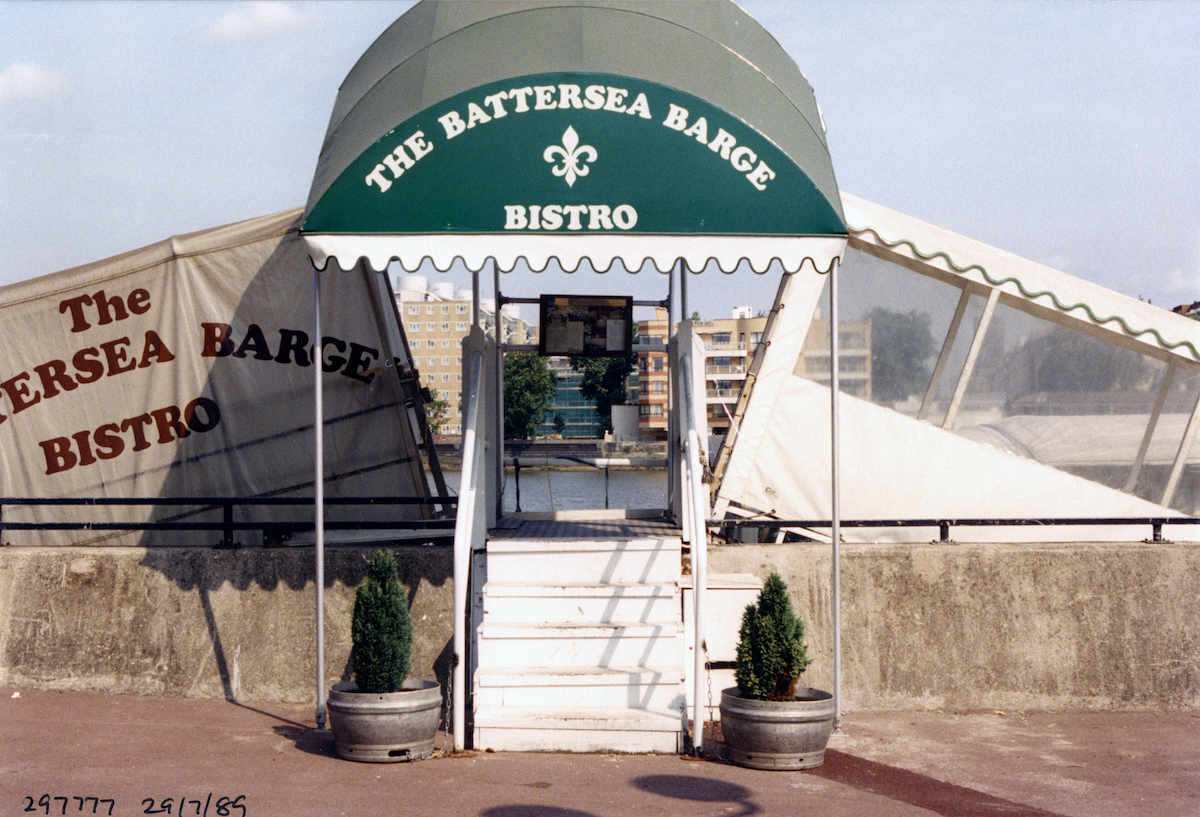
The Battersea Barge on the Thames at Nine Elms Lane was a floating venue moored on the river — one of several unconventional spaces that operated along this stretch of the Thames in the late 1980s. The river itself was a working space here, not yet the leisure and tourism destination it would eventually become.
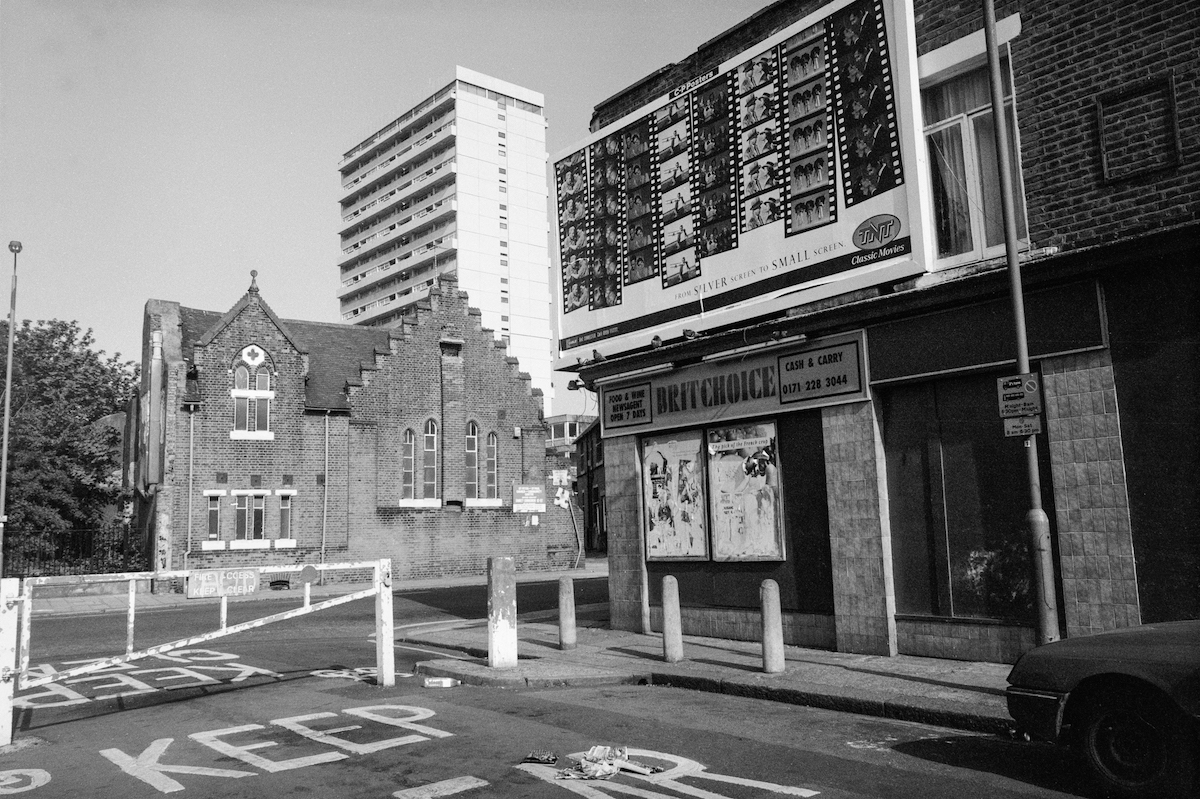
The mix of housing, churches, and small shops visible on Holgate Avenue and Plough Road in 1989 shows how tightly packed Battersea’s urban fabric was. A shop sat beside a church, which sat beside a block of flats — uses that in modern planning would be carefully separated were here compressed into a single street view.
The Shaftesbury Estate on Ashbury Road was a council housing estate built in the late 19th century — one of the earliest examples of planned working-class housing in London. By 1989, when Marshall photographed it, the estate had been standing for nearly a century. Its distinctive red-brick buildings were a defining feature of the Battersea streetscape.
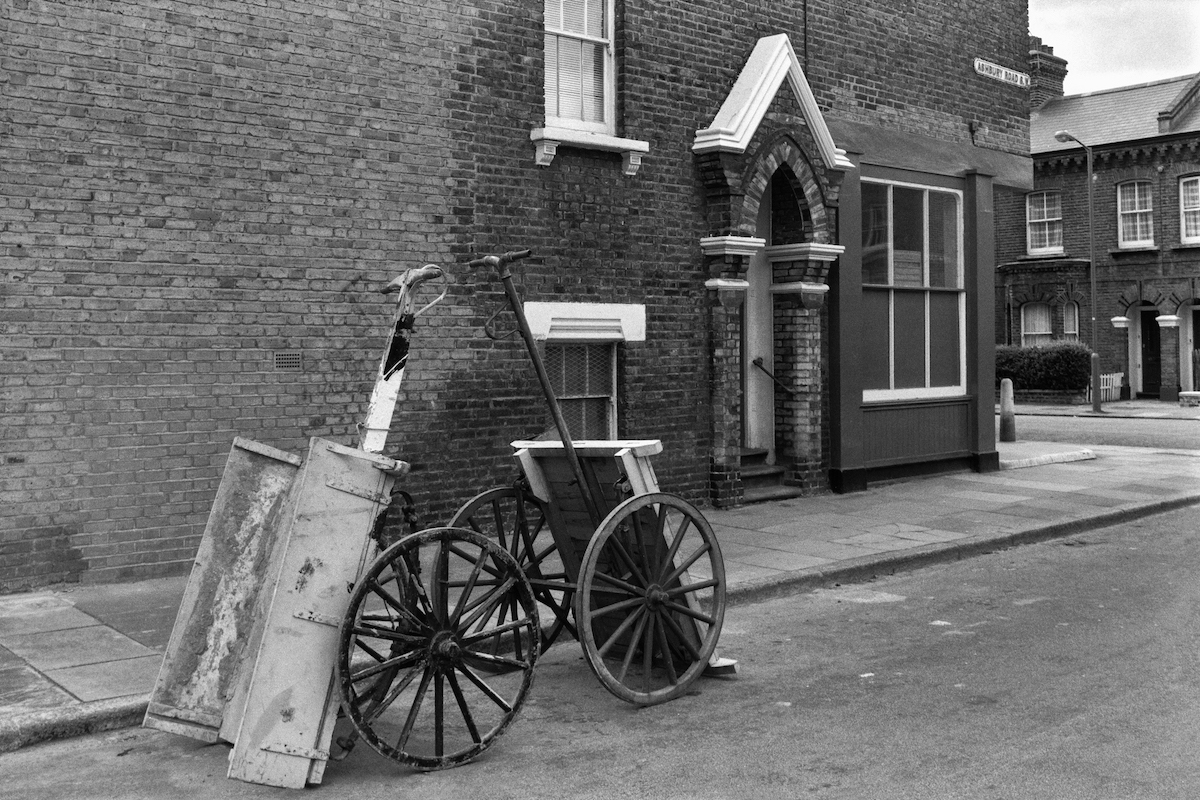
Battersea Dogs Home on Battersea Park Road was one of the most well-known institutions in the area, founded in 1860. By 1989, it had been rehoming stray and unwanted dogs for well over a century. Marshall’s photograph of it places a national institution in the context of an otherwise unremarkable stretch of south London road.
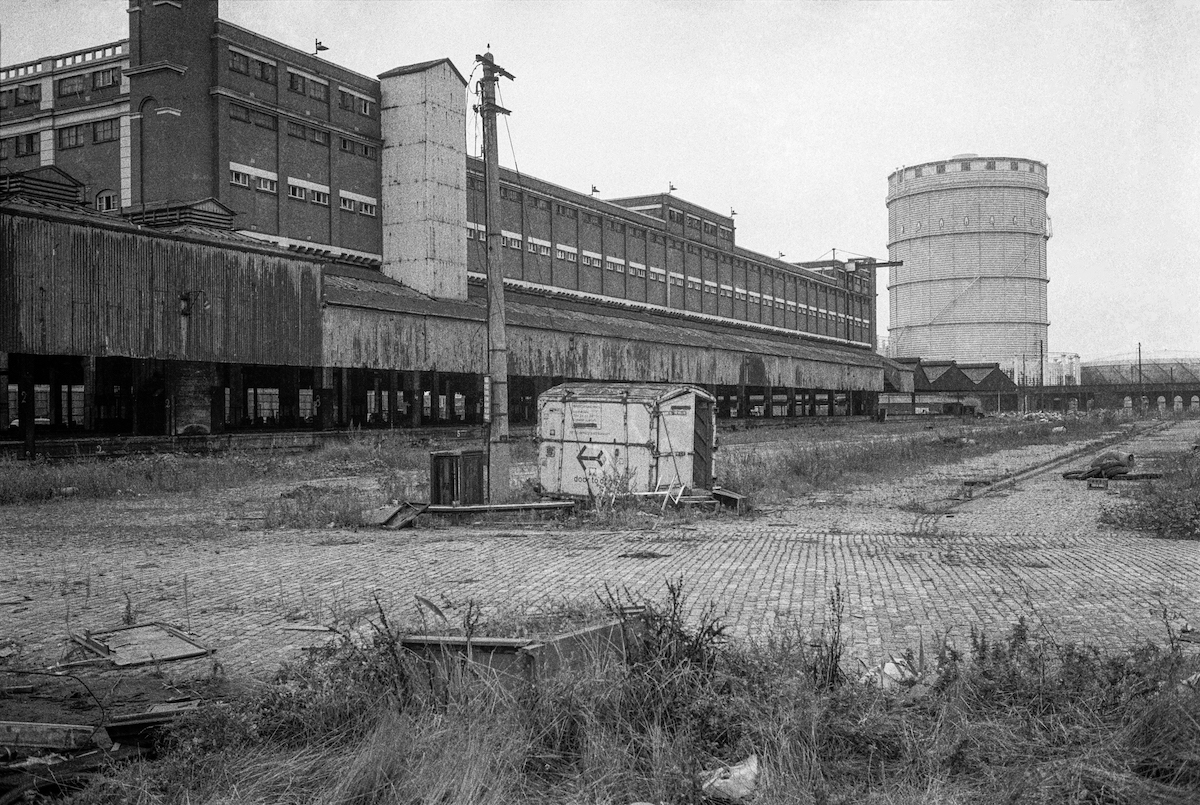
The South Lambeth Goods Yard and its gasholders were the kind of large-scale industrial infrastructure that once made this part of London function. Photographed in 1983, they were already relics of an earlier era of urban industry. The gasholders in particular — enormous iron frames — were a recurring feature of the south London skyline.
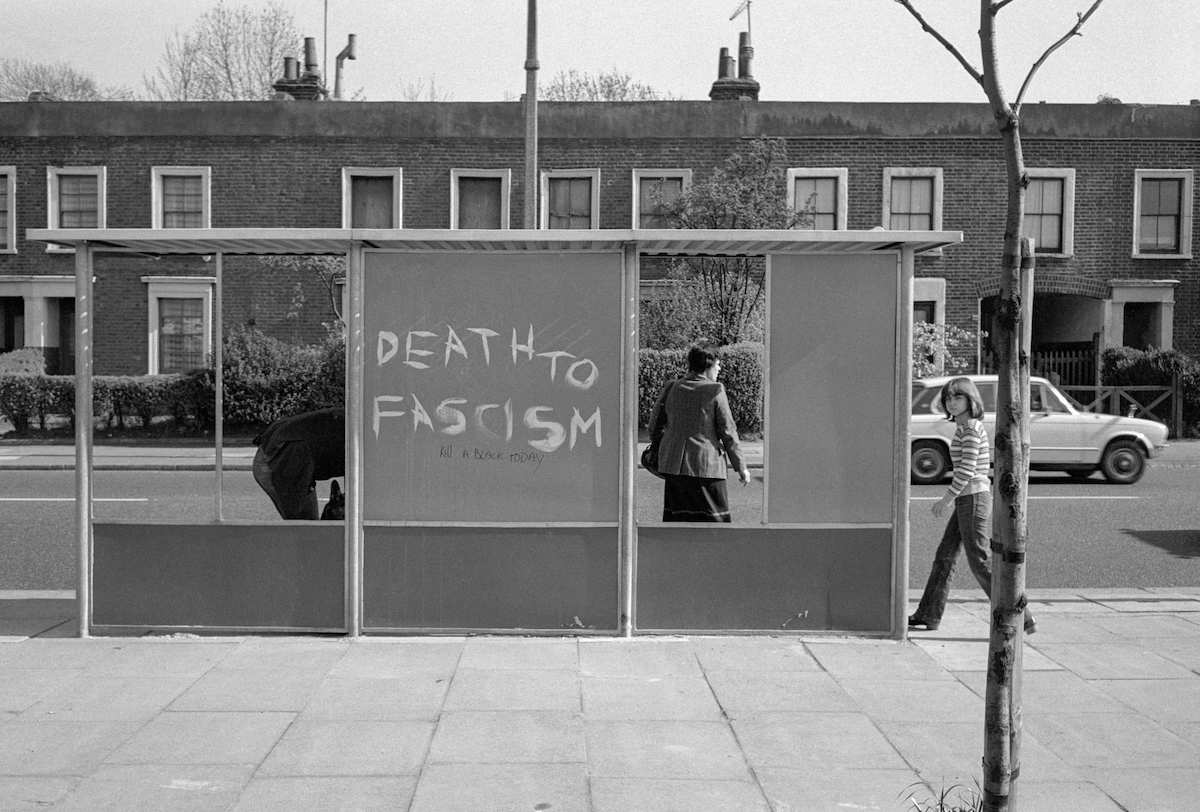
Political graffiti appeared throughout Marshall’s Battersea photos. A bus shelter photographed in 1980 carried the words ‘Death to Fascism’ — blunt and direct, reflecting the political climate of a city where far-right groups like the National Front were active and antifascist movements pushed back hard in the streets. These weren’t just random marks; they were responses to real events happening in and around London at the time.