
In the 1890s, Helsinki was a city caught between two worlds. It had been under Russian rule since 1809, yet it served as the capital of Finland’s autonomous Grand Duchy — a status that gave it real political weight within the Russian Empire. With a population of around 60,000, it was still a relatively small city, but it was growing fast. New buildings were going up, trade was expanding, and a distinct Finnish cultural identity was taking shape on the streets.

The Old Student House, or Vanha ylioppilastalo, was one of the city’s key gathering spots for educated Finns. It sat at the center of Helsinki’s intellectual life, hosting meetings, debates, and cultural events. Student organizations played a real role in shaping Finnish national consciousness during this period, and the building itself stood as a symbol of that energy.


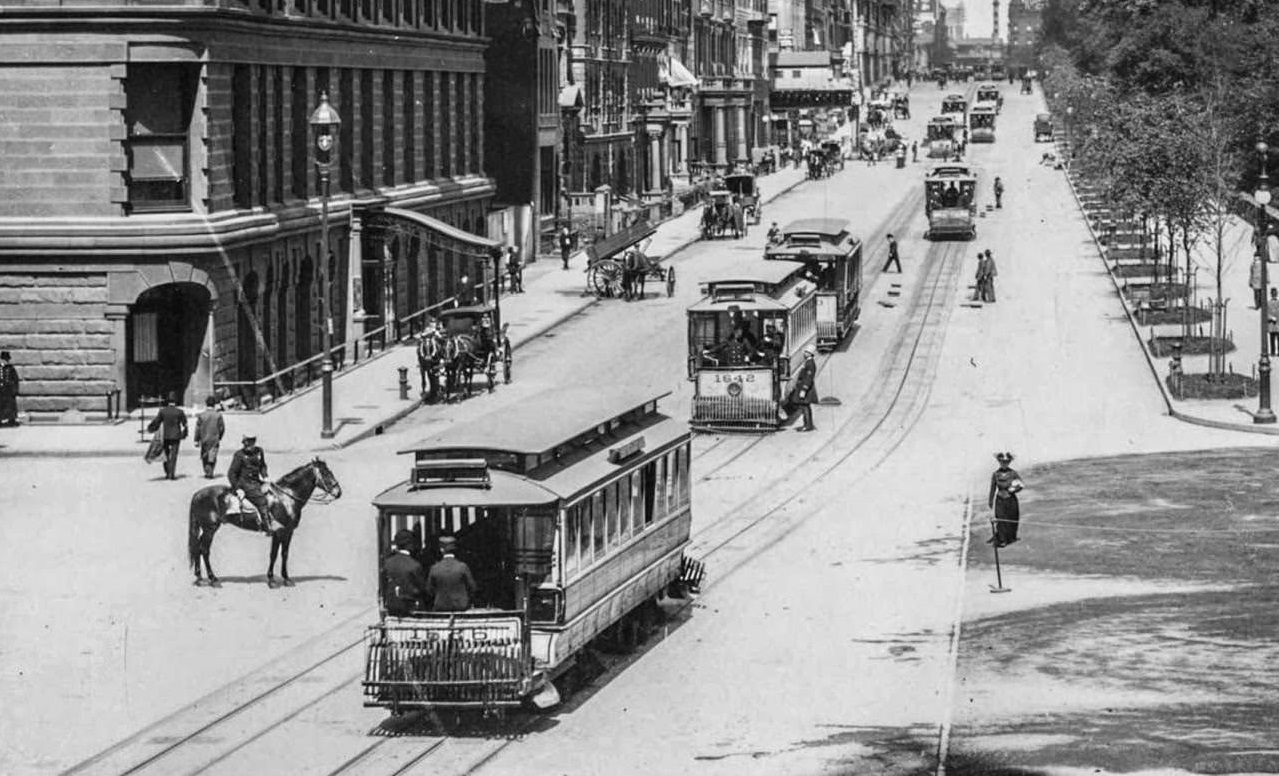
The streets of Helsinki in the 1890s were lively and layered. Bulevardi was one of the city’s main thoroughfares, lined with buildings that reflected the neoclassical and emerging Jugendstil styles of the era. Everyday commerce filled the sidewalks — vendors, shoppers, and workers all moved through the same urban space. Small sellers, like the balloon vendor on Yrjönkatu, were a common sight.

The Finnish National Theater stood as a landmark of Finnish-language culture at a time when Swedish dominated much of public life. Its presence near the central railway station square put it at the heart of the city’s foot traffic. The theater was a deliberate statement — Finnish art, performed in Finnish, for a Finnish audience.


Helsinki’s rapid growth in the 1890s meant constant construction. Workers built new apartment blocks, public buildings, and infrastructure across the city. These laborers were part of a working class that faced hard conditions — long hours, low pay, and overcrowded housing in the city’s eastern neighborhoods. The Finnish Social Democratic Party, founded in 1899, emerged directly from this environment, pushing for workers’ rights in the face of opposition from Russian authorities.


Esplanadi Park was one of Helsinki’s most visited public spaces. Locals strolled its paths, sat on benches, and gathered for outdoor events. A girl selling lottery tickets there captures something real about daily life in the city — children participating in street commerce was entirely ordinary. The park sat between the Northern and Southern Esplanadi streets, close to the harbor and market square.


Helsinki’s geography is defined by its archipelago — a sprawling network of islands and inlets that shaped how the city grew and how its people lived. The sea was not just a backdrop. It was a working waterway, used for fishing, transport, and trade. Steamships connected the islands and linked Helsinki to ports across the Baltic.


Helsinki Zoo, located on Korkeasaari island, opened in 1889 — making it one of the oldest zoos in the world still in operation. It was a popular destination for families and reflected the city’s interest in public institutions that educated and entertained. The surrounding archipelago islands, like Itätoukki, offered residents a natural escape from the growing urban center.


Kaivopuisto was Helsinki’s most fashionable park, popular with the city’s upper classes. It sat on a peninsula overlooking the sea, and its well-kept grounds attracted those who wanted to be seen as much as those who wanted to relax. Nearby, Kleinehs Hotel on Pohjoisesplanadi catered to wealthier visitors and locals, representing the more prosperous face of 1890s Helsinki.


The railway was central to Helsinki’s expansion. Locomotives moved goods and passengers through and into the city, connecting it to the wider Finnish railway network. Seeing a locomotive parked near the Market Square was not unusual — the rail infrastructure and the city’s commercial life overlapped directly in the harbor district.


May Day gatherings in Helsinki carried both festive and political weight. By the late 1890s, labor movements were growing across Europe, and Finnish workers used the occasion to express solidarity and demand better conditions. Mikonkatu, one of the city’s central streets, showed a quieter side of urban life — steady, commercial, and increasingly busy.


The Northern Esplanadi was one of Helsinki’s most important streets, running parallel to the park and lined with prominent buildings, shops, and hotels. Street scenes from the 1890s show a city that was clearly urban but not yet overwhelmed by scale — horse-drawn carriages, pedestrians in period dress, and shop fronts that mixed Finnish and Swedish signage.


The Opera Cellar was one of Helsinki’s well-known dining establishments, attracting a mix of professionals, artists, and city officials. Restaurants like this served as informal meeting places where political and cultural ideas circulated freely — at least until Russian censorship tightened its grip in the late 1890s during the so-called February Manifesto period.


St. Nicholas’ Church — today known as Helsinki Cathedral — dominated Senate Square and the city’s skyline. Completed in 1852, the neoclassical building with its distinctive green dome was designed by Carl Ludwig Engel. People gathered on its broad steps and in the square below for everything from religious services to public events. Its presence anchored the political and spiritual center of the city.


Public parks were essential to Helsinki’s social life. The Old Church Park offered shade and open space in the middle of a dense neighborhood. Out on the water, boat trips through the archipelago were a common leisure activity for those with time and means. The sea shaped not just the economy but the rhythm of daily life for many Helsinki residents.


Pitkäsilta — the Long Bridge — was more than just a crossing point. It marked a real social divide between the wealthier city center and the working-class neighborhoods to the north. Punavuori, to the south, was a densely built residential area. St. John’s Church, visible in the background of photos from that district, was completed in 1891 and served the growing population of southern Helsinki.


City workers repaired and expanded Helsinki’s streets throughout the decade. Cobblestone roads required constant maintenance, and new roads were being laid as neighborhoods expanded. The work was done entirely by hand — picks, shovels, and heavy stone — by laborers who earned low wages and worked long shifts.


Russian soldiers were a visible presence in Helsinki, particularly around Senate Square. Finland’s status as an autonomous grand duchy meant Russian military and administrative authority was always nearby. The sight of soldiers in the square was a constant reminder of that political reality. By contrast, the seashore of Töölönlahti offered a calm, natural setting just north of the city center.


Winter sport was deeply embedded in Finnish life. Ski jumping at Alppila drew crowds and reflected a culture that embraced outdoor activity even in harsh conditions. Alppila’s hill made it a natural venue, and competitions there were serious community events. Sport, like art, was part of how Finns expressed a shared identity during a politically constrained decade.


The South Harbour was the beating heart of Helsinki’s trade network. Ships loaded and unloaded cargo daily, connecting the city to ports across the Baltic Sea. The steamship Arcturus was one of the vessels making regular departures, carrying passengers and freight as maritime commerce grew steadily through the decade.


Sea bathing was popular in Helsinki, and purpose-built swim towers like the one in Merihaka gave residents a structured place to access the water. Segregated by gender, these facilities were part of the city’s public health infrastructure. Swimming was seen as both recreational and beneficial, and the city invested in facilities to support it.


The Market Square sat at the edge of the South Harbour and was the commercial center of the city. Vendors sold fish, produce, and crafts under open sky. Just a short distance away, the Bank of Finland and the National Archives stood as institutions of Finnish civic authority — financial and historical pillars of the autonomous grand duchy.


Seurasaari island housed a restaurant that drew visitors looking for a retreat from the city, set among forests and shoreline. Back in the city center, the Havis Amanda statue at the Market Square became one of Helsinki’s most recognized sculptures. Created by Ville Vallgren and unveiled in 1908, it represented the city of Helsinki rising from the sea — a young woman surrounded by sea lions and water.


Swedish-language names on vessels like the Nyländska Skärgården and Östra Skärgården reflect the bilingual reality of 1890s Helsinki. Swedish was still the dominant language of business, administration, and the educated class. The push to elevate Finnish to equal status was ongoing, and it played out in newspapers, theaters, and political debates across the city.


Ullanlinna was one of Helsinki’s more established residential neighborhoods, built on rising ground south of the city center. Its streets were lined with solid stone apartment buildings that housed middle-class families and professionals. The area’s elevated position offered views toward the sea and gave it a quieter character compared to the busy harbor district.


At night, the Helsinki Cathedral dominated the city’s skyline in a way that few other structures could match. Its white façade and green dome were visible from across the harbor. Senate Square, lit at night, gave the cathedral an imposing presence that underscored its role as both a religious and civic landmark.


Aleksanterinkatu was one of Helsinki’s central commercial streets, named after Tsar Alexander II. It ran through the heart of the city and was home to banks, shops, and offices. The street captured the dual nature of 1890s Helsinki — a Finnish city administered under Russian authority, where the names on streets told the story of political power.


The Ateneum Art Museum, which opened in 1887 and was designed by architect Theodor Höijer, became an important center for Finnish and international art. It was part of a broader cultural push to assert Finnish identity through art, literature, and music. Writers like Juhani Aho were producing work in Finnish that gave the language literary prestige. New artistic styles — symbolism and Jugendstil — were gaining ground alongside these national efforts.


The Eira and Ullanlinna neighborhoods — known also by their Swedish names Ulrikasborg — sat close to the waterfront in southern Helsinki. They were desirable areas, and their street layouts and architecture reflected careful city planning. The use of both Finnish and Swedish place names in official records was a daily reminder of the language politics running through every aspect of city life.


The area around the central railway station square brought together some of the city’s most important public institutions. The Finnish National Theater and the station itself made it a hub where culture and transport converged. Travelers arriving in Helsinki by rail were immediately placed at the center of Finnish civic life.


Helsinki’s port and railway station together formed the city’s logistical backbone. Goods arriving by sea were distributed by rail, and passengers moved between the two with ease. The expansion of both systems in the 1890s was a direct result of the city’s growing role as a trading center within the Baltic region.


Erottaja was a busy intersection where several of Helsinki’s main streets met. The Swedish Theater stood prominently there, serving the city’s Swedish-speaking community with plays and performances in their language. From higher ground, the view over Punavuori and Ullanlinna showed a city that was densely built and still expanding outward.


May Day in Helsinki was observed with growing intensity as the labor movement gained momentum. Workers marched and gathered publicly, demanding recognition and rights. The same city that sent steamships across the Baltic and built grand neoclassical institutions was also a city of political tension — one where the Russian government was actively suppressing Finnish political organizing.


The Bank of Finland and the National Archives represented two pillars of Finnish institutional authority that functioned within the framework of Russian imperial oversight. The Bank managed the Finnish markka, Finland’s own currency — a significant sign of the grand duchy’s autonomy. Street life nearby, like the lottery ticket seller in Esplanadi Park, carried on regardless of the political tensions above.


The construction and repair of Helsinki’s streets was an ongoing effort throughout the 1890s. Corners like Lapinlahdenkatu and Albertinkatu, and major roads like Bulevardi, were part of a street grid that was being formalized and extended as the city’s population grew. The physical city was being built in real time by the same working class that was beginning to organize politically.


Street-level views of 1890s Helsinki capture the texture of daily life with unusual clarity. The mix of commerce, transit, and pedestrian activity on streets like Mikonkatu shows a city that was genuinely urban — not just in its institutions, but in how its people moved through and used public space every day.


Aleksanterinkatu and the Northern Esplanadi formed the commercial and social spine of central Helsinki. Between them lay the Esplanadi Park, where people of all classes walked, rested, and gathered. The Old Student House nearby remained a focal point for Finnish-language intellectual life — a place where the question of what it meant to be Finnish was actively debated.


Huvilakatu, known by its Swedish name Villagatan, ran through the Eira district near the sea. Its villa-style buildings gave the street a more residential and relaxed character than the commercial center. Simonkatu, further north, showed a different face of the city — busier, more commercial, and tightly woven into Helsinki’s daily economic life. Together, these streets show the range of a city that was small in population but rich in variety.



So many people on the streets, and no one is staring at their phone!