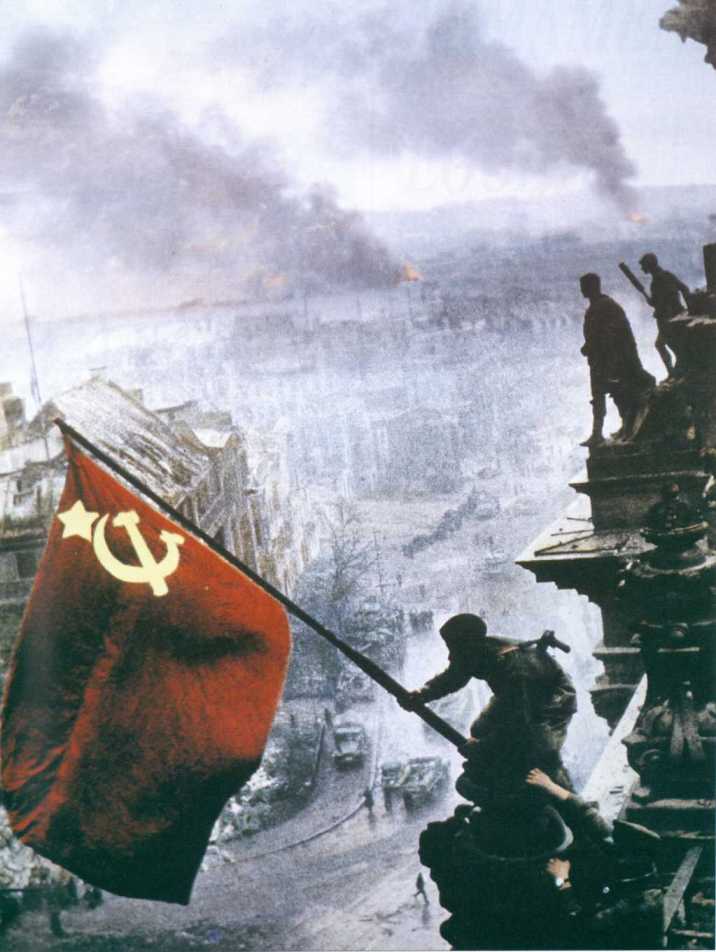
On May 2, 1945, a photograph was taken on the rooftop of the Reichstag in Berlin that would come to define the end of World War II in Europe. It showed a Soviet soldier hoisting a large red flag above the shattered husk of Nazi Germany’s most symbolic building. The image traveled around the world almost instantly. But the story behind it — who took it, how it was set up, and what was quietly changed afterward — is far more layered than the photo itself suggests.
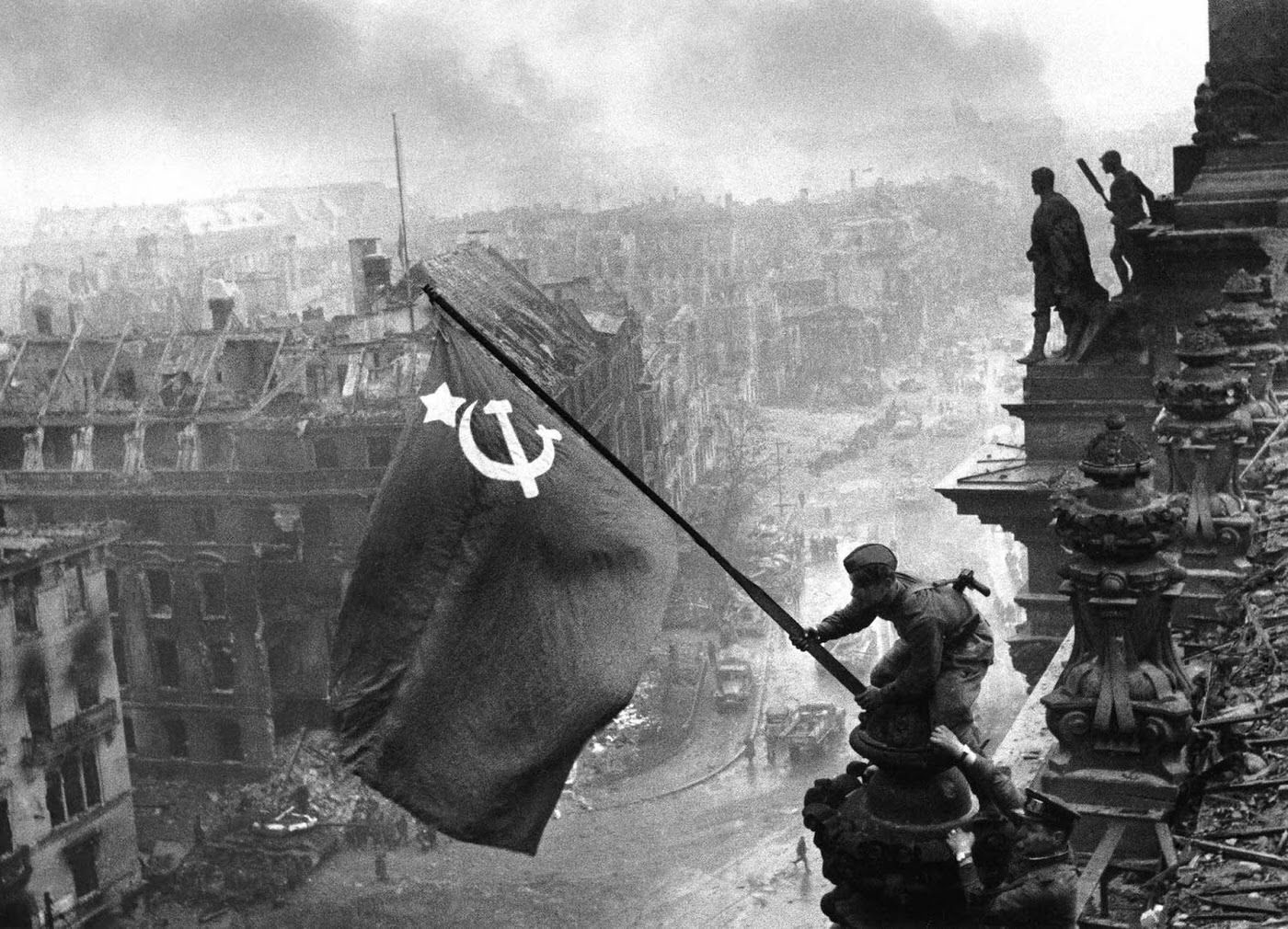
The man behind the camera was Yevgeny Khaldei, a Jewish photographer from Ukraine working for TASS, the Soviet state news agency. His motivation for being there was deeply personal. German forces had executed his father and three of his four sisters during the Holocaust. Khaldei had spent the war years documenting the Soviet fight against Nazi Germany, and capturing the fall of Berlin was the assignment he had been working toward the entire time. Khaldei did not arrive at the Reichstag empty-handed. He had brought a large red flag with him, sewn by his uncle, a tailor. The flag was not a spontaneous prop — it was carried in his luggage specifically for this moment. Khaldei had planned the shot in his mind long before he reached Berlin.
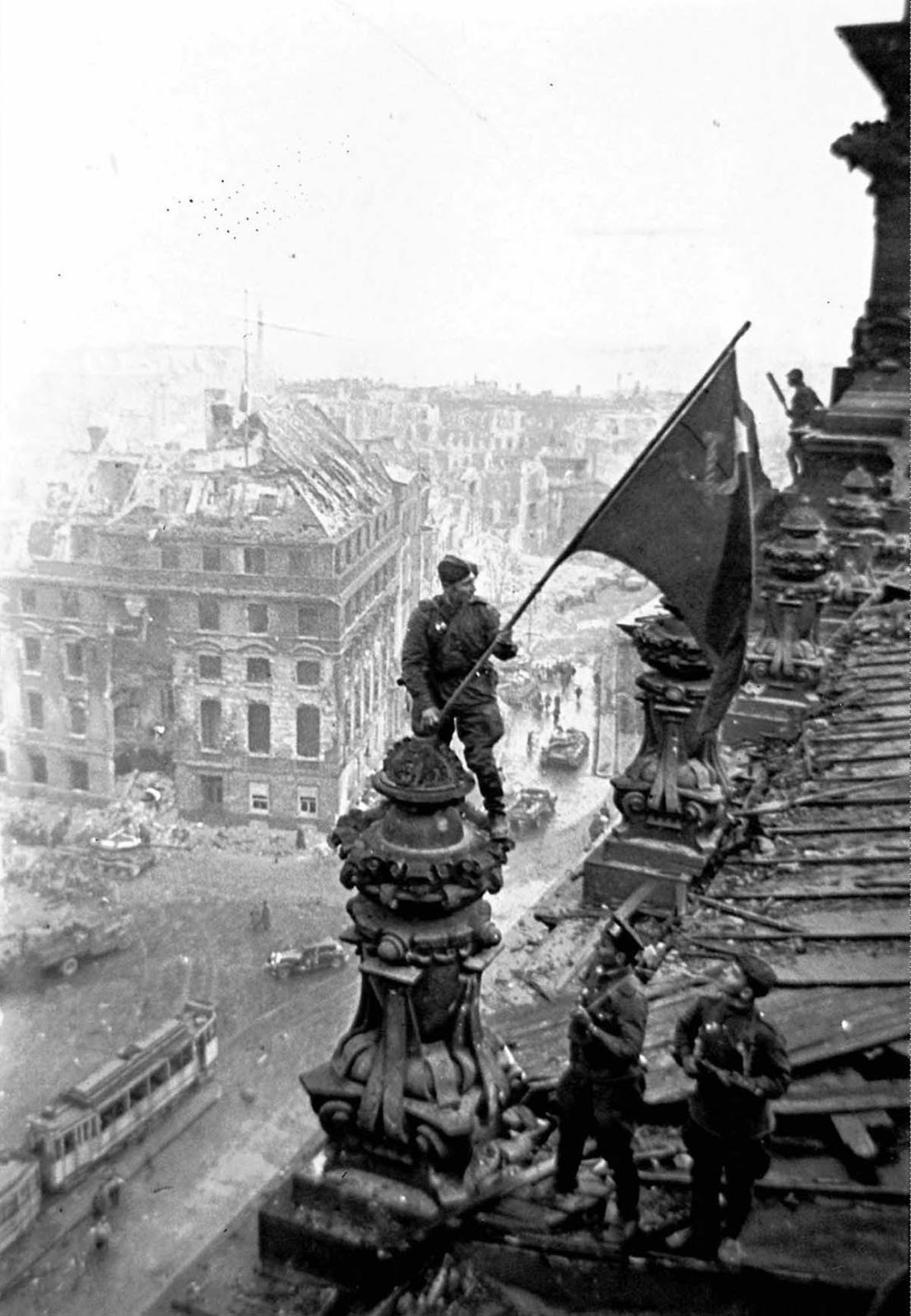
The Reichstag itself was a ruin by the time Khaldei got there. Years of bombing and the brutal street-by-street fighting of the Battle of Berlin had reduced the once-grand parliamentary building to a gutted, blackened shell. Rubble covered every floor. Unexploded ordnance and the threat of snipers still made the building dangerous. Khaldei persuaded two soldiers to climb to the roof with him: Abdulkhakim Ismailov and Aleksei Kovalev. Under his direction, they raised the flag while he photographed them. The session was not a single spontaneous snap. Khaldei had the soldiers repeat the flag-raising multiple times, adjusting their positions and angles between shots to get the composition exactly right. The resulting photograph was a deliberately crafted image, not a candid moment.
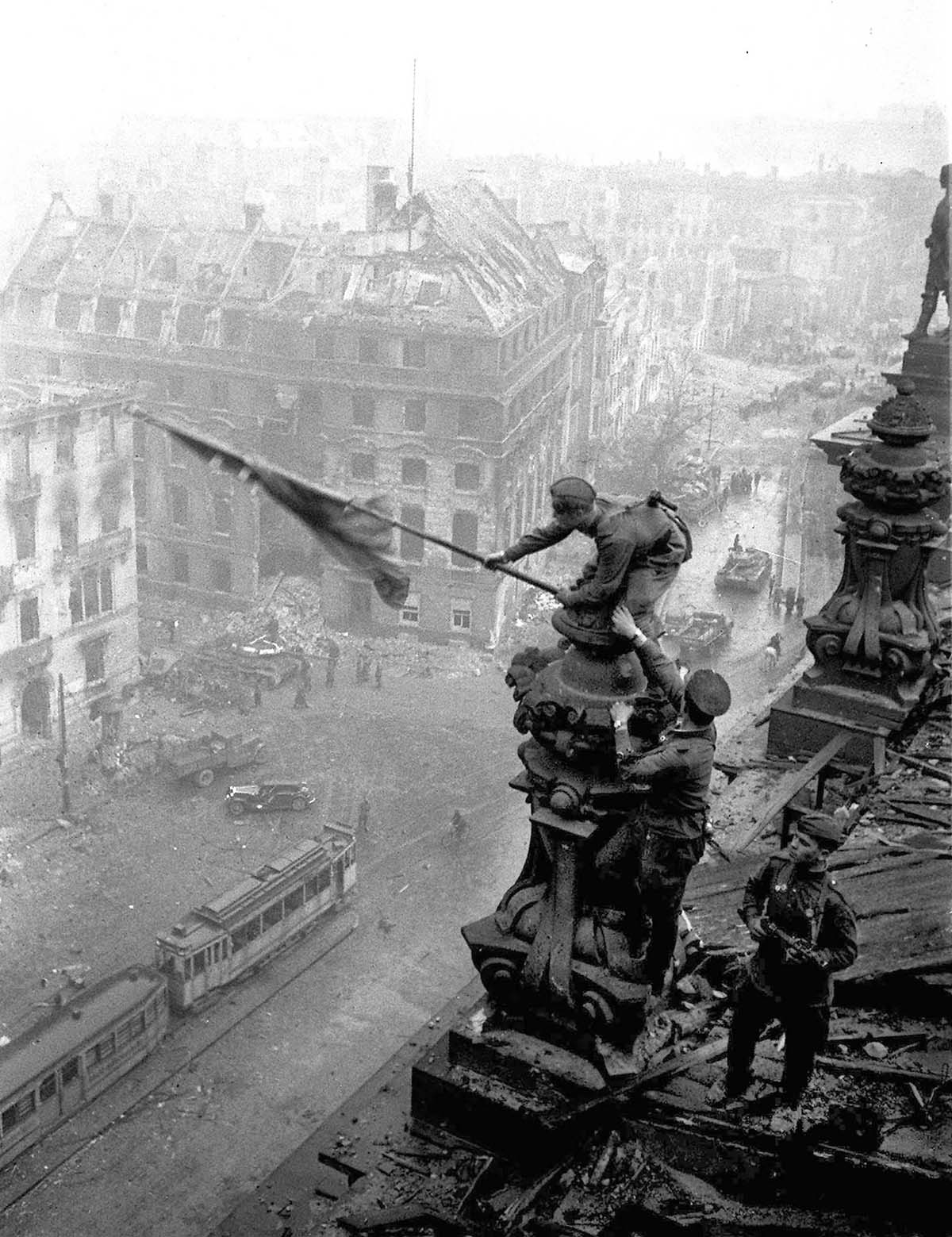
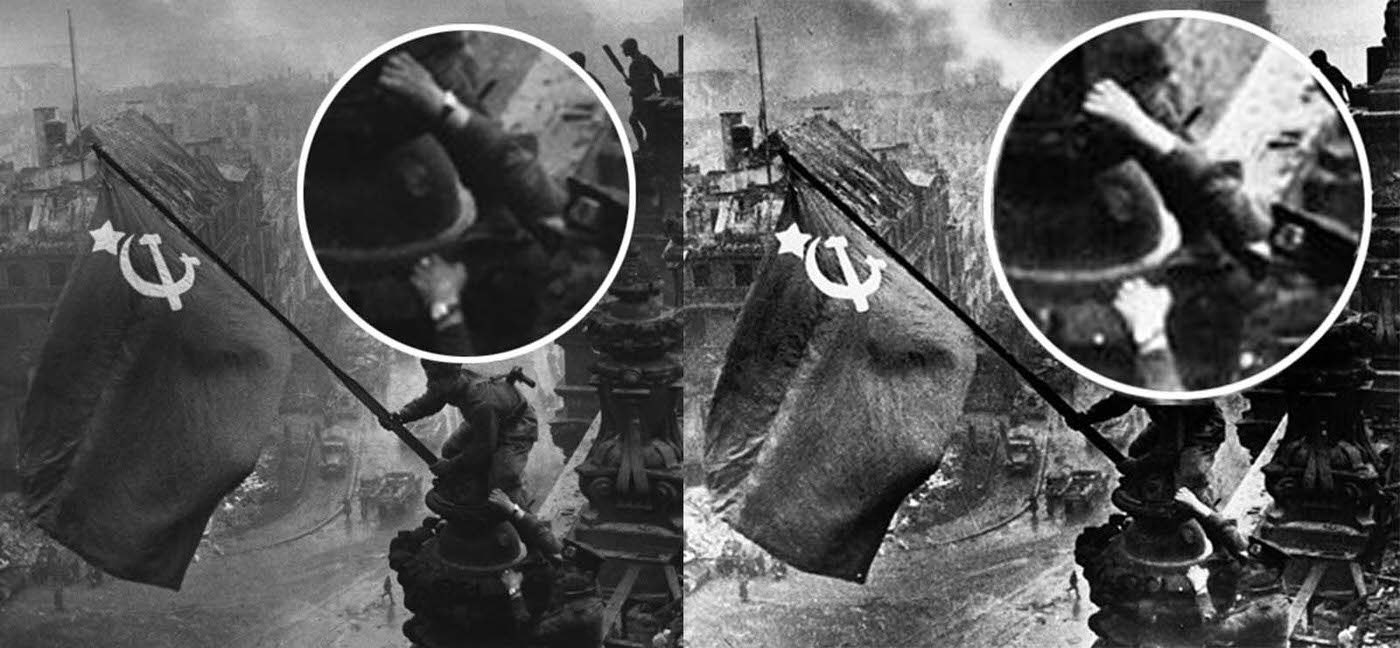
When Khaldei returned to Moscow with his negatives, the image almost immediately ran into trouble. Soviet censors reviewing the photograph spotted something embarrassing: one of the soldiers had a wristwatch on each wrist. In the context of Soviet-occupied Berlin, wearing two watches was a clear sign of looting from German civilians or homes. This was not the image of righteous Soviet victory that the state wanted to project. The extra watch was airbrushed out of the published version of the photo.
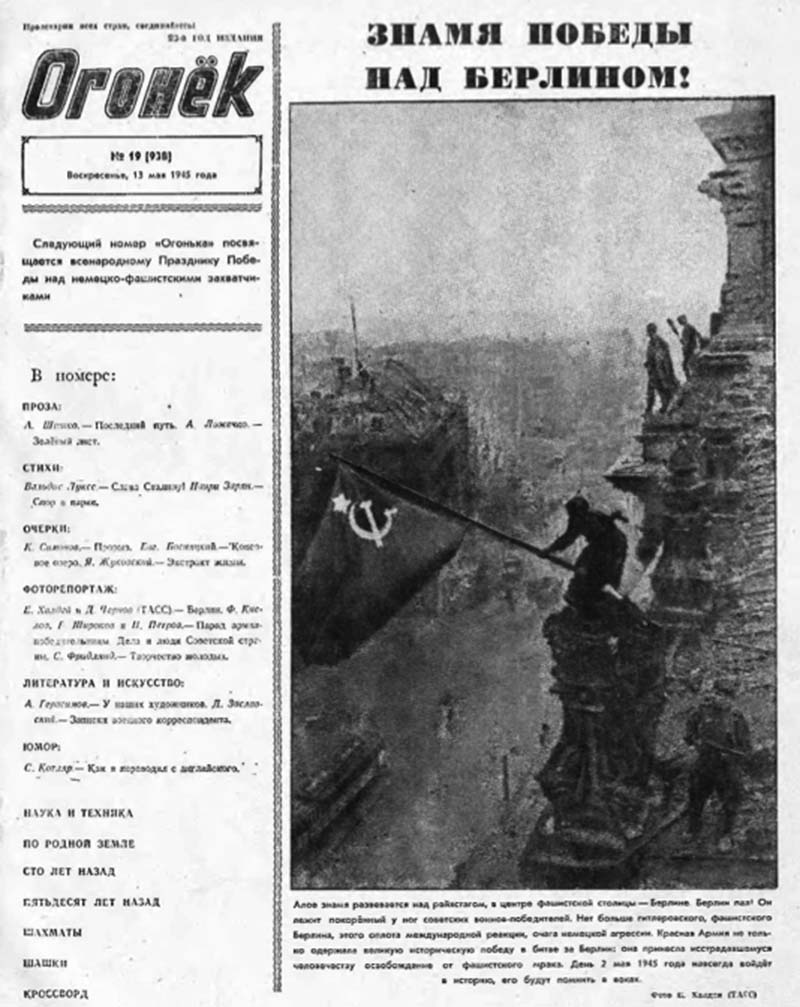
The retouching did not stop there. The smoke billowing in the background of the original photograph was darkened and intensified in post-processing to give the scene a more dramatic, battle-worn appearance. What reached the public was a polished, state-approved version of events — not a raw document of what Khaldei’s lens had actually captured. The photograph was published in the Soviet magazine Ogonjok and spread widely from there.
The identity of the soldiers in the image was also misrepresented for decades. Soviet authorities initially named the flag-bearer as Meliton Kantaria, a Georgian soldier whose identity carried political value for the state. That false identification went unchallenged for fifty years. It was only in 1995, during the 50th anniversary commemoration of the war’s end, that Russian journalists conducted a thorough investigation and correctly identified the men as Ismailov and Kovalev. Outside the Soviet Union, the photograph was read very differently than it was at home. Western allies saw not just a victory image but a warning sign — the red flag planted deep in the heart of Europe signaling the start of Soviet dominance over Eastern Europe and the opening of what would become the Cold War. Khaldei continued working as a photographer after the war and lived to see his image become one of the most reproduced photographs of the 20th century. He died in Moscow in 1997. The photograph he staged on that ruined rooftop — altered, argued over, and politically charged from the moment it was developed — remains one of the most studied and debated images in the history of photojournalism.