
On a winter night in 1999, a man named Olivier Rempfer was walking through the southeastern French town of Cagnes-sur-Mer when something caught his eye — a wooden box sitting on top of a trash container. He picked it up and found cylindrical objects wrapped in paper inside. They were rolls of black and white 35mm film. When he held the filmstrips up to the light, he saw men in uniforms, barracks, guard towers, and people dressed in costumes on a stage. He assumed they were stills from a movie set and set the box aside.
The box sat forgotten for years until Olivier’s father, Alain Rempfer, found it. Alain was a photographer, and the old film reels immediately intrigued him. In 2003, he used a film scanner to digitize the roughly 300 images. As the photos came into focus on his screen, he realized these were not movie stills. These were real photographs taken inside a prisoner-of-war camp during World War II. The brand name “Voigtländer” — a German camera manufacturer — was printed along the edge of the film, confirming their authenticity.
One photograph provided the key to identifying where the images were taken. It showed soldiers seated on the back of a truck, with the words “PW CAMP MURNAU” and the letters “PL” clearly painted on its side. Research confirmed that Murnau, a town in Germany, housed a POW camp for Polish officers from 1939 to 1945. The camp was officially designated Oflag VII-A.
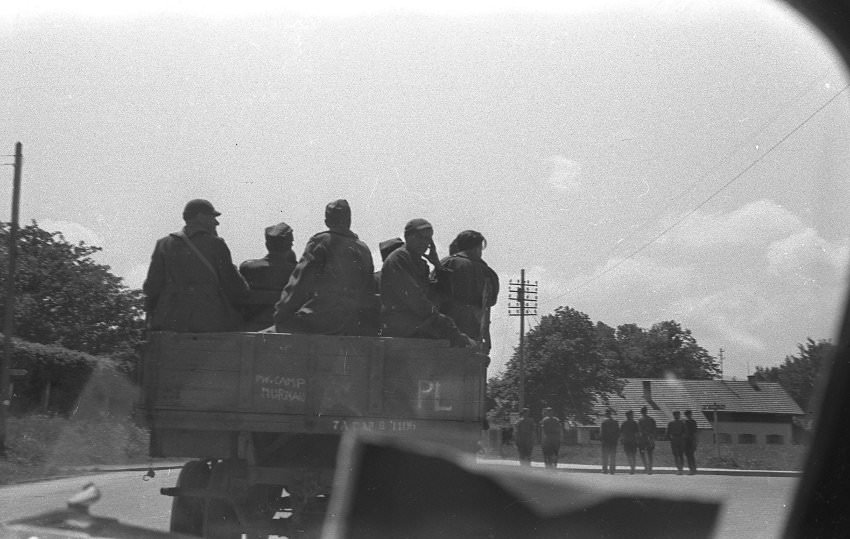
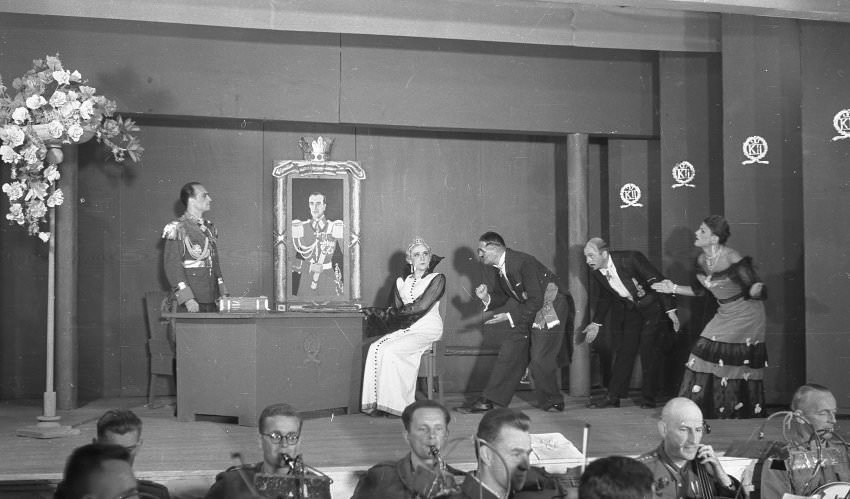
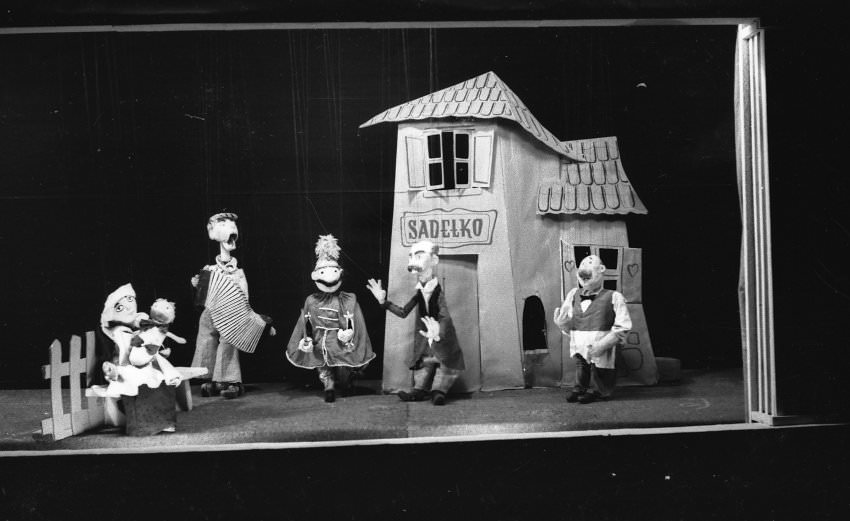
Life inside Oflag VII-A was not solely defined by hardship. The Polish officers held there were permitted certain activities to pass the time. One of the more striking aspects of camp life was theatrical performance. The prisoners staged plays and operettas for audiences that sometimes included German soldiers and their families. Since no women were held at the camp, male prisoners took on the female roles themselves.
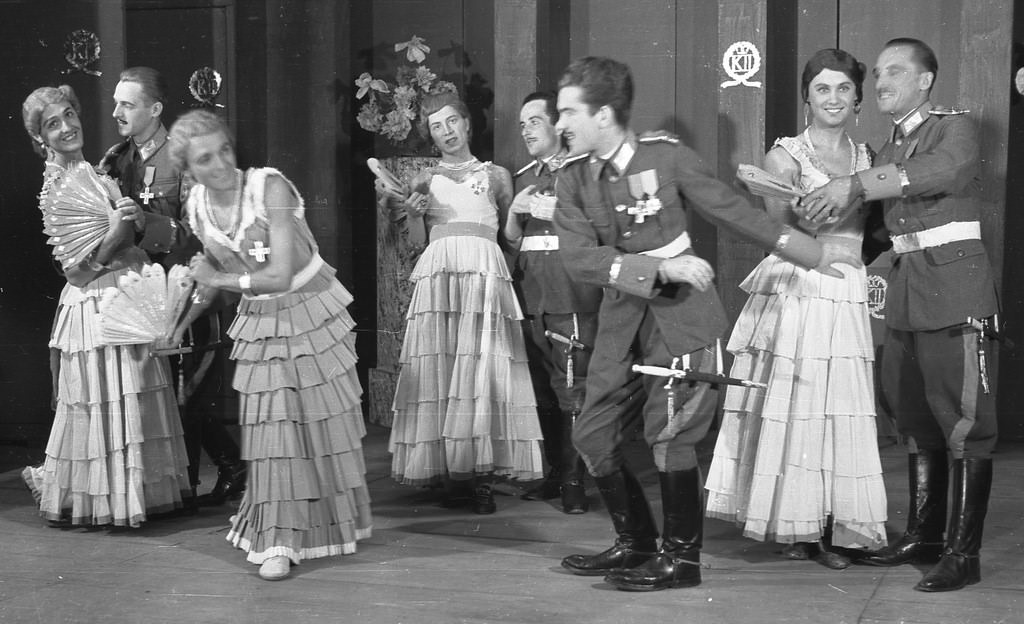
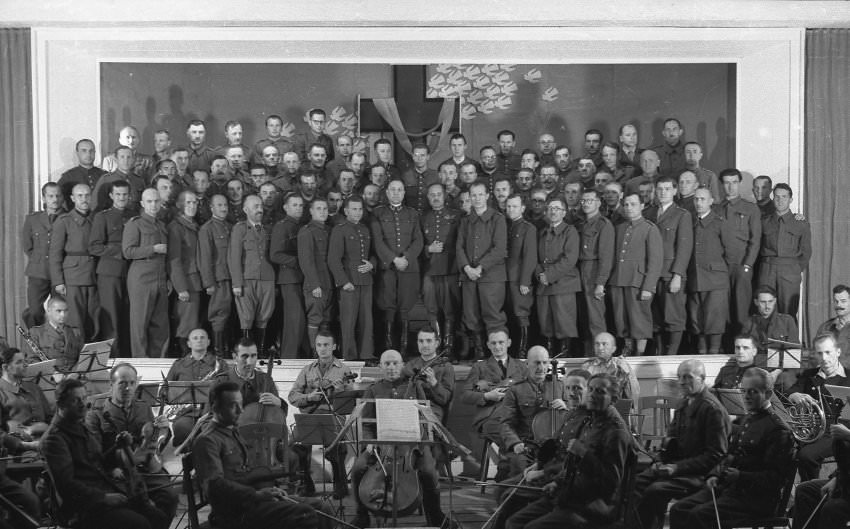
The photographs capture a full range of camp activities. There was a functioning orchestra, a marionette theater, and organized performances on a proper stage. These were not small, informal gatherings — they were structured productions with costumed performers and seated audiences.
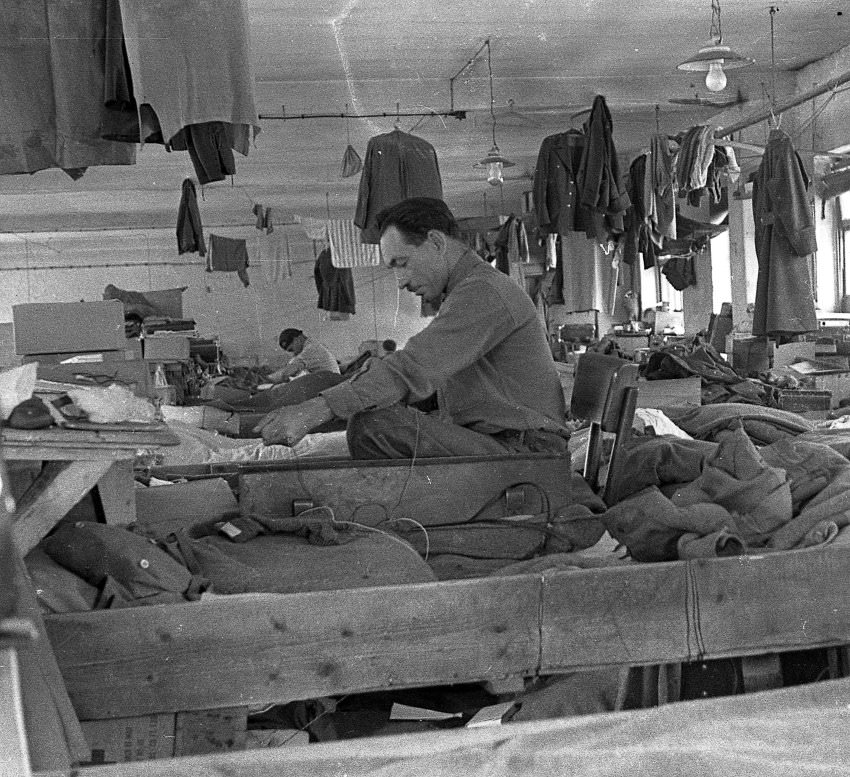
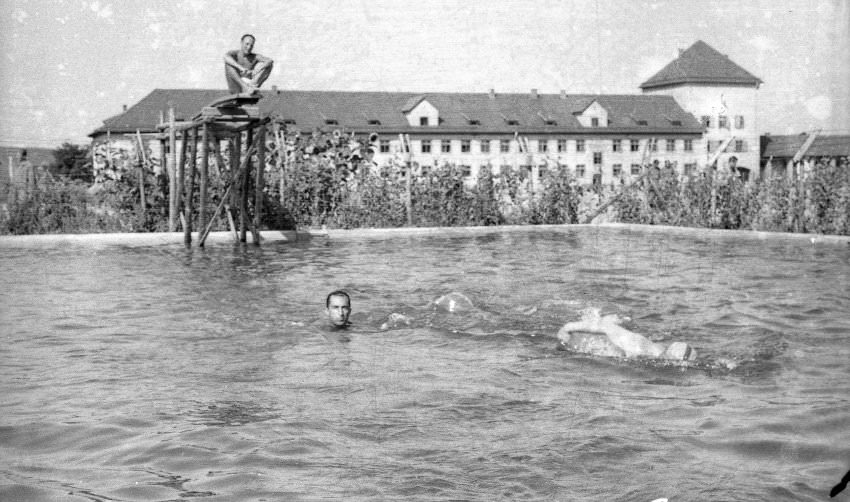
Other photos show the physical layout of the camp — the barracks where junior officers and regular soldiers were housed, and outdoor areas that, at first glance, look deceptively ordinary.
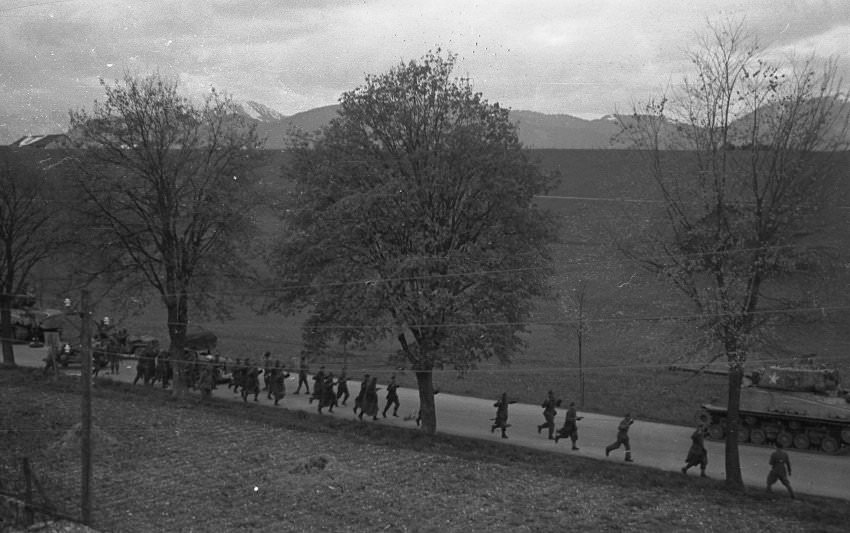
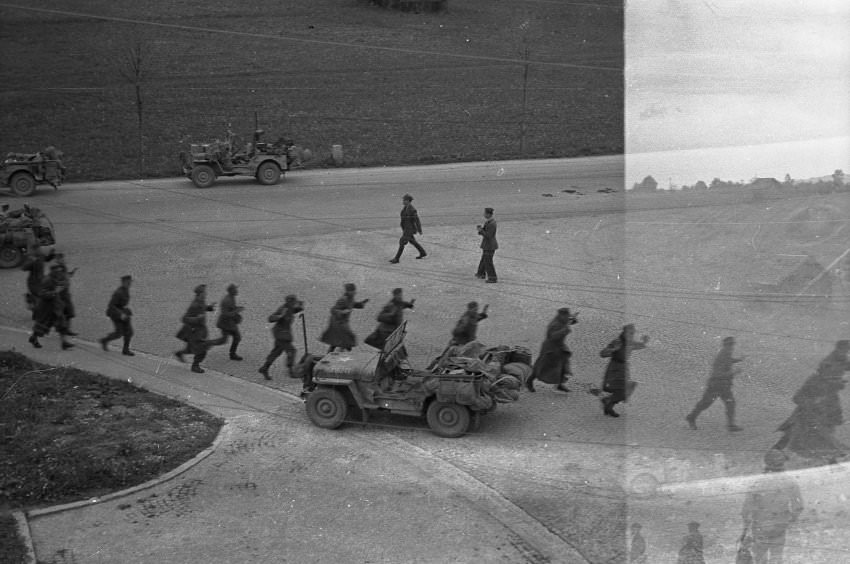
The most dramatic photographs in the collection document the final day of the camp’s existence. On the afternoon of April 29, 1945, American soldiers advanced on Murnau from the north. An unknown photographer — believed to be one of the prisoners — captured the entire event from a window inside the camp.
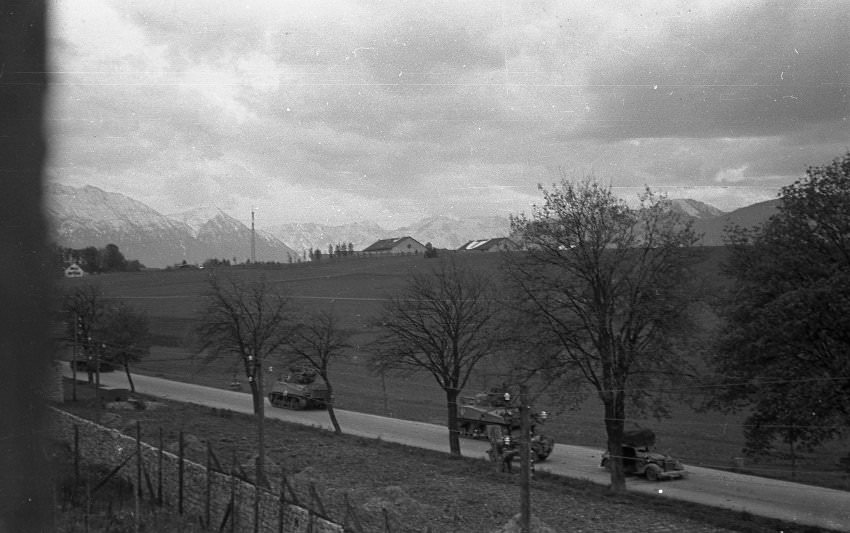
The Americans met German forces in front of the camp, and a firefight broke out. Most of the German soldiers turned and fled back toward Murnau. Some prisoners climbed the fences and fired at the Americans. The photographer documented each stage of the confrontation in sequence.
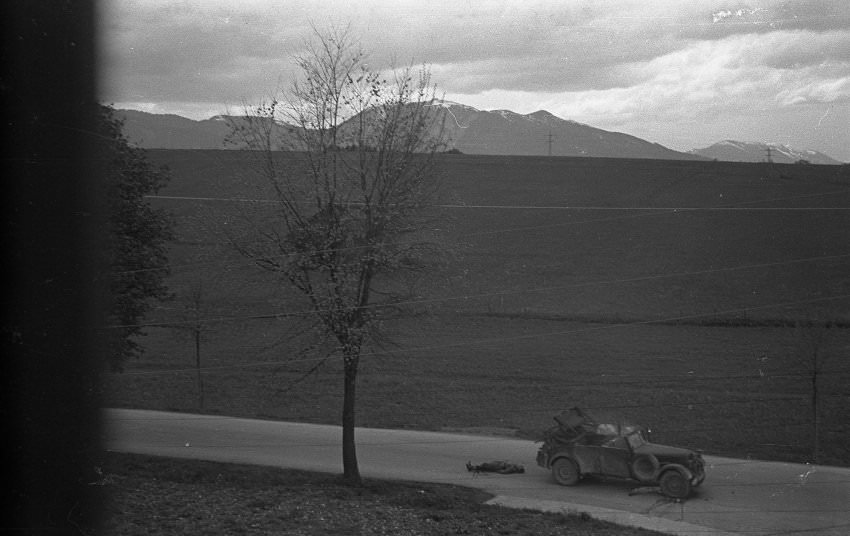
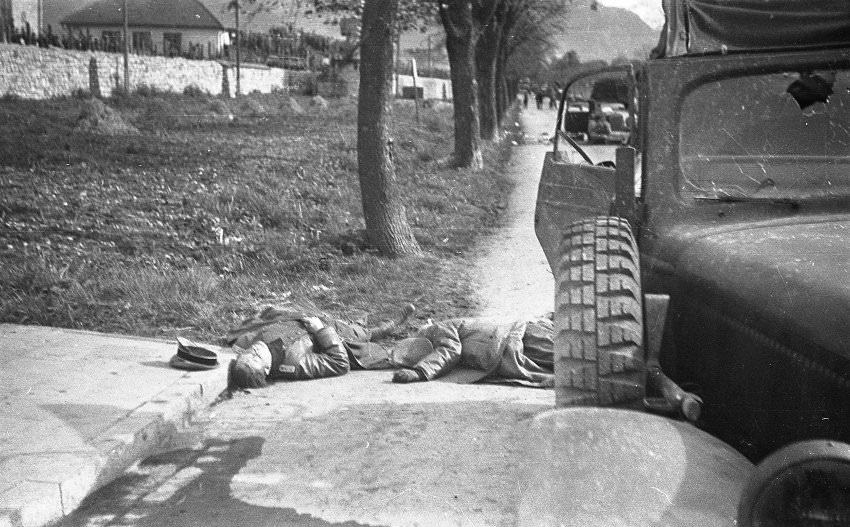
Two SS officers — Colonel Teichmann and Captain Widmann — were killed during the confrontation. The photographer captured their bodies in the street, then later moved outside the camp to photograph them again after they had been moved to the side of the road.
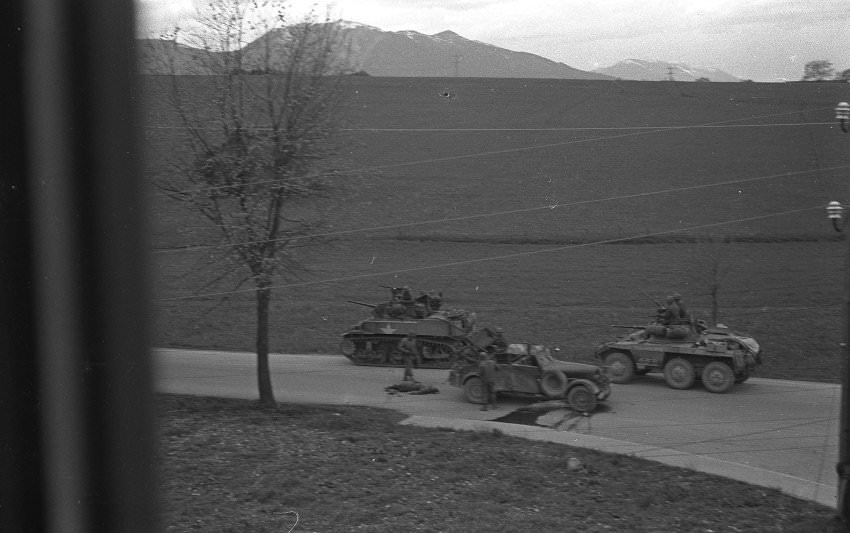
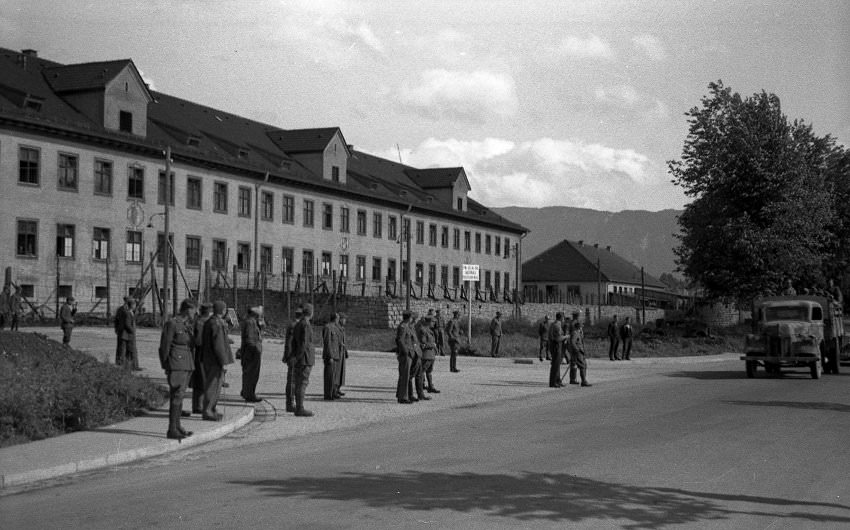
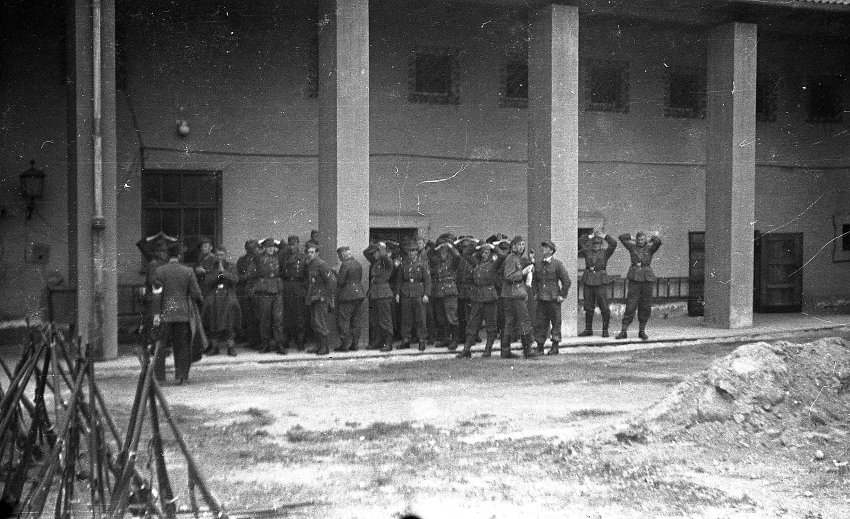
By the end of April 29, 1945, approximately 5,000 Polish prisoners at Oflag VII-A were liberated. The photos that follow show the immediate aftermath — former guards surrendering their weapons, prisoners relaxing outside the barracks, and men preparing to leave the camp for the first time in years.
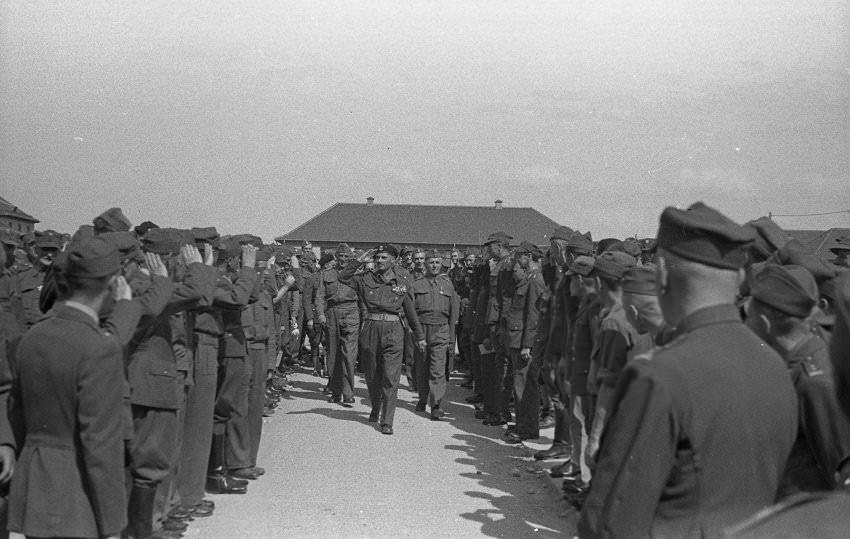
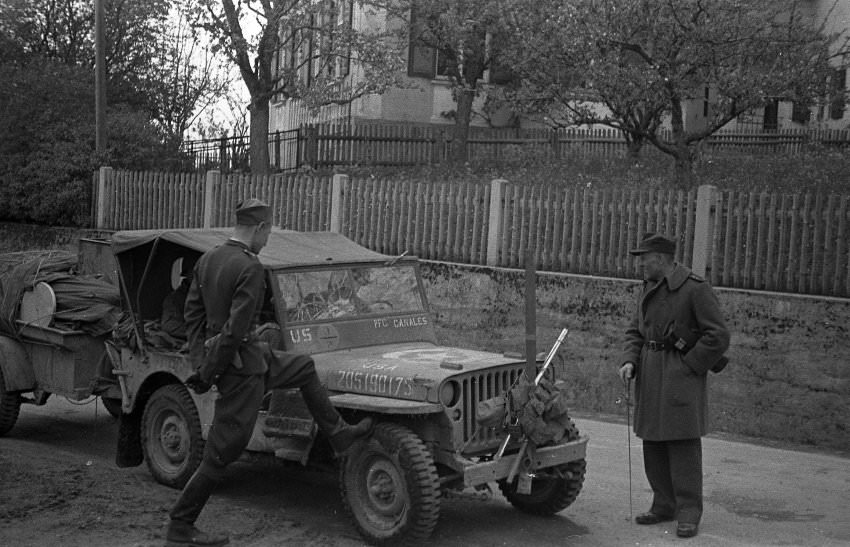
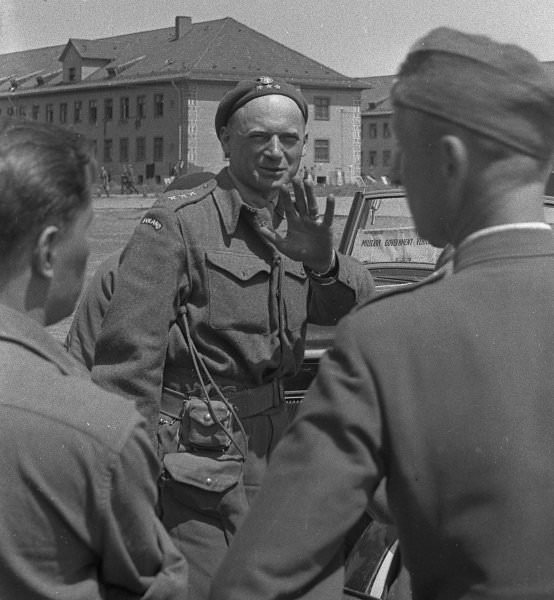
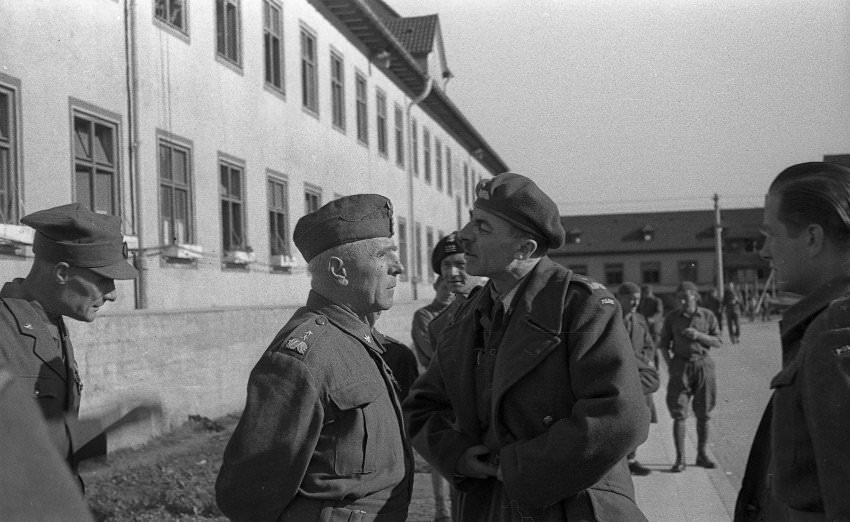
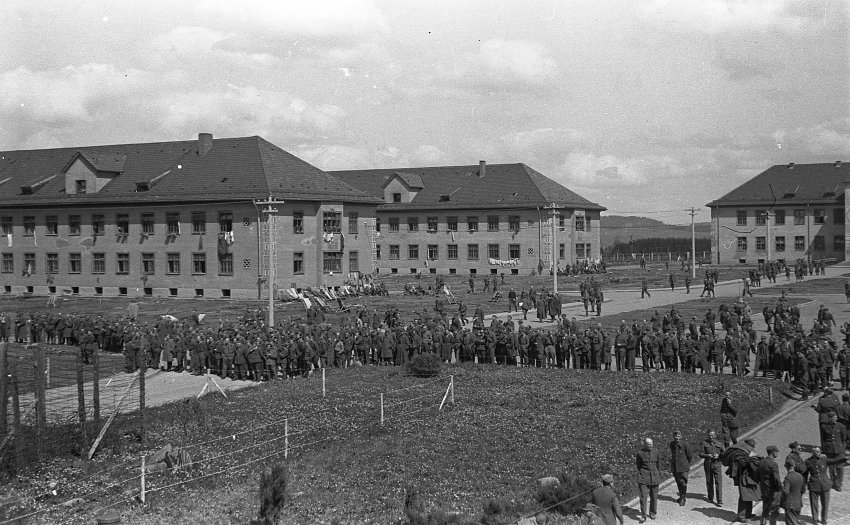
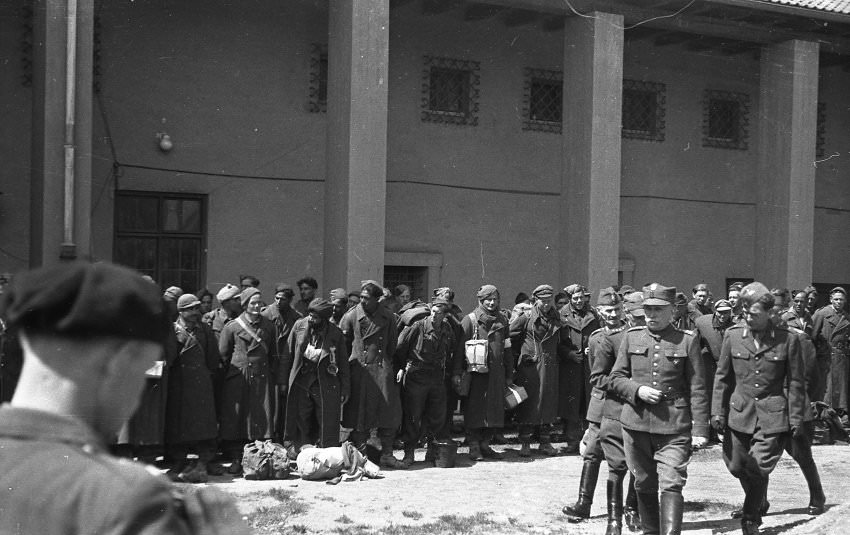
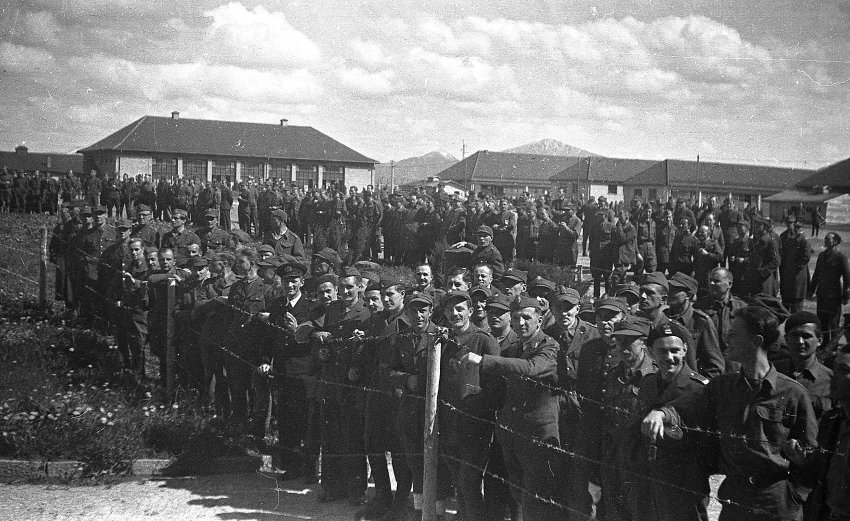
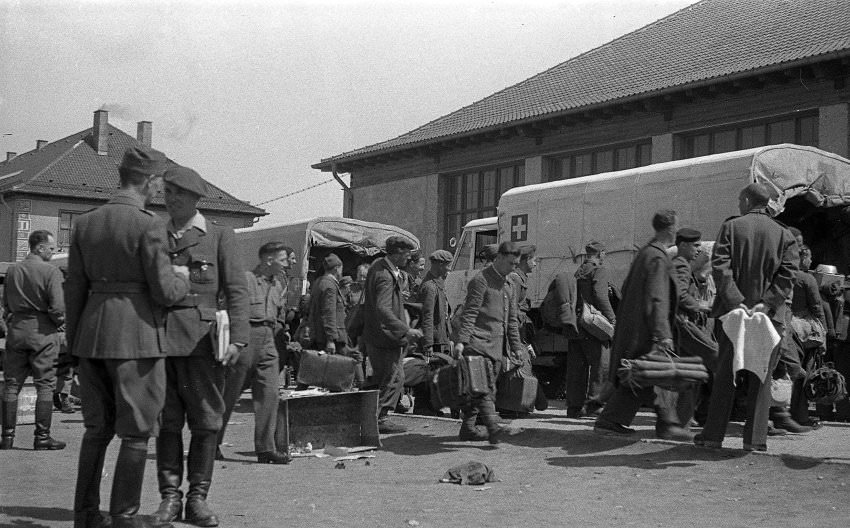
Looking at the faces in these photos, Alain Rempfer felt the weight of what he was holding. “All these young men looked right at us through the camera, during the time they lived in the camp,” he said. “And we don’t know their names or what their daily life was like there, we don’t know anything about their hopes, their feelings.” That sense of connection — and loss — drove the Rempfers to build a website to share the images publicly. Their goal was straightforward: reach historians, researchers, and above all, the families of the men in the photographs. Someone, they believed, would recognize a face.
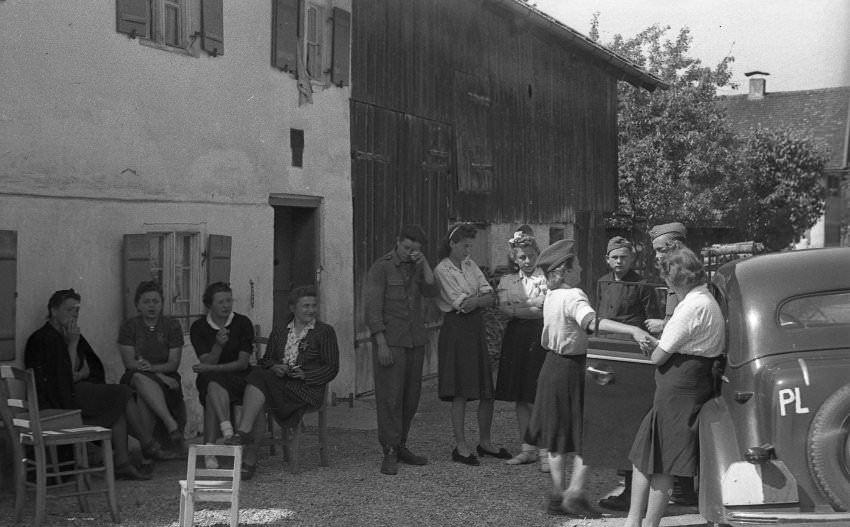
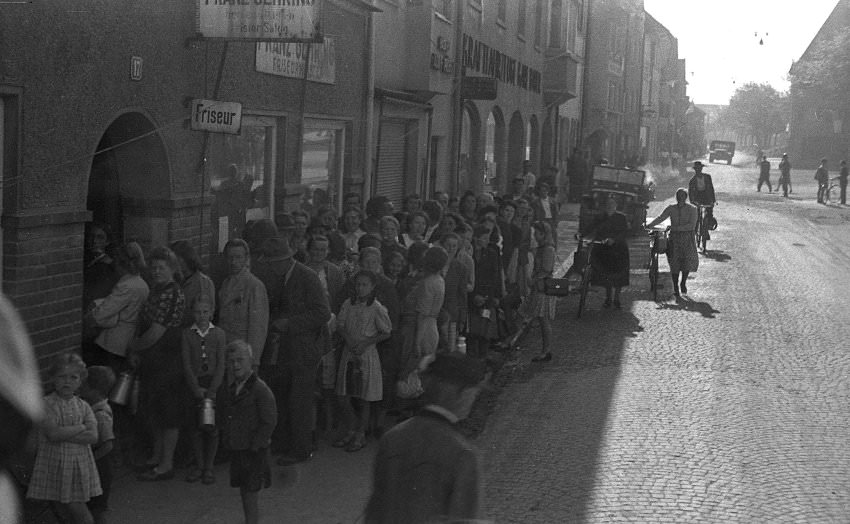
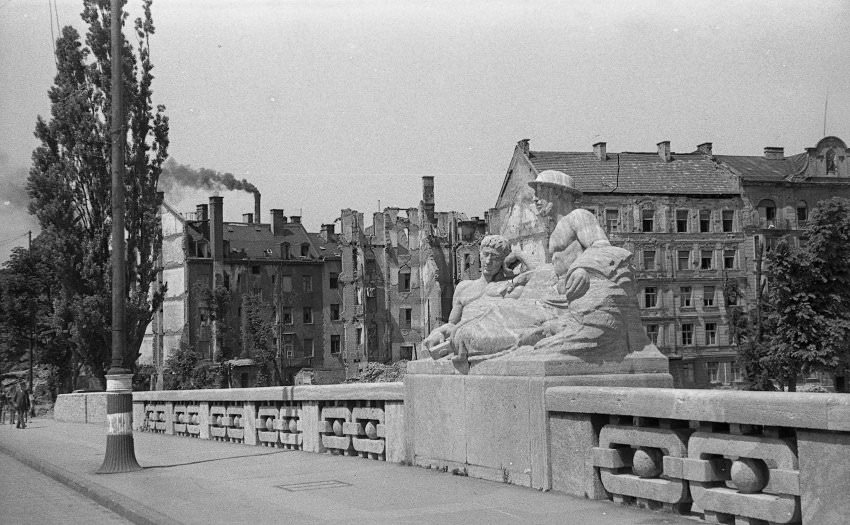
Not all of the photographs were taken inside the camp. Several images show scenes from nearby Munich, including civilians standing in line for milk and the city’s Reichenbach Bridge surrounded by the ruins of bombed-out buildings — a stark reminder of what the war had done to Germany itself.



does anyone else find the photos of entertainment and art dissonant from what we learned about POW treatment elsewhere?
These are military prisoners of the Wehrmacht and officers to boot. That is a completely different story from final solution death camps kept by the Totenkopf SS. Compare these with the death camps at Dachau and Auschwitz. POWs versus Holocaust victims.
I found that dubious. Must have meant guards. Great pics, though.
Prisoners shot at Americans? Any more details?
It’s probably a mistranslation from the german expression “anfeuern” (cheering for s.o.).
“an” = on + “feuern” = to fire –> “anfeuern” ≠ to fire on s.o.
The inmates were cheering for the americans during the firefight.
https://www.spiegel.de/geschichte/offizierslager-in-hitler-deutschland-bilderfund-aus-dem-oflag-murnau-a-951017.html
I doubt if the prisoners had guns to shoot with.
Mistranslation.
My grandfather was imprisoned at Stalag VII A for a time. This is really cool, thank you for sharing!
I love when old WW2 photos are found, especially when they show a little known part of it, such as the Sobibor album or the Auschwitz officers retreat.
Here is an absolutely fantastic, must read article on the Auschwitz officers album if you’re interested:
https://www.newyorker.com/magazine/2008/03/17/picturing-auschwitz
When my great aunt passed we found a photo album her husband had brought back from his time in WW2, it contained a bunch of old photos of concentration camps that he had brought back from the war, we brought them to a local holocaust memorial as they keep a digital archive for folks to identify loved ones and so that it isn’t forgotten. He never talked about the war, and after looking through that album it was obvious why not.
The captions in the article seem strange. I don’t know how they determined some of it, such as that Polish prisoners were shooting at the Americans.
Some prisoners climbed the fence and started shooting at the Americans alongside the SS?
They probably lived so long with German war time propaganda they believed just as much as the Germans that the Americans were more or less the same as the soviets. The polish allied officers were probably sent to calm them down.
It’s probably a mistranslation from the german expression “anfeuern” (cheering for s.o.). “an” = on + “feuern” = to fire –> “anfeuern” ≠ to fire on s.o.
The inmates were cheering for the americans during the firefight. https://www.spiegel.de/geschichte/offizierslager-in-hitler-deutschland-bilderfund-aus-dem-oflag-murnau-a-951017.html