

By December 1941, World War II had been grinding on for over two years. German forces were deep into the Soviet Union, the Holocaust was accelerating, and millions were dead. Yet on December 18, 1941, Adolf Hitler and a gathering of senior Nazi officials sat down for a Christmas party at a Munich beer house. A series of rare color photographs captured the event in full.
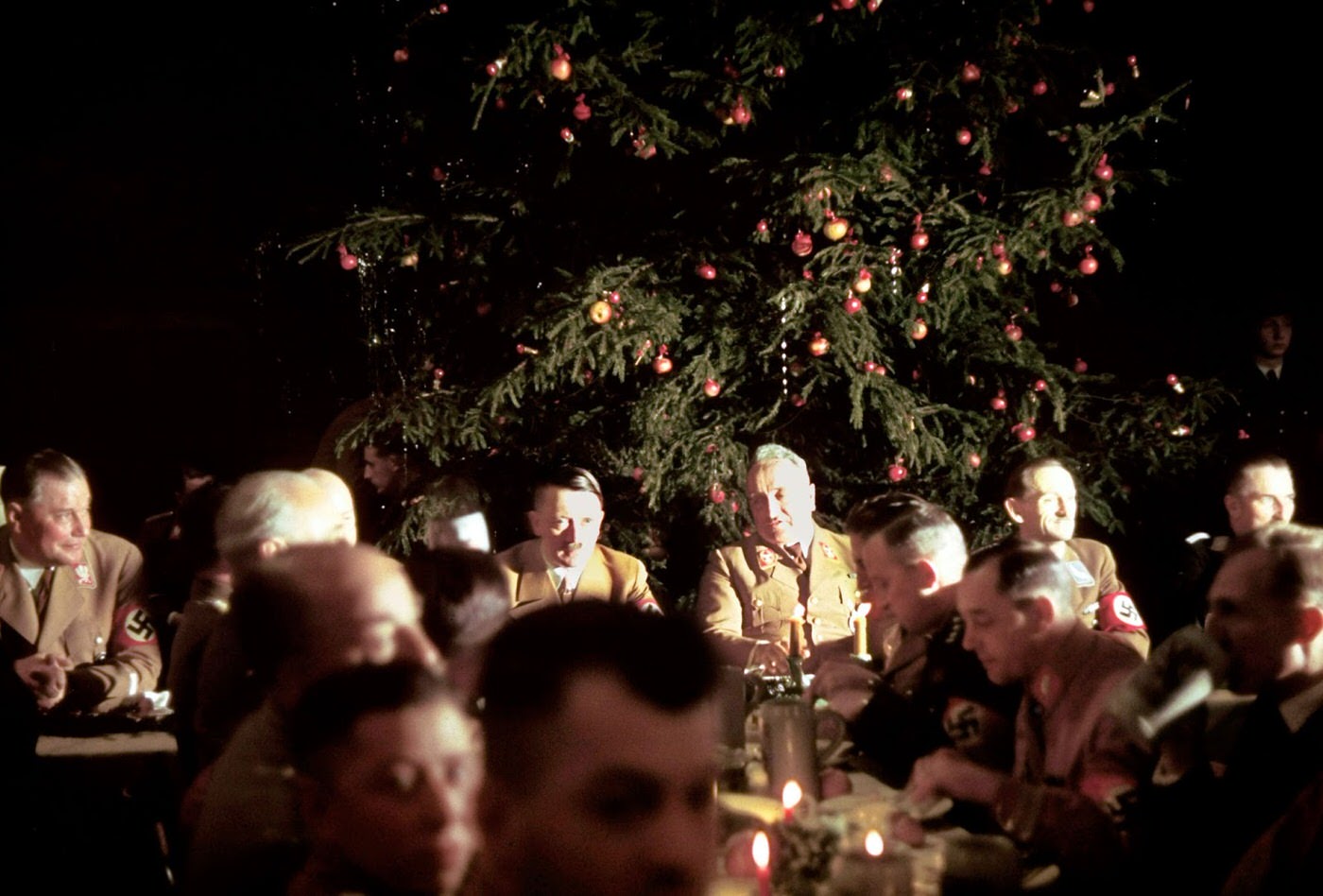
Hitler is seen seated alongside Heinrich Himmler, the head of the SS and the Nazi secret police — one of the key architects of the Holocaust. The two men sit close, but the atmosphere reads as formal rather than relaxed. Hitler’s presence at such a gathering was not a break from power; the most powerful and dangerous figures of the regime were in the same room.
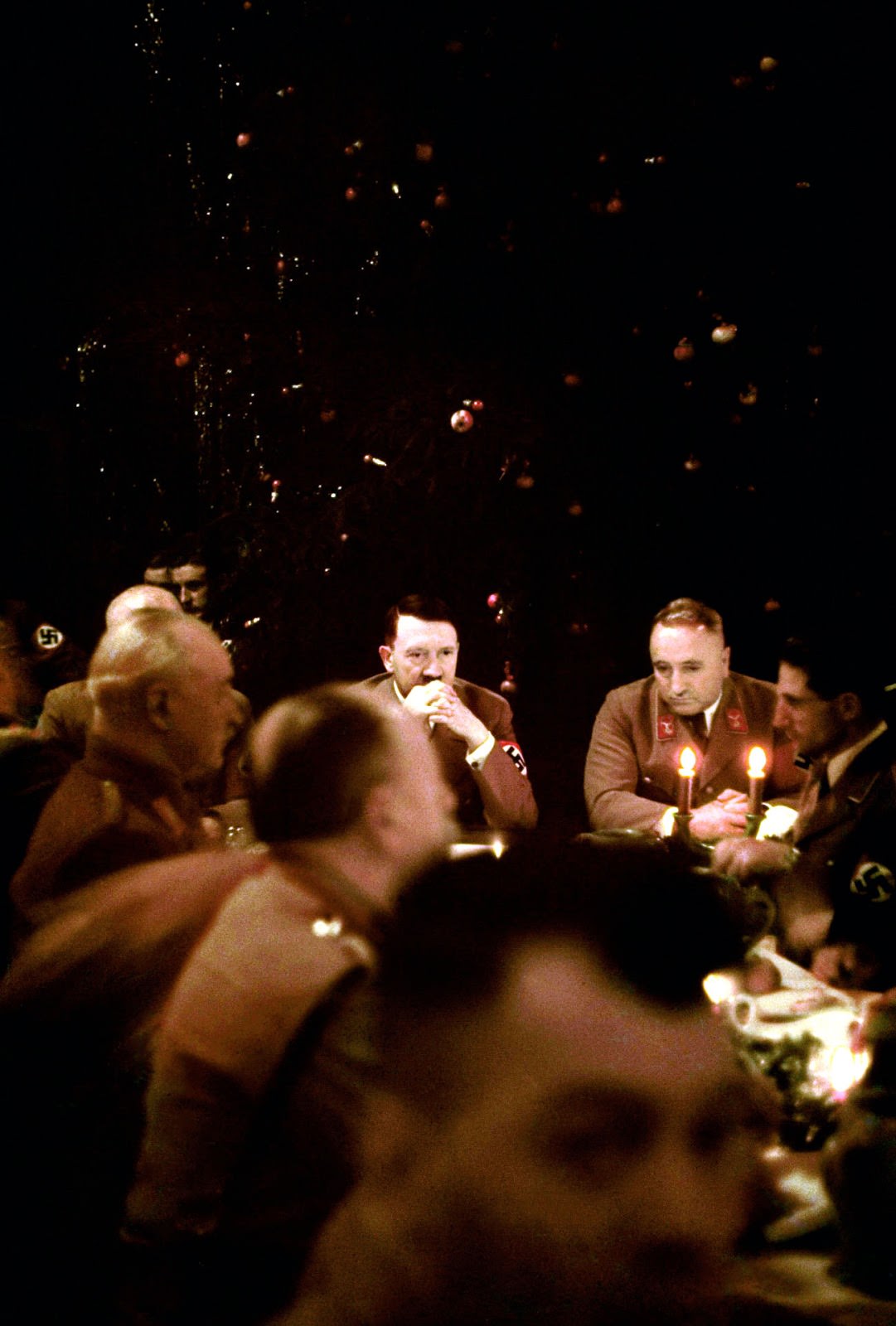
Despite the festive occasion, Hitler does not appear comfortable. His body language is stiff, and his expression is guarded. The photographs strip away any notion of a relaxed dictator unwinding among friends.
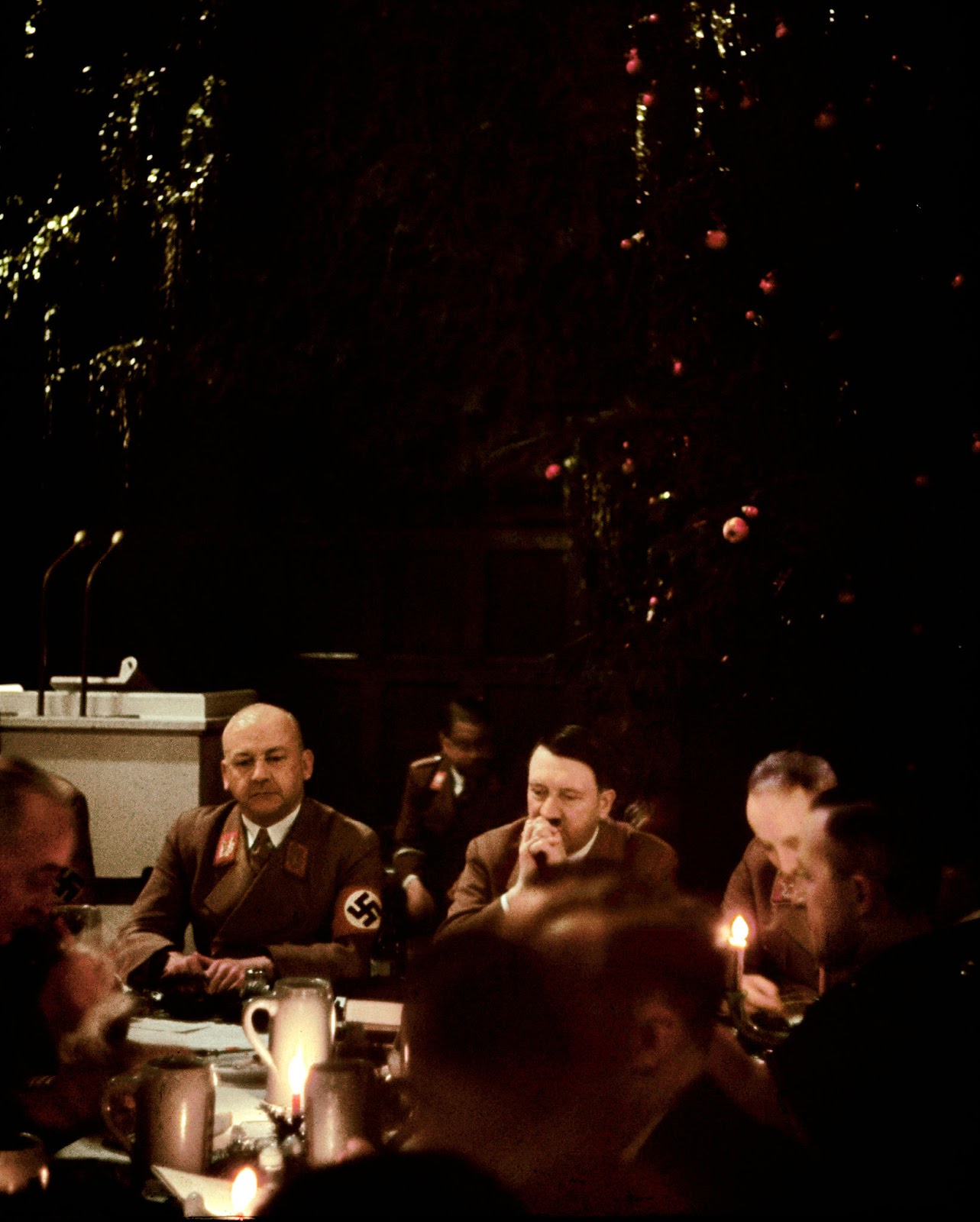
Hitler’s unease was not just a matter of temperament. He was known to be deeply suspicious of those around him, including his own inner circle. That distrust didn’t disappear at a Christmas party. Even in a Munich beer hall, surrounded by loyal Nazis, he kept his guard up.
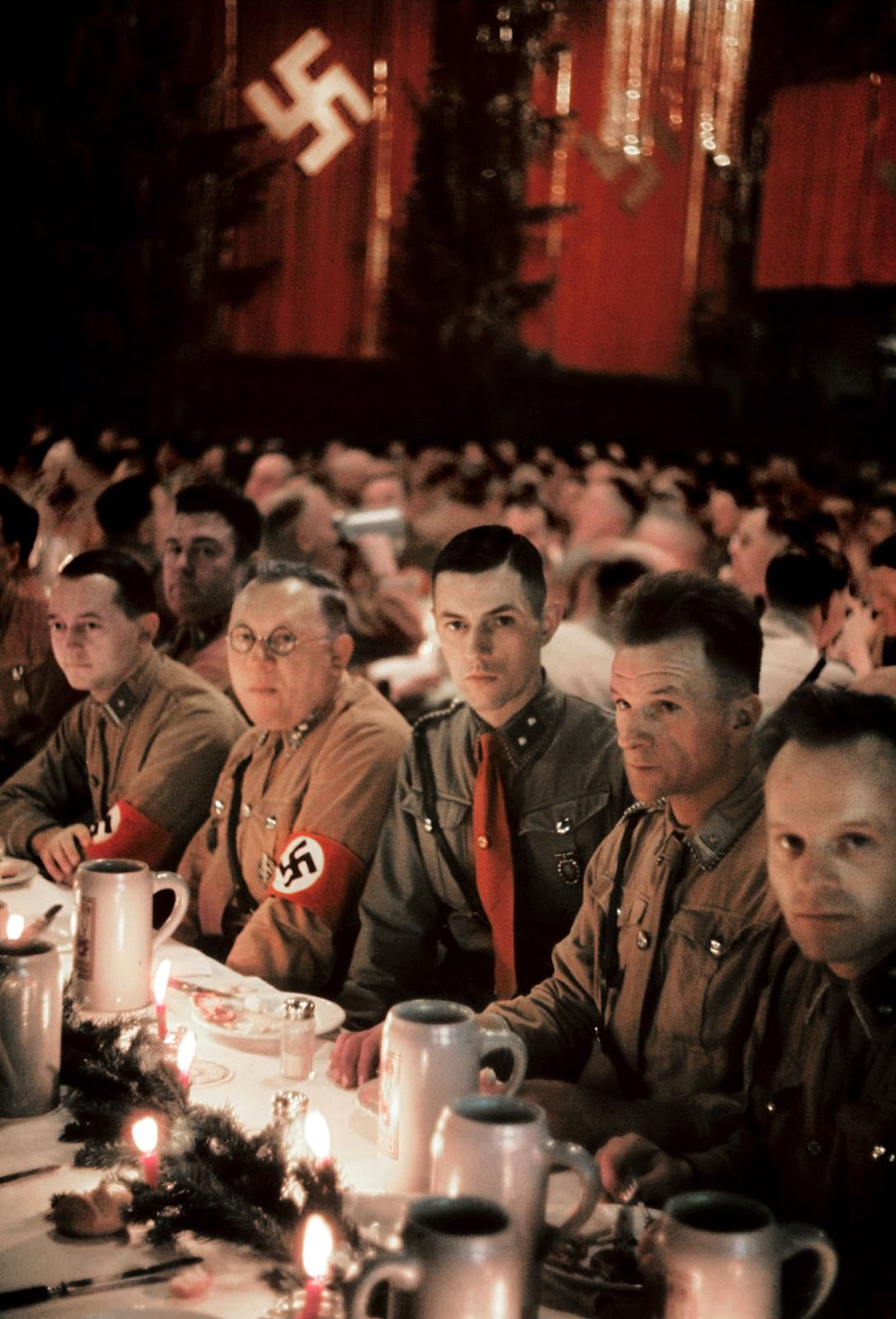
The tension wasn’t limited to Hitler. Lower-ranking officials at the party carried the same rigid posture. A room full of Nazi subordinates, in a beer hall no less, managed to look anything but at ease. The presence of Hitler had a way of making even casual settings feel like a formal inspection.
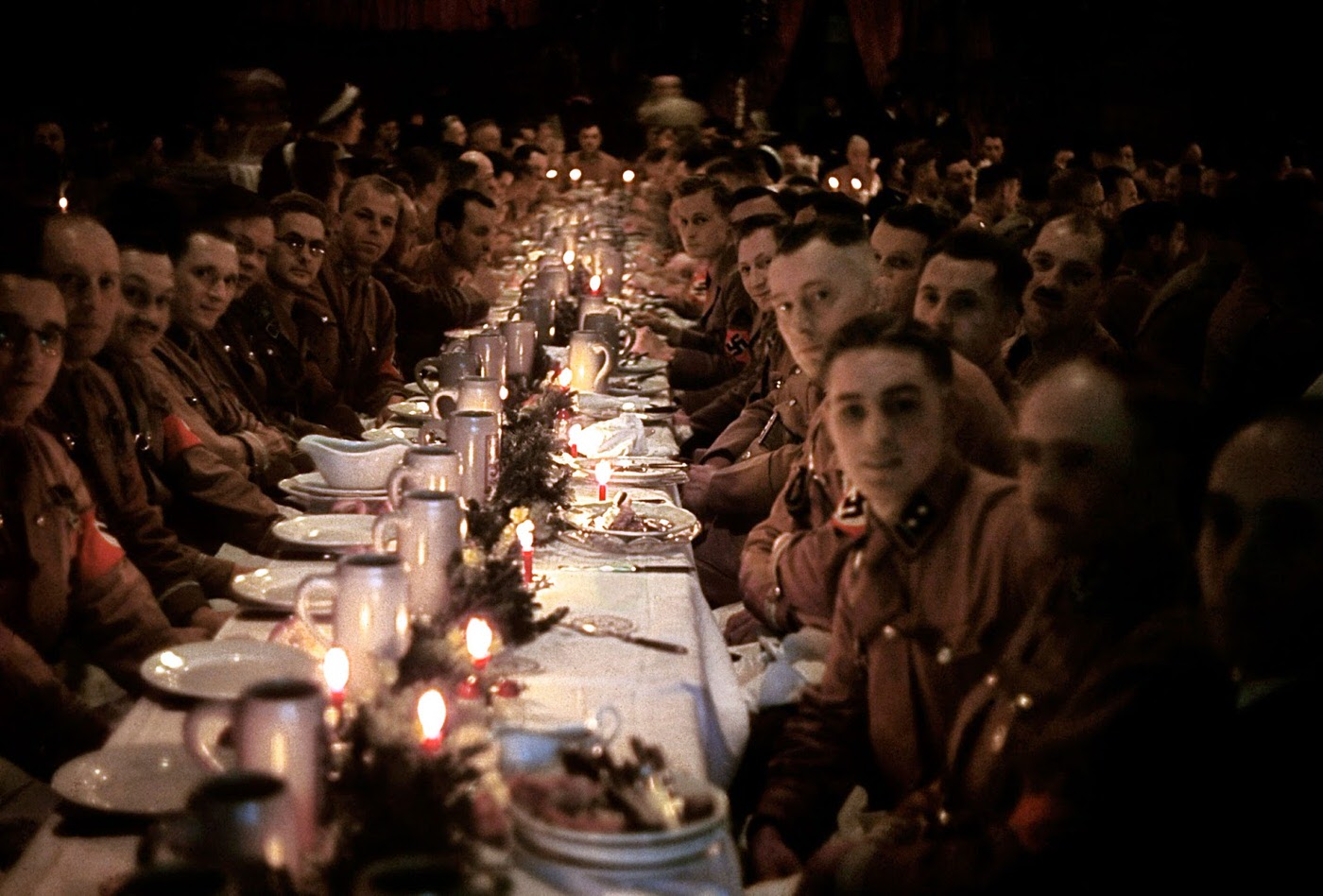
Beer halls in Munich carried enormous symbolic weight for the Nazi movement — the failed 1923 Beer Hall Putsch had taken place in the same city. But on this night, there was no rowdiness. Everyone in attendance knew to present themselves carefully. The Christmas tree and decorations provided a backdrop, but the undertone of the room was discipline, not celebration.
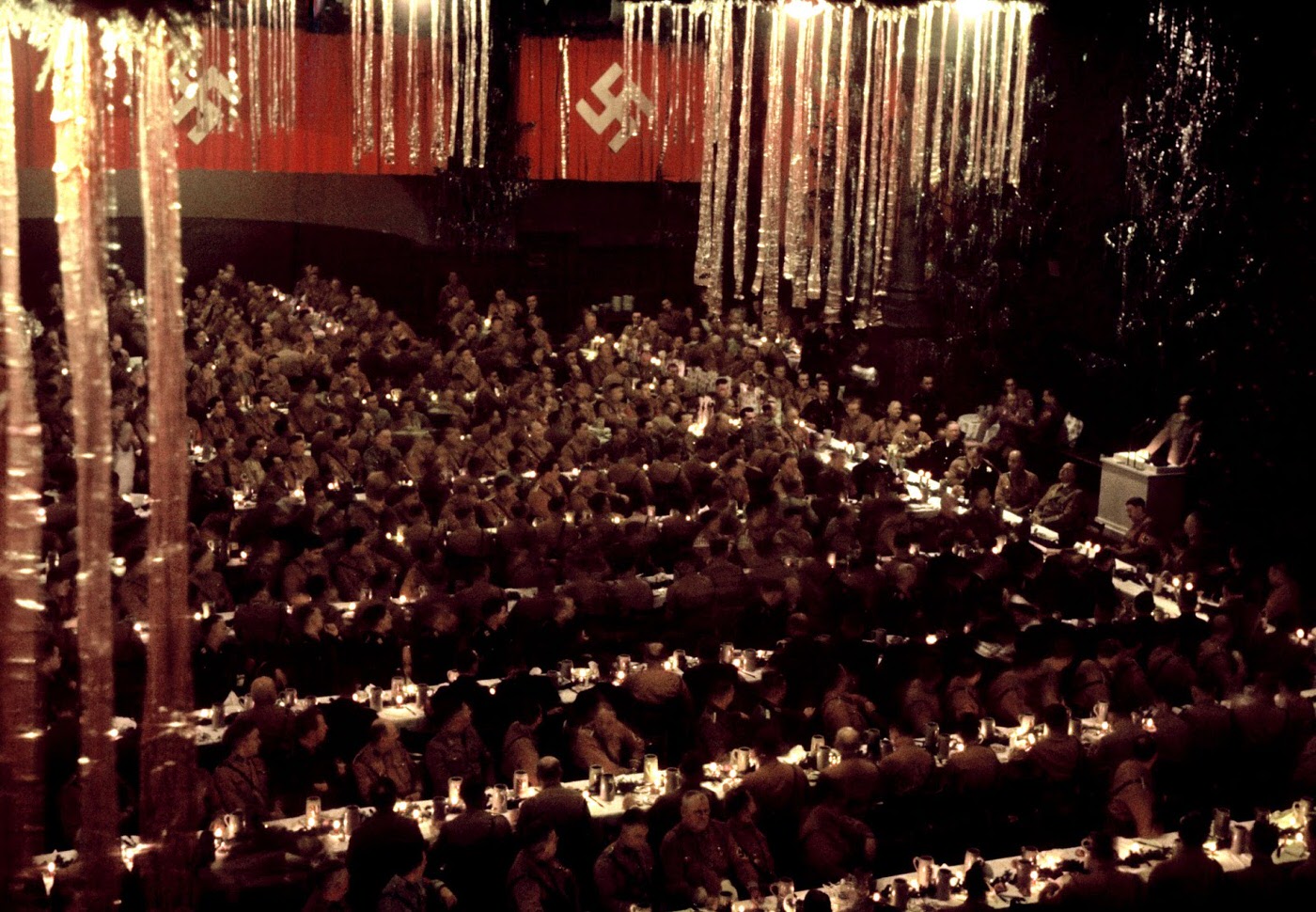
What makes these photographs historically significant is not warmth or festivity — it’s the contrast. The same men planning military campaigns and overseeing mass atrocities gathered under Christmas decorations in December 1941. The color format of the photographs makes them feel unnervingly immediate, pulling the scene out of the distant past and placing it in sharp, vivid focus.
