Hey There! Before You Go. 😧
Get the best vintage content straight into your inbox!

Don't worry, we don't spam

Bikini Atoll, 1946: A Photographic Journey Through the Underwater Detonation of a 23 Kiloton Nuclear Weapon

In the summer of 1946, the United States chose a remote ring of coral islands in the Pacific Ocean as the stage for one of the most dramatic weapons tests in history. Bikini Atoll, part of the Marshall Islands, became the site of Operation Crossroads — a program designed to measure what nuclear weapons could do to a naval fleet. The tests would answer military questions, but they would also set off consequences that lasted for generations.
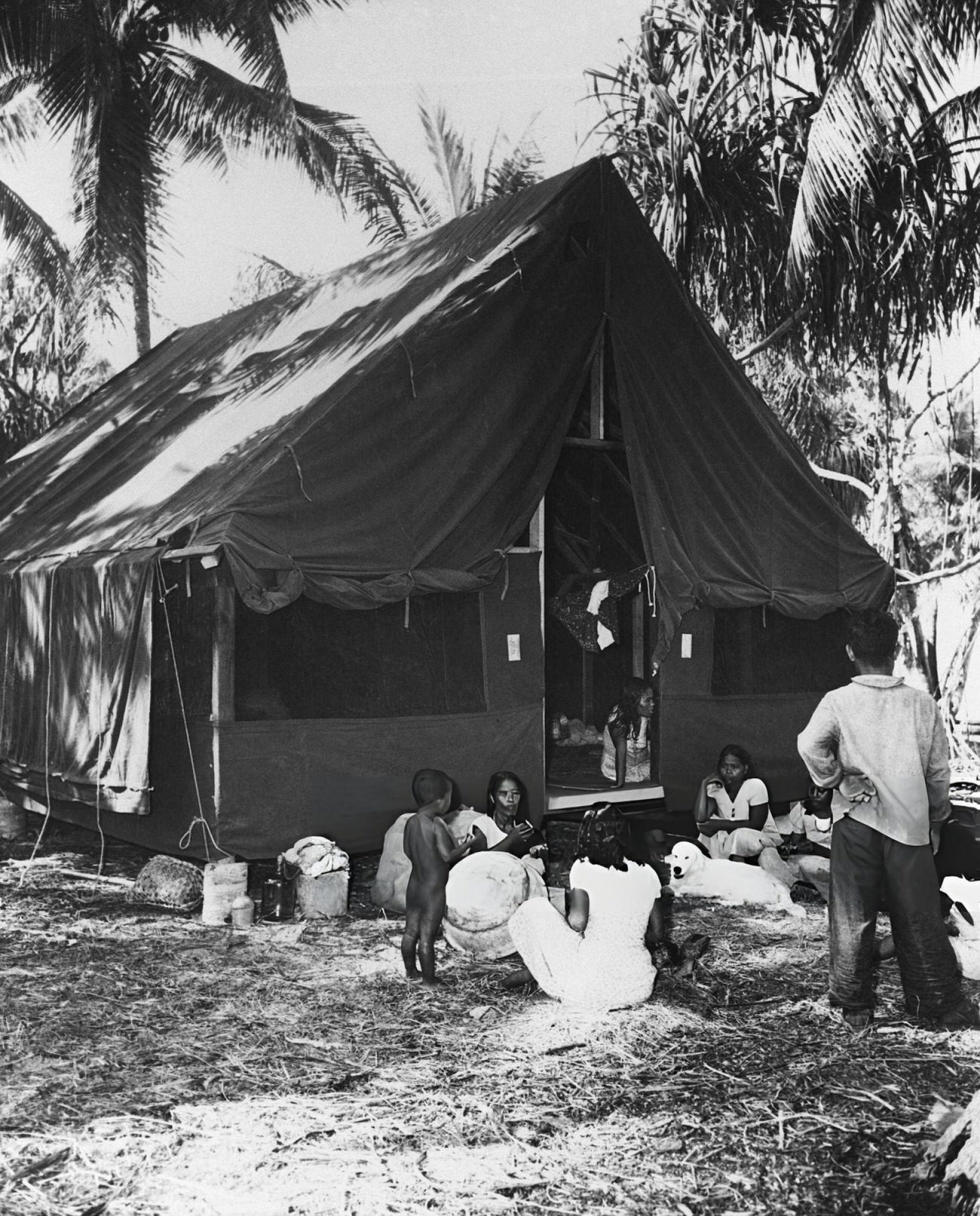
Natives of Bikini Atoll, in the Pacific, who had to leave their home island because of the forthcoming atomic bomb tests, 1946.

Before a single bomb was dropped, the approximately 167 people who called Bikini Atoll home were told they had to leave. U.S. officials relocated them to Rongerik, a smaller, less fertile island, promising they could return once the tests were finished. The islanders packed their belongings and left behind everything they had built.
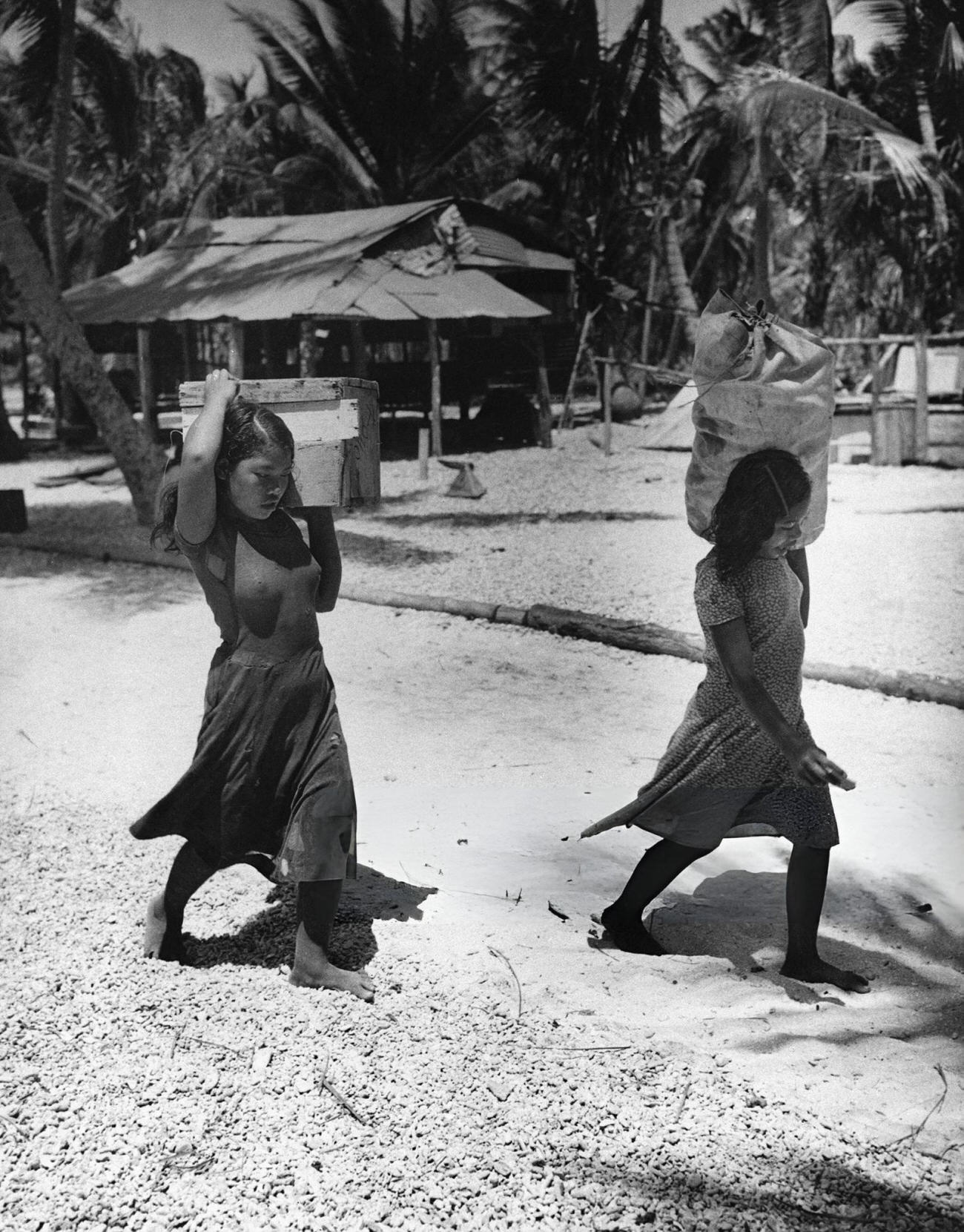
Two Bikini Atoll girls trudge away from their village carrying their possessions on their shoulders, 1946.

With the atoll cleared of its residents, the Navy assembled a target fleet of more than 90 vessels — battleships, aircraft carriers, and submarines — anchored in the lagoon. Animals, including goats and pigs, were placed aboard the ships to measure the biological effects of the blasts. Every detail of the tests was to be documented. Photographers and camera crews trained extensively at Roswell Army Air Field in New Mexico before the operation began.
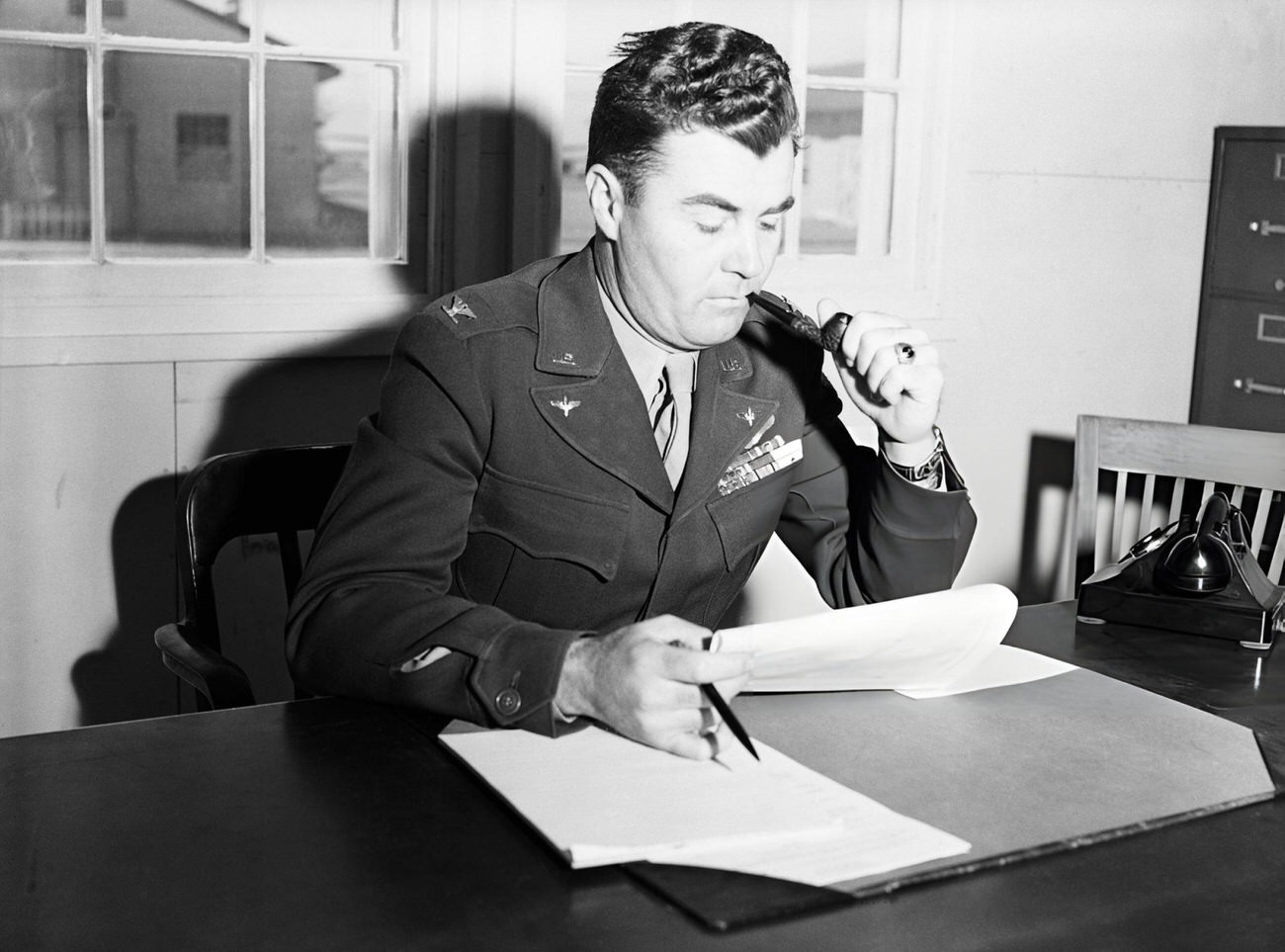
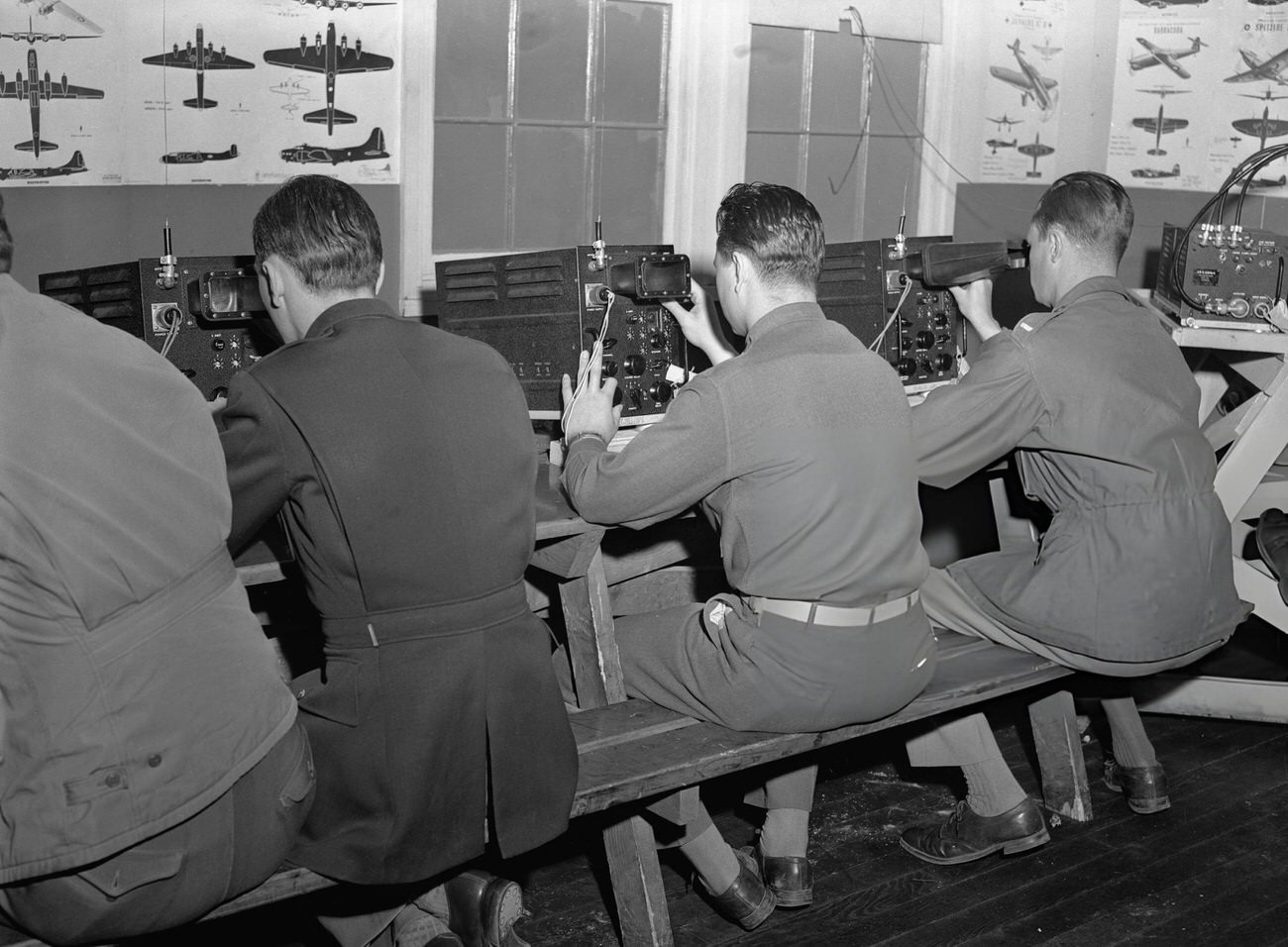
Col. Paul W. Tibbets of Orlando, Fla., is shown in his office at Roswell Field where preliminary preparations are being made for the gigantic atomic bomb test scheduled for Bikini Atoll this summer, 1946.
Air Crew members are training on long range equipment at Roswell Field for the gigantic atomic bomb test, "Operation Crossroads" scheduled for Bikini Atoll in the far pacific, 1946.
Air Crew members are training on long range equipment at Roswell Field for the gigantic atomic bomb test, “Operation Crossroads” scheduled for Bikini Atoll in the far pacific, 1946.
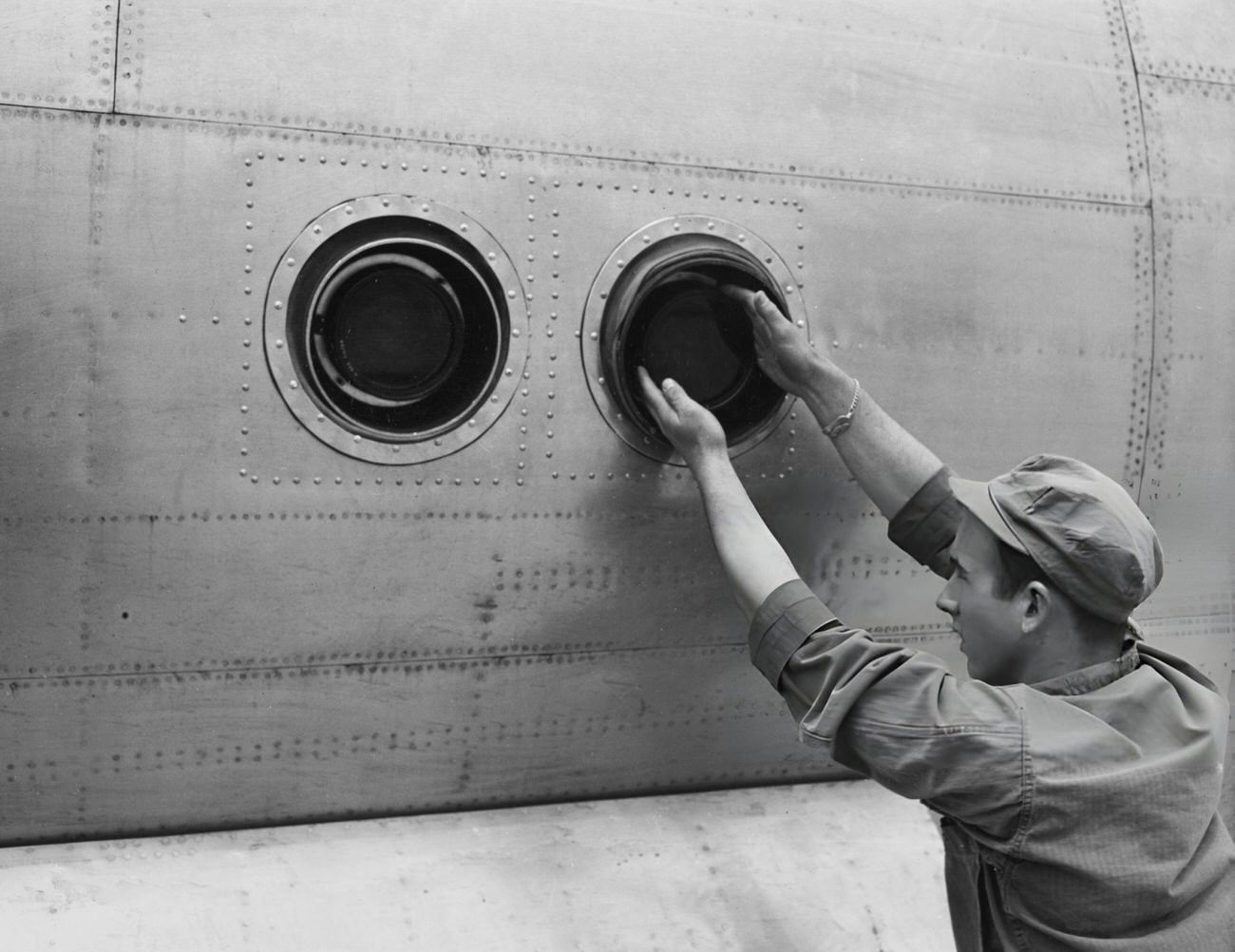
American Private first class Marvin L Cooper tightens the filter on the outer lens surface of two bomb bay K-18 cameras, mounted on an F-13 camera aircraft at Roswell Army Air Field, New Mexico, 1946.
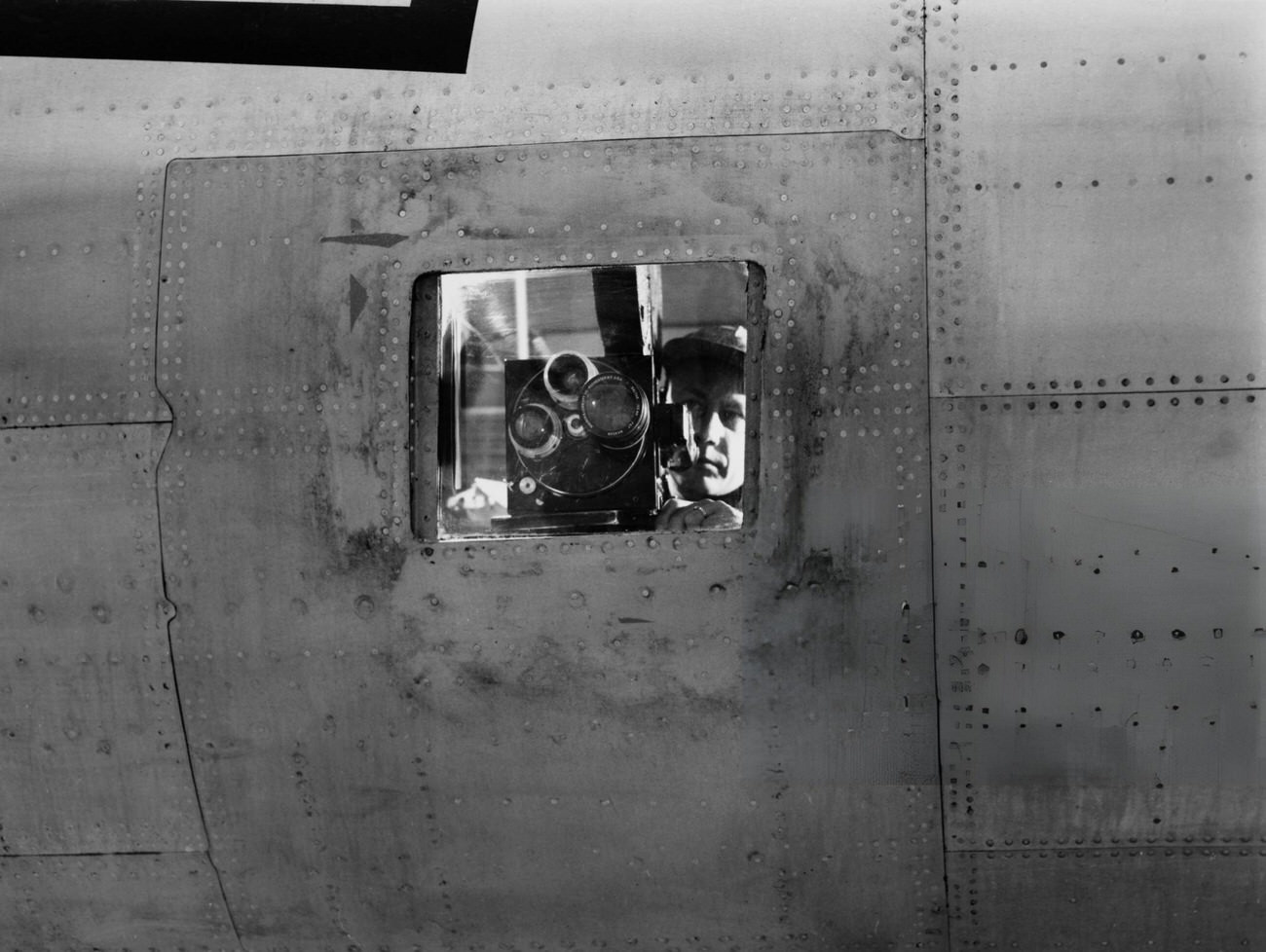
American Army photographer Charles E Nerpel, visible through a camera port as he aims his high-speed Mitchell colour camera during a Joint Army-Navy Task Force demonstration in a converted B-29 aircraft, at Roswell Army Air Field in Roswell, New Mexico, 1946.
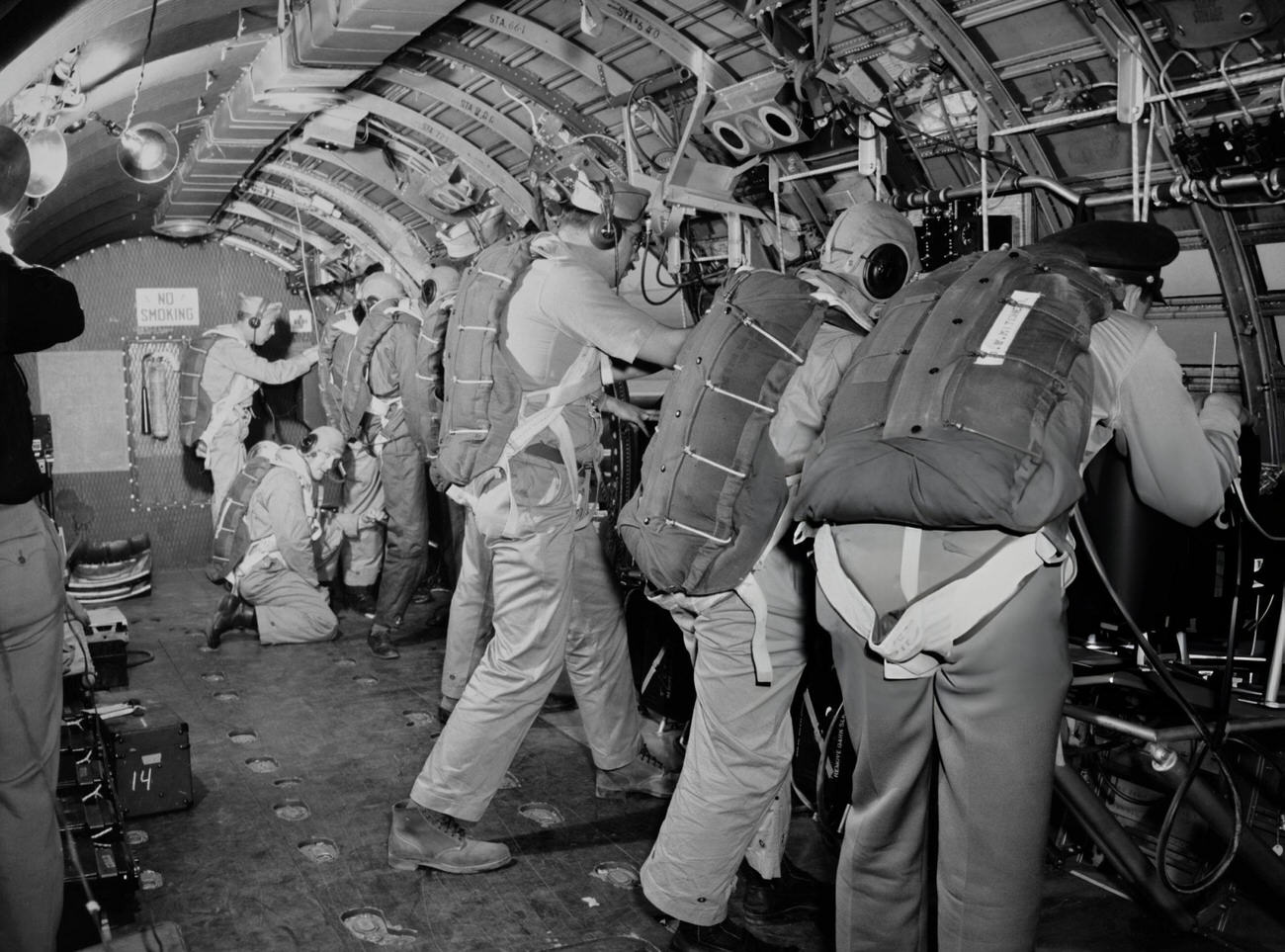
Eight photographers with their cameras in a demonstration in a converted C-54 aircraft, at Roswell Army Air Field in Roswell, New Mexico, 1946.
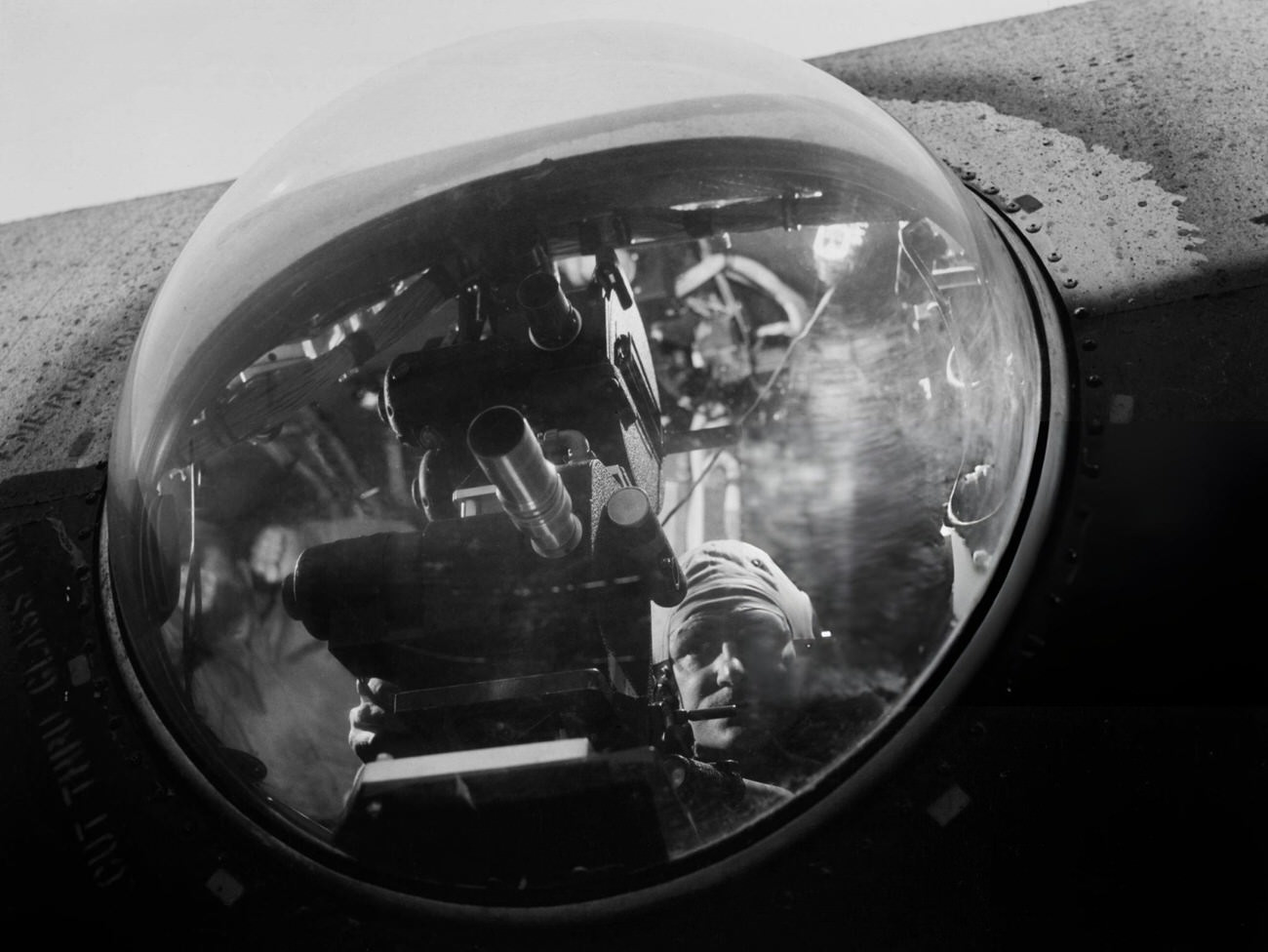
American Army photographer Charles T Forsythe, protected by the blister as he aims his dual high-speed camera during a Joint Army-Navy Task Force demonstration in a B-29 Bomber, at Roswell Army Air Field in Roswell, New Mexico, 1946.

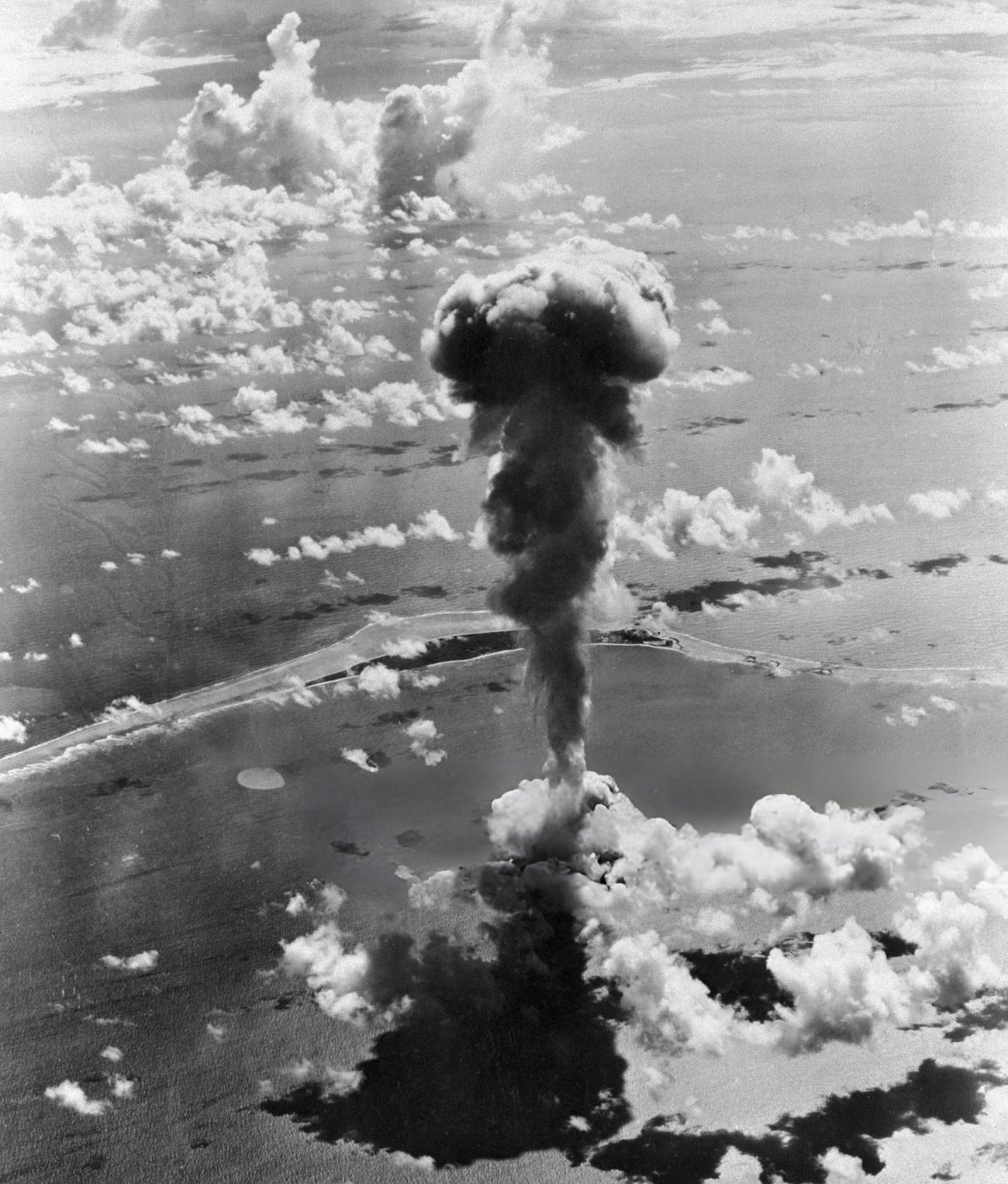
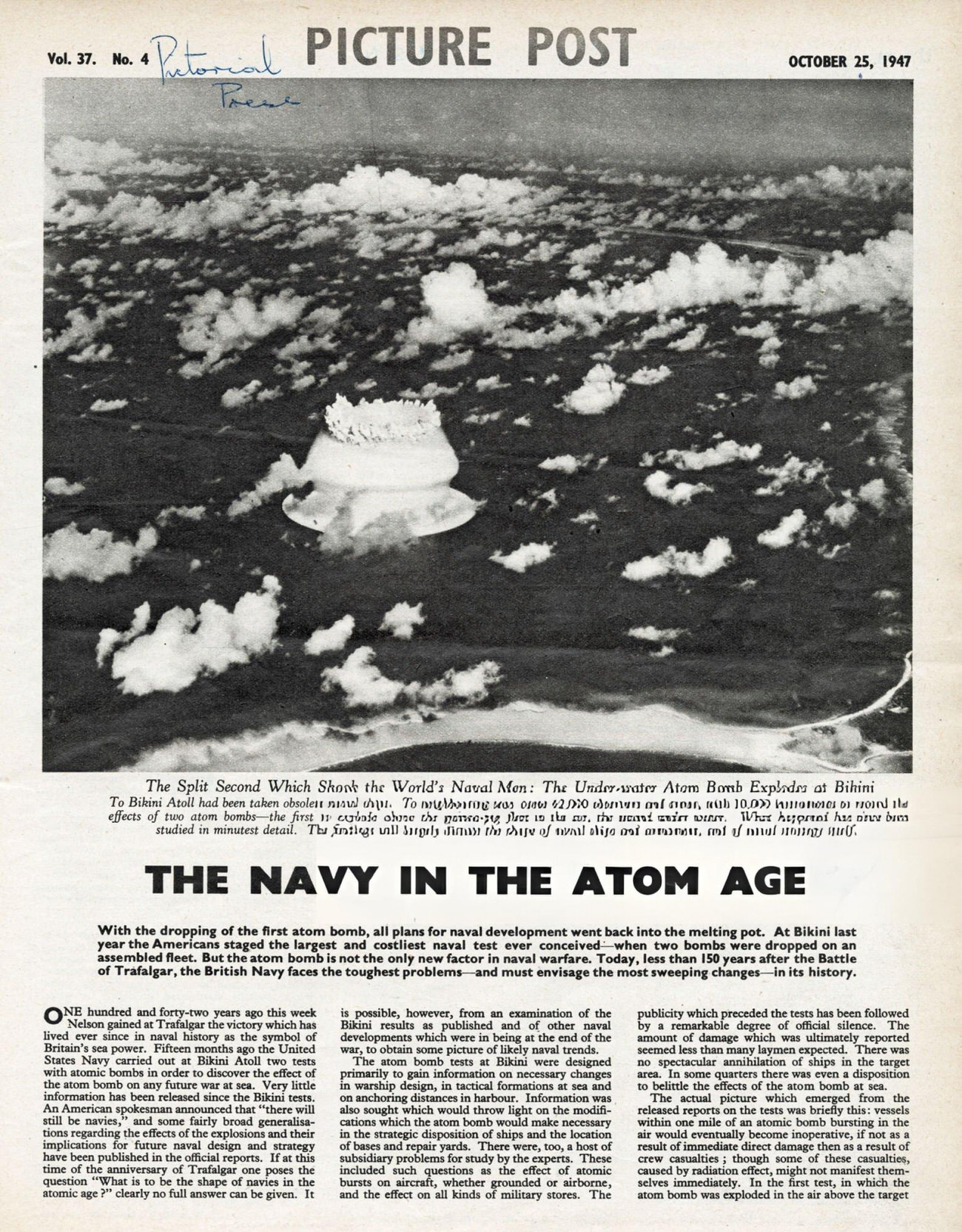
Operation Crossroads consisted of two separate tests. The first, Test Able, was an airburst detonation that took place on July 1, 1946. The bomb exploded in the air above the target fleet. Test Baker, the second and more spectacular of the two, was the world’s first underwater nuclear detonation. Instruments like Geiger counters were prepared and calibrated ahead of the tests to track radiation levels at the scene.
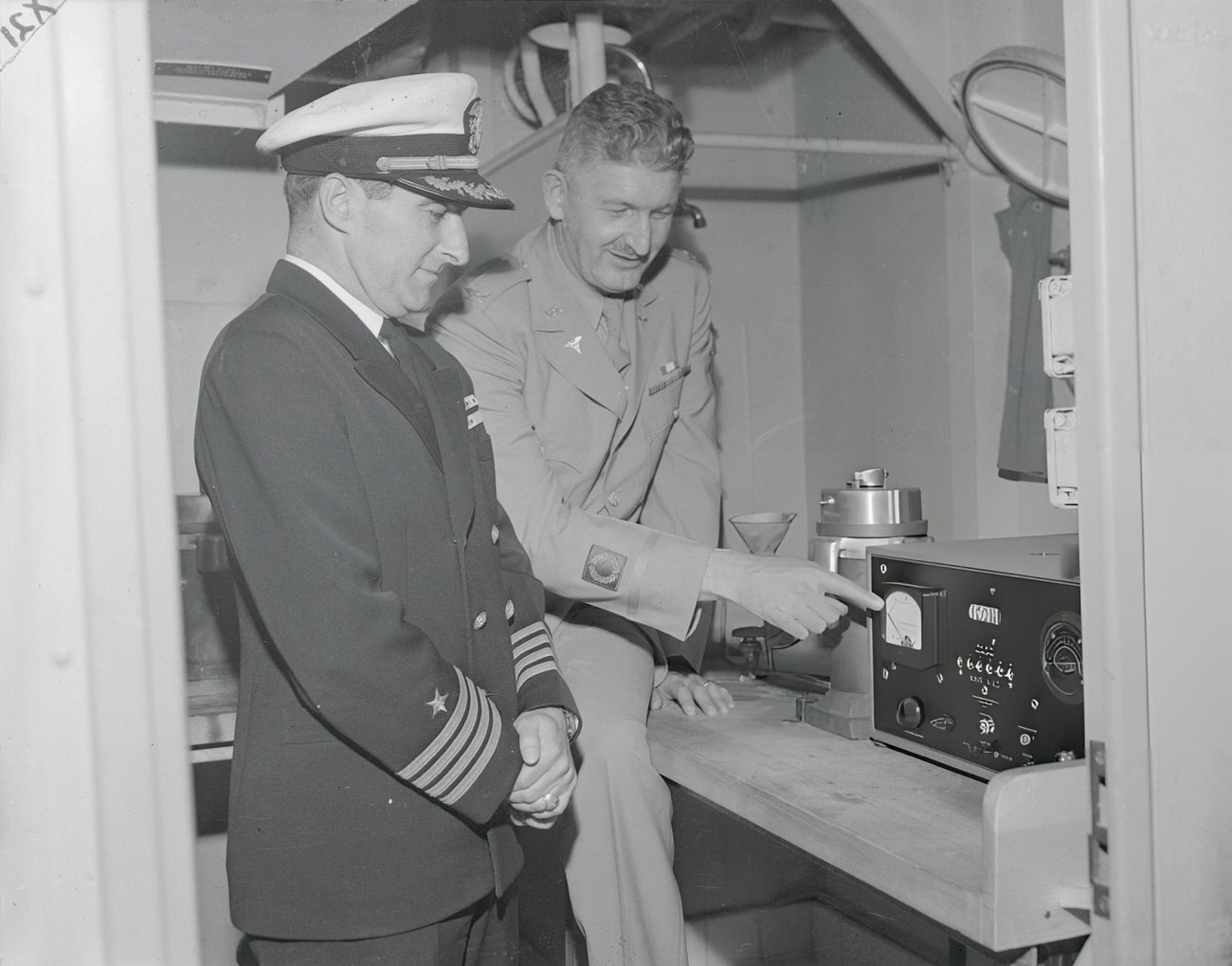
A Geiger-counter is shown aboard the USS Haven, preparing to sail from San Francisco Bay for Operation Crossroads, 1946.

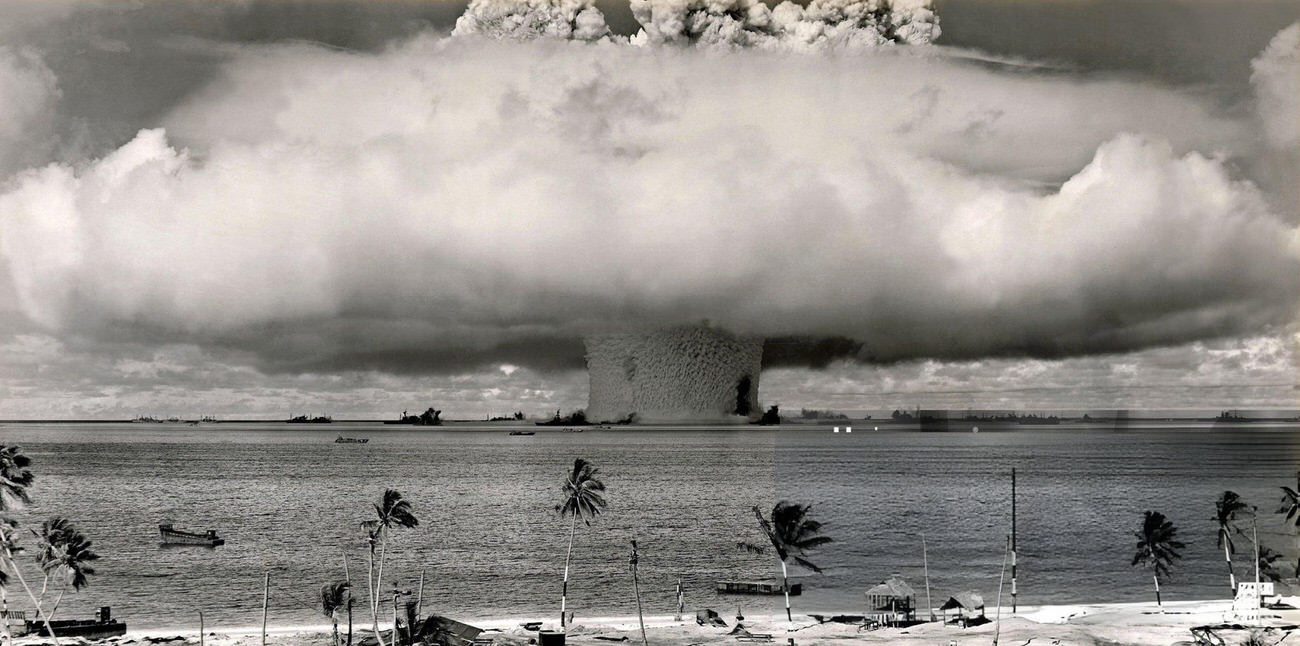
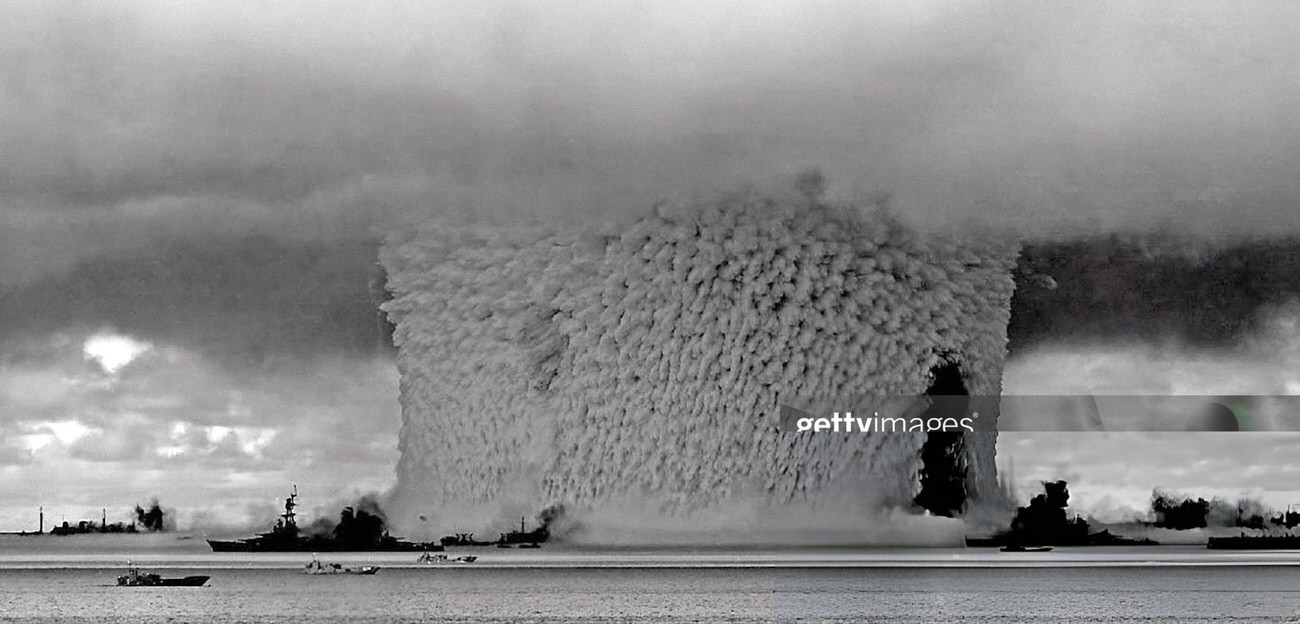
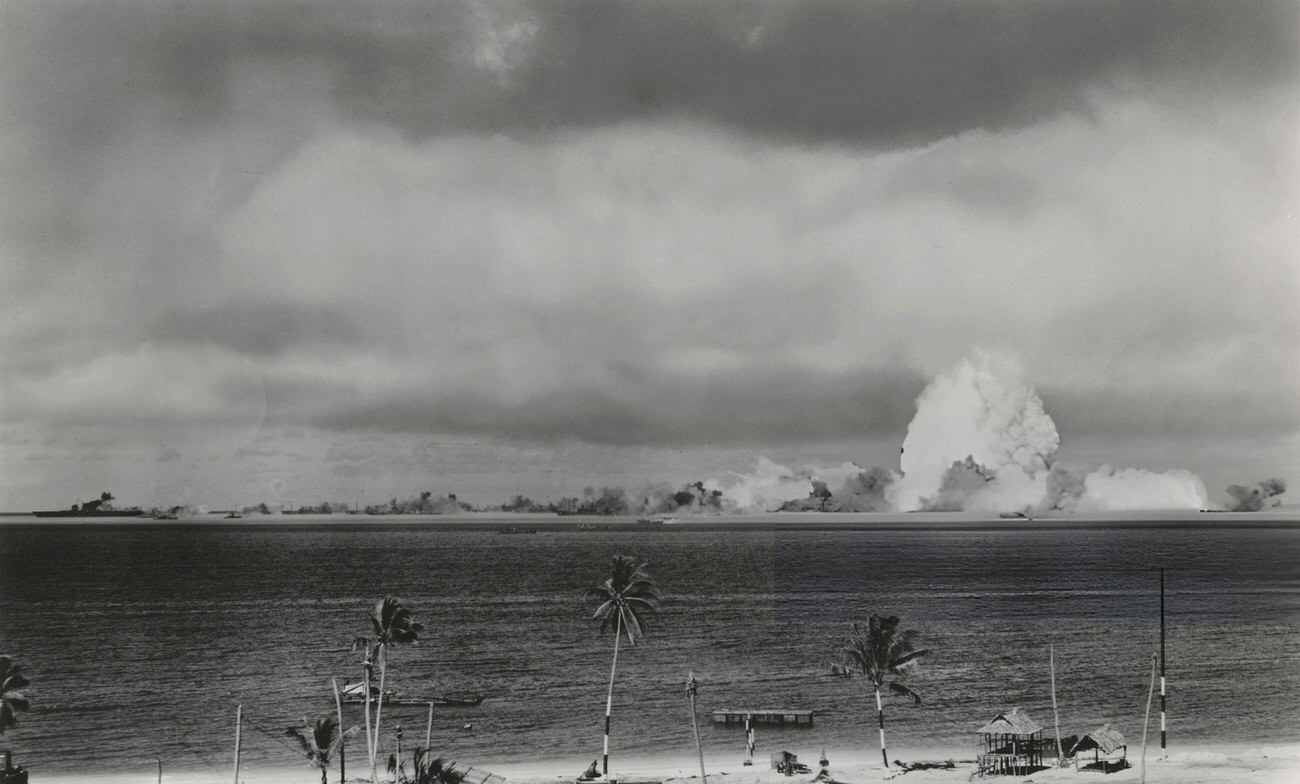
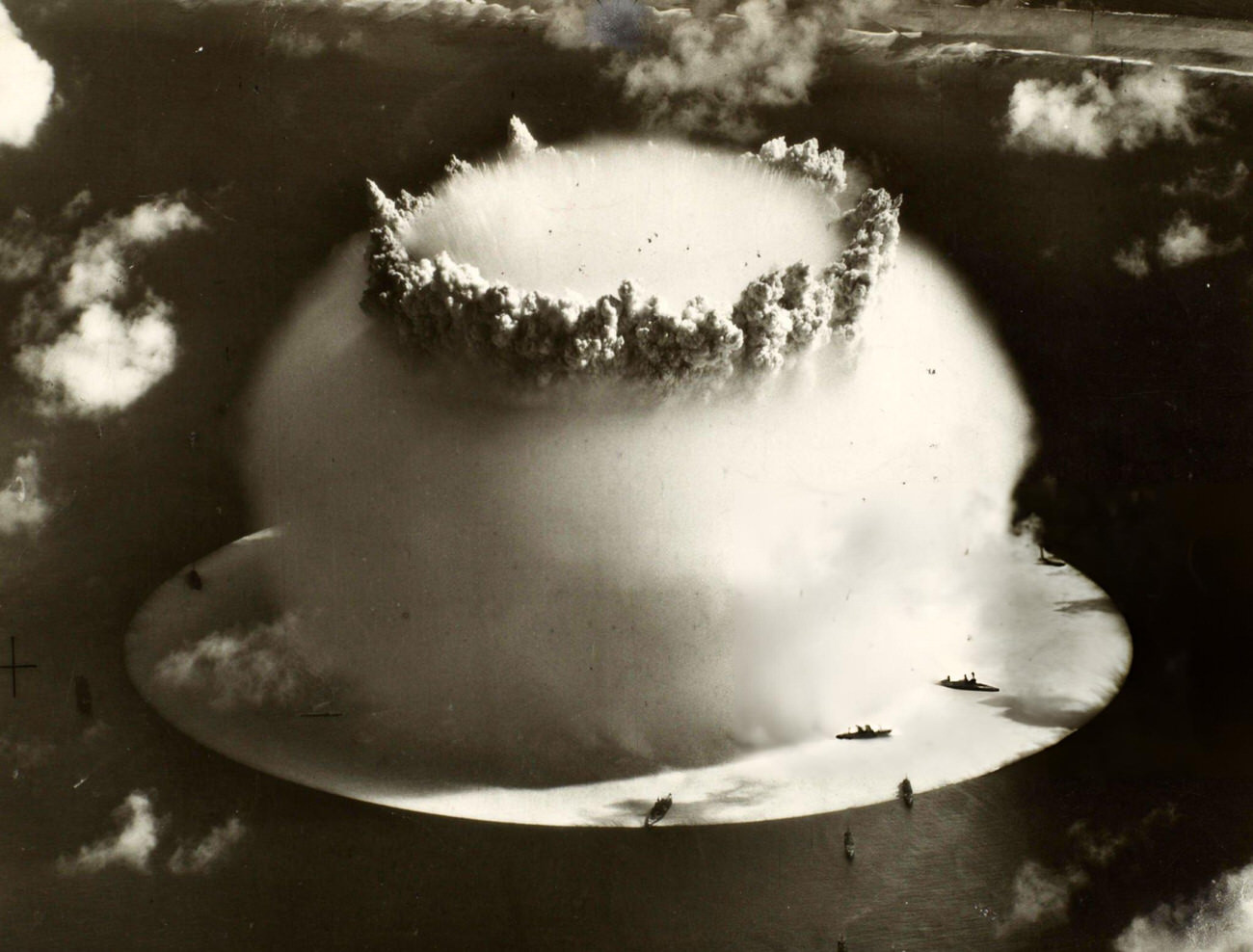
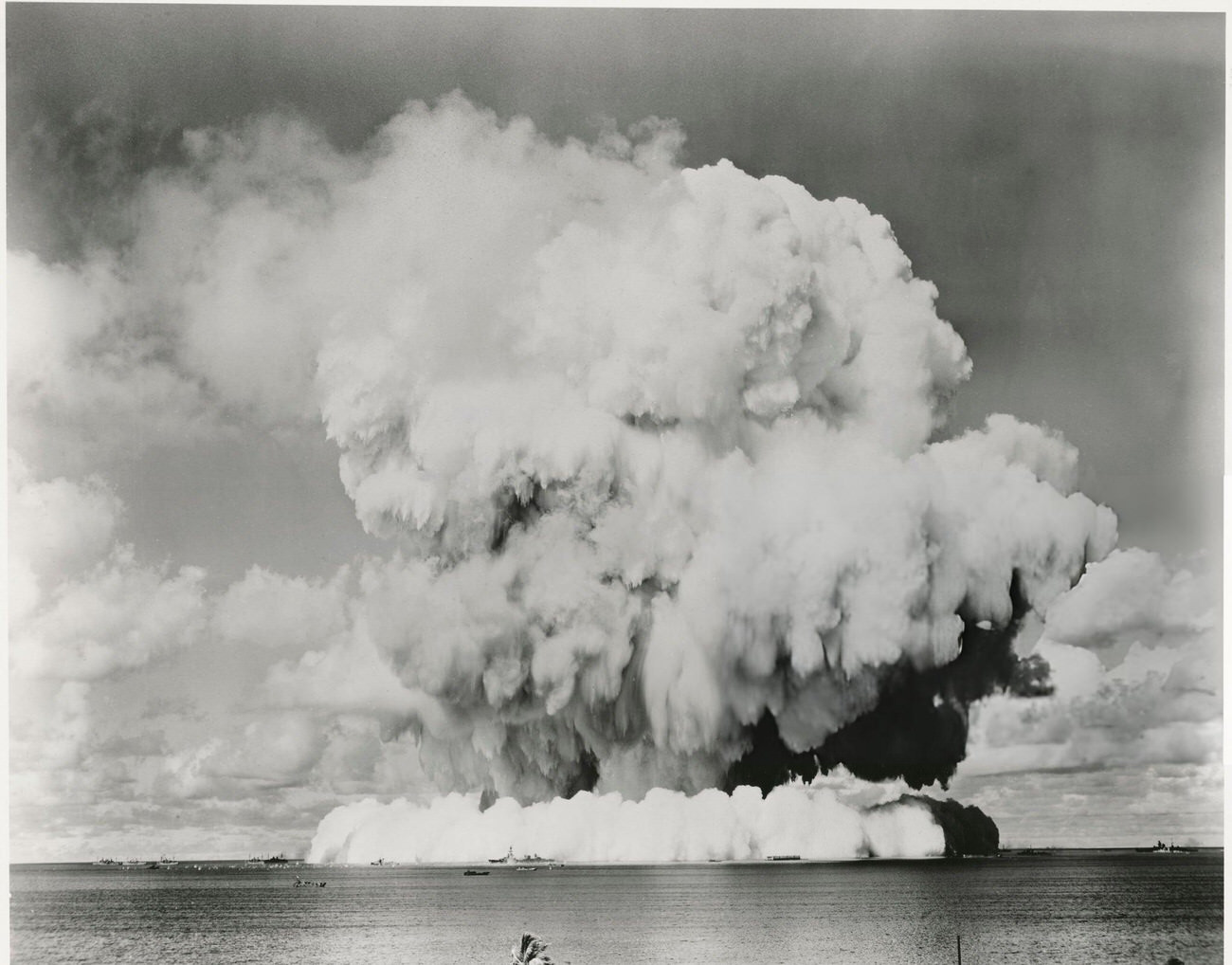
On July 25, 1946, at 8:35 a.m. local time, the Test Baker bomb — a 23-kiloton device modeled after the “Fat Man” bomb used on Nagasaki — was detonated 90 feet beneath the surface of the lagoon. The explosion unleashed a shockwave through the water and launched a massive column of water, sand, and radioactive debris into the air. The plume climbed to nearly 6,000 feet. Senior military and government officials, including Secretary of the Navy James Forrestal and Vice Admiral W.H.P. Blandy, watched the detonation unfold.
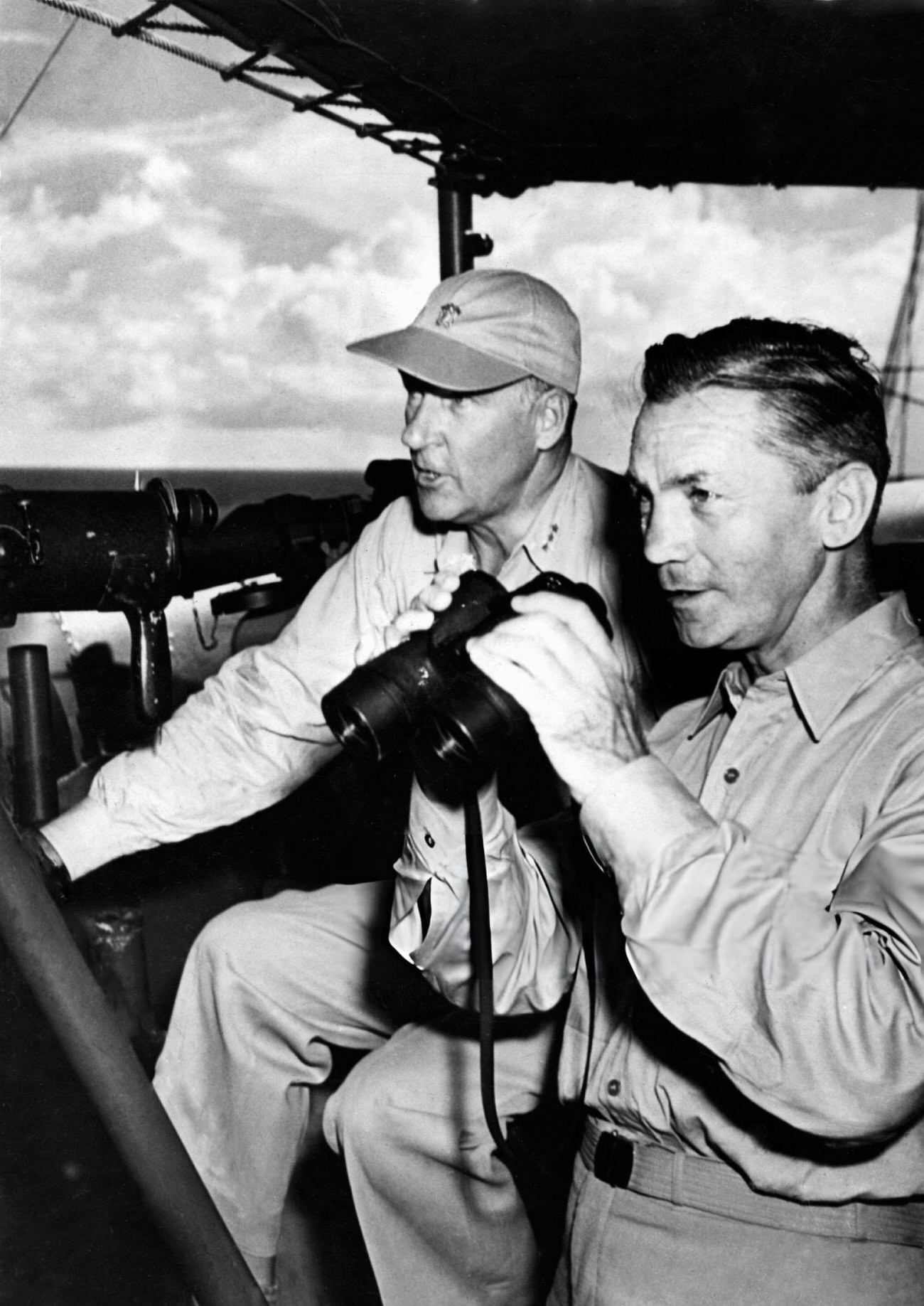
Secretary of the U.S. Navy, James Forrestal (right), and Vice Admiral W.H.P. Blandy (left), commander of the joint Army-Navy Task Force 1, watch the atom bomb explode over Bikini Lagoon, 1946.
Baker Day at Bikini Atoll, the first underwater nuclear explosion, 1946.
The Baker test during Operation Crossroads, a series of two nuclear weapons tests conducted by the United States at Bikini Atoll, 1946.
Nuclear test at Bikini Atoll, 1946.
An illustration shows a mushroom cloud created in the Operation Crossroads nuclear weapons tests conducted at Bikini Atoll, 1946.

The destruction to the fleet was immediate and severe. Ships were sunk, capsized, or left with heavy structural damage. The seafloor beneath the blast site was gouged into a crater more than 30 feet deep and 2,000 feet wide. Radioactive water rained back down onto the surrounding ships and the lagoon itself. The USS Independence, a light carrier that survived the initial blast, was left burning on the water’s surface.
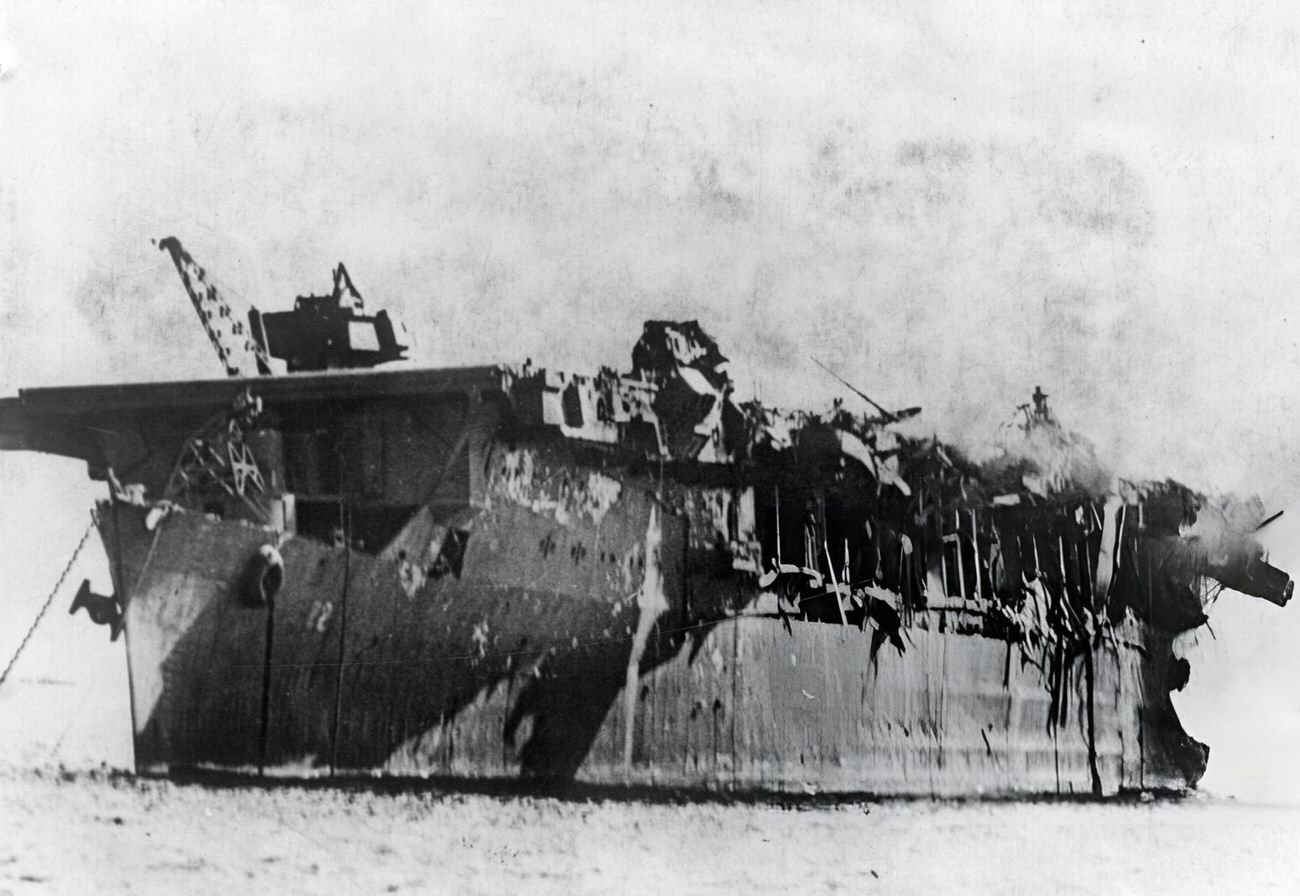
The remains of the light carrier the USS Independence, burning but still afloat, following America's atomic bomb test in Bikini Lagoon, 1946.
The remains of the light carrier the USS Independence, burning but still afloat, following America’s atomic bomb test in Bikini Lagoon, 1946.
U.S. Military Atomic Bomb Test and Resulting Explosion, Crossroads Target Fleet, Bikini Island, Pacific Ocean, 1946.

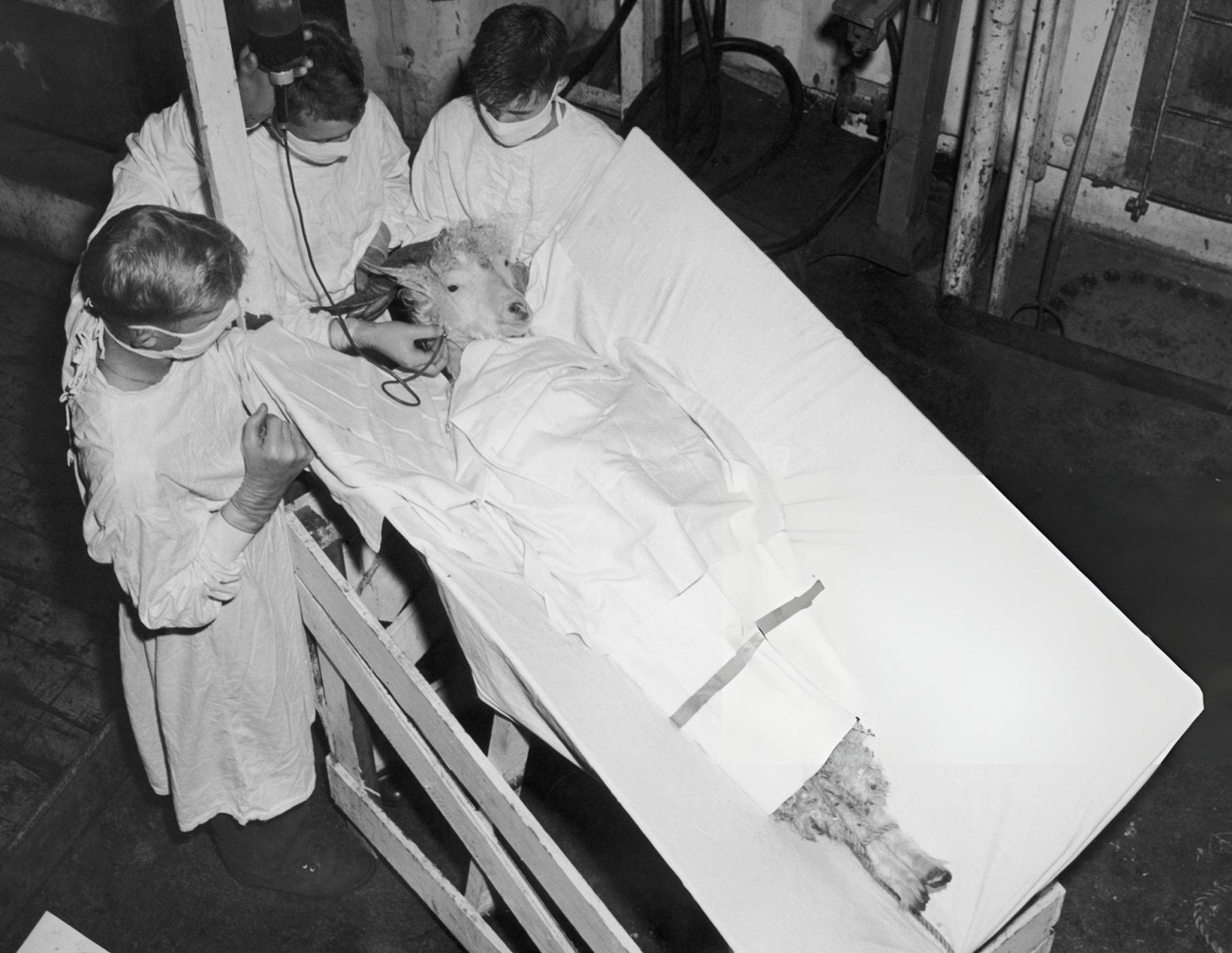
The USS Skate, a submarine in the target fleet, was among the vessels damaged by the Baker blast. Animals placed on board the ships suffered acute radiation exposure. Some, like the goats used as test subjects, received emergency medical treatment — including blood transfusions — immediately after the detonation.
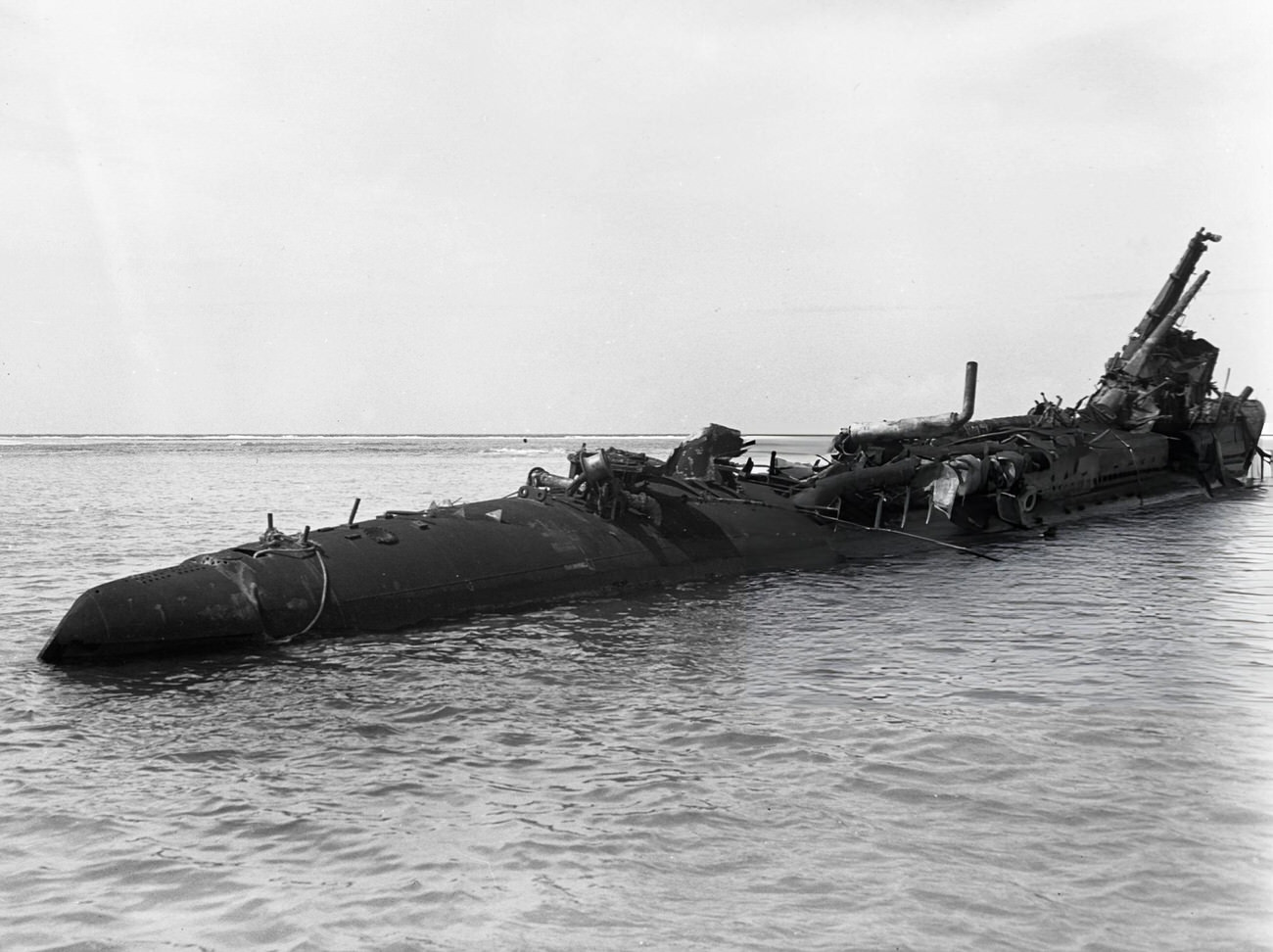
The USS Skate (SS-305), a submarine damaged by an atomic blast during Operation Crossroads, 1946.
A male angora goat receives a blood transfusion after being exposed to the atomic blast at Bikini Atoll, 1946.

Decontaminating the ships proved far more difficult than expected. Radioactive water had soaked into every surface. Sailors scrubbing the decks were themselves exposed to dangerous radiation levels. The contamination was not limited to the fleet — the lagoon, the surrounding ocean, and the land of the atoll were all heavily affected. The promise made to the Bikini islanders that they could return home was never kept. Radiation levels made the atoll unsafe for permanent habitation, and the displaced people were moved from island to island over the following years, eventually settling on Kili Island.

The data collected from Test Baker gave the U.S. military concrete evidence of what underwater nuclear detonations could do to a naval fleet. A single bomb submerged just 90 feet could sink ships outright, cripple others, and blanket an entire lagoon in radioactive contamination. The test demonstrated that radiation posed a threat far beyond the immediate blast — one that no amount of scrubbing could quickly reverse.

Enjoyed this post? Get new ones in your inbox.

Leave a Comment

Your email address will not be published. Required fields are marked *

Share this Post 🥺

Please take a moment to share this content. Your support is greatly appreciated! 🙌🙏

Share this Post 🥺

Please take a moment to share this content. Your support is greatly appreciated! 🙌🙏
Scroll to Top
 
Hey Friend, Before You Go.. Please like & follow for more interesting content