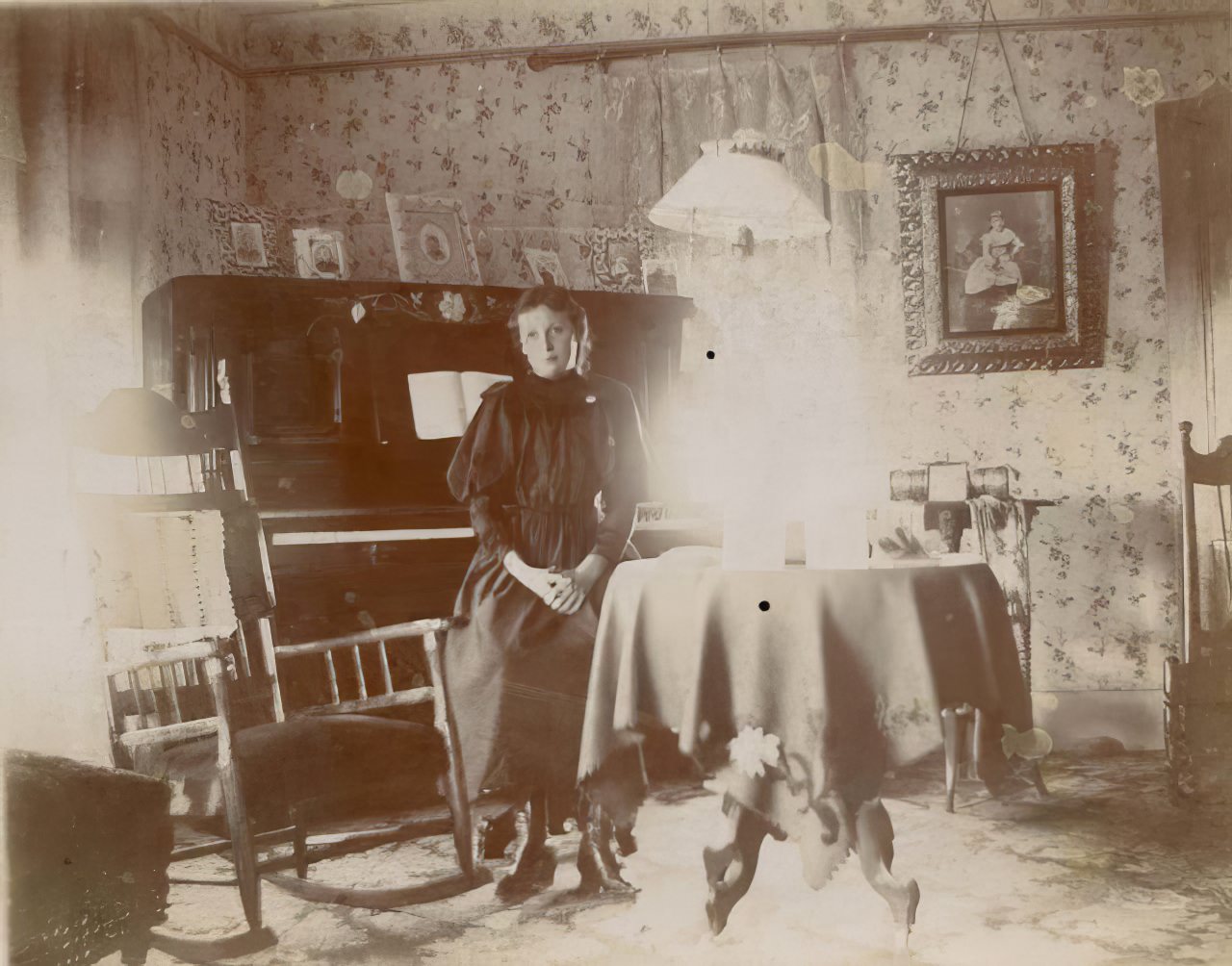
Life at home in the late 19th century looked nothing like it does today. Families lived in close quarters, and nearly every hour of the day had a purpose — cooking, cleaning, tending to livestock, or caring for children. These photographs offer a rare, direct look into the private spaces where ordinary people spent their lives.
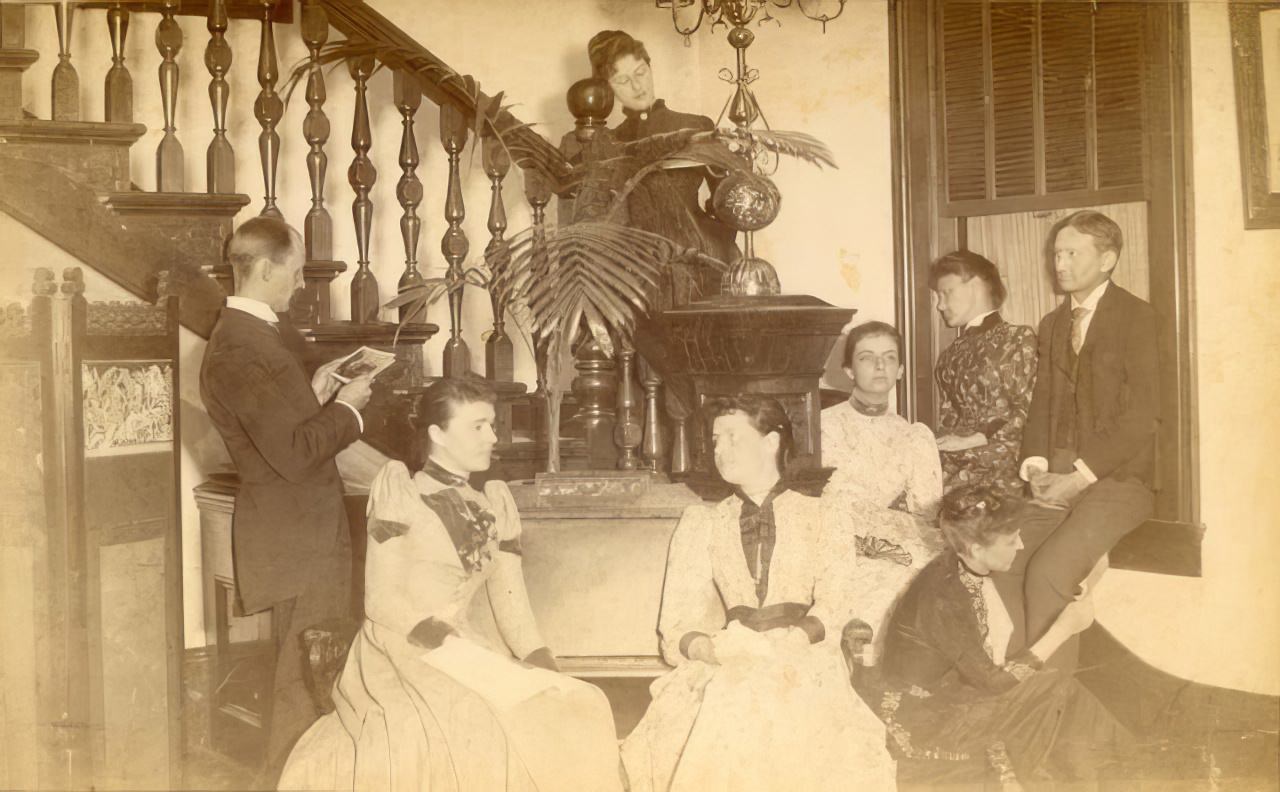
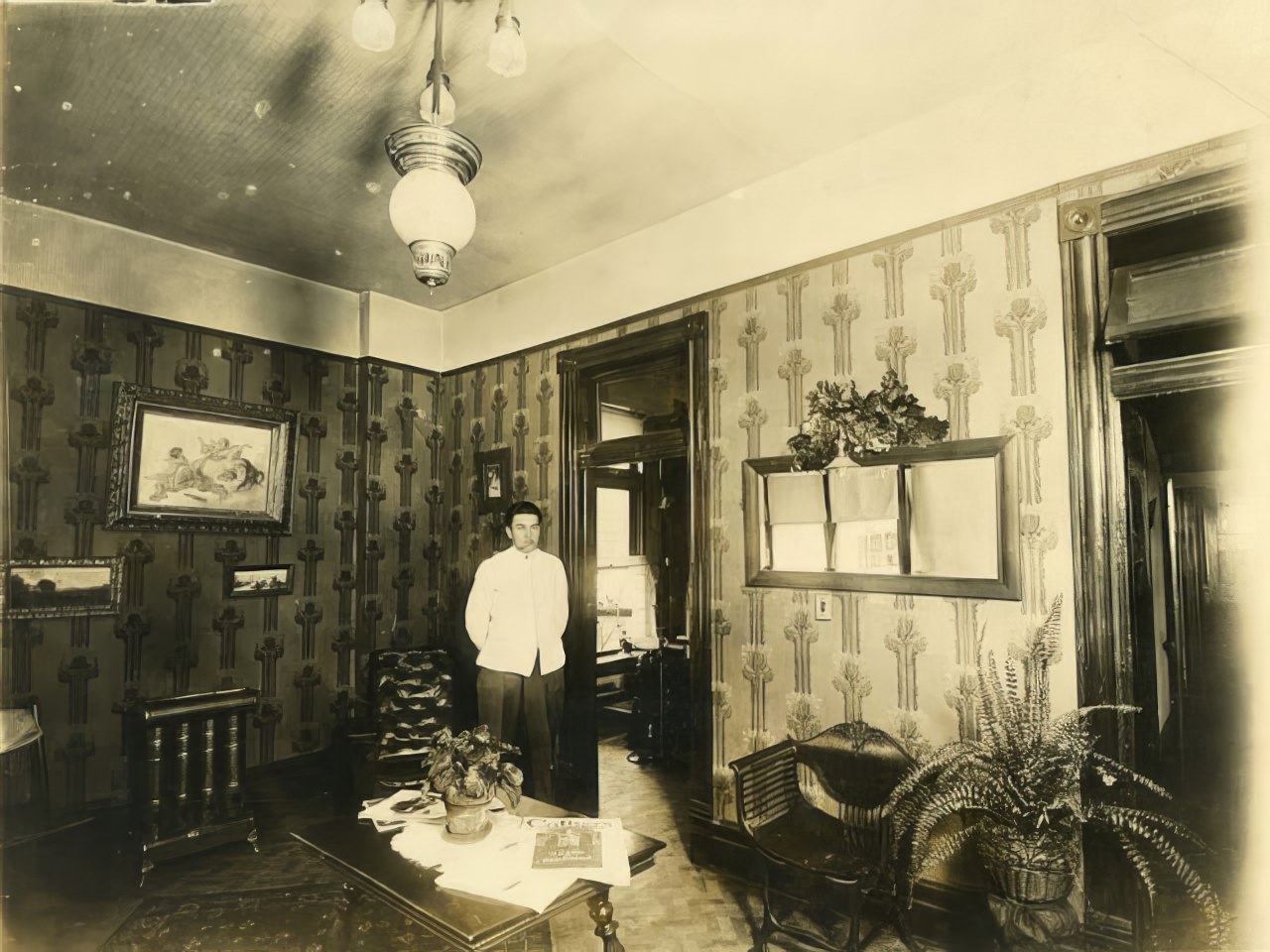
The hearth was the center of the home. It provided heat for cooking, warmth during cold months, and light after dark. Families gathered near it each evening. Adults sewed, mended clothes, or read while children played on the floor nearby. Gas lighting was beginning to replace candles and oil lamps in some households, making rooms brighter and reducing fire risk.
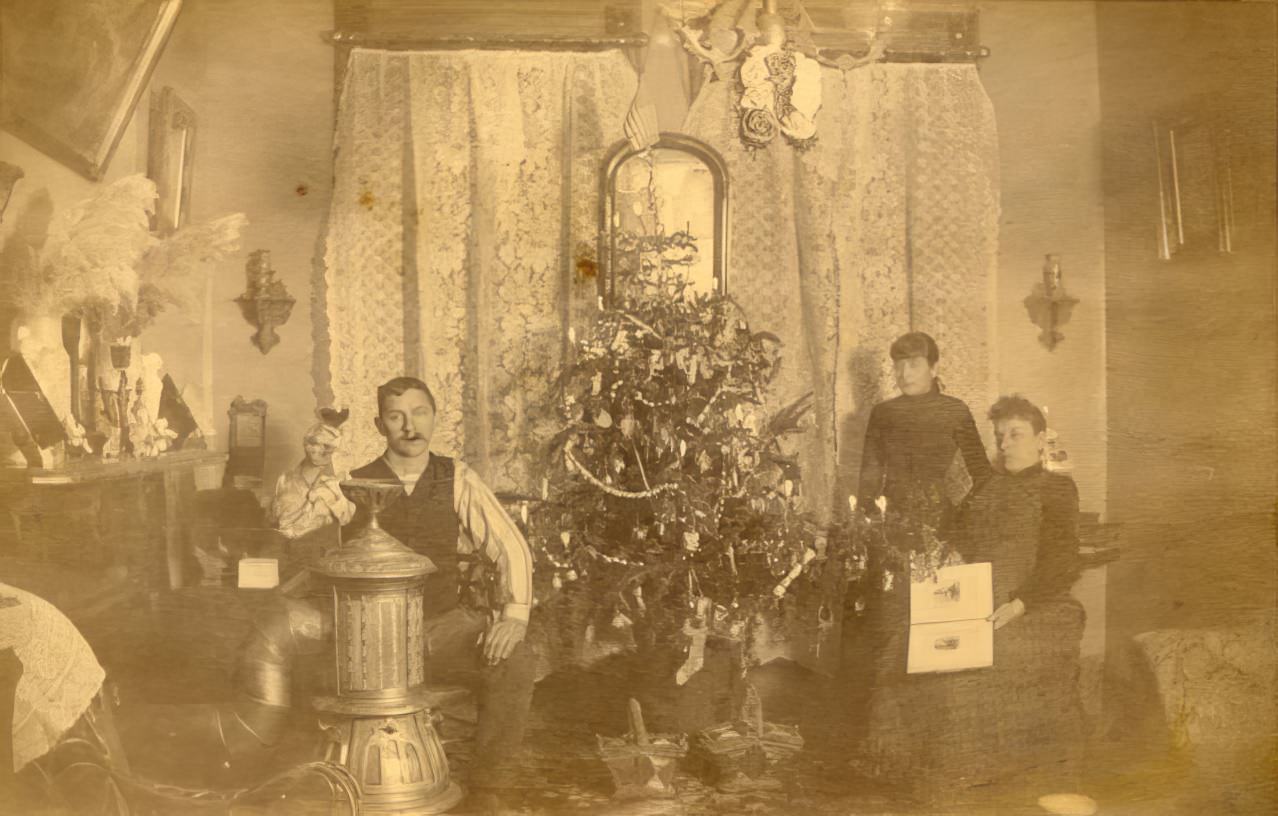
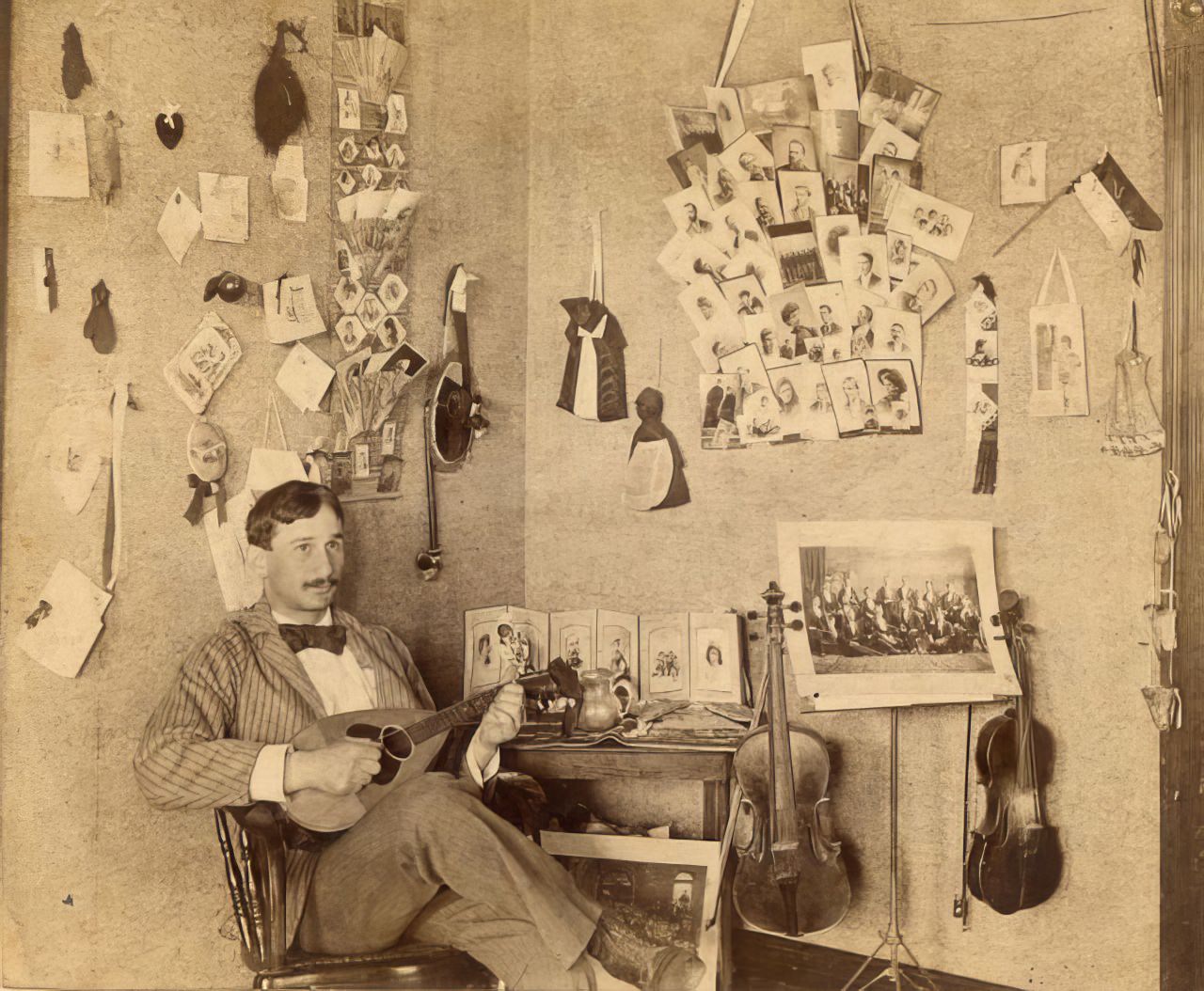
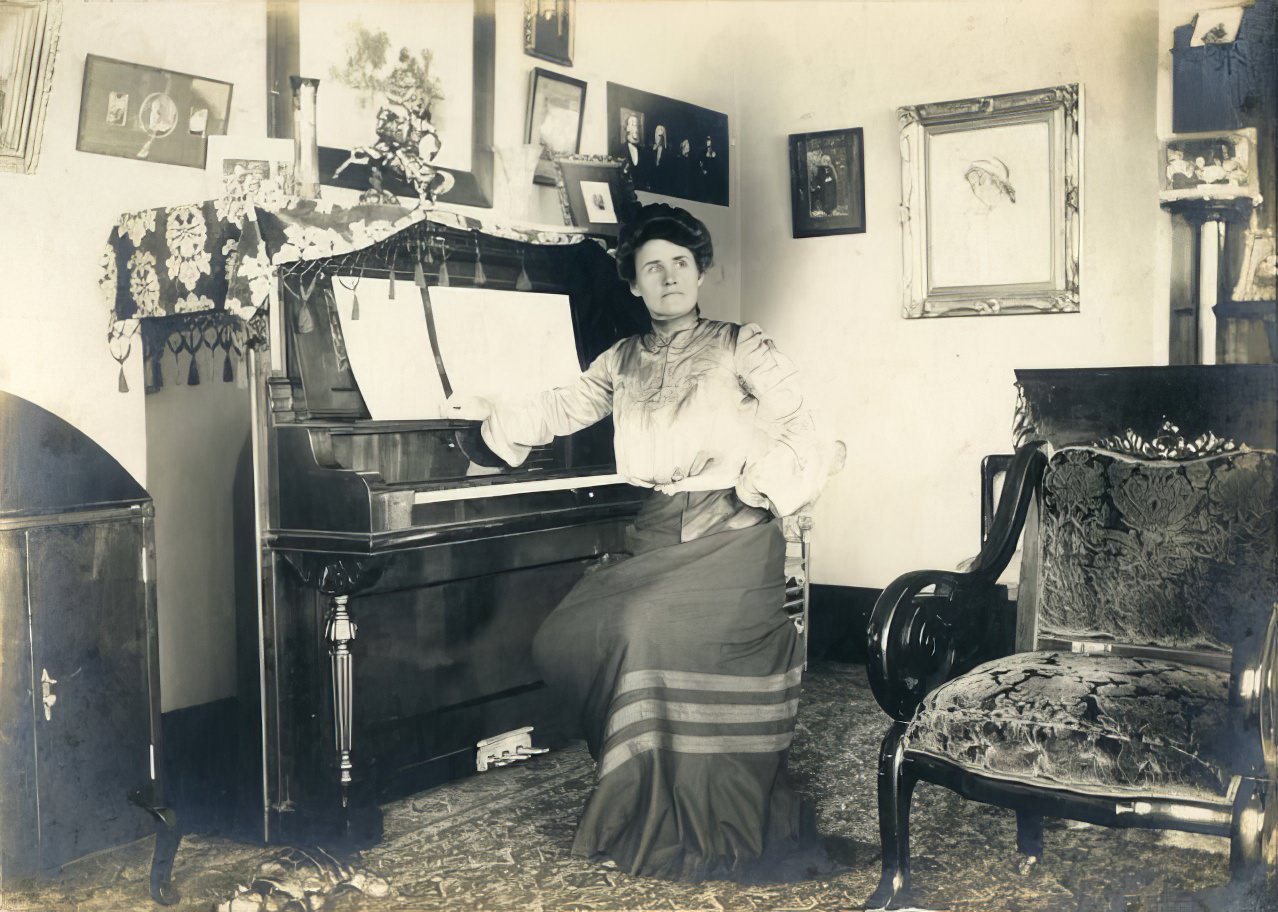
Entertainment was made at home. Families read together, played board games, or gathered around a piano for singing. Musical instruments like the piano, guitar, and mandolin were common fixtures in parlors across social classes.
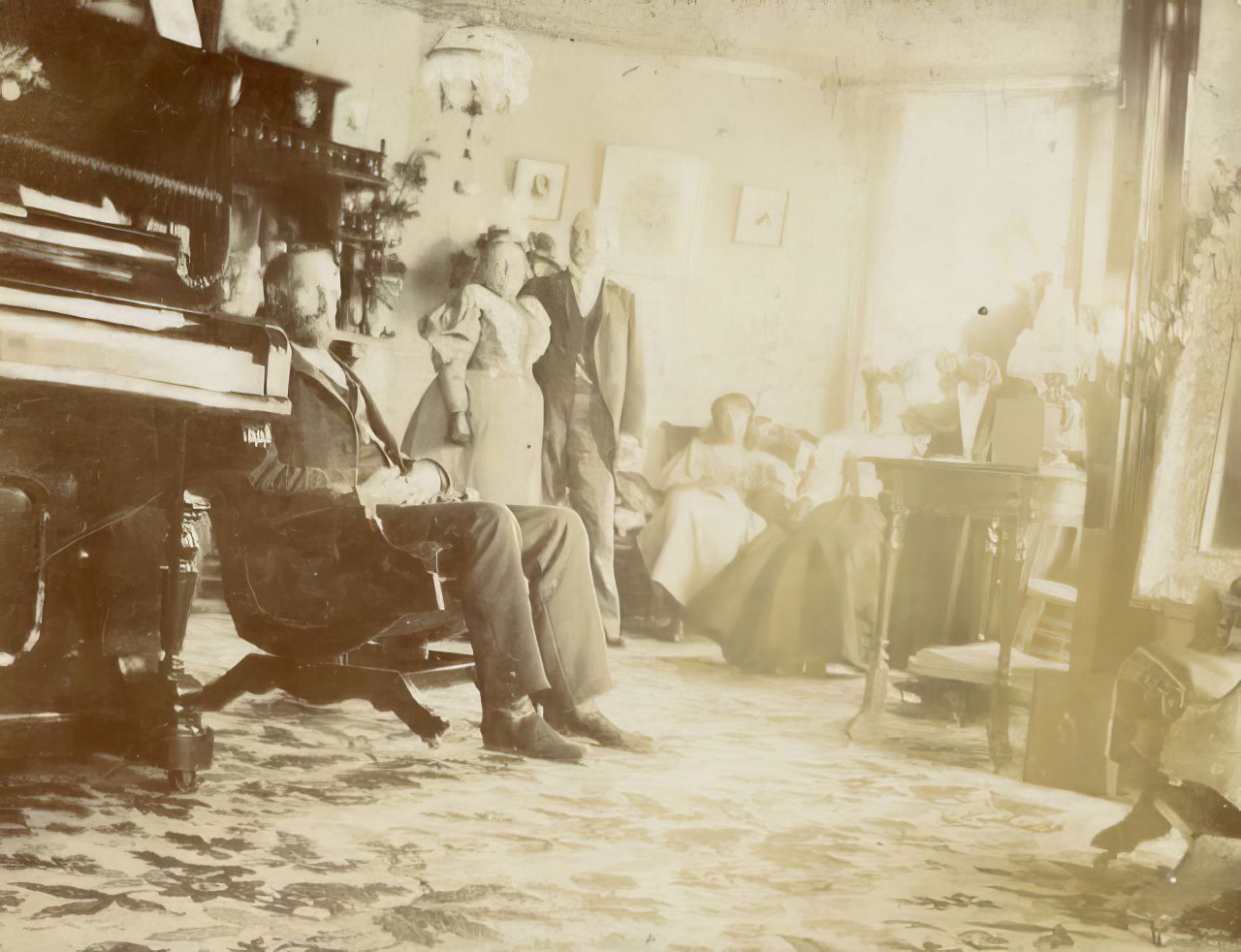
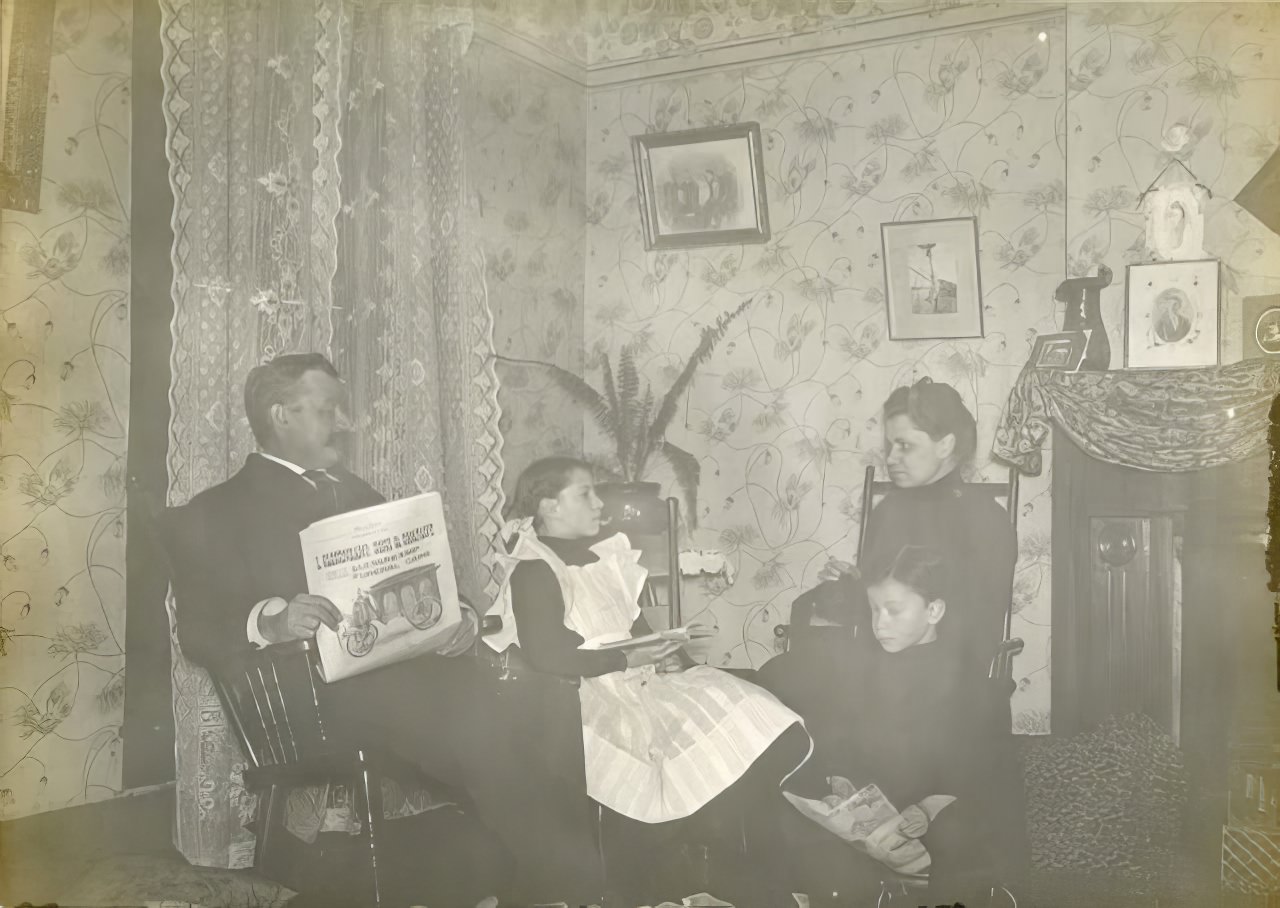
Reading was one of the most common leisure activities of the era. Books, newspapers, and magazines were shared among family members, often read aloud in the evenings. A good book and a lit lamp were enough to fill a quiet night indoors.
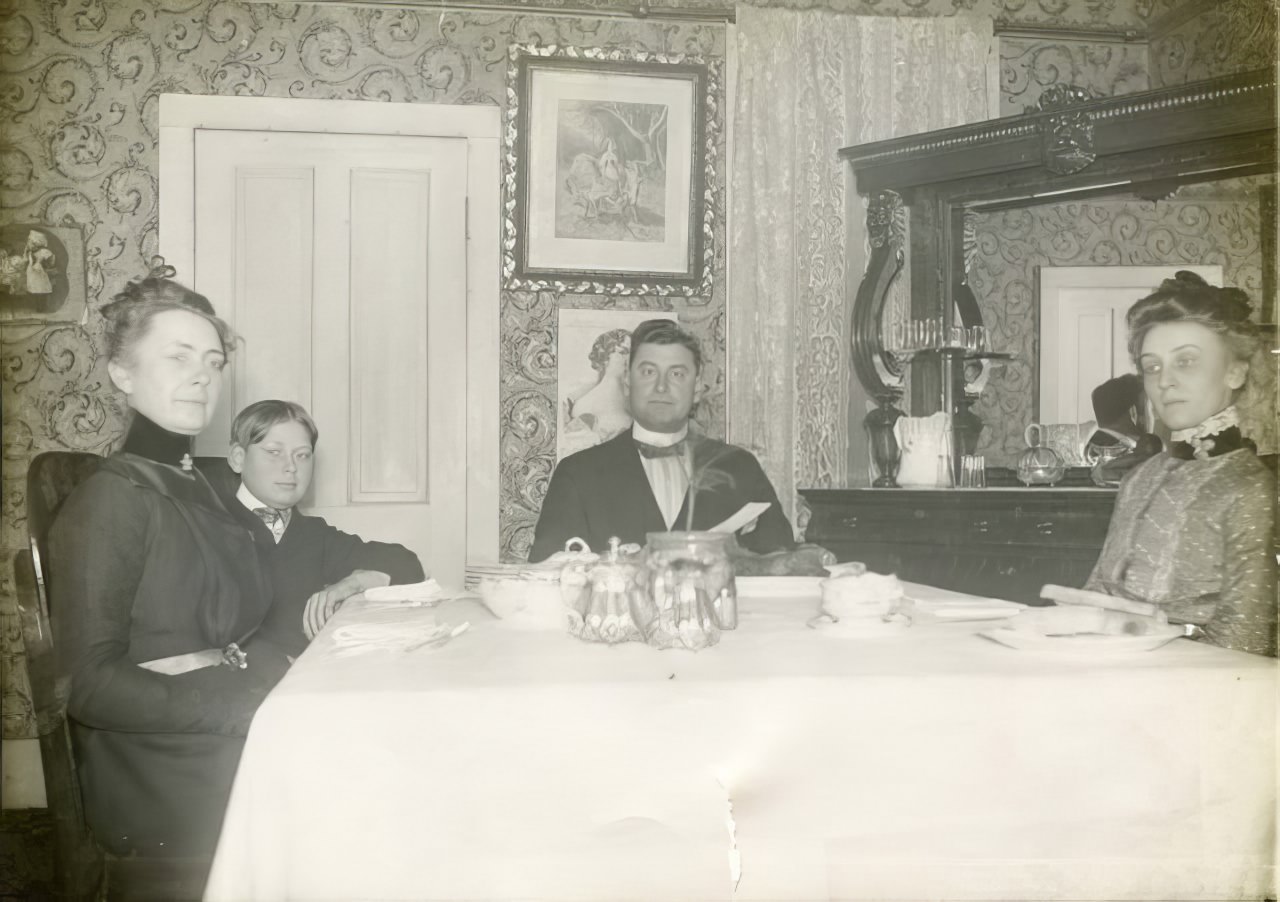
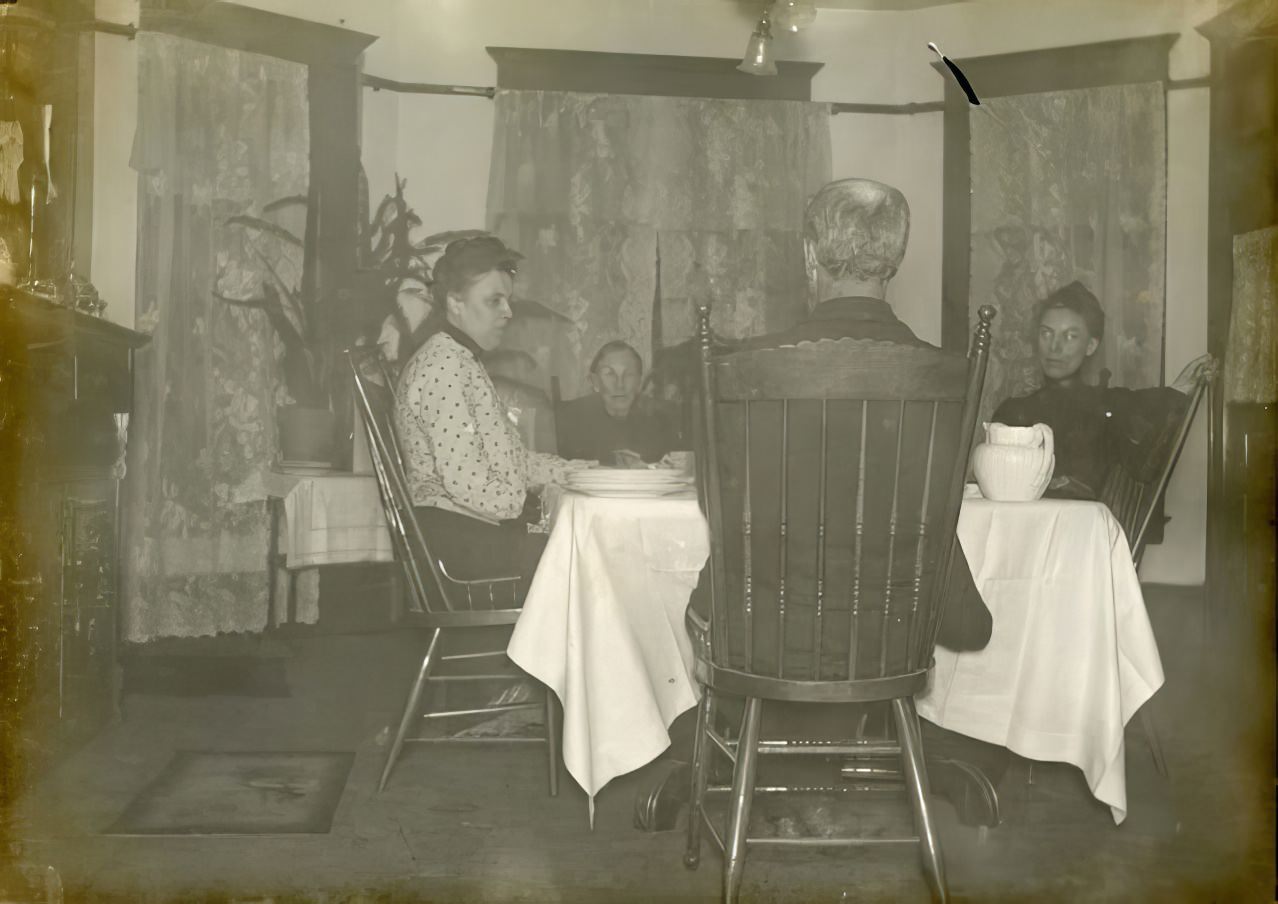
Mealtimes brought the whole family together. The dining room was a formal space in many homes, even modest ones. Meals were cooked from scratch over wood-burning stoves, and the table was set with care regardless of the family’s means.
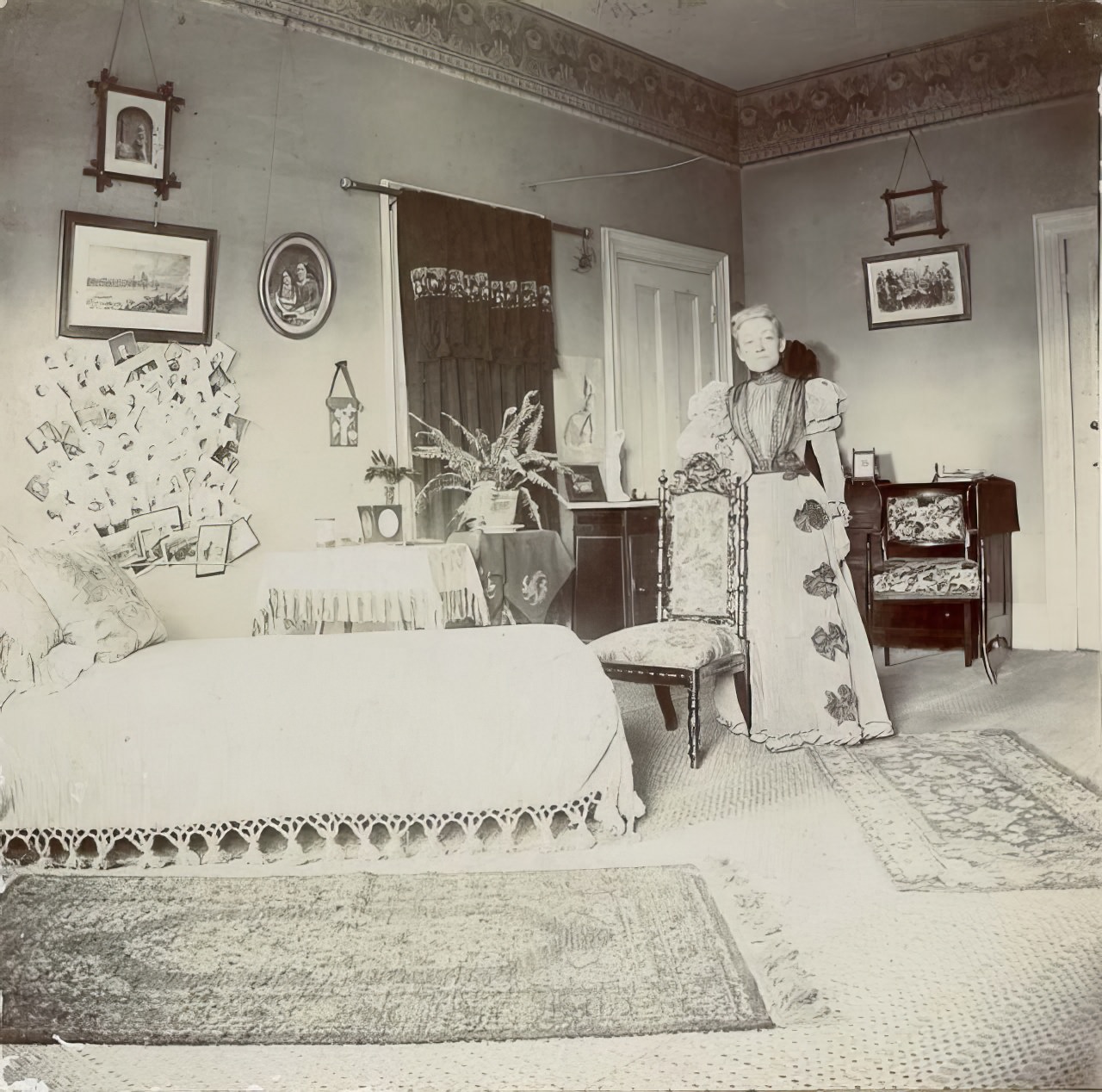
Parlors and sitting rooms served as the social heart of the house. Families received guests there, posed for photographs, and spent their leisure hours together. Lace curtains, upholstered chairs, and carefully arranged furniture signaled a family’s status and taste.
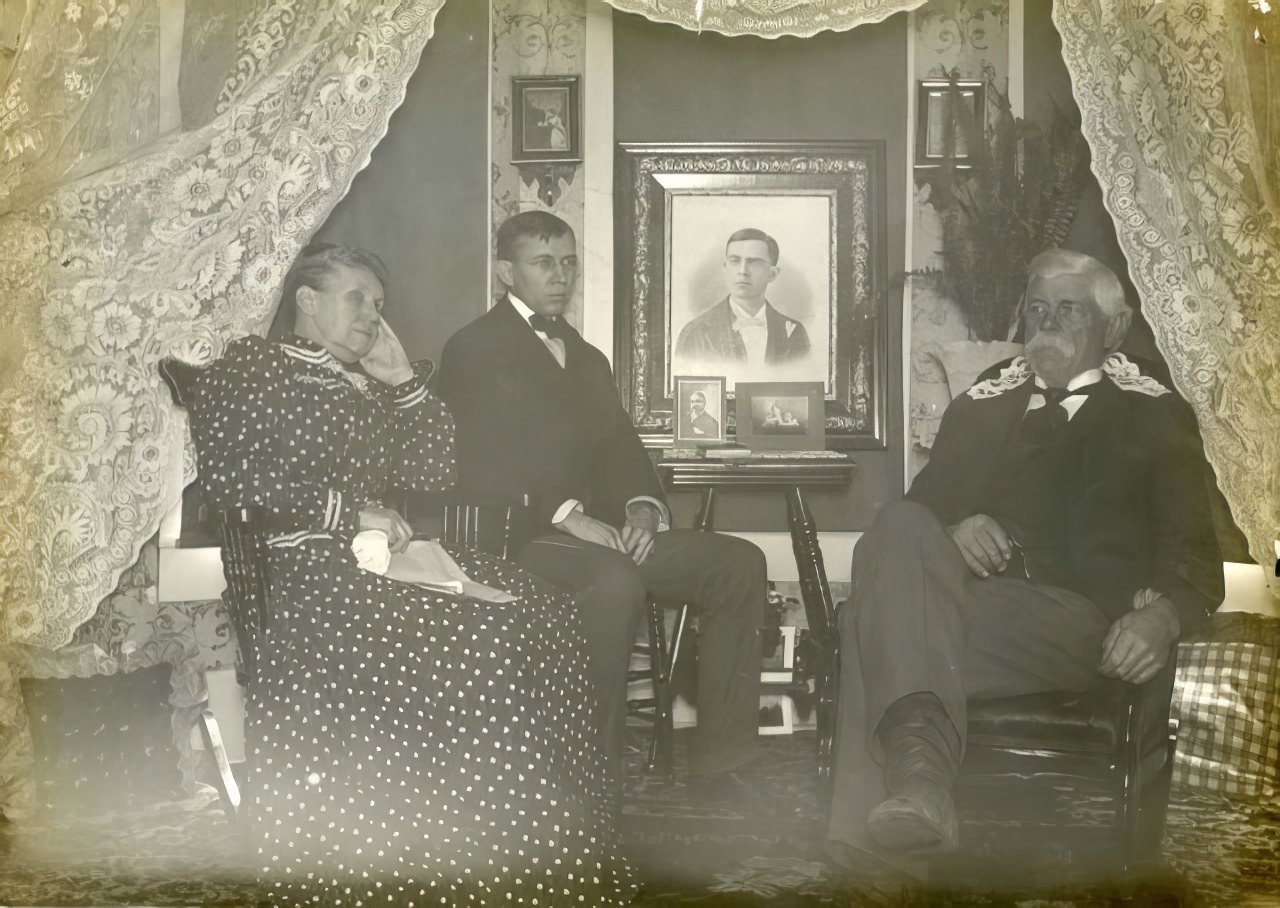
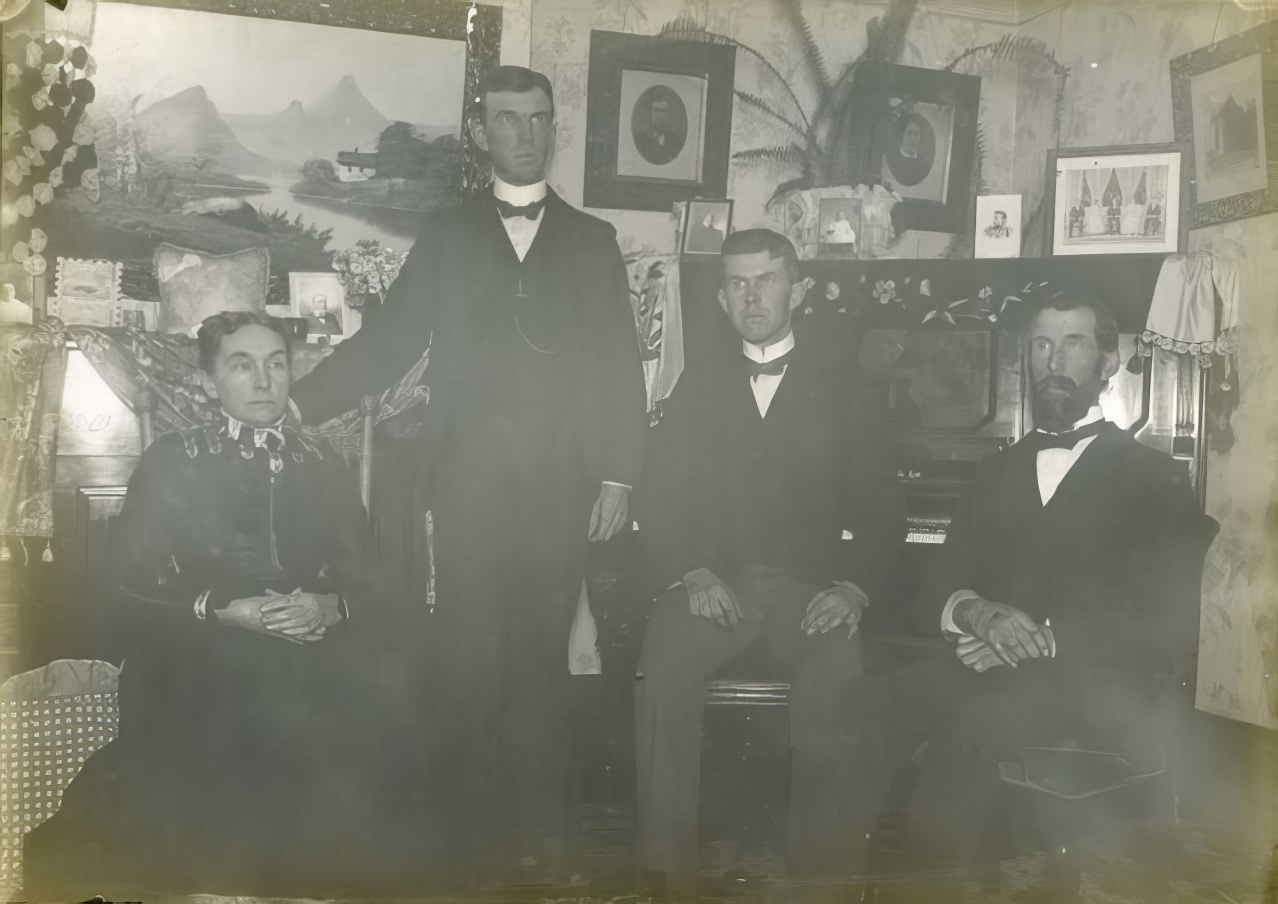
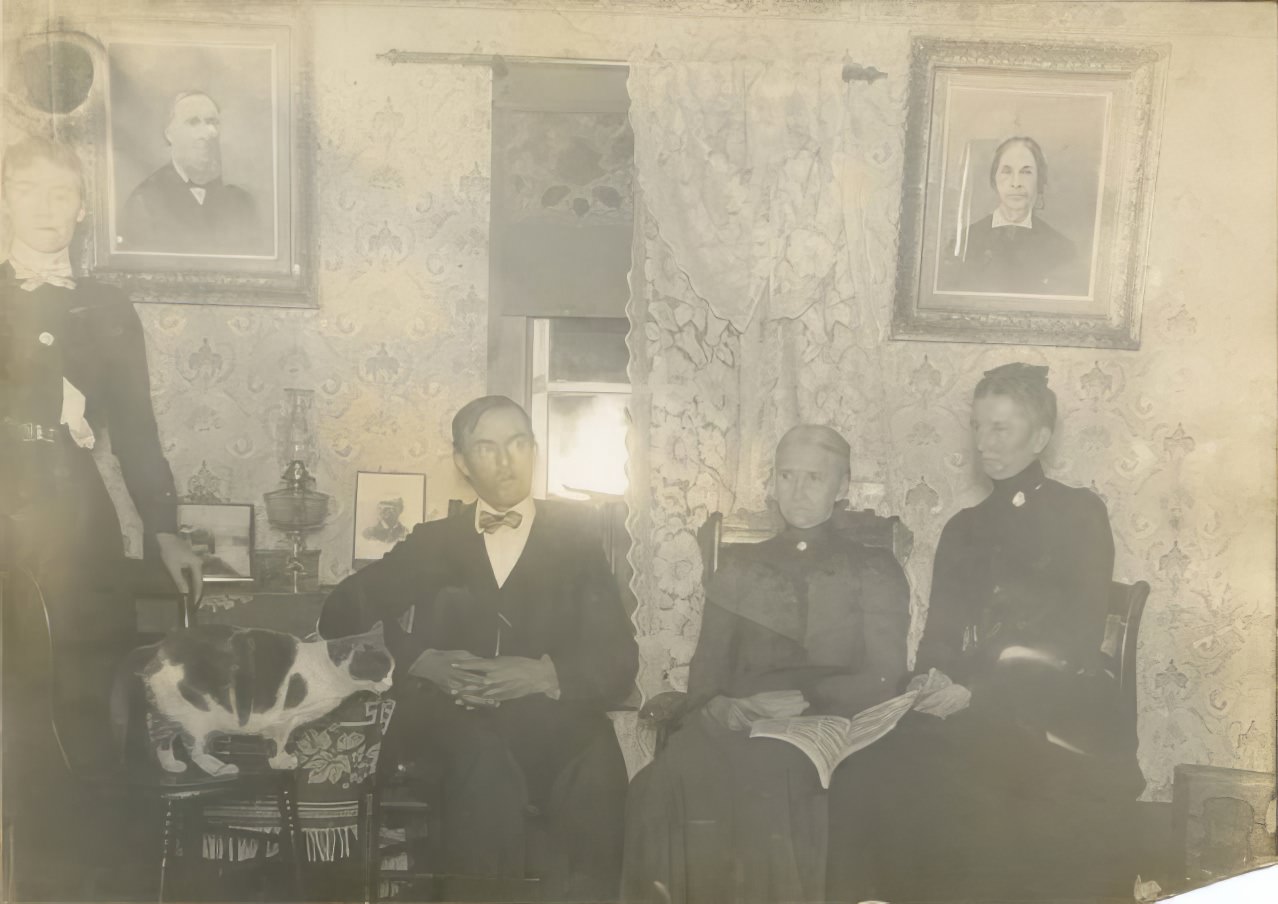
Natural light from windows was precious. Before widespread gas or electric lighting, families arranged their furniture close to windows for reading, sewing, and daily tasks. A sunny corner of a room was a valued spot.
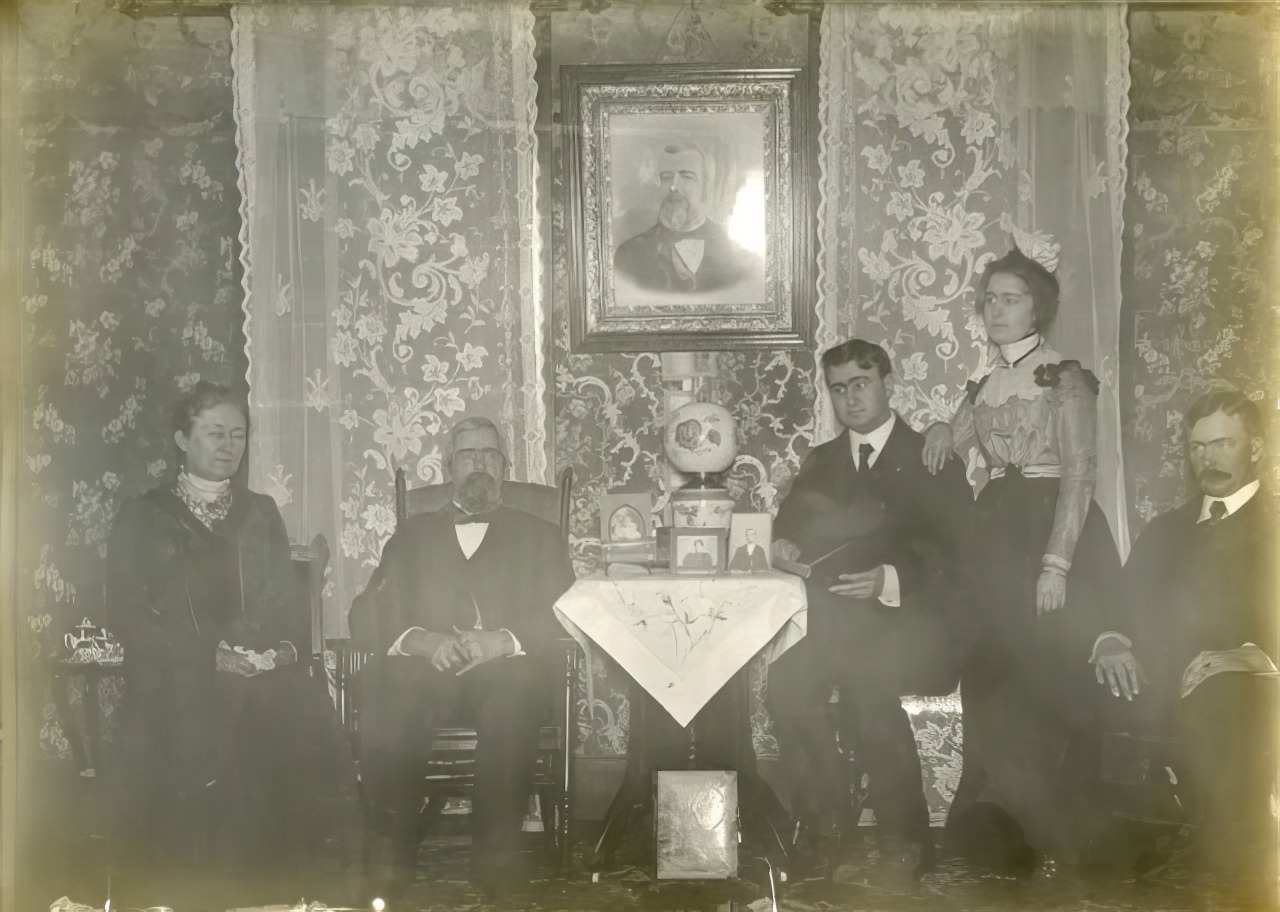
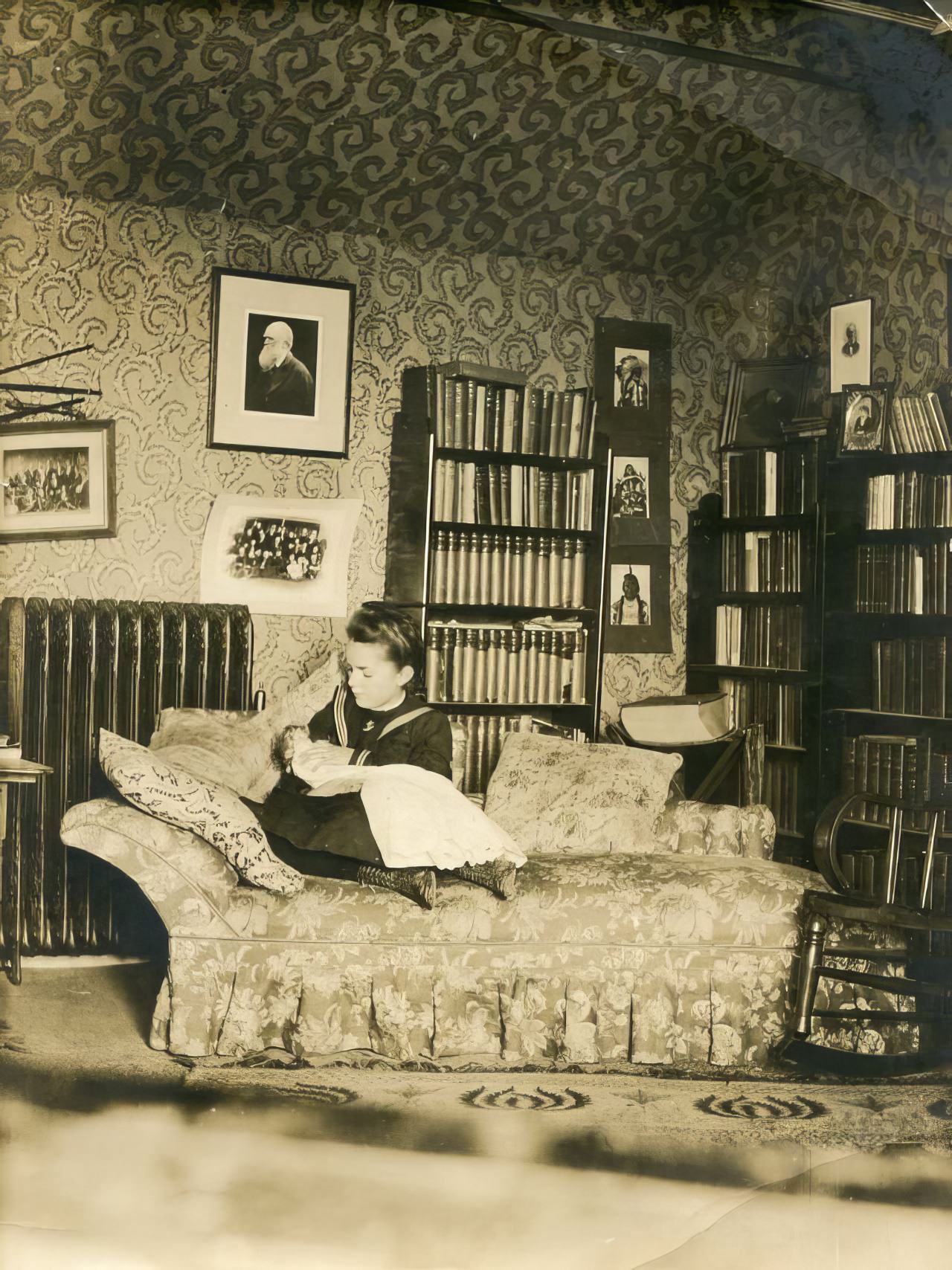
Children’s toys were simple — dolls, wooden figures, and handmade games. Play happened mostly indoors, close to the adults of the household. Large families were common, and older children were expected to help with younger siblings and household chores.
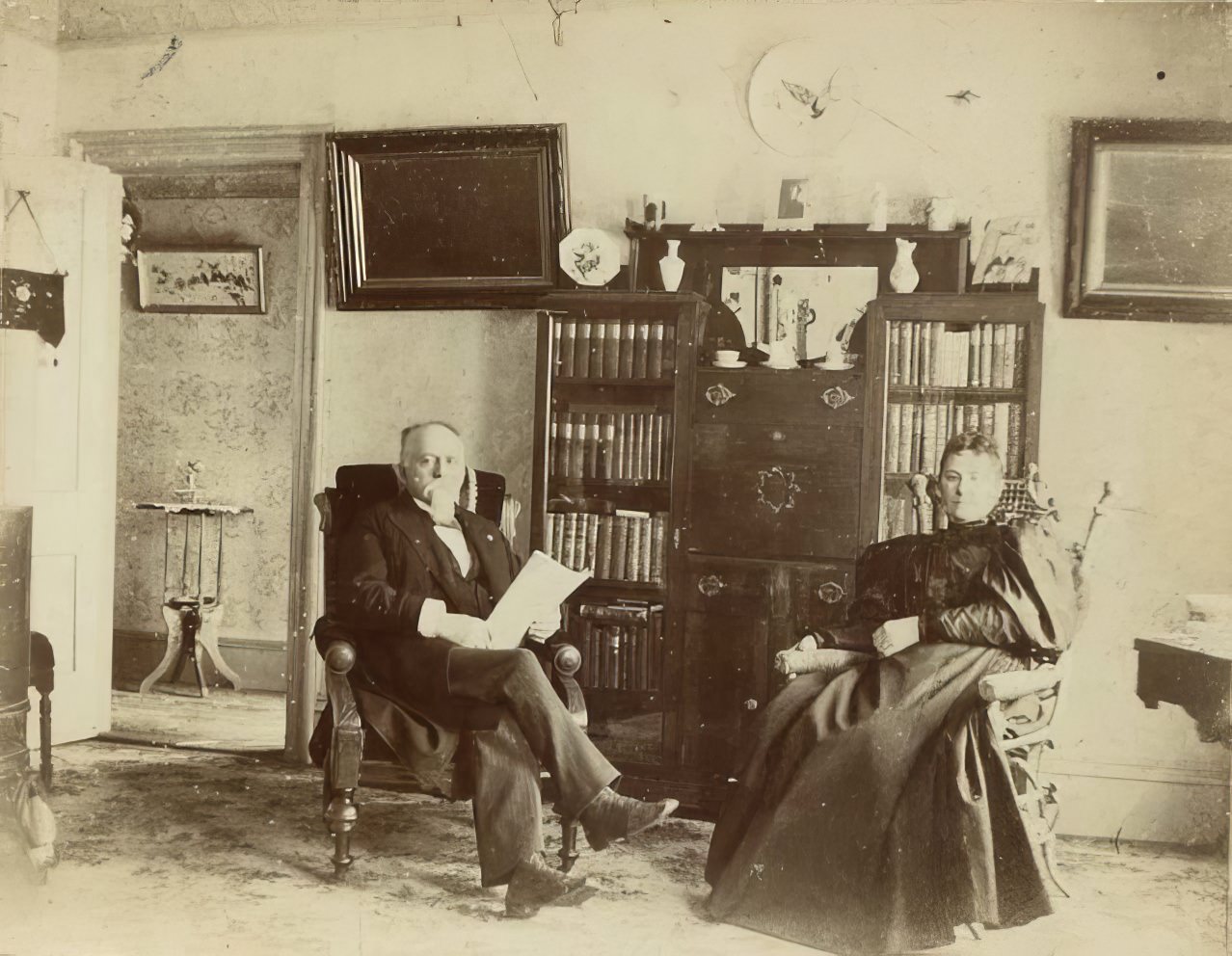
Bookcases filled with volumes were a mark of education and respectability. Owning books was something middle-class families took pride in. A well-stocked shelf in the background of a photograph was often deliberate — a statement about who the family was.
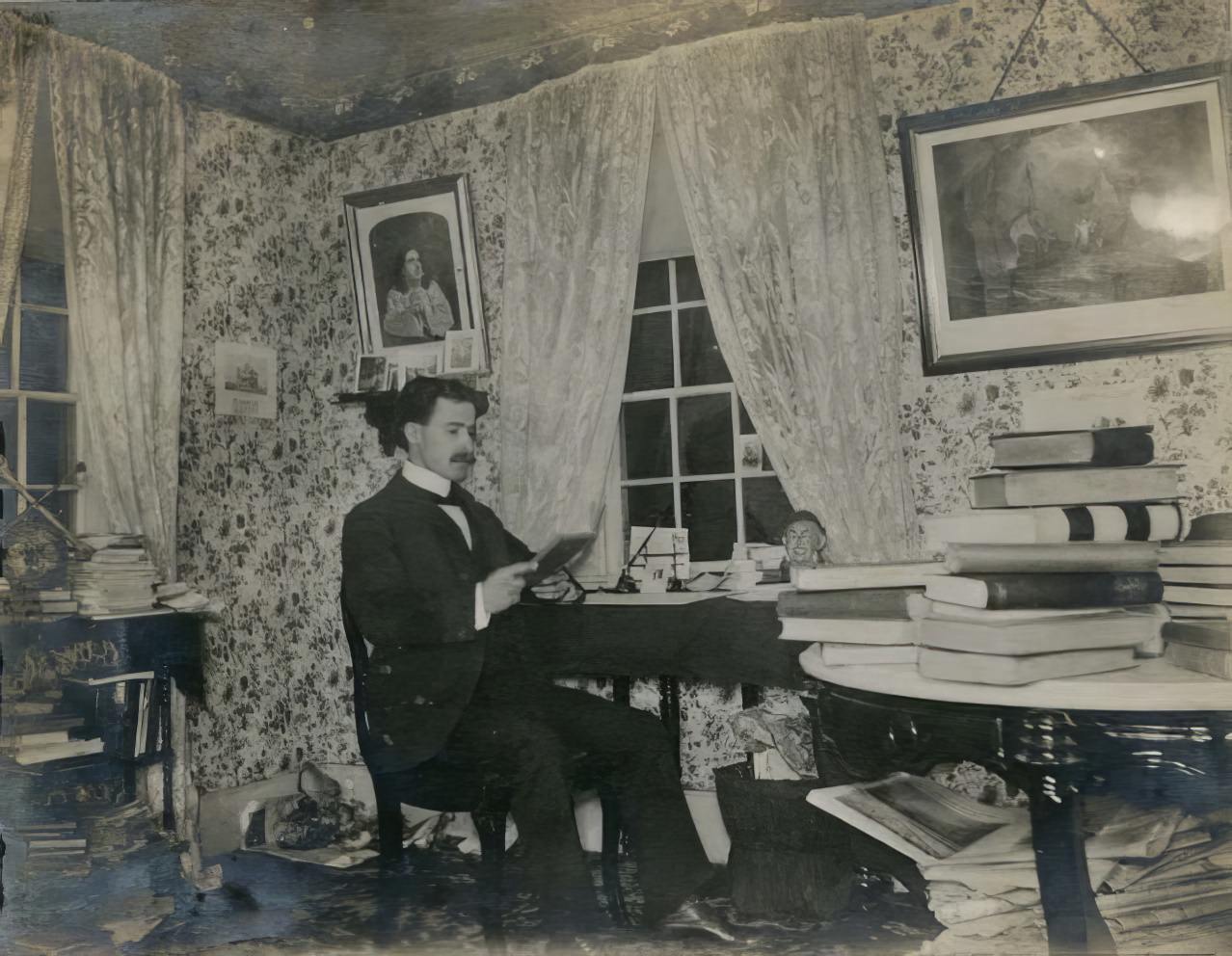
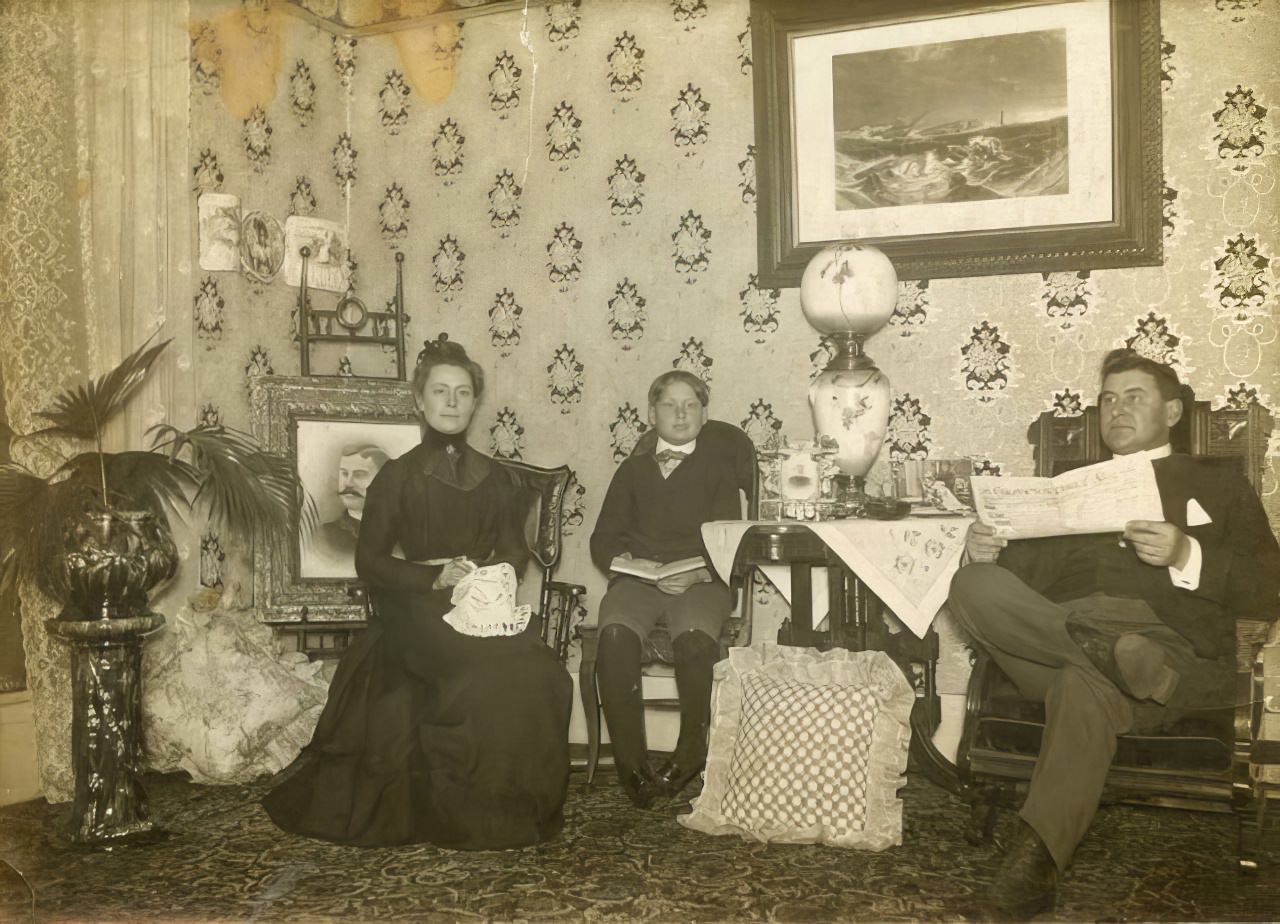
Men of the household also spent time indoors reading, especially in the evenings after outdoor work was done. Farming, tending gardens, and maintaining property filled their daylight hours. At night, a chair by the window with a newspaper or book was a typical end to the day.
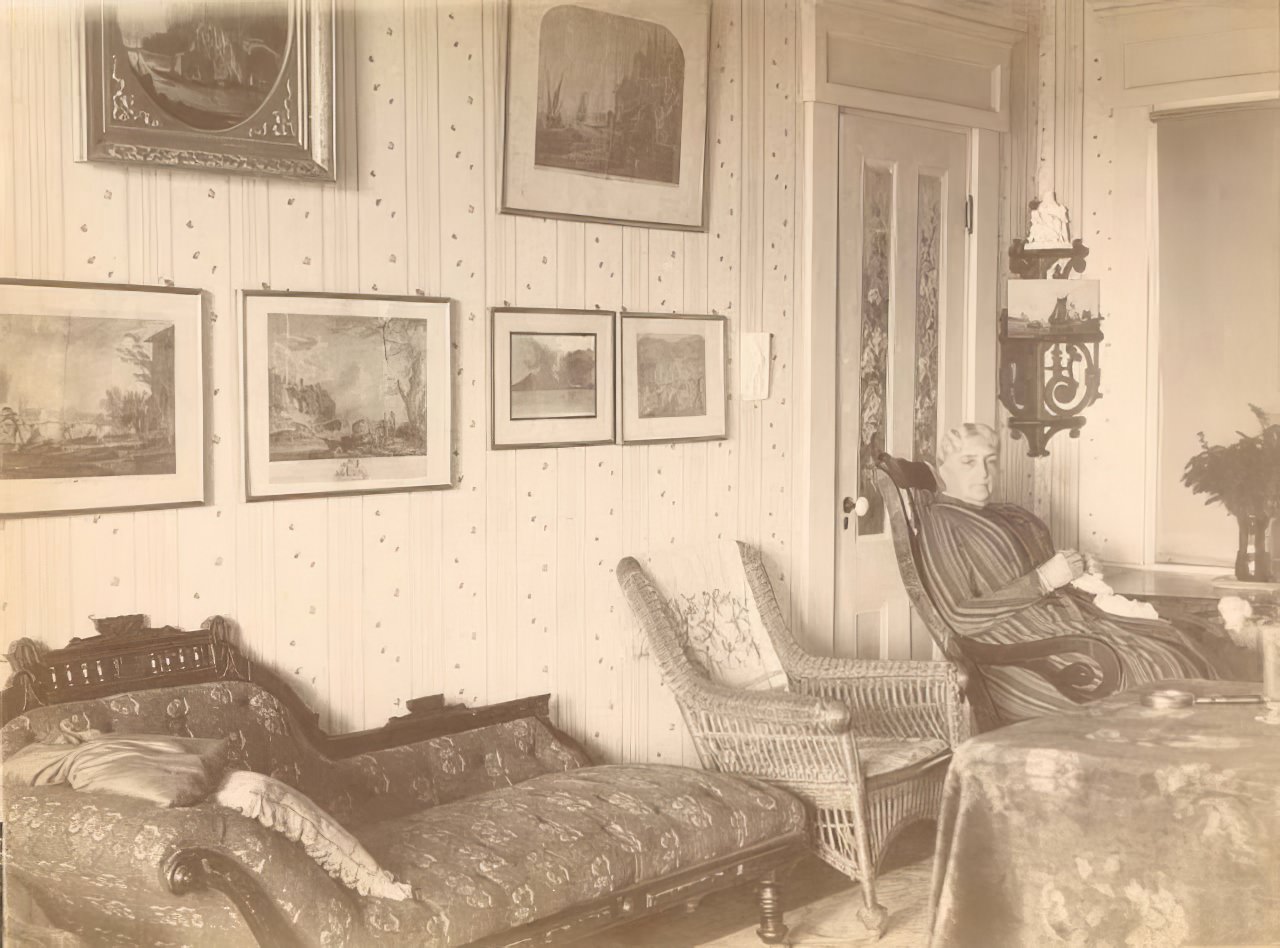
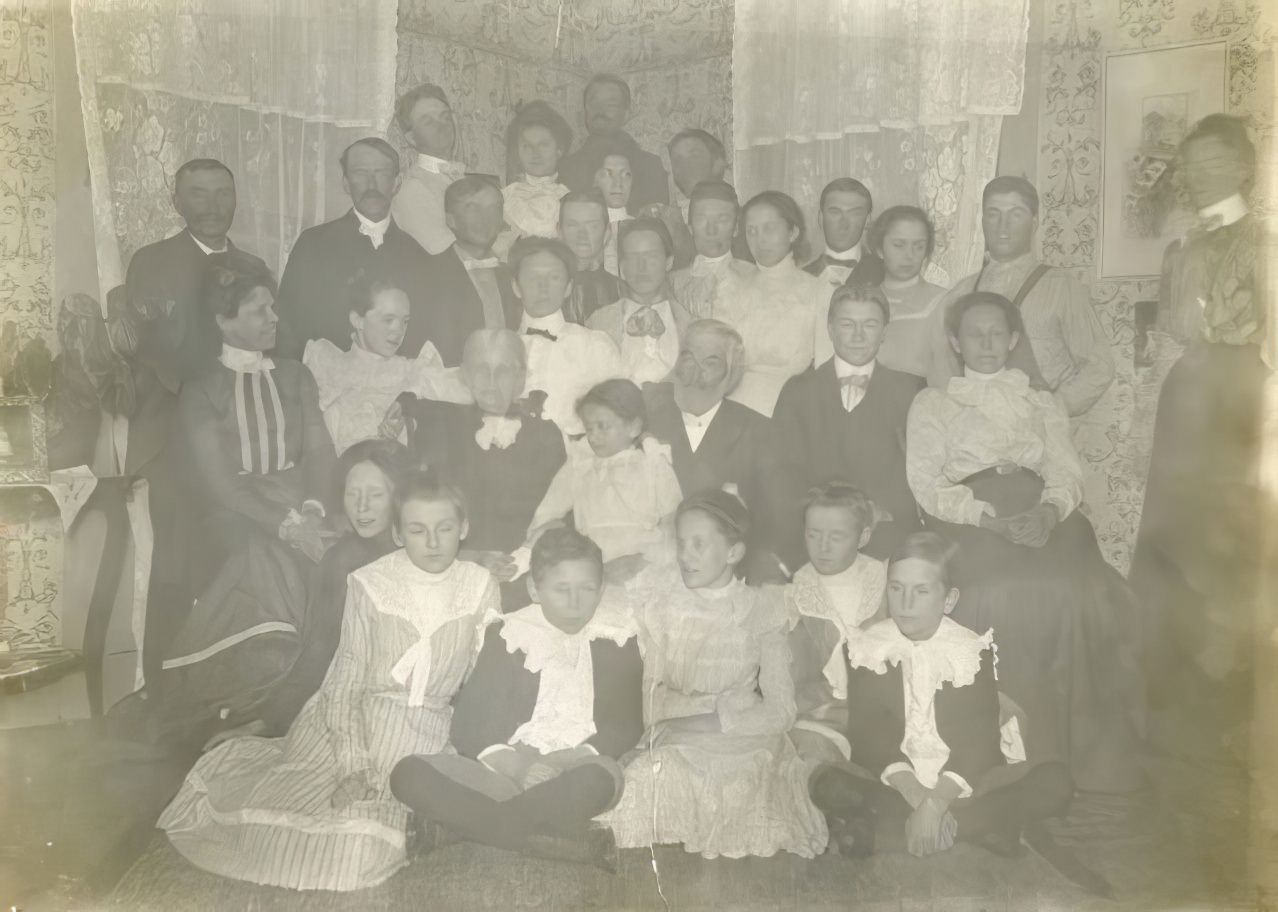
Rocking chairs were standard in most homes. Elderly family members often lived with their adult children, and their presence was a normal part of daily household life. Multi-generational living was the rule, not the exception.
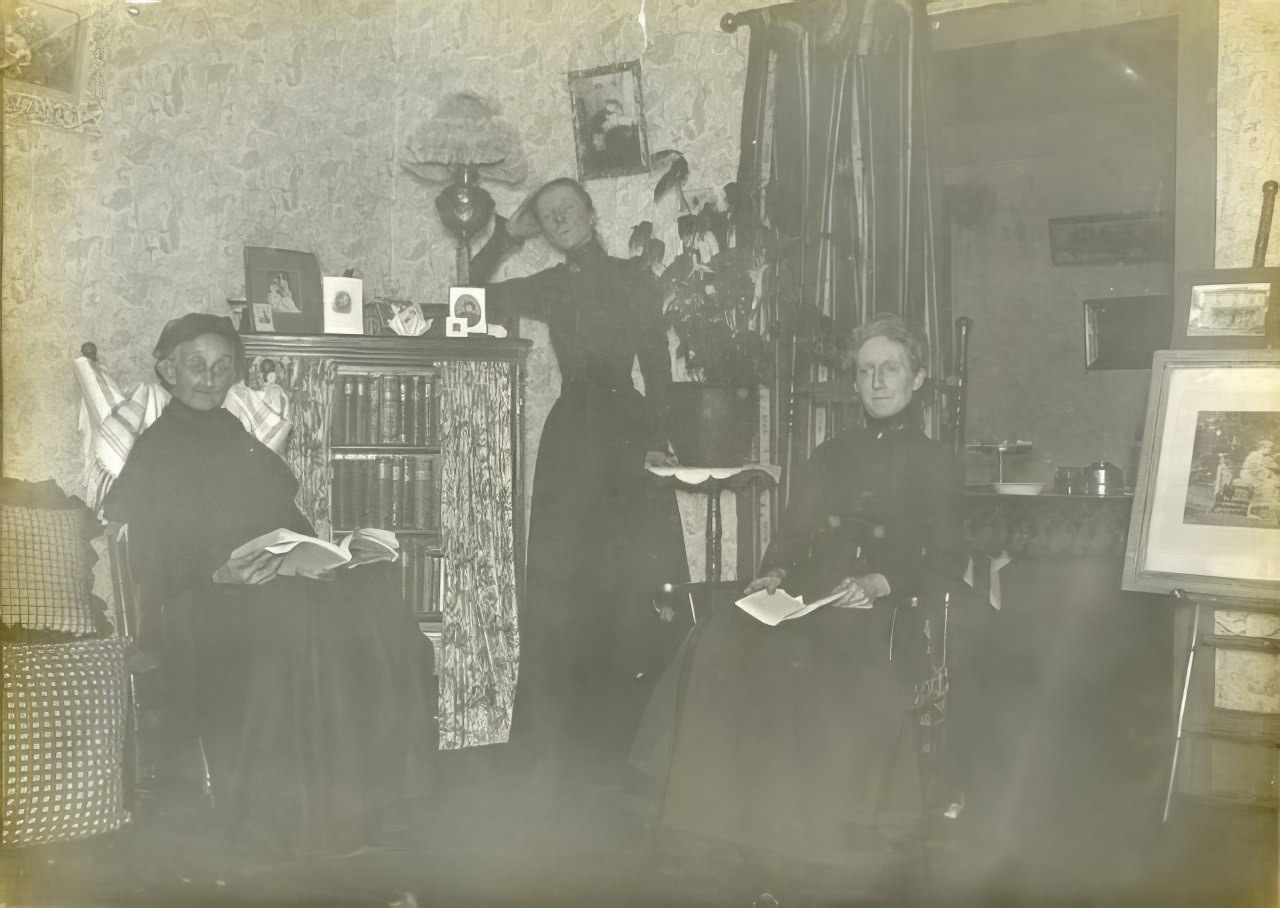
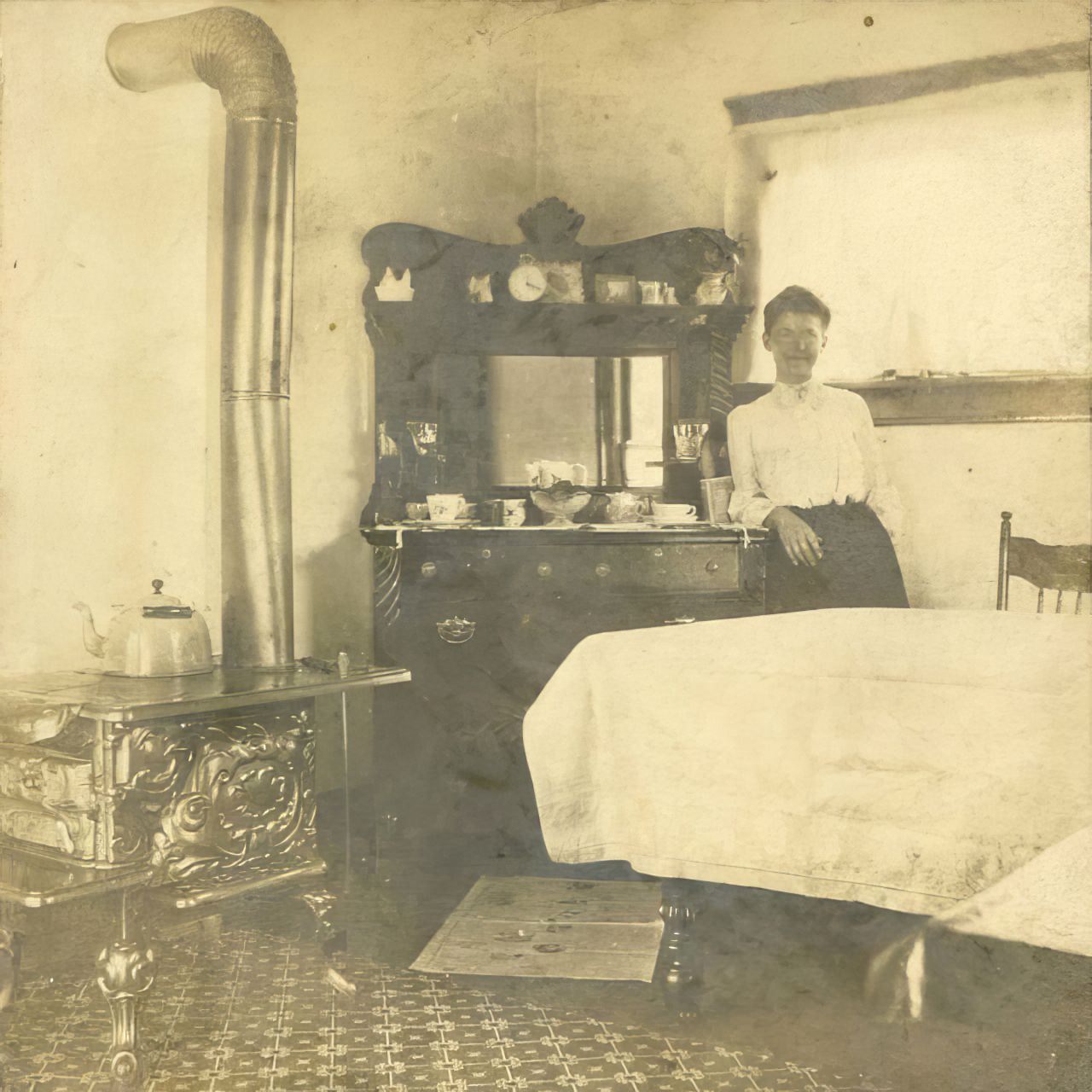
Women spent the bulk of their days managing the home. Cooking, washing clothes by hand, scrubbing floors, and preserving food were daily demands. Sideboards and cupboards stored the household’s dishes and linens — practical furniture in every sense.
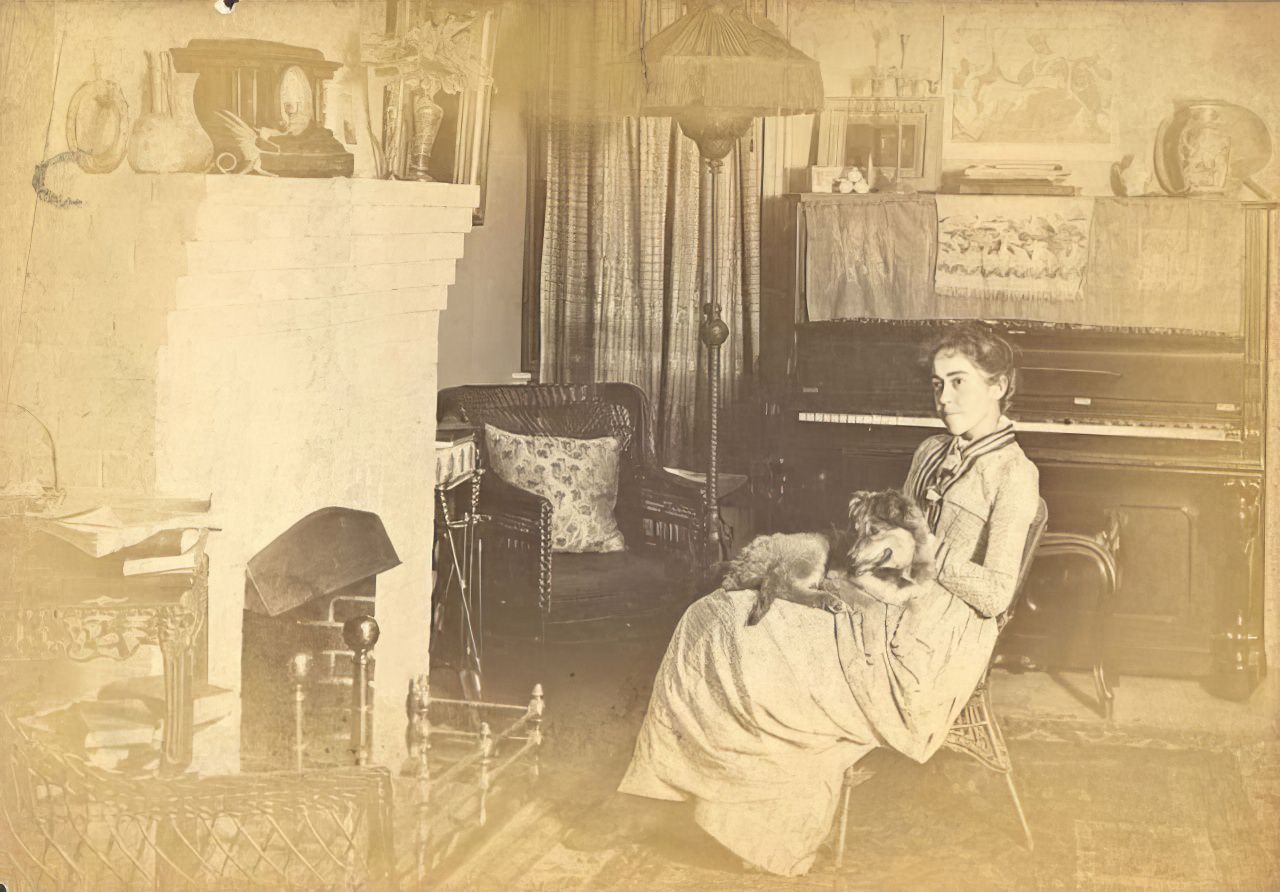
Pets were a quiet comfort in the home. Dogs and cats lived alongside their families in the same rooms, offering companionship after long workdays. The fireplace behind this woman was both a heat source and a gathering point — essential to every household before central heating existed.
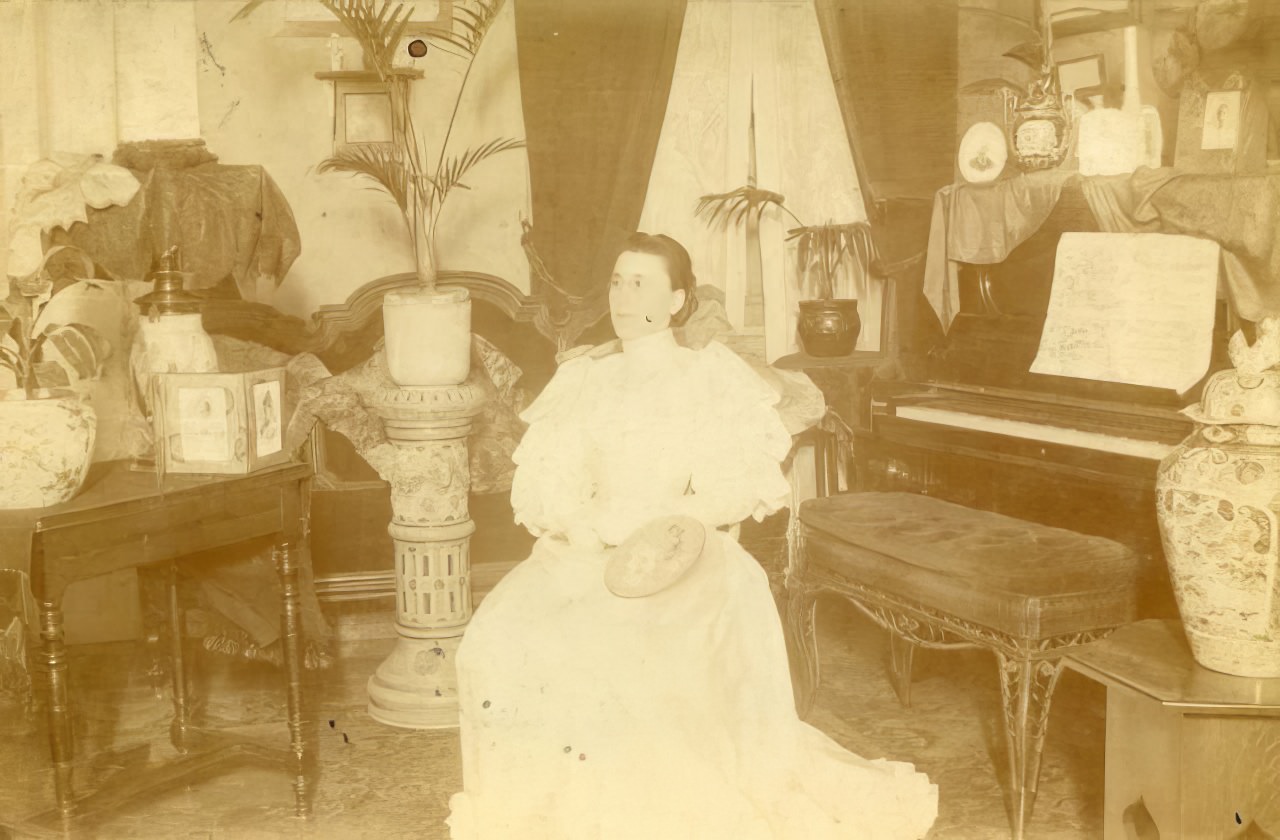
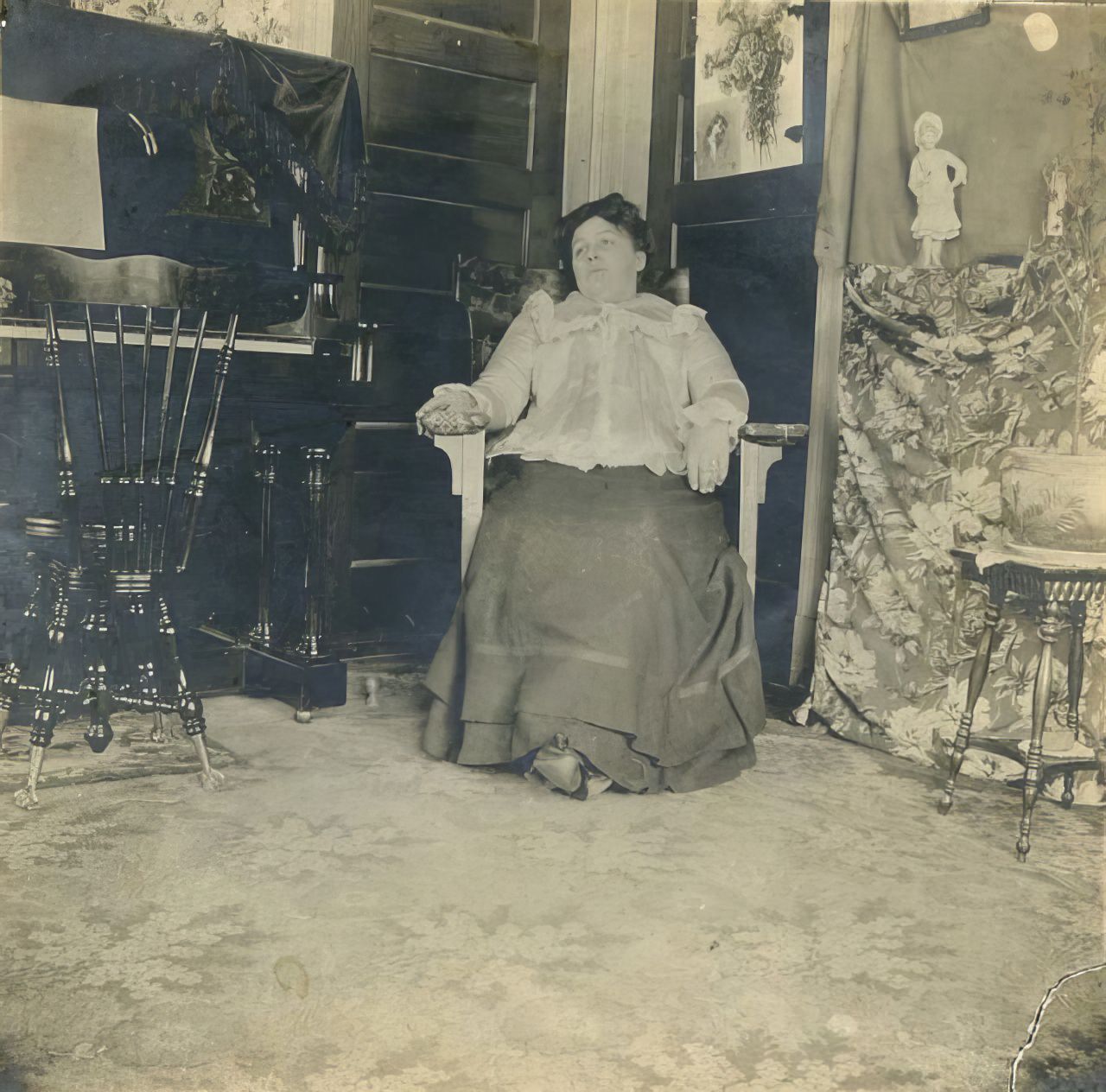
Corners of rooms were often decorated with care — potted plants, framed photographs, small tables with decorative objects. These personal touches made the home feel lived-in and intentional, reflecting each family’s personality within the limits of their budget.
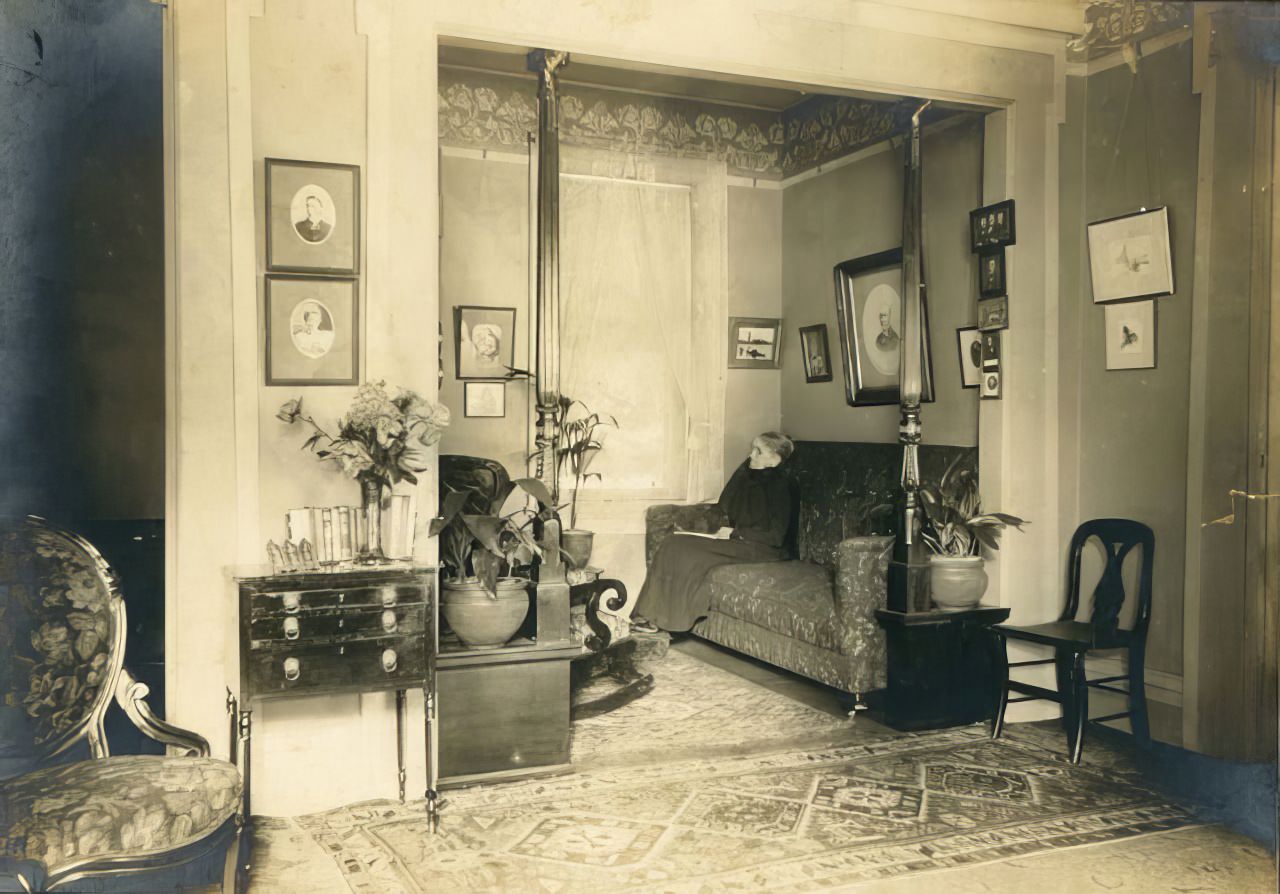
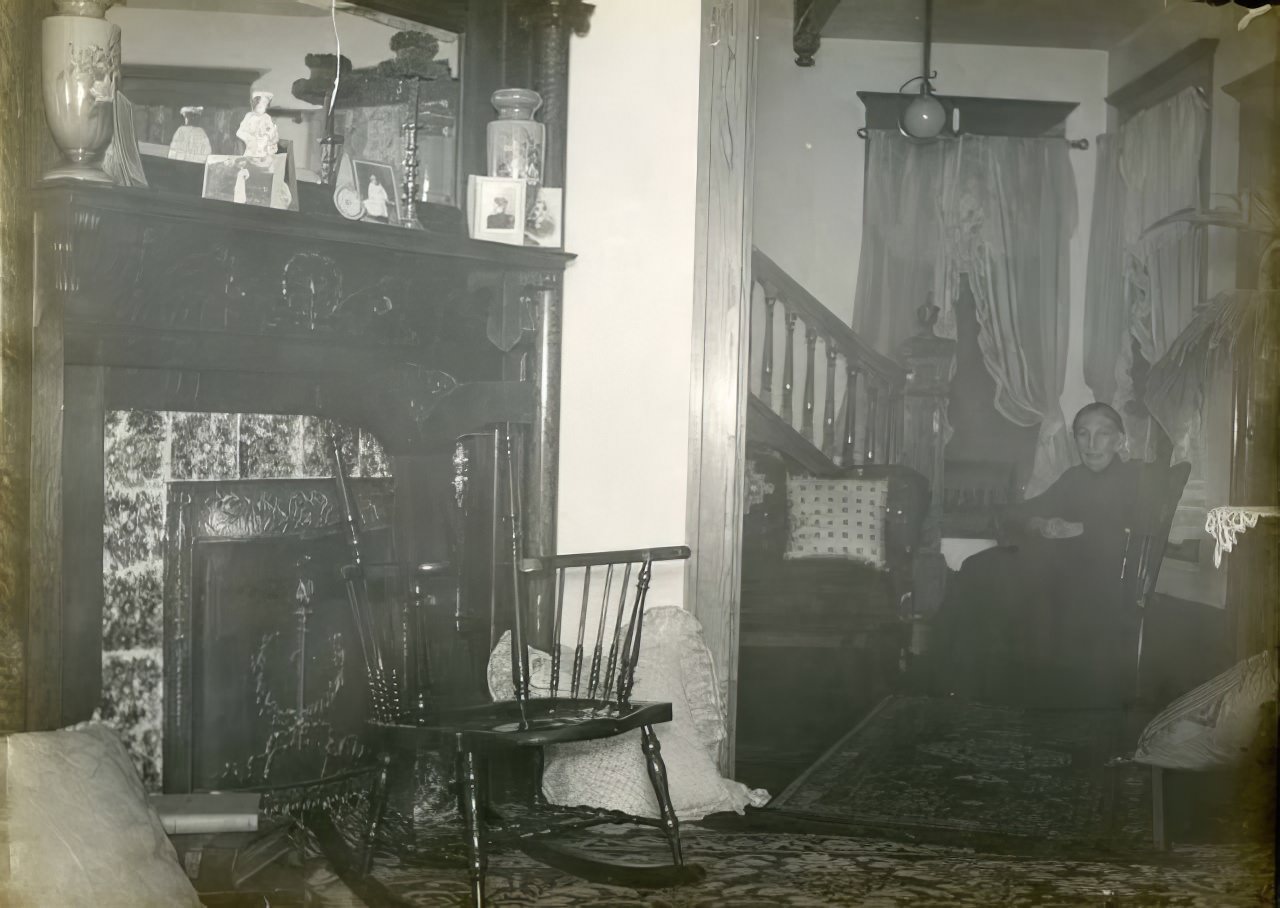
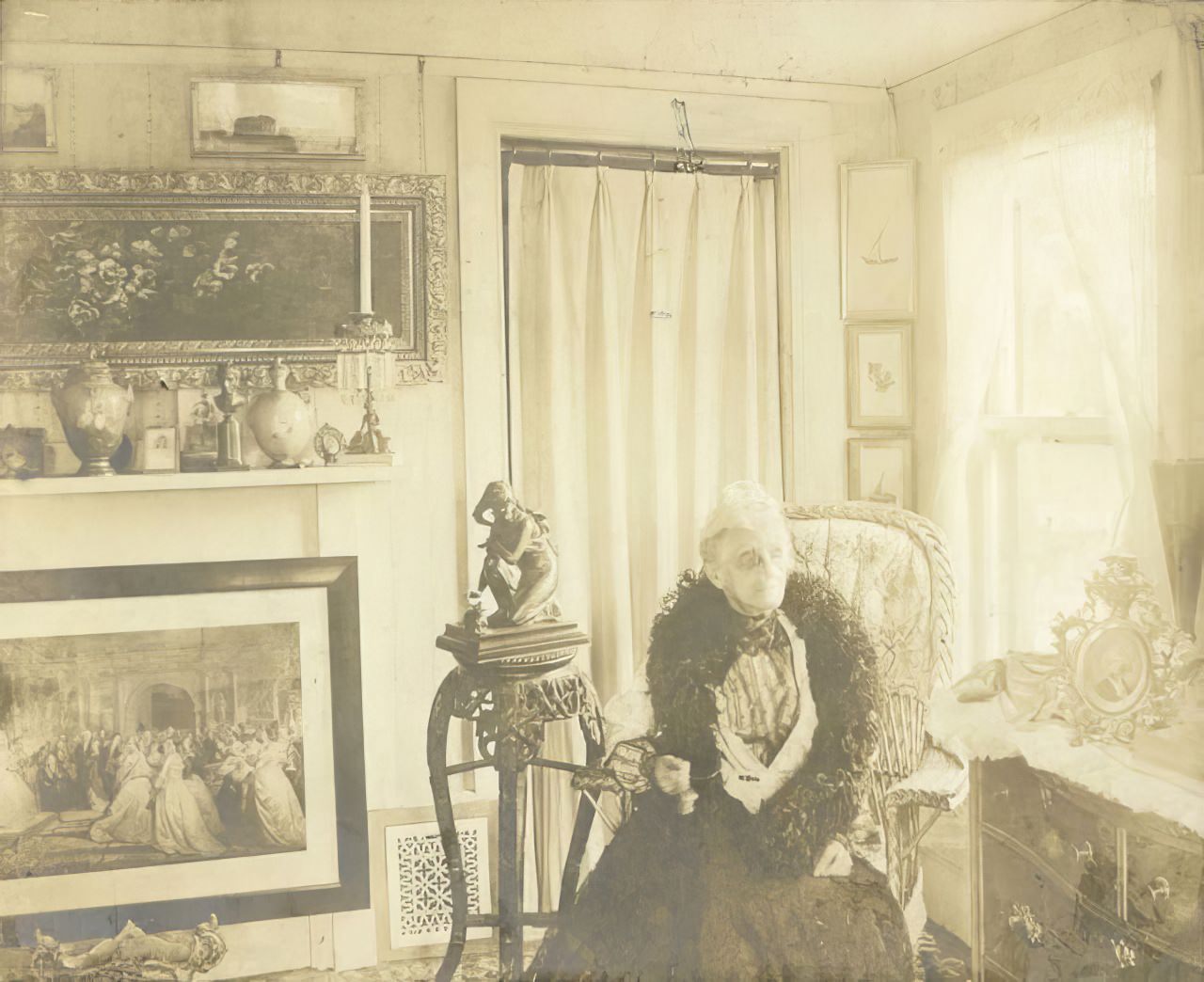
Wicker and rocking chairs appeared in parlors, porches, and bedrooms alike. Furniture was functional but also chosen for comfort and appearance. Sitting for a photograph was a deliberate act — people dressed carefully and arranged themselves to present their household at its best.
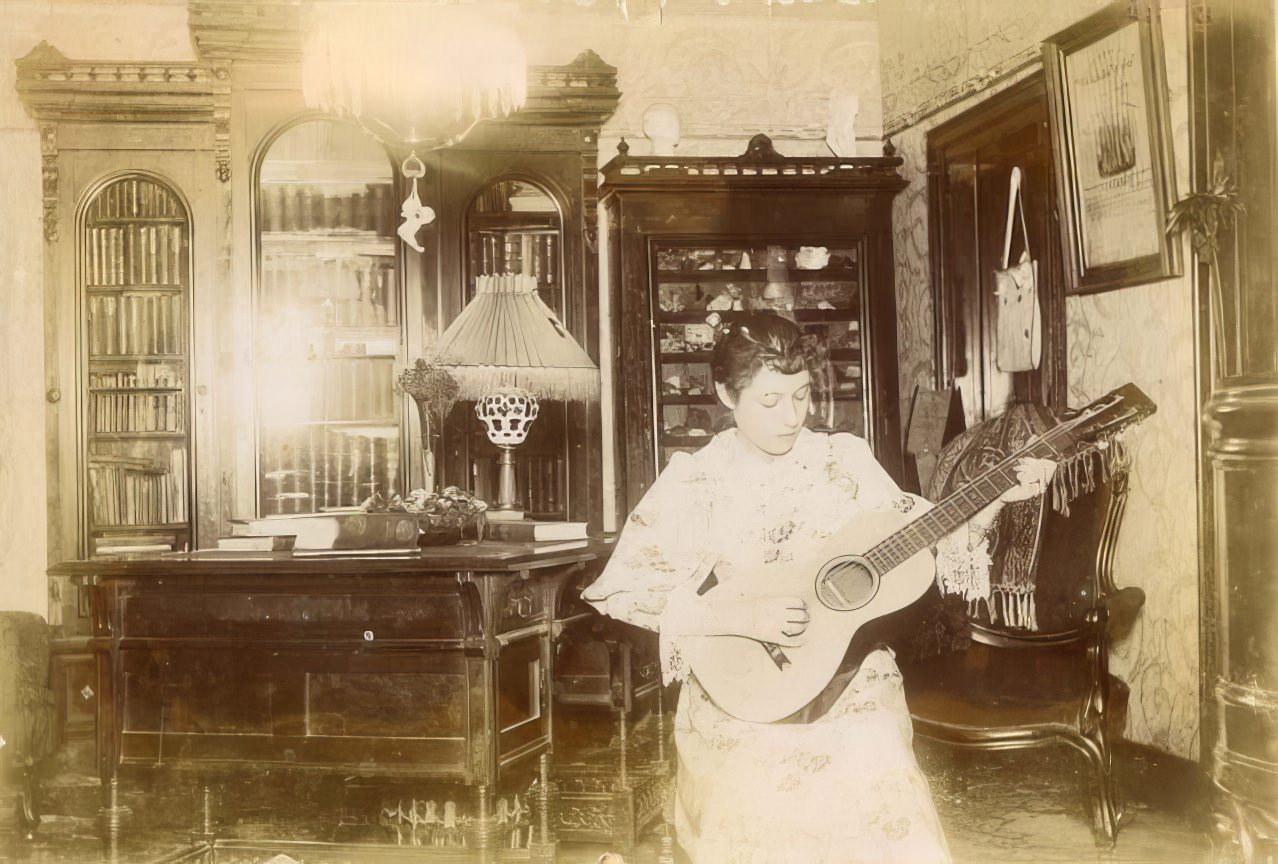
Young women frequently took up musical instruments. The guitar, mandolin, and piano were all popular choices. Playing music was both a social skill and a source of personal enjoyment — something practiced regularly and performed for family and guests alike.